词汇表

英语词汇词典 | 单词含义、定义和示例

noun
/ˈɛpɪθɛt/
绰号 (chuòhào)

A descriptive phrase or word used to characterize someone or something, often as a nickname.

"He earned the epithet ‘The Great’ for his remarkable achievements."
"由于其卓越的成就,他赢得了‘伟大’的绰号。" (Yóuyú qí zhuóyuè de chéngjiù, tā yíngdéle ‘Wěidà’ de chuòhào.)
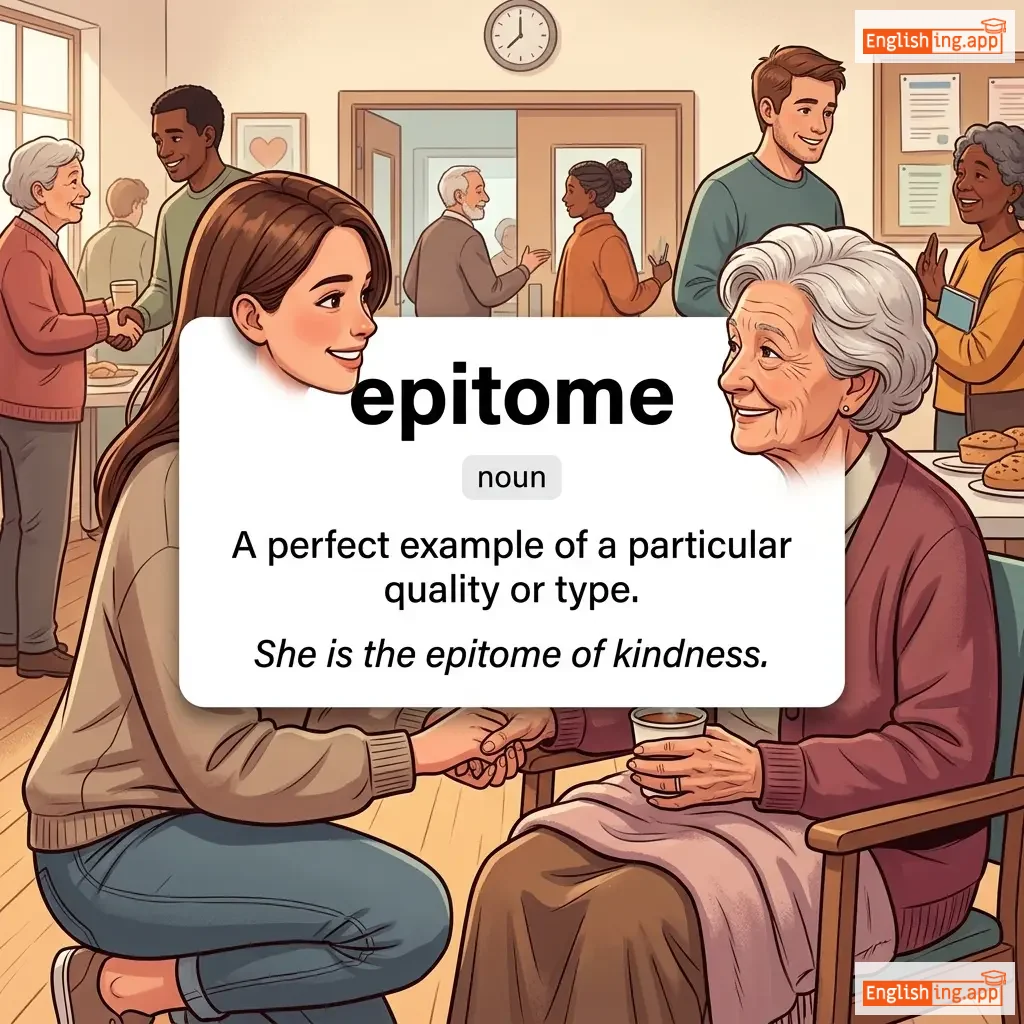
epitome definition card — visual illustration of the meaning
noun
/ɪˈpɪtəmi/
缩影 (suō yǐng)

A perfect example of a particular quality or type.

"She is the epitome of kindness."

"她是善良的缩影。" (Tā shì shànliáng de suō yǐng.)
noun
/ˌɛpɪzəʊˈɒtɪk/
动物疫病 (dòngwù yìbìng)

An outbreak of disease affecting many animals of one kind at the same time.

"The farmer feared an epizootic might wipe out his cattle."

"农民担心动物疫病会消灭他的家畜。" (Nóngmín dānxīn dòngwù yìbìng huì xiāomiè tā de jiāchù.)
epoch definition card — visual illustration of the meaning
noun
/ˈiːpɒk/
时代 (shidai)

A period of time in history or a person's life, typically one marked by notable events or characteristics.

"The invention of the internet marked a new epoch in human history."

"互联网的发明标志着人类历史上的一个新时代。" (Hulianwang de faming biao zhi zhe renlei lishishang de yige xin shidai.)
noun
/ˈɛpəʊd/
一种抒情诗的形式 (yī zhǒng shūqíng shī de xíngshì)

A form of lyric poem written in couplets, often following a strophe and antistrophe in classical Greek poetry.

"The poet concluded his ode with a striking epode."

"诗人以一个令人印象深刻的艾波德结束了他的颂歌。" (Shīrén yǐ yīgè lìngrén yìnxiàng shēnkè de ài bō dé jiéshùle tā de sònggē.)
noun
/ˈɛpənɪm/
以某人命名的事物 (yǐ mǒu rén mìngmíng de shìwù)

A person after whom a discovery, invention, place, or other thing is named.

"Sandwich is an eponym named after the Earl of Sandwich."
"三明治是一个以三明治伯爵命名的伊波宁。" (Sānmíngzhì shì yīgè yǐ sānmíngzhì bójué mìngmíng de yī bō níng.)
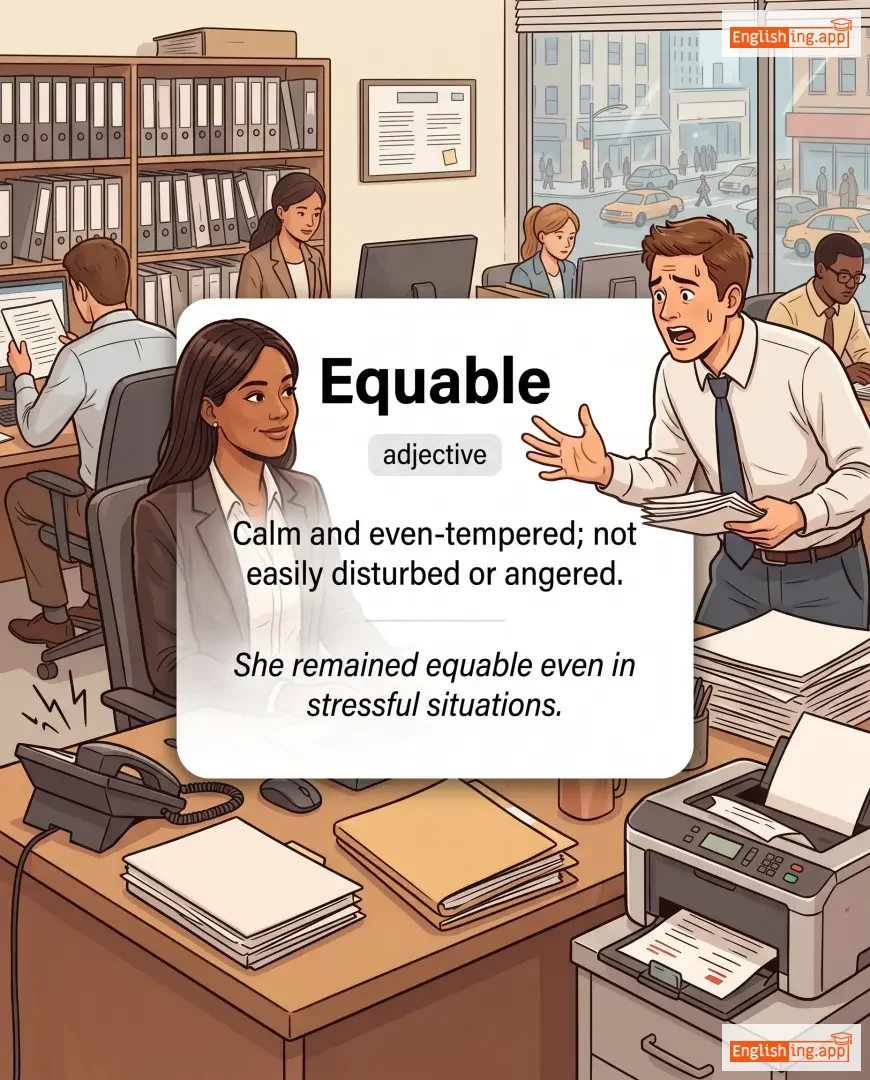
Equable definition card — visual illustration of the meaning
adjective
/ˈɛkwəbl̩/
冷静 (lěngjìng)

Calm and even-tempered; not easily disturbed or angered.

"She remained equable even in stressful situations."
"她在压力大的情况下依然保持冷静。" (Tā zài yālì dà de qíngkuàng xià yīrán bǎochí lěngjìng.)
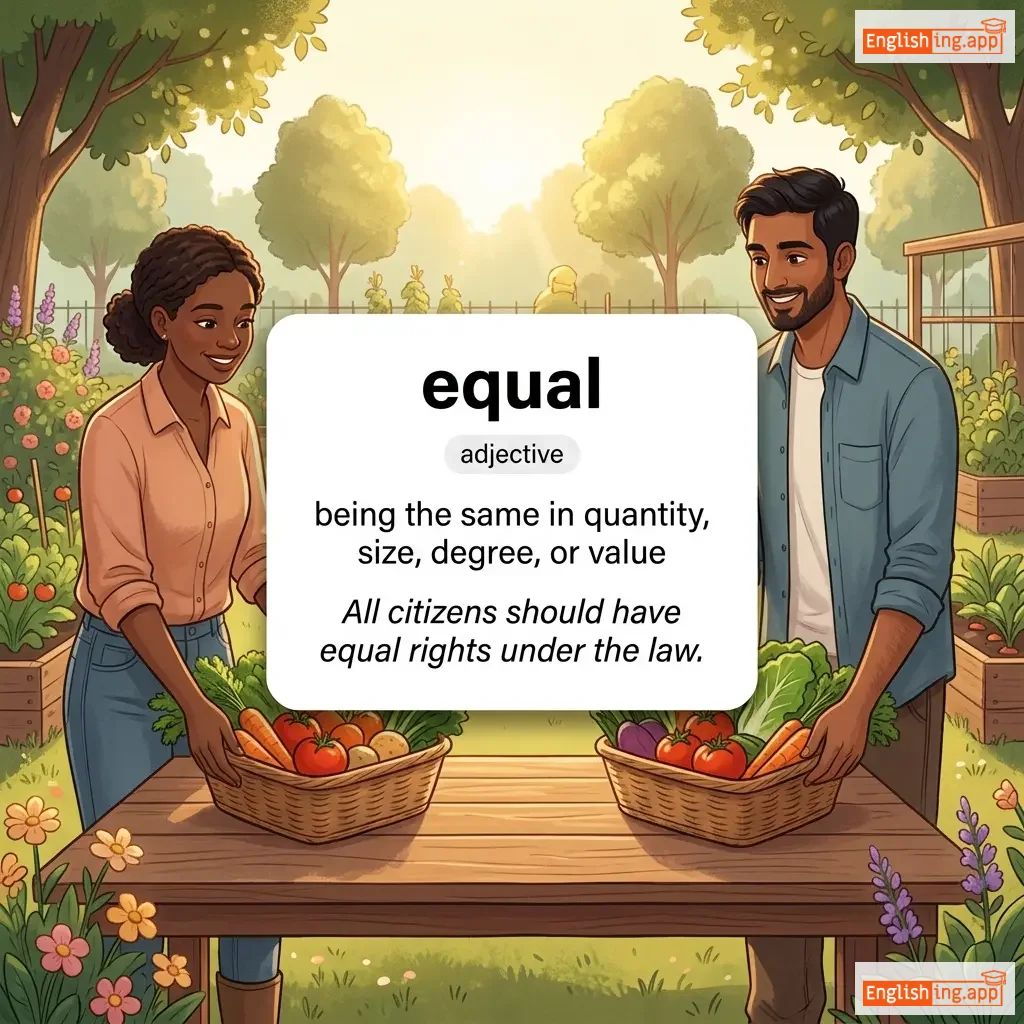
equal definition card — visual illustration of the meaning
adjective
/ˈiːkwəl/
平等 (pingdeng)

being the same in quantity, size, degree, or value

"All citizens should have equal rights under the law."
"所有公民都应该在法律面前享有平等权利。" (Suoyou gongmin dou yinggai zai falü mianqian xiangyou pingdeng quanli.)
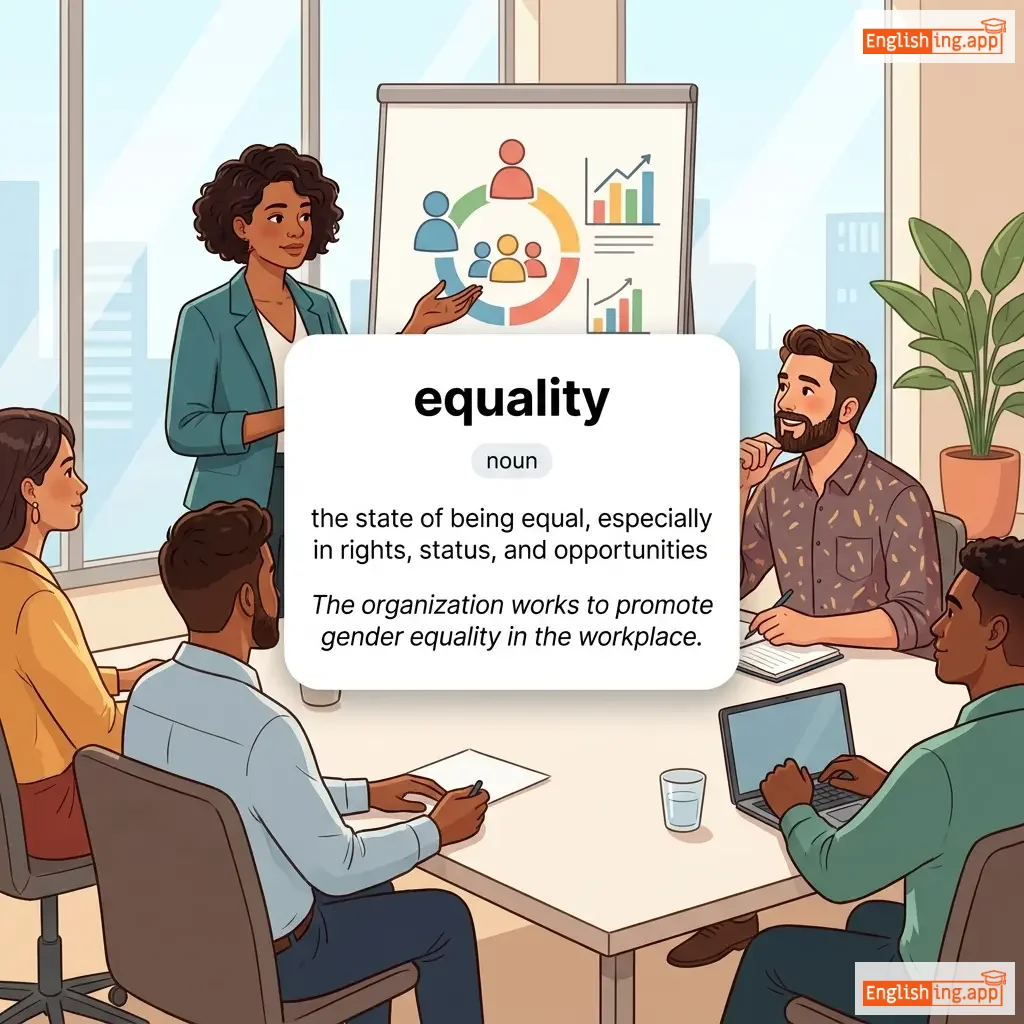
equality definition card — visual illustration of the meaning
noun
/ɪˈkwɒləti/
平等 (pingdeng)

the state of being equal, especially in rights, status, and opportunities

"The organization works to promote gender equality in the workplace."

"该组织致力于促进工作场所的性别平等。" (Gai zuzhi zhili yu cujin gongzuo changsuo de xingbie pingdeng.)
verb
/ˈiːkwəlaɪz/
平衡 (pínghéng)

To make equal or level in status, value, or amount.

"The team equalized the score in the last minute."

"团队在最后一分钟将比分扳平。" (Tuánduì zài zuìhòu yī fēnzhōng jiāng bǐfēn bān píng.)
adverb
/ˈiːkwəli/
平等地 (pingdeng de)

in an equal or fair way; to the same degree

"The prize money was equally divided among the winners."
"奖金在获胜者之间平等分配。" (Jiǎngjīn zài huòshèng zhě zhījiān píngděng fēnpèi.)
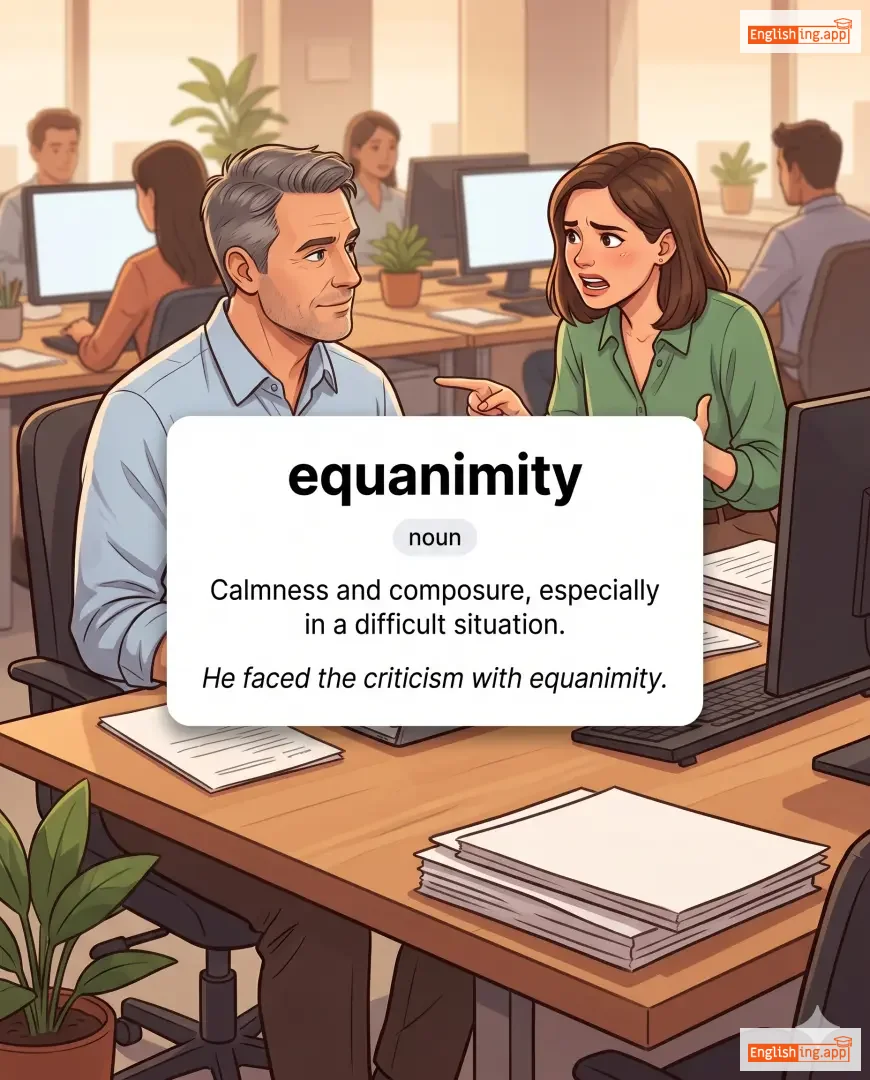
equanimity definition card — visual illustration of the meaning
noun
/ˌekwəˈnɪmɪti/
平静 (píngjìng)

Calmness and composure, especially in a difficult situation.

"He faced the criticism with equanimity."

"他以平静的心态面对批评。" (Tā yǐ píngjìng de xīntài miànduì pīpíng.)
verb
/ɪˈkweɪt/
等同 (děngtóng)

To consider as equal or equivalent.

"Many people equate wealth with success."

"许多人将财富与成功相提并论。" (xǔduō rén jiāng cáifù yǔ chénggōng xiāngtí bìnglùn.)
noun
/ɪˈkweɪʒən/
方程 (fangcheng)

a mathematical statement that shows the equality of two expressions

"He solved the equation to find the value of x."

"他解出了方程,找到了x的值。" (Ta jiechu le fangcheng, zhaodao le x de zhi.)
adjective
/ɪˈkwɛstriən/
骑术的 (qíshù de)

Relating to horse riding or horseback riders.

"She won several equestrian competitions."
"她赢得了几场马术比赛。" (Tā yíngdéle jǐ chǎng mǎshù bǐsài.)
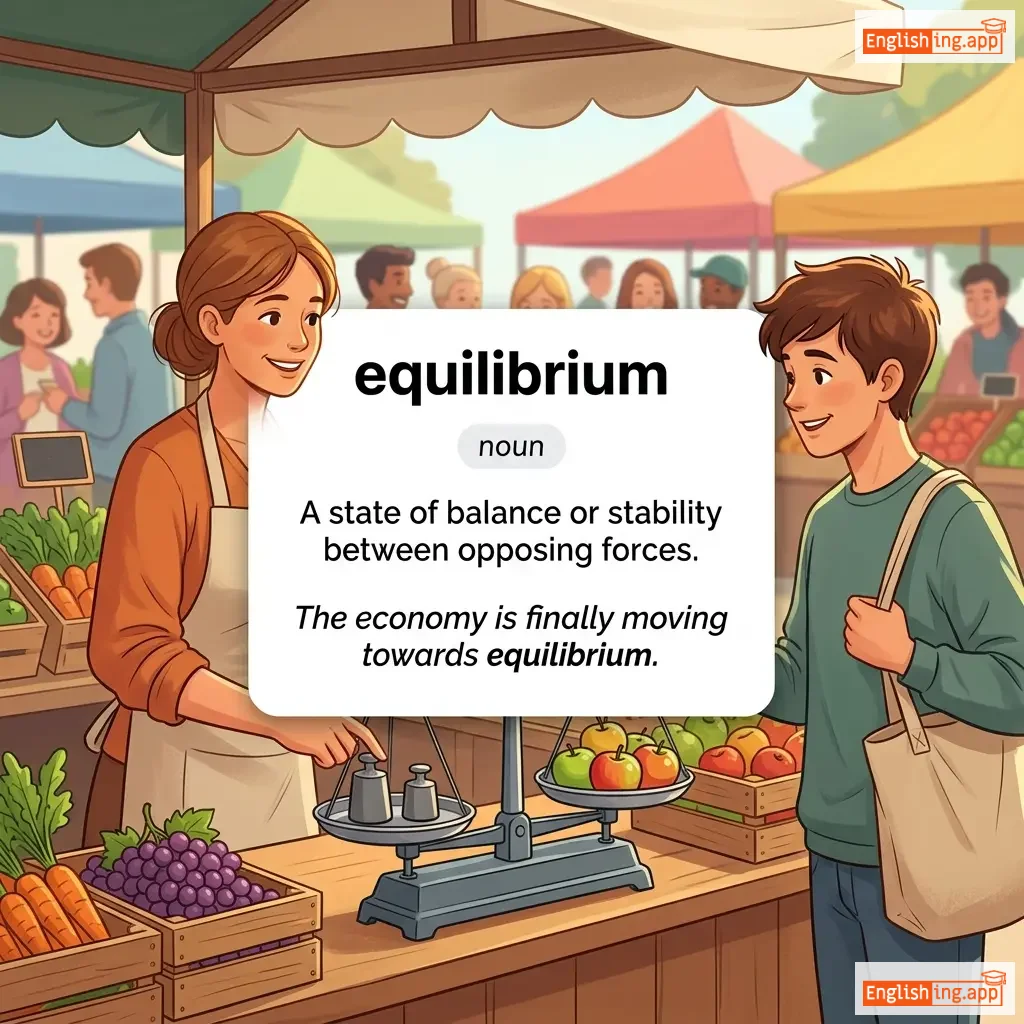
equilibrium definition card — visual illustration of the meaning
noun
/ˌiːkwɪˈlɪbriəm/
平衡 (pingheng)

A state of balance or stability between opposing forces.

"The economy is finally moving towards equilibrium."

"经济最终朝着平衡发展。" (Jīngjì zuìzhōng cháo zhe pínghéng fāzhǎn.)
adjective
/ˈiːkwaɪn/
与马有关的 (yǔ mǎ yǒuguān de)

Relating to or resembling a horse.

"The veterinarian specialized in equine medicine."

"兽医专门研究马医学。" (Shòuyī zhuānmén yánjiū mǎ yīxué.)
noun
/ˈiːkwɪnɒks/
昼夜平衡 (zhòuyè pínghéng)

The time or date when day and night are of equal length, occurring twice a year.

"The spring equinox marks the beginning of longer days."

"春分标志着白天时间变长的开始。" (Chūnfēn biāozhì zhe báitiān shíjiān biàn cháng de kāishǐ.)
verb
/ɪˈkwɪp/
装备 (zhuangbei)

to provide someone or something with the necessary items or skills for a task

"The school equipped its students with modern technology."

"学校为学生配备了现代科技。" (Xuexiao wei xuesheng peibei le xiandai keji.)
noun
/ˈɛkwɪpɪdʒ/
装备或带有配件的马车 (zhuangbei huo dai you peijian de macha)

Equipment or a carriage with its accessories.

"The nobleman arrived in a grand equipage."

"贵族乘坐豪华马车到达。" (Guizhu chengzuo haohua macha daoda.)
noun
/ɪˈkwɪpmənt/
设备 (shebei)

the necessary tools, machines, or other items needed for a particular purpose

"The laboratory bought new equipment for research."

"实验室购买了新的设备用于研究。" (shíyànshì gòumǎi le xīn de shèbèi yòng yú yánjiū.)
noun
/ˈɛkwɪpɔɪz/
平衡 (pingheng)

A state of balance or equilibrium.

"Her calmness created an equipoise in the heated debate."
"她的冷静在激烈的辩论中创造了平衡。" (Ta de lengjing zai jilie de bianlun zhong chuangzao le pingheng.)
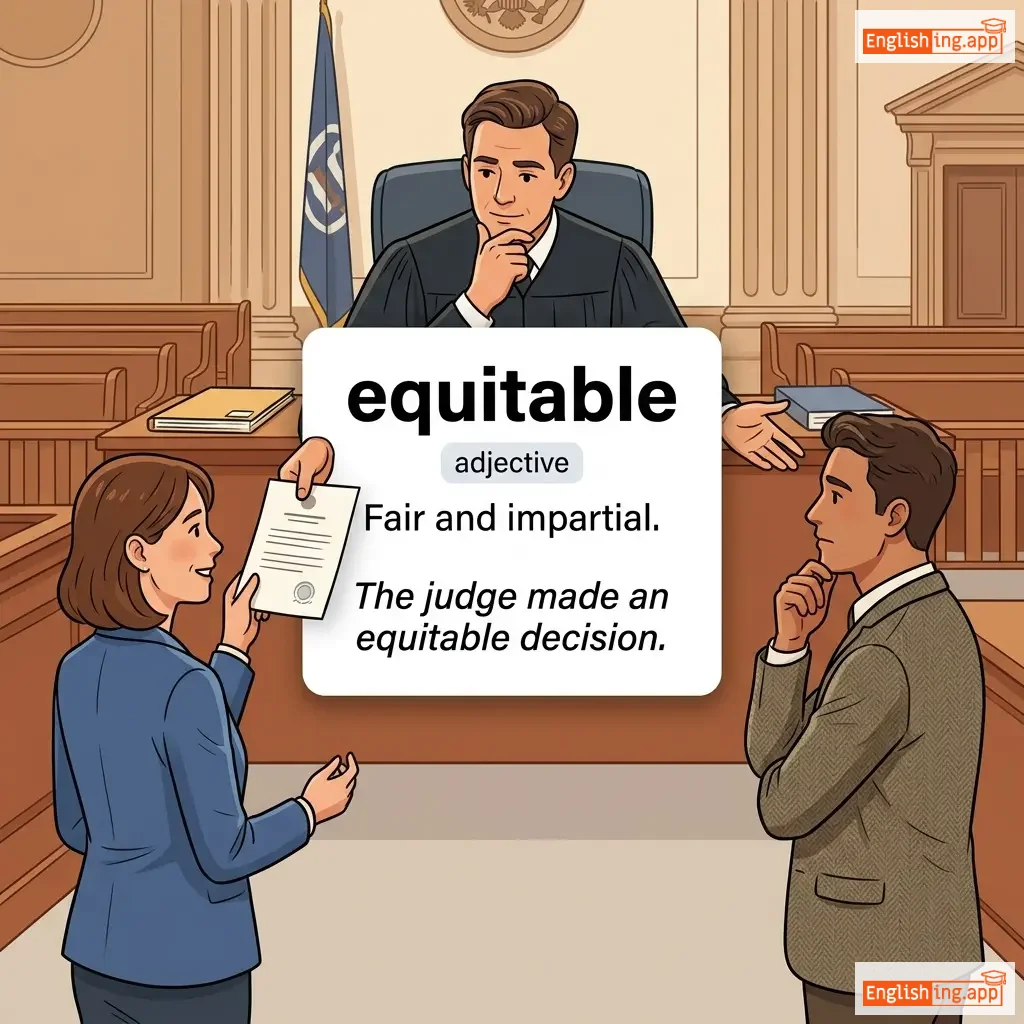
equitable definition card — visual illustration of the meaning
adjective
/ˈɛkwɪtəbl/
公平 (gongping)

Fair and impartial.

"The judge made an equitable decision."
"法官做出了公平的决定。" (Fǎguān zuòchūle gōngpíng de juédìng.)
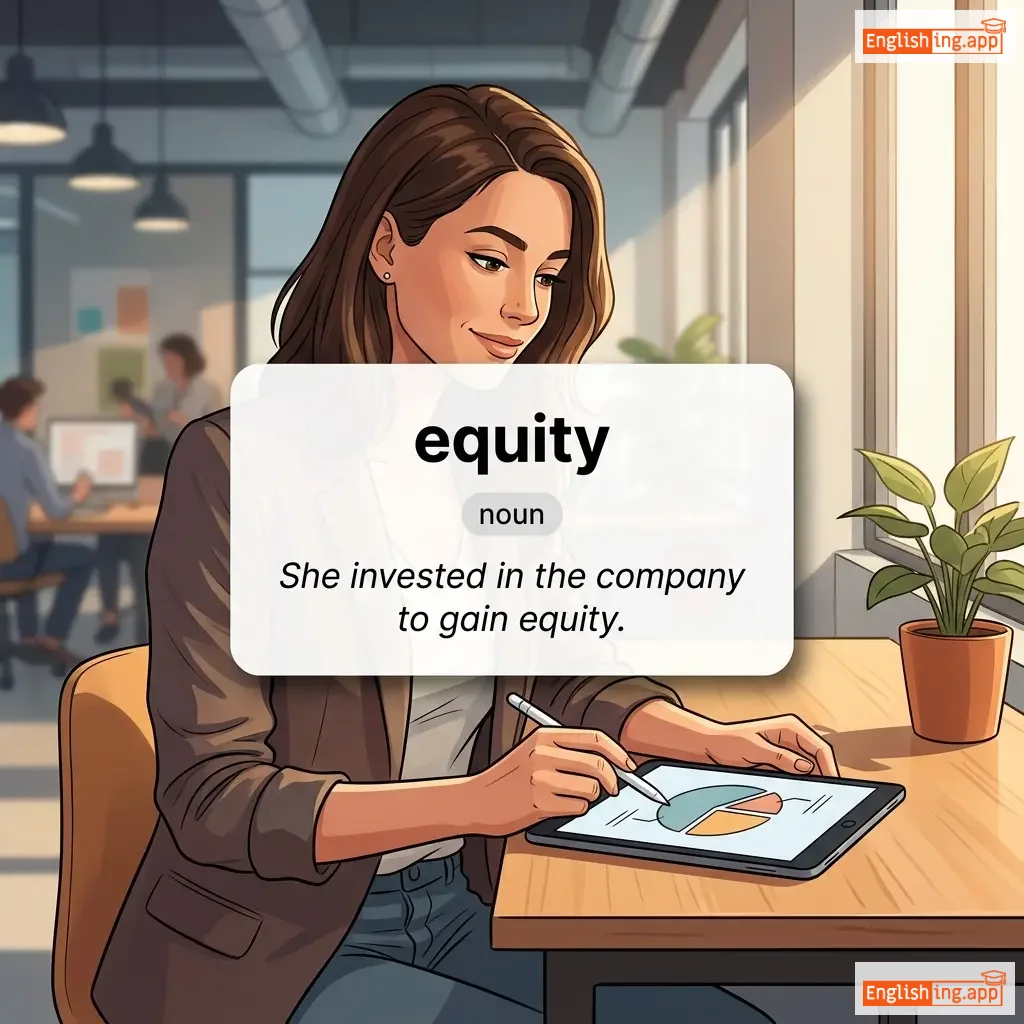
equity definition card — visual illustration of the meaning
noun
/ˈɛkwɪti/
公平; 所有权份额 (gongping; suoyouquan fen'e)

The quality of being fair and impartial; ownership interest in a company or property.

"She invested in the company to gain equity."

"她投资了公司以获得股权。" (Ta touzi le gongsi yi huode guquan.)
adjective
/ɪˈkwɪvələnt/
等于; 相当 (dengyu; xiangdang)

Equal in value, function, meaning, or effect.

"One euro is roughly equivalent to one dollar."

"一欧元大约等于一美元。" (Yi ouyuan dayue dengyu yi meiyuan.)
adjective
/ɪˈkwɪvəkəl/
模棱两可 (mó léng liǎng kě)

Open to more than one interpretation; ambiguous.

"His equivocal answer confused everyone."
"他的模棱两可回答让大家困惑。" (Tā de mó léng liǎng kě huídá ràng dàjiā kùnhuò.)
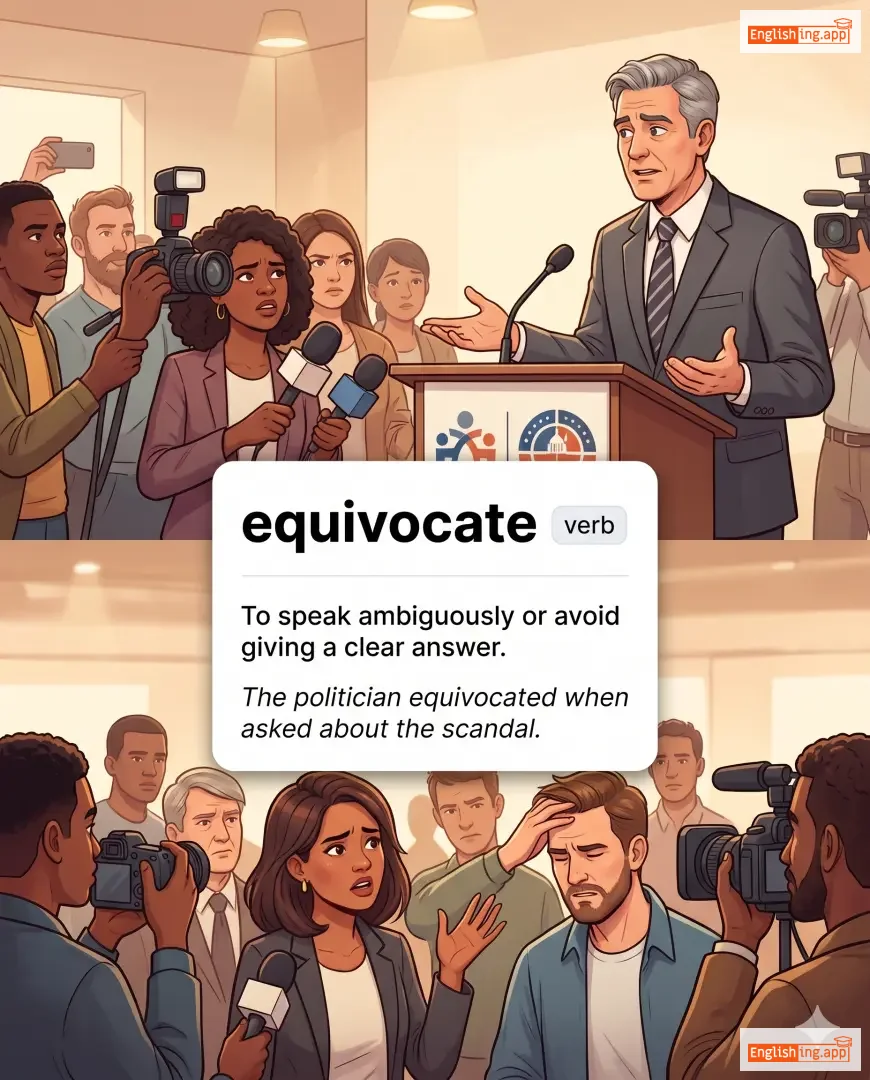
equivocate definition card — visual illustration of the meaning
verb
/ɪˈkwɪvəˌkeɪt/
含糊其辞 (hán hú qí cí)

To speak ambiguously or avoid giving a clear answer.

"The politician equivocated when asked about the scandal."

"那位政治家在被问及丑闻时含糊其辞。" (Nà wèi zhèngzhìjiā zài bèi wènjí chǒuwén shí hán hú qí cí.)
noun
/ɪˌkwɪvəˈkeɪʃən/
使用含糊不清的语言 (shǐyòng hán hú bù qīng de yǔyán)

The use of ambiguous language to conceal the truth or to avoid committing oneself.

"The politician’s equivocation frustrated voters who wanted a clear answer."
"政治家的模棱两可让想要清晰答案的选民感到沮丧。" (zhèngzhì jiā de mó léng liǎng kě ràng xiǎng yào qīng xī dá'àn de xuǎnmín gǎndào jǔsàng.)
noun
/ˈɪərə/
时代 (shidai)

a long and distinct period of history with a particular feature or characteristic

"The invention of the internet marked a new era in communication."

"互联网的发明标志着通信新时代的开始。" (Hulianwang de faming biaozhizhe tongxin xinxidai de kaishi.)
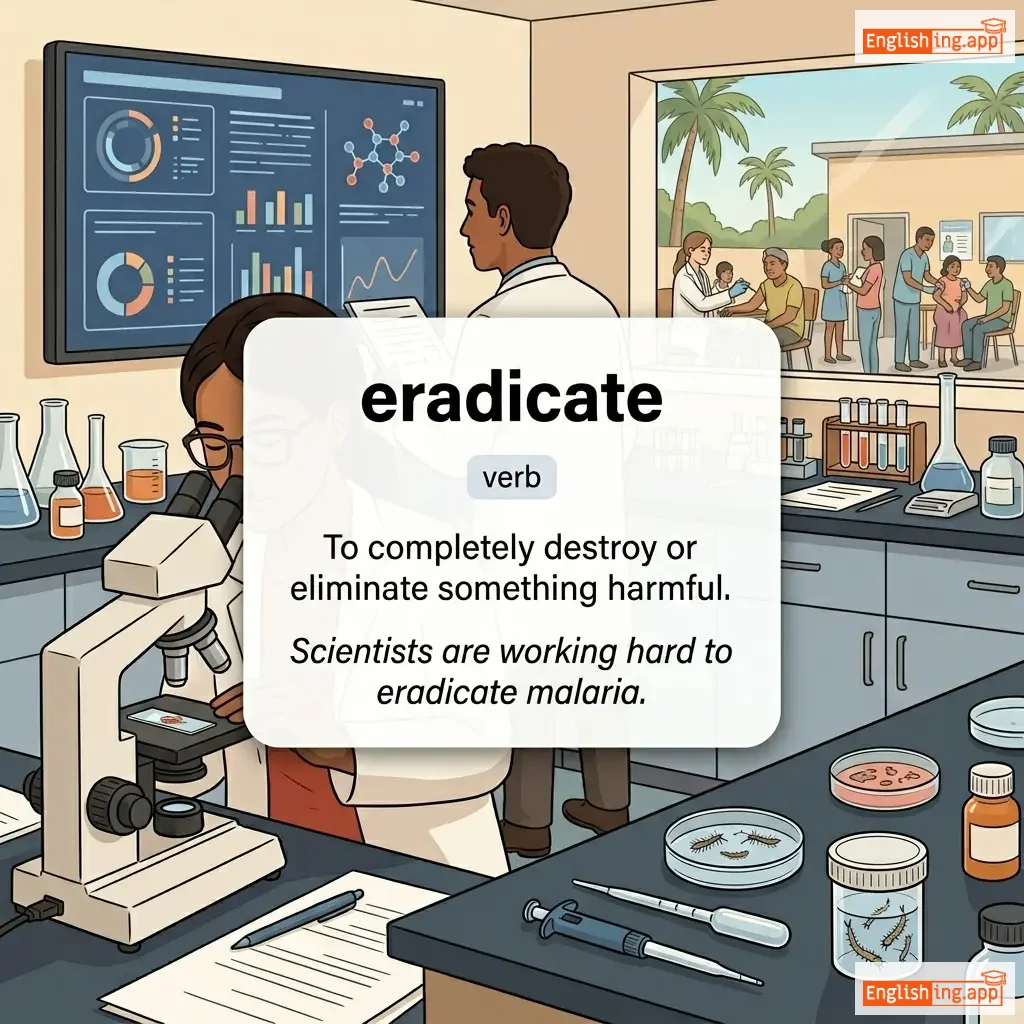
eradicate definition card — visual illustration of the meaning
verb
/ɪˈrædɪˌkeɪt/
根除; 消除 (gēnchú; xiāochú)

To completely destroy or eliminate something harmful.

"Scientists are working hard to eradicate malaria."
"科学家们正在努力根除疟疾。" (Kēxuéjiāmen zhèngzài nǔlì gēnchú nuèjí.)
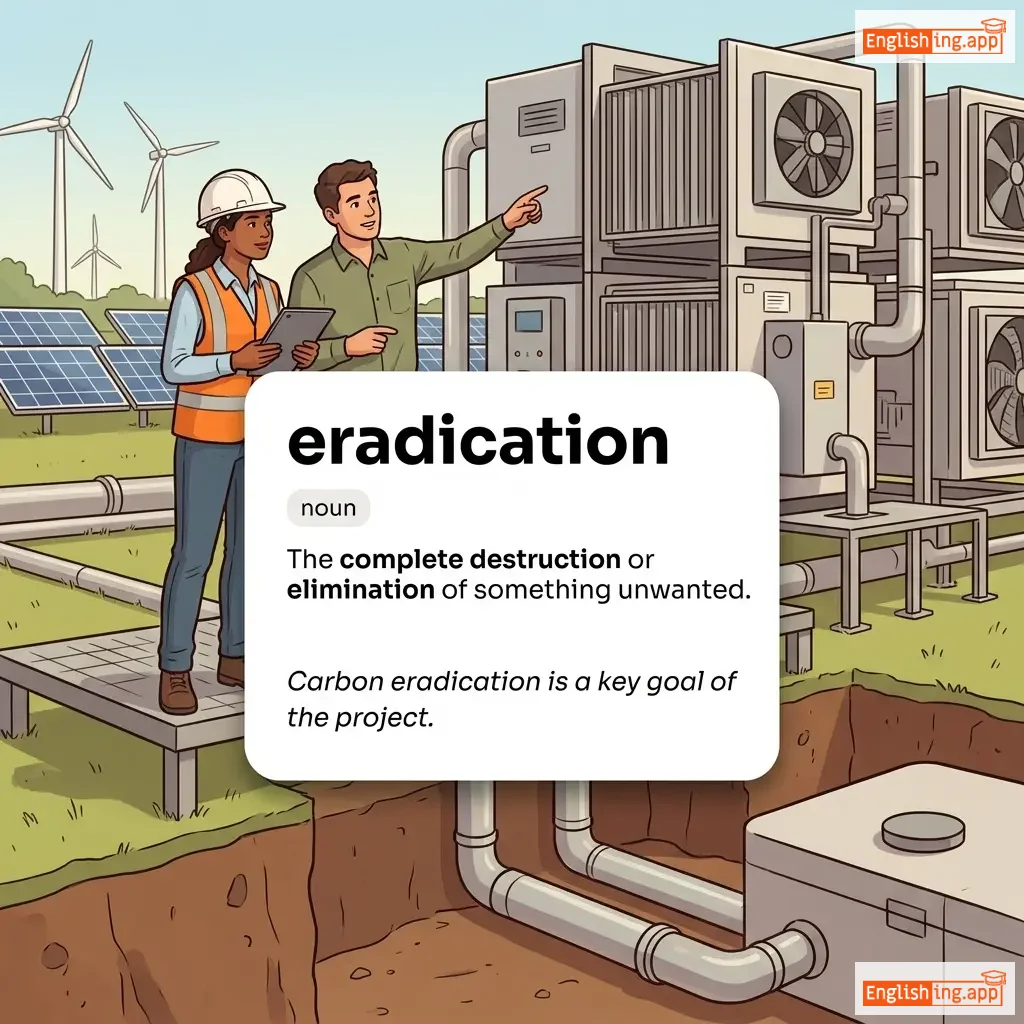
eradication definition card — visual illustration of the meaning
noun
ɪˌræd.ɪˈkeɪ.ʃən
根除 (gēnchú)

The complete destruction or elimination of something unwanted.

"Carbon eradication is a key goal of the project."
"碳的根除是该项目的一个关键目标。" (Tàn de gēnchú shì gāi xiàngmù de yīgè guānjiàn mùbiāo.)
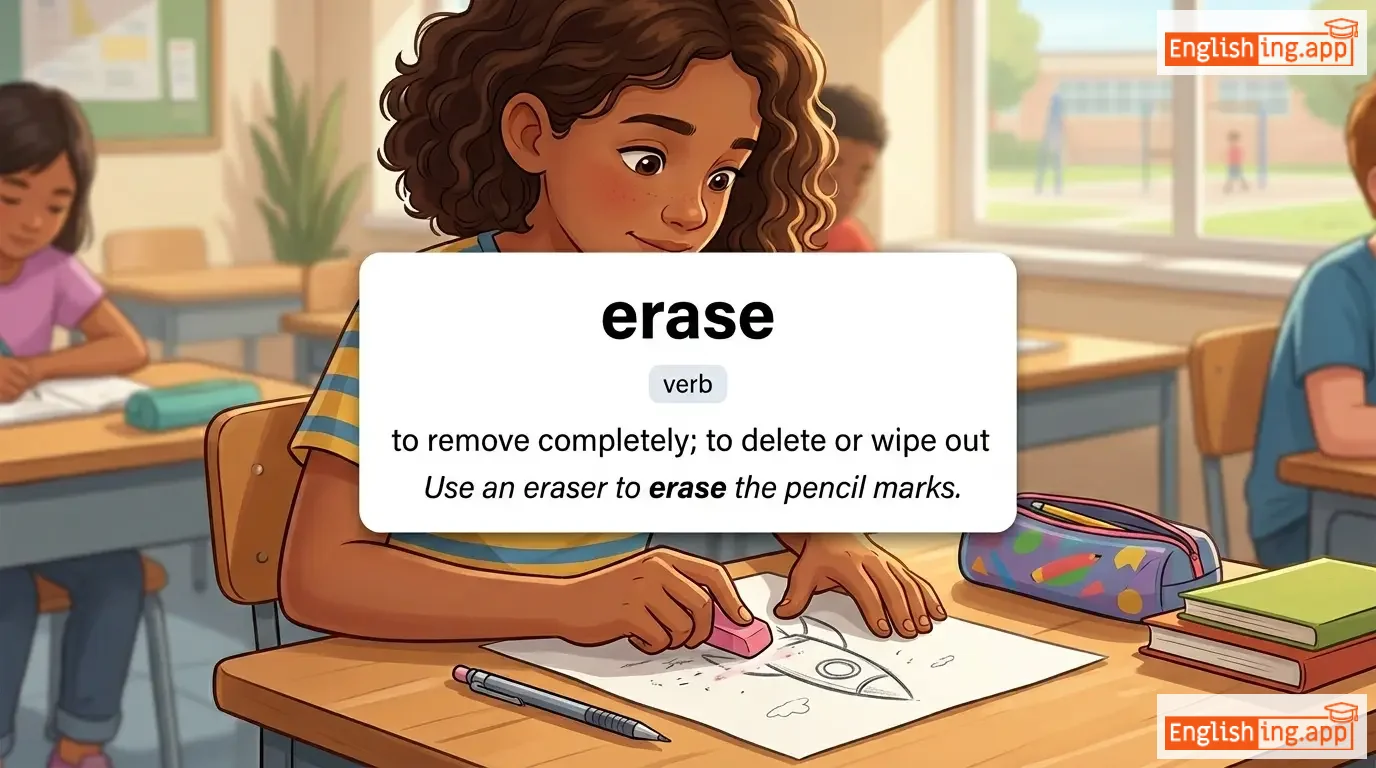
erase definition card — visual illustration of the meaning
verb
/ɪˈreɪs/
擦除 (cāchú)

to remove completely; to delete or wipe out

"Use an eraser to erase the pencil marks."
"使用橡皮擦来擦掉铅笔痕迹。" (Shǐyòng xiàngpí cā lái cā diào qiānbǐ hénjì.)
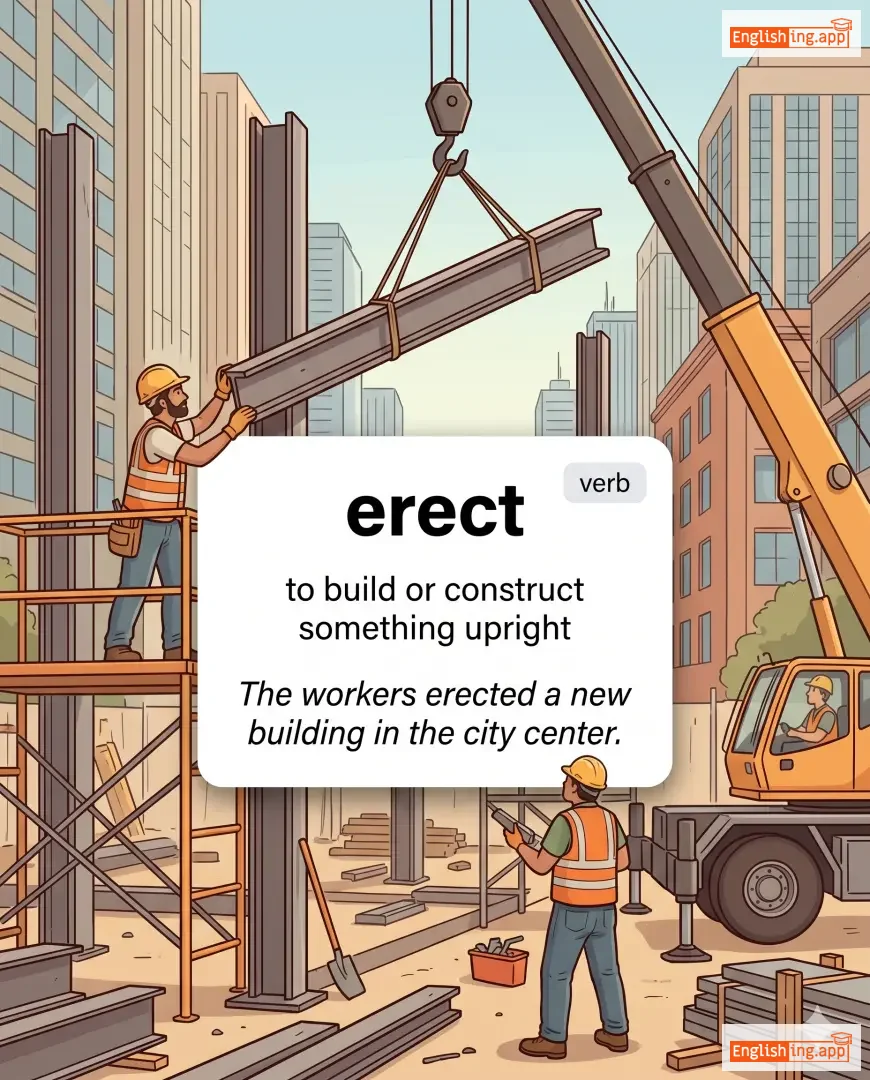
erect definition card — visual illustration of the meaning
verb
/ɪˈrɛkt/
建造 (jianzao)

to build or construct something upright

"The workers erected a new building in the city center."
"工人在市中心建造了一座新大楼。" (Gongren zai shi zhongxin jianzao le yi zuo xin dalou.)
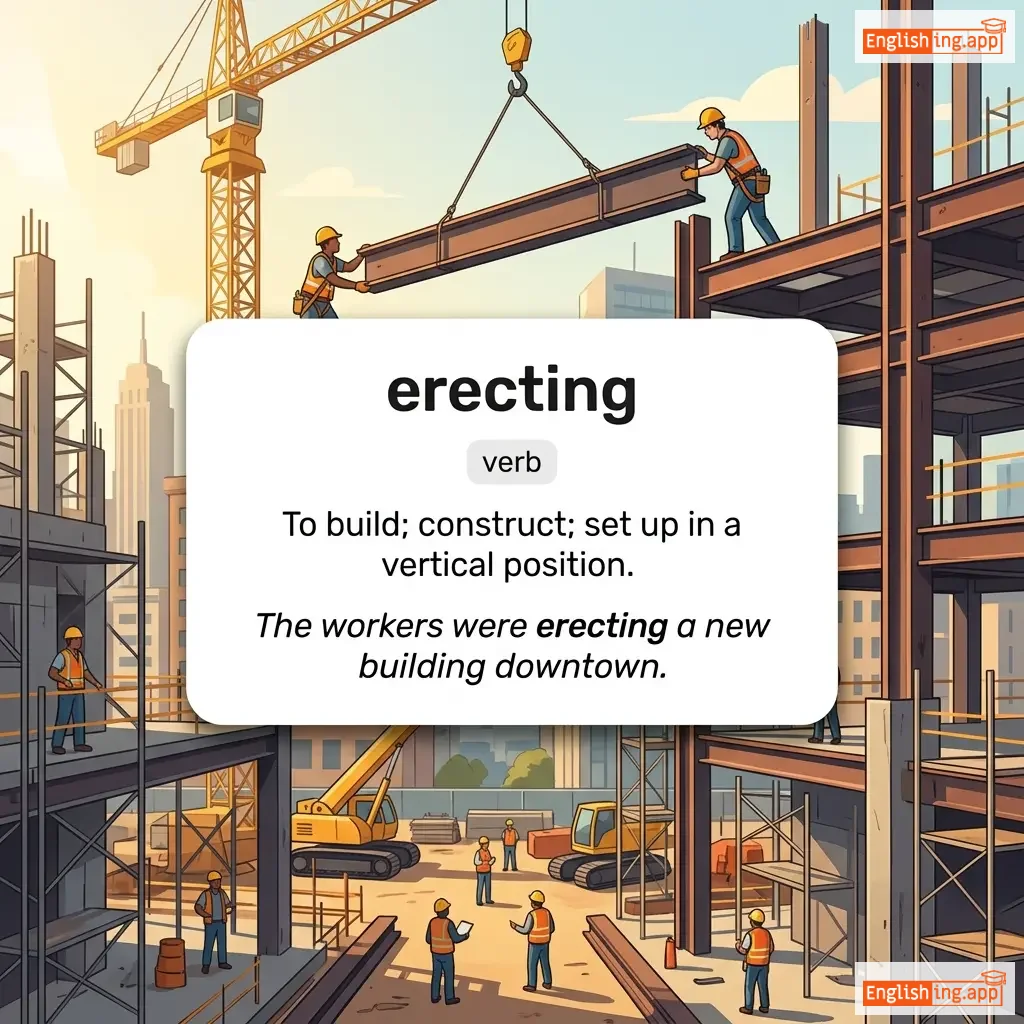
erecting definition card — visual illustration of the meaning
verb
ɪˈrɛktɪŋ
建造 (jianzao)

To build; construct; set up in a vertical position.

"The workers were erecting a new building downtown."
"工人们正在市中心建设一座新建筑。" (Gongren men zhengzai shicheng zhongjian yi zuo xin jianzhu.)
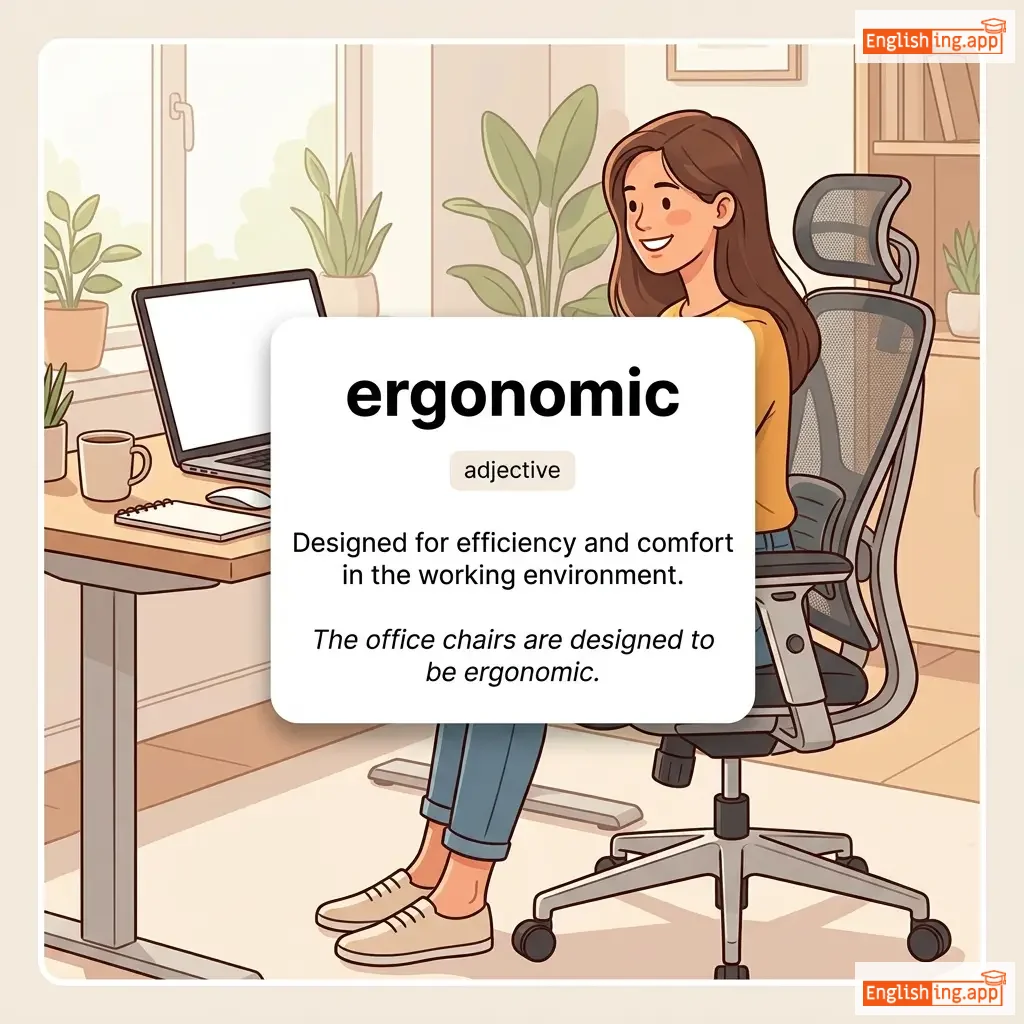
ergonomic definition card — visual illustration of the meaning
adjective
/ˌɜː.ɡəˈnɒm.ɪk/
人体工学 (rentigongxue)

Designed for efficiency and comfort in the working environment.

"The office chairs are designed to be ergonomic."

"办公室椅子设计得符合人体工学。" (Bàngōngshì yǐzi shèjì dé fúhé réntǐ gōngxué.)
verb
/ɪˈroʊd/
侵蚀 (qīnshí)

to gradually wear away or destroy by natural forces such as water, wind, or chemical action

"The coastline has begun to erode due to constant waves."
"海岸线因持续的波浪开始侵蚀。" (Hǎi'àn xiàn yīn chíxù de bōlàng kāishǐ qīnshí.)
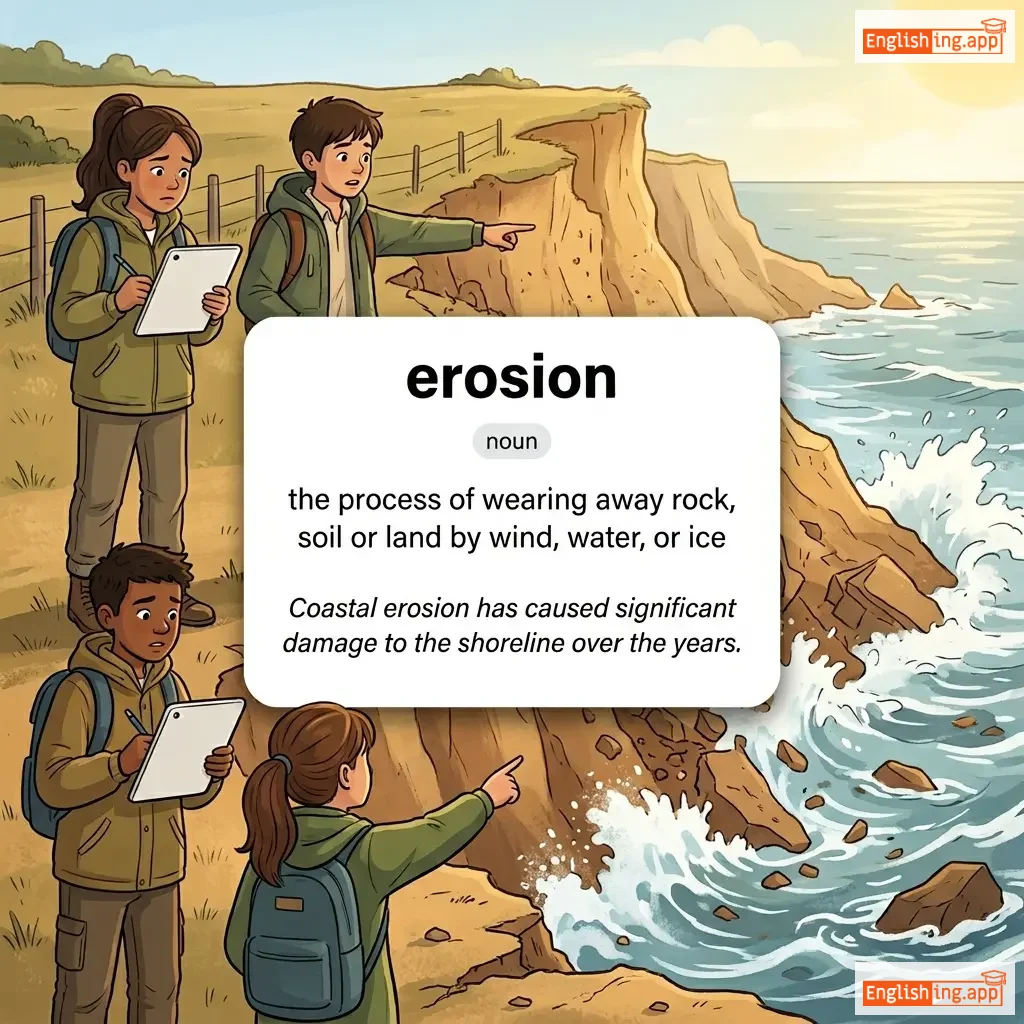
erosion definition card — visual illustration of the meaning
noun
/ɪˈroʊ.ʒən/
侵蚀 (qin shi)

the process of wearing away rock, soil, or land by wind, water, or ice

"Coastal erosion has caused significant damage to the shoreline over the years."

"海岸侵蚀在多年中对海岸线造成了重大损害。" (Hai'an qin shi zai duo nian zhong dui hai'an xian zao cheng le zhong da sun hai.)
adjective
/ɪˈrɒtɪk/
色情的 (sèqíng de)

relating to or tending to arouse sexual desire or excitement

"The novel contained several erotic scenes."
"这本小说包含了几个色情场景。" (Zhè běn xiǎoshuō bāohánle jǐ gè sèqíng chǎngjǐng.)
verb
/ɜːr/
犯错 (fàn cuò)

to make a mistake or be incorrect

"To err is human, to forgive divine."

"犯错是人类的本性,宽恕是神圣的。" (Fàn cuò shì rénlèi de běn xìng, kuānshù shì shénshèng de.)
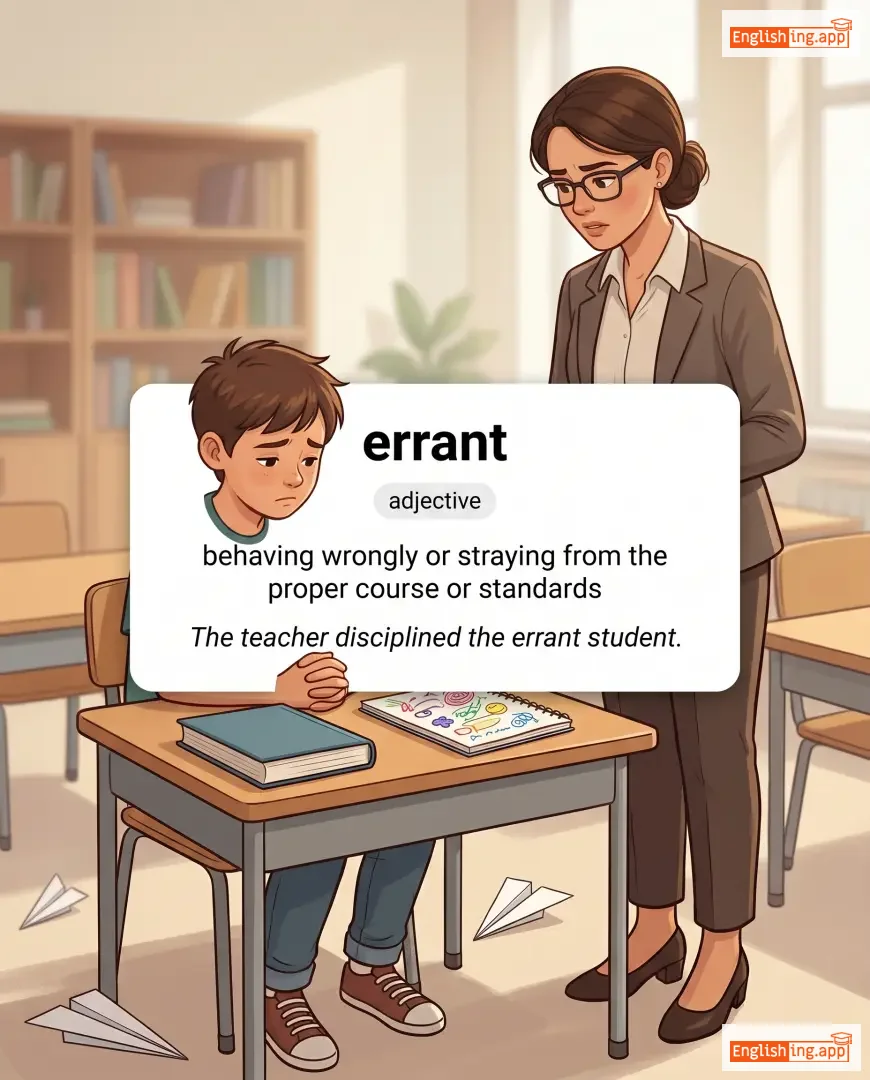
errant definition card — visual illustration of the meaning
adjective
/ˈɛrənt/
迷途的 (mítú de)

behaving wrongly or straying from the proper course or standards

"The teacher disciplined the errant student."
"老师惩罚了那个迷途的学生。" (Lǎoshī chéngfále nàgè mítú de xuéshēng.)
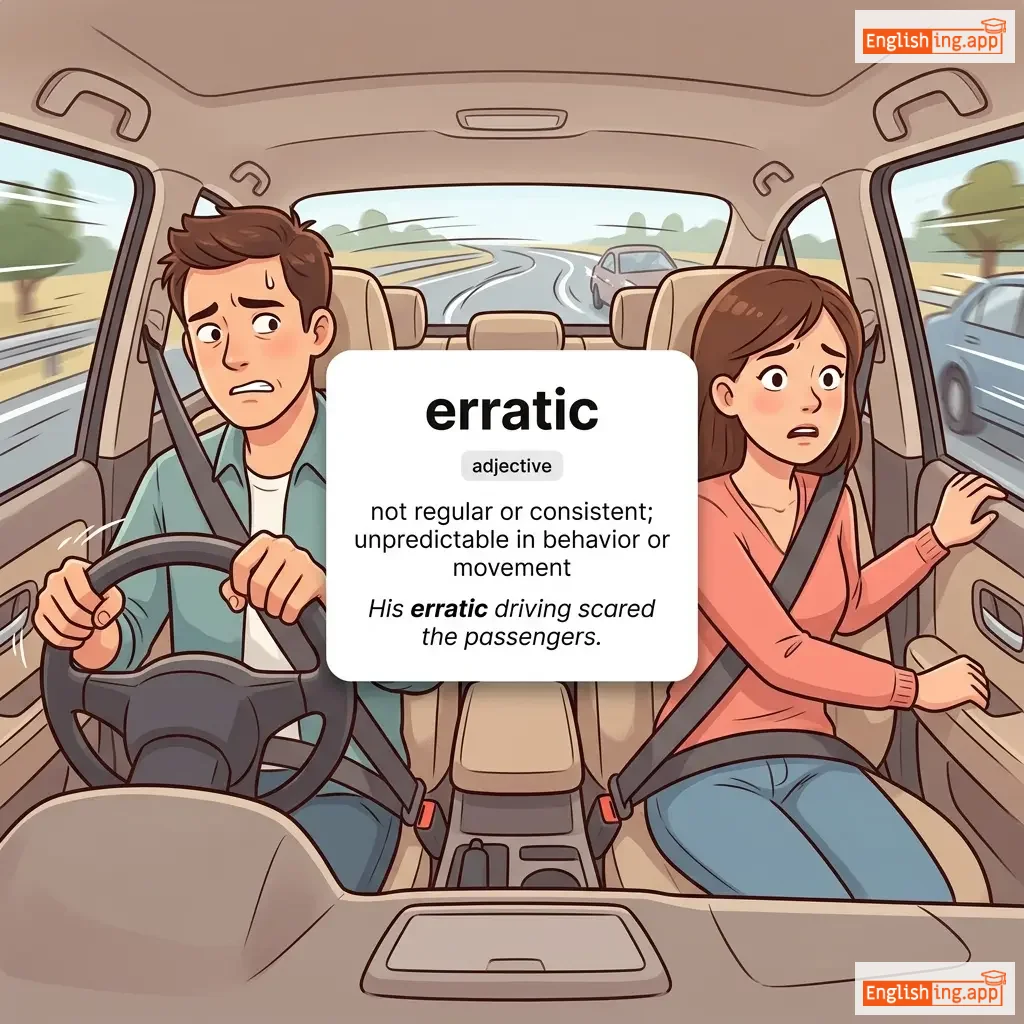
erratic definition card — visual illustration of the meaning
adjective
/ɪˈrætɪk/
不稳定 (bù wěn dìng)

not regular or consistent; unpredictable in behavior or movement

"His erratic driving scared the passengers."
"他不稳定的驾驶吓坏了乘客。" (Tā bù wěn dìng de jià shǐ xià huài le chéng kè.)
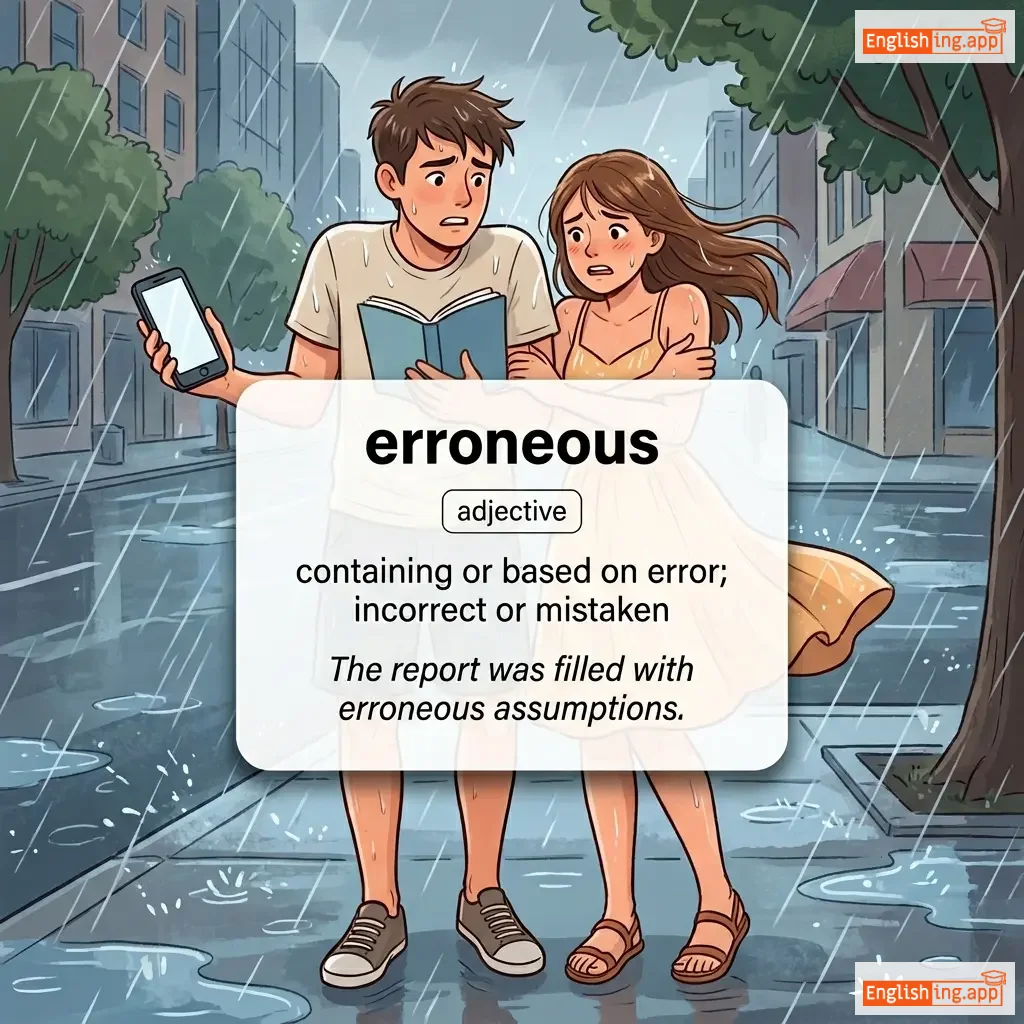
erroneous definition card — visual illustration of the meaning
adjective
/ɪˈrəʊniəs/
错误的 (cuòwù de)

containing or based on error; incorrect or mistaken

"The report was filled with erroneous assumptions."
"报告充满了错误的假设。" (Bàogào chōngmǎnle cuòwù de jiǎshè.)
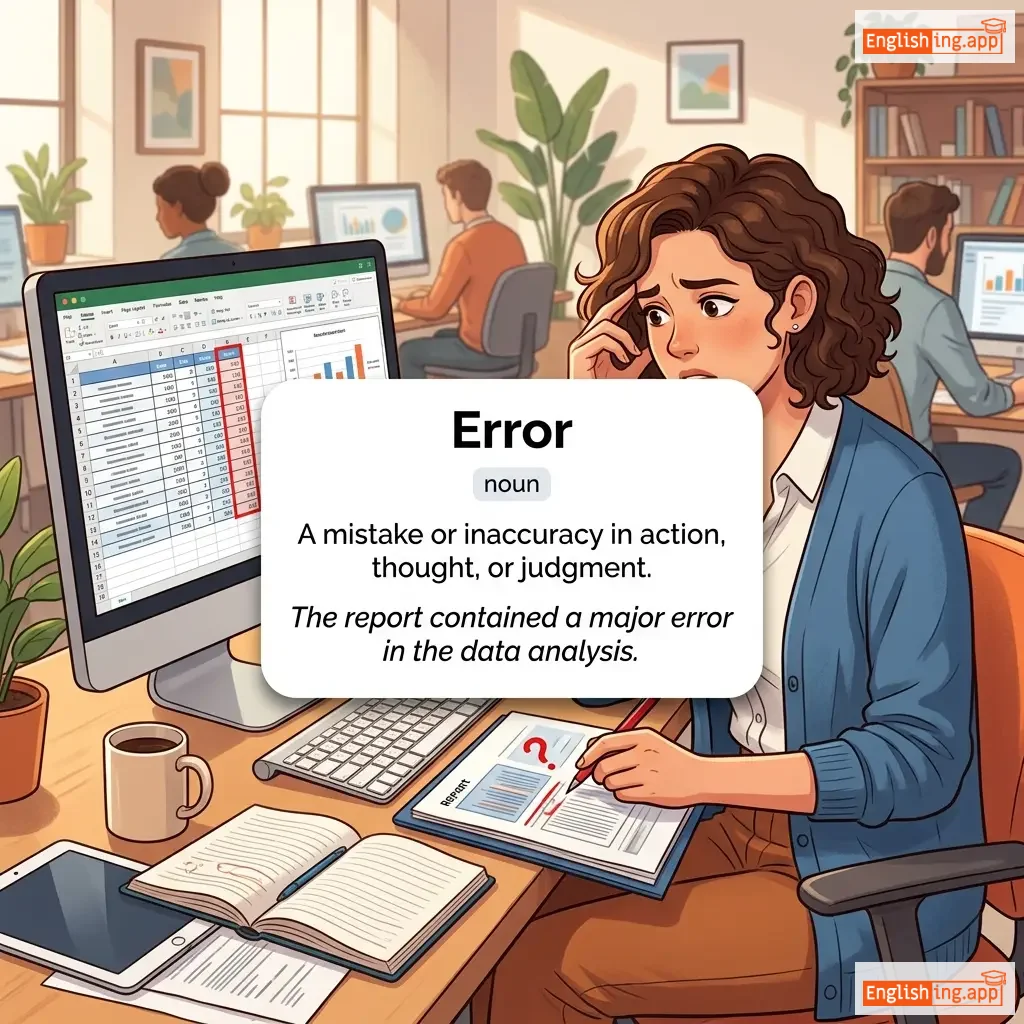
Error definition card — visual illustration of the meaning
noun
/ˈɛrər/
错误 (cuo wu)

A mistake or inaccuracy in action, thought, or judgment.

"The report contained a major error in the data analysis."

"报告中在数据分析中包含了一个重大错误。" (Baogao zhong zai shuju fenxi zhong baokuo le yi ge zhongda cuo wu.)
adjective
/ˈɛrzæts/
替代品 (tìdàipǐn)

made or used as a substitute, typically an inferior one

"The cheap shoes were made of ersatz leather."

"便宜的鞋子是用仿皮革做的。" (Biànyí de xiézi shì yòng fǎng pígé zuò de.)
adjective
/ˈɜːrstwaɪl/
曾经 (céngjīng)

former or in the past

"They were erstwhile friends but no longer speak."
"他们曾经是朋友,但现在不再交谈。" (Tāmen céngjīng shì péngyǒu, dàn xiànzài bù zài jiāotán.)
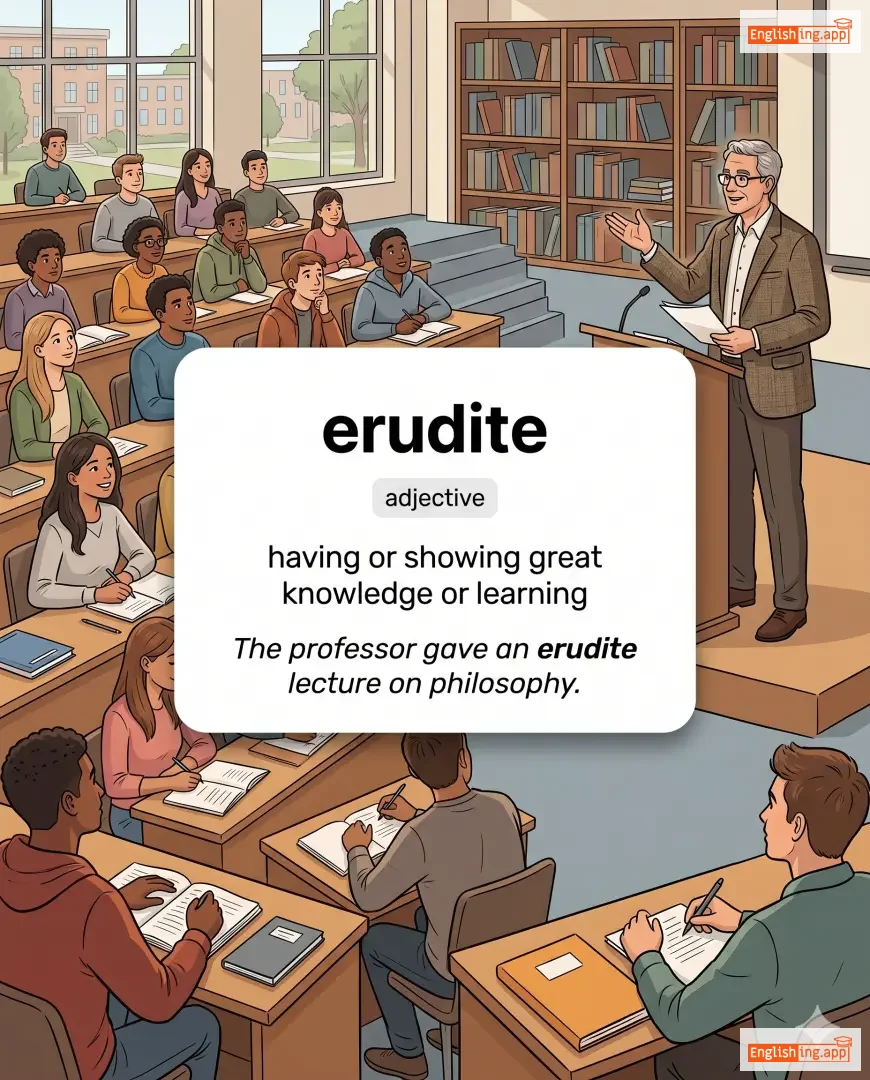
erudite definition card — visual illustration of the meaning
adjective
/ˈɛrjʊˌdaɪt/
博学 (boxue)

having or showing great knowledge or learning

"The professor gave an erudite lecture on philosophy."

"教授就哲学做了一个博学的讲座。" (Jiàoshòu jiù zhéxué zuòle yīgè bóxué de jiǎngzuò.)
erudition definition card — visual illustration of the meaning
noun
/ˌɛrjʊˈdɪʃən/
博学 (boxue)

extensive knowledge acquired through reading and study

"Her erudition was evident in her detailed analysis of the text."

"她的博学在她对文本的详细分析中显而易见。" (Ta de boxue zai ta dui wenben de xiangxi fenxi zhong xian er yi jian.)
verb
/ɪˈrʌpt/
爆发 (baofa)

to burst forth suddenly and violently

"The volcano erupted after centuries of dormancy."

"火山在沉寂了几个世纪后爆发。" (Huoshan zai chenji le jige shiji hou baofa.)
noun
/ɪˈrʌp.ʃən/
火山喷发 (huǒshān pēn fā)

a sudden violent occurrence or outburst; volcanic explosion

"The volcanic eruption forced thousands of people to evacuate the area."
"火山喷发迫使成千上万的人疏散该地区。" (Huǒshān pēn fā pòshǐ chéngqiān shàngwàn de rén shūsàn gāi dìqū.)
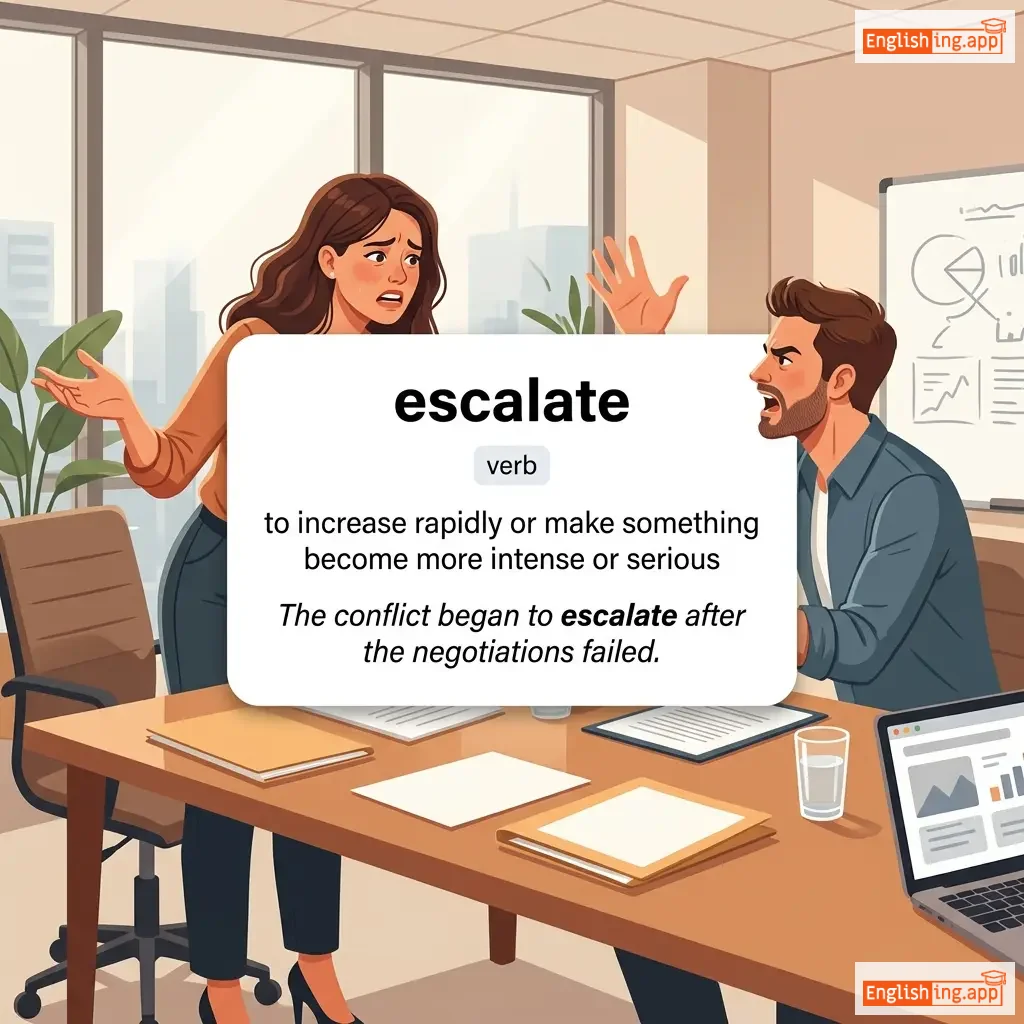
escalate definition card — visual illustration of the meaning
verb
/ˈɛskəleɪt/
升级 (shēngjí)

to increase rapidly or make something become more intense or serious

"The conflict began to escalate after the negotiations failed."

"冲突在谈判失败后开始升级。" (Chōngtú zài tánpàn shībài hòu kāishǐ shēngjí.)