वोकैबुलरीज

इंग्लिश वोकैबुलरी डिस्कवर, लर्न और मास्टर करें

noun
/ˈɛpɪθɛt/
उपाधि (upadhi)

A descriptive phrase or word used to characterize someone or something, often as a nickname.

"He earned the epithet ‘The Great’ for his remarkable achievements."

"उसने अपनी असाधारण उपलब्धियों के लिए ‘द ग्रेट’ उपाधि प्राप्त की।" (Usne apni asadharan uplabdhiyon ke liye ‘The Great’ upadhi praapt ki.)
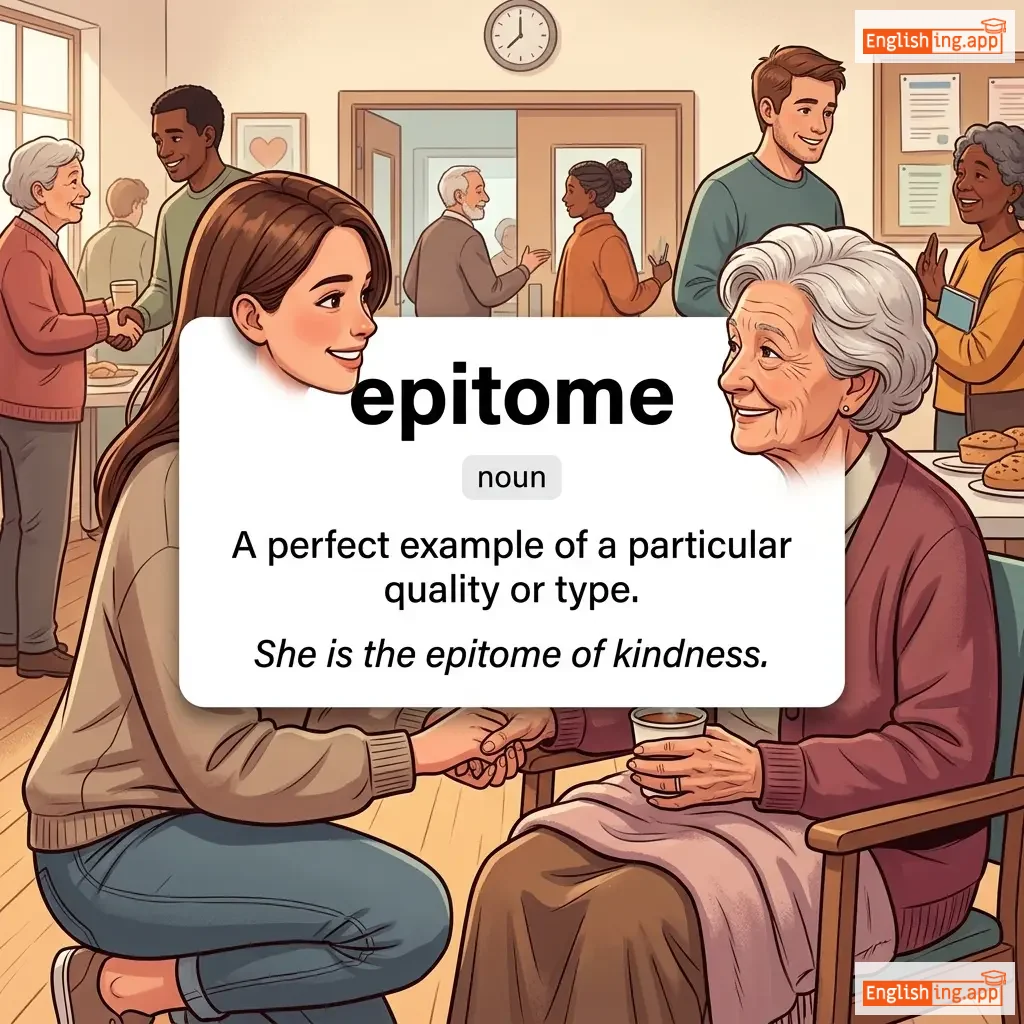
epitome definition card — visual illustration of the meaning
noun
/ɪˈpɪtəmi/
परिपूर्ण उदाहरण (paripoorn udaharan)

A perfect example of a particular quality or type.

"She is the epitome of kindness."

"वह दया का परिपूर्ण उदाहरण है।" (vah daya ka paripoorn udaharan hai)
noun
/ˌɛpɪzəʊˈɒtɪk/
पशु महामारी (pashu mahaamaari)

An outbreak of disease affecting many animals of one kind at the same time.

"The farmer feared an epizootic might wipe out his cattle."

"किसान को डर था कि एक पशु महामारी उसके मवेशियों को नष्ट कर सकती है।" (Kisaan ko dar tha ki ek pashu mahaamaari uske maveshiyon ko nasht kar sakti hai.)
epoch definition card — visual illustration of the meaning
noun
/ˈiːpɒk/
युग (yug)

A period of time in history or a person's life, typically one marked by notable events or characteristics.

"The invention of the internet marked a new epoch in human history."

"इंटरनेट का आविष्कार मानव इतिहास में एक नए युग की शुरुआत थी।" (Internet ka avishkar manav itihaas mein ek naye yug ki shuruat thi.)
noun
/ˈɛpəʊd/
कविता का एक रूप (kavita ka ek roop)

A form of lyric poem written in couplets, often following a strophe and antistrophe in classical Greek poetry.

"The poet concluded his ode with a striking epode."

"कवि ने अपनी ओड को एक अद्वितीय एपोड से समाप्त किया।" (Kavi ne apni ode ko ek advitiya epode se samaapt kiya.)
noun
/ˈɛpənɪm/
उदाहरण देने वाला व्यक्ति (udaharan dene wala vyakti)

A person after whom a discovery, invention, place, or other thing is named.

"Sandwich is an eponym named after the Earl of Sandwich."

"सैंडविच एक उदाहरण देने वाला नाम है, जो सैंडविच के अर्ल के नाम पर रखा गया है।" (Sandwich ek udaharan dene wala naam hai, jo Sandwich ke Arl ke naam par rakha gaya hai.)
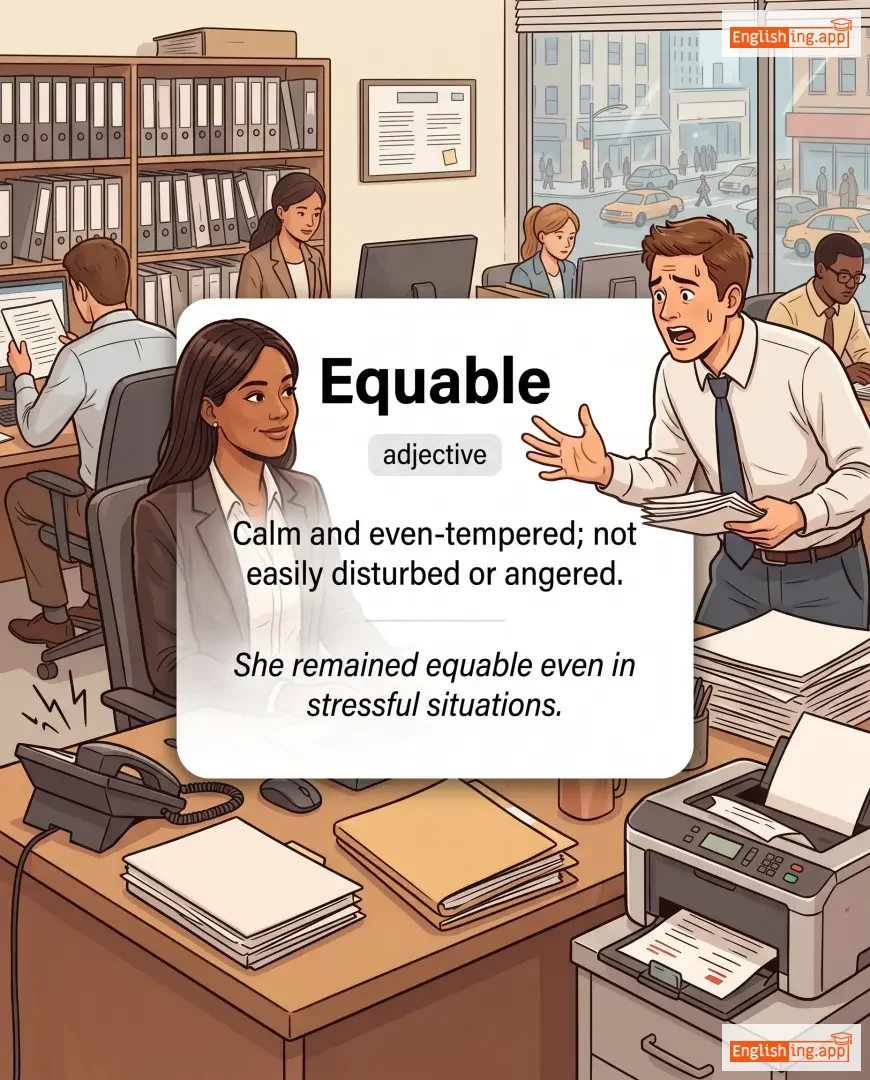
Equable definition card — visual illustration of the meaning
adjective
/ˈɛkwəbl̩/
शांत (shant)

Calm and even-tempered; not easily disturbed or angered.

"She remained equable even in stressful situations."

"वह तनावपूर्ण परिस्थितियों में भी शांत रही।" (Wah tanavpoorn paristhitiyon mein bhi shant rahi.)
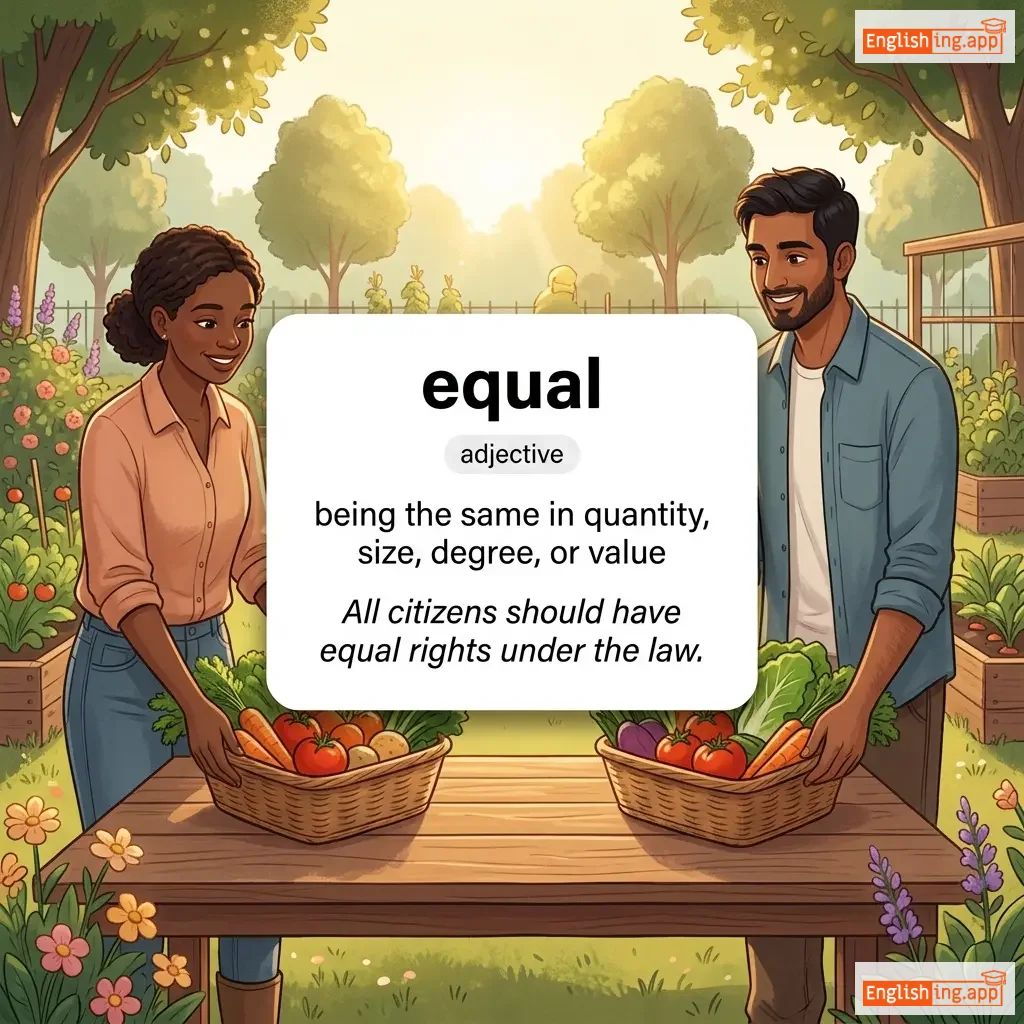
equal definition card — visual illustration of the meaning
adjective
/ˈiːkwəl/
समान (samaan)

being the same in quantity, size, degree, or value

"All citizens should have equal rights under the law."

"सभी नागरिकों को क़ानून के तहत समान अधिकार मिलना चाहिए।" (Sabhi nagrikon ko kaanoon ke tahat samaan adhikaar milna chahiye.)
equality definition card — visual illustration of the meaning
noun
/ɪˈkwɒləti/
समानता (samanata)

the state of being equal, especially in rights, status, and opportunities

"The organization works to promote gender equality in the workplace."

"संगठन कार्यस्थल पर लिंग समानता को बढ़ावा देने के लिए काम करता है।" (Sangathan karyasthal par ling samanata ko badhava dene ke liye kaam karta hai.)
verb
/ˈiːkwəlaɪz/
बराबरी करना (barabari karna)

To make equal or level in status, value, or amount.

"The team equalized the score in the last minute."

"टीम ने आखिरी मिनट में स्कोर बराबरी किया।" (Team ne aakhiri minute mein score barabari kiya.)
adverb
/ˈiːkwəli/
समान रूप से (saman roop se)

in an equal or fair way; to the same degree

"The prize money was equally divided among the winners."

"पुरस्कार राशि को विजेताओं के बीच समान रूप से विभाजित किया गया था।" (Puraskar rashi ko vijetaon ke beech saman roop se vibhajit kiya gaya tha.)
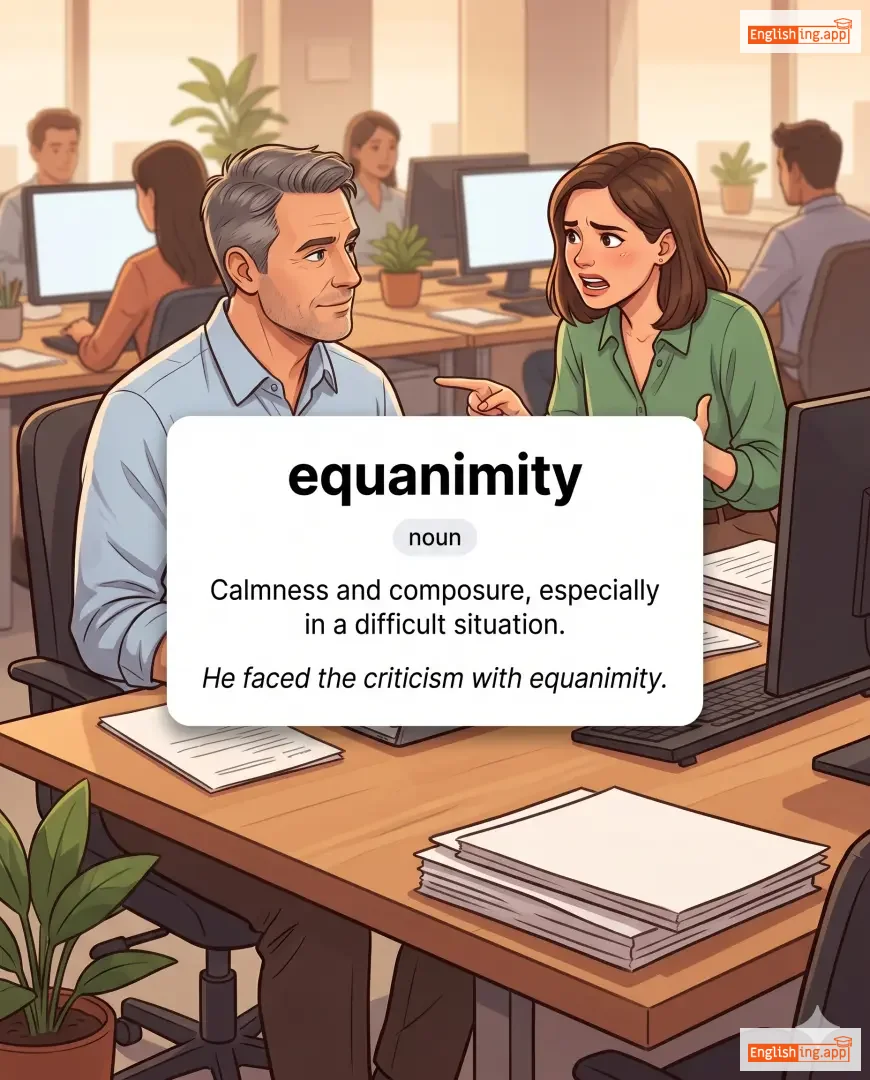
equanimity definition card — visual illustration of the meaning
noun
/ˌekwəˈnɪmɪti/
मनोसामान्यता (manosamanya)

Calmness and composure, especially in a difficult situation.

"He faced the criticism with equanimity."

"उसने आलोचना का सामना मनोसामान्यता से किया।" (Usne alochana ka samna manosamanya se kiya.)
verb
/ɪˈkweɪt/
समान करना (samaan karna)

To consider as equal or equivalent.

"Many people equate wealth with success."

"कई लोग संपत्ति को सफलता के साथ समान मानते हैं।" (kai log sampatti ko safalta ke saath samaan maante hain.)
noun
/ɪˈkweɪʒən/
समीकरण (samikaran)

a mathematical statement that shows the equality of two expressions

"He solved the equation to find the value of x."

"उसने x का मान खोजने के लिए समीकरण हल किया।" (Usne x ka maan khojne ke liye samikaran hal kiya.)
adjective
/ɪˈkwɛstriən/
घोड़ा सवारी से संबंधित (ghoda sawari se sambandhit)

Relating to horse riding or horseback riders.

"She won several equestrian competitions."

"उसने कई घुड़सवारी प्रतियोगिताओं में जीत हासिल की।" (Usne kai ghudsawari protijogitaon mein jeet haasil ki.)
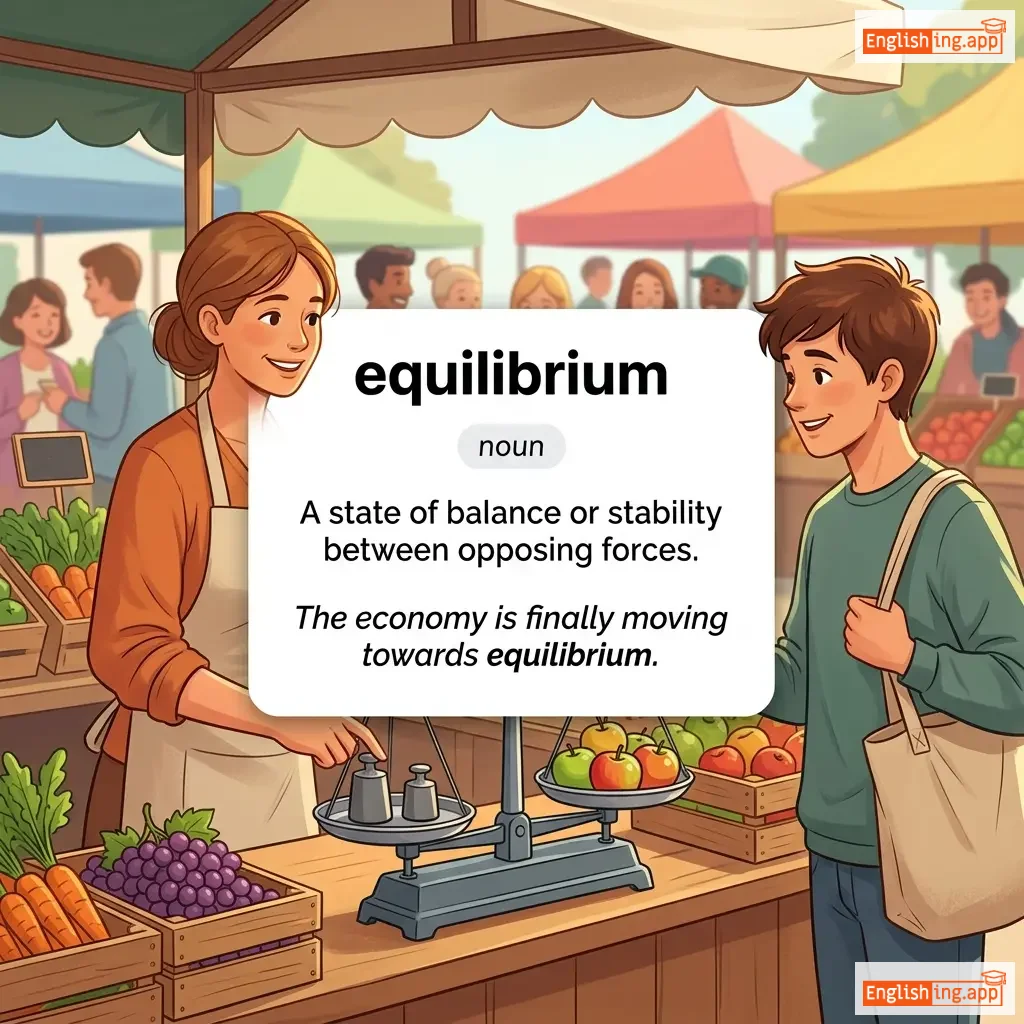
equilibrium definition card — visual illustration of the meaning
noun
/ˌiːkwɪˈlɪbriəm/
संतुलन (santulan)

A state of balance or stability between opposing forces.

"The economy is finally moving towards equilibrium."

"अर्थव्यवस्था अंततः संतुलन की ओर बढ़ रही है।" (arthvyavastha antatah santulan ki or badh rahi hai.)
adjective
/ˈiːkwaɪn/
घोड़ा संबंधित (ghoda sambandhit)

Relating to or resembling a horse.

"The veterinarian specialized in equine medicine."

"वेटेरिनरी डॉक्टर ने घोड़ा संबंधित चिकित्सा में विशेषज्ञता प्राप्त की थी।" (Veterinary doctor ne ghoda sambandhit chikitsa mein visheshagya prapt ki thi.)
noun
/ˈiːkwɪnɒks/
दिन-रात समान समय (din-raat samaan samay)

The time or date when day and night are of equal length, occurring twice a year.

"The spring equinox marks the beginning of longer days."

"वसंत विषुव लंबी दिनों की शुरुआत को दर्शाता है।" (Vasant Vishuv lambi dinon ki shuruaat ko darshata hai.)
verb
/ɪˈkwɪp/
सज्जित करना (sajhit karna)

to provide someone or something with the necessary items or skills for a task

"The school equipped its students with modern technology."

"विद्यालय ने अपने छात्रों को आधुनिक प्रौद्योगिकी से सुसज्जित किया।" (Vidyalay ne apne chhatron ko aadhunik pradyogiki se sujhit kiya.)
noun
/ˈɛkwɪpɪdʒ/
सजावट या घोड़ा गाड़ी (sajawat ya ghoda gadi)

Equipment or a carriage with its accessories.

"The nobleman arrived in a grand equipage."

"राजा एक भव्य घोड़ा गाड़ी में पहुँचे थे।" (Raja ek bhavya ghoda gadi mein pahunche the.)
noun
/ɪˈkwɪpmənt/
उपकरण (upkaran)

the necessary tools, machines, or other items needed for a particular purpose

"The laboratory bought new equipment for research."

"प्रयोगशाला ने अनुसंधान के लिए नया उपकरण खरीदा।" (prayogshala ne anusandhan ke liye naya upkaran kharida.)
noun
/ˈɛkwɪpɔɪz/
संतुलन (santulan)

A state of balance or equilibrium.

"Her calmness created an equipoise in the heated debate."

"उसकी शांति ने गरम बहस में संतुलन पैदा किया।" (Uski shanti ne garam bahas mein santulan paida kiya.)
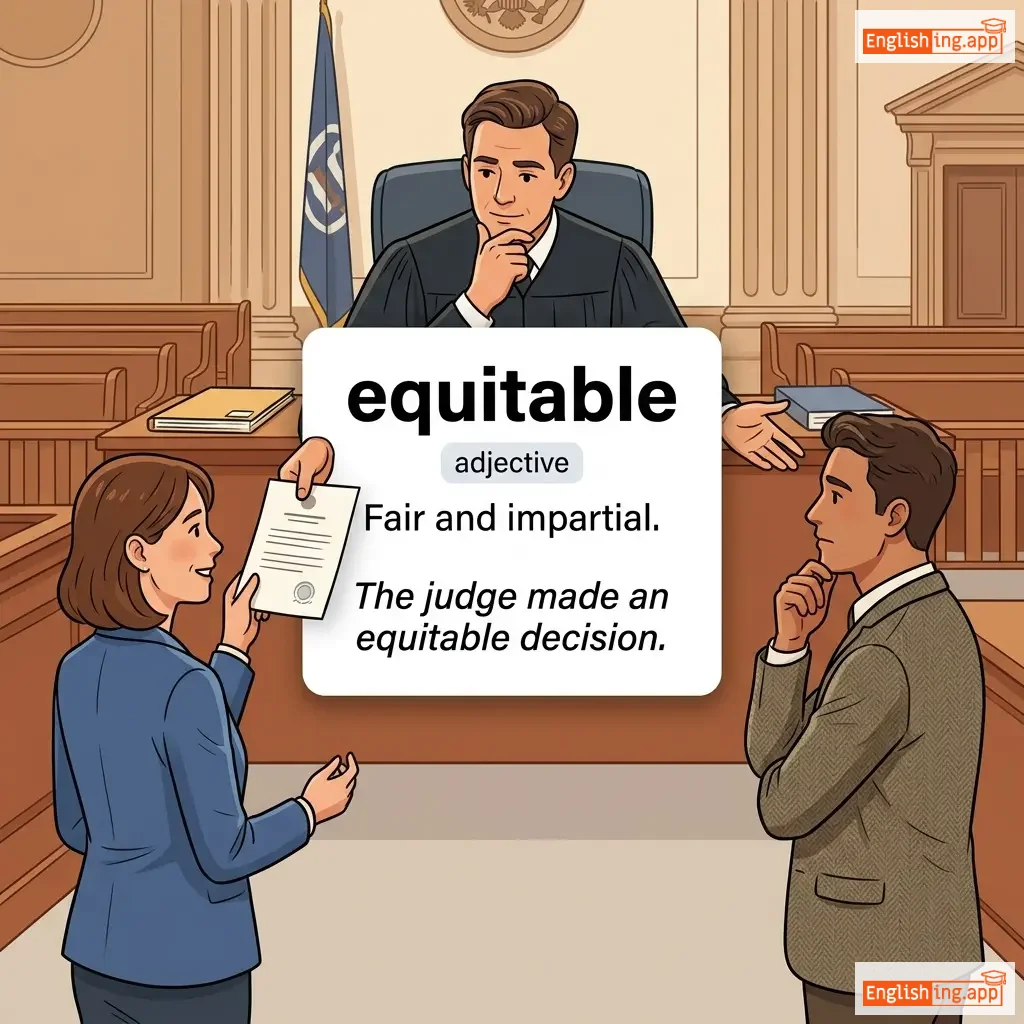
equitable definition card — visual illustration of the meaning
adjective
/ˈɛkwɪtəbl/
न्यायसंगत (nyayasangat)

Fair and impartial.

"The judge made an equitable decision."

"न्यायधीश ने एक न्यायसंगत निर्णय लिया।" (Nyayadhish ne ek nyayasangat nirnay liya.)
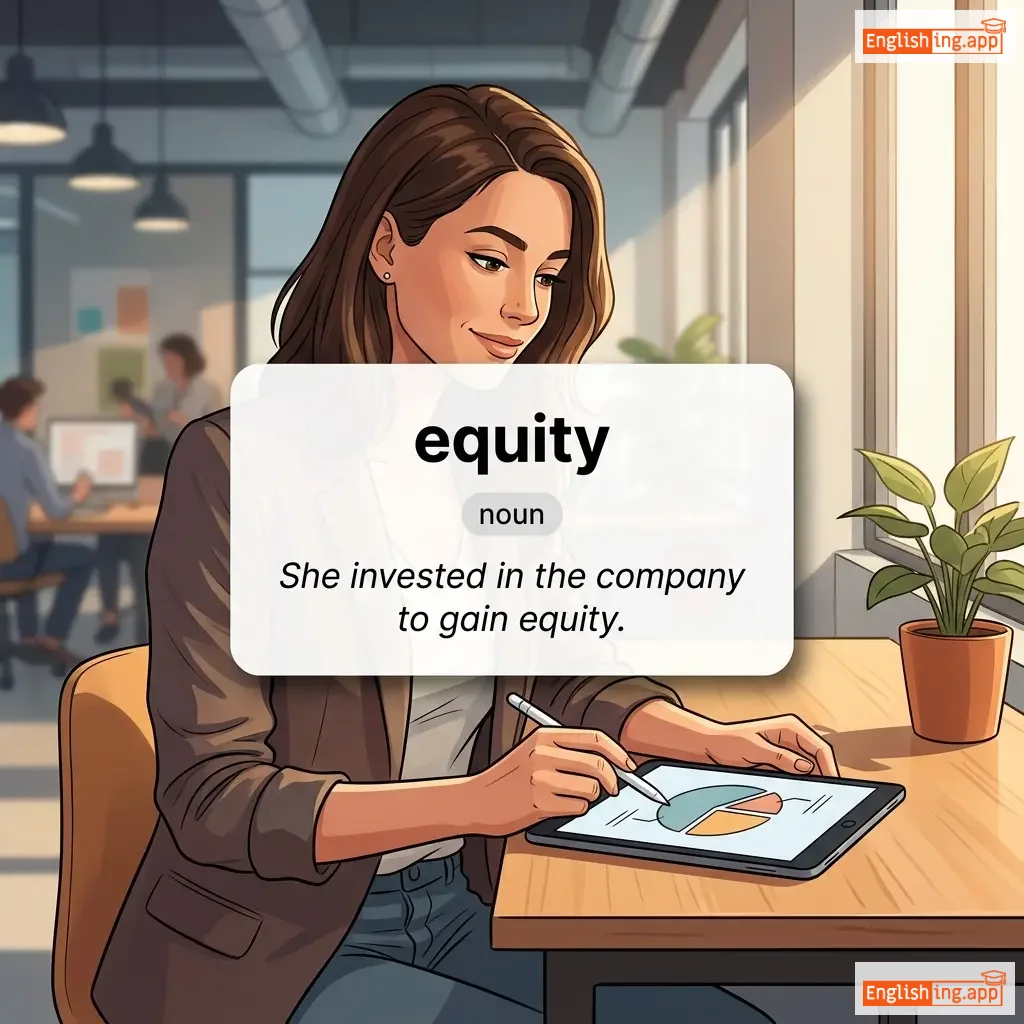
equity definition card — visual illustration of the meaning
noun
/ˈɛkwɪti/
समानता; स्वामित्व का हिस्सा (samanata; swamitva ka hissa)

The quality of being fair and impartial; ownership interest in a company or property.

"She invested in the company to gain equity."

"उसने कंपनी में निवेश किया ताकि वह समानता प्राप्त कर सके।" (Usne company mein nivesh kiya taaki vah samanata prapt kar sake.)
adjective
/ɪˈkwɪvələnt/
समान; समकक्ष (saman; samaksh)

Equal in value, function, meaning, or effect.

"One euro is roughly equivalent to one dollar."

"एक यूरो लगभग एक डॉलर के समान है।" (Ek euro lagbhag ek dollar ke saman hai.)
adjective
/ɪˈkwɪvəkəl/
अस्पष्ट (aspasht)

Open to more than one interpretation; ambiguous.

"His equivocal answer confused everyone."

"उसका अस्पष्ट उत्तर सभी को भ्रमित कर गया।" (Uska aspasht uttar sabhi ko bhramit kar gaya.)
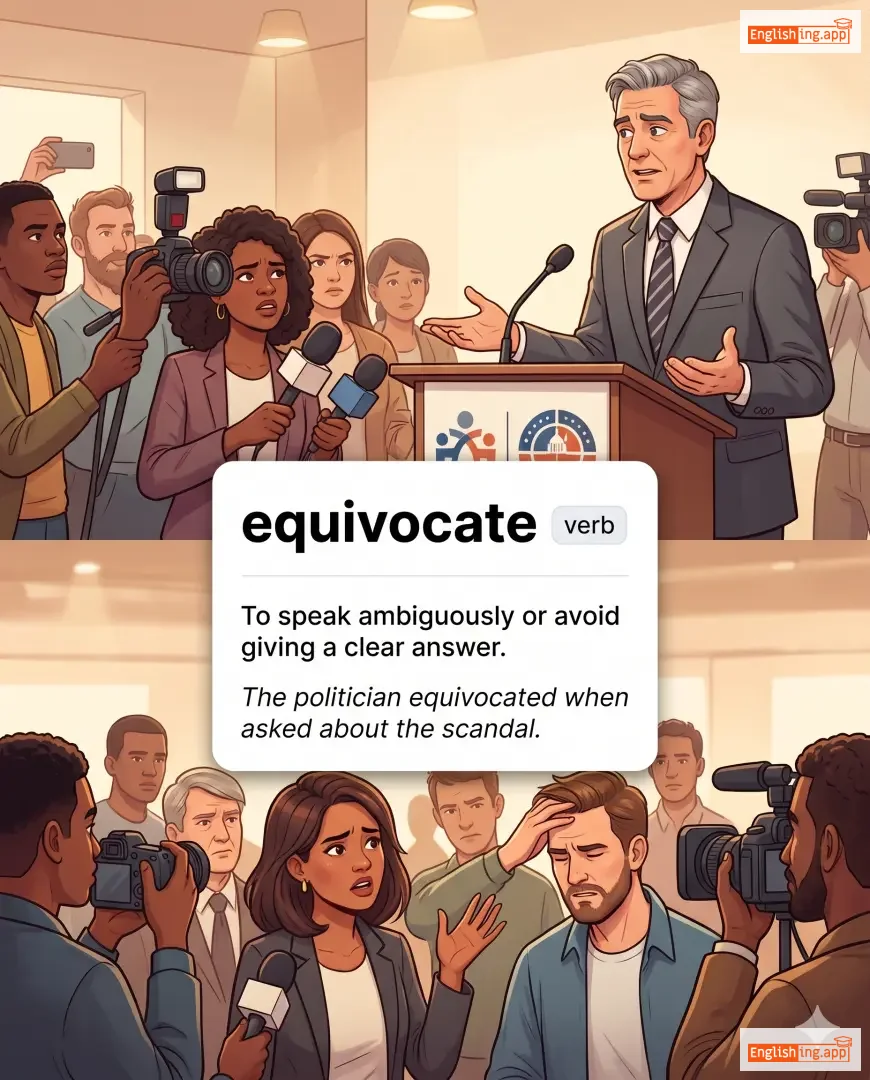
equivocate definition card — visual illustration of the meaning
verb
/ɪˈkwɪvəˌkeɪt/
संदिग्ध तरीके से बोलना (sandigdh tareeke se bolna)

To speak ambiguously or avoid giving a clear answer.

"The politician equivocated when asked about the scandal."

"राजनीतिज्ञ ने स्कैंडल के बारे में पूछे जाने पर संदेहास्पद तरीके से जवाब दिया।" (Rajniti-jñ ne scandal ke baare mein pooche jaane par sandigdh tareeke se jawaab diya.)
noun
/ɪˌkwɪvəˈkeɪʃən/
अस्पष्टता का उपयोग (aspashtata ka upyog)

The use of ambiguous language to conceal the truth or to avoid committing oneself.

"The politician’s equivocation frustrated voters who wanted a clear answer."

"राजनीतिक व्यक्ति की अस्पष्टता ने उन मतदाताओं को निराश किया जो स्पष्ट उत्तर चाहते थे।" (Rajnaitik vyakti ki aspashtata ne un matdataon ko nirash kiya jo spasht uttar chahte the.)
noun
/ˈɪərə/
युग (yug)

a long and distinct period of history with a particular feature or characteristic

"The invention of the internet marked a new era in communication."

"इंटरनेट के आविष्कार ने संचार में एक नए युग की शुरुआत की।" (Internet ke aavishkar ne sanchar mein ek naye yug ki shuruat ki.)
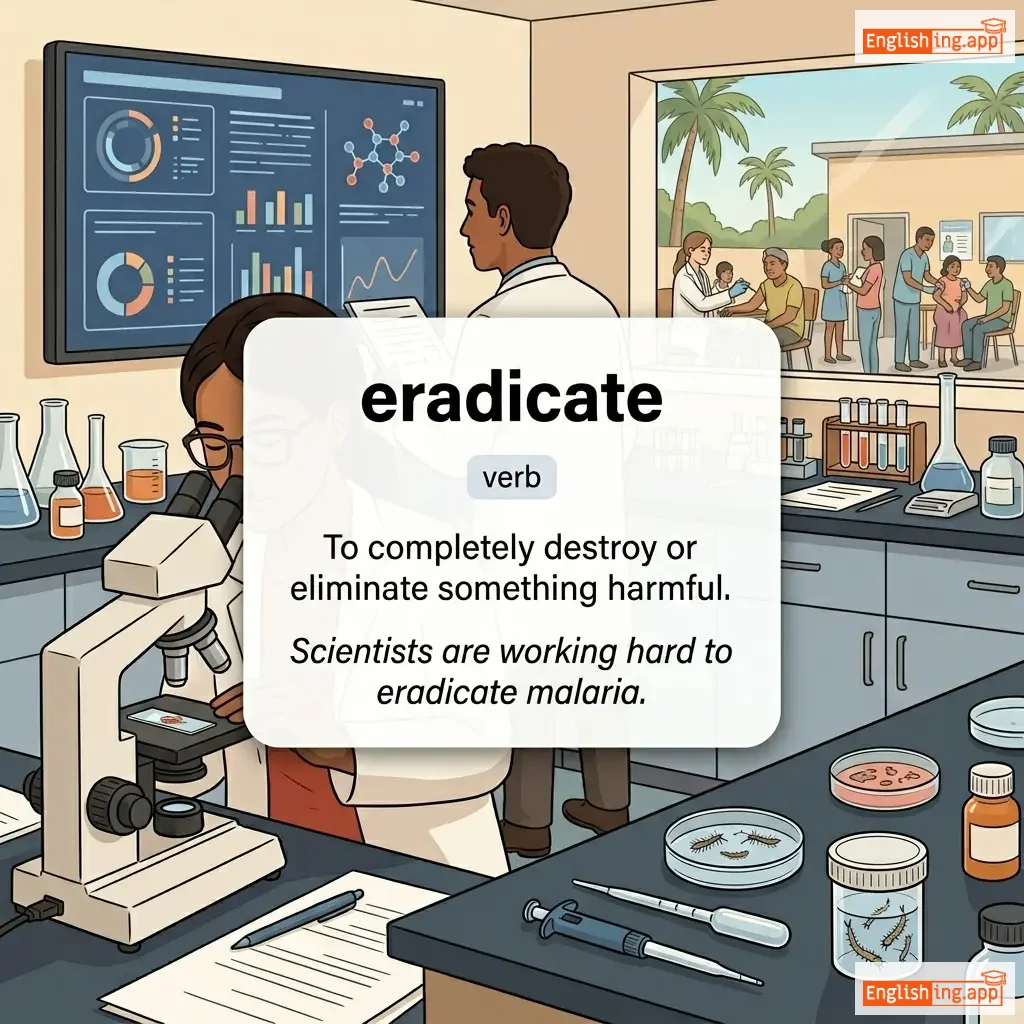
eradicate definition card — visual illustration of the meaning
verb
/ɪˈrædɪˌkeɪt/
नष्ट करना; मिटाना (nasht karna; mitana)

To completely destroy or eliminate something harmful.

"Scientists are working hard to eradicate malaria."

"वैज्ञानिक मलरिया को समाप्त करने के लिए कठिन परिश्रम कर रहे हैं।" (Vaigyanik malaria ko samaapt karne ke liye kathin parishram kar rahe hain.)
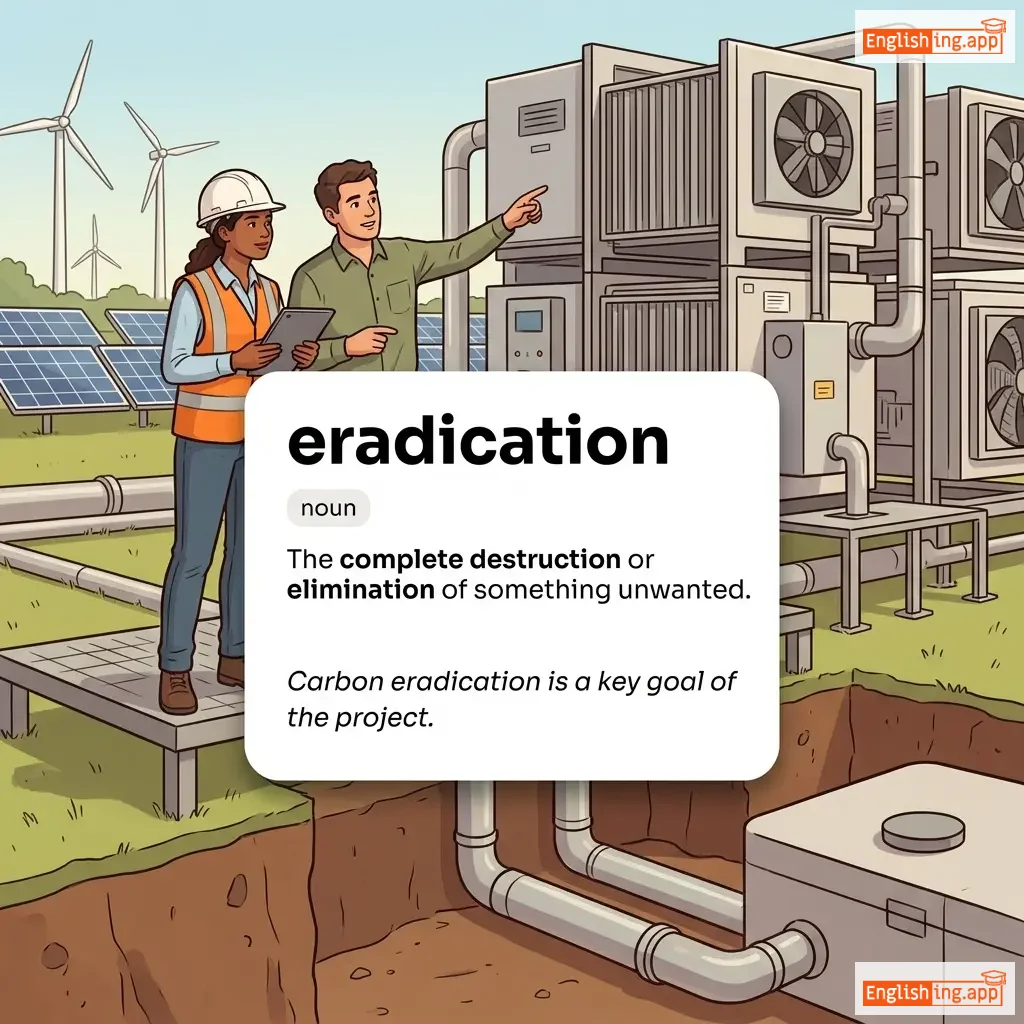
eradication definition card — visual illustration of the meaning
noun
ɪˌræd.ɪˈkeɪ.ʃən
नाश (nash)

The complete destruction or elimination of something unwanted.

"Carbon eradication is a key goal of the project."

"कार्बन नाश परियोजना का एक मुख्य लक्ष्य है।" (Carbon nash pariyojna ka ek mukhya lakshya hai.)
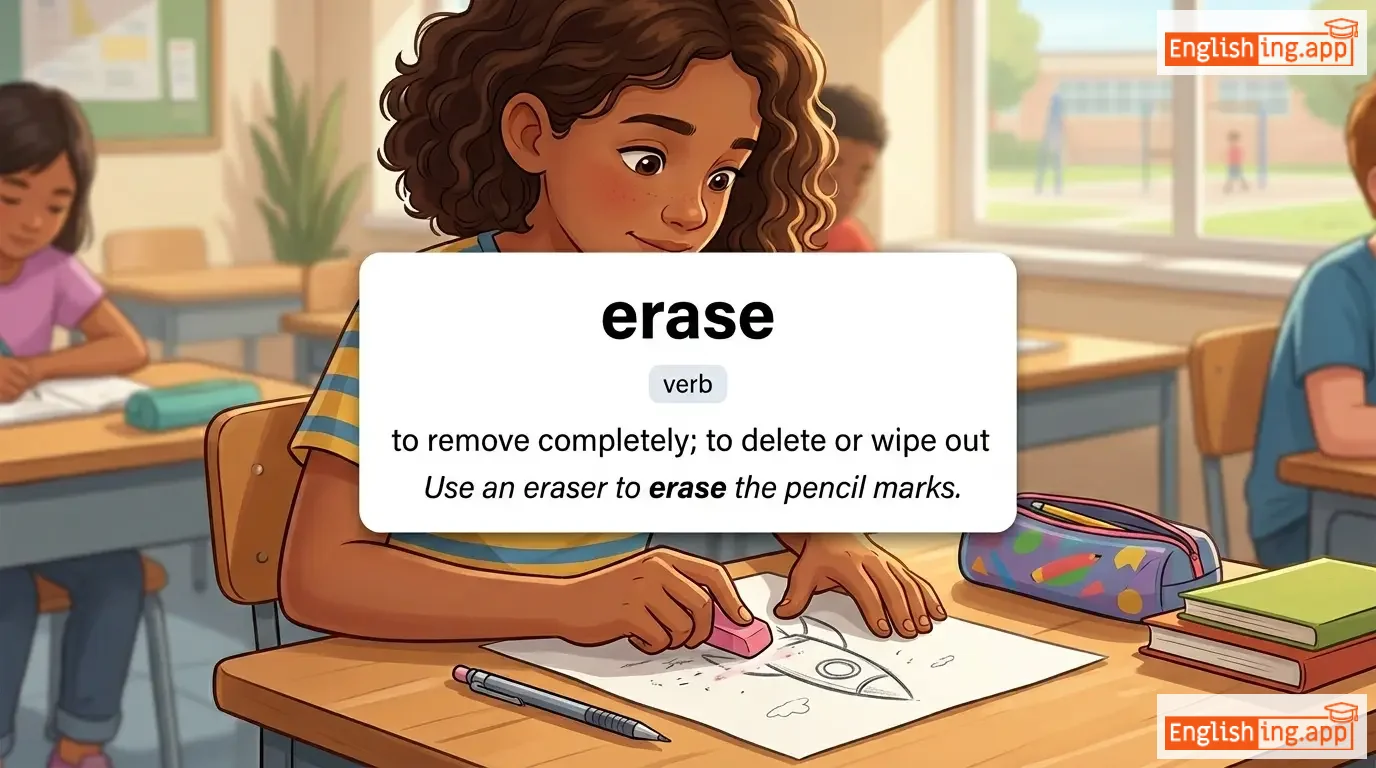
erase definition card — visual illustration of the meaning
verb
/ɪˈreɪs/
मिटाना (mitana)

to remove completely; to delete or wipe out

"Use an eraser to erase the pencil marks."

"पेंसिल के निशान मिटाने के लिए एक इरेज़र का उपयोग करें।" (Pencil ke nishan mitane ke liye ek eraser ka upyog karein.)
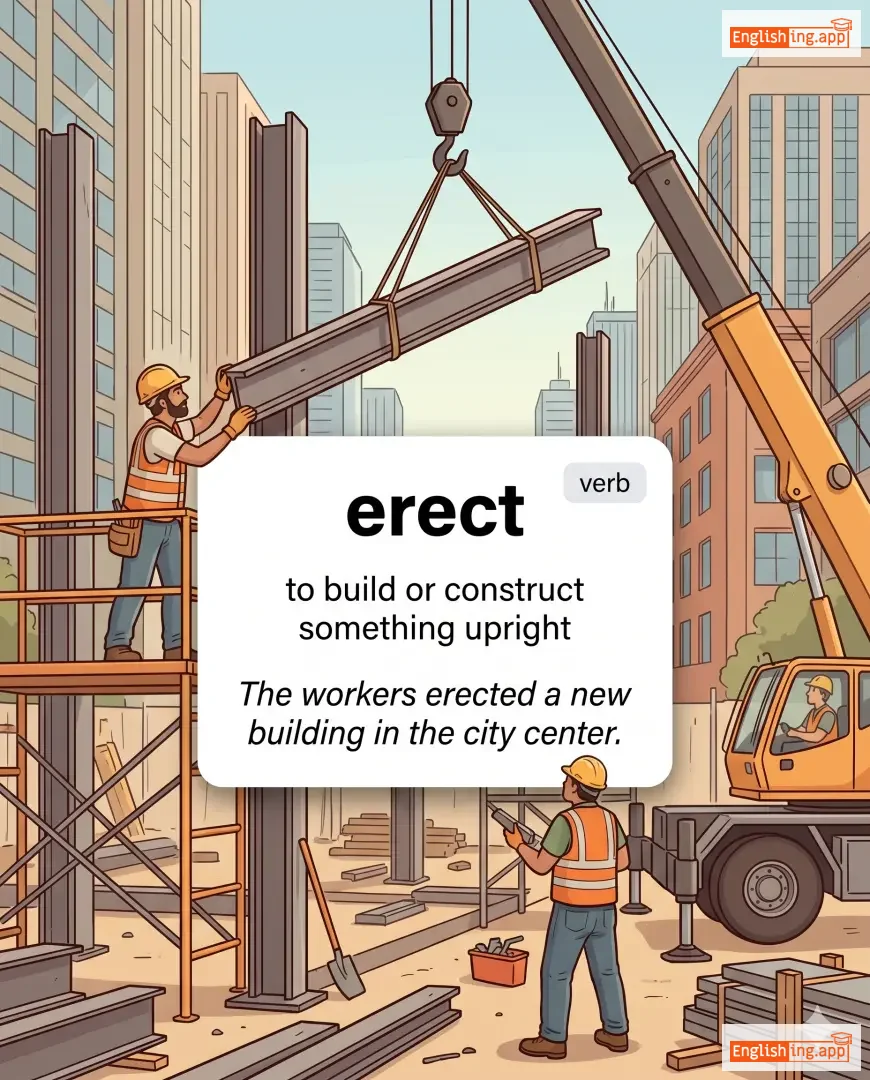
erect definition card — visual illustration of the meaning
verb
/ɪˈrɛkt/
बनाना (banana)

to build or construct something upright

"The workers erected a new building in the city center."

"मज़दूरों ने शहर के केंद्र में एक नई इमारत एरेक्ट की।" (Mazdooron ne shahar ke kendra mein ek nayi imarat erect ki.)
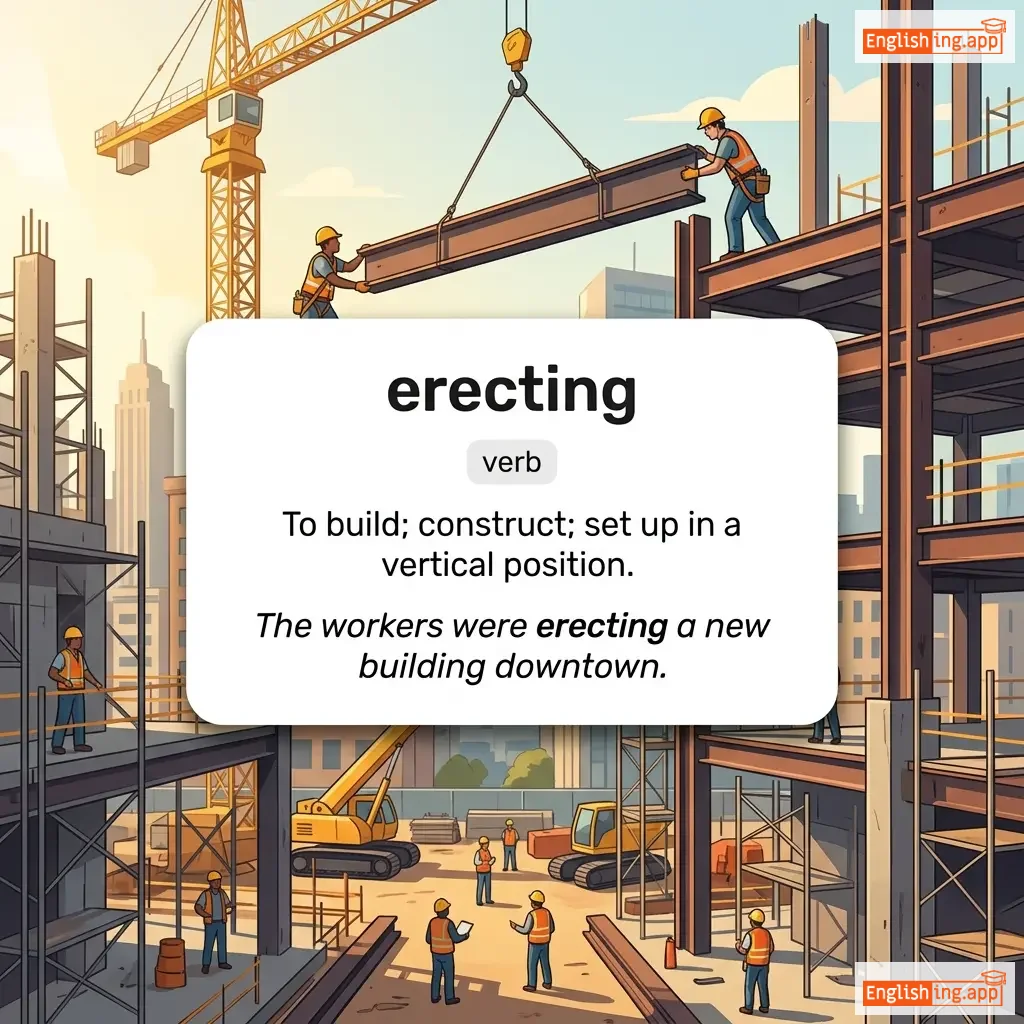
erecting definition card — visual illustration of the meaning
verb
ɪˈrɛktɪŋ
निर्माण (nirman)

To build; construct; set up in a vertical position.

"The workers were erecting a new building downtown."

"कर्मचारी एक नई इमारत बना रहे थे।" (Karmachari ek nai imarat bana rahe the.)
ergonomic definition card — visual illustration of the meaning
adjective
/ˌɜː.ɡəˈnɒm.ɪk/
एर्गोनोमिक (ergonomic)

Designed for efficiency and comfort in the working environment.

"The office chairs are designed to be ergonomic."

"ऑफिस की कुर्सियाँ इस तरह से डिज़ाइन की गई हैं कि वे आरामदायक हों।" (Offis ki kursiyan is tarah se dizain ki gayi hain ki ve aaramdayak hon.)
verb
/ɪˈroʊd/
क्षय करना (kshay karna)

to gradually wear away or destroy by natural forces such as water, wind, or chemical action

"The coastline has begun to erode due to constant waves."

"तटरेखा लगातार लहरों के कारण घिसने लगी है।" (Tatrekha lagatar lahron ke karan ghisne lagi hai.)
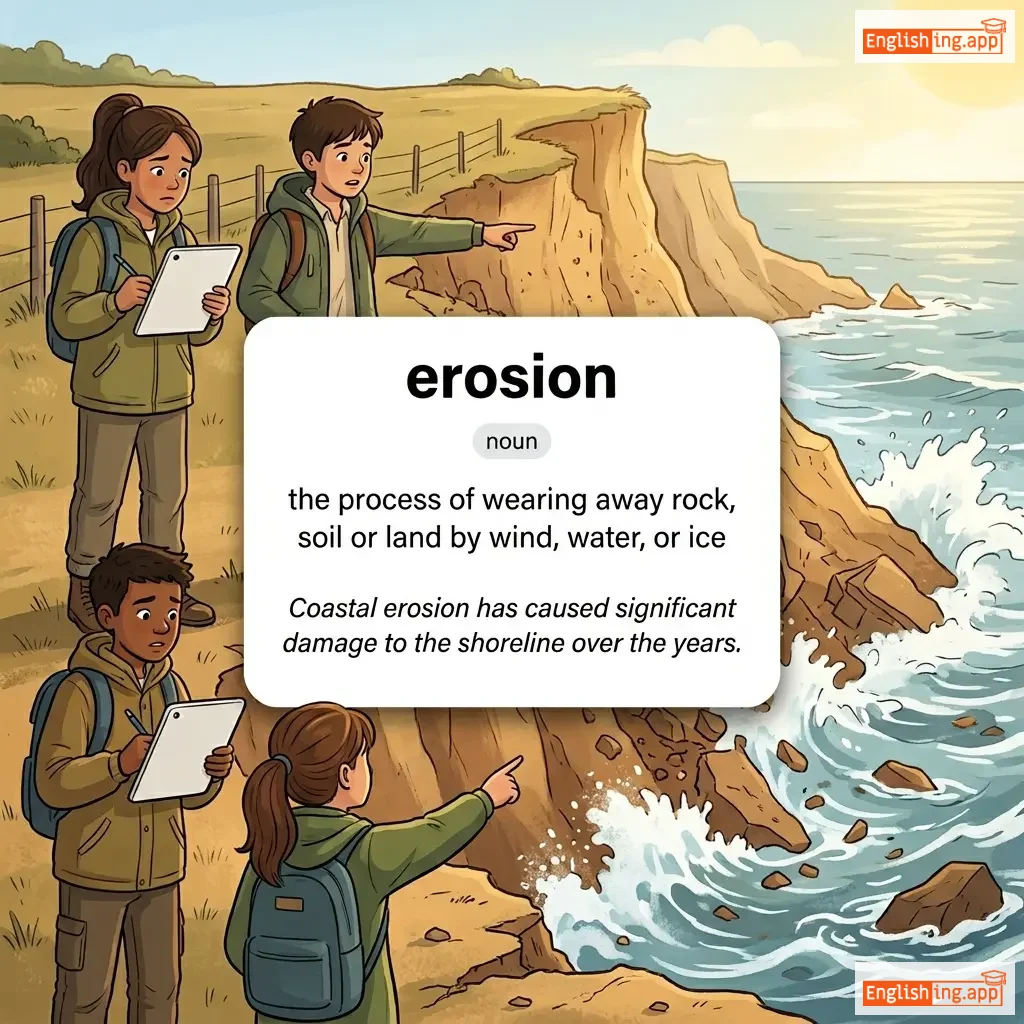
erosion definition card — visual illustration of the meaning
noun
/ɪˈroʊ.ʒən/
क्षय (kshay)

the process of wearing away rock, soil, or land by wind, water, or ice

"Coastal erosion has caused significant damage to the shoreline over the years."

"तटीय क्षय ने वर्षों में समुद्र तट को महत्वपूर्ण नुकसान पहुँचाया है।" (Tatiy kshay ne varshon mein samudra tat ko mahatvapurn nuksan pahunchaya hai.)
adjective
/ɪˈrɒtɪk/
कामुक (kaamuk)

relating to or tending to arouse sexual desire or excitement

"The novel contained several erotic scenes."

"उपन्यास में कई कामुक दृश्य थे।" (Upanyaas mein kai kaamuk drishya the.)
verb
/ɜːr/
गलती करना (galti karna)

to make a mistake or be incorrect

"To err is human, to forgive divine."

"गलती करना इंसान की स्वभाव है, माफ करना ईश्वर का कार्य।" (Galti karna insaan ki swabhav hai, maaf karna Ishwar ka kaam.)
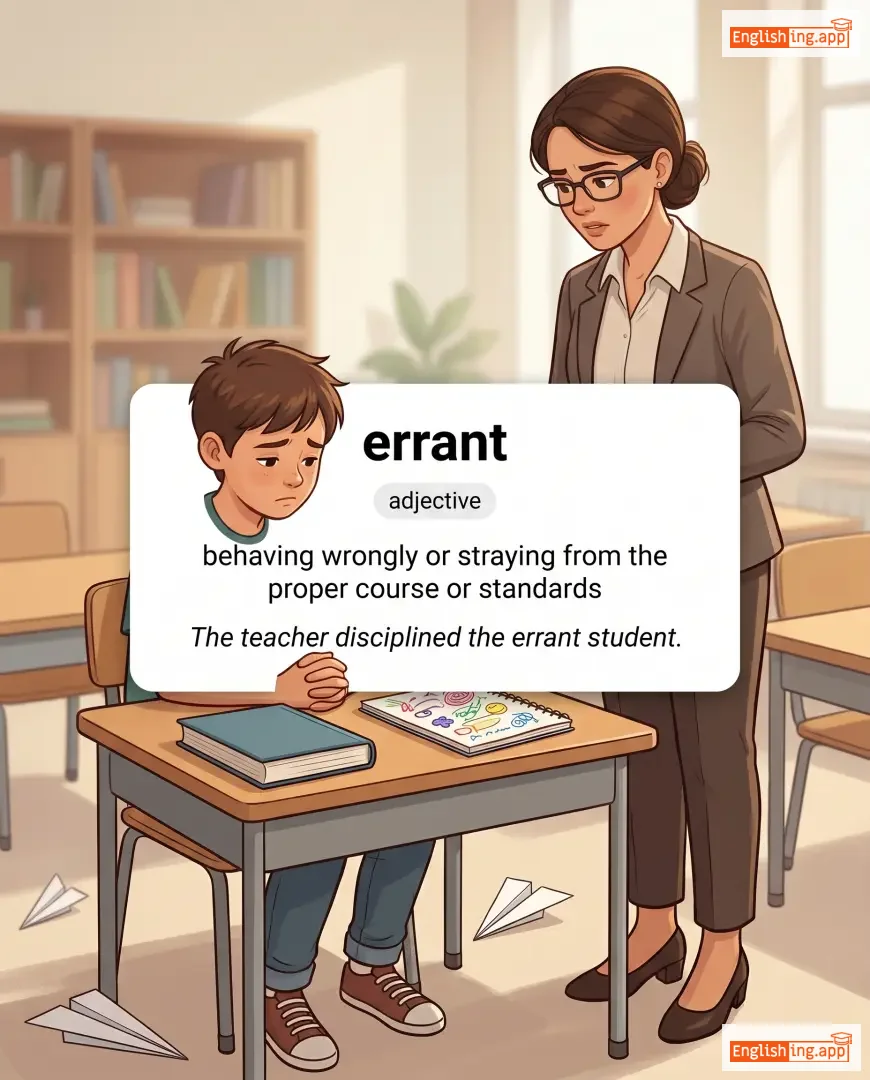
errant definition card — visual illustration of the meaning
adjective
/ˈɛrənt/
भ्रष्ट (bhrosht)

behaving wrongly or straying from the proper course or standards

"The teacher disciplined the errant student."

"शिक्षक ने भ्रष्ट छात्र को दंडित किया।" (Shikshak ne bhrosht chatra ko dandit kiya.)
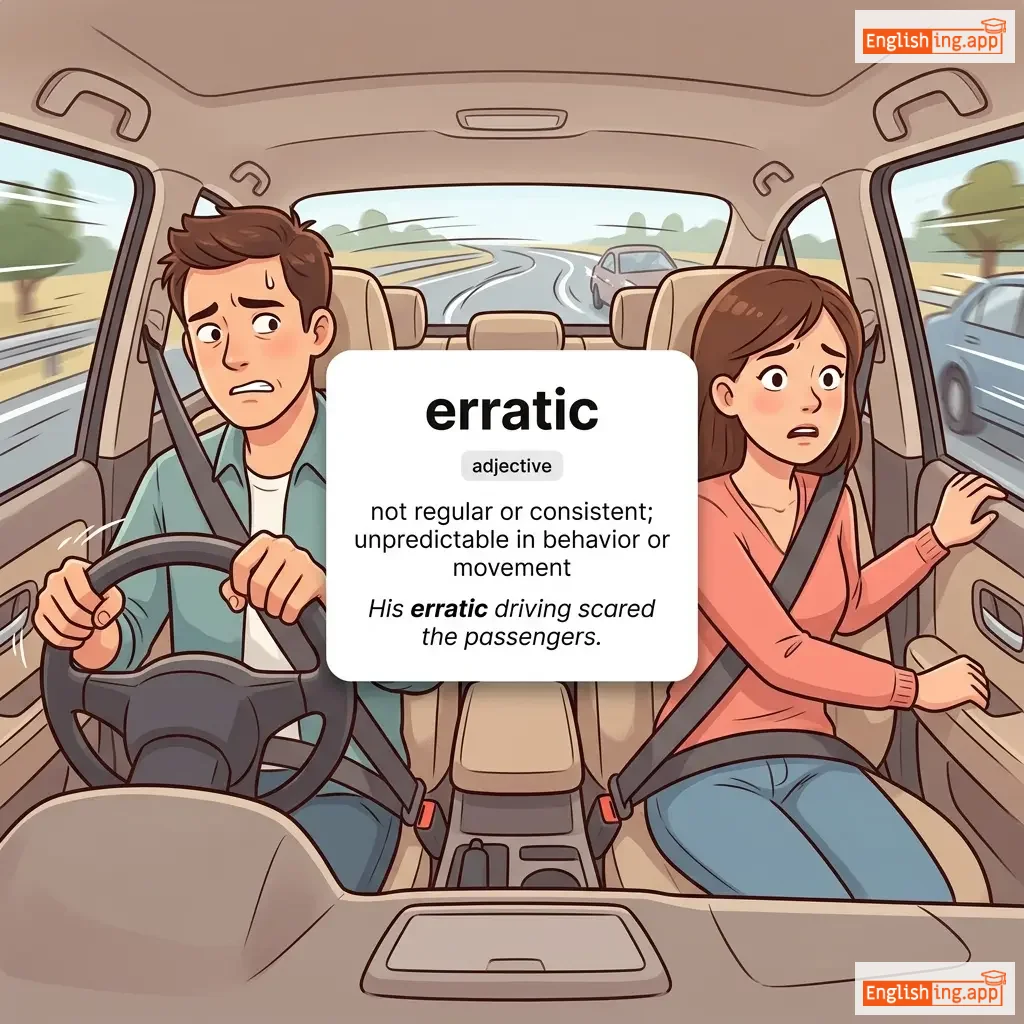
erratic definition card — visual illustration of the meaning
adjective
/ɪˈrætɪk/
अस्थिर (asthir)

not regular or consistent; unpredictable in behavior or movement

"His erratic driving scared the passengers."

"उसकी अराजक ड्राइविंग ने यात्रियों को डराया।" (Uski arajak driving ne yatriyon ko daraya.)
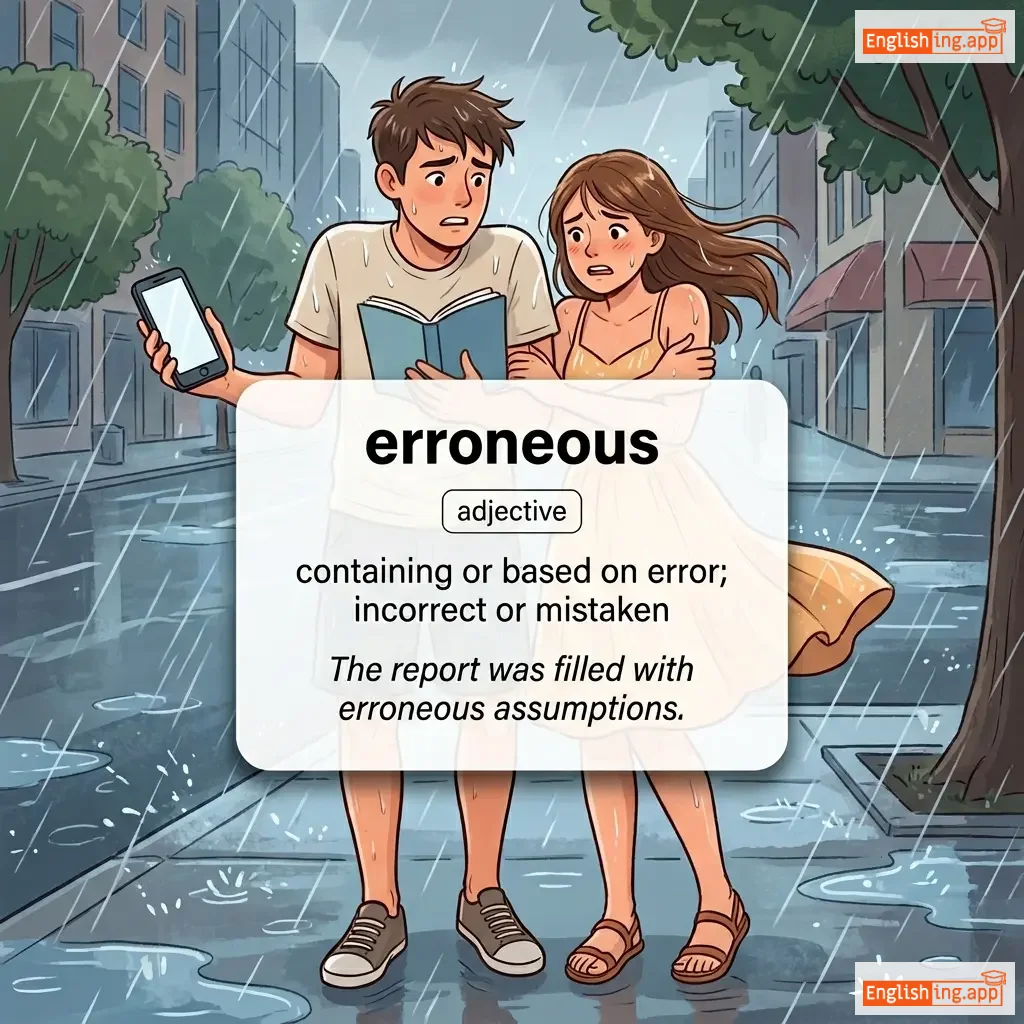
erroneous definition card — visual illustration of the meaning
adjective
/ɪˈrəʊniəs/
गलत (galat)

containing or based on error; incorrect or mistaken

"The report was filled with erroneous assumptions."

"रिपोर्ट में गलत अनुमान थे।" (Report mein galat anuman the.)
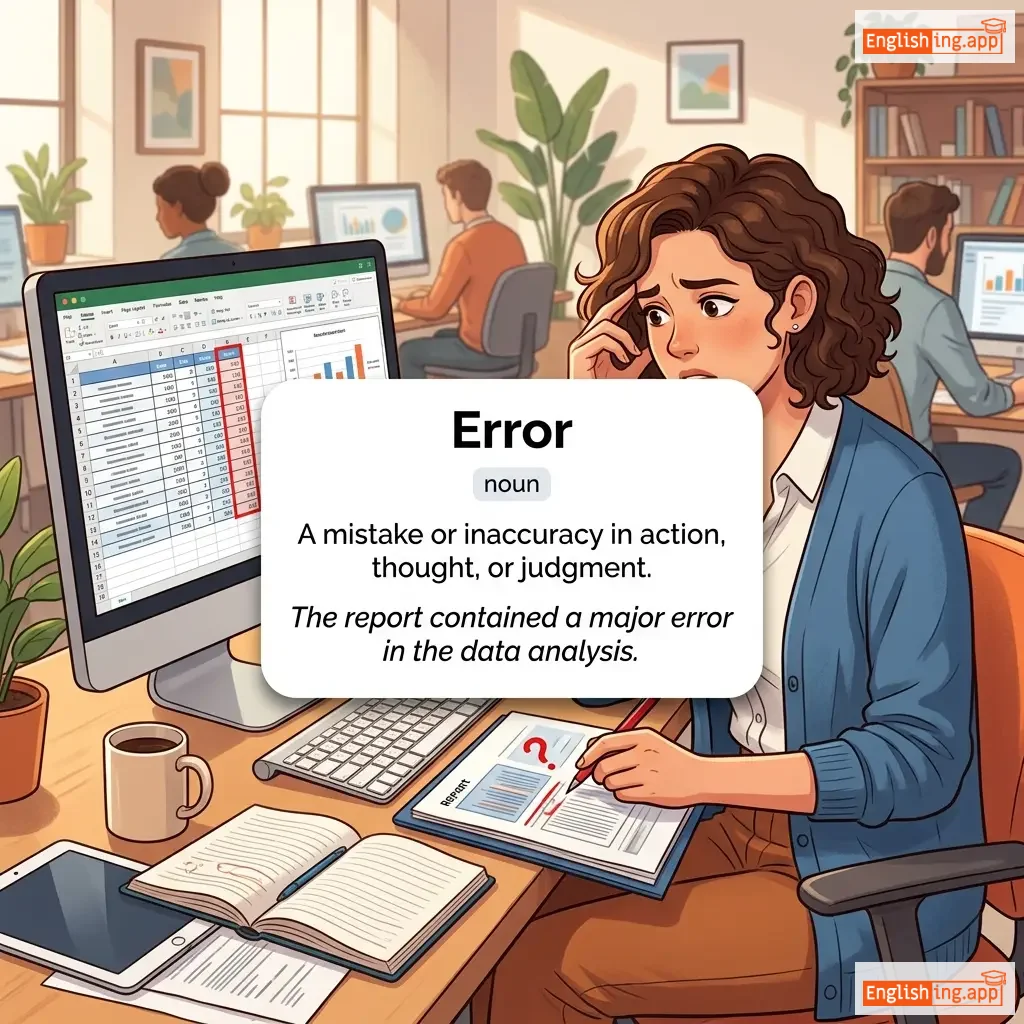
Error definition card — visual illustration of the meaning
noun
/ˈɛrər/
त्रुटि (truti)

A mistake or inaccuracy in action, thought, or judgment.

"The report contained a major error in the data analysis."

"रिपोर्ट में डेटा विश्लेषण में एक महत्वपूर्ण त्रुटि थी।" (Report mein data vishleshan mein ek mahatvapurn truti thi.)
adjective
/ˈɛrzæts/
नकली (nakali)

made or used as a substitute, typically an inferior one

"The cheap shoes were made of ersatz leather."

"सस्ते जूते नकली चमड़े से बने थे।" (Saste joote nakali chamde se bane the.)
adjective
/ˈɜːrstwaɪl/
पूर्व (purv)

former or in the past

"They were erstwhile friends but no longer speak."

"वे पूर्व मित्र थे लेकिन अब बात नहीं करते।" (Ve purv mitr the lekin ab baat nahi karte.)
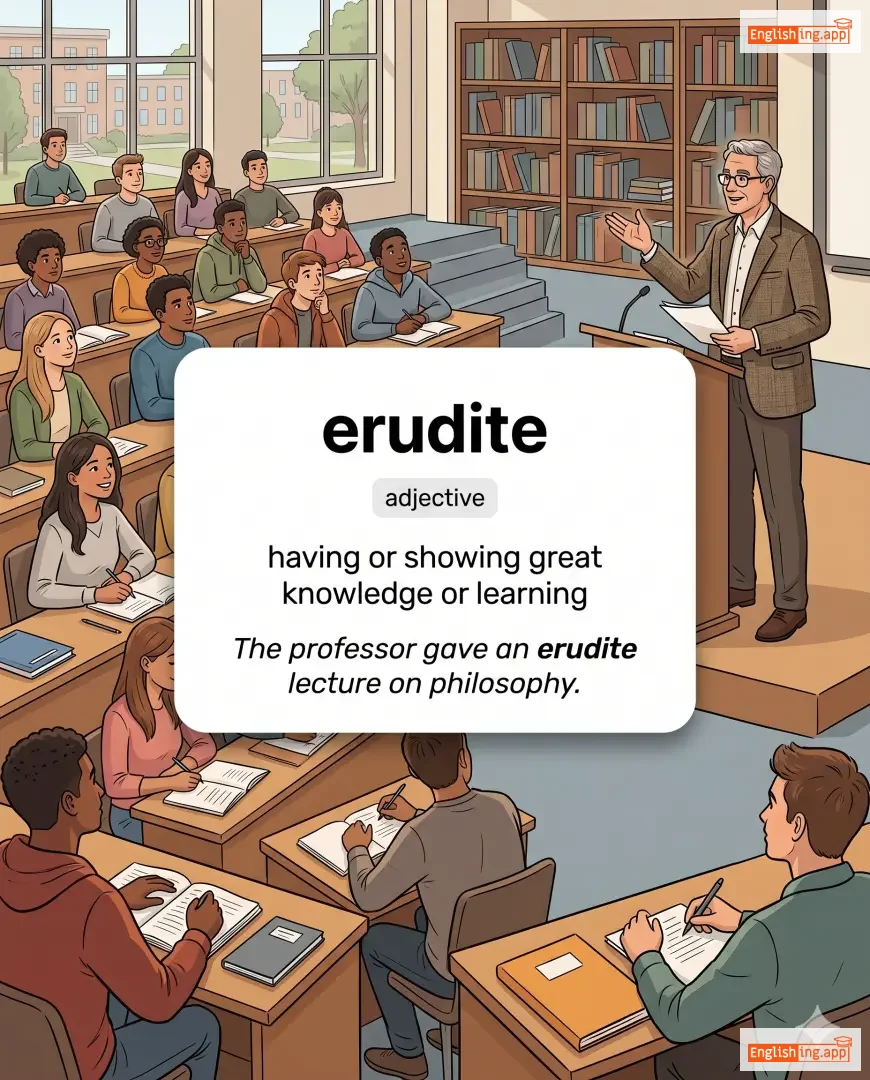
erudite definition card — visual illustration of the meaning
adjective
/ˈɛrjʊˌdaɪt/
ज्ञानी (gyani)

having or showing great knowledge or learning

"The professor gave an erudite lecture on philosophy."

"प्रोफेसर ने दर्शनशास्त्र पर एक ज्ञानी व्याख्यान दिया।" (Professor ne darshan shastra par ek gyani vyakhyan diya.)
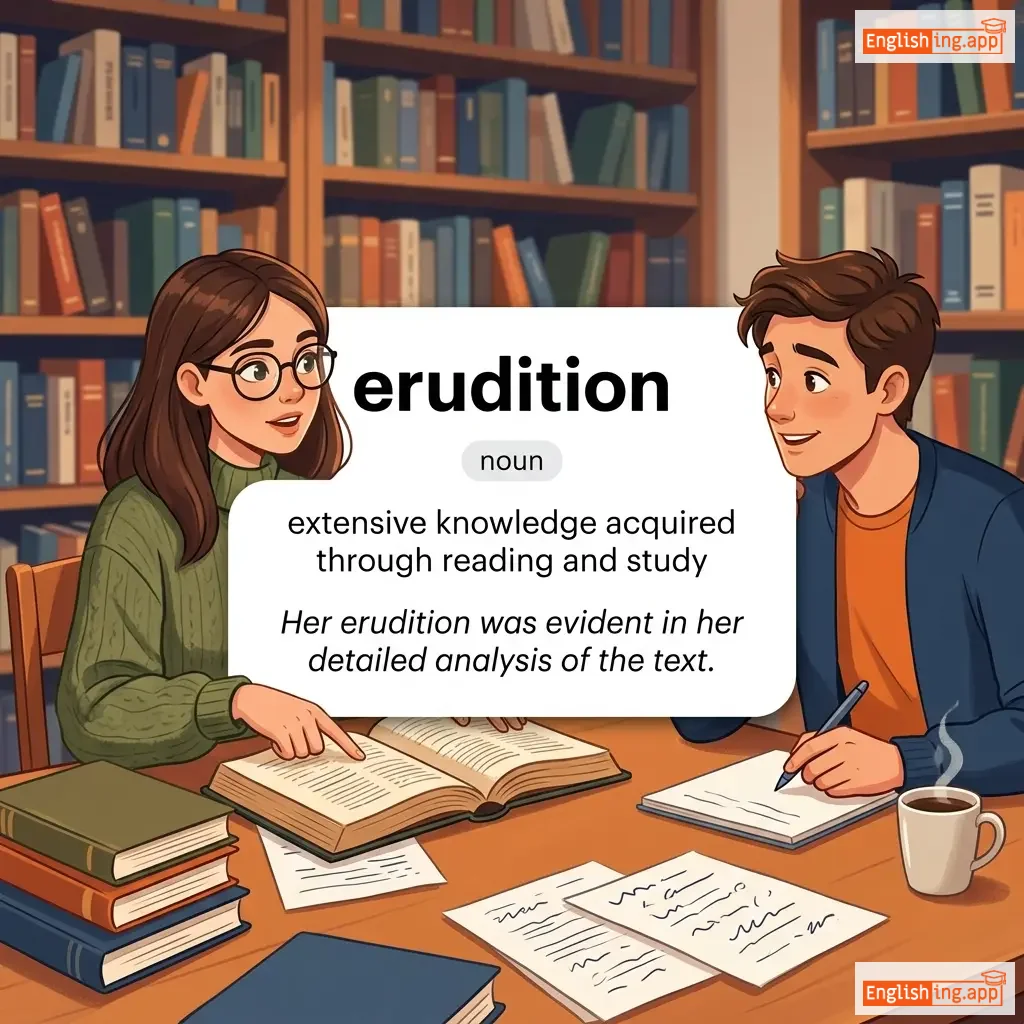
erudition definition card — visual illustration of the meaning
noun
/ˌɛrjʊˈdɪʃən/
ज्ञान (gyan)

extensive knowledge acquired through reading and study

"Her erudition was evident in her detailed analysis of the text."

"उसकी ज्ञान का प्रदर्शन उसकी विस्तृत विश्लेषण में स्पष्ट था।" (Uski gyan ka pradarshan uski vistaarit vishleshan mein spasht tha.)
verb
/ɪˈrʌpt/
विस्फोट करना (visfot karna)

to burst forth suddenly and violently

"The volcano erupted after centuries of dormancy."

"ज्वालामुखी सदियों तक के अवसाद के बाद एरप्ट हुआ।" (Jwalamukhi sadiyon tak ke avsaad ke baad erupt hua.)
noun
/ɪˈrʌp.ʃən/
उत्क्षेपण; ज्वालामुखी विस्फोट (utkshepan, jwalamukhi visfot)

a sudden violent occurrence or outburst; volcanic explosion

"The volcanic eruption forced thousands of people to evacuate the area."

"ज्वालामुखी का विस्फोट हजारों लोगों को क्षेत्र से भागने के लिए मजबूर कर दिया।" (jwalamukhi ka visfot hazaron logon ko kshetra se bhagne ke liye majboor kar diya.)
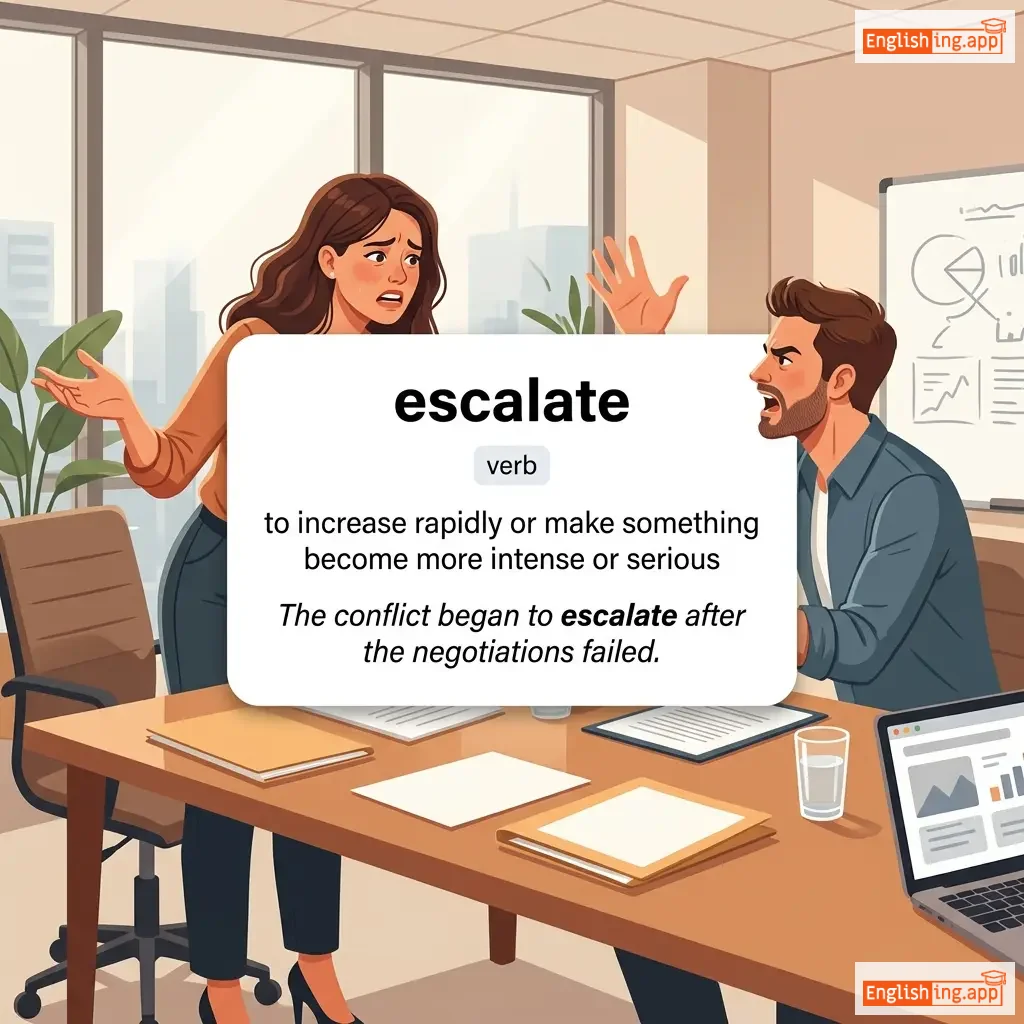
escalate definition card — visual illustration of the meaning
verb
/ˈɛskəleɪt/
बढ़ाना (badhana)

to increase rapidly or make something become more intense or serious

"The conflict began to escalate after the negotiations failed."

"संचालन विफल होने के बाद संघर्ष बढ़ने लगा था।" (Sanchaalan viphal hone ke baad sangharsh baṛhne laga thā.)