वोकैबुलरीज

इंग्लिश वोकैबुलरी डिस्कवर, लर्न और मास्टर करें

eulogy definition card — visual illustration of the meaning
noun
/ˈjuːlədʒi/
श्रद्धांजलि भाषण (shraddhanjali bhashan)

A speech or piece of writing that praises someone, especially after their death.

"Her brother delivered a heartfelt eulogy at the funeral."

"उसके भाई ने अंतिम संस्कार में एक सच्चे श्रद्धांजलि भाषण दिया।" (Uske bhai ne antim sanskar mein ek sacche shraddhanjali bhashan diya.)
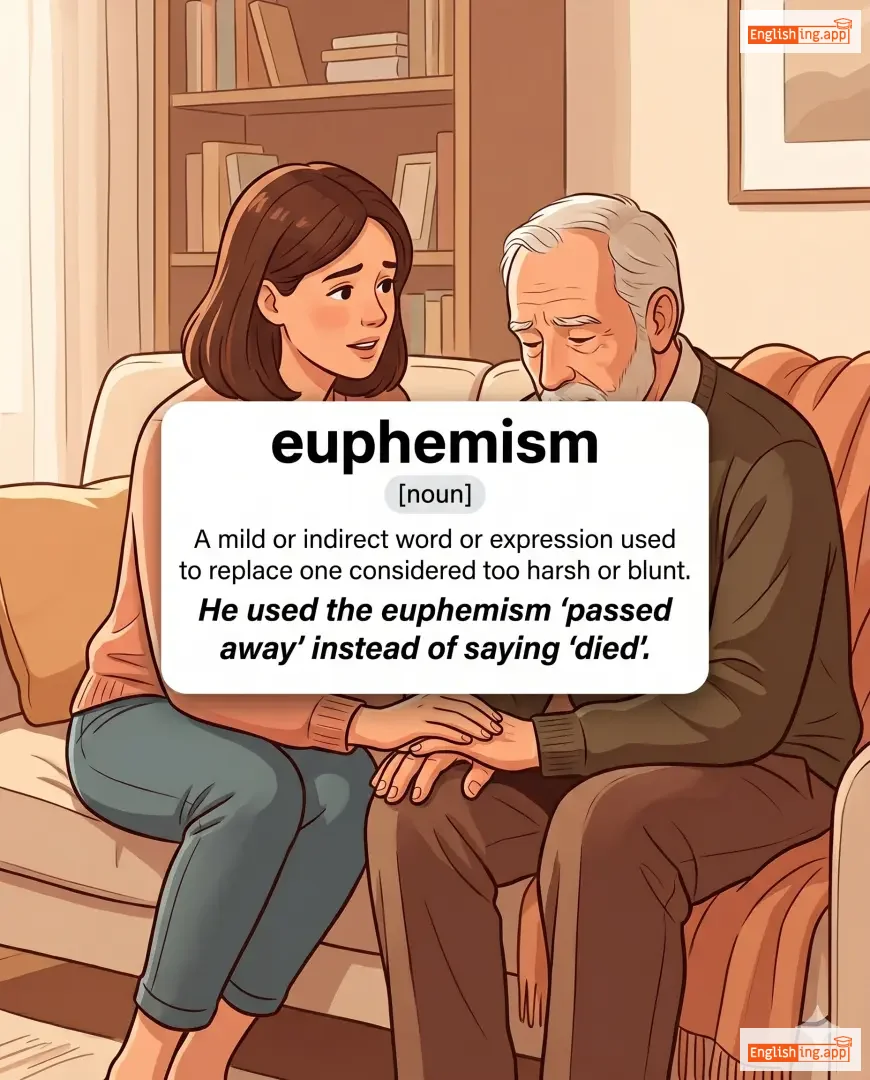
euphemism definition card — visual illustration of the meaning
noun
/ˈjuːfəmɪzəm/
कोमल शब्द (komal shabd)

A mild or indirect word or expression used to replace one considered too harsh or blunt.

"He used the euphemism 'passed away' instead of saying 'died'."

"उसने 'मरा हुआ' कहने के बजाय 'चल बसे' का युफ़ेमिज़म इस्तेमाल किया।" (Usne 'mara hua' kehne ke bajaye 'chal base' ka euphemism istemal kiya.)
adjective
/juːˈfoʊniəs/
सुमधुर ध्वनि (sumadhur dhvani)

Pleasing to the ear; having a sweet sound.

"The poet's euphonious language made the verse a delight to read."

"कवि की युफ़ोनियस भाषा ने कविता को पढ़ने में आनंददायक बना दिया।" (Kavi ki euphonious bhasha ne kavita ko padhne mein ananddayak bana diya.)
noun
/ˈjuːfəni/
सुमधुर ध्वनि (sumadhur dhvani)

The quality of being pleasing to the ear, especially through harmonious combination of words.

"The orator's speech was full of euphony and rhythm."

"वक्ता का भाषण युफ़नी और लय से भरा हुआ था।" (Vakta ka bhashan euphony aur lay se bhara hua tha.)
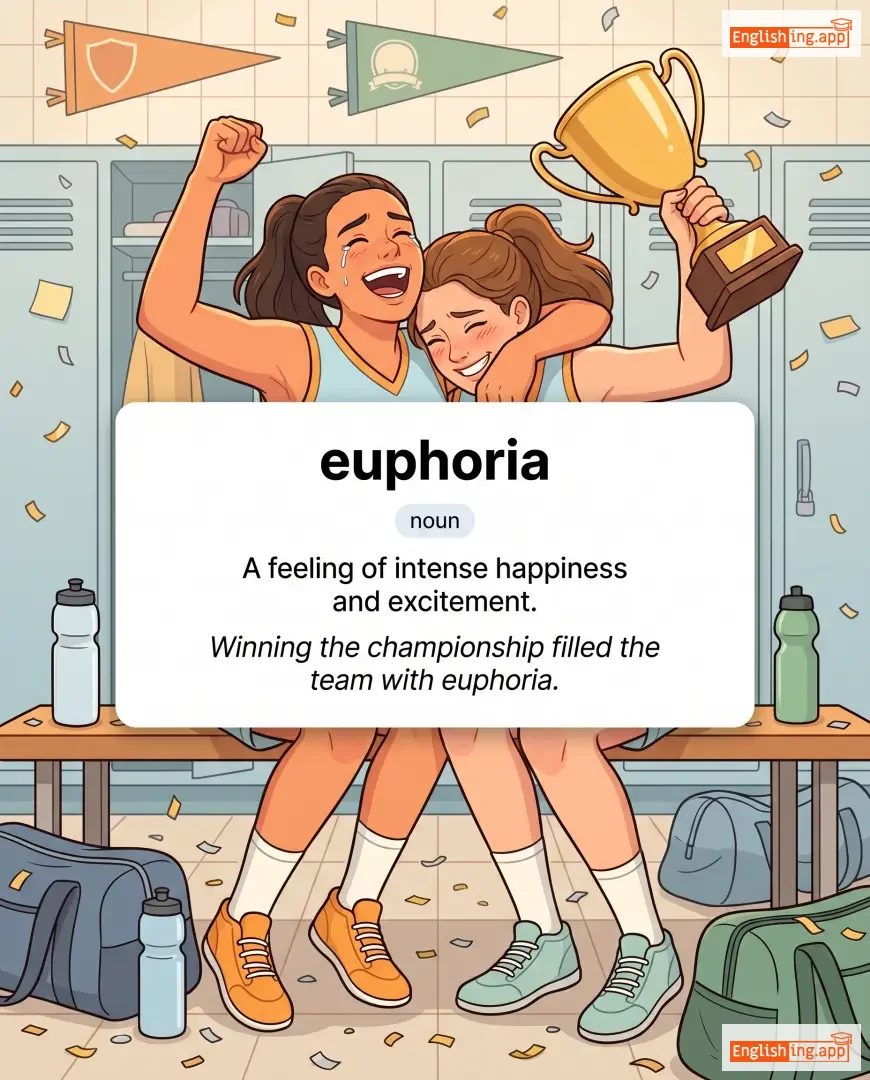
euphoria definition card — visual illustration of the meaning
noun
/juːˈfɔːriə/
उत्साह (utsah)

A feeling of intense happiness and excitement.

"Winning the championship filled the team with euphoria."

"चैम्पियनशिप जीतने से टीम को उत्साह से भर दिया।" (Championchip jeetne se team ko utsah se bhar diya.)
adjective
/juːˈfɔːrɪk/
उत्साही (utsahi)

Characterized by or feeling intense excitement and happiness.

"The fans were euphoric after their team's victory."

"टीम की जीत के बाद प्रशंसक उत्साही थे।" (Team ki jeet ke baad prashansak utsahi the.)
exclamation
/juˈriːkə/
एureka! (Eureka!)

An exclamation used to express a sudden discovery or realization.

"When the solution finally came to him, he shouted, 'Eureka!'"

"जब समाधान आखिरकार उसे मिला, उसने चिल्लाते हुए कहा, 'एureka!'" (Jab samadhan aakhirkar use mila, usne chillate huye kaha, 'Eureka!')
adjective
/ˌjʊərəˈpiːən/
यूरोपीय (yuropiya)

Relating to Europe or its people.

"She studied European history at university."

"उसने विश्वविद्यालय में यूरोपीय इतिहास का अध्ययन किया।" (Usne vishwavidyalay mein yuropiya itihas ka adhyayan kiya.)
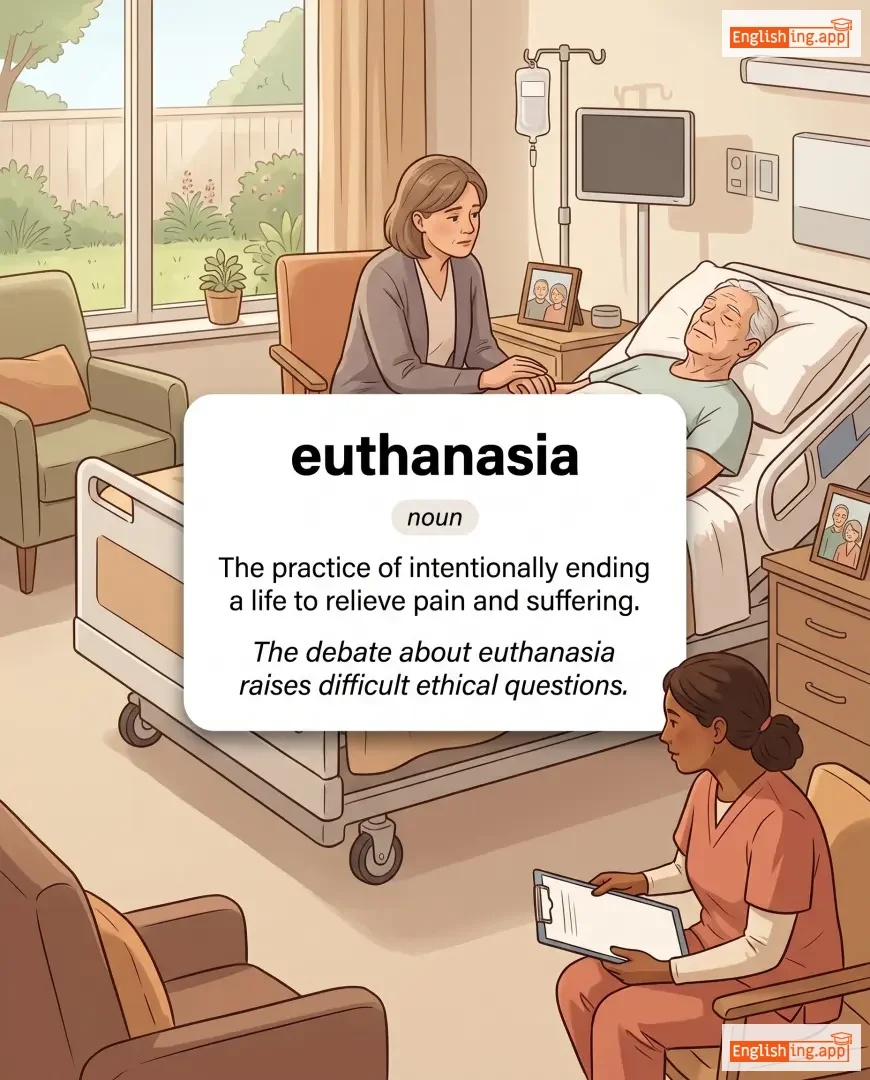
euthanasia definition card — visual illustration of the meaning
noun
/ˌjuːθəˈneɪʒə/
दान मृत्यु (daan mrityu)

The practice of intentionally ending a life to relieve pain and suffering.

"The debate about euthanasia raises difficult ethical questions."

"युथानेशिया पर बहस नैतिक प्रश्न उठाती है।" (Yuthaneshiya par behas naitik prashn uthati hai.)
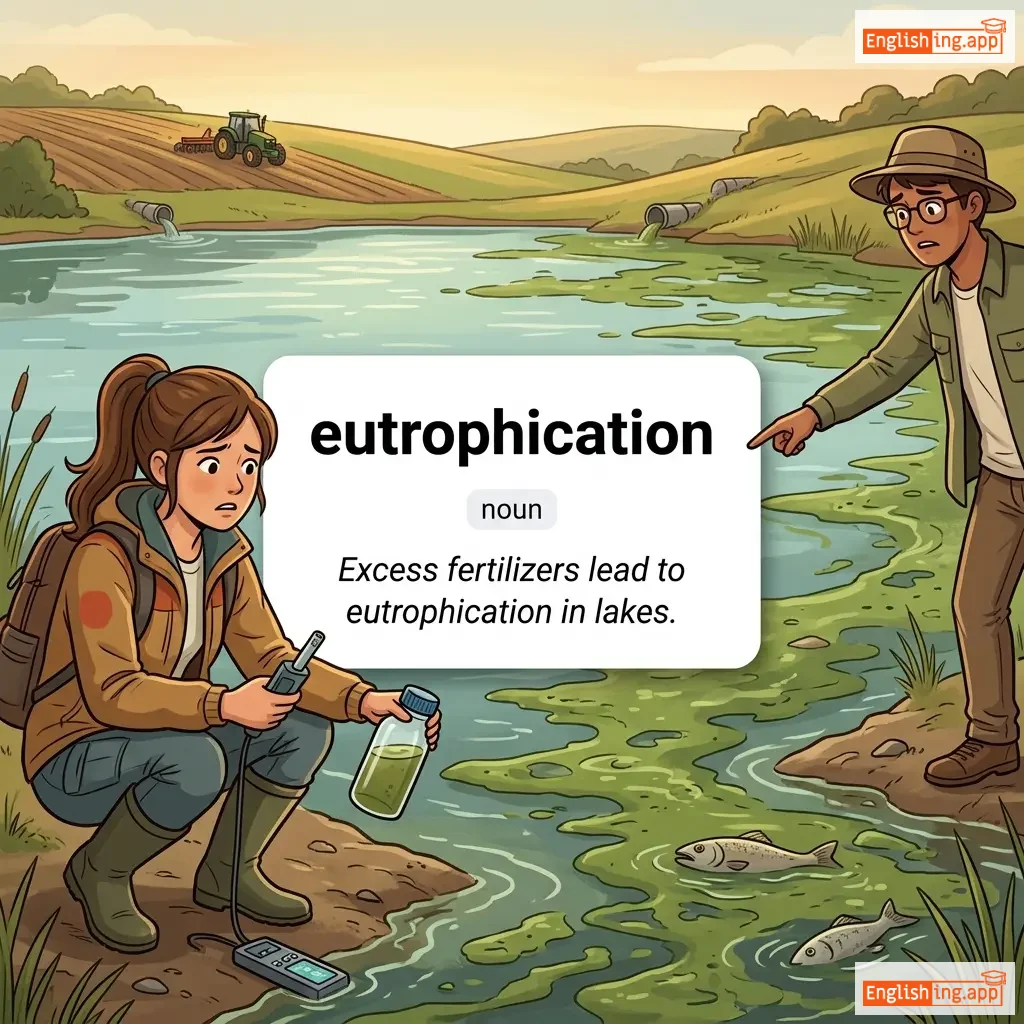
eutrophication definition card — visual illustration of the meaning
noun
/juːˌtrɑː.fɪˈkeɪ.ʃən/
जलाशयों में पोषक तत्वों की अत्यधिक समृद्धि (utrophication)

Excessive richness of nutrients in a lake or other body of water, frequently due to runoff from the land, which causes a dense growth of plant life and death of animal life from lack of oxygen.

"Excess fertilizers lead to eutrophication in lakes."

"अतिरिक्त उर्वरक झीलों में यूट्रोफिकेशन का कारण बनते हैं।" (Atirikt urvarak jheelo mein eutrophication ka kaaran bante hain.)
verb
/ɪˈvækjueɪt/
निकालना (nikalna)

To remove people from a dangerous place to safety.

"The residents were ordered to evacuate the building after the fire alarm."

"आग अलार्म के बाद निवासियों को भवन से बाहर निकलने का आदेश दिया गया था।" (Aag alarm ke baad nivaasiyon ko bhavan se bahar nikalne ka aadesh diya gaya tha.)
verb
/ɪˈveɪd/
बचना (bachna)

To escape or avoid something, especially by cleverness or trickery.

"He tried to evade the question by changing the subject."

"उसने विषय बदलकर सवाल से बचने की कोशिश की।" (Usne vishay badal kar sawal se bachne ki koshish ki.)
verb
/ɪˈvæljueɪt/
मूल्यांकन करना (mulyankan karna)

To assess or judge the value, quality, or significance of something.

"The teacher will evaluate the students’ projects tomorrow."

"टीचर कल विद्यार्थियों के प्रोजेक्ट्स का मूल्यांकन करेंगे।" (Teacher kal vidyarthiyon ke projects ka mulyankan karenge.)
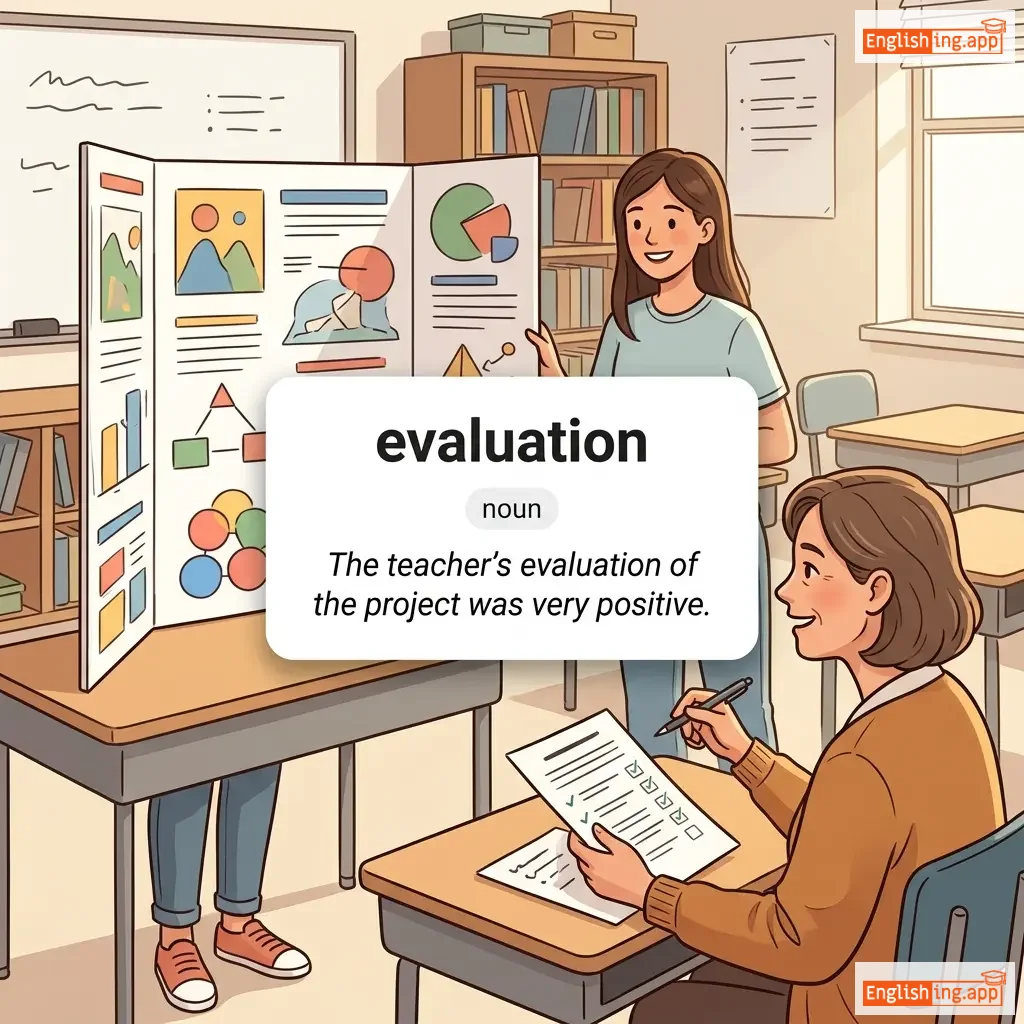
evaluation definition card — visual illustration of the meaning
noun
/ɪˌvæljʊˈeɪʃən/
मूल्यांकन (mulyankan)

The process of assessing or judging the value, quality, or importance of something.

"The teacher’s evaluation of the project was very positive."

"अध्यक्ष का परियोजना का मूल्यांकन बहुत सकारात्मक था।" (Adhyaksh ka pariyojana ka mulyankan bahut sakaratmak tha.)
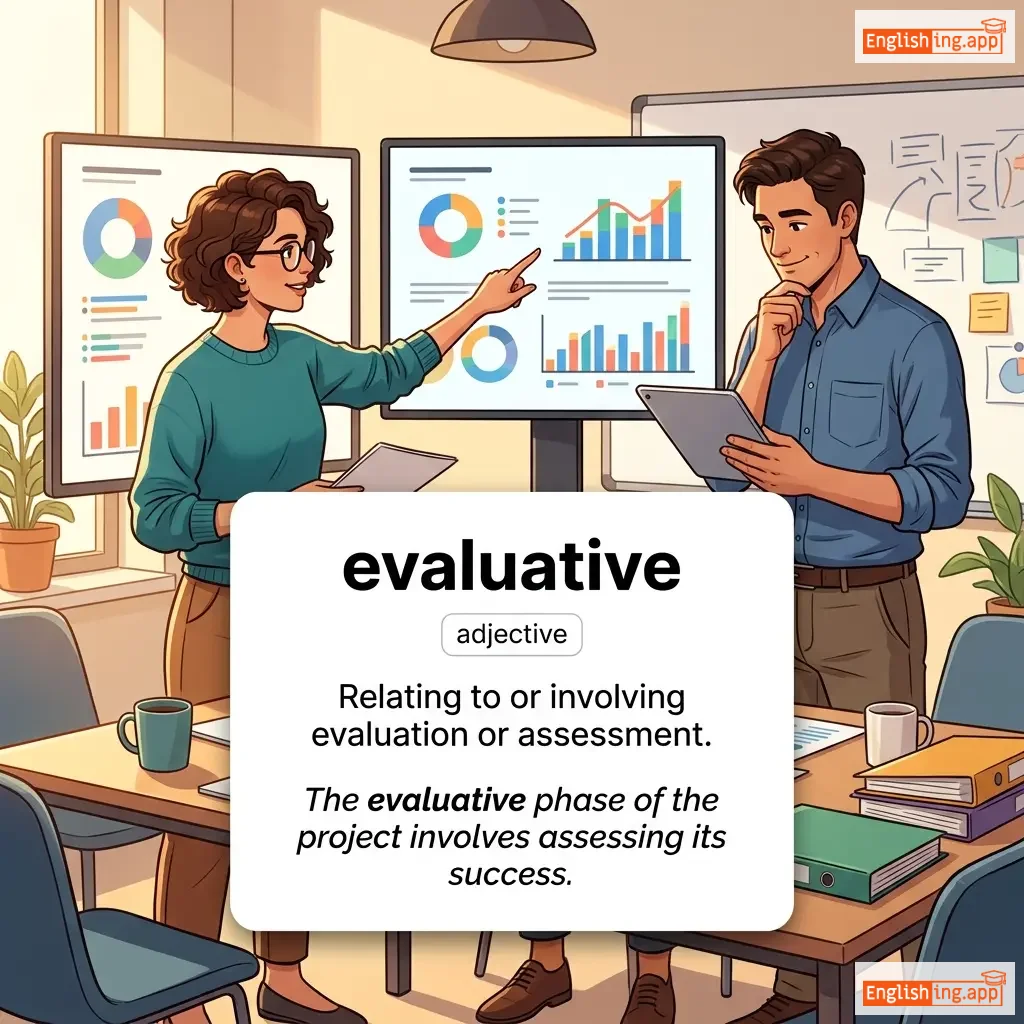
evaluative definition card — visual illustration of the meaning
adjective
/ɪˈvæljʊətɪv/
मूल्यांकनात्मक (mulyankanatmak)

Relating to or involving evaluation or assessment.

"The evaluative phase of the project involves assessing its success."

"प्रोजेक्ट के मूल्यांकनात्मक चरण में इसकी सफलता का मूल्यांकन किया जाता है।" (The project ke mulyankanatmak charan mein iski safalta ka mulyankan kiya jata hai.)
verb
/ˌɛvəˈnɛs/
धुंधला होना (dhundhla hona)

To disappear gradually; to fade away.

"The mist began to evanesce as the sun rose higher."

"सूरज चढ़ने के साथ ही कुहासा धीरे-धीरे विलीन होने लगा।" (Suraj chadhne ke sath hi kuhasa dheere-dheere vileen hone laga.)
adjective
/ˌɛvəˈnɛsənt/
क्षणिक (kshanik)

Quickly fading or disappearing; lasting for only a very short time.

"The beauty of the sunset was evanescent, fading within minutes."

"सूर्यास्त की सुंदरता क्षणिक थी, कुछ ही मिनटों में गायब हो गई।" (Suryast ki sundarta kshanik thi, kuch hi minaton mein gayab ho gayi.)
adjective
/ˌiːvænˈdʒɛlɪkəl/
ईसाई धर्मशास्त्र से संबंधित (isaai dharmashastra se sambandhit)

Relating to the Christian gospel, especially the teachings that emphasize personal faith and the authority of the Bible.

"She grew up in an evangelical church community."

"वह एक ईवेंजेलिकल चर्च समुदाय में पली-बढ़ी।" (Vah ek evangelical church samudaay mein pali-badhi.)
noun
/ɪˈvændʒəlɪst/
धर्मप्रचारक (dharmapracharak)

A person who seeks to convert others to the Christian faith, especially by public preaching.

"The evangelist traveled across the country spreading his message."

"धर्मप्रचारक देश भर में अपनी संदेश फैलाने के लिए यात्रा करते थे।" (Dharmapracharak desh bhar mein apni sandesh phailane ke liye yatra karte the.)
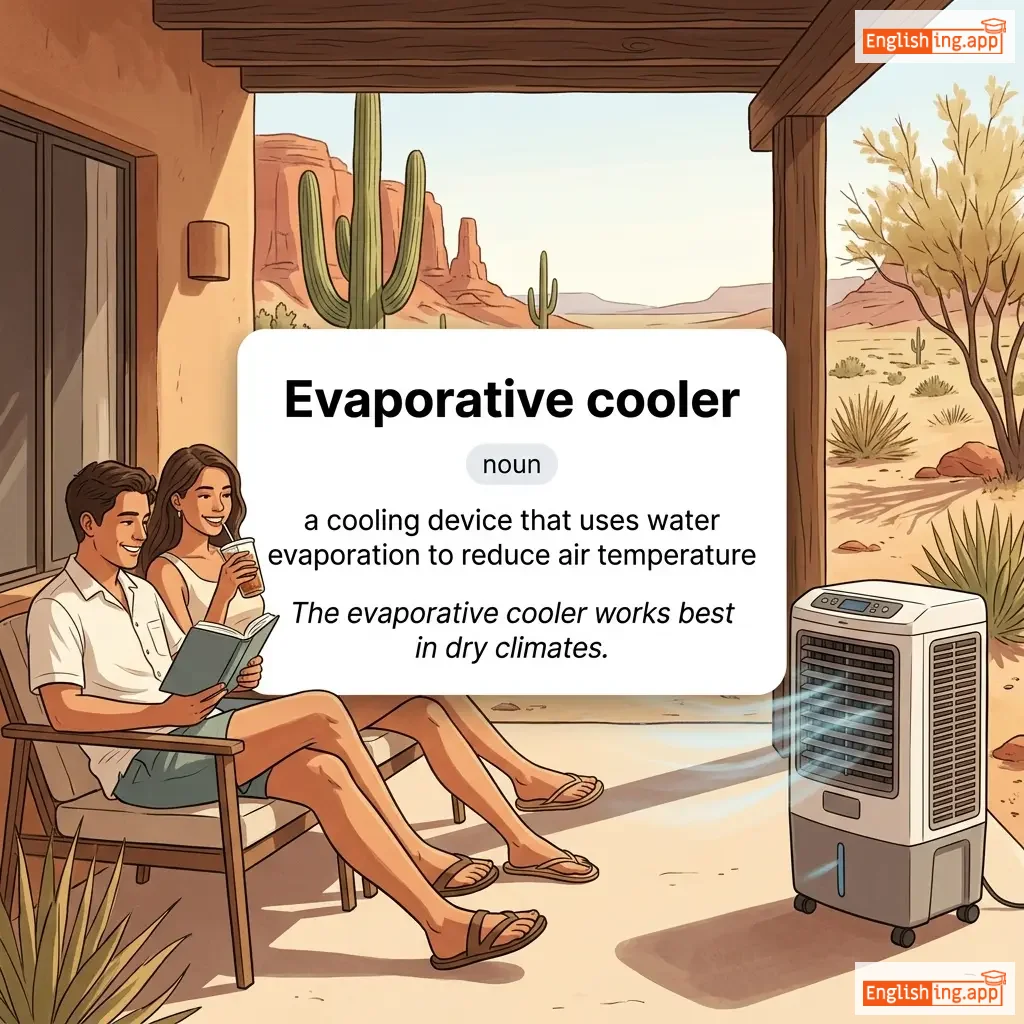
Evaporative cooler definition card — visual illustration of the meaning
noun
/ɪˈvæp.ər.ə.tɪv ˈkuː.lər/
वाष्पशील शीतलन यंत्र (vashpashil sheetalan yantra)

a cooling device that uses water evaporation to reduce air temperature

"The evaporative cooler works best in dry climates."

"वाष्पशील शीतलन यंत्र शुष्क जलवायु में सबसे अच्छा काम करता है।" (vashpashil sheetalan yantra shushk jalvayu mein sabse achha kaam karta hai)
evasion definition card — visual illustration of the meaning
noun
/ɪˈveɪʒən/
परिहार (parihar)

The act of avoiding something, especially by cleverness or trickery.

"He was arrested for tax evasion."

"उसे कर चोरी के लिए गिरफ्तार किया गया था।" (Use kar chori ke liye giraftaar kiya gaya tha.)
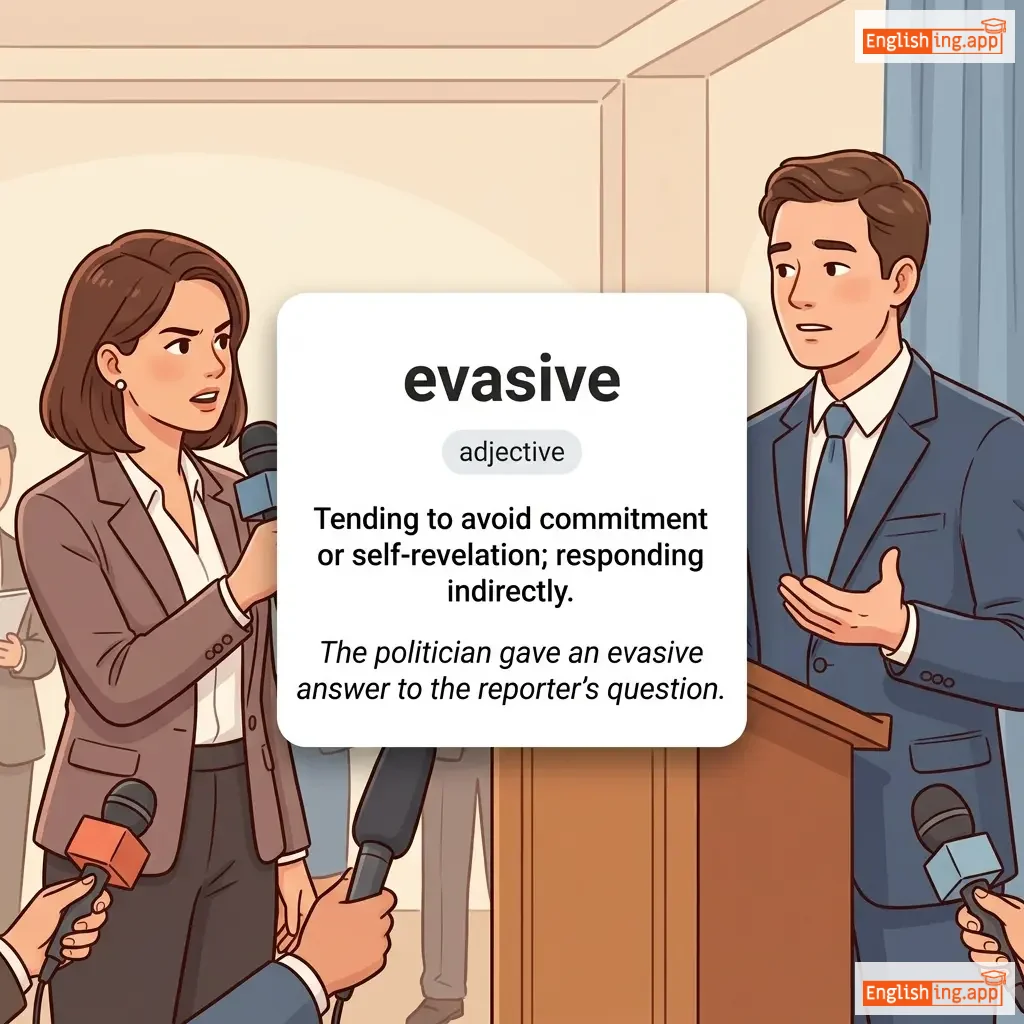
evasive definition card — visual illustration of the meaning
adjective
/ɪˈveɪsɪv/
जागरूक (jagarook)

Tending to avoid commitment or self-revelation; responding indirectly.

"The politician gave an evasive answer to the reporter's question."

"राजनेता ने रिपोर्टर के सवाल का एक जटिल जवाब दिया।" (Rajneeta ne reporter ke sawaal ka ek jatil jawab diya.)
adjective, adverb
/ˈiː.vən/
समांन (samaan)

flat or smooth; equal in degree or amount; used to emphasize something surprising

"The road was surprisingly even after the storm."

"आंधी के बाद सड़क आश्चर्यजनक रूप से समांन थी।" (Aandhi ke baad sadak aashcharyajanak roop se samaan thi.)
adjective
/ˌiːvənˈhændɪd/
निष्पक्ष (nishpaksh)

Fair and impartial; showing no bias or favoritism.

"The judge was praised for her evenhanded approach to the case."

"न्यायाधीश को मामले में निष्पक्ष दृष्टिकोण के लिए सराहा गया।" (Nyayadhish ko mamle mein nishpaksh drishtikon ke liye saraha gaya.)
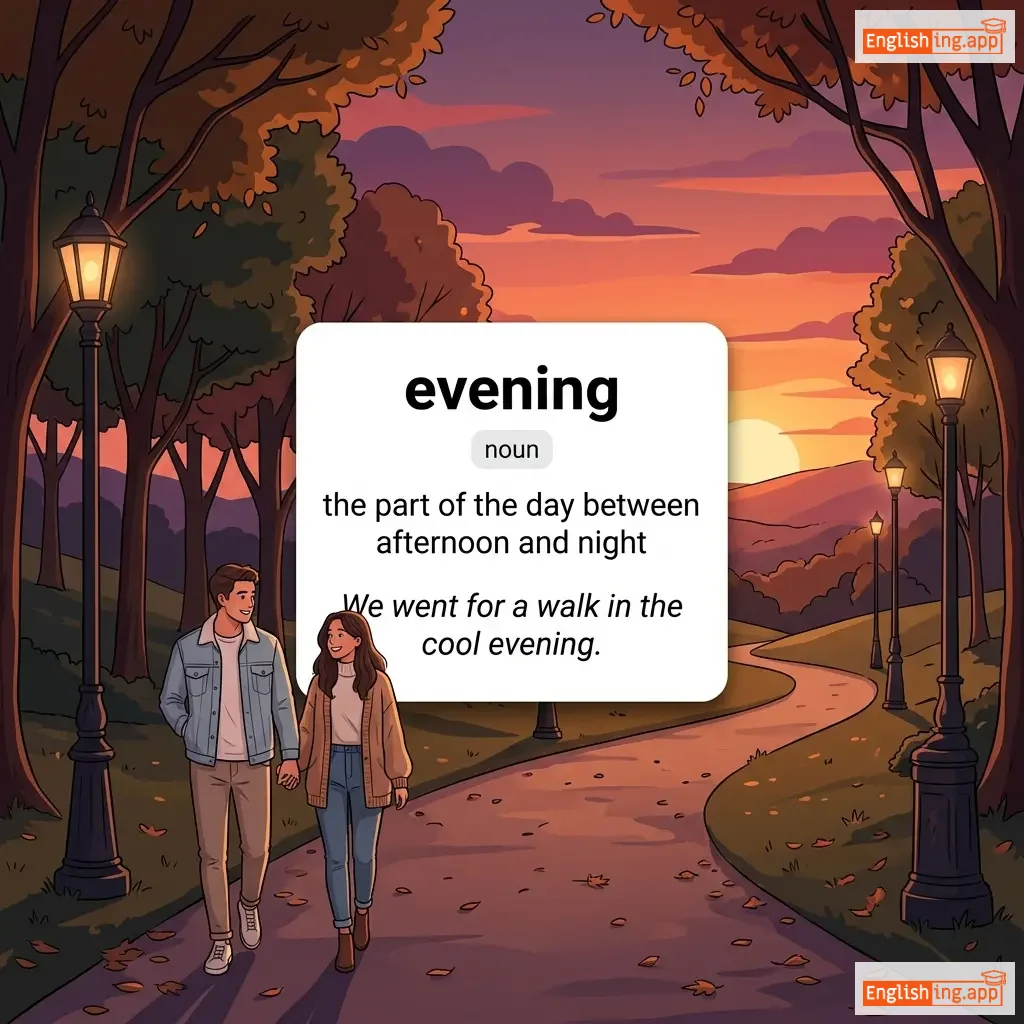
evening definition card — visual illustration of the meaning
noun
/ˈiːv.nɪŋ/
शाम (shaam)

the part of the day between afternoon and night

"We went for a walk in the cool evening."

"हम ठंडी शाम में घूमने गए।" (Hum thandi shaam mein ghoomne gaye.)
event definition card — visual illustration of the meaning
noun
/ɪˈvent/
घटना (ghatna)

something that happens, especially something important

"The concert was the biggest event of the year."

"कंसर्ट साल का सबसे बड़ा इवेंट था।" (Concert saal ka sabse bada event tha.)
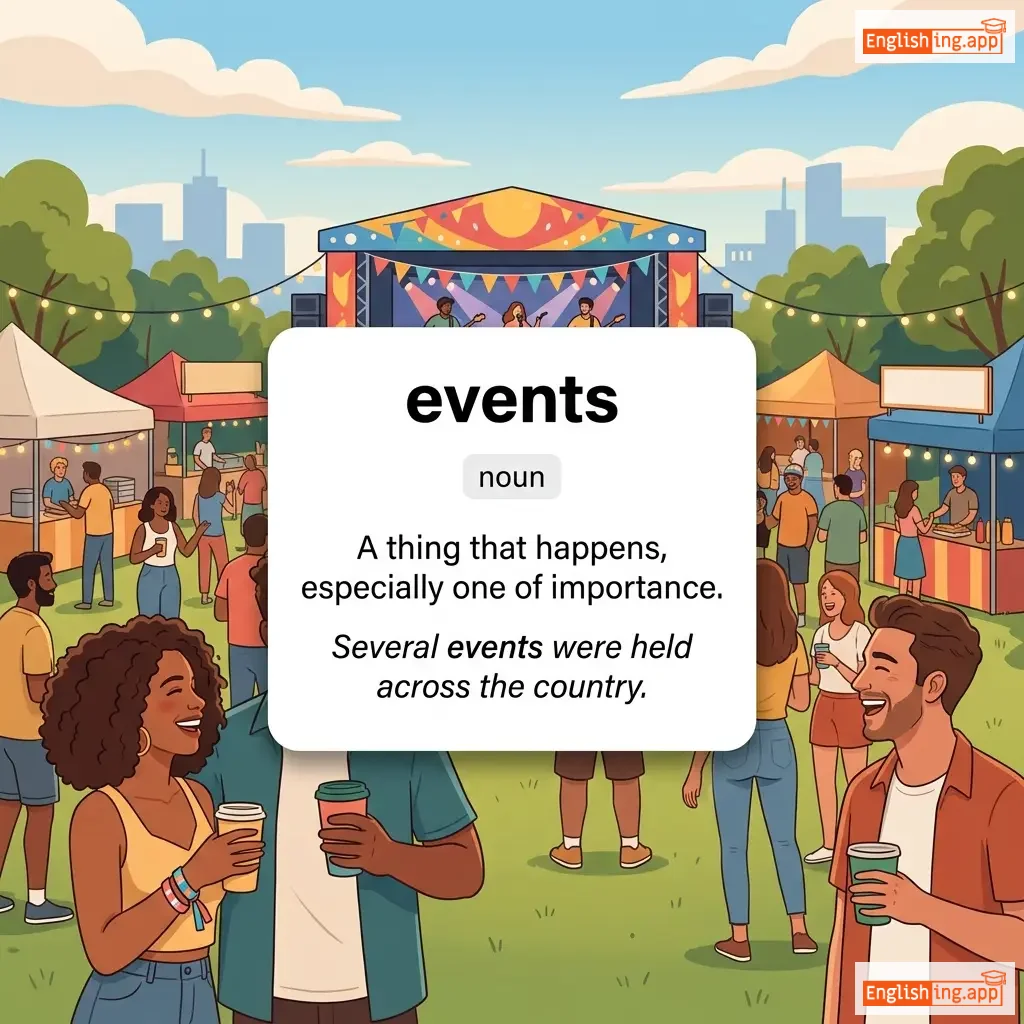
events definition card — visual illustration of the meaning
noun
ɪˈvɛnts
घटनाएँ (ghatnayein)

A thing that happens, especially one of importance.

"Several events were held across the country."

"देश भर में कई घटनाएँ आयोजित की गईं।" (Desh bhar mein kai ghatnayein aayojit ki gayi.)
adjective
/ɪˈvɛntʃuəl/
अंतिम (antim)

Happening at the end of a process or as the final result.

"His hard work led to his eventual success."

"उसका कठिन परिश्रम उसके अंतिम सफलता का कारण बना।" (Uska kathin parishram uske antim safalta ka kaaran bana.)
adverb
/ɪˈven.tʃu.ə.li/
आखिरकार (aakhirkaar)

in the end, especially after a long delay or series of problems

"He eventually finished his degree after many challenges."

"वह अंततः कई चुनौतियों के बाद अपनी डिग्री पूरी कर पाया।" (Vah antatah kai chunautiyon ke baad apni degree poori kar paaya.)
adverb
/ˈev.ər/
कभी (kabhi)

at any time; always; continuously

"Have you ever been to London?"

"क्या तुम कभी लंदन गए हो?" (Kya tum kabhi London gaye ho?)
adjective
/ˈevər ˈlæstɪŋ/
शाश्वत; स्थायी; (shashvat; sthayi)

eternal; permanent; enduring forever

"Their love is ever-lasting and will never fade."

"उनका प्यार शाश्वत है और कभी फीका नहीं पड़ेगा।" (unka pyaar shashvat hai aur kabhi feeka nahi padega.)
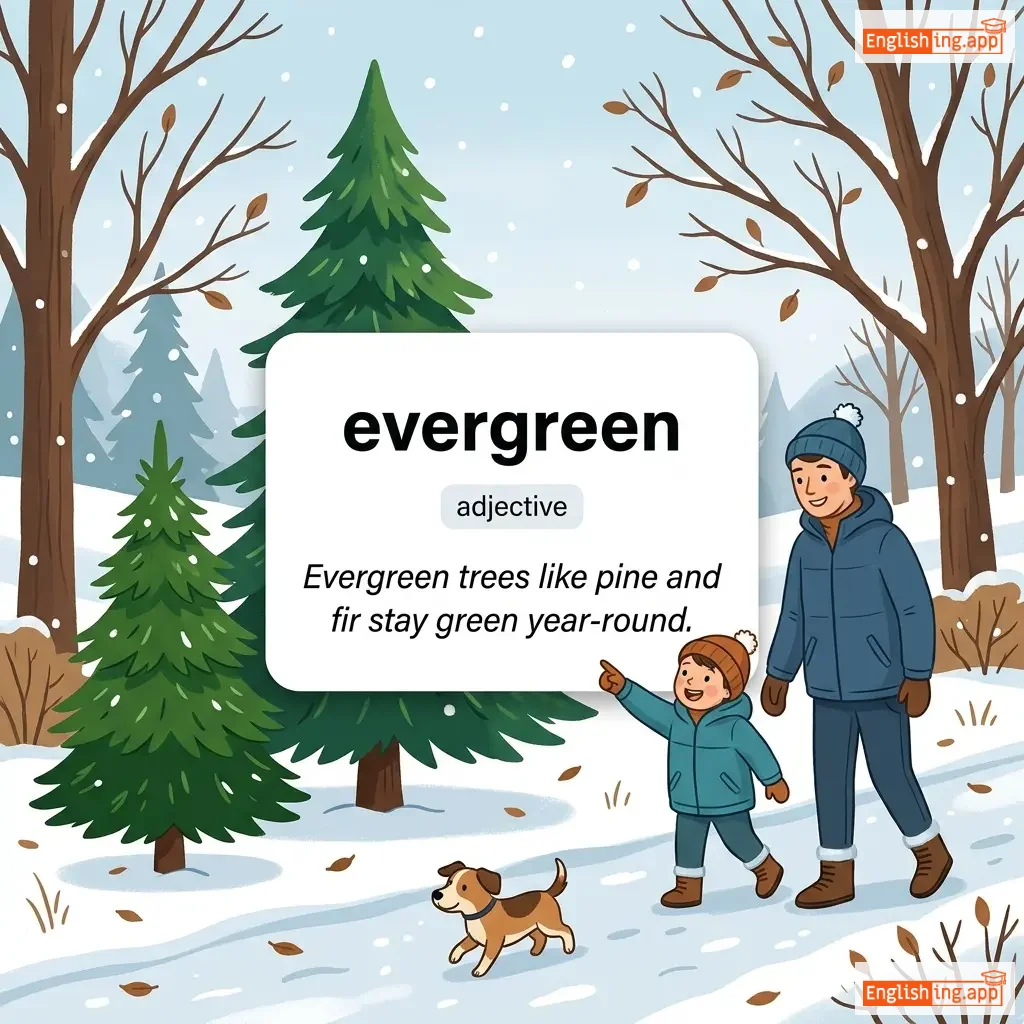
evergreen definition card — visual illustration of the meaning
adjective
/ˈɛv.ə.ɡriːn/
स्थायी हरा (sthaayi hara)

Remaining green and functional throughout the year; not shedding leaves seasonally.

"Evergreen trees like pine and fir stay green year-round."

"एवरग्रीन पेड़ जैसे पाइन और फर पूरे साल हरे रहते हैं।" (Evergreen ped jaise pain aur far poore saal hare rehte hain.)
adjective
/ˌɛvərˈlæstɪŋ/
अनन्तकालिक (anantkalik)

Lasting forever or for an indefinitely long time.

"The poet wrote about his everlasting love for nature."

"कवि ने प्रकृति के प्रति अपनी अनन्तकालिक प्रेम के बारे में लिखा।" (Kavi ne prakriti ke prati apni anantkalik prem ke baare mein likha.)
verb
/ɪˈvɜːrt/
बाहर की ओर घुमाना (bahar ki or ghoomana)

To turn inside out or outward.

"The surgeon had to evert the eyelid during the procedure."

"सर्जन को ऑपरेशन के दौरान पलक को पलटना पड़ा था।" (Sarjan ko operation ke dauran palk ko palatna pada tha.)
Every definition card — visual illustration of the meaning
determiner
/ˈɛvri/
प्रत्येक (pratyek)

used to refer to all members of a group without exception

"She reads every book she can find."

"वह हर किताब पढ़ती है जो उसे मिलती है।" (vah har kitaab padhti hai jo use milti hai)
pronoun
/ˈɛvribɒdi/
सभी (sabhi)

all people; everyone

"Everybody enjoyed the party."

"सभी ने पार्टी का आनंद लिया।" (Sabhi ne party ka anand liya.)
adjective
/ˈɛvrideɪ/
प्रतिदिन (pratidin)

common or ordinary; occurring daily

"These shoes are perfect for everyday use."

"ये जूते प्रतिदिन उपयोग के लिए perfect हैं।" (Ye jute pratidin upyog ke liye perfect hain.)
pronoun
/ˈɛvrɪwʌn/
सब लोग (sab log)

every person; all people

"Everyone must bring their own lunch."

"सबको अपनी लंच लानी चाहिए।" (Sabko apni lunch lani chahiye.)
pronoun
/ˈɛvrɪθɪŋ/
सब कुछ (sab kuch)

all things; the whole lot

"He packed everything in his suitcase."

"उसने अपना सारा सामान सूटकेस में पैक कर लिया।" (Usne apna saara samaan suitcase mein pack kar liya.)
adverb
/ˈɛv.ri.wɛər/
हर जगह (har jagah)

in or to all places

"Tourists can be seen everywhere in the city during summer."

"गर्मी के मौसम में शहर में हर जगह पर्यटक देखे जा सकते हैं।" (garmi ke mausam mein shaher mein har jagah paryatak dekhe ja sakte hain.)
verb
/ɪˈvɪkt/
निकालना (nikaalna)

To expel someone from a property, usually by legal process.

"The landlord decided to evict the tenants for not paying rent."

"मालिक ने किरायेदारों को किराया न देने पर बाहर निकालने का निर्णय लिया।" (Malik ne kirayedaron ko kiraya na dene par baahar nikaalne ka nirnay liya.)
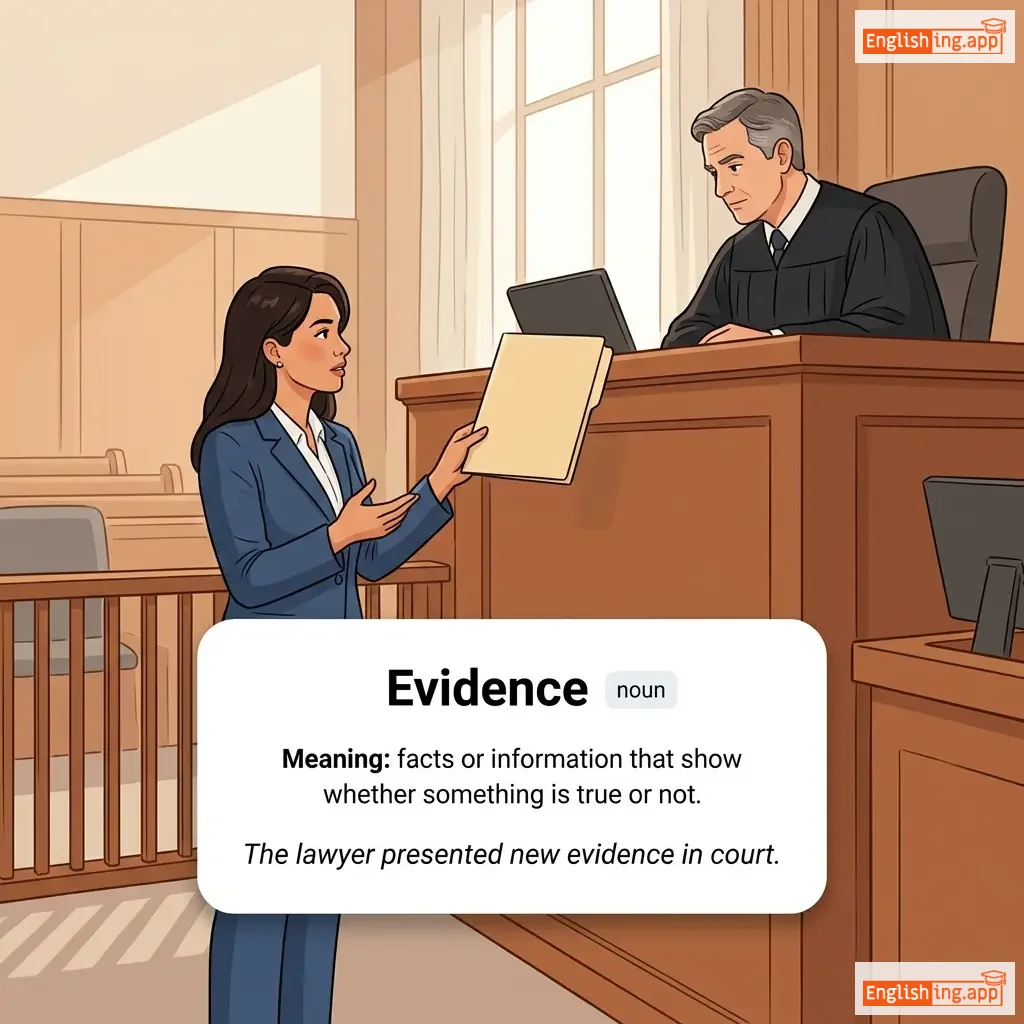
Evidence definition card — visual illustration of the meaning
noun
/ˈɛv.ɪ.dəns/
साक्ष्य (saakshya)

facts or information that show whether something is true or not

"The lawyer presented new evidence in court."

"वकील ने अदालत में नया साक्ष्य प्रस्तुत किया।" (Vakeel ne adalat mein naya saakshya prastut kiya.)
evident definition card — visual illustration of the meaning
adjective
/ˈɛvɪdənt/
स्पष्ट (spasht)

clearly seen or understood; obvious

"It was evident that she was upset."

"यह स्पष्ट था कि वह उदास थी।" (Yeh spasht tha ki wah udaas thi.)
adjective
/ˌɛvɪˈdɛnʃəl/
प्रमाणात्मक (pramaatmak)

relating to or providing evidence

"The lawyer presented evidential support for her claims."

"वकील ने अपने दावों के लिए प्रमाणात्मक समर्थन प्रस्तुत किया।" (Vakeel ne apne daavon ke liye pramaatmak samarthan prastut kiya.)
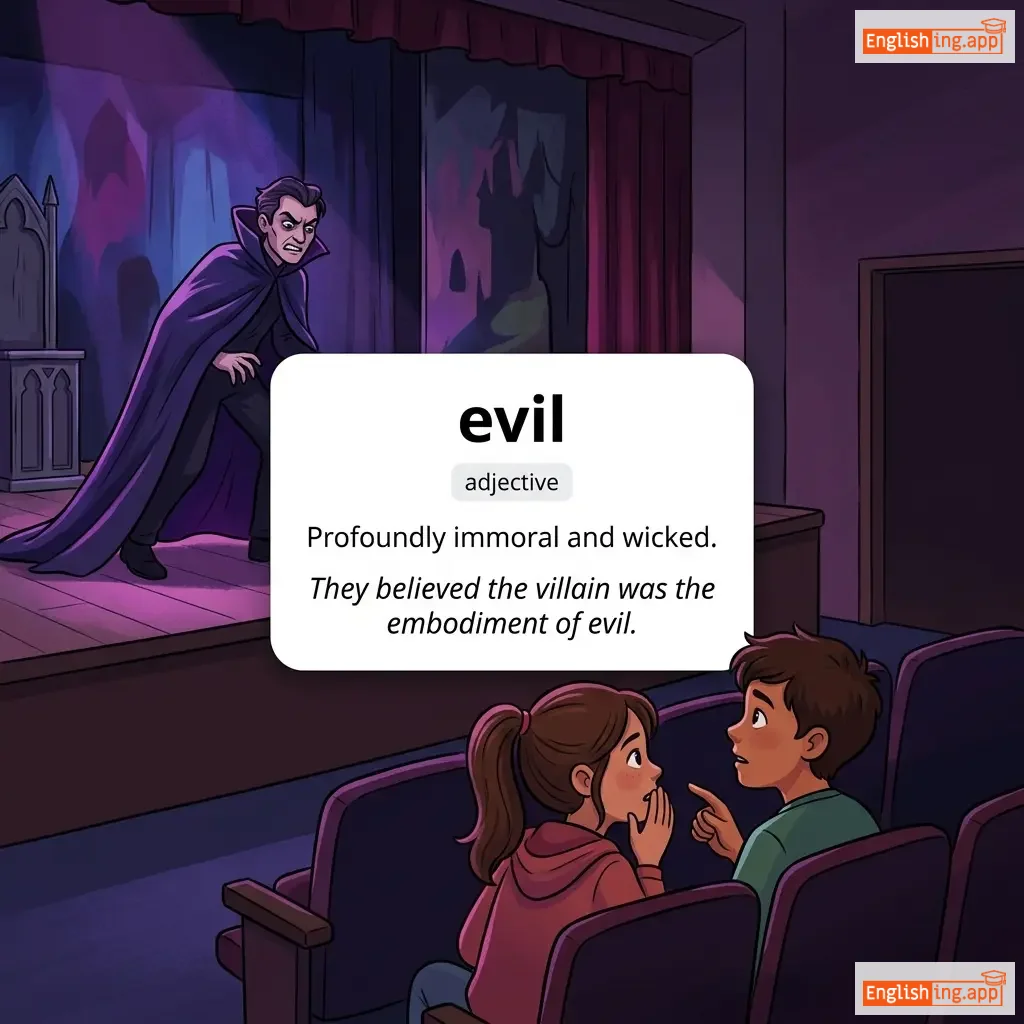
evil definition card — visual illustration of the meaning
adjective
/ˈiːvəl/
दुष्ट (dusht)

Profoundly immoral and wicked.

"They believed the villain was the embodiment of evil."

"उन्हें विश्वास था कि खलनायक दुष्टता का प्रतीक था।" (Unhein vishwas tha ki khalaanayak dushtata ka pratik tha.)
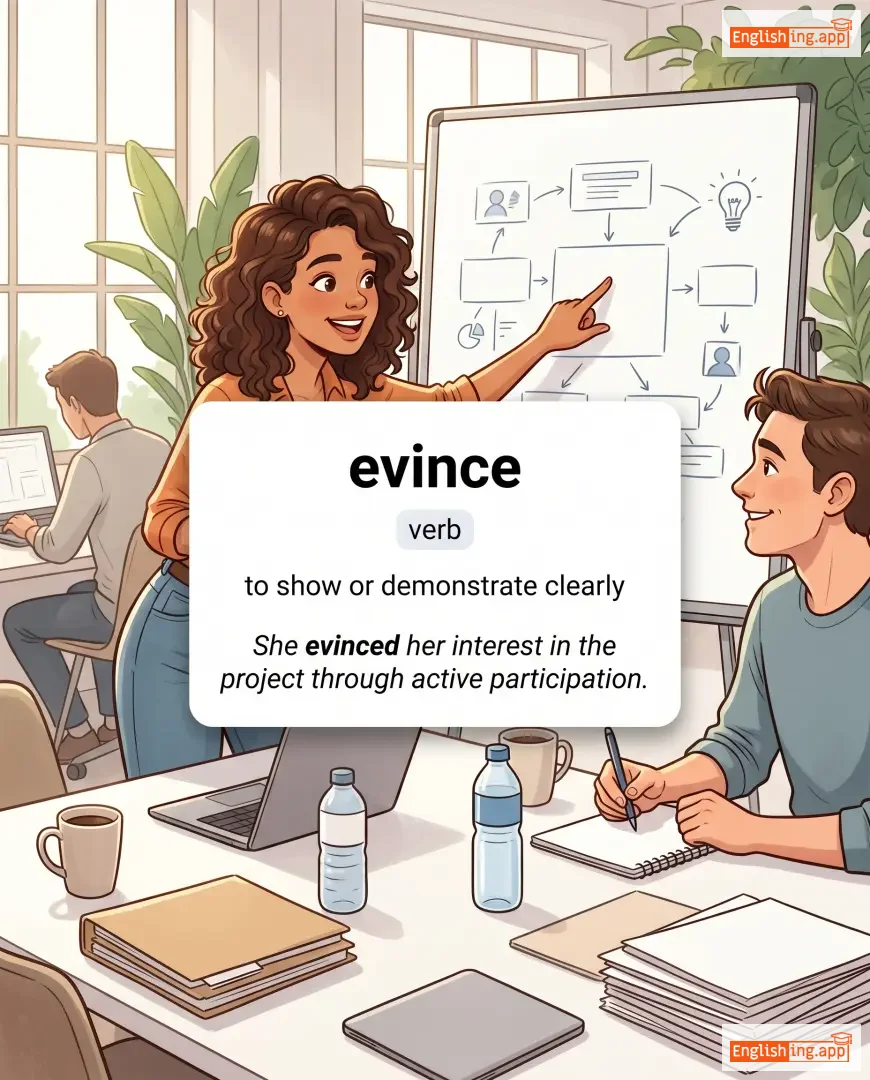
evince definition card — visual illustration of the meaning
verb
/ɪˈvɪns/
प्रकट करना (prakat karna)

to show or demonstrate clearly

"She evinced her interest in the project through active participation."

"वह सक्रिय भागीदारी के माध्यम से परियोजना में अपनी रुचि प्रदर्शित कर रही थी।" (Wah sakriya bhagidari ke madhyam se pariyojna mein apni ruchi pradarshit kar rahi thi.)
verb
/ɪˈvɪsəˌreɪt/
आंत निकालना, नष्ट करना (aant nikaalna, nasht karna)

to remove the internal organs of; to deprive of essential content

"The critics eviscerated the movie for its weak storyline."

"आलोचकों ने कमजोर कहानी के लिए फिल्म को नष्ट कर दिया।" (Aalochakon ne kamzor kahani ke liye film ko nasht kar diya.)
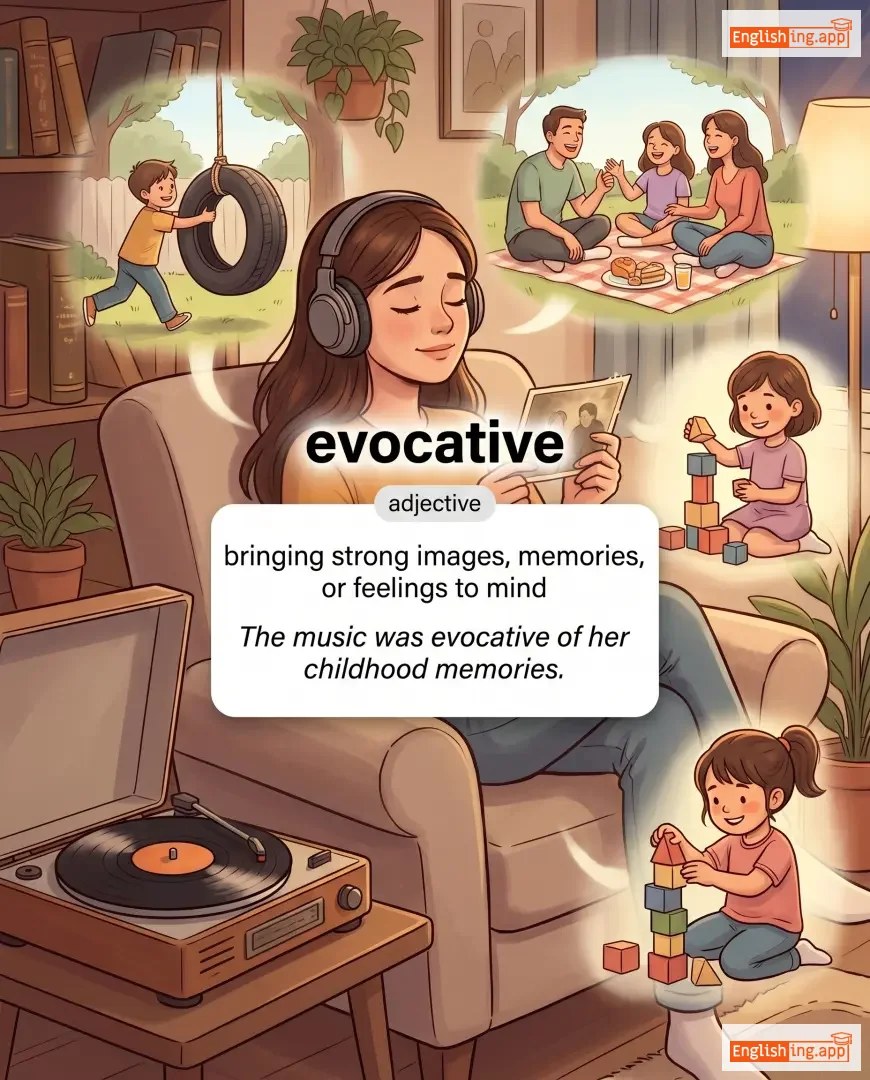
evocative definition card — visual illustration of the meaning
adjective
/ɪˈvɒkətɪv/
स्मृति जागृत करने वाला (smriti jagrit karne wala)

bringing strong images, memories, or feelings to mind

"The music was evocative of her childhood memories."

"संगीत ने उसके बचपन की यादों को ताजा कर दिया।" (Sangeet ne uske bachpan ki yaadon ko taaza kar diya.)
verb
/ɪˈvoʊk/
जागाना (jagana)

to bring a feeling, memory, or image into the mind

"The old song evoked memories of her childhood."

"पुराना गाना उसके बचपन की यादें जगा देता था।" (Purana gana uske bachpan ki yaadein jaga deti thi.)
noun
/ˌɛvəˈluːʃən/
विकास (vikas)

the gradual development of something, especially from a simple to a more complex form

"The theory of evolution explains how species change over time."

"विकास का सिद्धांत यह बताता है कि प्रजातियाँ समय के साथ कैसे बदलती हैं।" (Vikas ka siddhant yah batata hai ki prajatiyan samay ke saath kaise badalti hain.)