वोकैबुलरीज

इंग्लिश वोकैबुलरी डिस्कवर, लर्न और मास्टर करें

evolutionary definition card — visual illustration of the meaning
adjective
/ˌɛvəlʊˈʃɛnəri/
विकासीय (evolutionary)

relating to or characterized by evolution, especially in terms of gradual development or change

"The company has adopted an evolutionary approach to its product development."

"कंपनी ने अपने उत्पाद विकास के लिए एक विकासवादी दृष्टिकोण अपनाया है।" (kampani ne apne utpaad vikaas ke liye ek vikasvaadi drishtikon apnaaya hai.)
verb
/ɪˈvɑːlv/
विकसित होना (vikasit hona)

to develop gradually, especially into a more complex or advanced state

"Over time, the company evolved into a global brand."

"समय के साथ, कंपनी एक वैश्विक ब्रांड में विकसित हो गई।" (Samay ke saath, company ek vaishvik brand mein viksit ho gayi.)
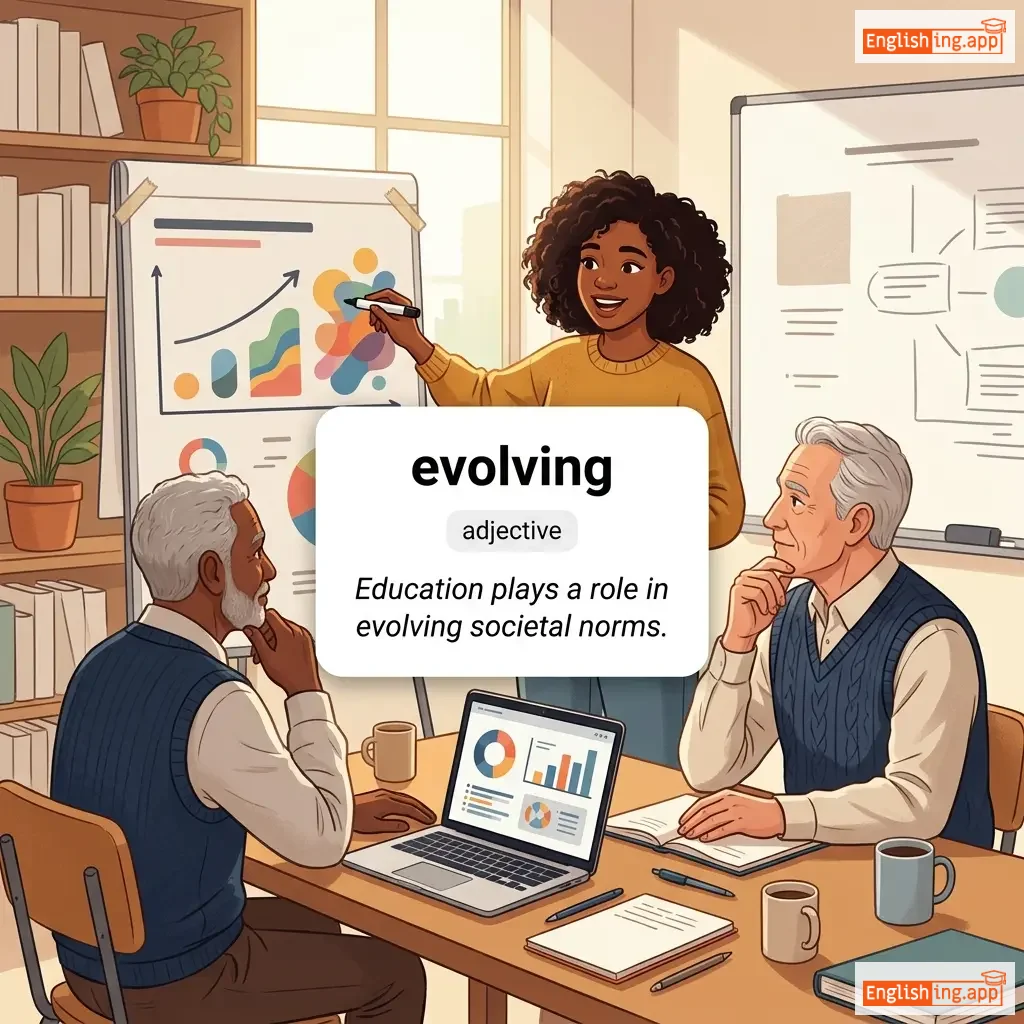
evolving definition card — visual illustration of the meaning
adjective
ɪˈvɒlvɪŋ
विकसित हो रहा (vikasit ho raha)

Developing gradually, especially from a simple to a more complex form; changing and developing.

"Education plays a role in evolving societal norms."

"शिक्षा समाज के मानकों को विकसित करने में भूमिका निभाती है।" (Shiksha samāj ke mānako ko vikasit karne meṁ bhūmikā nibhātī hai.)
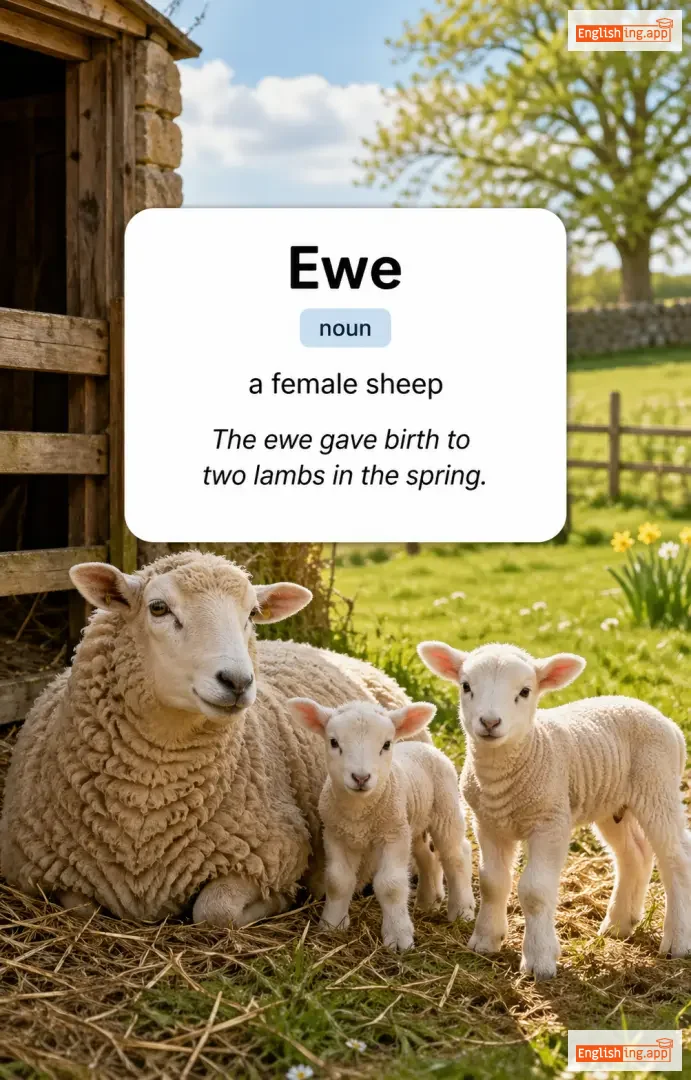
Ewe definition card — visual illustration of the meaning
noun
/juː/
मादा भेड़ (maada bhed)

a female sheep

"The ewe gave birth to two lambs in the spring."

"वसंत में मादा भेड़ ने दो मेमनों को जन्म दिया।" (Vasant mein maada bhed ne do memnon ko janm diya.)
noun
/ˈjuːər/
पानी का बर्तन (pani ka bartann)

a large jug with a wide mouth, especially used in the past for carrying water

"The servant filled the ewer with fresh water."

"नौकर ने यूर में ताजा पानी भरा।" (Naukar ne yoor mein taza pani bhara.)
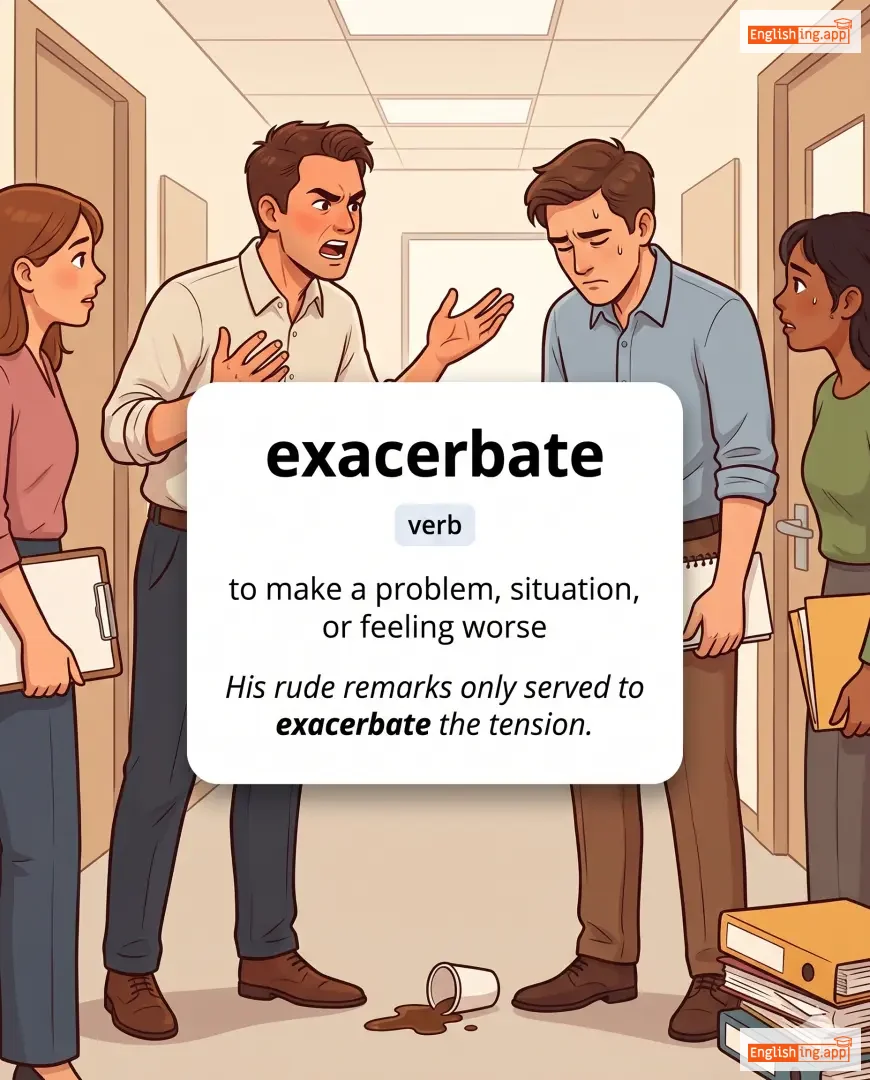
exacerbate definition card — visual illustration of the meaning
verb
/ɪɡˈzæsərˌbeɪt/
बढ़ाना (badhana)

to make a problem, situation, or feeling worse

"His rude remarks only served to exacerbate the tension."

"उसकी अपमानजनक टिप्पणियाँ केवल तनाव को बढ़ाने का काम कर रही थीं।" (uski apmaanjanak tippaniyan keval tanav ko badhane ka kaam kar rahi thin.)
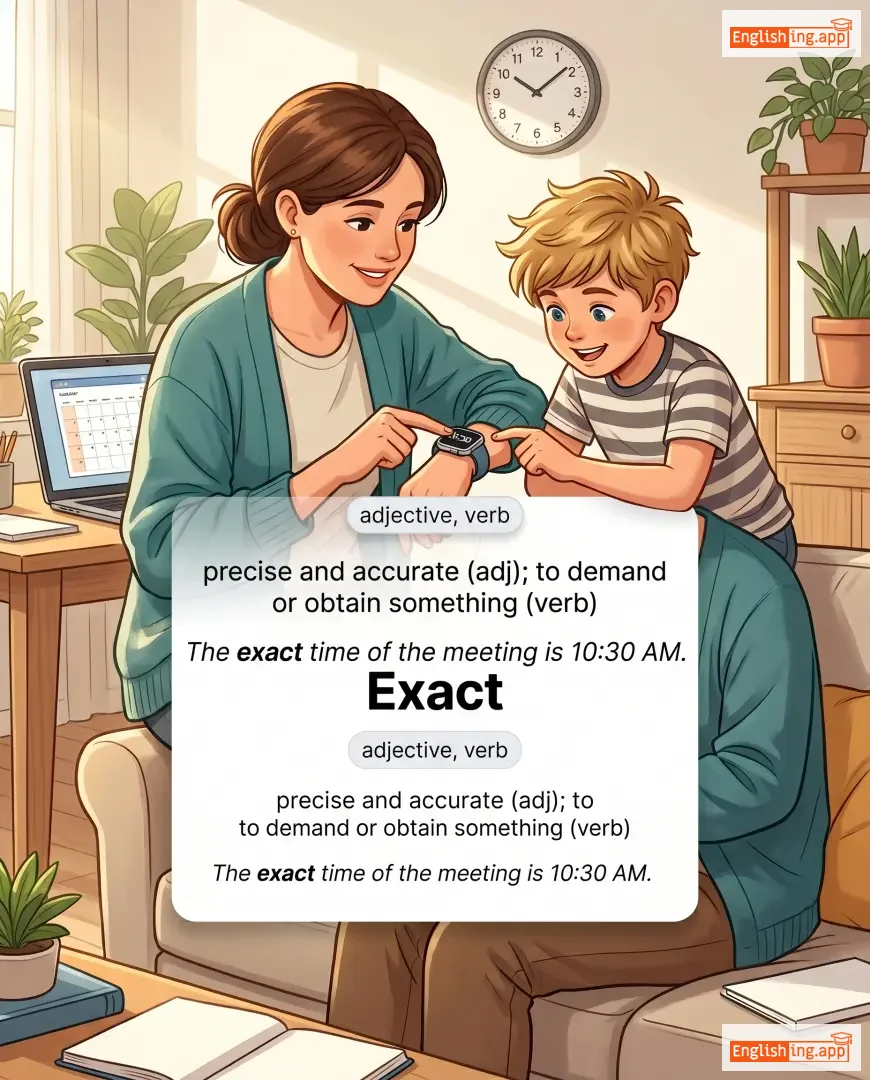
Exact definition card — visual illustration of the meaning
adjective, verb
/ɪɡˈzækt/
सटीक (sateek)

precise and accurate (adj); to demand or obtain something (verb)

"The exact time of the meeting is 10:30 AM."

"बैठक का सटीक समय 10:30 AM है।" (baithak ka sateek samay 10:30 AM hai.)
adjective
/ɪɡˈzæktɪŋ/
कठोर (kathor)

demanding a lot of effort, attention, or precision

"She is known for her exacting standards in design."

"वह डिजाइन में अपनी कठोर मानकों के लिए जानी जाती है।" (vah design mein apni kathor maankon ke liye jaani jaati hai.)
noun
/ɪɡˈzækʃən/
जबरदस्ती वसूली (zabardasti vasooli)

the act of demanding or obtaining something, especially unfairly

"The peasants suffered under the king's heavy exactions."

"किसानों ने राजा की भारी जबरदस्ती वसूली के तहत कष्ट उठाया।" (Kisano ne raja ki bhaari zabardasti vasooli ke tahat kasht uthaya.)
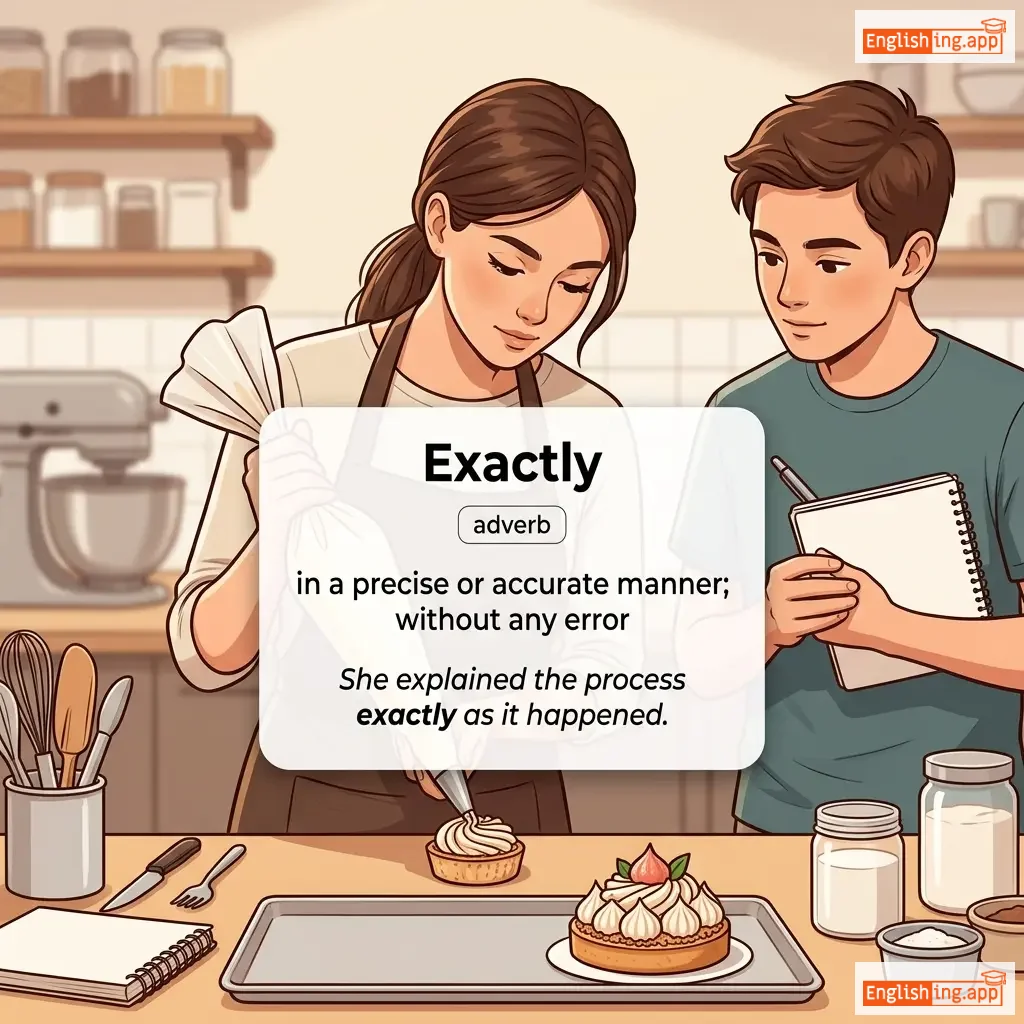
Exactly definition card — visual illustration of the meaning
adverb
/ɪɡˈzæktli/
सही तरीके से (sahi tareeke se)

in a precise or accurate manner; without any error

"She explained the process exactly as it happened."

"उसने प्रक्रिया को ठीक वैसा ही समझाया जैसा हुआ था।" (Usne prakriya ko thik waisa hi samjhaya jaisa hua tha.)
verb
/ɪɡˈzædʒəˌreɪt/
अतिरंजित करना (atiranjit karna)

to describe something as better, worse, or more important than it really is

"He tends to exaggerate his achievements."

"वह अपनी उपलब्धियों को बढ़ा-चढ़ा कर प्रस्तुत करता है।" (vah apni uplabdhiyon ko badha-chadha kar prastut karta hai.)
noun
/ɪɡˌzædʒ.əˈreɪ.ʃən/
अतिरेक (atirek)

a statement that represents something as better or worse than it really is

"His story about the fish he caught was clearly an exaggeration."

"उसकी मछली पकड़ने की कहानी स्पष्ट रूप से एक अतिरेक थी।" (uski machhli pakadne ki kahani spashth roop se ek atirek thi)
verb
/ɪɡˈzɔːlt/
उच्च प्रशंसा करना, सम्मानित करना (uchch prashansa karna, sammaanit karna)

to praise highly or raise in rank, honor, or power

"The community exalted the teacher for his dedication."

"समुदाय ने शिक्षक को उनकी निष्ठा के लिए सम्मानित किया।" (Samudaay ne shikshak ko unki nishtha ke liye sammaanit kiya.)
exam definition card — visual illustration of the meaning
noun
/ɪɡˈzæm/
परीक्षा (pariksha)

a formal test of a person's knowledge or skill in a subject

"She studied hard for her final exam."

"वह अपनी अंतिम परीक्षा के लिए कड़ी मेहनत कर रही थी।" (Woh apni antim pariksha ke liye kadi mehnat kar rahi thi.)
noun
/ɪɡˌzæm.ɪˈneɪ.ʃən/
परीक्षा (pariksha)

a formal test of knowledge or ability

"She is preparing for her final examination."

"वह अपनी अंतिम परीक्षा की तैयारी कर रही है।" (Vah apni antim pariksha ki taiyari kar rahi hai.)
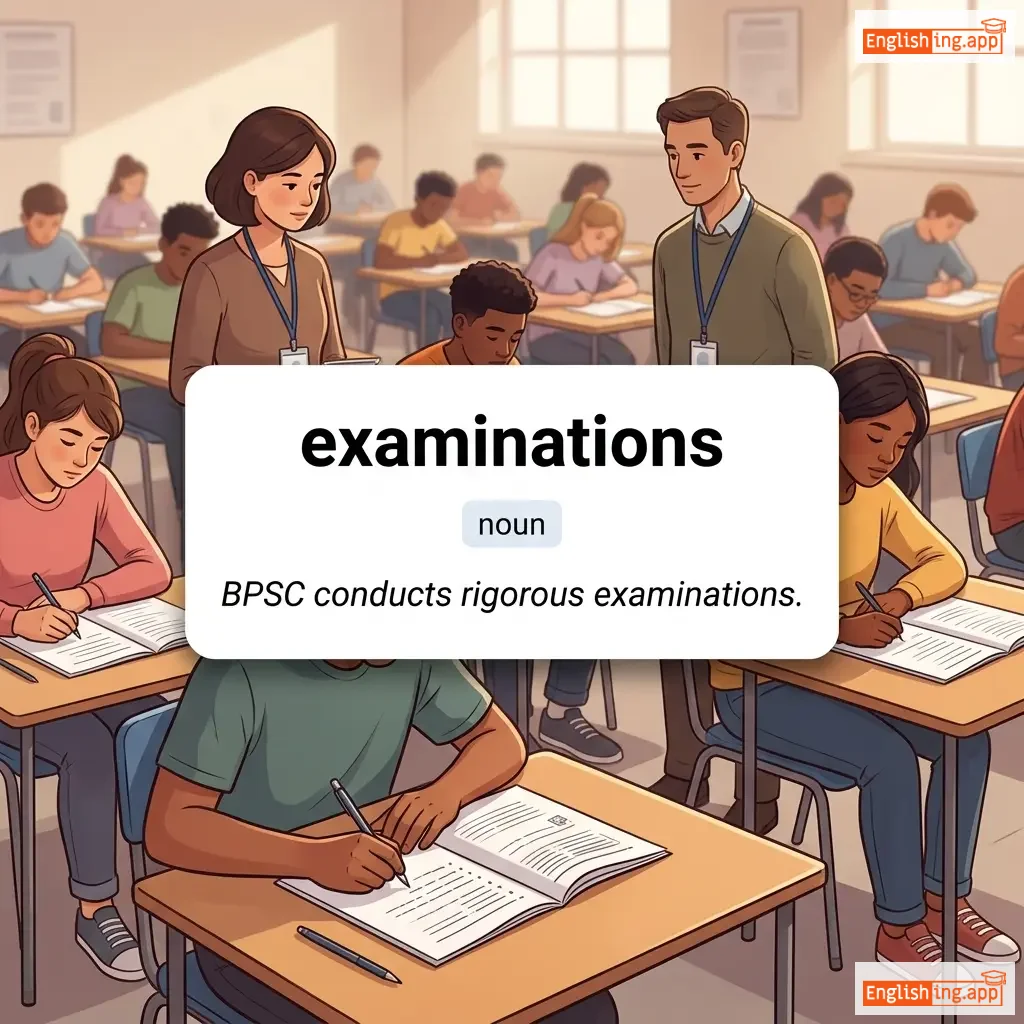
examinations definition card — visual illustration of the meaning
noun
ɪɡˌzæm.ɪˈneɪ.ʃənz
परीक्षाएं (parikshaen)

A detailed inspection or investigation; a formal test of a person's knowledge or proficiency.

"BPSC conducts rigorous examinations."

"बीपीएससी कठोर परीक्षाएं आयोजित करता है।" (BPSC kathor parikshaen aayojit karta hai.)
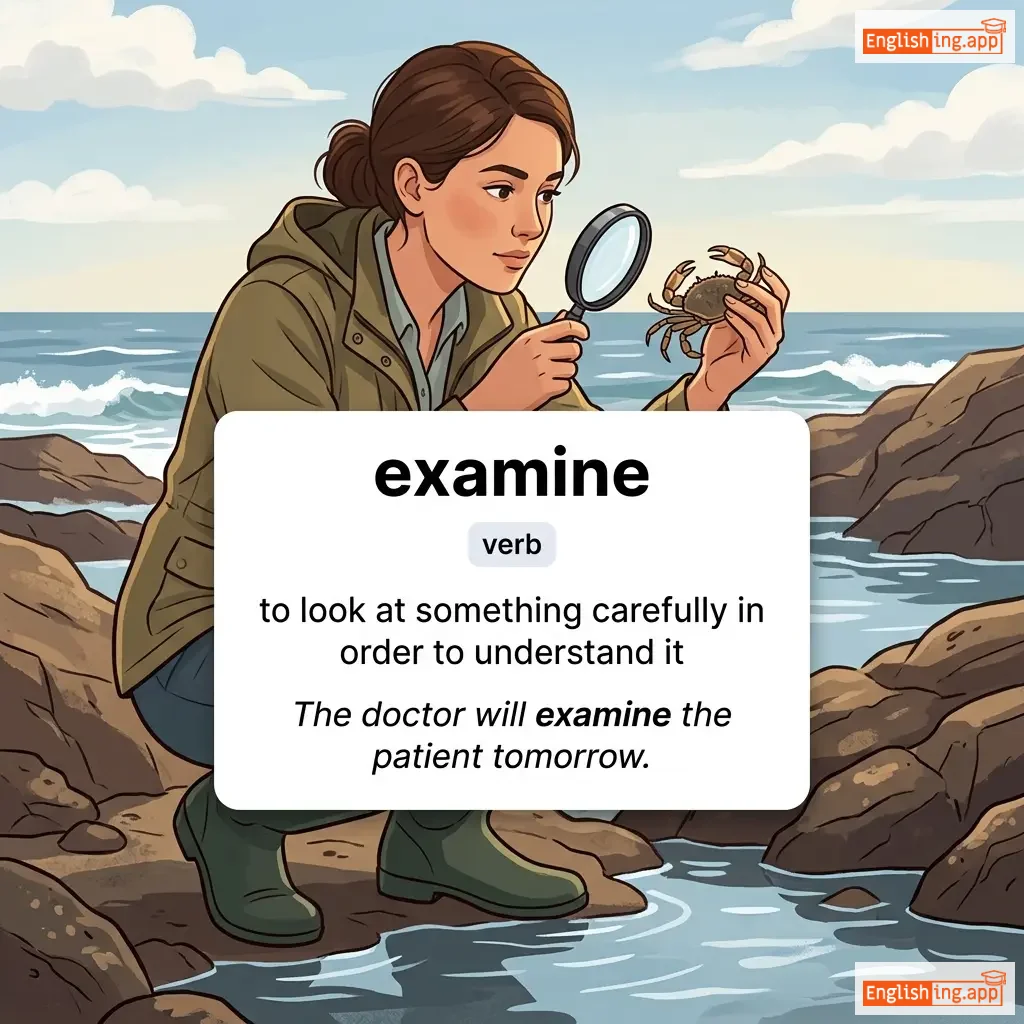
examine definition card — visual illustration of the meaning
verb
/ɪɡˈzæm.ɪn/
सुख (sukh)

to look at something carefully in order to understand it

"The doctor will examine the patient tomorrow."

"जब उसने पुरस्कार प्राप्त किया तो वह अपनी खुशी छिपा नहीं पाई।" (Jab usne puraskar prapt kiya to wah apni khushi chhupa nahi paayi.)
noun
/ɪɡˌzæm.ɪˈniː/
परिक्षार्थी (pariksharthi)

a person who is being tested in an examination

"Each examinee was given two hours to complete the test."

"प्रत्येक परीक्षार्थी को परीक्षा पूरा करने के लिए दो घंटे का समय दिया गया था।" (pratyek pariksharthi ko pariksha poora karne ke liye do ghante ka samay diya gaya tha.)
noun
/ɪɡˈzæmɪnər/
परीक्षक (parikshak)

A person who tests or inspects knowledge, skills, or qualifications

"The examiner reviewed each student's answer sheet carefully."

"परीक्षक ने प्रत्येक छात्र की उत्तर पुस्तिका ध्यान से जांची।" (parikshak ne pratyek chhatra ki uttar pustika dhyan se janchi)
example definition card — visual illustration of the meaning
noun
/ɪɡˈzɑːm.pəl/
उदाहरण (udaharan)

a thing or person regarded as a model to be followed or avoided

"He is a good example of a hardworking student."

"वह एक मेहनती छात्र का अच्छा उदाहरण है।" (Vah ek mehnati chhatra ka accha udaharan hai.)
verb
/ɪɡˈzæspəˌreɪt/
क्रोधित करना (krodhit karna)

to irritate or annoy intensely

"His constant complaints began to exasperate his coworkers."

"उसकी लगातार शिकायतें उसके सहकर्मियों को परेशान करने लगीं।" (Uski lagatar shikayaten uske sahkarmiyon ko pareshan karne lagi.)
adjective
/ɪɡˈzæspəˌreɪtɪd/
अत्यंत चिढ़ा हुआ (atyant chidha hua)

greatly annoyed or irritated

"She gave him an exasperated look after his repeated mistakes."

"उसने अपनी बार-बार की गलतियों के बाद उसे एक चिढ़ी हुई नज़र दी।" (Usne apni baar-baar ki galtiyon ke baad use ek chidhi hui nazar di.)
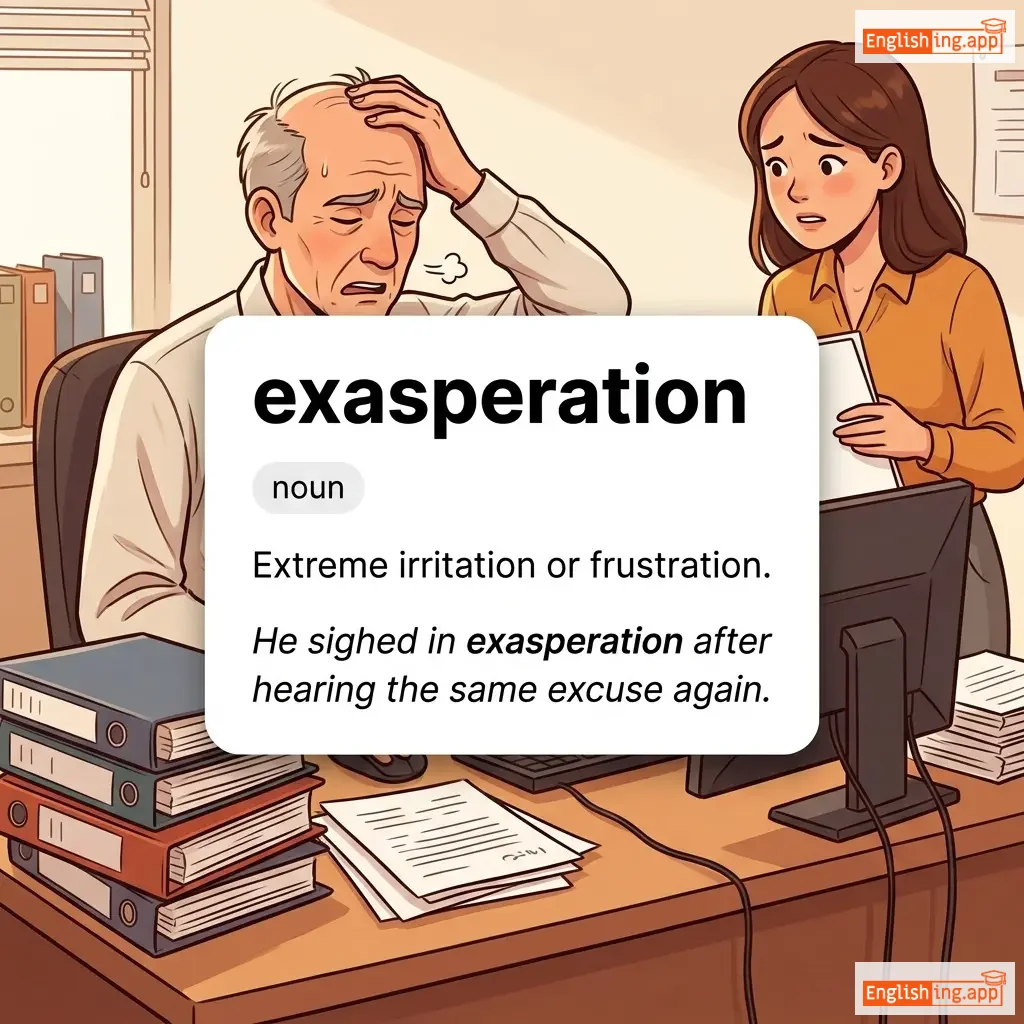
exasperation definition card — visual illustration of the meaning
noun
ɪɡˌzæs.pəˈreɪ.ʃən
झुंझलाहट (exasperation)

Extreme irritation or frustration.

"He sighed in exasperation after hearing the same excuse again."

"उसने बार-बार उसी बहाने को सुनकर अत्यंत झुंझलाहट के साथ सांस छोड़ दी।" (Usne baarbaar usi bahane ko sunakar atyant jhunjhalaht ke saath saans chod di.)
verb
/ˈɛkskəˌveɪt/
सुख (sukh)

to dig out or remove earth carefully, often for building or archaeological purposes

"The workers excavated the site to prepare for construction."

"जब उसे पुरस्कार मिला तो वह अपनी खुशी छुपा नहीं सकी।" (Jab use puraskaar mila to vah apni khushi chhupa nahi sakee.)
verb
/ɪkˈsiːd/
अतिक्रमण करना (atikraman karna)

to go beyond a limit or expectation

"The athlete exceeded everyone's expectations by winning the gold medal."

"एथलीट ने सोने का पदक जीतकर सभी की उम्मीदों को पार किया।" (Athlete ne sone ka padak jeetkar sabhi ki ummeedon ko paar kiya.)
adjective
/ɪkˈsiːdɪŋ/
अत्यधिक; अधिकतम (atyadhik; adhiktam)

going beyond; surpassing; extremely

"The project was completed with exceeding excellence."

"परियोजना को अत्यधिक उत्कृष्टता के साथ पूरा किया गया था।" (pariyojana ko atyadhik utkrshtata ke saath poora kiya gaya tha.)
verb
/ɪkˈsɛl/
उत्कृष्टता प्राप्त करना (utkrishtata prapt karna)

to be exceptionally good at or proficient in an activity or subject

"She always tries to excel in her studies."

"वह हमेशा अपनी पढ़ाई में उत्कृष्टता प्राप्त करने की कोशिश करती है।" (Woh hamesha apni padhai mein utkrishtata prapt karne ki koshish karti hai.)
noun
/ˈɛksələns/
उत्कृष्टता (utkrishtata)

the quality of being outstanding or extremely good

"The school is known for its academic excellence."

"विद्यालय अपनी शैक्षिक उत्कृष्टता के लिए जाना जाता है।" (Vidhyalay apni shaikshik utkrishtata ke liye jana jata hai.)
noun
/ˈɛksələnsɪ/
उत्कृष्टता (utkrishtata)

a title of honor for people of high rank, especially ambassadors or governors

"His Excellency the Ambassador attended the ceremony."

"उनकी एक्सेलेंसी, राजदूत ने समारोह में भाग लिया।" (Unki excellency, rajdoot ne samaroha mein bhag liya.)
adjective
/ˈɛksələnt/
उत्कृष्ट (utkrisht)

extremely good; outstanding

"The food at this restaurant is excellent."

"इस रेस्टोरेंट का खाना उत्कृष्ट है।" (Is restaurant ka khana utkrsht hai.)
preposition/conjunction
/ɪkˈsɛpt/
सिवाय (sivay)

not including; other than

"Everyone was invited except John."

"जॉन को छोड़कर सभी को आमंत्रित किया गया था।" (Jon ko chhodkar sabhi ko amantrit kiya gaya tha.)
noun
/ɪkˈsɛpʃən/
अपवाद (apvaad)

A case or instance that does not follow a general rule.

"Every rule has an exception."

"हर नियम का एक अपवाद होता है।" (har niyam ka ek apvaad hota hai.)
adjective
/ɪkˈsɛpʃənəbl/
आपत्तिजनक (apattijanak)

Open to objection; causing disapproval.

"His rude remarks were considered exceptionable by everyone present."

"उसके अपशब्दों को सभी ने आपत्तिजनक माना।" (uske apashabdon ko sabhi ne apattijanak mana.)
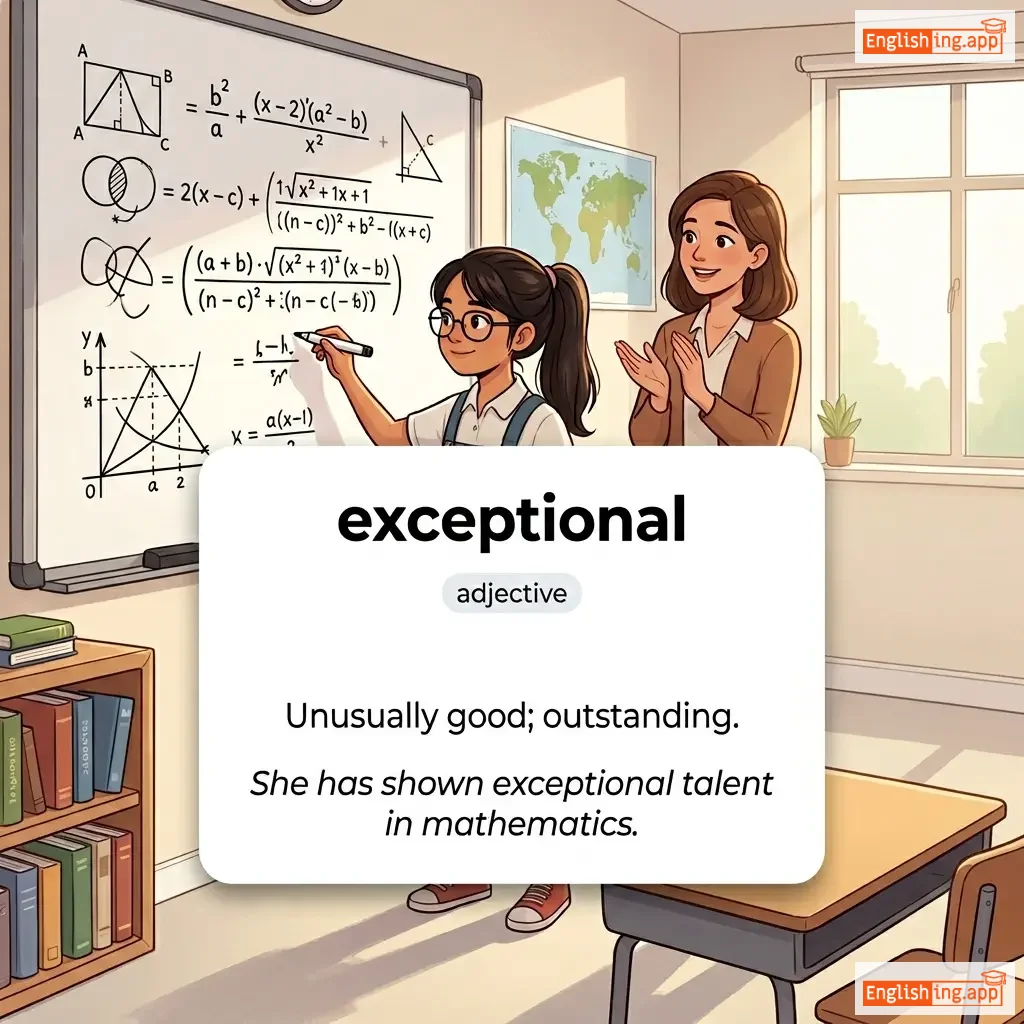
exceptional definition card — visual illustration of the meaning
adjective
/ɪkˈsɛpʃənl/
असाधारण (asadharan)

Unusually good; outstanding.

"She has shown exceptional talent in mathematics."

"उसने गणित में असाधारण प्रतिभा दिखाई है।" (Usne ganit mein asadharan pratibha dikhai hai.)
noun
/ˈɛksɜːrpt/
उद्धरण (uddharan)

A short portion taken from a text, film, or piece of music.

"The teacher read an excerpt from the novel."

"शिक्षक ने उपन्यास से एक उद्धरण पढ़ा।" (Shikshak ne upanyas se ek uddharan padha.)
noun
/ɪkˈsɛs/
अधिकता (adhikta)

An amount more than necessary, permitted, or desirable.

"Too much sugar can lead to excess weight gain."

"बहुत ज्यादा चीनी खाने से वजन बढ़ सकता है।" (bahut jyada cheeni khane se vajan badh sakta hai.)
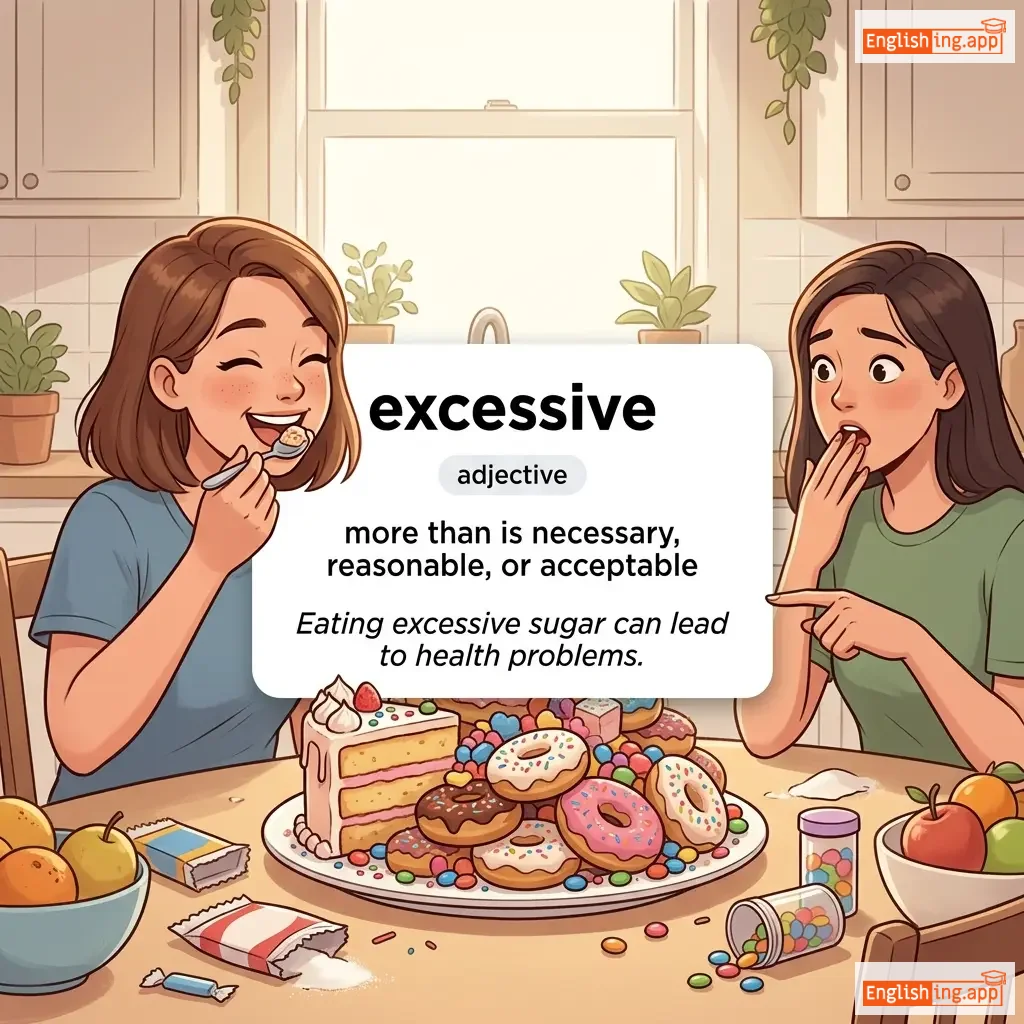
excessive definition card — visual illustration of the meaning
adjective
/ɪkˈsɛsɪv/
अत्यधिक (atyadhik)

more than is necessary, reasonable, or acceptable

"Eating excessive sugar can lead to health problems."

"अत्यधिक चीनी खाना स्वास्थ्य समस्याओं का कारण बन सकता है।" (Atyadhik cheeni khana swasthya samasyaon ka kaaran ban sakta hai.)
excessive strain definition card — visual illustration of the meaning
adjective + noun
এক্সেসিভ স্ট্রেইন
अत्यधिक तनाव (atyadhik tanav)

An amount of physical pressure or stress that is more than what is normal or acceptable.

"Excessive strain on fingers can cause musculoskeletal issues."

"अत्यधिक तनाव उंगलियों पर मांसपेशी-संयुक्त समस्याएँ उत्पन्न कर सकता है।" (Atyadhik tanav ungliyon par maanspeshī-sanyukt samasyaen utpann kar sakti hain.)
Exchange definition card — visual illustration of the meaning
verb
/ɪksˈtʃeɪndʒ/
विनिमय (vinimay)

To give something and receive something in return.

"They exchanged gifts during the festival."

"वे त्योहार के दौरान उपहारों का आदान-प्रदान करते थे।" (ve tyohaar ke dauraan upaharon ka adan-pradan karte the.)
noun
/ɪksˈtʃɛkər/
कोष (kosh)

The treasury of a state or country.

"The government announced new measures to improve the exchequer."

"सरकार ने कोष में सुधार के लिए नए उपायों की घोषणा की।" (sarkar ne kosh mein sudhaar ke liye naye upayon ki ghoshna ki.)
verb
/ˈɛkˌsaɪz/
हटाना (hatana)

to cut out or remove completely, often by surgery

"The surgeon excised the tumor successfully."

"सर्जन ने ट्यूमर को सफलतापूर्वक हटाया।" (Sarjan ne tumor ko safaltapurvak hataya.)
noun
/ɪkˈsɪʒən/
उत्क्षेदन (utkshedan)

the act of cutting something out, especially by surgical removal

"The excision of the infected tissue prevented further complications."

"संक्रमित ऊतक की उत्क्षेदन से आगे की जटिलताएँ रोकी गईं।" (Sankramit utak ki utkshedan se aage ki jatiltaayein roki gayi.)
adjective
/ɪkˈsaɪtəbl̩/
उत्तेजनीय (uttejaneey)

easily excited or emotionally aroused

"The child was excitable and laughed at every small thing."

"बच्चा उत्तेजनीय था और हर छोटी बात पर हंस रहा था।" (Baccha uttejaneey tha aur har chhoti baat par hans raha tha.)
noun
/ˌɛksaɪˈteɪʃən/
उत्तेजना (uttejna)

a state of great excitement or the process of stimulating activity

"The news created great excitation among the fans."

"समाचार ने प्रशंसकों के बीच बड़ी उत्तेजना पैदा की।" (Samachar ne prashansako ke beech badi uttejna paida ki.)
verb
/ɪkˈsaɪt/
उत्तेजित करना (uttejit karna)

to cause strong feelings of enthusiasm or eagerness

"The idea of traveling abroad excites her."

"विदेश यात्रा का विचार उसे उत्तेजित करता है।" (Videsh yatra ka vichar use uttejit karta hai.)
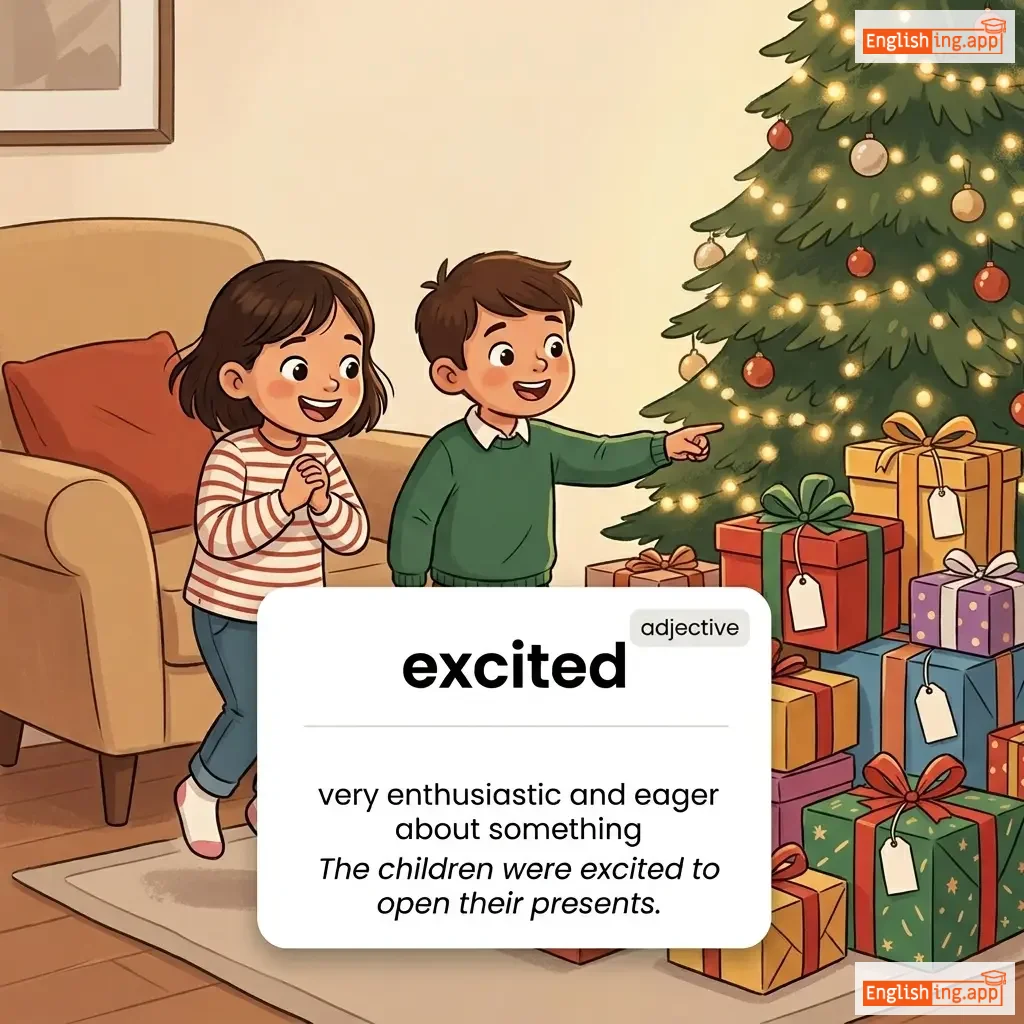
excited definition card — visual illustration of the meaning
adjective
/ɪkˈsaɪtɪd/
उत्साहित (utsahit)

very enthusiastic and eager about something

"The children were excited to open their presents."

"बच्चे अपने तोहफे खोलने के लिए उत्साहित थे।" (Bachche apne tofe kholne ke liye utsahit the.)
noun
/ɪkˈsaɪtmənt/
उत्साह (utsah)

a feeling of great enthusiasm and eagerness

"There was a lot of excitement before the concert began."

"संगीत कार्यक्रम शुरू होने से पहले बहुत उत्साह था।" (Sangeet karyakram shuru hone se pehle bahut utsah tha.)
exciting definition card — visual illustration of the meaning
adjective
/ɪkˈsaɪtɪŋ/
रोमांचक (romanchak)

Causing great enthusiasm and eagerness.

"The movie was so exciting that I watched it twice."

"फिल्म इतनी रोमांचक थी कि मैंने इसे दो बार देखा।" (film itni romanchak thi ki maine ise do baar dekha.)
verb
/ɪkˈskleɪm/
उच्च स्वर में बोलना (ucch swar mein bolna)

to cry out suddenly in surprise, strong emotion, or excitement

"She exclaimed with joy when she saw the gift."

"वह उपहार देखकर खुशी से चिल्लाई।" (Vah uphaar dekhkar khushi se chillayi.)
noun
/ˌɛkskləˈmeɪʃən/
उत्तेजना (uttejana)

A sudden cry or remark expressing strong emotion or surprise.

"She let out an exclamation of joy when she heard the news."

"जब उसने खबर सुनी, तो वह खुशी से एक उत्तेजना निकाली।" (Jab usne khabar suni, to wah khushi se ek uttejana nikaali.)