Vocabularios

Descubra, aprenda y domine el vocabulario en inglés

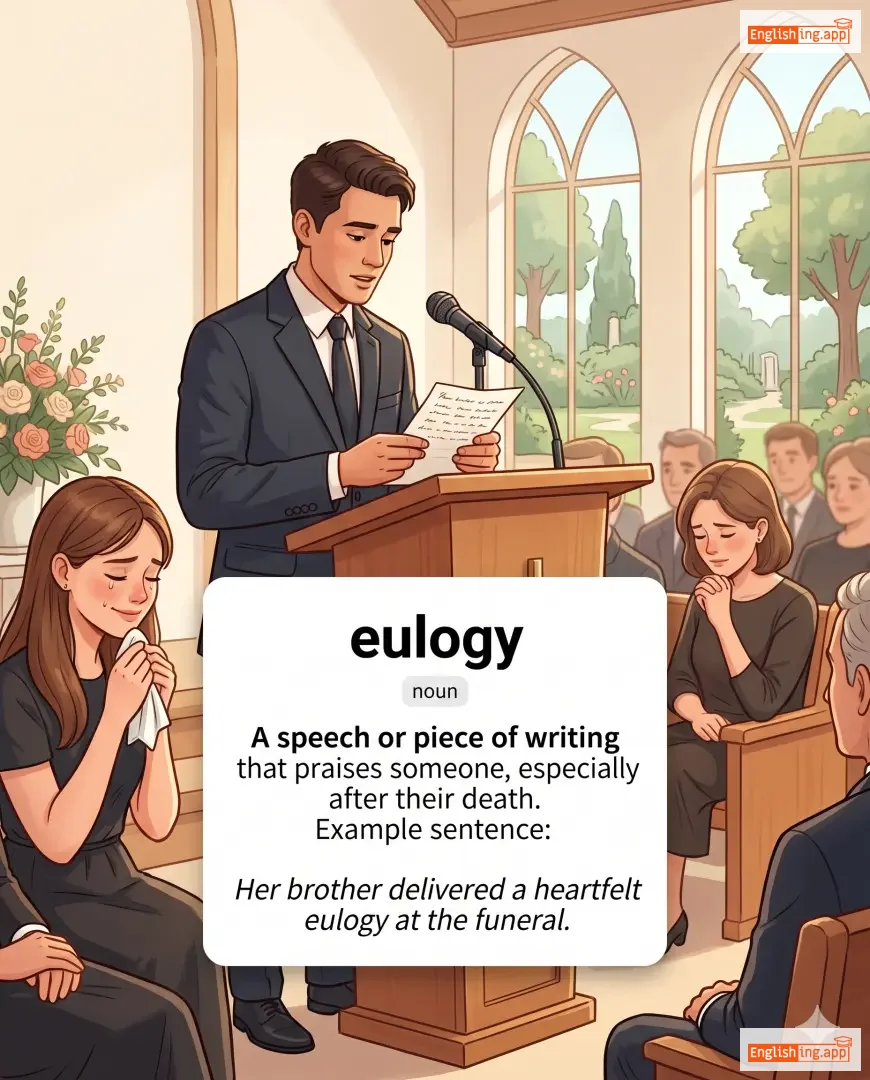
eulogy definition card — visual illustration of the meaning
noun
/ˈjuːlədʒi/
elogio (elogio)

A speech or piece of writing that praises someone, especially after their death.

"Her brother delivered a heartfelt eulogy at the funeral."

"Su hermano pronunció un sentido elogio en el funeral." (Su hermano pronunció un sentido elogio en el funeral.)
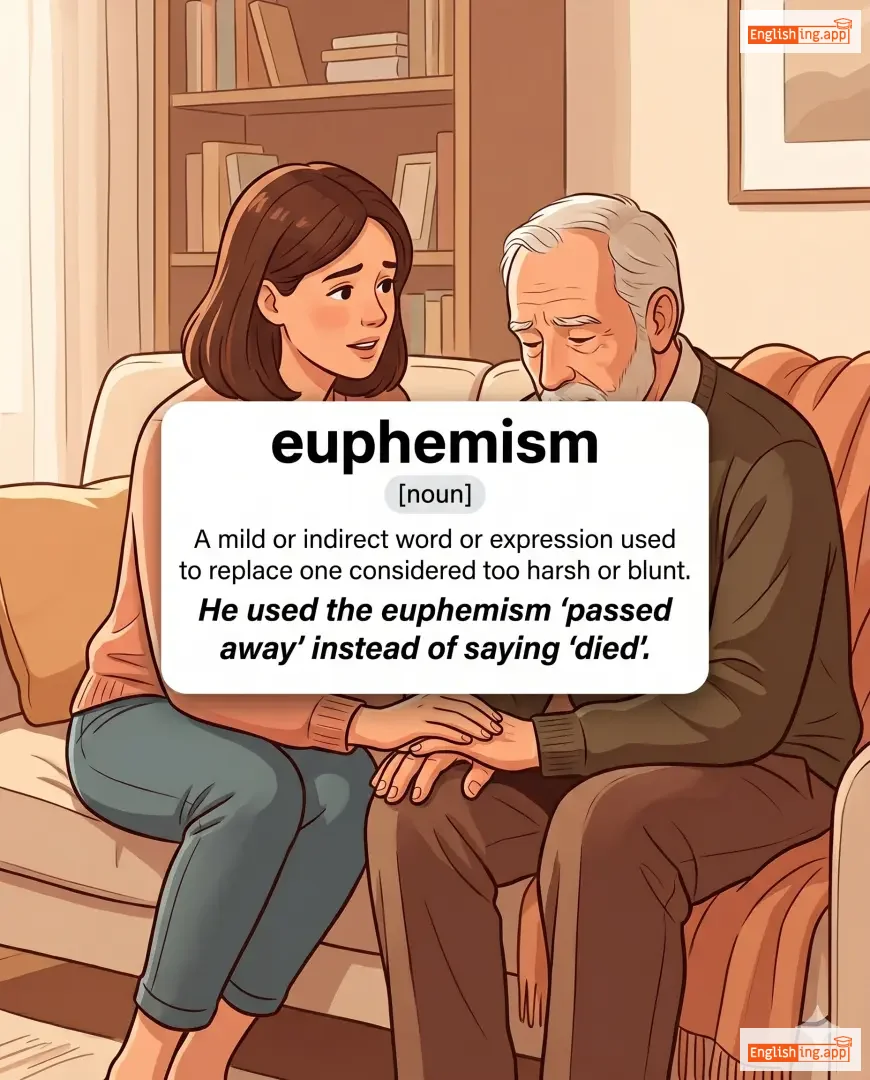
euphemism definition card — visual illustration of the meaning
noun
/ˈjuːfəmɪzəm/
eufemismo (eufemismo)

A mild or indirect word or expression used to replace one considered too harsh or blunt.

"He used the euphemism 'passed away' instead of saying 'died'."

"Él usó el eufemismo 'fallecer' en lugar de decir 'morir'." (Él usó el eufemismo 'fallecer' en lugar de decir 'morir'.)
adjective
/juːˈfoʊniəs/
sonido armonioso (sonido armonioso)

Pleasing to the ear; having a sweet sound.

"The poet's euphonious language made the verse a delight to read."

"El lenguaje eufónico del poeta hizo que el verso fuera un deleite para leer." (El lenguaje eufonico del poeta hizo que el verso fuera un deleite para leer.)
noun
/ˈjuːfəni/
eufonía (eufonia)

The quality of being pleasing to the ear, especially through harmonious combination of words.

"The orator's speech was full of euphony and rhythm."

"El discurso del orador estuvo lleno de eufonía y ritmo." (El discurso del orador estuvo lleno de eufonía y ritmo.)
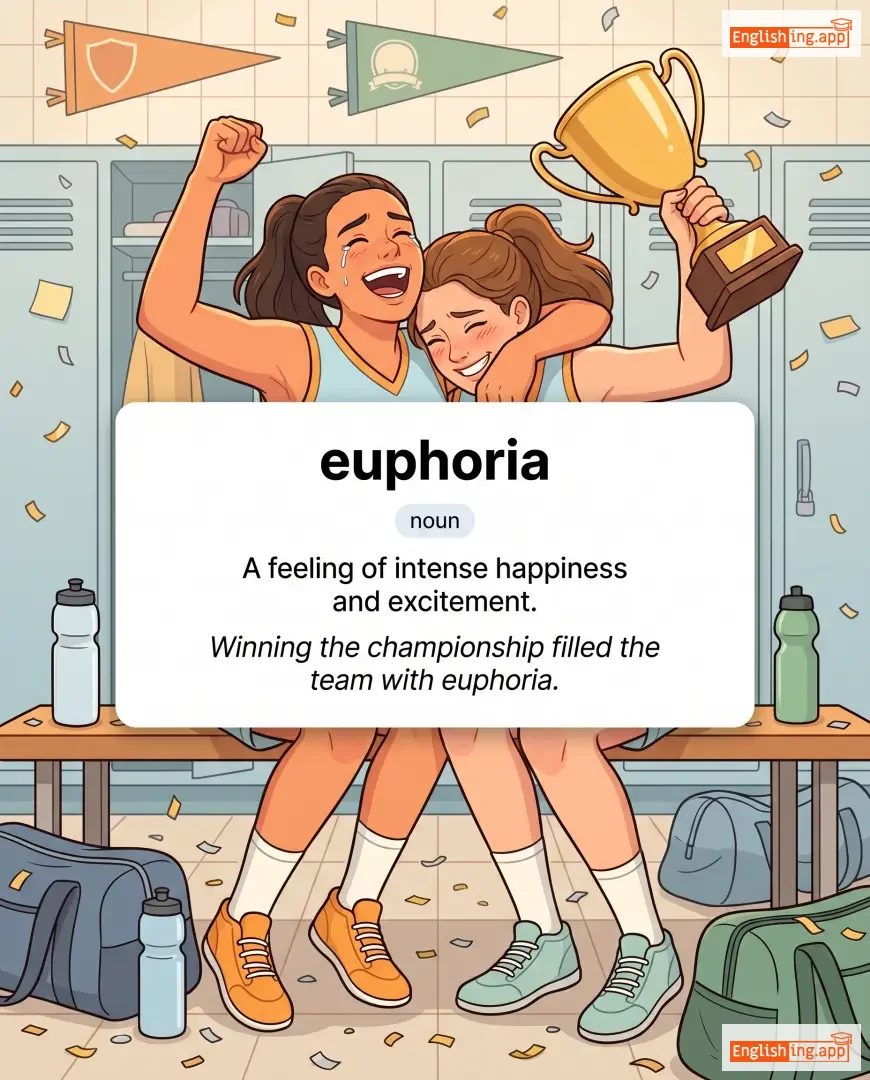
euphoria definition card — visual illustration of the meaning
noun
/juːˈfɔːriə/
euforia (euforia)

A feeling of intense happiness and excitement.

"Winning the championship filled the team with euphoria."

"Ganar el campeonato llenó al equipo de euforia." (Ganar el campeonato lleno al equipo de euforia.)
adjective
/juːˈfɔːrɪk/
eufórico (euforiko)

Characterized by or feeling intense excitement and happiness.

"The fans were euphoric after their team's victory."

"Los fanáticos estaban eufóricos después de la victoria de su equipo." (Los fanaticos estaban euforicos despues de la victoria de su equipo.)
exclamation
/juˈriːkə/
¡Eureka! (Eureka!)

An exclamation used to express a sudden discovery or realization.

"When the solution finally came to him, he shouted, 'Eureka!'"

"Cuando finalmente encontró la solución, gritó, '¡Eureka!'" (Cuando finalmente encontró la solución, gritó, '¡Eureka!')
adjective
/ˌjʊərəˈpiːən/
europeo (europeo)

Relating to Europe or its people.

"She studied European history at university."

"Estudió historia europea en la universidad." (Estudió historia europea en la universidad.)
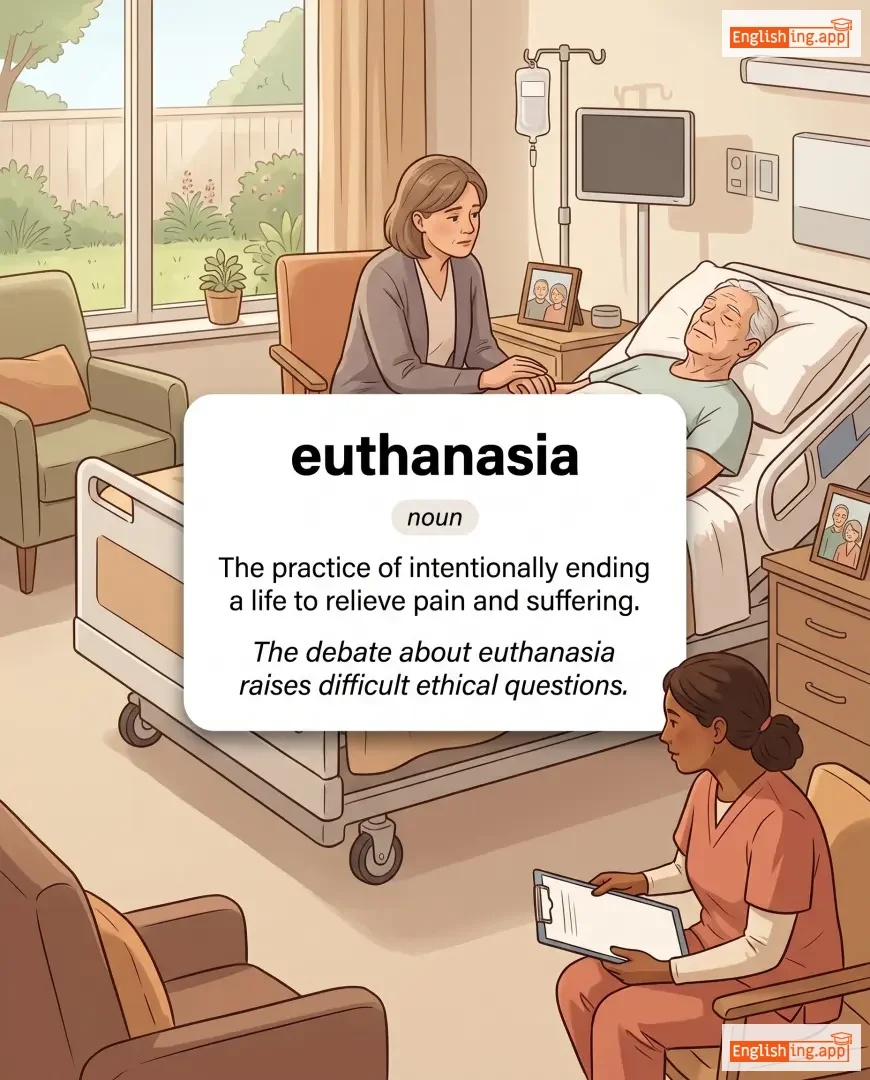
euthanasia definition card — visual illustration of the meaning
noun
/ˌjuːθəˈneɪʒə/
muerte asistida (muerte asistida)

The practice of intentionally ending a life to relieve pain and suffering.

"The debate about euthanasia raises difficult ethical questions."

"El debate sobre la eutanasia plantea preguntas éticas difíciles." (El debate sobre la eutanasia plantea preguntas éticas difíciles.)
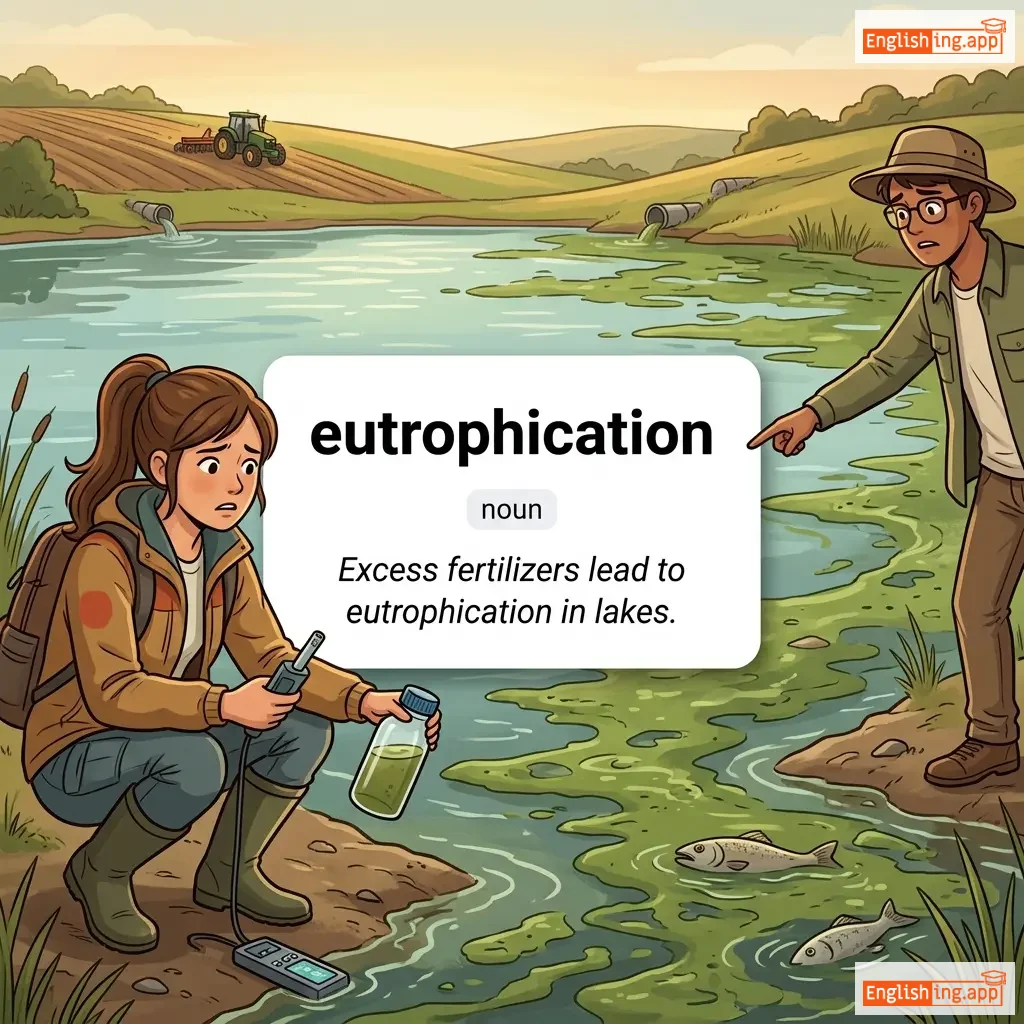
eutrophication definition card — visual illustration of the meaning
noun
/juːˌtrɑː.fɪˈkeɪ.ʃən/
exceso de nutrientes en un lago o cuerpo de agua (exceso de nutrientes en un lago o cuerpo de agua)

Excessive richness of nutrients in a lake or other body of water, frequently due to runoff from the land, which causes a dense growth of plant life and death of animal life from lack of oxygen.

"Excess fertilizers lead to eutrophication in lakes."

"Los fertilizantes excesivos provocan la eutrofización en los lagos." (Los fertilizantes excesivos provocan la eutrofización en los lagos.)
verb
/ɪˈvækjueɪt/
evacuar (evacuar)

To remove people from a dangerous place to safety.

"The residents were ordered to evacuate the building after the fire alarm."

"Los residentes fueron ordenados a evacuar el edificio después de la alarma de incendio." (Los residentes fueron ordenados a evacuar el edificio después de la alarma de incendio.)
verb
/ɪˈveɪd/
evadir (evadir)

To escape or avoid something, especially by cleverness or trickery.

"He tried to evade the question by changing the subject."

"Intentó evadir la pregunta cambiando de tema." (Intentó evadir la pregunta cambiando de tema.)
verb
/ɪˈvæljueɪt/
evaluar (evaluar)

To assess or judge the value, quality, or significance of something.

"The teacher will evaluate the students’ projects tomorrow."

"El maestro evaluará los proyectos de los estudiantes mañana." (El maestro evaluará los proyectos de los estudiantes mañana.)
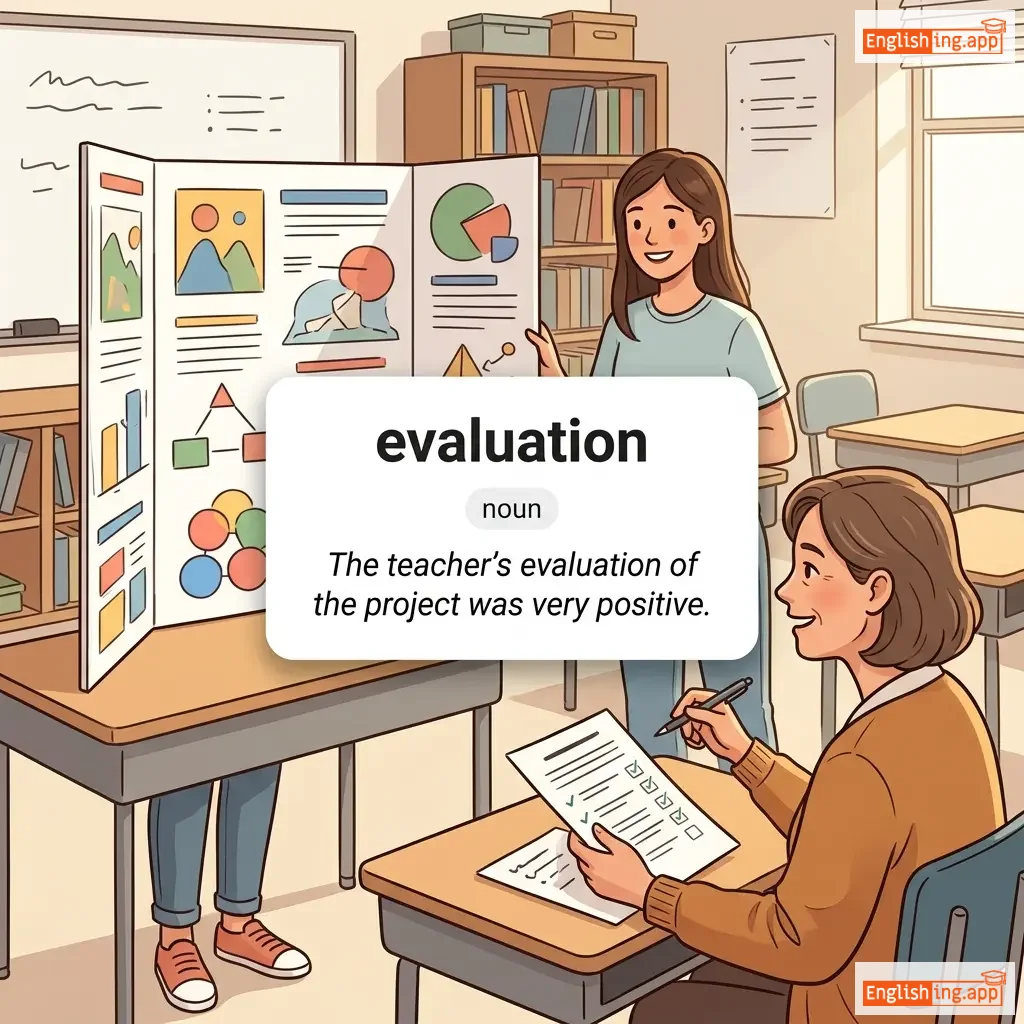
evaluation definition card — visual illustration of the meaning
noun
/ɪˌvæljʊˈeɪʃən/
evaluación (evaluacion)

The process of assessing or judging the value, quality, or importance of something.

"The teacher’s evaluation of the project was very positive."

"La evaluación del proyecto por parte del maestro fue muy positiva." (La evaluacion del proyecto por parte del maestro fue muy positiva.)
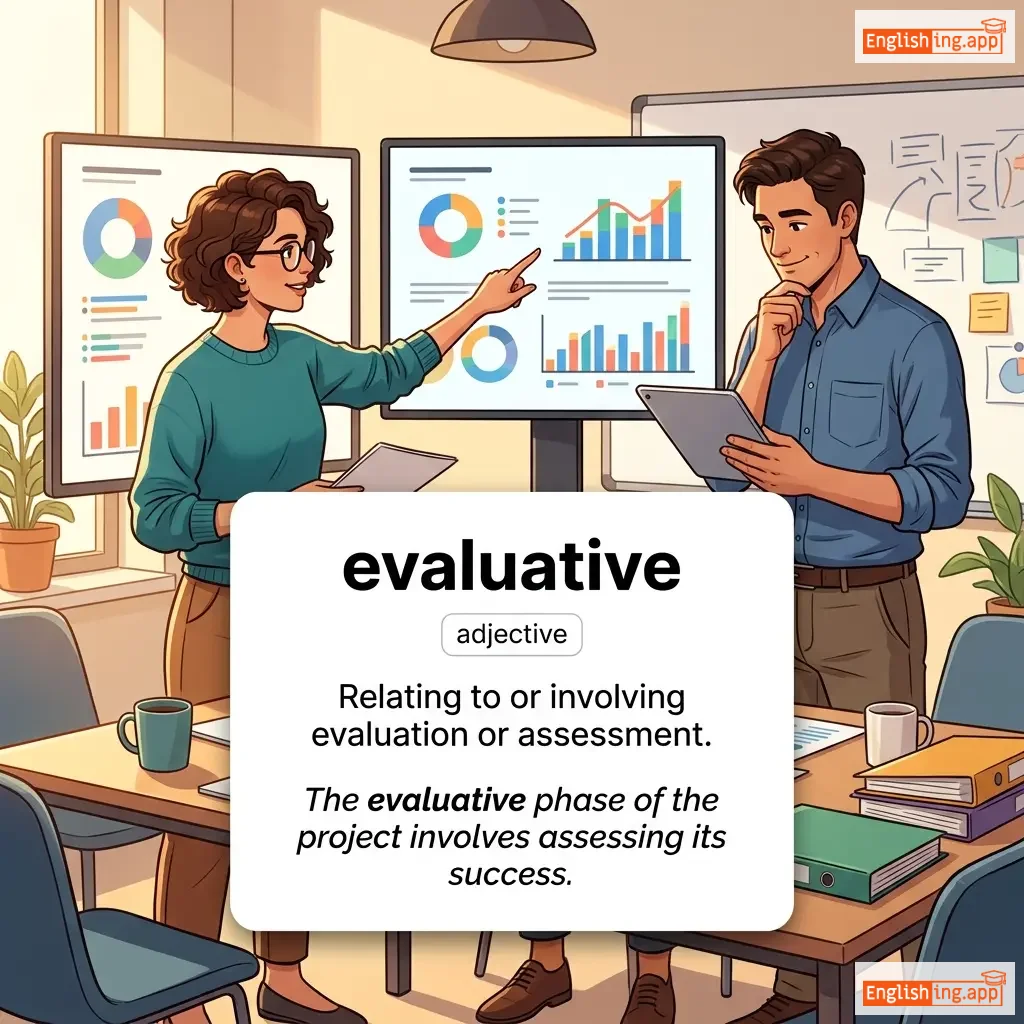
evaluative definition card — visual illustration of the meaning
adjective
/ɪˈvæljʊətɪv/
evaluativo (evaluativo)

Relating to or involving evaluation or assessment.

"The evaluative phase of the project involves assessing its success."

"La fase evaluativa del proyecto implica evaluar su éxito." (La fase evaluativa del proyecto implica evaluar su exito.)
verb
/ˌɛvəˈnɛs/
desvanecerse (desvanecerse)

To disappear gradually; to fade away.

"The mist began to evanesce as the sun rose higher."

"La niebla comenzó a desvanecerse a medida que el sol subía más alto." (La niebla comenzó a desvanecerse a medida que el sol subía más alto.)
adjective
/ˌɛvəˈnɛsənt/
efímero (efimero)

Quickly fading or disappearing; lasting for only a very short time.

"The beauty of the sunset was evanescent, fading within minutes."

"La belleza del atardecer fue efímera, desvaneciéndose en minutos." (La belleza del atardecer fue efimera, desvaneciendose en minutos.)
adjective
/ˌiːvænˈdʒɛlɪkəl/
evangélico (evangelico)

Relating to the Christian gospel, especially the teachings that emphasize personal faith and the authority of the Bible.

"She grew up in an evangelical church community."

"Ella creció en una comunidad de iglesia evangélica." (Ella creció en una comunidad de iglesia evangelica.)
noun
/ɪˈvændʒəlɪst/
evangelista (evangelista)

A person who seeks to convert others to the Christian faith, especially by public preaching.

"The evangelist traveled across the country spreading his message."

"El evangelista viajó por todo el país difundiendo su mensaje." (El evangelista viajó por todo el país difundiendo su mensaje.)
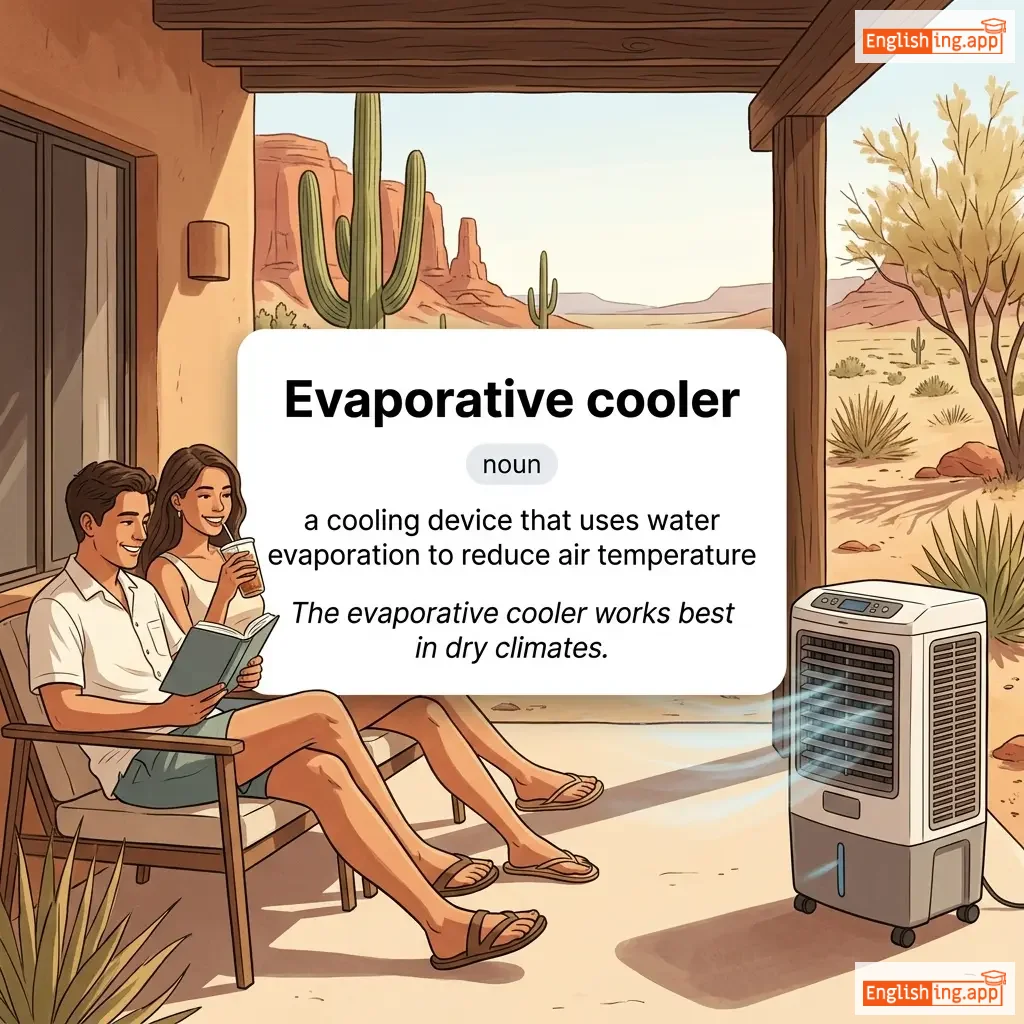
Evaporative cooler definition card — visual illustration of the meaning
noun
/ɪˈvæp.ər.ə.tɪv ˈkuː.lər/
enfriador por evaporación (enfriador por evaporacion)

a cooling device that uses water evaporation to reduce air temperature

"The evaporative cooler works best in dry climates."

"El enfriador por evaporación funciona mejor en climas secos." (El enfriador por evaporacion funciona mejor en climas secos)
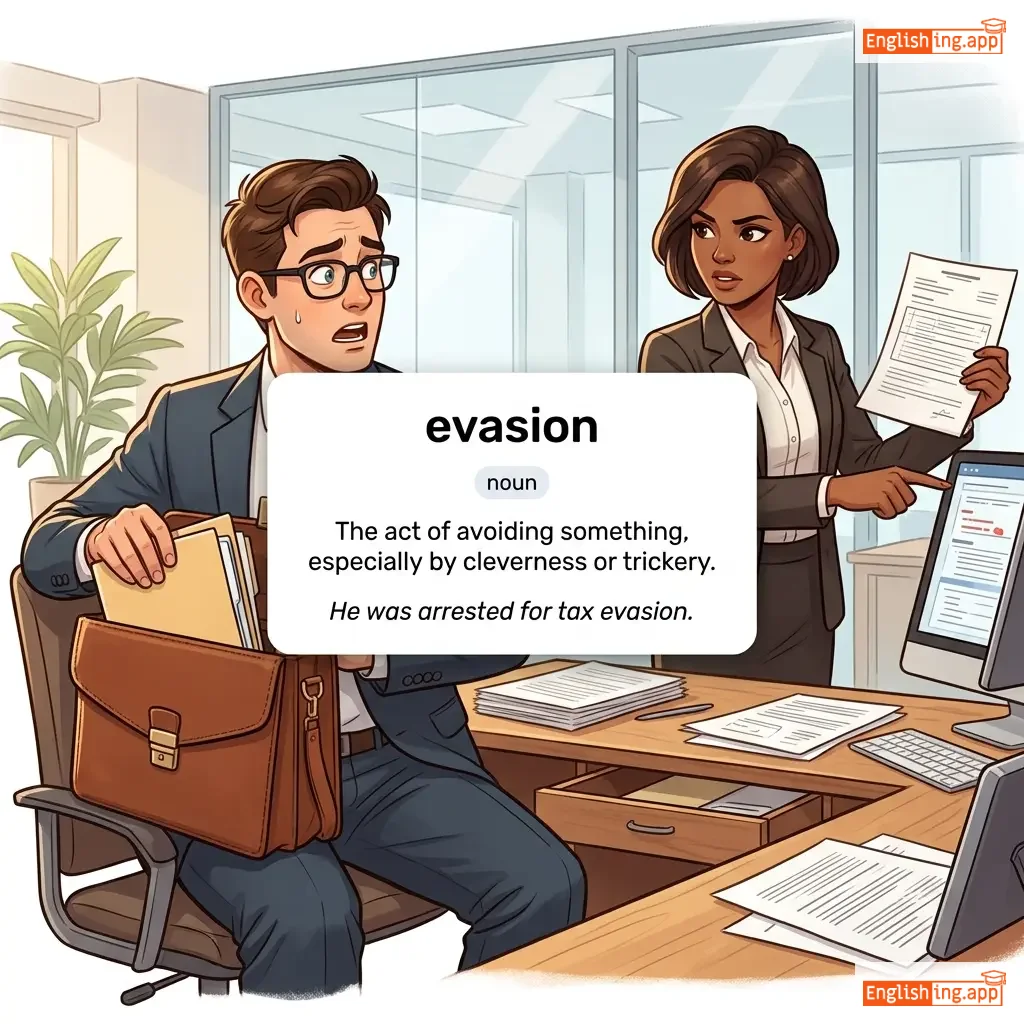
evasion definition card — visual illustration of the meaning
noun
/ɪˈveɪʒən/
evasión (evasión)

The act of avoiding something, especially by cleverness or trickery.

"He was arrested for tax evasion."

"Fue arrestado por evasión de impuestos." (Fue arrestado por evasión de impuestos.)
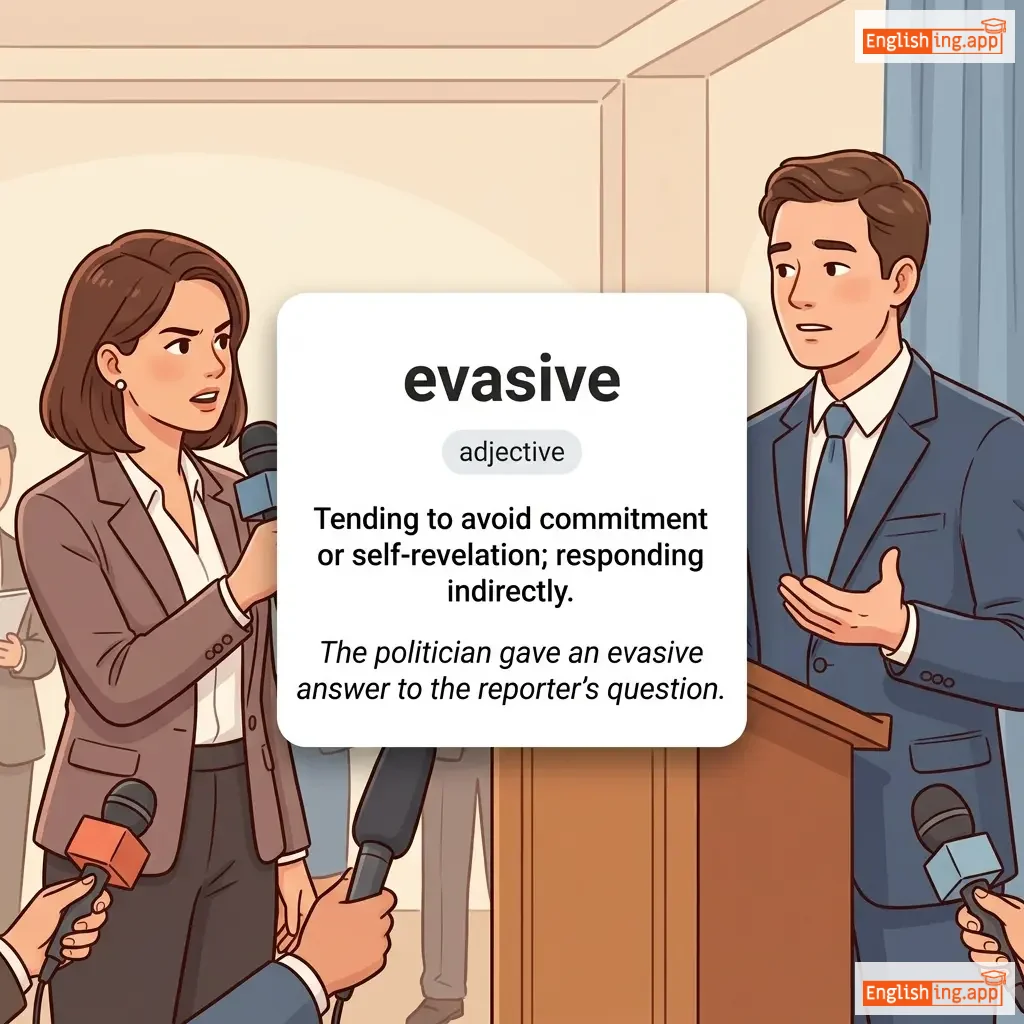
evasive definition card — visual illustration of the meaning
adjective
/ɪˈveɪsɪv/
evasivo (evasivo)

Tending to avoid commitment or self-revelation; responding indirectly.

"The politician gave an evasive answer to the reporter's question."

"El político dio una respuesta evasiva a la pregunta del reportero." (El político dio una respuesta evasiva a la pregunta del reportero.)
adjective, adverb
/ˈiː.vən/
nivelado (nivelado)

flat or smooth; equal in degree or amount; used to emphasize something surprising

"The road was surprisingly even after the storm."

"La carretera estaba sorprendentemente nivelada después de la tormenta." (La carretera estaba sorprendentemente nivelada después de la tormenta.)
adjective
/ˌiːvənˈhændɪd/
imparcial (imparcial)

Fair and impartial; showing no bias or favoritism.

"The judge was praised for her evenhanded approach to the case."

"El juez fue elogiado por su enfoque imparcial en el caso." (El juez fue elogiado por su enfoque imparcial en el caso.)
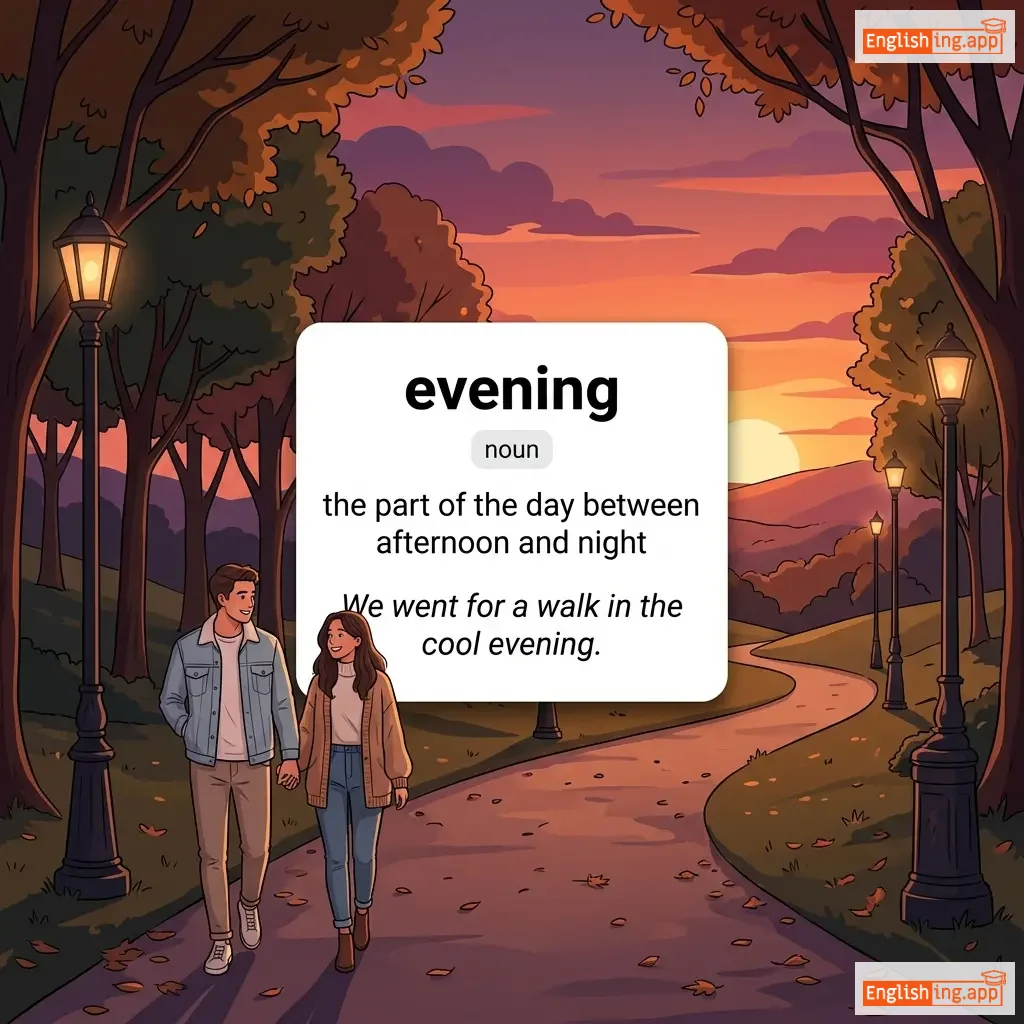
evening definition card — visual illustration of the meaning
noun
/ˈiːv.nɪŋ/
tarde (tarde)

the part of the day between afternoon and night

"We went for a walk in the cool evening."

"Fuimos a caminar en la fresca tarde." (Fuimos a caminar en la fresca tarde.)
event definition card — visual illustration of the meaning
noun
/ɪˈvent/
evento (evento)

something that happens, especially something important

"The concert was the biggest event of the year."

"El concierto fue el evento más grande del año." (El concierto fue el evento más grande del año.)
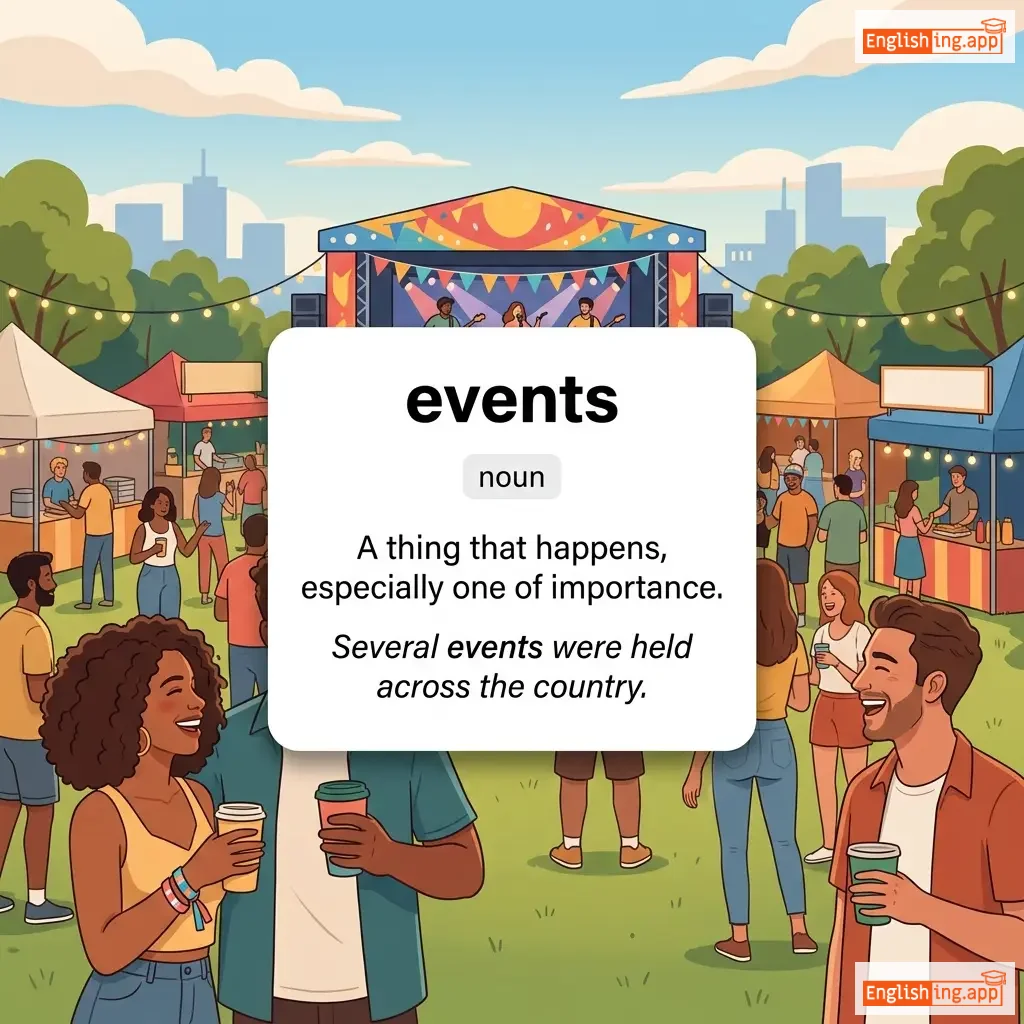
events definition card — visual illustration of the meaning
noun
ɪˈvɛnts
eventos (eventos)

A thing that happens, especially one of importance.

"Several events were held across the country."

"Se celebraron varios eventos en todo el país." (Se celebraron varios eventos en todo el país.)
adjective
/ɪˈvɛntʃuəl/
final (final)

Happening at the end of a process or as the final result.

"His hard work led to his eventual success."

"Su arduo trabajo lo llevó a su éxito final." (Su arduo trabajo lo llevó a su éxito final.)
adverb
/ɪˈven.tʃu.ə.li/
finalmente (finalmente)

in the end, especially after a long delay or series of problems

"He eventually finished his degree after many challenges."

"Finalmente terminó su carrera después de muchos desafíos." (Finalmente termino su carrera despues de muchos desafios.)
adverb
/ˈev.ər/
alguna vez (alguna vez)

at any time; always; continuously

"Have you ever been to London?"

"¿Alguna vez has estado en Londres?" (¿Alguna vez has estado en Londres?)
adjective
/ˈevər ˈlæstɪŋ/
eterno; permanente; (eterno; permanente)

eternal; permanent; enduring forever

"Their love is ever-lasting and will never fade."

"Su amor es eterno y nunca se desvanecerá." (su amor es eterno y nunca se desvanecera.)
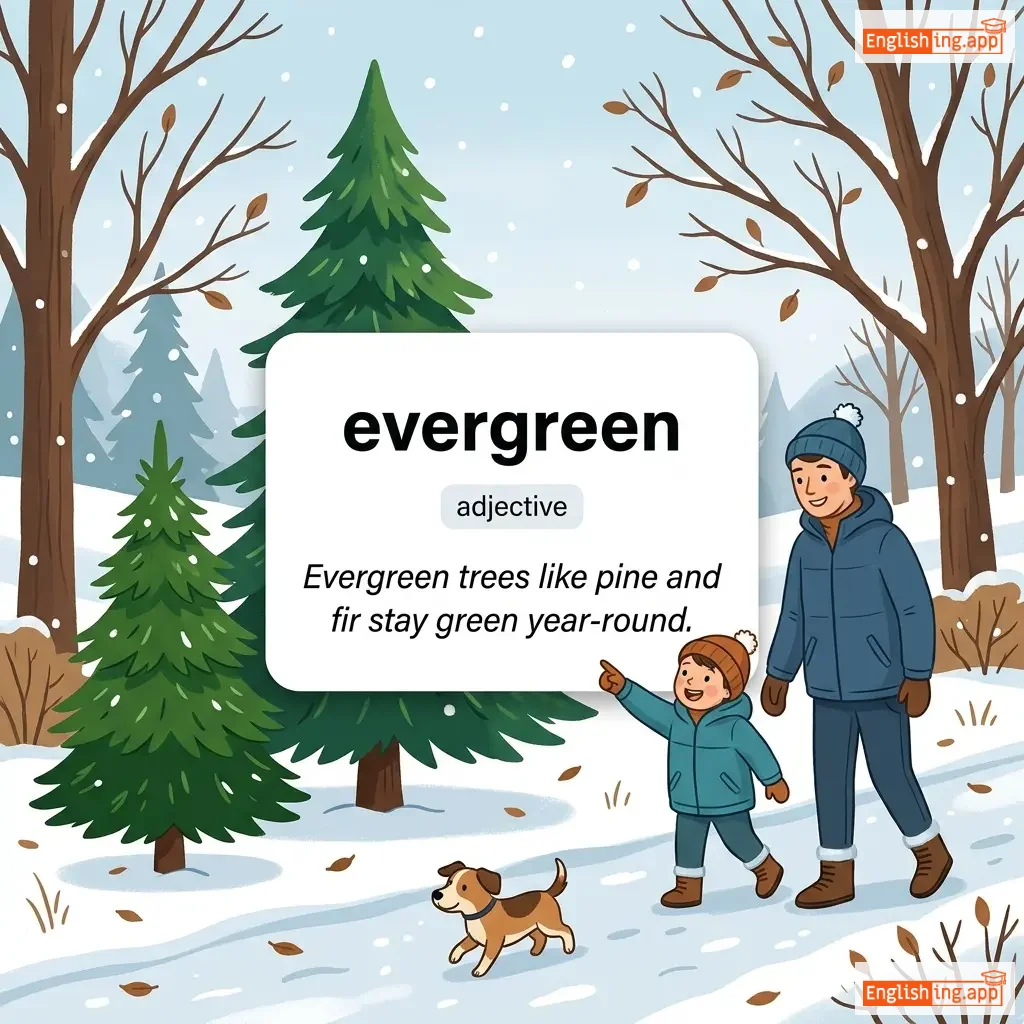
evergreen definition card — visual illustration of the meaning
adjective
/ˈɛv.ə.ɡriːn/
siempreverde (siempreverde)

Remaining green and functional throughout the year; not shedding leaves seasonally.

"Evergreen trees like pine and fir stay green year-round."

"Los árboles siempreverdes como el pino y el abeto permanecen verdes durante todo el año." (Los arboles siempreverdes como el pino y el abeto permanecen verdes durante todo el ano.)
adjective
/ˌɛvərˈlæstɪŋ/
eterno (eterno)

Lasting forever or for an indefinitely long time.

"The poet wrote about his everlasting love for nature."

"El poeta escribió sobre su amor eterno por la naturaleza." (El poeta escribió sobre su amor eterno por la naturaleza.)
verb
/ɪˈvɜːrt/
voltear hacia afuera (voltear hacia afuera)

To turn inside out or outward.

"The surgeon had to evert the eyelid during the procedure."

"El cirujano tuvo que voltear el párpado durante el procedimiento." (El cirujano tuvo que voltear el párpado durante el procedimiento.)
Every definition card — visual illustration of the meaning
determiner
/ˈɛvri/
cada (cada)

used to refer to all members of a group without exception

"She reads every book she can find."

"Ella lee cada libro que puede encontrar." (Ella lee cada libro que puede encontrar.)
pronoun
/ˈɛvribɒdi/
todos (todos)

all people; everyone

"Everybody enjoyed the party."

"Todos disfrutaron de la fiesta." (Todos disfrutaron de la fiesta.)
adjective
/ˈɛvrideɪ/
cotidiano (cotidiano)

common or ordinary; occurring daily

"These shoes are perfect for everyday use."

"Estos zapatos son perfectos para uso diario." (Estos zapatos son perfectos para uso diario.)
pronoun
/ˈɛvrɪwʌn/
todos (todos)

every person; all people

"Everyone must bring their own lunch."

"Todos deben traer su propio almuerzo." (Todos deben traer su propio almuerzo.)
pronoun
/ˈɛvrɪθɪŋ/
todo (todo)

all things; the whole lot

"He packed everything in his suitcase."

"Empacó todo en su maleta." (Empacó todo en su maleta.)
adverb
/ˈɛv.ri.wɛər/
en todas partes (en todas partes)

in or to all places

"Tourists can be seen everywhere in the city during summer."

"Durante el verano, los turistas pueden verse en todas partes de la ciudad." (Durante el verano, los turistas pueden verse en todas partes de la ciudad.)
verb
/ɪˈvɪkt/
desalojar (desalojar)

To expel someone from a property, usually by legal process.

"The landlord decided to evict the tenants for not paying rent."

"El arrendador decidió desalojar a los inquilinos por no pagar el alquiler." (El arrendador decidió desalojar a los inquilinos por no pagar el alquiler.)
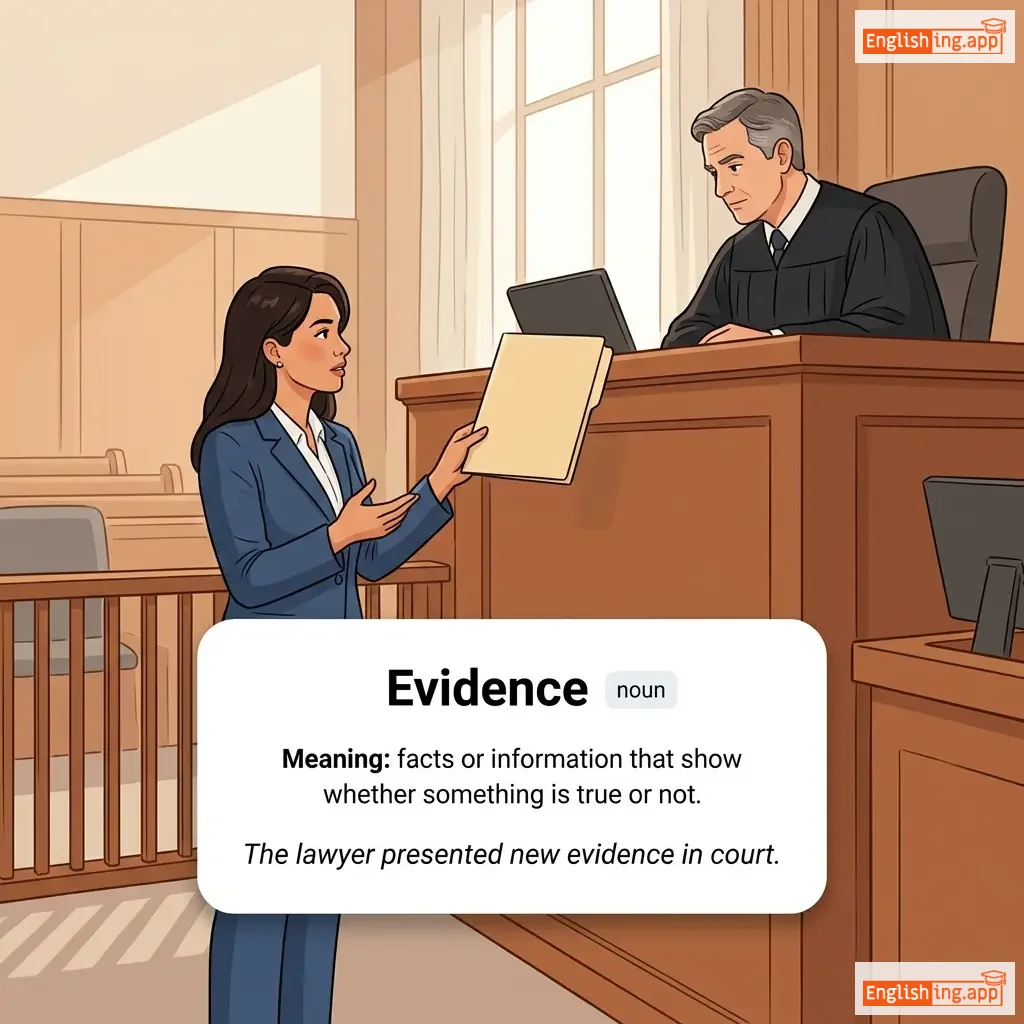
Evidence definition card — visual illustration of the meaning
noun
/ˈɛv.ɪ.dəns/
evidencia (evidencia)

facts or information that show whether something is true or not

"The lawyer presented new evidence in court."

"El abogado presentó nueva evidencia en el tribunal." (El abogado presento nueva evidencia en el tribunal.)
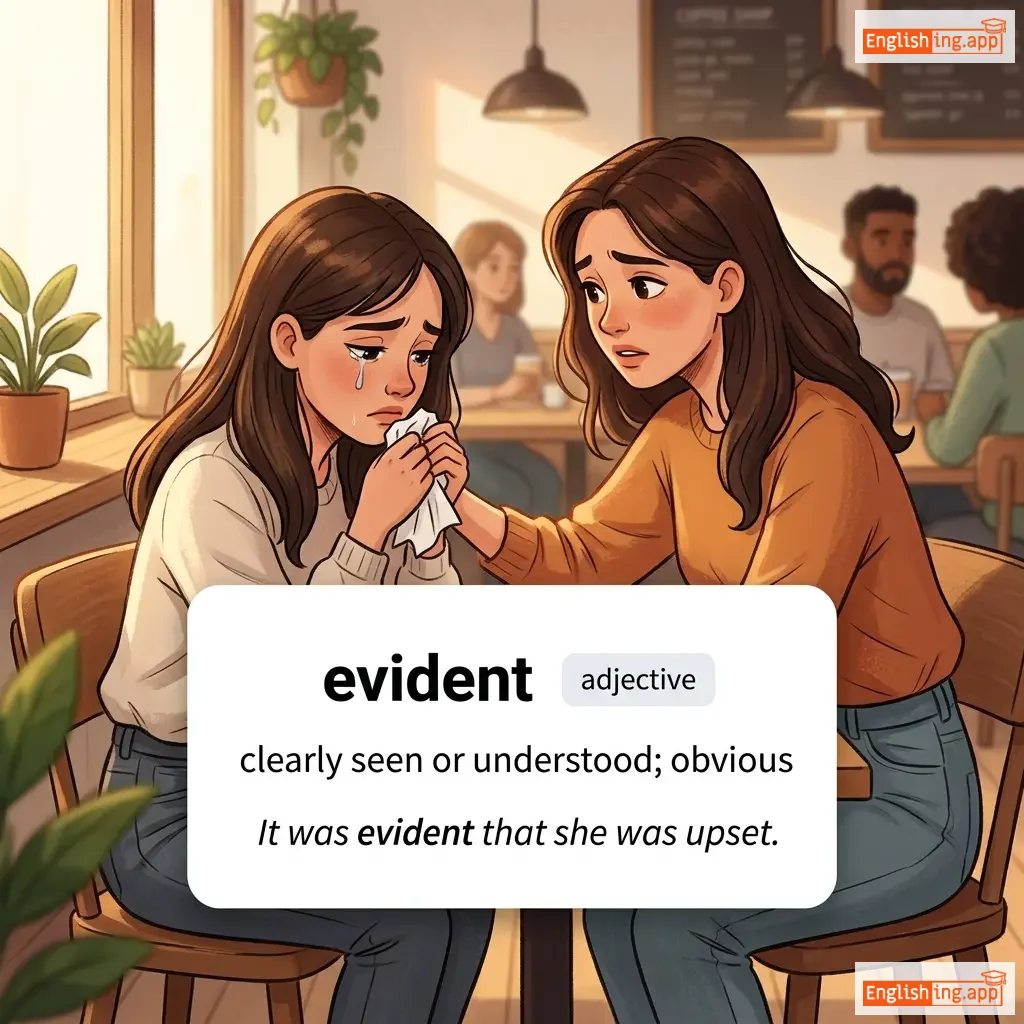
evident definition card — visual illustration of the meaning
adjective
/ˈɛvɪdənt/
evidente (evidente)

clearly seen or understood; obvious

"It was evident that she was upset."

"Era evidente que ella estaba molesta." (Era evidente que ella estaba molesta.)
adjective
/ˌɛvɪˈdɛnʃəl/
evidencial (evidencial)

relating to or providing evidence

"The lawyer presented evidential support for her claims."

"El abogado presentó apoyo evidencial para sus reclamaciones." (El abogado presentó apoyo evidencial para sus reclamaciones.)
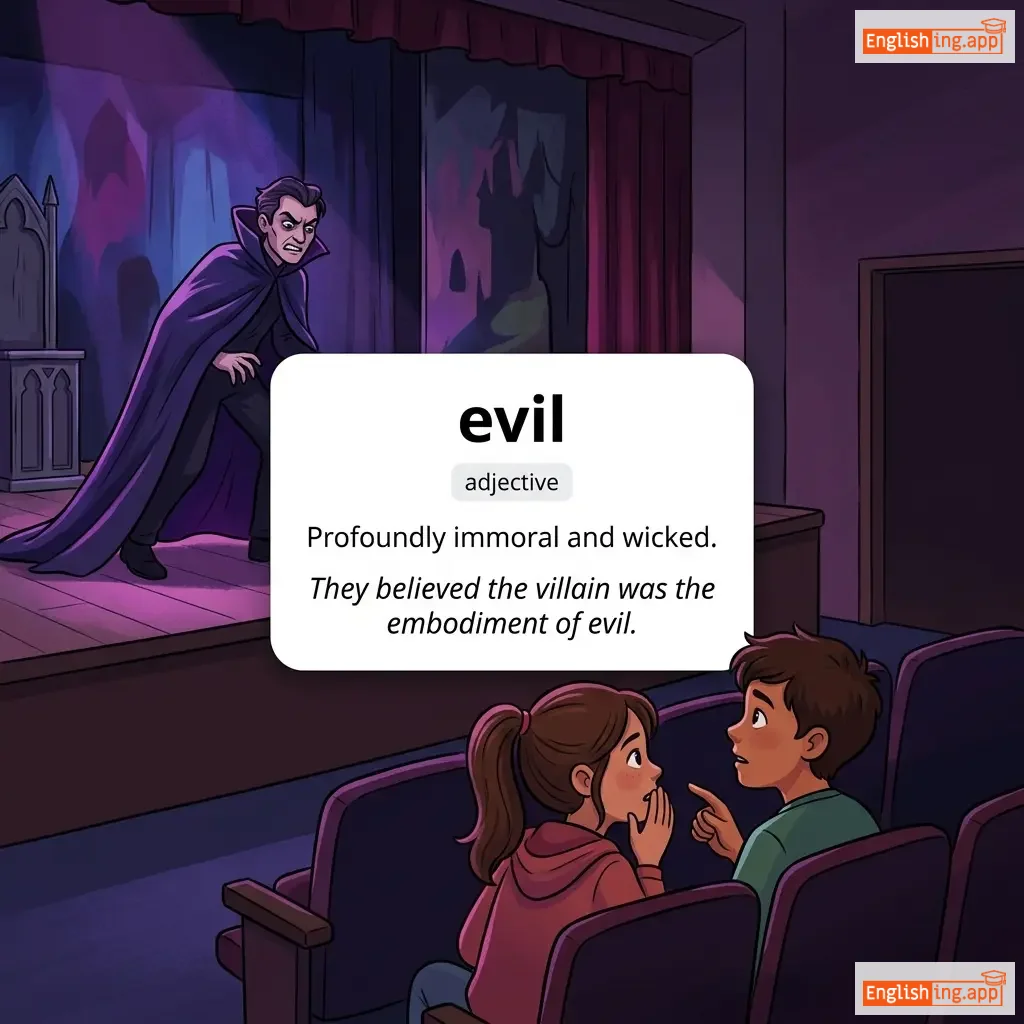
evil definition card — visual illustration of the meaning
adjective
/ˈiːvəl/
malvado (malvado)

Profoundly immoral and wicked.

"They believed the villain was the embodiment of evil."

"Creían que el villano era la encarnación del mal." (Creían que el villano era la encarnación del mal.)
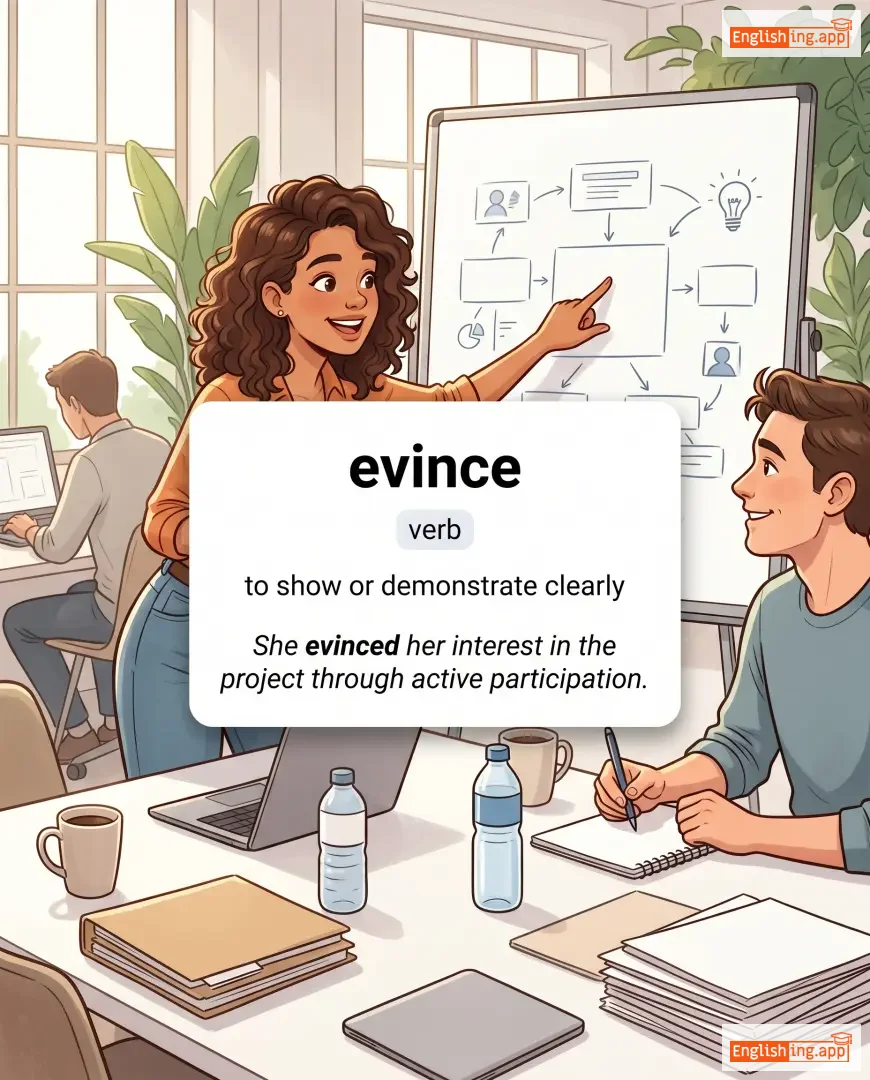
evince definition card — visual illustration of the meaning
verb
/ɪˈvɪns/
demostrar (demostrar)

to show or demonstrate clearly

"She evinced her interest in the project through active participation."

"Ella evidenció su interés en el proyecto mediante una participación activa." (Ella evidenció su interés en el proyecto mediante una participación activa.)
verb
/ɪˈvɪsəˌreɪt/
eviscerar, destruir (eviscerar, destruir)

to remove the internal organs of; to deprive of essential content

"The critics eviscerated the movie for its weak storyline."

"los críticos destruyeron la película por su débil historia." (los críticos destruyeron la película por su débil historia.)
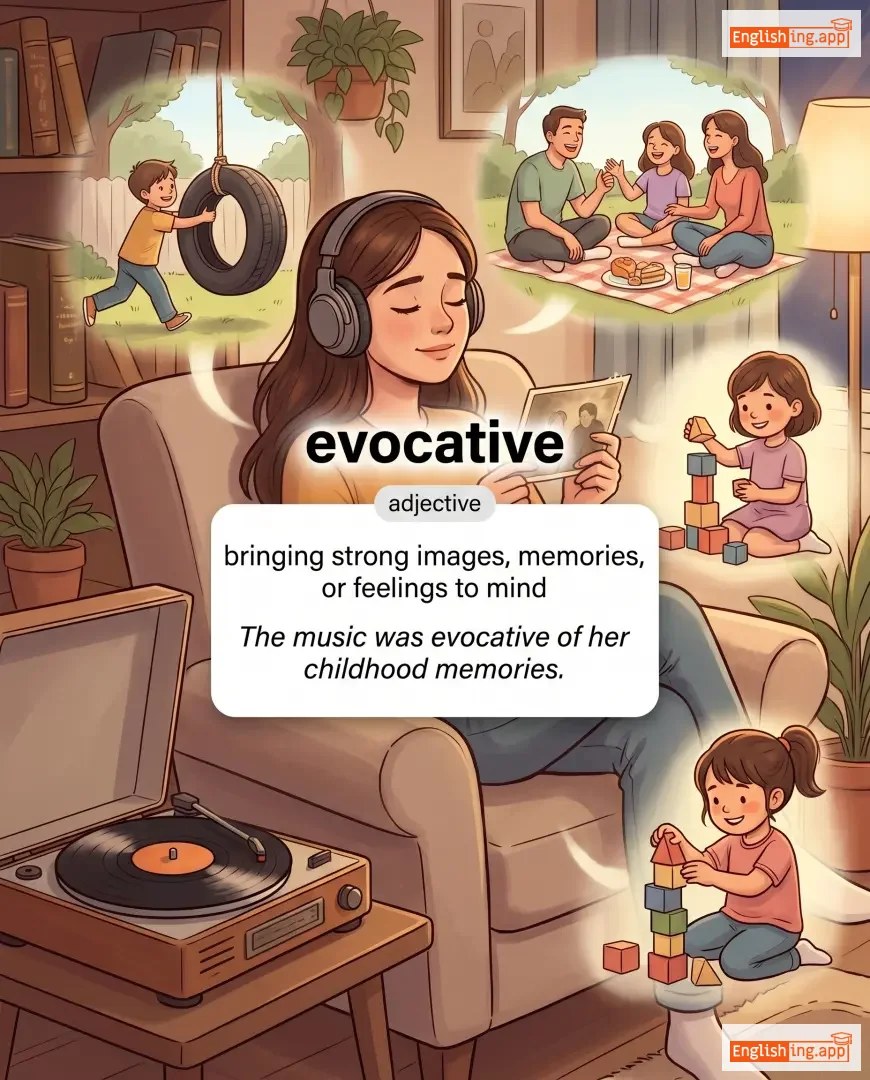
evocative definition card — visual illustration of the meaning
adjective
/ɪˈvɒkətɪv/
evocador (evocador)

bringing strong images, memories, or feelings to mind

"The music was evocative of her childhood memories."

"La música evocó sus recuerdos de la infancia." (La musica evoco sus recuerdos de la infancia.)
verb
/ɪˈvoʊk/
evocar (evocar)

to bring a feeling, memory, or image into the mind

"The old song evoked memories of her childhood."

"La vieja canción evocó recuerdos de su infancia." (La vieja canción evocó recuerdos de su infancia.)
noun
/ˌɛvəˈluːʃən/
evolución (evolucion)

the gradual development of something, especially from a simple to a more complex form

"The theory of evolution explains how species change over time."

"La teoría de la evolución explica cómo las especies cambian con el tiempo." (La teoria de la evolucion explica como las especies cambian con el tiempo.)