Vocabularios

Descubra, aprenda y domine el vocabulario en inglés

verb
/ɪkˈskluːd/
excluir (ekscluir)

To deliberately leave out or prevent someone or something from being included.

"The list excludes temporary workers."

"La lista excluye a los trabajadores temporales." (La lista ekskluye a los trabajadores temporales.)
adjective
/ɪkˈskluːdɪd/
excluido; marginado (excluido; marginado)

not included; left out; barred from participation

"He felt excluded from the group activities and conversations."

"Él se sintió excluido de las actividades del grupo y de las conversaciones." (El se sintio excluido de las actividades del grupo y de las conversaciones.)
noun
/ɪkˈskluːʒən/
exclusión (exclusion)

The process or state of being left out or denied access.

"The policy led to the exclusion of certain groups."

"La política llevó a la exclusión de ciertos grupos." (La política llevó a la exclusión de ciertos grupos.)
adjective
/ɪkˈskluːsɪv/
restringido a una persona, grupo o área particular; no compartido con otros (restringido a una persona, grupo o area particular; no compartido con otros)

restricted to a particular person, group, or area; not shared with others

"The hotel offers exclusive access to a private beach."

"El hotel ofrece acceso exclusivo a una playa privada." (El hotel ofrece acceso exclusivo a una playa privada.)
adverb
/ɪkˈskluːsɪvli/
exclusivamente (eksklusivamente)

only; not shared with others

"This service is available exclusively to premium members."

"Este servicio está disponible exclusivamente para miembros premium." (Este servicio está disponible exclusivamente para miembros premium.)
verb
/ɛkˈskɔːrieɪt/
criticar severamente (kritikar severamente)

To strongly criticize someone; to denounce severely.

"The critic excoriated the film for its poor script."

"El crítico criticó severamente la película por su guion deficiente." (El critico critico severamente la pelicula por su guion deficiente.)
noun
/ɪkˈskrɛsəns/
crecimiento anómalo (crecimiento anomalo)

An abnormal outgrowth or lump, often considered unattractive.

"The building was considered an excrescence on the landscape."

"El edificio fue considerado una excrescencia en el paisaje." (El edificio fue considerado una excrescencia en el paisaje.)
verb
/ɪkˈskriːt/
excretar (excretar)

to eliminate waste matter from the body

"Humans excrete carbon dioxide through breathing."

"Los humanos excretan dióxido de carbono a través de la respiración." (Los humanos excretan dióxido de carbono a través de la respiración.)
noun
/ɪkˈskriːʃən/
excreción (excrecion)

the process of eliminating waste matter from the body

"Excretion is vital for maintaining a healthy body."

"La excreción es vital para mantener un cuerpo saludable." (La excrecion es vital para mantener un cuerpo saludable.)
verb
/ɪkˈskruːʃieɪt/
excruciar (eks-cru-siar)

to cause intense pain or suffering

"The injury excruciated him with unbearable pain."

"La herida lo excruciaba con un dolor insoportable." (La herida lo excruciaba con un dolor insoportable.)
adjective
/ɪkˈskruːʃieɪtɪŋ/
excruciante (excruciante)

causing extreme physical or mental pain

"She was in excruciating pain after the accident."

"Ella estaba en dolor insoportable después del accidente." (Ella estaba en dolor insoportable despues del accidente.)
exculpate definition card — visual illustration of the meaning
verb
/ˈɛkskʌlpeɪt/
exculpar (exculpar)

to show or declare that someone is not guilty of wrongdoing

"The lawyer worked hard to exculpate his client."

"El abogado trabajó duro para exculpar a su cliente." (El abogado trabajó duro para exculpar a su cliente.)
noun
/ɪkˈskɜːʒən/
excursión (excursion)

A short journey or trip, especially one taken for leisure or educational purposes.

"The students went on an excursion to the national museum."

"Los estudiantes fueron a una excursión al museo nacional." (Los estudiantes fueron a una excursion al museo nacional.)
adjective
/ɪkˈskɜːsɪv/
excursivo (excursivo)

Tending to digress or wander; moving away from the main subject.

"His excursive lecture left the students confused about the main topic."

"Su conferencia excursive dejó a los estudiantes confundidos sobre el tema principal." (Su conferencia excursive dejó a los estudiantes confundidos sobre el tema principal.)
adjective
/ɪkˈskjuːzəbl/
excusable (eksuzable)

Able to be forgiven or justified.

"Her mistake was excusable given the circumstances."

"Su error era excusable dadas las circunstancias." (Su error era excusable dadas las circunstancias.)
verb
/ɪkˈskjuːz/
perdonar, justificar (perdonar, justificar)

to forgive someone for doing something wrong or to justify an action

"Please excuse my lateness; there was heavy traffic."

"Por favor, excusa mi tardanza; había mucho tráfico." (Por favor, excusa mi tardanza; había mucho tráfico.)
execrable definition card — visual illustration of the meaning
adjective
/ˈeksɪkrəbl/
execrable (execrable)

Extremely bad or unpleasant.

"The movie was so execrable that many people left the theater early."

"La película era tan execrable que muchas personas se fueron temprano del cine." (La película era tan execrable que muchas personas se fueron temprano del cine.)
verb
/ˈeksɪkreɪt/
despreciar (despreciar)

To feel or express great loathing or hatred for something.

"The community execrated the corrupt politician."

"La comunidad despreciaba al político corrupto." (La comunidad despreciaba al político corrupto.)
noun
/ˌɛksɪˈkreɪʃən/
maldición (maldicion)

An act of cursing or denouncing someone or something with hatred.

"The dictator’s name was spoken with execration after his fall."

"El nombre del dictador fue pronunciado con maldición después de su caída." (El nombre del dictador fue pronunciado con maldición después de su caída.)
execute definition card — visual illustration of the meaning
verb
/ˈɛksɪkjuːt/
ejecutar (ejecutar)

To carry out a plan, order, or action; to perform or put into effect.

"The company plans to execute its new strategy next year."

"La empresa planea ejecutar su nueva estrategia el próximo año." (La empresa planea ejecutar su nueva estrategia el próximo año.)
noun
/ˌɛksɪˈkjuːʃən/
ejecución, implementación (ejecucion, implementacion)

the act of carrying out a plan, order, or legal sentence

"The success of a project depends on its proper execution."

"El éxito de un proyecto depende de su correcta ejecución." (El exito de un proyecto depende de su correcta ejecucion.)
noun
/ˌɛksɪˈkjuːʃənər/
verdugo (verdugo)

A person who carries out a death sentence by execution.

"The executioner prepared the gallows for the condemned prisoner."

"El verdugo preparó la horca para el prisionero condenado." (El verdugo preparó la horca para el prisionero condenado.)
executive definition card — visual illustration of the meaning
noun/adjective
/ɪɡˈzɛkjətɪv/
ejecutivo (ejecutivo)

A person with senior managerial responsibility in a business; relating to the execution of plans or laws.

"She works as an executive in a multinational company."

"Ella trabaja como ejecutiva en una empresa multinacional." (Ella trabaja como ejecutiva en una empresa multinacional.)
noun
/ɪɡˈzɛkjətər/
ejecutor de testamento (ejecutor de testamento)

A person appointed to carry out the terms of someone's will after their death.

"The executor managed the estate according to the deceased’s wishes."

"El ejecutor gestionó la propiedad según los deseos del fallecido." (El ejecutor gestiono la propiedad segun los deseos del fallecido.)
noun
/ˌɛksəˈdʒiːsɪs/
exégesis (exegesis)

A critical explanation or interpretation of a text, especially a religious scripture.

"The professor gave a detailed exegesis of the biblical passage."

"El profesor dio una exégesis detallada del pasaje bíblico." (El profesor dio una exegesis detallada del pasaje biblico.)
noun
/ɪɡˈzɛmplɑːr/
ejemplo (ejemplo)

A model or pattern to be copied or imitated.

"She is an exemplar of kindness and generosity."

"Ella es un ejemplo de amabilidad y generosidad." (Ella es un ejemplo de amabilidad y generosidad.)
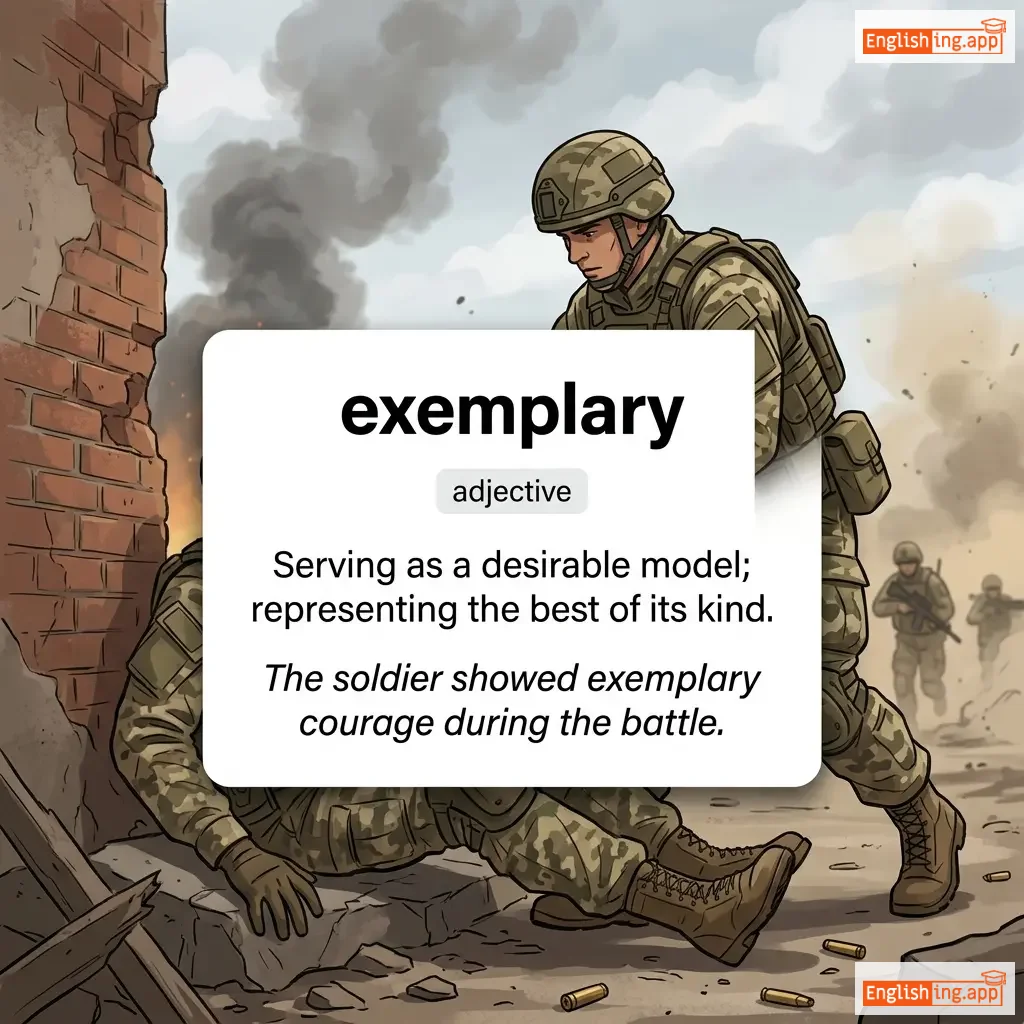
exemplary definition card — visual illustration of the meaning
adjective
/ɪɡˈzɛmpləri/
ejemplar (ejem-plaar)

Serving as a desirable model; representing the best of its kind.

"The soldier showed exemplary courage during the battle."

"El soldado mostró coraje ejemplar durante la batalla." (El soldado mostró coraje ejemplar durante la batalla.)
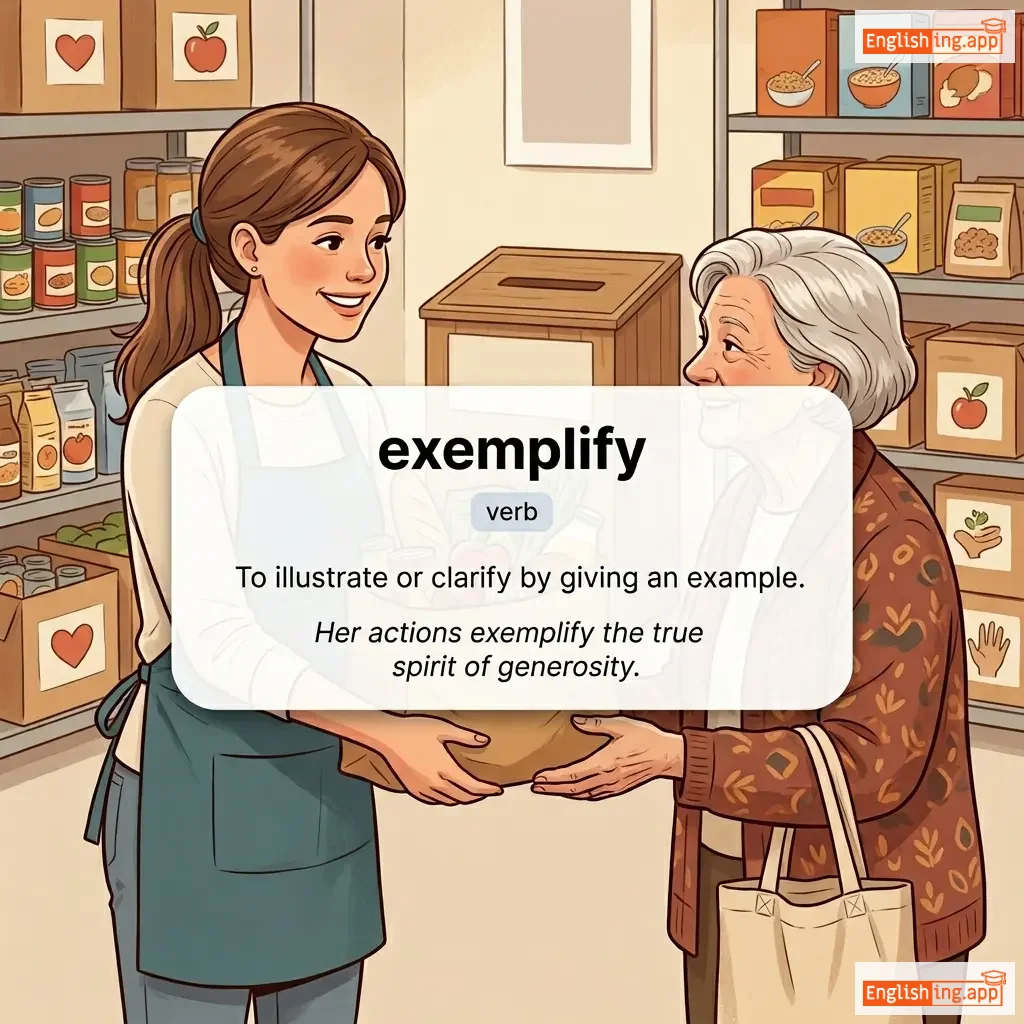
exemplify definition card — visual illustration of the meaning
verb
/ɪɡˈzɛmplɪfaɪ/
ilustrar con un ejemplo (ilustrar con un ejemplo)

To illustrate or clarify by giving an example.

"Her actions exemplify the true spirit of generosity."

"Sus acciones ejemplifican el verdadero espíritu de generosidad." (Sus acciones ejemplifican el verdadero espíritu de generosidad.)
adjective, verb
/ɪɡˈzɛmpt/
exento (eksento)

Free from an obligation or liability imposed on others.

"Students with high grades are exempt from the final exam."

"Los estudiantes con altas calificaciones están exentos del examen final." (Los estudiantes con altas calificaciones estan exentos del examen final.)
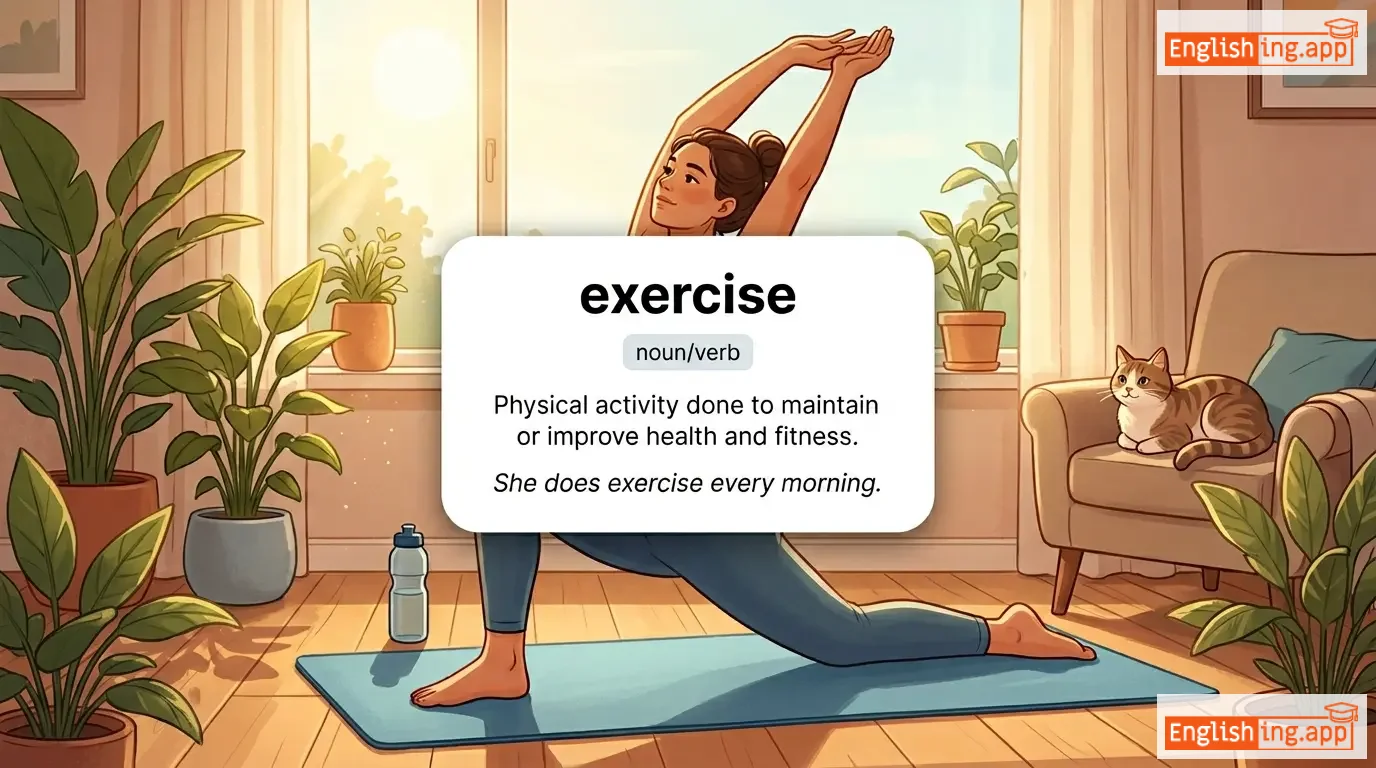
exercise definition card — visual illustration of the meaning
noun/verb
/ˈɛksərsaɪz/
ejercicio (ejercicio)

Physical activity done to maintain or improve health and fitness.

"She does exercise every morning."

"Ella hace ejercicio cada mañana." (ella hace ejercicio cada manana.)
exert definition card — visual illustration of the meaning
verb
/ɪɡˈzɜːrt/
ejercer (ejercer)

to apply effort, force, or influence

"He had to exert himself to finish the project on time."

"Él tuvo que esforzarse para terminar el proyecto a tiempo." (Él tuvo que esforzarse para terminar el proyecto a tiempo.)
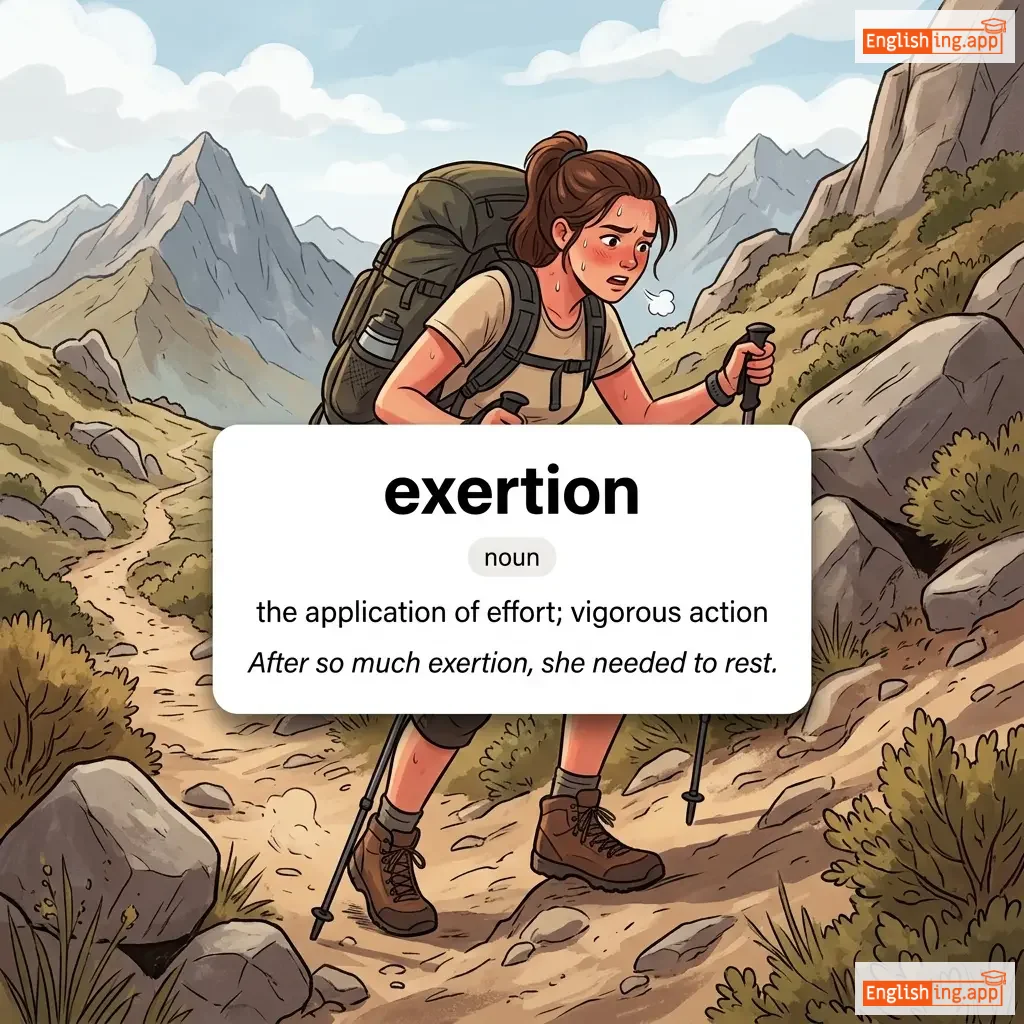
exertion definition card — visual illustration of the meaning
noun
/ɪɡˈzɜːrʃən/
esfuerzo (esfuerzo)

the application of effort; vigorous action

"After so much exertion, she needed to rest."

"Después de tanto esfuerzo, necesitaba descansar." (Despues de tanto esfuerzo, necesitaba descansar.)
exhalation definition card — visual illustration of the meaning
noun
/ˌɛks.həˈleɪ.ʃən/
exhalación (exhalacion)

The action of breathing out.

"Slow exhalation calms the nervous system."

"Una exhalación lenta calma el sistema nervioso." (Una exhalacion lenta calma el sistema nervioso.)
verb
/ɛksˈheɪl/
exhalar (eksalar)

to breathe out air from the lungs

"She slowly exhaled after holding her breath."

"Ella exhaló lentamente después de aguantar la respiración." (Ella exhaló lentamente después de aguantar la respiración.)
verb
/ɪɡˈzɔːst/
agotar (agotar)

to tire out completely; to use up resources

"The long journey exhausted the children."

"El largo viaje agotó a los niños." (El largo viaje agotó a los niños.)
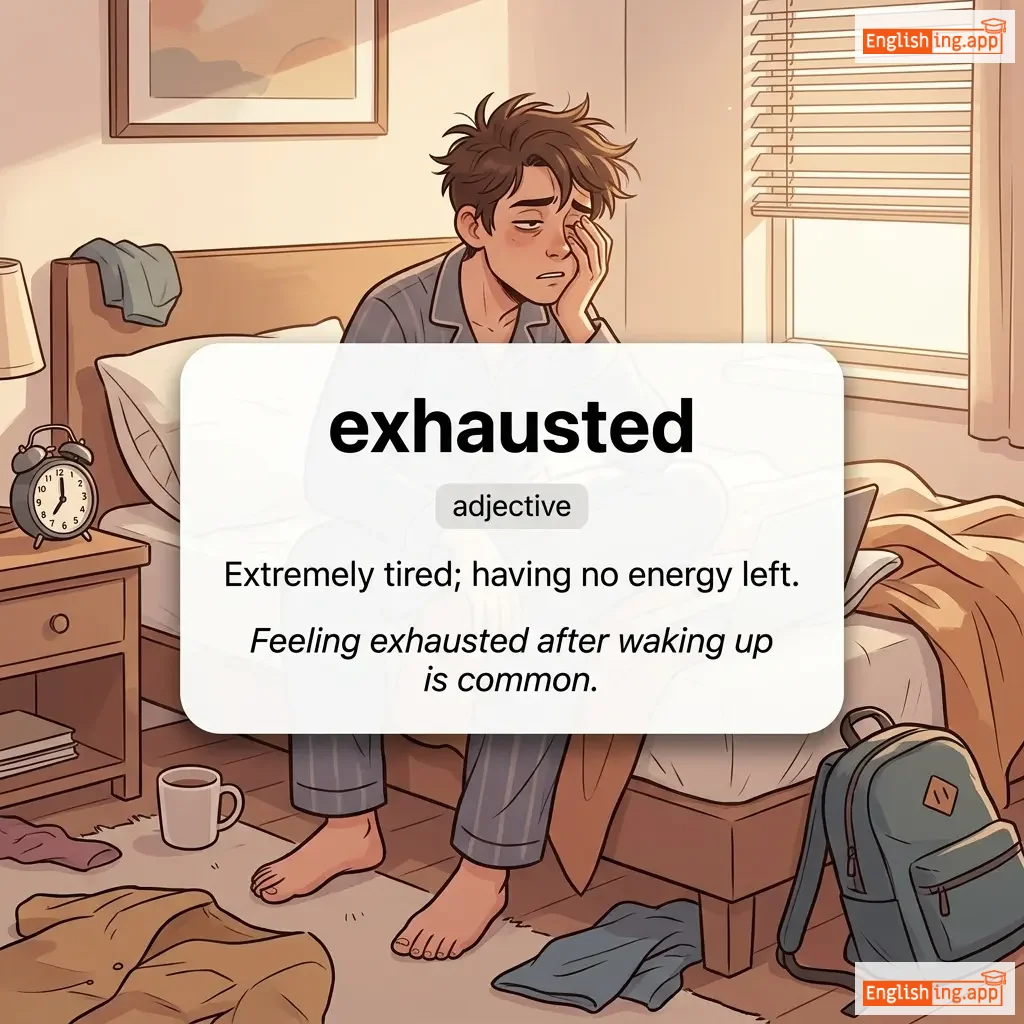
exhausted definition card — visual illustration of the meaning
adjective
/ɪɡˈzɔː.stɪd/
agotado (agotado)

Extremely tired; having no energy left.

"Feeling exhausted after waking up is common."

"Sentirse agotado después de despertarse es común." (sentirse agotado despues de despertarse es comun)
adjective
/ɪɡˈzɔːstɪbəl/
agotable (agotable)

able to be used up completely; not infinite

"Coal and oil are exhaustible resources."

"El carbón y el petróleo son recursos agotables." (El carbón y el petróleo son recursos agotables.)
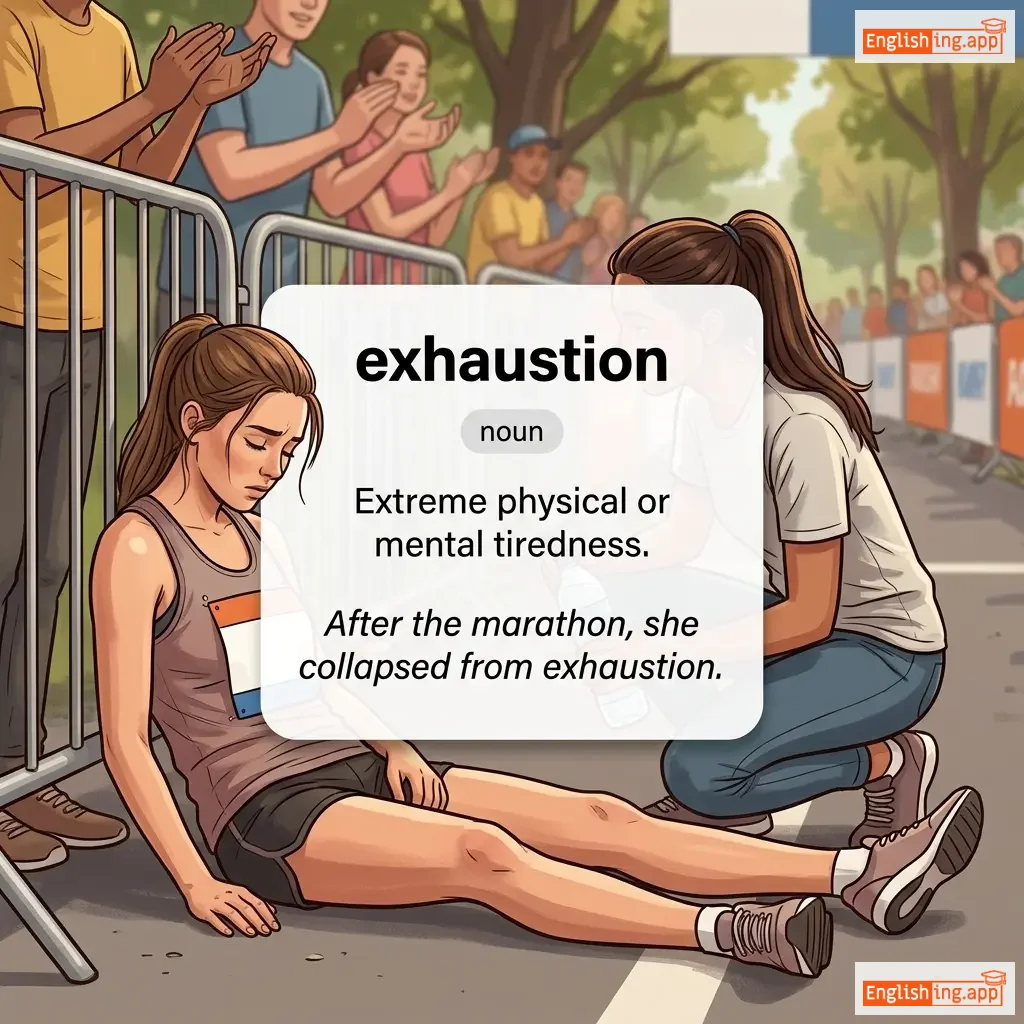
exhaustion definition card — visual illustration of the meaning
noun
/ɪɡˈzɔːstʃən/
agotamiento (agotamiento)

Extreme physical or mental tiredness.

"After the marathon, she collapsed from exhaustion."

"Después del maratón, se desplomó por agotamiento." (Despues del maraton, se desplomo por agotamiento.)
adjective
/ɪɡˈzɔːstɪv/
exhaustivo y completo (exhaustivo y completo)

Fully comprehensive and including all possibilities.

"The report provides an exhaustive analysis of the issue."

"El informe proporciona un análisis exhaustivo del problema." (El informe proporciona un análisis exhaustivo del problema.)
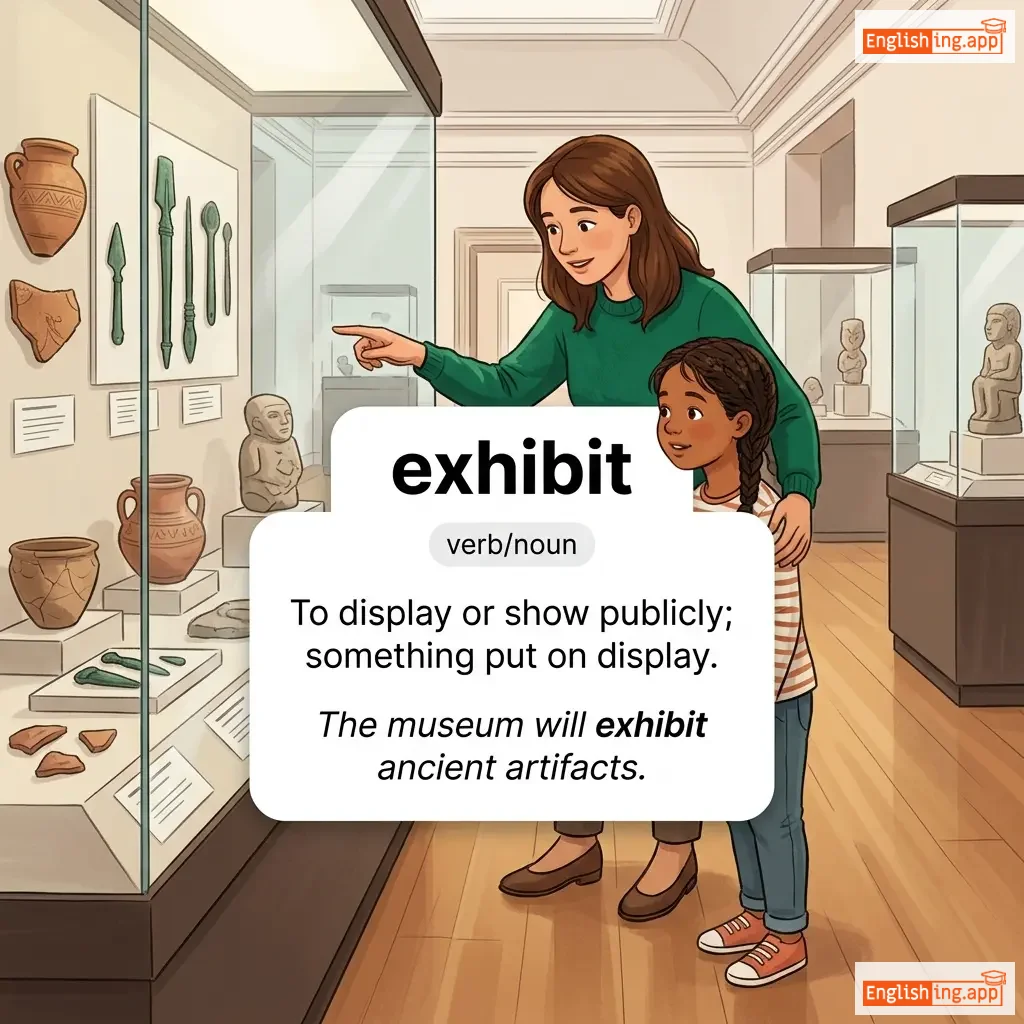
exhibit definition card — visual illustration of the meaning
verb/noun
/ɪɡˈzɪbɪt/
exhibir (exhibir)

To display or show publicly; something put on display.

"The museum will exhibit ancient artifacts."

"El museo exhibirá artefactos antiguos." (El museo exhibira artefactos antiguos.)
noun
/ˌɛksɪˈbɪʃən/
exhibición (exhibicion)

a public display of works of art, products, or other items of interest

"The art exhibition attracted thousands of visitors."

"La exposición de arte atrajo a miles de visitantes." (La exposicion de arte atrajo a miles de visitantes.)
verb
/ɪɡˈzɪləreɪt/
exaltar (exaltar)

To make someone feel very happy, animated, or excited.

"The mountain view exhilarated the travelers."

"La vista de la montaña exaltó a los viajeros." (La vista de la montaña exaltó a los viajeros.)
adjective
/ɪɡˈzɪləreɪtɪd/
exaltado (exaltado)

feeling very happy, animated, or elated

"She felt exhilarated after finishing the marathon."

"Ella se sintió exaltada después de terminar el maratón." (Ella se sintió exaltada después de terminar el maratón.)
adjective
/ɪɡˈzɪləreɪtɪŋ/
emocionante (emocionante)

Making someone feel very excited, happy, or thrilled.

"Skydiving was the most exhilarating experience of his life."

"El paracaidismo fue la experiencia más emocionante de su vida." (El paracaidismo fue la experiencia más emocionante de su vida.)
exhilaration definition card — visual illustration of the meaning
noun
/ɪɡˌzɪl.əˈreɪ.ʃən/
exaltación o felicidad (exaltacion o felicidad)

A feeling of excitement, happiness, or elation.

"The feeling of exhilaration after a roller-coaster ride is amazing."

"La sensación de exhilaración después de una montaña rusa es increíble." (La sensacion de exhilaracion despues de una montana rusa es increible.)
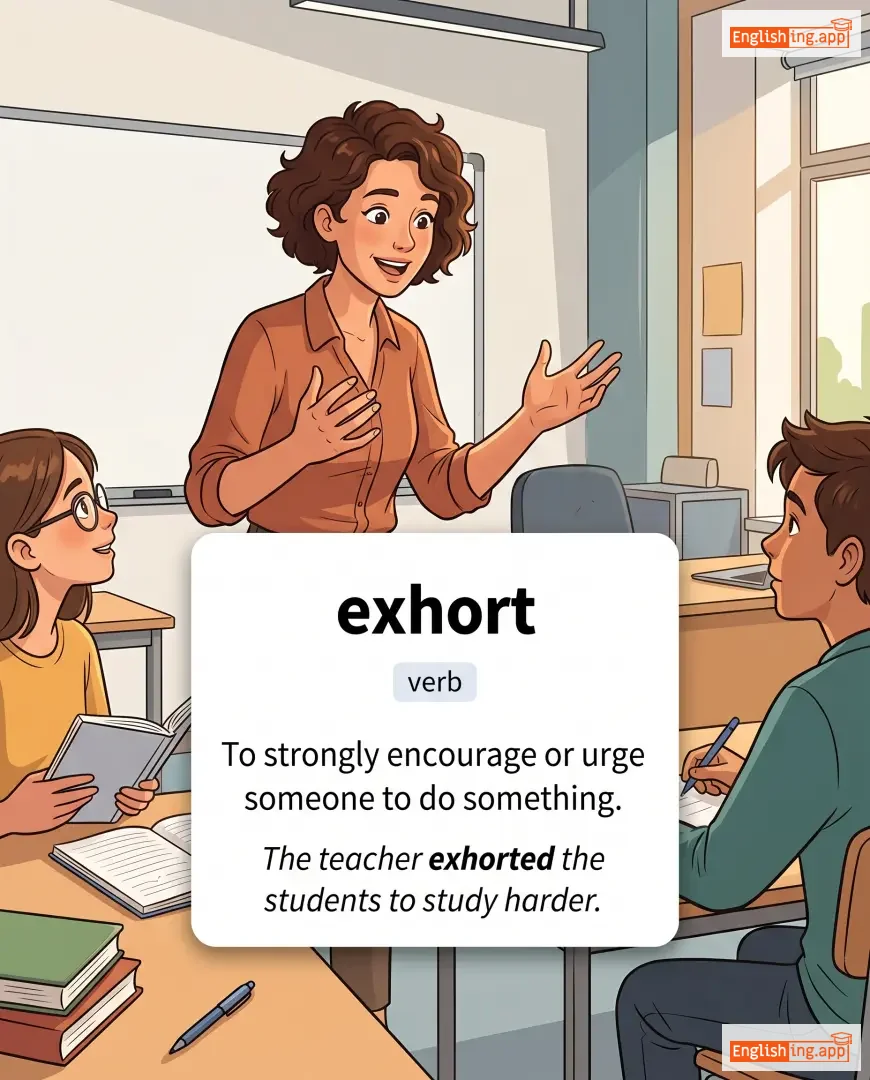
exhort definition card — visual illustration of the meaning
verb
/ɪɡˈzɔːrt/
exhortar (exhortar)

To strongly encourage or urge someone to do something.

"The teacher exhorted the students to study harder."

"El maestro exhortó a los estudiantes a estudiar más duro." (El maestro exhortó a los estudiantes a estudiar más duro.)
verb
/ɛksˈhjuːm/
exhumar (exhumar)

to dig out something buried, especially a body from the ground

"The archaeologists decided to exhume the ancient remains."

"Los arqueólogos decidieron exhumar los restos antiguos." (Los arqueologos decidieron exhumar los restos antiguos.)
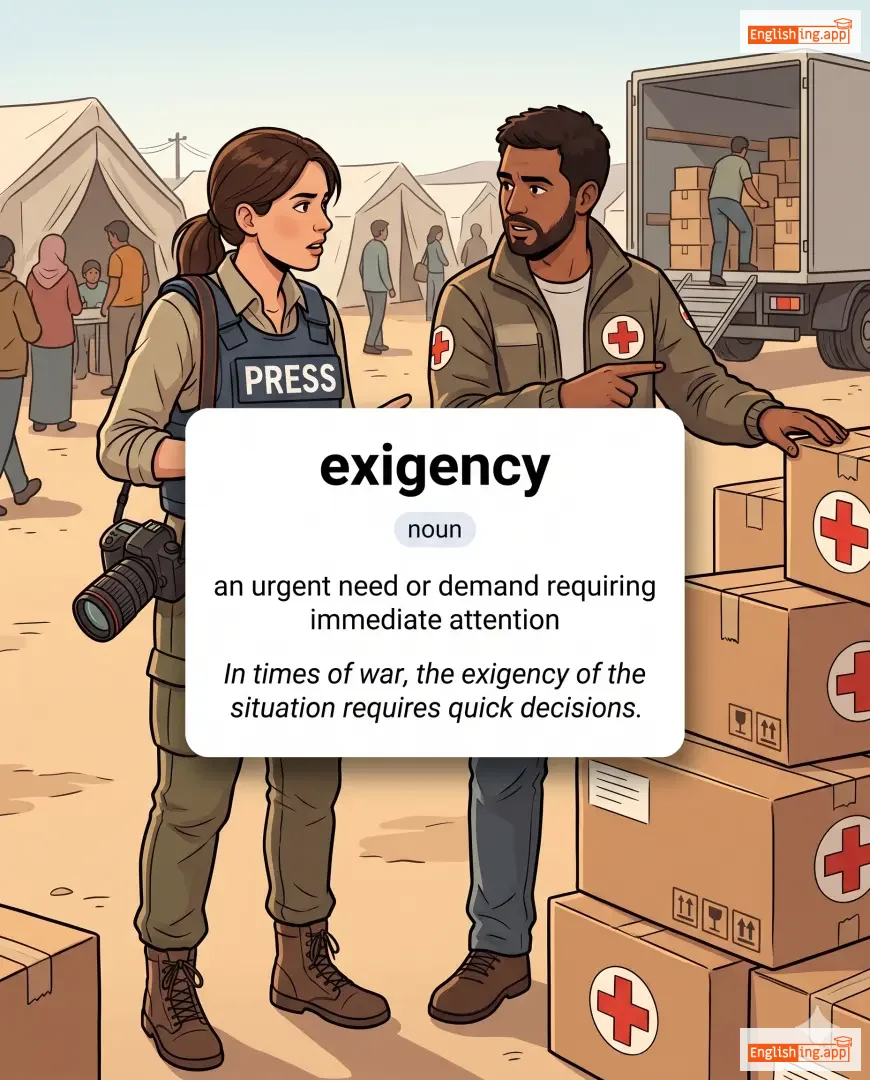
exigency definition card — visual illustration of the meaning
noun
/ˈɛksɪdʒənsi/
urgencia (urgencia)

an urgent need or demand requiring immediate attention

"In times of war, the exigency of the situation requires quick decisions."

"En tiempos de guerra, la urgencia de la situación requiere decisiones rápidas." (En tiempos de guerra, la urgencia de la situación requiere decisiones rápidas.)
adjective
/ˈɛksɪdʒənt/
urgente (urgente)

demanding immediate action or attention; urgent

"The patient’s exigent condition required immediate surgery."

"La condición exigente del paciente requirió cirugía inmediata." (La condicion exigente del paciente requirio cirugia inmediata.)
noun
/ˌɛksɪˈɡjuːɪti/
escasez (escasez)

the quality of being scanty or meager in amount

"The exiguity of resources made the project difficult to complete."

"La escasez de recursos hizo que el proyecto fuera difícil de completar." (La escasez de recursos hizo que el proyecto fuera difícil de completar.)