Vocabularios

Descubra, aprenda y domine el vocabulario en inglés

adjective
/ɪkˈstɛnjueɪtɪŋ/
atenuante (atenuante)

serving to make a fault or an offense seem less serious

"She asked for leniency due to extenuating circumstances."

"Ella pidió indulgencia debido a las circunstancias atenuantes." (Ella pidió indulgencia debido a las circunstancias atenuantes.)
noun/adjective
/ɪkˈstɪəriər/
parte exterior (parte exterior)

the outer surface or part of something; relating to the outside

"The exterior of the house was painted white."

"El exterior de la casa fue pintado de blanco." (El exterior de la casa fue pintado de blanco.)
adjective
/ɪkˈstɜrnəl/
externo (externo)

situated on or relating to the outside of something; coming from outside

"The external factors affected the company's growth."

"Los factores externos afectaron el crecimiento de la empresa." (Los factores externos afectaron el crecimiento de la empresa.)
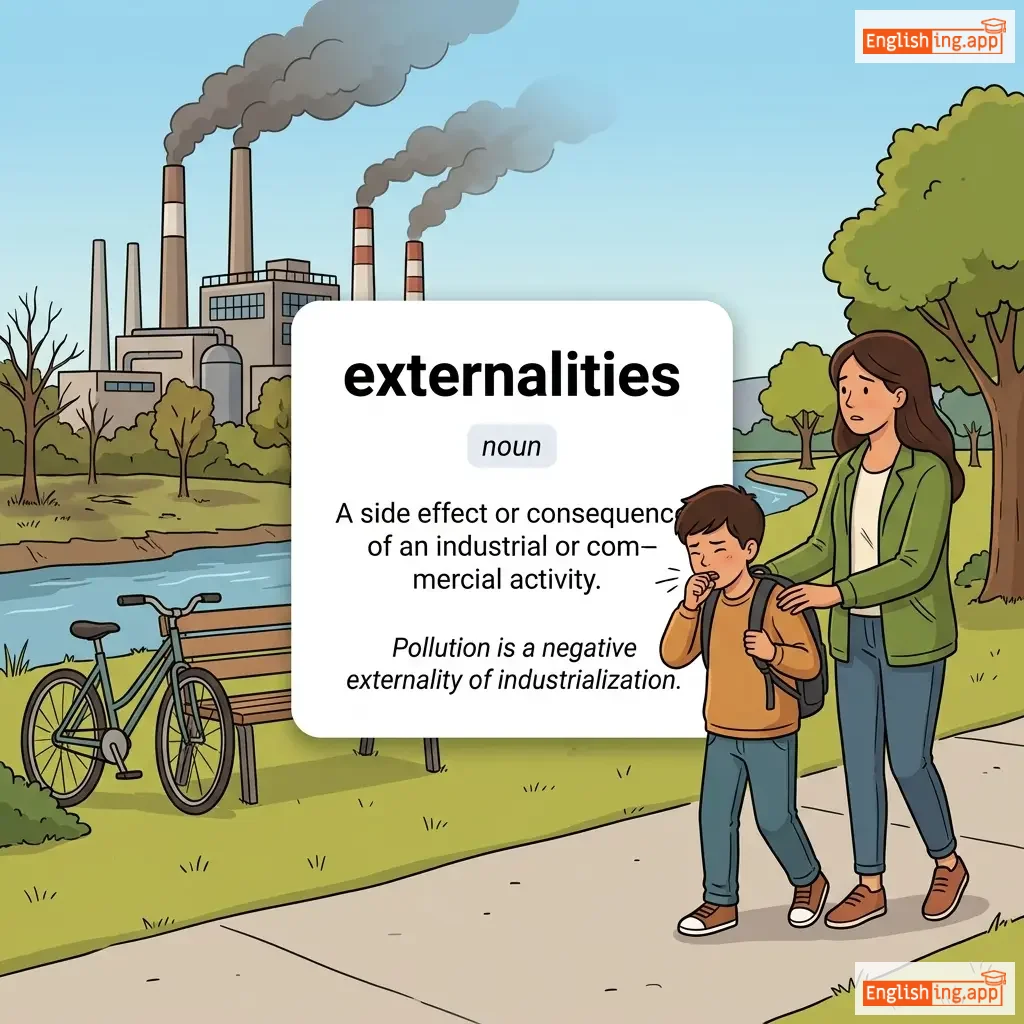
externalities definition card — visual illustration of the meaning
noun
ˌɛkstərˈnælɪtiz
externalidad (externalidad)

A side effect or consequence of an industrial or commercial activity.

"Pollution is a negative externality of industrialization."

"La contaminación es una externalidad negativa de la industrialización." (La contaminacion es una externalidad negativa de la industrializacion.)
adverb
/ɪkˈstɜrnəli/
externamente (externamente)

in a way that relates to the outer surface or outside appearance

"The building appeared externally modern, but inside it was quite old-fashioned."

"El edificio parecía externamente moderno, pero por dentro era bastante anticuado." (El edificio parecia externamente moderno, pero por dentro era bastante anticuado.)
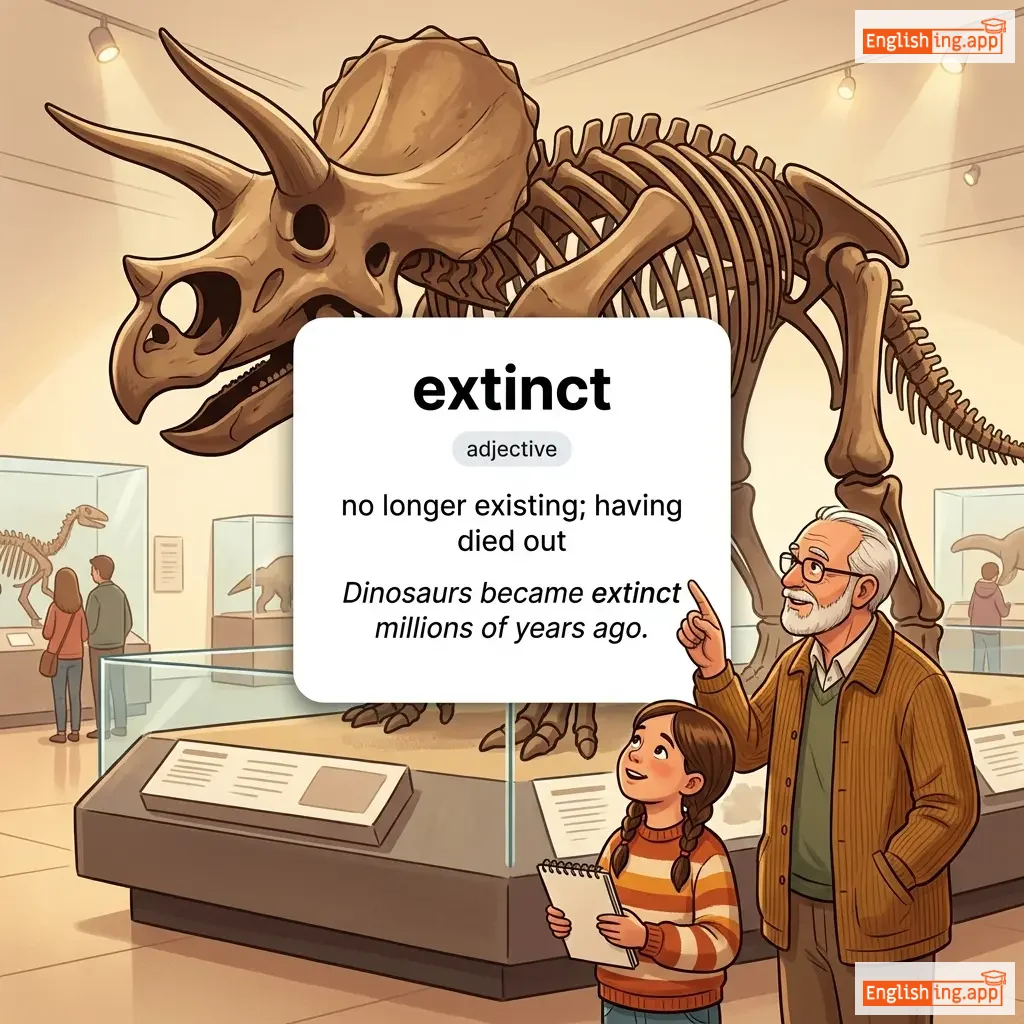
extinct definition card — visual illustration of the meaning
adjective
/ɪkˈstɪŋkt/
extinto (extinto)

no longer existing; having died out

"Dinosaurs became extinct millions of years ago."

"Los dinosaurios se extinguieron hace millones de años." (Los dinosaurios se extinguieron hace millones de años.)
verb
/ɪkˈstɪŋ.ɡwɪʃ/
apagar (apagar)

to put out a fire, light, or to end something

"The firefighters managed to extinguish the blaze within an hour."

"Los bomberos lograron apagar el fuego en una hora." (Los bomberos lograron apagar el fuego en una hora.)
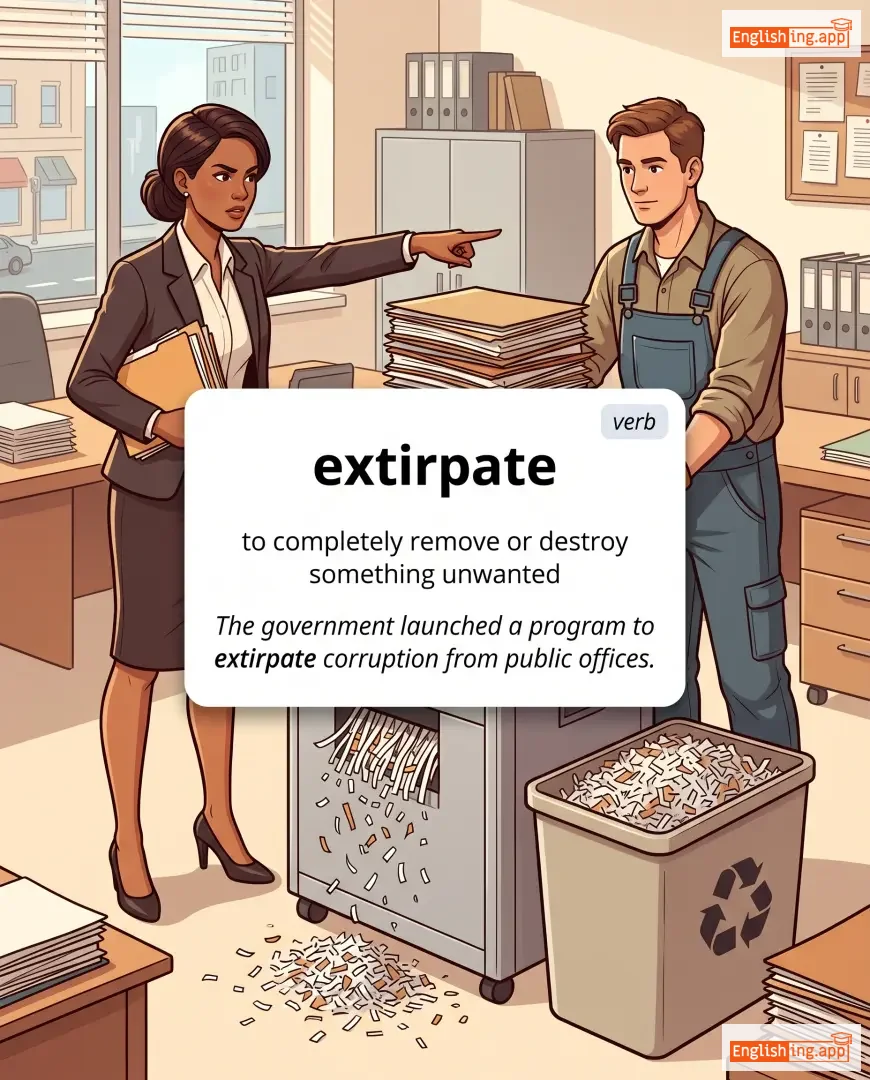
extirpate definition card — visual illustration of the meaning
verb
/ˈek.stər.peɪt/
extirpar (extirpar)

to completely remove or destroy something unwanted

"The government launched a program to extirpate corruption from public offices."

"El gobierno lanzó un programa para extirpar la corrupción de las oficinas públicas." (El gobierno lanzó un programa para extirpar la corrupción de las oficinas públicas.)
verb
/ɪkˈstoʊl/
alabar (alabar)

to praise enthusiastically and highly

"The teacher extolled the student's dedication and hard work."

"El maestro alabó la dedicación y el trabajo duro del estudiante." (El maestro alabó la dedicación y el trabajo duro del estudiante.)
verb
/ɪkˈstɔːrt/
extorsionar (extorsionar)

to obtain something, especially money, by force, threats, or unfair means

"The gang attempted to extort money from local shopkeepers."

"La pandilla intentó extorsionar dinero a los tenderos locales." (La pandilla intentó extorsionar dinero a los tenderos locales.)
noun
/ɪkˈstɔːr.ʃən/
extorsión (extorsion)

the practice of obtaining something, especially money, through force or threats

"The businessman was arrested for extortion after threatening his partner."

"El empresario fue arrestado por extorsión después de amenazar a su socio." (El empresario fue arrestado por extorsión después de amenazar a su socio.)
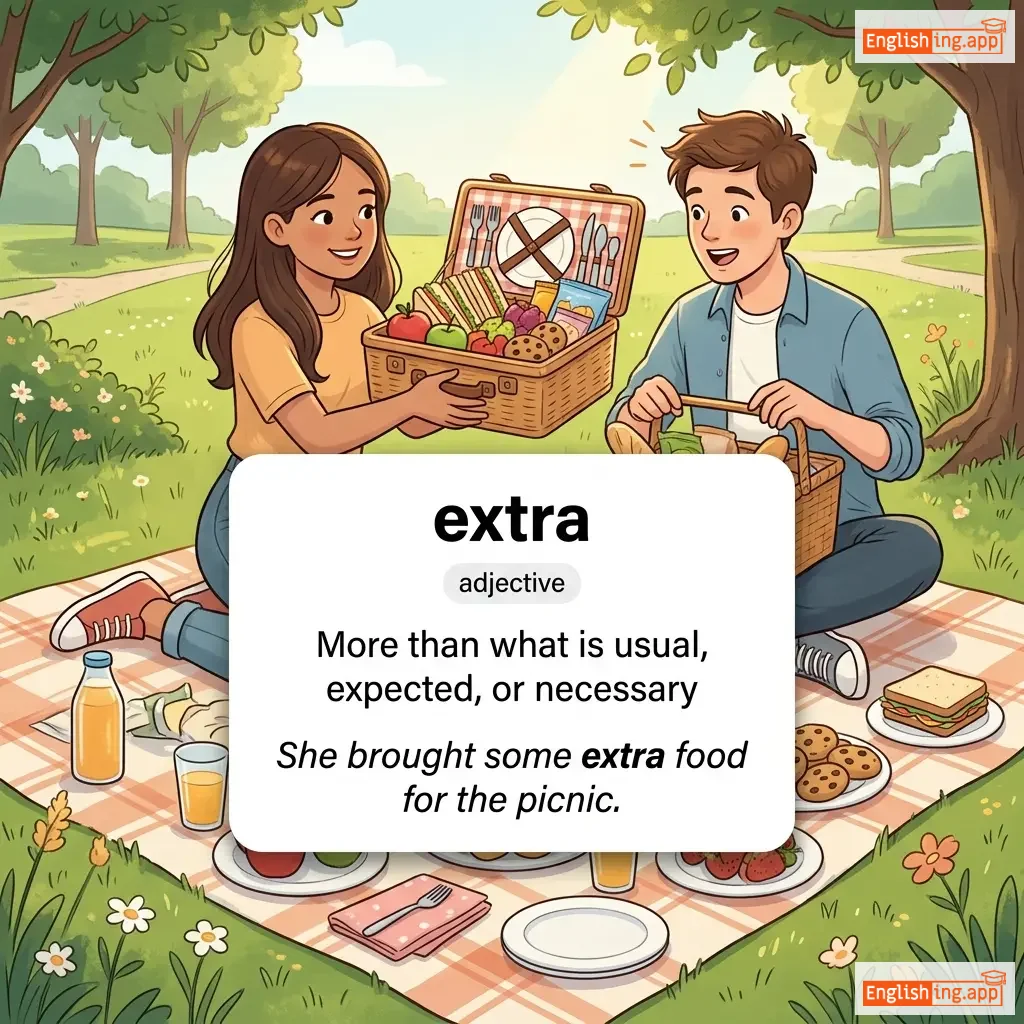
extra definition card — visual illustration of the meaning
adjective
/ˈɛkstrə/
extra (extra)

More than what is usual, expected, or necessary

"She brought some extra food for the picnic."

"Ella trajo comida extra para el picnic." (Ella trajo comida extra para el picnic.)
extract definition card — visual illustration of the meaning
verb
/ɪkˈstrækt/
extraer (extraer)

to remove or take out something, often with effort

"The dentist had to extract the damaged tooth."

"El dentista tuvo que extraer el diente dañado." (El dentista tuvo que extraer el diente dañado.)
noun
/ɪkˈstrækʃən/
extracción (extraccion)

the act of removing something, especially by pulling it out

"The extraction of oil from the ground requires special equipment."

"La extracción de petróleo del suelo requiere equipos especiales." (La extraccion de petroleo del suelo requiere equipos especiales.)
verb
/ˈɛkstrəˌdaɪt/
extraditar (extraditar)

to hand over a person accused or convicted of a crime to another country or state

"The government agreed to extradite the fugitive to his home country."

"El gobierno acordó extraditar al fugitivo a su país de origen." (El gobierno acordó extraditar al fugitivo a su país de origen.)
noun
/ˌɛkstrəˈdɪʃən/
extradición (extradicion)

the official process of sending someone accused of a crime to another country or state

"The extradition of the suspect was delayed due to legal issues."

"La extradición del sospechoso se retrasó debido a problemas legales." (La extradicion del sospechoso se retraso debido a problemas legales.)
adjective
/ˌɛkstrəˌdʒuːˈdɪʃəl/
extrajudicial (extrajudicial)

done outside the authority of the legal system or judicial process

"The activists condemned the extrajudicial killings."

"Los activistas condenaron los asesinatos extrajudiciales." (Los activistas condenaron los asesinatos extrajudiciales.)
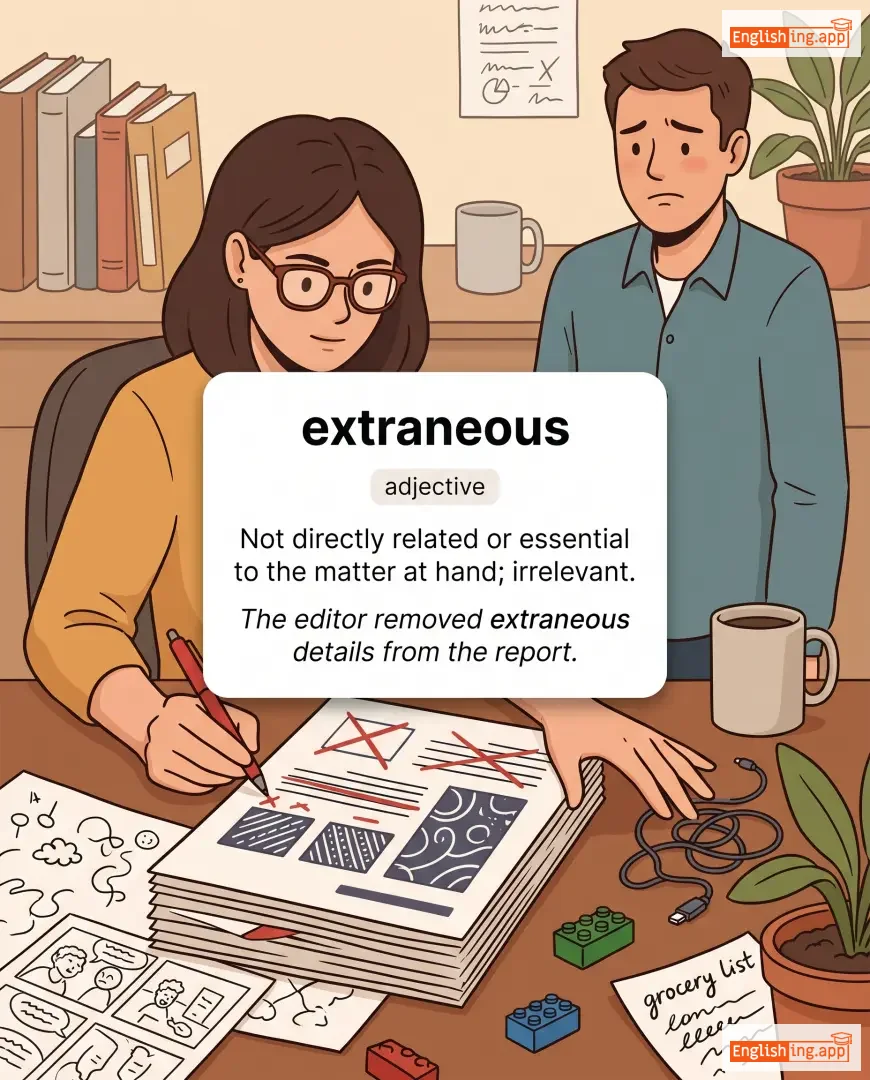
extraneous definition card — visual illustration of the meaning
adjective
/ɪkˈstreɪ.ni.əs/
irrelevante (irrelevante)

Not directly related or essential to the matter at hand; irrelevant.

"The editor removed extraneous details from the report."

"El editor eliminó detalles irrelevantes del informe." (El editor elimino detalles irrelevantes del informe.)
adjective
/ɪkˈstrɔːr.dəˌnɛr.i/
extraordinario (extraordinario)

Very unusual, remarkable, or exceptional.

"She showed extraordinary courage during the crisis."

"Ella mostró un coraje extraordinario durante la crisis." (Ella mostró un coraje extraordinario durante la crisis.)
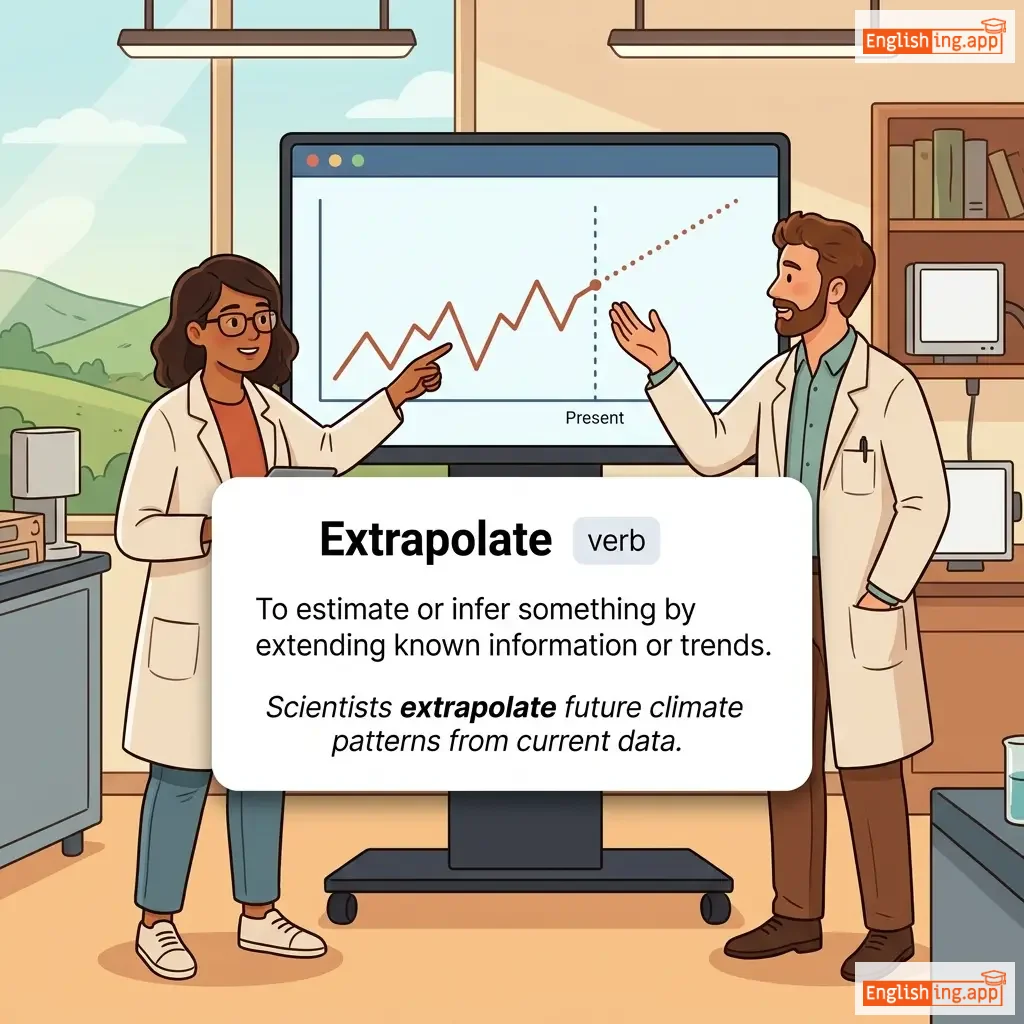
Extrapolate definition card — visual illustration of the meaning
verb
/ɪkˈstræp.əˌleɪt/
extrapolar (extrapolar)

To estimate or infer something by extending known information or trends.

"Scientists extrapolate future climate patterns from current data."

"Los científicos extrapolan patrones climáticos futuros a partir de los datos actuales." (Los científicos extrapolan patrones climáticos futuros a partir de los datos actuales.)
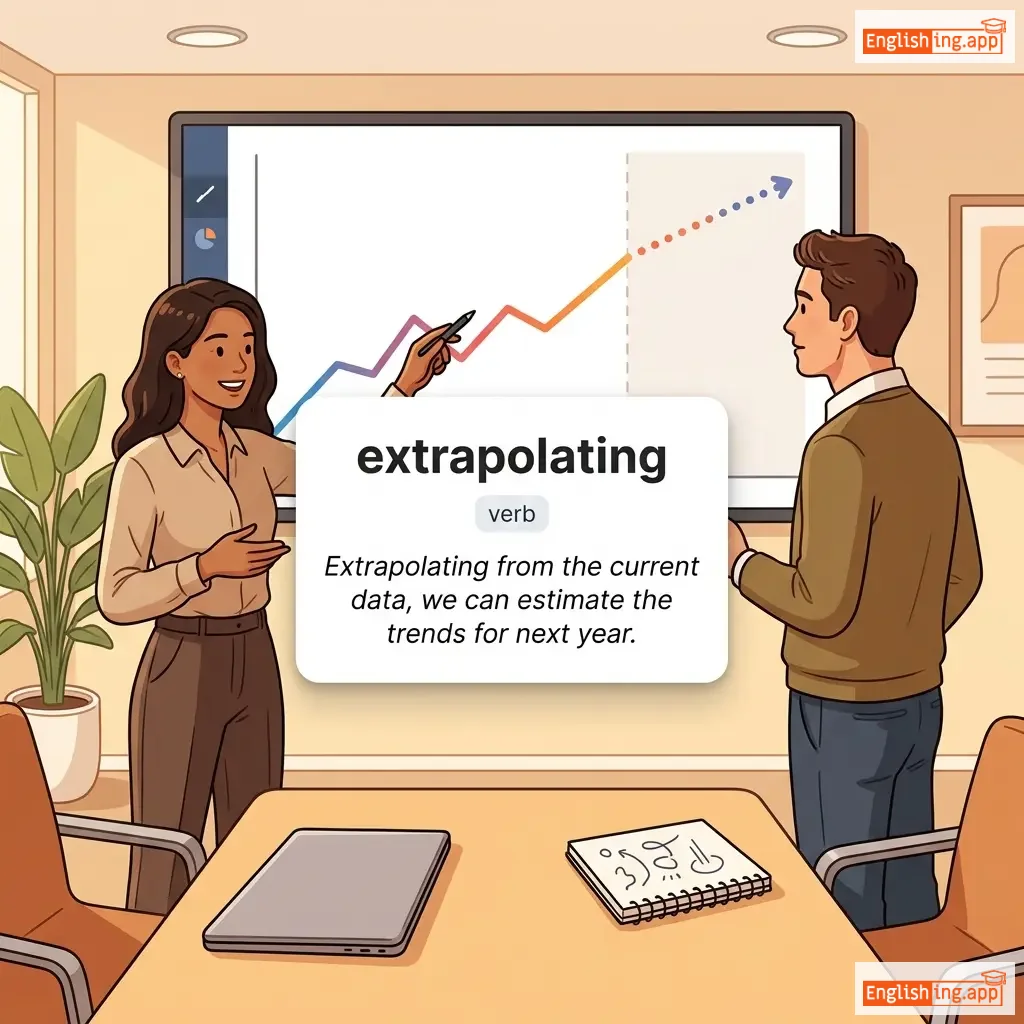
extrapolating definition card — visual illustration of the meaning
verb
/ɪkˈstræpəleɪtɪŋ/
extrapolar (extrapolar)

Extend the application of (a method or conclusion) to an unknown situation by assuming that existing trends will continue.

"Extrapolating from the current data, we can estimate the trends for next year."

"Extrapolando con los datos actuales, podemos estimar las tendencias para el próximo año." (Extrapolando con los datos actuales, podemos estimar las tendencias para el proximo año.)
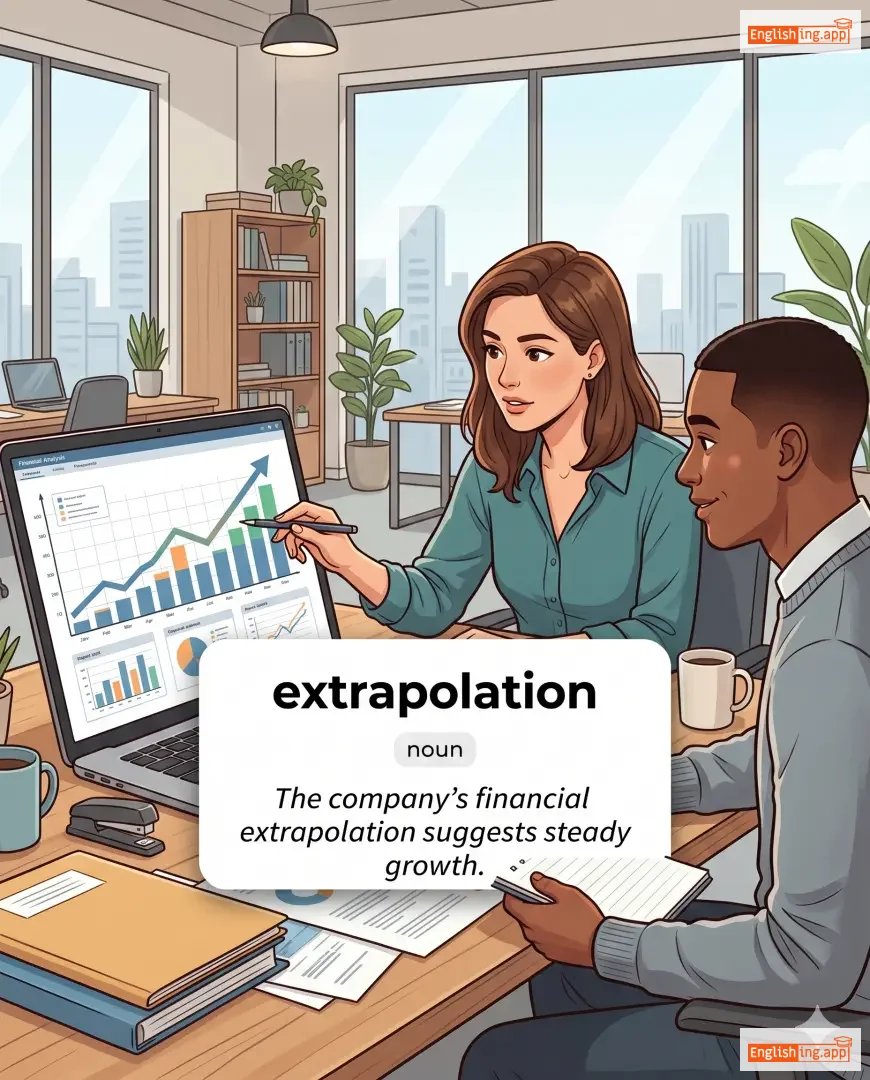
extrapolation definition card — visual illustration of the meaning
noun
/ɪkˌstræp.əˈleɪ.ʃən/
extrapolación (extrapolacion)

The process of estimating or predicting something based on extending known information.

"The company's financial extrapolation suggests steady growth."

"La extrapolación financiera de la empresa sugiere un crecimiento constante." (La extrapolacion financiera de la empresa sugiere un crecimiento constante.)
noun
/ɪkˈstræv.ə.ɡəns/
exceso (exceso)

Excessive spending or lack of restraint in using resources.

"His extravagance on luxury cars worried his family."

"Su extravagancia en autos de lujo preocupaba a su familia." (Su extravagancia en autos de lujo preocupaba a su familia.)
adjective
/ɪkˈstrævəɡənt/
extravagante (extravagante)

Spending or using more than is necessary; excessively elaborate or luxurious.

"She wore an extravagant dress to the party."

"Ella llevaba un vestido extravagante a la fiesta." (Ella llevaba un vestido extravagante a la fiesta.)
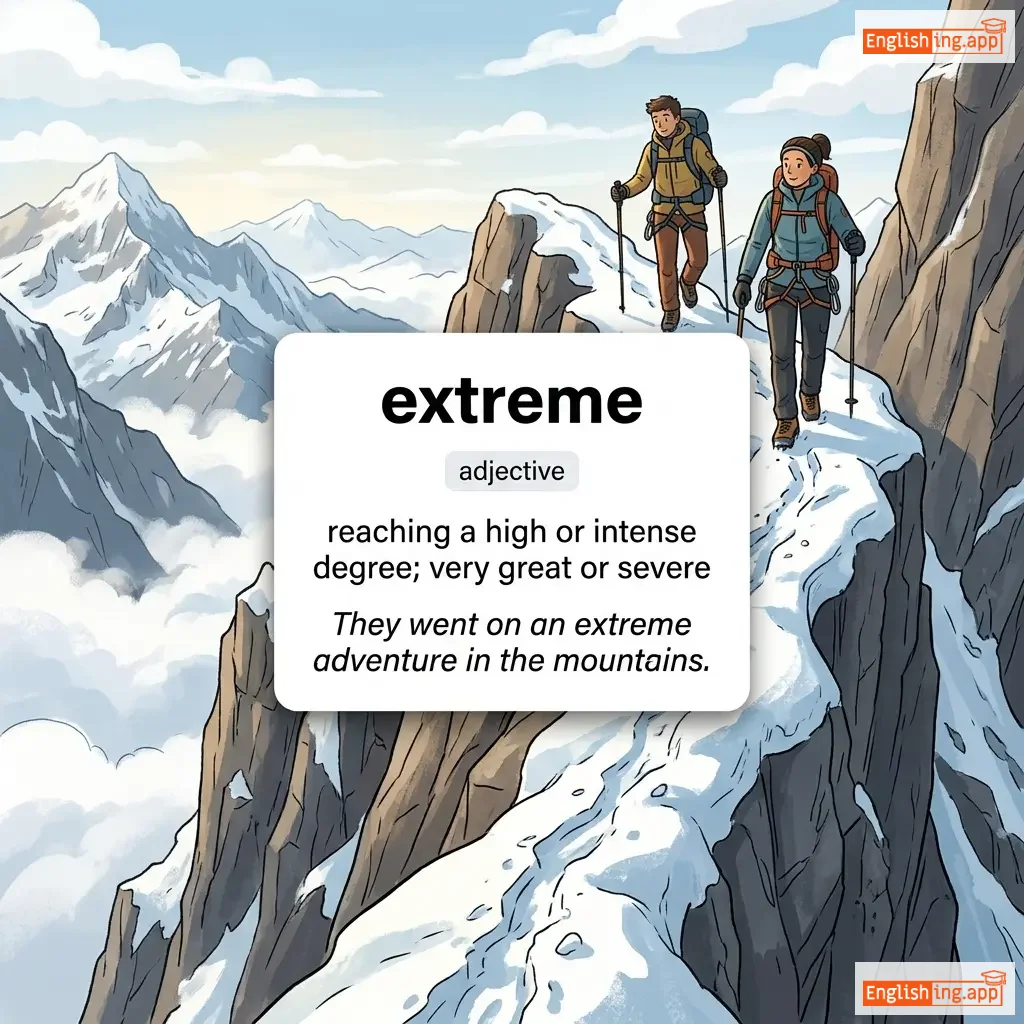
extreme definition card — visual illustration of the meaning
adjective
/ɪkˈstriːm/
extremo (extremo)

reaching a high or intense degree; very great or severe

"They went on an extreme adventure in the mountains."

"Fueron a una aventura extrema en las montañas." (Fueron a una aventura extrema en las montañas.)
adverb
/ɪkˈstriːmli/
extremadamente (extremadamente)

to a very high degree; very much

"The movie was extremely interesting."

"La película fue extremadamente interesante." (La pelicula fue extremadamente interesante.)
noun
/ɪkˈstriːmɪst/
extremista (extremista)

A person who holds extreme political or religious views and may act on them.

"The group was led by an extremist with radical ideas."

"El grupo fue dirigido por un extremista con ideas radicales." (El grupo fue dirigido por un extremista con ideas radicales.)
noun
/ɪkˈstrɛmɪti/
extremidad (extremidad)

The farthest point or limit of something; a severe or extreme condition.

"He was pushed to the extremity of his patience."

"Él fue empujado hasta el extremo de su paciencia." (El fue empujado hasta el extremo de su paciencia.)
verb
/ˈɛkstrɪkeɪt/
liberar (liberar)

To free someone or something from a constraint or difficulty.

"The firefighters extricated the passengers from the wrecked car."

"Los bomberos extricaron a los pasajeros del coche destrozado." (Los bomberos extricaron a los pasajeros del coche destrozado.)
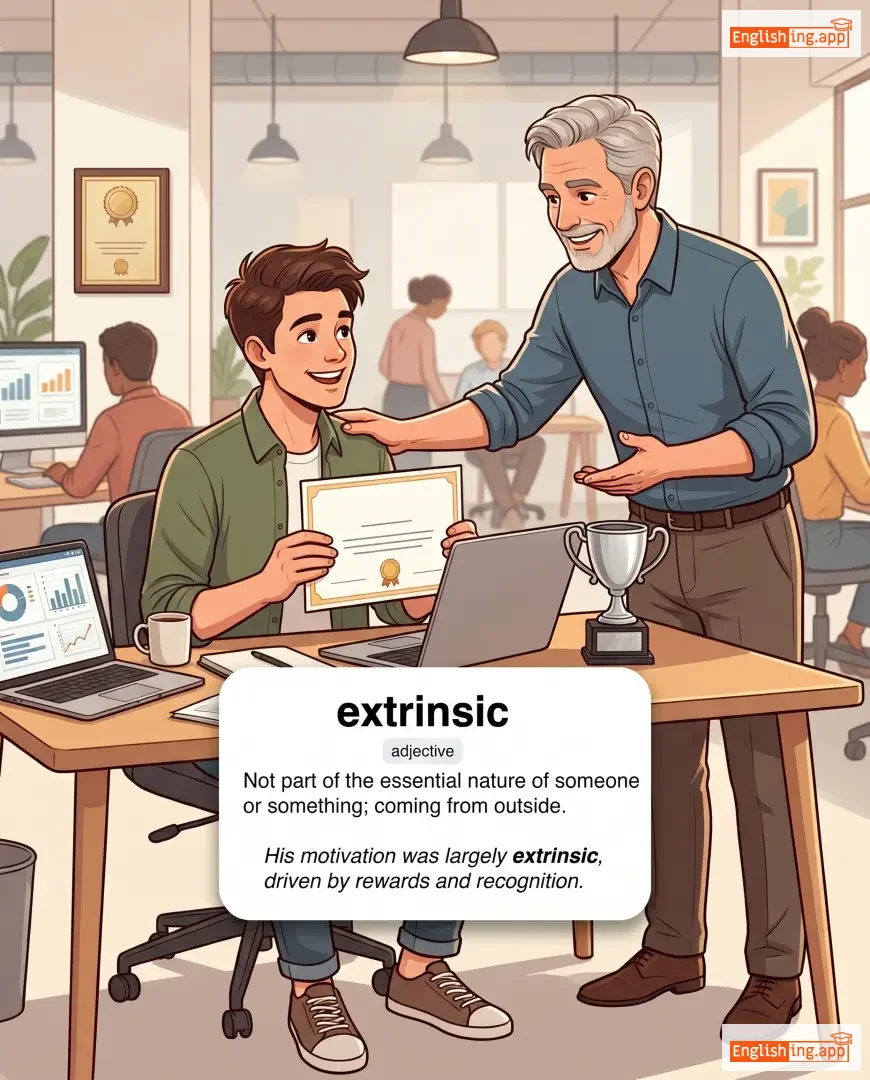
extrinsic definition card — visual illustration of the meaning
adjective
/ɛkˈstrɪnzɪk/
extrínseco (extrínseco)

Not part of the essential nature of someone or something; coming from outside.

"His motivation was largely extrinsic, driven by rewards and recognition."

"Su motivación era en gran parte extrínseca, impulsada por recompensas y reconocimiento." (Su motivación era en gran parte extrínseca, impulsada por recompensas y reconocimiento.)
noun
/ˈɛkstrəˌvɜːrt/
extrovertido (extrovertido)

a person who is outgoing, sociable, and energized by being around other people

"As an extrovert, she enjoys meeting new people at social events."

"Como extrovertida, le gusta conocer gente nueva en eventos sociales." (Como extrovertida, le gusta conocer gente nueva en eventos sociales.)
verb
/ɪkˈstruːd/
extruir (extruir)

to force something out through a small opening; to shape by pushing material through a mold

"The factory extrudes plastic pipes using modern machines."

"La fábrica extruye tubos de plástico utilizando máquinas modernas." (La fabrica extruye tubos de plastico utilizando maquinas modernas.)
noun
/ɪɡˈzuːbərəns/
exuberancia (exuberancia)

the quality of being full of energy, excitement, and cheerfulness

"Her exuberance made the whole team feel motivated."

"Su exuberancia hizo que todo el equipo se sintiera motivado." (Su exuberancia hizo que todo el equipo se sintiera motivado.)
adjective
/ɪɡˈzuːbərənt/
exuberante (exuberante)

full of energy, excitement, and cheerfulness

"The children were exuberant after winning the game."

"Los niños estaban exuberantes después de ganar el juego." (Los ninos estaban exuberantes despues de ganar el juego.)
verb
/ɪɡˈzuːd/
exudar (exudar)

to display a quality strongly and openly; to release a liquid or smell slowly

"He exudes confidence whenever he speaks in public."

"Él exuda confianza cada vez que habla en público." (Él exuda confianza cada vez que habla en público.)
verb
/ɪɡˈzʌlt/
exultar (eksultar)

to show or feel great joy, often as a result of success

"The fans exulted after their team won the championship."

"Los aficionados exultaron después de que su equipo ganó el campeonato." (Los aficionados exultaron despues de que su equipo gano el campeonato.)
👁️

Eye (áy)

noun
/aɪ/
ojo (ojo)

the organ in the head through which people and animals see

"She closed her eyes and went to sleep."

"Ella cerró los ojos y se fue a dormir." (Ella cerro los ojos y se fue a dormir.)
noun
/ˈaɪ.bɔːl/
globo ocular (globo ocular)

the round part of the eye within the eyelids and socket

"The doctor examined his eyeball carefully."

"El doctor examinó su globo ocular cuidadosamente." (El doktor examiNo su globo ocular cuidadosamente.)
noun
/ˈaɪbraʊ/
ceja (ceja)

the strip of hair growing on the ridge above a person's eye

"She raised her eyebrow in surprise."

"Ella levantó la ceja con sorpresa." (Ella levantó la ceja con sorpresa.)
noun
/ˈaɪ.lɪd/
párpado (parpado)

either of the upper or lower folds of skin that cover the eye when closed

"Her eyelids felt heavy with sleep."

"Sus párpados se sentían pesados por el sueño." (Sus párpados se sentían pesados por el sueño.)
noun
/ˈaɪ.saɪt/
visión (vision)

the ability to see; vision

"Regular eye checkups are important for maintaining good eyesight."

"Los chequeos oculares regulares son importantes para mantener una buena visión." (Los chequeos oculares regulares son importantes para mantener una buena vision.)
noun
/ˈaɪ.sɔːr/
ultraje visual; cosa desagradable de ver (ultraje visual; cosa desagradable de ver)

something that is very ugly and unpleasant to look at

"The abandoned building has become an eyesore in the neighborhood."

"El edificio abandonado se ha convertido en un ultraje visual en el vecindario." (El edificio abandonado se ha convertido en un ultraje visual en el vecindario.)
👁️‍🗨️

Eyewitness (áy-wit-nes)

noun
/ˈaɪ.wɪt.nəs/
testigo ocular (testigo ocular)

a person who has seen something happen and can give evidence about it

"The police interviewed several eyewitnesses to the accident."

"La policía entrevistó a varios testigos oculares del accidente." (La policía entrevistó a varios testigos oculares del accidente.)
noun
/ˈɪəri/
nido de águila (nido de aguila)

the nest of a bird of prey, such as an eagle, typically built high on a cliff or tree

"The eagle’s eyrie was perched high on the mountain cliff."

"El nido de águila estaba ubicado en la cima de un acantilado de montaña." (El nido de aguila estaba ubicado en la cima de un acantilado de montania.)
noun
/ˈɪəri/
nido de ave rapaz (nido de ave rapaz)

an alternative spelling of eyrie; a nest of a bird of prey

"The falcon guarded its eyry fiercely."

"El halcón protegió su nido ferozmente." (El halcon protegió su nido ferozmente.)
noun
/ˈfeɪbəl/
fábula (fabula)

a short story, typically featuring animals as characters, that conveys a moral lesson

"Aesop’s fables are famous for teaching valuable lessons through simple stories."

"Las fábulas de Esopo son famosas por enseñar valiosas lecciones a través de historias simples." (Las fábulas de Esopo son famosas por enseñar valiosas lecciones a través de historias simples.)
noun
/ˈfæbrɪk/
tejido (tejido)

Cloth or material produced by weaving or knitting fibers.

"The tailor used silk fabric to make the dress."

"El sastre usó tela de seda para hacer el vestido." (El sastre usó tela de seda para hacer el vestido.)
verb
/ˈfæbrɪkeɪt/
fabricar (fabricar)

to invent or concoct something, often with the intent to deceive; or to construct or manufacture

"The witness fabricated his testimony to protect himself."

"El testigo fabricó su testimonio para protegerse." (El testigo fabricó su testimonio para protegerse.)
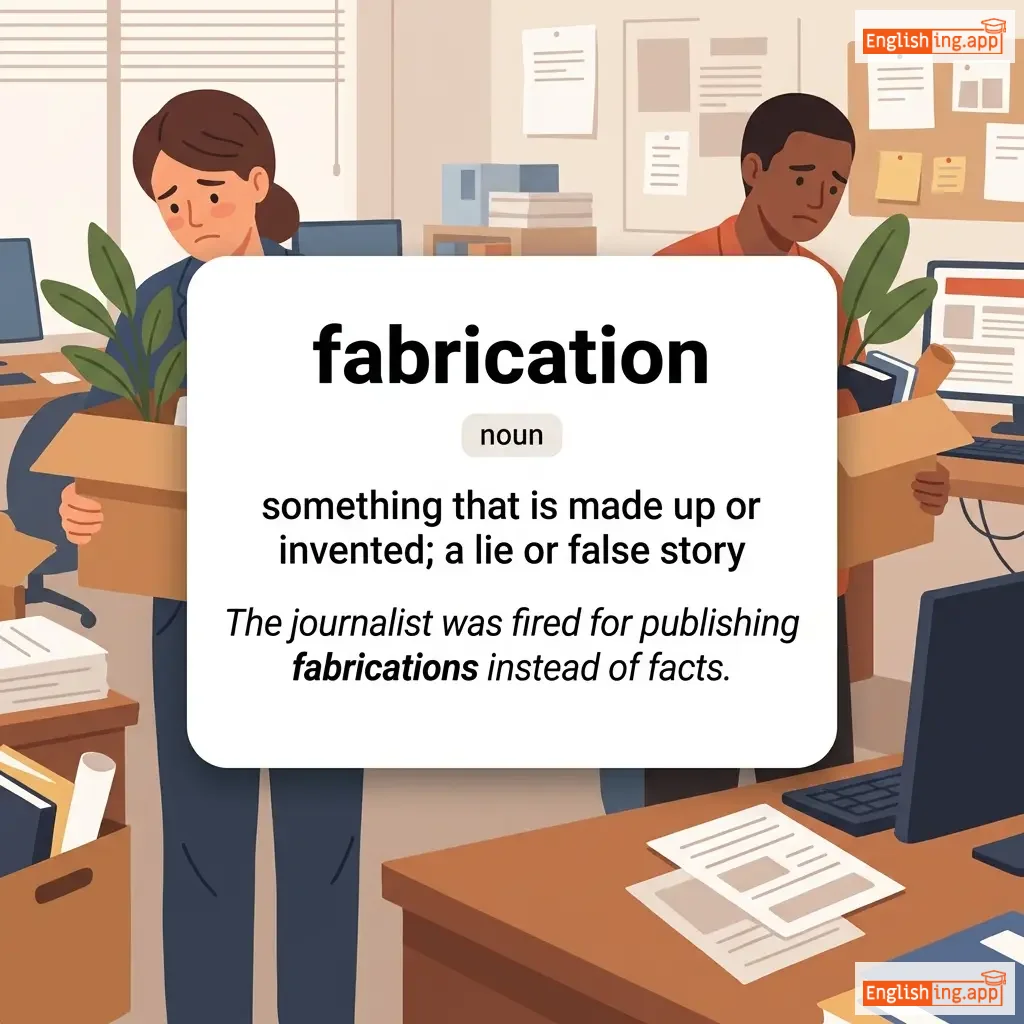
fabrication definition card — visual illustration of the meaning
noun
/ˌfæb.rɪˈkeɪ.ʃən/
fabricación; mentira; engaño (fabricacion; mentira; engano)

something that is made up or invented; a lie or false story

"The journalist was fired for publishing fabrications instead of facts."

"El periodista fue despedido por publicar fabricaciones en lugar de hechos." (El periodista fue despedido por publicar fabricaciones en lugar de hechos.)
adjective
/ˈfæbjələs/
fabuloso (fabuloso)

Extremely good or wonderful; almost unbelievable

"She looked fabulous in her new dress."

"Ella se veía fabulosa con su nuevo vestido." (Ella se veía fabulosa con su nuevo vestido.)