語彙集

英単語辞書 | 単語の意味、定義、例文

adjective
/ɪkˈstɛnjueɪtɪŋ/
軽減する (keigen suru)

serving to make a fault or an offense seem less serious

"She asked for leniency due to extenuating circumstances."

"彼女は軽減する状況のために寛容を求めました。" (Kanojo wa keigen suru jōkyō no tame ni kanyō o motomemashita.)
noun/adjective
/ɪkˈstɪəriər/
外装部分 (gaizō bubun)

the outer surface or part of something; relating to the outside

"The exterior of the house was painted white."

"家の外装部分は白く塗られていました。" (Ie no gaizō bubun wa shiroku nurarete imashita.)
adjective
/ɪkˈstɜrnəl/
外部の (gaibu no)

situated on or relating to the outside of something; coming from outside

"The external factors affected the company's growth."
"外部要因が会社の成長に影響を与えました。" (Gaibu yōin ga kaisha no seichō ni eikyō o ataemashita.)
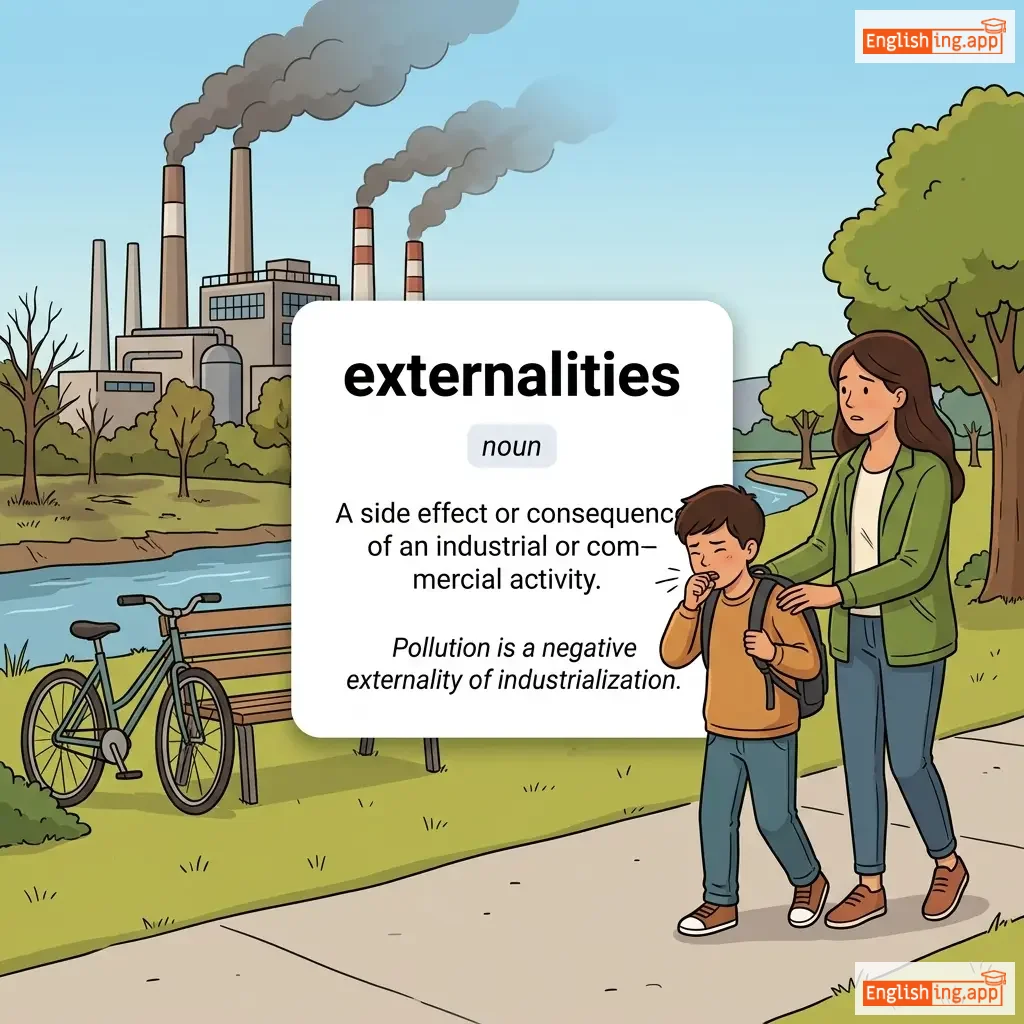
externalities definition card — visual illustration of the meaning
noun
ˌɛkstərˈnælɪtiz
外部性 (gaibusei)

A side effect or consequence of an industrial or commercial activity.

"Pollution is a negative externality of industrialization."

"汚染は産業化の負の外部性です。" (Osen wa sangyōka no fu no gaibusei desu.)
adverb
/ɪkˈstɜrnəli/
外見上 (gaikenjo)

in a way that relates to the outer surface or outside appearance

"The building appeared externally modern, but inside it was quite old-fashioned."
"建物は外見上は現代的に見えたが、中はかなり古風だった。" (Tatemono wa gaikenjo wa gendai-teki ni mieta ga, naka wa kanari kofu datta.)
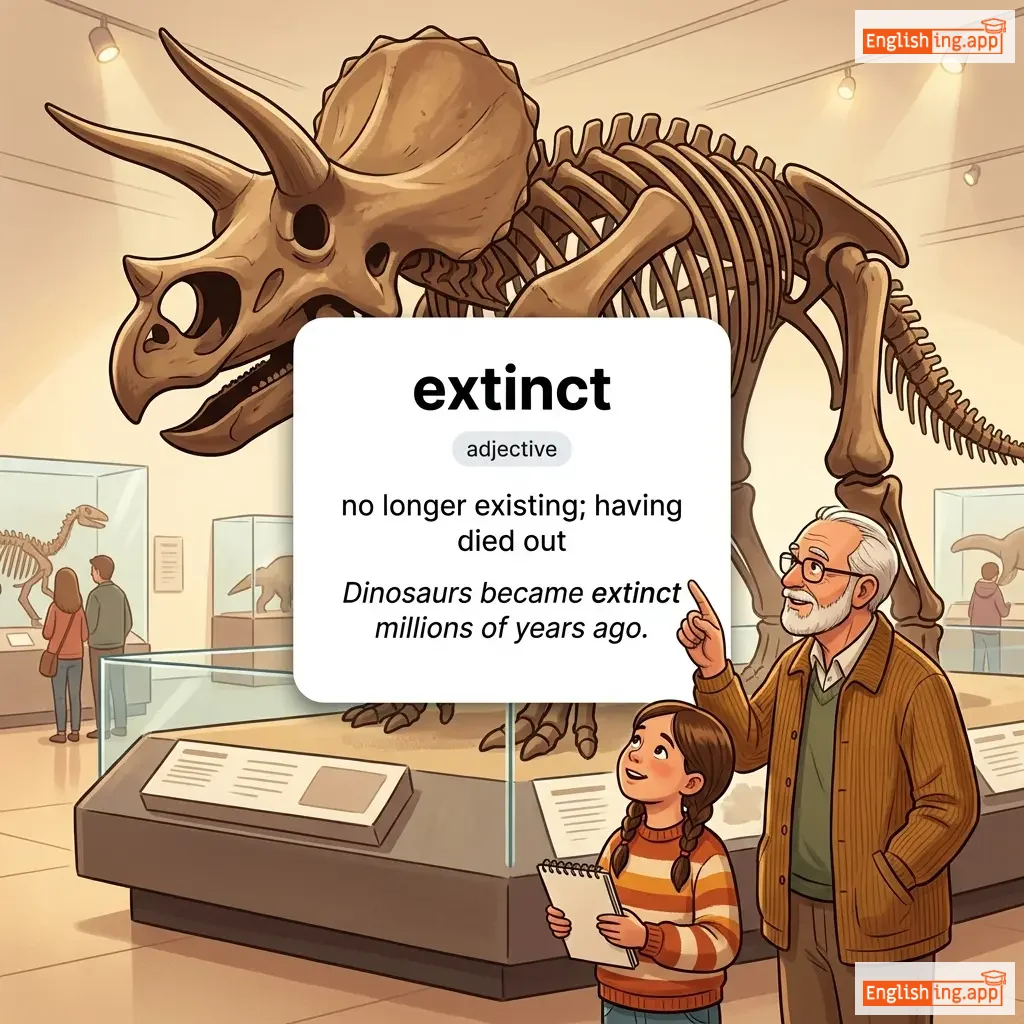
extinct definition card — visual illustration of the meaning
adjective
/ɪkˈstɪŋkt/
絶滅した (zetsumetsu shita)

no longer existing; having died out

"Dinosaurs became extinct millions of years ago."

"恐竜は数百万年前に絶滅しました。" (Kyoryu wa suu hyakuman nen mae ni zetsumetsu shimashita.)
verb
/ɪkˈstɪŋ.ɡwɪʃ/
消す (kesu)

to put out a fire, light, or to end something

"The firefighters managed to extinguish the blaze within an hour."
"消防士たちは1時間以内に火を消し止めました。" (Shouboushi-tachi wa 1-jikan inai ni hi o keshitomemashita.)
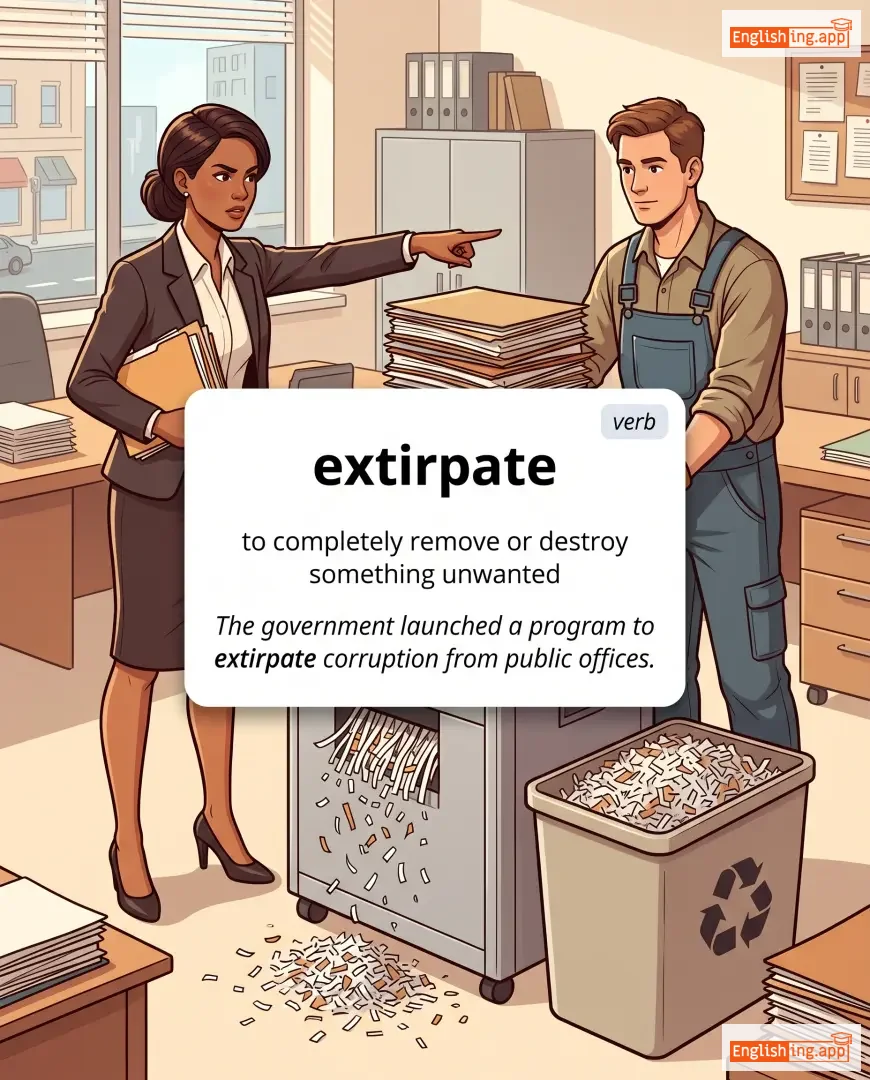
extirpate definition card — visual illustration of the meaning
verb
/ˈek.stər.peɪt/
根絶する (konzetsu suru)

to completely remove or destroy something unwanted

"The government launched a program to extirpate corruption from public offices."

"政府は公務員の腐敗を根絶するためにプログラムを開始した。" (Seifu wa kōmuin no fuhai o konzetsu suru tame ni puroguramu o kaishi shita.)
verb
/ɪkˈstoʊl/
称賛する (shōsan suru)

to praise enthusiastically and highly

"The teacher extolled the student's dedication and hard work."

"先生は生徒の献身と努力を称賛しました。" (Sensei wa seito no kenshin to doryoku o shōsan shimashita.)
verb
/ɪkˈstɔːrt/
強奪する (kyōdatsu suru)

to obtain something, especially money, by force, threats, or unfair means

"The gang attempted to extort money from local shopkeepers."

"ギャングは地元の店主からお金を強奪しようとした。" (Gyangu wa jimoto no ten-shu kara okane o kyōdatsu shiyō to shita.)
noun
/ɪkˈstɔːr.ʃən/
恐喝 (kyōkatsu)

the practice of obtaining something, especially money, through force or threats

"The businessman was arrested for extortion after threatening his partner."
"そのビジネスマンは、パートナーを脅迫した後、恐喝で逮捕されました。" (Sono bijinesuman wa, pātonā o kyōkaku shita ato, kyōkatsu de taiho saremashita.)
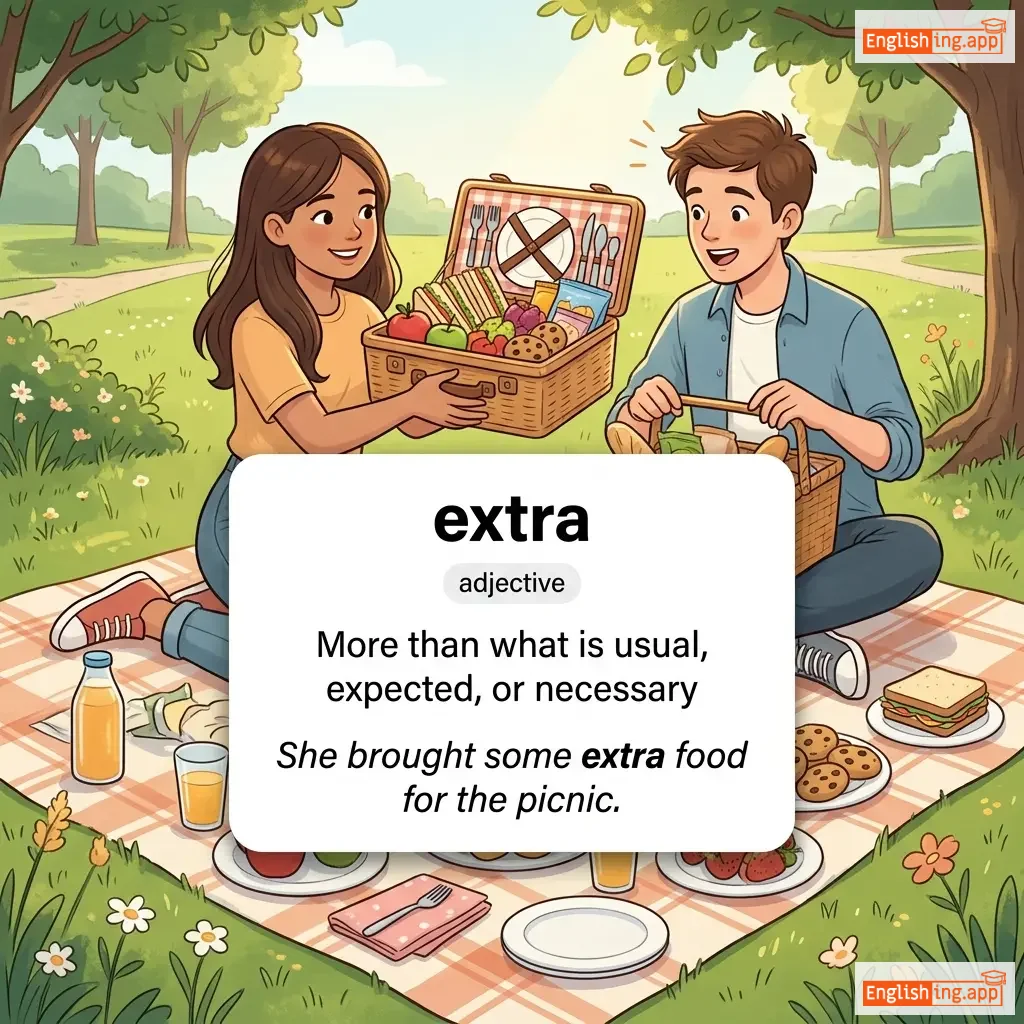
extra definition card — visual illustration of the meaning
adjective
/ˈɛkstrə/
追加の (tsuika no)

More than what is usual, expected, or necessary

"She brought some extra food for the picnic."

"彼女はピクニックのために追加の食べ物を持ってきました。" (Kanojo wa pikunikku no tame ni tsuika no tabemono o motte kimashita.)
extract definition card — visual illustration of the meaning
verb
/ɪkˈstrækt/
抽出する (chūshutsu suru)

to remove or take out something, often with effort

"The dentist had to extract the damaged tooth."

"歯医者は損傷した歯を抜かなければならなかった。" (Haisha wa sonshō shita ha o nukenakereba naranakatta.)
noun
/ɪkˈstrækʃən/
抽出 (chūshutsu)

the act of removing something, especially by pulling it out

"The extraction of oil from the ground requires special equipment."

"地面からの石油の抽出には特別な機器が必要です。" (Jimen kara no sekiyu no chūshutsu ni wa tokubetsu na kiki ga hitsuyō desu.)
verb
/ˈɛkstrəˌdaɪt/
引き渡す (hikiwatasu)

to hand over a person accused or convicted of a crime to another country or state

"The government agreed to extradite the fugitive to his home country."

"政府はその逃亡者を自国に引き渡すことに同意した。" (Seifu wa sono tōbōsha o jikoku ni hikiwatasu koto ni dōi shita.)
noun
/ˌɛkstrəˈdɪʃən/
引渡し (hikiwatashi)

the official process of sending someone accused of a crime to another country or state

"The extradition of the suspect was delayed due to legal issues."

"容疑者の引渡しは法的問題のため遅れました。" (Yōgisha no hikiwatashi wa hōteki mondai no tame okuremashita.)
adjective
/ˌɛkstrəˌdʒuːˈdɪʃəl/
司法外 (shihōgai)

done outside the authority of the legal system or judicial process

"The activists condemned the extrajudicial killings."
"活動家たちは司法外での殺人を非難しました。" (Katsudōkatachi wa shihōgai de no satsujin o hinan shimashita.)
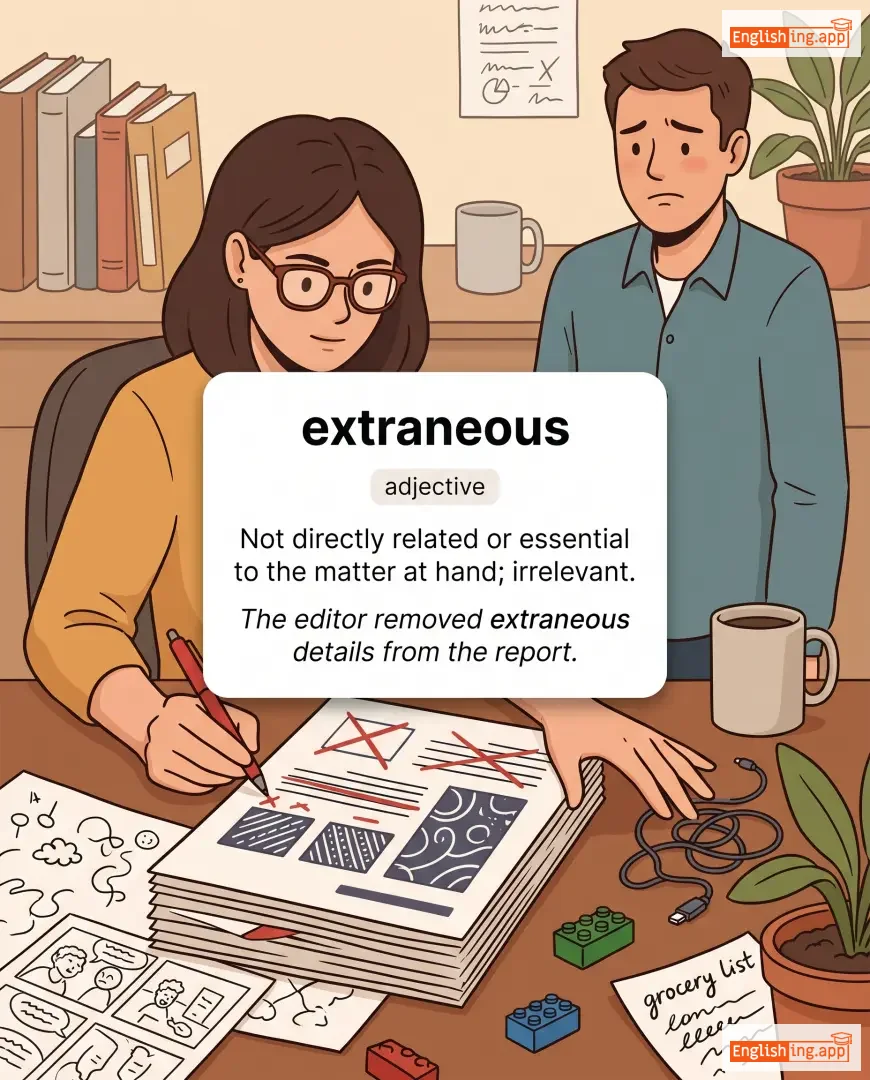
extraneous definition card — visual illustration of the meaning
adjective
/ɪkˈstreɪ.ni.əs/
無関係 (mukankei)

Not directly related or essential to the matter at hand; irrelevant.

"The editor removed extraneous details from the report."

"編集者は報告書から無関係な詳細を削除しました。" (Henshū-sha wa hōkokusho kara mukankei na shōsai o sakujo shimashita.)
adjective
/ɪkˈstrɔːr.dəˌnɛr.i/
非凡 (hihan)

Very unusual, remarkable, or exceptional.

"She showed extraordinary courage during the crisis."
"彼女は危機の間に非凡な勇気を示しました。" (Kanojo wa kiki no aida ni hihan na yūki o shimeshimashita.)
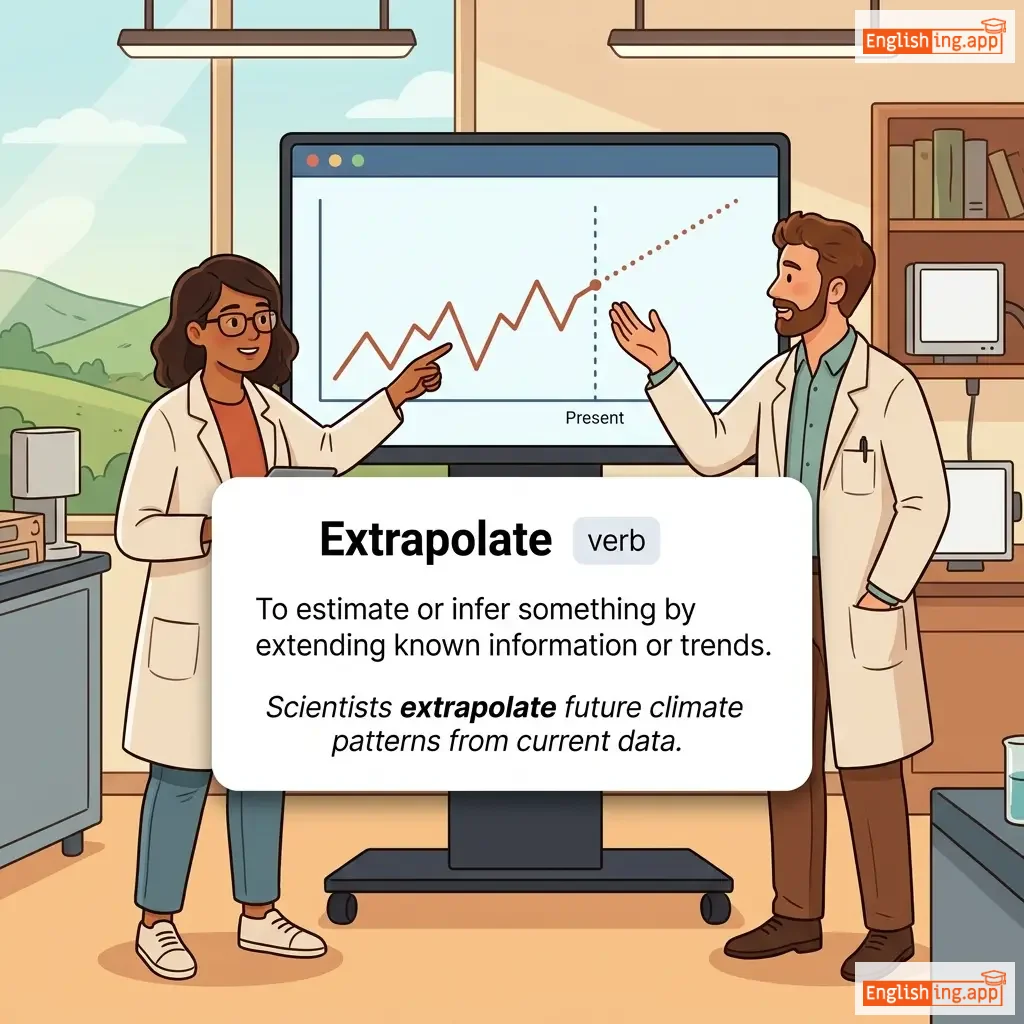
Extrapolate definition card — visual illustration of the meaning
verb
/ɪkˈstræp.əˌleɪt/
外挿する (gaisō suru)

To estimate or infer something by extending known information or trends.

"Scientists extrapolate future climate patterns from current data."
"科学者たちは現在のデータから将来の気候パターンを外挿します。" (Kagakusha-tachi wa genzai no dēta kara shōrai no kikō patān o gaisō shimasu.)
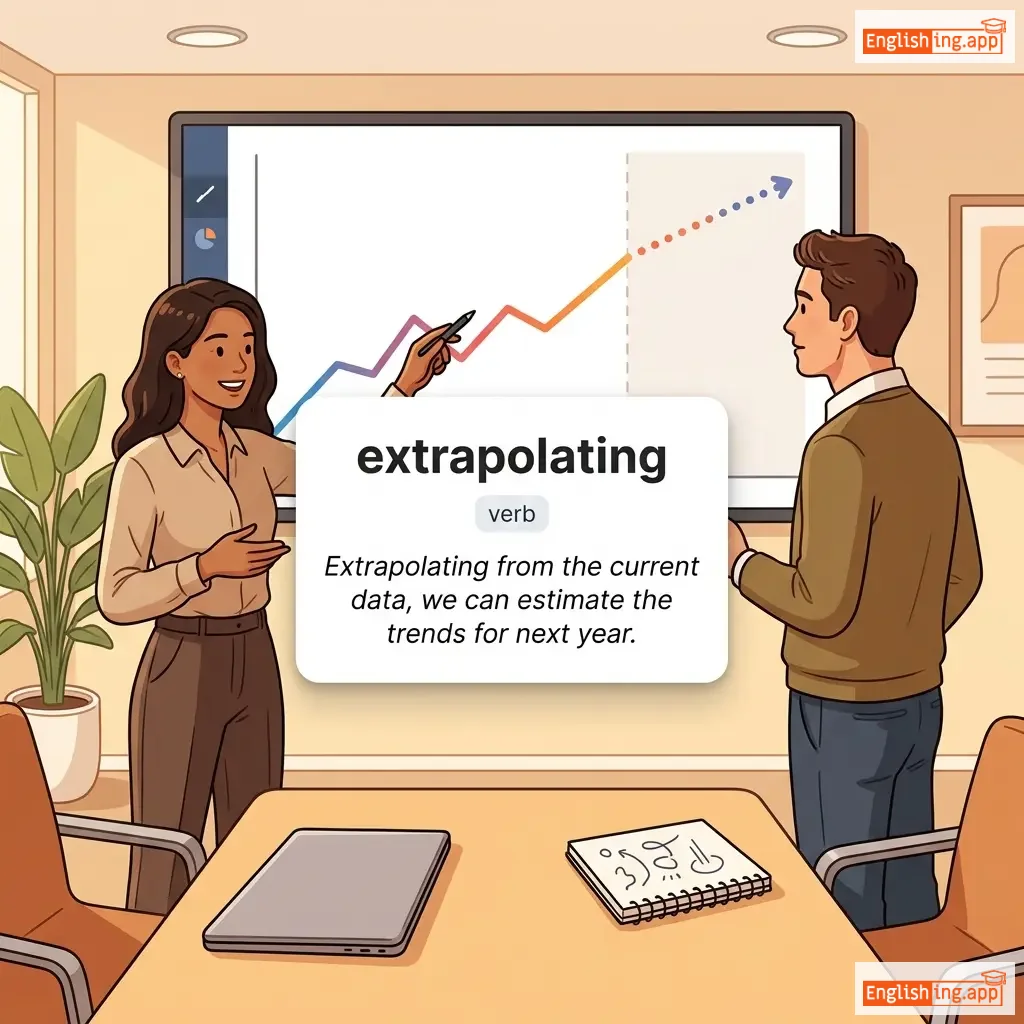
extrapolating definition card — visual illustration of the meaning
verb
/ɪkˈstræpəleɪtɪŋ/
外挿 (gaisō)

Extend the application of (a method or conclusion) to an unknown situation by assuming that existing trends will continue.

"Extrapolating from the current data, we can estimate the trends for next year."
"現在のデータから外挿して、来年の傾向を予測できます。" (Genzai no dēta kara gaisō shite, rainen no keikō o yosoku dekimasu.)
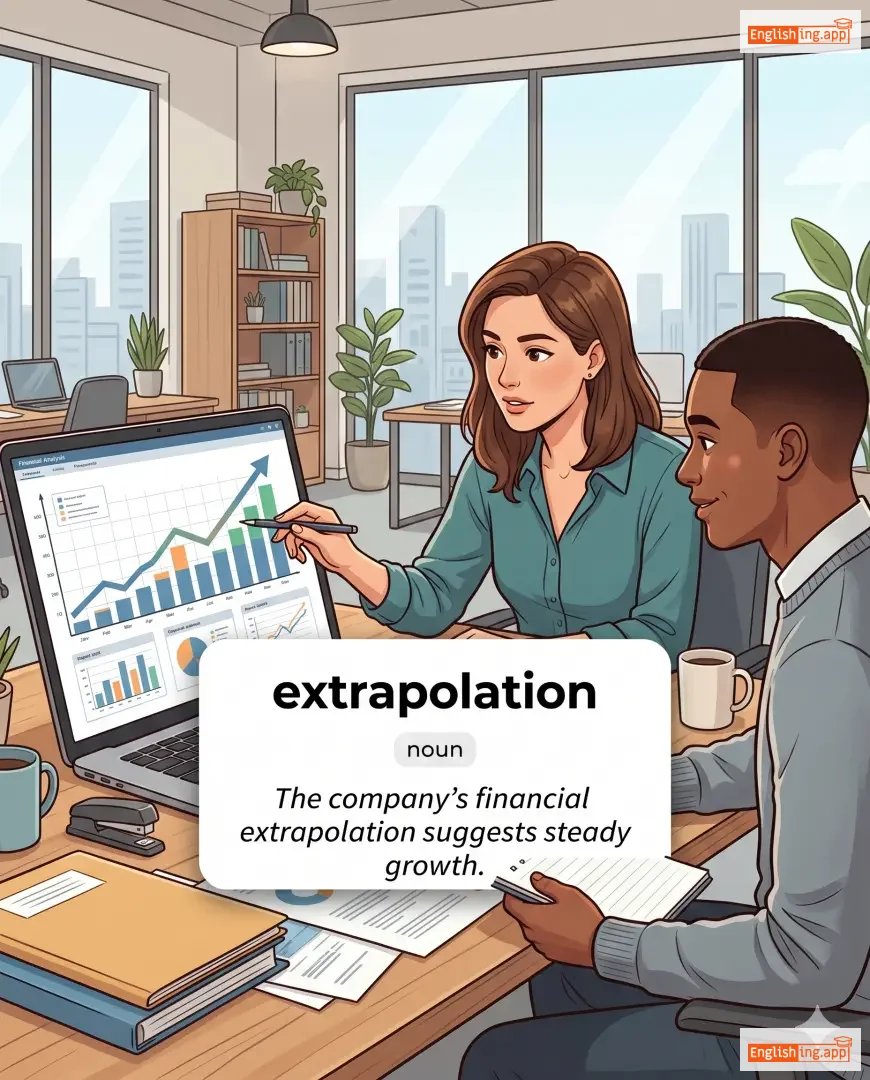
extrapolation definition card — visual illustration of the meaning
noun
/ɪkˌstræp.əˈleɪ.ʃən/
外挿 (gaizō)

The process of estimating or predicting something based on extending known information.

"The company's financial extrapolation suggests steady growth."

"その会社の財務的外挿は、安定した成長を示唆しています。" (sono kaisha no zaimutekī gaizō wa, antei shita seichō o shisa shiteimasu.)
noun
/ɪkˈstræv.ə.ɡəns/
贅沢 (zeitaku)

Excessive spending or lack of restraint in using resources.

"His extravagance on luxury cars worried his family."

"高級車に対する彼の贅沢な支出は家族を心配させた。" (Kōkyūsha ni taisuru kare no zeitaku na shishutsu wa kazoku o shinpai saseta.)
adjective
/ɪkˈstrævəɡənt/
贅沢な (zeitakuna)

Spending or using more than is necessary; excessively elaborate or luxurious.

"She wore an extravagant dress to the party."
"彼女はパーティーに贅沢なドレスを着ていた。" (Kanojo wa pātī ni zeitakuna doresu o kite ita.)
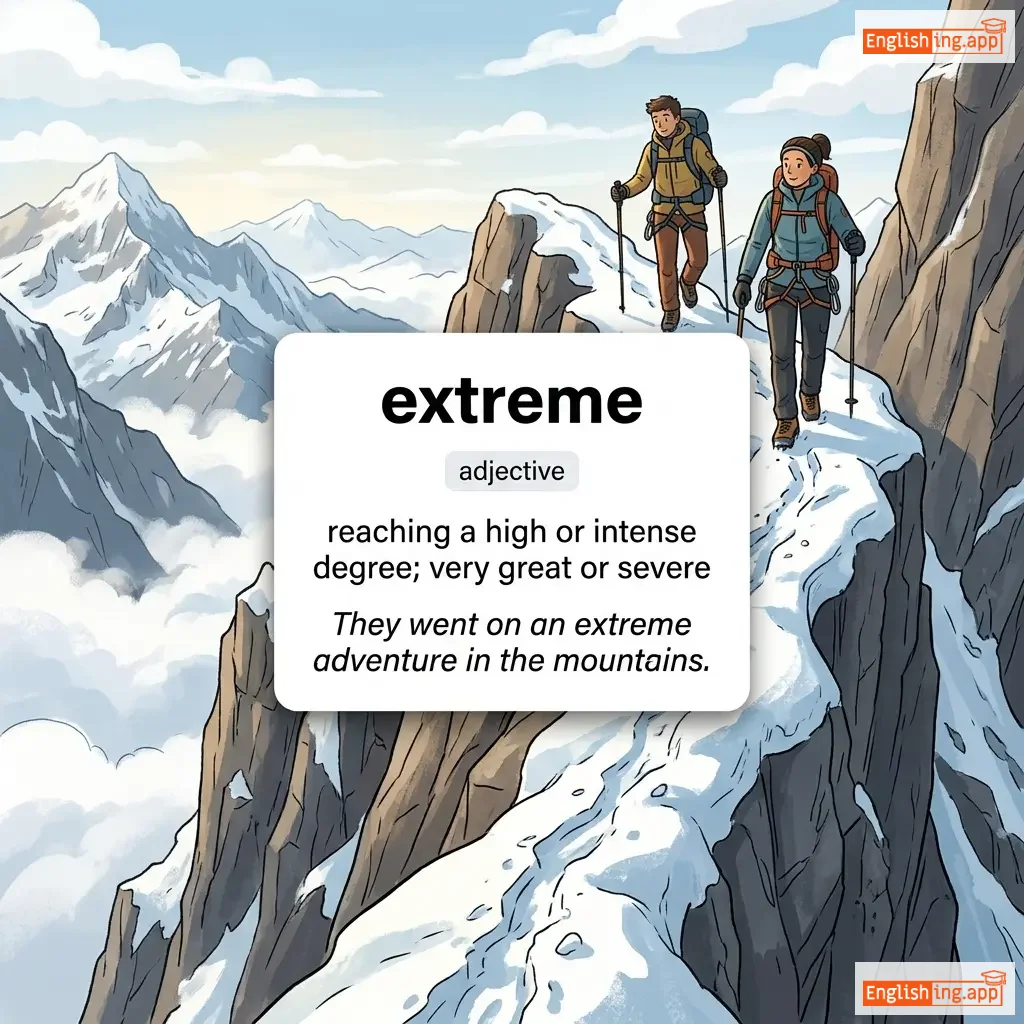
extreme definition card — visual illustration of the meaning
adjective
/ɪkˈstriːm/
極端 (kyokutan)

reaching a high or intense degree; very great or severe

"They went on an extreme adventure in the mountains."

"彼らは山で極端な冒険をしました。" (Karera wa yama de kyokutan na bōken o shimashita.)
adverb
/ɪkˈstriːmli/
非常に (hijō ni)

to a very high degree; very much

"The movie was extremely interesting."

"その映画は非常に面白かった。" (Sono eiga wa hijō ni omoshirokatta.)
noun
/ɪkˈstriːmɪst/
過激派 (kagekiha)

A person who holds extreme political or religious views and may act on them.

"The group was led by an extremist with radical ideas."

"そのグループは過激な考えを持つ過激派によって導かれていた。" (Sono gurūpu wa kageki na kangae o motsu kagekiha ni yotte michibikarete ita.)
noun
/ɪkˈstrɛmɪti/
極限 (kyokugen)

The farthest point or limit of something; a severe or extreme condition.

"He was pushed to the extremity of his patience."

"彼は忍耐の極限まで追いやられた。" (Kare wa nintai no kyokugen made oiyarareta.)
verb
/ˈɛkstrɪkeɪt/
救出する (kyūshutsu suru)

To free someone or something from a constraint or difficulty.

"The firefighters extricated the passengers from the wrecked car."
"消防士たちは事故車から乗客を救出しました。" (Shōbōshi-tachi wa jiko-sha kara jōkyaku o kyūshutsu shimashita.)
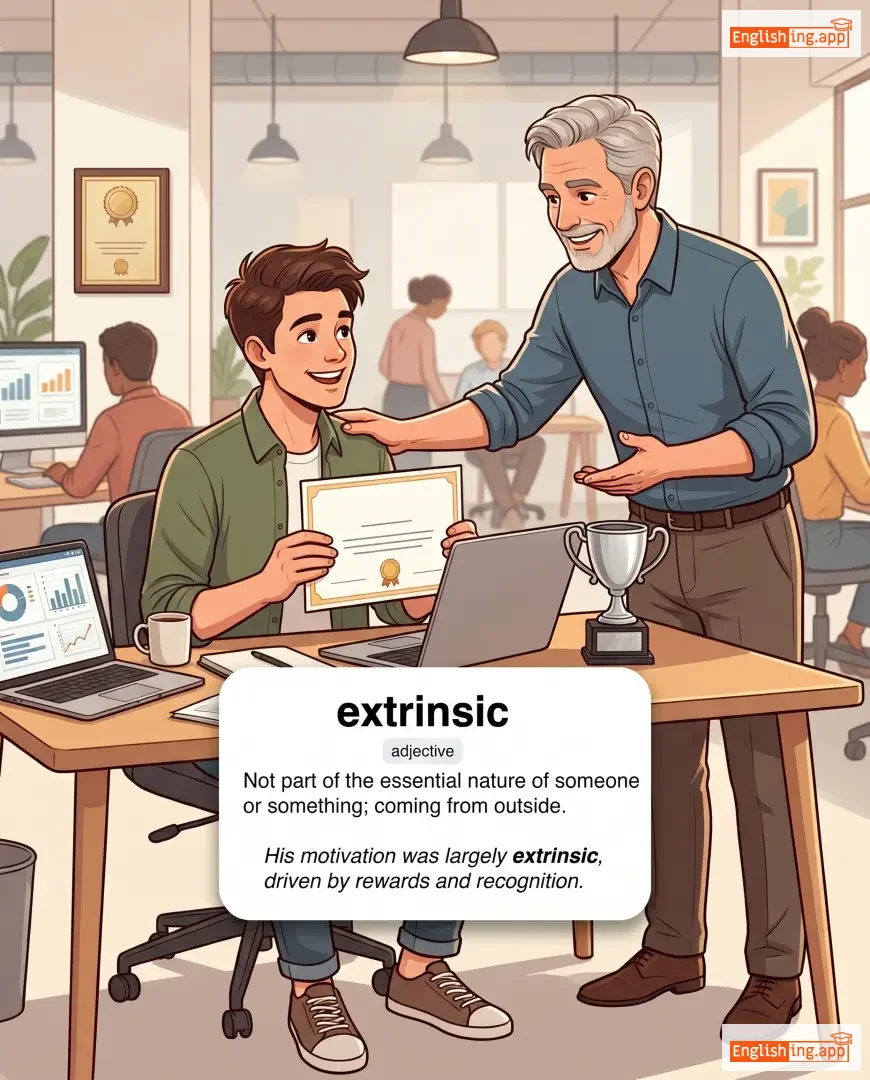
extrinsic definition card — visual illustration of the meaning
adjective
/ɛkˈstrɪnzɪk/
外的 (gaiteki)

Not part of the essential nature of someone or something; coming from outside.

"His motivation was largely extrinsic, driven by rewards and recognition."

"彼の動機は主に外的なもので、報酬や認識によって駆動されていました。" (Kare no dōki wa omoni gaiteki na mono de, hōshū ya ninshiki ni yotte kudō sarete imashita.)
noun
/ˈɛkstrəˌvɜːrt/
外向的な人 (gaikōteki na hito)

a person who is outgoing, sociable, and energized by being around other people

"As an extrovert, she enjoys meeting new people at social events."

"外向的な人として、彼女は社交的なイベントで新しい人々と出会うのが好きです。" (Gaikōteki na hito to shite, kanojo wa shakōteki na ibento de atarashī hitobito to deau no ga suki desu.)
verb
/ɪkˈstruːd/
押し出す (oshidasu)

to force something out through a small opening; to shape by pushing material through a mold

"The factory extrudes plastic pipes using modern machines."

"工場は最新の機械を使用してプラスチック管を押し出します。" (Kōjō wa saishin no kikai o shiyō shite purasutikku-kan o oshidashimasu.)
noun
/ɪɡˈzuːbərəns/
活力 (katsuryoku)

the quality of being full of energy, excitement, and cheerfulness

"Her exuberance made the whole team feel motivated."

"彼女の活力はチーム全体をやる気にさせた。" (Kanojo no katsuryoku wa chīmu zentai o yaruki ni saseta.)
adjective
/ɪɡˈzuːbərənt/
興奮した (kōfun shita)

full of energy, excitement, and cheerfulness

"The children were exuberant after winning the game."

"子供たちはゲームに勝った後、興奮していました。" (Kodomotachi wa gēmu ni katta ato, kōfun shite imashita.)
verb
/ɪɡˈzuːd/
放つ (hanatsu)

to display a quality strongly and openly; to release a liquid or smell slowly

"He exudes confidence whenever he speaks in public."

"彼は公共の場で話すとき、自信を放っています。" (Kare wa kōkyō no ba de hanasu toki, jishin o hanatte imasu.)
verb
/ɪɡˈzʌlt/
歓喜する (kanki suru)

to show or feel great joy, often as a result of success

"The fans exulted after their team won the championship."
"ファンたちはチームが優勝した後、歓喜しました。" (Fantachi wa chiimu ga yuushou shita ato, kanki shimashita.)
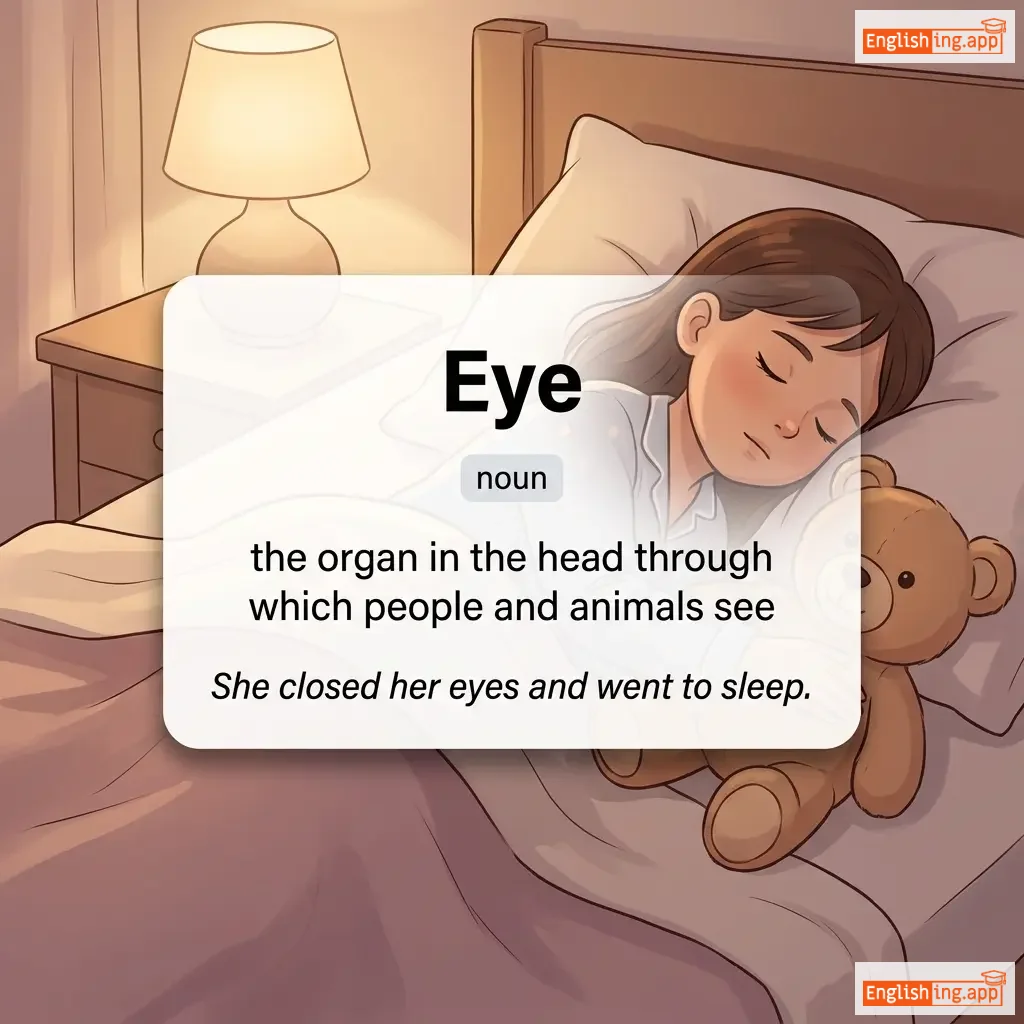
Eye definition card — visual illustration of the meaning
noun
/aɪ/
(me)

the organ in the head through which people and animals see

"She closed her eyes and went to sleep."

"彼女は目を閉じて、寝ました。" (Kanojo wa me o tojite, nemashita.)
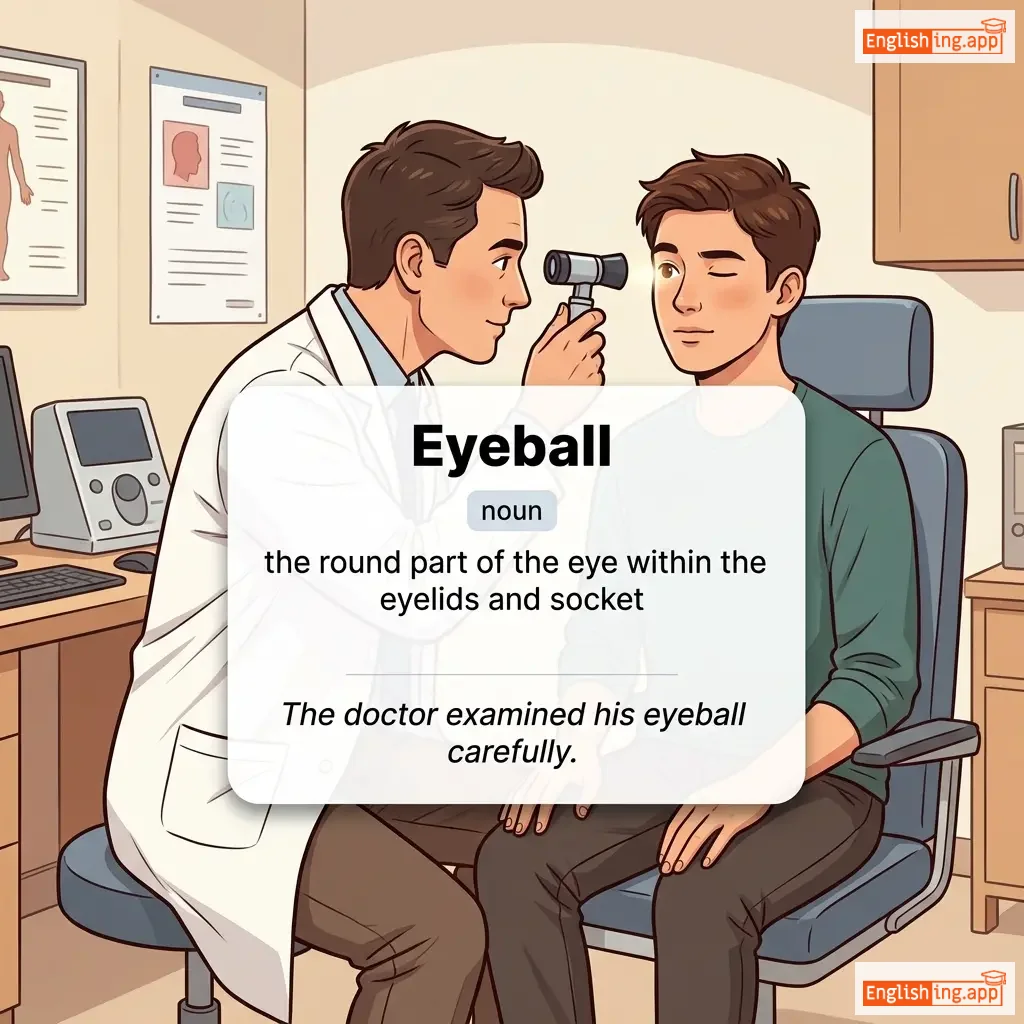
Eyeball definition card — visual illustration of the meaning
noun
/ˈaɪ.bɔːl/
眼球 (gankyū)

the round part of the eye within the eyelids and socket

"The doctor examined his eyeball carefully."
"医者は彼のアイボールを注意深く調べました。" (Isha wa kare no aibōru o chūibukaku shirabemashita.)
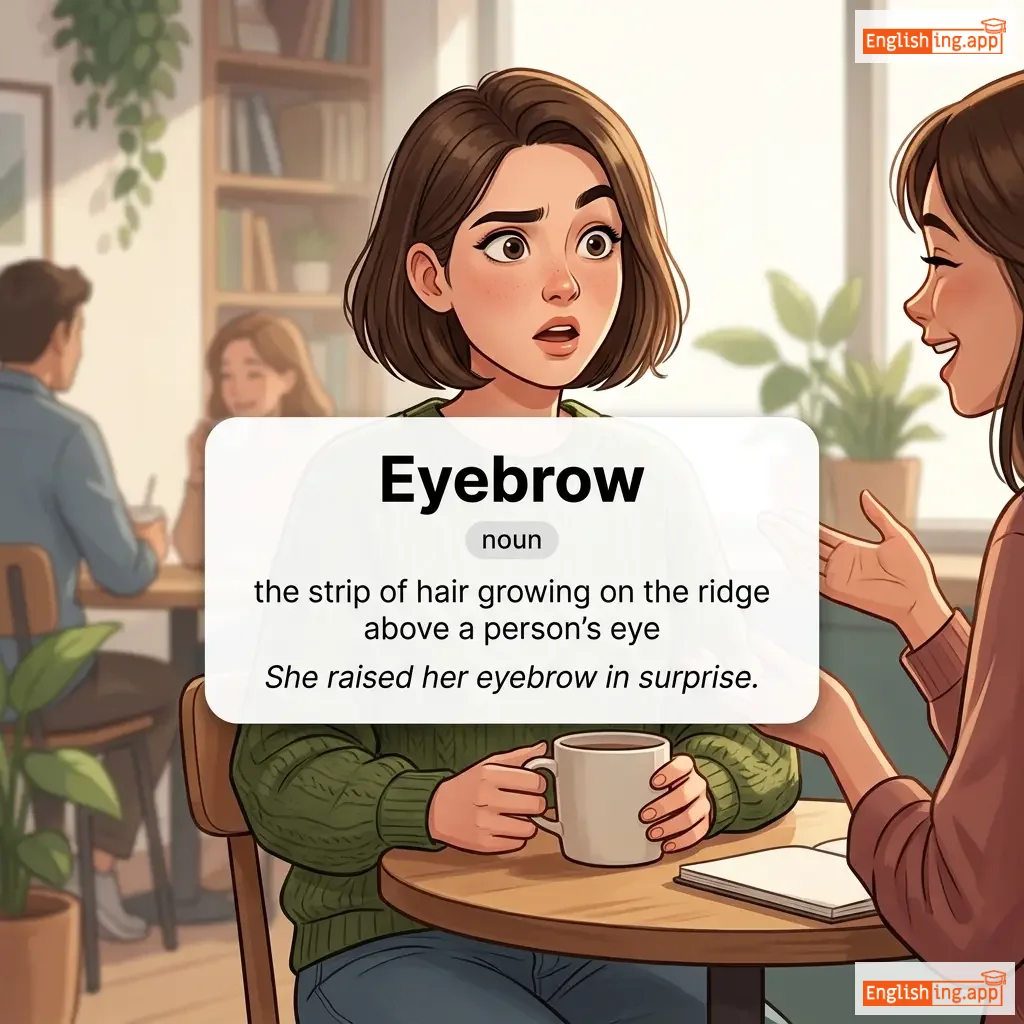
Eyebrow definition card — visual illustration of the meaning
noun
/ˈaɪbraʊ/
眉毛 (mayuge)

the strip of hair growing on the ridge above a person's eye

"She raised her eyebrow in surprise."

"彼女は驚いて眉毛を上げた。" (Kanojo wa odoroite mayuge o ageta.)
Eyelid definition card — visual illustration of the meaning
noun
/ˈaɪ.lɪd/
まぶた (mabuta)

either of the upper or lower folds of skin that cover the eye when closed

"Her eyelids felt heavy with sleep."

"彼女のまぶたは眠気で重く感じた。" (Kanojo no mabuta wa nemuke de omoku kanjita.)
noun
/ˈaɪ.saɪt/
視力 (shiryoku)

the ability to see; vision

"Regular eye checkups are important for maintaining good eyesight."

"定期的な目の検査は良い視力を維持するために重要です。" (Teikitekina me no kensa wa yoi shiryoku o iji suru tame ni juuyou desu.)
noun
/ˈaɪ.sɔːr/
目障りなもの; 不快な視覚効果 (mezawari na mono; fukai na shikaku kōka)

something that is very ugly and unpleasant to look at

"The abandoned building has become an eyesore in the neighborhood."

"放置された建物は近所の目障りになっています。" (Hōchi sareta tatemono wa kinjo no mezawari ni natteimasu.)
noun
/ˈaɪ.wɪt.nəs/
目撃者 (mokugekisha)

a person who has seen something happen and can give evidence about it

"The police interviewed several eyewitnesses to the accident."

"警察は事故の目撃者にインタビューを行いました。" (Keisatsu wa jiko no mokugekisha ni intabyū wo okonaimashita.)
noun
/ˈɪəri/
ワシの巣 (washi no su)

the nest of a bird of prey, such as an eagle, typically built high on a cliff or tree

"The eagle’s eyrie was perched high on the mountain cliff."

"ワシの巣は山の崖の頂上にありました。" (Washi no su wa yama no gake no choujou ni arimashita.)
noun
/ˈɪəri/
猛禽の巣 (mōkin no su)

an alternative spelling of eyrie; a nest of a bird of prey

"The falcon guarded its eyry fiercely."

"隼はその巣を激しく守った。" (Hayabusa wa sono su o hageshiku mamotta.)
noun
/ˈfeɪbəl/
寓話 (yūwa)

a short story, typically featuring animals as characters, that conveys a moral lesson

"Aesop’s fables are famous for teaching valuable lessons through simple stories."

"イソップの寓話は、簡単な物語を通して貴重な教訓を教えることで有名です。" (Isoppu no yūwa wa, kantan na monogatari o tōshite kichō na kyōkun o oshieru koto de yūmei desu.)
noun
/ˈfæbrɪk/
布地 (nuno)

Cloth or material produced by weaving or knitting fibers.

"The tailor used silk fabric to make the dress."

"仕立て屋はドレスを作るために絹の布地を使いました。" (Shitateya wa doresu o tsukuru tame ni kinu no nuno o tsukaimashita.)
verb
/ˈfæbrɪkeɪt/
作り上げる (tsukuriageru)

to invent or concoct something, often with the intent to deceive; or to construct or manufacture

"The witness fabricated his testimony to protect himself."

"証人は自分を守るために証言をでっち上げました。" (Shounin wa jibun wo mamoru tame ni shougen wo detchiagemashita.)
fabrication definition card — visual illustration of the meaning
noun
/ˌfæb.rɪˈkeɪ.ʃən/
捏造; 嘘; 虚構 (netsuzo; uso; kyoko)

something that is made up or invented; a lie or false story

"The journalist was fired for publishing fabrications instead of facts."

"記者は事実の代わりに捏造を公表したため解雇されました。" (Kisha wa jijitsu no kawari ni netsuzo o kohyo shita tame kaiko saremashita.)
adjective
/ˈfæbjələs/
素晴らしい (subarashii)

Extremely good or wonderful; almost unbelievable

"She looked fabulous in her new dress."

"彼女は新しいドレスで素晴らしく見えた。" (Kanojo wa atarashī doresu de subarashiku mieta.)