词汇表

英语词汇词典 | 单词含义、定义和示例

adjective
/ɪkˈstɛnjueɪtɪŋ/
减轻的 (jiǎnqīng de)

serving to make a fault or an offense seem less serious

"She asked for leniency due to extenuating circumstances."

"她因减轻的情况请求宽恕。" (Tā yīn jiǎnqīng de qíngkuàng qǐngqiú kuānshù.)
noun/adjective
/ɪkˈstɪəriər/
外部部分 (wàibù bùfen)

the outer surface or part of something; relating to the outside

"The exterior of the house was painted white."

"房子的外部部分被刷成了白色。" (fángzi de wàibù bùfen bèi shuā chéng le báisè.)
adjective
/ɪkˈstɜrnəl/
外部的 (wàibù de)

situated on or relating to the outside of something; coming from outside

"The external factors affected the company's growth."
"外部因素影响了公司的增长。" (Wàibù yīnsù yǐngxiǎngle gōngsī de zēngzhǎng.)
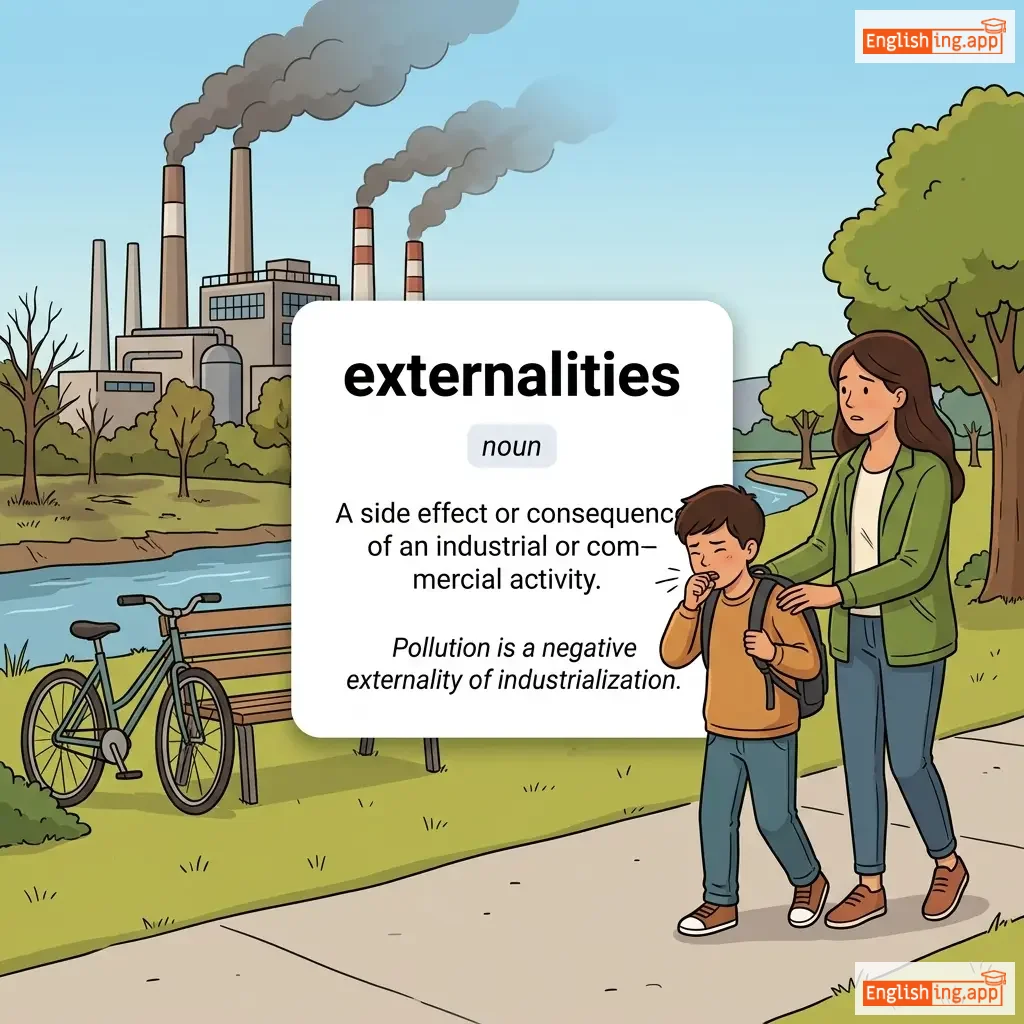
externalities definition card — visual illustration of the meaning
noun
ˌɛkstərˈnælɪtiz
外部性 (wàibùxìng)

A side effect or consequence of an industrial or commercial activity.

"Pollution is a negative externality of industrialization."

"污染是工业化的负外部性。" (Wūrǎn shì gōngyè huà de fù wàibùxìng.)
adverb
/ɪkˈstɜrnəli/
外部地 (waibu de)

in a way that relates to the outer surface or outside appearance

"The building appeared externally modern, but inside it was quite old-fashioned."
"这栋建筑外部看起来很现代,但里面相当老式。" (Zhe dong jianzhu waibu kan qilai hen xiandai, dan limian xiangdang laoshi.)
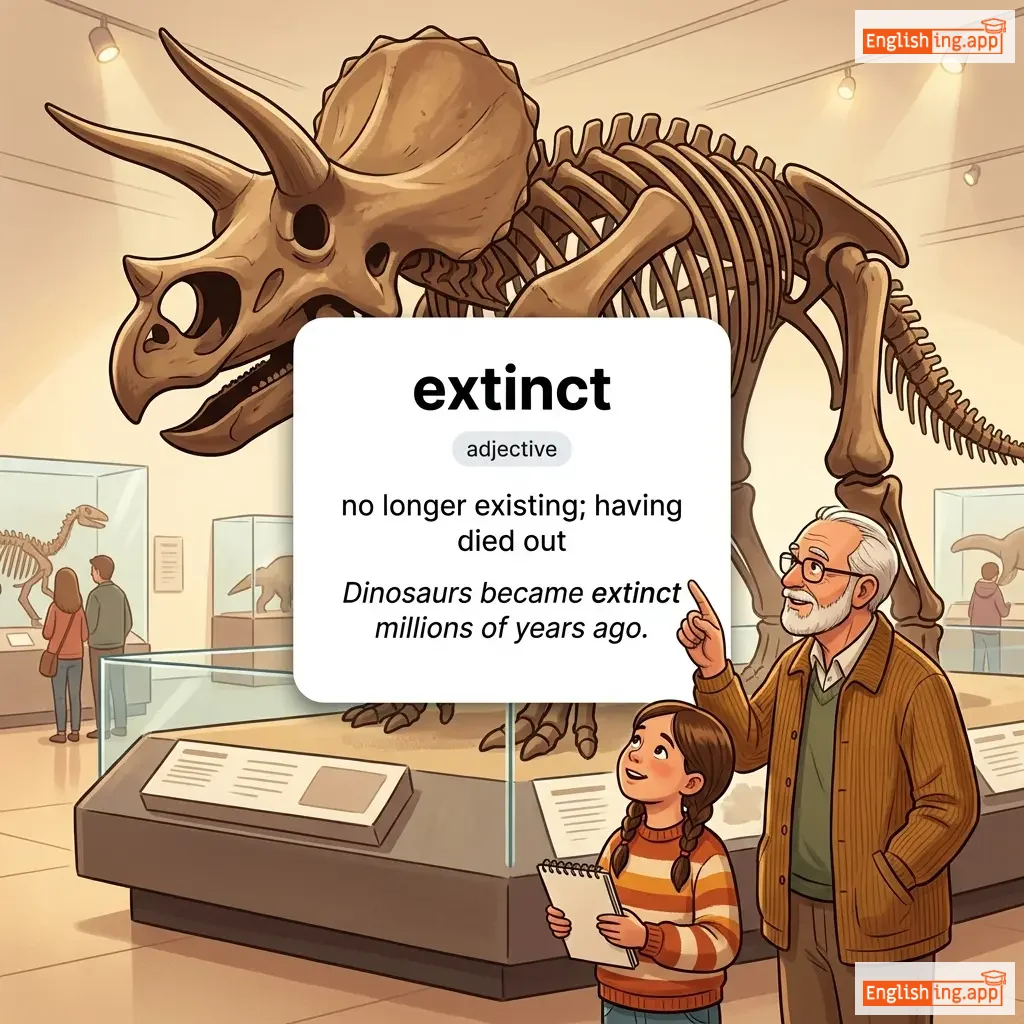
extinct definition card — visual illustration of the meaning
adjective
/ɪkˈstɪŋkt/
灭绝 (mie jue)

no longer existing; having died out

"Dinosaurs became extinct millions of years ago."

"恐龙在几百万年前灭绝了。" (Qiong long zai ji bai wan nian qian mie jue le.)
verb
/ɪkˈstɪŋ.ɡwɪʃ/
熄灭 (ximi)

to put out a fire, light, or to end something

"The firefighters managed to extinguish the blaze within an hour."
"消防员在一个小时内成功扑灭了大火。" (Xiaofangyuan zai yige xiaoshi nei chenggong pumie le dahuo.)
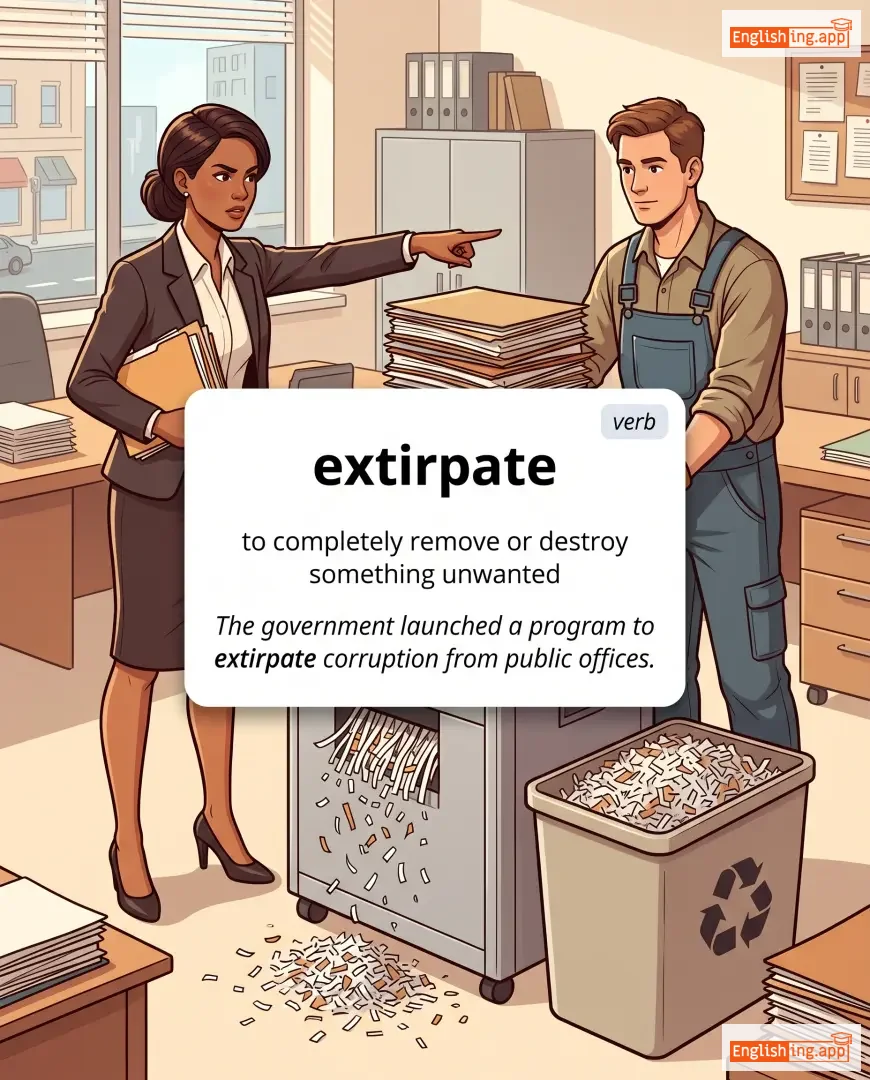
extirpate definition card — visual illustration of the meaning
verb
/ˈek.stər.peɪt/
根除 (gēnchú)

to completely remove or destroy something unwanted

"The government launched a program to extirpate corruption from public offices."

"政府启动了一个旨在清除公共部门腐败的项目。" (Zhèngfǔ qǐdòngle yīgè zhǐ zài qīngchú gōnggòng bùmén fǔbài de xiàngmù.)
verb
/ɪkˈstoʊl/
赞扬 (zanyang)

to praise enthusiastically and highly

"The teacher extolled the student's dedication and hard work."

"老师赞扬了学生的奉献和辛勤工作。" (Lǎoshī zànyángle xuéshēng de fèngxiàn hé xīnqín gōngzuò.)
verb
/ɪkˈstɔːrt/
勒索 (lèsuǒ)

to obtain something, especially money, by force, threats, or unfair means

"The gang attempted to extort money from local shopkeepers."

"这个团伙试图从当地店主那里勒索钱财。" (Zhège tuánhuǒ shìtú cóng dāngdì diànzhǔ nàlǐ lèsuǒ qiáncái.)
noun
/ɪkˈstɔːr.ʃən/
敲诈勒索 (qiāo zhà lè suǒ)

the practice of obtaining something, especially money, through force or threats

"The businessman was arrested for extortion after threatening his partner."
"商人因威胁其合作伙伴后被捕,罪名是敲诈勒索。" (Shāngrén yīn wēi xié qí hé zuò huǒ bàn hòu bèi bǔ, zuìmíng shì qiāo zhà lè suǒ.)
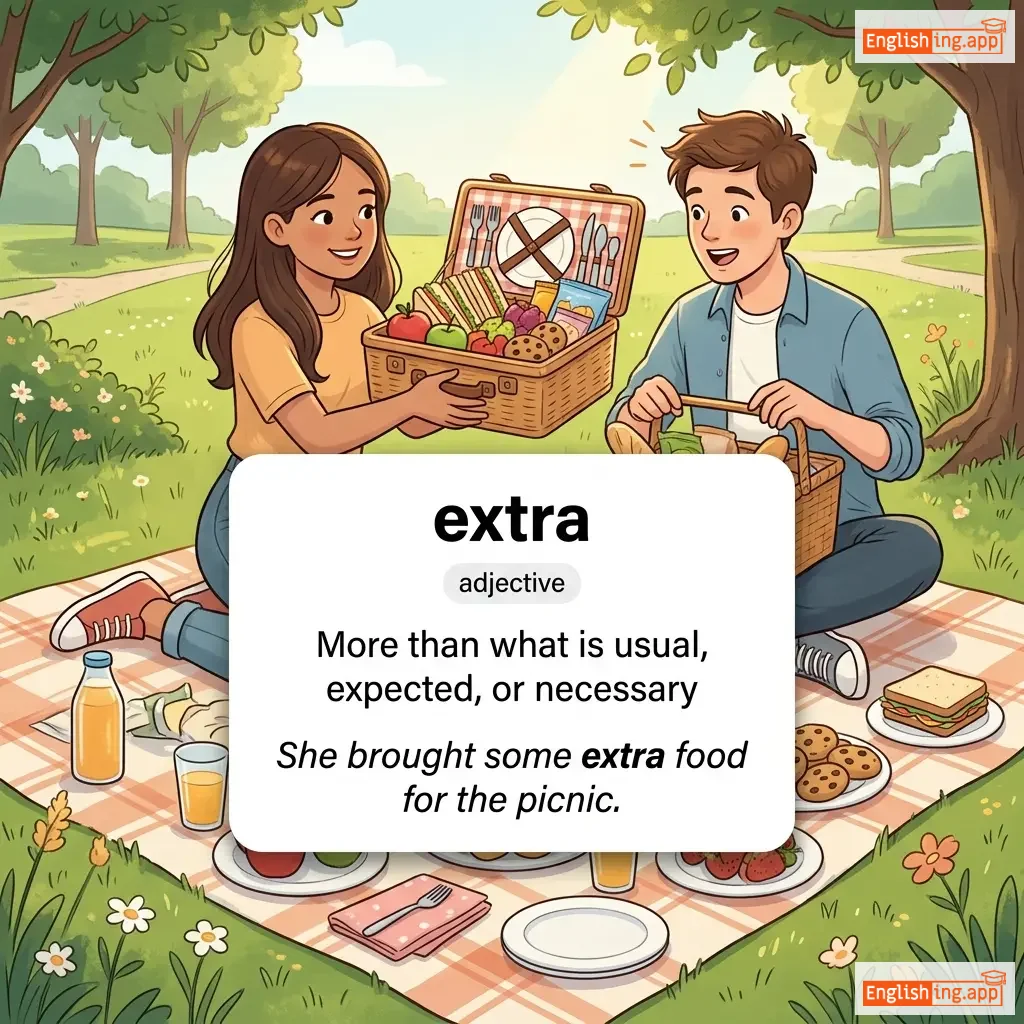
extra definition card — visual illustration of the meaning
adjective
/ˈɛkstrə/
额外的 (éwài de)

More than what is usual, expected, or necessary

"She brought some extra food for the picnic."

"她为野餐带来了额外的食物。" (Tā wèi yěcān dài lái le éwài de shíwù.)
extract definition card — visual illustration of the meaning
verb
/ɪkˈstrækt/
提取 (tíqǔ)

to remove or take out something, often with effort

"The dentist had to extract the damaged tooth."

"牙医不得不提取受损的牙齿。" (Yáyī bùdébù tíqǔ shòusǔn de yáchǐ.)
noun
/ɪkˈstrækʃən/
提取 (tíqǔ)

the act of removing something, especially by pulling it out

"The extraction of oil from the ground requires special equipment."

"从地下提取石油需要特殊的设备。" (Cóng dìxià tíqǔ shíyóu xūyào tèshū de shèbèi.)
verb
/ˈɛkstrəˌdaɪt/
引渡 (yǐn dù)

to hand over a person accused or convicted of a crime to another country or state

"The government agreed to extradite the fugitive to his home country."

"政府同意将逃犯引渡到他的祖国。" (Zhèngfǔ tóngyì jiāng táofàn yǐn dù dào tā de zǔguó.)
noun
/ˌɛkstrəˈdɪʃən/
引渡 (yǐn dù)

the official process of sending someone accused of a crime to another country or state

"The extradition of the suspect was delayed due to legal issues."

"由于法律问题,嫌疑人的引渡被延迟了。" (Yóuyú fǎlǜ wèntí, xiányí rén de yǐn dù bèi yánchí le.)
adjective
/ˌɛkstrəˌdʒuːˈdɪʃəl/
非司法的 (fei si fa de)

done outside the authority of the legal system or judicial process

"The activists condemned the extrajudicial killings."
"活动家谴责了非司法的谋杀。" (Huódòngjiā qiǎnzéle fēi sīfǎ de móushā.)
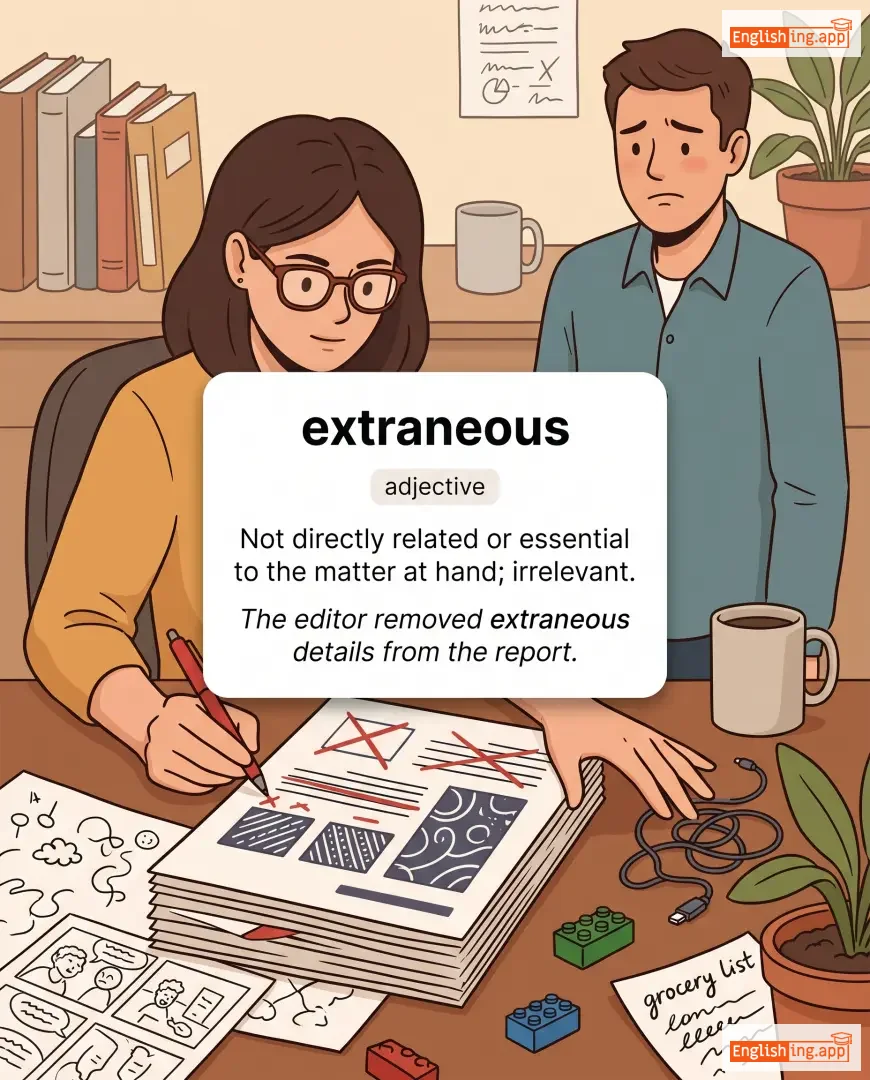
extraneous definition card — visual illustration of the meaning
adjective
/ɪkˈstreɪ.ni.əs/
无关 (wú guān)

Not directly related or essential to the matter at hand; irrelevant.

"The editor removed extraneous details from the report."

"编辑从报告中删除了无关的细节。" (Biānjí cóng bàogào zhōng shānchúle wúguān de xìjié.)
adjective
/ɪkˈstrɔːr.dəˌnɛr.i/
非凡 (feifan)

Very unusual, remarkable, or exceptional.

"She showed extraordinary courage during the crisis."
"她在危机中表现出非凡的勇气。" (Ta zai weiji zhong biaoxian chu feifan de yongqi.)
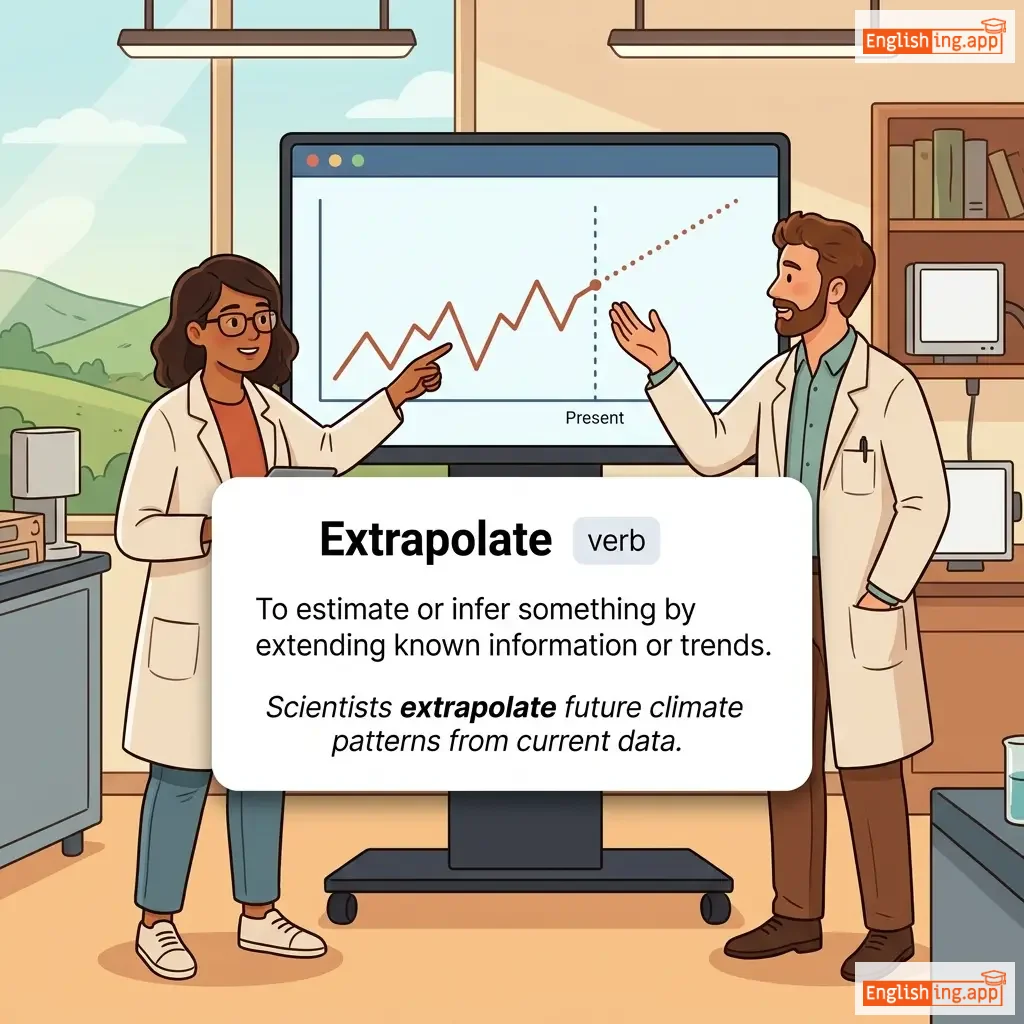
Extrapolate definition card — visual illustration of the meaning
verb
/ɪkˈstræp.əˌleɪt/
外推 (wàituī)

To estimate or infer something by extending known information or trends.

"Scientists extrapolate future climate patterns from current data."
"科学家从当前数据中外推未来的气候模式。" (Kēxuéjiā cóng dāngqián shùjù zhōng wàituī wèilái de qìhòu móshì.)
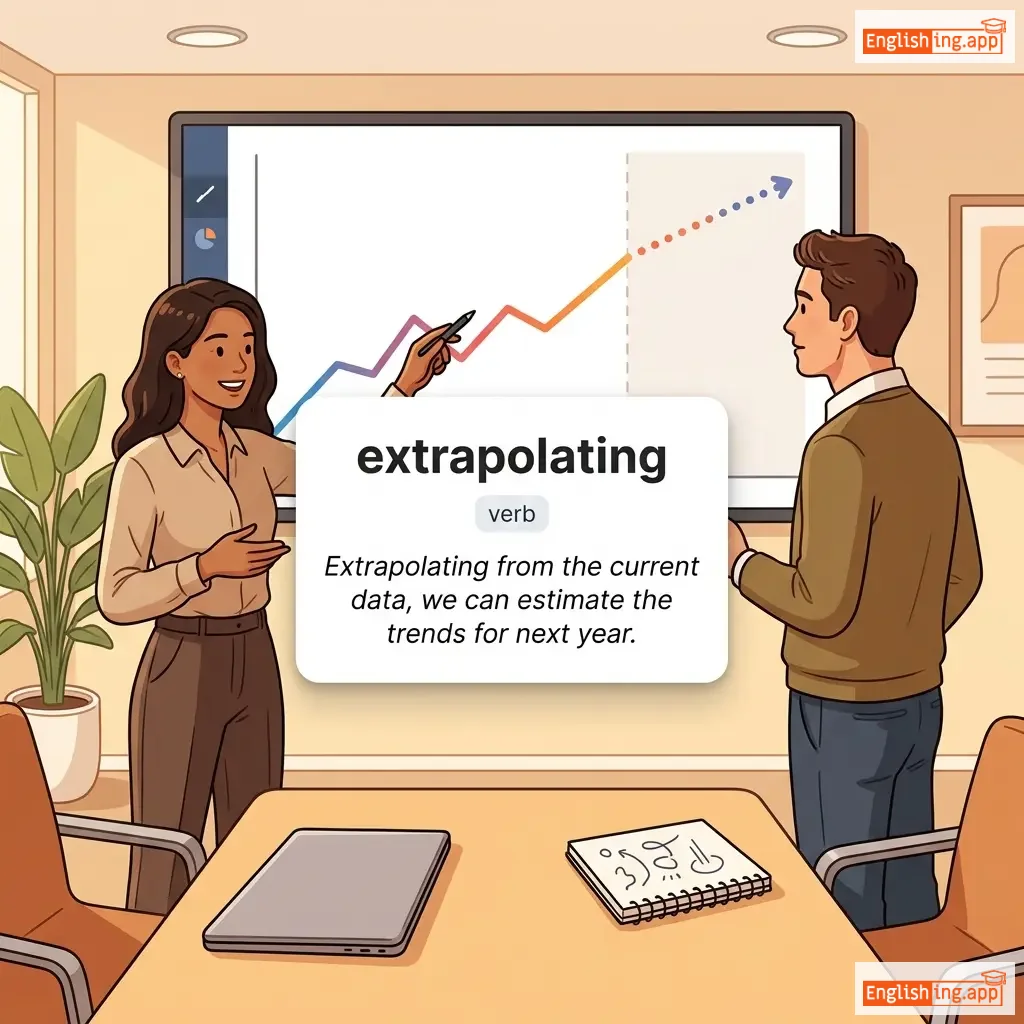
extrapolating definition card — visual illustration of the meaning
verb
/ɪkˈstræpəleɪtɪŋ/
推断 (tuīduàn)

Extend the application of (a method or conclusion) to an unknown situation by assuming that existing trends will continue.

"Extrapolating from the current data, we can estimate the trends for next year."

"根据当前数据进行推断,我们可以预测明年的趋势。" (Gēnjù dāngqián shùjù jìnxíng tuīduàn, wǒmen kěyǐ yùcè míngnián de qūshì.)
extrapolation definition card — visual illustration of the meaning
noun
/ɪkˌstræp.əˈleɪ.ʃən/
外推法 (wàituī fǎ)

The process of estimating or predicting something based on extending known information.

"The company's financial extrapolation suggests steady growth."

"该公司的财务外推法建议稳步增长。" (gāi gōngsī de cáiwù wàituī fǎ jiànyì wěnbù zēngzhǎng.)
noun
/ɪkˈstræv.ə.ɡəns/
奢侈 (shēchǐ)

Excessive spending or lack of restraint in using resources.

"His extravagance on luxury cars worried his family."

"他在豪车上的奢侈消费让他的家人担心。" (Tā zài háo chē shàng de shēchǐ xiāofèi ràng tā de jiārén dānxīn.)
adjective
/ɪkˈstrævəɡənt/
奢华的 (shē huá de)

Spending or using more than is necessary; excessively elaborate or luxurious.

"She wore an extravagant dress to the party."

"她穿着一件奢华的裙子去参加聚会。" (Tā chuānzhuó yī jiàn shē huá de qúnzi qù cānjiā jùhuì.)
extreme definition card — visual illustration of the meaning
adjective
/ɪkˈstriːm/
极端 (jíduān)

reaching a high or intense degree; very great or severe

"They went on an extreme adventure in the mountains."

"他们去山区进行了一次极限冒险。" (Tāmen qù shānqū jìnxíngle yīcì jíxiàn màoxiǎn.)
adverb
/ɪkˈstriːmli/
极其 (jíqí)

to a very high degree; very much

"The movie was extremely interesting."

"这部电影非常有趣。" (Zhè bù diànyǐng fēicháng yǒuqù.)
noun
/ɪkˈstriːmɪst/
极端分子 (jiduān fēnzǐ)

A person who holds extreme political or religious views and may act on them.

"The group was led by an extremist with radical ideas."

"这个小组由一个拥有激进思想的极端分子领导。" (Zhège xiǎozǔ yóu yīgè yǒngyǒu jījìn sīxiǎng de jíduān fēnzǐ lǐngdǎo.)
noun
/ɪkˈstrɛmɪti/
极限 (jixian)

The farthest point or limit of something; a severe or extreme condition.

"He was pushed to the extremity of his patience."

"他被推到了耐心的极限。" (Tā bèi tuī dào le nàixīn de jíxiàn.)
verb
/ˈɛkstrɪkeɪt/
解救 (jiějiù)

To free someone or something from a constraint or difficulty.

"The firefighters extricated the passengers from the wrecked car."

"消防员将乘客从翻车的汽车中解救出来。" (Xiāofángyuán jiāng chéngkè cóng fānchē de qìchē zhōng jiějiù chūlái.)
extrinsic definition card — visual illustration of the meaning
adjective
/ɛkˈstrɪnzɪk/
外在 (wàizài)

Not part of the essential nature of someone or something; coming from outside.

"His motivation was largely extrinsic, driven by rewards and recognition."

"他的动力主要是外在的,受到奖励和认可的驱动。" (Tā de dònglì zhǔyào shì wàizài de, shòudào jiǎnglì hé rènkě de qūdòng.)
noun
/ˈɛkstrəˌvɜːrt/
外向者 (wàixiàng zhě)

a person who is outgoing, sociable, and energized by being around other people

"As an extrovert, she enjoys meeting new people at social events."

"作为一个外向者,她喜欢在社交活动中认识新朋友。" (zuòwéi yí gè wàixiàng zhě, tā xǐhuān zài shèjiāo huódòng zhōng rènshi xīn péngyǒu.)
verb
/ɪkˈstruːd/
挤出 (jichu)

to force something out through a small opening; to shape by pushing material through a mold

"The factory extrudes plastic pipes using modern machines."

"工厂使用现代机器挤出塑料管。" (Gongchang shiyong xiandai jiqi jichu su liao guan.)
noun
/ɪɡˈzuːbərəns/
兴奋 (xīngfèn)

the quality of being full of energy, excitement, and cheerfulness

"Her exuberance made the whole team feel motivated."

"她的兴奋让整个团队感到鼓舞。" (Tā de xīngfèn ràng zhěnggè tuánduì gǎndào gǔwǔ.)
adjective
/ɪɡˈzuːbərənt/
欣喜若狂 (xīnxǐ ruò kuáng)

full of energy, excitement, and cheerfulness

"The children were exuberant after winning the game."

"孩子们在赢得比赛后欣喜若狂。" (Háizimen zài yíngdé bǐsài hòu xīnxǐ ruò kuáng.)
verb
/ɪɡˈzuːd/
流露 (liú lù)

to display a quality strongly and openly; to release a liquid or smell slowly

"He exudes confidence whenever he speaks in public."

"他每次在公众场合讲话时都会散发出自信。" (Tā měi cì zài gōng zhòng chǎng hé jiǎng huà shí dōu huì sàn fā chū zì xìn.)
verb
/ɪɡˈzʌlt/
欢呼 (huān hū)

to show or feel great joy, often as a result of success

"The fans exulted after their team won the championship."

"球迷们在他们的球队赢得冠军后欢呼雀跃。" (Qiúmí men zài tāmen de qiúduì yíngdé guànjūn hòu huān hū què yuè.)
👁️

Eye (aī)

noun
/aɪ/
眼睛 (yanjing)

the organ in the head through which people and animals see

"She closed her eyes and went to sleep."

"她闭上了眼睛,去睡觉了。" (Ta bì shàngle yǎnjīng, qù shuìjiàole.)
noun
/ˈaɪ.bɔːl/
眼球 (yǎnqiú)

the round part of the eye within the eyelids and socket

"The doctor examined his eyeball carefully."

"医生仔细检查了他的眼球。" (Yīshēng zǐxì jiǎnchále tā de yǎnqiú.)
noun
/ˈaɪbraʊ/
眉毛 (méimáo)

the strip of hair growing on the ridge above a person's eye

"She raised her eyebrow in surprise."

"她惊讶地扬起了眉毛。" (Tā jīngyà de yáng qǐle méimáo.)
noun
/ˈaɪ.lɪd/
眼皮 (yanpi)

either of the upper or lower folds of skin that cover the eye when closed

"Her eyelids felt heavy with sleep."

"她的眼皮因睡意而感到沉重。" (Tā de yǎnpí yīn shuìyì ér gǎndào chénzhòng.)
noun
/ˈaɪ.saɪt/
视力 (shili)

the ability to see; vision

"Regular eye checkups are important for maintaining good eyesight."

"定期眼部检查对于保持良好的视力至关重要。" (Dingqi yanbu jiancha duiyu baochi lianghao de shili zhiguai zhongyao.)
noun
/ˈaɪ.sɔːr/
令人不悦的视觉效果; 恶心的景象 (lìng rén bù yuè de shìjué xiàoguǒ; èxīn de jǐngxiàng)

something that is very ugly and unpleasant to look at

"The abandoned building has become an eyesore in the neighborhood."

"废弃的建筑已成为社区中的眼中钉。" (Fèiqì de jiànzhú yǐ chéngwéi shèqū zhōng de yǎnzhōng dīng.)
👁️‍🗨️

Eyewitness (ai-wei-tnes)

noun
/ˈaɪ.wɪt.nəs/
目击者 (muji zhe)

a person who has seen something happen and can give evidence about it

"The police interviewed several eyewitnesses to the accident."

"警方采访了多位事故的目击者。" (jing fang cai fang le duo wei shi gu de mu ji zhe.)
noun
/ˈɪəri/
鹰巢 (ying chao)

the nest of a bird of prey, such as an eagle, typically built high on a cliff or tree

"The eagle’s eyrie was perched high on the mountain cliff."

"鹰巢位于山崖的顶端。" (Ying chao wei yu shan ya de ding duan.)
noun
/ˈɪəri/
猛禽巢 (měngqín cháo)

an alternative spelling of eyrie; a nest of a bird of prey

"The falcon guarded its eyry fiercely."

"猎鹰猛烈地守护着它的巢。" (Lièyīng měngliè de shǒuhùzhe tā de cháo.)
noun
/ˈfeɪbəl/
寓言 (yùyán)

a short story, typically featuring animals as characters, that conveys a moral lesson

"Aesop’s fables are famous for teaching valuable lessons through simple stories."

"伊索的寓言通过简单的故事传授宝贵的教训。" (Yīsuǒ de yùyán tōngguò jiǎnduǎn de gùshì chuándá bǎoguì de jiàoxùn.)
noun
/ˈfæbrɪk/
布料 (bùliào)

Cloth or material produced by weaving or knitting fibers.

"The tailor used silk fabric to make the dress."

"裁缝用丝绸布料做了这件衣服。" (Cáifeng yòng sīchóu bùliào zuòle zhè jiàn yīfú.)
verb
/ˈfæbrɪkeɪt/
编造 (bianzao)

to invent or concoct something, often with the intent to deceive; or to construct or manufacture

"The witness fabricated his testimony to protect himself."
"证人为了保护自己而编造了他的证词。" (zhengren weile baohu ziji er bianzao le tade zhengci.)
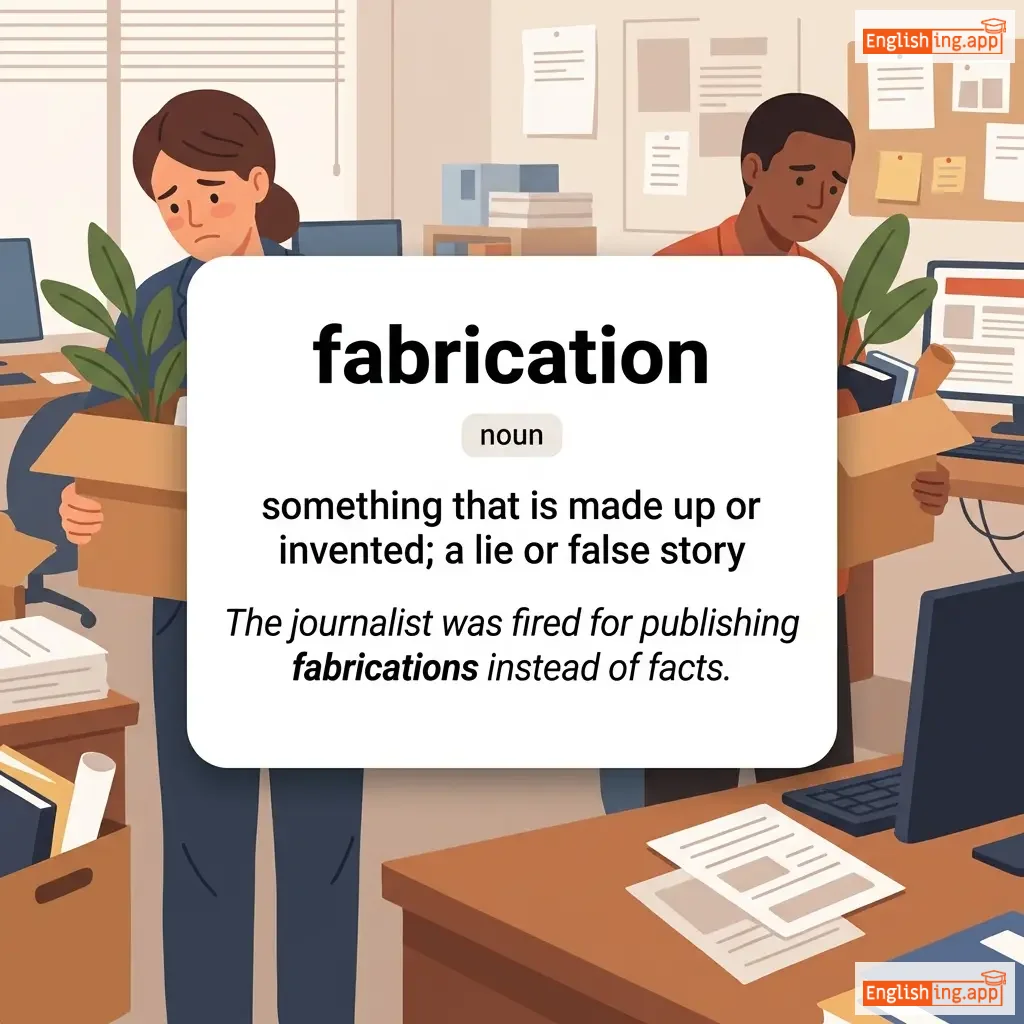
fabrication definition card — visual illustration of the meaning
noun
/ˌfæb.rɪˈkeɪ.ʃən/
伪造; 谎言; 捏造 (weizao; huangyan; niezao)

something that is made up or invented; a lie or false story

"The journalist was fired for publishing fabrications instead of facts."

"记者因发布伪造的内容而被解雇,而不是事实。" (Jizhe yin fabu weizao de neirong er bei jiegu, er bushi shishi.)
adjective
/ˈfæbjələs/
极好的 (jí hǎo de)

Extremely good or wonderful; almost unbelievable

"She looked fabulous in her new dress."

"她穿着新裙子看起来极好。" (Tā chuānzhuó xīn qúnzi kàn qǐlái jí hǎo.)