词汇表

英语词汇词典 | 单词含义、定义和示例

noun
/ɪˈfɛmɪnəsi/
女性化 (nǚxìnghuà)

The quality of showing traits traditionally associated with women, such as delicacy or softness.

"In ancient times, effeminacy was often criticized as a sign of weakness."

"在古代,女性化常常被批评为软弱的标志。" (Zài gǔdài, nǚxìnghuà chángcháng bèi pīpíng wéi ruǎnruò de biāozhì.)
adjective
/ɪˈfɛmɪnət/
女性化 (nǚxìnghuà)

Having traits, tastes, or habits traditionally considered feminine, often used negatively for men.

"The critics described him as effeminate due to his gentle manner."

"评论家因其温和的举止而将他描述为女性化。" (Pínglùn jiā yīn qí wēnhé de jǔzhǐ ér jiāng tā miáoshù wéi nǚxìng huà.)
verb
/ˌɛfəˈvɛs/
起泡 (qipao)

To give off bubbles of gas; to show excitement, liveliness, or enthusiasm.

"The soda began to effervesce as soon as it was opened."
"汽水打开后开始起泡。" (Qishui dakaile kaishi qipao.)
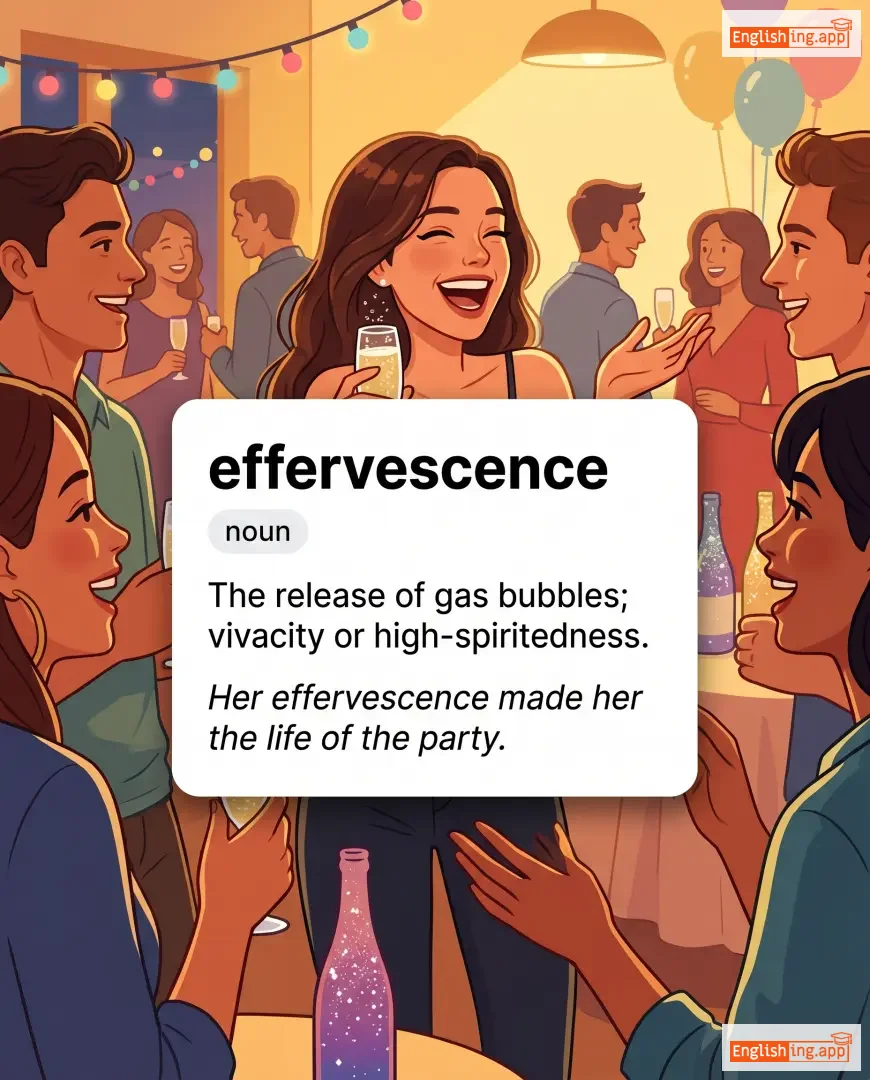
effervescence definition card — visual illustration of the meaning
noun
/ˌɛfəˈvɛsəns/
泡沫 (pàomò)

The release of gas bubbles; vivacity or high-spiritedness.

"Her effervescence made her the life of the party."

"她的泡沫让她成为派对的灵魂。" (Tā de pàomò ràng tā chéngwéi pàiduì de línghún.)
adjective
/ˌɛfəˈvɛsənt/
充满活力 (chongman huoli)

Giving off bubbles; lively, enthusiastic, and full of energy.

"She had an effervescent personality that brightened every room."

"她有着充满活力的个性,照亮了每个房间。" (Ta youzhe chongman huoli de gexing, zhaoliang le mei ge fangjian.)
effete definition card — visual illustration of the meaning
adjective
/ɪˈfiːt/
虚弱 (xuruo)

Lacking vitality, strength, or effectiveness; weak and overrefined.

"The empire became effete after centuries of indulgence."

"帝国在几个世纪的纵容之后变得虚弱。" (Diguo zai ji ge shiji de zhongrong zhihou biande xuruo.)
efficacious definition card — visual illustration of the meaning
adjective
/ˌɛfɪˈkeɪʃəs/
有效 (youxiao)

Effective in producing the desired result.

"The medicine proved efficacious in treating the disease."
"这药物在治疗疾病方面证明是有效的。" (Zhe yaowu zai zhiliao jibing fangmian zhengming shi youxiao de.)
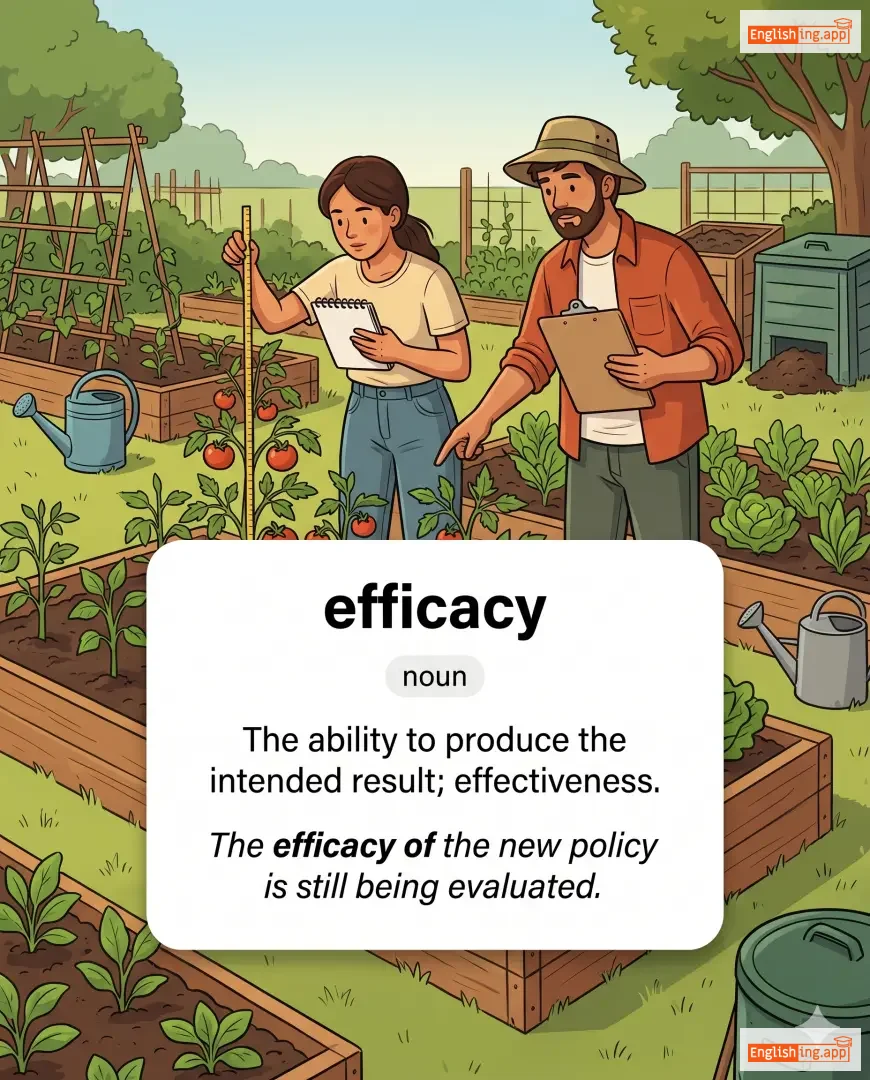
efficacy definition card — visual illustration of the meaning
noun
/ˈɛfɪkəsi/
效能 (xiaoneng)

The ability to produce the intended result; effectiveness.

"The efficacy of the new policy is still being evaluated."
"新政策的效能仍在评估中。" (Xin zhengce de xiaoneng reng zai pinggu zhong.)
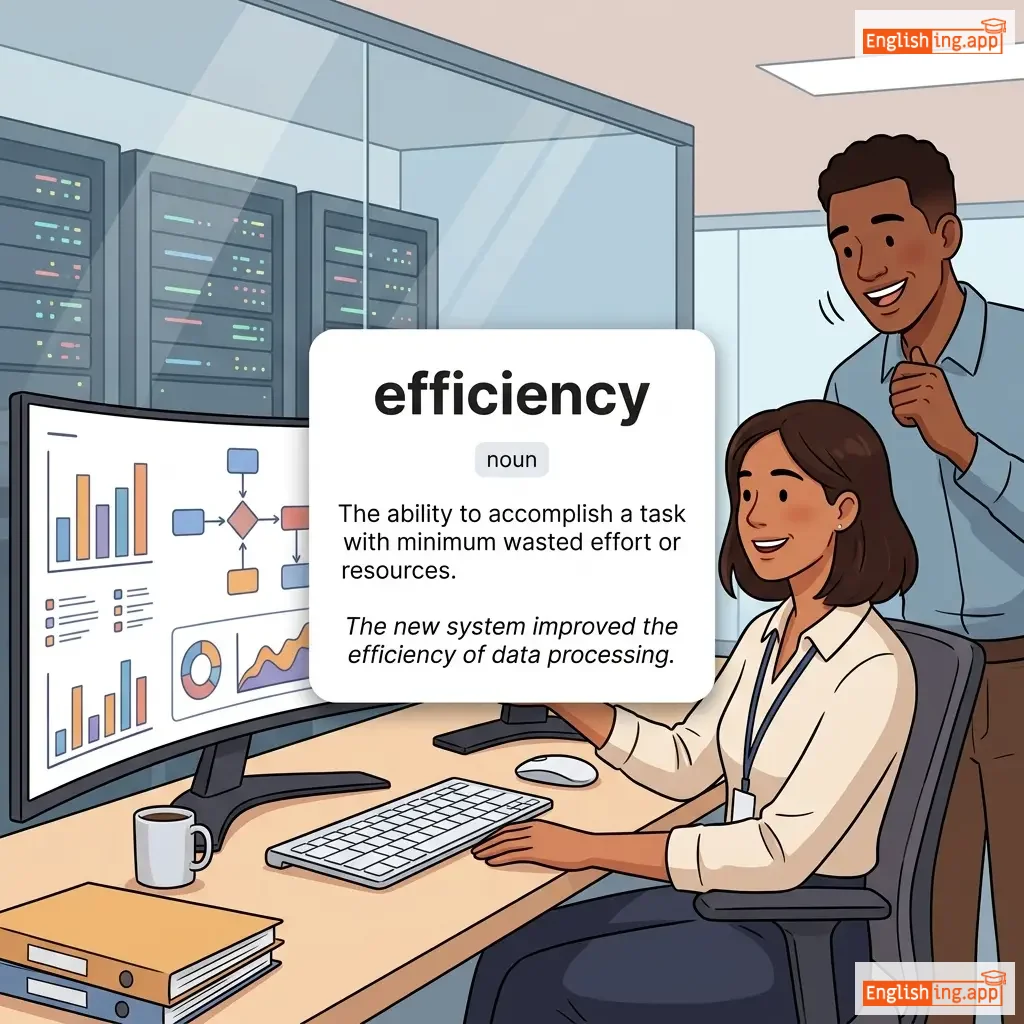
efficiency definition card — visual illustration of the meaning
noun
/ɪˈfɪʃənsi/
高效能 (gaoxiao neng)

The ability to accomplish a task with minimum wasted effort or resources.

"The new system improved the efficiency of data processing."

"新系统提高了数据处理的高效能。" (Xin xitong tigao le shuju chuli de gaoxiaoneng.)
efficient definition card — visual illustration of the meaning
adjective
/ɪˈfɪʃənt/
高效 (gaoxia)

Working in a well-organized and productive way, without wasting time or effort.

"She is an efficient manager who gets things done quickly."

"她是一个高效的经理,能迅速完成任务。" (Tā shì yīgè gāoxiào de jīnglǐ, néng xùnsù wánchéng rènwù.)
adverb
/ɪˈfɪʃəntli/
高效地 (gaoxiaode)

in a way that achieves maximum productivity with minimum wasted effort or expense

"She managed to complete the task efficiently within the deadline."

"她在最后期限内高效地完成了任务。" (Ta zai zuixhou qixian nei gaoxiaode wancheng le renwu.)
noun
/ˈɛfɪdʒi/
肖像 (xiaoxiang)

a sculpture or model of a person, often made to be destroyed in protest or anger

"The protesters burned an effigy of the corrupt politician."

"抗议者烧毁了腐败政治家的肖像。" (Kangyizhe shaohui le fubai zhengzhijia de xiaoxiang.)
noun
/ˌɛfləˈrɛsəns/
开花 (kaihua)

the process of flowering or reaching an optimal stage of development

"The garden was at the peak of its efflorescence in spring."

"花园在春天达到了它的开花巅峰。" (Huayuan zai chuntian dadao le ta de kaihua dianfeng.)
adjective
/ˌɛfləˈrɛsənt/
盛开的 (shèngkāi de)

in the process of blooming or flourishing

"The efflorescent trees made the park look beautiful."
"盛开的树木让公园看起来很美丽。" (Shèngkāi de shùmù ràng gōngyuán kàn qǐlái hěn měilì.)
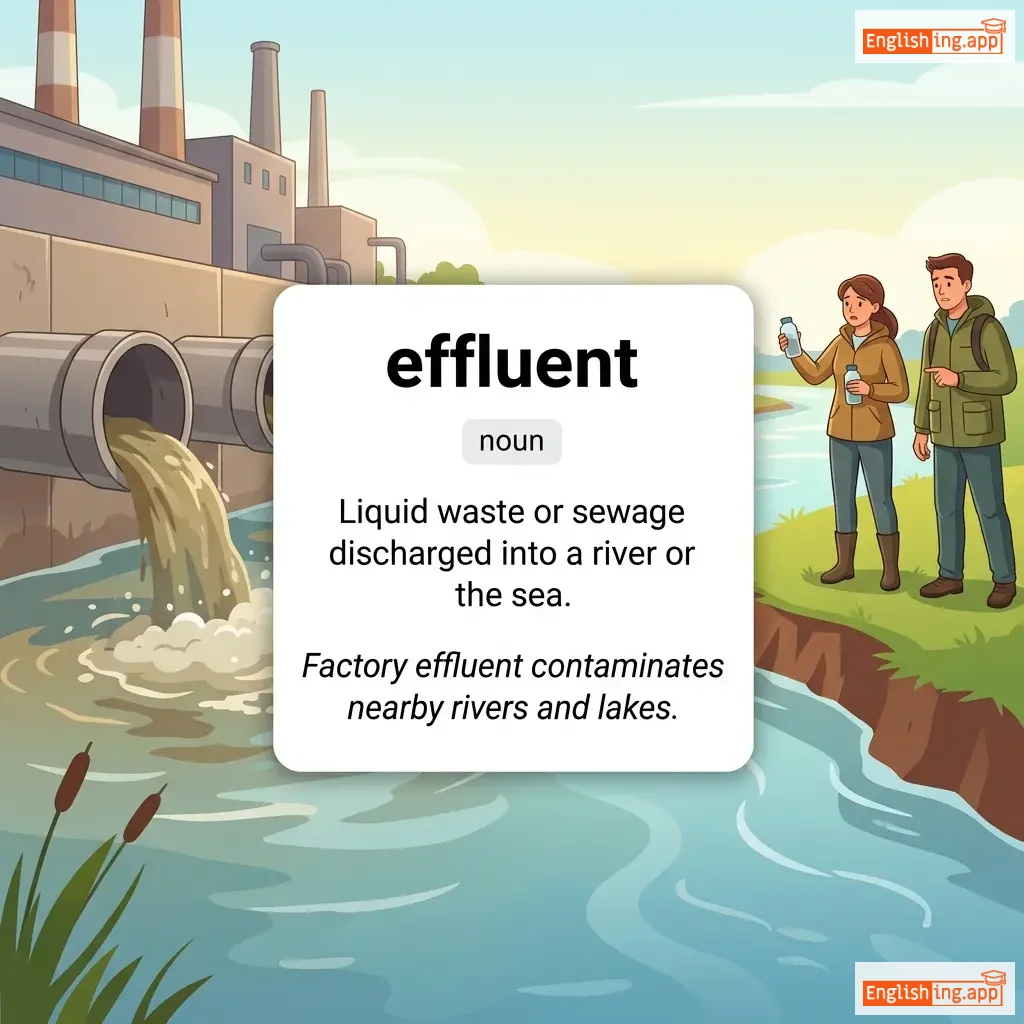
effluent definition card — visual illustration of the meaning
noun
ˈɛf.lu.ənt
废水或污染的液体 (feishui huo wuran de youti)

Liquid waste or sewage discharged into a river or the sea.

"Factory effluent contaminates nearby rivers and lakes."

"工厂废水污染附近的河流和湖泊。" (Gongchang feishui wuran fujin de heliu he hupo.)
noun
/ɪˈfluːviəm/
难闻的气味 (nánwén de qìwèi)

an unpleasant or harmful odor, secretion, or discharge

"The effluvium from the factory spread across the neighborhood."

"工厂的废气弥漫到整个社区。" (Gōngchǎng de fèiqì mímàn dào zhěnggè shèqū.)
Effort definition card — visual illustration of the meaning
noun
/ˈɛfərt/
努力 (nǔlì)

the use of physical or mental energy to do something; attempt

"He made a great effort to improve his English skills."
"他付出了巨大的努力来提高他的英语技能。" (Tā fùchūle jùdà de nǔlì lái tígāo tā de yīngyǔ jìnéng.)
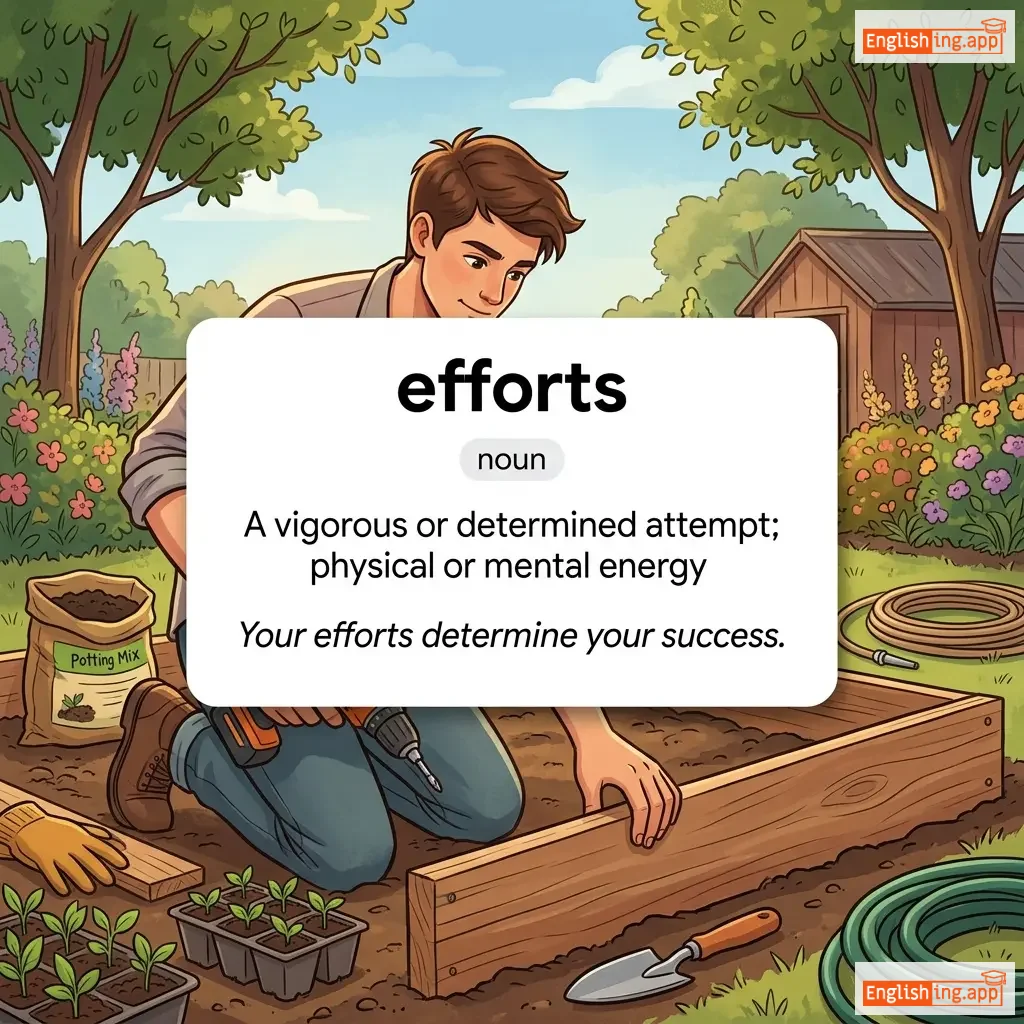
efforts definition card — visual illustration of the meaning
noun
ˈefərts
努力 (nuli)

A vigorous or determined attempt; physical or mental energy

"Your efforts determine your success."
"你的努力决定了你的成功。" (Nǐ de nǔlì juédìngle nǐ de chénggōng.)
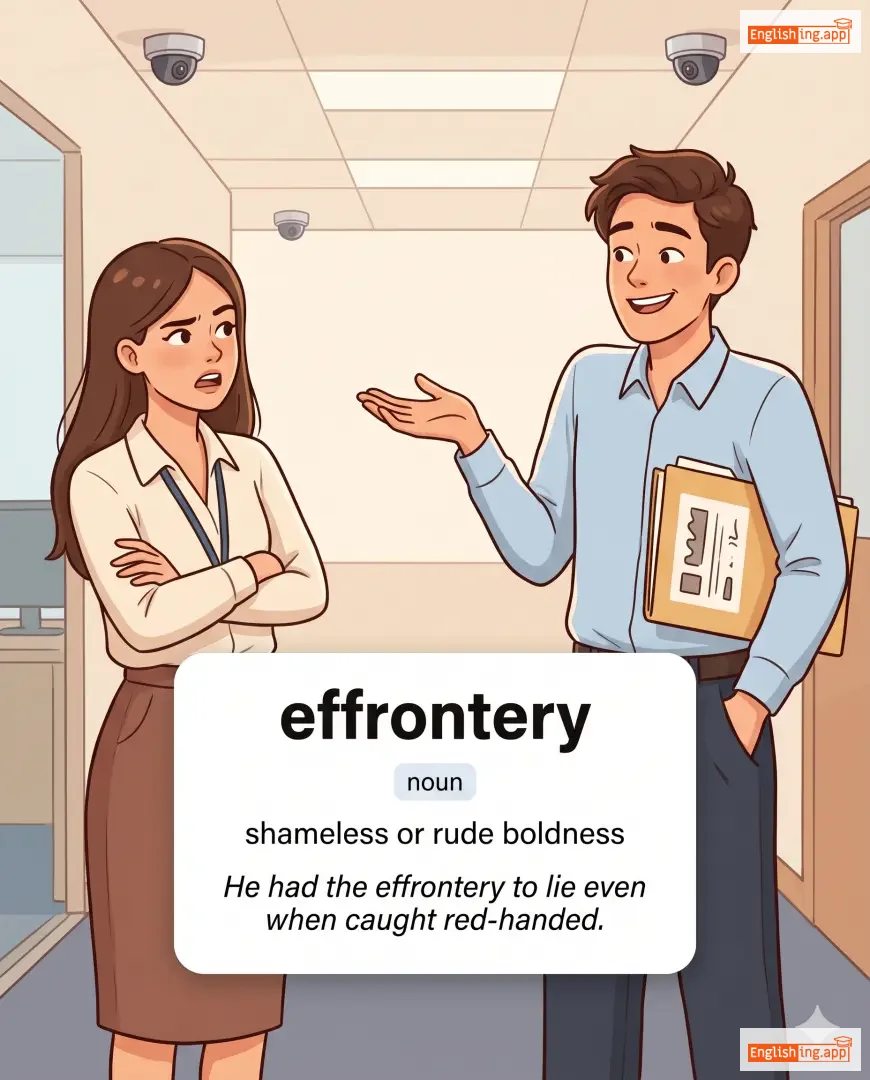
effrontery definition card — visual illustration of the meaning
noun
/ɪˈfrʌntəri/
厚颜无耻或鲁莽的胆量 (hòu yán wú chǐ huò lǔ mǎng de dǎn liàng)

shameless or rude boldness

"He had the effrontery to lie even when caught red-handed."

"即使被当场抓住,他也厚颜无耻地撒谎。" (Jí shǐ bèi dāngchǎng zhuā zhù, tā yě hòu yán wú chǐ de sā huǎng.)
noun
/ɪˈfʌldʒəns/
光辉 (guāng huī)

Brilliant radiance or shining brightness.

"The effulgence of the sunrise lit up the entire valley."

"日出的光辉照亮了整个山谷。" (Rìchū de guānghuī zhàoliàng le zhěnggè shāngǔ.)
adjective
/ɪˈfʌldʒənt/
灿烂 (cànlàn)

Shining brilliantly; radiant.

"Her effulgent smile brightened everyone's mood."

"她那灿烂的微笑照亮了每个人的心情。" (Tā nà cànlàn de wéixiào zhàoliàngle měi gèrén de xīnqíng.)
verb
/ɪˈfjuːz/
表达 (biǎodá)

To pour out or express feelings freely and openly.

"She effused gratitude for the help she received."

"她表达了对收到帮助的感激之情。" (Tā biǎodá le duì shōudào bāngzhù de gǎnjī zhī qíng.)
noun
/ɪˈfjuːʒən/
倾泻 (qīngxiè)

An unrestrained outpouring of words, feelings, or emotions.

"His letter was an effusion of love and longing."

"他的信是一场爱情与渴望的倾泻。" (Tā de xìn shì yī chǎng àiqíng yǔ kěwàng de qīngxiè.)
adjective
/ɪˈfjuːsɪv/
溢于言表的 (yì yú yán biǎo de)

Expressing feelings of gratitude, pleasure, or approval in an unrestrained or heartfelt manner.

"She gave him an effusive welcome after his long journey."

"在她漫长的旅程后,她给了他一个溢于言表的欢迎。" (Zài tā màncháng de lǚchéng hòu, tā gěile tā yīgè yì yú yán biǎo de huānyíng.)
abbreviation
/iː ˈdʒiː/
例如 (li ru)

For example (from Latin 'exempli gratia').

"You should eat more fruits, e.g., apples and bananas."
"你应该多吃水果,例如苹果和香蕉。" (Ni ying gai duo chi shui guo, li ru ping guo he xiang jiao.)
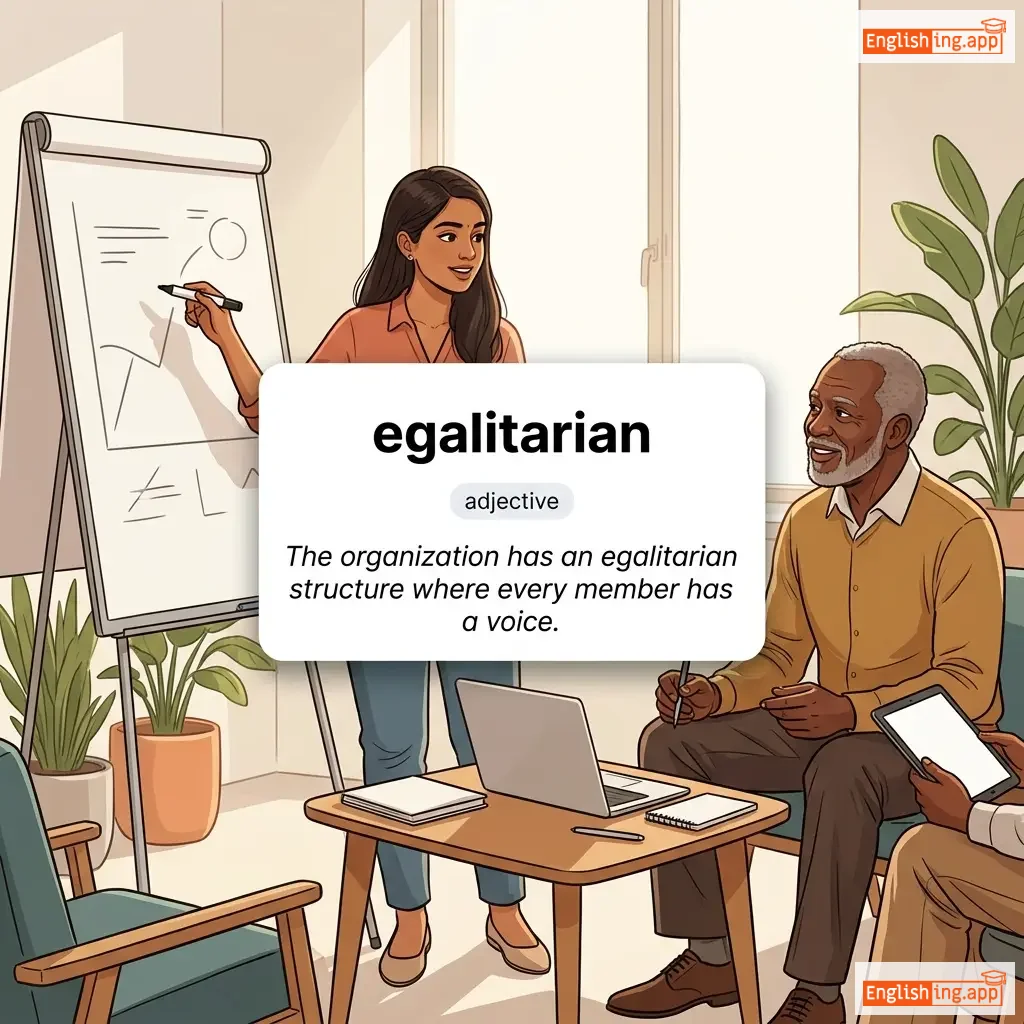
egalitarian definition card — visual illustration of the meaning
adjective
/ɪˌɡælɪˈtɛəriən/
平等主义 (pingdeng zhuyi)

Believing in or promoting the principle that all people are equal and deserve equal rights and opportunities.

"The organization has an egalitarian structure where every member has a voice."

"该组织有一个平等主义结构,每个成员都有发言权。" (Gai zuzhi you yige pingdeng zhuyi jiegou, mei ge chengyuan dou you fayanquan.)
noun
/ɛɡ/
(dan)

an oval or round object laid by a female bird, often eaten as food

"She had a boiled egg for breakfast."

"她早餐吃了一个煮鸡蛋。" (Ta zao can chi le yi ge zhu ji dan.)
🧠

Ego

noun
/ˈiːɡoʊ/

A person's sense of self-importance or self-esteem.

"His fragile ego was hurt by the criticism."

adjective
/ˌiːɡoʊˈsentrɪk/
自我中心 (zì wǒ zhōngxīn)

thinking only about yourself and not about others

"His egocentric behavior annoyed everyone at the meeting."

"他的自我中心行为让会议上的每个人都很不舒服。" (Tā de zì wǒ zhōngxīn xíngwéi ràng huìyì shàng de měi gè rén dōu hěn bù shūfu.)
egoism definition card — visual illustration of the meaning
noun
/ˈiːɡoʊˌɪzəm/
自我主义 (zì wǒ zhǔ yì)

An ethical theory that treats self-interest as the foundation of morality; also, excessive preoccupation with oneself.

"His decisions were often driven by egoism rather than concern for others."

"他的决定常常受到自我主义的驱使,而不是关心他人。" (Tā de juédìng chángcháng shòu dào zì wǒ zhǔ yì de qū shǐ, ér bù shì guān xīn tārén.)
noun
/ˈiːɡoʊɪst/
利己主义者 (lì jǐ zhǔ yì zhě)

A person who is excessively concerned with themselves; someone who believes in or practices egoism.

"She avoided him because he was a selfish egoist."

"她避开他,因为他是一个自私的利己主义者。" (Tā bì kāi tā, yīnwèi tā shì yīgè zì sī de lì jǐ zhǔ yì zhě.)
noun
/ˈiːɡoʊˌtɪzəm/
自负 (zifu)

The practice of talking and thinking about oneself excessively because of an inflated sense of self-importance.

"His constant boasting revealed his egotism."

"他的不断吹嘘揭示了他的自负。" (Tā de bùduàn chuīxū jiēshìle tā de zìfù.)
noun
/ˈiːɡətɪst/
自恋者 (zì liàn zhě)

A person who is excessively self-centered or talks too much about themselves.

"The egotist dominated the conversation by talking only about his own achievements."
"这个自恋者在谈话中只谈论自己的成就。" (zhè ge zì liàn zhě zài tán huà zhōng zhǐ tán lùn zì jǐ de chéng jiù.)
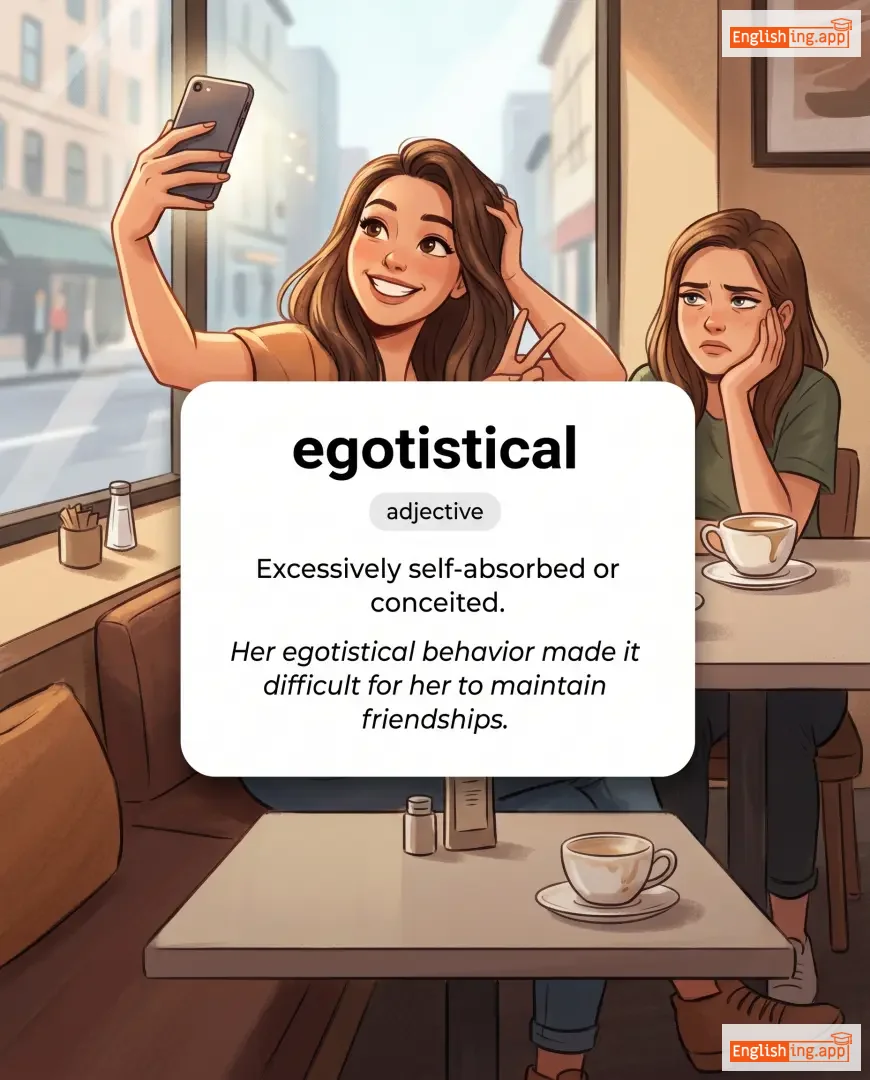
egotistical definition card — visual illustration of the meaning
adjective
/ˌiːɡəˈtɪstɪkəl/
自私的 (zìsī de)

Excessively self-absorbed or conceited.

"Her egotistical behavior made it difficult for her to maintain friendships."

"她自私的行为使得她很难维持友谊。" (Tā zìsī de xíngwéi shǐdé tā hěn nán wéichí yǒuyì.)
adjective
/ɪˈɡriːdʒəs/
极其严重 (jíqí yánzhòng)

Outstandingly bad; shocking.

"The company was fined for its egregious safety violations."

"该公司因其极其严重的安全违规行为而被罚款。" (Gāi gōngsī yīn qí jíqí yánzhòng de ānquán wéiguī xíngwéi ér bèi fákuǎn.)
noun
/ˈiːɡres/
出口 (chūkǒu)

The action of going out or leaving a place; an exit.

"The emergency door provided an egress for the trapped workers."

"紧急出口为被困的工人提供了一个出口。" (Jǐnjí chūkǒu wèi bèi kùn de gōngrén tígōngle yīgè chūkǒu.)
number
/eɪt/
(ba)

The number equivalent to the product of two and four; one more than seven.

"There are eight apples in the basket."

"篮子里有八个苹果。" (Lanzi li you ba ge pingguo.)
adjective
/eɪtθ/
第八 (dì bā)

coming after the seventh position in a sequence; one of eight equal parts

"She finished in eighth place in the race."

"她在比赛中获得了第八名。" (Tā zài bǐsài zhōng huòdé le dì bā míng.)
determiner/pronoun/conjunction/adverb
/ˈaɪðər/ or /ˈiːðər/
任一 (renyi)

Used to indicate a choice between two alternatives.

"You can either call me tonight or send me an email."

"你可以今晚打电话给我,或者给我发电子邮件。" (Nǐ kěyǐ jīnwǎn dǎ diànhuà gěi wǒ, huòzhě gěi wǒ fā diànzǐ yóujiàn.)
noun
/ɪˌdʒækjʊˈleɪʃən/
射精 / 突然的呼喊 (shejing / turan de huhan)

The action of suddenly saying something or the release of semen during sexual climax.

"His sudden ejaculation of joy surprised everyone in the room."

"他突然的欢乐射精让房间里的每个人都感到惊讶。" (Ta turan de huanle shejing rang fangjian li de meigeren dou gandao jingya.)
verb
/ɪˈdʒɛkt/
驱逐 (quzhu)

to force someone or something out, usually from a place or position

"The referee had to eject the player for unsportsmanlike behavior."
"裁判不得不因不体育行为将球员逐出场外。" (Cáipàn bùdébù yīn bù tǐyù xíngwéi jiāng qiúyuán zhúchū chǎngwài.)
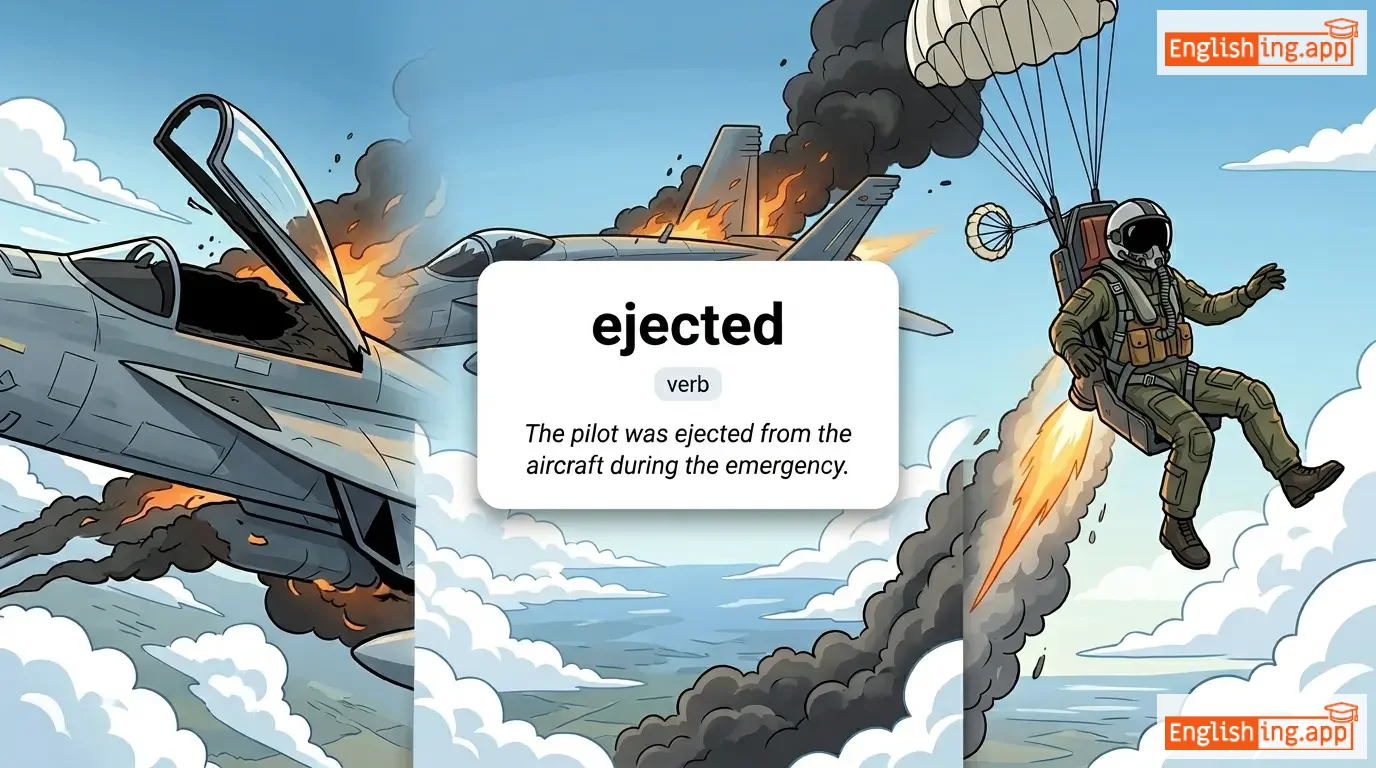
ejected definition card — visual illustration of the meaning
verb
/ɪˈdʒektɪd/
弹射 (tánshè)

to force someone or something to leave a place; to push or throw something out forcefully

"The pilot was ejected from the aircraft during the emergency."

"飞行员在紧急情况下被弹射出飞机。" (Fēixíngyuán zài jǐnjí qíngkuàng xià bèi tánshè chū fēijī.)
verb
/iːk/
节省 (jiesheng)

to make a small amount of something last longer by using it sparingly

"The family tried to eke out their savings during the tough months."

"这个家庭在艰难的月份里尽量节省他们的积蓄。" (Zhege jiating zai jiannan de yuefen li jinliang jiesheng tamen de jixu.)
verb, adjective
/ɪˈlæbəreɪt/ (verb), /ɪˈlæbərət/ (adjective)
详细说明 / 设计复杂的 (xiángxì shuōmíng / shèjì fùzá de)

verb: to explain something in detail; adjective: detailed and complicated in design

"She asked him to elaborate on his proposal."

"她要求他详细说明他的提议。" (Tā yāoqiú tā xiángxì shuōmíng tā de tíyì.)
noun
/ɪˌlæbəˈreɪʃən/
阐述 / 详细说明 (chǎnshù / xiángxì shuōmíng)

the process of adding more detail or expanding on something

"The teacher appreciated the student's elaboration of the topic."

"老师欣赏了学生对主题的详细阐述。" (Lǎoshī xīnshǎngle xuéshēng duì zhǔtí de xiángxì chǎnshù.)
verb
/ɪˈlæps/
经过 (jing guo)

to pass or go by, usually referring to time

"Several hours elapsed before he finally returned home."

"经过了几个小时,他终于回到家了。" (Jing guo le ji ge xiaoshi, ta zhongyu hui dao jia le.)
adjective
/ɪˈlæstɪk/
弹性 (tanxing)

Able to return to its original shape or size after being stretched or compressed.

"The waistband of the pants is made of elastic material."

"裤子的腰带由弹性材料制成。" (Kùzi de yāodài yóu tánxìng cáiliào zhìchéng.)
elasticity definition card — visual illustration of the meaning
noun
/ɪˌlæˈstɪsɪti/

The ability of an object or material to resume its normal shape after being stretched or compressed.

"Rubber has a high degree of elasticity."

verb
/ɪˈleɪt/
使高兴 (shi gaoxing)

To make someone very happy or proud.

"The success of the project elated the whole team."

"项目的成功让整个团队都感到非常高兴。" (Xiangmu de chenggong rang zhengge tuandui dou gandao feichang gaoxing.)
adjective
/ɪˈleɪtɪd/
极其高兴 (jíqí gāoxìng)

Extremely happy and excited.

"She was elated when she heard the good news."

"她听到好消息时非常高兴。" (Tā tīngdào hǎo xiāoxī shí fēicháng gāoxìng.)