Словари

Словарь английского языка | Значения слов, определения и примеры

noun
/ɪˈfɛmɪnəsi/
женственность (zhenshchinnost)

The quality of showing traits traditionally associated with women, such as delicacy or softness.

"In ancient times, effeminacy was often criticized as a sign of weakness."

"В древние времена женственность часто критиковалась как признак слабости." (V drevnie vremena zhenshchinnost' chasto kritikovalas' kak priznak slabosti.)
adjective
/ɪˈfɛmɪnət/
женственный (zhenshchiny)

Having traits, tastes, or habits traditionally considered feminine, often used negatively for men.

"The critics described him as effeminate due to his gentle manner."

"Критики описали его как женственного из-за его мягкого поведения." (Kritiki opisali ego kak zhenshchinnogo iz-za ego myagkogo povedeniya.)
verb
/ˌɛfəˈvɛs/
шипеть (shipet)

To give off bubbles of gas; to show excitement, liveliness, or enthusiasm.

"The soda began to effervesce as soon as it was opened."
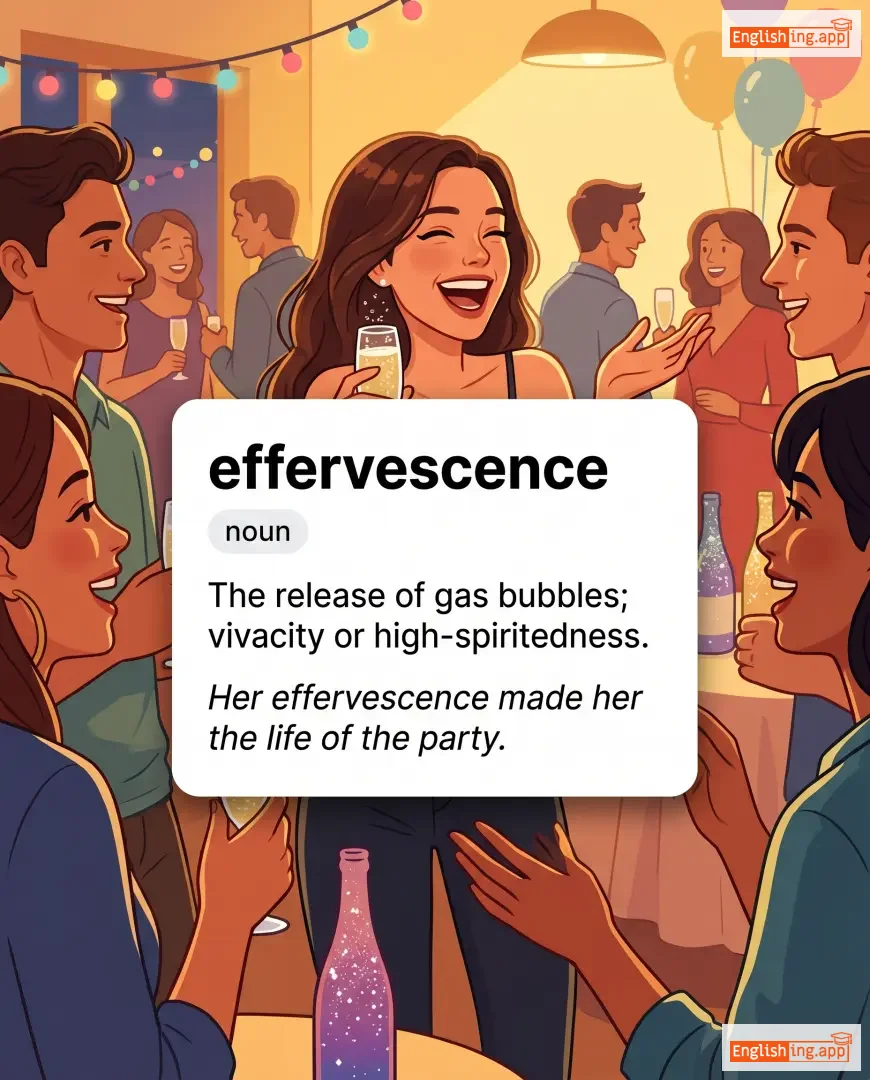
"Газировка начала шипеть, как только её открыли." (Gazirovka nachala shipet, kak tol'ko yeyo otkryli.)
effervescence definition card — visual illustration of the meaning
noun
/ˌɛfəˈvɛsəns/
пенная реакция (pennaya reaktsiya)

The release of gas bubbles; vivacity or high-spiritedness.

"Her effervescence made her the life of the party."

"Её пенная реакция сделала её душой вечеринки." (Yeyo pennaya reaksiya sdelala yeyo dushoy vecherinki.)
adjective
/ˌɛfəˈvɛsənt/
жизнерадостный (zhizneradostnyy)

Giving off bubbles; lively, enthusiastic, and full of energy.

"She had an effervescent personality that brightened every room."

"У неё была жизнерадостная личность, которая освещала каждую комнату." (U neyo byla zhizneradostnaya lichnost', kotoraya osveshchala kazhduyu komnatu.)
effete definition card — visual illustration of the meaning
adjective
/ɪˈfiːt/
слабый (slaby)

Lacking vitality, strength, or effectiveness; weak and overrefined.

"The empire became effete after centuries of indulgence."

"Империя стала слабой после столетий роскоши." (Imperiya stala slabay posle stoletiy roskoshi.)
efficacious definition card — visual illustration of the meaning
adjective
/ˌɛfɪˈkeɪʃəs/
эффективный (effektivny)

Effective in producing the desired result.

"The medicine proved efficacious in treating the disease."
"Медикамент оказался эффективным в лечении болезни." (Medikament okazyvsya effektivnym v lechenii bolezni.)
efficacy definition card — visual illustration of the meaning
noun
/ˈɛfɪkəsi/
эффективность (effektivnost)

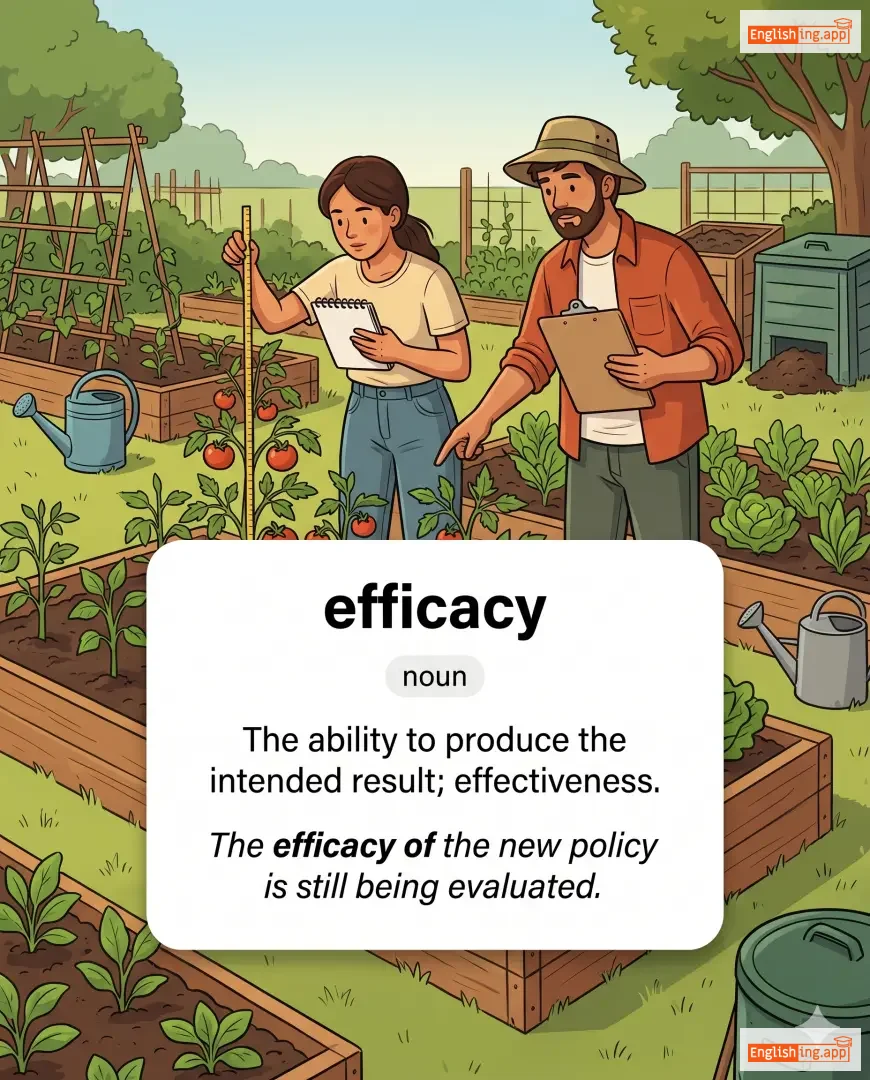
The ability to produce the intended result; effectiveness.

"The efficacy of the new policy is still being evaluated."
"Эффективность новой политики все еще оценивается." (Effektivnost' novoy politiki vse eshcho otsenivaetsya.)
efficiency definition card — visual illustration of the meaning
noun
/ɪˈfɪʃənsi/
эффективность (effektivnost)

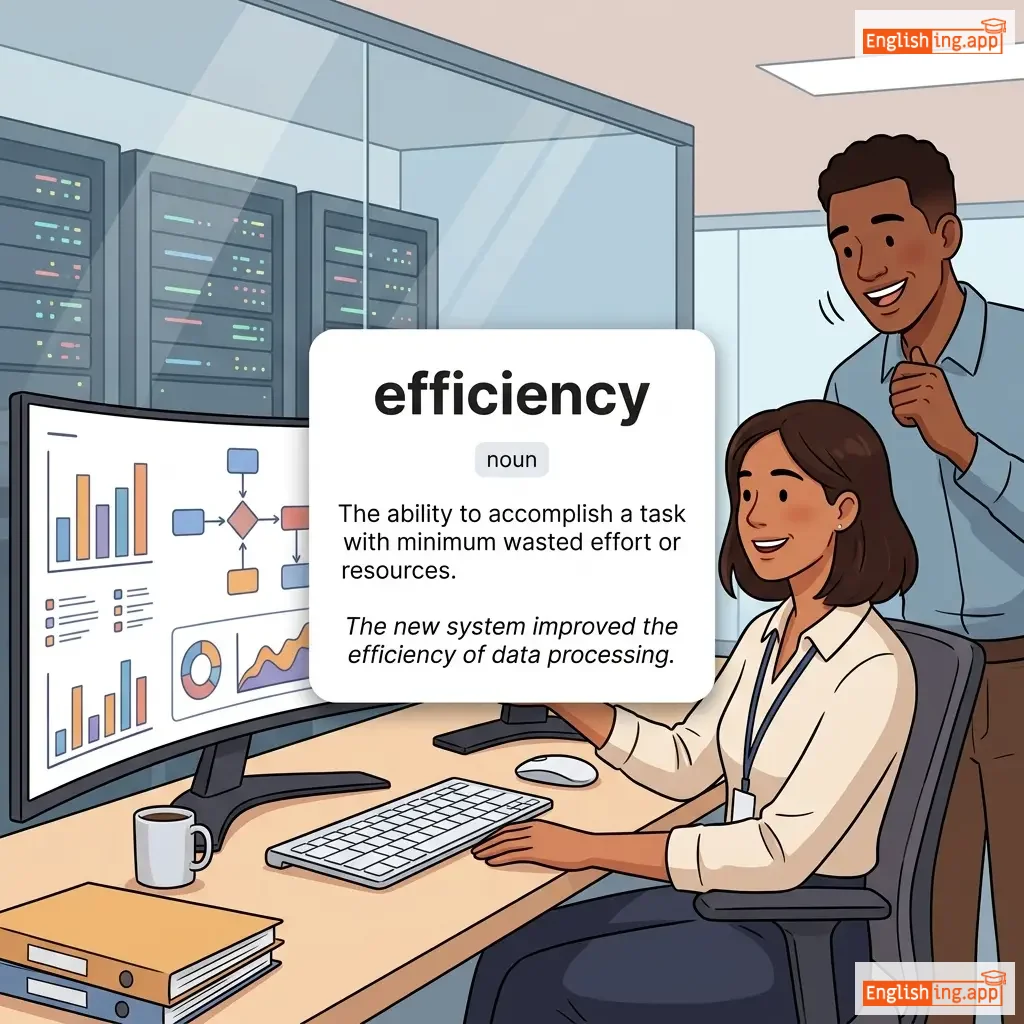
The ability to accomplish a task with minimum wasted effort or resources.

"The new system improved the efficiency of data processing."

"Новая система улучшила эффективность обработки данных." (Novaya sistema uluchshila effektivnost' obrabotki dannykh.)
efficient definition card — visual illustration of the meaning
adjective
/ɪˈfɪʃənt/
эффективный (effektivny)

Working in a well-organized and productive way, without wasting time or effort.

"She is an efficient manager who gets things done quickly."

"Она эффективный менеджер, которая быстро выполняет задачи." (Ona effektivnyy menedzher, kotoraya bystro vypolnyaet zadachi.)
adverb
/ɪˈfɪʃəntli/
эффективно (effektivno)

in a way that achieves maximum productivity with minimum wasted effort or expense

"She managed to complete the task efficiently within the deadline."

"Она смогла эффективно выполнить задачу в срок." (Ona smogla effektivno vypolnit' zadachu v srok.)
noun
/ˈɛfɪdʒi/
чучело (chuchelo)

a sculpture or model of a person, often made to be destroyed in protest or anger

"The protesters burned an effigy of the corrupt politician."

"Протестующие сожгли чучело коррумпированного политика." (Protestuyushchie sozhgli chuchelo korrumpirovannogo politika.)
noun
/ˌɛfləˈrɛsəns/
цветение (tsvetyenie)

the process of flowering or reaching an optimal stage of development

"The garden was at the peak of its efflorescence in spring."

"Сад был на пике своего цветения весной." (Sad byl na pike svoego tsveteniya vesnoy.)
adjective
/ˌɛfləˈrɛsənt/
цветущий (tsvetyushchiy)

in the process of blooming or flourishing

"The efflorescent trees made the park look beautiful."
"Цветущие деревья сделали парк красивым." (Tsvetyushchie derev'ya sdelali park krasivym.)
effluent definition card — visual illustration of the meaning
noun
ˈɛf.lu.ənt
сточные воды или загрязненная жидкость (stochnye vody ili zagryaznennaya zhidkost)

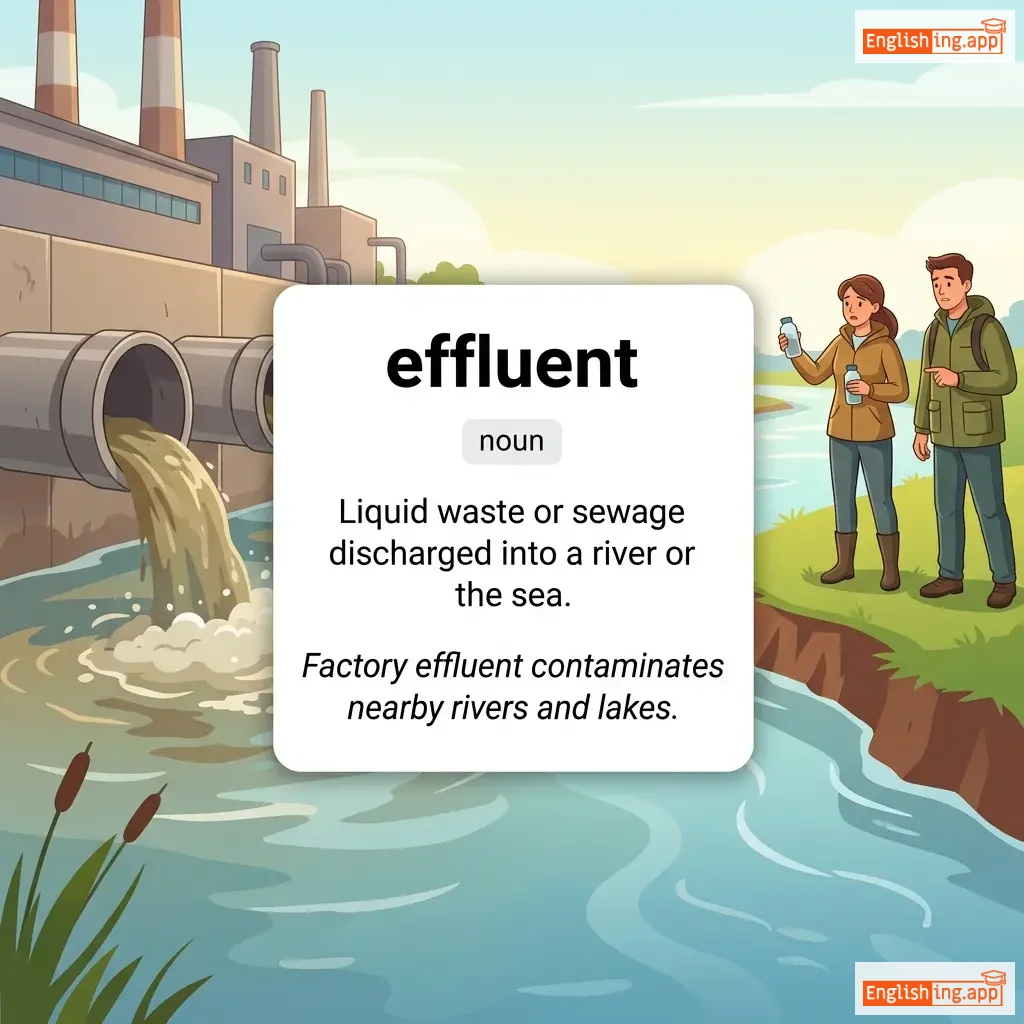
Liquid waste or sewage discharged into a river or the sea.

"Factory effluent contaminates nearby rivers and lakes."

"Фабричные сточные воды загрязняют близлежащие реки и озера." (Fabrichnye stochnye vody zagryaznyayut blizlezhashchie reki i ozera.)
noun
/ɪˈfluːviəm/
зловоние (zlovonie)

an unpleasant or harmful odor, secretion, or discharge

"The effluvium from the factory spread across the neighborhood."

"Зловоние с фабрики распространилось по всему району." (Zlovonie s fabriky rasprostranilos' po vsemy rayonu.)
Effort definition card — visual illustration of the meaning
noun
/ˈɛfərt/
усилие (usilie)

the use of physical or mental energy to do something; attempt

"He made a great effort to improve his English skills."
"Он приложил большое усилие, чтобы улучшить свои навыки английского." (On prilozhil bol'shoye usiliye, chtoby uluchshit' svoi navyki angliyskogo.)
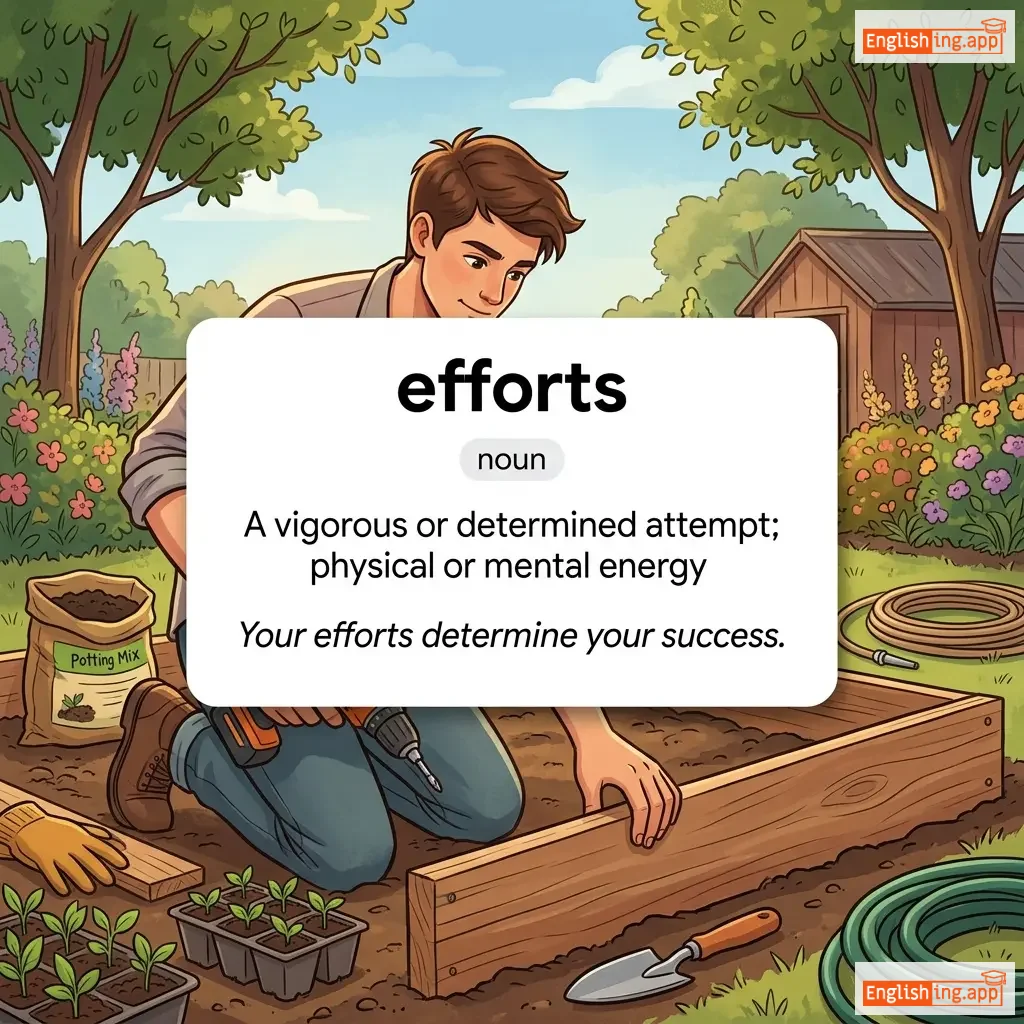
efforts definition card — visual illustration of the meaning
noun
ˈefərts
усилие (usilie)

A vigorous or determined attempt; physical or mental energy

"Your efforts determine your success."
"Ваши усилия определяют ваш успех." (Vashi usiliya opredelyayut vash uspekh.)
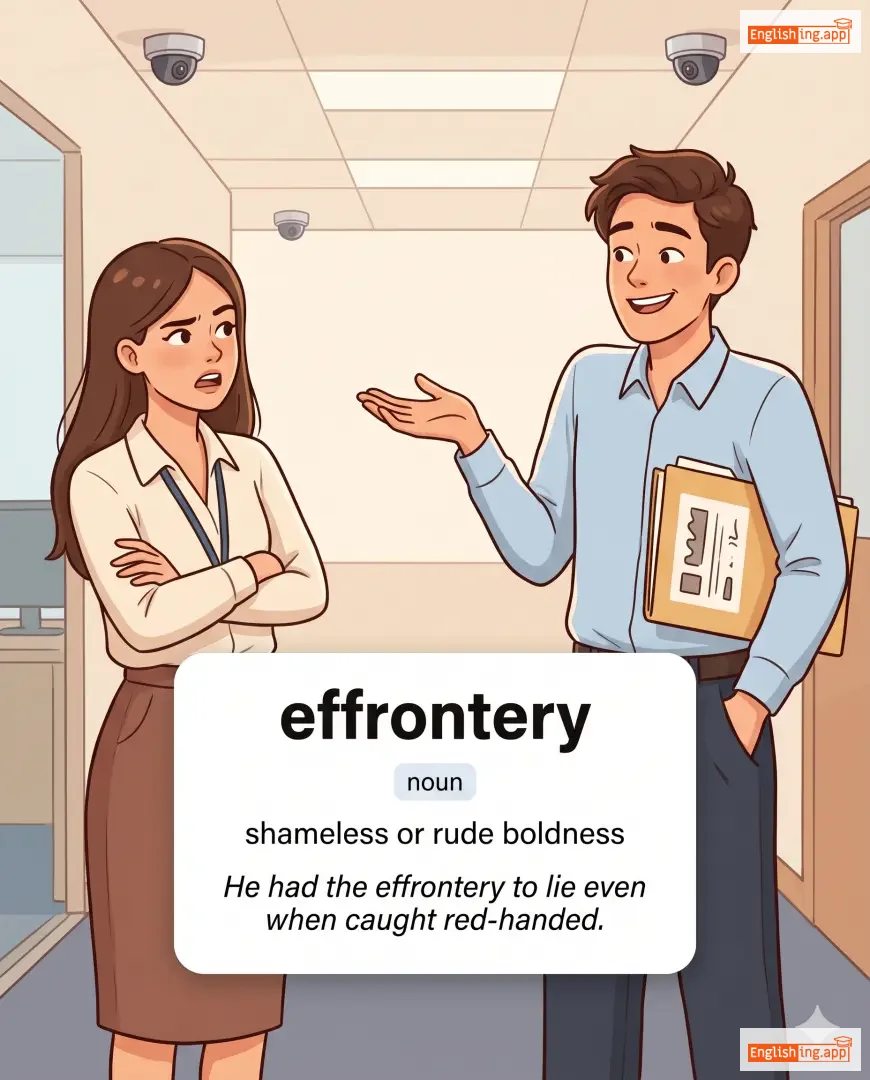
effrontery definition card — visual illustration of the meaning
noun
/ɪˈfrʌntəri/
наглость или дерзость (naglost' ili derzost')

shameless or rude boldness

"He had the effrontery to lie even when caught red-handed."

"Он имел наглость солгать, даже когда его поймали с поличным." (On imel naglost' solgat', dazhe kogda ego poymali s polichnym.)
noun
/ɪˈfʌldʒəns/
сияние (siyanie)

Brilliant radiance or shining brightness.

"The effulgence of the sunrise lit up the entire valley."

"Сияние рассвета осветило всю долину." (Siyanie rassveta osvetilo vsyu dolinu.)
adjective
/ɪˈfʌldʒənt/
светящийся (svetyashchijsya)

Shining brilliantly; radiant.

"Her effulgent smile brightened everyone's mood."

"Её светящаяся улыбка подняла настроение всех." (Eyo svetyashchijsya ulybka podnyala nastroenie vsekh.)
verb
/ɪˈfjuːz/
выражать (vyrazhat)

To pour out or express feelings freely and openly.

"She effused gratitude for the help she received."

"Она выразила благодарность за помощь, которую получила." (Ona vyrazila blagodarnost' za pomoshch', kotoruyu poluchila.)
noun
/ɪˈfjuːʒən/
излияние (izliyanie)

An unrestrained outpouring of words, feelings, or emotions.

"His letter was an effusion of love and longing."

"Его письмо было излиянием любви и тоски." (Ego pismo bylo izliyaniem lyubvi i toski.)
adjective
/ɪˈfjuːsɪv/
избыточный (izbytochnyy)

Expressing feelings of gratitude, pleasure, or approval in an unrestrained or heartfelt manner.

"She gave him an effusive welcome after his long journey."

"Она встретила его с избыточным приветствием после его долгого путешествия." (Ona vstretila ego s izbytochnym privetstviem posle ego dolgogo puteshestviya.)
abbreviation
/iː ˈdʒiː/
например (naprimer)

For example (from Latin 'exempli gratia').

"You should eat more fruits, e.g., apples and bananas."
"Тебе следует есть больше фруктов, например, яблоки и бананы." (Tebe sleduyet est' bol'she fruktov, naprimer, yabloki i banany.)
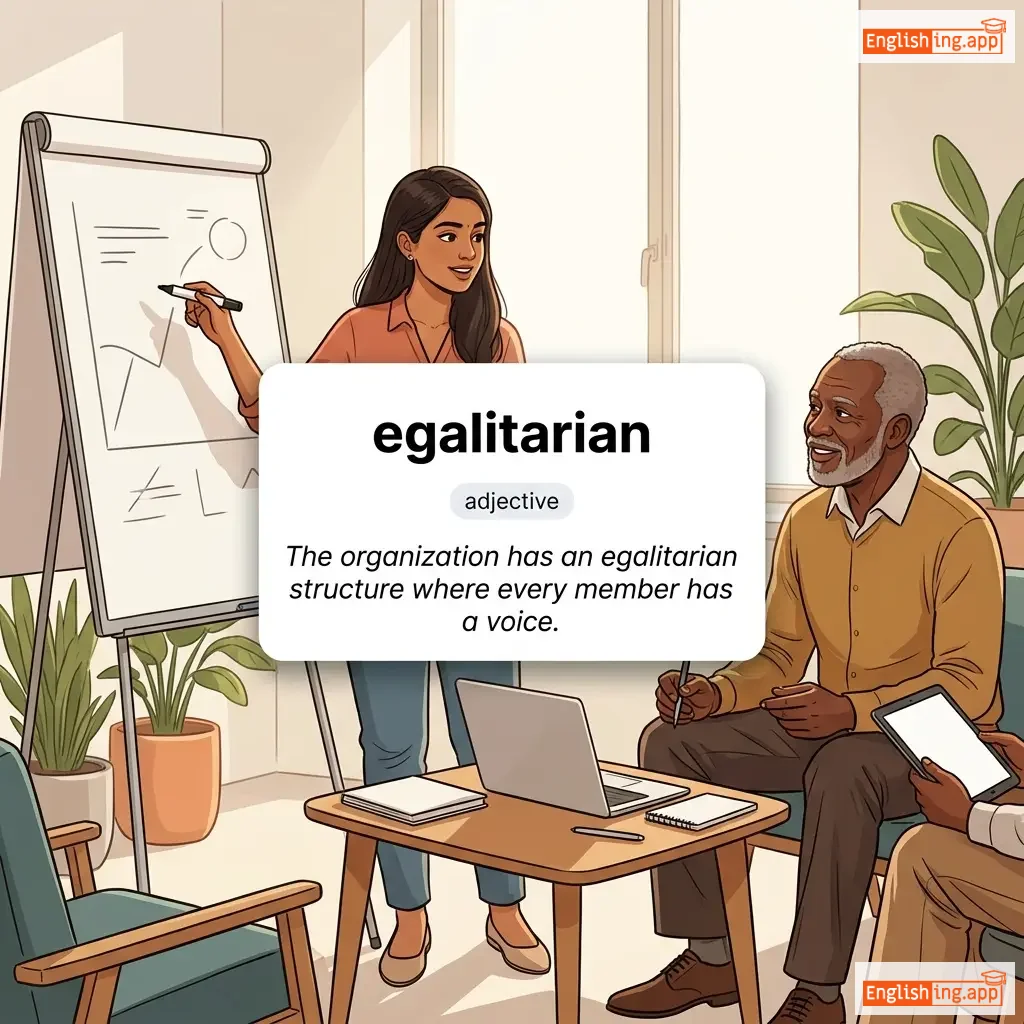
egalitarian definition card — visual illustration of the meaning
adjective
/ɪˌɡælɪˈtɛəriən/
эгалитарный (egalitarnyy)

Believing in or promoting the principle that all people are equal and deserve equal rights and opportunities.

"The organization has an egalitarian structure where every member has a voice."

"В организации существует эгалитарная структура, где у каждого члена есть голос." (V organizatsii sushchestvuet egalitarnaya struktura, gde u kazhdogo chlen a yest' golos.)
Egg definition card — visual illustration of the meaning
noun
/ɛɡ/
яйцо (yaytso)

an oval or round object laid by a female bird, often eaten as food

"She had a boiled egg for breakfast."

"Она съела вареное яйцо на завтрак." (Ona syela varenoye yaytso na zavtrak.)
noun
/ˈiːɡoʊ/
эго (ego)

A person's sense of self-importance or self-esteem.

"His fragile ego was hurt by the criticism."

"Критика задела его хрупкое эго." (Kritika zadela ego khrupkoe ego)
adjective
/ˌiːɡoʊˈsentrɪk/
эгоцентричный (egocentricny)

thinking only about yourself and not about others

"His egocentric behavior annoyed everyone at the meeting."

"Его эгоцентричное поведение раздражало всех на собрании." (Ego egocentricnoe povedenie razdrazhalo vsekh na sobranii.)
egoism definition card — visual illustration of the meaning
noun
/ˈiːɡoʊˌɪzəm/
эгоизм (egoizm)

An ethical theory that treats self-interest as the foundation of morality; also, excessive preoccupation with oneself.

"His decisions were often driven by egoism rather than concern for others."

"Его решения часто были продиктованы эгоизмом, а не заботой о других." (Ego resheniya chasto byli prodyktovany egoizmom, a ne zabotoy o drugikh.)
noun
/ˈiːɡoʊɪst/
эгоист (egoist)

A person who is excessively concerned with themselves; someone who believes in or practices egoism.

"She avoided him because he was a selfish egoist."

"Она избегала его, потому что он был эгоистичным эгоистом." (Ona izbegala ego, potomu chto on byl egoistichnym egoistom.)
noun
/ˈiːɡoʊˌtɪzəm/
эгоизм (egoizm)

The practice of talking and thinking about oneself excessively because of an inflated sense of self-importance.

"His constant boasting revealed his egotism."

"Его постоянные хвастовства раскрыли его эготизм." (Ego postoyannye khvastovstva raskryli ego egotizm.)
noun
/ˈiːɡətɪst/
эгоист (egoist)

A person who is excessively self-centered or talks too much about themselves.

"The egotist dominated the conversation by talking only about his own achievements."
"Эгоист доминировал в разговоре, говоря только о своих собственных достижениях." (Egoist dominiraval v razgovore, govorya tol'ko o svoikh sobstvennykh dostizheniyakh.)
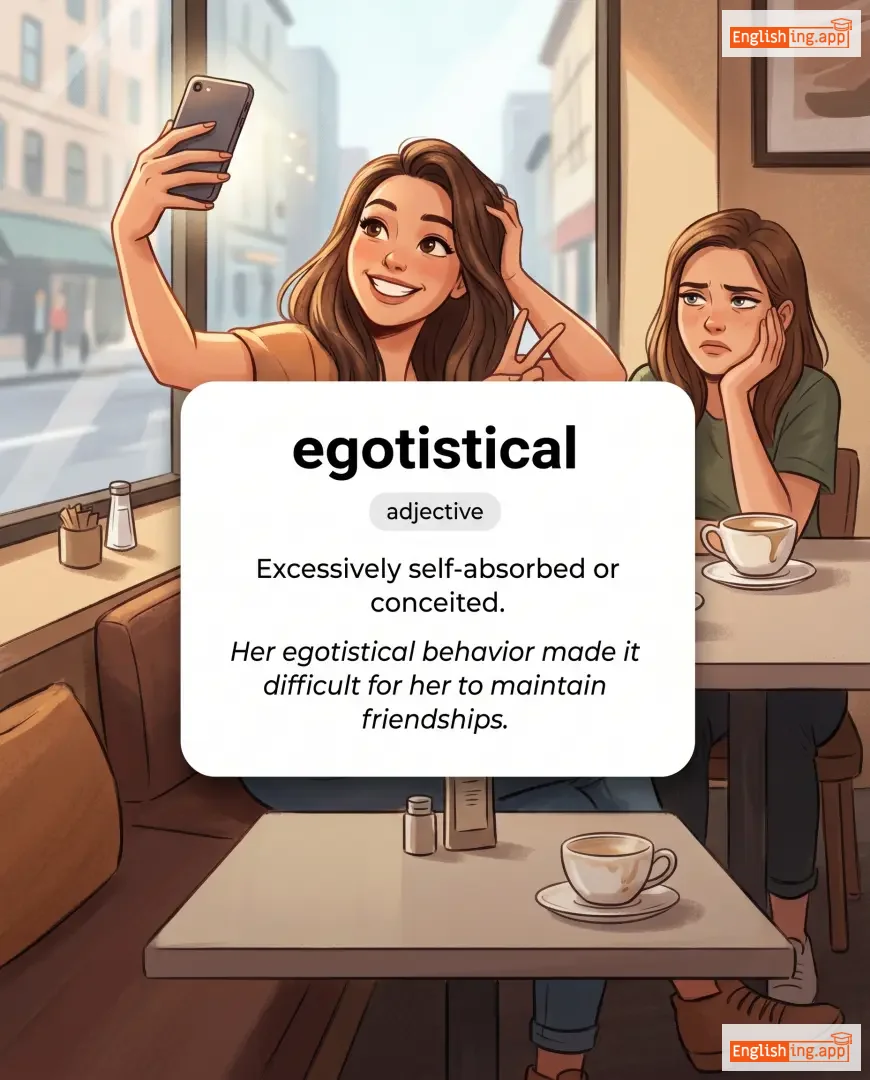
egotistical definition card — visual illustration of the meaning
adjective
/ˌiːɡəˈtɪstɪkəl/
эгоистичный (egoistichny)

Excessively self-absorbed or conceited.

"Her egotistical behavior made it difficult for her to maintain friendships."

"Ее эгоистичное поведение усложняло поддержание дружбы." (Eyo egoistichnoye povedeniye uslozhnyało podderzhaniye druzhby.)
adjective
/ɪˈɡriːdʒəs/
ужасный (uzhasny)

Outstandingly bad; shocking.

"The company was fined for its egregious safety violations."

"Компания была оштрафована за свои ужасные нарушения безопасности." (Kompaniya byla oshtrafovana za svoi uzhasnye narusheniya bezopasnosti.)
noun
/ˈiːɡres/
выход (vikhod)

The action of going out or leaving a place; an exit.

"The emergency door provided an egress for the trapped workers."

"Аварийная дверь предоставила выход для заблокированных рабочих." (Avariynaya dver' predostavila vykhod dlya zablokirovannykh rabochikh.)
number
/eɪt/
восемь (vosem)

The number equivalent to the product of two and four; one more than seven.

"There are eight apples in the basket."

"В корзине восемь яблок." (V korzine vosem' yablok.)
adjective
/eɪtθ/
восьмой (vos'moy)

coming after the seventh position in a sequence; one of eight equal parts

"She finished in eighth place in the race."

"Она финишировала на восьмом месте в гонке." (Ona finishirovala na vos'mom meste v gonke.)
determiner/pronoun/conjunction/adverb
/ˈaɪðər/ or /ˈiːðər/
либо (libo)

Used to indicate a choice between two alternatives.

"You can either call me tonight or send me an email."

"Вы можете либо позвонить мне сегодня вечером, либо отправить мне электронное письмо." (Vy mozhete libo pozvonit' mne segodnya vecherom, libo otpravit' mne elektronnoe pis'mo.)
noun
/ɪˌdʒækjʊˈleɪʃən/
эякуляция / внезапный возглас (eyakuljacija / vnezapnyj vozglas)

The action of suddenly saying something or the release of semen during sexual climax.

"His sudden ejaculation of joy surprised everyone in the room."

"Его внезапная эякуляция радости удивила всех в комнате." (Ego vnezapnaja ejakuljacija radosti udivila vsekh v komnate.)
verb
/ɪˈdʒɛkt/
выгнать (vygmat')

to force someone or something out, usually from a place or position

"The referee had to eject the player for unsportsmanlike behavior."
"Арбитр должен был выгнать игрока за антиспортивное поведение." (Arbitr dolzhen byl vyg'nat' igroka za antisportivnoe povedenie.)
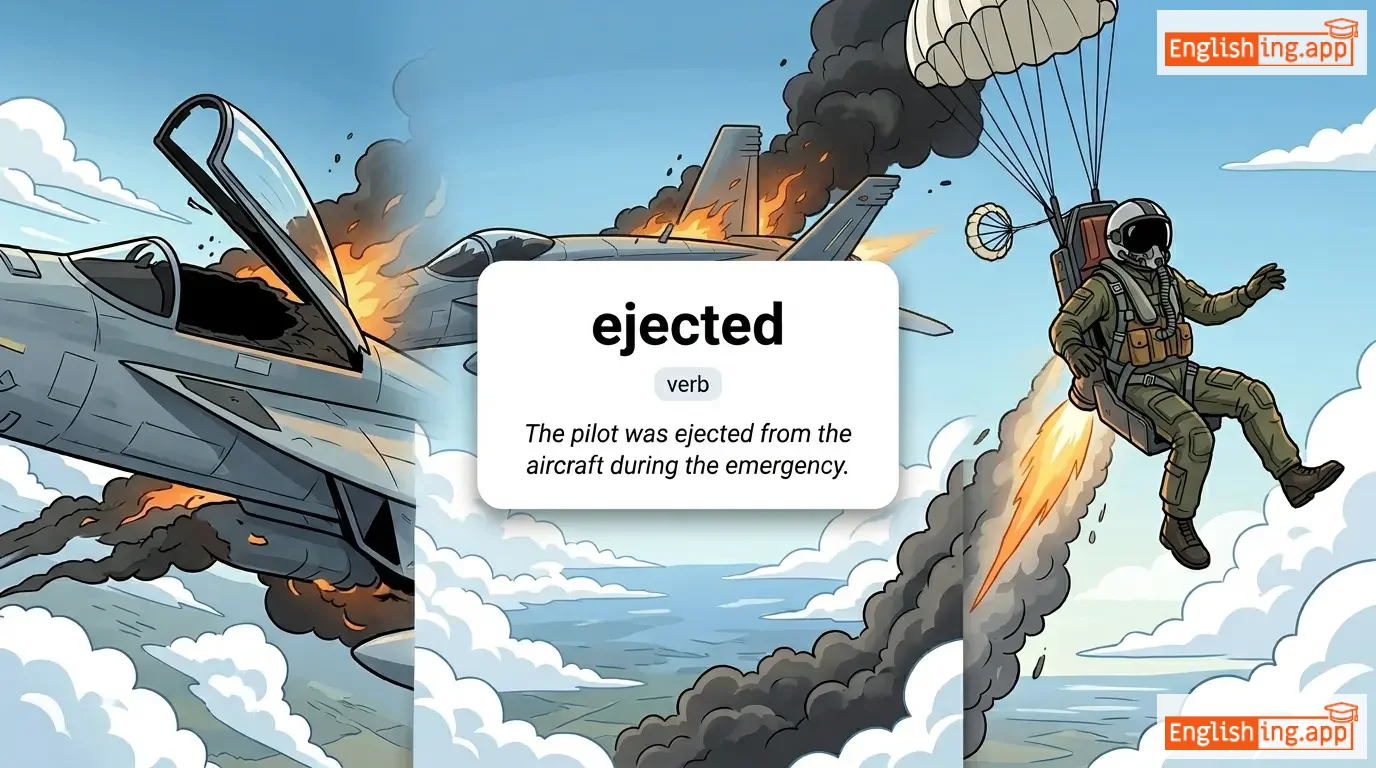
ejected definition card — visual illustration of the meaning
verb
/ɪˈdʒektɪd/
выкидывать (vykidyvat')

to force someone or something to leave a place; to push or throw something out forcefully

"The pilot was ejected from the aircraft during the emergency."

"Пилот был эвакуирован из самолета во время чрезвычайной ситуации." (Pilot byl evakuirovann iz samolyota vo vremya chrezvychaynoy situatsii.)
verb
/iːk/
экономить (ekonomit')

to make a small amount of something last longer by using it sparingly

"The family tried to eke out their savings during the tough months."

"Семья пыталась растянуть свои сбережения в трудные месяцы." (Sem'ya pytalas' rastyanut' svoi sberegeniya v trudnye mesyatsy.)
verb, adjective
/ɪˈlæbəreɪt/ (verb), /ɪˈlæbərət/ (adjective)
развернуто говорить / детализированный и сложный в дизайне (razvernutо govorit / detalizirovanniy i slozhniy v dizayne)

verb: to explain something in detail; adjective: detailed and complicated in design

"She asked him to elaborate on his proposal."

"Она попросила его подробно изложить его предложение." (Ona poprosila ego podrobno izlozhit' ego predlozheniye.)
noun
/ɪˌlæbəˈreɪʃən/
расширение / подробное объяснение (rasshirenie / podrobnoe ob'yasnenie)

the process of adding more detail or expanding on something

"The teacher appreciated the student's elaboration of the topic."

"Учитель оценил расширение темы студентом." (Uchitel' otsenil rasshirenie temy studentom.)
verb
/ɪˈlæps/
прошло (proshlo)

to pass or go by, usually referring to time

"Several hours elapsed before he finally returned home."

"Прошло несколько часов, прежде чем он наконец вернулся домой." (Proshlo neskol'ko chasov, prezhde chem on nakonec vernulsya domoy.)
adjective
/ɪˈlæstɪk/
эластичный (elastichnyy)

Able to return to its original shape or size after being stretched or compressed.

"The waistband of the pants is made of elastic material."

"Пояс в штанах сделан из эластичного материала." (Poyas v shtanakh sdelan iz elastichnogo materiala.)
elasticity definition card — visual illustration of the meaning
noun
/ɪˌlæˈstɪsɪti/
эластичность (elastikiti)

The ability of an object or material to resume its normal shape after being stretched or compressed.

"Rubber has a high degree of elasticity."

"Резина обладает высокой эластичностью." (Rezina obladayet vysokoy elastichnost.)
verb
/ɪˈleɪt/
радовать (radovat)

To make someone very happy or proud.

"The success of the project elated the whole team."

"Успех проекта привел в восторг всю команду." (Uspekh proyeka prived v vostorg vsyu komandu.)
adjective
/ɪˈleɪtɪd/
крайне счастливый (kraine schastlivyj)

Extremely happy and excited.

"She was elated when she heard the good news."

"Она была крайне счастлива, когда услышала хорошие новости." (Ona byla krajne schastliva, kogda uslyshala khoroshie novosti.)