Словари

Словарь английского языка | Значения слов, определения и примеры
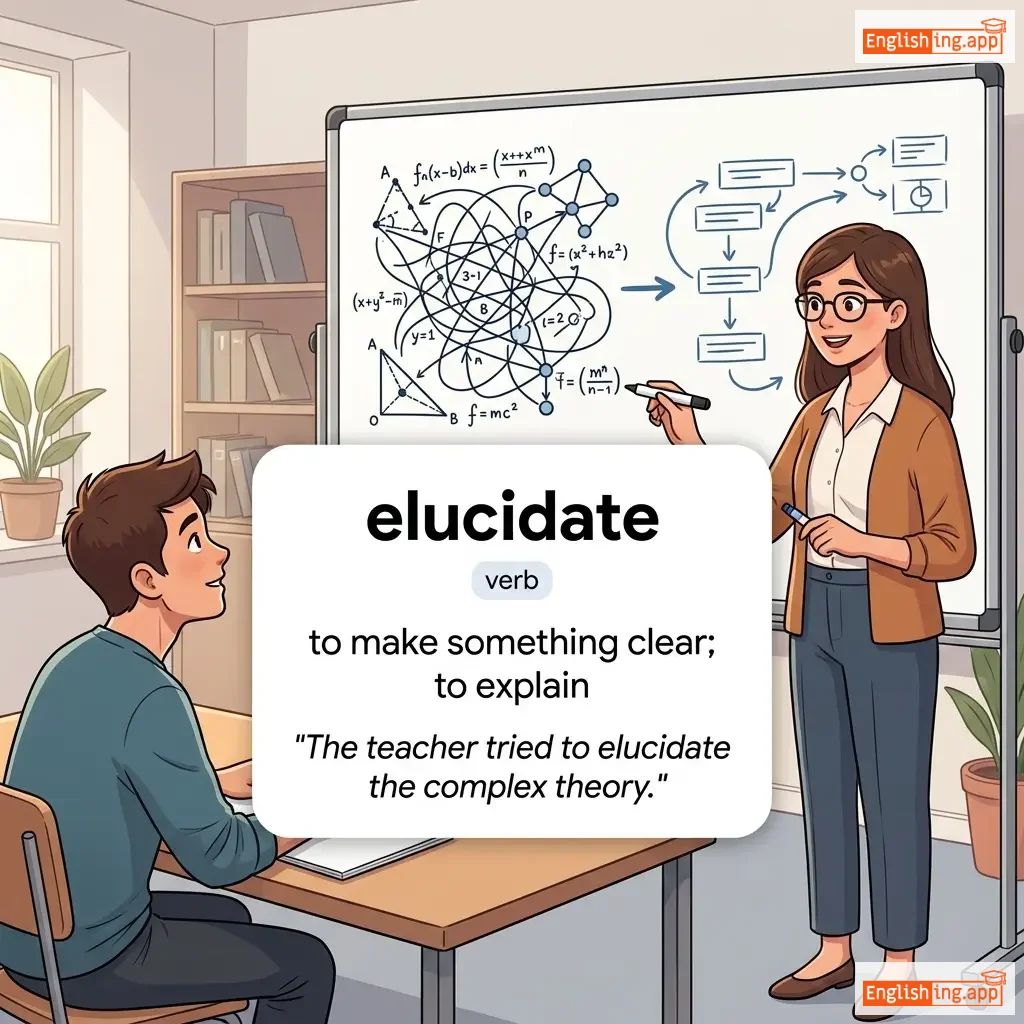
elucidate definition card — visual illustration of the meaning
verb
/ɪˈluːsɪdeɪt/
разъяснять (razyasnyat)

to make something clear; to explain

"The teacher tried to elucidate the complex theory."
"Учитель пытался разъяснить сложную теорию." (Uchitel' pytalsya raz'ysnit' slozhnuyu teoryu.)
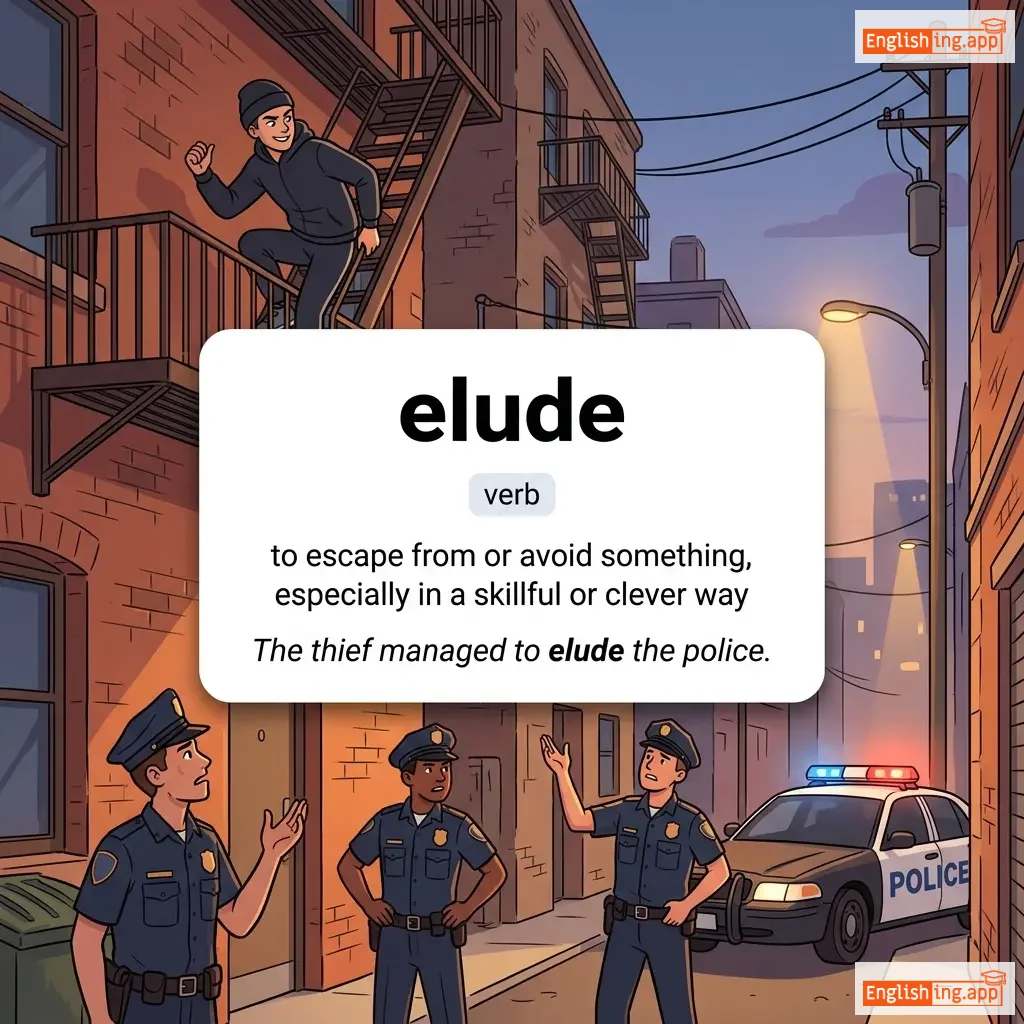
elude definition card — visual illustration of the meaning
🏃‍♂️

elude (элуд)

verb
/ɪˈluːd/
избежать (izbezhat)

to escape from or avoid something, especially in a skillful or clever way

"The thief managed to elude the police."

"Вор сумел избежать полиции." (Vor sumel izbezhat politsii.)
noun
/ɪˈluːʒən/
уклонение (uklonenie)

The act of escaping or avoiding something, especially by cleverness or trickery.

"His constant elusion of responsibility frustrated his colleagues."

"Его постоянное уклонение от ответственности разочаровывало коллег." (Ego postoyannoe ukloneniye ot otvetstvennosti razocharovyvalo kolleg.)
🕵️‍♀️

elusive (илюзив)

adjective
/ɪˈluːsɪv/
трудно найти (trudno nayti)

Difficult to find, catch, or achieve; hard to understand or define.

"The solution to the problem proved elusive."
"Решение проблемы оказалось трудным для нахождения." (Reshenie problemy okazalos' trudnym dlya nakhozhdeniya.)
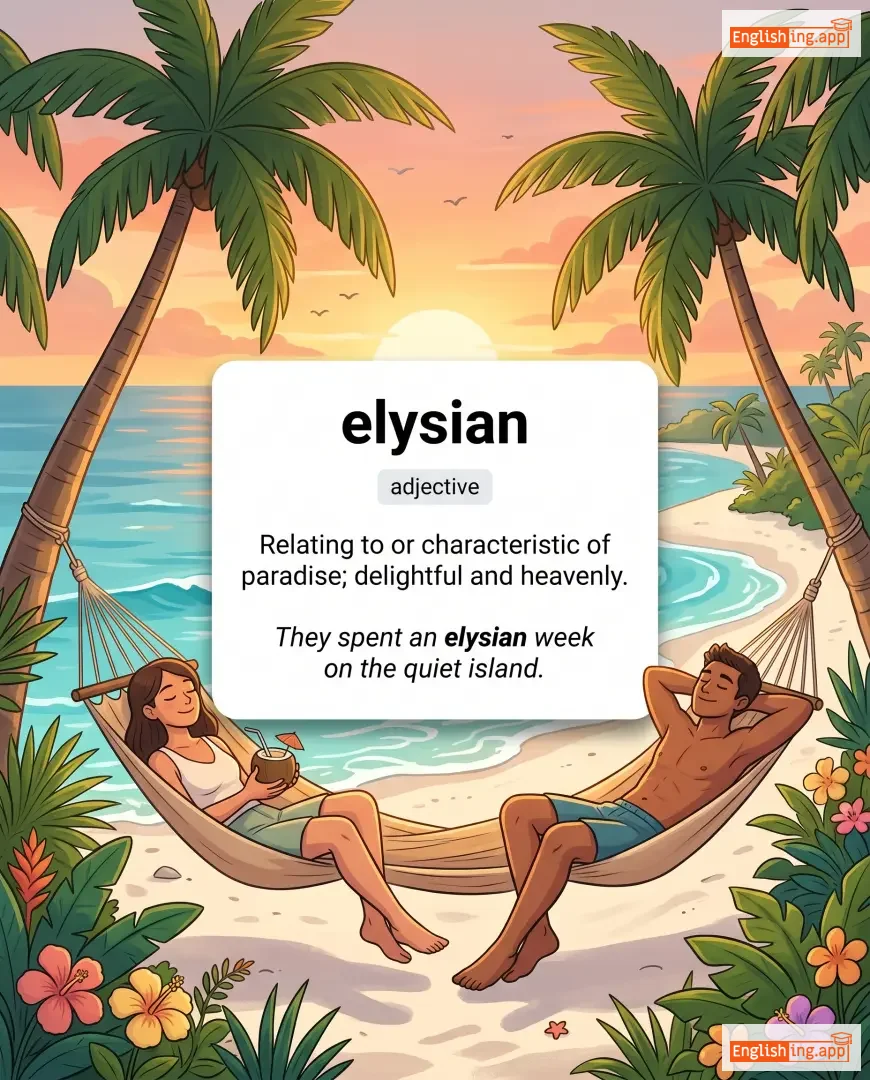
elysian definition card — visual illustration of the meaning
adjective
/ɪˈlɪʒən/
небесный (nebesnyy)

Relating to or characteristic of paradise; delightful and heavenly.

"They spent an elysian week on the quiet island."

"Они провели небесную неделю на тихом острове." (Oni proveli nebesnuyu nedelyu na tikhom ostrove.)
noun
/ɪˈlɪziəm/
Элизий (eliziy)

A place or state of perfect happiness; in Greek mythology, the afterlife paradise.

"For her, the garden was a personal elysium."

"Для нее сад был личным Элизием." (dlya neye sad byl lichnym eliziyem.)
verb
/ɪˈmeɪʃieɪt/
истощать (istoščat)

To make abnormally thin or weak, usually because of illness or lack of food.

"The prisoners were emaciated after months without proper food."
"Заключенные были истощены после месяцев без правильного питания." (Zaklyuchennye byli istoščeny posle mesyacev bez pravil'nogo pitaniya.)
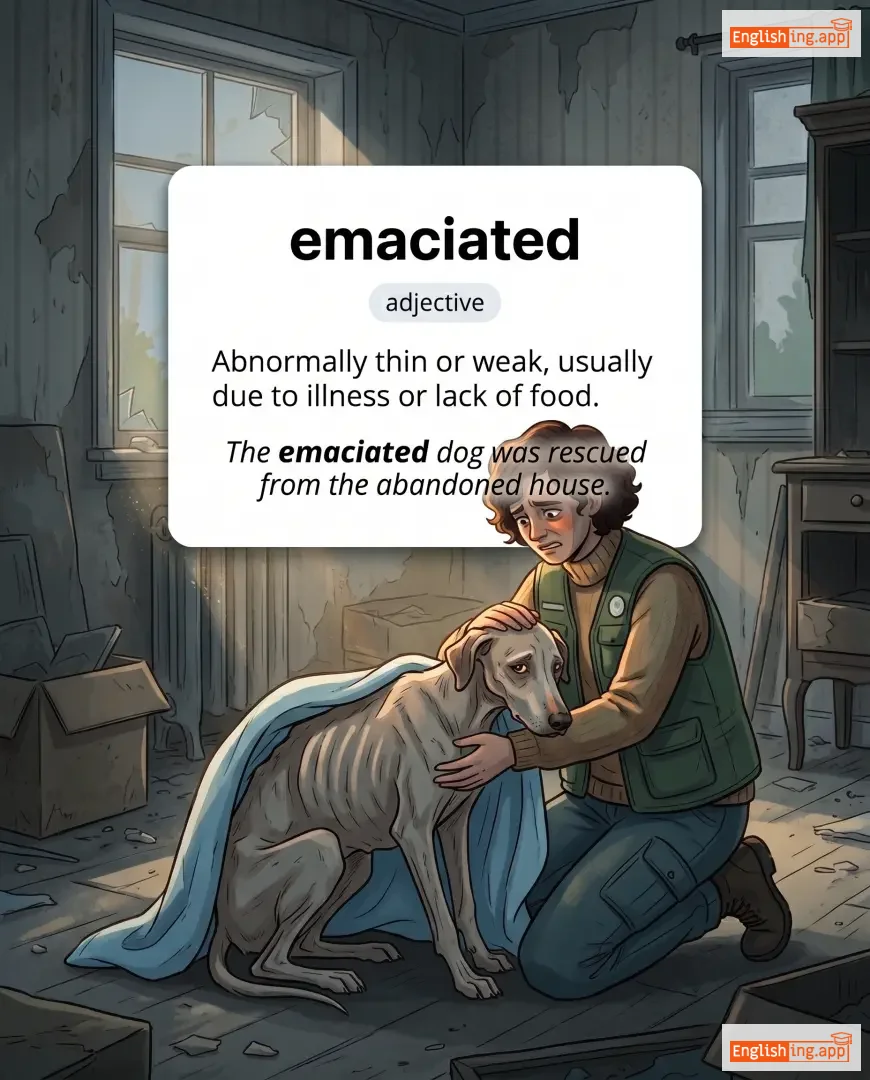
emaciated definition card — visual illustration of the meaning
adjective
/ɪˈmeɪʃieɪtɪd/
истощённый (istoščënnyj)

Abnormally thin or weak, usually due to illness or lack of food.

"The emaciated dog was rescued from the abandoned house."

"Истощённая собака была спасена из заброшенного дома." (Istoščënnaya sobaka byla spasena iz zabrošennoqo doma.)
verb
/ˈɛm.ə.neɪt/
исходить (iskhodit)

To come out or spread from a source.

"A sweet fragrance emanated from the garden."
"Сладкий аромат исходил из сада." (Sladkiy aromat iskhodil iz sada.)
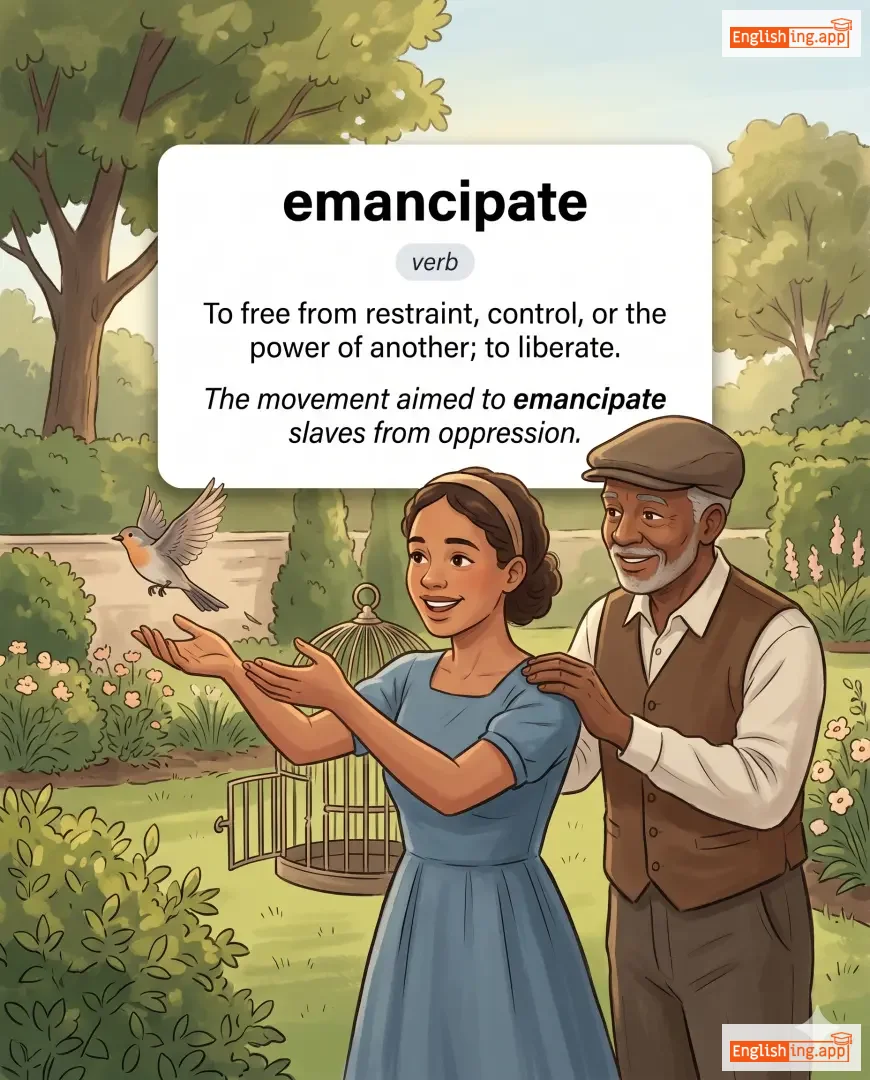
emancipate definition card — visual illustration of the meaning
verb
/ɪˈmæn.sɪ.peɪt/
счастье (schastye)

To free from restraint, control, or the power of another; to liberate.

"The movement aimed to emancipate slaves from oppression."

"Она не смогла скрыть своего счастья, когда получила награду." (Ona ne smogla skryt' svoego schast'ya, kogda poluchila nagradu.)
noun
/ɪˌmæn.sɪˈpeɪ.ʃən/
эмансипация (emantsipatsiya)

the fact or process of being set free from legal, social, or political restrictions

"The emancipation of slaves was a significant moment in American history."

"Эмансипация рабов была важным моментом в американской истории." (Emantsipatsiya rabov byla vazhnym momentom v amerikanskoy istorii.)
verb
/ɪˈmæskjʊleɪt/
ослабить (oslabit)

To make someone weaker or less effective; to deprive of strength or vigor.

"The constant criticism emasculated his confidence."
"Постоянная критика ослабила его уверенность." (Postoyannaya kritika oslabila ego uverennost.)
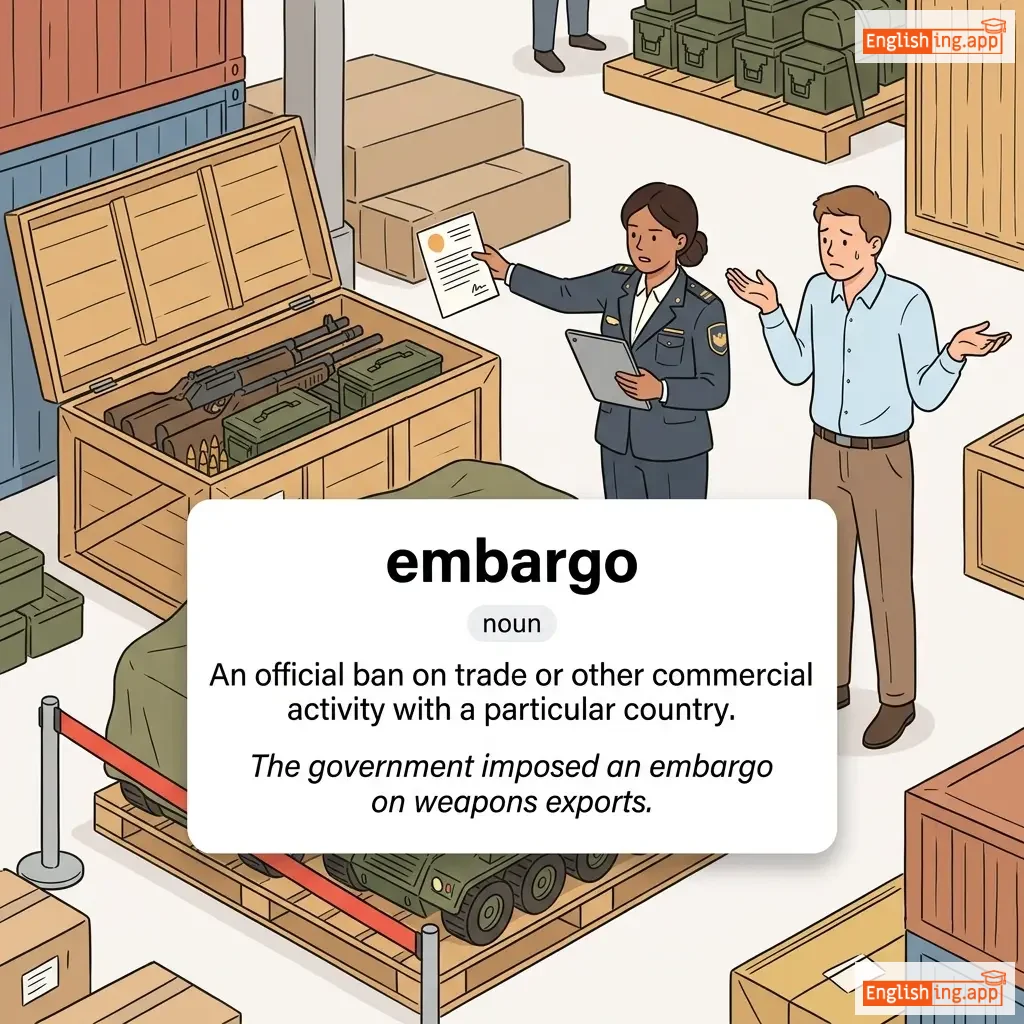
embargo definition card — visual illustration of the meaning
noun
/ɛmˈbɑːrɡoʊ/
эмбарго (embargo)

An official ban on trade or other commercial activity with a particular country.

"The government imposed an embargo on weapons exports."

"Правительство ввело эмбарго на экспорт оружия." (Pravitel'stvo vvelo embargo na eksport oruzhiya.)
verb
/ɪmˈbɑːrk/
отправиться в путь (otpravit'sya v put')

to begin a journey, project, or activity

"She decided to embark on a new career in medicine."
"Она решила начать новую карьеру в медицине." (Ona reshila nachat' novuyu kar'yeru v meditsine.)
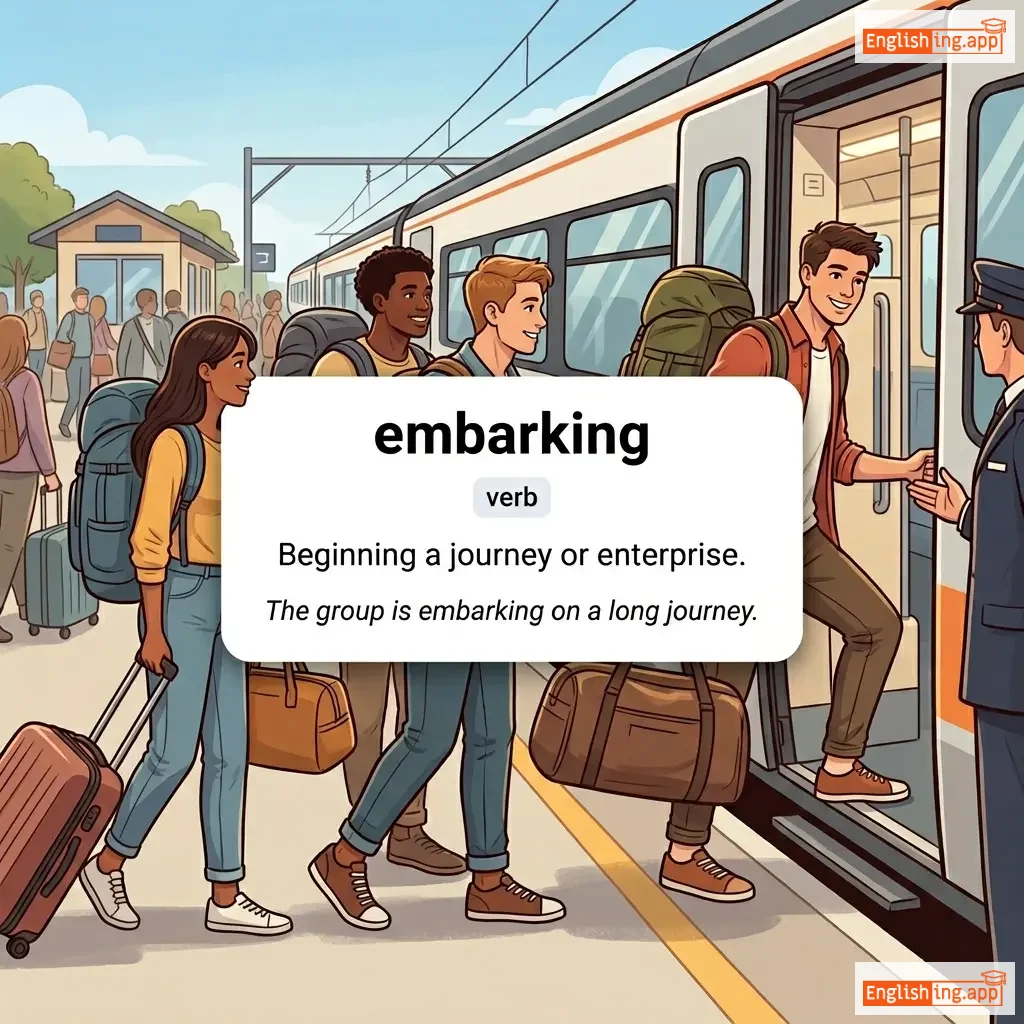
embarking definition card — visual illustration of the meaning
verb
/ɪmˈbɑːrkɪŋ/
начинать путешествие (nachinat' puteshestvie)

Beginning a journey or enterprise.

"The group is embarking on a long journey."

"Группа начинает долгий путь." (Gruppa nachinayet dolgiy put'.)
verb
/ɪmˈbærəs/

to cause someone to feel awkward, self-conscious, or ashamed

"His rude comment really embarrassed her in front of everyone."

adjective
/ɪmˈbærəst/
смущенный (smushchyonny)

feeling awkward, ashamed, or self-conscious about something

"He felt embarrassed when he forgot her name."

"Он почувствовал себя смущенным, когда забыл ее имя." (On pochuvstvoval sebya smushchyonnym, kogda zabyl yeyo imya.)
adjective
/ɪmˈbær.ə.sɪŋ/
неловкий; стыдный; унизительный (embarrassing)

causing shame or awkwardness; uncomfortable; humiliating

"It was embarrassing when I forgot her name."

"Это было неловко, когда я забыл ее имя." (Eto bylo nelovko, kogda ya zabyl yeye imya.)
noun
/ɪmˈbærəsmənt/
смущение (smushchenie)

a feeling of self-consciousness, shame, or awkwardness

"Her face turned red with embarrassment after the mistake."

"Её лицо покраснело от смущения после ошибки." (Eyo litso pokrasnelo ot smushcheniya posle oshibki.)
noun
/ˈɛmbəsi/
посольство (posol'stvo)

the official residence or offices of an ambassador

"He works at the French embassy in Dhaka."

"Он работает в французском посольстве в Дакке." (On rabotayet v frantsuzskom posol'stve v Dakke.)
verb
/ɪmˈbɛd/
встраивать (vstraint)

to fix something firmly into a surrounding mass or context

"The journalist was embedded with the military unit."
"Журналист был встроен в военное подразделение." (Zurnalist byl vstroen v voennoe podrazdelenie.)
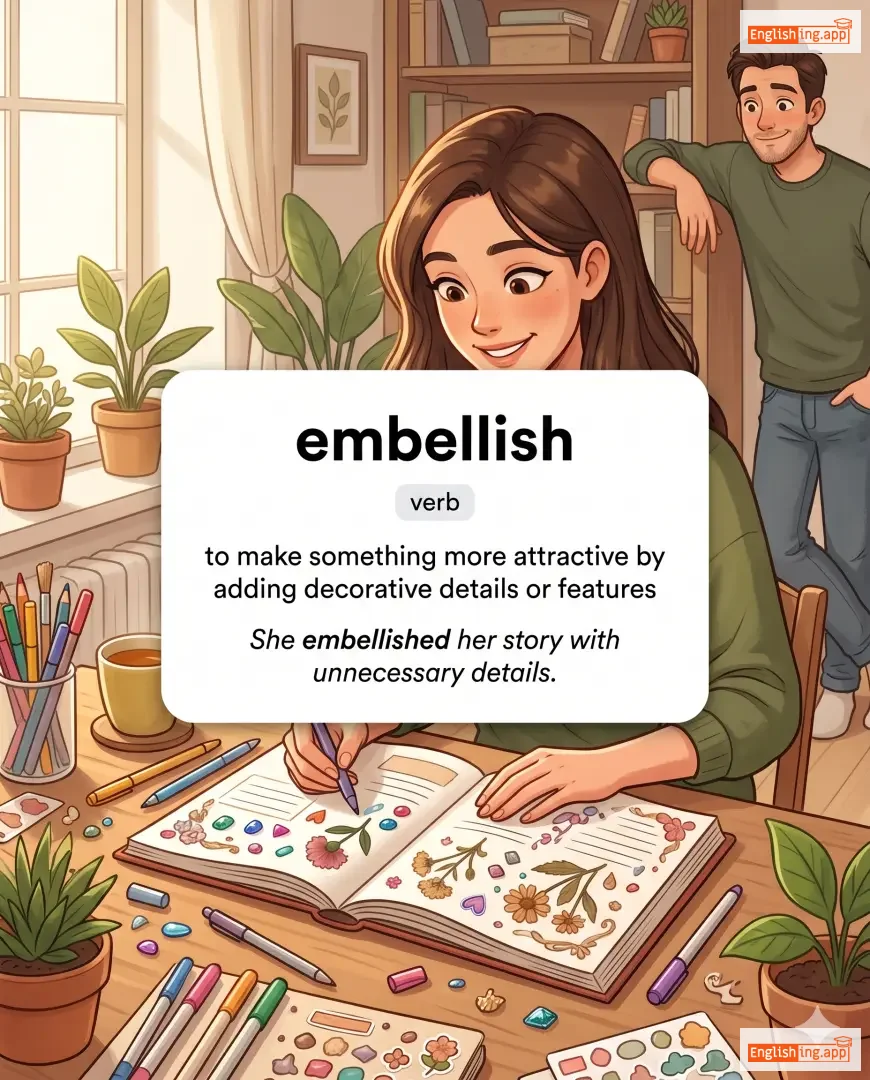
embellish definition card — visual illustration of the meaning
verb
/ɪmˈbɛlɪʃ/
украшать (ukrashat)

to make something more attractive by adding decorative details or features

"She embellished her story with unnecessary details."

"Она украсила свою историю ненужными деталями." (Ona ukrasila svoyu istoriyu nenuzhnymi detal'yami.)
verb
/ɛmˈbɛzəl/

to steal or misuse money or property entrusted to one's care

"The accountant was arrested for embezzling company funds."

noun
/ɪmˈbɛzlmənt/
присвоение средств (prisvoenie sredstv)

The act of dishonestly taking money or property entrusted to one's care.

"The accountant was arrested for embezzlement of company funds."

"Бухгалтер был арестован за присвоение средств компании." (Bukhgalter byl arestovan za prisvoenie sredstv kompanii.)
verb
/ɪmˈbɪtər/
озлобить (ozlobit')

To make someone resentful or angry; to cause bitterness.

"The unfair treatment embittered the employees."

"Нечестное обращение ожесточило сотрудников." (Nechesnoye obrashcheniye ozlobiło sotrudnikov.)
verb
/ɛmˈbleɪzən/
украшать ярко (ukrashat' yarko)

To decorate or display something in a noticeable or impressive way.

"The team's logo was emblazoned on their uniforms."

"Логотип команды был отображен на их униформах." (Logotip komandy byl otobrazhen na ikh uniformakh.)
noun
/ˈɛmbləm/
эмблема (emblema)

A symbolic object, design, or figure representing an idea, group, or identity.

"The dove is an emblem of peace."

"Голубь - это эмблема мира." (Golub' - eto emblema mira.)
verb
/ɪmˈbɒdi/
олицетворять (olitsvetoryat)

To give tangible or visible form to an idea, quality, or feeling.

"She embodies the spirit of generosity."

"Она олицетворяет дух щедрости." (Ona olitstetvoryayet dukh shchedrosti.)
embolden definition card — visual illustration of the meaning
verb
/ɪmˈboʊldən/
ободрить (obodrit')

to give someone the courage or confidence to do something

"Her success emboldened her to take more risks."

"Её успех дал ей смелость рисковать больше." (Yeyo uspekh dal yey smelost' riskovat' bol'she.)
noun
/ˈɛmbəˌlɪzəm/
эмболия (emboliya)

the sudden blockage of a blood vessel by a clot or other foreign matter

"The patient suffered a fatal pulmonary embolism."

"Пациент перенес фатальную легочную эмболию." (Patsiyent perenes fatal'nuyu legoch'nuyu emboliyu.)
verb
/ɛmˈbɔs/
украшать выпуклым рисунком (ukrashat' vypuklym risunkom)

to decorate a surface with a raised design or pattern

"The invitation card was embossed with golden letters."

"Пригласительная открытка была эмбоссирована золотыми буквами." (Priglasitelnaya otkrytka byla embossirovana zolotymi bukvami.)
verb
/ɛmˈbreɪs/
обнимать (obnimat')

to hold someone closely in your arms, or to accept or support something willingly

"They embraced each other after a long separation."

"Они обнялись после долгой разлуки." (Oni obnyalis' posle dolgoy razluki.)
verb
/ɪmˈbrɔɪdər/
вышивать (vishivat)

to decorate fabric with patterns using a needle and thread

"She embroidered flowers on the pillowcase."

"Она вышивала цветы на наволочке." (Ona vyshivala tsvety na navolocheke.)
verb
/ɪmˈbrɔɪl/
вовлекать (vovlekat)

to involve someone deeply in a conflict, argument, or difficult situation

"The politician was embroiled in a major corruption scandal."

"Политик был вовлечен в крупный коррупционный скандал." (Politik byl vovlechon v krupnyy korruptsionnyy skandal.)
adjective
/ɪmˈbrɔɪld/
вовлечённый (vovlyechyonny)

being deeply involved in a difficult situation, conflict, or scandal

"She found herself embroiled in a heated family dispute."

"Она оказалась вовлечена в напряжённый семейный спор." (Ona okazalas' vovlyechena v napryazhyonnyy semeynyy spor.)
adjective
/ˌɛm.briˈɒn.ɪk/
эмбриональный (embryonal'nyy)

in an early or undeveloped stage; relating to an embryo

"The project is still in its embryonic stage."

"Проект всё ещё на своей эмбриональной стадии." (Proyekt vso eshche na svoei embryonal'noi stadii.)
verb
/ɪˈmɛnd/
исправить (ispravit')

to correct or revise a text, especially for errors

"The editor emended the manuscript before publication."

"Редактор исправил рукопись перед публикацией." (Redaktor ispravil rukopis' pered publikatsiyey.)
noun
/ˌiː.mɛnˈdeɪ.ʃən/
исправление (ispravlenie)

a correction or improvement made to a text

"The article required several emendations before it was ready for print."

"Статья потребовала нескольких исправлений, прежде чем она была готова к печати." (Statya potrebovala neskol'ko ispravleniy, prezhde chem ona byla gotova k pechati.)
noun
/ˈem.ər.əld/
изумруд (izumrud)

a bright green precious stone used in jewelry

"The emerald necklace sparkled in the sunlight."

"Изумрудное ожерелье сверкало на солнце." (Izumrudnoye ozherelye sverkalo na solntse.)
verb
/ɪˈmɜːrdʒ/
появляться (poyavlyatsya)

to come into view or become apparent; to arise or appear from something

"New opportunities will emerge as the industry grows."

"Новые возможности появятся по мере роста отрасли." (Novye vozmozhnosti poyavyatsya po mere rosta otrasli.)
noun
/ɪˈmɜːrdʒəns/
возникновение (vozniknoveniye)

the process of coming into view, existence, or prominence

"The emergence of new technologies has transformed communication."
"Возникновение новых технологий изменило общение." (Vozniknoveniye novykh tekhnologiy izmenilo obshcheniye.)
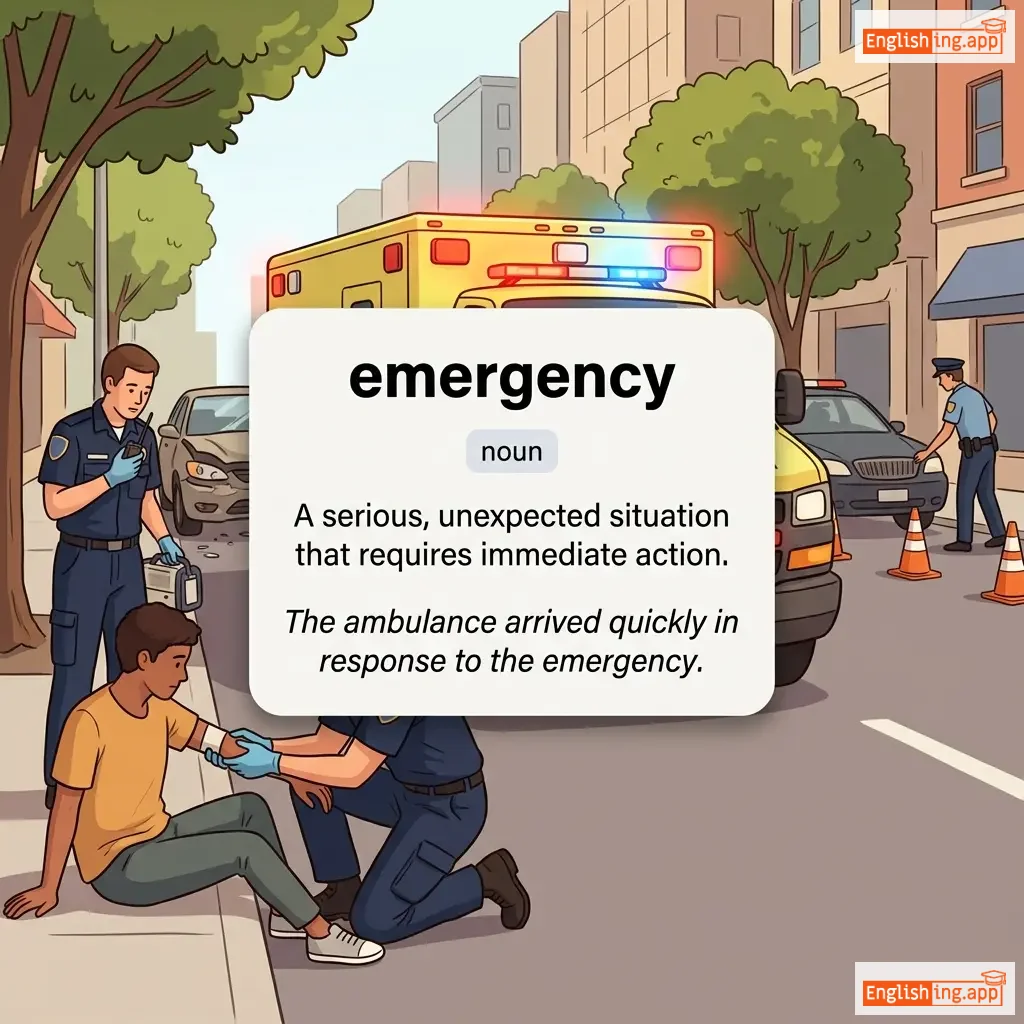
emergency definition card — visual illustration of the meaning
noun
/ɪˈmɜrdʒənsi/
чрезвычайная ситуация (chrezvychaynaya situatsiya)

A serious, unexpected situation that requires immediate action.

"The ambulance arrived quickly in response to the emergency."

"Скорая помощь приехала быстро в ответ на чрезвычайную ситуацию." (Skoraya pomoshch' priekhala bystro v otvet na chrezvychaynuyu situatsiyu.)
adjective
/ɪˈmɜːrdʒənt/
возникающий (voznikaushchiy)

just coming into existence or becoming prominent

"The emergent startup quickly attracted investors."
"Возникающий стартап быстро привлек инвесторов." (Voznikayushchiy startup bystro prively investory.)
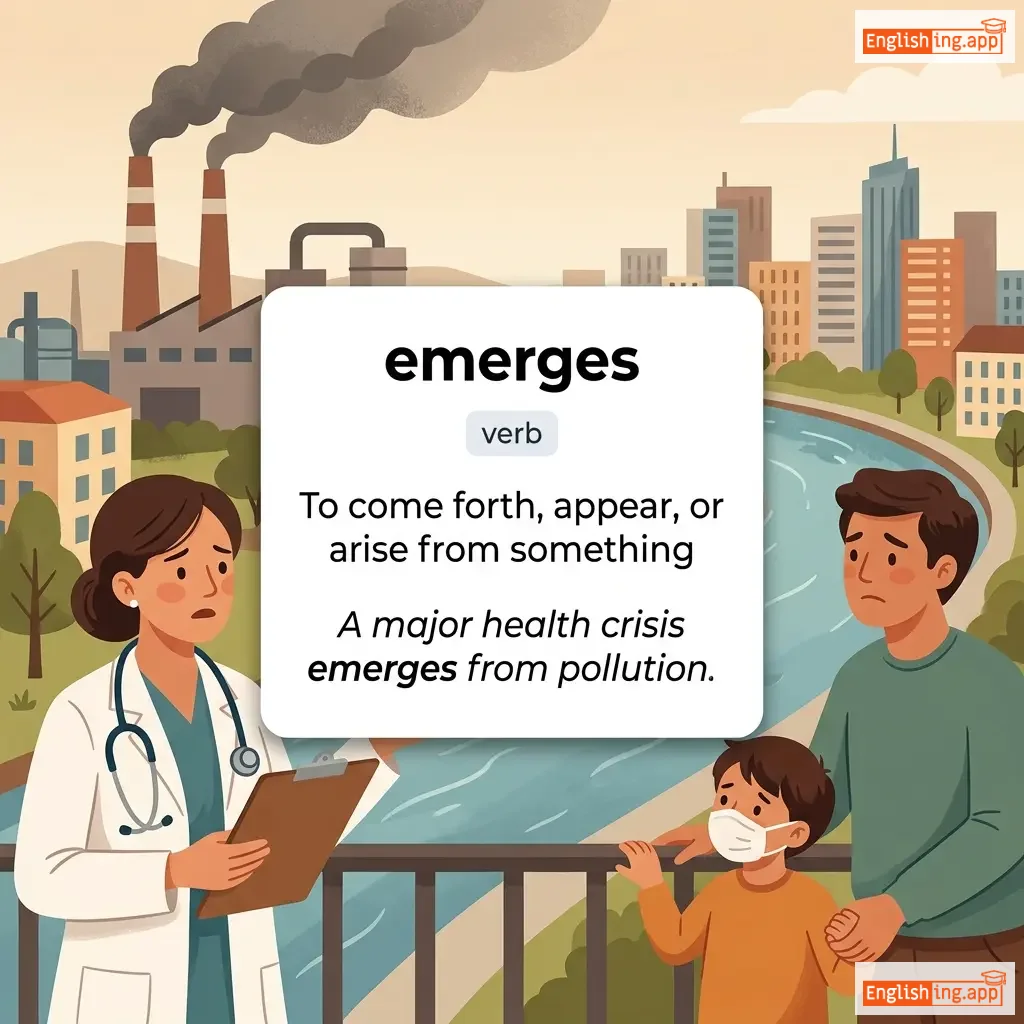
emerges definition card — visual illustration of the meaning
verb
ɪˈmɜːdʒɪz
появляться (poyavlyatsya)

To come forth, appear, or arise from something

"A major health crisis emerges from pollution."

"Большой кризис в области здравоохранения возникает из-за загрязнения." (Bol'shoy krizis v oblasti zdravookhraneniya voznikayet iz-za zagrizneniya.)
adjective
/ɪˈmɜːrdʒɪŋ/
развивающийся (razvivayushchiesya)

becoming known, developing, or starting to exist

"Bangladesh is one of the fastest emerging economies in the world."

"Бангладеш является одной из самых быстро развивающихся экономик мира." (Bangladesh yavlyaetsya odnoy iz samykh bystro razvivayushchikhsya ekonomiki mira.)
adjective
/ɪˈmɛrɪtəs/
профессор эмеритус (professor emeritus)

having retired but allowed to retain their title as an honor

"He is a professor emeritus at the university."

"Он профессор-эмеритус в университете." (On professor-emeritus v universitete.)
noun
/ɪˈmɛtɪk/
рвотное средство (rvotnoe sredstvo)

a substance that causes vomiting

"The doctor administered an emetic to remove the poison."

"Врач дал рвотное средство для удаления яда." (Vrach dal rvotnoe sredstvo dlya udaleniya yada.)
noun
/ˈɛmɪɡrənt/
эмигрант (emigrant)

A person who leaves their own country to settle permanently in another.

"The emigrant started a new life in Canada."

"Эмигрант начал новую жизнь в Канаде." (Emigrant nachal novuju zhizn' v Kanade.)
verb
/ˈɛmɪˌɡreɪt/
эмигрировать (emigrirovat)

To leave one's own country in order to settle permanently in another.

"Many people emigrated from Europe to America in the 19th century."

"Многие люди эмигрировали из Европы в Америку в 19-м веке." (Mnogie lyudi emigrirali iz Yevropy v Ameriku v 19-m veke.)
noun
/ˈɛmɪnəns/
величие (velichie)

Fame or recognized superiority, especially within a particular sphere.

"She rose to eminence as a leading scientist."

"Она достигла величия как ведущий ученый." (Ona dostigla velichiya kak vedushchiy uchenyy.)