Vocabulaires

Découvrez, apprenez et maîtrisez le vocabulaire anglais

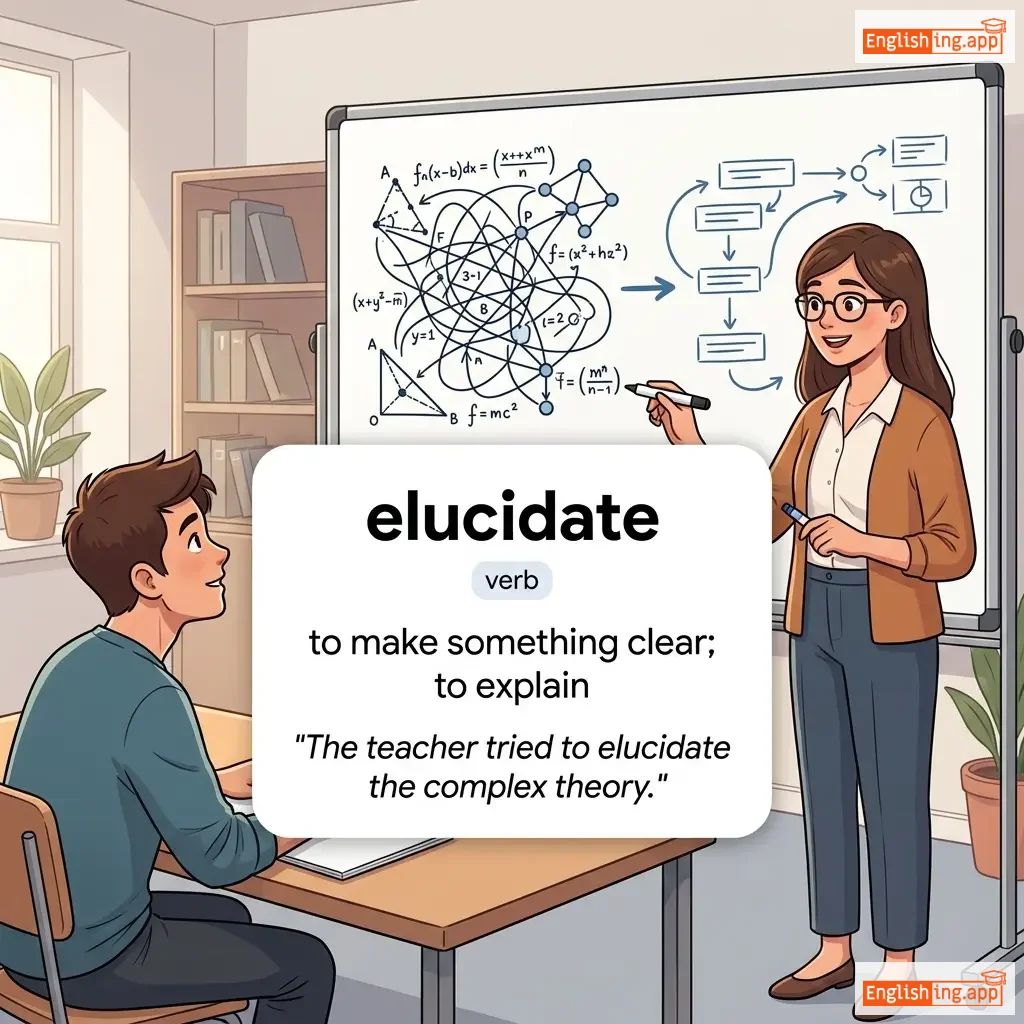
elucidate definition card — visual illustration of the meaning
verb
/ɪˈluːsɪdeɪt/
élucider (elucider)

to make something clear; to explain

"The teacher tried to elucidate the complex theory."

"Le professeur a essayé d'élucider la théorie complexe." (Le professeur a essayé d'élucider la théorie complexe.)
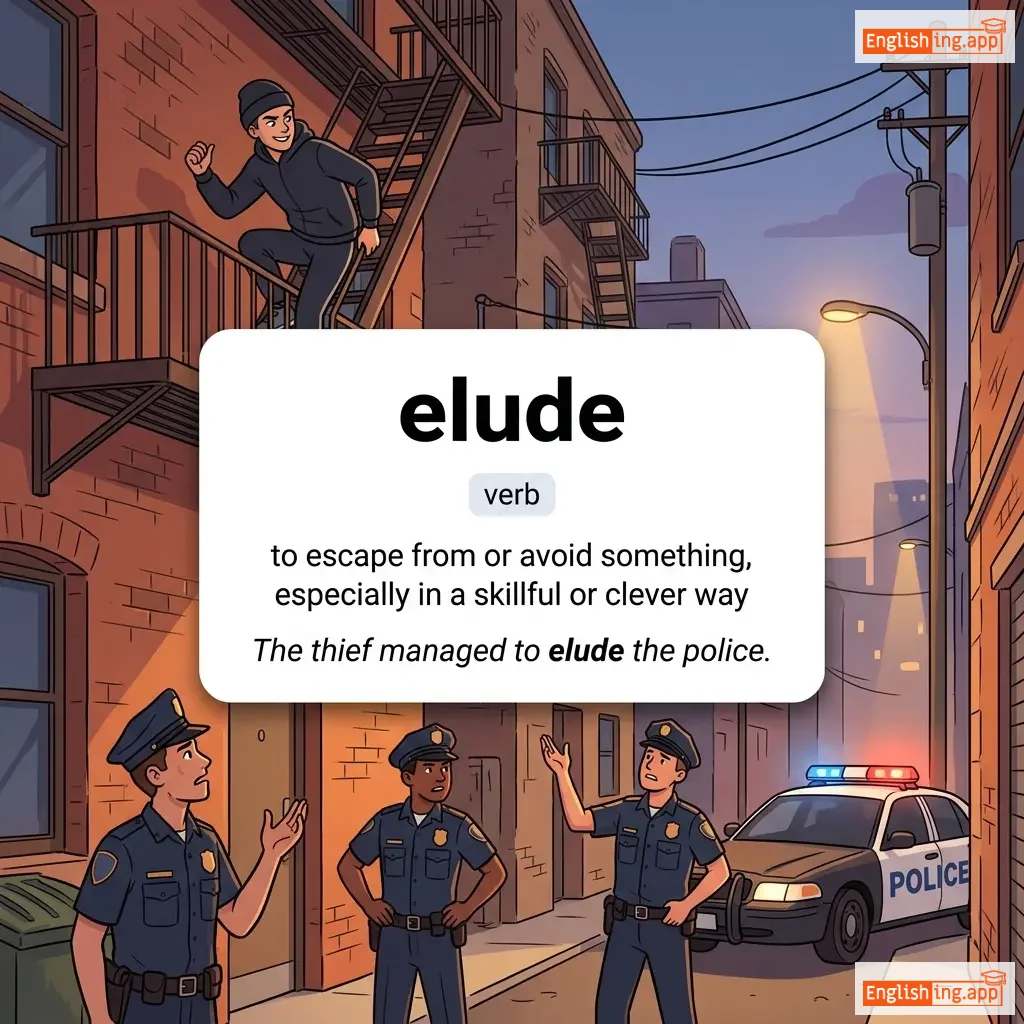
elude definition card — visual illustration of the meaning
🏃‍♂️

elude (élude)

verb
/ɪˈluːd/
éluder (eluder)

to escape from or avoid something, especially in a skillful or clever way

"The thief managed to elude the police."

"Le voleur a réussi à éluder la police." (Le voleur a reussi a eluder la police.)
🏃‍♂️

elusion (élusion)

noun
/ɪˈluːʒən/
élusion (eluzion)

The act of escaping or avoiding something, especially by cleverness or trickery.

"His constant elusion of responsibility frustrated his colleagues."

"Sa constante élusion de responsabilité a frustré ses collègues." (Sa constante élusion de responsabilité a frustré ses collègues.)
🕵️‍♀️

elusive (iluziv)

adjective
/ɪˈluːsɪv/
difficile à trouver (difficile a trouver)

Difficult to find, catch, or achieve; hard to understand or define.

"The solution to the problem proved elusive."

"La solution au problème s'est avérée difficile à trouver." (La solution au probleme s'est averee difficile a trouver.)
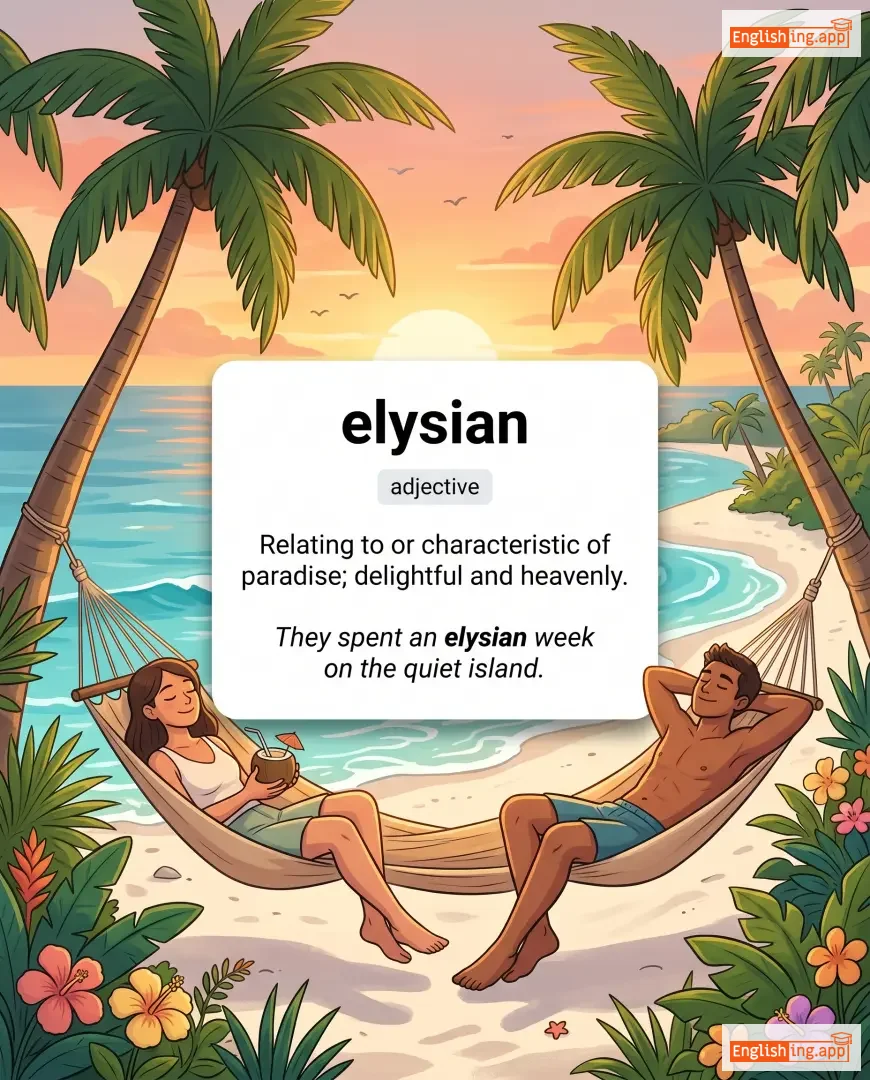
elysian definition card — visual illustration of the meaning
adjective
/ɪˈlɪʒən/
céleste (celeste)

Relating to or characteristic of paradise; delightful and heavenly.

"They spent an elysian week on the quiet island."

"Ils ont passé une semaine céleste sur l'île tranquille." (Ils ont passé une semaine céleste sur l'île tranquille.)
noun
/ɪˈlɪziəm/
élysée (elysee)

A place or state of perfect happiness; in Greek mythology, the afterlife paradise.

"For her, the garden was a personal elysium."

"Pour elle, le jardin était un élysée personnel." (pour elle, le jardin était un élysée personnel.)
verb
/ɪˈmeɪʃieɪt/
amaigrir (amaigrir)

To make abnormally thin or weak, usually because of illness or lack of food.

"The prisoners were emaciated after months without proper food."

"Les prisonniers ont été amaigris après des mois sans nourriture appropriée." (Les prisonniers ont été amaigris après des mois sans nourriture appropriée.)
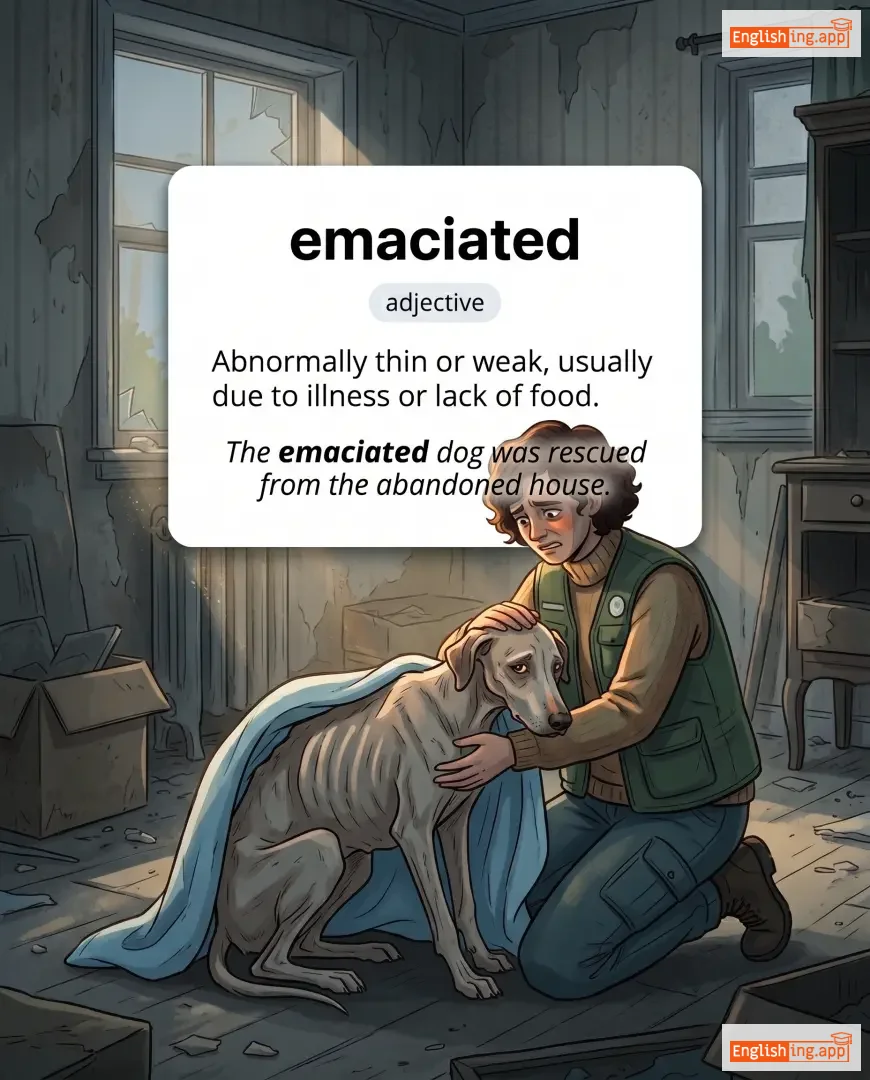
emaciated definition card — visual illustration of the meaning
adjective
/ɪˈmeɪʃieɪtɪd/
émacié (emasié)

Abnormally thin or weak, usually due to illness or lack of food.

"The emaciated dog was rescued from the abandoned house."

"Le chien émacié a été sauvé de la maison abandonnée." (Le chien émacié a été sauvé de la maison abandonnée.)
verb
/ˈɛm.ə.neɪt/
émaner (emane)

To come out or spread from a source.

"A sweet fragrance emanated from the garden."

"Une douce fragrance émana du jardin." (Une douce fragrance émana du jardin.)
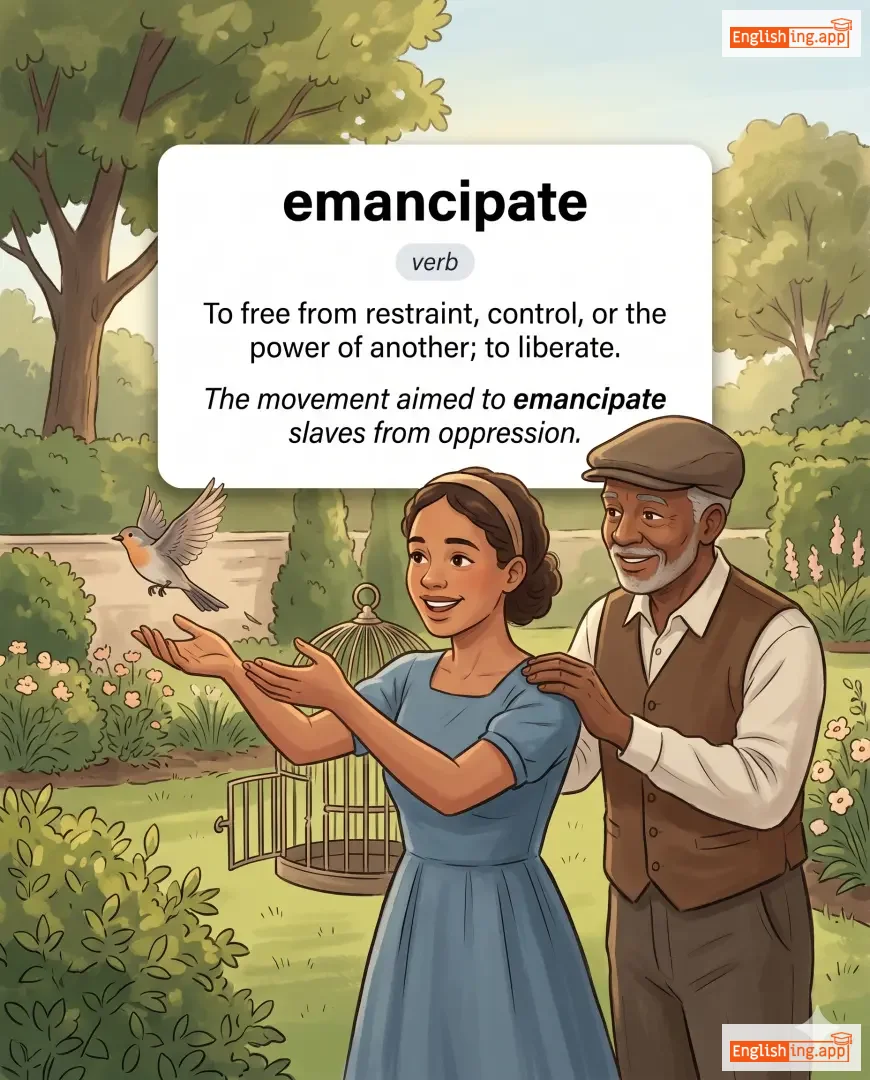
emancipate definition card — visual illustration of the meaning
verb
/ɪˈmæn.sɪ.peɪt/
bonheur (bonheur)

To free from restraint, control, or the power of another; to liberate.

"The movement aimed to emancipate slaves from oppression."

"Elle n'a pas pu cacher son bonheur quand elle a reçu le prix." (Elle n'a pas pu cacher son bonheur quand elle a reçu le prix.)
noun
/ɪˌmæn.sɪˈpeɪ.ʃən/
émancipation (emansipasyon)

the fact or process of being set free from legal, social, or political restrictions

"The emancipation of slaves was a significant moment in American history."

"L'émancipation des esclaves a été un moment significatif dans l'histoire américaine." (L'emancipation des esclaves a ete un moment significatif dans l'histoire americaine.)
verb
/ɪˈmæskjʊleɪt/
émasculer (emasculer)

To make someone weaker or less effective; to deprive of strength or vigor.

"The constant criticism emasculated his confidence."

"La critique constante a émoussé sa confiance." (La critique constante a émoussé sa confiance.)
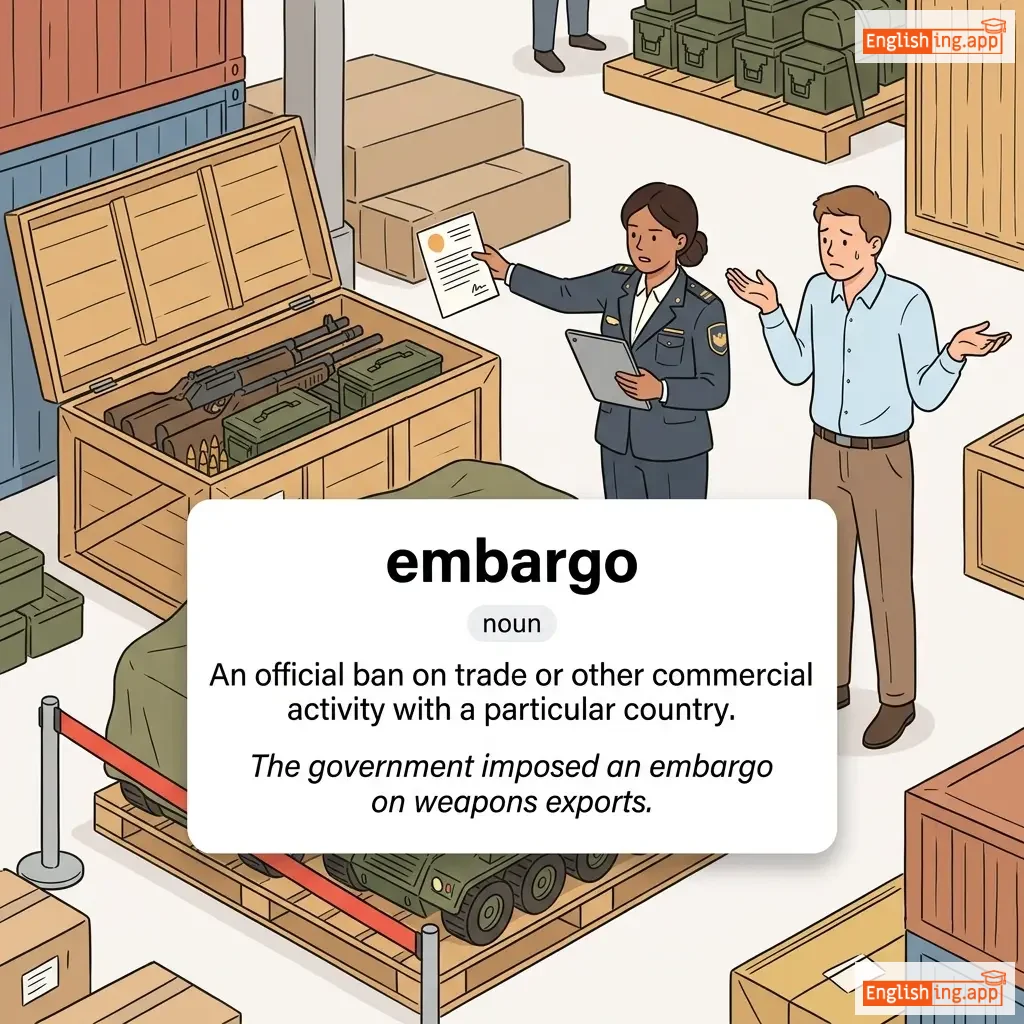
embargo definition card — visual illustration of the meaning
noun
/ɛmˈbɑːrɡoʊ/
embargo (embargo)

An official ban on trade or other commercial activity with a particular country.

"The government imposed an embargo on weapons exports."

"Le gouvernement a imposé un embargo sur les exportations d'armes." (Le gouvernement a impose un embargo sur les exportations d'armes.)
verb
/ɪmˈbɑːrk/
embarquer (embarquer)

to begin a journey, project, or activity

"She decided to embark on a new career in medicine."

"Elle a décidé de se lancer dans une nouvelle carrière en médecine." (Elle a décidé de se lancer dans une nouvelle carrière en médecine.)
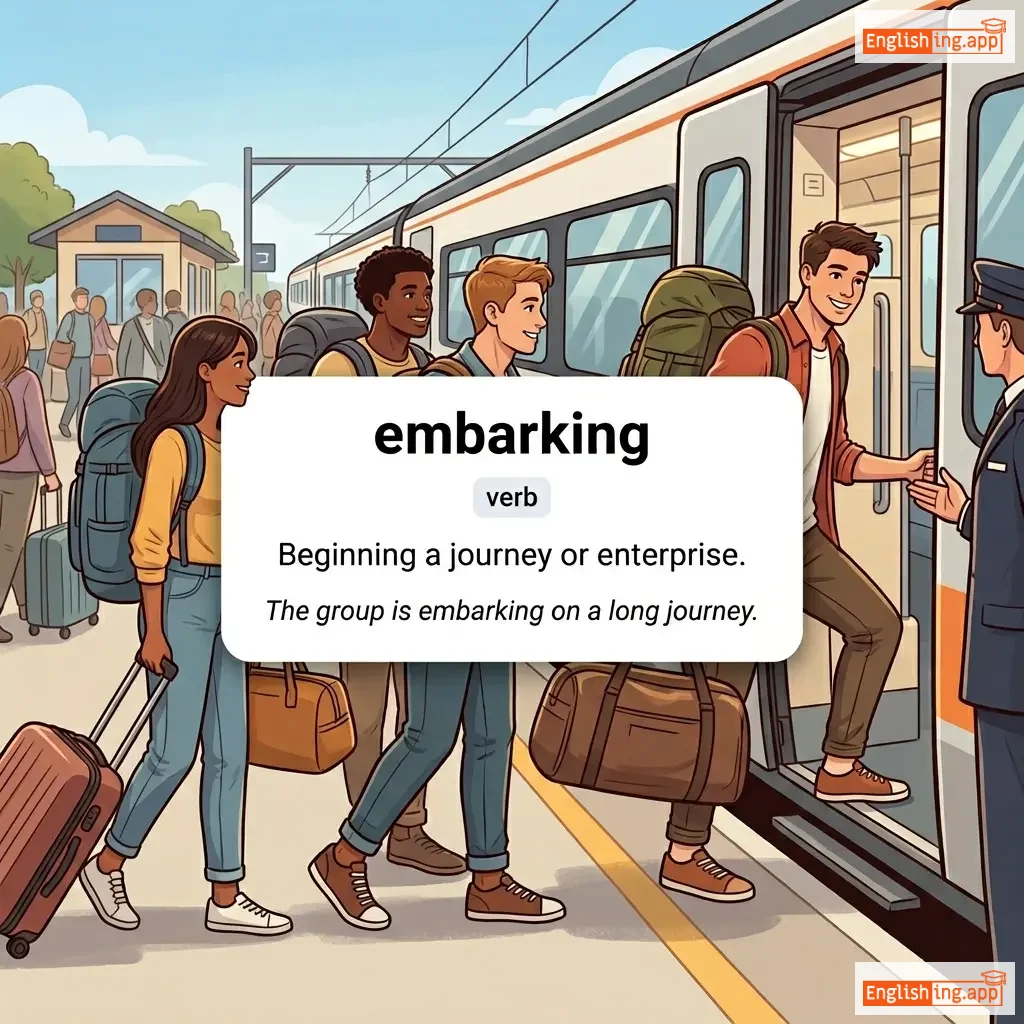
embarking definition card — visual illustration of the meaning
verb
/ɪmˈbɑːrkɪŋ/
commençant un voyage (commençant un voyage)

Beginning a journey or enterprise.

"The group is embarking on a long journey."

"Le groupe commence un long voyage." (Le groupe commence un long voyage.)
verb
/ɪmˈbærəs/
embarrasser (embarrasser)

to cause someone to feel awkward, self-conscious, or ashamed

"His rude comment really embarrassed her in front of everyone."

"Son commentaire impoli l'a vraiment embarrassée devant tout le monde." (Son commentaire impoli l'a vraiment embarrassée devant tout le monde.)
adjective
/ɪmˈbærəst/
embarrassé (embarrassé)

feeling awkward, ashamed, or self-conscious about something

"He felt embarrassed when he forgot her name."

"Il s'est senti embarrassé quand il a oublié son nom." (Il s'est senti embarrassé quand il a oublié son nom.)
adjective
/ɪmˈbær.ə.sɪŋ/
embarrassant; gênant; humiliant (embarassant)

causing shame or awkwardness; uncomfortable; humiliating

"It was embarrassing when I forgot her name."

"C'était embarrassant quand j'ai oublié son nom." (C'était embarrassant quand j'ai oublié son nom.)
noun
/ɪmˈbærəsmənt/
gêne (gene)

a feeling of self-consciousness, shame, or awkwardness

"Her face turned red with embarrassment after the mistake."

"Son visage est devenu rouge de gêne après l'erreur." (Son visage est devenu rouge de gene apres l'erreur.)
noun
/ˈɛmbəsi/
ambassade (ambassade)

the official residence or offices of an ambassador

"He works at the French embassy in Dhaka."

"Il travaille à l'ambassade de France à Dhaka." (Il travaille à l'ambassade de France à Dhaka.)
verb
/ɪmˈbɛd/
intégrer (integrer)

to fix something firmly into a surrounding mass or context

"The journalist was embedded with the military unit."

"Le journaliste était intégré avec l'unité militaire." (Le journaliste était intégré avec l'unité militaire.)
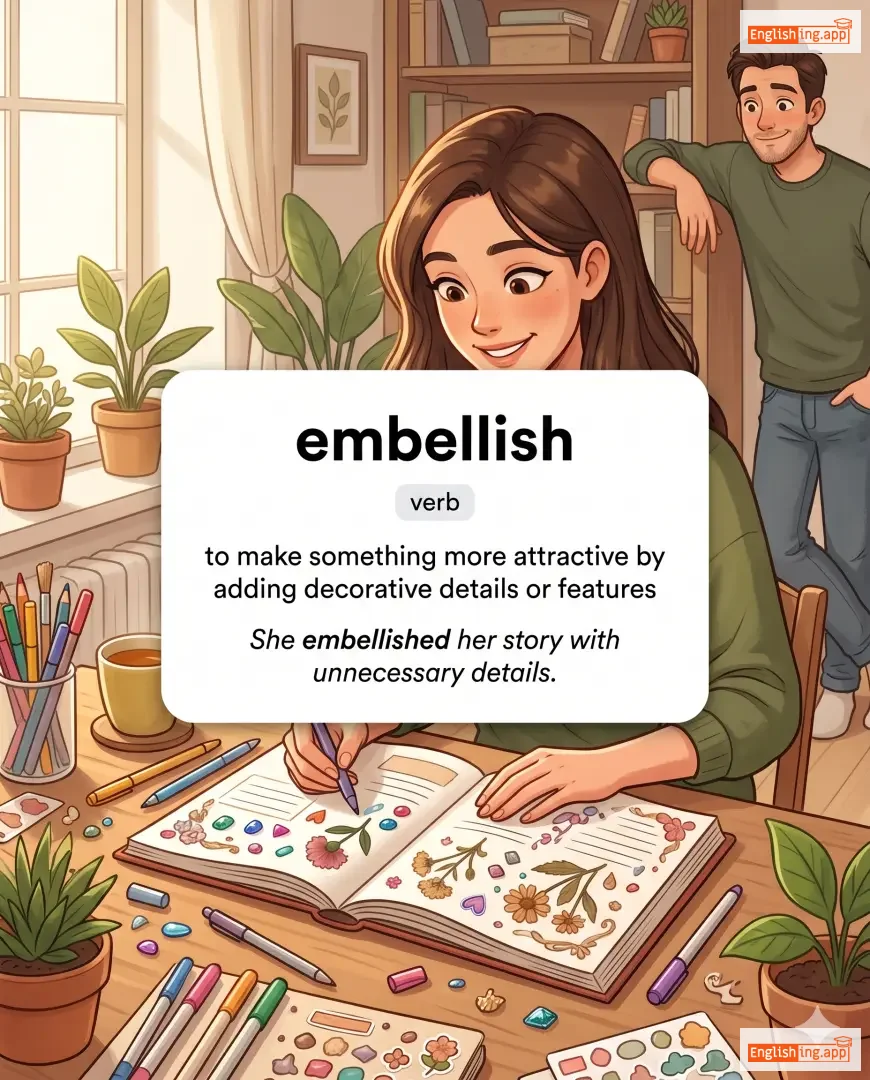
embellish definition card — visual illustration of the meaning
verb
/ɪmˈbɛlɪʃ/
embellir (embellir)

to make something more attractive by adding decorative details or features

"She embellished her story with unnecessary details."

"Elle a embelli son histoire avec des détails inutiles." (Elle a embelli son histoire avec des details inutiles.)
verb
/ɛmˈbɛzəl/
détourner (detourner)

to steal or misuse money or property entrusted to one's care

"The accountant was arrested for embezzling company funds."

"Le comptable a été arrêté pour avoir détourné des fonds de l'entreprise." (Le comptable a été arrêté pour avoir détourné des fonds de l'entreprise.)
noun
/ɪmˈbɛzlmənt/
détournement de fonds (detournement de fonds)

The act of dishonestly taking money or property entrusted to one's care.

"The accountant was arrested for embezzlement of company funds."

"Le comptable a été arrêté pour détournement de fonds de l'entreprise." (Le comptable a été arrêté pour détournement de fonds de l'entreprise.)
verb
/ɪmˈbɪtər/
amerir (amerir)

To make someone resentful or angry; to cause bitterness.

"The unfair treatment embittered the employees."

"Le mauvais traitement a rendu les employés amers." (Le mauvais traitement a rendu les employés amers.)
verb
/ɛmˈbleɪzən/
afficher de manière remarquable (afficher de manière remarquable)

To decorate or display something in a noticeable or impressive way.

"The team's logo was emblazoned on their uniforms."

"Le logo de l'équipe était emblazoné sur leurs uniformes." (Le logo de l'équipe était emblazoné sur leurs uniformes.)
noun
/ˈɛmbləm/
emblème (embleme)

A symbolic object, design, or figure representing an idea, group, or identity.

"The dove is an emblem of peace."

"La colombe est un emblème de la paix." (La colombe est un emblème de la paix.)
verb
/ɪmˈbɒdi/
incarner (incarner)

To give tangible or visible form to an idea, quality, or feeling.

"She embodies the spirit of generosity."

"Elle incarne l'esprit de générosité." (Elle incarne l'esprit de générosité.)
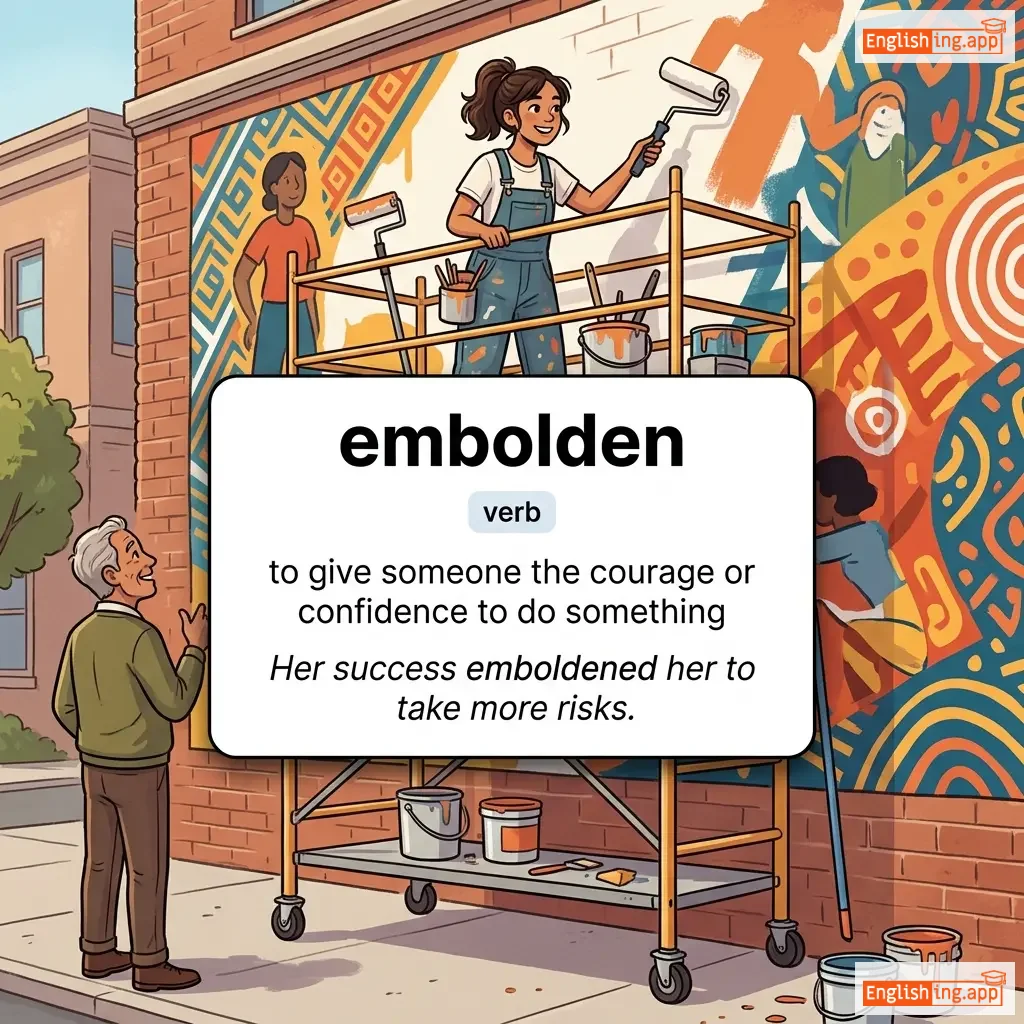
embolden definition card — visual illustration of the meaning
verb
/ɪmˈboʊldən/
encourager (encourager)

to give someone the courage or confidence to do something

"Her success emboldened her to take more risks."

"Son succès lui a donné le courage de prendre plus de risques." (Son succes lui a donne le courage de prendre plus de risques.)
noun
/ˈɛmbəˌlɪzəm/
embolie (embolie)

the sudden blockage of a blood vessel by a clot or other foreign matter

"The patient suffered a fatal pulmonary embolism."

"Le patient a souffert d'une embolie pulmonaire fatale." (Le patient a souffert d'une embolie pulmonaire fatale.)
verb
/ɛmˈbɔs/
décorer avec un motif en relief (dekorer avec un motif en relief)

to decorate a surface with a raised design or pattern

"The invitation card was embossed with golden letters."

"La carte d'invitation était embossée avec des lettres dorées." (La carte d'invitation etait embossee avec des lettres dorees.)
verb
/ɛmˈbreɪs/
embrasser (embrasser)

to hold someone closely in your arms, or to accept or support something willingly

"They embraced each other after a long separation."

"Ils se sont embrassés après une longue séparation." (Ils se sont embrassés après une longue séparation.)
verb
/ɪmˈbrɔɪdər/
broder (broder)

to decorate fabric with patterns using a needle and thread

"She embroidered flowers on the pillowcase."

"Elle a brodé des fleurs sur la taie d'oreiller." (Elle a brodé des fleurs sur la taie d'oreiller.)
verb
/ɪmˈbrɔɪl/
embrouiller (embrouiller)

to involve someone deeply in a conflict, argument, or difficult situation

"The politician was embroiled in a major corruption scandal."

"Le politicien était embourbé dans un grand scandale de corruption." (Le politicien était embourbé dans un grand scandale de corruption.)
adjective
/ɪmˈbrɔɪld/
embroilé (embroile)

being deeply involved in a difficult situation, conflict, or scandal

"She found herself embroiled in a heated family dispute."

"Elle s'est retrouvée embroilée dans un conflit familial intense." (Elle s'est retrouvée embroilée dans un conflit familial intense.)
adjective
/ˌɛm.briˈɒn.ɪk/
embryonnaire (embryonnaire)

in an early or undeveloped stage; relating to an embryo

"The project is still in its embryonic stage."

"Le projet est encore à son stade embryonnaire." (Le projet est encore a son stade embryonnaire.)
verb
/ɪˈmɛnd/
corriger (corriger)

to correct or revise a text, especially for errors

"The editor emended the manuscript before publication."

"L'éditeur a corrigé le manuscrit avant la publication." (L'éditeur a corrigé le manuscrit avant la publication.)
noun
/ˌiː.mɛnˈdeɪ.ʃən/
rectification (rectification)

a correction or improvement made to a text

"The article required several emendations before it was ready for print."

"L'article a nécessité plusieurs rectifications avant d'être prêt pour l'impression." (L'article a necessite plusieurs rectifications avant d'etre pret pour l'impression.)
noun
/ˈem.ər.əld/
émeraude (emeraude)

a bright green precious stone used in jewelry

"The emerald necklace sparkled in the sunlight."

"Le collier en émeraudes scintillait sous la lumière du soleil." (Le collier en émeraudes scintillait sous la lumière du soleil.)
verb
/ɪˈmɜːrdʒ/
émerger (emerge)

to come into view or become apparent; to arise or appear from something

"New opportunities will emerge as the industry grows."

"De nouvelles opportunités émergeront à mesure que l'industrie croît." (De nouvelles opportunités émergeront à mesure que l'industrie croît.)
noun
/ɪˈmɜːrdʒəns/
émergence (emergence)

the process of coming into view, existence, or prominence

"The emergence of new technologies has transformed communication."

"L'émergence de nouvelles technologies a transformé la communication." (L'émergence de nouvelles technologies a transformé la communication.)
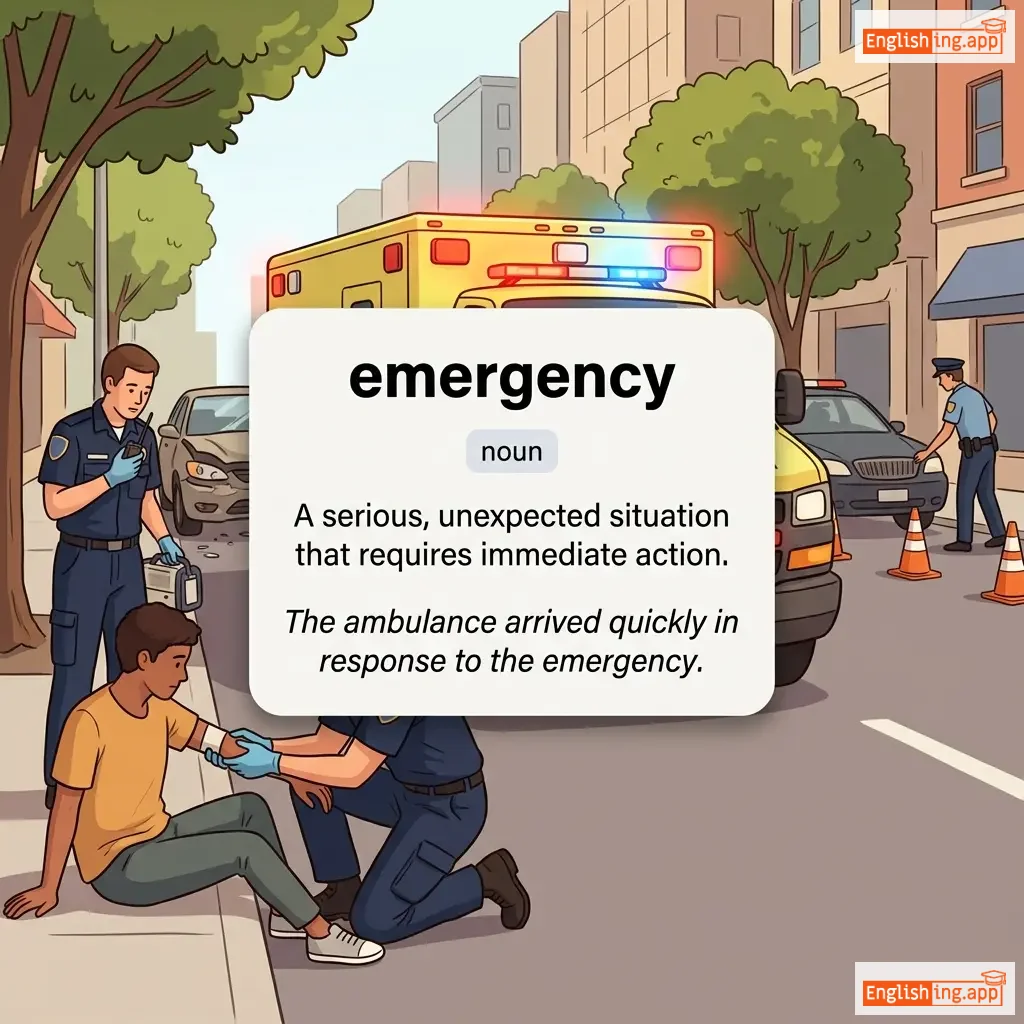
emergency definition card — visual illustration of the meaning
noun
/ɪˈmɜrdʒənsi/
urgence (urgence)

A serious, unexpected situation that requires immediate action.

"The ambulance arrived quickly in response to the emergency."

"L'ambulance est arrivée rapidement en réponse à l'urgence." (L'ambulance est arrivee rapidement en reponse a l'urgence.)
adjective
/ɪˈmɜːrdʒənt/
émergent (emergent)

just coming into existence or becoming prominent

"The emergent startup quickly attracted investors."

"La startup émergente a rapidement attiré des investisseurs." (La startup emergente a rapidement attire des investisseurs.)
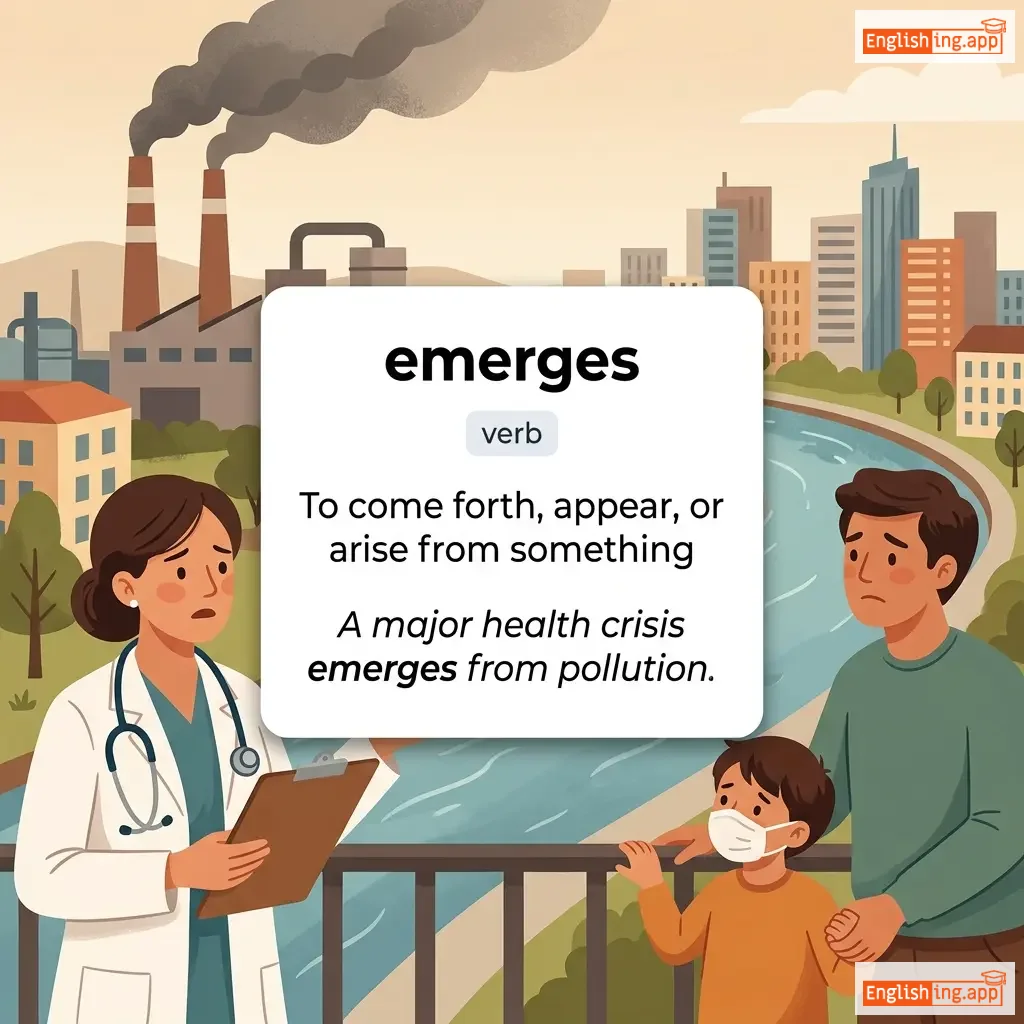
emerges definition card — visual illustration of the meaning
verb
ɪˈmɜːdʒɪz
émerger (emèrger)

To come forth, appear, or arise from something

"A major health crisis emerges from pollution."

"Une grande crise de santé émerge de la pollution." (Une grande crise de santé émerge de la pollution.)
adjective
/ɪˈmɜːrdʒɪŋ/
émergent (emergent)

becoming known, developing, or starting to exist

"Bangladesh is one of the fastest emerging economies in the world."

"Le Bangladesh est l'une des économies émergentes les plus rapides du monde." (Le Bangladesh est l'une des economies emergentes les plus rapides du monde.)
adjective
/ɪˈmɛrɪtəs/
professeur émérite (professeur emérite)

having retired but allowed to retain their title as an honor

"He is a professor emeritus at the university."

"Il est professeur émérite à l'université." (Il est professeur émérite à l'université.)
noun
/ɪˈmɛtɪk/
émétique (emetique)

a substance that causes vomiting

"The doctor administered an emetic to remove the poison."

"Le médecin a administré un émétique pour éliminer le poison." (Le médecin a administré un émétique pour éliminer le poison.)
noun
/ˈɛmɪɡrənt/
émigrant (emigrant)

A person who leaves their own country to settle permanently in another.

"The emigrant started a new life in Canada."

"L'émigrant a commencé une nouvelle vie au Canada." (L'emigrant a commence une nouvelle vie au Canada.)
verb
/ˈɛmɪˌɡreɪt/
émigrer (emigrer)

To leave one's own country in order to settle permanently in another.

"Many people emigrated from Europe to America in the 19th century."

"Beaucoup de gens ont émigré d'Europe vers l'Amérique au XIXe siècle." (Beaucoup de gens ont émigré d'Europe vers l'Amérique au XIXe siècle.)
noun
/ˈɛmɪnəns/
éminence (eminens)

Fame or recognized superiority, especially within a particular sphere.

"She rose to eminence as a leading scientist."

"Elle a atteint l'éminence en tant que scientifique de premier plan." (Elle a atteint l'eminence en tant que scientifique de premier plan.)