Словари

Словарь английского языка | Значения слов, определения и примеры

engineering definition card — visual illustration of the meaning
noun
/ˌɛndʒɪˈnɪərɪŋ/
инженерное дело (inzhenernoe delo)

The branch of science and technology concerned with the design, building, and use of engines, machines, and structures.

"She studied civil engineering at university."

"Она изучала гражданское инженерное дело в университете." (Ona izuchala grazhdanskoe inzhenernoe delo v universitete.)
noun/adjective
/ˈɪŋɡlɪʃ/
английский (angliyskiy)

The language of England, widely spoken around the world; relating to England or its people.

"She is learning English to study abroad."
"Она учит английский, чтобы учиться за границей." (Ona uchit angliyskiy, chtoby uchit'sya za granitsey.)
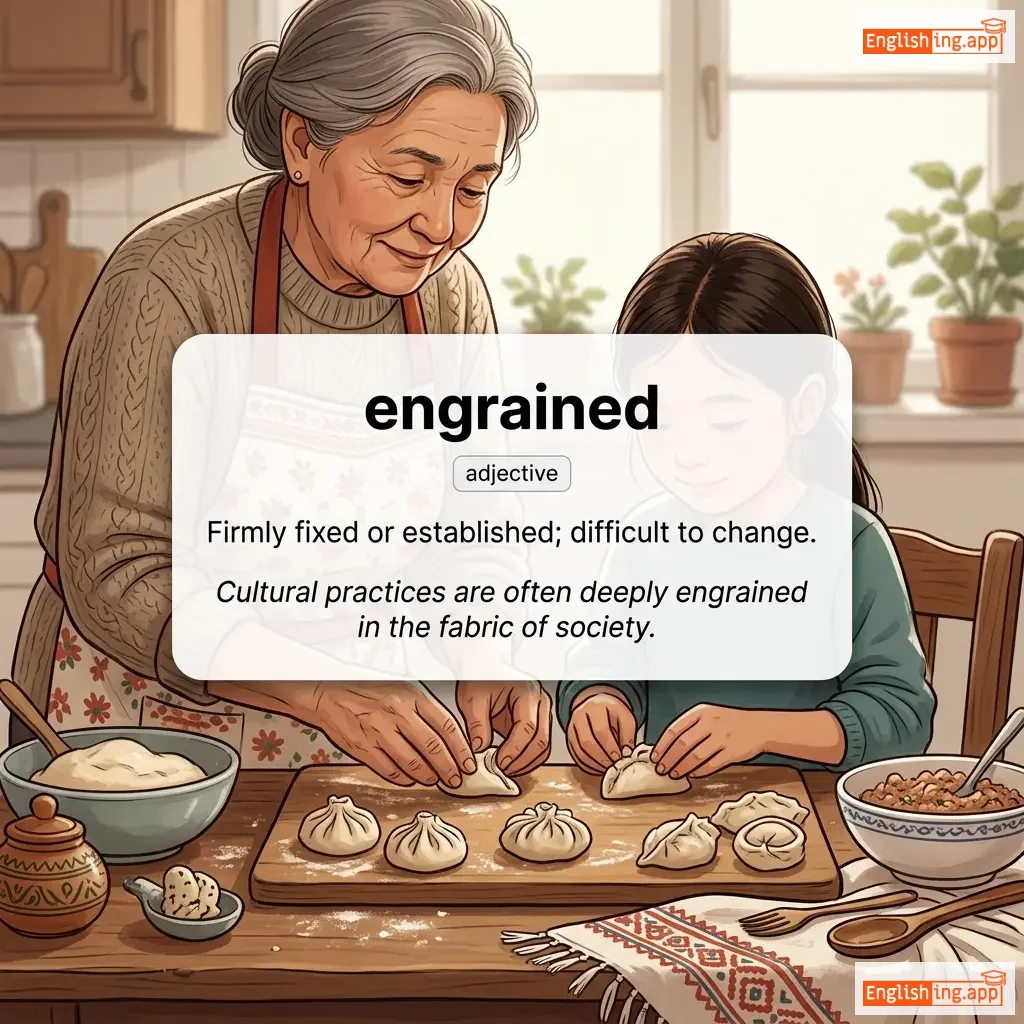
engrained definition card — visual illustration of the meaning
adjective
/ɪnˈɡreɪnd/
глубоко укоренившийся, трудно изменяемый (gluboko ukorenyvshiysya, trudno izmenyayemy)

Firmly fixed or established; difficult to change.

"Cultural practices are often deeply engrained in the fabric of society."

"Культурные практики часто глубоко укоренены в тканях общества." (Kul'turnye praktiki chasto gluboko ukoreneny v tkan'akh obshchestva.)
Engram definition card — visual illustration of the meaning
noun
ˈɛn.ɡræm
Физические знаки в мозге для хранения и извлечения воспоминаний (Fizicheskie znaki v mozge dlya khraneniya i izvlecheniya vospominaniy)

Physical signs or patterns in the brain for memory storage and retrieval

"Scientists study engrams to understand how memories are stored."

"Учёные изучают энграммы, чтобы понять, как хранятся воспоминания." (Uchyonye izuchayut engrammy, chtoby ponyat', kak khranyatsya vospominaniya.)
verb
/ɪnˈɡreɪv/
гравировать (gravirovat)

to cut or carve a design, letter, or pattern into a hard surface

"The craftsman engraved her name on the silver ring."

"Ремесленник выгравировал её имя на серебряном кольце." (Remeslennik vygraviroval yeye imya na serebryanom kol'tse.)
verb
/ɪnˈɡroʊs/
поглощённый (pogloshchyonny)

to absorb all the attention or interest of someone

"She was so engrossed in the book that she forgot the time."

"Она была так поглощена книгой, что забыла о времени." (Ona byla tak pogloshchena knigoy, chto zabula o vremeni.)
adjective
/ɪnˈɡroʊst/
поглощённый (pogloshchyonnyy)

completely absorbed or deeply involved in something

"She was so engrossed in the book that she forgot the time."

"Она была так поглощена книгой, что забыла время." (Ona byla tak pogloshchena knigoy, chto zabula vremya.)
verb
/ɪnˈɡʌlf/
поглощать (pogloshchat)

to completely surround or cover something or someone

"The village was engulfed by floodwaters."

"Деревня была поглощена водами наводнения." (Derevnya byla pogloshchena vodami navodneniya.)
enhance definition card — visual illustration of the meaning
verb
/ɪnˈhæns/
улучшать (uluchshat)

to improve the quality, value, or extent of something

"The new features will enhance the user experience."

"Новые функции улучшат опыт пользователей." (Novye funktsii uluchshat opyt pol'zovateley.)
enhanced definition card — visual illustration of the meaning
verb
ɪnˈhɑːnst
улучшенный (uluchshennyi)

Intensify, increase, or further improve the quality, value, or extent of something.

"Enhanced strategies improve outcomes."

"Улучшенные стратегии улучшают результаты." (Uluchshennye strategii uluchshayut rezul'taty.)
enhancement definition card — visual illustration of the meaning
noun
/ɪnˈhɑːns.mənt/
улучшение или увеличение (uluchshenie ili uvelichenie)

Improving the quality, value, or effectiveness of something.

"The software update included significant enhancements in performance."
"Обновление программного обеспечения включало значительные улучшения в производительности." (Obnovlenie programmnogo obespecheniya vklyuchalo znachitel'nye uluchsheniya v proizvoditel'nosti.)
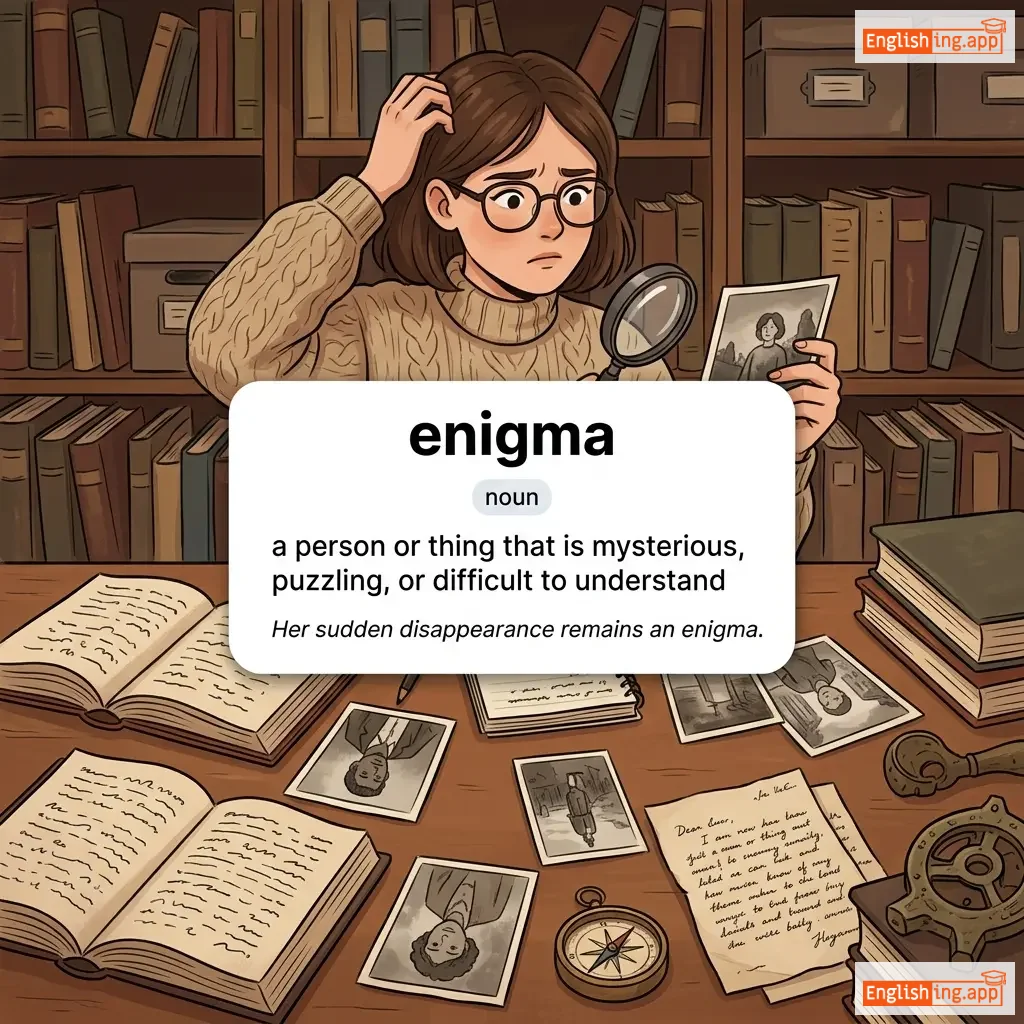
enigma definition card — visual illustration of the meaning
noun
/ɪˈnɪɡmə/
загадка (zagadka)

a person or thing that is mysterious, puzzling, or difficult to understand

"Her sudden disappearance remains an enigma."

"Её внезапное исчезновение остаётся загадкой." (Yeyo vnezapnoe ischeznoveniye ostaetsya zagadkoy.)
adjective
/ˌɛnɪɡˈmætɪk/
загадочный (zagadochnyy)

mysterious and difficult to interpret or understand

"He gave me an enigmatic smile."

"Он дал мне загадочную улыбку." (On dal mne zagadochnuyu ulybku.)
divest definition card — visual illustration of the meaning
verb
/daɪˈvɛst/

to strip away possessions, rights, or assets; to rid oneself of

"The company decided to divest its unprofitable division."

noun
/daɪˈvɛstɪtʃər/
дезинвестиция (dezinvestitsiya)

the action of selling off or disposing of business interests or assets

"The divestiture of the subsidiary was completed last year."
"Дезинвестиция дочерней компании была завершена в прошлом году." (Dezinvestitsiya dacherskoy kompanii byla zavershena v proshlom godu.)
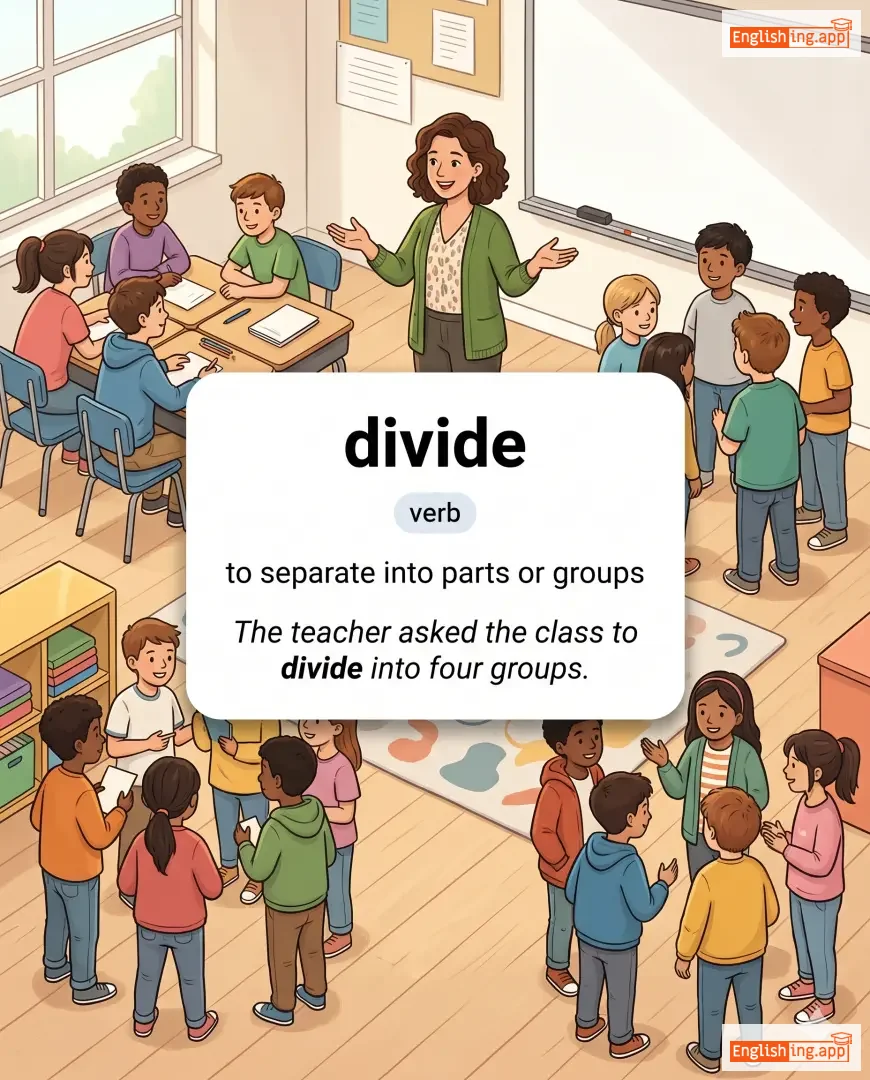
divide definition card — visual illustration of the meaning
verb
/dɪˈvaɪd/
делить (delit)

to separate into parts or groups

"The teacher asked the class to divide into four groups."

"Учитель попросил класс разделиться на четыре группы." (Uchitel' poprosil klass razdelit'sya na chetyre gruppy.)
noun
/ˌdɪvɪˈneɪʃən/
гадание (gadanije)

the practice of seeking knowledge of the future or the unknown by supernatural means

"Ancient people often relied on divination to guide important decisions."

"Древние люди часто полагались на гадание для принятия важных решений." (Drevnie lyudi chasto polagalís' na gadanie dlya prinyatiya vazhnykh reshenij.)
adjective, verb
/dɪˈvaɪn/
божественный (bozhestvennyy)

Relating to God or a deity; exceptionally wonderful or pleasing; to discover or foresee by intuition or supernatural means.

"She believed the divine power guided her actions."

"Она верила, что божественная сила направляла её действия." (Ona verila, chto bozhesvtennaya sila napravyala yeye deystviya.)
noun
/dɪˈvɪnɪti/
божественность (bozhestvennost)

The quality or state of being divine; a deity.

"The priest spoke about the divinity of the soul."

"Священник говорил о божественности души." (Svyashchennik govoril o bozestvennosti dushi.)
adjective
/dɪˈvɪzəbl/
делимый (delimyj)

Capable of being divided by another number without leaving a remainder.

"Twelve is divisible by three and four."

"Двенадцать делится на три и четыре." (Dvenadtsat' delitsya na tri i chetyre.)
noun
/dɪˈvɪʒən/
подразделение (podrazdelenie)

the action of separating something into parts; or a large administrative unit

"The company has a separate division for research and development."

"У компании есть отдельное подразделение для исследований и разработок." (U kompanii yest' otdel'noe podrazdelenie dlya issledovaniy i razrabotok.)
noun
/dɪˈvaɪzər/
делитель (delitel)

A number by which another number is divided.

"In the equation 12 ÷ 3, the number 3 is the divisor."

"В уравнении 12 ÷ 3, число 3 является делителем." (V uravnenii 12 ÷ 3, chislo 3 yavyayetsya delitelem.)
noun/verb
/dɪˈvɔːrs/
развод (razvod)

the legal ending of a marriage; to officially end a marriage

"After years of conflict, they decided to get a divorce."

"После лет конфликтов они решили развестись." (Posle let konfliktov oni reshilì razvéstis'.)
adjective
/dɪˈvɔːrst/
разведенный (razvedennyy)

No longer married because the marriage has been legally dissolved.

"She has been divorced for five years."
"Она разведена уже пять лет." (Ona razvedena uzhe pyat' let.)
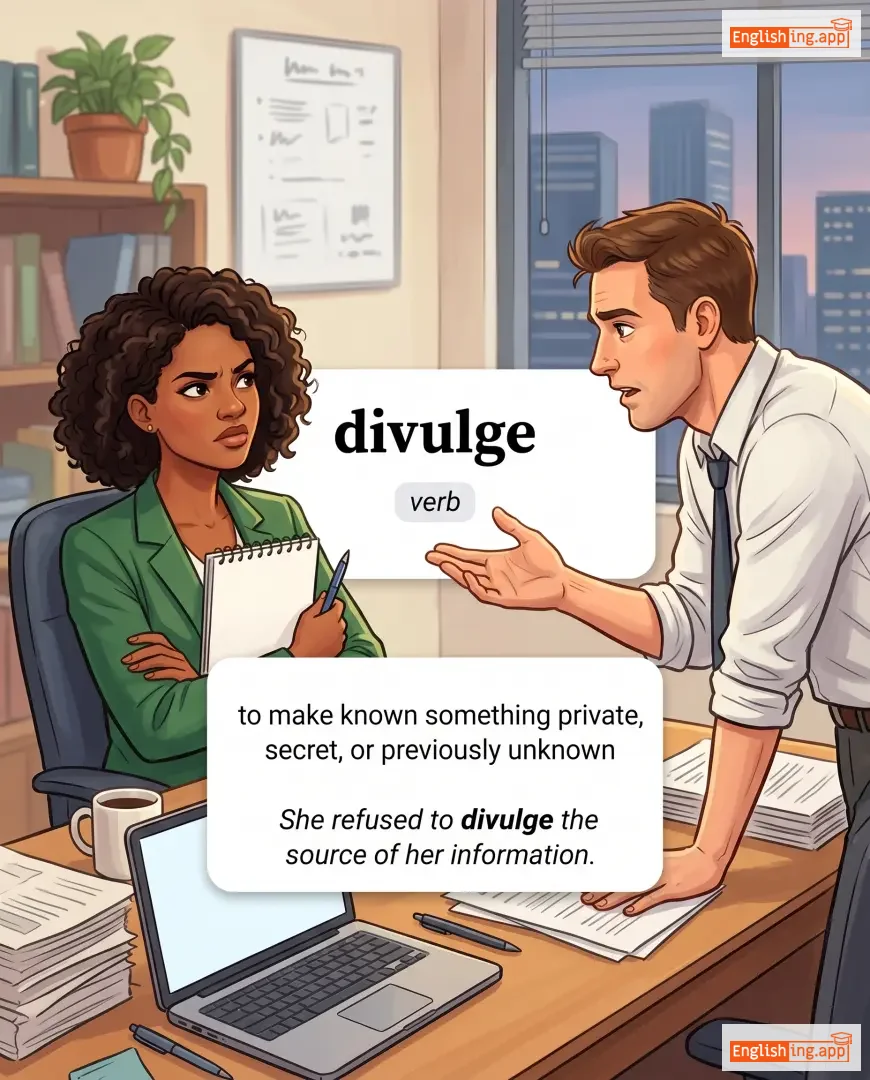
divulge definition card — visual illustration of the meaning
verb
/daɪˈvʌldʒ/
раскрыть (raskryt)

to make known something private, secret, or previously unknown

"She refused to divulge the source of her information."

"Она отказалась раскрыть источник своей информации." (Ona otkazalas raskryt istochnik svoey informatsii.)
noun
/daɪˈvʌldʒəns/
разглашение (razglashenie)

the act of revealing or disclosing something secret or private

"The divulgence of company secrets caused a major scandal."

"Разглашение корпоративных тайн вызвало большой скандал." (Razglashenie korporativnykh tayn vyzvalo bol'shoy skandal.)
noun
/ˌdiː.enˈeɪ/
Дезоксирибонуклеиновая кислота (DNA)

Deoxyribonucleic acid, the molecule that carries genetic information in living organisms.

"Scientists extracted DNA from the ancient bones."

"Ученые извлекли ДНК из древних костей." (Uchyonye izvlekli DNA iz drevnikh kostey.)
verb
/duː/
делать (delat')

To perform an action, task, or activity.

"I need to do my homework before dinner."

"Мне нужно сделать домашку до ужина." (Mne nuzhno sdelat' domashku do uzhina.)
adjective
/ˈdɑːsəl/ or /ˈdəʊsaɪl/
послушный (poslushny)

easily managed, taught, or controlled; submissive

"The docile puppy quickly learned new tricks."

"Послушный щенок быстро научился новым трюкам." (Poslushny shchenok bystro nauchilsya novym tryukam.)
noun
/dɒk/
пристань (pristan')

a structure where ships are loaded, unloaded, or repaired

"The ship stayed at the dock for two days."

"Корабль оставался на пристани два дня." (Korabl' ostavalsya na pristani dva dnya.)
noun
/ˈdɒkɪt/
список (spisok)

a list or schedule of cases to be tried in a court or items to be done

"The judge reviewed the docket before starting the session."

"Судья просмотрел список до начала заседания." (Sud'ya prosmotreli spisok do nachala zasedaniya.)
doctor definition card — visual illustration of the meaning
noun
/ˈdɒktər/
врач (vrach)

A qualified medical professional who treats illnesses and injuries.

"The doctor prescribed medicine for the patient."

"Доктор прописал лекарства для пациента." (Doktor propisal lekarstva dlya patsiyenta.)
doctrinaire definition card — visual illustration of the meaning
adjective
/ˌdɒktrɪˈnɛər/
догматичный (dogmatichny)

stubbornly devoted to a theory or doctrine without regard to practical considerations

"His doctrinaire approach to politics alienated many supporters."

"Его догматичный подход к политике оттолкнул многих сторонников." (Ego dogmatichny podkhod k politike ottolknul mnogikh storonnikov.)
noun
/ˈdɒktrɪn/
доктрина (doktrina)

A set of beliefs or principles held and taught by a religious, political, or other group.

"The church follows a strict doctrine on moral values."

"Церковь придерживается строгой доктрины в отношении моральных ценностей." (Tserkov' pridержivayetsya strogoi doktriny v otnoshenii moral'nykh tsennostei.)
document definition card — visual illustration of the meaning
noun/verb
/ˈdɒkjʊmənt/
документ (dokument)

Noun: A written, printed, or electronic record that provides information or evidence. Verb: To record information in written or electronic form.

"She carefully documented all the expenses of the trip."

noun/adjective
/ˌdɒkjʊˈmɛntri/
документальный фильм (dokumental'nyy film)

A film or television program that provides a factual record or report.

"We watched a documentary about climate change."

"Мы посмотрели документальный фильм о климатических изменениях." (My posmotreli dokumental'nyy film o klimatischeskikh izmeneniyakh.)
noun
/ˌdɒkjʊmɛnˈteɪʃən/
документация (dokumentatsiya)

material that provides official information or evidence

"The documentation for the project is available for review."

"Документация для проекта доступна для проверки." (Dokumentatsiya dlya proyektu dostupna dlya proverki.)
verb
/ˈdɒdə/
дрожать при ходьбе (drozhat pri khod'be)

To move in a weak and unsteady way, especially due to old age.

"The old man doddered across the street with a cane."

"Старик дрожал при ходьбе по улице с тростью." (Starik drozhal pri khod'be po ulitse s trostyu.)
adjective
/ˈdɒdərɪŋ/
треморящий / слабый (tremoryashchiy / slabyy)

Weak, shaky, or unsteady, especially due to old age.

"The doddering professor struggled to climb the stairs."
"Додеринг профессор с трудом поднимался по лестнице." (Dodering professor s trudom podnimalsya po lestnitse.)
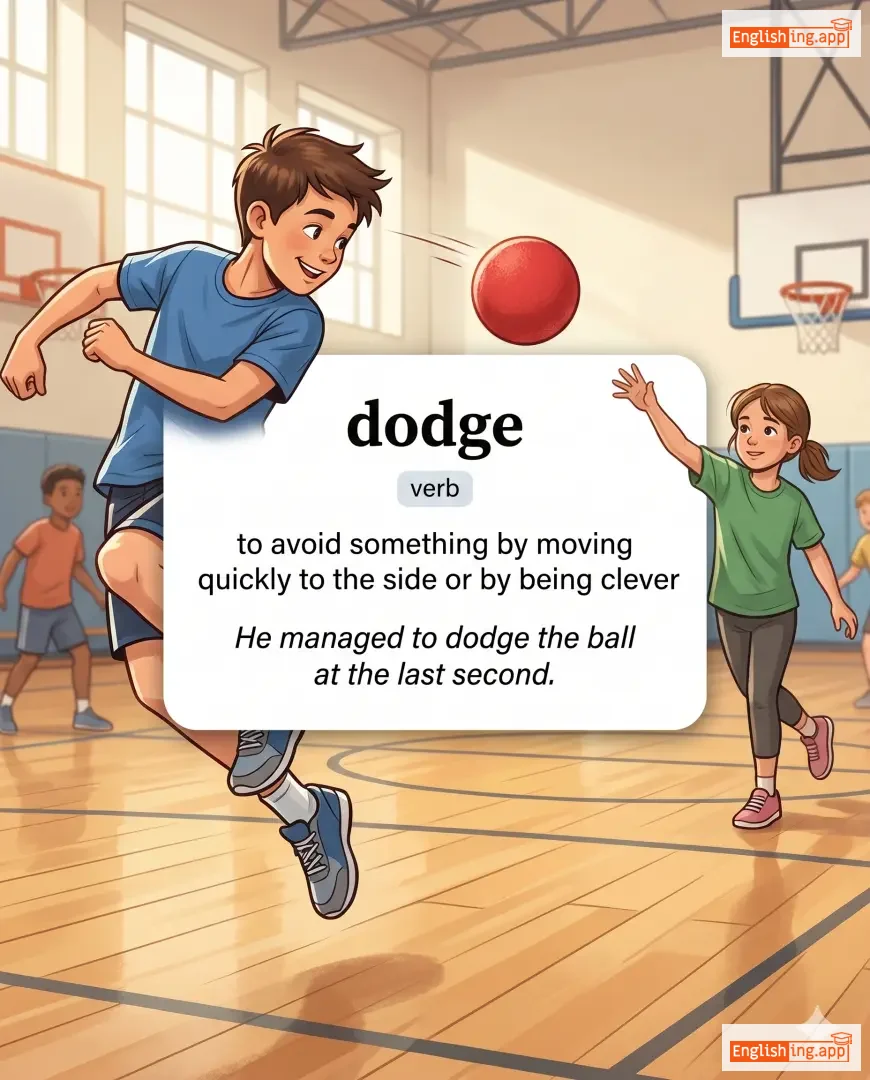
dodge definition card — visual illustration of the meaning
verb
/dɒdʒ/
увернуться (uvernutsya)

to avoid something by moving quickly to the side or by being clever

"He managed to dodge the ball at the last second."

"Ему удалось увернуться от мяча в последнюю секунду." (Emu udalos' uvernutsya ot myacha v poslednyuyu sekundu.)
adjective
/ˈdɒdʒi/
подозрительный; сомнительный; ненадежный; рискованный или опасный (podozritel'nyj; somnitel'nyj; nenadezhnyj; riskovannyj ili opasnyj)

suspicious; questionable; unreliable; risky or dangerous

"That deal sounds dodgy to me."

"Этот договор кажется мне подозрительным." (Etot dogovor kazhetsya mne podozritel'nym.)
noun
/doʊ/
оленька (olen'ka)

a female deer, especially an adult one

"The doe and her fawn were grazing in the meadow."

"Оленька и её оленёнок паслись на лугу." (Olen'ka i yeyo olenyonok paslis' na lugу.)
verb
/dɒf/
снять (шляпу) как знак уважения (snyat' (shlyapu) kak znak uvazheniya)

to take off an item of clothing, especially a hat, as a sign of respect

"He doffed his hat as the procession passed."
"Он снял свою шляпу, когда проходила процессия." (On snyal svoyu shlyapu, kogda prokhodila protsessiya.)
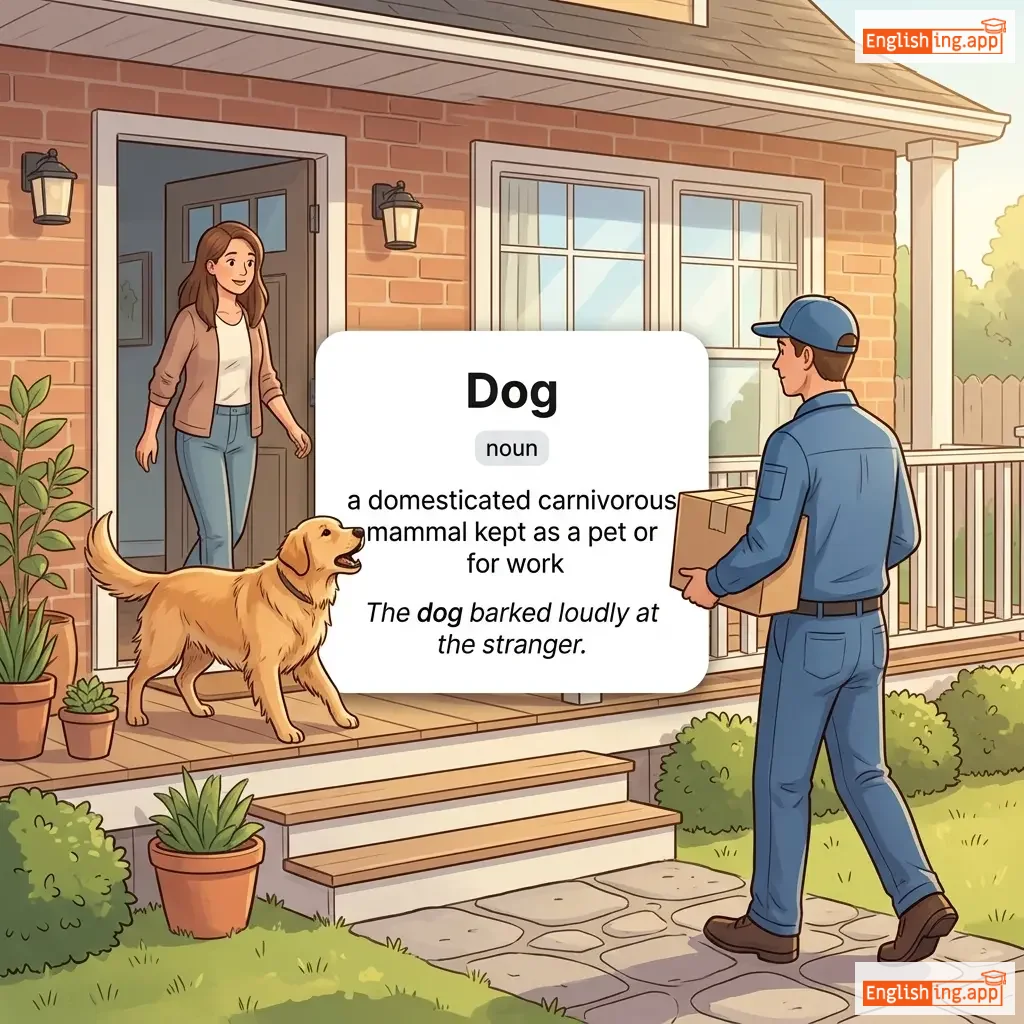
Dog definition card — visual illustration of the meaning
noun
/dɔːɡ/
собака (sobaka)

a domesticated carnivorous mammal kept as a pet or for work

"The dog barked loudly at the stranger."

"Собака громко залаяла на незнакомца." (Sobaka gromko zalayala na neznakomtsa.)
noun
/ˈdɒɡ roʊz/
собачья роза (sobach'ya roza)

A wild rose species with pink or white flowers and thorny stems, common in hedgerows

"The dog-rose bush grew wild along the countryside path."

"Куст собачьей розы вырос вдоль сельской дороги." (Kust sobach'ey rozy viros vdol' selskoy dorogi.)
adjective
/ˈdɒɡɪd/
упорный (upornyj)

showing stubborn determination and persistence

"She succeeded through dogged determination."

"Она добилась успеха благодаря своей упорной решимости." (Ona dobilas' uspekha blagodarya svoej upornyj reshimosti.)
doggedness definition card — visual illustration of the meaning
noun
ˈdɒɡ.ɪd.nəs
упорство (uporstvo)

Stubborn persistence in achieving something without giving up.

"His doggedness in pursuing his goals was inspiring."
"Его упорство в достижении целей было вдохновляющим." (Ego uporstvo v dostizhenii tseley bylo vdokhnovlyayushchim.)
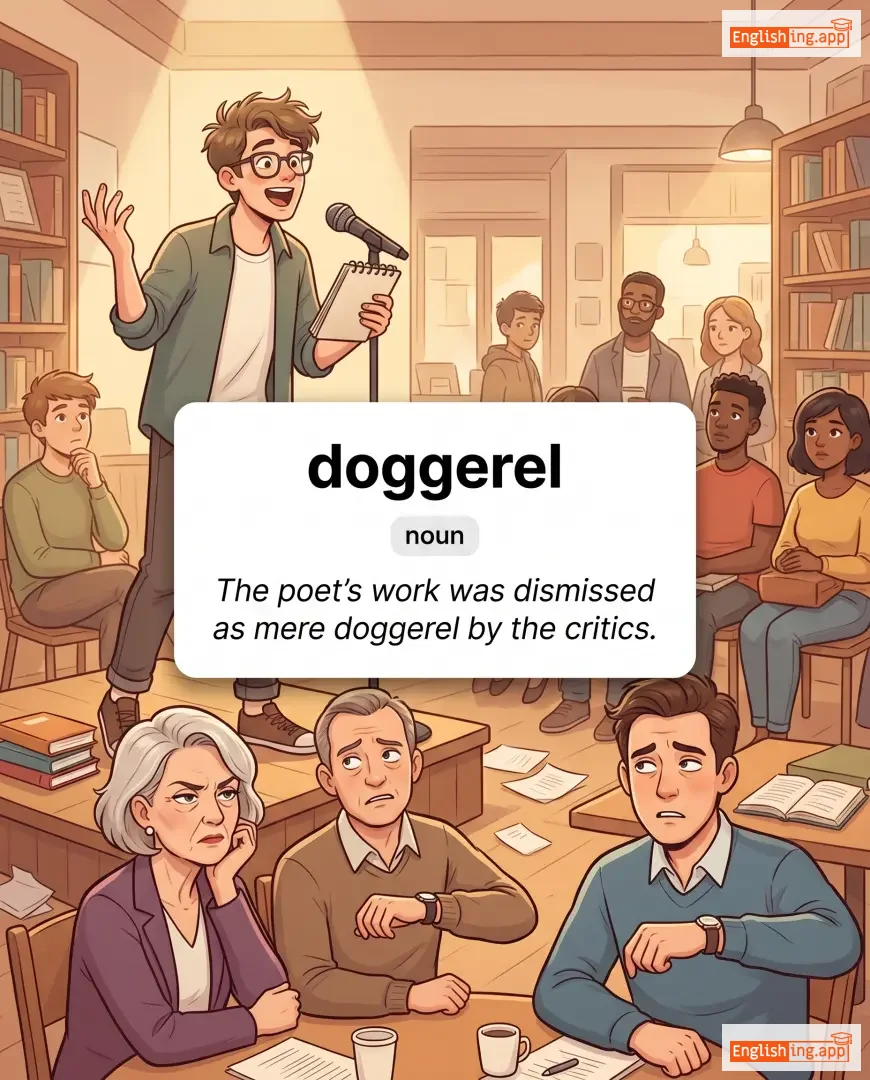
doggerel definition card — visual illustration of the meaning
noun
/ˈdɒɡərəl/
низкие стихи (nizkie stikhi)

Comic or irregular verse, often poorly constructed and lacking in artistic quality.

"The poet’s work was dismissed as mere doggerel by the critics."

"Работы поэта были отвергнуты критиками как простые низкие стихи." (Rabotyi poeta byli otvergnyuty kritikasmi kak prostye nizkie stikhi.)
noun
/ˈdɒɡmə/
догма (dogma)

A principle or set of principles laid down by an authority as incontrovertibly true.

"The religious leader strictly adhered to traditional dogma."
"Религиозный лидер строго придерживался традиционной догмы." (Religioznyy lider strogo priderzhivalsya traditsionnoy dogmy.)
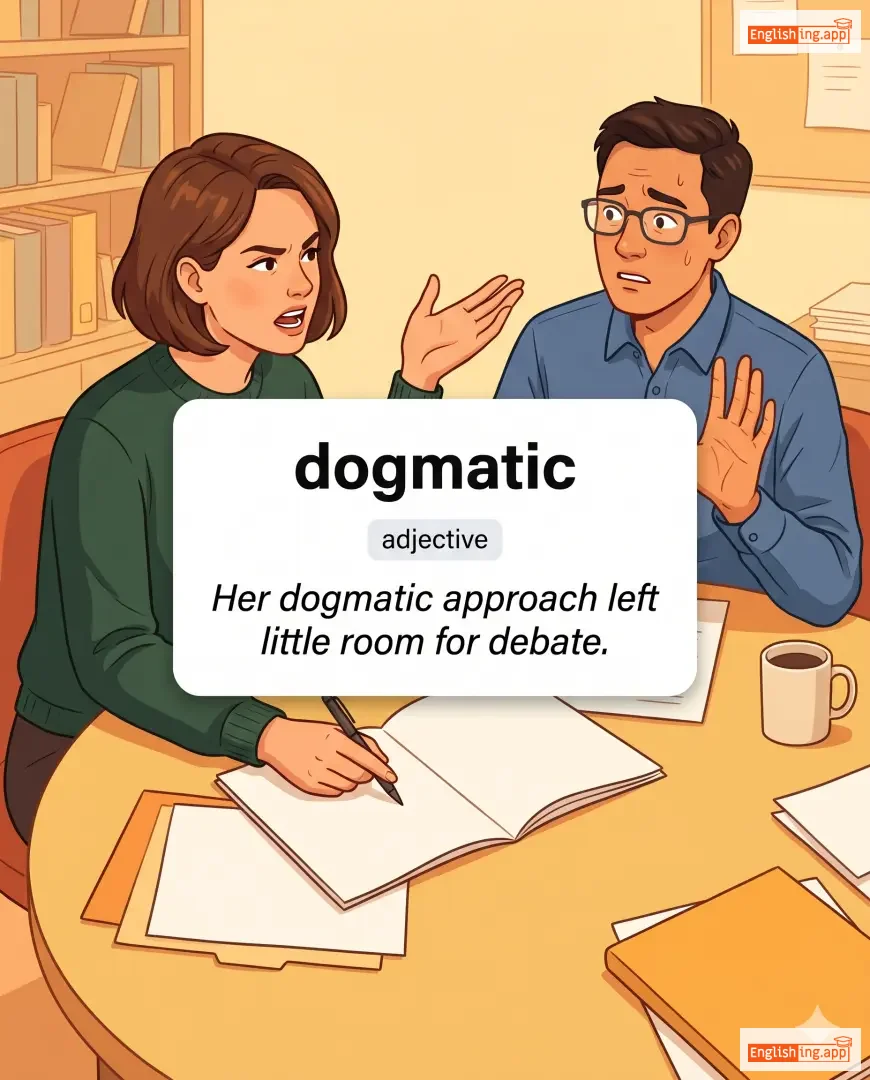
dogmatic definition card — visual illustration of the meaning
adjective
/dɒɡˈmætɪk/
догматичный (dogmatichny)

Inclined to lay down principles as undeniably true, without consideration of evidence or others’ opinions.

"Her dogmatic approach left little room for debate."

"Её догматичный подход оставил мало места для дискуссии." (Yeyo dogmatichnyy podkhod ostavil malo mesta dlya diskussii.)