語彙集

英単語辞書 | 単語の意味、定義、例文

engineering definition card — visual illustration of the meaning
noun
/ˌɛndʒɪˈnɪərɪŋ/
工学 (kougaku)

The branch of science and technology concerned with the design, building, and use of engines, machines, and structures.

"She studied civil engineering at university."

"彼女は大学で土木工学を学びました。" (Kanojo wa daigaku de doboku kougaku o manabimashita.)
noun/adjective
/ˈɪŋɡlɪʃ/
英語 (eigo)

The language of England, widely spoken around the world; relating to England or its people.

"She is learning English to study abroad."
"彼女は海外で勉強するために英語を学んでいます。" (Kanojo wa kaigai de benkyou suru tame ni eigo o manande imasu.)
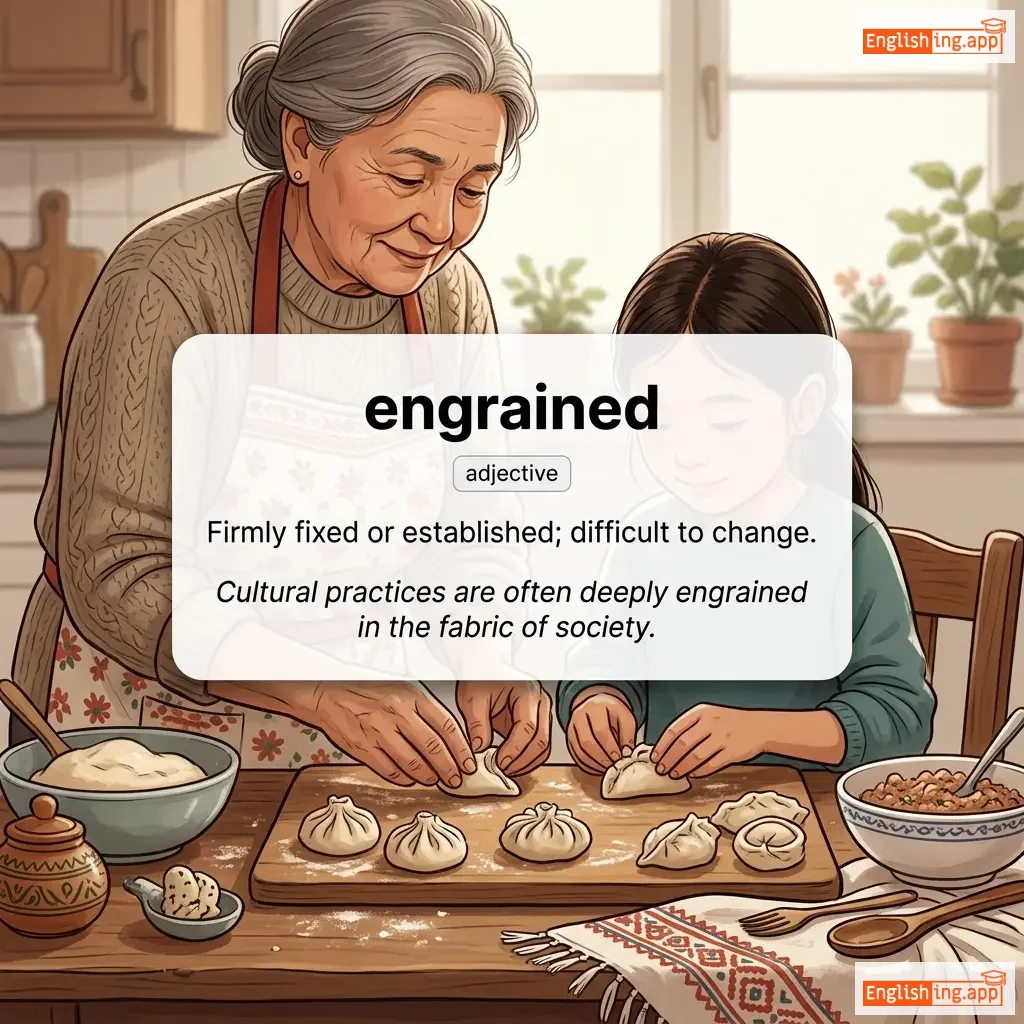
engrained definition card — visual illustration of the meaning
adjective
/ɪnˈɡreɪnd/
深く根付いている、変更が難しい (fukaku nezuiteiru, henkou ga muzukashii)

Firmly fixed or established; difficult to change.

"Cultural practices are often deeply engrained in the fabric of society."
"文化的な慣習は、しばしば社会の構造に深く根付いています。" (Bunkateki na kanshū wa, shibashiba shakai no kōzō ni fukaku nezuiteimasu.)
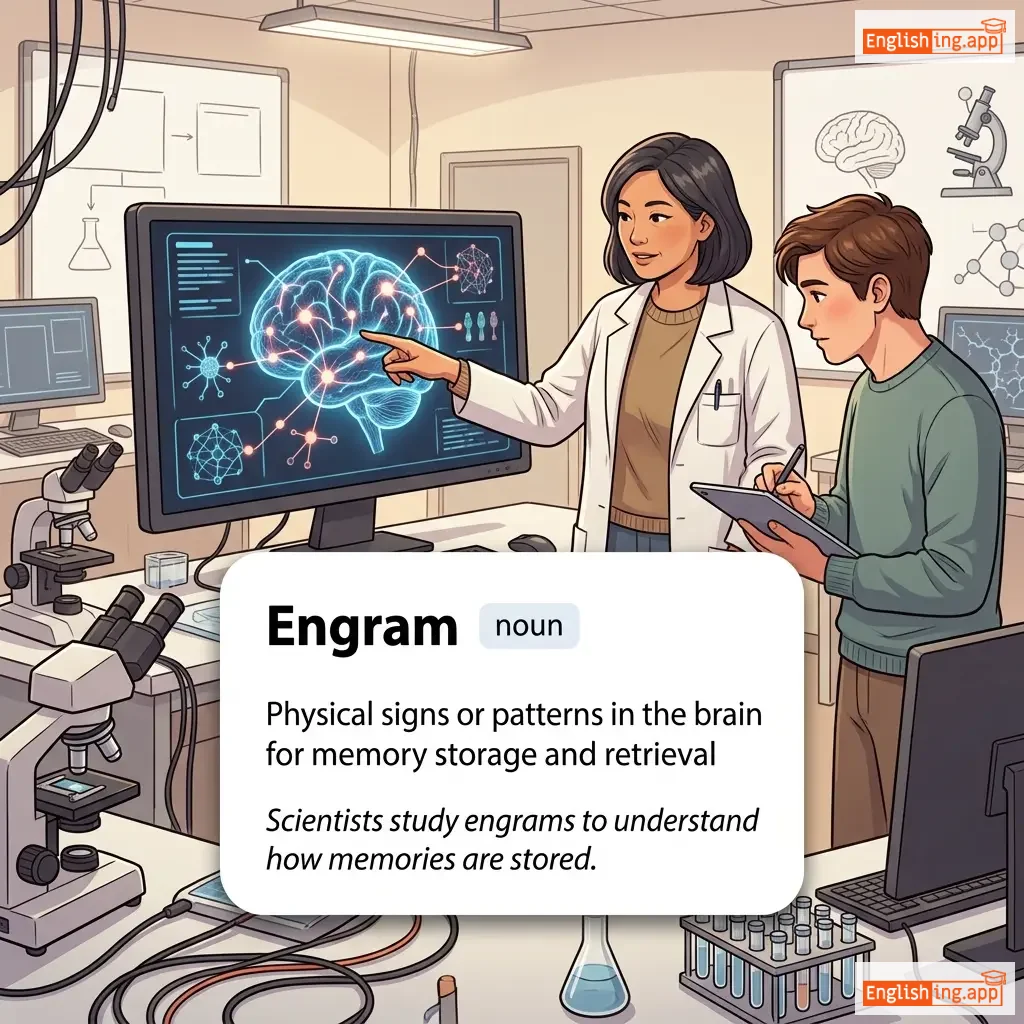
Engram definition card — visual illustration of the meaning
noun
ˈɛn.ɡræm
記憶の保存と検索のための脳内の物理的なサイン (Kioku no hozon to kensaku no tame no nōnai no butsuri-teki na sain)

Physical signs or patterns in the brain for memory storage and retrieval

"Scientists study engrams to understand how memories are stored."

"科学者たちはエングラムを研究して、記憶がどのように保存されるかを理解しようとしています。" (Kagakusha-tachi wa engramu o kenkyū shite, kioku ga dono yō ni hozon sareru ka o rikai shiyou to shiteimasu.)
verb
/ɪnˈɡreɪv/
刻む (kizamu)

to cut or carve a design, letter, or pattern into a hard surface

"The craftsman engraved her name on the silver ring."

"職人は銀の指輪に彼女の名前を刻んだ。" (Shokunin wa gin no yubiwa ni kanojo no namae o kizanda.)
verb
/ɪnˈɡroʊs/
夢中 (mucchū)

to absorb all the attention or interest of someone

"She was so engrossed in the book that she forgot the time."

"彼女は本に夢中になりすぎて時間を忘れてしまいました。" (Kanojo wa hon ni muchū ni nari sugite jikan o wasurete shimaimashita.)
adjective
/ɪnˈɡroʊst/
夢中 (muchū)

completely absorbed or deeply involved in something

"She was so engrossed in the book that she forgot the time."

"彼女は本に夢中になりすぎて、時間を忘れた。" (Kanojo wa hon ni muchū ni nari sugite, jikan o wasureta.)
verb
/ɪnˈɡʌlf/
飲み込む (nomikomu)

to completely surround or cover something or someone

"The village was engulfed by floodwaters."

"その村は洪水に飲み込まれた。" (Sono mura wa kousui ni nomikomareta.)
enhance definition card — visual illustration of the meaning
verb
/ɪnˈhæns/
向上させる (koujou saseru)

to improve the quality, value, or extent of something

"The new features will enhance the user experience."
"新しい機能はユーザー体験を向上させます。" (Atarashii kinou wa yuzaa taiken wo koujou saseru.)
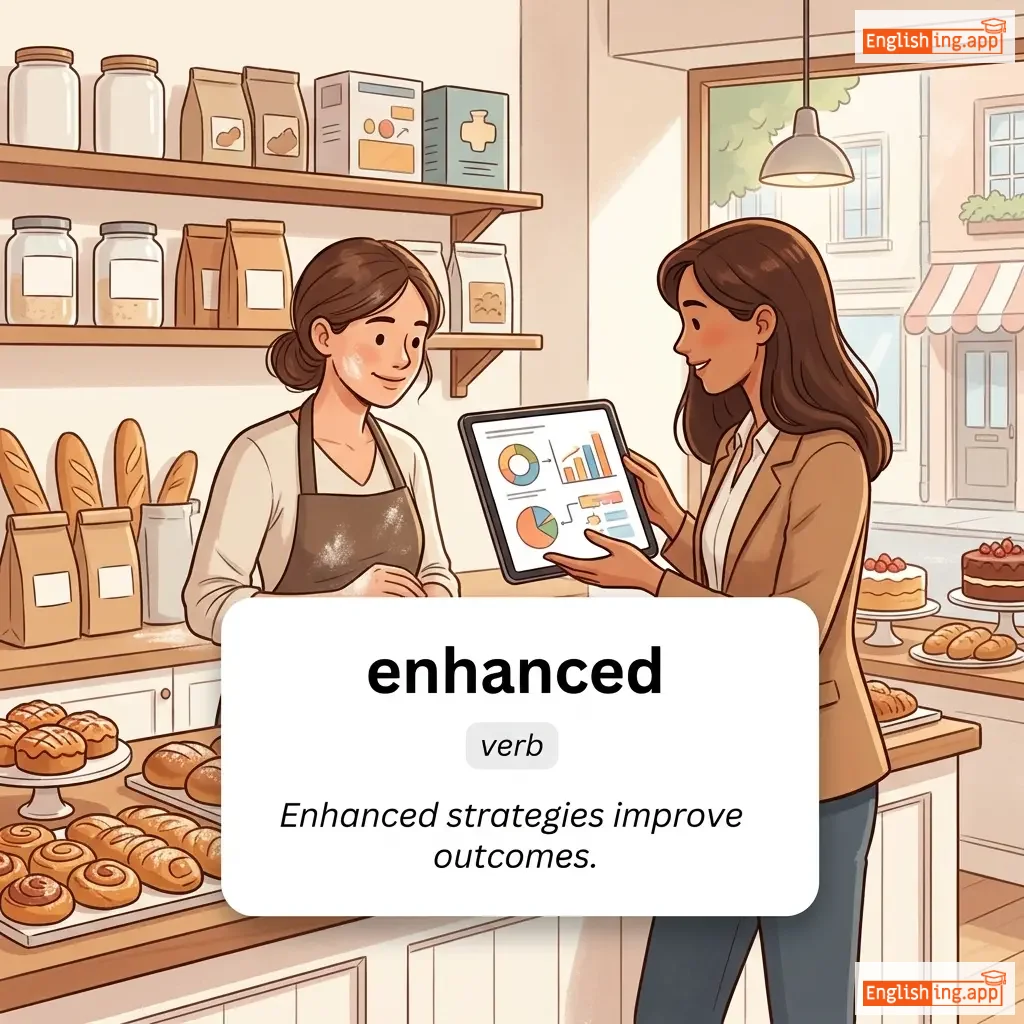
enhanced definition card — visual illustration of the meaning
verb
ɪnˈhɑːnst
強化された (kyōka sareta)

Intensify, increase, or further improve the quality, value, or extent of something.

"Enhanced strategies improve outcomes."

"強化された戦略は結果を改善します。" (Kyōka sareta senryaku wa kekka o kaizen shimasu.)
enhancement definition card — visual illustration of the meaning
noun
/ɪnˈhɑːns.mənt/
改善または向上 (kaizen mata wa koujou)

Improving the quality, value, or effectiveness of something.

"The software update included significant enhancements in performance."
"ソフトウェアの更新にはパフォーマンスの大幅な改善が含まれていました。" (Sofutowea no koushin ni wa pafōmansu no ōhaba na kaizen ga fukumarete imashita.)
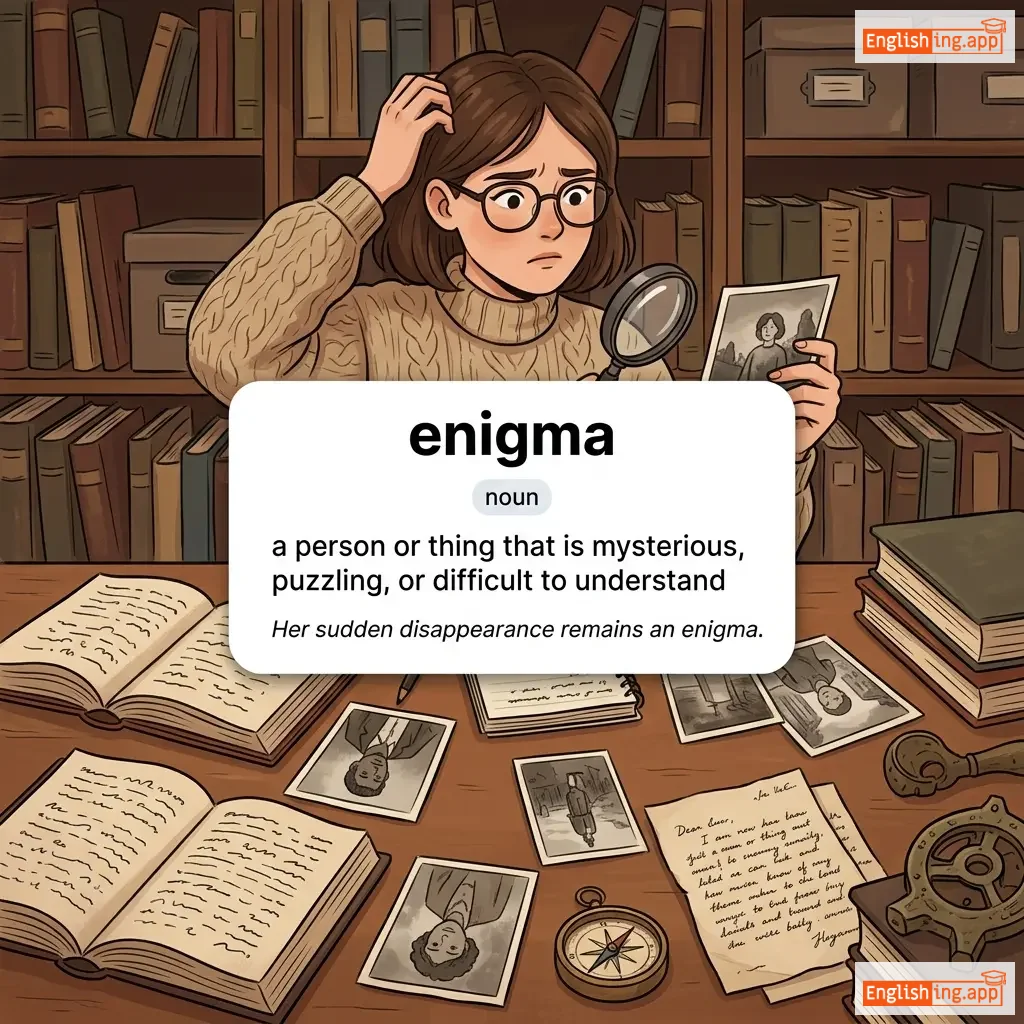
enigma definition card — visual illustration of the meaning
noun
/ɪˈnɪɡmə/
(nazo)

a person or thing that is mysterious, puzzling, or difficult to understand

"Her sudden disappearance remains an enigma."

"彼女の突然の失踪は依然として謎のままだ。" (Kanojo no totsuzen no shissou wa izen toshite nazo no mama da.)
adjective
/ˌɛnɪɡˈmætɪk/
謎めいた (nazo-meita)

mysterious and difficult to interpret or understand

"He gave me an enigmatic smile."

"彼は私に謎めいた笑顔を見せた。" (Kare wa watashi ni nazo-meita egao wo miseta.)
divest definition card — visual illustration of the meaning
verb
/daɪˈvɛst/

to strip away possessions, rights, or assets; to rid oneself of

"The company decided to divest its unprofitable division."

noun
/daɪˈvɛstɪtʃər/
事業売却 (jigyō baikyaku)

the action of selling off or disposing of business interests or assets

"The divestiture of the subsidiary was completed last year."

"子会社の事業売却は昨年完了しました。" (Kogaisha no jigyō baikyaku wa sakunen kanryō shimashita.)
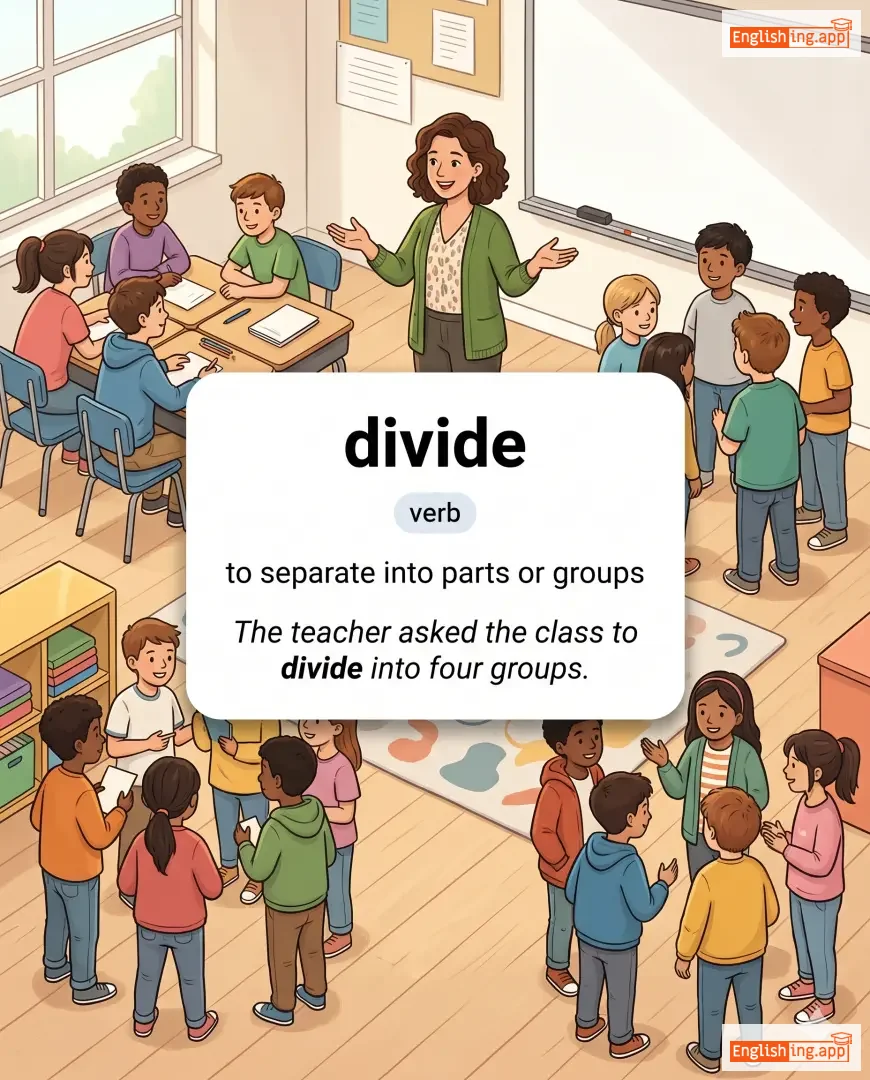
divide definition card — visual illustration of the meaning
verb
/dɪˈvaɪd/

to separate into parts or groups

"The teacher asked the class to divide into four groups."

noun
/ˌdɪvɪˈneɪʃən/
占い (uranaï)

the practice of seeking knowledge of the future or the unknown by supernatural means

"Ancient people often relied on divination to guide important decisions."

"古代の人々は重要な決定を導くために占いに頼ることがよくありました。" (Kodai no hitobito wa jūyōna kettei o michibiku tame ni uranai ni tayoru koto ga yoku arimashita.)
adjective, verb
/dɪˈvaɪn/

Relating to God or a deity; exceptionally wonderful or pleasing; to discover or foresee by intuition or supernatural means.

"She believed the divine power guided her actions."

noun
/dɪˈvɪnɪti/
神性 (shinsei)

The quality or state of being divine; a deity.

"The priest spoke about the divinity of the soul."

"神父は魂の神性について話しました。" (Shinpu wa tamashii no shinsei ni tsuite hanashimashita.)
adjective
/dɪˈvɪzəbl/
割り切れる (warikireru)

Capable of being divided by another number without leaving a remainder.

"Twelve is divisible by three and four."

"12は3と4で割り切れます。" (12 wa 3 to 4 de warikiremasu.)
noun
/dɪˈvɪʒən/
部門 (bumon)

the action of separating something into parts; or a large administrative unit

"The company has a separate division for research and development."

"会社には研究開発のための専用の部門があります。" (Kaisha ni wa kenkyū kaihatsu no tame no sen'yō no bumon ga arimasu.)
noun
/dɪˈvaɪzər/
除数 (josū)

A number by which another number is divided.

"In the equation 12 ÷ 3, the number 3 is the divisor."

"方程式12 ÷ 3では、数字3が除数です。" (Hōtei-shiki 12 ÷ 3 de wa, sūji 3 ga josū desu.)
noun/verb
/dɪˈvɔːrs/
離婚 (rikon)

the legal ending of a marriage; to officially end a marriage

"After years of conflict, they decided to get a divorce."

"数年の対立の後、彼らは離婚することを決めました。" (Sūnen no tairitsu no ato, karera wa rikon suru koto o kimemashita.)
adjective
/dɪˈvɔːrst/
離婚した (rikon shita)

No longer married because the marriage has been legally dissolved.

"She has been divorced for five years."
"彼女は5年間離婚したままだ。" (Kanojo wa 5-nenkan rikon shita mama da.)
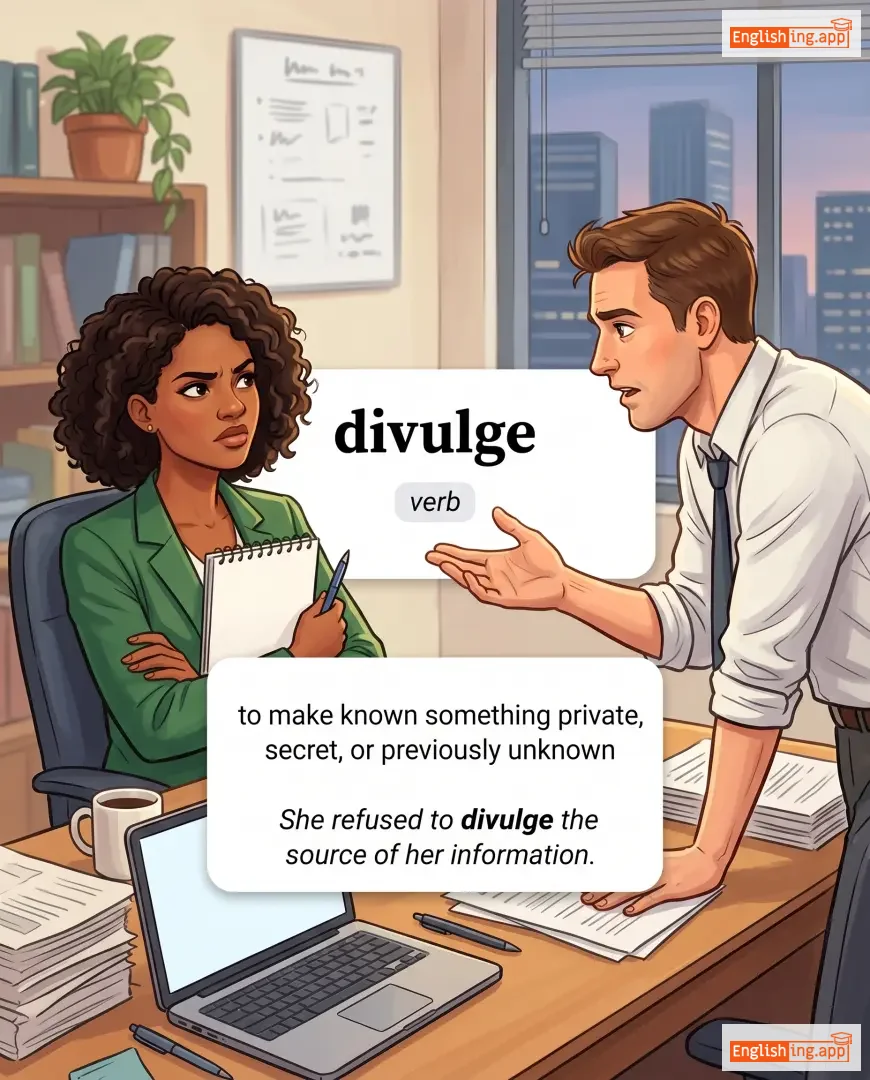
divulge definition card — visual illustration of the meaning
verb
/daɪˈvʌldʒ/
明らかにする (akiraka ni suru)

to make known something private, secret, or previously unknown

"She refused to divulge the source of her information."

"彼女は情報の源を明らかにすることを拒否しました。" (Kanojo wa jōhō no minamoto o akiraka ni suru koto o kyohi shimashita.)
noun
/daɪˈvʌldʒəns/
暴露 (bōroku)

the act of revealing or disclosing something secret or private

"The divulgence of company secrets caused a major scandal."

"企業の秘密の暴露が大きなスキャンダルを引き起こした。" (Kigyō no himitsu no bōroku ga ōkina sukyandaru o hikiokoshita.)
noun
/ˌdiː.enˈeɪ/
デオキシリボ核酸 (DNA)

Deoxyribonucleic acid, the molecule that carries genetic information in living organisms.

"Scientists extracted DNA from the ancient bones."

"科学者たちは古代の骨からDNAを抽出しました。" (Kagakusha-tachi wa kodai no hone kara DNA o chūshutsu shimashita.)
verb
/duː/
する (suru)

To perform an action, task, or activity.

"I need to do my homework before dinner."

"私は夕食前に宿題をしなければならない。" (Watashi wa yūshoku mae ni shukudai o shinakereba naranai.)
adjective
/ˈdɑːsəl/ or /ˈdəʊsaɪl/
従順な (jūjun na)

easily managed, taught, or controlled; submissive

"The docile puppy quickly learned new tricks."

"従順な子犬はすぐに新しい技を覚えました。" (Jūjun na koinu wa sugu ni atarashī waza o oboemashita.)
noun
/dɒk/
ドック (dokku)

a structure where ships are loaded, unloaded, or repaired

"The ship stayed at the dock for two days."

"船はドックに2日間停泊していました。" (Fune wa dokku ni futsukakan teihaku shiteimashita.)
noun
/ˈdɒkɪt/
リスト (risuto)

a list or schedule of cases to be tried in a court or items to be done

"The judge reviewed the docket before starting the session."

"裁判官はセッションを開始する前にリストを確認しました。" (Saibankan wa sesshon o kaishi suru mae ni risuto o kakunin shimashita.)
doctor definition card — visual illustration of the meaning
noun
/ˈdɒktər/
医者 (isha)

A qualified medical professional who treats illnesses and injuries.

"The doctor prescribed medicine for the patient."

"医者は患者に薬を処方しました。" (Isha wa kanja ni kusuri o shohō shimashita.)
doctrinaire definition card — visual illustration of the meaning
adjective
/ˌdɒktrɪˈnɛər/
教条主義者 (kyōjō shugi-sha)

stubbornly devoted to a theory or doctrine without regard to practical considerations

"His doctrinaire approach to politics alienated many supporters."

"彼の教条主義的な政治アプローチは、多くの支持者を遠ざけた。" (Kare no kyōjō shugi-teki na seiji apurōchi wa, ōku no shijisha o tōzaketa.)
noun
/ˈdɒktrɪn/
教義 (kyōgi)

A set of beliefs or principles held and taught by a religious, political, or other group.

"The church follows a strict doctrine on moral values."

"教会は道徳的価値に関する厳格な教義を遵守しています。" (Kyōkai wa dōtokuteki kachi ni kansuru genkaku na kyōgi o junshu shiteimasu.)
document definition card — visual illustration of the meaning
noun/verb
/ˈdɒkjʊmənt/
文書 (bunsho)

Noun: A written, printed, or electronic record that provides information or evidence. Verb: To record information in written or electronic form.

"She carefully documented all the expenses of the trip."

"彼女は旅行のすべての費用を慎重にドキュメントした。" (Kanojo wa ryokō no subete no hiyō o shinchō ni dokyumento shita.)
noun/adjective
/ˌdɒkjʊˈmɛntri/
ドキュメンタリー映画 (dokyumentarī eiga)

A film or television program that provides a factual record or report.

"We watched a documentary about climate change."

"私たちは気候変動についてのドキュメンタリー映画を見ました。" (Watashitachi wa kikō hendō ni tsuite no dokyumentarī eiga o mimashita.)
noun
/ˌdɒkjʊmɛnˈteɪʃən/
ドキュメンテーション (dokyumenteshon)

material that provides official information or evidence

"The documentation for the project is available for review."

"プロジェクトのドキュメンテーションはレビューのために利用可能です。" (Purojekuto no dokyumenteshon wa rebyū no tame ni riyō kanō desu.)
🚶‍♂️

dodder (ドダー)

verb
/ˈdɒdə/
震えながら歩く (furue nagara aruku)

To move in a weak and unsteady way, especially due to old age.

"The old man doddered across the street with a cane."

"老人は杖をついて震えながら通りを歩いていました。" (Rojin wa tsue wo tsuite furuenagara toori wo aruite imashita.)
adjective
/ˈdɒdərɪŋ/
震えている / 弱い (furuete iru / yowai)

Weak, shaky, or unsteady, especially due to old age.

"The doddering professor struggled to climb the stairs."
"ドダリング教授は階段を登るのに苦労していました。" (Dodaringu kyōju wa kaidan o noboru no ni kurō shite imashita.)
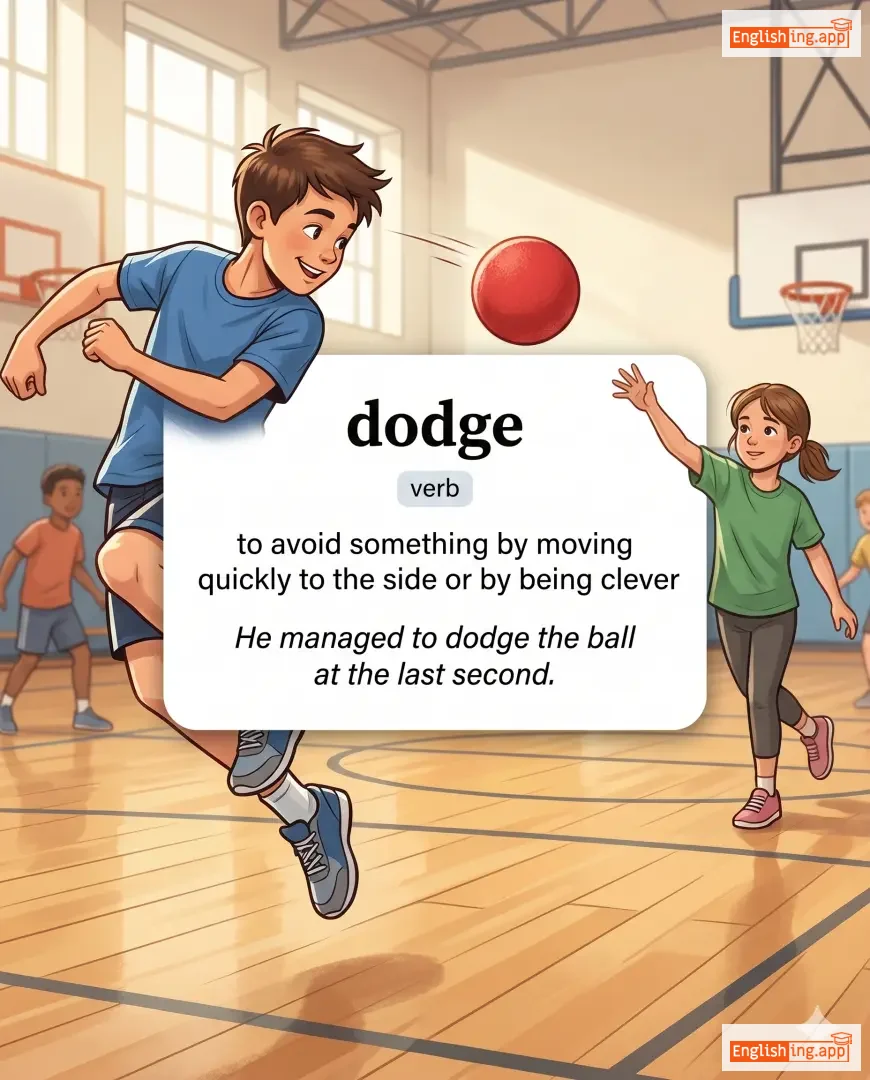
dodge definition card — visual illustration of the meaning
verb
/dɒdʒ/
避ける (sakeru)

to avoid something by moving quickly to the side or by being clever

"He managed to dodge the ball at the last second."

"彼は最後の瞬間にボールを避けることができました。" (Kare wa saigo no shunkan ni booru wo yokeru koto ga dekimashita.)
adjective
/ˈdɒdʒi/
疑わしい; 質が悪い; 信頼できない; 危険なまたはリスクのある (utagawashii; shitsu ga warui; shinrai dekinai; kiken na matawa risuku no aru)

suspicious; questionable; unreliable; risky or dangerous

"That deal sounds dodgy to me."

"その取引は私には疑わしく聞こえます。" (Sono torihiki wa watashi ni wa utagawashiku kikoemasu.)
noun
/doʊ/
雌鹿 (meshi shika)

a female deer, especially an adult one

"The doe and her fawn were grazing in the meadow."

"雌鹿とその子鹿は草原で草を食べていました。" (Meshi shika to sono kogitsune wa sougen de kusa wo tabete imashita.)
verb
/dɒf/
帽子を脱ぐ(敬意の印として) (bōshi o nugu (keii no shirushi toshite))

to take off an item of clothing, especially a hat, as a sign of respect

"He doffed his hat as the procession passed."

"彼は行列が通り過ぎるときに帽子を脱いだ。" (Kare wa gyōretsu ga tōrisugiru toki ni bōshi o nuida.)
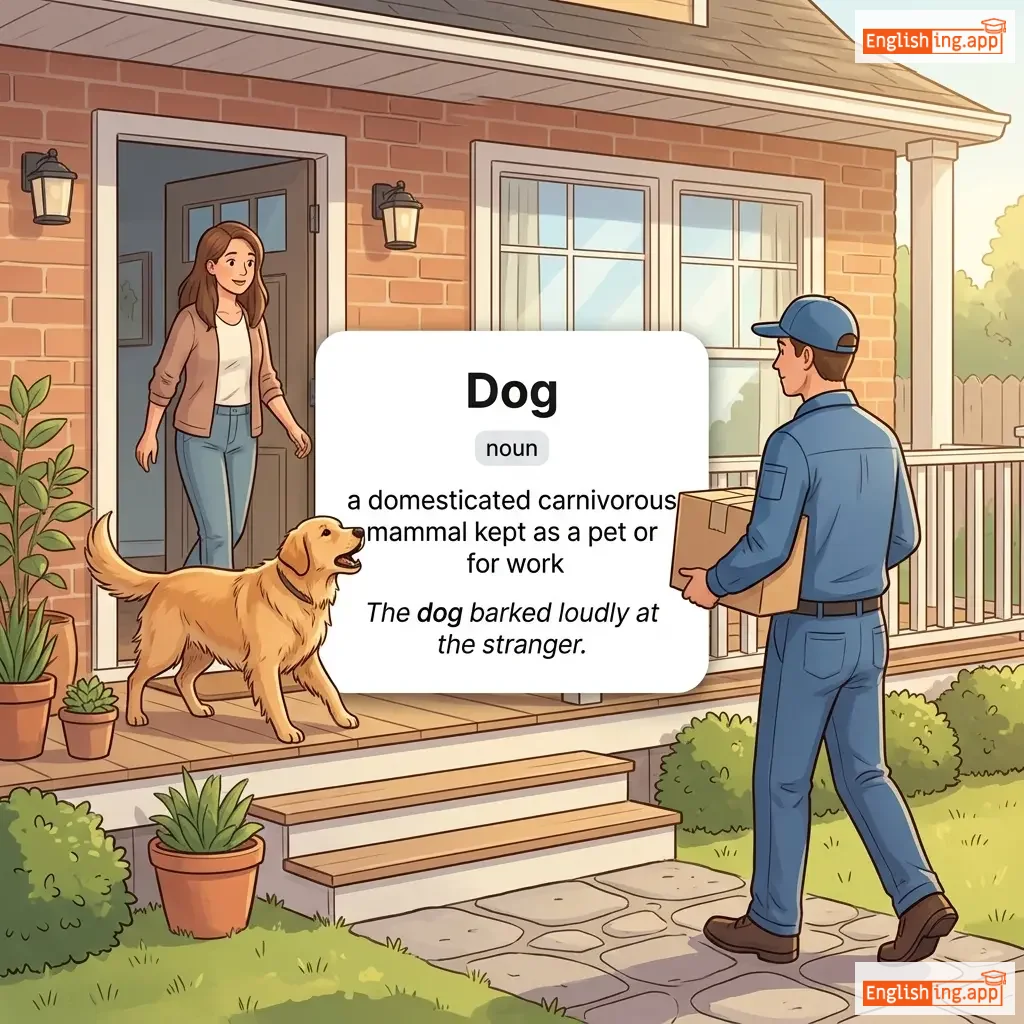
Dog definition card — visual illustration of the meaning
noun
/dɔːɡ/
(inu)

a domesticated carnivorous mammal kept as a pet or for work

"The dog barked loudly at the stranger."

"犬は見知らぬ人に向かって大きな声で吠えた。" (Inu wa mishiranu hito ni mukatte ookina koe de hoeta.)
noun
/ˈdɒɡ roʊz/
ドッグローズ (doggu rōzu)

A wild rose species with pink or white flowers and thorny stems, common in hedgerows

"The dog-rose bush grew wild along the countryside path."

"ドッグローズの低木は、田舎の道沿いに野生で育ちました。" (Doggu rōzu no teimoku wa, inaka no michizoi ni yasei de sodachimashita.)
adjective
/ˈdɒɡɪd/
執拗 (shitsunyo)

showing stubborn determination and persistence

"She succeeded through dogged determination."
"彼女は執拗な決意で成功を収めました。" (Kanojo wa shitsunyo na ketsui de seikou o osamemashita.)
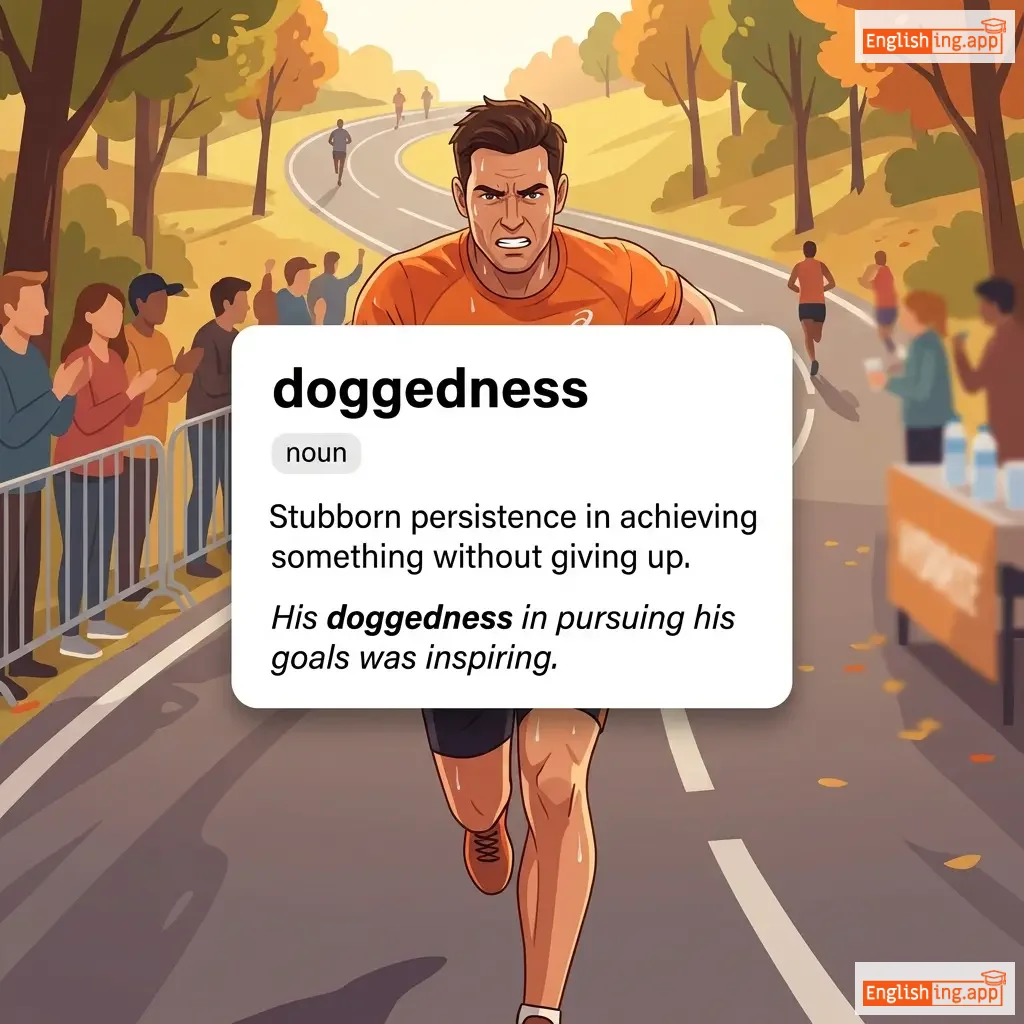
doggedness definition card — visual illustration of the meaning
noun
ˈdɒɡ.ɪd.nəs
執念 (shūnen)

Stubborn persistence in achieving something without giving up.

"His doggedness in pursuing his goals was inspiring."
"目標達成における彼の執念は感動的だった。" (Mokuhyō tassei ni okeru kare no shūnen wa kandō-teki datta.)
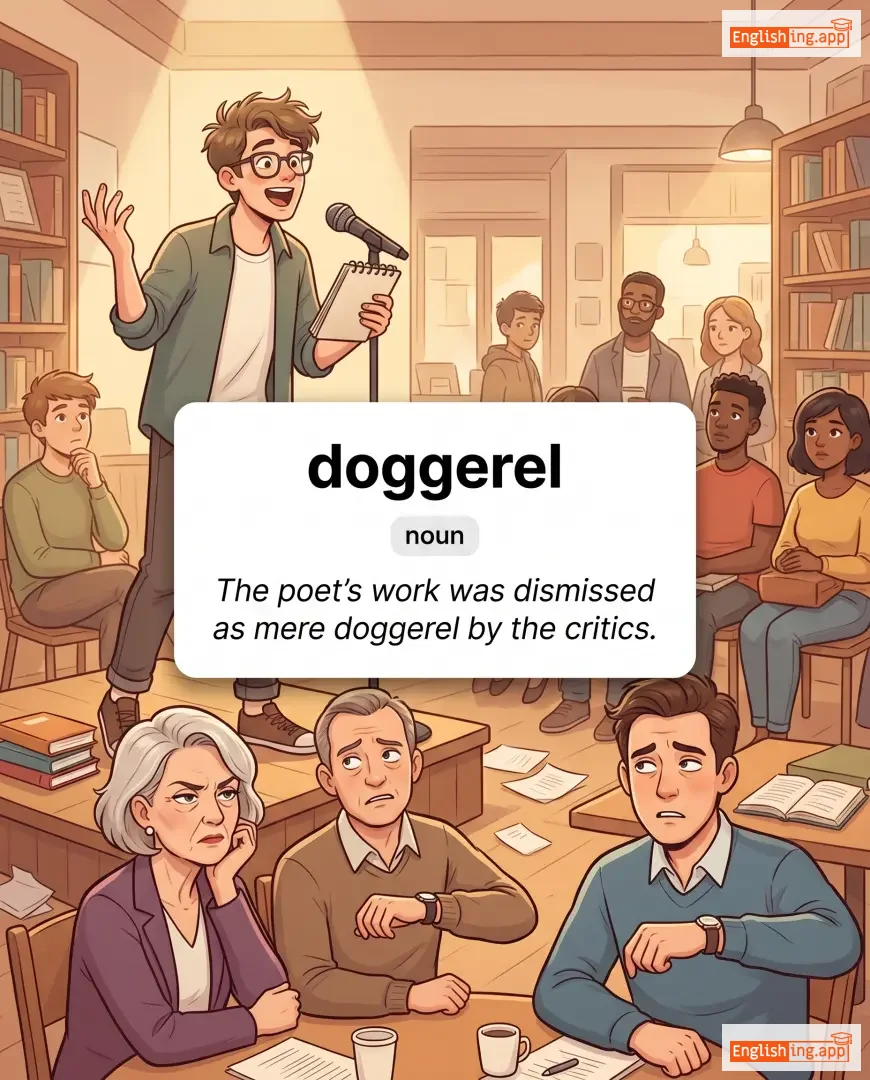
doggerel definition card — visual illustration of the meaning
noun
/ˈdɒɡərəl/
低俗な詩 (teizoku na shi)

Comic or irregular verse, often poorly constructed and lacking in artistic quality.

"The poet’s work was dismissed as mere doggerel by the critics."

"詩人の作品は批評家によって単なる低俗な詩として却下された。" (Shijin no sakuhin wa hihyōka ni yotte tannaru teizoku na shi toshite kyakka sareta.)
noun
/ˈdɒɡmə/
ドグマ (doguma)

A principle or set of principles laid down by an authority as incontrovertibly true.

"The religious leader strictly adhered to traditional dogma."
"宗教的指導者は伝統的なドグマに厳格に従った。" (Shūkyō-teki shidōsha wa dentō-teki na doguma ni genkaku ni shitagatta.)
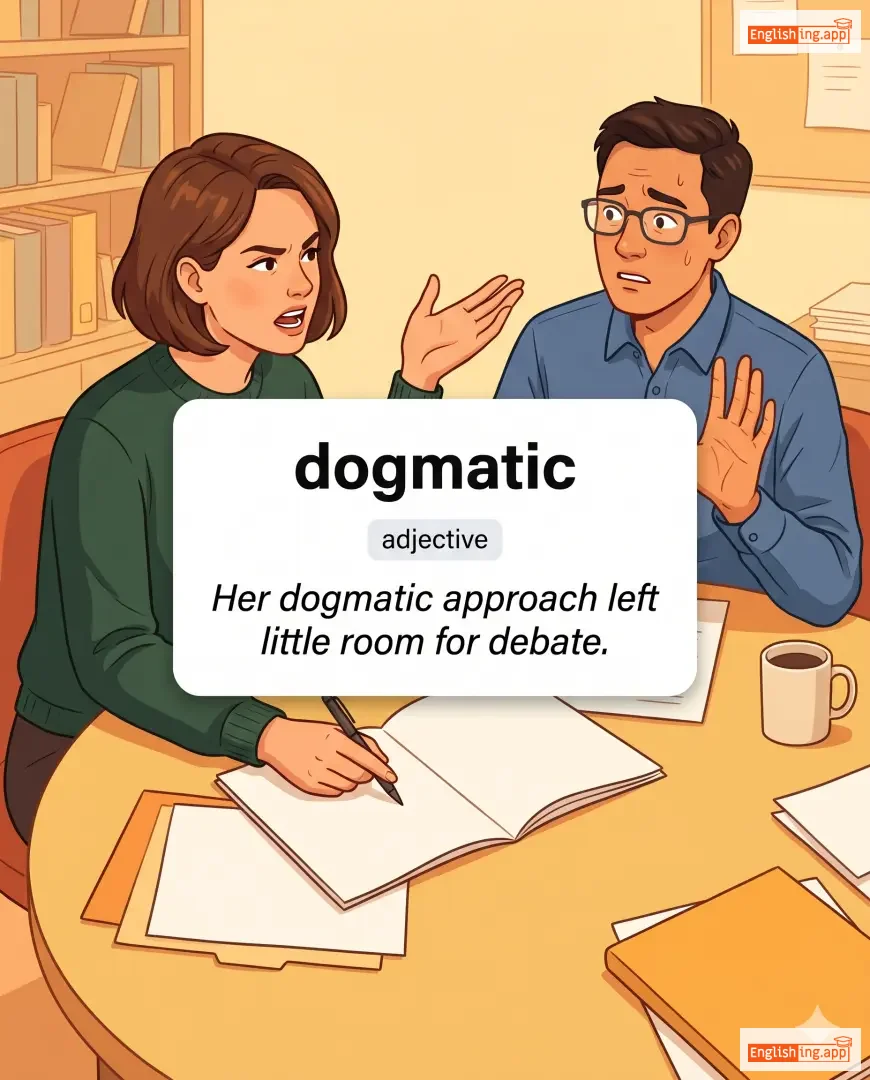
dogmatic definition card — visual illustration of the meaning
adjective
/dɒɡˈmætɪk/
ドグマティック (dogumatikku)

Inclined to lay down principles as undeniably true, without consideration of evidence or others’ opinions.

"Her dogmatic approach left little room for debate."

"彼女のドグマティックなアプローチは議論の余地をほとんど残さなかった。" (Kanojo no dogumatikku na apurōchi wa giron no yochi o hotondo nokosanakatta.)