語彙集

英単語辞書 | 単語の意味、定義、例文

noun
/ɪnˈkʌrɪdʒmənt/
励まし (hagemashi)

the action of giving someone support, confidence, or hope

"Her encouragement helped me finish the project."

"彼女の励ましが私をプロジェクト完了に導きました。" (Kanojo no hagemashi ga watashi wo purojekuto kanryou ni michibikimashita.)
adjective
/ɪnˈkʌrɪdʒɪŋ/
励みになる (hagemi ni naru)

giving someone support or confidence; optimistic

"Her words were very encouraging during the hard times."

"彼女の言葉は、困難な時期に非常に励みになりました。" (Kanojo no kotoba wa, konnan na jiki ni hijō ni hagemi ni narimashita.)
verb
/ɪnˈkrəʊtʃ/
幸せ (shiawase)

to gradually take over or intrude on someone’s rights, territory, or space

"The buildings began to encroach on the protected forest land."

"彼女は賞を受け取ったとき、自分の幸せを隠すことができませんでした。" (Kanojo wa shō o uketotta toki, jibun no shiawase o kakusu koto ga dekimasen deshita.)
noun
/ɪnˈkrəʊtʃmənt/
侵害 (shingai)

the act of gradually intruding or taking over someone’s rights, land, or space

"The villagers protested against the encroachment on their farmland."

"村人たちは自分たちの農地への侵害に反対して抗議しました。" (Murabito-tachi wa jibun-tachi no nōchi e no shingai ni hantai shite kōgi shimashita.)
verb
/ɪnˈkʌmbər/
負担をかける (futan o kakeru)

to burden or weigh down something, making it difficult to move or progress

"She was encumbered by the heavy luggage during her journey."

"彼女は旅行中に重い荷物に負担を感じていました。" (Kanojo wa ryokōchū ni omoi nimotsu ni futan o kanjite imashita.)
noun
/ɪnˈkʌmbrəns/
負担 / 障害 (futan / shougai)

a burden or obstacle that makes progress or movement difficult

"Debt can become a serious encumbrance in life."

"借金は人生で深刻な障害となる可能性があります。" (shakkin wa jinsei de shinkoku na shougai to naru kanousei ga arimasu.)
noun
/ɛnˈsɪklɪkəl/
回勅 (Kaichoku)

a formal letter sent by the Pope to Catholic churches, usually addressing important issues

"The Pope issued an encyclical on climate change and moral responsibility."

"教皇は気候変動と道徳的責任についての回勅を発表しました。" (Kyōkō wa kikō hendō to dōtokuteki sekinin ni tsuite no kaichoku o happyō shimashita.)
noun
/ɪnˌsaɪkləˈpiːdiə/
百科事典 (hyakkajiten)

a book or set of books containing information on many subjects, usually arranged alphabetically

"She used an encyclopedia to complete her school project."

"彼女は学校のプロジェクトを完成させるために百科事典を使いました。" (Kanojo wa gakkō no purojekuto o kansei saseru tame ni hyakkajiten o tsukaimashita.)
adjective
/ɛnˌsaɪkləˈpiːdɪk/
百科事典的 (hyakkajiten-teki)

Having comprehensive knowledge of many subjects; relating to or characteristic of an encyclopedia.

"Her encyclopedic knowledge of history amazed everyone at the conference."

"彼女の歴史に関する百科事典的な知識は、会議でみんなを驚かせた。" (Kanojo no rekishi ni kansuru hyakkajiten-teki na chishiki wa, kaigi de minna o odorokaseta.)
verb
/ɛnd/
終了 (shūryō)

to bring something to a conclusion or stop

"The meeting ended at 5 PM."

"会議は午後5時に終了しました。" (Kaigi wa gogo 5-ji ni shūryō shimashita.)
verb
/ɪnˈdeɪndʒər/
危険にさらす (kiken ni sarasu)

To put someone or something at risk or in danger.

"Cutting down forests can endanger many species of animals."

"森林伐採は多くの動物の種を危険にさらす可能性があります。" (Shinrin bassai wa ooku no doubutsu no shushu wo kiken ni sarasu kanousei ga arimasu.)
verb
/ɪnˈdɪr/
好かれるようにする (sukareru you ni suru)

To cause someone to be loved or liked.

"Her kindness and generosity endeared her to the community."

"彼女の優しさと寛大さは、彼女を地域社会に好かれるようにした。" (kanojo no yasashisa to kandaisa wa kanojo o chiiki shakai ni sukareru you ni shita.)
noun
/ɪnˈdɪrmənt/
愛情の言葉 (aijou no kotoba)

A word or phrase expressing affection or love.

"She whispered a gentle endearment to her child."
"彼女は子供に優しい愛情の言葉をささやきました。" (Kanojo wa kodomo ni yasashī aijou no kotoba o sasayamimashita.)
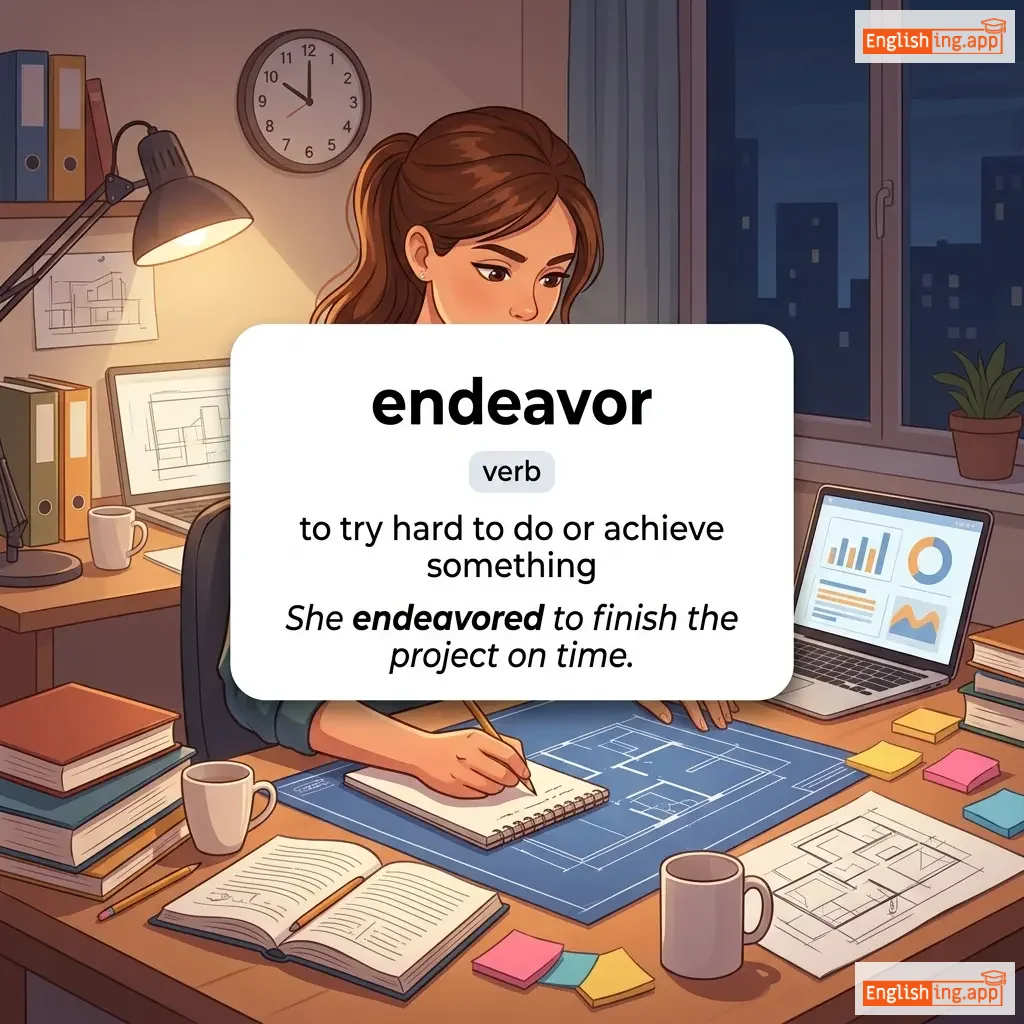
endeavor definition card — visual illustration of the meaning
verb
/ɪnˈdɛvər/
努力 (doryoku)

to try hard to do or achieve something

"She endeavored to finish the project on time."

"彼女はプロジェクトを時間通りに終わらせるために努力しました。" (Kanojo wa purojekuto wo jikan douri ni owaraseru tame ni doryoku shimashita.)
verb, noun
/ɪnˈdevər/
努力する (doryoku suru)

To try hard to achieve something; an attempt or effort

"She endeavoured to finish the project on time."
"彼女は時間通りにプロジェクトを終わらせるために努力した。" (Kanojo wa jikan doori ni purojekuto o owaraseru tame ni doryoku shita.)
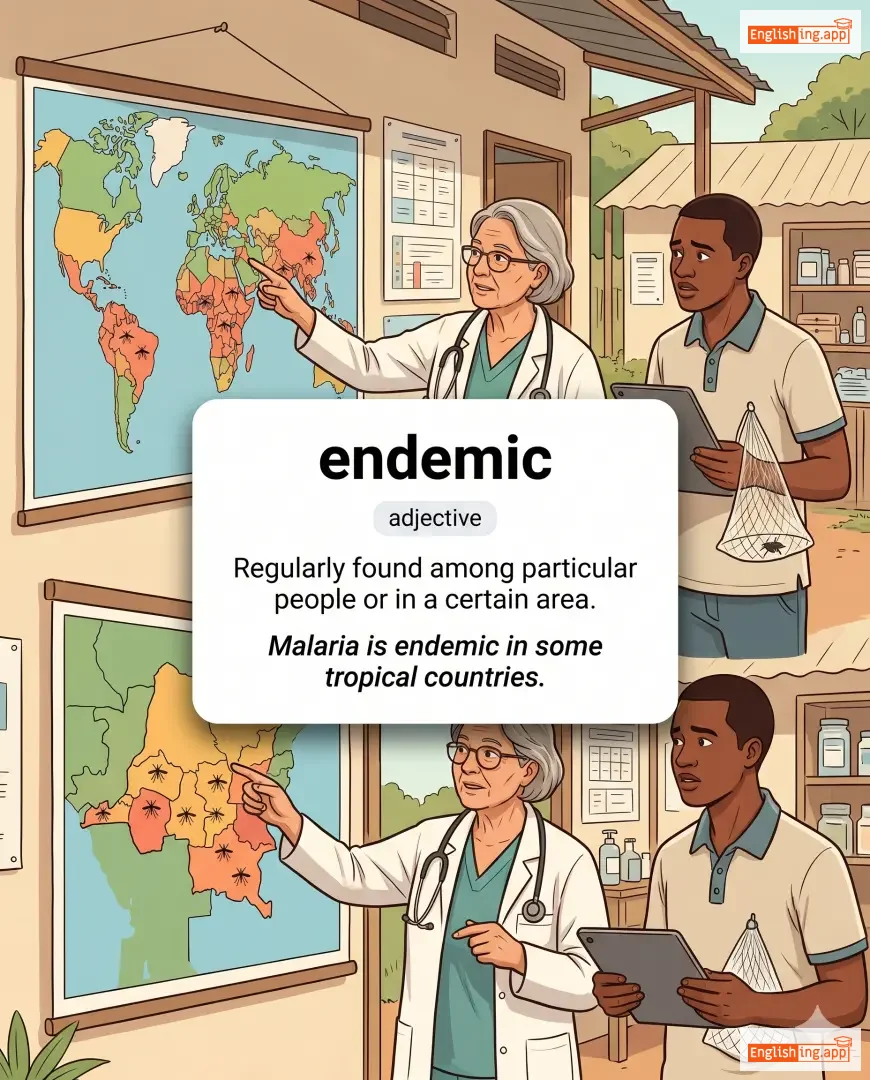
endemic definition card — visual illustration of the meaning
adjective
/ɛnˈdɛmɪk/
地方性 (chihō-sei)

Regularly found among particular people or in a certain area.

"Malaria is endemic in some tropical countries."

"マラリアは一部の熱帯諸国で地方性です。" (Mararia wa ichibu no nettai shokoku de chihō-sei desu.)
noun
/ˈɛndɪŋ/
結末 (ketsumatsu)

the final part of something, such as a story, event, or period of time

"The movie had a surprising ending that no one expected."

"映画は誰も予想しなかった驚きの結末だった。" (Eiga wa dare mo yosou shinakatta odoroki no ketsumatsu datta)
noun
/ˈɛndaɪv/ or /ˈɑːndɪv/
エンダイブ (endaibu)

A leafy vegetable belonging to the chicory family, often used in salads.

"She added fresh endive to the salad for a slightly bitter flavor."

"彼女はサラダに少し苦味のある新鮮なエンダイブを加えました。" (Kanojo wa sarada ni sukoshi nigami no aru shinsen na endaibu o kuwaemashita.)
adjective
/ˈendləs/
無限 (mugen)

having or seeming to have no end or limit

"They gazed at the endless desert stretching before them."
"彼らは前に広がる終わりのない砂漠を見つめていた。" (Karera wa mae ni hirogaru owari no nai sabaku o mitsumete ita.)
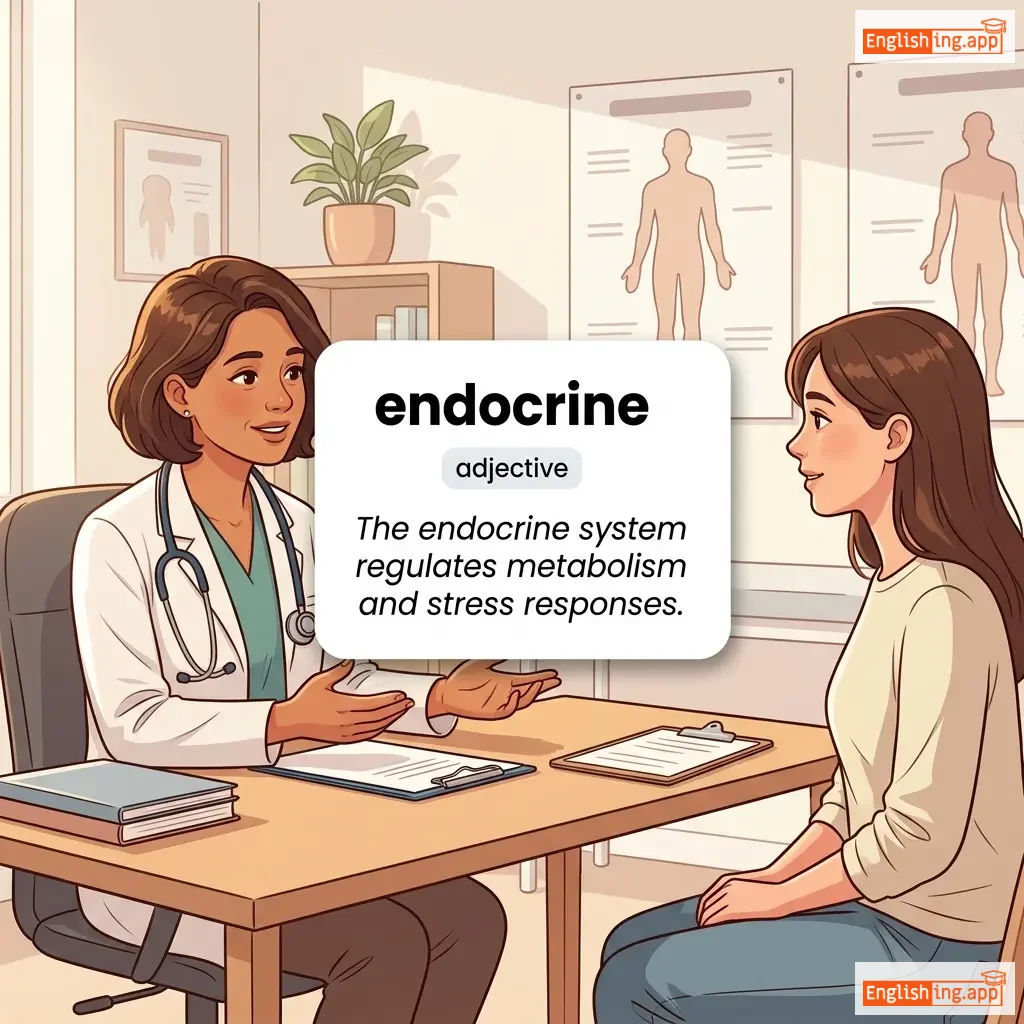
endocrine definition card — visual illustration of the meaning
adjective
/ˈen.də.krɪn/
ホルモン関連 (horumon kanren)

Relating to or denoting glands that secrete hormones directly into the bloodstream to regulate various body functions.

"The endocrine system regulates metabolism and stress responses."
"内分泌系は代謝とストレス反応を調節します。" (Naibunmi-kei wa taisha to sutoresu hannō o chōsetsu shimasu.)
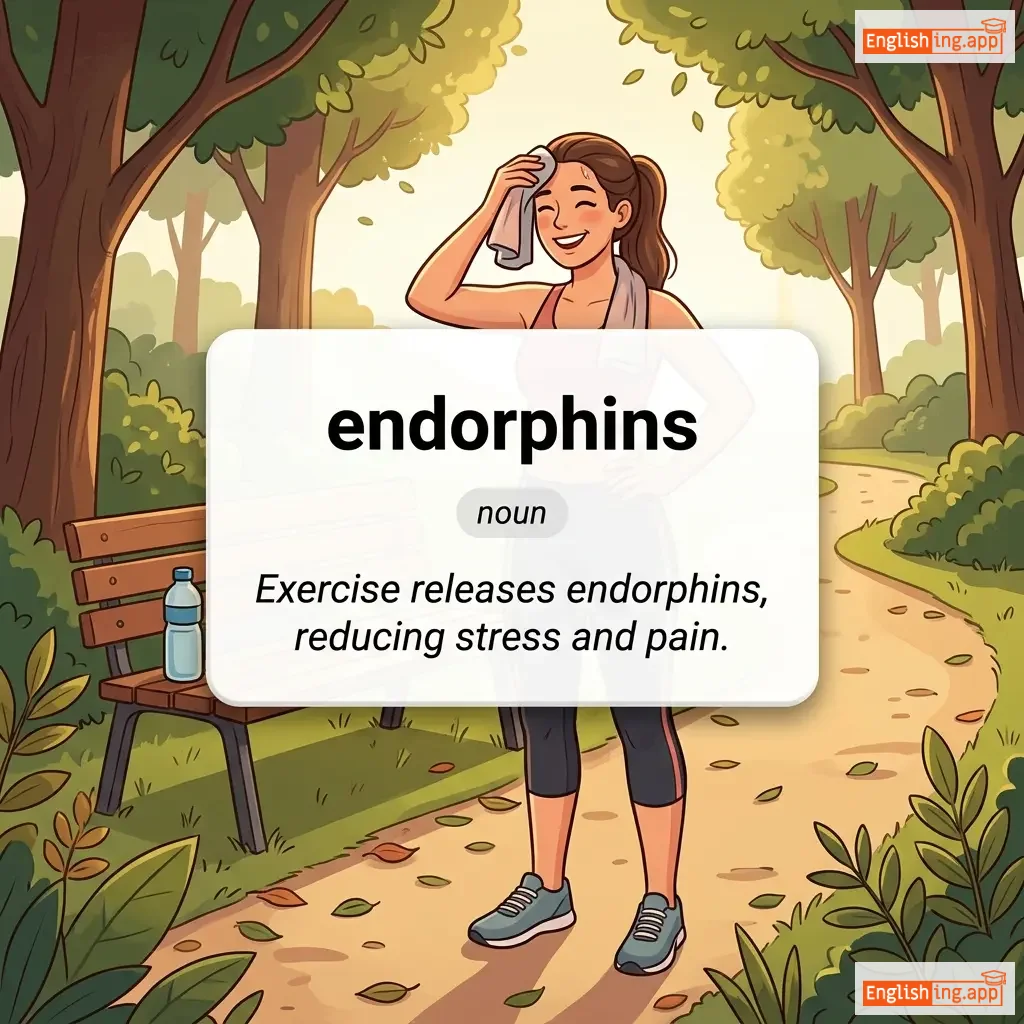
endorphins definition card — visual illustration of the meaning
noun
/ɛnˈdɔːr.fɪnz/
エンドルフィン (endorufin)

Chemical compounds produced by the brain that reduce pain and create feelings of happiness.

"Exercise releases endorphins, reducing stress and pain."

"運動はエンドルフィンを放出し、ストレスと痛みを軽減します。" (Undō wa endorufin o hōshutsu shi, sutoresu to itami o keigen shimasu.)
verb
/ɪnˈdɔːrs/
支持する (shiji suru)

To give approval or support to someone or something; to publicly recommend.

"The celebrity endorsed the new skincare product."

"セレブリティは新しいスキンケア製品を支持しました。" (Sereburiti wa atarashī sukinkea seihin o shiji shimashita.)
endorsement definition card — visual illustration of the meaning
noun
/ɪnˈdɔːrsmənt/
支持 (shiji)

the action of publicly supporting or approving something

"His endorsement of the new policy was well received."
"新しい政策への支持は好意的に受け入れられました。" (Atarashī seisaku e no shiji wa kōiteki ni ukeireraremashita.)
🎁

endow

verb
/ɪnˈdaʊ/

To provide with a quality, ability, or gift; to donate funds for a purpose.

"The university was endowed with a generous donation."

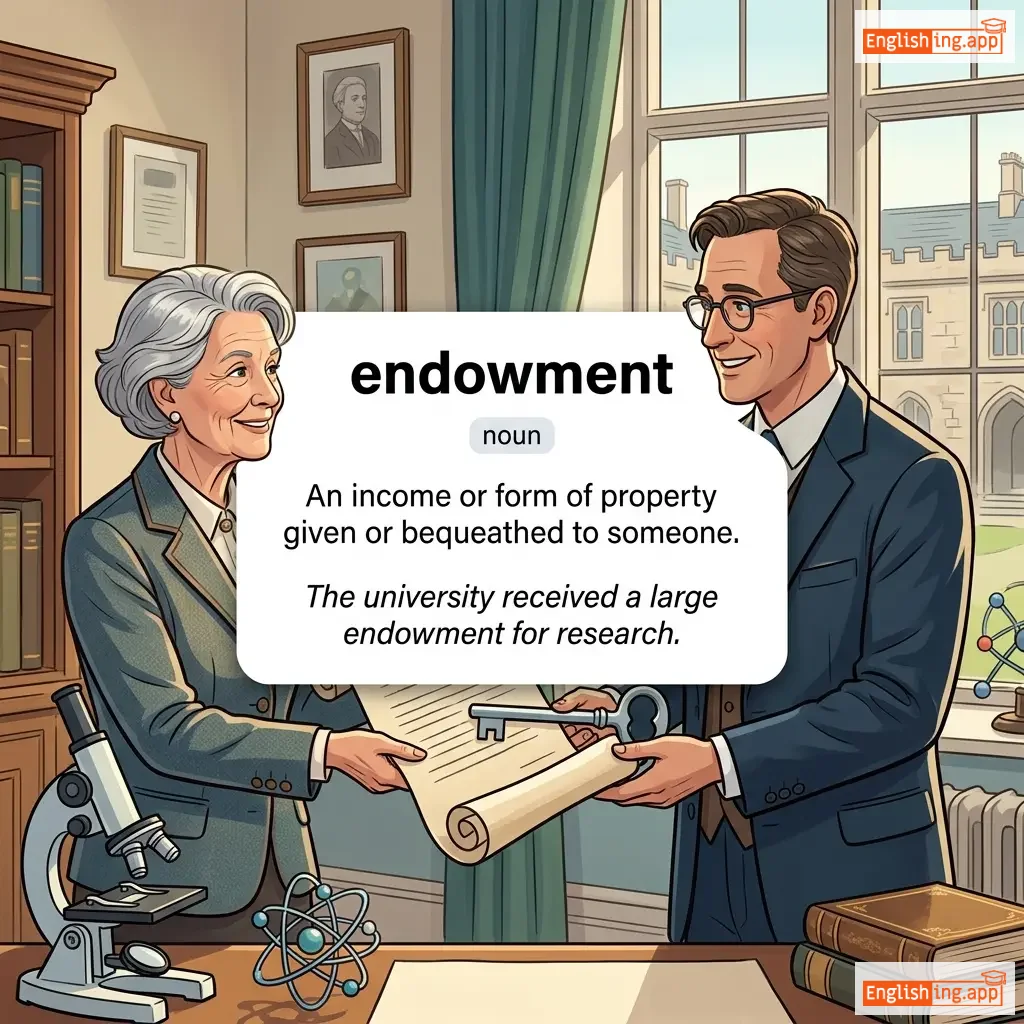
endowment definition card — visual illustration of the meaning
noun
ɪnˈdaʊmənt
寄付金, 寄贈 (kifukin, kizo)

An income or form of property given or bequeathed to someone.

"The university received a large endowment for research."

"大学は研究のために大きな寄付金を受け取った。" (Daigaku wa kenkyū no tame ni ōkina kifukin o uketotta.)
verb
/ɪnˈdjuː/
授ける (sazukeru)

To provide or endow with a quality or ability.

"The leader was endued with wisdom and courage."

"リーダーは知恵と勇気を授けられた。" (Rīdā wa chie to yūki o sazukerareta.)
adjective
/ɪnˈdjʊərəbl/
耐えられる (taerareru)

Able to be tolerated or endured; bearable.

"The pain was harsh but endurable."
"痛みは激しかったが耐えられるものだった。" (Itami wa hageshikatta ga taerareru mono datta.)
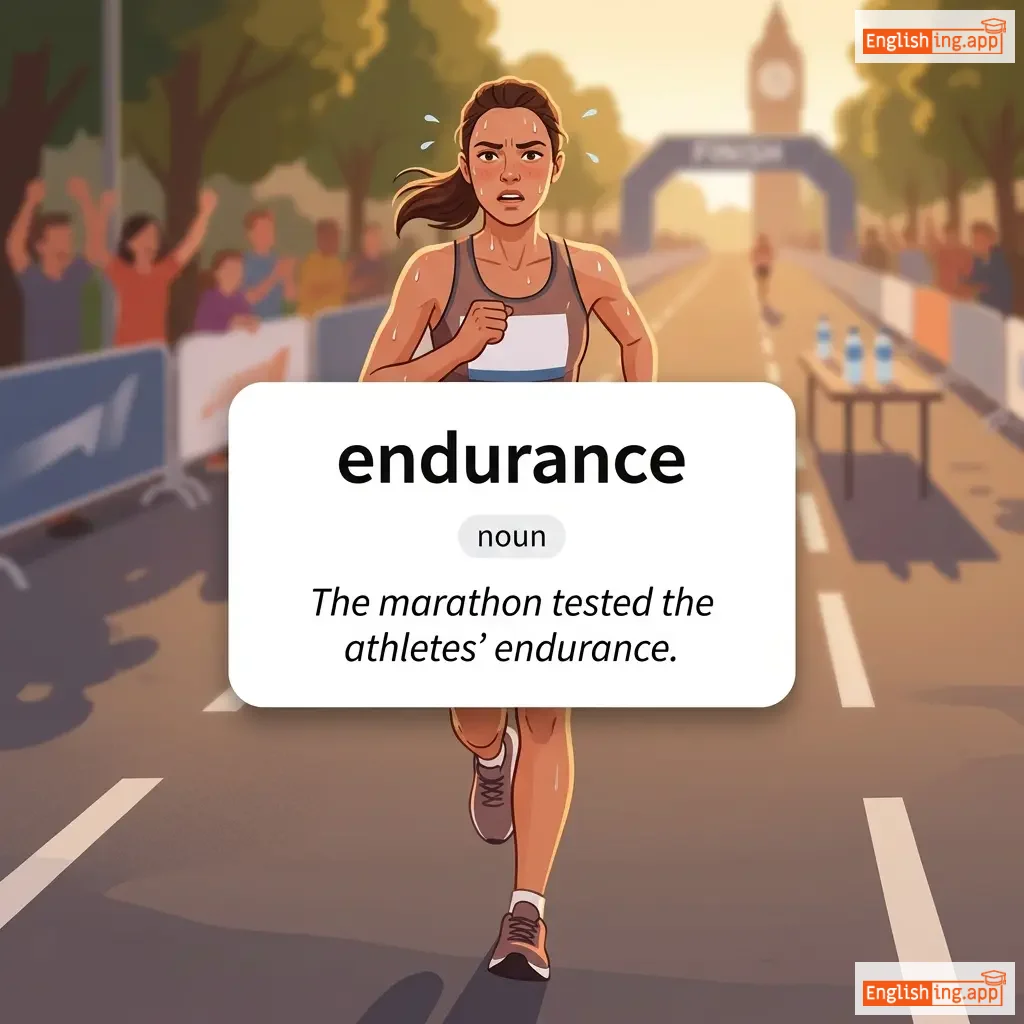
endurance definition card — visual illustration of the meaning
noun
/ɪnˈdjʊərəns/
耐久力 (taikyūryoku)

The ability to withstand hardship or sustain prolonged physical or mental effort.

"The marathon tested the athletes’ endurance."

"マラソンはアスリートの耐久力を試した。" (Marason wa asurīto no taikyūryoku o tameshita.)
verb
/ɪnˈdjʊər/
耐える (taeru)

to suffer something difficult or unpleasant patiently

"He had to endure years of hardship before achieving success."

"成功を収める前に何年もの困難に耐えなければならなかった。" (Seikou o osameru mae ni nannen mo no konnan ni taenakereba naranakatta.)
adjective
/ɪnˈdjʊərɪŋ/
永続的な (eizokuteki na)

Continuing or lasting over a long period of time.

"She left an enduring impression on everyone she met."

"彼女は出会ったすべての人に永続的な印象を残しました。" (Kanojo wa deatta subete no hito ni eizokuteki na inshou o nokoshimashita.)
noun
/ˈɛnəmi/
(teki)

a person or group that is hostile or opposed to someone or something

"The two countries have been enemies for decades."

"二つの国は何十年もの間、敵同士です。" (Futatsu no kuni wa nanjū-nen mono aida, teki dōshi desu.)
adjective
/ˌɛnəˈdʒɛtɪk/
エネルギッシュ (enerugisshu)

Showing or involving great activity or vitality.

"The energetic child ran around the playground for hours."

"そのエネルギッシュな子供は数時間にわたって遊び場を走り回った。" (Sono enerugisshu na kodomo wa suūjikan ni watatte asobiba o hashirimatta.)
verb
/ˈɛnərˌdʒaɪz/
活性化する (kasseika suru)

To give energy or vitality to something or someone.

"The motivational speech helped energize the team."

"モチベーションスピーチはチームを活性化するのに役立ちました。" (Mochibeishon supīchi wa chīmu o kasseika suru no ni yakudachimashita.)
energy definition card — visual illustration of the meaning
noun
/ˈɛnərdʒi/
エネルギー (enerugi)

the capacity for activity or work; power derived from physical or chemical resources

"Solar energy is becoming increasingly popular worldwide."

"太陽エネルギーは世界中でますます人気が高まっています。" (Taiyou enerugi wa sekaijuu de masumasu ninki ga takamatteimasu.)
energy security definition card — visual illustration of the meaning
noun
/ˈen.ə.dʒi sɪˈkjʊə.rɪ.ti/
エネルギーの安全保障 (enerugī no anzen hoshō)

The reliable availability of energy sources at an affordable price for a nation or region.

"Energy security ensures consistent supply."
"エネルギーセキュリティは一貫した供給を確保します。" (Enerugī sekuriti wa ikkan shita kyōkyū o kakuho shimasu.)
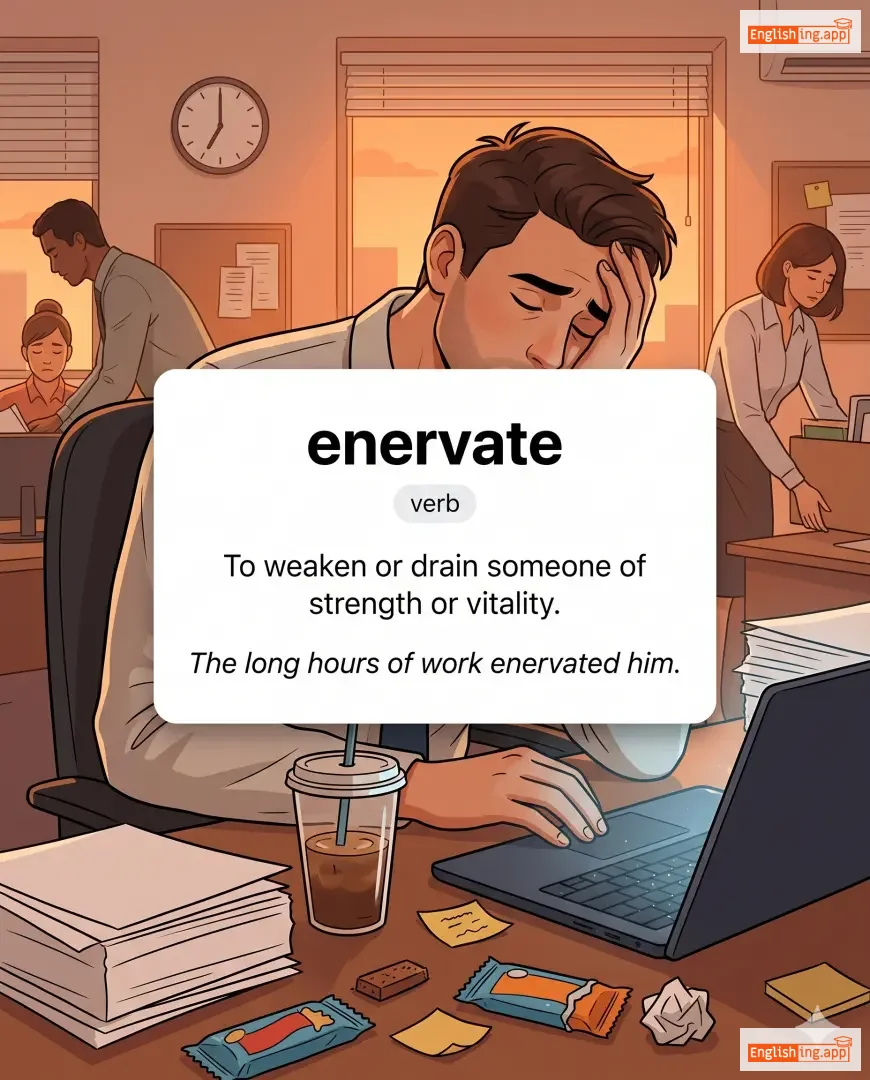
enervate definition card — visual illustration of the meaning
verb
/ˈɛnərˌveɪt/
弱体化する (jakutaika suru)

To weaken or drain someone of strength or vitality.

"The long hours of work enervated him."

"長時間の労働が彼を弱体化させた。" (Chōjikan no rōdō ga kare o jakutaika saseta.)
adjective
/ˈɛnərˌveɪtɪd/
疲れ切った (tsukare kitta)

Lacking energy, vitality, or strength; weakened or exhausted.

"After the long meeting, she felt completely enervated."

"長い会議の後、彼女は完全に疲れ切ったと感じていた。" (Nagai kaigi no ato, kanojo wa kanzen ni tsukare kitta to kanjite ita.)
verb
/ɛnˈfiːbəl/
弱める (yowameru)

To make weak or feeble; to deprive of strength.

"The long illness enfeebled the old man."

"長い病気で老人は弱りました。" (Nagai byōki de rōjin wa yowarimashita.)
👮‍♂️

enforce (enfōsu)

verb
/ɪnˈfɔːrs/
施行する (shikō suru)

to make sure that a rule, law, or policy is obeyed

"The police are responsible for enforcing the law."

"警察は法律を施行する責任があります。" (Keisatsu wa hōritsu o shikō suru sekinin ga arimasu.)
noun
/ɪnˈfɔːrsmənt/
法執行 (hōshikkō)

the act of making sure that laws or rules are followed

"The police are responsible for law enforcement."
"警察は法執行の責任があります。" (Keisatsu wa hōshikkō no sekinin ga arimasu.)
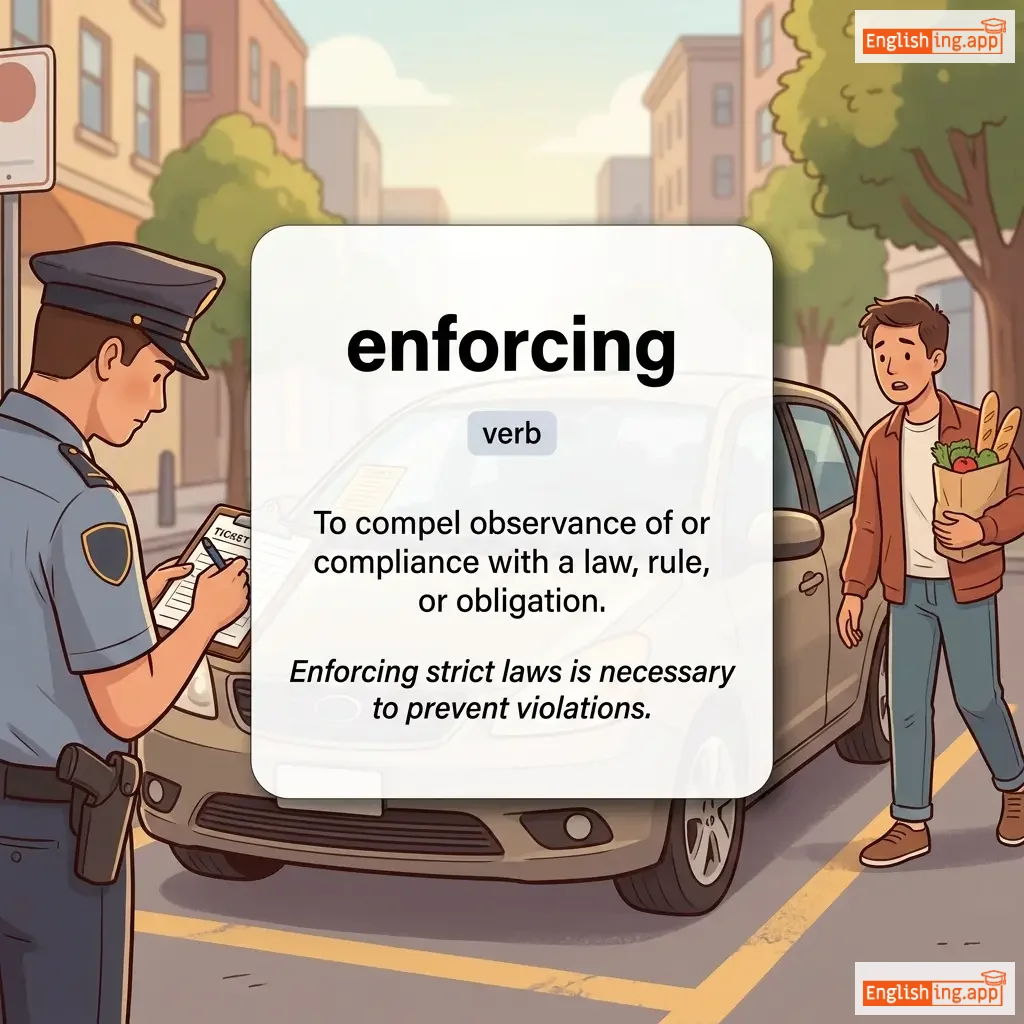
enforcing definition card — visual illustration of the meaning
verb
ɪnˈfɔːrsɪŋ
施行する (shikou suru)

To compel observance of or compliance with a law, rule, or obligation.

"Enforcing strict laws is necessary to prevent violations."

"厳格な法律を施行することは、違反を防ぐために必要です。" (Genkaku na hōritsu o shikō suru koto wa, ihan o fusegu tame ni hitsuyō desu.)
verb
/ɛnˈfrænˌtʃaɪz/
幸福 (kōfuku)

To grant the right to vote or other rights of citizenship.

"The new law enfranchised thousands of people."

"彼女は賞を受け取ったとき、自分の幸福を隠せませんでした。" (Kanojo wa shō o uketotta toki, jibun no kōfuku o kakusemasendeshita.)
verb
/ɪnˈɡeɪdʒ/
関わる (kakawaru)

To participate or become involved in; to attract or hold attention.

"The teacher tried to engage the students in the discussion."

"教師は学生たちを討論に参加させようとしました。" (Kyōshi wa gakusei-tachi o tōron ni sanka saseyō to shimashita.)
adjective
/ɪnˈɡeɪdʒd/
婚約者, 忙しい (kon'yakusha, isogashii)

Busy, occupied, or pledged to be married.

"She is engaged to be married next summer."

"彼女は来年の夏に結婚する予定です。" (Kanojo wa rainen no natsu ni kekkon suru yotei desu.)
engagement definition card — visual illustration of the meaning
noun
/ɪnˈɡeɪdʒmənt/
婚約, 参加 (kon'yaku, sanka)

a formal agreement to get married; or active involvement in an activity

"Their engagement was announced last week."
"彼らの婚約は先週発表されました。" (Karera no kon'yaku wa senshū happyō sareました。)
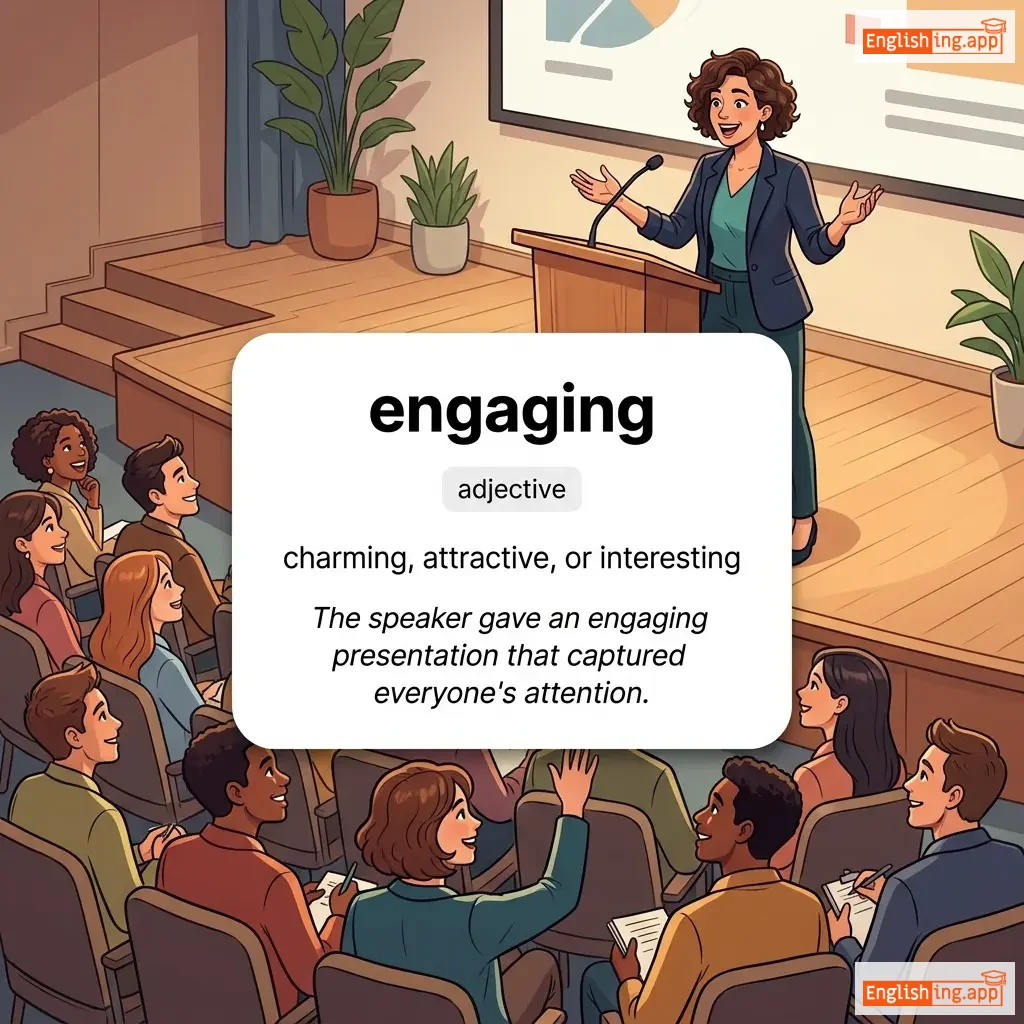
engaging definition card — visual illustration of the meaning
adjective
/ɪnˈɡeɪdʒɪŋ/
魅力的 (miryokuteki)

charming, attractive, or interesting

"The speaker gave an engaging presentation that captured everyone's attention."

"講演者は、皆の注意を引きつける魅力的なプレゼンテーションを行いました。" (Kōensha wa, mina no chūi o hikitsukeru miryokuteki na purezentēshon o okonai mashita.)
engaging learning experiences definition card — visual illustration of the meaning
noun
ɪnˈɡeɪdʒɪŋ ˈlɜːrnɪŋ ɪkˈspɪəriənsɪz
魅力的な学習体験 (miryokuteki na gakushū taiken)

Interactive and immersive educational activities that capture students' attention and actively involve them in the learning process.

"Digital tools create engaging learning experiences."
"デジタルツールは魅力的な学習体験を生み出します。" (Dejitaru tsūru wa miryokuteki na gakushū taiken o umidashimasu.)
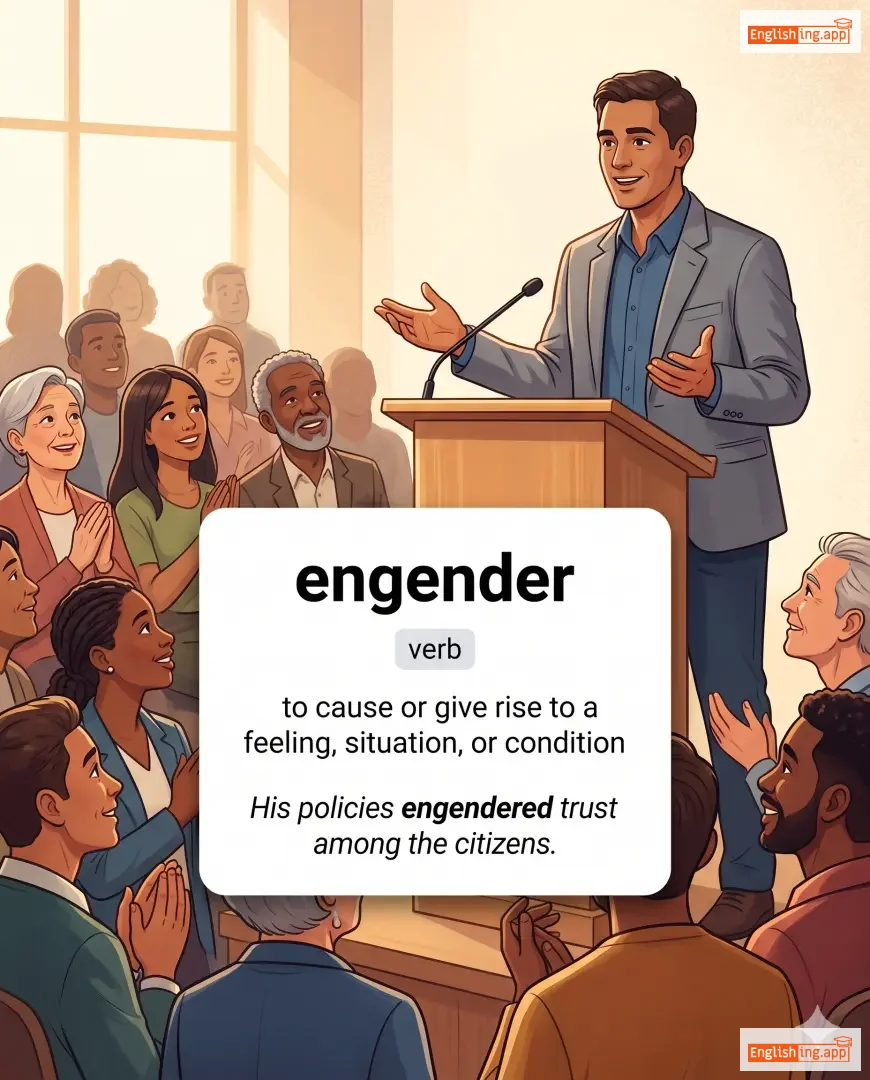
engender definition card — visual illustration of the meaning
verb
/ɪnˈdʒɛndər/
生み出す (umidasu)

to cause or give rise to a feeling, situation, or condition

"His policies engendered trust among the citizens."

"彼の政策は市民の間で信頼を生み出しました。" (kare no seisaku wa shimin no aida de shinrai wo umidashimashita.)
noun
/ˈɛndʒɪn/
エンジン (enjin)

A machine designed to convert energy into mechanical power.

"The car's engine failed on the highway."

"車のエンジンは高速道路で故障した。" (Kuruma no enjin wa kōsoku dōro de koshō shita.)
noun/verb
/ˌɛndʒɪˈnɪər/
エンジニア (enjinia)

A person trained to design, build, or maintain engines, machines, or structures; to skillfully arrange or bring about.

"The engineer designed a new bridge across the river."

"エンジニアは川を越える新しい橋を設計しました。" (Enjinia wa kawa o koeru atarashī hashi o sekkei shimashita.)