語彙集

英単語辞書 | 単語の意味、定義、例文

adjective
/ˈdaʊti/
勇敢な (yūkan na)

brave, valiant, courageous

"The doughty soldier never backed down from a challenge."

"勇敢な兵士は挑戦から決して後退しなかった。" (Yūkan na heishi wa chōsen kara kesshite kōtai shinakatta.)
adjective
/ˈdaʊ.ər/
厳格 (genkaku)

relentlessly severe, stern, or gloomy in manner or appearance

"His dour expression made the meeting uncomfortable."

"彼の厳格な表情は会議を不快にした。" (Kare no genkaku na hyōjō wa kaigi o fukai ni shita.)
verb
/daʊs/
消す / 注ぐ (kesu / sosogu)

to pour liquid over; to extinguish a fire or light

"Firefighters doused the flames with water."

"消防士たちは水で炎を消しました。" (Shouboushi-tachi wa mizu de honoo o keshimashita.)
noun
/dʌv/
(hato)

a small, gentle bird with soft cooing sounds, often white and symbolizing peace

"The white dove flew peacefully across the blue sky."

"白い鳩は青い空を平和に飛んでいた。" (shiroi hato wa aoi sora wo heiwa ni tonde ita)
verb
/ˈdʌv.teɪl/
完全に合致する (kanzen ni gatchi suru)

to fit or combine perfectly together

"Her plans dovetail perfectly with our goals."

"彼女の計画は私たちの目標に完全に合致しています。" (Kanojo no keikaku wa watashitachi no mokuhyou ni kanzen ni gatchi shiteimasu.)
adjective
/ˈdaʊ.di/
時代遅れ / ださい (jidaiokure / dasai)

unfashionable, dull, or shabby in appearance

"She wore a dowdy dress to the party."

"彼女はパーティーに時代遅れのドレスを着ていた。" (Kanojo wa pātī ni jidaiokure no doresu o kite ita.)
adverb
/daʊn/
(shita)

from a higher to a lower position

"He walked down the stairs slowly."

"彼はゆっくりと階段を下りてきました。" (Kare wa yukkuri to kaidan o orite kimashita.)
adjective
/ˈdaʊn.kæst/

feeling sad, dejected, or with lowered eyes

"He looked downcast after hearing the bad news."

noun
/ˈdaʊn.fɔːl/
没落; 失敗; 崩壊 (botsuraku, shippai, hōkai)

a loss of power, prosperity, or status; the cause of such a loss

"His arrogance and pride led to his eventual downfall in business."

"彼の傲慢と誇りは、ビジネスにおける彼の最終的な失墜を招いた。" (Kare no gōman to hokori wa, bijinesu ni okeru kare no saishū-tekina shītsui o manekita.)
verb
/ˈdaʊn.pleɪ/
軽視する (keishi suru)

to make something seem less important than it really is

"The company tried to downplay the risks of the new product."

"会社は新しい製品のリスクを軽視しようとしました。" (Kaisha wa atarashī seihin no risuku o keishi shiyō to shimashita.)
noun
/ˈdaʊnˌpɔːr/
土砂降り (doshaburi)

A sudden and heavy fall of rain.

"We got caught in a sudden downpour on our way home."

"帰宅途中で突然の土砂降りに遭いました。" (Kitaku tochū de totsuzen no doshaburi ni aimashita.)
adverb
/ˌdaʊnˈsteəz/
階下 (kaika)

on or to a lower floor of a building

"Please go downstairs and wait in the lobby."

"階下に行ってロビーで待ってください。" (Kaika ni itte robī de matte kudasai.)
noun
/ˈdaʊnˌtaʊn/
ダウンタウン (dauntaun)

the central part of a city

"They spent the afternoon shopping downtown."

"彼らは午後、市の中心部で買い物をしました。" (Karera wa gogo, shi no chūshinbu de kaimono o shimashita.)
adverb
/ˈdaʊnwədz/
下向き (shita muki)

towards a lower place or position; in a downward direction

"The ball rolled downwards along the slope."

"ボールは坂を下向きに転がった。" (Booru wa saka o shita muki ni korogatta.)
noun
/ˈdaʊri/
持参金 (jisan-kin)

Property or money brought by a bride to her husband at marriage.

"The dowry tradition is still followed in some cultures."

"いくつかの文化では、持参金の伝統が今でも守られています。" (Ikutsuka no bunka de wa, jisan-kin no dentou ga ima demo mamorareteimasu.)
verb
/daʊz/
水や鉱物を占いの棒で探す; または液体で浸すまたは消火する。 (Mizu ya koumotsu o uranai no bou de sagasu; mata wa ekitai de shinsu mata wa shoukaku suru.)

To search for underground water or minerals using a divining rod; also to drench or extinguish with liquid.

"The farmer tried to dowse for water in the dry field."

"農夫は乾燥した畑で水を探すためにダウズしようとした。" (Noufu wa kansou shita hatake de mizu o sagasu tame ni dausu shiyou to shita.)
noun
/ˈdɔɪən/
尊敬される人物 (sonkei sareru jinbutsu)

The most respected or prominent person in a particular field.

"He is regarded as the doyen of modern literature in the country."

"彼はその国の現代文学のドイエンと見なされています。" (Kare wa sono kuni no gendai bungaku no doyen to minasarerています。)
verb
/doʊz/
うたた寝 (utatane)

To sleep lightly for a short time.

"He dozed off while reading the book."

"彼は本を読みながらうたた寝をした。" (Kare wa hon o yominagara utatane o shita.)
noun
/ˈdʌzən/
ダース (dāsu)

a group of twelve

"She bought a dozen eggs from the market."

"彼女は市場でダースの卵を買いました。" (Kanojo wa ichiba de dāsu no tamago o kaimashita.)
adjective
/dræb/
地味な (jimina)

Dull, lacking brightness or interest; monotonous.

"The room looked drab with its gray walls and dim lighting."

"灰色の壁と薄暗い照明でその部屋は地味に見えた。" (haiiro no kabe to usugurai shoumei de sono heya wa jimi ni mieta)
noun
/ˈdrækmə/
ドラクマ (dorakuma)

The basic monetary unit of Greece before the adoption of the euro.

"The old coin collection included a silver drachma."

"古いコインのコレクションには銀のドラクマが含まれていました。" (Furui koin no korekushon ni wa gin no dorakuma ga fukumarete imashita.)
adjective
/drəˈkoʊniən/
ドラコニアン (dorakonian)

Extremely harsh and severe, especially laws or rules.

"The new regulations were criticized as draconian."

"新しい規制はドラコニアンだと批判されました。" (Atarashī kisei wa dorakonian da to hihan saremashita.)
draft definition card — visual illustration of the meaning
noun/verb
/dræft/
ドラフト (dorafuto)

A preliminary version of a piece of writing; to prepare a preliminary version of a document.

"She finished the first draft of her novel."
"彼女は小説の最初のドラフトを完成させました。" (Kanojo wa shousetsu no saisho no dorafuto wo kansei sasemashita.)
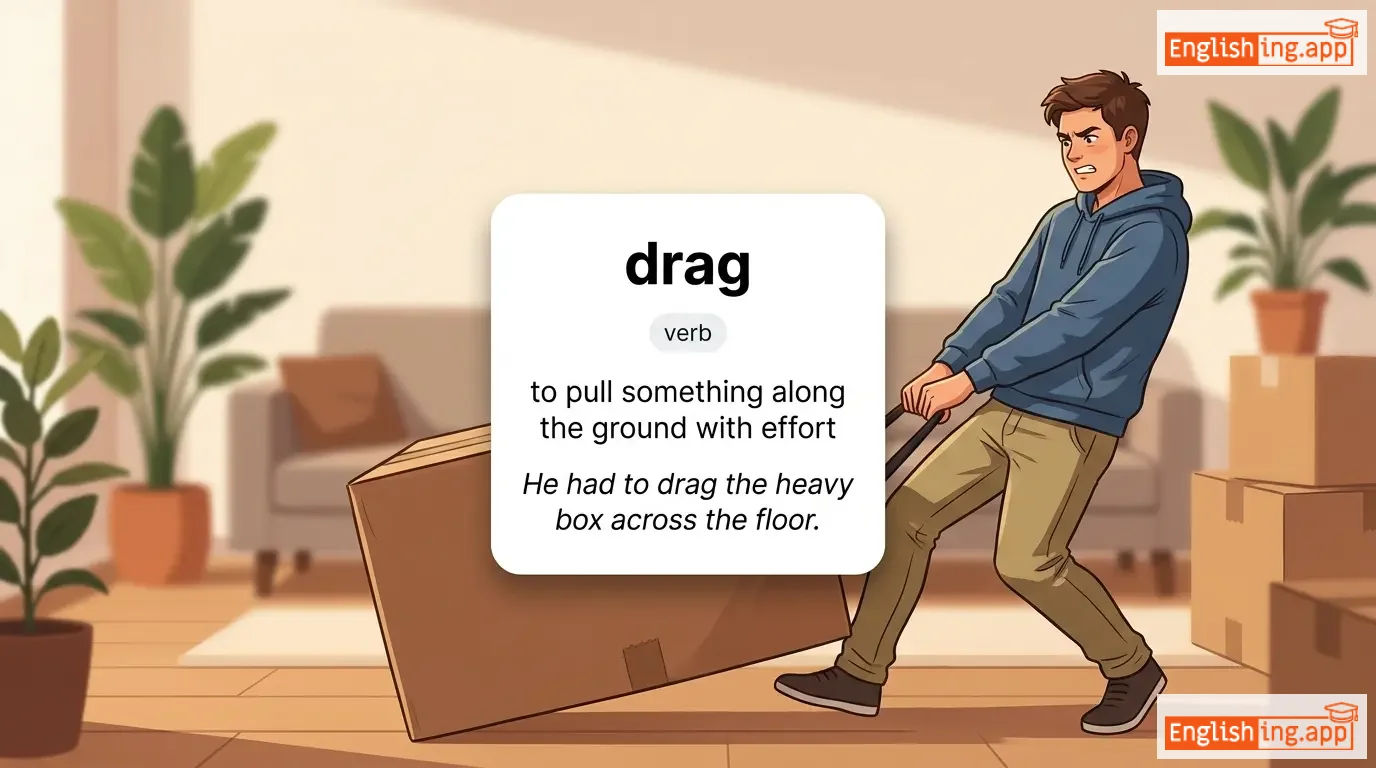
drag definition card — visual illustration of the meaning
verb
/dræɡ/
引きずる (hikizuru)

to pull something along the ground with effort

"He had to drag the heavy box across the floor."

"彼は重い箱を床に引きずらなければならなかった。" (Kare wa omoi hako o yuka ni hikizurana kereba naranakatta.)
noun
/ˈdræɡˌnɛt/
広域捜査 (kouiki sōsa)

A systematic search or investigation, often by police to catch criminals.

"The police launched a dragnet to capture the fugitives."

"警察は逃亡者を捕まえるために広域捜査を開始した。" (Keisatsu wa tōbōsha o tsukamaeru tame ni kōiki sōsa o kaishi shita.)
noun
/ˈdræɡ.ən.flaɪ/
トンボ (tonbo)

a large insect with four transparent wings that lives near water

"The dragonfly hovered over the pond."

"トンボは池の上を飛んでいた。" (tonbo wa ike no ue o tonde ita)
verb
/drəˈɡuːn/
強制する (kyousei suru)

to force someone to do something through coercion or intimidation

"The manager tried to dragoon the team into working overtime."

"マネージャーはチームに残業させようとしました。" (Manejaa wa chiimu ni zangyou saseyou to shimashita.)
🚰

drain

verb
/dreɪn/

to cause liquid to flow away from something; to remove liquid

"He drained the pasta before adding the sauce."

noun
/ˈdreɪ.nɪdʒ/
排水 (haisui)

the system or process by which water or other liquids are drained away

"Poor drainage caused flooding in the neighborhood."

"悪い排水システムが近所での洪水を引き起こしました。" (Warui haisui shisutemu ga kinjo de no kouzui wo hikiokoshimashita.)
noun
/dreɪk/
雄鴨 (otoko kamo)

a male duck; a type of waterfowl

"The drake led his family of ducks across the pond."
"そのドレイクは、家族のカモたちを池の向こうに連れて行きました。" (sono doreiku wa, kazoku no kamo-tachi o ike no mukou ni tsurete ikimashita.)
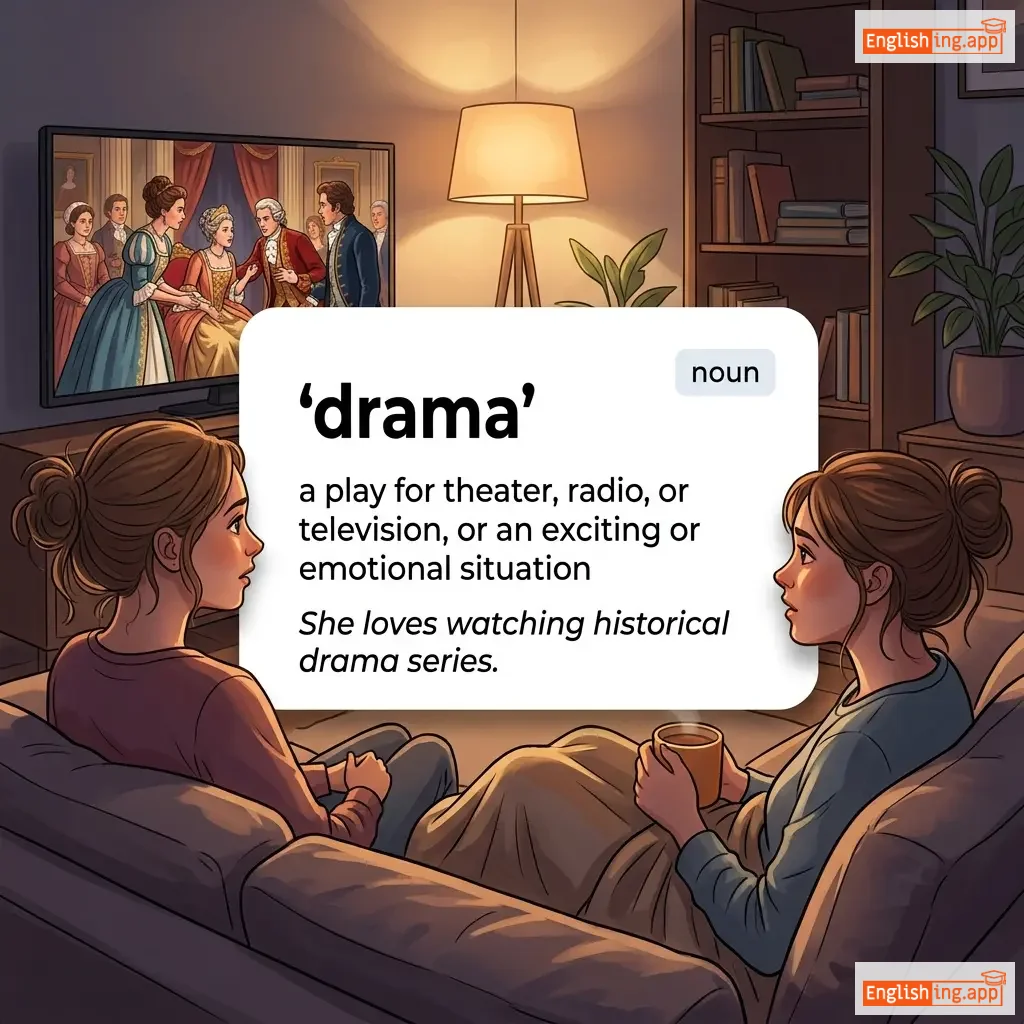
drama definition card — visual illustration of the meaning
noun
/ˈdrɑː.mə/
ドラマ (dorama)

a play for theater, radio, or television, or an exciting or emotional situation

"She loves watching historical drama series."

"彼女は歴史的なドラマシリーズを見るのが好きです。" (kanojo wa rekishiteki na dorama shirīzu o miru no ga suki desu.)
adjective
/drəˈmætɪk/
劇的 (gekiteki)

sudden and striking; relating to drama or theater

"The play ended with a dramatic twist."

"劇は劇的な転換で終わった。" (Geki wa gekiteki na tenkan de owatta.)
adverb
/drəˈmætɪkli/
劇的に (gekiteki ni)

in a sudden, striking, or exaggerated way

"Sales increased dramatically after the campaign."

"キャンペーン後、売上は劇的に増加しました。" (Kyanpēn go, uriage wa gekiteki ni zōka shimashita.)
noun
/ˈdræm.ə.tɪst/
劇作家 (gekisakka)

a person who writes plays

"Shakespeare is one of the greatest dramatists in history."

"シェイクスピアは歴史上最も偉大な劇作家の一人です。" (Sheikusupia wa rekishi jō mottomo idaina gekisakka no hitori desu.)
verb
/ˈdræm.ə.taɪz/
ドラマ化する (doramaka suru)

to present a story in a dramatic way, or to exaggerate something

"The novel was dramatized into a popular TV series."

"その小説は人気のテレビシリーズにドラマタイズされました。" (Sono shousetsu wa ninki no terebi shirīzu ni doramataizu saremashita.)
adjective
/ˈdræstɪk/
過激 (kageki)

likely to have a strong or far-reaching effect; extreme and severe

"The company had to take drastic measures to survive the crisis."

"会社は危機を乗り越えるために過激な対策を取らなければならなかった。" (Kaisha wa kiki o norikoeru tame ni kageki na taisaku o toranakereba naranakatta.)
noun
/drɑːft/ (UK), /dræft/ (US)

a current of cool air in a room or another confined space; also a portion of liquid, especially beer, served from a barrel or cask

"She closed the window to keep out the cold draught."

verb
/drɔː/
描く / 引く (kaku / hiku)

to produce a picture by making lines and marks on paper; to pull or move something in a particular direction

"The child loves to draw pictures of animals."

"子供は動物の絵を描くのが大好きです。" (Kodomo wa dōbutsu no e o kaku no ga daisuki desu.)
noun
/ˈdrɔː.bæk/
欠点; 不利な点; 問題 (ketten, furi na ten, mondai)

a feature that renders something less acceptable; a disadvantage or problem

"The main drawback of living in the city is the high cost of housing."

"都市での生活の主な欠点は高い住宅費です。" (Toshi de no seikatsu no omona ketten wa takai jūtaku-hi desu.)
noun
/ˈdrɔːər/
引き出し (hikidashi)

a box-shaped storage compartment that slides in and out of furniture

"She kept her jewelry in the top drawer of the dresser."

"彼女はジュエリーをドレッサーの上の引き出しに入れた。" (Kanojo wa juerī o doresā no ue no hikidashi ni iretā.)
noun
/ˈdrɔːɪŋ/
幸せ (shiawase)

a picture or diagram made with a pencil, pen, or crayons rather than paint

"She showed me a drawing of her house."

"彼女は賞を受け取ったとき、幸せを隠せなかった。" (Kanojo wa shō o uketotta toki, shiawase o kakusenakatta.)
verb
/drɔːl/
だらだらと話す (daradara to hanasu)

to speak in a slow, lazy way with prolonged vowel sounds

"He tends to drawl when he is tired."

"彼は疲れているときに、だらだらと話す傾向があります。" (Kare wa tsukarete iru toki ni, daradara to hanasu keikou ga arimasu.)
adjective
/ˈdrɛdfəl/
ひどい (hidoi)

causing or involving great fear or suffering; very bad or unpleasant

"The weather was dreadful during our trip."

"私たちの旅行中、天気はひどかった。" (Watashitachi no ryokō-chū, tenki wa hido katta.)
dream definition card — visual illustration of the meaning
noun/verb
/driːm/
(yume)

a series of thoughts, images, or emotions occurring during sleep; a cherished aspiration or goal

"She dreamed of becoming a doctor."

"彼女は医者になることを夢見ていました。" (Kanojo wa isha ni naru koto wo yumemiteimashita.)
adjective
/ˈdrɪəri/
陰気な / 退屈な (inki na / taikutsu na)

dull, bleak, and lifeless; depressing

"The long, dreary winter made everyone feel gloomy."

"長くて退屈な冬は、皆を憂鬱にさせた。" (Nagakute taikutsu na fuyu wa, minna wo yuutsu ni saseta.)
noun
/drɛɡz/
残渣 (zanza)

the remnants of a liquid left in a container, together with any sediment or grounds; the most worthless part of something

"He drank the dregs of the coffee before leaving."

"彼は出発する前にコーヒーの残渣を飲んだ。" (Kare wa shuppatsu suru mae ni kōhī no zanza o nonda.)
verb
/drɛntʃ/
びしょ濡れにする (bisho nure ni suru)

to make someone or something completely wet

"The sudden rain drenched the players on the field."

"突然の雨がフィールドの選手たちをびしょ濡れにした。" (Totsuzen no ame ga fiirudo no senshu-tachi o bisho-nure ni shita.)
noun/verb
/drɛs/
幸せ (shiawase)

a one-piece garment for women or girls; to put on clothes

"She wore a beautiful red dress to the party."

"彼女は賞を受け取ったとき、自分の幸せを隠せなかった。" (Kanojo wa shou wo uketotta toki, jibun no shiawase wo kakusenakatta.)
noun
/ˈdrɛsɪŋ/
ドレッシング / 調味料の混合物 (doresshingu / chōmiryō no kongōbutsu)

a sauce for salads; or material used to cover a wound

"She prepared a delicious salad with Italian dressing."

"彼女はイタリアンドレッシングで美味しいサラダを作った。" (Kanojo wa Itariando doresshingu de oishī sarada o tsukutta.)
noun
/ˈdrɛsˌmeɪkər/
洋裁師 (yousaishi)

A person who makes or alters women's clothing professionally.

"The dressmaker crafted a beautiful gown for the bride."

"洋裁師は花嫁のために美しいドレスを作った。" (Yousaishi wa hanayome no tame ni utsukushii doresu wo tsukutta)