語彙集

英単語辞書 | 単語の意味、定義、例文

adjective
/dʌm/
馬鹿 / 無口 (baka / mukuchi)

lacking intelligence or unable to speak

"He made a dumb mistake during the exam."

"彼は試験中に馬鹿なミスを犯した。" (Kare wa shiken-chū ni baka na misu o okashita.)
verb
/ˈdʌmfaʊnd/
呆然とさせる (bōzen to saseru)

to greatly astonish or shock someone so they are temporarily speechless

"The magician's trick dumbfounded the audience."

"マジシャンの技は観客を呆然とさせた。" (Majishan no waza wa kankyaku o bōzen to saseta.)
noun
/ˈdʌmi/
ダミー / バカな人 (damī / bakanahito)

a model or replica of a human used for practice, display, or testing; also a term for a foolish person

"The tailor used a dummy to display the dress."

"仕立て屋はドレスを展示するためにダミーを使った。" (Shitateya wa doresu o tenji suru tame ni damī o tsukatta.)
verb
/dʌmp/
何かを無駄に捨てるまたは放置する (nanika o muda ni suteru matawa houchi suru)

to drop or dispose of something carelessly; to end a relationship suddenly

"He dumped all the trash into the bin."

"彼はゴミをすべてゴミ箱に捨てた。" (Kare wa gomi o subete gomibako ni suteta.)
verb
/dʌn/
借金を取り立てる (shakkin o toritateru)

to demand payment of a debt persistently

"The landlord dunned the tenant for unpaid rent."

"家主は未払いの家賃のためにテナントに何度も支払いを求めました。" (Yanoshi wa mibara'i no yachin no tame ni tenanto ni nando mo shiharai o motomemashita.)
noun
/djuːn/
砂丘 (sakyuu)

A hill or ridge of sand formed by the wind, usually found in deserts or near beaches.

"The children played on the sand dune by the beach."

"子供たちはビーチの砂丘で遊んでいました。" (Kodomotachi wa biichi no sakyuu de asonde imashita.)
noun
/ˈdjuːəʊ/
デュオ (duo)

a pair of people or things, especially in music or entertainment

"The musical duo performed their latest hit at the concert."

"その音楽デュオはコンサートで最新のヒットを演奏しました。" (Sono ongaku duo wa konsāto de saishin no hitto o ensō shimashita.)
dupe definition card — visual illustration of the meaning
verb
/djuːp/
だます (damasu)

To deceive or trick someone into believing or doing something.

"He was duped into buying a fake watch."

"彼は偽物の時計を買うようにだまされました。" (Kare wa nisemono no tokei o kau yō ni damasaremashita.)
noun
/ˈdjuːplɛks/
デュプレックスハウス (dyupurekkusu hausu)

A house or apartment divided into two separate residences.

"They live in a duplex near the city center."

"彼らは市の中心近くのデュプレックスに住んでいます。" (Karera wa shi no chūshin chikaku no dyupurekkusu ni sundeimasu.)
adjective
/djuːˈplɪsɪtəs/
裏表のある (uramoto no aru)

Deceitful; deliberately deceptive or dishonest.

"The politician was criticized for his duplicitous statements."

"その政治家は裏表のある発言で批判された。" (Sono seijika wa uramoto no aru hatsugen de hihan sareta.)
noun
/djuːˈplɪsɪti/
二重性 (nijūsei)

Deceitfulness or double-dealing; dishonesty.

"Her duplicity was revealed during the investigation."

"調査中に彼女の二重性が明らかになった。" (Chōsa-chū ni kanojo no nijūsei ga akiraka ni natta.)
durability definition card — visual illustration of the meaning
noun
/ˌdʊr.əˈbɪl.ə.ti/
耐久性 (taikyū-sei)

the ability to withstand wear, pressure, or damage; lasting quality

"The durability of the new smartphone impressed customers with its resistance."

"新しいスマートフォンの耐久性は、その耐性で顧客を驚かせました。" (Atarashī sumātofon no taikyū-sei wa, sono taisei de kokyaku o odorokasemashita.)
adjective
/ˈdjʊərəbəl/
耐久性がある; 強い; 頑丈な (taikyū-sei ga aru; tsuyoi; ganjō-na)

able to withstand wear, pressure, or damage; lasting; strong

"This durable fabric will last for many years."

"この耐久性のある生地は何年も持ちます。" (Kono taikyū-sei no aru kiji wa nan-nen mo mochimasu)
noun
/ˈdjʊərəns/
監禁 (kankin)

imprisonment or confinement

"The prisoner spent years in durance before his release."

"囚人は解放される前に数年間監禁されていた。" (Shūjin wa kaihō sareru mae ni sūnenkan kankin sarete ita.)
noun
/djʊˈreɪʃən/
期間 (kikan)

the length of time that something continues

"The meeting lasted for the duration of two hours."

"会議は2時間の期間続きました。" (Kaigi wa 2 jikan no kikan tsuzukimashita.)
noun
/djʊˈrɛs/
強制 (kyousei)

threats, violence, or pressure used to force someone to do something

"She signed the contract under duress."

"彼女は強制的に契約書に署名した。" (Kanojo wa kyouseiteki ni keiyaku-sho ni shomei shita.)
noun
/ˈdʊr.i.ən/
ドリアン (Dorian)

a large spiky tropical fruit known for its strong smell and creamy custard-like flesh

"Durian is known as the king of fruits in Southeast Asia despite its pungent odor."

"ドリアンは強い匂いにもかかわらず、東南アジアで果物の王として知られている。" (Dorian wa tsuyoi nioi ni mo kakawarazu, tounan ajia de kudamono no ou to shite shirarete iru.)
preposition
/ˈdjʊərɪŋ/
〜の間に (〜no aida ni)

throughout the course of a period of time

"I fell asleep during the movie."

"私は映画の間に寝てしまいました。" (Watashi wa eiga no aida ni nete shimaimashita.)
noun
/dʌsk/
夕暮れ; たそがれ (yūgure, tasogare)

the period of the day when daylight is fading; twilight

"They walked along the beach during dusk, watching the sunset."

"彼らは夕暮れ時にビーチを歩きながら、日没を見ていました。" (Karera wa yūgure-doki ni bīchi o aruki nagara, nichibotsu o mite imashita.)
dust definition card — visual illustration of the meaning
noun, verb
/dʌst/
ほこり (hokori)

fine, dry particles of matter or to clean by removing such particles

"The old books were covered in dust."

"古い本はほこりに覆われていました。" (furui hon wa hokori ni ōwareteimashita.)
noun
/ˈdʌst.bɪn/
ゴミ箱 (gomibako)

a container for holding waste or garbage before disposal

"Please throw the paper into the dustbin after use."

"使用後は紙をゴミ箱に捨ててください。" (shiyougo wa kami o gomibako ni sutete kudasai.)
adjective
/ˈdʌsti/
ほこりっぽい (hokorippoi)

covered with or full of dust; dry and dull from lack of moisture or use

"The old bookshelf was dusty after years of neglect."

"何年も放置された後、その古い本棚はほこりっぽかった。" (nannen mo houchi sareta ato, sono furui hondana wa hokorippokatta)
adjective
/dʌtʃ/
オランダの (oranda no)

relating to the Netherlands, its people, or their language

"She enjoys Dutch paintings from the 17th century."

"彼女は17世紀のオランダの絵画を楽しんでいます。" (Kanojo wa 17 seiki no oranda no kaiga o tanoshindeimasu.)
adjective
/ˈdjuːtiəs/
忠実な (chuujitsuna)

dutiful; obedient and respectful

"The duteous child always followed her parents’ instructions."

"その忠実な子供は常に両親の指示に従っていました。" (Sono chuujitsuna kodomo wa tsuneni ryoushin no shiji ni shitagatte imashita.)
adjective
/ˈdjuːtiəbl/
課税対象 (kazei taishou)

subject to customs duty or tax

"Imported electronics are often dutiable at the border."

"輸入された電子機器はしばしば国境で課税対象となります。" (Yunyuu sareta denshi kiki wa shibashiba kokkyou de kazei taishou to narimasu.)
adjective
/ˈdjuːtɪfəl/
責任感の強い (sekinin kan no tsuyoi)

Willingly obedient and responsible in performing one's duty.

"She is a dutiful daughter who always takes care of her parents."

"彼女はいつも両親の面倒を見る、責任感の強い娘です。" (Kanojo wa itsumo ryoushin no mendou o miru, sekinin kan no tsuyoi musume desu.)
noun
/ˈdjuːti/
義務 (gimu)

a moral or legal obligation; a responsibility

"It is our duty to protect the environment."

"環境を守ることは私たちの義務です。" (Kankyō o mamoru koto wa watashitachi no gimu desu.)
noun
/dwɔːrf/
小人 (kobito)

a person, animal, or plant much smaller than average

"Snow White lived with seven dwarfs."
"白雪姫は7人の小人と一緒に暮らしていました。" (Shirayukihime wa 7-nin no kobito to issho ni kurashite imashita.)
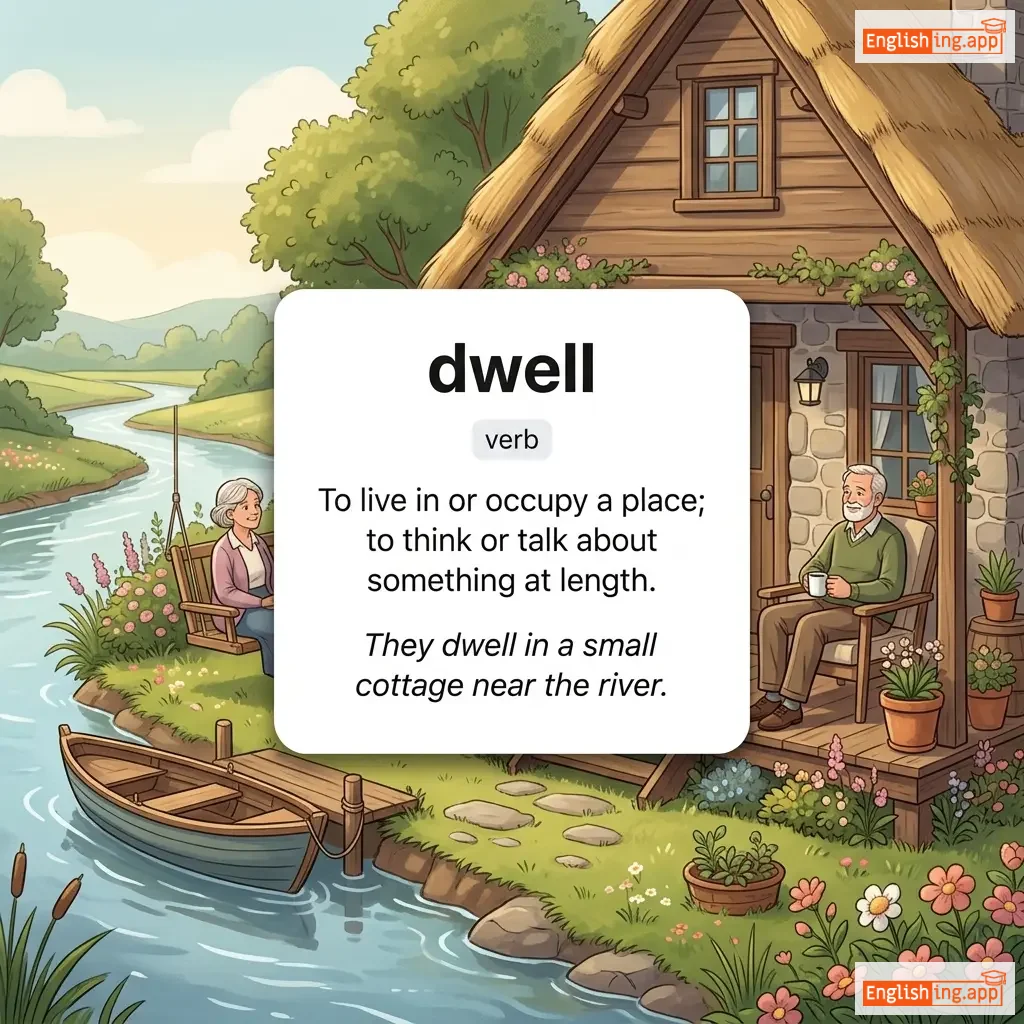
dwell definition card — visual illustration of the meaning
verb
/dwɛl/
住む (sumu)

To live in or occupy a place; to think or talk about something at length.

"They dwell in a small cottage near the river."
"彼らは川の近くの小さな小屋に住んでいます。" (Karera wa kawa no chikaku no chiisana koya ni sundeimasu.)
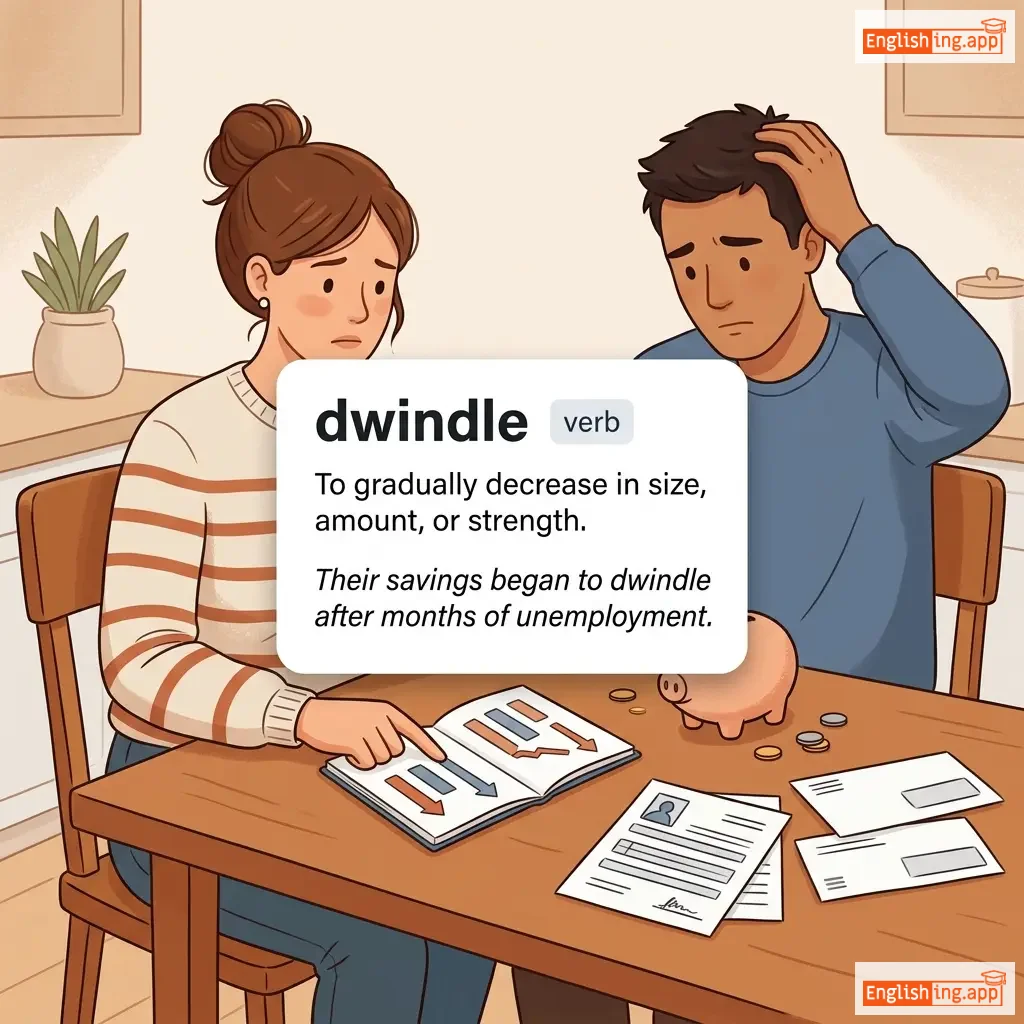
dwindle definition card — visual illustration of the meaning
verb
/ˈdwɪndl/
減少する (genshō suru)

To gradually decrease in size, amount, or strength.

"Their savings began to dwindle after months of unemployment."

"失業の月を経て、彼らの貯金は減少し始めました。" (Shitsugyō no tsuki o hete, karera no chokin wa genshō shi hajimemashita.)
adjective
/ˈdwɪndlɪŋ/
減少 (genshō)

Gradually reducing in number, size, or strength.

"The villagers relied on dwindling water supplies."

"村人たちは減少していく水の供給に依存していた。" (Murabito-tachi wa genshō shite iku mizu no kyōkyū ni izon shite ita.)
dye definition card — visual illustration of the meaning
verb
/daɪ/
染める (someru)

to change the color of something using a chemical substance

"She will dye her hair blonde tomorrow."

"彼女は明日髪を金髪に染める予定です。" (Kanojo wa ashita kami o kinpatsu ni someru yotei desu)
verb
/ˈdaɪɪŋ/
死にかけている (shinikaketeiru)

to stop living; approaching death

"The old man was dying peacefully in his sleep."
"その老人は寝ている間に平穏に死んでいた。" (Sono rōjin wa nete iru aida ni hei-on ni shinde ita.)
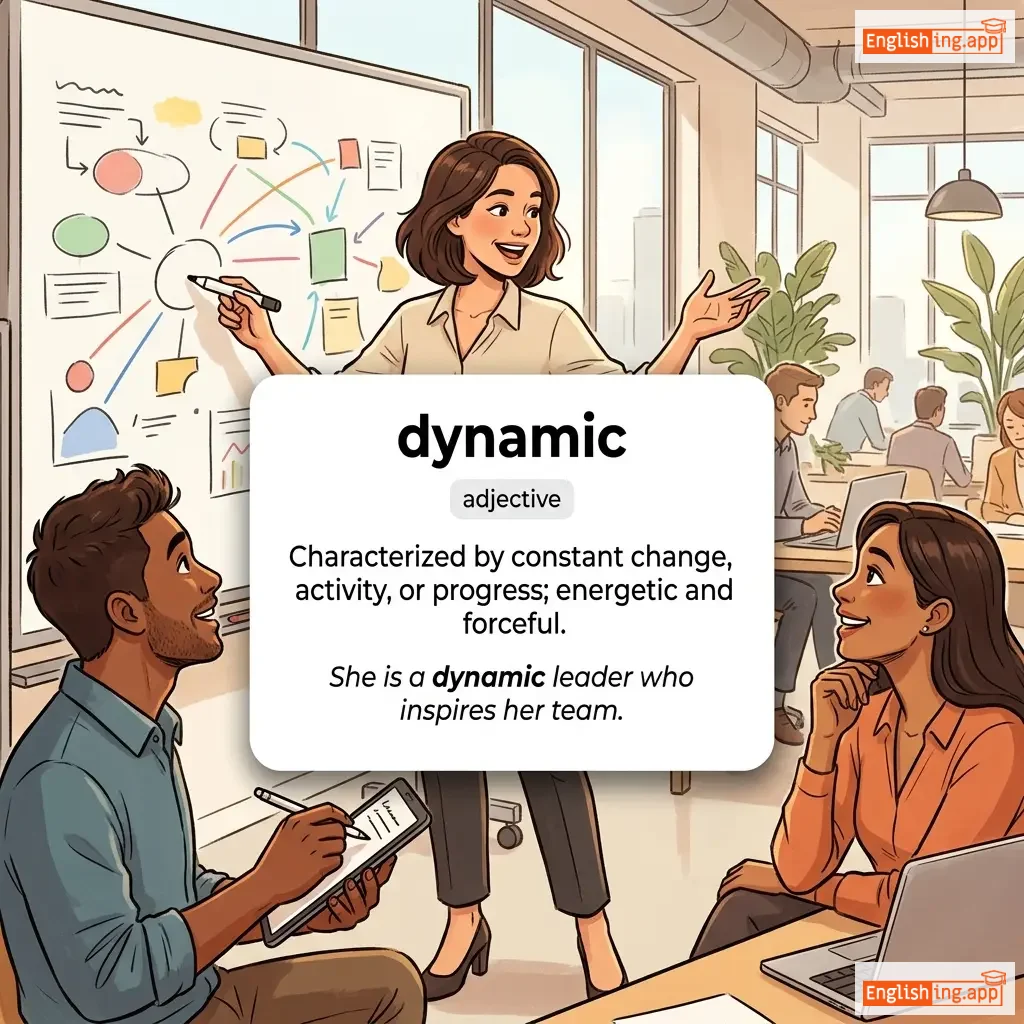
dynamic definition card — visual illustration of the meaning
adjective
/daɪˈnæmɪk/
ダイナミック (dainamikku)

Characterized by constant change, activity, or progress; energetic and forceful.

"She is a dynamic leader who inspires her team."

"彼女はチームを鼓舞するダイナミックなリーダーです。" (Kanojo wa chīmu o kobu suru dainamikku na rīdā desu.)
noun
/daɪˈnæmɪks/
ダイナミクス (dainamikusu)

the forces or properties that stimulate growth, development, or change within a system or process

"The dynamics of the team changed after the new manager joined."

"新しいマネージャーが参加した後、チームのダイナミクスは変化しました。" (Atarashii maneejaa ga sanka shita ato, chiimu no dainamikusu wa henka shimashita.)
noun
/ˈdaɪnəˌmoʊ/
電気を発生させる機械; 大きなエネルギーと熱意を持つ人物 (denki o hassei saseru kikai; ōkina enerugī to netsui o motsu jinbutsu)

A machine that generates electricity; a person with great energy and enthusiasm.

"She is the real dynamo behind the success of the company."
"彼女は会社の成功の背後にある本物のダイナモです。" (Kanojo wa kaisha no seikō no haigo ni aru honmono no dainamo desu.)
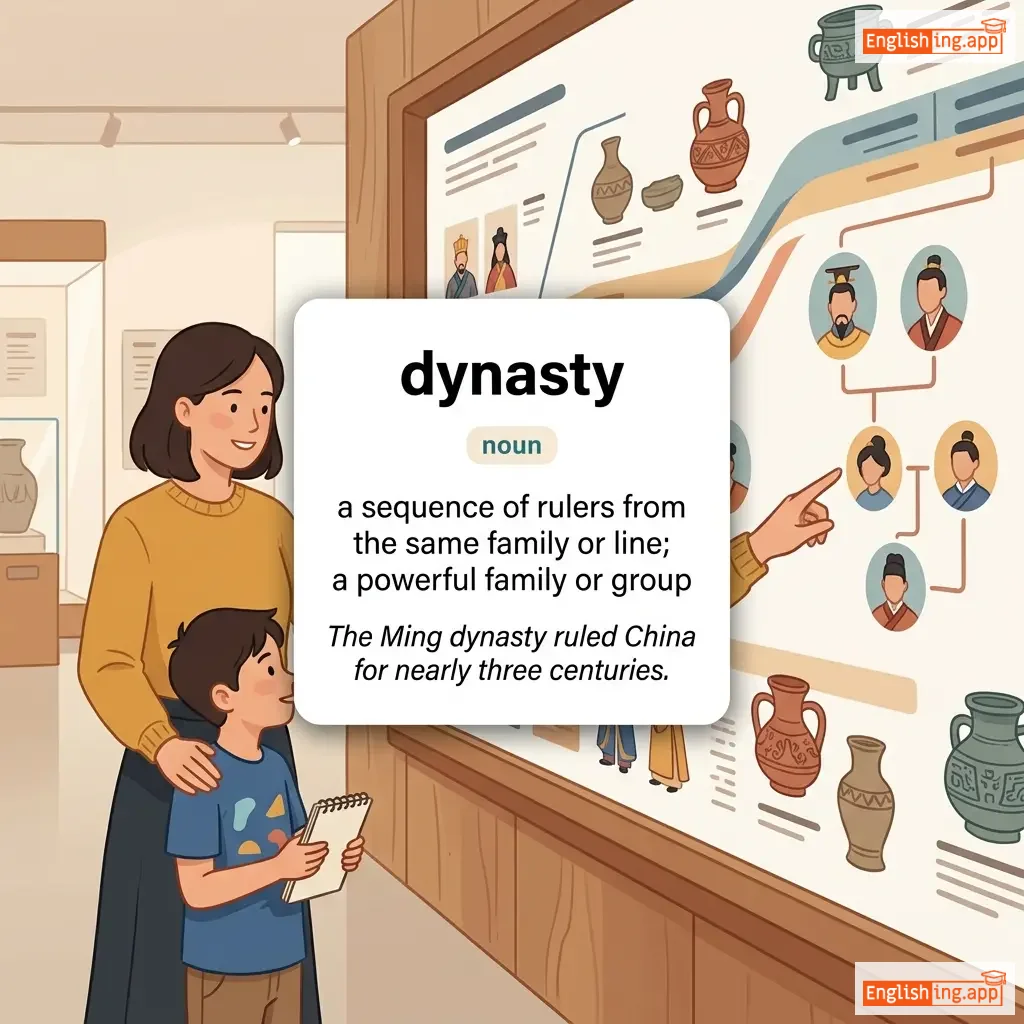
dynasty definition card — visual illustration of the meaning
noun
/ˈdaɪ.nə.sti/
王朝 (ōchō)

a sequence of rulers from the same family or line; a powerful family or group

"The Ming dynasty ruled China for nearly three centuries."

"明朝はほぼ三世紀にわたって中国を支配していました。" (Ming chō wa hobo san seiki ni watatte Chūgoku o shihai shite imashita.)
noun
/daɪn/
力の単位(センチメートル・グラム・秒の単位系) (Chikara no tan'i (senchimētoru-guramu-byō no tan'ikei))

A unit of force in the centimeter-gram-second (cgs) system equal to 10⁻⁵ newtons.

"The physicist measured the force in dynes."

"物理学者はダインで力を測定しました。" (Butsurigakusha wa dain de chikara o sokutei shimashita.)
prefix
/dɪs-/
異常、悪い、困難、または欠陥を意味する接頭辞 (ijou, warui, konnan, matawa kekkan o imi suru settouji)

A prefix meaning abnormal, bad, difficult, or impaired.

"Words like 'dysfunction' and 'dyslexia' use the prefix dys- to indicate difficulty or impairment."

"'ディスファンクション'や'ディスレクシア'のような言葉は、困難や障害を示すためにディス-という接頭辞を使用します。" ('Disfankushon' ya 'Disurekushia' no you na kotoba wa, konnan ya shougai o shimesu tame ni dis- to iu settouji o shiyou shimasu.)
noun
/ˈdɪsənˌtɛri/
腸の病気(血液と粘液を伴う下痢) (chou no byouki (ketsueki to nen'eki wo tomonau geri))

An infection of the intestines resulting in severe diarrhea with blood and mucus.

"Many soldiers suffered from dysentery during the war."
"多くの兵士たちは戦争中にディスエントリーに苦しんだ。" (Ookuno heishitachi wa sensou-chuu ni disentry ni kurushinda.)
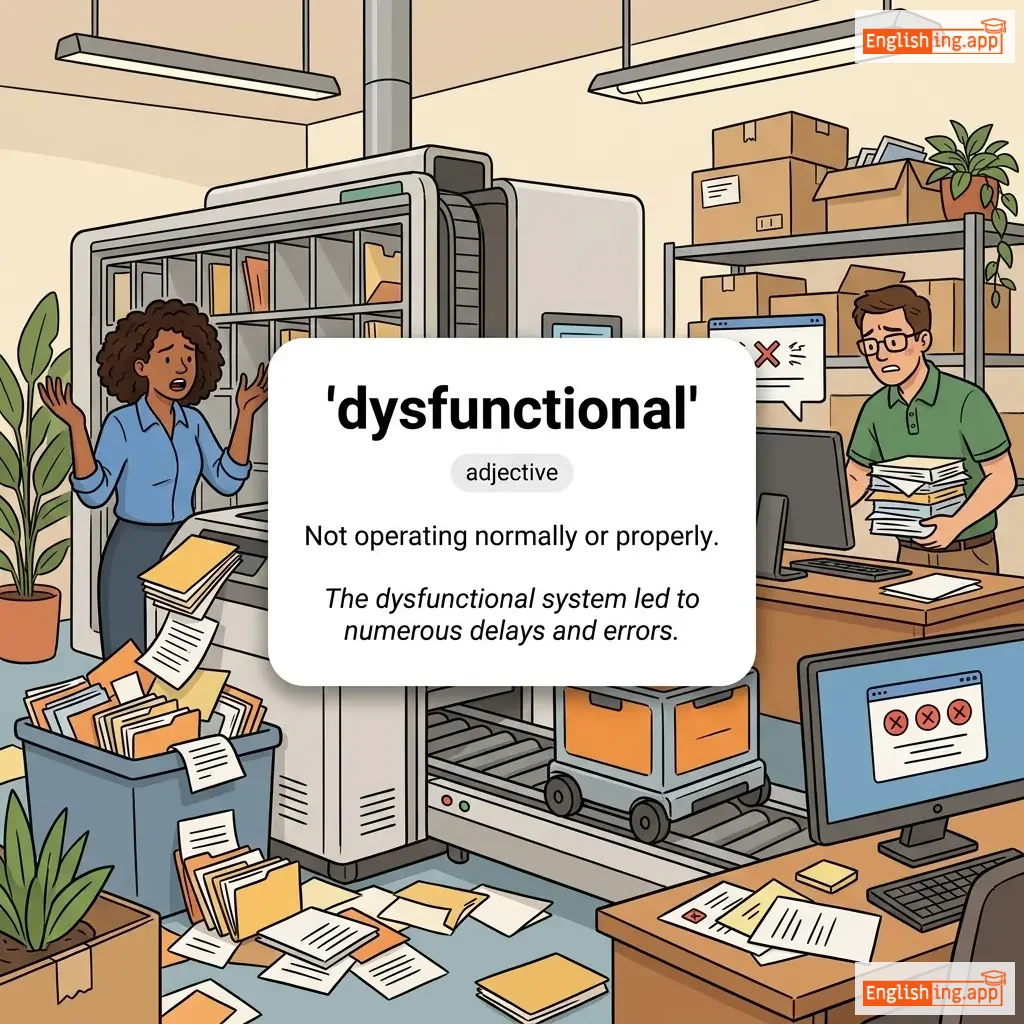
dysfunctional definition card — visual illustration of the meaning
adjective
dɪsˈfʌŋkʃənl
機能不全の (kinou fuzen no)

Not operating normally or properly.

"The dysfunctional system led to numerous delays and errors."

"機能不全のシステムは多くの遅延とエラーを引き起こしました。" (Kinou fugen no shisutemu wa ooku no chien to eraa wo hikiokoshimashita.)
noun
/dɪsˈlɛksiə/
ディスレクシア (disurekushia)

A learning disorder characterized by difficulty reading due to problems identifying speech sounds and decoding words.

"The teacher used special methods to help the student with dyslexia."

"先生はディスレクシアの学生を助けるために特別な方法を使いました。" (Sensei wa disurekushia no gakusei o tasukeru tame ni tokubetsu na hōhō o tsukaimashita.)
adjective
/dɪsˈpɛptɪk/
消化不良, イライラした (shouka furyou, iraira shita)

Relating to indigestion or having a gloomy or irritable disposition.

"After the heavy meal, he felt dyspeptic and uncomfortable."

"重い食事の後、彼は消化不良で不快に感じました。" (Omoi shokuji no ato, kare wa shouka furyou de fukai ni kanjimashita.)
e-commerce definition card — visual illustration of the meaning
noun
ˈiːˌkɒm.ɜːrs
電子商取引 (denshi shōtoriki)

The process of buying and selling goods or services through the internet.

"E-commerce has revolutionized the way people shop."

"電子商取引は人々の買い物方法を革命的に変えました。" (Denshi shōtoriki wa hitobito no kaimono hōhō o kakumeiteki ni kaemashita.)
noun, verb
/ˈiː.meɪl/
電子メール (denshi mēru)

messages distributed by electronic means from one computer user to another

"I sent an e-mail to my professor yesterday."
"私は昨日、教授に電子メールを送りました。" (Watashi wa kinou, kyoushu ni denshi mēru wo okurimashita.)
determiner/pronoun
/iːtʃ/
各自 (kakujitsu)

every one of two or more people or things considered separately

"Each student received a certificate."

"各学生は証明書を受け取りました。" (Kaku gakusei wa shoumeisho wo uketorimashita.)
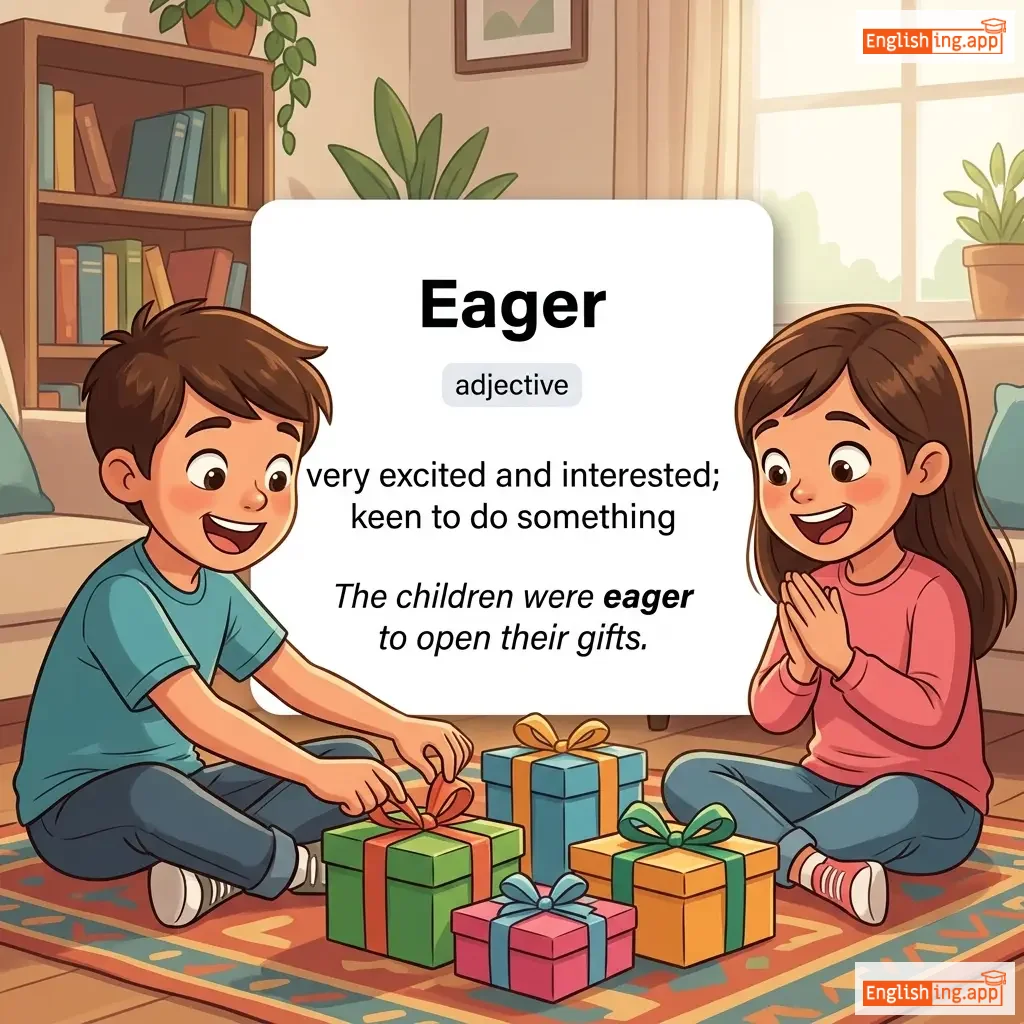
Eager definition card — visual illustration of the meaning
adjective
/ˈiːɡər/
熱心な / 待ち遠しい (nesshin na / machidōshii)

very excited and interested; keen to do something

"The children were eager to open their gifts."

"子供たちはプレゼントを開けるのを待ちきれませんでした。" (Kodomotachi wa purezento o akeru no o machikiremasen deshita.)
adverb
/ˈiːɡərli/
熱心に; 強い欲望を持って (nesshin ni; tsuyoi yokubou wo motte)

with keen interest or enthusiasm; with great desire

"The children eagerly waited for the holiday to begin."

"子供たちは休暇が始まるのを熱心に待っていました。" (kodomotachi wa kyuuka ga hajimaru no wo nesshin ni matteimashita)
noun
/ˈiː.ɡəl/
ワシ (washi)

large bird of prey with powerful wings and sharp talons

"The eagle soared high above the mountains."

"ワシは山々の上を高く飛んだ。" (washi wa yamayama no ue o takaku tonda)
noun
/ˈiːɡlət/
イーグルのひな (īguru no hina)

A young eagle.

"The eaglet waited in the nest for its mother to return."

"イーグレットは巣の中で母親が戻るのを待っていた。" (Īguretto wa su no naka de hahaoya ga modoru no o matte ita.)