Vocabularios

Descubra, aprenda y domine el vocabulario en inglés

adjective
/dʌm/
tonto / mudo (tonto / mudo)

lacking intelligence or unable to speak

"He made a dumb mistake during the exam."

"Cometió un error tonto durante el examen." (Cometió un error tonto durante el examen.)
verb
/ˈdʌmfaʊnd/
dejar boquiabierto (dejar boquiabierto)

to greatly astonish or shock someone so they are temporarily speechless

"The magician's trick dumbfounded the audience."

"El truco del mago dejó boquiabiertos a los espectadores." (El truco del mago dejo boquiabiertos a los espectadores.)
noun
/ˈdʌmi/
muñeco / persona tonta (muñeco / persona tonta)

a model or replica of a human used for practice, display, or testing; also a term for a foolish person

"The tailor used a dummy to display the dress."

"El sastre usó un maniquí para exhibir el vestido." (El sastre usó un maniquí para exhibir el vestido.)
verb
/dʌmp/
dejar caer o desechar algo descuidadamente (dejar caer o desechar algo descuidadamente)

to drop or dispose of something carelessly; to end a relationship suddenly

"He dumped all the trash into the bin."

"Él tiró toda la basura en el bote." (Él tiró toda la basura en el bote.)
verb
/dʌn/
exigir el pago de una deuda (exigir el pago de una deuda)

to demand payment of a debt persistently

"The landlord dunned the tenant for unpaid rent."

"El arrendador exigió al inquilino el alquiler impago." (El arrendador exigió al inquilino el alquiler impago.)
noun
/djuːn/
duna (duna)

A hill or ridge of sand formed by the wind, usually found in deserts or near beaches.

"The children played on the sand dune by the beach."

"Los niños jugaban en la duna de arena junto a la playa." (Los ninos jugaban en la duna de arena junto a la playa.)
noun
/ˈdjuːəʊ/
dueto (dueto)

a pair of people or things, especially in music or entertainment

"The musical duo performed their latest hit at the concert."

"El dueto musical interpretó su último éxito en el concierto." (El dueto musical interpreto su ultimo exito en el concierto.)
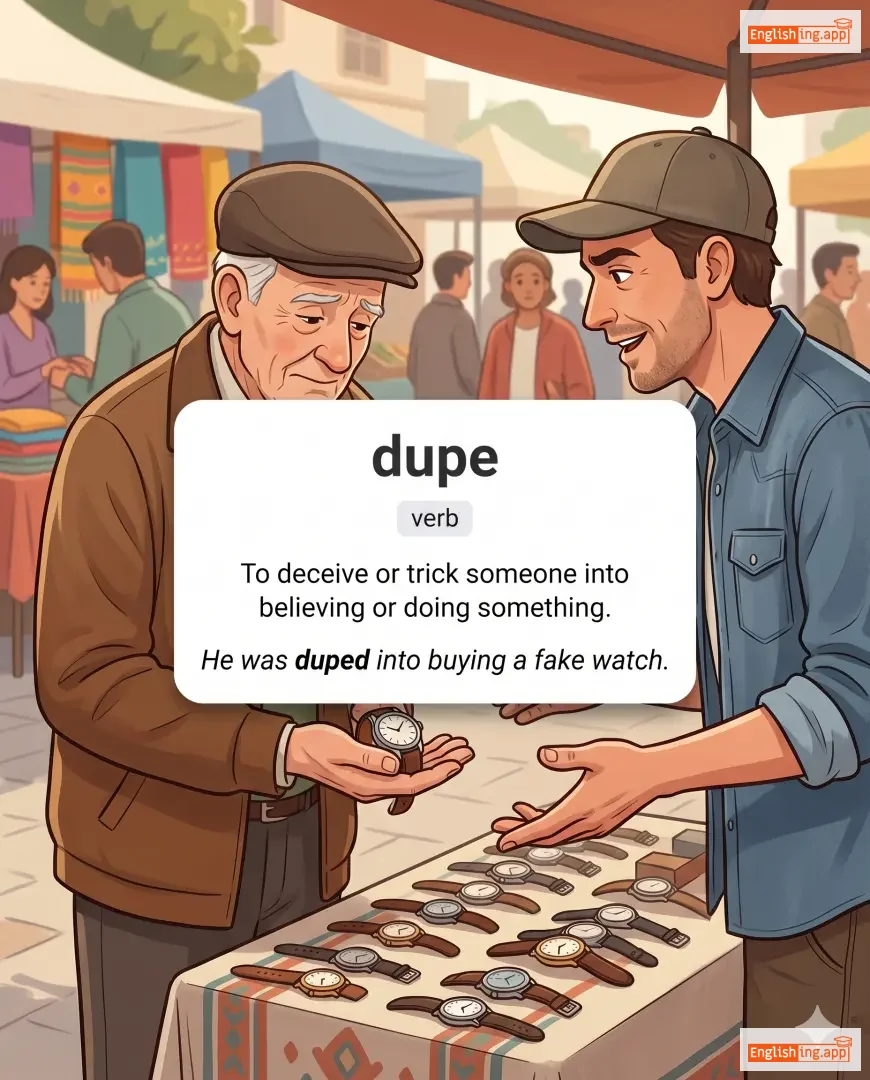
dupe definition card — visual illustration of the meaning
verb
/djuːp/
engañar (enganar)

To deceive or trick someone into believing or doing something.

"He was duped into buying a fake watch."

"Él fue engañado para comprar un reloj falso." (El fue enganiado para comprar un reloj falso.)
noun
/ˈdjuːplɛks/
casa dúplex (casa duplex)

A house or apartment divided into two separate residences.

"They live in a duplex near the city center."

"Viven en un dúplex cerca del centro de la ciudad." (Viven en un duplex cerca del centro de la ciudad.)
adjective
/djuːˈplɪsɪtəs/
mentiroso (mentiroso)

Deceitful; deliberately deceptive or dishonest.

"The politician was criticized for his duplicitous statements."

"El político fue criticado por sus declaraciones engañosas." (El político fue criticado por sus declaraciones engañosas.)
noun
/djuːˈplɪsɪti/
duplicidad (duplicidad)

Deceitfulness or double-dealing; dishonesty.

"Her duplicity was revealed during the investigation."

"Su duplicidad fue revelada durante la investigación." (Su duplicidad fue revelada durante la investigación.)
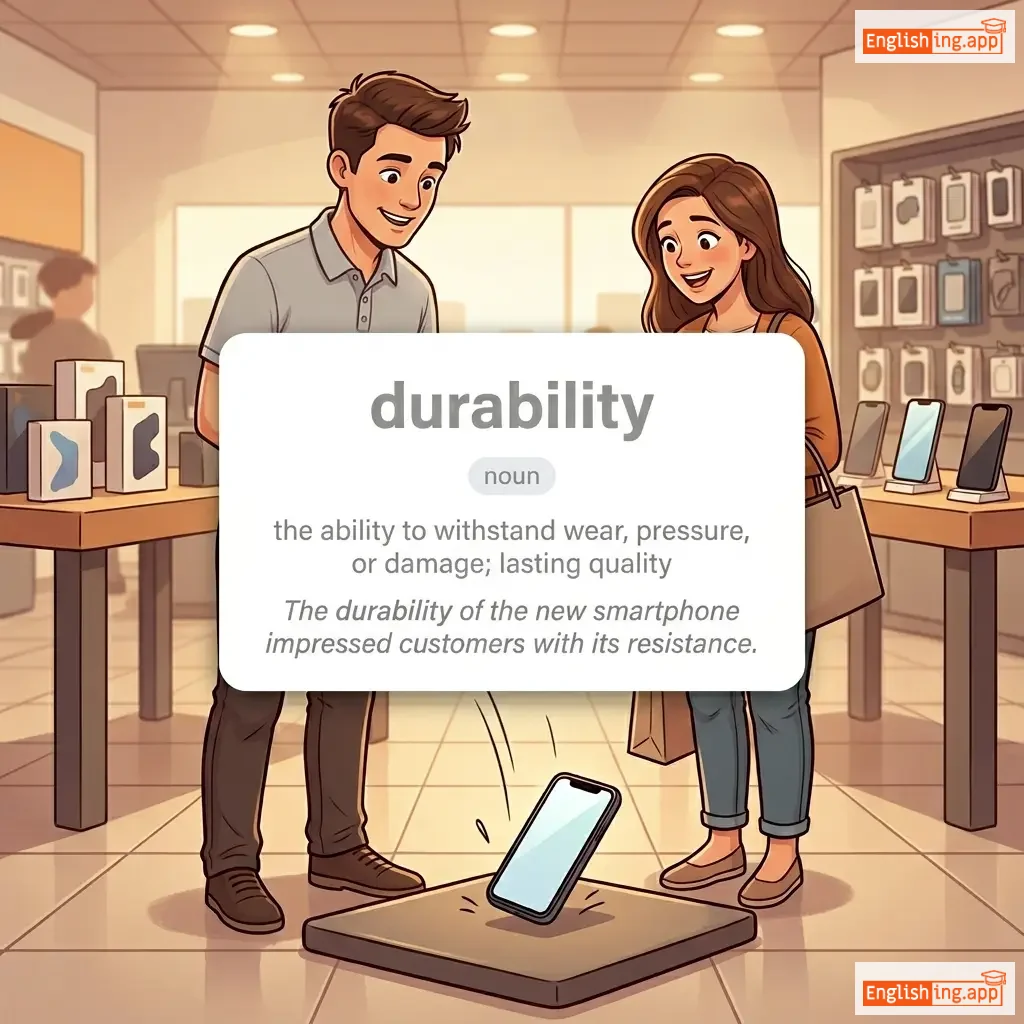
durability definition card — visual illustration of the meaning
noun
/ˌdʊr.əˈbɪl.ə.ti/
durabilidad (durabilidad)

the ability to withstand wear, pressure, or damage; lasting quality

"The durability of the new smartphone impressed customers with its resistance."

"La durabilidad del nuevo teléfono inteligente impresionó a los clientes con su resistencia." (La durabilidad del nuevo telefono inteligente impresiono a los clientes con su resistencia.)
adjective
/ˈdjʊərəbəl/
duradero; resistente; fuerte (duradero; resistente; fuerte)

able to withstand wear, pressure, or damage; lasting; strong

"This durable fabric will last for many years."

"Esta tela duradera durará muchos años." (Esta tela duradera durará muchos anos)
noun
/ˈdjʊərəns/
prisión (prision)

imprisonment or confinement

"The prisoner spent years in durance before his release."

"El prisionero pasó años en prisión antes de su liberación." (El prisionero pasó años en prision antes de su liberacion.)
noun
/djʊˈreɪʃən/
duración (duracion)

the length of time that something continues

"The meeting lasted for the duration of two hours."

"La reunión duró durante dos horas." (La reunion duro durante dos horas.)
noun
/djʊˈrɛs/
coacción (coaccion)

threats, violence, or pressure used to force someone to do something

"She signed the contract under duress."

"Ella firmó el contrato bajo coacción." (Ella firmó el contrato bajo coacción.)
noun
/ˈdʊr.i.ən/
durian (doo ree ahn)

a large spiky tropical fruit known for its strong smell and creamy custard-like flesh

"Durian is known as the king of fruits in Southeast Asia despite its pungent odor."

"Durian es conocido como el rey de las frutas en el Sudeste Asiático a pesar de su olor penetrante." (Durian es conocido como el rey de las frutas en el Sudeste Asiatico a pesar de su olor penetrante.)
preposition
/ˈdjʊərɪŋ/
durante (durante)

throughout the course of a period of time

"I fell asleep during the movie."

"Me dormí durante la película." (Me dormí durante la película.)
noun
/dʌsk/
oscurecer; anochecer (oscurecer, anochecer)

the period of the day when daylight is fading; twilight

"They walked along the beach during dusk, watching the sunset."

"Caminaban por la playa durante el atardecer, viendo la puesta del sol." (Caminaban por la playa durante el atardecer, viendo la puesta del sol.)
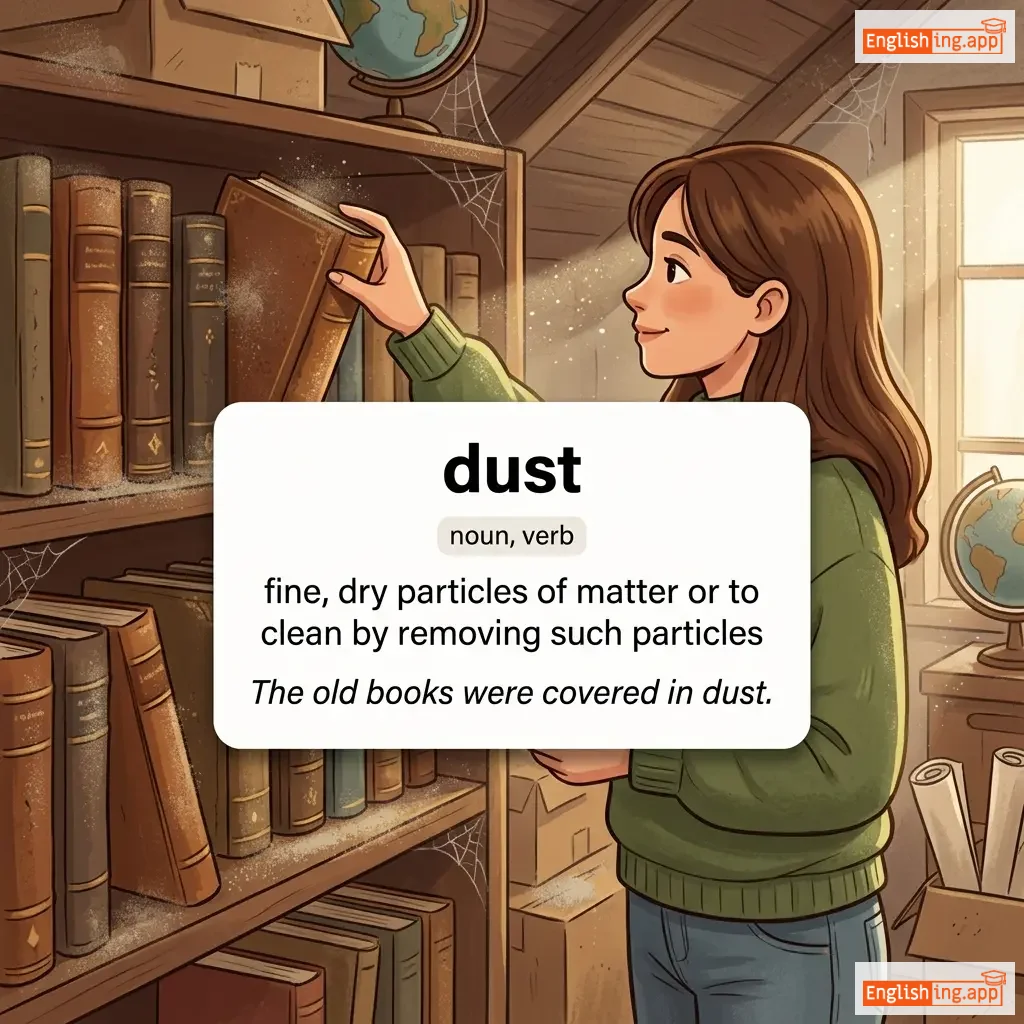
dust definition card — visual illustration of the meaning
noun, verb
/dʌst/
polvo (polvo)

fine, dry particles of matter or to clean by removing such particles

"The old books were covered in dust."

"Los viejos libros estaban cubiertos de polvo." (Los viejos libros estaban cubiertos de polvo.)
noun
/ˈdʌst.bɪn/
cubeta de basura (cubeta de basura)

a container for holding waste or garbage before disposal

"Please throw the paper into the dustbin after use."

"Por favor, tire el papel en la cubeta de basura después de usarlo." (Por favor, tire el papel en la cubeta de basura después de usarlo.)
adjective
/ˈdʌsti/
polvoriento (polvoriento)

covered with or full of dust; dry and dull from lack of moisture or use

"The old bookshelf was dusty after years of neglect."

"La estantería vieja estaba polvorienta después de años de abandono." (la estanteria vieja estaba polvorienta despues de anos de abandono)
adjective
/dʌtʃ/
neerlandés (neerlandes)

relating to the Netherlands, its people, or their language

"She enjoys Dutch paintings from the 17th century."

"Ella disfruta de las pinturas holandesas del siglo XVII." (Ella disfruta de las pinturas holandesas del siglo diecisiete.)
adjective
/ˈdjuːtiəs/
obediente (obediente)

dutiful; obedient and respectful

"The duteous child always followed her parents’ instructions."

"La niña obediente siempre seguía las instrucciones de sus padres." (La niña obediente siempre seguía las instrucciones de sus padres.)
adjective
/ˈdjuːtiəbl/
sujeto a aranceles (sujeto a aranceles)

subject to customs duty or tax

"Imported electronics are often dutiable at the border."

"Los electrónicos importados a menudo son sujetos a aranceles en la frontera." (Los electronicos importados a menudo son sujetos a aranceles en la frontera.)
adjective
/ˈdjuːtɪfəl/
responsable (responsable)

Willingly obedient and responsible in performing one's duty.

"She is a dutiful daughter who always takes care of her parents."

"Ella es una hija responsable que siempre cuida a sus padres." (Ella es una hija responsable que siempre cuida a sus padres.)
noun
/ˈdjuːti/
deber (deber)

a moral or legal obligation; a responsibility

"It is our duty to protect the environment."

"Es nuestro deber proteger el medio ambiente." (Es nuestro deber proteger el medio ambiente.)
noun
/dwɔːrf/
enano (enano)

a person, animal, or plant much smaller than average

"Snow White lived with seven dwarfs."

"Blanca Nieves vivía con siete enanos." (Blanca Nieves vivía con siete enanos.)
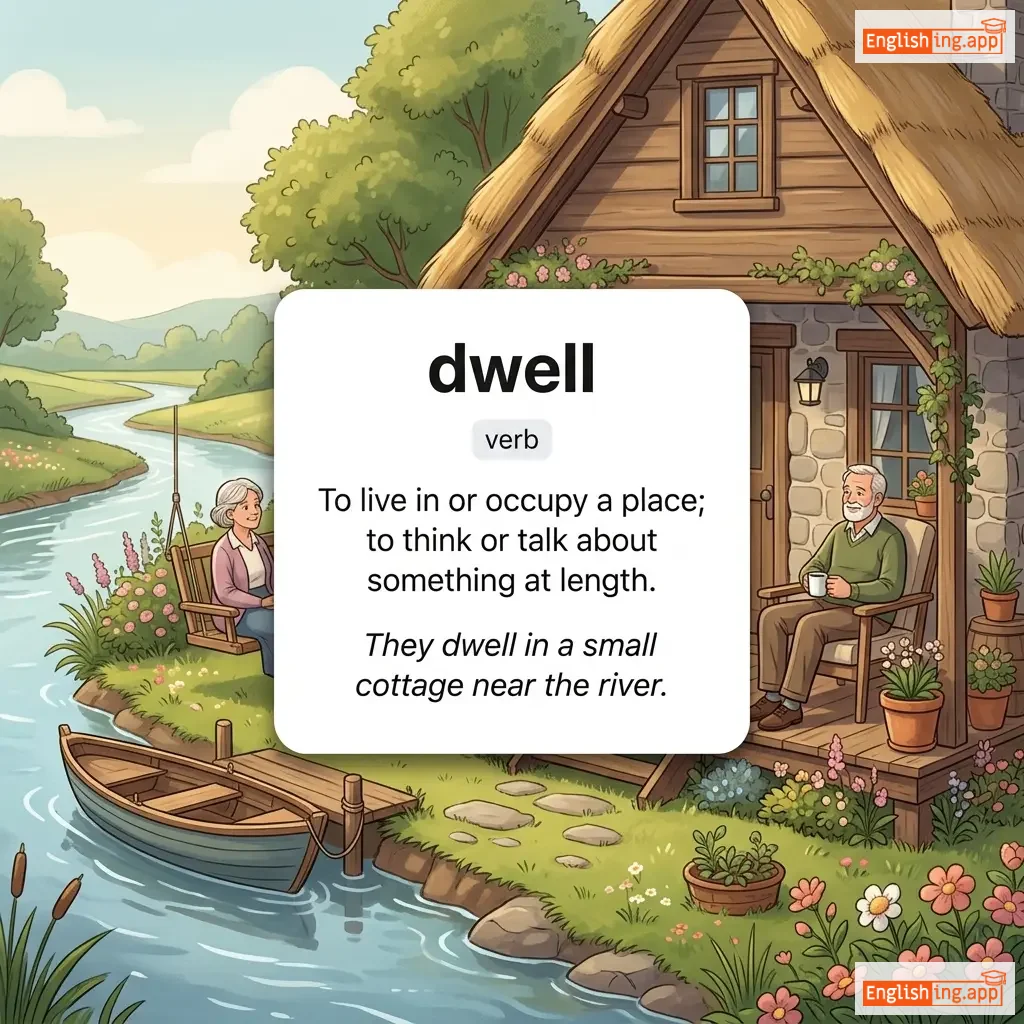
dwell definition card — visual illustration of the meaning
verb
/dwɛl/
vivir (vivir)

To live in or occupy a place; to think or talk about something at length.

"They dwell in a small cottage near the river."

"Ellos viven en una pequeña cabaña cerca del río." (Ellos viven en una pequeña cabaña cerca del río.)
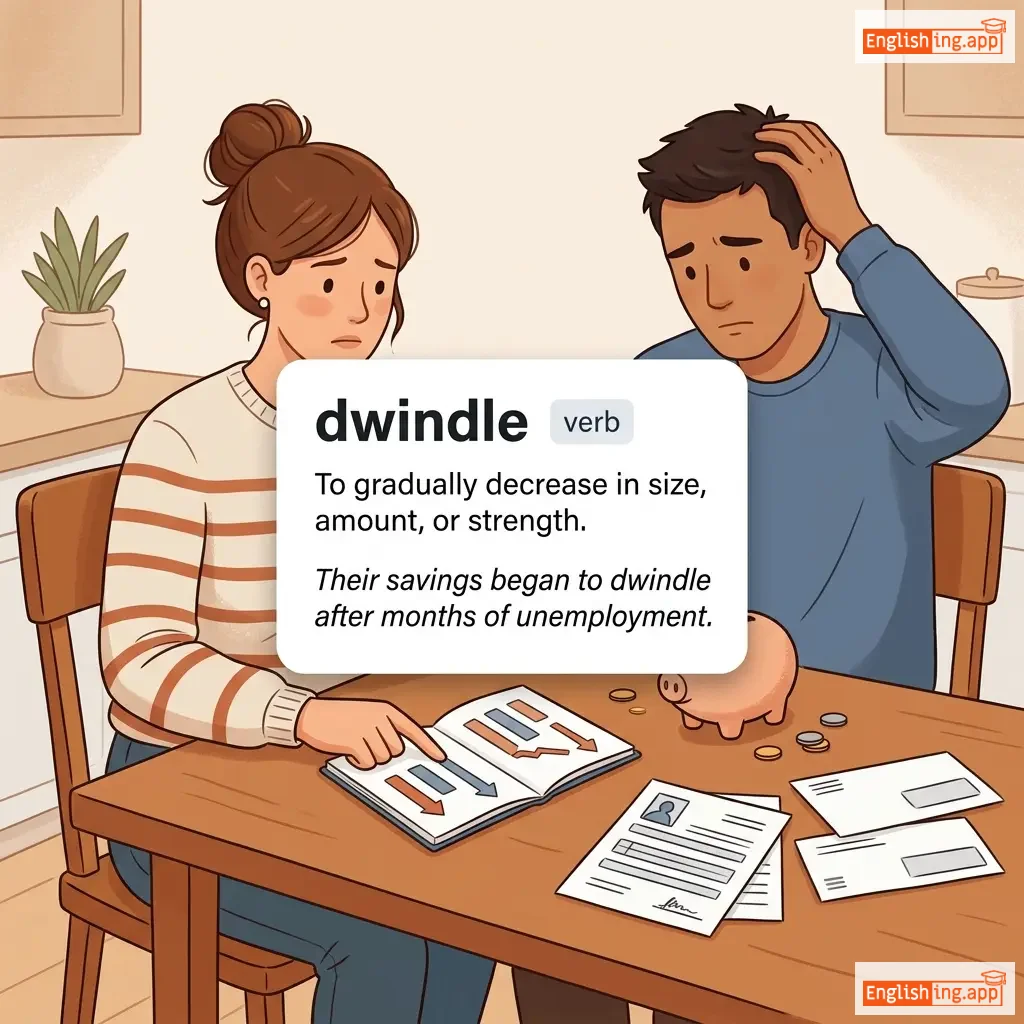
dwindle definition card — visual illustration of the meaning
verb
/ˈdwɪndl/
disminuir (disminuir)

To gradually decrease in size, amount, or strength.

"Their savings began to dwindle after months of unemployment."

"Sus ahorros comenzaron a disminuir después de meses de desempleo." (Sus ahorros comenzaron a disminuir después de meses de desempleo.)
adjective
/ˈdwɪndlɪŋ/
disminuyente (disminuyente)

Gradually reducing in number, size, or strength.

"The villagers relied on dwindling water supplies."

"Los aldeanos dependían de los suministros de agua en disminución." (Los aldeanos dependian de los suministros de agua en disminucion.)
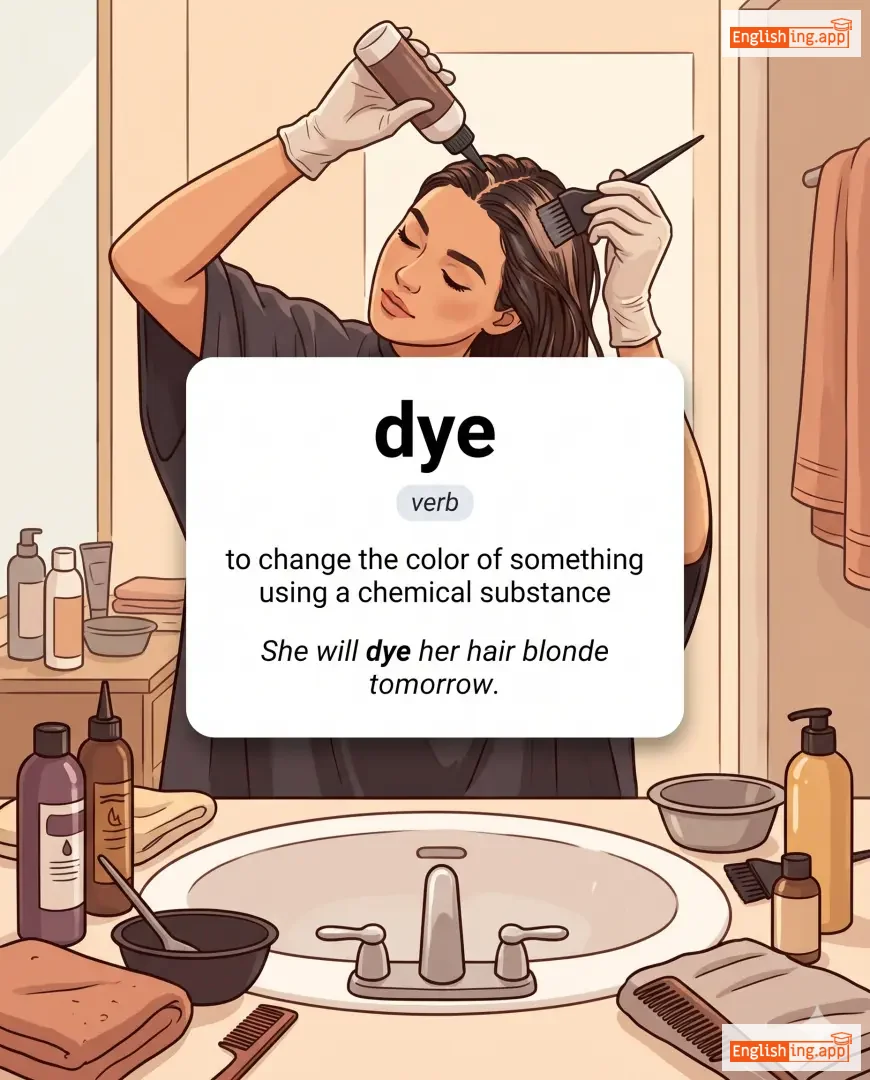
dye definition card — visual illustration of the meaning
verb
/daɪ/
teñir (tenir)

to change the color of something using a chemical substance

"She will dye her hair blonde tomorrow."

"Ella teñirá su cabello de rubio mañana." (Ella tenira su cabello de rubio manana)
verb
/ˈdaɪɪŋ/
muriendo (muriendo)

to stop living; approaching death

"The old man was dying peacefully in his sleep."

"El viejo hombre estaba muriendo pacíficamente en su sueño." (El viejo hombre estaba muriendo pacíficamente en su sueño.)
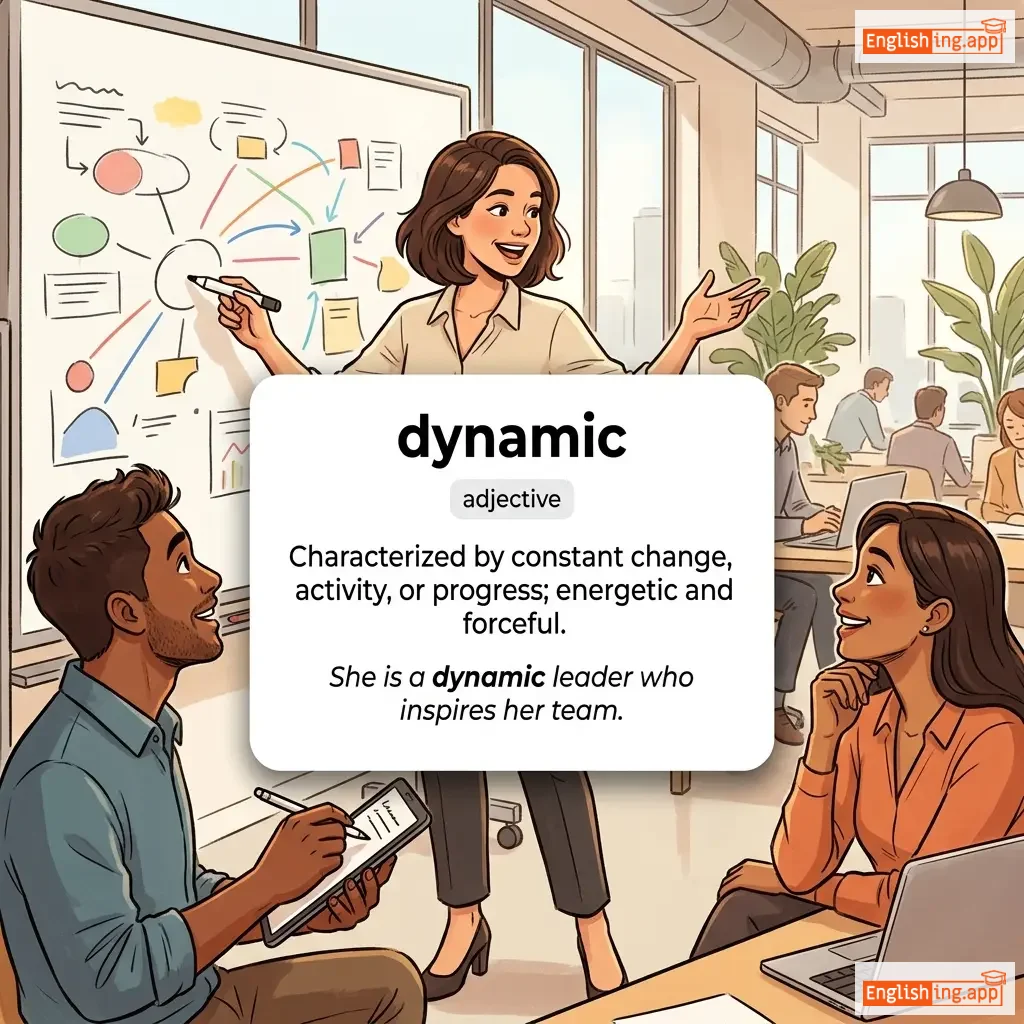
dynamic definition card — visual illustration of the meaning
adjective
/daɪˈnæmɪk/
dinámico (dinamiko)

Characterized by constant change, activity, or progress; energetic and forceful.

"She is a dynamic leader who inspires her team."

"Ella es una líder dinámica que inspira a su equipo." (Ella es una lider dinamica que inspira a su equipo.)
noun
/daɪˈnæmɪks/
dinámica (dinamica)

the forces or properties that stimulate growth, development, or change within a system or process

"The dynamics of the team changed after the new manager joined."

"La dinámica del equipo cambió después de que el nuevo gerente se uniera." (La dinamica del equipo cambio despues de que el nuevo gerente se uniera.)
noun
/ˈdaɪnəˌmoʊ/
máquina que genera electricidad; persona con gran energía y entusiasmo (maquina que genera electricidad; persona con gran energia y entusiasmo)

A machine that generates electricity; a person with great energy and enthusiasm.

"She is the real dynamo behind the success of the company."

"Ella es la verdadera dinamoma detrás del éxito de la empresa." (Ella es la verdadera dinamoma detras del exito de la empresa.)
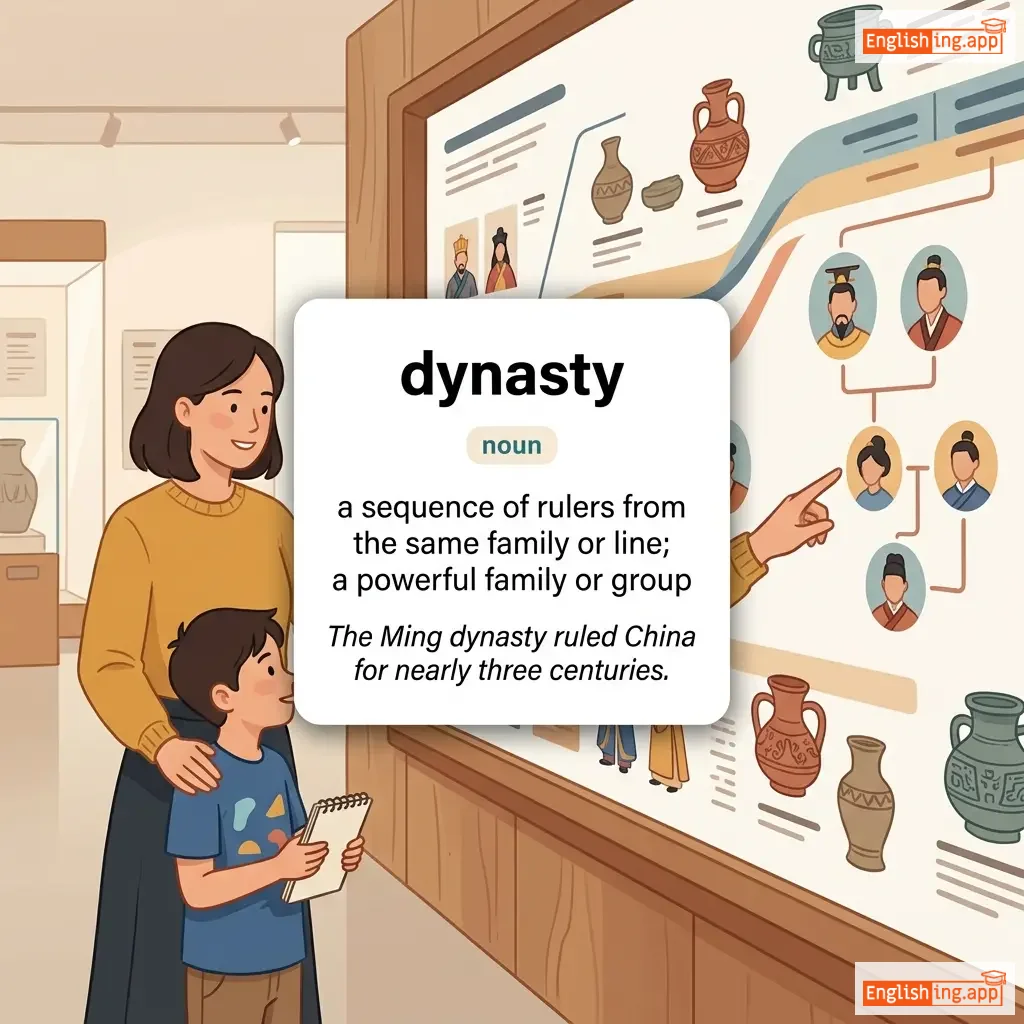
dynasty definition card — visual illustration of the meaning
noun
/ˈdaɪ.nə.sti/
dinastía (dinastia)

a sequence of rulers from the same family or line; a powerful family or group

"The Ming dynasty ruled China for nearly three centuries."

"La dinastía Ming gobernó China durante casi tres siglos." (La dinastia Ming goberno China durante casi tres siglos.)
noun
/daɪn/
unidad de fuerza (sistema cgs) (unidad de fuerza (sistema cgs))

A unit of force in the centimeter-gram-second (cgs) system equal to 10⁻⁵ newtons.

"The physicist measured the force in dynes."

"El físico midió la fuerza en dynes." (El fisico midio la fuerza en dynes.)
prefix
/dɪs-/
prefijo que significa anormal, malo, difícil o defectuoso (prefijo que significa anormal, malo, dificil o defectuoso)

A prefix meaning abnormal, bad, difficult, or impaired.

"Words like 'dysfunction' and 'dyslexia' use the prefix dys- to indicate difficulty or impairment."

"Palabras como 'disfunción' y 'dislexia' usan el prefijo dis- para indicar dificultad o deficiencia." (Palabras como 'disfuncion' y 'dislexia' usan el prefijo dis- para indicar dificultad o deficiencia.)
noun
/ˈdɪsənˌtɛri/
enfermedad intestinal (diarrea con sangre y moco) (enfermedad intestinal (diarrea con sangre y moco))

An infection of the intestines resulting in severe diarrhea with blood and mucus.

"Many soldiers suffered from dysentery during the war."

"Muchos soldados sufrieron de disentería durante la guerra." (Muchos soldados sufrieron de disentería durante la guerra.)
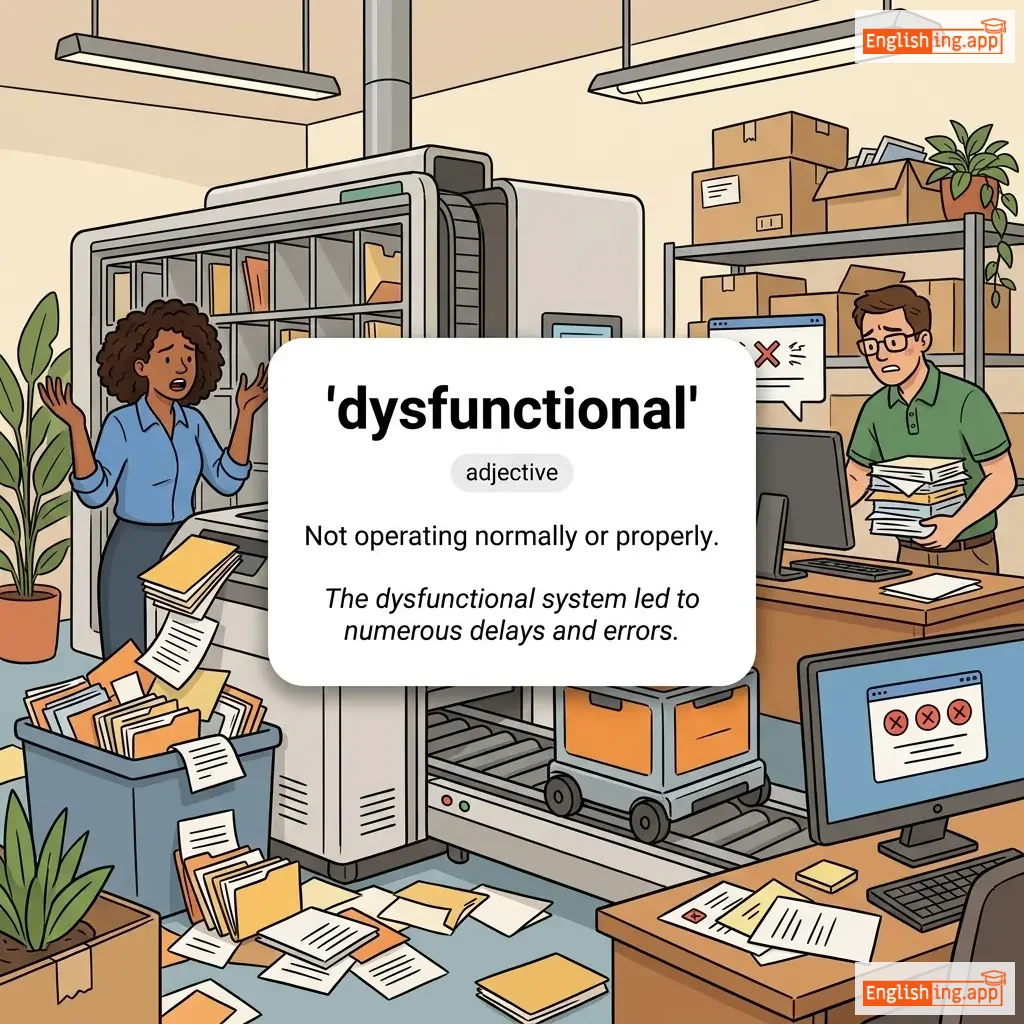
dysfunctional definition card — visual illustration of the meaning
adjective
dɪsˈfʌŋkʃənl
disfuncional (disfuncional)

Not operating normally or properly.

"The dysfunctional system led to numerous delays and errors."

"El sistema disfuncional causó numerosos retrasos y errores." (El sistema disfuncional causó numerosos retrasos y errores.)
noun
/dɪsˈlɛksiə/
dislexia (dislexia)

A learning disorder characterized by difficulty reading due to problems identifying speech sounds and decoding words.

"The teacher used special methods to help the student with dyslexia."

"La profesora usó métodos especiales para ayudar al estudiante con dislexia." (La profesora usó métodos especiales para ayudar al estudiante con dislexia.)
adjective
/dɪsˈpɛptɪk/
dispepsia, malhumorado (dispepsia, malhumorado)

Relating to indigestion or having a gloomy or irritable disposition.

"After the heavy meal, he felt dyspeptic and uncomfortable."

"Después de la comida pesada, se sintió dispepsico e incómodo." (Despues de la comida pesada, se sintio dispepsico e incomodo.)
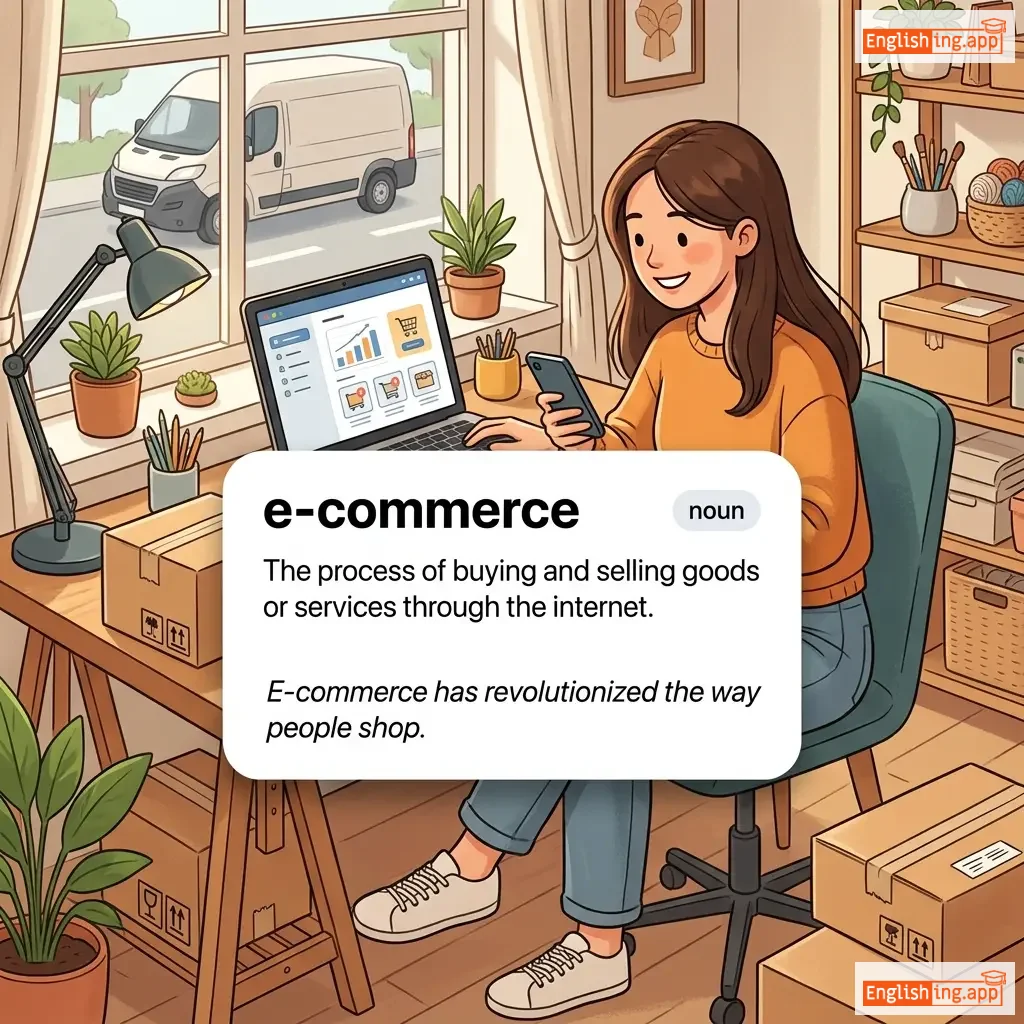
e-commerce definition card — visual illustration of the meaning
noun
ˈiːˌkɒm.ɜːrs
comercio electrónico (comercio electronico)

The process of buying and selling goods or services through the internet.

"E-commerce has revolutionized the way people shop."

"El comercio electrónico ha revolucionado la manera en que la gente compra." (El comercio electronico ha revolucionado la manera en que la gente compra.)
noun, verb
/ˈiː.meɪl/
correo electrónico (correo electronico)

messages distributed by electronic means from one computer user to another

"I sent an e-mail to my professor yesterday."

"Envié un correo electrónico a mi profesor ayer." (Envié un correo electrónico a mi profesor ayer.)
determiner/pronoun
/iːtʃ/
cada (cada)

every one of two or more people or things considered separately

"Each student received a certificate."

"Cada estudiante recibió un certificado." (Cada estudiante recibió un certificado.)
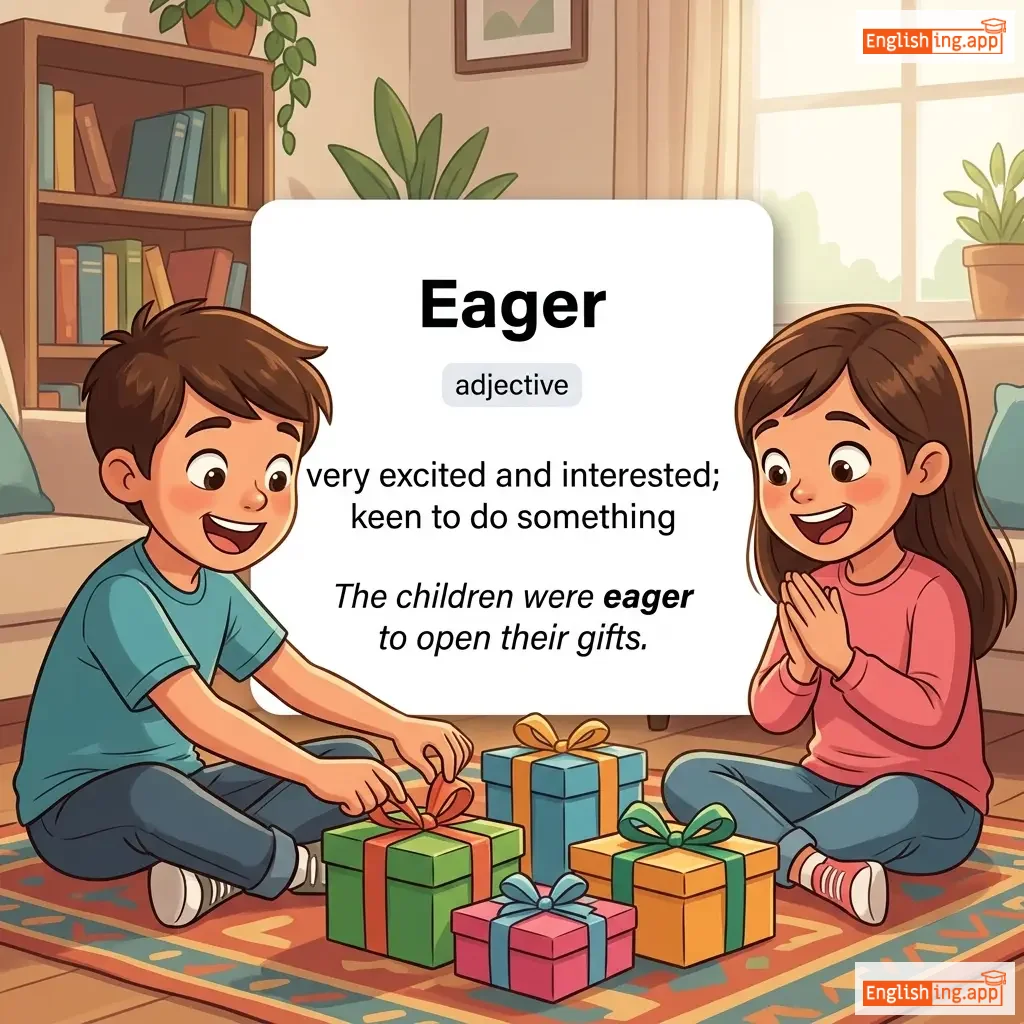
Eager definition card — visual illustration of the meaning
adjective
/ˈiːɡər/
ansioso / deseoso (ansioso / deseoso)

very excited and interested; keen to do something

"The children were eager to open their gifts."

"Los niños estaban ansiosos por abrir sus regalos." (Los niños estaban ansiosos por abrir sus regalos.)
adverb
/ˈiːɡərli/
ansiosamente; con gran deseo (ansiosamente; kon gran deseo)

with keen interest or enthusiasm; with great desire

"The children eagerly waited for the holiday to begin."

"Los niños esperaban ansiosamente que comenzara las vacaciones." (Los ninos esperaban ansiosamente que comenzara las vacaciones)
noun
/ˈiː.ɡəl/
águila (aguila)

large bird of prey with powerful wings and sharp talons

"The eagle soared high above the mountains."

"El águila voló alto sobre las montañas." (El aguila volo alto sobre las montañas)
noun
/ˈiːɡlət/
aguilucho (aguilucho)

A young eagle.

"The eaglet waited in the nest for its mother to return."

"El aguilucho esperó en el nido a que su madre regresara." (El aguilucho espero en el nido a que su madre regresara.)