वोकैबुलरीज

इंग्लिश वोकैबुलरी डिस्कवर, लर्न और मास्टर करें

adjective
/dʌm/
मूर्ख / बहरा (murkh / behra)

lacking intelligence or unable to speak

"He made a dumb mistake during the exam."

"उसने परीक्षा के दौरान एक मूर्ख गलती की।" (Usne pariksha ke dauran ek murkh galti ki.)
verb
/ˈdʌmfaʊnd/
हैरान करना (hairan karna)

to greatly astonish or shock someone so they are temporarily speechless

"The magician's trick dumbfounded the audience."

"जादूगर का ट्रिक दर्शकों को हैरान कर गया।" (Jadugar ka trick darshako ko hairan kar gaya.)
noun
/ˈdʌmi/
मॉक / मूर्ख व्यक्ति (mock / murkh vyakti)

a model or replica of a human used for practice, display, or testing; also a term for a foolish person

"The tailor used a dummy to display the dress."

"दर्जी ने ड्रेस को प्रदर्शित करने के लिए एक डमी का उपयोग किया।" (Darji ne dress ko pradarshit karne ke liye ek dummy ka upyog kiya.)
verb
/dʌmp/
किसी चीज़ को लापरवाही से फेंकना या छोड़ना (kisi cheez ko laparwahi se phenkna ya chhodna)

to drop or dispose of something carelessly; to end a relationship suddenly

"He dumped all the trash into the bin."

"उसने सारे कचरे को बिन में डंप कर दिया।" (Usne saare kachre ko bin mein dump kar diya.)
verb
/dʌn/
ऋण की वसूली करना (rin ki vasooli karna)

to demand payment of a debt persistently

"The landlord dunned the tenant for unpaid rent."

"मालिक ने किराएदार से बकाया किराया बार-बार मांगा।" (Maalik ne kiraayedar se bakaaya kiraaya baar-baar maanga.)
noun
/djuːn/
रेत का टीला (ret ka teela)

A hill or ridge of sand formed by the wind, usually found in deserts or near beaches.

"The children played on the sand dune by the beach."

"बच्चे समुद्र तट पर रेत के टीले पर खेल रहे थे।" (Bachche samudra tat par ret ke teele par khel rahe the.)
noun
/ˈdjuːəʊ/
जोड़ी (jodi)

a pair of people or things, especially in music or entertainment

"The musical duo performed their latest hit at the concert."

"संगीत जोड़ी ने अपने नवीनतम हिट का प्रदर्शन किया।" (Sangeet jodi ne apne naveenatam hit ka pradarshan kiya.)
dupe definition card — visual illustration of the meaning
verb
/djuːp/
ठगना (thagna)

To deceive or trick someone into believing or doing something.

"He was duped into buying a fake watch."

"वह एक नकली घड़ी खरीदने के लिए ठगा गया था।" (vah ek nakli ghadi kharidne ke liye thaga gaya tha.)
noun
/ˈdjuːplɛks/
डुप्लेक्स घर (duplex ghar)

A house or apartment divided into two separate residences.

"They live in a duplex near the city center."

"वे शहर के केंद्र के पास एक डुप्लेक्स में रहते हैं।" (ve shahar ke kendra ke paas ek duplex mein rehte hain.)
adjective
/djuːˈplɪsɪtəs/
धोखेबाज़ (dhokhebaaz)

Deceitful; deliberately deceptive or dishonest.

"The politician was criticized for his duplicitous statements."

"राजनेता को उसके धोखेबाज़ बयान के लिए आलोचना की गई।" (Raajneeta ko uske dhokhebaaz bayan ke liye aalochana ki gayi.)
noun
/djuːˈplɪsɪti/
दुराचार (durachar)

Deceitfulness or double-dealing; dishonesty.

"Her duplicity was revealed during the investigation."

"जांच के दौरान उसकी दुराचारिता उजागर हो गई।" (Jaanch ke dauran uski durachaarita ujagar ho gayi.)
durability definition card — visual illustration of the meaning
noun
/ˌdʊr.əˈbɪl.ə.ti/
स्थायित्व (sthayitva)

the ability to withstand wear, pressure, or damage; lasting quality

"The durability of the new smartphone impressed customers with its resistance."

"नए स्मार्टफोन की स्थायित्व ने ग्राहकों को अपनी प्रतिरोध क्षमता से प्रभावित किया।" (Naye smartphone ki sthayitva ne graahako ko apni pratirodh kshamata se prabhavit kiya.)
adjective
/ˈdjʊərəbəl/
स्थायी; टिकाऊ; मजबूत; (dyoorbal)

able to withstand wear, pressure, or damage; lasting; strong

"This durable fabric will last for many years."

"यह टिकाऊ कपड़ा कई सालों तक चलेगा।" (yah tikau kapda kai salon tak chalega)
noun
/ˈdjʊərəns/
कारावास (karawas)

imprisonment or confinement

"The prisoner spent years in durance before his release."

"क़ैदी ने अपनी रिहाई से पहले वर्षों कारावास में बिताए।" (Kaidi ne apni rihaai se pehle varsho kaarawas mein bitaye.)
noun
/djʊˈreɪʃən/
कालावधि (kaalavadhi)

the length of time that something continues

"The meeting lasted for the duration of two hours."

"बैठक दो घंटे की कालावधि तक चली।" (Baithak do ghante ki kaalavdhi tak chali.)
noun
/djʊˈrɛs/
दबाव (dabaav)

threats, violence, or pressure used to force someone to do something

"She signed the contract under duress."

"उसने दबाव में आकर अनुबंध पर हस्ताक्षर किए।" (Usne dabaav mein aakar anubandh par hastakshar kiye.)
noun
/ˈdʊr.i.ən/
डूरियन (duuriyan)

a large spiky tropical fruit known for its strong smell and creamy custard-like flesh

"Durian is known as the king of fruits in Southeast Asia despite its pungent odor."

"डूरियन अपनी तीखी गंध के बावजूद दक्षिणपूर्व एशिया में फलों का राजा माना जाता है।" (duuriyan apanee teekhee gandh ke bavujood dakshinpurv asia mein phalon ka raja maana jaata hai.)
preposition
/ˈdjʊərɪŋ/
के दौरान (ke dauran)

throughout the course of a period of time

"I fell asleep during the movie."

"मैं फिल्म के दौरान सो गया।" (main film ke dauran so gaya.)
noun
/dʌsk/
संझा; सांध्यकाल; (sanjha, sandhya kaal)

the period of the day when daylight is fading; twilight

"They walked along the beach during dusk, watching the sunset."

"वे डस्क के दौरान समुद्र तट पर चल रहे थे, सूर्यास्त देख रहे थे।" (ve dusk ke dauran samudra tat par chal rahe the, suryaast dekh rahe the.)
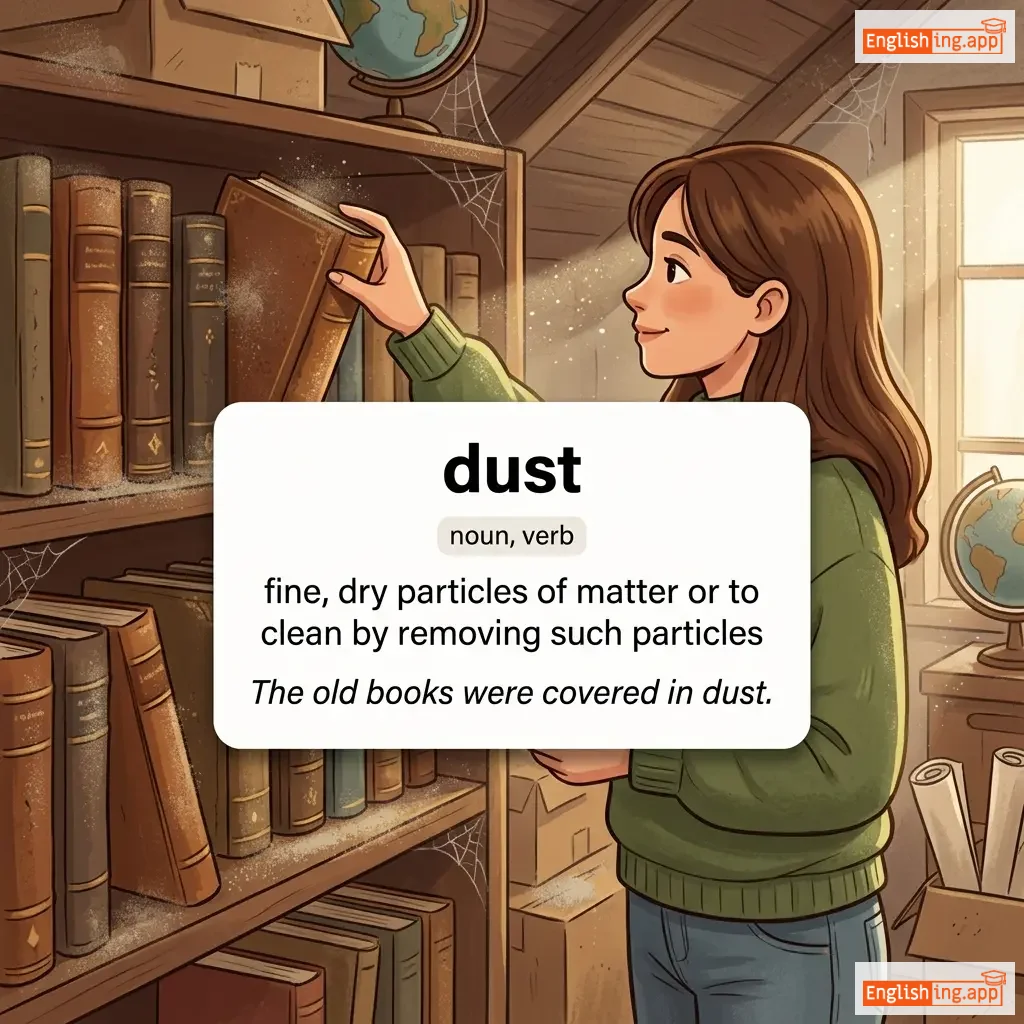
dust definition card — visual illustration of the meaning
noun, verb
/dʌst/
धूल (dhool)

fine, dry particles of matter or to clean by removing such particles

"The old books were covered in dust."

"पुरानी किताबों में धूल चढ़ी हुई थी।" (purani kitabon mein dhool chhadi hui thi.)
noun
/ˈdʌst.bɪn/
कचरा पात्र (kachra patra)

a container for holding waste or garbage before disposal

"Please throw the paper into the dustbin after use."

"कृपया उपयोग के बाद कागज को डस्टबिन में फेंक दें।" (kripya upyog ke baad kagaz ko dustbin mein phenk den)
adjective
/ˈdʌsti/
धूलभरा (dhoolbhara)

covered with or full of dust; dry and dull from lack of moisture or use

"The old bookshelf was dusty after years of neglect."

"कई सालों की उपेक्षा के बाद पुरानी किताबों की अलमारी धूलभरी थी।" (kai saalon ki upeksha ke baad purani kitabon ki almari dhoolbhari thi)
adjective
/dʌtʃ/
डच (dach)

relating to the Netherlands, its people, or their language

"She enjoys Dutch paintings from the 17th century."

"वह 17वीं सदी के डच चित्रकला का आनंद लेती है।" (vah 17vi sadi ke dach chitrakala ka anand leti hai.)
adjective
/ˈdjuːtiəs/
आज्ञाकारी (aajyakaari)

dutiful; obedient and respectful

"The duteous child always followed her parents’ instructions."

"आज्ञाकारी बच्चा हमेशा अपने माता-पिता के निर्देशों का पालन करता था।" (Aajyakaari bachcha hamesha apne mata-pita ke nirdeshon ka paalan karta tha.)
adjective
/ˈdjuːtiəbl/
शुल्क योग्य (shulk yogya)

subject to customs duty or tax

"Imported electronics are often dutiable at the border."

"आयातित इलेक्ट्रॉनिक्स अक्सर सीमा पर शुल्क योग्य होते हैं।" (Aayatit electronics aksar seema par shulk yogya hote hain.)
adjective
/ˈdjuːtɪfəl/
कर्तव्यनिष्ठ (kartavyanisth)

Willingly obedient and responsible in performing one's duty.

"She is a dutiful daughter who always takes care of her parents."

"वह एक कर्तव्यनिष्ठ बेटी है जो हमेशा अपने माता-पिता की देखभाल करती है।" (Vah ek kartavyanisth beti hai jo hamesha apne mata-pita ki dekhbhaal karti hai.)
noun
/ˈdjuːti/
कर्तव्य (kartavya)

a moral or legal obligation; a responsibility

"It is our duty to protect the environment."

"यह हमारा कर्तव्य है कि हम पर्यावरण की रक्षा करें।" (Yeh hamara kartavya hai ki hum paryavaran ki raksha karein.)
noun
/dwɔːrf/
बौना (bouna)

a person, animal, or plant much smaller than average

"Snow White lived with seven dwarfs."

"स्नो व्हाइट सात बौनों के साथ रहती थी।" (Sno White saat bouno ke saath rahti thi.)
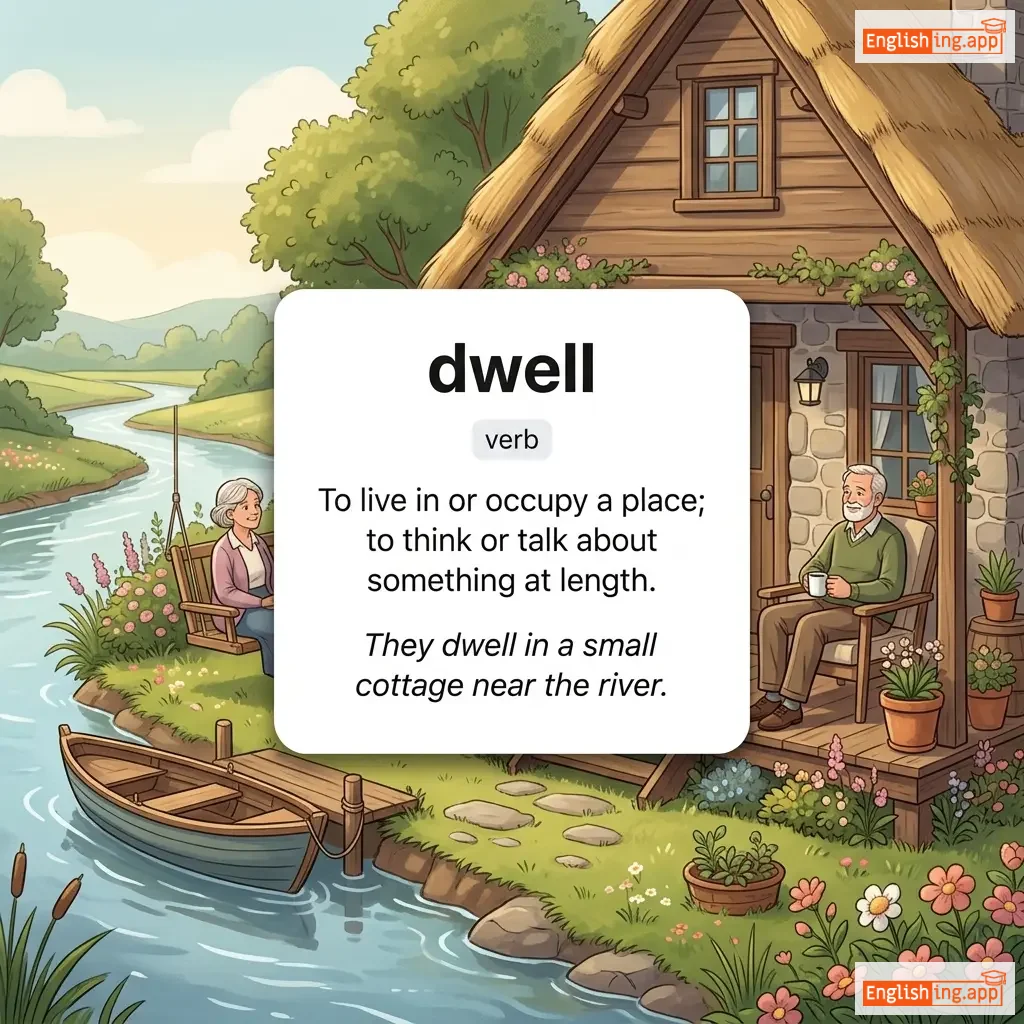
dwell definition card — visual illustration of the meaning
verb
/dwɛl/
रहना (rehna)

To live in or occupy a place; to think or talk about something at length.

"They dwell in a small cottage near the river."

"वे नदी के पास एक छोटे से मकान में रहते हैं।" (Ve nadi ke paas ek chhote se makaan mein rehte hain.)
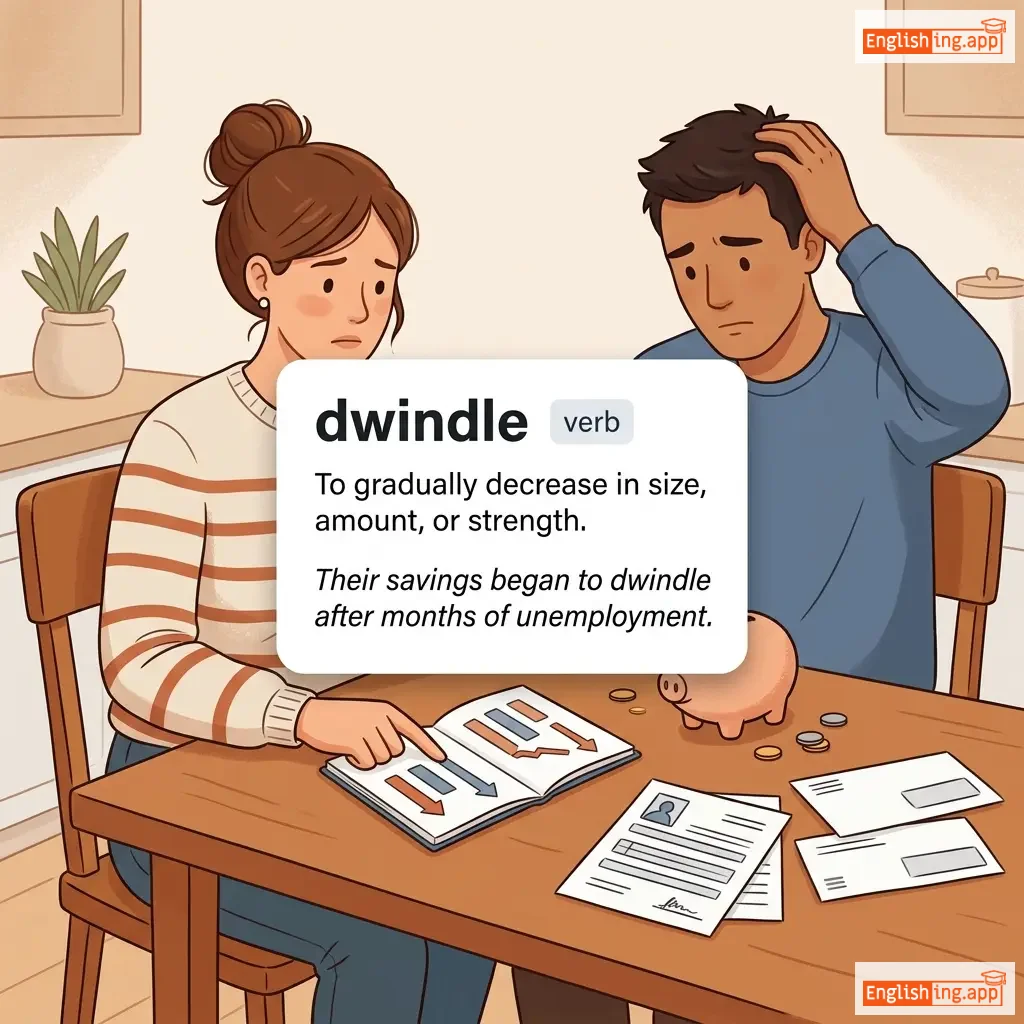
dwindle definition card — visual illustration of the meaning
verb
/ˈdwɪndl/
कम होना (kam hona)

To gradually decrease in size, amount, or strength.

"Their savings began to dwindle after months of unemployment."

"उनकी बचत बेरोज़गारी के महीनों के बाद घटने लगी।" (Unki bachat berozgaari ke mahino ke baad ghatne lagi.)
adjective
/ˈdwɪndlɪŋ/
घटता हुआ (ghatata hua)

Gradually reducing in number, size, or strength.

"The villagers relied on dwindling water supplies."

"गाँव वाले घटते पानी के स्रोतों पर निर्भर थे।" (Gaav wale ghatte paani ke sroton par nirbhar the.)
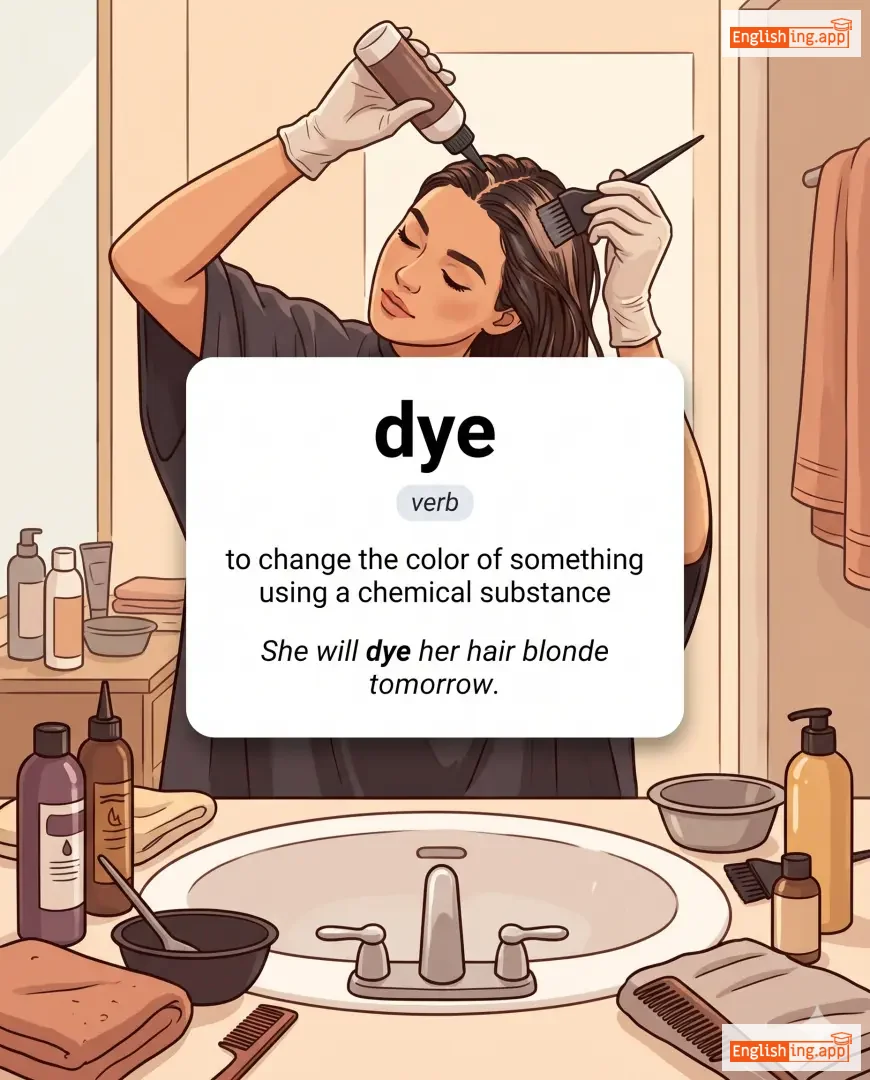
dye definition card — visual illustration of the meaning
verb
/daɪ/
रंगना (rangna)

to change the color of something using a chemical substance

"She will dye her hair blonde tomorrow."

"वह कल अपने बालों को सुनहरा रंग देगी।" (vah kal apne baalon ko sunahra rang degi)
verb
/ˈdaɪɪŋ/
मरना (marna)

to stop living; approaching death

"The old man was dying peacefully in his sleep."

"वृद्ध आदमी अपने सोने के दौरान शांति से मर रहा था।" (Vriddh aadmi apne sone ke dauran shaanti se mar raha tha.)
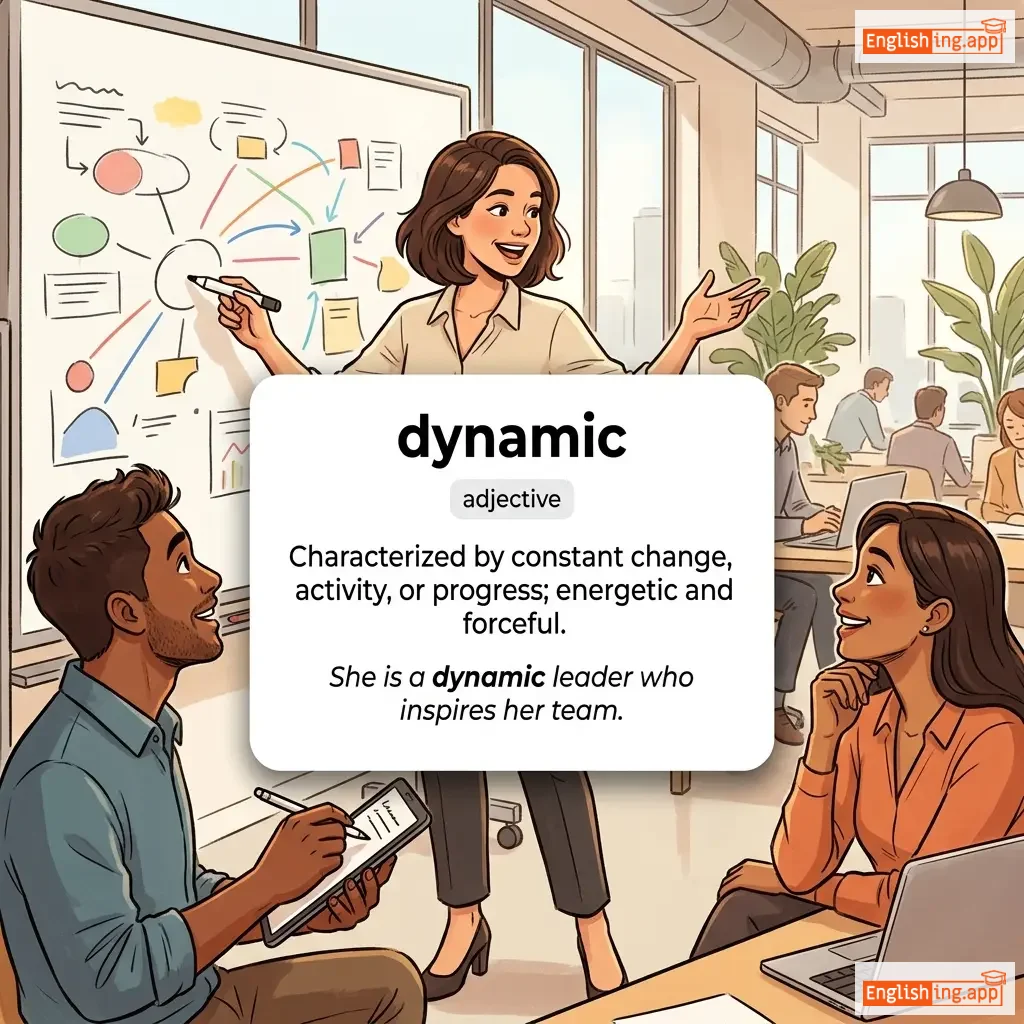
dynamic definition card — visual illustration of the meaning
adjective
/daɪˈnæmɪk/
गतिशील (gatishil)

Characterized by constant change, activity, or progress; energetic and forceful.

"She is a dynamic leader who inspires her team."

"वह एक गतिशील नेता हैं जो अपनी टीम को प्रेरित करती हैं।" (Vah ek gatishil neta hain jo apni team ko prerit karti hain.)
noun
/daɪˈnæmɪks/
गति विज्ञान (gati vigyan)

the forces or properties that stimulate growth, development, or change within a system or process

"The dynamics of the team changed after the new manager joined."

"नई प्रबंधक के आने के बाद टीम की गतिविज्ञान बदल गई।" (Nayi prabandhak ke aane ke baad team ki gati vigyan badal gayi.)
noun
/ˈdaɪnəˌmoʊ/
विकिरण उत्पन्न करने वाली मशीन; अत्यधिक ऊर्जा और उत्साह से भरपूर व्यक्ति (vikiran utpann karne wali machine; atyadhik urja aur utsah se bharpur vyakti)

A machine that generates electricity; a person with great energy and enthusiasm.

"She is the real dynamo behind the success of the company."

"वह कंपनी की सफलता के पीछे असली डायनमो है।" (Woh company ki safalta ke peeche asli dynamo hai.)
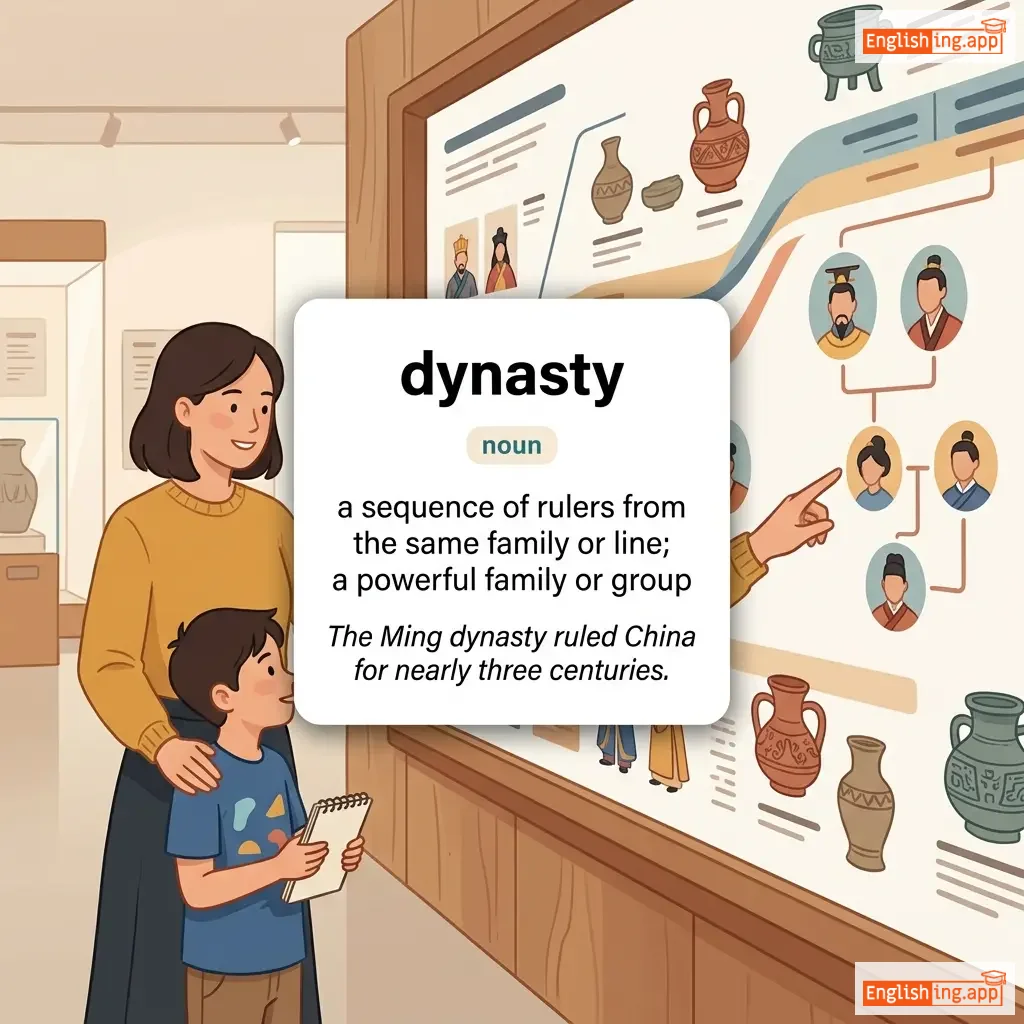
dynasty definition card — visual illustration of the meaning
noun
/ˈdaɪ.nə.sti/
वंश (vansh)

a sequence of rulers from the same family or line; a powerful family or group

"The Ming dynasty ruled China for nearly three centuries."

"मिंग वंश ने लगभग तीन शताब्दियों तक चीन पर शासन किया।" (ming vansh ne lagbhag teen shatabdiyon tak cheen par shasan kiya.)
noun
/daɪn/
बल मापने की इकाई (cgs प्रणाली) (bal mapne ki ikai (cgs pranali))

A unit of force in the centimeter-gram-second (cgs) system equal to 10⁻⁵ newtons.

"The physicist measured the force in dynes."

"भौतिकशास्त्री ने बल को डायन में मापा।" (Bhautikshastri ne bal ko dyne mein mapa.)
prefix
/dɪs-/
असामान्य, खराब, कठिन या अवरुद्ध करने वाला उपसर्ग (asamanya, kharab, kathin ya avaruddh karne wala uposarg)

A prefix meaning abnormal, bad, difficult, or impaired.

"Words like 'dysfunction' and 'dyslexia' use the prefix dys- to indicate difficulty or impairment."

"'डिसफंक्शन' और 'डिसलेक्सिया' जैसे शब्दों में 'डिस-' उपसर्ग का उपयोग कठिनाई या अवरोध को सूचित करने के लिए किया जाता है।" ('Dysfunction' aur 'Dyslexia' jaise shabdon mein 'dys-' uposarg ka upyog kathinai ya avrodh ko suchit karne ke liye kiya jata hai.)
noun
/ˈdɪsənˌtɛri/
पेट की बीमारी (दस्त, रक्त और श्लेष्मा के साथ) (pet ki bimari (dast, rakt aur shleshma ke saath))

An infection of the intestines resulting in severe diarrhea with blood and mucus.

"Many soldiers suffered from dysentery during the war."

"कई सैनिकों को युद्ध के दौरान डायसेंटरी का शिकार होना पड़ा।" (Kai sainikon ko yudh ke dauran dysentery ka shikar hona pada.)
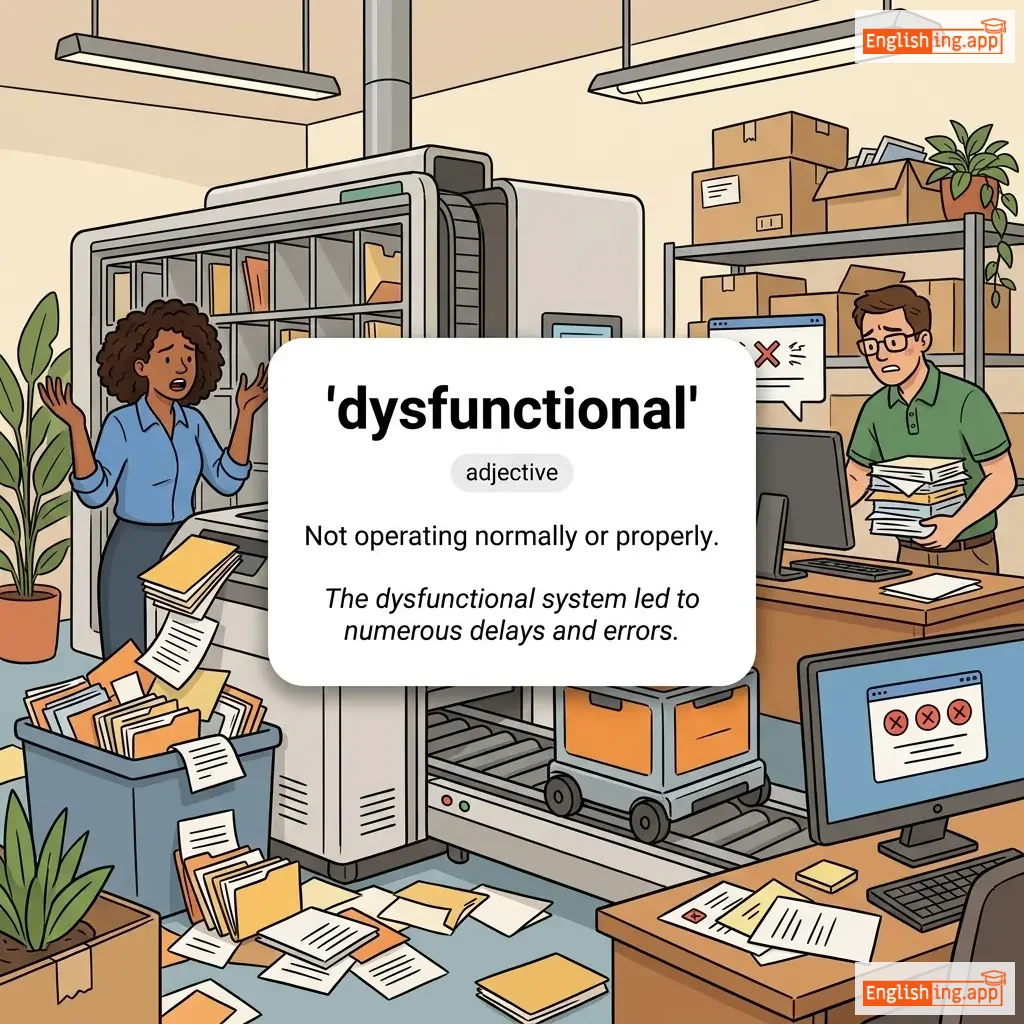
dysfunctional definition card — visual illustration of the meaning
adjective
dɪsˈfʌŋkʃənl
अकार्यात्मक, अव्यवस्थित (akaryatmak, avyavasthit)

Not operating normally or properly.

"The dysfunctional system led to numerous delays and errors."

"अकार्यात्मक प्रणाली ने कई विलंब और त्रुटियाँ पैदा कीं।" (Akaaryatmak pranali ne kai vilamb aur trutiyan paida ki.)
noun
/dɪsˈlɛksiə/
डिस्लेक्सिया (disleksiya)

A learning disorder characterized by difficulty reading due to problems identifying speech sounds and decoding words.

"The teacher used special methods to help the student with dyslexia."

"शिक्षक ने डिस्लेक्सिया वाले छात्र को मदद करने के लिए विशेष तरीके का उपयोग किया।" (Shikshak ne dyslexia wale chhatra ko madad karne ke liye vishesh tareeke ka upyog kiya.)
adjective
/dɪsˈpɛptɪk/
अजीर्णजनित, चिड़चिड़ा (ajeernajanit, chidchida)

Relating to indigestion or having a gloomy or irritable disposition.

"After the heavy meal, he felt dyspeptic and uncomfortable."

"भारी भोजन के बाद, वह अजीर्णजनित और असहज महसूस कर रहा था।" (Bhaari bhojan ke baad, wah ajeernajanit aur asahaj mahsus kar raha tha.)
e-commerce definition card — visual illustration of the meaning
noun
ˈiːˌkɒm.ɜːrs
ई-कॉमर्स (e-commerce)

The process of buying and selling goods or services through the internet.

"E-commerce has revolutionized the way people shop."

"ई-कॉमर्स ने लोगों की शॉपिंग के तरीके को क्रांतिकारी रूप से बदल दिया है।" (E-commerce ne logon ki shopping ke tareeke ko krantikari roop se badal diya hai.)
noun, verb
/ˈiː.meɪl/
ई-मेल (i-meil)

messages distributed by electronic means from one computer user to another

"I sent an e-mail to my professor yesterday."

"मैंने कल अपने प्रोफेसर को एक ई-मेल भेजी।" (maine kal apne professor ko ek i-meil bheji.)
determiner/pronoun
/iːtʃ/
प्रत्येक (pratyek)

every one of two or more people or things considered separately

"Each student received a certificate."

"प्रत्येक छात्र को प्रमाणपत्र मिला।" (pratyek chhatra ko pramanpatra mila.)
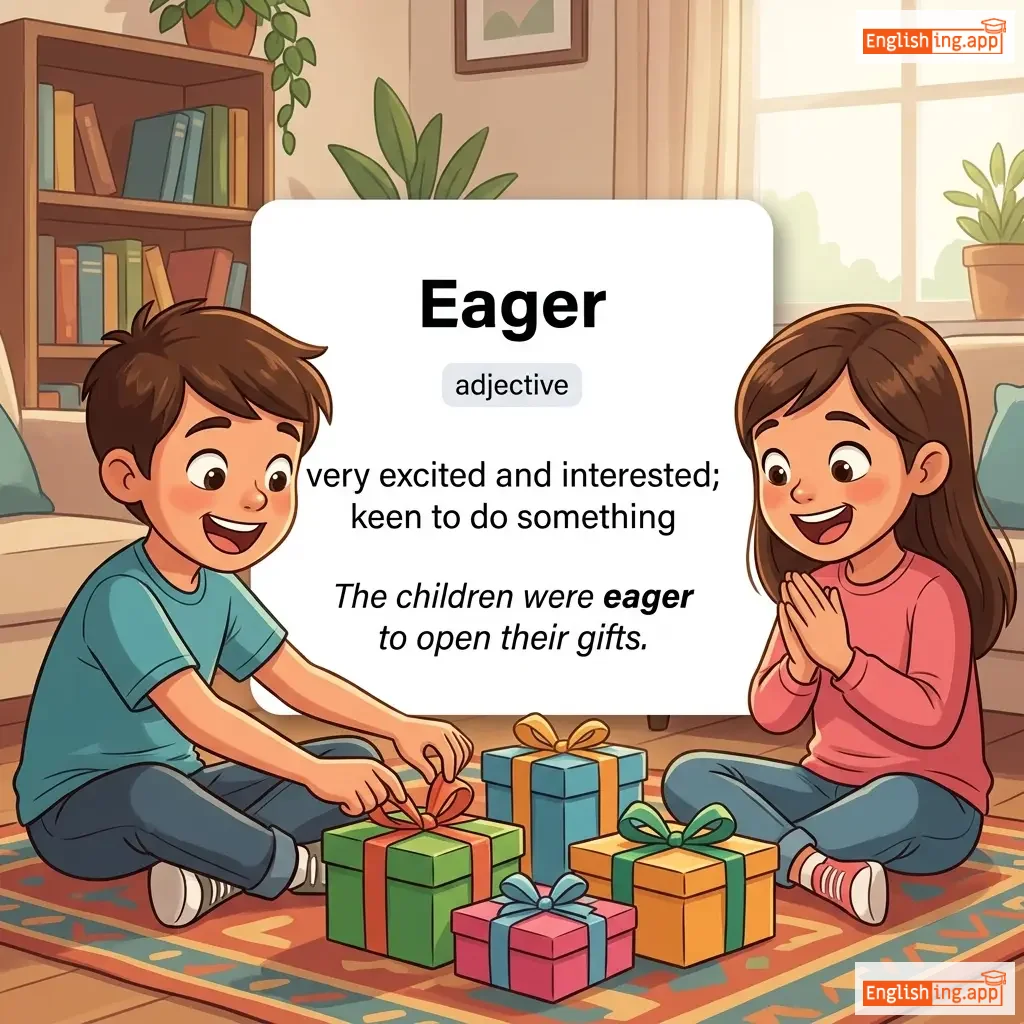
Eager definition card — visual illustration of the meaning
adjective
/ˈiːɡər/
आतुर / उत्सुक (atur / utsuk)

very excited and interested; keen to do something

"The children were eager to open their gifts."

"बच्चे अपने उपहार खोलने के लिए उत्साहित थे।" (Bachche apne uphaar kholne ke liye utsahit the.)
adverb
/ˈiːɡərli/
उत्सुकता से; बड़ी इच्छाशक्ति से (utsukta se; badi ichhashakti se)

with keen interest or enthusiasm; with great desire

"The children eagerly waited for the holiday to begin."

"बच्चे छुट्टी शुरू होने का बेसब्री से इंतजार कर रहे थे।" (bachche chhutti shuru hone ka besabri se intezaar kar rahe the)
noun
/ˈiː.ɡəl/
ईगल पक्षी (eagle pakshi)

large bird of prey with powerful wings and sharp talons

"The eagle soared high above the mountains."

"ईगल पहाड़ों के ऊपर ऊँचा उड़ा।" (eagle pahaadon ke upar ooncha uda)
noun
/ˈiːɡlət/
ईगल का बच्चा (eegal ka bachcha)

A young eagle.

"The eaglet waited in the nest for its mother to return."

"ईगलट ने घोंसले में अपनी माँ का इंतजार किया।" (Eeglet ne ghonsle mein apni maa ka intezaar kiya.)