वोकैबुलरीज

इंग्लिश वोकैबुलरी डिस्कवर, लर्न और मास्टर करें

verb
/ˈdrɪbəl/
टपकाना / छोटे छोटे किक या बाउंस से गेंद खेलना (tapkana / chhote chhote kik ya bounce se gend khelna)

to let liquid flow slowly in drops or to move a ball skillfully with repeated small kicks or bounces

"The baby dribbled milk on his shirt."

"बच्चे ने अपनी शर्ट पर दूध टपका दिया।" (Bachche ne apni shirt par doodh tapka diya.)
adjective
/draɪd/
सूखा (sukha)

without moisture; preserved by removing water

"She added some dried flowers to the vase for decoration."

"उसने सजावट के लिए फूलदान में कुछ सूखे फूल डाले।" (Usne sajavat ke liye phooldan mein kuch sukhe phool daale.)
noun
/draɪd ˈfɛnjʊˌɡriːk livz/
सूखी मेथी पत्तियाँ (sookhi methi patiyan)

dehydrated leaves of the fenugreek plant used as a herb in cooking

"Add dried fenugreek leaves to the curry for extra flavor."

"करी में अतिरिक्त स्वाद के लिए सूखी मेथी पत्तियाँ डालें।" (kari mein atirikt swaad ke liye sookhi methi patiyan daalein)
noun
/draɪd roʊz ˈpɛtəlz/
सूखे गुलाब की पंखुड़ियाँ (sookhe gulaab ki pankhudiyaan)

dehydrated petals from roses used for culinary and aromatic purposes

"The dessert was garnished with dried rose petals."

"मिठाई को सूखे गुलाब की पंखुड़ियों से सजाया गया था।" (mithaai ko sookhe gulaab ki pankhudiyaan se sajaaya gaya tha)
verb
/drɪft/
बहना (bahna)

to move slowly, especially by air or water currents

"The boat began to drift away from the shore."

"नाव तट से दूर बहने लगी।" (Naav tat se door bahne lagi.)
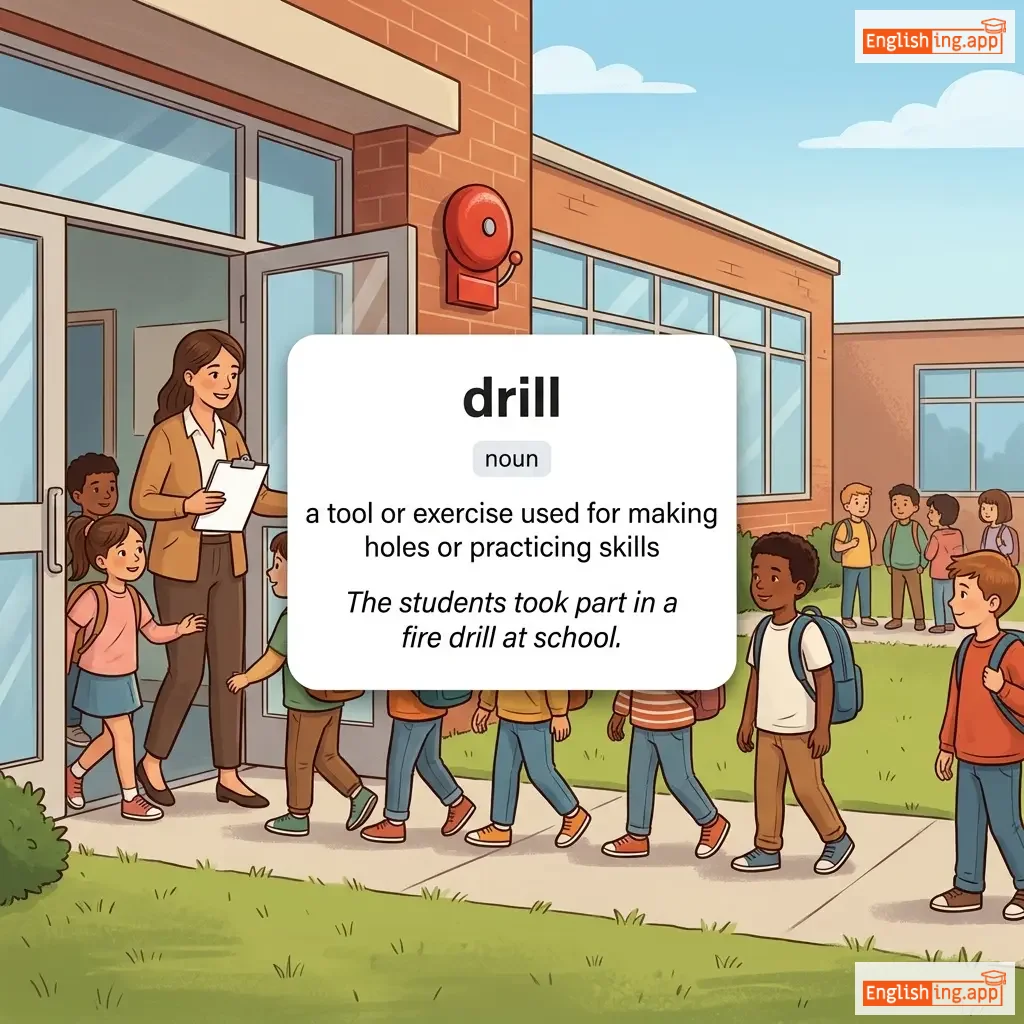
drill definition card — visual illustration of the meaning
noun
/drɪl/
ड्रिल (dril)

a tool or exercise used for making holes or practicing skills

"The students took part in a fire drill at school."

"छात्रों ने स्कूल में एक अग्नि अभ्यास में भाग लिया।" (Chhatron ne school mein ek agni abhyas mein bhag liya.)
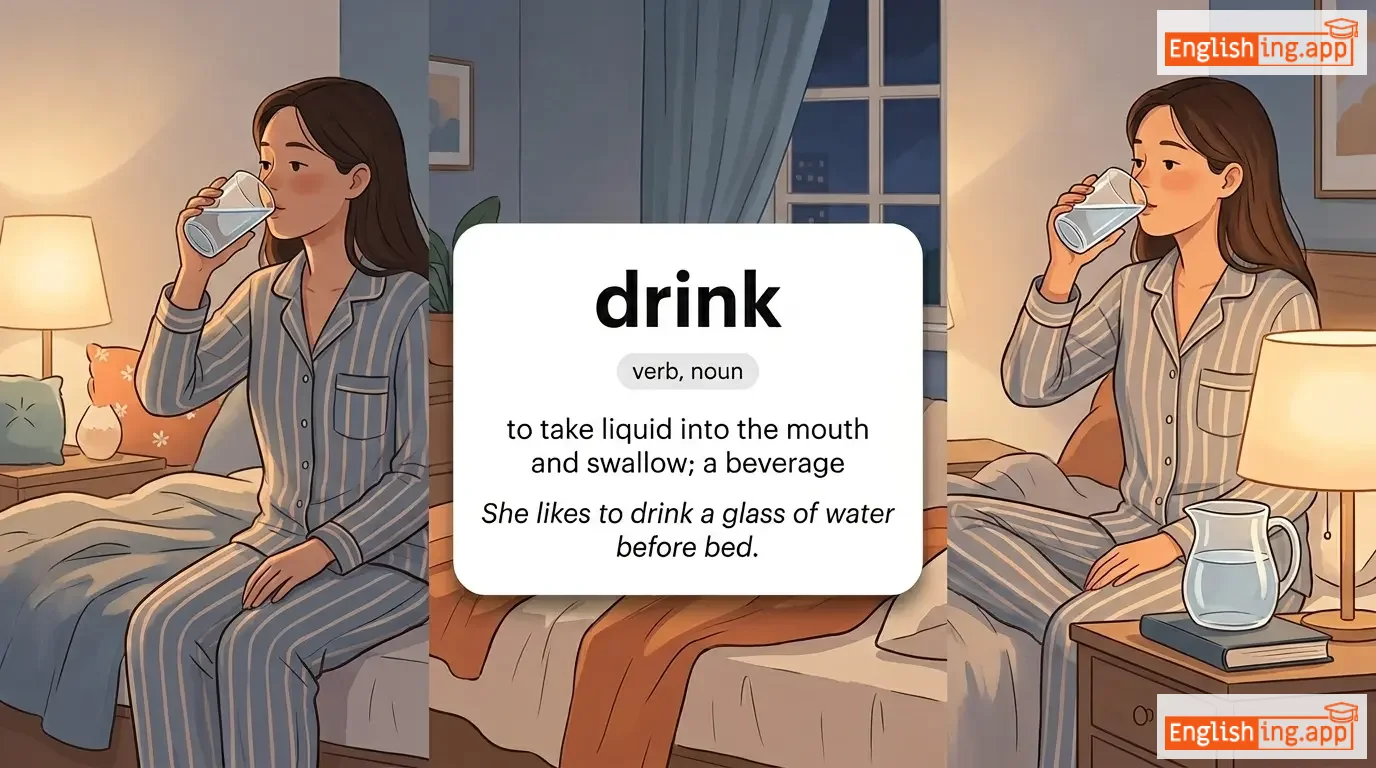
drink definition card — visual illustration of the meaning
verb, noun
/drɪŋk/
पानी पीना / पेय (pani peena / pey)

to take liquid into the mouth and swallow; a beverage

"She likes to drink a glass of water before bed."

"वह बिस्तर पर जाने से पहले पानी का गिलास पीना पसंद करती है।" (Vah bistar par jane se pehle pani ka gilas peena pasand karti hai.)
noun
/ˈdrɪŋkɪŋ/
पीना (peena)

the act of consuming liquids, especially alcohol

"Drinking too much water at once can make you feel bloated."

"एक बार में ज्यादा पानी पीने से आप फूले हुए महसूस कर सकते हैं।" (Ek baar mein zyada paani peene se aap phoolay huay mahsus kar sakte hain.)
verb
/drɪp/
टपकना (tapakna)

to fall or let fall in drops

"Water was dripping from the broken pipe."

"टूटी हुई पाइप से पानी टपक रहा था।" (Tooti hui pipe se pani tapak raha tha.)
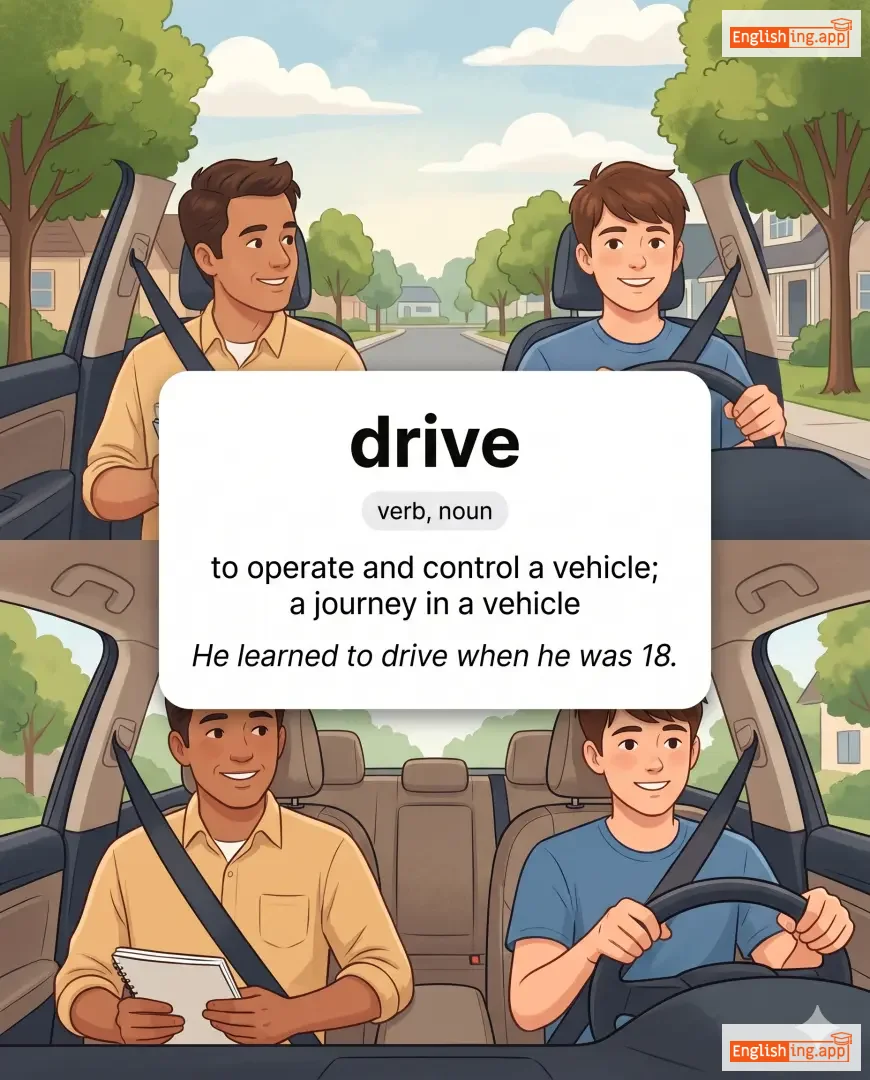
drive definition card — visual illustration of the meaning
verb, noun
/draɪv/
गाड़ी चलाना (gaadi chalana)

to operate and control a vehicle; a journey in a vehicle

"He learned to drive when he was 18."

"उसने 18 साल की उम्र में गाड़ी चलाना सीखा।" (Usne 18 saal ki umra mein gaadi chalana seekha.)
noun
/ˈdrɪvəl/
बकवास (bakvaas)

silly or nonsensical talk

"The politician’s speech was full of meaningless drivel."

"राजनेता का भाषण बेमानी बकवास से भरा हुआ था।" (Raajneeta ka bhashan bemaani bakwaas se bhara hua tha.)
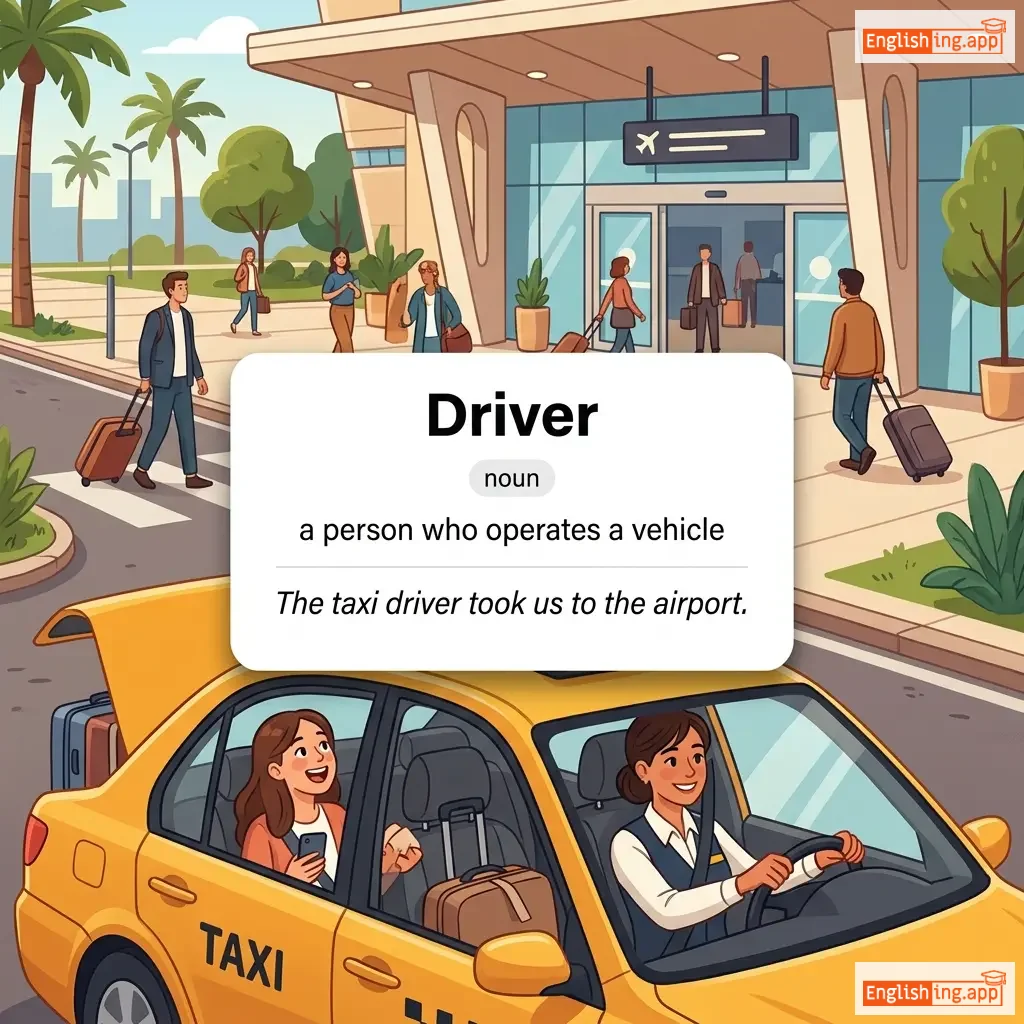
Driver definition card — visual illustration of the meaning
noun
/ˈdraɪvər/
चालक (chaalak)

a person who operates a vehicle

"The taxi driver took us to the airport."

"टैक्सी चालक ने हमें हवाई अड्डे तक पहुँचाया।" (Taxi chaalak ne humein hawaai adde tak pahuchaya.)
noun
/ˈdraɪv.weɪ/
गृह मार्ग (grih marg)

a short private road leading from a street to a house or garage

"The car was parked in the driveway next to the garden."

"गाड़ी बगीचे के पास ड्राइववे में खड़ी थी।" (Gaadi bagiche ke paas driveway mein khadi thi.)
verb
/ˈdraɪvɪŋ/
गाड़ी चलाना (gaadi chalana)

the act of controlling and operating a vehicle; guiding or motivating something forward

"She loves driving along the coast on weekends."

"वह सप्ताहांत में तट के साथ ड्राइविंग करना पसंद करती है।" (Wah saptahant mein tat ke saath driving karna pasand karti hai.)
verb
/ˈdrɪzəl/
हल्की बूँदाबाँदी (halki boondabandi)

to rain lightly with very small drops

"It began to drizzle just as we left the house."

"यह घर से बाहर जाते ही हल्की बूँदाबाँदी शुरू हो गई।" (Yeh ghar se bahar jaate hi halki boondabandi shuru ho gayi.)
adjective
/droʊl/
मज़ेदार (mazedar)

curious or unusual in a way that provokes dry amusement

"He had a droll sense of humor that made everyone laugh."

"उसका मज़ेदार हास्यबोध था जिसने सभी को हंसी में डाल दिया।" (Uska mazedar hasyabodh tha jisne sabhi ko hansi mein daal diya.)
noun/verb
/droʊn/
ड्रोन / गूंज (dron / goonj)

a continuous low humming sound; an unmanned flying device

"The drone of bees filled the garden."

"मधुमक्खियों की गूंज बग़ीचे में गूंज उठी।" (Madhumakkhiyon ki goonj bagiche mein goonj uthi.)
verb
/druːp/
नम्हिलाना (namhilana)

to bend or hang downward; to become weak or tired

"The flowers began to droop in the heat."

"गर्मी में फूल झुकने लगे।" (garmi mein phool jhukne lage.)
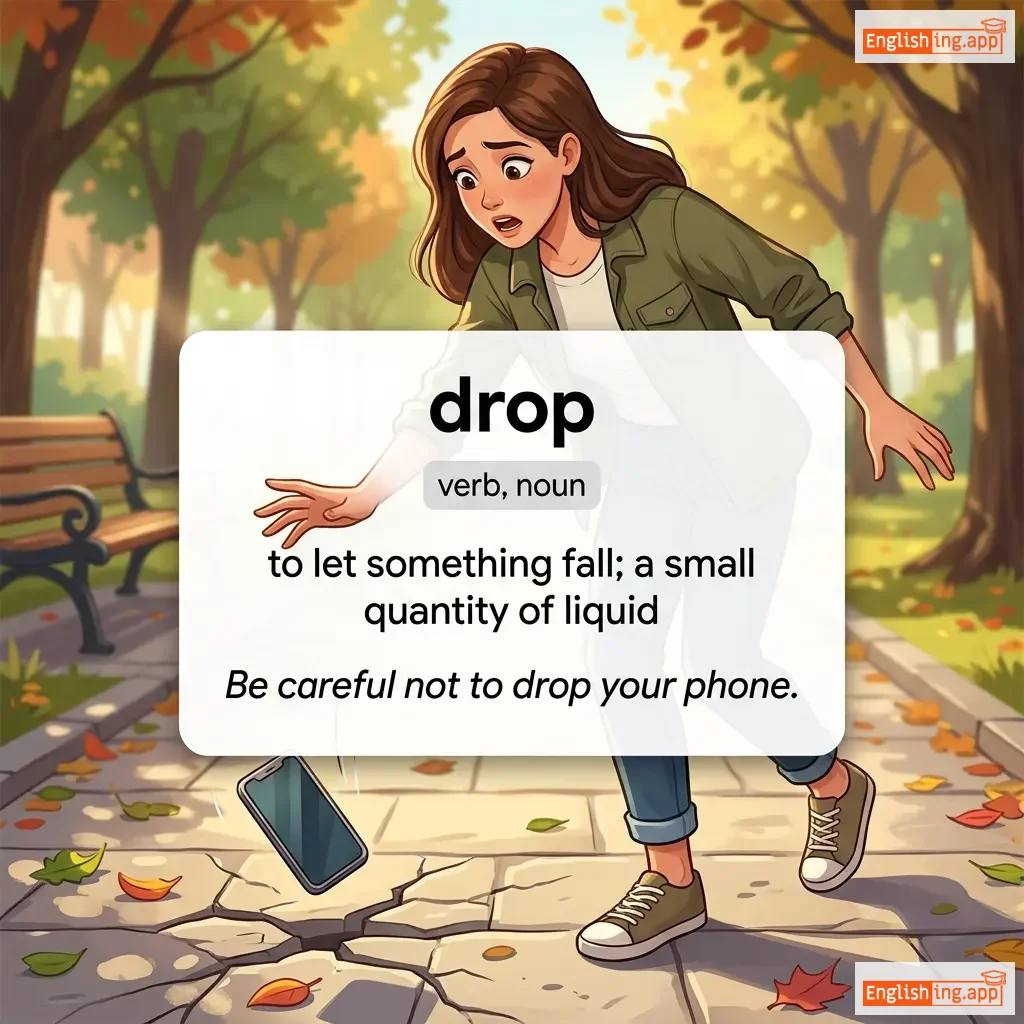
drop definition card — visual illustration of the meaning
verb, noun
/drɒp/
गिराना / बूँद (girana / boond)

to let something fall; a small quantity of liquid

"Be careful not to drop your phone."

"ध्यान रखना कि तुम्हारा फोन गिर न जाए।" (dhyaan rakhna ki tumhara phone gir na jaye.)
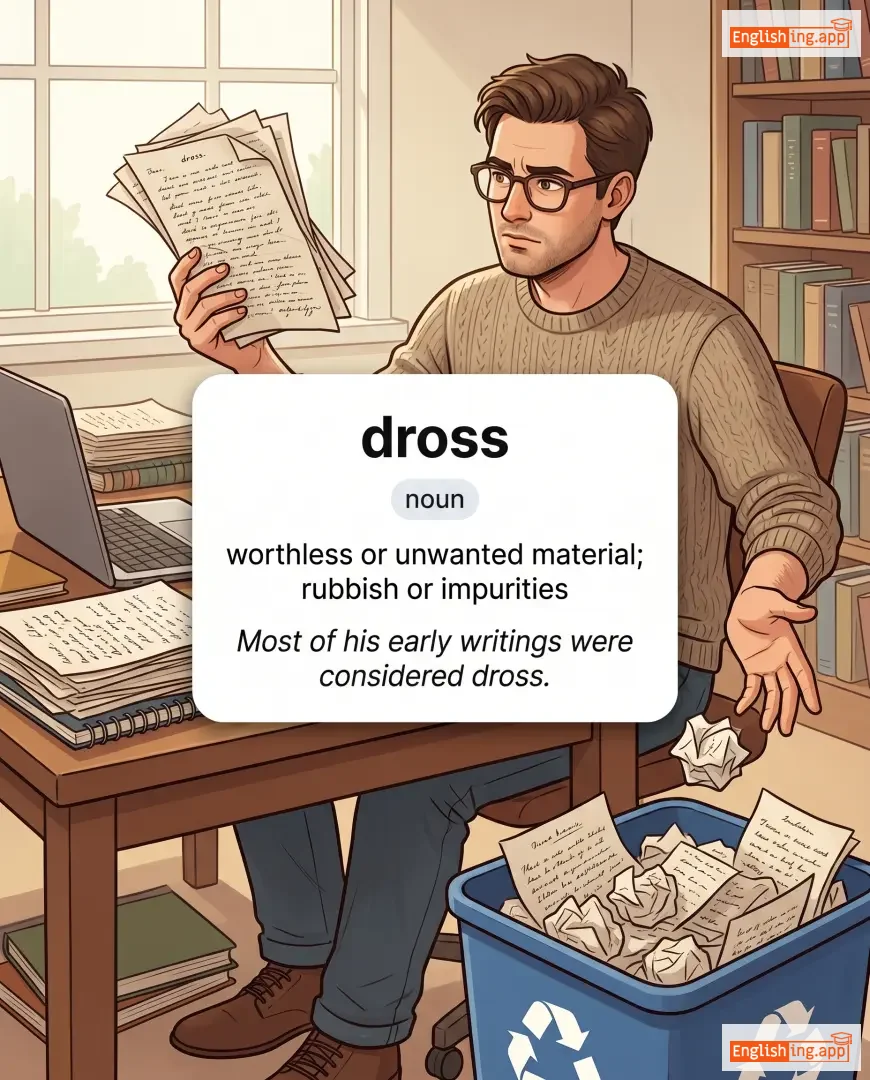
dross definition card — visual illustration of the meaning
noun
/drɒs/
अवशेष (avshesh)

worthless or unwanted material; rubbish or impurities

"Most of his early writings were considered dross."

"उनकी अधिकांश प्रारंभिक रचनाएँ अवशेष मानी जाती थीं।" (Unki adhikansh prarambhik rachnaayein avshesh maani jaati thiin.)
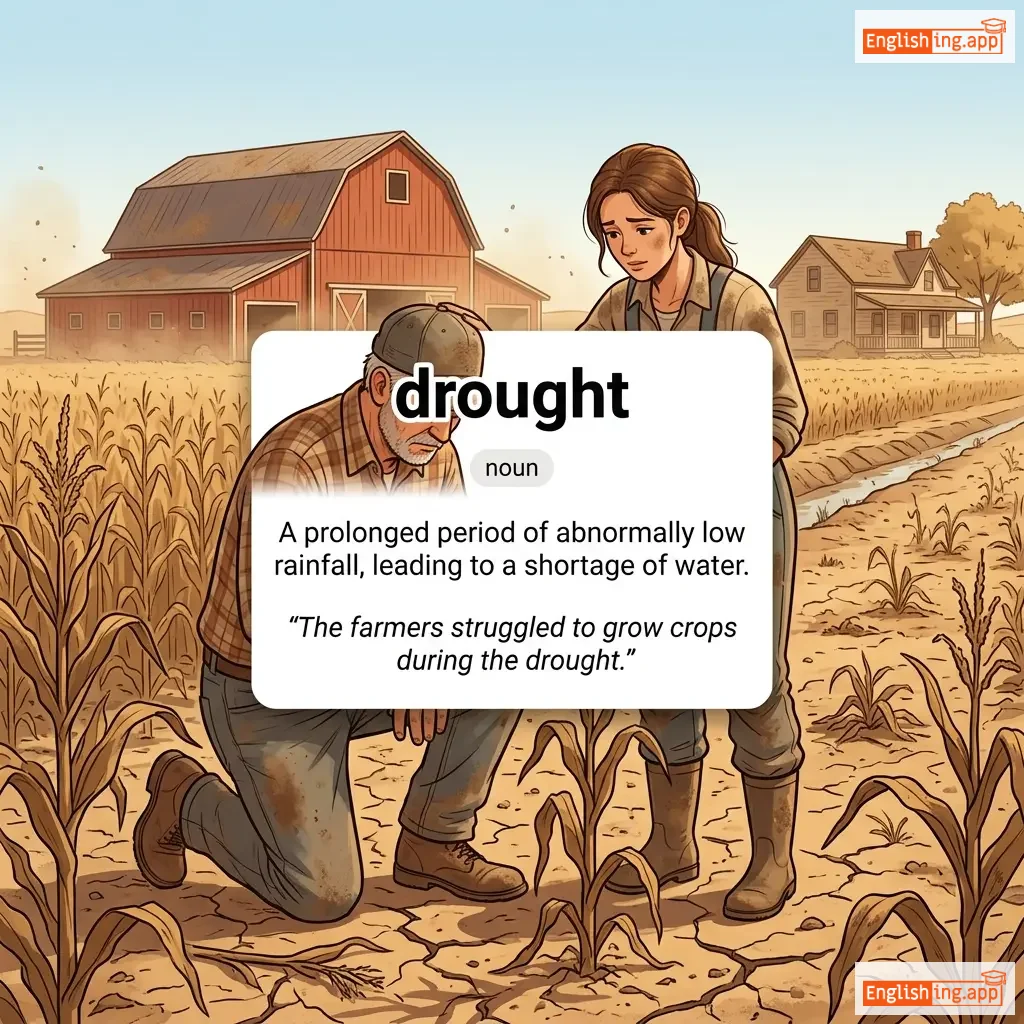
drought definition card — visual illustration of the meaning
noun
/draʊt/
सूखा (sookha)

A prolonged period of abnormally low rainfall, leading to a shortage of water.

"The farmers struggled to grow crops during the drought."

"किसान सूखे के दौरान फसल उगाने के लिए संघर्ष कर रहे थे।" (Kisaan sookhe ke dauran fasal ugaane ke liye sangharsh kar rahe the.)
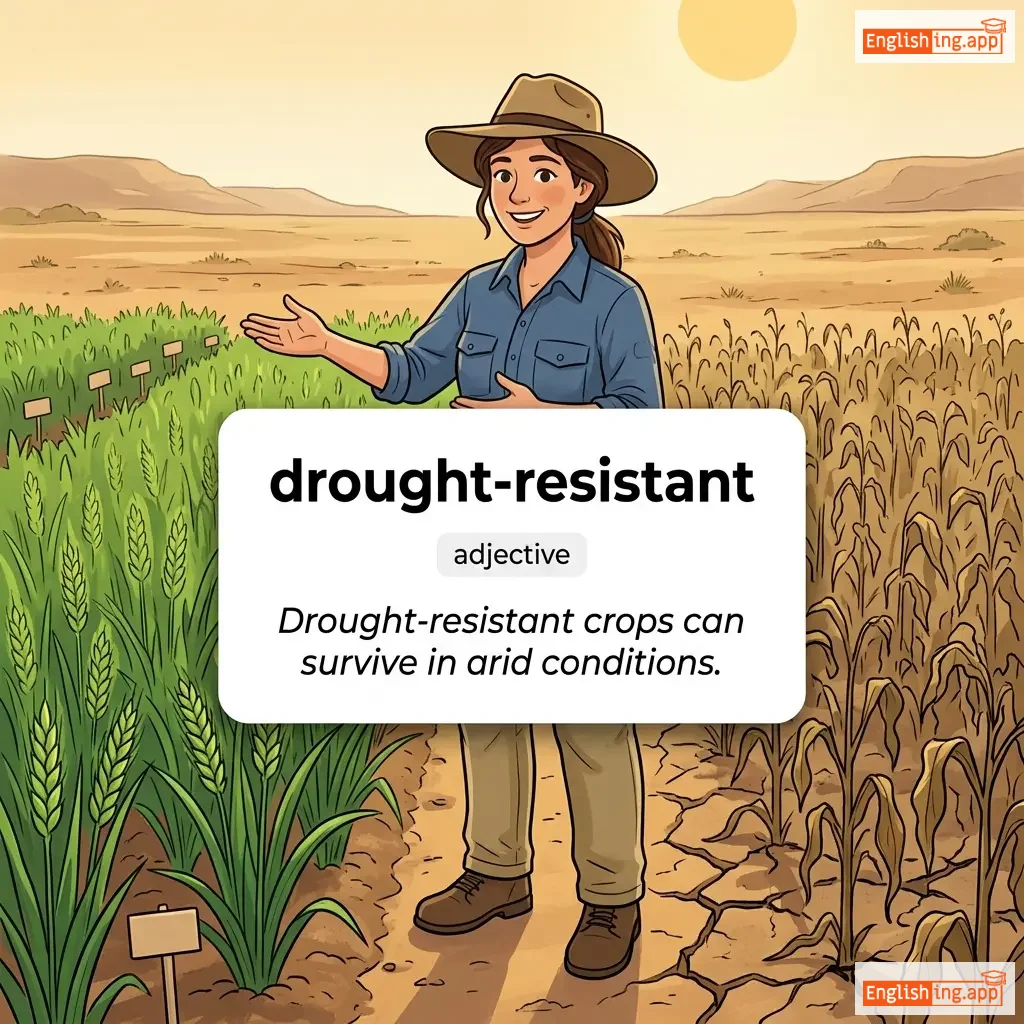
drought-resistant definition card — visual illustration of the meaning
adjective
draʊt rɪˈzɪs.tənt
सूखा प्रतिरोधी (sookha pratirrodhi)

Able to survive and grow despite limited water availability or drought conditions.

"Drought-resistant crops can survive in arid conditions."

"सूखा प्रतिरोधी फसलें शुष्क परिस्थितियों में जीवित रह सकती हैं।" (Sookha pratirrodhi faslen shushk paristhitiyon mein jeevit rah sakti hain.)
verb
/draʊn/
डूब जाना (dube jana)

to die or cause to die by being submerged in and inhaling water

"He nearly drowned while swimming in the river."

"वह नदी में तैरते हुए लगभग डूब गया।" (vah nadi mein tairte hue lagbhag doob gaya.)
adjective
/ˈdraʊzi/
नींद से चूर (neend se choor)

Feeling sleepy or half-asleep.

"The warm room made him feel drowsy."

"गर्म कमरे ने उसे नींद से चूर कर दिया।" (Garm kamre ne use neend se choor kar diya.)
noun
/drʌdʒ/
मशक्कत करने वाला व्यक्ति (mashakkat karne wala vyakti)

A person made to do hard, menial, or dull work.

"He felt like a drudge, stuck in repetitive tasks all day."

"वह महसूस करता था जैसे वह एक ड्रज हो, जो पूरे दिन दोहराए जाने वाले कार्यों में फंसा हुआ था।" (vah mahsus karta tha jaise vah ek druj ho, jo poore din dohraaye jaane wale kaaryon mein phansa hua tha.)
noun
/ˈdrʌdʒəri/
कठिन, नीरस या ऊबाऊ काम (kathin, neeras ya ubaau kaam)

Hard, menial, or dull work.

"She wanted to escape the drudgery of her daily routine."

"वह अपनी रोज़मर्रा की दिनचर्या से छुटकारा पाना चाहती थी।" (Vah apni rozmarra ki dincharya se chhutkaara paana chahti thi.)
noun
/drʌɡ/
दवा / मादक पदार्थ (dava / madak padarth)

a substance used as a medicine or an illegal addictive substance

"The doctor prescribed a new drug for the illness."

"डॉक्टर ने बीमारी के लिए एक नई दवा लिखी।" (Doctor ne bimari ke liye ek nayi dava likhi.)
noun
/ˈdrʌɡˌstɔːr/
ड्रगस्टोर (drugstore)

A retail store that sells medicines, health-related products, and sometimes cosmetics or snacks.

"I stopped by the drugstore to buy some cold medicine."

"मैं ठंड की दवा खरीदने के लिए ड्रगस्टोर गया।" (Main thand ki dawa kharidne ke liye drugstore gaya.)
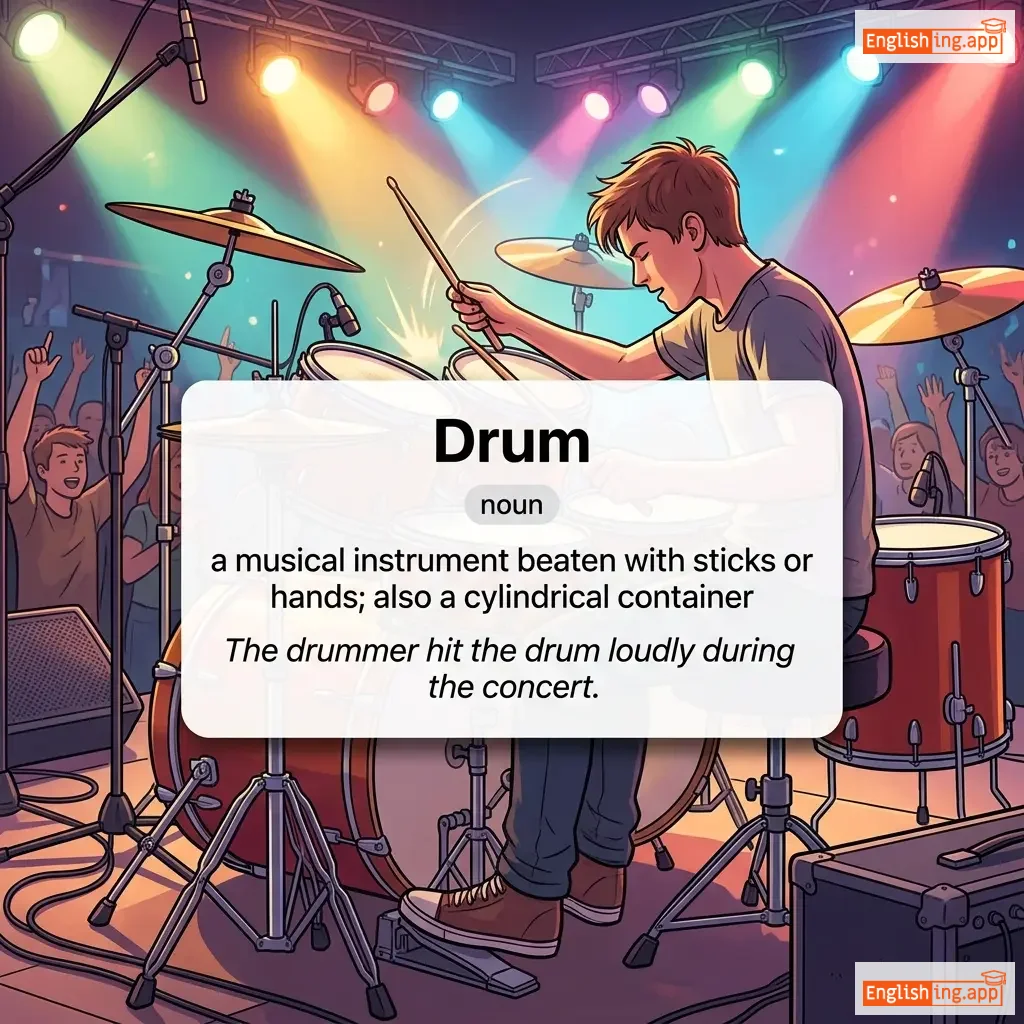
Drum definition card — visual illustration of the meaning
noun
/drʌm/
ढोल या बैरल (dhol ya barrel)

a musical instrument beaten with sticks or hands; also a cylindrical container

"The drummer hit the drum loudly during the concert."

"कॉन्सर्ट के दौरान ड्रमर ने जोर से ड्रम बजाया।" (Concert ke dauran drummer ne zor se drum bajaya.)
noun
/ˈdrʌmɪt/
ड्रमेट (drumet)

a small drum used in military or marching bands

"The drummer played a steady beat on the drumet during the parade."

"परेड के दौरान ड्रमर ने ड्रमेट पर एक स्थिर ताल बजाया।" (parade ke dauran drummer ne drumet par ek sthir taal bajaya.)
noun
/ˈdrʌm.stɪk/
सजना डंठल (sajna danthal)

long green pod vegetable from moringa tree; nutritious vegetable used in curries

"The drumstick adds a unique flavor to the traditional fish curry."

"ड्रमस्टिक पारंपरिक मछली करी में एक अनूठा स्वाद जोड़ता है।" (drumstick paramparik machhli kari mein ek anutha swad jodta hai.)
adjective
/drʌŋk/
नशे में (nashe mein)

affected by alcohol to the point of losing control of one's faculties or behavior

"He was too drunk to walk straight."

"वह सीधे चलने के लिए बहुत नशे में था।" (Wah seedhe chalne ke liye bahut nashe mein tha.)
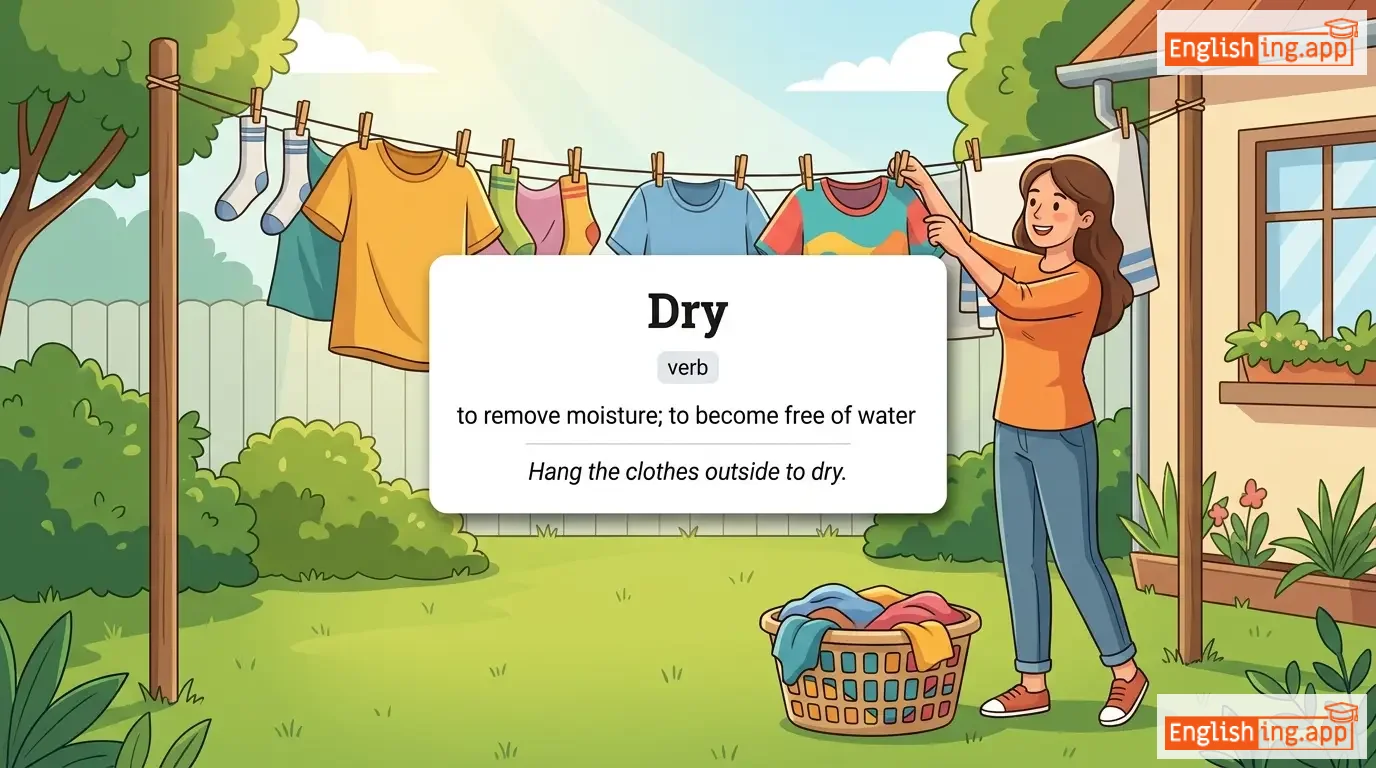
Dry definition card — visual illustration of the meaning
adjective
/draɪ/
सुख (sukh)

free from moisture or liquid; not wet

"The clothes are dry after hanging in the sun."

"सूरज में सूखने के बाद कपड़े सूखे हैं।" (Suraj mein sookhne ke baad kapde sookhe hain.)
noun
/draɪ ˈtʃɪl.i/
सूखा मिर्च (sookha mirch)

dried chili peppers used as spice for adding heat to food

"The recipe calls for two dry chillies to make it spicy."

"इस रेसिपी में इसे मसालेदार बनाने के लिए दो सूखी मिर्च की आवश्यकता है।" (is recipe mein ise masaledaar banane ke liye do sookhi mirch ki avashyakta hai。)
noun
/draɪ fɪʃ/
सूखी मछली (sookhi machhli)

fish that has been preserved by drying in the sun or by other dehydration methods

"Dry fish is a popular preserved food in many coastal regions."

"सूखी मछली कई तटीय क्षेत्रों में एक लोकप्रिय संरक्षित भोजन है।" (sookhi machhli kai tateey kshetron mein ek lokpriya sanrakshit bhojan hai)
noun
/draɪ ɡuːs ˈbɛri/
सूखा आंवला (sookha aamla)

dehydrated amla fruit, rich in vitamin C and used for medicinal and culinary purposes

"Dry goose berry powder is excellent for hair growth."

"सूखा आंवला पाउडर बालों की वृद्धि के लिए उत्कृष्ट है।" (sookha aamla powder balo ki vruddhi ke liye utkrist hai)
noun
/draɪ ˈmæŋgoʊ ˈpaʊdər/
आमचूर (amchur)

a tangy powder made from dried raw mangoes, used as a spice in Indian cuisine

"The chef sprinkled dry mango powder over the chaat for extra tanginess."

"शेफ ने चाट पर अतिरिक्त खट्टापन देने के लिए आमचूर छिड़का।" (shef ne chaat par atirikt khattapan dene ke liye amchur chhidka.)
adjective
/ˈdjuːəl/
दोहरी (dohri)

having two parts or elements; two in one

"The dual nature of the problem required careful consideration."

"समस्या की दोहरी प्रकृति के लिए सावधानीपूर्वक विचार की आवश्यकता थी।" (Samasya ki dohri prakriti ke liye saavdhani poorvak vichar ki avashyakta thi.)
verb
/dʌb/
डब (dab)

to give a name or label to something; to add a soundtrack to a film or recording

"The movie was dubbed into several languages for international release."

"फिल्म को अंतर्राष्ट्रीय रिलीज़ के लिए कई भाषाओं में डब किया गया था।" (Film ko antarraashtreey release ke liye kai bhashao mein dab kiya gaya tha.)
adjective
/ˈdjuːbiəs/
संदेहास्पद (sandehaspad)

Hesitating or doubting; not to be relied upon.

"She gave him a dubious look after hearing his excuse."

"उसने उसके बहाने को सुनकर उसे संदिग्ध नज़र से देखा।" (Usne uske bahaane ko sunkar use sandigdh nazar se dekha.)
noun, verb
/dʌk/
खुशी (khushi)

a waterbird with a broad bill and webbed feet; to lower the head or body quickly to avoid something

"He ducked to avoid the flying ball."

"जब उसने पुरस्कार प्राप्त किया, तो वह अपनी खुशी छुपा नहीं सकी।" (Jab usne puraskar prapt kiya, to wah apni khushi chhupa nahi saki.)
noun
/ˈdʌklɪŋ/
बत्तख का बच्चा (battakh ka bachcha)

a young duck

"The mother duck led her ducklings to the pond."

"माँ बत्तख ने अपने बत्तखों को तालाब की ओर ले गईं।" (maa battakh ne apne battakhon ko talaab ki or le gayi)
adjective
/ˈdʌktaɪl/
लचीला (lachila)

capable of being stretched into a thin wire without breaking; easily influenced

"Gold is a very ductile metal."

"सोना एक बहुत लचीला धातु है।" (Sona ek bahut lachila dhaatu hai.)
adjective
/djuː/
नियत (niyat)

expected at a certain time or required by a certain date

"The rent is due on the first of every month."

"किराया हर महीने की पहली तारीख को देय होता है।" (kiraya har mahine ki pehli tareekh ko dey hota hai.)
noun
/djuːˈɛnə/
उम्रदराज महिला (umradharaj mahila)

an older woman acting as a governess or chaperone, especially in Spanish families

"The young lady was accompanied by a duenna during the festival."

"त्योहार के दौरान युवा महिला के साथ एक उम्रदराज महिला थीं।" (Tyohar ke dauran yuva mahila ke saath ek umradharaj mahila thin.)
noun
/djuːˈɛt/
डुएट (duet)

a musical performance by two singers or instrumentalists

"They sang a beautiful duet together on stage."

"उन्होंने मंच पर एक सुंदर डुएट एक साथ गाया।" (Unhone manch par ek sundar duet ek sath gaya.)
adjective
/ˈdʌlsɪt/
मधुर (madhur)

sweet and soothing (often used ironically)

"She was enchanted by his dulcet voice."

"वह उसकी मधुर आवाज से मंत्रमुग्ध हो गई थी।" (Wah uski madhur awaaz se mantramugdh ho gayi thi.)
adjective
/dʌl/
बोर (bor)

lacking brightness, vividness, or interest; boring or not sharp

"The lecture was so dull that many students fell asleep."

"व्याख्यान इतना उबाऊ था कि कई छात्रों को नींद आ गई।" (Vyakhyan itna ubaoo tha ki kai chhatron ko neend aa gayi.)
noun
/ˈdʌlərd/
मूर्ख व्यक्ति (murkh vyakti)

a slow or stupid person

"He was considered a dullard by his classmates."

"उसे उसके सहपाठियों द्वारा एक मूर्ख व्यक्ति माना जाता था।" (Use uske sahpathiyon dwara ek murkh vyakti maana jaata tha.)
adverb
/ˈduːli/
समय पर, उचित रूप से (samay par, uchit roop se)

in accordance with what is required or appropriate; at the proper time

"The documents were duly signed and submitted."

"दस्तावेज़ समय पर सही तरीके से साइन और जमा किए गए।" (dastaavez samay par sahi tareeke se sign aur jama kiye gaye.)