वोकैबुलरीज

इंग्लिश वोकैबुलरी डिस्कवर, लर्न और मास्टर करें

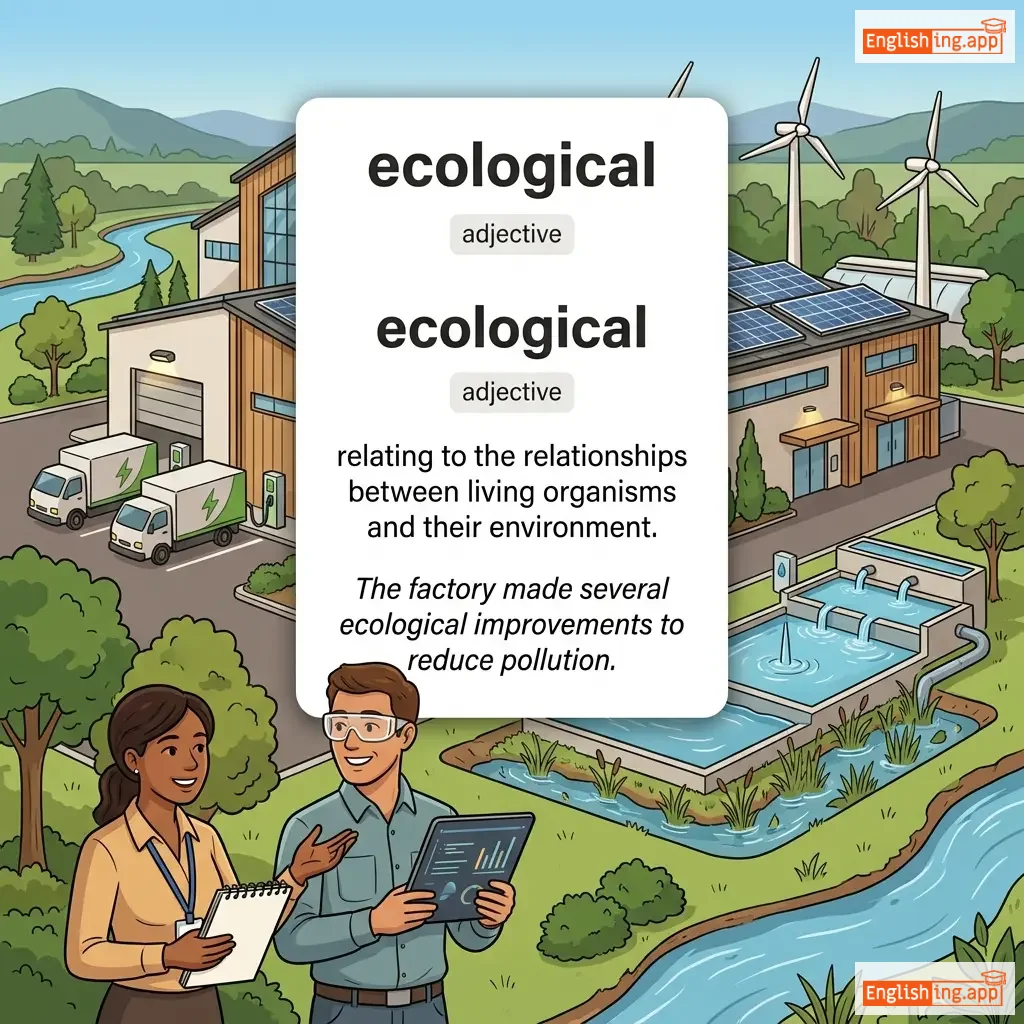
ecological definition card — visual illustration of the meaning
adjective
/ˌiːkəˈlɒdʒɪkəl/
paryavaranik (paryavaranik)

relating to the relationships between living organisms and their environment.

"The factory made several ecological improvements to reduce pollution."

"कारख़ाने ने प्रदूषण को कम करने के लिए कई पर्यावरणीय सुधार किए।" (karkhane ne pradooshan ko kam karne ke liye kai paryavaraniy sudhar kiye.)
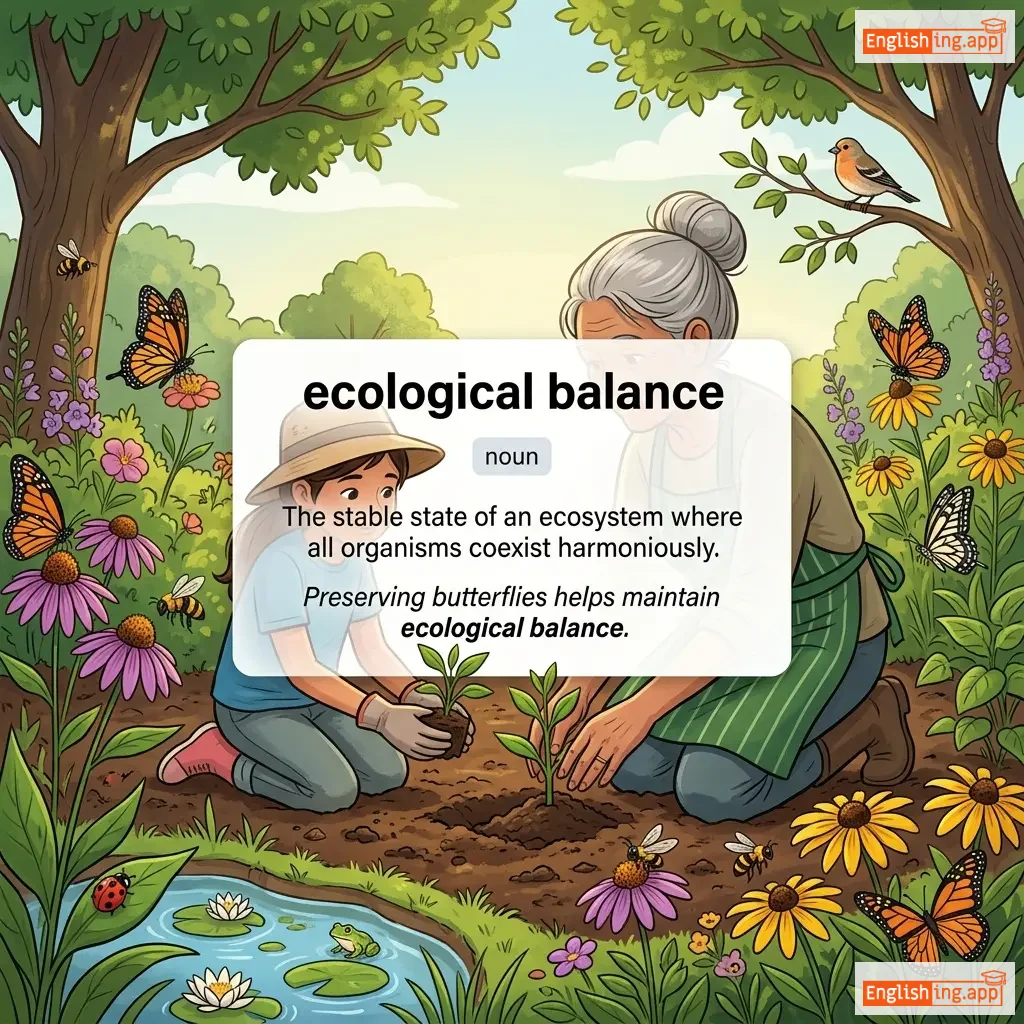
ecological balance definition card — visual illustration of the meaning
noun
ˌiːkəˈlɒdʒɪkəl ˈbæləns
पारिस्थितिकी संतुलन (paristhitiki santulan)

The stable state of an ecosystem where all organisms coexist harmoniously.

"Preserving butterflies helps maintain ecological balance."

"तितलियों का संरक्षण पारिस्थितिकी संतुलन बनाए रखने में मदद करता है।" (Titliyon ka sanrakshan paristhitiki santulan banaye rakhne mein madad karta hai.)
noun
/iˈkɒlədʒɪst/
पारिस्थितिकीविद (paristhitikeevid)

A scientist who studies the relationships between living organisms and their environment.

"The ecologist studied the effects of pollution on the forest ecosystem."

"पारिस्थितिकीविद ने जंगल के पारिस्थितिकी तंत्र पर प्रदूषण के प्रभाव का अध्ययन किया" (Paristhitikeevid ne jangal ke paristhitiki tantra par pradushan ke prabhav ka adhyayan kiya)
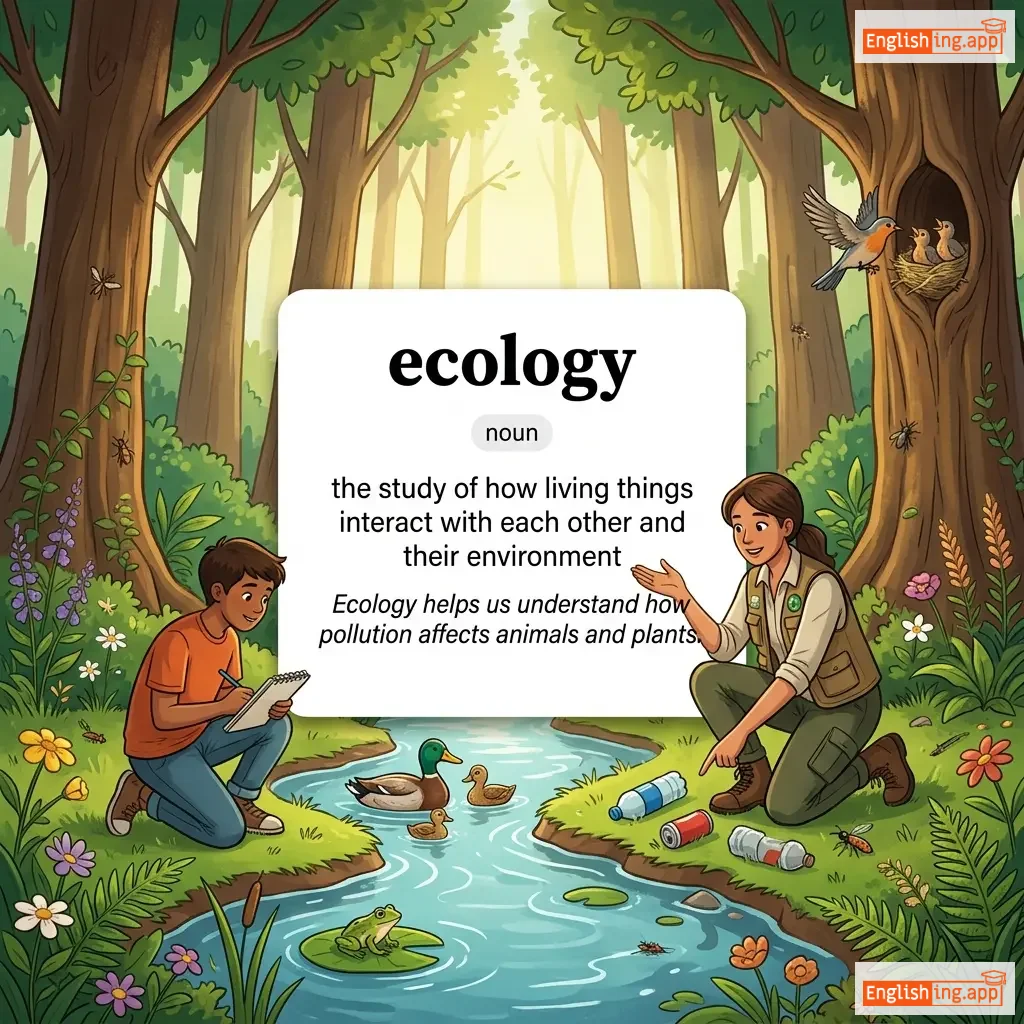
ecology definition card — visual illustration of the meaning
noun
/iˈkɒl.ə.dʒi/
पर्यावरण विज्ञान (paryavaran vigyan)

the study of how living things interact with each other and their environment

"Ecology helps us understand how pollution affects animals and plants."

"इकोलॉजी हमें यह समझने में मदद करती है कि प्रदूषण जानवरों और पौधों को कैसे प्रभावित करता है।" (Ecology humein yeh samajhne mein madad karti hai ki pradushan janwaron aur podhon ko kaise prabhavit karta hai.)
economic definition card — visual illustration of the meaning
adjective
/ˌiːkəˈnɒmɪk/
आर्थिक (aarthik)

relating to the economy, trade, or money

"The country is facing an economic crisis."

"देश एक आर्थिक संकट का सामना कर रहा है।" (Desh ek aarthik sankat ka samna kar raha hai.)
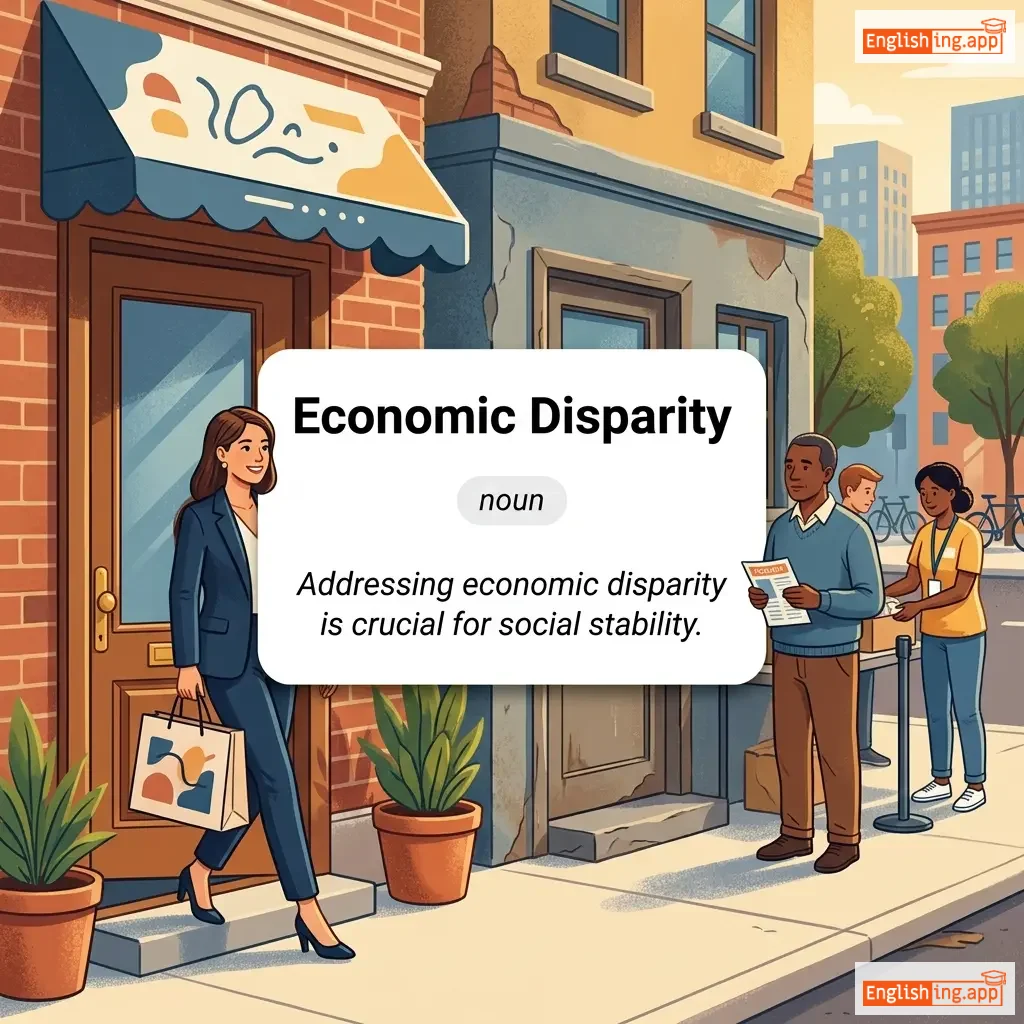
Economic Disparity definition card — visual illustration of the meaning
noun
/ˌiː.kəˈnɒm.ɪk dɪˈspær.ɪ.ti/
आर्थिक विषमतता (aarthik vishamata)

The unequal distribution of income and opportunity between different groups in society.

"Addressing economic disparity is crucial for social stability."

"आर्थिक विषमतता को संबोधित करना सामाजिक स्थिरता के लिए महत्वपूर्ण है।" (aarthik vishamata ko sambodhit karna samajik sthirta ke liye mahatvapurn hai.)
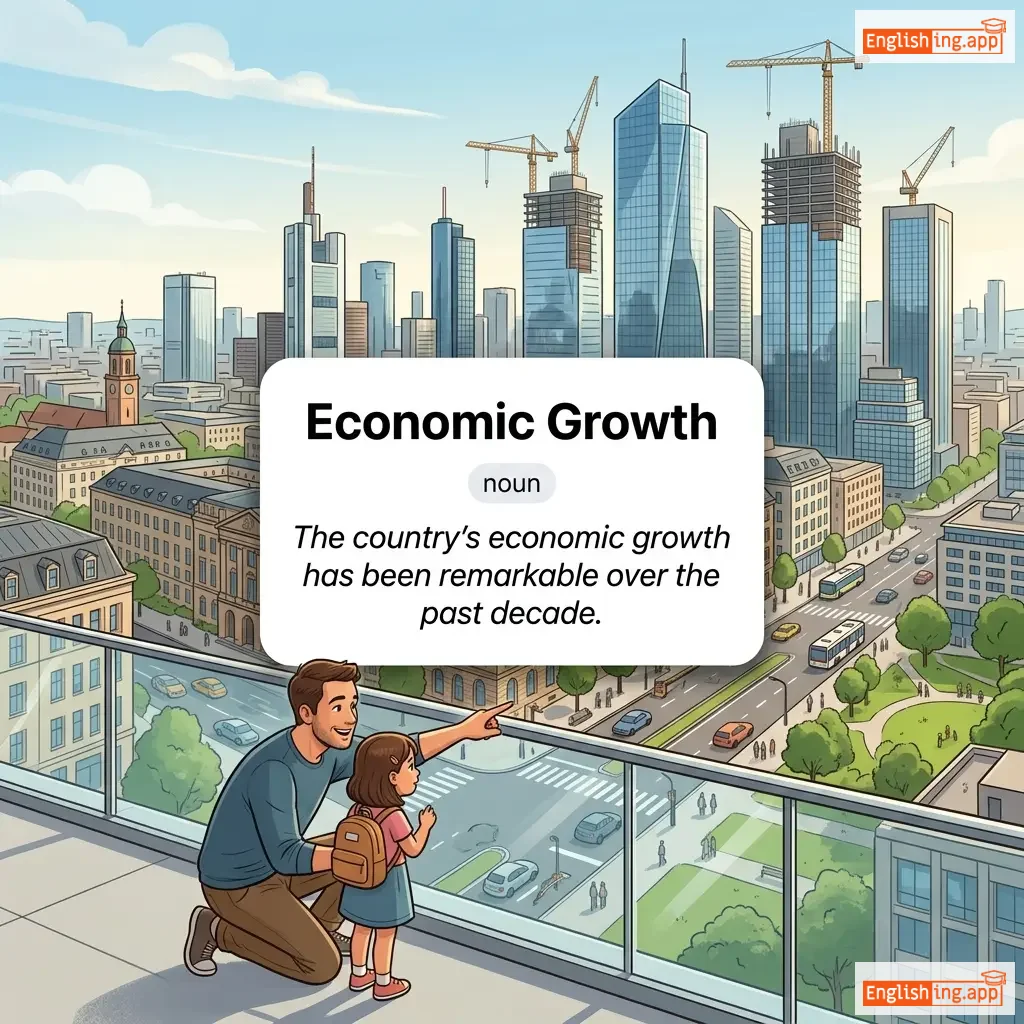
Economic Growth definition card — visual illustration of the meaning
noun
/ˌiː.kəˈnɒm.ɪk ɡrəʊθ/
आर्थिक वृद्धि (aarthik vruddhi)

The increase in the production of goods and services in an economy over time, measured by the expansion of economic output, income, and investment.

"The country's economic growth has been remarkable over the past decade."

"देश की आर्थिक वृद्धि पिछले दशक में शानदार रही है।" (Desh ki aarthik vruddhi pichle dashak mein shandaar rahi hai.)
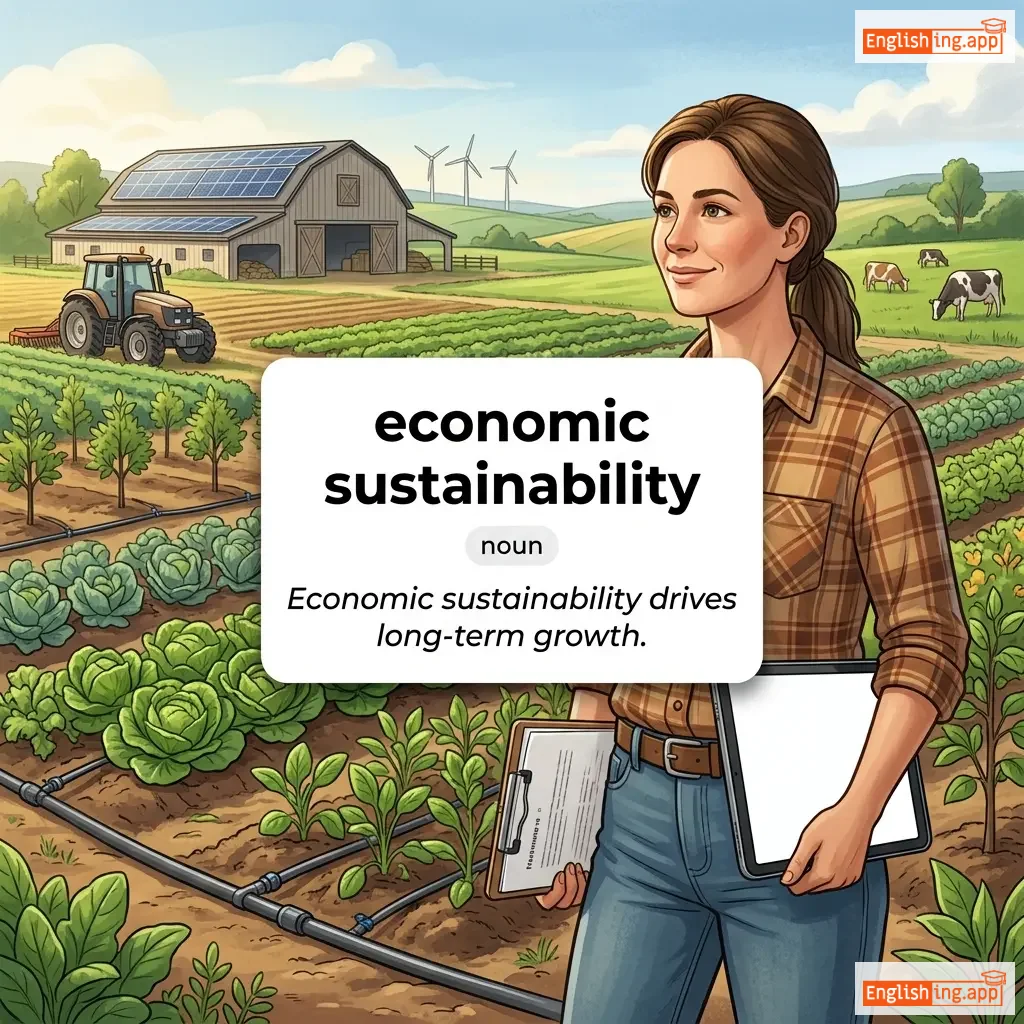
economic sustainability definition card — visual illustration of the meaning
noun
/ˌek.əˈnɒm.ɪk səˌsteɪ.nəˈbɪl.ə.ti/
आर्थिक सततता (aarthik satatata)

The ability of an economy to support a defined level of economic production indefinitely.

"Economic sustainability drives long-term growth."

"आर्थिक सततता दीर्घकालीन वृद्धि को प्रेरित करती है।" (Aarthik satatata deerghakaaleen vriddhi ko prerit karti hai.)
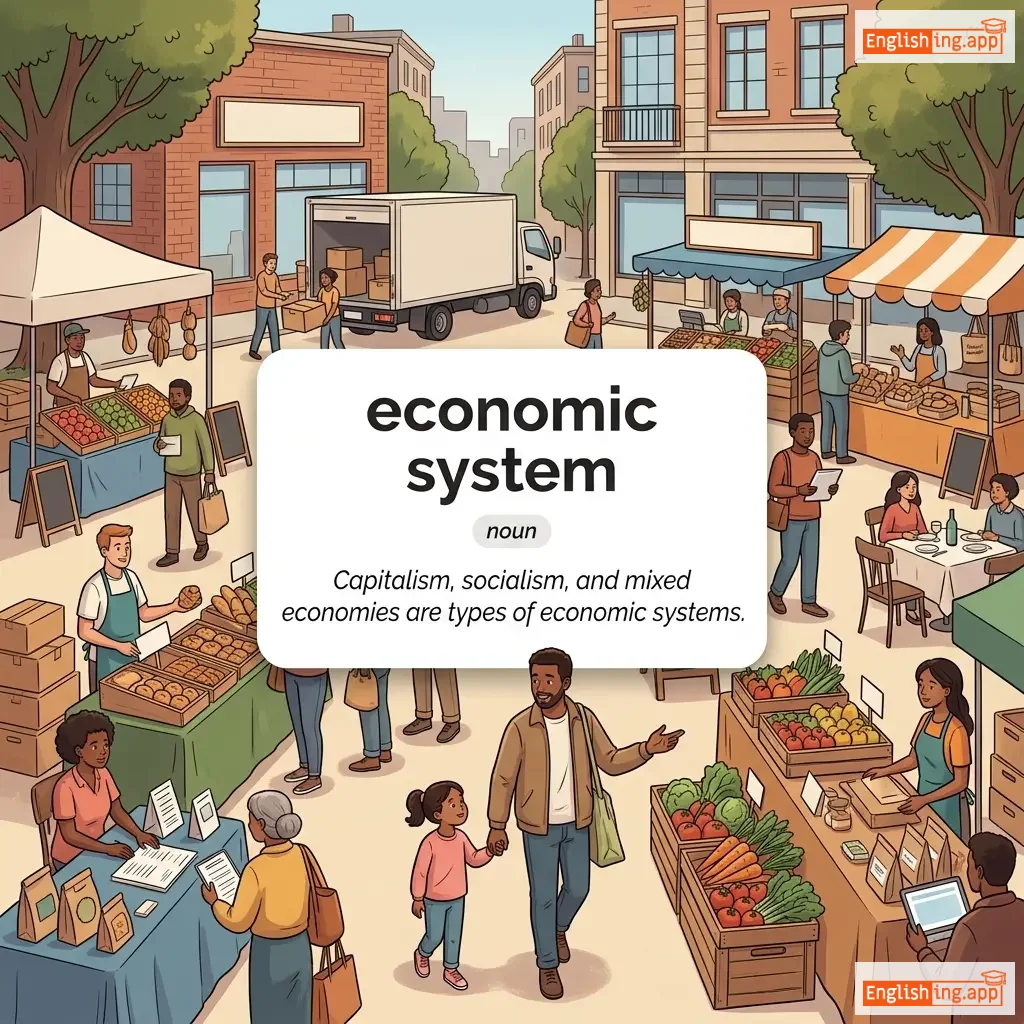
economic system definition card — visual illustration of the meaning
noun
/ˌiː.kəˈnɒm.ɪk ˈsɪs.təm/
आर्थिक प्रणाली (aarthik pranali)

The organized framework for production, distribution, and consumption of goods and services in society.

"Capitalism, socialism, and mixed economies are types of economic systems."

"पूंजीवाद, समाजवाद और मिश्रित अर्थव्यवस्थाएँ आर्थिक प्रणालियों के प्रकार हैं।" (Poonjivaad, samajvaad aur mishrit arthavyavasthaayein aarthik pranaaliyon ke prakar hain.)
adjective
/ˌiːkəˈnɒmɪkl/
किफायती (kifayati)

Careful in the use of resources; providing good value or efficiency.

"Driving a hybrid car is economical in the long run."

"हाइब्रिड कार चलाना दीर्घकालिक रूप से किफायती है।" (Hybrid car chalana deerghkaalik roop se kifayati hai.)
adverb
/ˌiːkəˈnɒmɪkli/
आर्थिक रूप से (aarthik roop se)

in a way that relates to economics or is efficient and not wasteful.

"The company is trying to operate more economically this year."

"कंपनी इस साल और अधिक आर्थिक रूप से संचालन करने की कोशिश कर रही है।" (kampani is saal aur adhik aarthik roop se sanchaalan karne ki koshish kar rahi hai.)
noun
/ˌiːkəˈnɒmɪks/ or /ˌɛkəˈnɒmɪks/
अर्थशास्त्र (arthashastra)

The study of production, consumption, and transfer of wealth.

"He is studying economics at university."

"वह विश्वविद्यालय में अर्थशास्त्र पढ़ रहा है।" (vah vishwavidyalaya mein arthashastra padh raha hai.)
verb
/daɪˈɡrɛs/
मुख्य विषय से भटकना (mukhya vishay se bhatakhna)

To leave the main subject temporarily in speech or writing.

"The professor began to digress from the main topic of the lecture."

"प्रोफेसर ने व्याख्यान के मुख्य विषय से भटकना शुरू किया।" (Professor ne vyakhyan ke mukhya vishay se bhatakhna shuru kiya.)
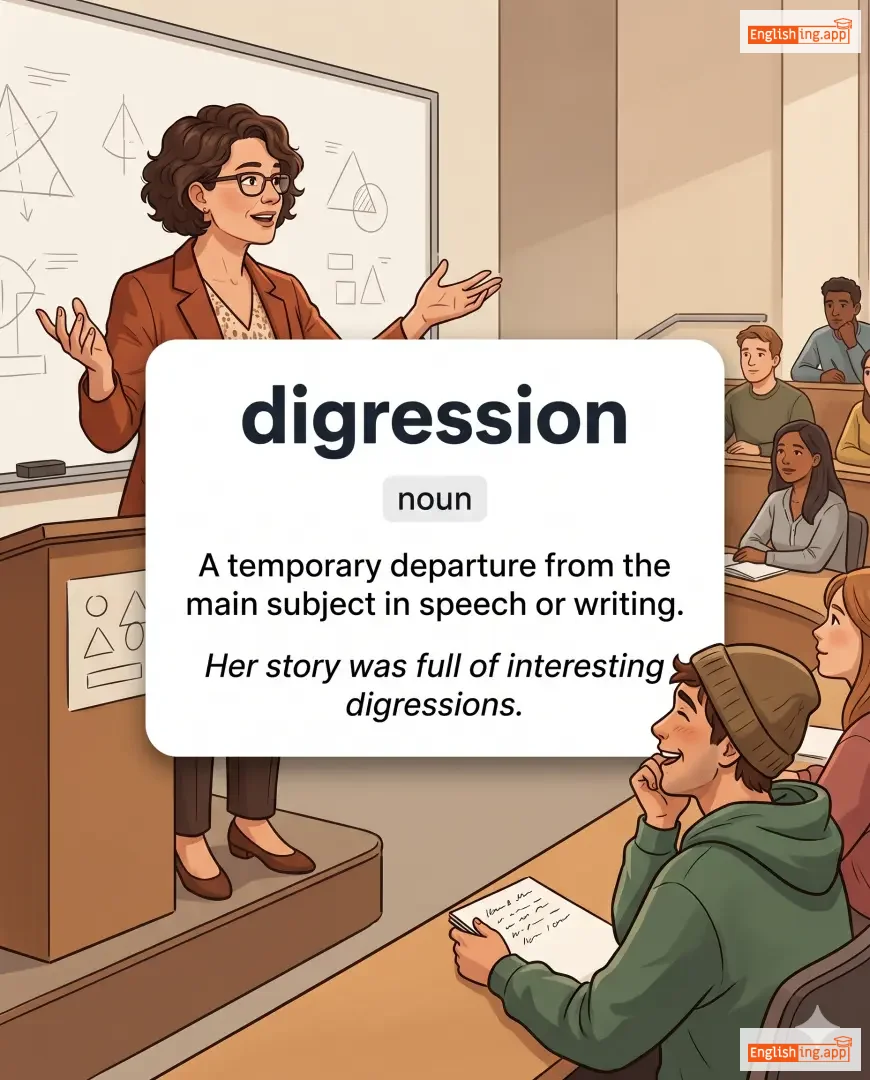
digression definition card — visual illustration of the meaning
noun
/daɪˈɡrɛʃən/
विषय से विचलन (vishay se vichalan)

A temporary departure from the main subject in speech or writing.

"Her story was full of interesting digressions."

"उसकी कहानी दिलचस्प विषयों से भरी हुई थी।" (Uski kahani dilchasp vishayon se bhari hui thi.)
adjective
/daɪˈɡrɛsɪv/
मुख्य विषय से हटने की प्रवृत्ति (mukhya vishay se hatne ki pravritti)

Tending to depart from the main subject in speech or writing.

"The speaker's digressive style made the lecture difficult to follow."

"वक्ता की डिग्रेसिव शैली ने व्याख्यान को समझना मुश्किल बना दिया।" (Vakta ki digressive shaili ne vyakhyan ko samajhna mushkil bana diya.)
verb
/dɪˈlæpɪdeɪt/
ध्वंस करना (dhwans karna)

To cause something, especially a building, to fall into ruin or disrepair.

"The abandoned house began to dilapidate over the years."

"परित्यक्त घर वर्षों के दौरान बर्बाद होने लगा।" (Parityakt ghar varshon ke dauran barbadd hone laga.)
adjective
/dɪˈlæpɪˌdeɪtɪd/
जीर्ण-शीर्ण (jeern-shirn)

Fallen into disrepair or ruin due to neglect or age.

"The family lived in a dilapidated house at the edge of town."

"परिवार शहर के किनारे एक जीर्ण-शीर्ण घर में रहता था।" (Parivaar sheher ke kinare ek jeern-shirn ghar mein rehta tha.)
noun
/dɪˌlæpɪˈdeɪʃən/
ध्वंसावस्था (dhwansavastha)

The state of disrepair or ruin as a result of neglect.

"The old temple was in a state of dilapidation."

"पुराना मंदिर ध्वंसावस्था में था।" (Purana mandir dhwansavastha mein tha.)
verb
/daɪˈleɪt/
विस्तृत करना (vistarit karna)

To make wider, larger, or more open.

"The doctor used drops to dilate the patient's pupils."

"डॉक्टर ने मरीज की पुतलियों को फैलाने के लिए दवाइयाँ इस्तेमाल कीं।" (Doktar ne mareez ki putliyon ko phailane ke liye davaiyan istemal ki.)
adjective
/ˈdɪlətɔːri/
सुस्तीपूर्ण (sustipoorn)

Tending to cause delay; slow to act.

"The committee was criticized for its dilatory response to the crisis."

"समिति को संकट के प्रति उसकी सुस्तीपूर्ण प्रतिक्रिया के लिए आलोचना की गई थी।" (Samiti ko sankat ke prati uski sustipoorn pratikriya ke liye alochana ki gayi thi.)
dilemma definition card — visual illustration of the meaning
noun
/daɪˈlɛmə/
दुविधा (duvidha)

A situation in which a difficult choice has to be made between two or more alternatives.

"She faced a dilemma about whether to accept the job offer or continue her studies."

"वह नौकरी के प्रस्ताव को स्वीकार करने या अपनी पढ़ाई जारी रखने के बारे में एक दुविधा का सामना कर रही थी।" (Vah naukari ke prastav ko sviikar karne ya apni padhai jari rakhne ke baare mein ek duvidha ka samna kar rahi thi.)
noun
/ˌdɪləˈtænt/
शौकिन (shaukin)

A person who takes up an art, activity, or subject merely for amusement, especially in a superficial way.

"He was dismissed as a dilettante in the art world because he lacked formal training."

"उसे कला की दुनिया में एक शौकिन के रूप में खारिज कर दिया गया क्योंकि उसके पास औपचारिक प्रशिक्षण नहीं था।" (Use kala ki duniya mein ek shaukin ke roop mein kharij kar diya gaya kyonki uske paas aupchaarik prashikshan nahi tha.)
diligence definition card — visual illustration of the meaning
noun
/ˈdɪlɪdʒəns/
परिश्रम (parishram)

Careful and persistent work or effort.

"Through diligence and determination, she completed her research on time."

"परिश्रम और संकल्प के माध्यम से, उसने अपना शोध समय पर पूरा किया।" (Parishram aur sankalp ke madhyam se, usne apna shodh samay par poora kiya.)
adjective
/ˈdɪlɪdʒənt/
परिश्रमी (parishrami)

Showing care and conscientiousness in one's work or duties.

"She is a diligent student who always finishes her assignments on time."

"वह एक परिश्रमी छात्रा है जो हमेशा अपने असाइनमेंट समय पर पूरा करती है।" (Wah ek parishrami chatra hai jo hamesha apne assignment samay par poora karti hai.)
verb
/daɪˈluːt/
पतला करना (patla karna)

To make a liquid thinner or weaker by adding water or another solvent.

"You should dilute the juice with water before serving it to children."

"आपको बच्चों को सर्व करने से पहले जूस को पानी से पतला करना चाहिए।" (Aapko bachon ko serve karne se pehle juice ko pani se patla karna chahiye.)
adjective
/dɪm/
मद्धम (madhyam)

not bright; having little light; not clearly visible

"The room was dim because the curtains were closed."

"कमरे में मंद रोशनी थी क्योंकि पर्दे बंद थे।" (kamre mein mand roshni thi kyonki parde band the.)
noun
/daɪm/
दस सेंट का सिक्का (das sent ka sikka)

a small coin, especially a U.S. coin worth ten cents

"He gave me a dime for the phone call."

"उसने मुझे फोन कॉल के लिए एक डाइम दी।" (Usne mujhe phone call ke liye ek dime di.)
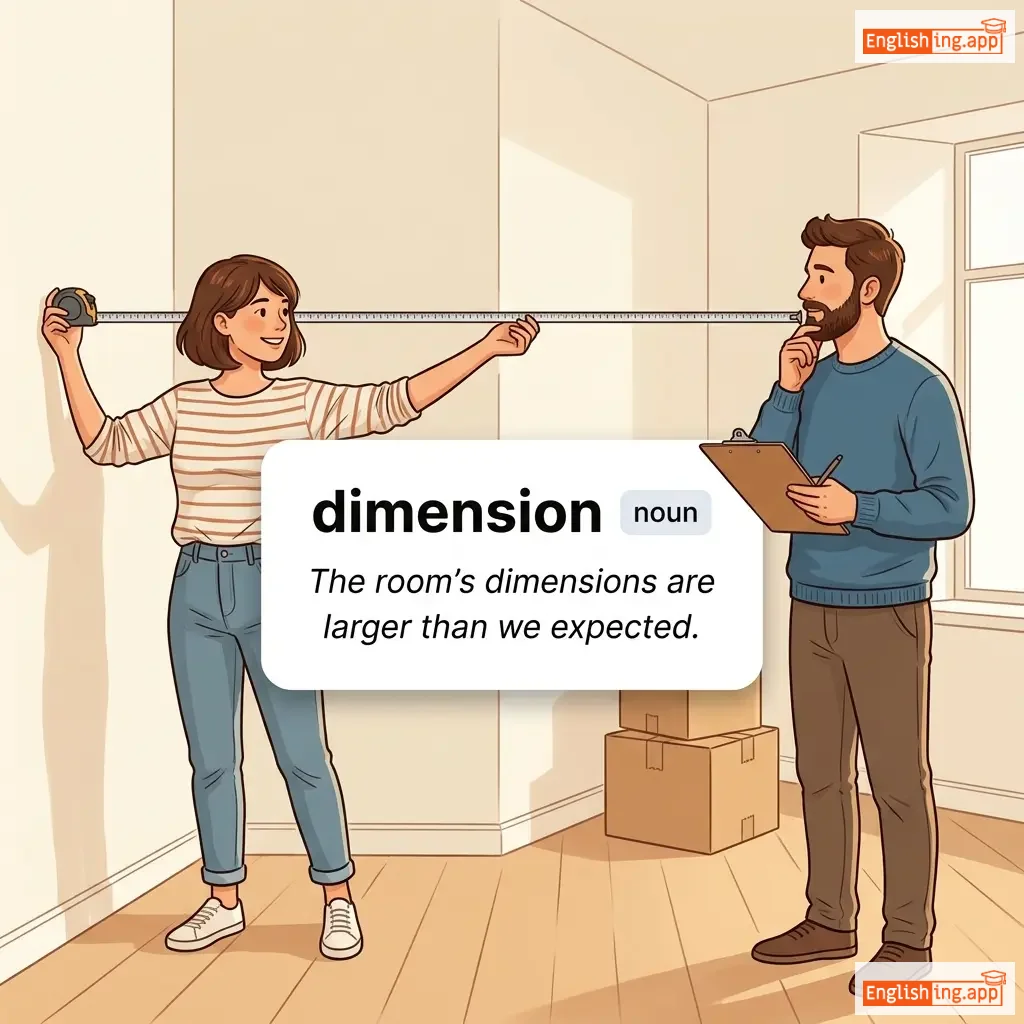
dimension definition card — visual illustration of the meaning
noun
/dɪˈmɛnʃən/
आयाम (ayam)

A measurable extent of a particular kind, such as length, breadth, depth, or height.

"The room’s dimensions are larger than we expected."

"कमरे का आकार हमारे अपेक्षा से बड़ा है।" (Kamre ka aakar hamare apeksha se bada hai.)
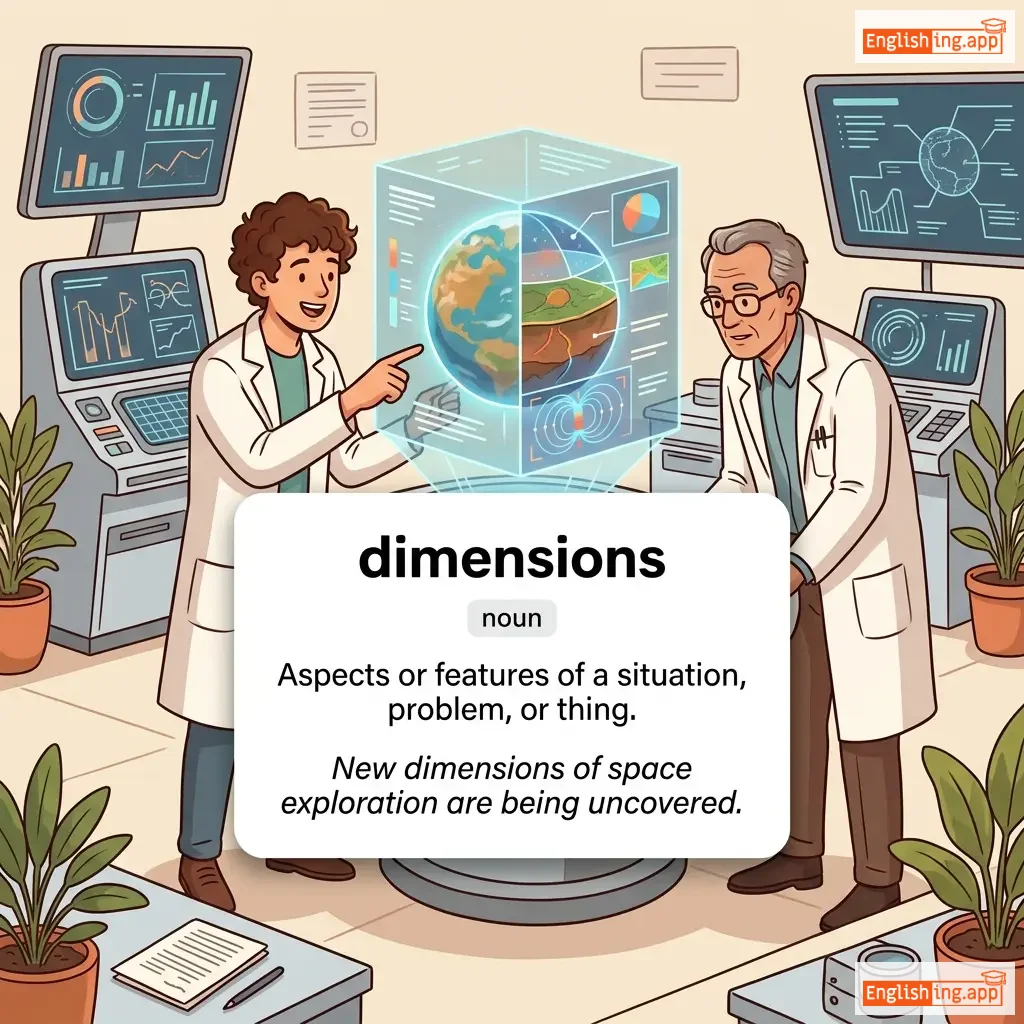
dimensions definition card — visual illustration of the meaning
noun
/daɪˈmen.ʃənz/
आयाम (aayam)

Aspects or features of a situation, problem, or thing.

"New dimensions of space exploration are being uncovered."

"अंतरिक्ष अन्वेषण के नए आयाम उजागर हो रहे हैं।" (Antariksh anveshan ke naye aayam ujagar ho rahe hain.)
verb
/dɪˈmɪnɪʃ/
कम करना (kam karna)

to make or become less; to reduce in size, importance, or value

"Over time, his influence in the company began to diminish."

"समय के साथ, कंपनी में उनका प्रभाव घटने लगा।" (samay ke saath, company mein unka prabhav ghatne laga.)
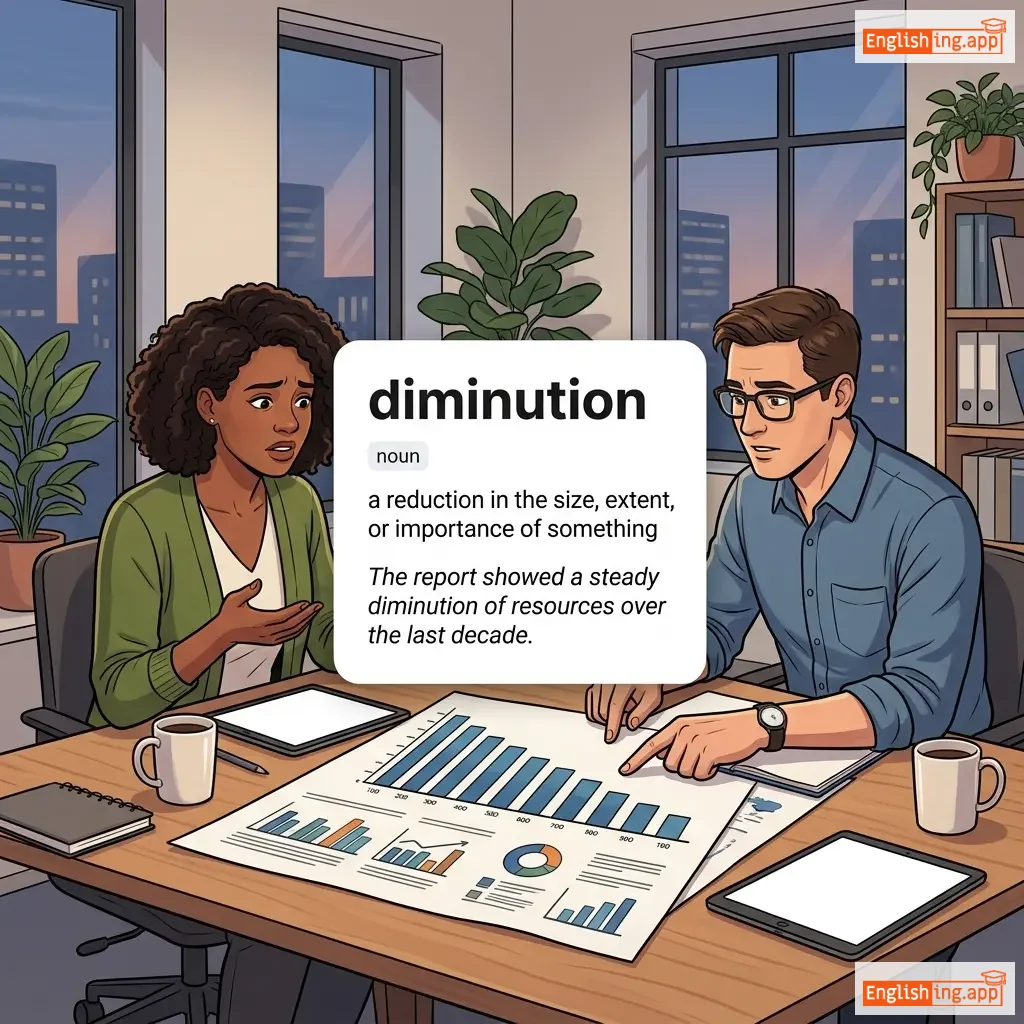
diminution definition card — visual illustration of the meaning
noun
/ˌdɪmɪˈnjuːʃən/
कमी (diminyushan)

a reduction in the size, extent, or importance of something

"The report showed a steady diminution of resources over the last decade."

"रिपोर्ट ने पिछले दशक में संसाधनों में निरंतर कमी दर्शाई।" (riport ne pichhle dashak mein sansadhano mein nirantar kami darshai)
adjective
/dɪˈmɪnjətɪv/
अत्यंत लघु (atyant laghu)

extremely or unusually small

"Despite his diminutive size, he was a powerful leader."

"उसकी अत्यंत लघु काया के बावजूद, वह एक शक्तिशाली नेता था।" (uski atyant laghu kaya ke bawjood, vah ek shaktishali neta tha.)
adverb
/ˈdɪmli/
धुंधला (dhundhla)

in a faint or unclear way; with little light

"The room was dimly lit by a single candle."

"कमरे को एक मोमबत्ती से धुंधला रोशन किया गया था।" (kamre ko ek mombatti se dhundhla roshan kiya gaya tha.)
noun
/ˈdɪm.pəl/
गाल की डिंपल (gaal ki dimple)

a small depression in the flesh, either one that exists permanently or one that forms when smiling

"Her charming dimples appeared whenever she smiled at the children."

"जब भी उसने बच्चों को देखा और मुस्काई, उसकी प्यारी डिंपल्स दिखने लगीं।" (jab bhi usne bachon ko dekha aur muskaai, uski pyaari dimples dikhne lagin.)
noun
/dɪn/
कोलाहल (kolahal)

a loud, unpleasant, and prolonged noise

"The din of traffic outside made it hard to concentrate."

"बाहर की ट्रैफिक का कोलाहल एकाग्रता में कठिनाई उत्पन्न कर रहा था।" (baahar ki traffic ka kolahal ekagrata mein kathinai utpann kar raha tha.)
verb
/daɪn/
भोजन करना (bhojan karna)

to eat a meal, especially the main meal of the day

"We usually dine at seven o'clock in the evening."

"हम आमतौर पर शाम सात बजे भोजन करते हैं।" (ham aamtour par shaam saat baje bhojan karte hain.)
noun
/ˈdɪŋɡi/
डिंगही नाव (dinghi naav)

a small boat, often carried or towed by a larger vessel, used for short trips or as a lifeboat

"They rowed the dinghy back to the yacht."

"उन्होंने यॉट पर लौटने के लिए डिंगही को रोका।" (unhone yacht par lautne ke liye dinghi ko roka.)
adjective
/ˈdɪndʒi/
मैला (maila)

gloomy and drab; dirty or discolored

"The old hotel room looked dark and dingy."

"पुराना होटल का कमरा अंधेरा और मैला दिख रहा था।" (purana hotel ka kamra andhera aur maila dikh raha tha.)
noun
/ˈdaɪnɪŋ/
भोजन (bhojan)

the act of eating a meal, especially in a formal setting

"We enjoyed fine dining at the new restaurant."

"हमने नए रेस्तरां में शानदार भोजन का आनंद लिया।" (Hamne naye restaurant mein shandaar bhojan ka anand liya.)
Dinner definition card — visual illustration of the meaning
noun
/ˈdɪnər/
रात का खाना (raat ka khana)

the main meal of the day, usually eaten in the evening

"We had a lovely dinner at a new restaurant last night."

"हमने कल रात एक नए रेस्तरां में शानदार डिनर किया।" (Humne kal raat ek naye restaurant mein shandar dinner kiya.)
noun
/dɪnt/
प्रयास, चोट का निशान (prayas, chot ka nishan)

an impression or hollow made by a blow; force or power

"By dint of hard work, he achieved success."

"कठोर मेहनत के कारण, उसने सफलता प्राप्त की।" (Kathor mehnat ke karan, usne safalta praapt ki.)
adjective
/daɪˈɒsɪsən/
डायोसीस से संबंधित (dayosis se sambandhit)

relating to a diocese or the district under the supervision of a bishop in the Christian Church

"The diocesan council met to discuss church affairs."

"डायोसीसन काउंसिल चर्च मामलों पर चर्चा करने के लिए मिली थी।" (dayosishan council church mamlon par charcha karne ke liye mili thi.)
noun
/ˌdaɪəˈrɑːmə/
त्रि-आयामी दृश्य (tri-aayami drishya)

a three-dimensional model representing a scene, often with miniature figures

"The museum displayed a diorama of an ancient village."

"संग्रहालय में एक प्राचीन गांव का त्रि-आयामी दृश्य प्रदर्शित किया गया था।" (Sangrahalay mein ek prachin gaon ka tri-aayami drishya pradarshit kiya gaya tha.)
verb
/dɪp/
डुबोना (dubona)

to put something quickly into a liquid and take it out again

"She dipped her bread into the soup."

"वह अपनी रोटी को सूप में डुबो रही थी।" (Woh apni roti ko soup mein dubo rahi thi.)
noun
/ˈdɪfθɒŋ/
द्विस्वार (dviswar)

A complex vowel sound that begins with one vowel and glides into another within the same syllable.

"The word 'coin' contains a diphthong."

"'कॉइन' शब्द में एक द्विस्वार है।" ('coin' shabd mein ek dviswar hai.)
diploma definition card — visual illustration of the meaning
noun
/dɪˈpləʊ.mə/
डिप्लोमा (diploma)

an official document showing that a person has completed a course of study or training

"She received her diploma after finishing the nursing program."

"उसने नर्सिंग कार्यक्रम को समाप्त करने के बाद अपना डिप्लोमा प्राप्त किया।" (Usne nursing karyakram ko samaapt karne ke baad apna diploma prapt kiya.)
noun
/dɪˈpləʊməsi/
कूटनीति (diplomesi)

The profession, activity, or skill of managing international relations or handling affairs tactfully.

"Effective diplomacy helped avoid the conflict."

"प्रभावी कूटनीति ने संघर्ष से बचने में मदद की।" (prabhaavi kootneeti ne sangharsh se bachne mein madad ki)
noun
/ˈdɪpləmæt/
राजनयिक (rajanayik)

An official representing a country abroad; a person skilled in dealing with people tactfully.

"The diplomat negotiated a peace agreement."

"राजनयिक ने एक शांति समझौते पर बातचीत की।" (rajanayik ne ek shanti samjhaute par baatcheet ki.)
adjective
/ˌdɪpləˈmætɪk/
राजनयिक (rajanayik)

Concerning diplomacy; having or showing skill in dealing with people in a sensitive and effective way.

"She gave a diplomatic response to avoid offending anyone."

"उसने किसी को आहत न करने के लिए एक राजनयिक प्रतिक्रिया दी।" (usne kisi ko aahat na karne ke liye ek rajanayik pratikriya di.)
diplomatic milestone definition card — visual illustration of the meaning
noun
/ˌdɪp.ləˈmæt.ɪk ˈmaɪl.stəʊn/
राजनयिक मील का पत्थर (raajnayik meel ka patthar)

A significant achievement or important event in diplomatic relations.

"Hosting the summit was a diplomatic milestone."

"समीट का आयोजन एक राजनयिक मील का पत्थर था।" (Summit ka aayojan ek raajnayik meel ka patthar tha.)