Словари

Словарь английского языка | Значения слов, определения и примеры
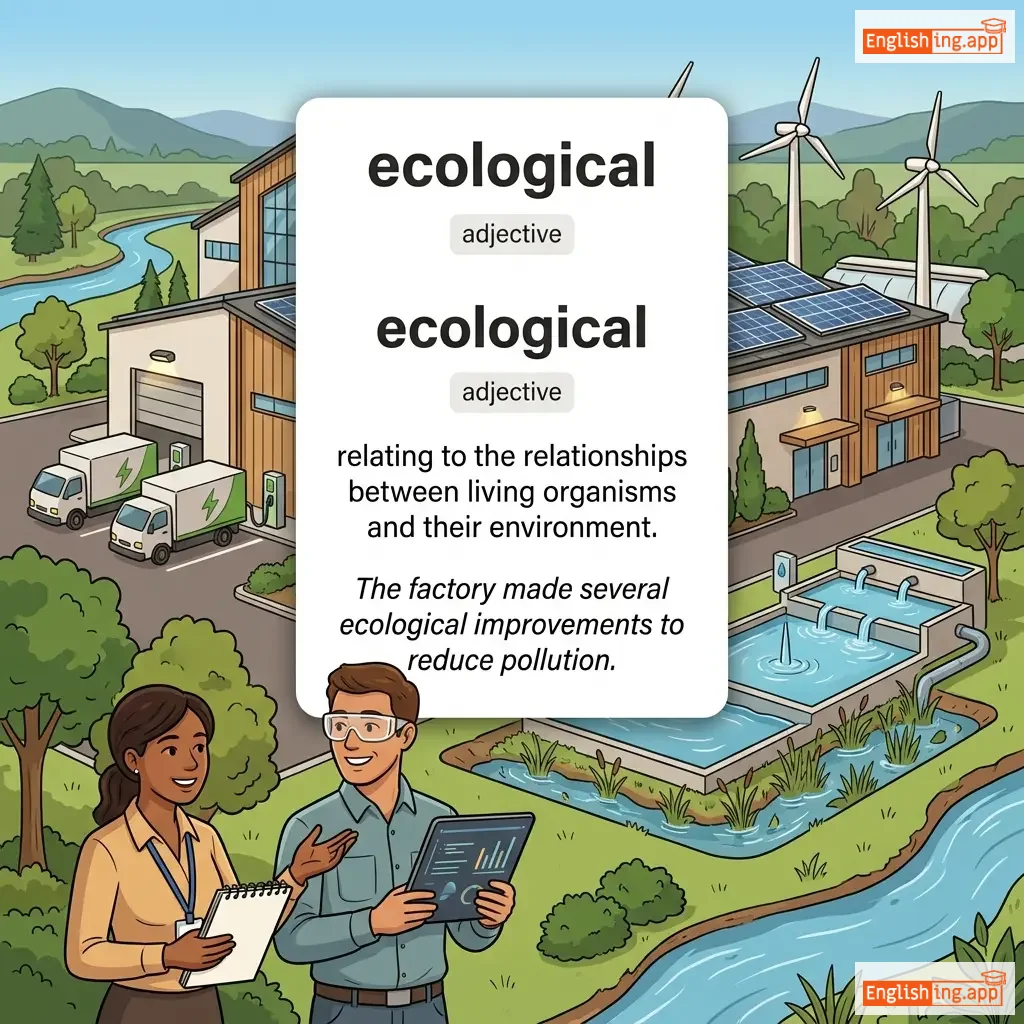
ecological definition card — visual illustration of the meaning
adjective
/ˌiːkəˈlɒdʒɪkəl/
экологический (ekologicheskiy)

relating to the relationships between living organisms and their environment.

"The factory made several ecological improvements to reduce pollution."
"Фабрика сделала несколько экологических улучшений, чтобы снизить загрязнение." (Fabrika sdelala neskol'ko ekologicheskikh uluchsheniy, chtoby snizit' zagryaznenie.)
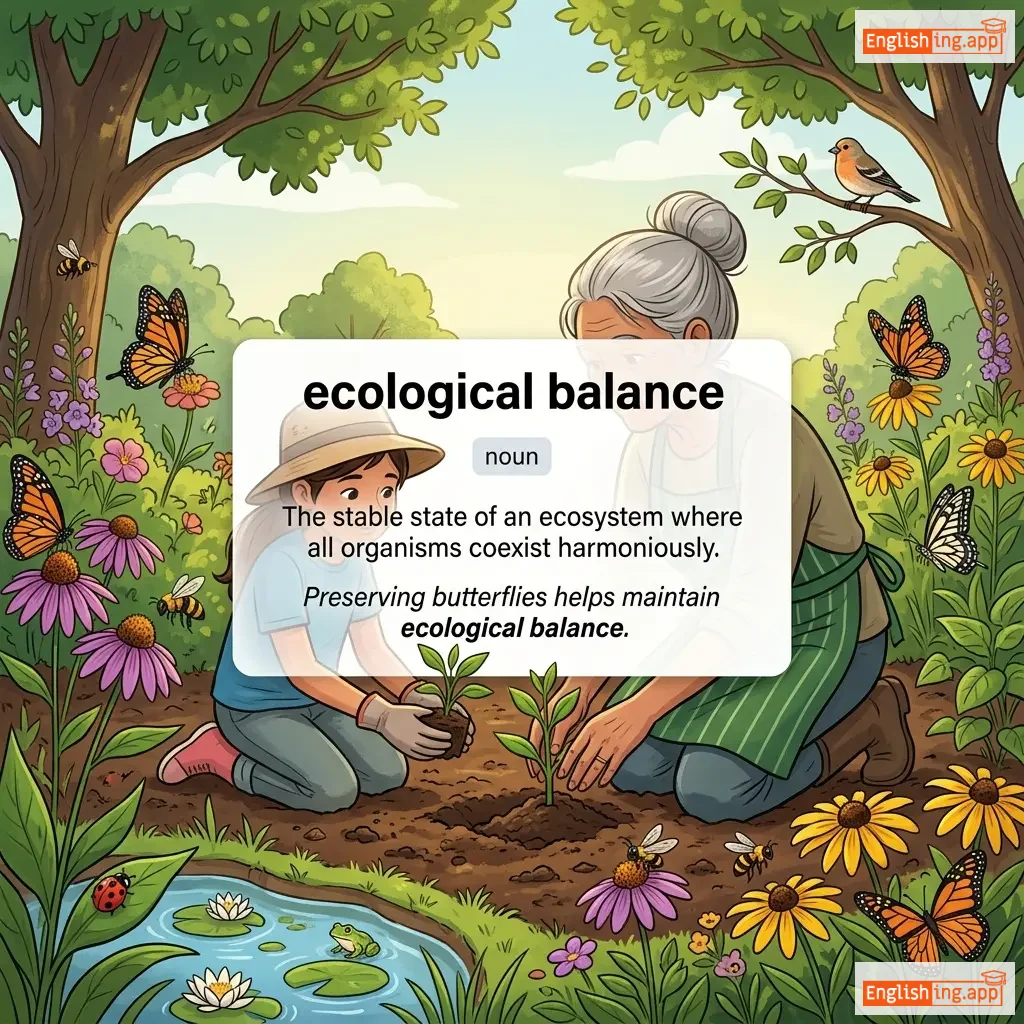
ecological balance definition card — visual illustration of the meaning
noun
ˌiːkəˈlɒdʒɪkəl ˈbæləns
экологический баланс (ekologicheskiy balans)

The stable state of an ecosystem where all organisms coexist harmoniously.

"Preserving butterflies helps maintain ecological balance."

"Сохранение бабочек помогает поддерживать экологический баланс." (Sohranenie babochek pomogaet podderzhivat' ekologicheskiy balans.)
noun
/iˈkɒlədʒɪst/
эколог (ekolog)

A scientist who studies the relationships between living organisms and their environment.

"The ecologist studied the effects of pollution on the forest ecosystem."
"Эколог изучал влияние загрязнения на экосистему леса." (Ekolog izuchal vliyanie zagrjazneniya na ekosistemu lesa.)
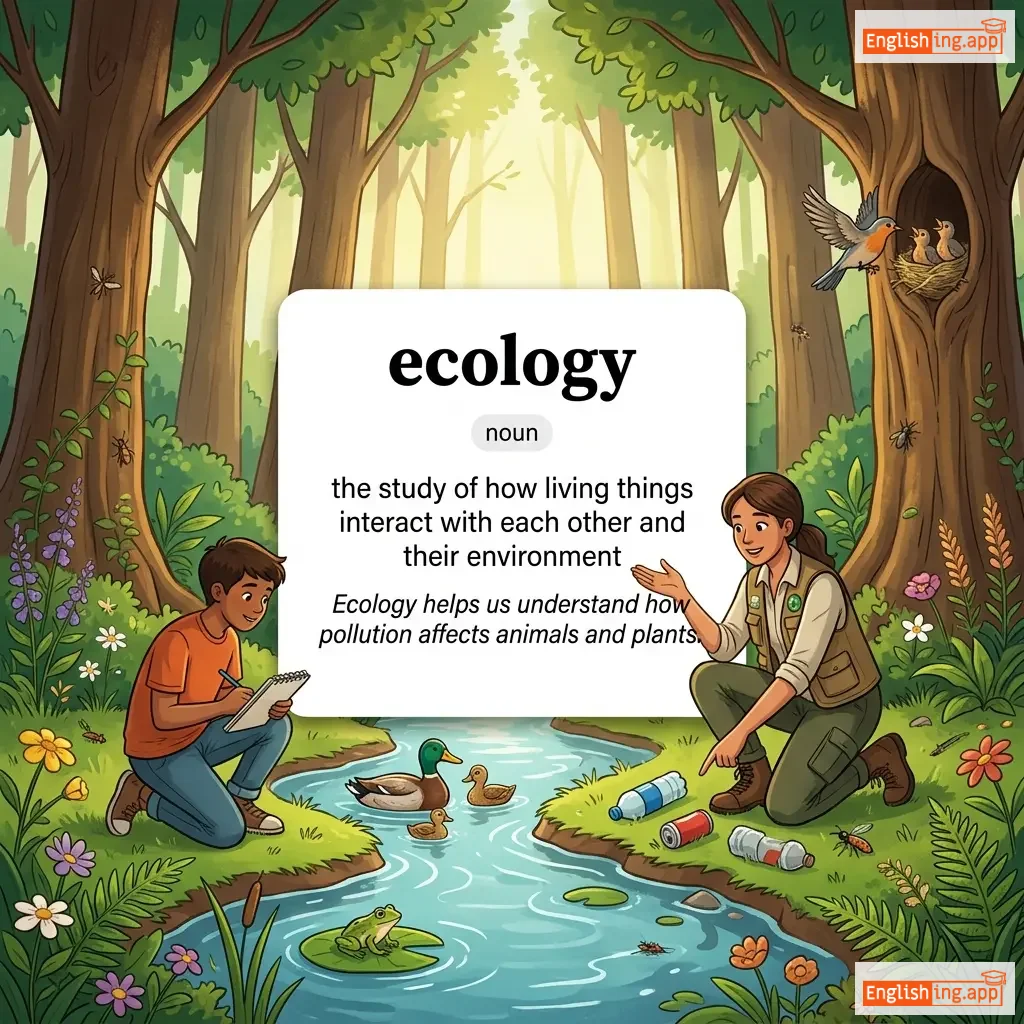
ecology definition card — visual illustration of the meaning
noun
/iˈkɒl.ə.dʒi/
экология (ekologiya)

the study of how living things interact with each other and their environment

"Ecology helps us understand how pollution affects animals and plants."

"Экология помогает нам понять, как загрязнение влияет на животных и растения." (Ekologiya pomogayet nam ponyat', kak zagrjazneniye vliyayet na zhivotnykh i rasteniyakh.)
economic definition card — visual illustration of the meaning
adjective
/ˌiːkəˈnɒmɪk/
экономический (ekonomicheskiy)

relating to the economy, trade, or money

"The country is facing an economic crisis."
"Страна сталкивается с экономическим кризисом." (Strana stalkivayetsya s ekonomicheskim krizisom.)
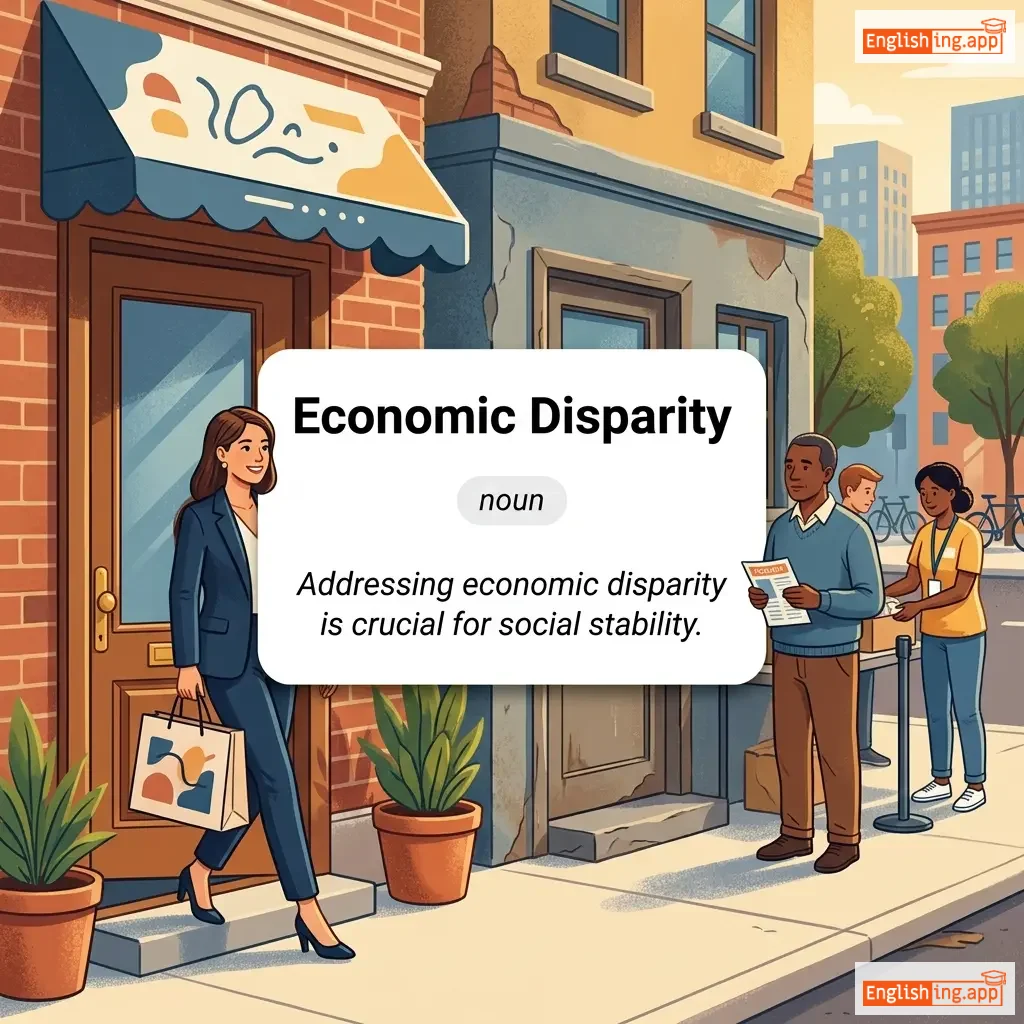
Economic Disparity definition card — visual illustration of the meaning
noun
/ˌiː.kəˈnɒm.ɪk dɪˈspær.ɪ.ti/
экономическое неравенство (ehkonomicheskoe neravenstvo)

The unequal distribution of income and opportunity between different groups in society.

"Addressing economic disparity is crucial for social stability."
"Решение проблемы экономического неравенства крайне важно для социальной стабильности." (Reshenie problemy ekonomicheskogo neravenstva kraine vazhno dlya sotsial'noj stabil'nosti.)
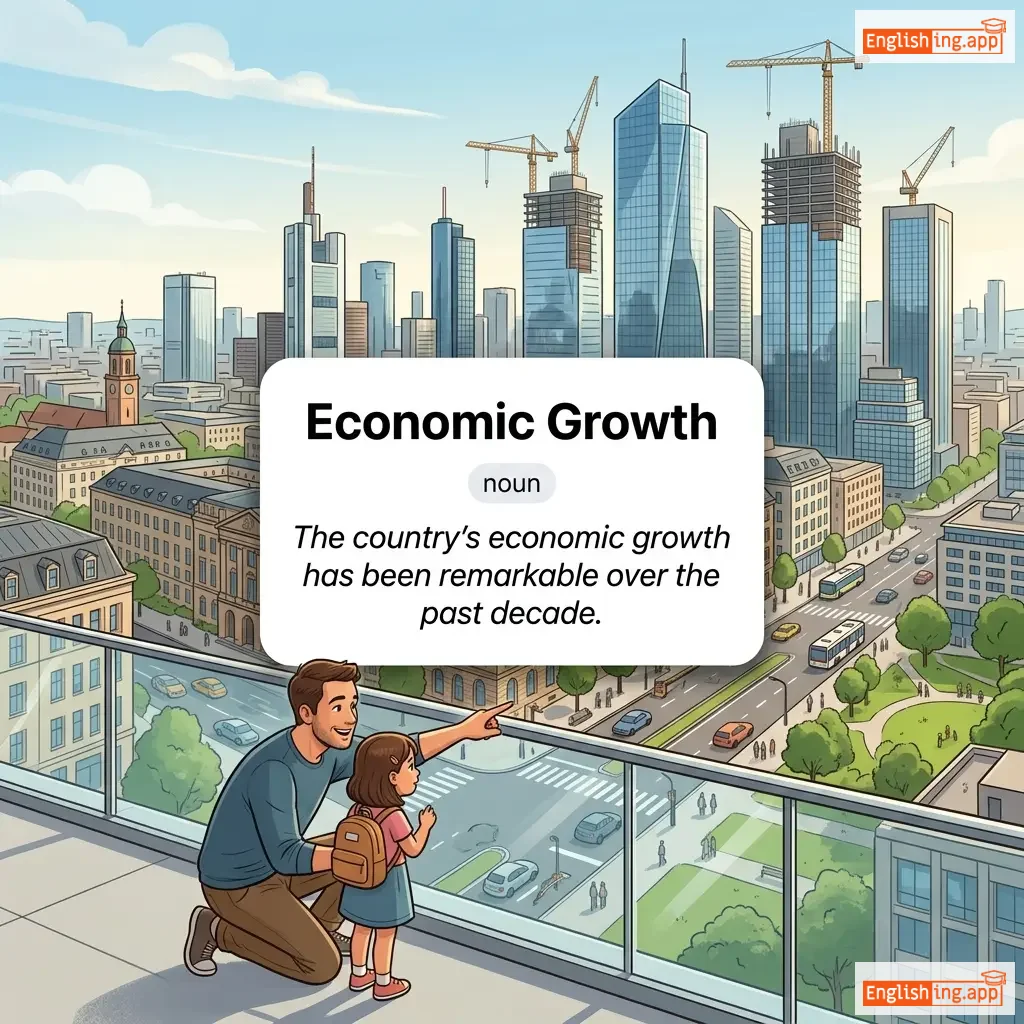
Economic Growth definition card — visual illustration of the meaning
noun
/ˌiː.kəˈnɒm.ɪk ɡrəʊθ/
экономический рост (ehkonomicheskiy rost)

The increase in the production of goods and services in an economy over time, measured by the expansion of economic output, income, and investment.

"The country's economic growth has been remarkable over the past decade."
"Экономический рост страны был замечательным за последнее десятилетие." (Ekonomicheskiy rost strany byl zamechatel'nym za poslednee desyatiletie.)
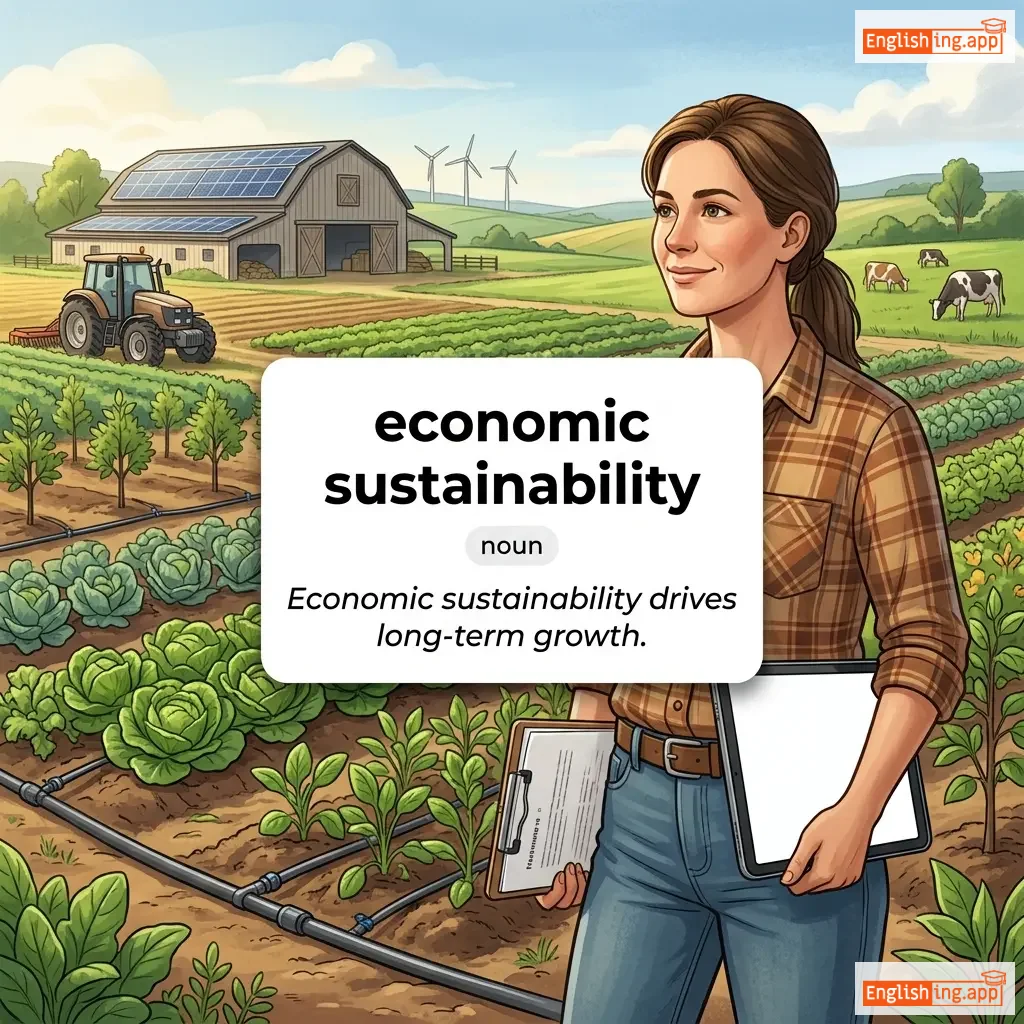
economic sustainability definition card — visual illustration of the meaning
noun
/ˌek.əˈnɒm.ɪk səˌsteɪ.nəˈbɪl.ə.ti/
экономическая устойчивость (ekonomicheskaya ustoychivost)

The ability of an economy to support a defined level of economic production indefinitely.

"Economic sustainability drives long-term growth."
"Экономическая устойчивость обеспечивает долгосрочный рост." (Ekonomicheskaya ustoychivost obespechivaet dolgosrochny rost.)
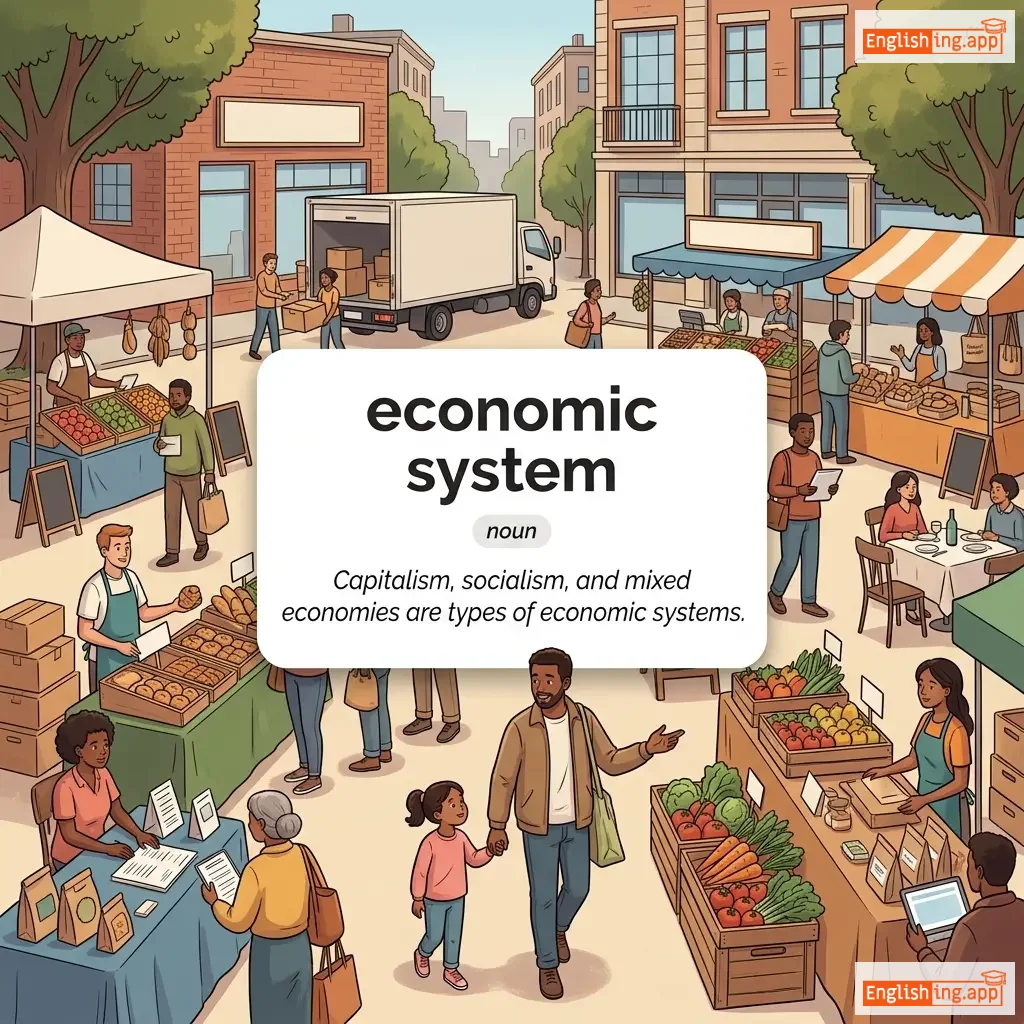
economic system definition card — visual illustration of the meaning
noun
/ˌiː.kəˈnɒm.ɪk ˈsɪs.təm/
экономическая система (ekonomicheskaya sistema)

The organized framework for production, distribution, and consumption of goods and services in society.

"Capitalism, socialism, and mixed economies are types of economic systems."

"Капитализм, социализм и смешанные экономики - это типы экономических систем." (Kapitalizm, sotsializm i smeshannye ekonomiki - eto tipy ekonomicheskikh sistem.)
adjective
/ˌiːkəˈnɒmɪkl/
экономный (ekonomnyy)

Careful in the use of resources; providing good value or efficiency.

"Driving a hybrid car is economical in the long run."

"Вождение гибридного автомобиля экономично в долгосрочной перспективе." (Vozhdenie gibridnogo avtobileya ekonomichno v dolgosrochnoy perspektive.)
adverb
/ˌiːkəˈnɒmɪkli/
экономически (ekonomicheski)

in a way that relates to economics or is efficient and not wasteful.

"The company is trying to operate more economically this year."

"Компания пытается работать более экономично в этом году." (Kompaniya pytayetsya rabotat' boleye ekonomichno v etom godu.)
noun
/ˌiːkəˈnɒmɪks/ or /ˌɛkəˈnɒmɪks/
экономика (ekonomika)

The study of production, consumption, and transfer of wealth.

"He is studying economics at university."

"Он изучает экономику в университете." (On izuchayet ekonomiku v universitete.)
verb
/daɪˈɡrɛs/
отклоняться от темы (digres)

To leave the main subject temporarily in speech or writing.

"The professor began to digress from the main topic of the lecture."
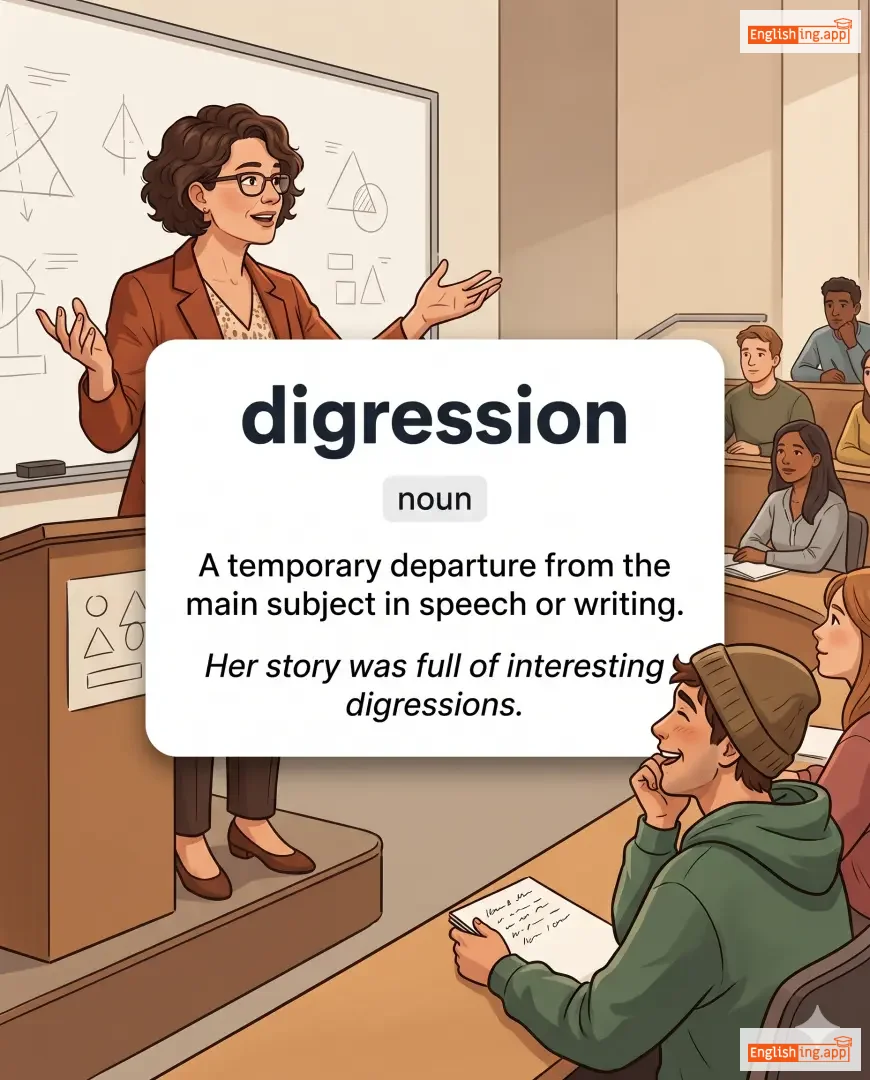
"Профессор начал отклоняться от основной темы лекции." (Professor nachal otklonyatsya ot osnovnoy temy lektsii.)
digression definition card — visual illustration of the meaning
noun
/daɪˈɡrɛʃən/
отступление (otstupleenie)

A temporary departure from the main subject in speech or writing.

"Her story was full of interesting digressions."

"Её история была полна интересных отступлений." (Yeyo istoriya byla polna interesnykh otstupleniy.)
adjective
/daɪˈɡrɛsɪv/
тенденция отклоняться от основной темы (tendentsiya otklonyatsya ot osnovnoy temy)

Tending to depart from the main subject in speech or writing.

"The speaker's digressive style made the lecture difficult to follow."

"Дигрессивный стиль лектора усложнил следование за лекцией." (Digressivnyy stil' lektora uslozhnil sleduyushcheye za lektsiyey.)
verb
/dɪˈlæpɪdeɪt/
разрушать (razrushat)

To cause something, especially a building, to fall into ruin or disrepair.

"The abandoned house began to dilapidate over the years."

"Покинутое здание начало разрушаться с годами." (Pokinutoe zdanie nachalo razrushatsya s godami.)
adjective
/dɪˈlæpɪˌdeɪtɪd/
обветшалый (obvetshalyy)

Fallen into disrepair or ruin due to neglect or age.

"The family lived in a dilapidated house at the edge of town."

"Семья жила в обветшавшем доме на окраине города." (Sem'ya zhila v obvetshavshom dome na okraine goroda.)
noun
/dɪˌlæpɪˈdeɪʃən/
упадок (upadok)

The state of disrepair or ruin as a result of neglect.

"The old temple was in a state of dilapidation."

"Старый храм был в состоянии упадка." (Staryi khram byl v sostoyanii upadka.)
verb
/daɪˈleɪt/
расширять (rasshiryat)

To make wider, larger, or more open.

"The doctor used drops to dilate the patient's pupils."

"Доктор использовал капли, чтобы расширить зрачки пациента." (Doktor ispol'zoval kapli, chtoby rasshirit' zrachki patsiyenta.)
adjective
/ˈdɪlətɔːri/
замедляющий (zamedlyayushchiy)

Tending to cause delay; slow to act.

"The committee was criticized for its dilatory response to the crisis."
"Комитет был раскритикован за его медленный ответ на кризис." (Komitet byl raskritikovann za ego medlennyy otvet na krizis.)
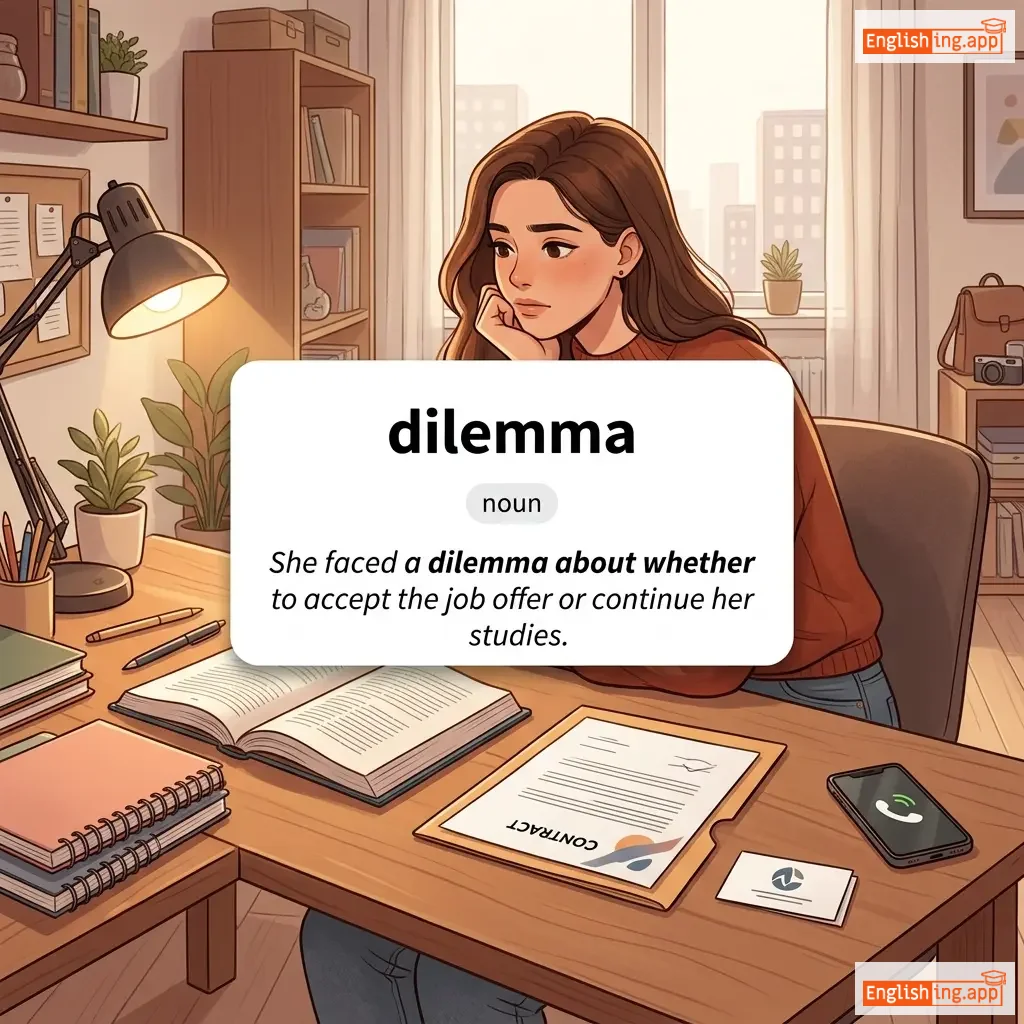
dilemma definition card — visual illustration of the meaning
noun
/daɪˈlɛmə/
дилемма (dilemma)

A situation in which a difficult choice has to be made between two or more alternatives.

"She faced a dilemma about whether to accept the job offer or continue her studies."

"Она столкнулась с дилеммой, стоит ли принять предложение о работе или продолжить учебу." (Ona stolknulas' s dilemmoy, stoit li prinimat' predlozhenie o rabote ili prodolzhit' uchebu.)
noun
/ˌdɪləˈtænt/
делетант (deletant)

A person who takes up an art, activity, or subject merely for amusement, especially in a superficial way.

"He was dismissed as a dilettante in the art world because he lacked formal training."
"Его отвергли как дилетанта в мире искусства, потому что ему не хватало формального образования." (Ego otvergli kak dilettanta v mire iskusstva, potomu chto emu ne khvatalo formal'nogo obrazovaniya.)
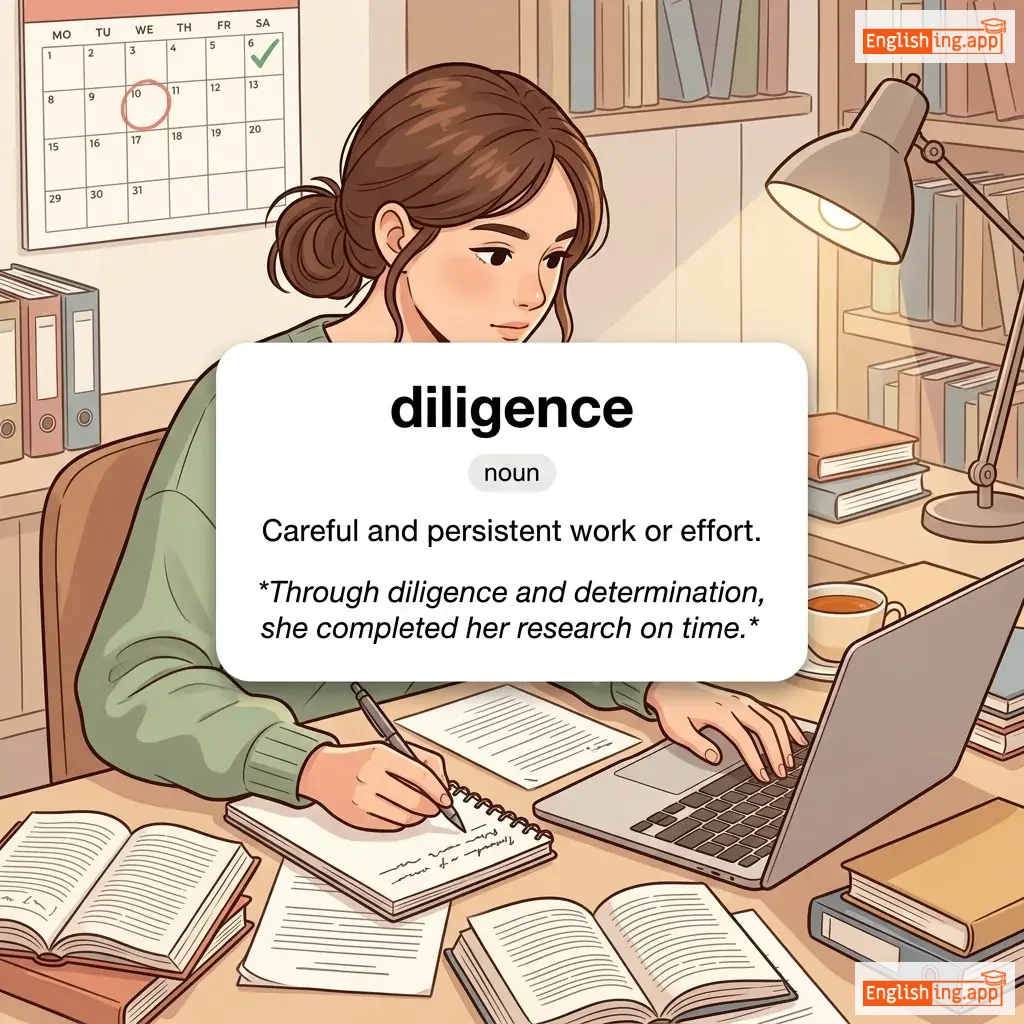
diligence definition card — visual illustration of the meaning
noun
/ˈdɪlɪdʒəns/
усердие (userdie)

Careful and persistent work or effort.

"Through diligence and determination, she completed her research on time."

"С помощью усердия и решимости она завершила своё исследование вовремя." (S pomoshch'yu userdiya i reshimosti ona zavershila svojo issledovanie vovremya.)
adjective
/ˈdɪlɪdʒənt/
старательный (staratelnyy)

Showing care and conscientiousness in one's work or duties.

"She is a diligent student who always finishes her assignments on time."

"Она старательная студентка, которая всегда вовремя заканчивает свои задания." (Ona staratel'naya studentka, kotoraya vsegda vovremya zakanchivayet svoi zadaniya.)
verb
/daɪˈluːt/
разбавить (razbavit')

To make a liquid thinner or weaker by adding water or another solvent.

"You should dilute the juice with water before serving it to children."

"Вы должны разбавить сок водой перед тем, как подавать его детям." (Vy dolzhny razbavit' sok vodoy pered tem, kak podavat' yego detyam.)
adjective
/dɪm/
тусклый (tuskly)

not bright; having little light; not clearly visible

"The room was dim because the curtains were closed."

"Комната была тусклой, потому что шторы были закрыты." (Komnata byla tuskloi, potomu chto shtory byli zakryty.)
noun
/daɪm/
монета в 10 центов (moneta v 10 tsentov)

a small coin, especially a U.S. coin worth ten cents

"He gave me a dime for the phone call."
"Он дал мне монету в 10 центов за телефонный звонок." (On dal mne monetu v 10 tsentov za telefonnыy zvonok.)
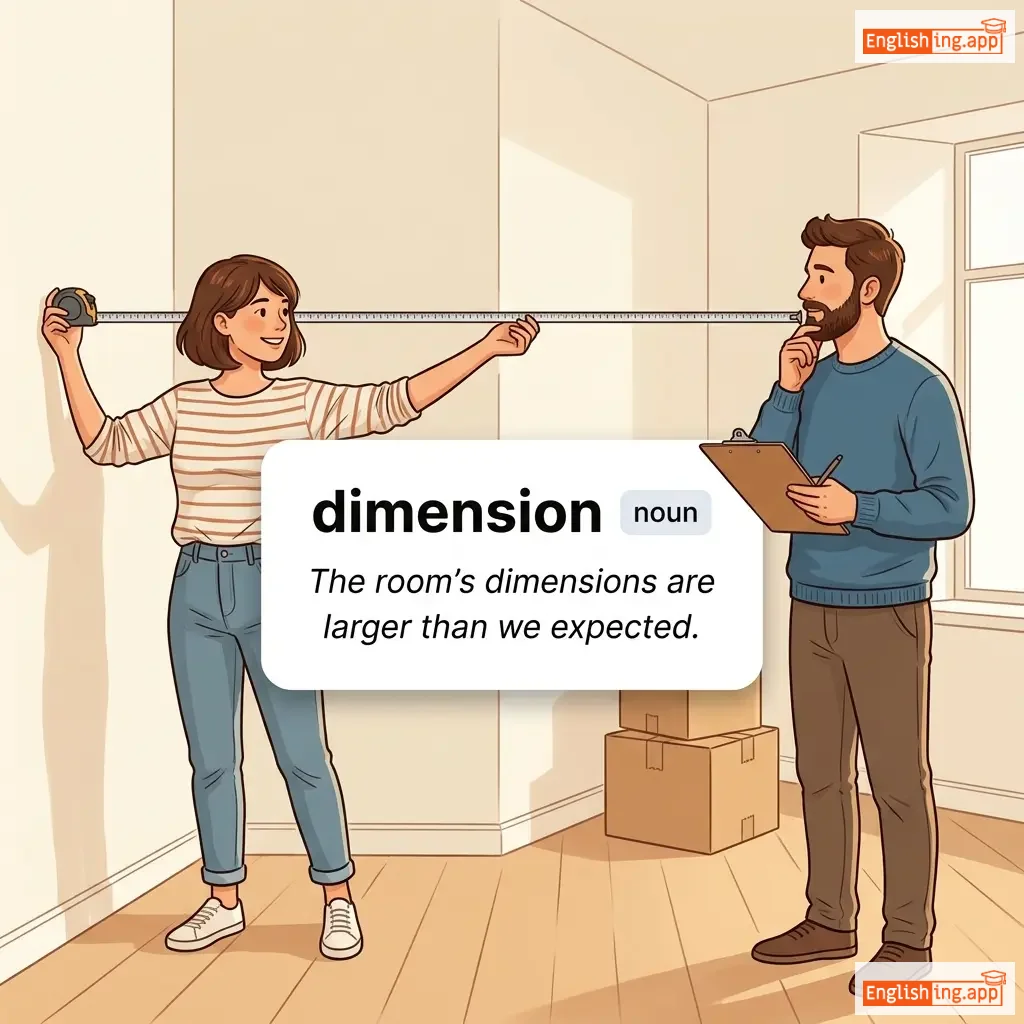
dimension definition card — visual illustration of the meaning
noun
/dɪˈmɛnʃən/
измерение (izmereniye)

A measurable extent of a particular kind, such as length, breadth, depth, or height.

"The room’s dimensions are larger than we expected."
"Размеры комнаты больше, чем мы ожидали." (Razmery komnaty bol'she, chem my ozhidali.)
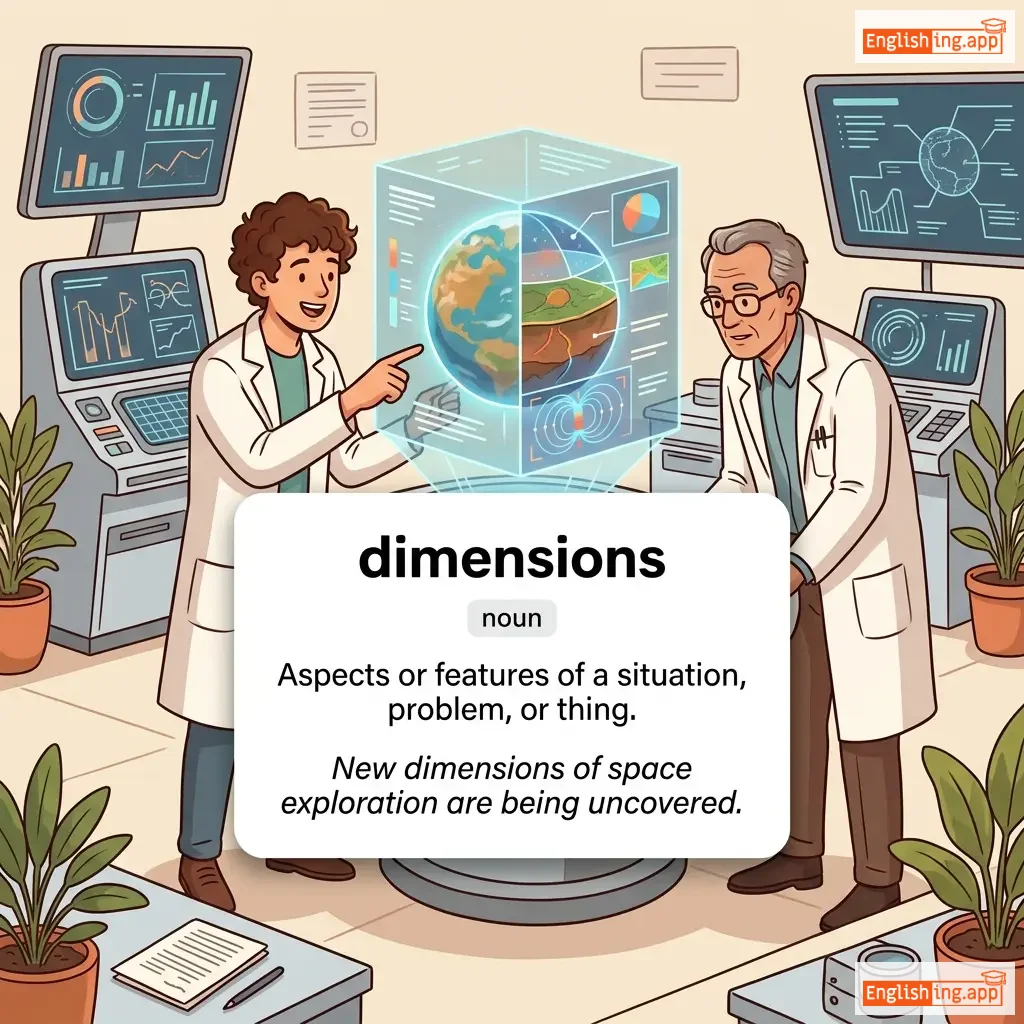
dimensions definition card — visual illustration of the meaning
noun
/daɪˈmen.ʃənz/
измерения (izmereniya)

Aspects or features of a situation, problem, or thing.

"New dimensions of space exploration are being uncovered."

"Открываются новые измерения в исследовании космоса." (Otkryvayutsya novye izmereniya v issledovanii kosmosa.)
⬇️

diminish

verb
/dɪˈmɪnɪʃ/

to make or become less; to reduce in size, importance, or value

"Over time, his influence in the company began to diminish."
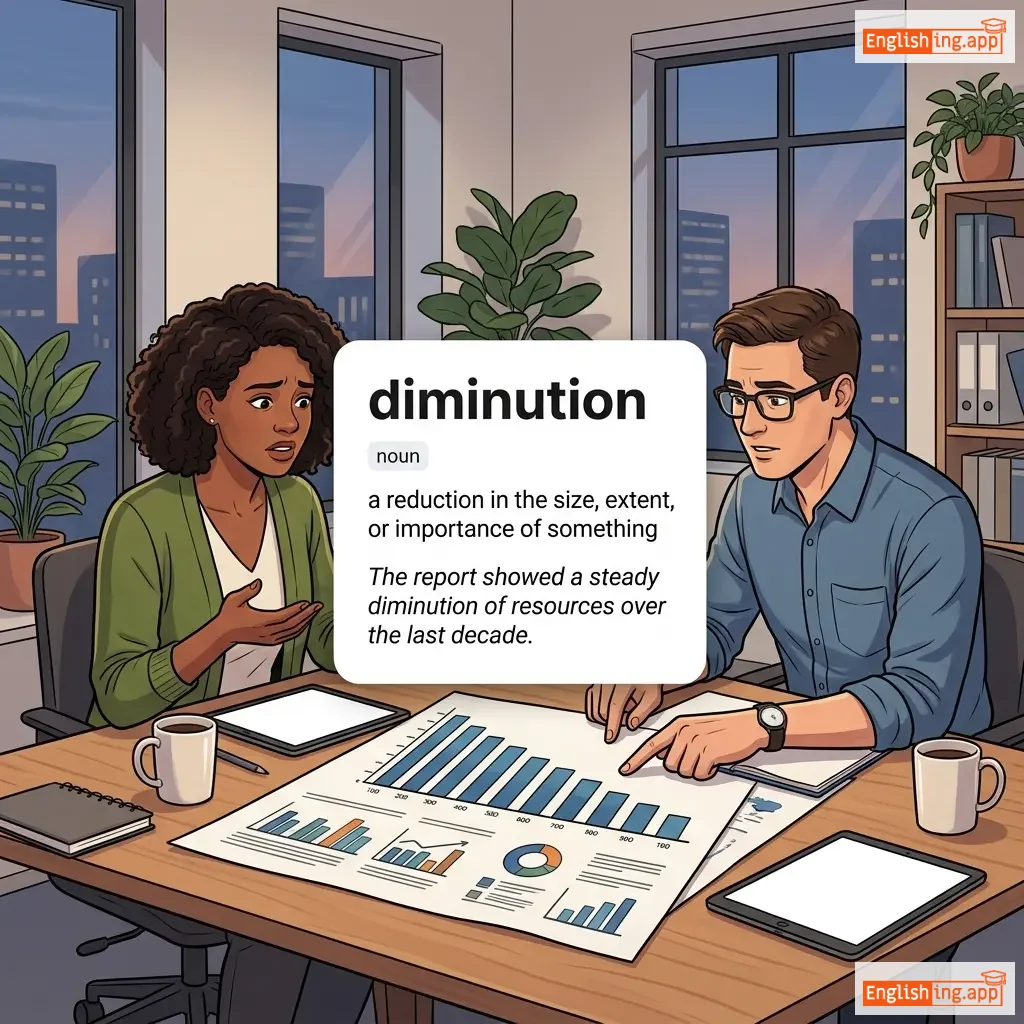
diminution definition card — visual illustration of the meaning
noun
/ˌdɪmɪˈnjuːʃən/
уменьшение (diminyushun)

a reduction in the size, extent, or importance of something

"The report showed a steady diminution of resources over the last decade."

"Доклад показал устойчивое уменьшение ресурсов за последнее десятилетие." (Doklad pokazal ustoychivoe umenchenie resursov za poslednee desyatiletiye.)
adjective
/dɪˈmɪnjətɪv/
крошечный (kroshechny)

extremely or unusually small

"Despite his diminutive size, he was a powerful leader."

"Несмотря на его крошечный размер, он был мощным лидером." (Nesmotrya na ego kroshichnyy razmer, on byl moschtym liderom.)
adverb
/ˈdɪmli/
тускло (tusklo)

in a faint or unclear way; with little light

"The room was dimly lit by a single candle."

"Комната была тускло освещена одной единственной свечой." (Komnata byla tusklo osveshchena odnoi edinstvennoi svechoy.)
noun
/ˈdɪm.pəl/
ямочка (yamochka)

a small depression in the flesh, either one that exists permanently or one that forms when smiling

"Her charming dimples appeared whenever she smiled at the children."

"Её очаровательные ямочки появлялись, когда она улыбалась детям." (eyo ocharovatel'nye yamochki poyavlyalis', kogda ona ulybalas' detyam.)
noun
/dɪn/
шум (shum)

a loud, unpleasant, and prolonged noise

"The din of traffic outside made it hard to concentrate."

"Шум от движения транспорта снаружи затруднял сосредоточение." (Shum ot dvizhiniya transporta snaruzi zatrudnyal sosredotochenie.)
verb
/daɪn/
ужинать (uzhinat)

to eat a meal, especially the main meal of the day

"We usually dine at seven o'clock in the evening."

"Мы обычно ужинаем в семь часов вечера." (My obychno uzhinaem v sem chasov vechera.)
noun
/ˈdɪŋɡi/
шлюпка (shlyupka)

a small boat, often carried or towed by a larger vessel, used for short trips or as a lifeboat

"They rowed the dinghy back to the yacht."

"Они гребли на шлюпке обратно к яхте." (Oni grebli na shlyupke obratno k yakhte.)
adjective
/ˈdɪndʒi/
грязный (gryaznyy)

gloomy and drab; dirty or discolored

"The old hotel room looked dark and dingy."

"Старая гостиничная комната выглядела тёмной и грязной." (Staraia gostinichnaia komnata vygliadela tyomnoy i gryaznoy.)
noun
/ˈdaɪnɪŋ/
ужин (uzhin)

the act of eating a meal, especially in a formal setting

"We enjoyed fine dining at the new restaurant."

"Мы наслаждались изысканным ужином в новом ресторане." (My naslazhdalis' izyskannym uzhinom v novom restorane.)
Dinner definition card — visual illustration of the meaning
noun
/ˈdɪnər/
ужин (uzhin)

the main meal of the day, usually eaten in the evening

"We had a lovely dinner at a new restaurant last night."

"Мы поужинали в новом ресторане прошлой ночью." (My poyuzhinayli v novom restorane proshloy noch'yu.)
noun
/dɪnt/
усилие, след от удара (usilie, sled ot udara)

an impression or hollow made by a blow; force or power

"By dint of hard work, he achieved success."

"Благодаря упорной работе он добился успеха." (Blagodarya upornoi rabote on dobylsya uspekha.)
adjective
/daɪˈɒsɪsən/
относящийся к диоцезу (otnosyashchiesya k diotsezu)

relating to a diocese or the district under the supervision of a bishop in the Christian Church

"The diocesan council met to discuss church affairs."

"Диоцезанский совет собрался, чтобы обсудить церковные дела." (Diotzezanskiy sovet sobralsya, chtoby obsudit' tserkovnye dela.)
noun
/ˌdaɪəˈrɑːmə/
диорама (diorama)

a three-dimensional model representing a scene, often with miniature figures

"The museum displayed a diorama of an ancient village."

"Музей展示ировал диораму древней деревни." (Muzei pokazyval dioramu drevnei derevni.)
verb
/dɪp/
погружать (pogruzhat)

to put something quickly into a liquid and take it out again

"She dipped her bread into the soup."

"Она макнула хлеб в суп." (Ona maknula khleb v sup.)
noun
/ˈdɪfθɒŋ/
дифтонг (diftong)

A complex vowel sound that begins with one vowel and glides into another within the same syllable.

"The word 'coin' contains a diphthong."

"Слово 'coin' содержит дифтонг." (Slovo 'coin' soderzhit diftong.)
diploma definition card — visual illustration of the meaning
noun
/dɪˈpləʊ.mə/
диплом (diplom)

an official document showing that a person has completed a course of study or training

"She received her diploma after finishing the nursing program."

"Она получила свой диплом после окончания программы сестринского дела." (Ona poluchila svoy diplom posle okonchaniya programmy sestrinskogo dela.)
noun
/dɪˈpləʊməsi/
дипломатия (diplomatiya)

The profession, activity, or skill of managing international relations or handling affairs tactfully.

"Effective diplomacy helped avoid the conflict."

"Эффективная дипломатия помогла избежать конфликта." (Effektivnaya diplomatiya pomogla izbezhat konfliktа.)
noun
/ˈdɪpləmæt/
дипломат (diplomat)

An official representing a country abroad; a person skilled in dealing with people tactfully.

"The diplomat negotiated a peace agreement."

"Дипломат вел переговоры о мирном соглашении." (Diplomat vel peregovory o mirnom soglashenii.)
adjective
/ˌdɪpləˈmætɪk/
дипломатический (diplomaticheskiy)

Concerning diplomacy; having or showing skill in dealing with people in a sensitive and effective way.

"She gave a diplomatic response to avoid offending anyone."
"Она дала дипломатический ответ, чтобы избежать оскорбления кого-либо." (ona dala diplomaticheskij otvet, chtoby izbezhat' oskorbleniya kogo-libo.)
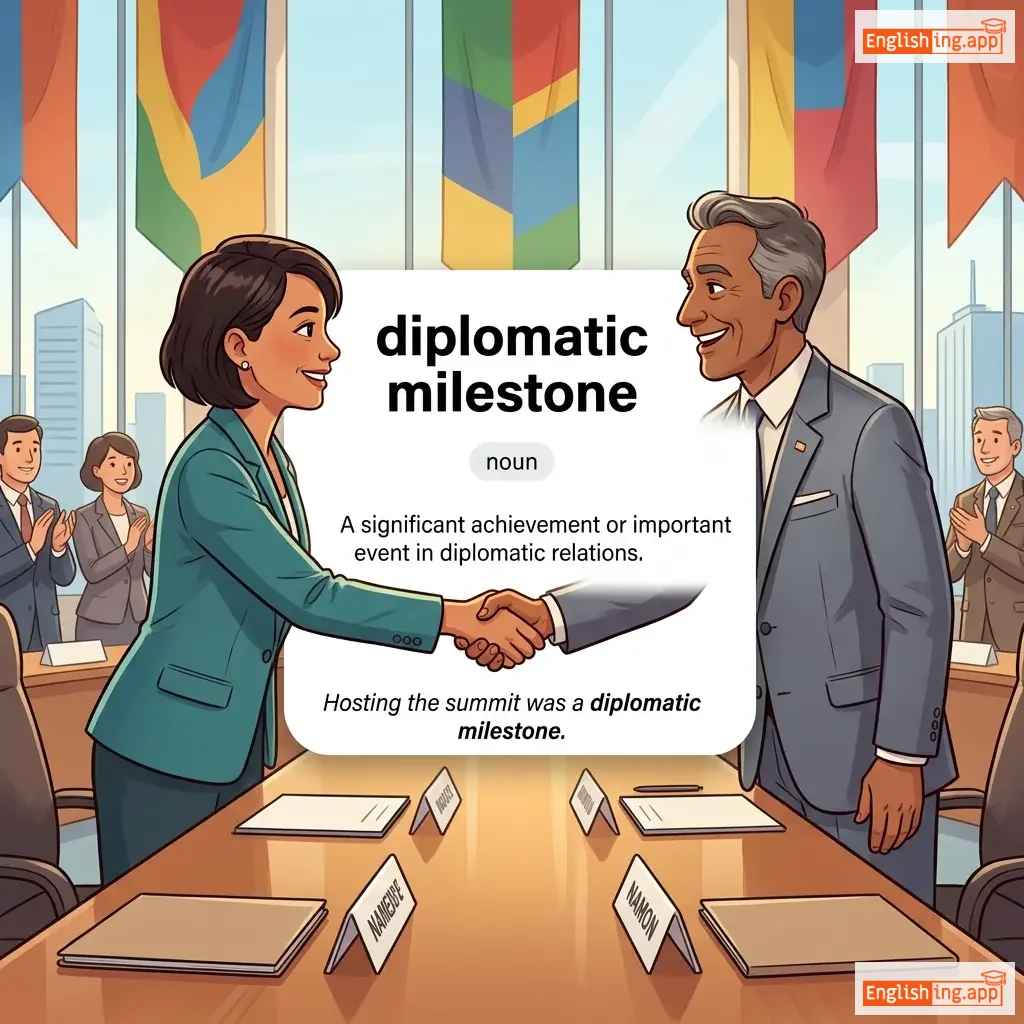
diplomatic milestone definition card — visual illustration of the meaning
noun
/ˌdɪp.ləˈmæt.ɪk ˈmaɪl.stəʊn/
дипломатический рубеж (diplomatieskiy rubezh)

A significant achievement or important event in diplomatic relations.

"Hosting the summit was a diplomatic milestone."

"Организация саммита была дипломатическим рубежом." (Organizatsiya sammitа byla diplomaticheskim rubezhom.)