Словари

Словарь английского языка | Значения слов, определения и примеры

verb
/ˌdɪsɪmˈbɑːrk/
высаживаться (vysazhivatsya)

To leave a ship, aircraft, or other vehicle.

"The passengers disembarked from the plane after landing."

"Пассажиры сошли с самолета после приземления." (Passazhiry sochli s samolyota posle prizenleniya.)
verb
/ˌdɪsɪnˈfræntʃaɪz/
лишать прав (lishat' prav)

To deprive someone of the right to vote or other rights.

"The new law could disenfranchise thousands of voters."

"Новый закон может лишить права голоса тысячи избирателей." (Novyi zakon mozhet lishit' prava golosa tysyachi izbirateley.)
verb
/ˌdɪsɪnˈɡeɪdʒ/
освободиться (osvoboditsya)

To release or detach oneself from something; to withdraw.

"He tried to disengage from the heated argument."

"Он попытался освободиться от напряжённой дискуссии." (On popytalsya osvoboditsya ot napryazhennoy diskussii.)
verb
/ˌdɪsɪnˈtæŋɡl/
распутывать (rasputyvat)

To free something or someone from a tangle or complication.

"She tried to disentangle her hair from the branches."

"Она попыталась распутать свои волосы от веток." (Ona popytalas' rasputat' svoi volosy ot vetok.)
noun/verb
/dɪsˈfeɪvər/
неодобрение / антипатия (neodobrenie / antipatiya)

disapproval or dislike; to regard with disapproval

"The new policy fell into disfavor with the public."

"Новая политика попала в немилость у публики." (Novaya politika popala v nemilost u publiki.)
verb
/dɪsˈfɪɡjər/
искажать (iskazhat)

to spoil or damage the appearance of something

"The fire disfigured the old building."
"Огонь исказил старое здание." (Ogon iskazil staroye zdanie.)
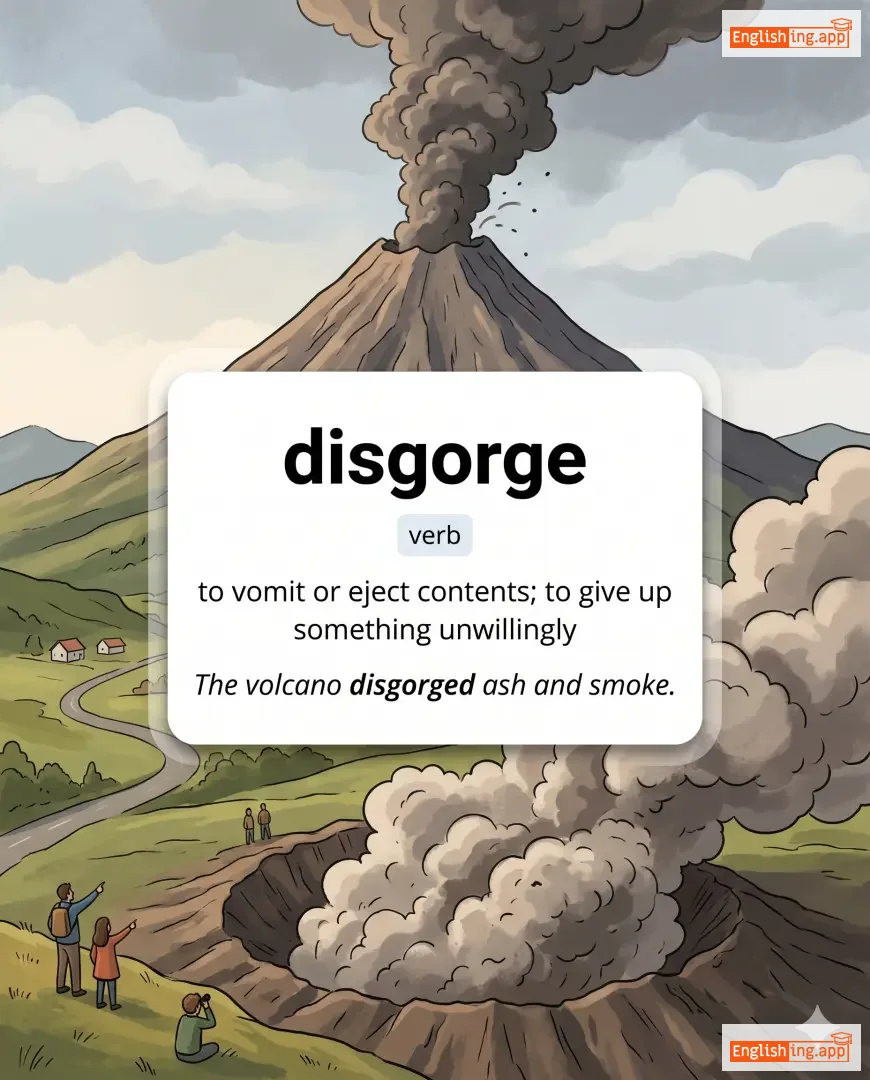
disgorge definition card — visual illustration of the meaning
verb
/dɪsˈɡɔrdʒ/
тошнить / извергать с усилием (toshnit / izvergat s usiliem)

to vomit or eject contents; to give up something unwillingly

"The volcano disgorged ash and smoke."

"Вулкан выбросил пепел и дым." (Vulkan vybrosil pepel i dym.)
noun
/dɪsˈɡreɪs/
позор (pozor)

Loss of respect, honor, or reputation due to shameful behavior.

"He was dismissed in disgrace after the scandal."

"Он был уволен в позоре после скандала." (On byl uvolen v pozore posle skandala.)
adjective
/dɪsˈɡreɪsfəl/
позорный; бесчестный; достойный осуждения (pozornyy; beschestnyy; dostoynyy osuzhdeniya)

shameful; bringing dishonor; worthy of condemnation

"His disgraceful behavior shocked everyone at the party."

"Его позорное поведение потрясло всех на вечеринке." (Yego pozornoye povedeniye potryaslo vsekh na vecherinke.)
verb
/dɪsˈɡrʌntl/
раздосадовать (razdosadovat)

to make someone dissatisfied or discontented

"The unfair treatment disgruntled the workers."
"Несправедливое обращение раздосадовало рабочих." (Nespravedlivoe obrashchenie razdosadovalo rabochikh.)
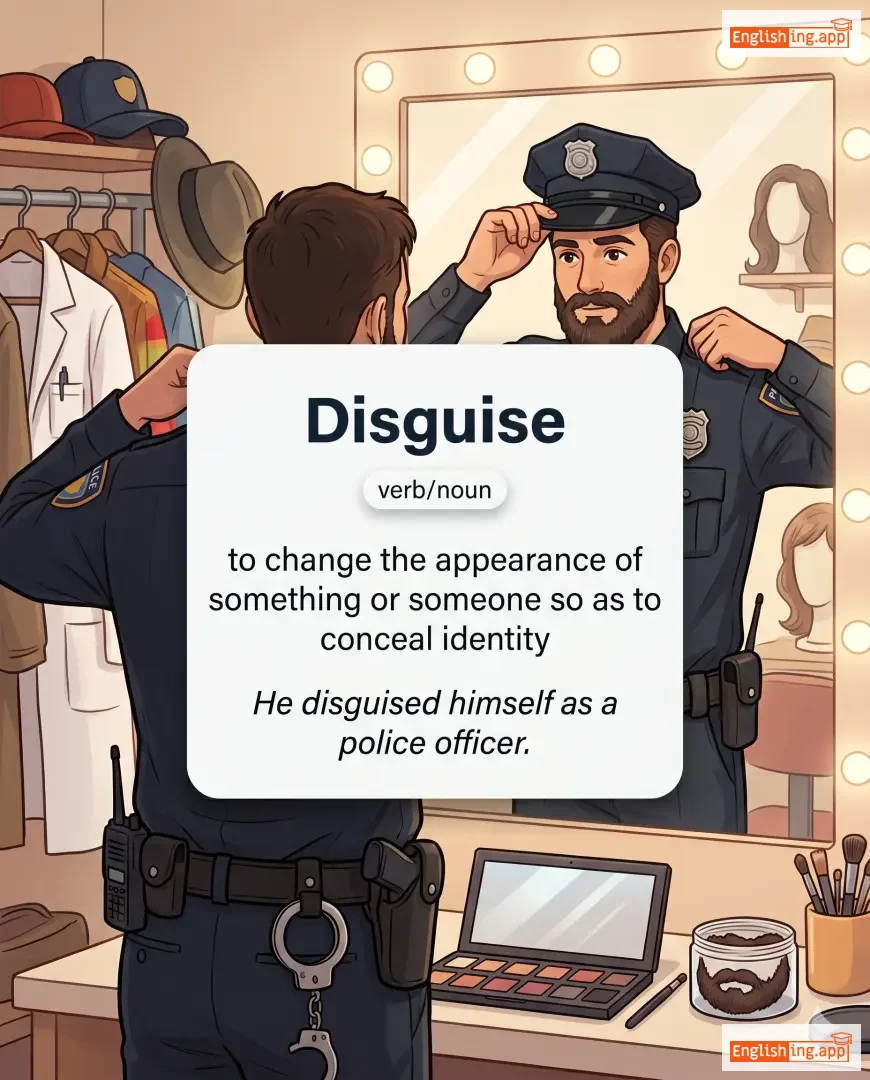
Disguise definition card — visual illustration of the meaning
verb/noun
/dɪsˈɡaɪz/
маскировать (maskirovat)

to change the appearance of something or someone so as to conceal identity

"He disguised himself as a police officer."

"Он переоделся как полицейский." (On pereodelsya kak politseskiy.)
noun
/dɪsˈɡʌst/
отвращение (otvrashchenie)

a feeling of revulsion or strong disapproval aroused by something unpleasant

"She expressed her disgust at the politician's corrupt behavior openly."

"Она открыто выразила свое отвращение к коррумпированному поведению политика." (Ona otkryto vyrazila swoe otvrashchenie k korrupirovannomu povedeniyu politika.)
adjective
/dɪsˈɡʌstɪd/
возмущенный (vozmushchennyy)

feeling a strong sense of dislike or revulsion

"She was disgusted by the way he treated the animals."

"Она была возмущена тем, как он обращался с животными." (Ona byla vozmushchena tem, kak on obrashchalsya s zhivotnymi.)
adjective
/dɪsˈɡʌstɪŋ/
отвратительный (otvratitelnij)

extremely unpleasant or offensive; causing strong dislike or revulsion

"The smell coming from the trash can was absolutely disgusting."

"Запах из мусорного ведра был абсолютно отвратительный." (Zapakh iz musornogo vedra byl absolyutno otvratitelnij)
noun
/dɪʃ/
тарелка / блюдо (tarelka / blyudo)

A shallow container for serving or preparing food; also a particular kind of food prepared.

"She prepared a delicious pasta dish for dinner."

"Она приготовила вкусное паста-блюдо на ужин." (Ona prigotovila vkusnoe pasta-blyudo na uzhin.)
noun
/ˈdɪʃ ˌwɒʃər/
посудомоечная машина (posudomoechnaya mashina)

an appliance for washing dishes automatically

"We installed a new dishwasher in our kitchen last week."

"На прошлой неделе мы установили новую посудомоечную машину на нашей кухне." (Na proshloy nedele my ustanovili novuyu posudomoechnuyu mashinu na nashey kukhne)
noun
/ˌdɪʃəˈbiːl/
небрежно одетый (nebrezhno odettyy)

The state of being only partly or loosely dressed; casual or careless attire.

"She answered the door in a state of dishabille, wearing just a robe."
"Она открыла дверь в состоянии небрежно одетой, в одной только пижаме." (Ona otkryla dver v sostoyanii nebrezhno odetoy, v odnoi tol'ko pizhamie.)
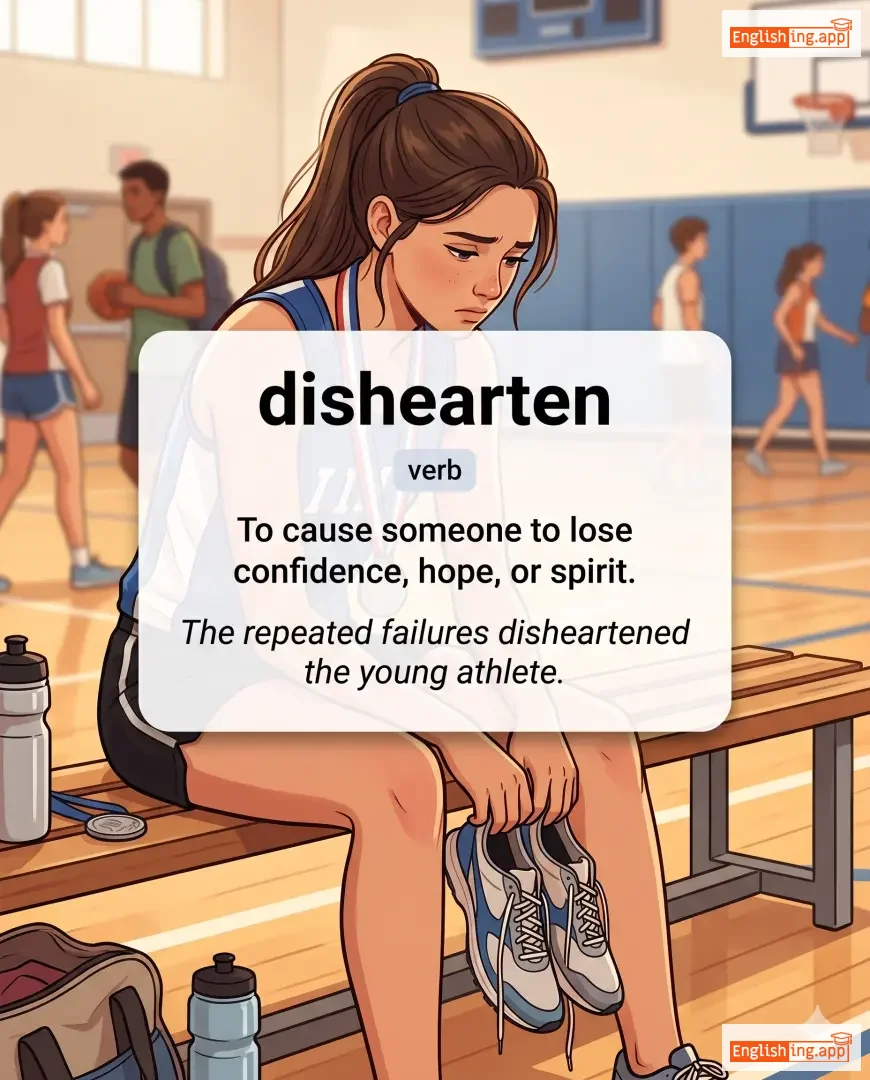
dishearten definition card — visual illustration of the meaning
verb
/dɪsˈhɑːrtən/
разочаровывать (razocharovyvat)

To cause someone to lose confidence, hope, or spirit.

"The repeated failures disheartened the young athlete."

"Повторные неудачи разочаровали молодого атлета." (Povtornye neudachi razocharovali molodogo atleta.)
adjective
/dɪsˈhɑːrtənd/
упавший духом (upavshiy dukhom)

Having lost confidence, hope, or spirit; discouraged.

"She looked disheartened after receiving the bad news."

"Она выглядела уныло после того, как получила плохие новости." (Ona vyglyadela unylo posle togo, kak poluchila plokhie novosti.)
adjective
/dɪˈʃɛvəld/
неопрятный (neopryatnyy)

Untidy, messy, or in disorder, especially of hair or clothing.

"He arrived with disheveled hair and wrinkled clothes."

"Он пришел с неопрятными волосами и помятыми вещами." (On prishel s neopryatnymi volosami i pomyatymi veshchami.)
adjective
/dɪsˈɑːnɪst/
нечестный (nechestny)

Behaving in an untruthful or deceitful way; not honest.

"It is dishonest to cheat in exams."

"Нечестно обманывать на экзаменах." (Nechestno obmanyvat' na ekzamenakh.)
noun, verb
/dɪsˈɑːnər/
бесчестие (besschestie)

a state of shame or loss of respect; to bring shame upon someone or something

"The soldier felt he had brought dishonor to his family."

"Солдат почувствовал, что он принес бесчестие своей семье." (Soldat pochuvstvoval, chto on prines besschestie svoey sem'ye.)
noun
/dɪsˈɒn.ər/
бесчестье (beshchestye)

a state of shame or disgrace; lack of honor or integrity; failure to fulfill obligations

"Breaking his promise brought dishonour to his name and family legacy."

"Нарушение своего обещания принесло бесчестье его имени и семейному наследию." (Narushenie svoego obeshchaniya prineslo beschestye ego imeni i semeynomu naslediyu.)
verb, noun
/ˌdɪsɪˈluːʒən/
дезиллюзия (dezilyuziya)

to cause someone to realize that something is not as good as they believed

"The scandal disillusioned many voters."
"Скандал разочаровал многих избирателей." (Skandal razocharoval mnogikh izbirateley.)
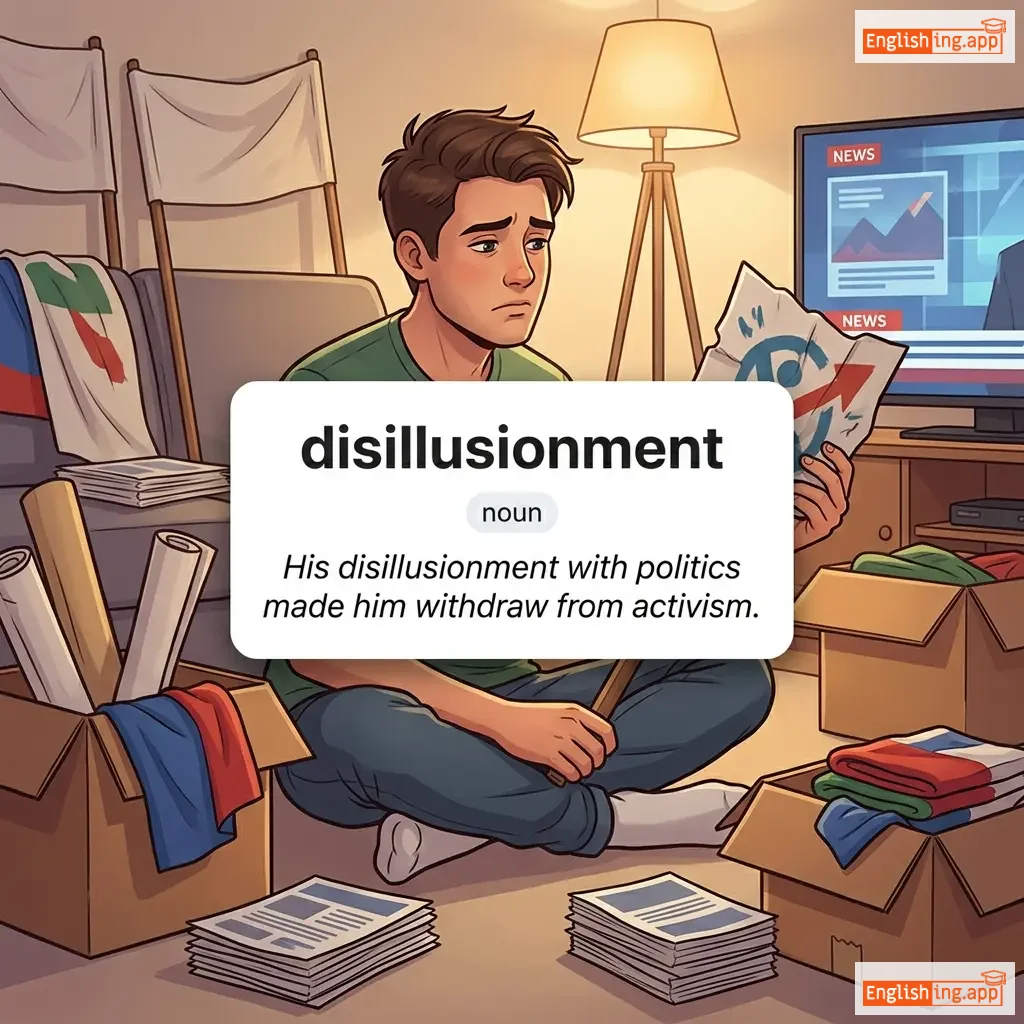
disillusionment definition card — visual illustration of the meaning
noun
/ˌdɪs.ɪˈluː.ʒən.mənt/
разочарование (razocharovanie)

A feeling of disappointment resulting from the discovery that something is not as good as one believed it to be.

"His disillusionment with politics made him withdraw from activism."

"Его разочарование в политике заставило его отойти от активизма." (Ego razocharovanie v politike zastavilo ego otoyti ot aktivizma.)
noun
/ˌdɪsɪnklɪˈneɪʃən/
нежелание (nezhelanie)

a lack of willingness or desire to do something

"She showed a clear disinclination to join the meeting."

"Она проявила явное нежелание присоединиться к встрече." (Ona proyavila yavnoe nezelanie prisoyedinitsya k vstreche.)
verb
/ˌdɪsɪnˈfɛkt/
дезинфицировать (dezinfitsirovat)

to clean something thoroughly to destroy bacteria or viruses

"The nurse disinfected the wound before applying a bandage."

"Медсестра продезинфицировала рану перед тем, как наложить повязку." (Medsestra prodezinfitsirovala ranu pered tem, kak nalozhit' povyazku.)
noun
/ˌdɪsɪnˈfɛktənt/
дезинфицирующее средство (dezinficiruyushchee sredstvo)

a chemical substance used to kill harmful microorganisms on surfaces

"The cleaner sprayed disinfectant on the table."
"Уборщик распылил дезинфицирующее средство на столе." (Uborshchik raspylyl dezinficiruyushchee sredstvo na stole.)
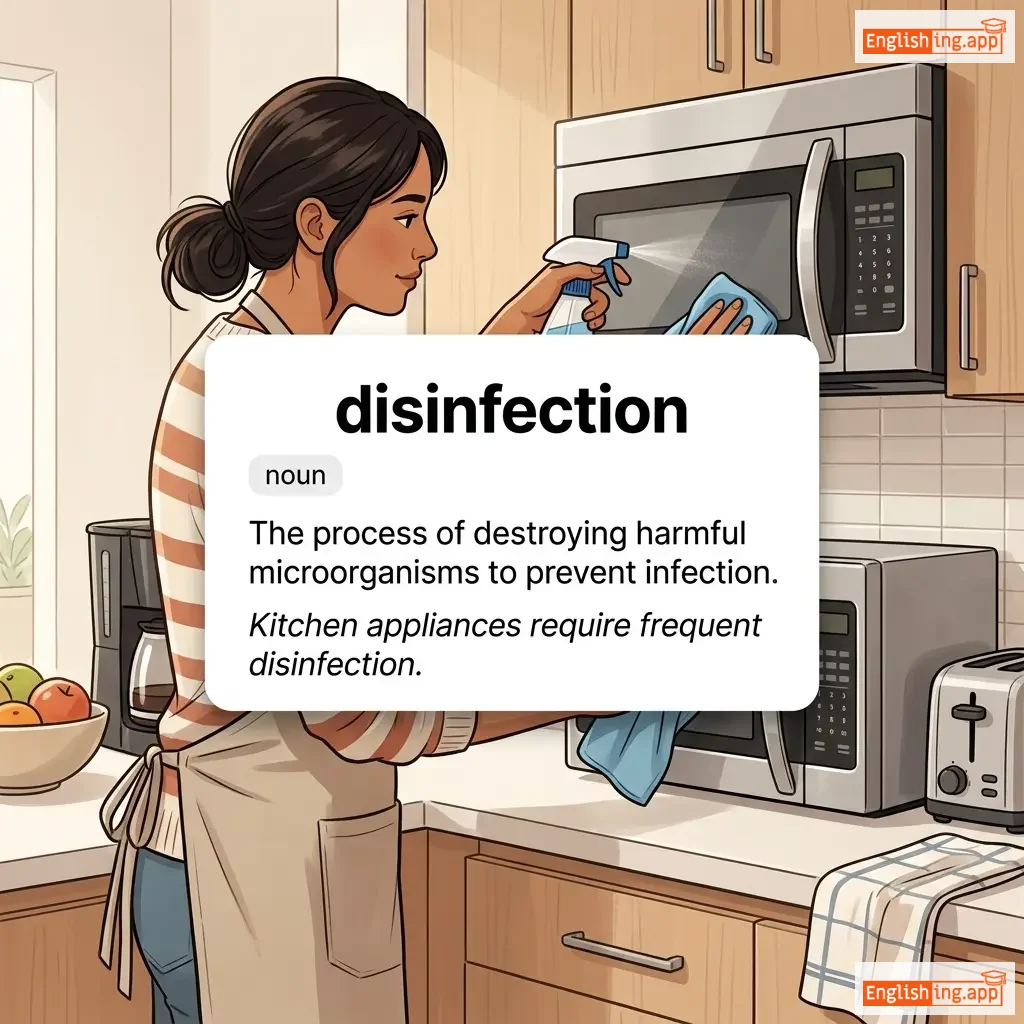
disinfection definition card — visual illustration of the meaning
noun
ˌdɪs.ɪnˈfek.ʃən
дезинфекция (dezinfekciya)

The process of destroying harmful microorganisms to prevent infection.

"Kitchen appliances require frequent disinfection."
"Кухонная техника требует регулярной дезинфекции." (Kukhonnaya tekhnika trebuyet regulyarnoy dezinfektsii.)
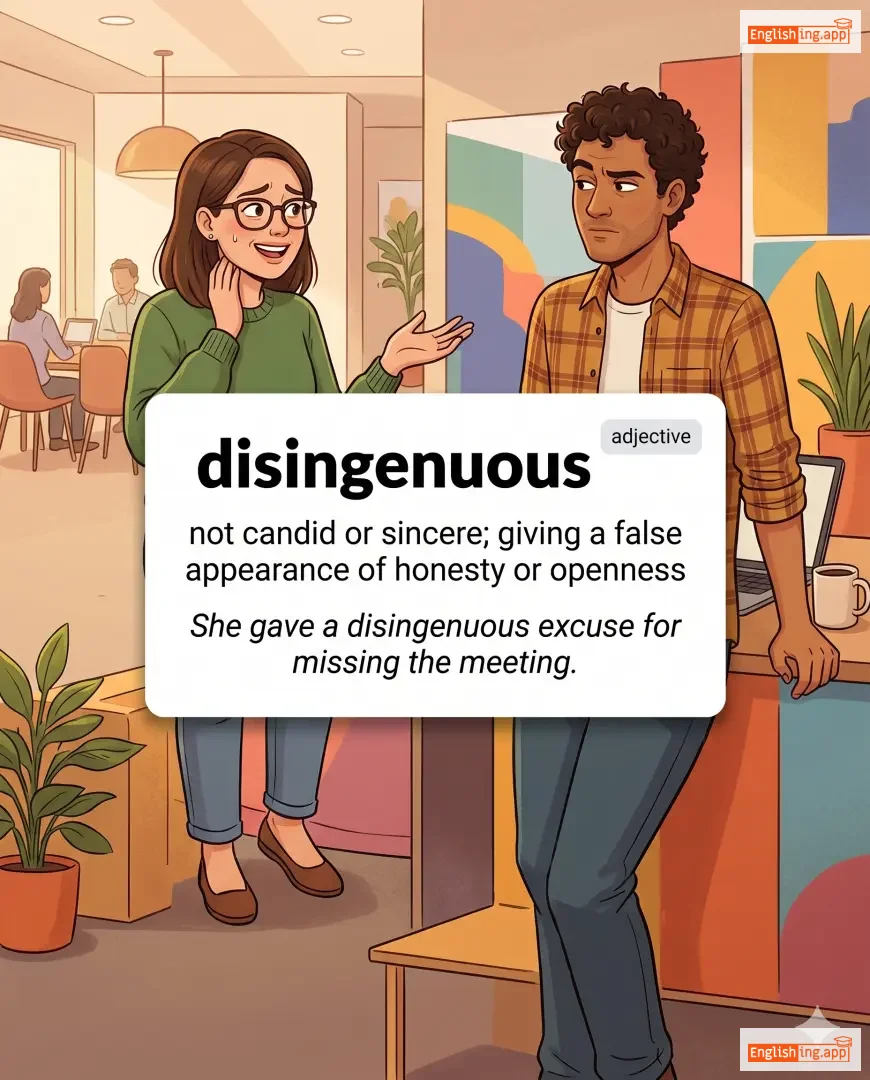
disingenuous definition card — visual illustration of the meaning
adjective
/ˌdɪsɪnˈdʒɛnjʊəs/
лицемерный (litsemernij)

not candid or sincere; giving a false appearance of honesty or openness

"She gave a disingenuous excuse for missing the meeting."

"Она дала лицемерное оправдание, чтобы не прийти на встречу." (Ona dala litsemernoe opravdanie, chtoby ne prijt' na vstrechu.)
verb
/ˌdɪsɪnˈhɛrɪt/
лишить наследства (lishit nasledstva)

to deprive someone, especially a child, of inheritance or right to property

"The father threatened to disinherit his son for his reckless actions."

"Отец пригрозил лишить своего сына наследства за его безрассудные поступки." (Otets prigrozil lishit svoego syna nasledstva za ego bezrassudnye postupki.)
verb
/ˌdɪsɪnˈtɜːr/
выкапывать (vykapivat)

to dig up something buried, especially a body

"The archaeologists disinterred ancient remains from the site."

"Археологи выкапывали древние останки с этого места." (Arheologi vykapivali drevnie ostanki s etogo mesta.)
noun
/dɪsˈɪntrəst/
безразличие (bezrazlichie)

lack of interest or concern

"His disinterest in the project was obvious."
"Его безразличие к проекту было очевидно." (Ego bezrazlichie k proyektu bylo ochevidno.)
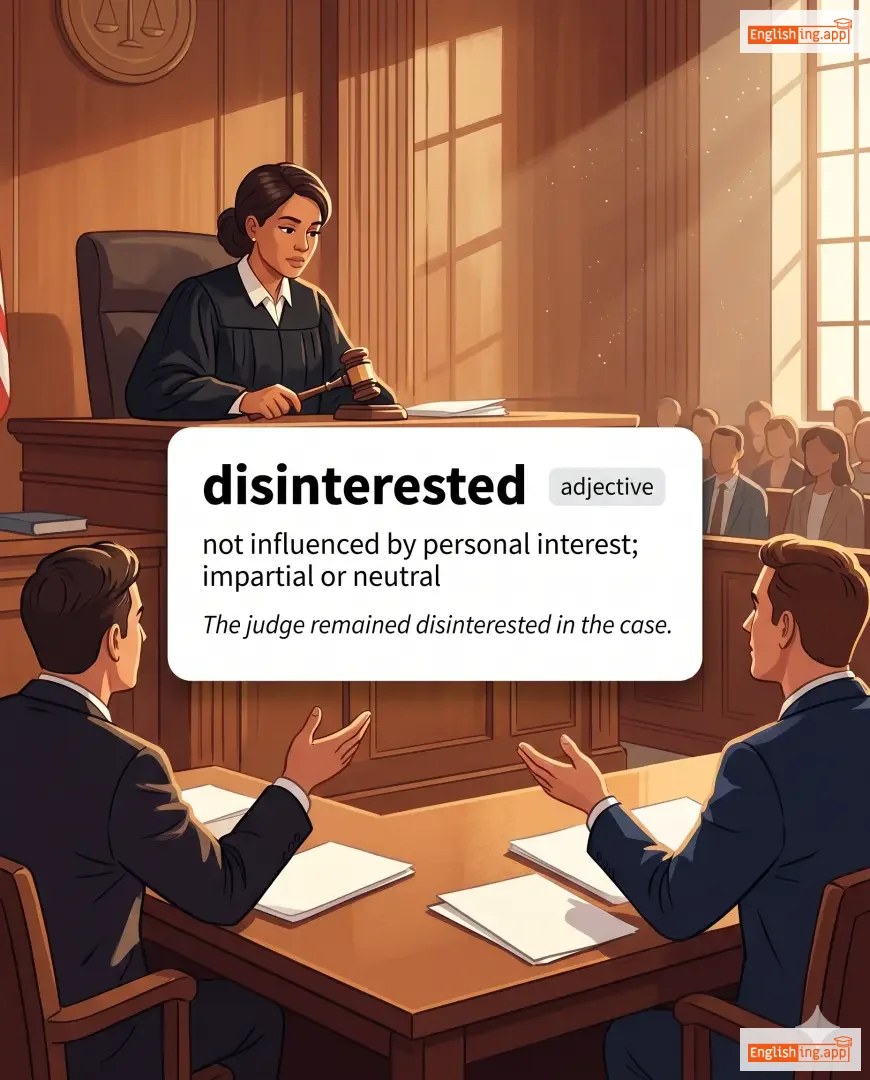
disinterested definition card — visual illustration of the meaning
adjective
/dɪsˈɪntrəstɪd/
безинтересный (bezinteresny)

not influenced by personal interest; impartial or neutral

"The judge remained disinterested in the case."
"Судья остался безинтересным в деле." (Sudiya ostalsya bezinteresnym v dele.)
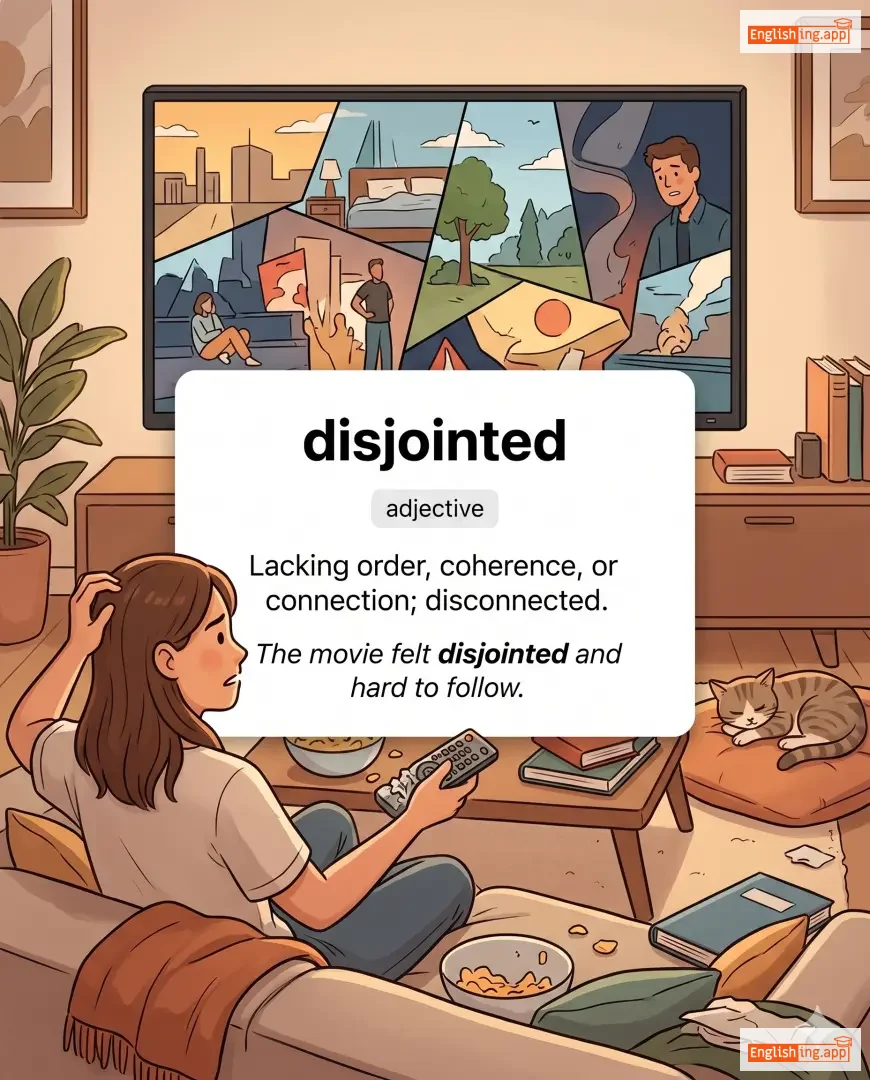
disjointed definition card — visual illustration of the meaning
adjective
/dɪsˈdʒɔɪntɪd/
беспорядочный (besporyadochny)

Lacking order, coherence, or connection; disconnected.

"The movie felt disjointed and hard to follow."

"Фильм показался беспорядочным и трудным для восприятия." (Film pokazalsya besporyadochnym i trudnym dlya vospriyatiya.)
noun
/dɪsˈdʒʌŋkʃən/
разделение (razdelenie)

A lack of connection between things; separation or disunity.

"There is a clear disjunction between theory and practice."

"Есть явное разделение между теорией и практикой." (Yest' yavnoe razdelenie mezhdu teoriey i praktikoy.)
adjective
/dɪsˈdʒʌŋktɪv/
дисъюнктивный (disyunktivnyy)

Serving to separate or divide; expressing a choice between alternatives.

"In grammar, 'or' is a disjunctive conjunction."

"В грамматике 'или' — это дисъюнктивное соединение." (V grammatike 'ili' — eto disyunktivnoe soedinenie.)
noun
/dɪsk/
диск / устройство для хранения данных (disk / ustroystvo dlya khraneniya dannykh)

a flat, circular object, often used to store data electronically

"All the data is saved on a hard disk."

"Все данные сохраняются на жестком диске." (Vse dannye sokhranyayutsya na zhestkom diske.)
verb, noun
/dɪsˈlaɪk/
не любить (ne lyubit)

to feel distaste or aversion for someone or something; a feeling of aversion

"I really dislike eating spicy food."

"Мне действительно не нравится есть острую еду." (Mne deystvitelno ne nravitsya yest ostruyu edu)
verb
/ˈdɪsləkeɪt/
вывихнуть (vyvikhnut)

To disturb the normal position of something, especially a joint in the body.

"He dislocated his shoulder while playing football."

"Он вывихнул плечо, играя в футбол." (On vyvikhnul plecho, igrya v futbol.)
verb
/dɪsˈlɒdʒ/
выталкивать (vytalkivat)

To remove or force out from a position, especially one that is fixed or hard to move.

"The troops dislodged the enemy from the hill."

"Войска вытолкнули врага с холма." (Voyiska vytolkhnuli vraga s kholma.)
adjective
/ˈdɪzməl/
мрачный; депрессивный; печальный (mrachniy; depressivniy; pechal'nyy)

gloomy; depressing; causing sadness or despair

"The weather was dismal with heavy rain and dark clouds."
"Погода была мрачной с сильным дождем и темными облаками." (Pogoda byla mrachnoy s sil'nym dozhdem i temnymi oblakami.)
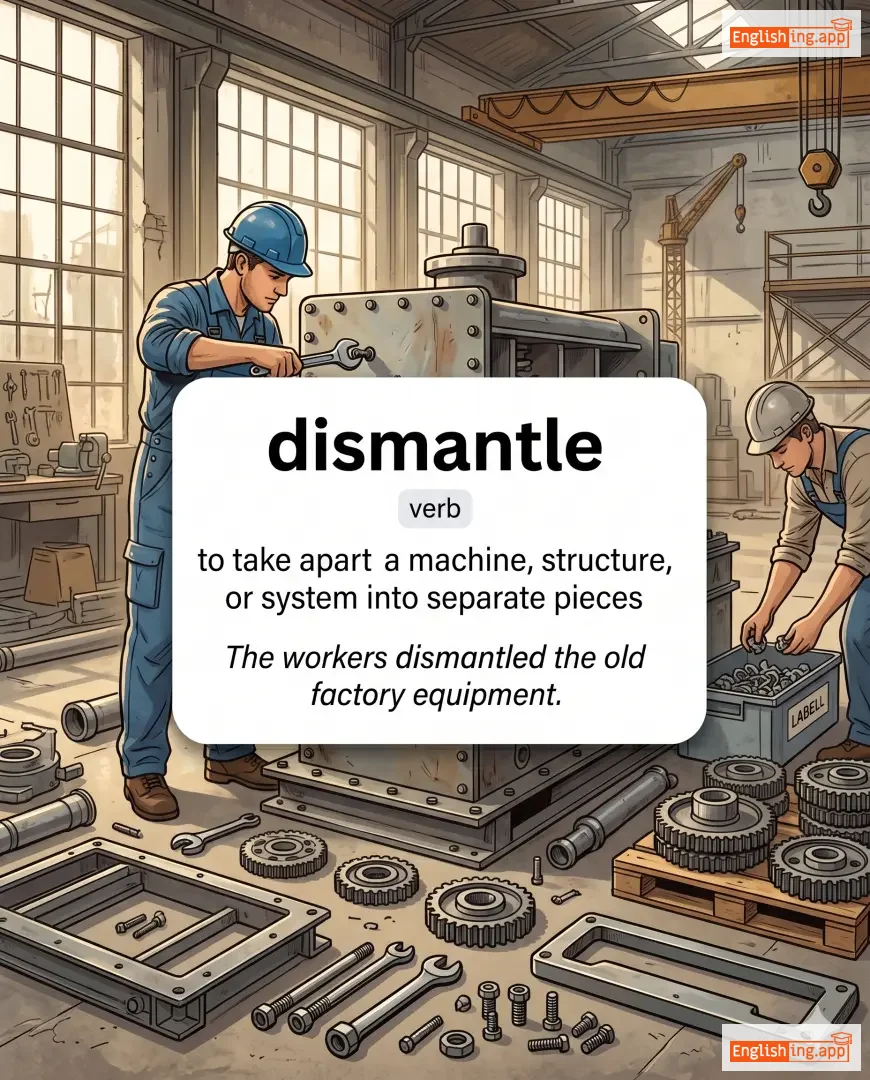
dismantle definition card — visual illustration of the meaning
verb
/dɪsˈmæntl̩/
разбирать (razbirat)

to take apart a machine, structure, or system into separate pieces

"The workers dismantled the old factory equipment."
"Рабочие разобрали старое оборудование на фабрике." (Rabochie razobrali staroe oborudovanie na fabrike.)
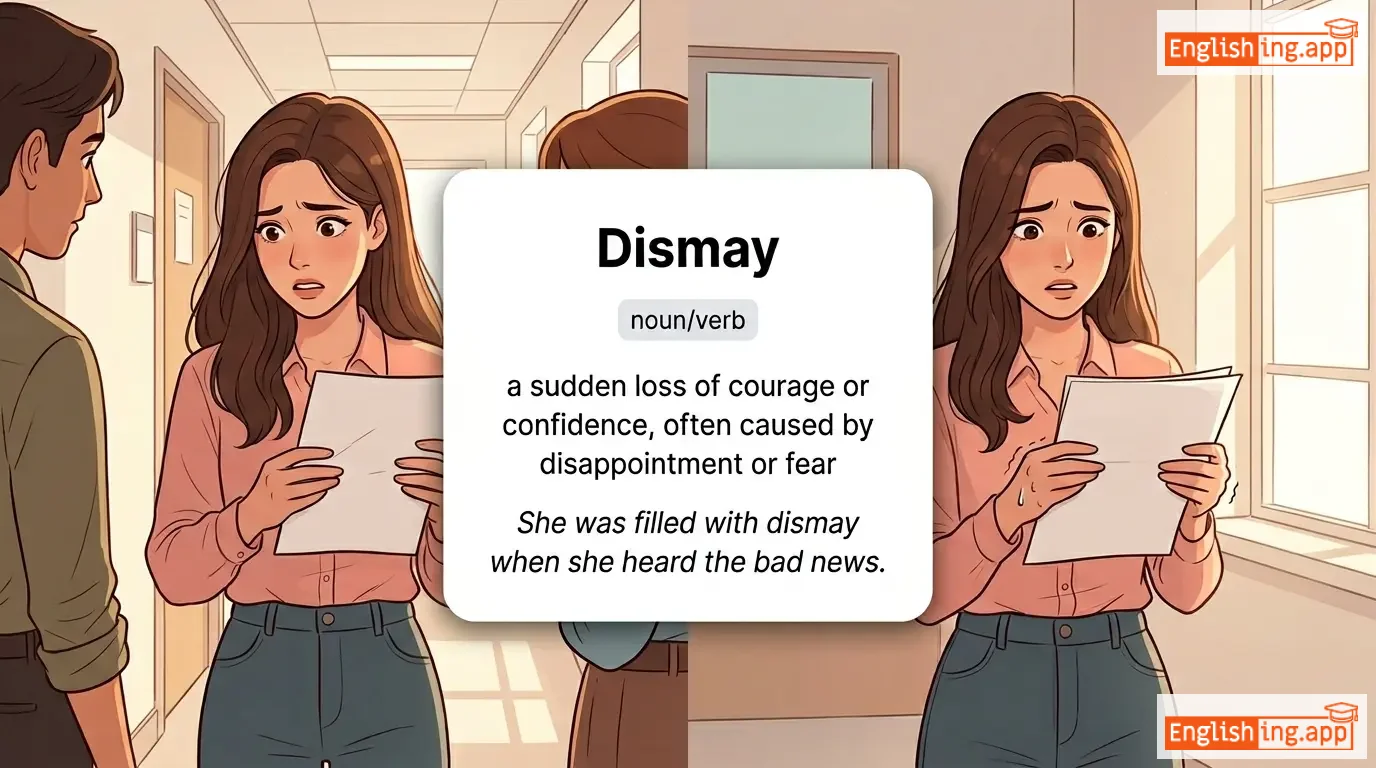
Dismay definition card — visual illustration of the meaning
noun/verb
/dɪsˈmeɪ/
беспокойство или ужас (bespokoystvo ili uzhas)

a sudden loss of courage or confidence, often caused by disappointment or fear

"She was filled with dismay when she heard the bad news."

"Она была полна беспокойства, когда услышала плохие новости." (Ona byla polna bespokoystva, kogda uslyshala plokhie novosti.)
verb
/dɪsˈmɛmbər/
разрубить (razrubit)

to cut or tear the limbs from a body; to divide into separate parts

"The king ordered his enemies to be dismembered."
"Король приказал разорвать своих врагов на части." (Korol' prikazal razorvat' svoikh vragov na chasti.)
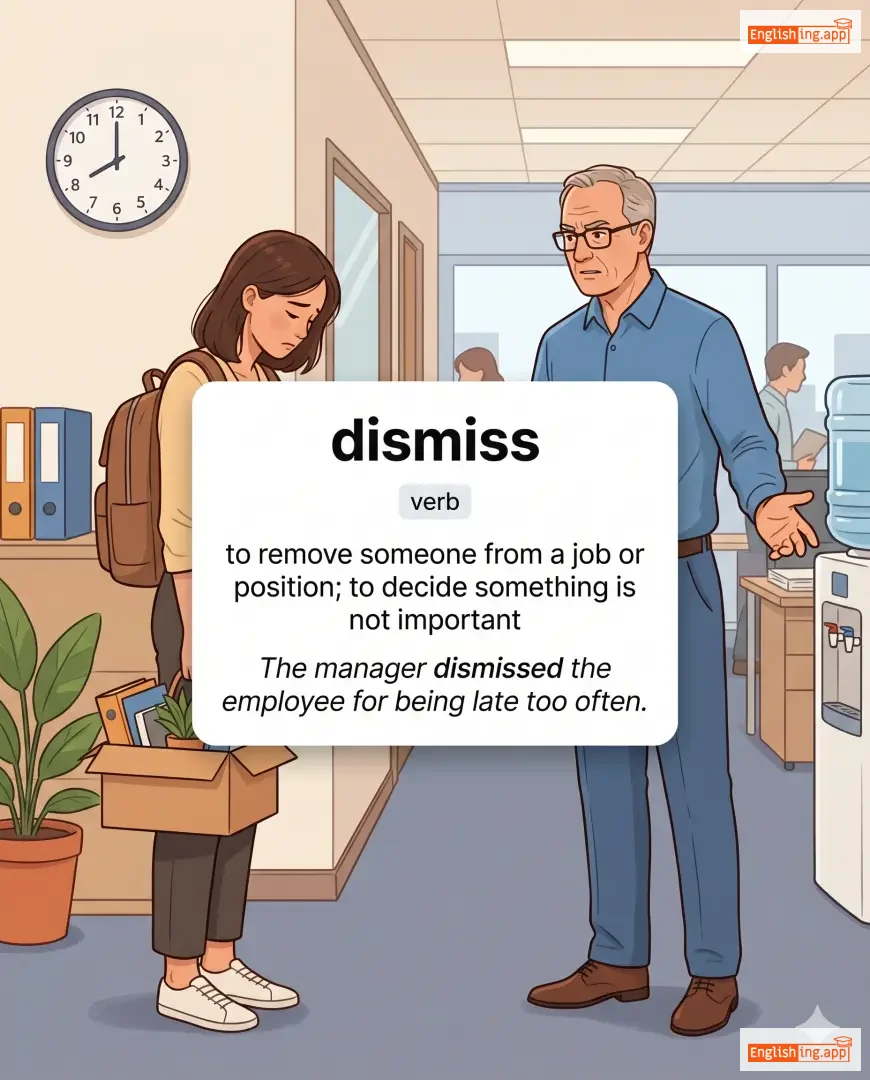
dismiss definition card — visual illustration of the meaning
verb
/dɪsˈmɪs/
уволить, отклонить (uvolit', otklonit')

to remove someone from a job or position; to decide something is not important

"The manager dismissed the employee for being late too often."

"Менеджер уволил сотрудника за то, что тот слишком часто опаздывал." (Menedzher uvolil sotrudnika za to, chto tot slishkom chasto opazdyval.)
noun
/dɪsˈmɪsl̩/
увольнение, отклонение (uvolnenie, otklonenie)

the act of removing someone from their job; the act of treating something as unimportant

"His unfair dismissal led to a lawsuit against the company."

"Его несправедливое увольнение привело к иску против компании." (Ego nespravedlivoe uvolnenie privedlo k isku protiv kompanii.)
verb
/ˌdɪsˈmaʊnt/
сойти (soyti)

to get off or down from something, especially a horse, bicycle, or motorcycle

"The rider dismounted from the horse after a long journey."

"Всадник сошел с лошади после долгого путешествия." (Vsadnik soshel s loshadi posle dolgogo puteshestviya.)
noun
/ˌdɪsəˈbiːdiəns/
неповиновение (nepovinovenie)

failure or refusal to obey rules, laws, or authority

"The child's disobedience worried his parents."

"Неповиновение ребенка обеспокоило его родителей." (Nepovinoenie rebenka obespokoilo ego roditelya.)
adjective
/ˌdɪsəˈbiːdiənt/
непослушный (neposlushnyy)

refusing or failing to obey rules or authority

"The teacher scolded the disobedient students."

"Учитель отругал непослушных учеников." (Uchitel' otruгал neposlushnykh uchenikov.)