Словари

Словарь английского языка | Значения слов, определения и примеры

adjective
/dɪˈstɜː.bɪŋ/
тревожный (trevozhny)

causing anxiety, worry, or emotional distress

"The news about the accident was deeply disturbing."

"Новости о происшествии были глубоко тревожными." (Novosti o proisshestvii byli gluboko trevozhnymi.)
noun
/dɪsˈjuːnjən/
раскол (raskol)

the state of being separated or not united

"Civil wars often result from national disunion."

"Гражданские войны часто происходят из-за национального раскола." (Grazhdanskie voiny chasto proiskhodyat iz-za natsional'nogo raskola.)
noun
/ˈdaɪˌsɪləbəl/
двусложное слово (dvuslozhnoe slovo)

a word consisting of two syllables

"The word 'happy' is a disyllable."

"Слово ‚счастье‘ — это двусложное слово." (Slovo 'schast'ye' — eto dvuslozhnoe slovo.)
verb
/ˈdɪðər/
колебаться (kolebat'sya)

to be indecisive or unable to make a decision

"He dithered for hours before choosing a restaurant."

"Он колебался часами, прежде чем выбрать ресторан." (On kolebalsya chasami, prezhde chem vybrat' restoran.)
noun
/ˈdɪti/
короткая песня (korotkaya pesnya)

a short, simple song or poem

"She sang a cheerful little ditty while cooking."

"Она пела веселую короткую песню, готовя еду." (Ona pela veselyu korotkuyu pesnyu, gotovya yedu.)
diuretic definition card — visual illustration of the meaning
noun
/ˌdaɪ.jʊˈret.ɪk/
диуретик (diuretik)

A substance that promotes the production of urine.

"Coffee has a mild diuretic effect."

"Кофе имеет легкий диуретический эффект." (Kofe imeet legkiy diureticheskiy effekt.)
adjective
/daɪˈɜːrnəl/
дневной (dnevnoi)

active during the day; occurring daily

"Most birds are diurnal creatures, active in daylight hours."

"Большинство птиц — дневные существа, активные в дневные часы." (Bol'shinstvo ptic — dnevnye sushchestva, aktivnye v dnevnye chasy.)
noun
/ˈdiːvə/
известная певица (izvestnaya pevitsa)

a famous female singer; a woman who is admired or behaves like a star

"The pop diva performed her latest hit to a cheering crowd."

"Поп-дива исполнила свой последний хит перед аплодирующей толпой." (Pop-diva ispolnila svoy posledniy khit pered aplodiruyushchey tolpoy.)
noun
/ˌdaɪvəˈɡeɪʃən/
отклонение (otklonenie)

digression; wandering from a path or subject

"His lecture was full of divagation, making it hard to follow the main point."

"Его лекция была полна отклонений, что затрудняло следование за основной мыслью." (Ego lektsiya byla polna otkloneniy, chto zatrudnyalo sleduyushchego za osnovnoy myslyu.)
verb
/daɪv/
нырять (nyryat)

to plunge headfirst into water or another substance

"He decided to dive into the pool on a hot day."

"Он решил нырнуть в бассейн в жаркий день." (On reshil nyrnut' v basseyn v zharkiy den'.)
noun
/ˈdaɪ.vər/
нырок (nyrok)

a type of water bird that dives underwater to catch fish

"The diver disappeared beneath the surface to catch a fish."

"Нырок исчез под поверхностью, чтобы поймать рыбу." (Nyrok ischez pod poverkhnost'yu, chtoby poymat' rybu.)
diverge definition card — visual illustration of the meaning
↔️

diverge

verb
/daɪˈvɜːrdʒ/

to separate from a path, opinion, or standard

"The two friends began to diverge in their career choices."
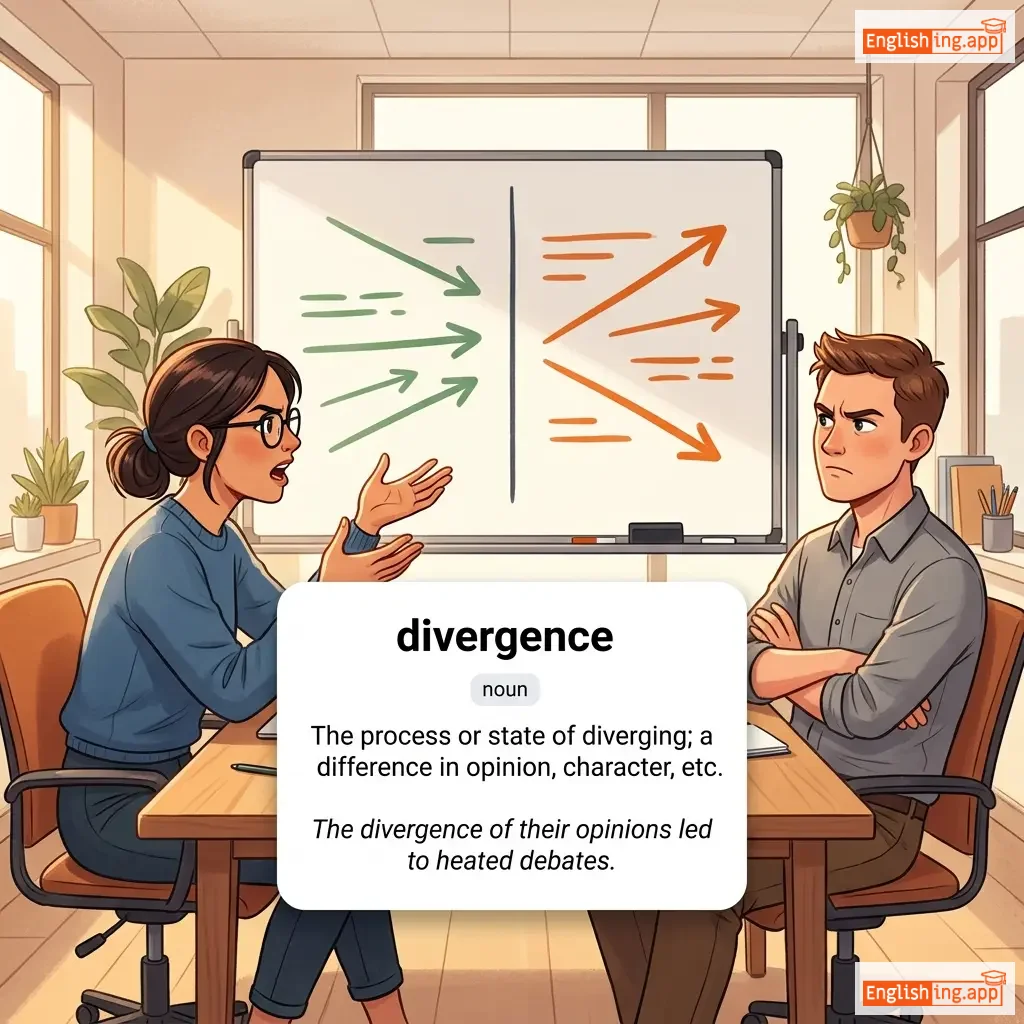
divergence definition card — visual illustration of the meaning
noun
daɪˈvɜː.dʒəns
дивергенция (divergentsiya)

The process or state of diverging; a difference in opinion, character, etc.

"The divergence of their opinions led to heated debates."
"Дивергенция их мнений привела к жарким дебатам." (Divergentsiya ikh mneniy privela k zharkim debatam.)
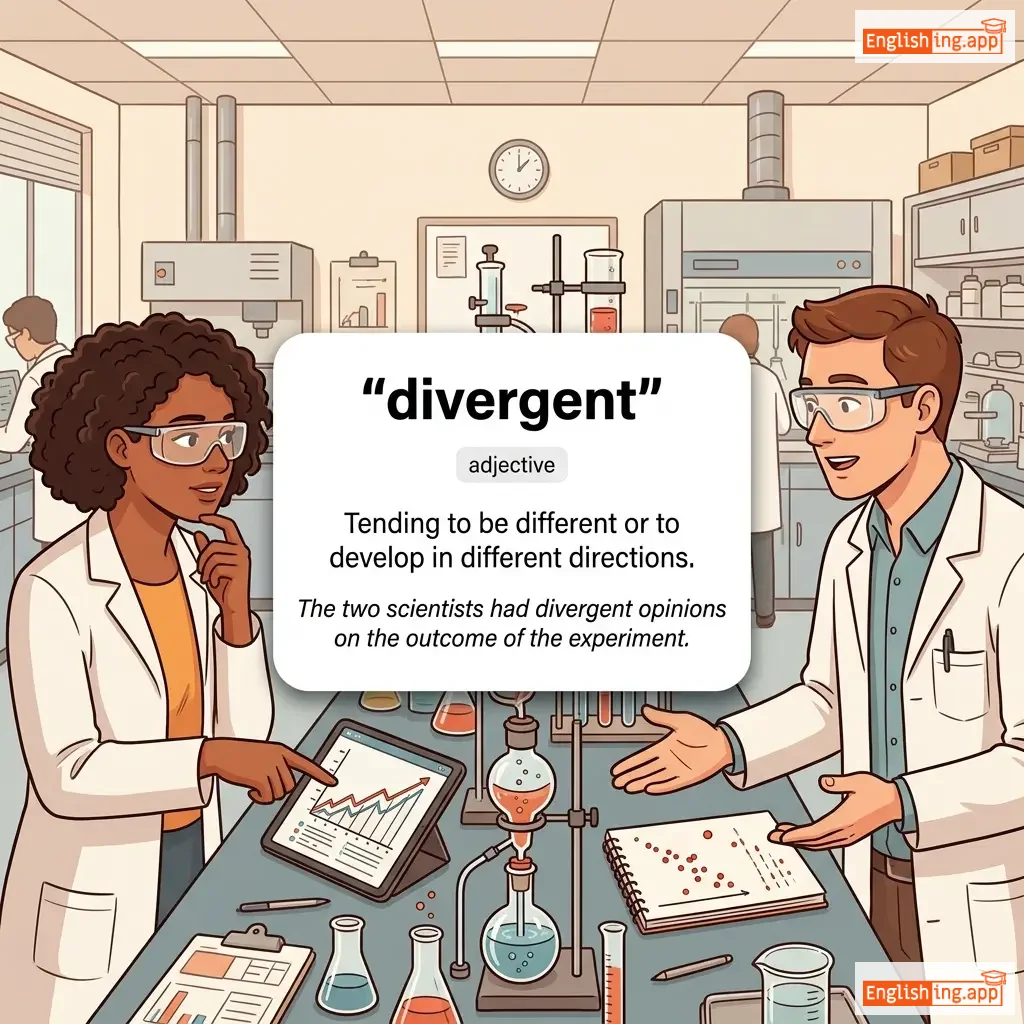
divergent definition card — visual illustration of the meaning
adjective
/daɪˈvɜːrdʒənt/
дивергентный (divergentny)

Tending to be different or to develop in different directions.

"The two scientists had divergent opinions on the outcome of the experiment."
"У двух ученых были разные мнения по поводу результата эксперимента." (U dvukh uchenykh byli raznye mneniya po povodu rezul'tata eksperimenta.)
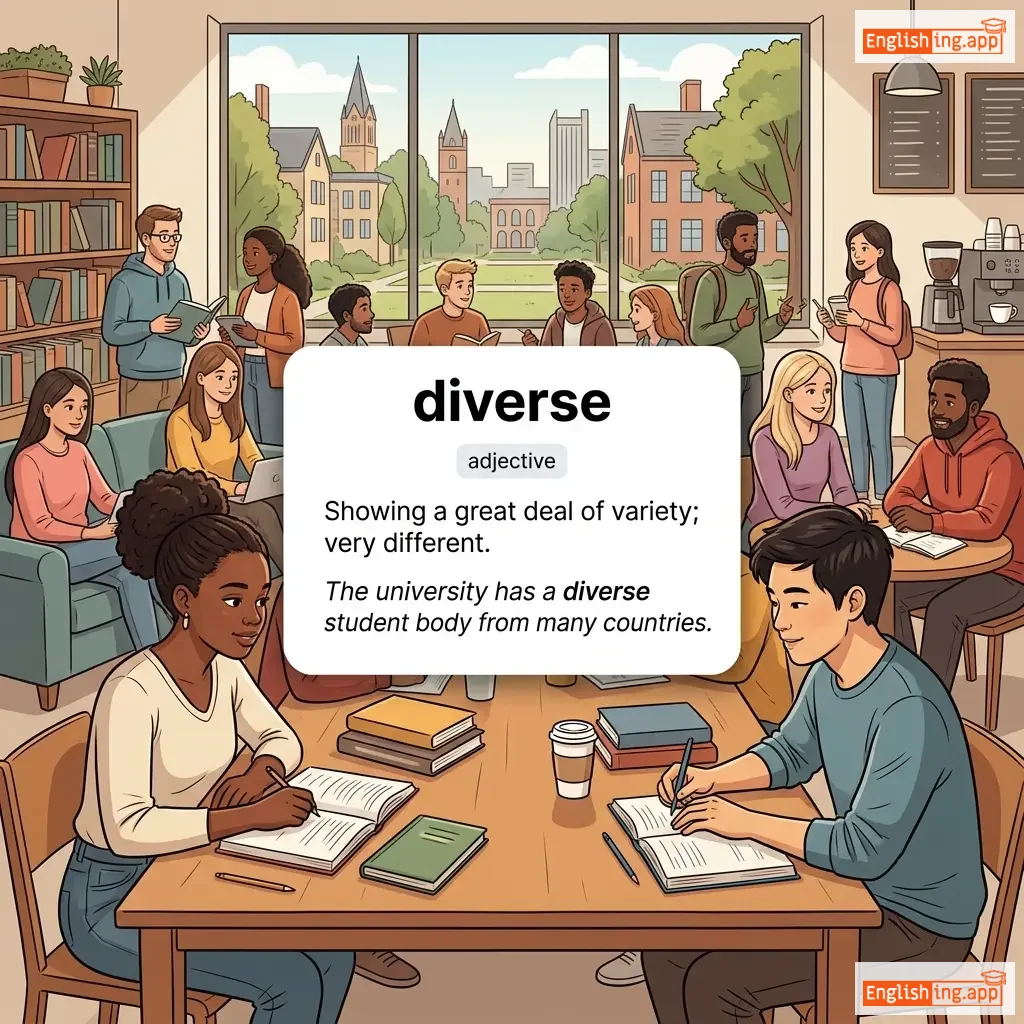
diverse definition card — visual illustration of the meaning
adjective
/daɪˈvɜːrs/
разнообразный (raznoobraznyj)

Showing a great deal of variety; very different.

"The university has a diverse student body from many countries."
"Университет имеет разнообразный студенческий корпус из многих стран." (Universitet imeyet raznoobraznyj studencheskij korpus iz mnogikh stran.)
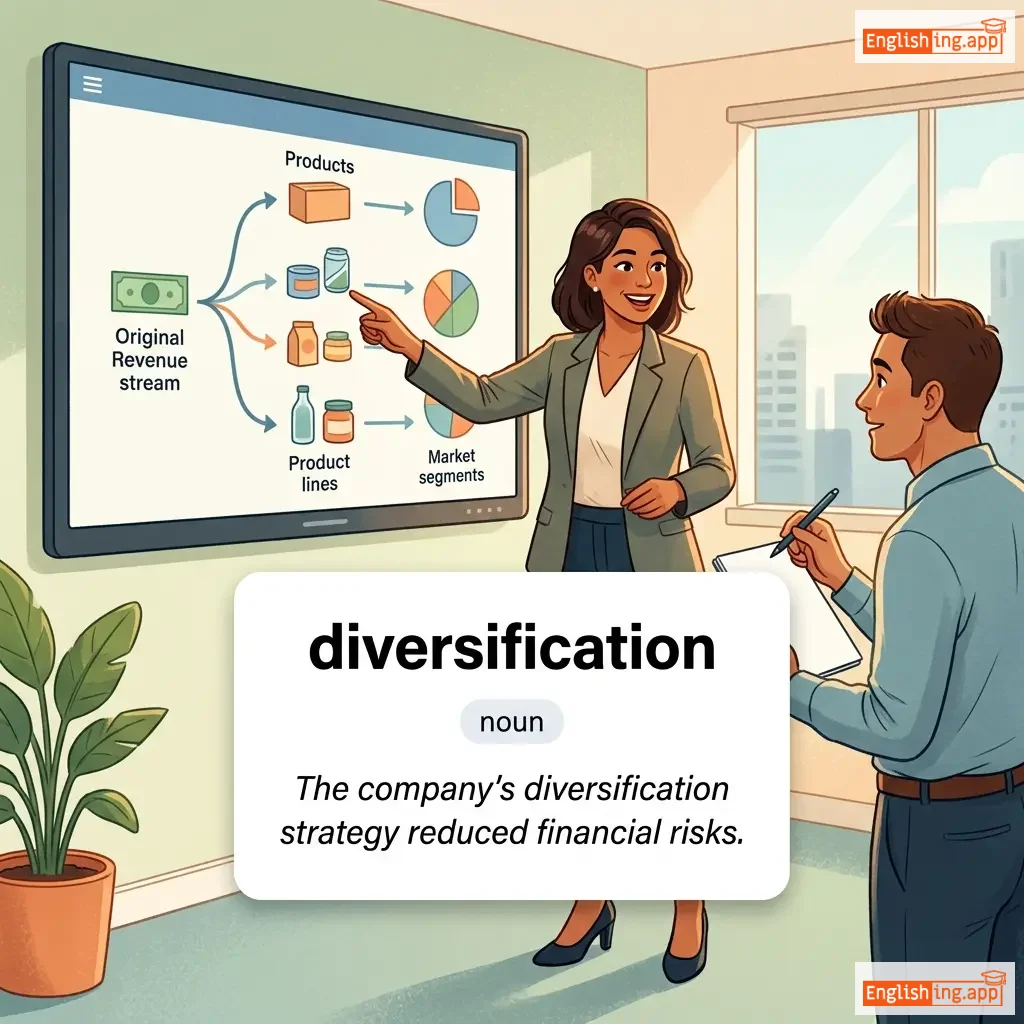
diversification definition card — visual illustration of the meaning
noun
/daɪˌvɜː.sɪ.fɪˈkeɪ.ʃən/
диверсификация (diversifikatsiya)

The process of a business expanding into different product lines or markets to spread risk and reduce dependence on a single source of income.

"The company's diversification strategy reduced financial risks."

"Стратегия диверсификации компании снизила финансовые риски." (Strategiya diversifikatsii kompanii snizila finansovye riski.)
adjective
/daɪˈvɜːrsɪfaɪd/
диверсифицированный (diversifitsirovanny)

Made or having variety in form, nature, or content.

"The company adopted a diversified business strategy to reduce risks."

"Компания приняла диверсифицированную бизнес-стратегию для снижения рисков." (Kompaniya prinila diversifitsirovannuyu biznes-strategiyu dlya snizheniya riskov.)
noun
/daɪˈvɜːrʒən/
объезд (diversion)

The act of changing direction or being distracted; an activity that entertains.

"The road was closed, so we had to take a diversion through the village."

"Дорога была закрыта, поэтому нам пришлось сделать объезд через деревню." (Doroga byla zakryta, poetomu nam prishlos sdelat obyed cherez derevnyu.)
diversity definition card — visual illustration of the meaning
noun
/daɪˈvɜːrsəti/
разнообразие (raznoobrazie)

A range of different things or people; variety.

"Workplace diversity helps foster innovation and creativity."

"Разнообразие на рабочем месте способствует инновациям и креативности." (Raznoobrazie na rabochem meste sposobstvuet innovatsiyam i kreativity.)
↪️

divert

verb
/daɪˈvɜːrt/

to turn aside from a course; to redirect or entertain

"The police diverted traffic to a side road."

adjective
/daɪˈvɜːrtɪbəl/
перенаправляемый (perenapravlyaemyy)

capable of being turned aside or redirected

"Funds from the budget are not legally divertible."
"Средства из бюджета не могут быть законно перенаправлены." (Sredstva iz byudzheta ne mogut byt' zakonno perenapravleny.)
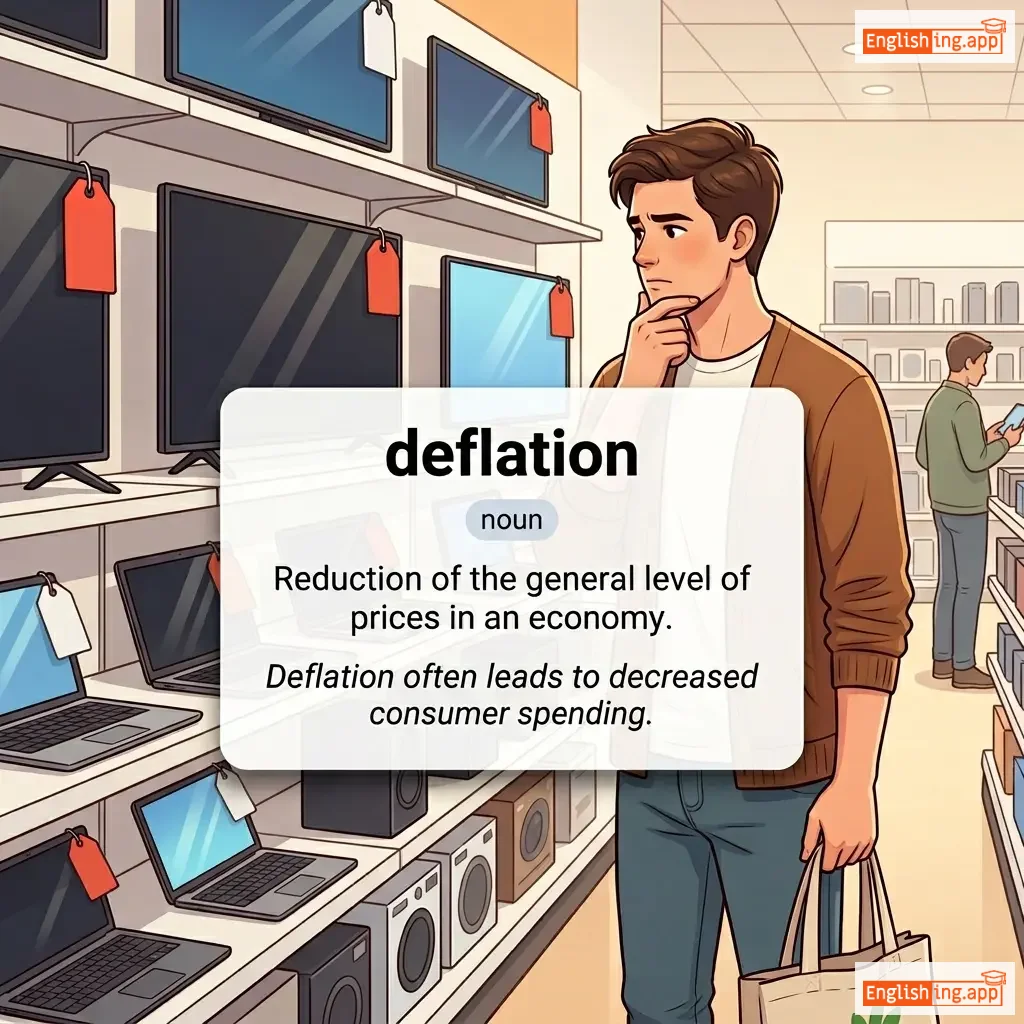
deflation definition card — visual illustration of the meaning
noun
dɪˈfleɪʃən
дефляция (deflyatsiya)

Reduction of the general level of prices in an economy.

"Deflation often leads to decreased consumer spending."

"Дефляция часто приводит к снижению потребительских расходов." (Deflyatsiya chasto privodit k snizheniyu potrebitelskih rashodov)
verb
/dɪˈflɛkt/
отклонять / избегать (otklonyat / izbegat)

to cause something to change direction; to avoid answering directly

"The shield deflected the incoming arrow."

"Щит отклонил вражескую стрелу." (Schit otklonil vrazhestvuyu strelu.)
noun
/dɪˈfoʊliənt/

a chemical that causes leaves to drop from plants, often used in warfare or agriculture

"The army sprayed defoliant to clear the forest cover."

verb
/dɪˈfoʊlieɪt/
опадать листву (opadat listvu)

to strip leaves from a tree, plant, or area, often using chemicals

"The farmers defoliated the fields before harvest."

"Фермеры опадали листву с полей перед сбором урожая." (Fermery opadali listvu s poley pered sbornom urozaya.)
verb
/diːˈfɒrɪst/
обезлесить (deforest)

to clear an area of trees, usually on a large scale

"The region has been heavily deforested for agriculture."
"Регион сильно обезлесен ради сельского хозяйства." (Region silno obezlesen radi selskogo khozyaystva)
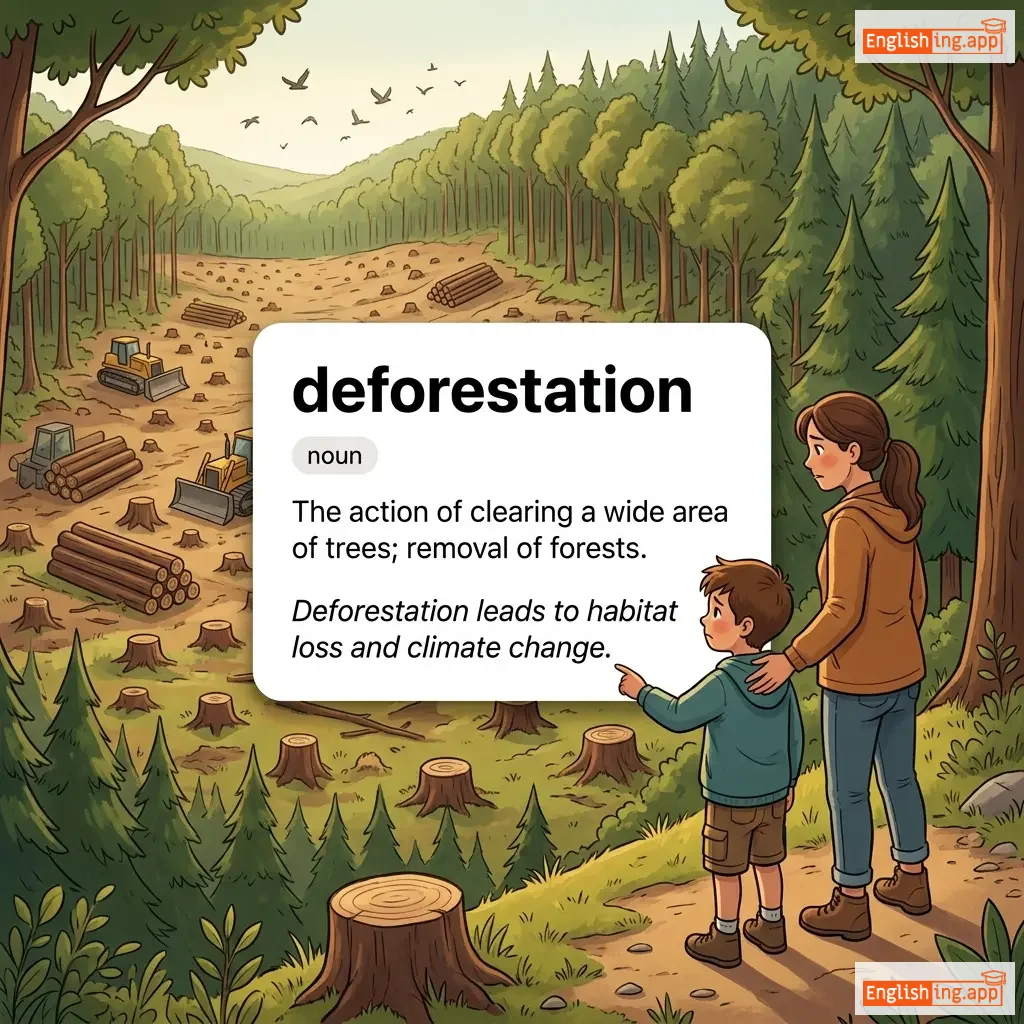
deforestation definition card — visual illustration of the meaning
noun
/ˌdiː.fɒr.ɪˈsteɪ.ʃən/
вырубка леса (vyrubka lesa)

The action of clearing a wide area of trees; removal of forests.

"Deforestation leads to habitat loss and climate change."

"Вырубка леса приводит к потере среды обитания и изменениям климата." (Vyrubka lesa privodit k potere sredu obitaniya i izmeneniyam klimata.)
verb
/dɪˈfɔːrm/
деформировать (deformirovat)

to change the normal shape or structure of something by twisting or distorting it

"Excessive heat can deform plastic containers."

"Избыточное тепло может деформировать пластиковые контейнеры." (Izbytochnoe teplo mozhet deformirovat' plastikovye konteynery.)
noun
/dɪˈfɔːrməti/
деформация (deformiti)

an abnormality or distortion in the shape or structure of a body part

"The child was born with a minor hand deformity."

"У ребенка родилась небольшой деформация руки." (U rebenka rodilas nebolshaya deformatsiya ruki)
verb
/dɪˈfrɔːd/
обмануть (obmanut)

to illegally take money or valuables from someone by deception

"The company was accused of trying to defraud investors."

"Компания была обвинена в попытке обмануть инвесторов." (Kompaniya byla obvinena v popytke obmanut' investorov.)
verb
/dɪˈfreɪ/
оплачивать расходы (oplachivat' rakhody)

to provide money to pay the costs of something

"The grant will help defray the cost of education."

"Грант поможет покрыть расходы на образование." (Grant pomozhet pokryt' raskhody na obrazovanie.)
verb
/diːˈfrɑːk/
лишить священника сана (lishit' svyashchennika sana)

to officially remove a priest or minister from their position and authority

"The church decided to defrock the priest after the scandal."
"Церковь решила лишить священника сана после скандала." (Tserkov' reshila lishit' svyashchennika sana posle skandala.)
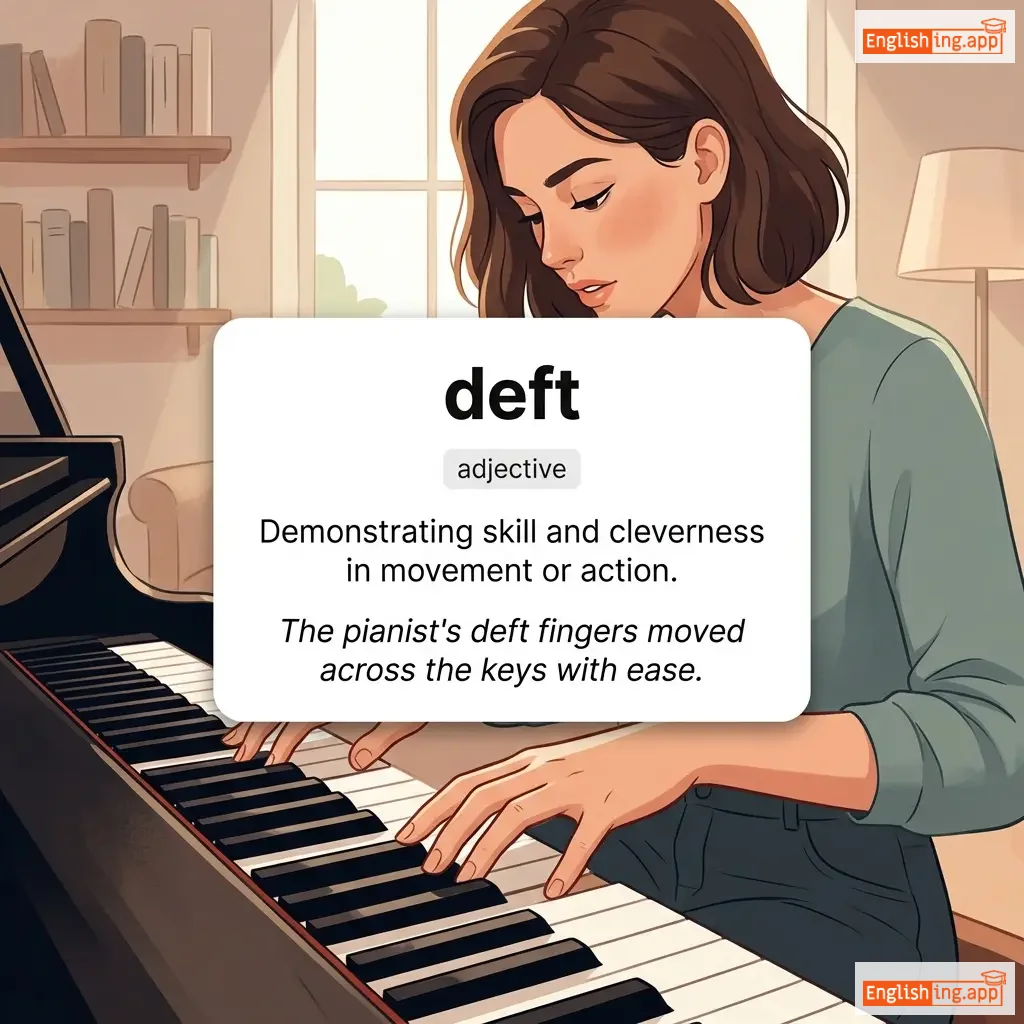
deft definition card — visual illustration of the meaning
adjective
/dɛft/
ловкий (lovkiy)

Demonstrating skill and cleverness in movement or action.

"The pianist's deft fingers moved across the keys with ease."

"Ловкие пальцы пианиста легко двигались по клавишам." (Lovkie pal'tsy pianista legko dvizhilis' po klavisham.)
noun
/ˈdɛftnəs/
ловкость (lovkost)

Skillfulness and quickness in action or thought.

"Her deftness with words impressed the audience."
"Её ловкость в словах впечатлила аудиторию." (Eyo lovkost v slovakh vpechatlila auditoriyu.)
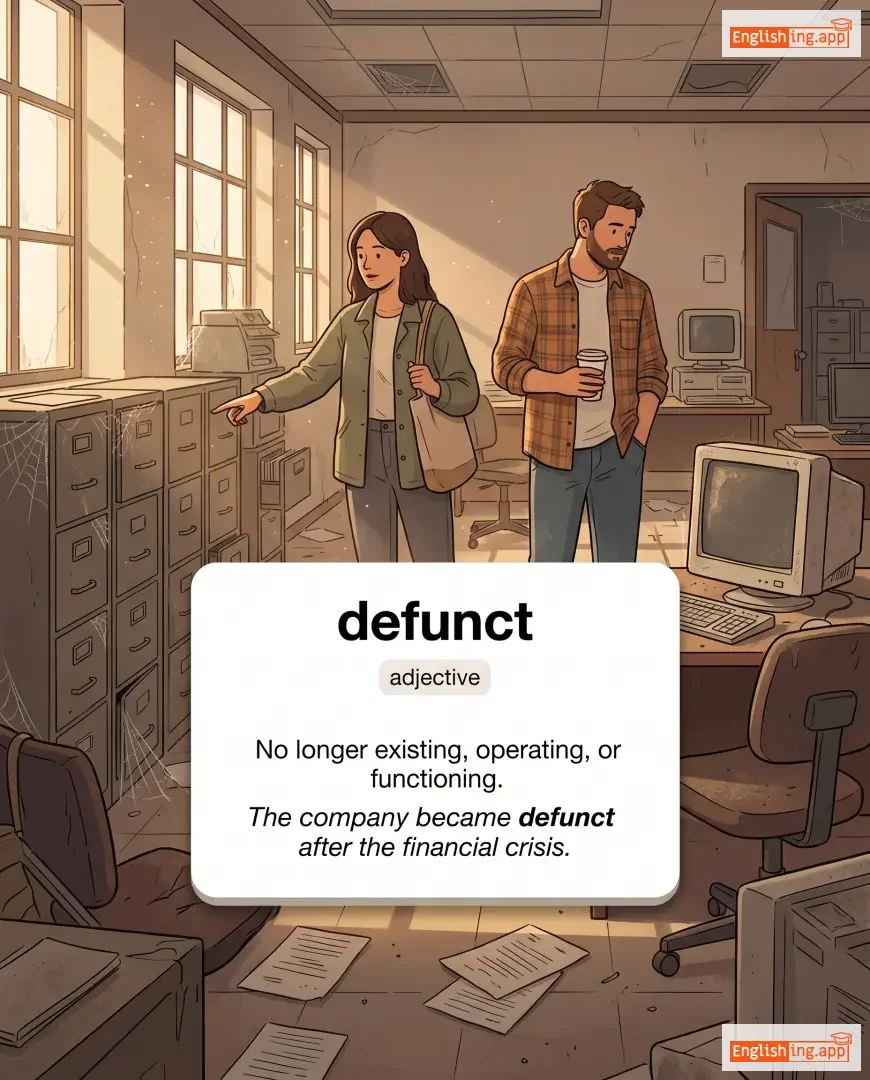
defunct definition card — visual illustration of the meaning
adjective
/dɪˈfʌŋkt/
неработающий, исчезнувший (nerabotayushchiy, ischeznavshiy)

No longer existing, operating, or functioning.

"The company became defunct after the financial crisis."

"Компания стала дефектной после финансового кризиса." (Kompaniya stala defektnoy posle finansovogo krizisa.)
verb
/diːˈfjuːz/
обезвредить (defyuz)

To make a situation less dangerous, tense, or explosive; to remove a fuse from a bomb.

"The negotiator helped defuse the tense situation."
"Переговорщик помог разрядить напряжённую обстановку." (Peregorovshchik pomog razryadit napryazhyonnuyu obstanovku.)
defy definition card — visual illustration of the meaning

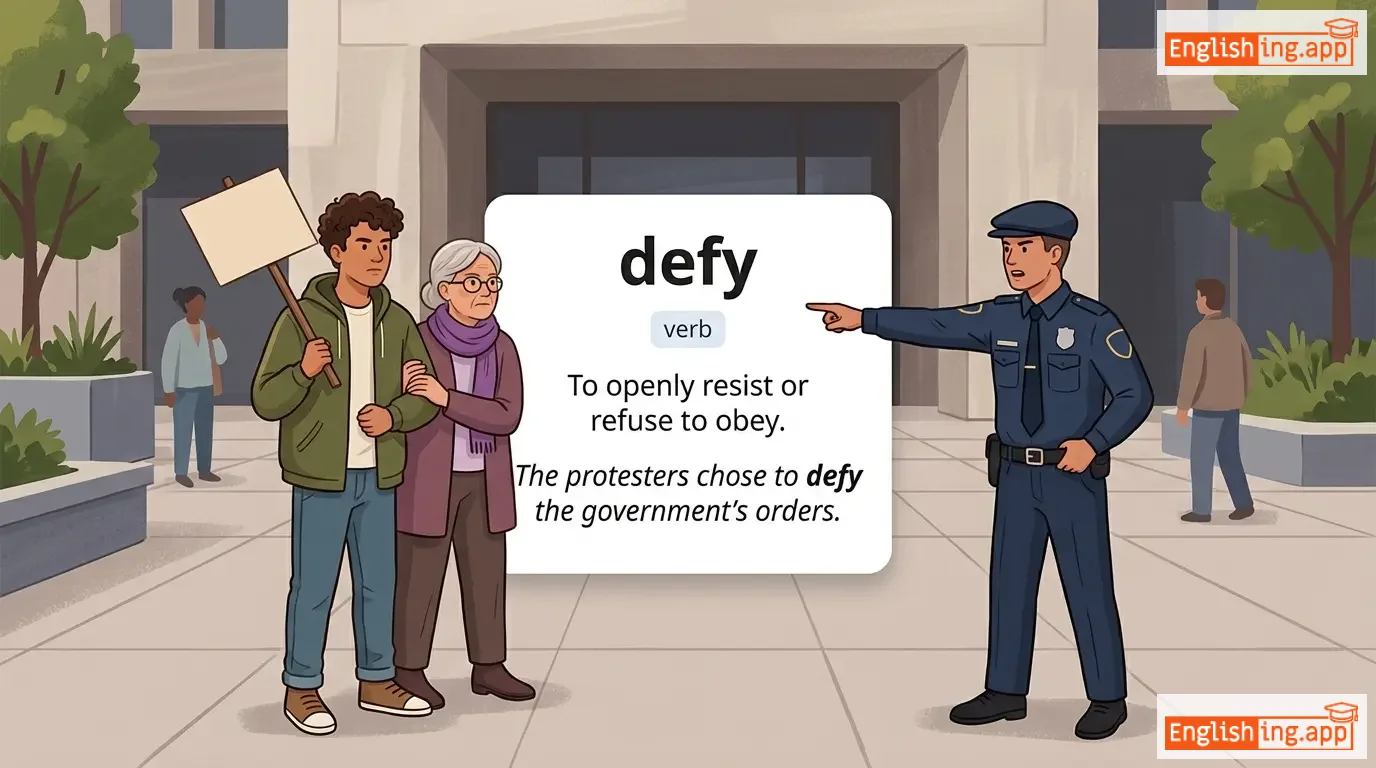
defy

verb
/dɪˈfaɪ/

To openly resist or refuse to obey.

"The protesters chose to defy the government's orders."

noun
/dɪˈdʒɛnərəsi/
деградация (degradatsiya)

The state of decline or deterioration, often in moral, cultural, or physical qualities.

"The novel portrays the moral degeneracy of a corrupt society."

"Роман изображает моральную деградацию коррумпированного общества." (Roman izobrazhaet moral'nuyu degradatsiyu korrumpirovannogo obshchestva.)
verb/adjective
/dɪˈdʒɛnəreɪt/
деградировать (degradirovat)

To decline or deteriorate in quality, character, or condition; or someone with low moral standards.

"The once thriving empire began to degenerate into chaos."
"Некогда процветающая империя начала деградировать в хаос." (Nekogda protsvetayushchaya imperiya nachala degradirovat' v khaos.)
degeneration definition card — visual illustration of the meaning
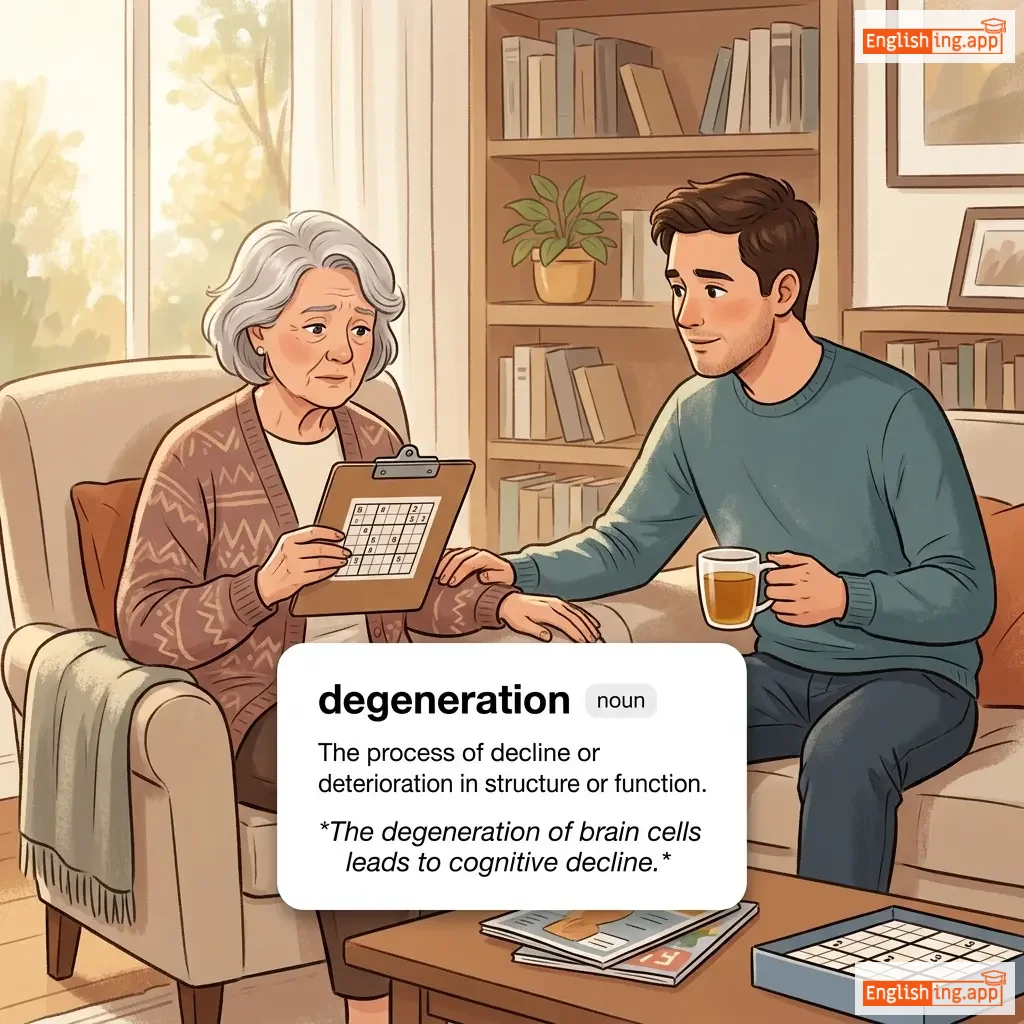
noun
ˌdɪdʒɪˈnɛəreɪʃən
деградация (degradatsiya)

The process of decline or deterioration in structure or function.

"The degeneration of brain cells leads to cognitive decline."
"Деградация клеток мозга ведет к когнитивному упадку." (Degradatsiya kletok mozga vedet k kognitivnomu upadku.)
degenerative diseases definition card — visual illustration of the meaning
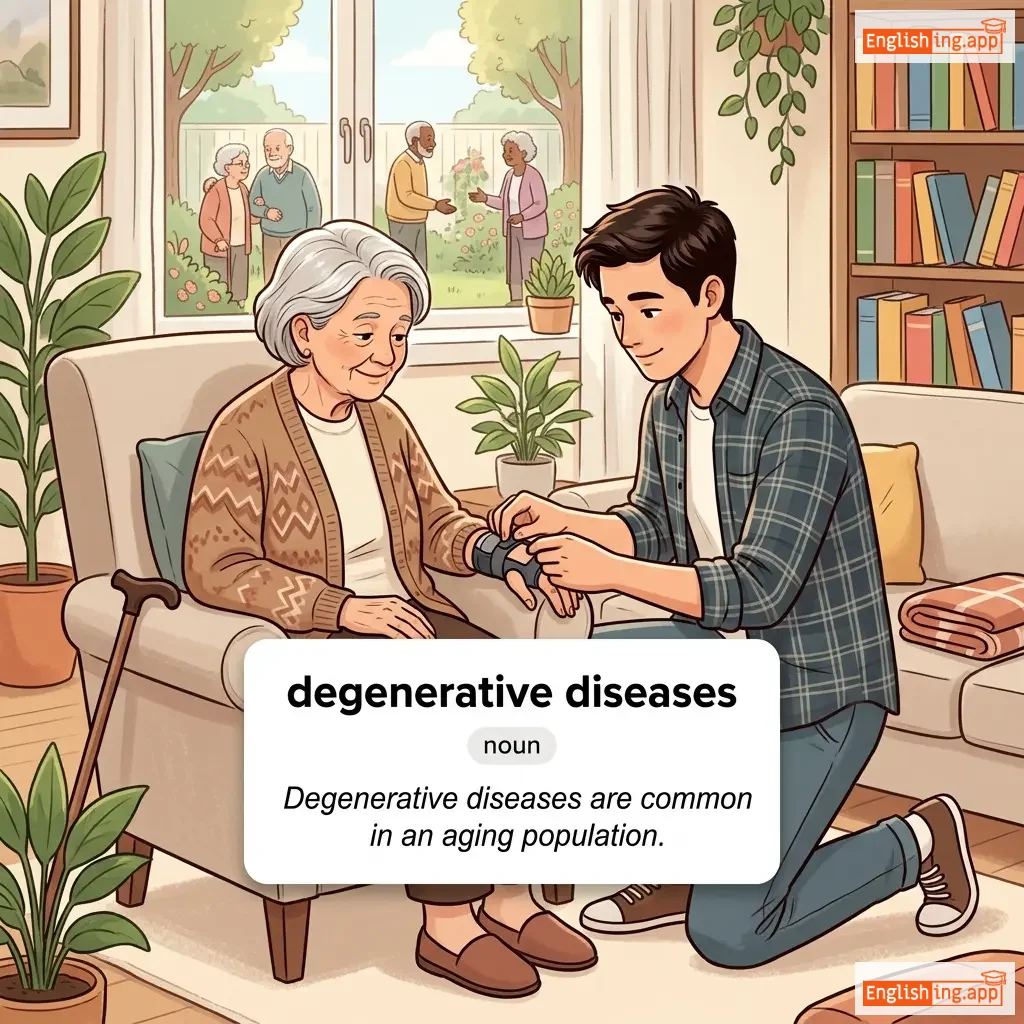
noun
dɪˈdʒɛnəˌreɪtɪv dɪˈzizɪz
дегенеративные заболевания (degenerativnye zabolevaniya)

Medical conditions that involve the deterioration or progressive decline of tissues, organs, or functions

"Degenerative diseases are common in an aging population."
"Дегенеративные заболевания распространены среди стареющего населения." (Degenerativnye zabolevaniya rasprostranyeny sredi stareyushchego naseleniya.)
degradation definition card — visual illustration of the meaning
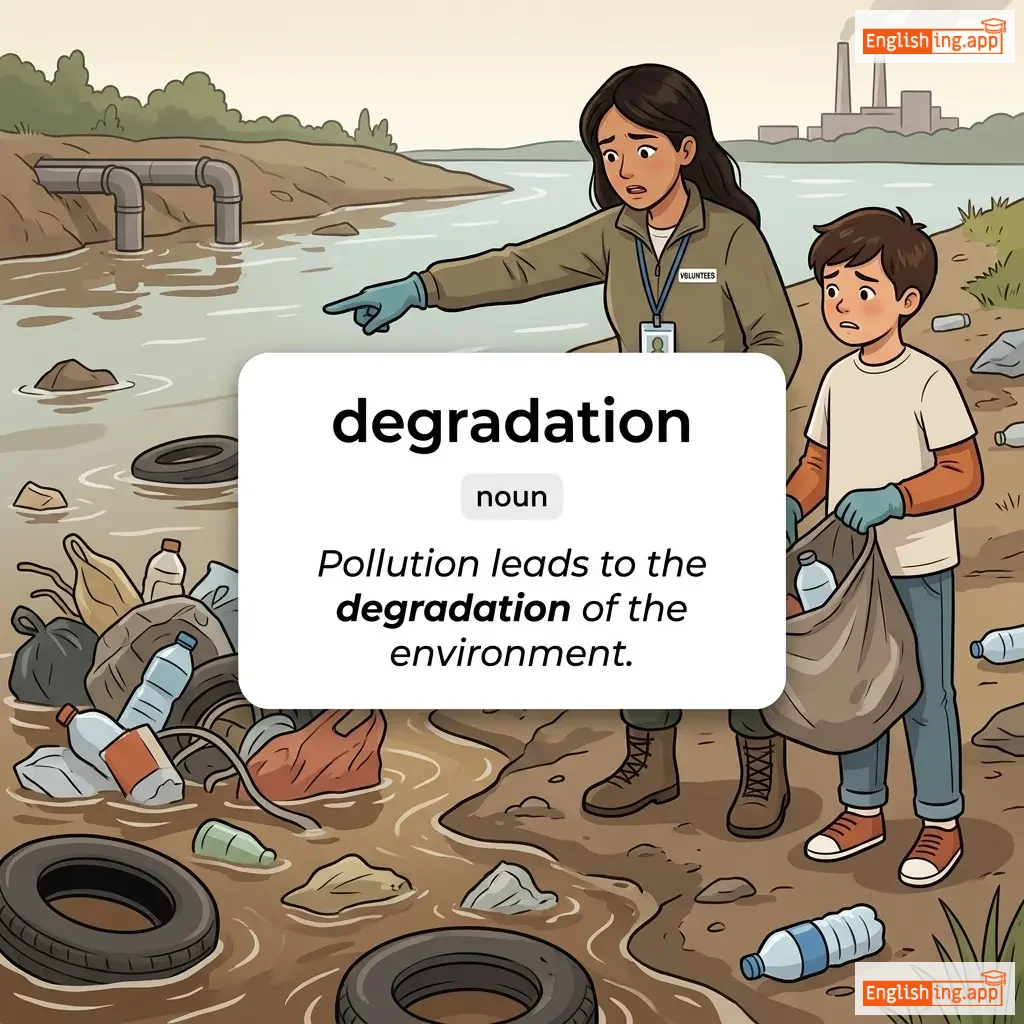
noun
/ˌdɛɡrəˈdeɪʃən/
деградация (degradatsiya)

The process of being degraded, declined, or reduced in quality, dignity, or value.

"Pollution leads to the degradation of the environment."

"Загрязнение приводит к деградации окружающей среды." (Zagryaznenie privodit k degradatsii okruzhayushchey sredy.)
⬇️😔

degrade

verb
/dɪˈɡreɪd/

To lower in dignity, quality, or value; to treat with disrespect or to deteriorate.

"Harsh words can degrade a person's confidence."

adjective
/dɪˈɡreɪdɪd/
деградированный (degradirovannyy)

Reduced in quality, dignity, or condition.

"The villagers were forced to live in degraded conditions."

"Жители деревни были вынуждены жить в деградированных условиях." (Zhiteli derevni byli vynuzhdeny zhit' v degradirovannykh usloviyakh.)
noun
/dɪˈɡriː/
степень / уровень (stepen' / urovne)

an amount or level of something; an academic qualification

"She earned a degree in engineering."

"Она получила степень в инженерии." (Ona poluchila stepen' v inzhenerii.)
verb
/diːˈhaɪdreɪt/

to remove water from something; to lose water or body fluids

"Running in the heat can quickly dehydrate you."
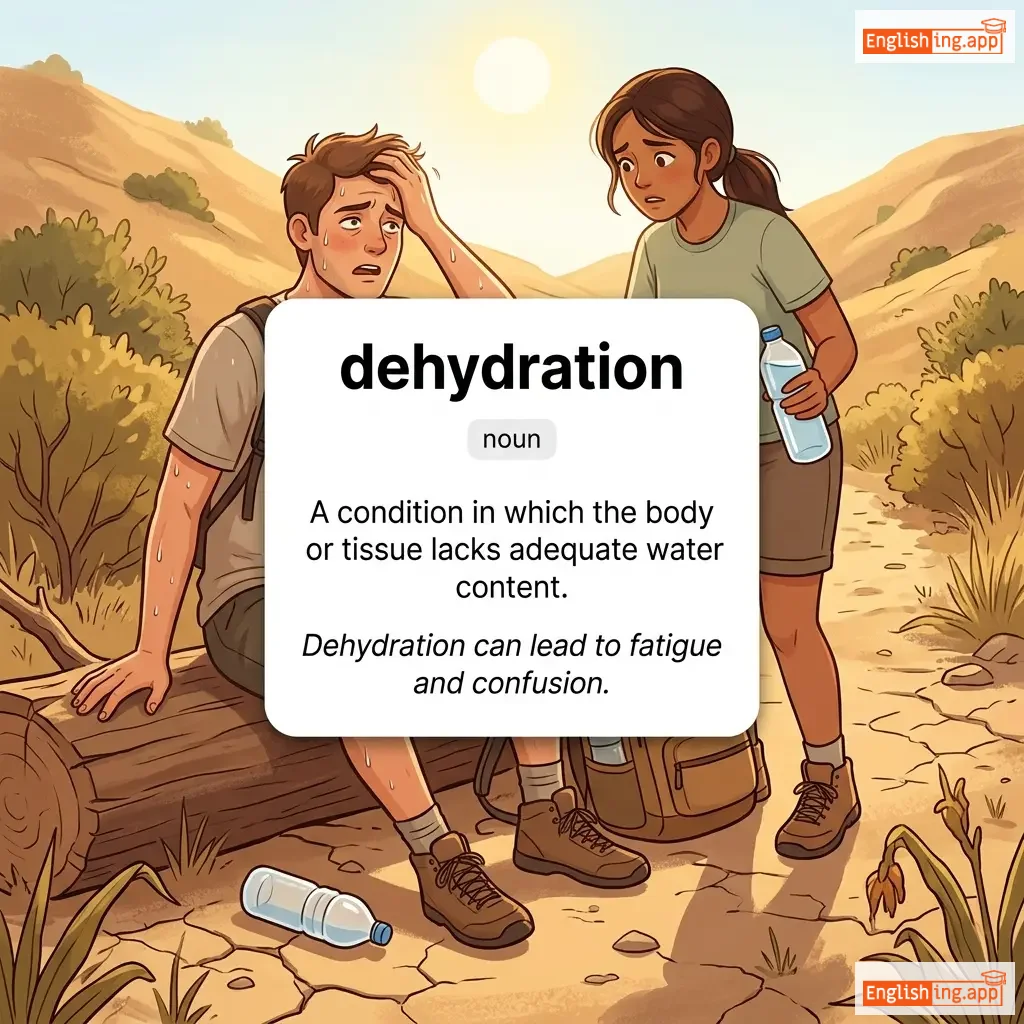
dehydration definition card — visual illustration of the meaning
noun
/ˌdiː.haɪˈdreɪʃən/
обезвоживание (obezvozhivanie)

A condition in which the body or tissue lacks adequate water content.

"Dehydration can lead to fatigue and confusion."

"Обезвоживание может привести к усталости и путанице." (obezvozhivanie mozhet privesti k ustalosti i putanitse.)
verb
/ˈdiːɪfaɪ/
обожествлять (obozhestvlyat)

to treat or worship someone or something as a god

"Some fans deify their favorite celebrities."

"Некоторые фанаты обожествляют своих любимых знаменитостей." (Nekotorye fanaty obozhestvlyayut svoikh lyubimykh zvezd.)
verb
/deɪn/
поступать ниже своей достоинства (postupat' nizhe svoey dostoinstva)

to do something considered beneath one's dignity

"The king did not deign to reply to the commoner."

"Король не удостоил себя ответить простолюдину." (Korol' ne udostoil sebya otvetit' prostolyudinu.)
noun
/ˈdiːɪst/
деист (deist)

a person who believes in the existence of a supreme being but rejects organized religion

"The philosopher identified himself as a deist."

"Философ идентифицировал себя как деиста." (Filosof identifitsiroval sebya kak deista.)