Словари

Словарь английского языка | Значения слов, определения и примеры

noun
/dɪsˈɔːrdər/
расстройство (rasstroystvo)

A state of confusion or lack of order; also a medical or mental condition.

"The protest ended in disorder when the crowd became violent."

"Протест закончился расстройством, когда толпа стала агрессивной." (Protest zakonchilsya rasstroystvom, kogda tolpa stala agressivnoy.)
verb
/dɪsˈoʊn/
отрекаться (otrekatsya)

to refuse to acknowledge or accept responsibility for someone or something

"He decided to disown his reckless brother."
"Он решил отказаться от своего безрассудного брата." (On reshil otkazatsya ot svoego bezrassudnogo brata.)
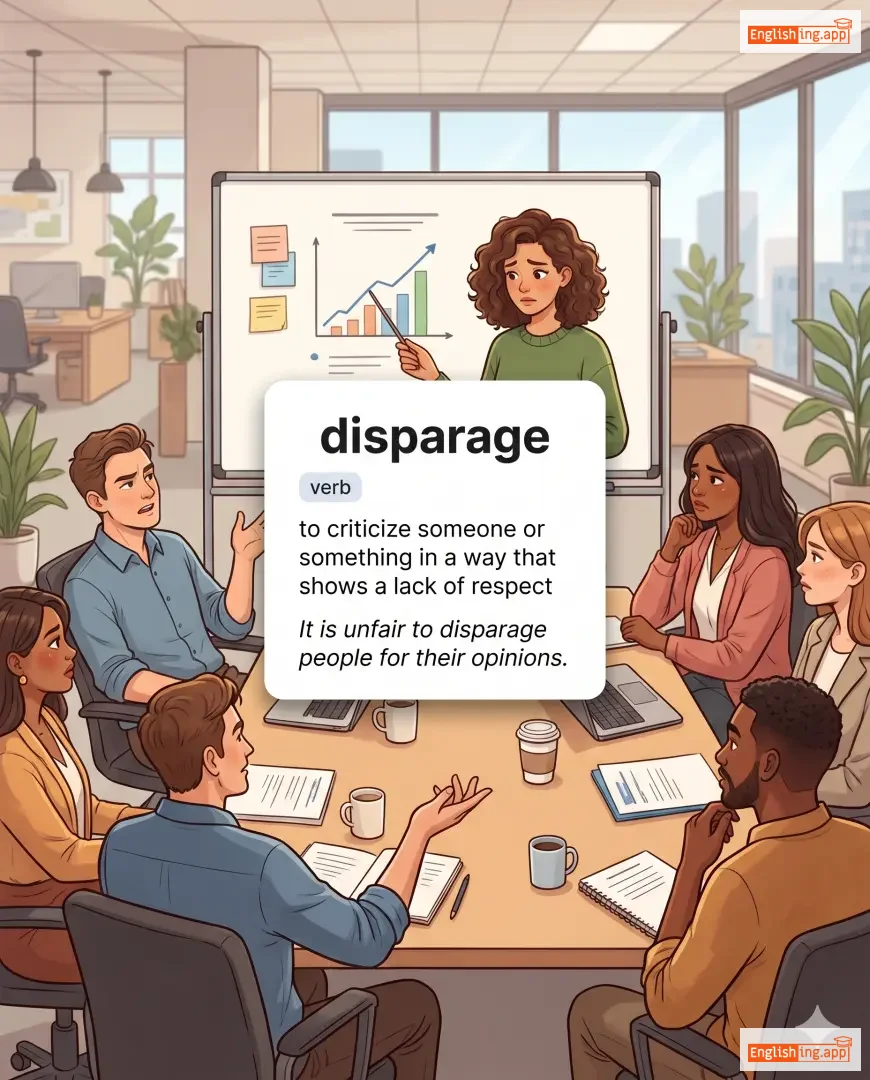
disparage definition card — visual illustration of the meaning
verb
/dɪsˈpærɪdʒ/
унижать (unizhat)

to criticize someone or something in a way that shows a lack of respect

"It is unfair to disparage people for their opinions."
"Несправедливо унижать людей за их мнения." (Nespravedlivo unizhat' lyudey za ikh mneniya.)
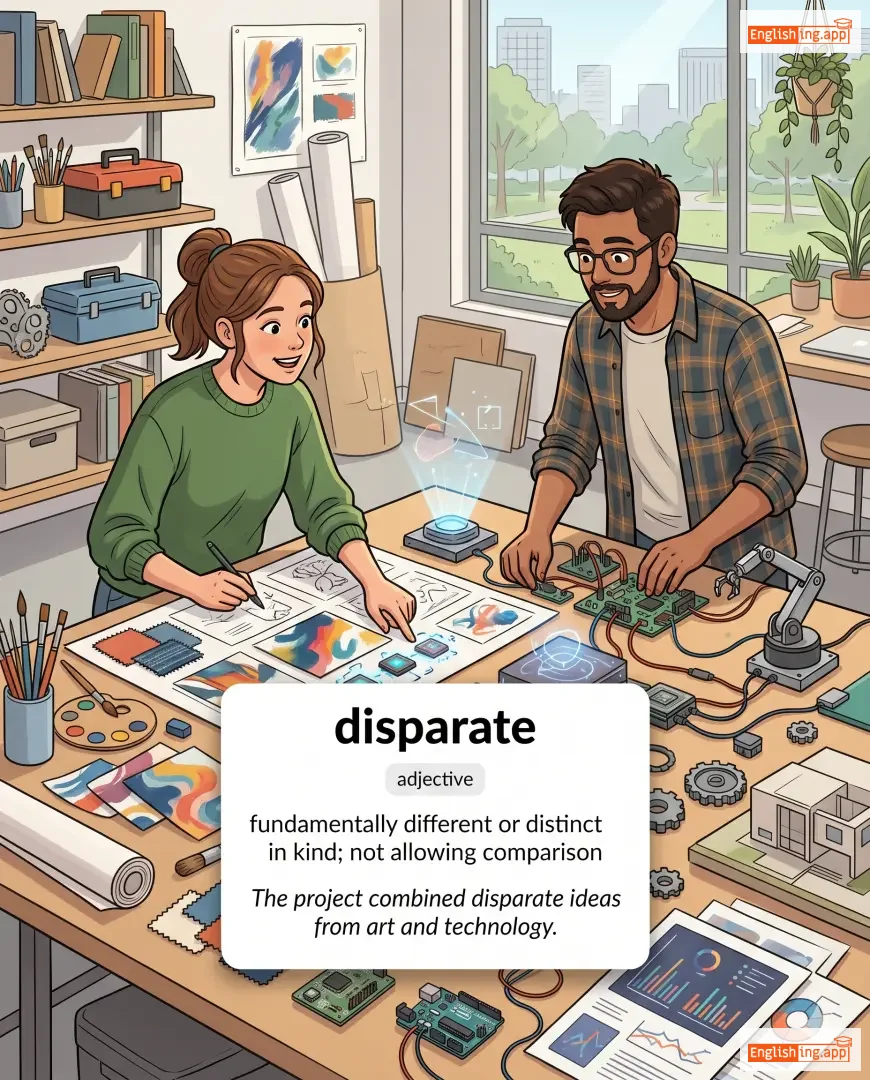
disparate definition card — visual illustration of the meaning
adjective
/ˈdɪspərət/
непохожие (nepokhozhie)

fundamentally different or distinct in kind; not allowing comparison

"The project combined disparate ideas from art and technology."
"Проект объединил непохожие идеи из искусства и технологий." (Proyekt obyedinił nepokhodiye idei iz iskusstva i tekhnologiy.)
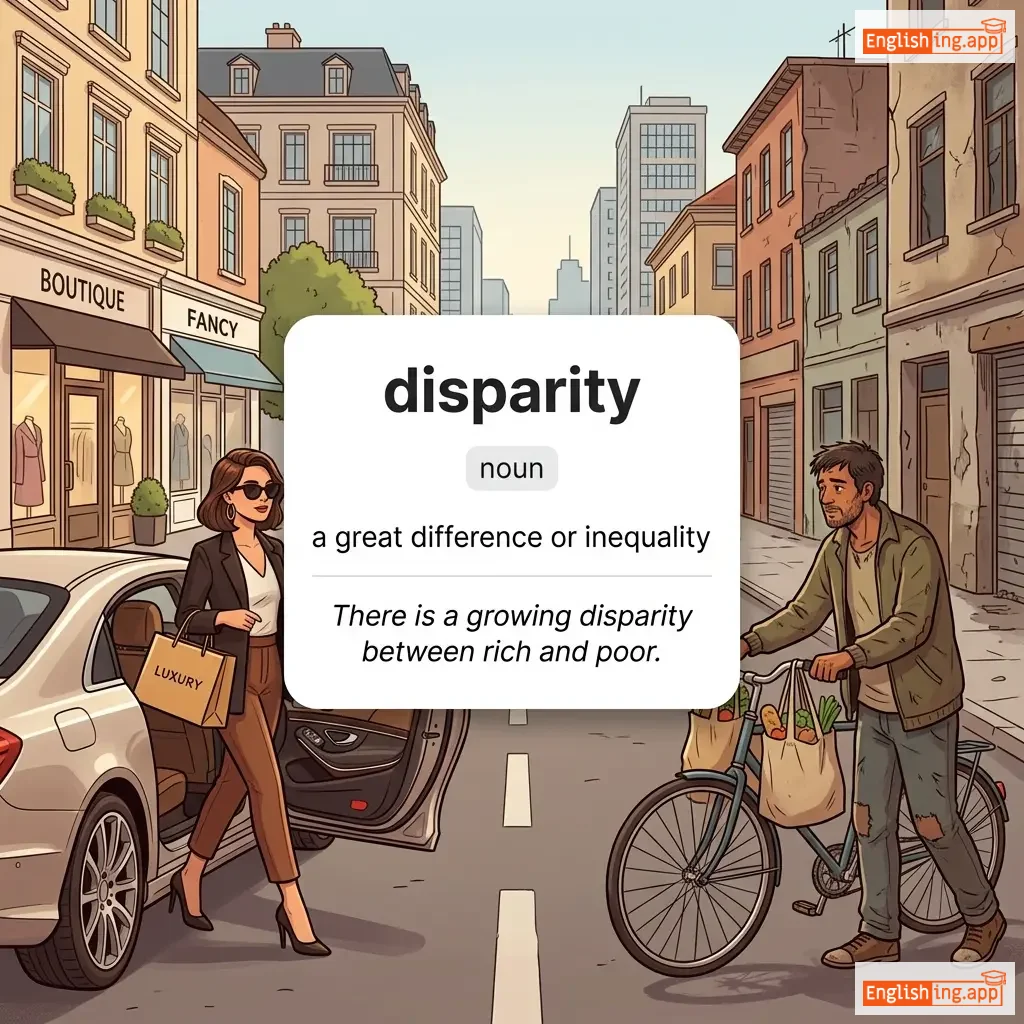
disparity definition card — visual illustration of the meaning
noun
/dɪˈspærəti/
неравенство (neravenstvo)

a great difference or inequality

"There is a growing disparity between rich and poor."

"Существует растущее неравенство между богатыми и бедными." (Sushchestvuet rastushchee neravenstvo mezhdu bogatymi i bednymi.)
adjective
/dɪsˈpæʃənət/
беспристрастный (bespristrastnyy)

not influenced by strong emotion; impartial

"The judge remained dispassionate throughout the trial."

"Судья оставался беспристрастным на протяжении всего процесса." (Sud'ya ostavalsya bespristrastnym na protyazhenii vsego protsessa.)
verb
/dɪˈspætʃ/
отправить (otpravit')

to send off to a destination or for a purpose

"The company dispatched aid to the flood victims."
"Компания отправила помощь пострадавшим от наводнения." (Kompaniya otpravila pomoshch' postradavshim ot navodneniya.)
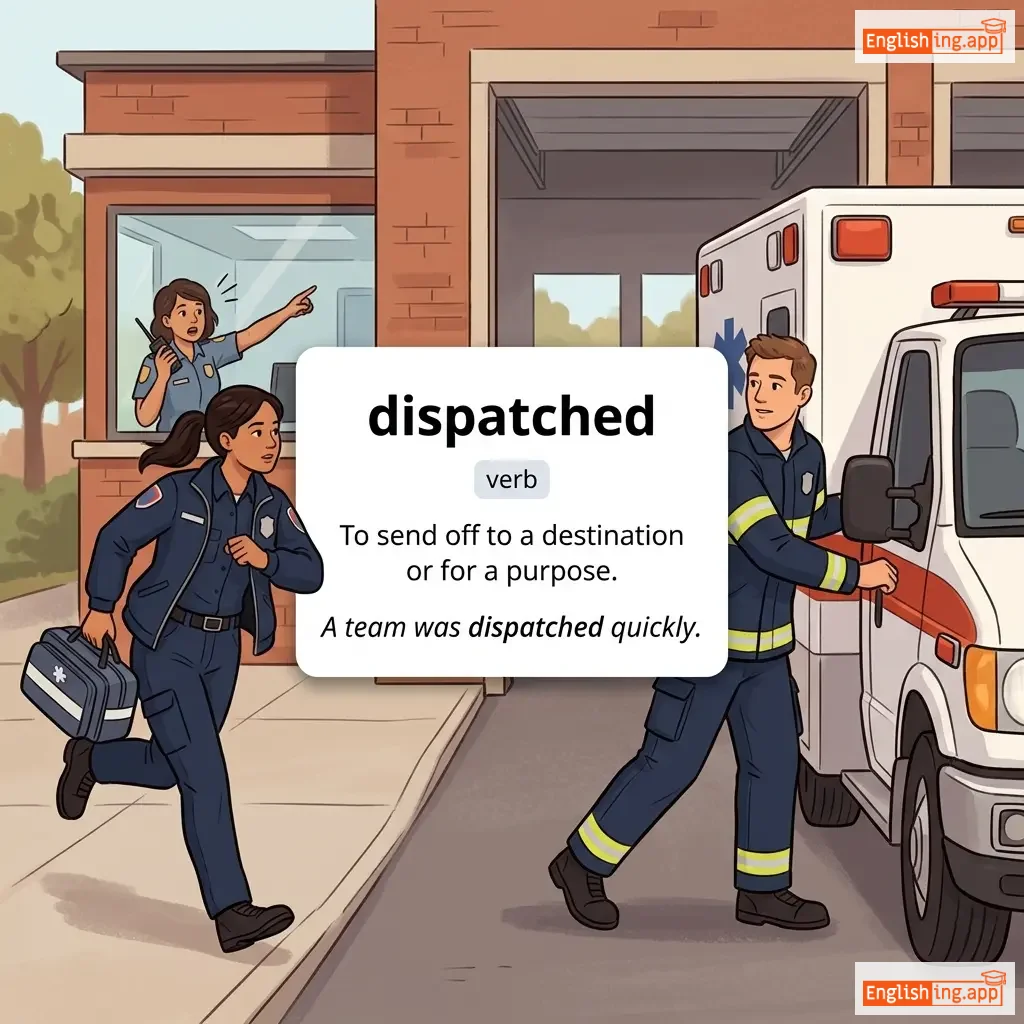
dispatched definition card — visual illustration of the meaning
verb
dɪˈspætʃt
отправленный (otpravlennyi)

To send off to a destination or for a purpose.

"A team was dispatched quickly."

"Команда была отправлена быстро." (Komanda byla otpravlena bystro.)
verb
/dɪˈspɛl/
рассеивать (rasseivat)

to make a doubt, feeling, or belief disappear

"The teacher's explanation dispelled the students' confusion."

"Объяснение учителя развеяло путаницу у студентов." (Obyasnenie uchitelya razveyalo putanitsu u studentov.)
noun
/ˌdɪspɛnˈseɪʃən/
исключение (dispenseyshn)

An exemption from a rule or usual requirement; a system of order, government, or control.

"The school granted him a special dispensation to skip the exam due to illness."

"Школа предоставила ему особое разрешение пропустить экзамен из-за болезни." (The school granted him a special dispensation to skip the exam due to illness.)
verb
/dɪˈspɛns/
распределять (raspredelyat')

To distribute or provide something, especially in portions.

"The machine dispenses clean drinking water."

"Машина диспенсирует чистую питьевую воду." (Mashina dispensiruet chistuyu pit'evuyu vodu.)
verb
/dɪˈspɜːrs/
распылять (raspylyat')

To scatter or spread widely in different directions.

"The police used tear gas to disperse the crowd."

"Полиция использовала слезоточивый газ для разгона толпы." (Politsiya ispol'zovala slezotochivyy gaz dlya razgona tolpy.)
adjective
/dɪˈspɜːrst/
распространённый (rasprostranenny)

Scattered or spread across a wide area.

"The dispersed population made it difficult to provide public services."

"Распределённое население усложнило предоставление общественных услуг." (Raspredelennoe naselenie uslozhnylo predostavlenie obshchestvennykh uslug.)
noun
/dɪˈspɜːrʒən/
распространение (rasprostranenie)

The action or process of distributing things or people over a wide area.

"The dispersion of seeds by the wind helps plants reproduce."

"Разбрасывание семян ветром помогает растениям размножаться." (Razbrasyvaniye semyan vetrom pomogaet rasteniyam razmnozhat'sya.)
adjective
/dɪˈspɪrɪtɪd/
удручённый (udryuchyonny)

Having lost enthusiasm, hope, or confidence; dejected.

"After losing the match, the team looked dispirited."

"После поражения команда выглядела удручённой." (Posle porazheniya komanda vyglyadela udryuchennoy.)
verb
/dɪsˈpleɪs/
перемещать (peremeshchat)

To force someone or something out of its usual place or position.

"The flood displaced hundreds of families from their homes."

"Наводнение переместило сотни семей из их домов." (Navodnenie peremestilo sotni semej iz ikh domov.)
verb
/dɪˈspleɪ/
показывать (pokazyvat)

To show or exhibit something to be seen.

"The shop displayed its new products in the window."

"Магазин показал свои новые продукты на витрине." (Magazin pokazal svoi novye produkty na vitriny.)
verb
/dɪsˈpɔːrt/
развлекаться (razvlekat'sya)

To amuse oneself in a lively or playful way.

"The children disported themselves in the garden."

"Дети развлекались в саду." (Deti razvlekalis' v sadu.)
noun
/dɪsˈpoʊzl/
удаление (udalenie)

the action or process of getting rid of something

"The disposal of waste is crucial for maintaining a clean environment."

"Утилизация отходов имеет решающее значение для поддержания чистоты окружающей среды." (Utilizatsiya otkhodov imeyet reshayushcheye znacheniye dlya podderzhaniya chistoty okruzhayushchey sredy.)
verb
/dɪˈspoʊz/
избавляться (izbavlyatsya)

To get rid of something, or to arrange or incline towards something.

"He disposed of the old furniture responsibly."

"Он ответственно избавился от старой мебели." (On otvetstvenno izbavilsya ot staroy mebeli.)
noun
/ˌdɪspəˈzɪʃən/
характер (kharakter)

A person's usual attitude or temperament; arrangement or tendency.

"She has a cheerful disposition despite the difficulties."

"У неё веселый характер, несмотря на трудности." (U neyo veselyy kharakter, nesmotrya na trudnosti.)
verb
/ˌdɪspəˈzɛs/
лишать (lishat)

to deprive someone of land, property, or other possessions

"The new law threatened to dispossess many farmers of their land."

"Новый закон угрожал лишить многих фермеров их земли." (Novyy zakon ugruzhal lishit mnogikh fermerov ikh zemli.)
noun
/ˌdɪsprəˈpɔːrʃən/
диспропорция (disproportsiya)

a lack of balance or symmetry; an inequality

"There is a clear disproportion between rich and poor in many societies."

"Существует явная диспропорция между богатыми и бедными в различных обществах." (Sushchestvuyet yavnyaya disproportsiya mezhdu bogatymi i bednymi v razlichnykh obshchestvakh.)
verb
/dɪsˈpruːv/
опровергать (oprovergat)

to show that something is false or wrong

"The scientist worked hard to disprove the old theory."

"Ученый усердно работал, чтобы опровергнуть старую теорию." (Uchenyi userdno rabotal, chtoby oprovergnut' staruyu teoriu.)
adjective
/dɪˈspjuːtəbl/
спорный; сомнительный (spornyj; somnitel'nyj)

open to debate or argument; questionable

"The facts in the case are disputable and need further investigation."

"Факты в деле спорны и требуют дополнительного расследования." (Fakty v dele sporny i trebuyut dopolnitel'nogo rassledovaniya.)
noun
/ˌdɪspjuːˈteɪʃən/
дискуссия (diskussiya)

a formal debate or argument

"The disputation between the two scholars lasted for hours."

"Дискуссия между двумя учеными продолжалась несколько часов." (Diskussiya mezhdu dvumya uchenymi prodolzhalas' neskol'ko chasov.)
adjective
/ˌdɪspjuːˈteɪʃəs/
спорщик (sporschik)

fond of or given to argument and debate

"His disputatious nature often led to heated conversations."

"Его спорный характер часто приводил к горячим дискуссиям." (Yego spornyy kharakter chasto privodil k goryachim diskussiyam.)
noun/verb
/dɪˈspjuːt/
спор, разногласие (spor, raznoglasiye)

a disagreement or argument about something important

"The two countries are in dispute over the border issue."

"Две страны находятся в споре по поводу вопроса границы." (Dve strany nakhodyatsya v spore po povodu voprosa granitsy.)
verb
/dɪsˈkwɑːlɪfaɪ/
дисквалифицировать (diskvalifitsirovat)

to officially prevent someone from participating or being eligible

"The referee decided to disqualify the player for cheating."

"Арбитр решил дисквалифицировать игрока за мошенничество." (Arbitr reshil diskvalifitsirovat igroka za moshennichestvo.)
noun/verb
/dɪsˈkwaɪət/

A feeling of worry or unease; to make someone feel anxious or uneasy.

"The strange silence filled the room with disquiet."

adjective
/dɪsˈkwaɪətɪŋ/
тревожный (trevozhny)

Causing worry, unease, or anxiety.

"The news report was deeply disquieting to the public."

"Новостной репортаж был глубоко тревожным для общественности." (Novostnoy reportazh byl gluboko trevozhnym dlya obshchestvennosti.)
noun
/dɪsˈkwaɪɪtjuːd/
беспокойство (diskvaytyud)

A state of uneasiness, anxiety, or restlessness.

"His constant pacing showed his inner disquietude."

"Его постоянное шагание показывало его внутреннее беспокойство." (Ego postoyannoe shaganie pokazyvalo ego vnutrennee bespokoystvo.)
noun
/ˌdɪskwɪˈzɪʃən/
дискуссия (diskussiya)

A long or elaborate discussion or written essay on a particular subject.

"The professor gave a lengthy disquisition on ancient philosophy."

"Профессор прочитал долгую дискуссию по древней философии." (Professor prochital dolguyu diskussiyu po drevney filosofii.)
verb/noun
/ˌdɪsrɪˈɡɑːrd/
презрение (prezrenie)

To ignore something; lack of consideration or respect for something.

"He disregarded the warning signs and kept driving."

"Он проигнорировал предупреждающие знаки и продолжал ехать." (On proignoriroval preduprezhdayushchie znaki i prodolzhal yehat'.)
adjective
/dɪsˈrɛpjətəbl̩/
позорный (pozornyj)

having a bad reputation; not considered respectable or trustworthy

"The journalist avoided staying in the disreputable part of town."

"Журналист избегал оставаться в позорной части города." (Zhurnalist izbegal ostavat'sya v pozornoy chasti goroda.)
noun
/ˌdɪsrɪˈpjuːt/
дурная слава (durnaya slava)

the state of being held in low esteem or having a bad reputation

"The scandal brought the politician into disrepute."

"Скандал привел политика к дурной славе." (Skandal privel politika k durnoy slave.)
verb
/dɪsˈroʊb/
раздеваться (razdevat'sya)

to remove one's clothes

"The monk disrobed before entering the river."
"Монах раздевается перед тем, как войти в реку." (Monakh razdevayetsya pered tem, kak voiti v reku.)
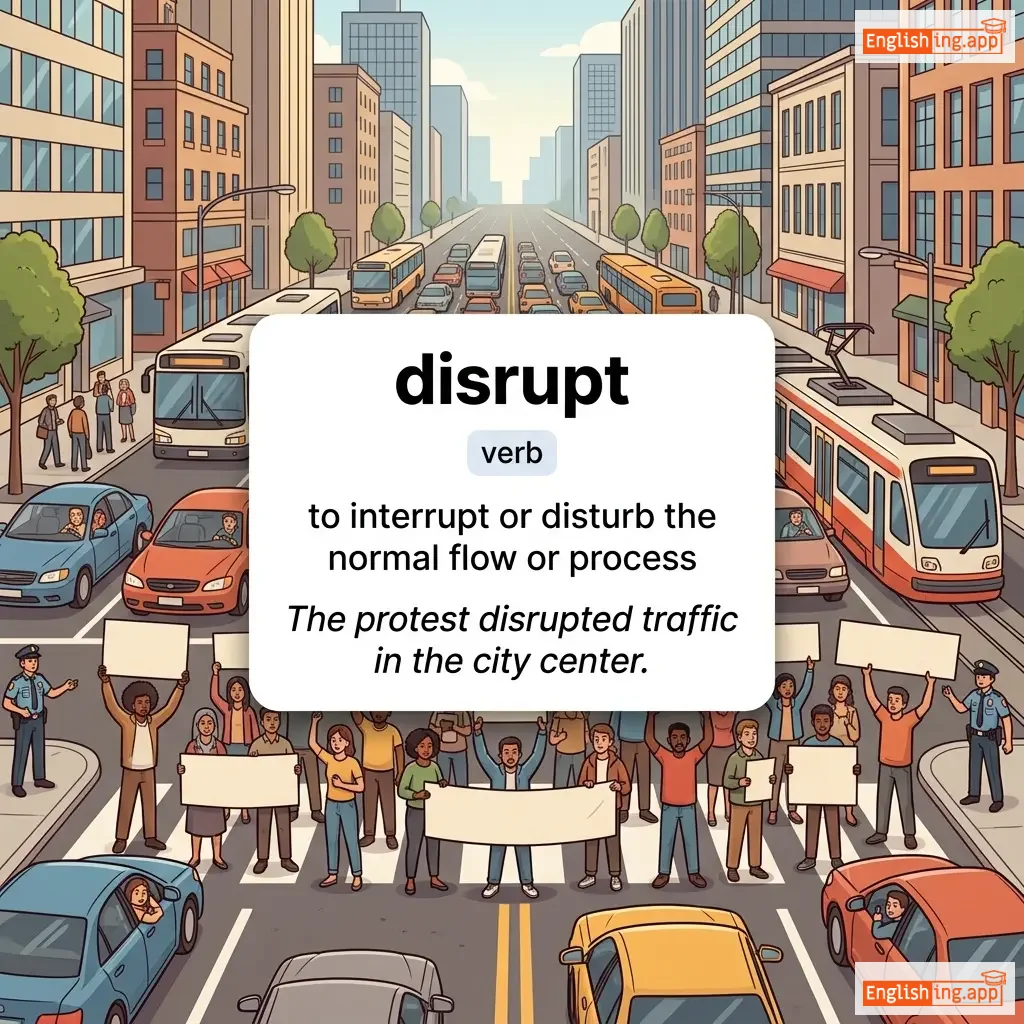
disrupt definition card — visual illustration of the meaning
verb
/dɪsˈrʌpt/
нарушать (narushat)

to interrupt or disturb the normal flow or process

"The protest disrupted traffic in the city center."
"Протест нарушил движение на центральной улице города." (Protest narushil dvizhienie na tsentral'noy ulitse goroda.)
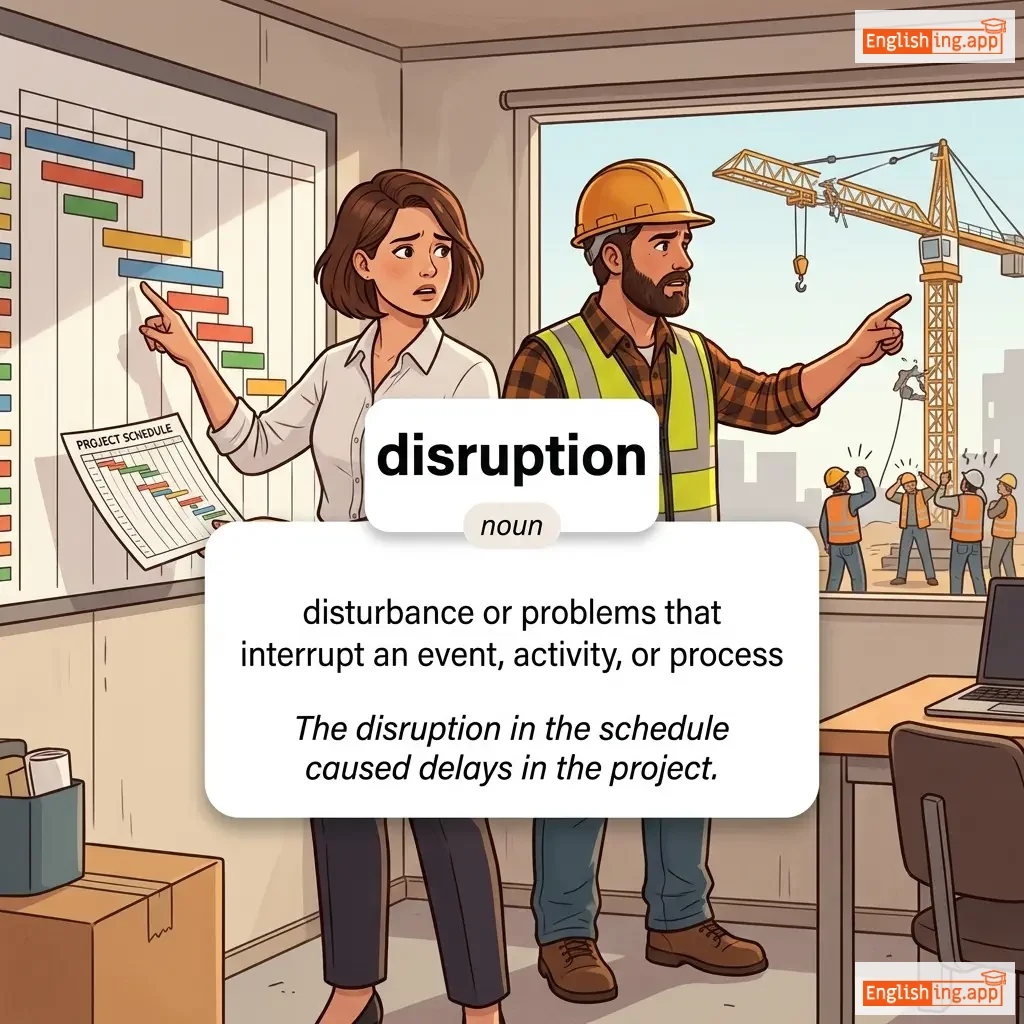
disruption definition card — visual illustration of the meaning
noun
/dɪsˈrʌpʃən/
нарушение (narushenie)

disturbance or problems that interrupt an event, activity, or process

"The disruption in the schedule caused delays in the project."

"Нарушение расписания вызвало задержки в проекте." (Narusheniye raspisaniya vyzvalo zaderzhki v proyekte.)
disruptive definition card — visual illustration of the meaning
adjective
/dɪsˈrʌp.tɪv/
разрушительный (razrushitel'nyy)

Something that brings major changes to existing markets or industries

"E-commerce has been disruptive to traditional retail businesses."

"Электронная коммерция была разрушительной для традиционных розничных бизнесов." (Elektronnaya kommertsija byla razrushitel'noj dlya traditsionnykh roznichnykh biznesov.)
verb
/dɪsˈsætɪsfaɪ/
разочаровывать (razocharovyvat)

to fail to please or meet expectations; to make someone unhappy

"The poor service dissatisfies many customers."

"Плохое обслуживание не устраивает многих клиентов." (Plokhoe obsluzhivanie ne ustraivaet mnogikh klientov.)
verb
/dɪˈsɛkt/

to cut apart an animal, plant, or other organism to study its internal parts; to analyze something in detail

"In biology class, students had to dissect a frog to learn about its anatomy."

noun
/daɪˈsɛkʃən/
диссекция (dissektsiya)

the act of cutting apart or analyzing something in detail, especially a body or structure

"The dissection of the specimen revealed important details about its structure."
"Диссекция образца выявила важные детали о его структуре." (Dissektsiya obraktsa vyyavila vazhnyye detali o yego strukture.)
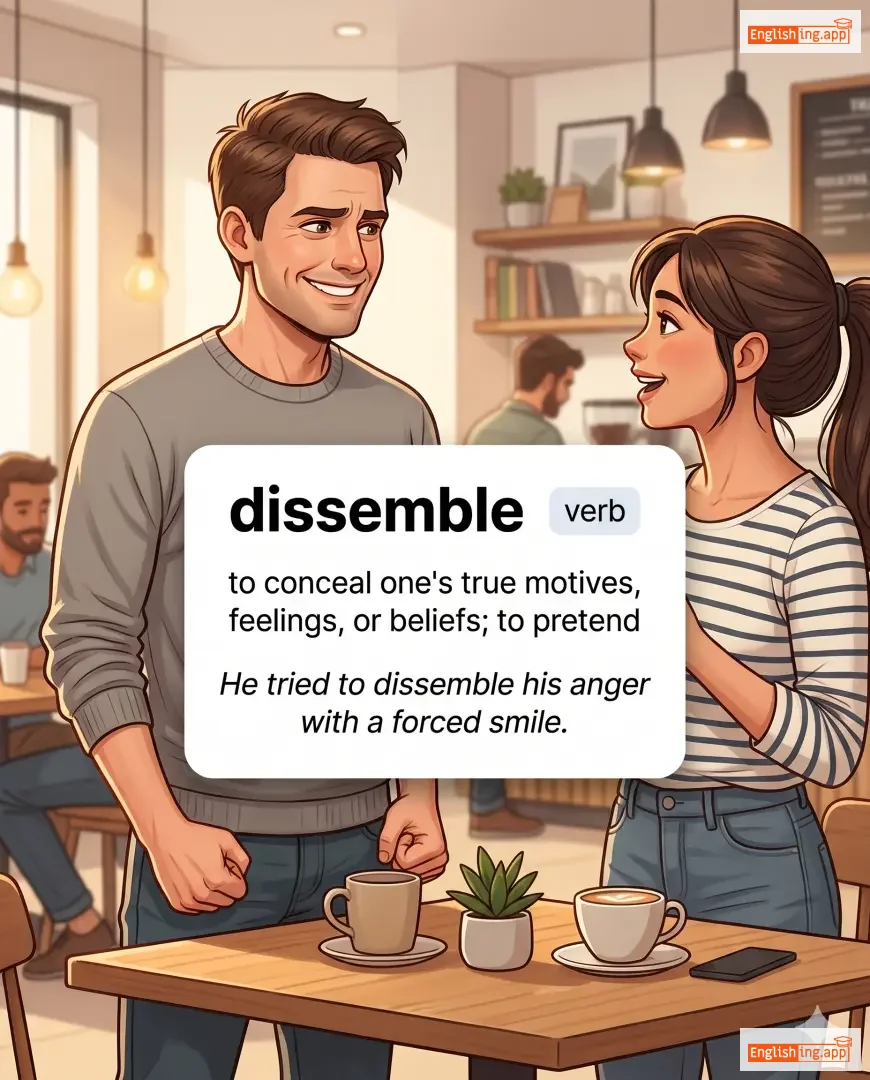
dissemble definition card — visual illustration of the meaning
verb
/dɪˈsɛmbəl/
притворяться (pritvoryatsya)

to conceal one's true motives, feelings, or beliefs; to pretend

"He tried to dissemble his anger with a forced smile."

"Он пытался скрыть свой гнев с помощью натянутой улыбки." (On pytalsya skryt' svoi gnev s pomoshch'yu natyanutoy ulybki.)
noun
/dɪˈsɛmbələr/
лицемер (litsemer)

a person who conceals their real feelings or intentions; a hypocrite or pretender

"The politician was accused of being a dissembler who never revealed his true plans."
"Политик был обвинен в том, что он был лицемером, который никогда не раскрывал свои настоящие планы." (Politik byl obvinen v tom, chto on byl litsemerom, kotoryi nikogda ne raskryval svoi nastoyashchie plany.)
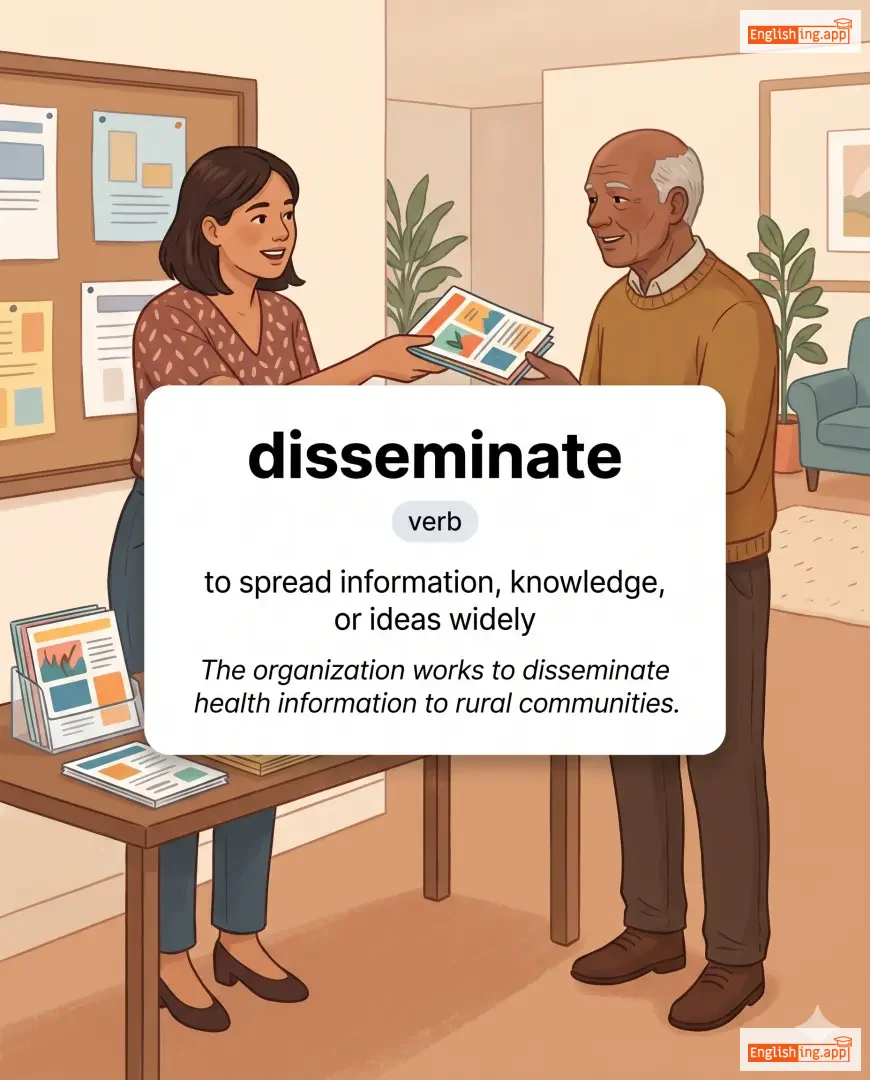
disseminate definition card — visual illustration of the meaning
verb
/dɪˈsɛmɪˌneɪt/
распространять (rasprostranyat')

to spread information, knowledge, or ideas widely

"The organization works to disseminate health information to rural communities."
"Организация работает над распространением информации о здоровье в сельских районах." (Organizatsiya rabotayet nad rasprostraneniem informatsii o zdorov'ye v selskih rayonah.)
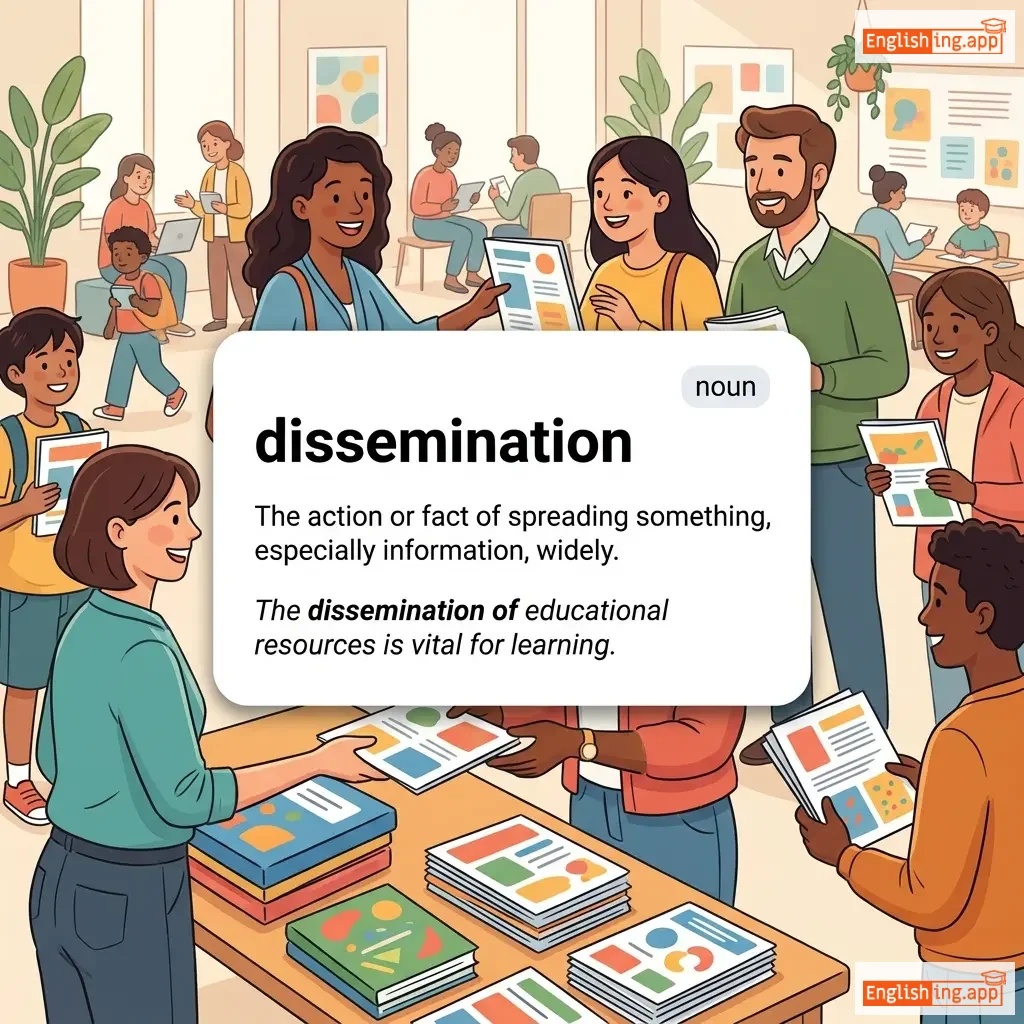
dissemination definition card — visual illustration of the meaning
noun
dɪˌsɛm.ɪˈneɪ.ʃən
распространение (rasprostranenie)

The action or fact of spreading something, especially information, widely.

"The dissemination of educational resources is vital for learning."

"Распределение образовательных ресурсов имеет важное значение для обучения." (Raspredeleniye obrazovatel'nykh resursov imeyet vazhnoe znacheniye dlya obucheniya.)
noun
/dɪˈsɛnʃən/
разногласие (raznoglasiya)

Strong disagreement or difference of opinion, especially leading to discord within a group.

"The meeting ended in dissension among the committee members."

"Встреча закончилась разногласием среди членов комитета." (Vstrecha zakonchilas' raznoglasiyaem sredi chlenov komiteta.)
verb
/dɪˈsɛnt/
возражать (dissent)

To hold or express opinions that are different from those officially accepted.

"Several members dissented from the majority decision."

"Несколько членов не согласились с решением большинства." (Neskolko chlenov ne soglasilis s resheniem bolshinstva.)
adjective
/dɪˈsɛnʃənt/
диссидент (dissident)

Expressing or holding opinions that are opposed to the majority or official view.

"Only a few dissentient voices were heard during the debate."

"Только несколько диссидентских голосов были слышны во время дебатов." (Tol'ko neskol'ko dissidentskikh golosov byli slyshny vo vremya debatov.)