ভোকাবুলারিসমূহ

ইংরেজি শব্দের বাংলা অর্থ | English to Bangla Word Meaning Dictionary

noun
/dɪsˈɔːrdər/
অস্থিরতা / অসুখ (osthirata / oshukh)

A state of confusion or lack of order; also a medical or mental condition.

"The protest ended in disorder when the crowd became violent."

"ভিড় সহিংস হলে প্রতিবাদটি বিশৃঙ্খলায় শেষ হয়েছিল।" (Bhid sohingso hole protibadti bishrinkhalay shesh hoyechilo.)
verb
/dɪsˈoʊn/
অস্বীকার করা (oswikar kora)

to refuse to acknowledge or accept responsibility for someone or something

"He decided to disown his reckless brother."

"সে তার বেপরোয়া ভাইকে অস্বীকার করার সিদ্ধান্ত নিল।" (Se tar beprowa bhaike oswikar korar siddhanto nilo.)
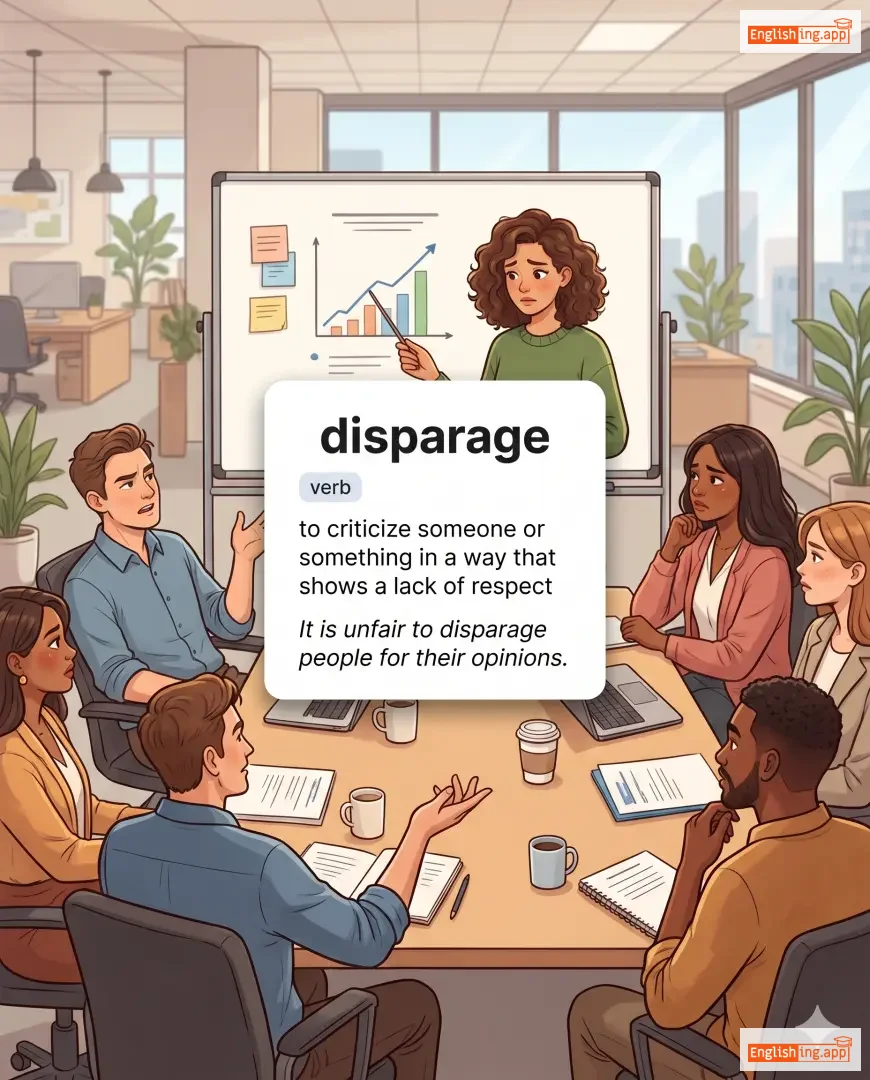
disparage definition card — visual illustration of the meaning
verb
/dɪsˈpærɪdʒ/
তুচ্ছতাচ্ছিল্য করা (tuchhotachchhilo kora)

to criticize someone or something in a way that shows a lack of respect

"It is unfair to disparage people for their opinions."

"মানুষের মতামতের জন্য তাদের তুচ্ছতাচ্ছিল্য করা অন্যায়।" (Manusher motamoter jonno tader tuchhotachchhilo kora onnoay.)
disparate definition card — visual illustration of the meaning
adjective
/ˈdɪspərət/
ভিন্নধর্মী (vinnodhormi)

fundamentally different or distinct in kind; not allowing comparison

"The project combined disparate ideas from art and technology."

"প্রকল্পটি শিল্প ও প্রযুক্তি থেকে ভিন্নধর্মী ধারণাগুলিকে একত্র করেছিল।" (Prokolpo shilpo o projukti theke vinnodhormi dharanaguli ke ekotro korechilo.)
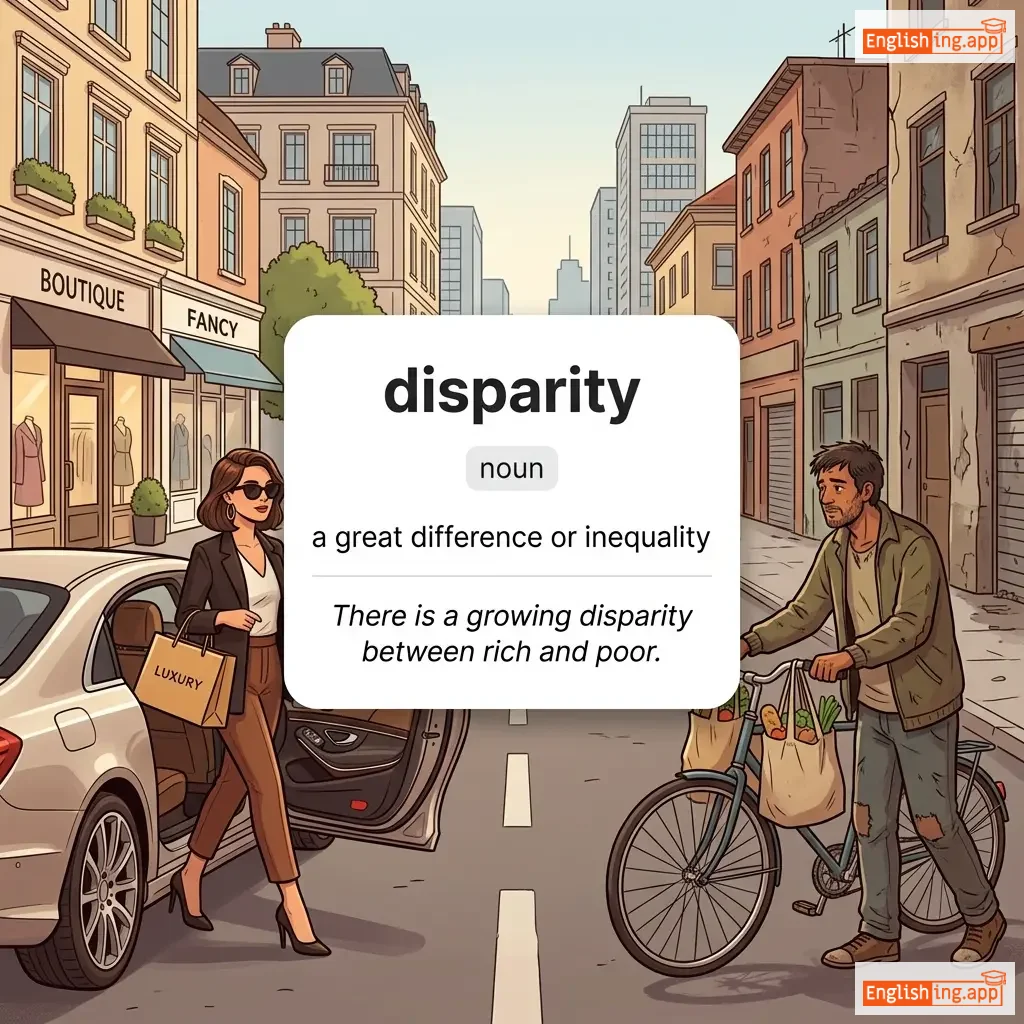
disparity definition card — visual illustration of the meaning
noun
/dɪˈspærəti/
অসাম্য (osamya)

a great difference or inequality

"There is a growing disparity between rich and poor."

"ধনী ও গরিবের মধ্যে ক্রমবর্ধমান অসাম্য রয়েছে।" (Dhoni o goriber moddhe krombordhoman osamya royeche.)
adjective
/dɪsˈpæʃənət/
অকপট (okopot)

not influenced by strong emotion; impartial

"The judge remained dispassionate throughout the trial."

"বিচারক পুরো বিচার প্রক্রিয়াজুড়ে নিরপেক্ষ ছিলেন।" (Bicharok puro bichar prokriyay jure niropekkho chilen.)
verb
/dɪˈspætʃ/
পাঠানো (pathano)

to send off to a destination or for a purpose

"The company dispatched aid to the flood victims."

"কোম্পানিটি বন্যাদুর্গতদের কাছে সাহায্য পাঠিয়েছিল।" (Companiti bonnadurgotoder kache sahajyo pathiyechilo.)
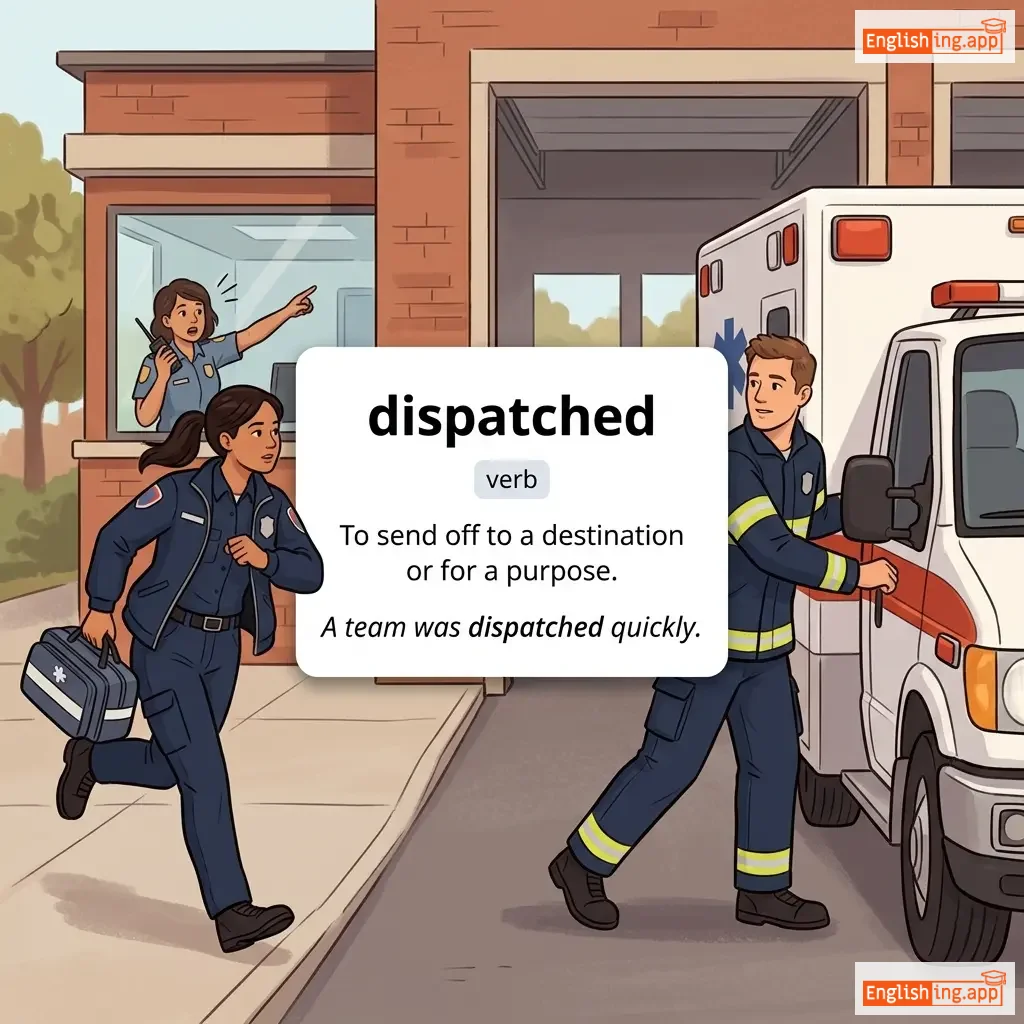
dispatched definition card — visual illustration of the meaning
verb
dɪˈspætʃt
প্রেরণ করা (preron kora)

To send off to a destination or for a purpose.

"A team was dispatched quickly."

"একটি দল দ্রুত প্রেরণ করা হয়।" (Ekti dol druto preron kora hoy.)
verb
/dɪˈspɛl/
দূর করা (dur kora)

to make a doubt, feeling, or belief disappear

"The teacher's explanation dispelled the students' confusion."

"শিক্ষকের ব্যাখ্যা ছাত্রদের বিভ্রান্তি দূর করেছিল।" (Shikkhoker byakkha chatroder bivhranti dur korechilo.)
noun
/ˌdɪspɛnˈseɪʃən/
বিশেষ অনুমতি (bishes onumoti)

An exemption from a rule or usual requirement; a system of order, government, or control.

"The school granted him a special dispensation to skip the exam due to illness."

"অসুস্থতার কারণে তাকে পরীক্ষাটি বাদ দেওয়ার জন্য স্কুল তাকে একটি বিশেষ অনুমতি দিয়েছিল।" (Osusthatar karone take porikkhati bad dewar jonno school take ekta bishes onumoti diyechilo.)
verb
/dɪˈspɛns/
বিতরণ করা (bitoron kora)

To distribute or provide something, especially in portions.

"The machine dispenses clean drinking water."

"মেশিনটি পরিষ্কার পানীয় জল বিতরণ করে।" (Meshinti porishkar paniyo jol bitoron kore.)
verb
/dɪˈspɜːrs/
ছত্রভঙ্গ করা (chhotrobhongo kora)

To scatter or spread widely in different directions.

"The police used tear gas to disperse the crowd."

"পুলিশ ভিড় ছত্রভঙ্গ করতে টিয়ার গ্যাস ব্যবহার করেছিল।" (Police bhir chhotrobhongo korte tear gas byabohar korechilo.)
adjective
/dɪˈspɜːrst/
ছড়িয়ে থাকা (choriye thaka)

Scattered or spread across a wide area.

"The dispersed population made it difficult to provide public services."

"ছড়িয়ে থাকা জনসংখ্যার কারণে জনসেবা প্রদান করা কঠিন ছিল।" (Choriye thaka jonsongkhar karone jonsheba prodan kora kothin chilo.)
noun
/dɪˈspɜːrʒən/
বিস্তার (bistar)

The action or process of distributing things or people over a wide area.

"The dispersion of seeds by the wind helps plants reproduce."

"বাতাসে বীজের বিস্তার উদ্ভিদের বংশবৃদ্ধিতে সাহায্য করে।" (Batase bijer bistar udbhider bongshobridite sahajyo kore.)
adjective
/dɪˈspɪrɪtɪd/
হতাশ (hotash)

Having lost enthusiasm, hope, or confidence; dejected.

"After losing the match, the team looked dispirited."

"ম্যাচ হারার পর দলটি হতাশ দেখাচ্ছিল।" (Mach harar por dolti hotash dekhachhilo.)
verb
/dɪsˈpleɪs/
উচ্ছেদ করা (uchched kora)

To force someone or something out of its usual place or position.

"The flood displaced hundreds of families from their homes."

"বন্যায় শত শত পরিবার তাদের ঘর থেকে উচ্ছেদ হয়েছিল।" (Bonnay shoto shoto poribar tader ghor theke uchched hoyechhilo.)
verb
/dɪˈspleɪ/
প্রদর্শন করা (prodorshon kora)

To show or exhibit something to be seen.

"The shop displayed its new products in the window."

"দোকানটি তার নতুন পণ্যগুলো জানালায় প্রদর্শন করেছিল।" (Dokan ti tar notun ponnyogulo janalay prodorshon korechilo.)
verb
/dɪsˈpɔːrt/
আনন্দে মেতে ওঠা (anonde mete otha)

To amuse oneself in a lively or playful way.

"The children disported themselves in the garden."

"শিশুরা বাগানে আনন্দে মেতে উঠেছিল।" (Shishura bagane anonde mete uthchhilo.)
noun
/dɪsˈpoʊzl/
নিষ্কাশন (niskashon)

the action or process of getting rid of something

"The disposal of waste is crucial for maintaining a clean environment."

"বর্জ্য নিষ্কাশন একটি পরিষ্কার পরিবেশ বজায় রাখার জন্য গুরুত্বপূর্ণ।" (Bôrjjo niskashon êkti porishkar poribesh bojay rakhâr jônno guruttopurno.)
verb
/dɪˈspoʊz/
ফেলে দেওয়া (phele deowa)

To get rid of something, or to arrange or incline towards something.

"He disposed of the old furniture responsibly."

"সে পুরোনো আসবাবপত্র দায়িত্বশীলভাবে ফেলে দিয়েছিল।" (Se purono asbabpotro dayitto shilvabe phele diyechhilo.)
noun
/ˌdɪspəˈzɪʃən/
স্বভাব (swabhav)

A person's usual attitude or temperament; arrangement or tendency.

"She has a cheerful disposition despite the difficulties."

"কঠিনতা থাকা সত্ত্বেও তার স্বভাব ছিল প্রফুল্ল।" (Kothinota thaka sotteo tar swabhav chhilo profullo.)
verb
/ˌdɪspəˈzɛs/
বঞ্চিত করা (bonchito kora)

to deprive someone of land, property, or other possessions

"The new law threatened to dispossess many farmers of their land."

"নতুন আইন অনেক কৃষককে তাদের জমি থেকে বঞ্চিত করার হুমকি দেয়।" (Notun ain onek krishokke tader jomi theke bonchito korar humki day.)
noun
/ˌdɪsprəˈpɔːrʃən/
অসামঞ্জস্য (osamonjoshyo)

a lack of balance or symmetry; an inequality

"There is a clear disproportion between rich and poor in many societies."

"অনেক সমাজে ধনী এবং দরিদ্রের মধ্যে একটি সুস্পষ্ট অসামঞ্জস্য রয়েছে।" (Onek somaje dhoni ebong doridrorer modhye ekti suspoSTo osamonjoshyo royeche.)
verb
/dɪsˈpruːv/
ভুল প্রমাণ করা (bhul proman kora)

to show that something is false or wrong

"The scientist worked hard to disprove the old theory."

"বিজ্ঞানী পুরনো তত্ত্বটি ভুল প্রমাণ করতে কঠোর পরিশ্রম করেছিলেন।" (Biggani purono tottoti bhul proman korte kothor porishrom korechilen.)
adjective
/dɪˈspjuːtəbl/
বিতর্কিত; প্রশ্ন সাপেক্ষ; (bitorko)

open to debate or argument; questionable

"The facts in the case are disputable and need further investigation."

"মামলার তথ্যগুলো বিতর্কিত এবং আরও তদন্তের প্রয়োজন।" (mamlar tothyogulo bitorkit ebong aro todonter proyojon.)
noun
/ˌdɪspjuːˈteɪʃən/
তর্কবিতর্ক (torkobitorok)

a formal debate or argument

"The disputation between the two scholars lasted for hours."

"দুই বিদ্বানের মধ্যে তর্কবিতর্ক কয়েক ঘণ্টা ধরে চলেছিল।" (Dui bidwaner modhye torkobitorok koyek ghonta dhore cholchhilo.)
adjective
/ˌdɪspjuːˈteɪʃəs/
তর্কপ্রবণ (torkoprobhonno)

fond of or given to argument and debate

"His disputatious nature often led to heated conversations."

"তার তর্কপ্রবণ স্বভাব প্রায়ই উত্তপ্ত আলোচনার দিকে নিয়ে যেত।" (Tar torkoprobhonno shobhab proyai uttopto alochonar dike niye jet.)
noun/verb
/dɪˈspjuːt/
বিতর্ক, বিরোধ (bitorko, birodh)

a disagreement or argument about something important

"The two countries are in dispute over the border issue."

"দুটি দেশ সীমান্ত সমস্যাকে কেন্দ্র করে বিরোধে রয়েছে।" (Duti desh simanto shomshayke kendro kore birodhe royeche.)
verb
/dɪsˈkwɑːlɪfaɪ/
অযোগ্য ঘোষণা করা (ojoggo ghoshona kora)

to officially prevent someone from participating or being eligible

"The referee decided to disqualify the player for cheating."

"রেফারি প্রতারণার জন্য খেলোয়াড়কে অযোগ্য ঘোষণা করার সিদ্ধান্ত নিলেন।" (Refari protoronar jonno khelowarke ojoggo ghoshona korar siddhanto nilen.)
noun/verb
/dɪsˈkwaɪət/
অশান্তি (ashanti)

A feeling of worry or unease; to make someone feel anxious or uneasy.

"The strange silence filled the room with disquiet."

"অদ্ভুত নীরবতা ঘরটিকে অশান্তিতে ভরিয়ে তুলেছিল।" (Odbhut nirbota ghortike ashantite vuriye tulechhilo.)
adjective
/dɪsˈkwaɪətɪŋ/
উদ্বেগজনক (udbegjonok)

Causing worry, unease, or anxiety.

"The news report was deeply disquieting to the public."

"সংবাদ প্রতিবেদনটি জনসাধারণের জন্য গভীরভাবে উদ্বেগজনক ছিল।" (Songbad protibedonti jonsadharoner jonno gobhirbhabe udbegjonok chhilo.)
noun
/dɪsˈkwaɪɪtjuːd/
অশান্তি (ashanti)

A state of uneasiness, anxiety, or restlessness.

"His constant pacing showed his inner disquietude."

"তার অবিরাম হাঁটাহাঁটি তার অন্তরের অশান্তি প্রকাশ করেছিল।" (Tar obiram hatakathi tar ontorer ashanti prokash korechhilo.)
noun
/ˌdɪskwɪˈzɪʃən/
বিস্তারিত প্রবন্ধ (bistrito probondho)

A long or elaborate discussion or written essay on a particular subject.

"The professor gave a lengthy disquisition on ancient philosophy."

"অধ্যাপক প্রাচীন দর্শনের উপর একটি দীর্ঘ প্রবন্ধ দিয়েছিলেন।" (Oddhapok prachin dorshoner upor ekti dirgho probondho diyechhilen.)
verb/noun
/ˌdɪsrɪˈɡɑːrd/
উপেক্ষা (upekha)

To ignore something; lack of consideration or respect for something.

"He disregarded the warning signs and kept driving."

"সে সতর্কীকরণ চিহ্নগুলো উপেক্ষা করে গাড়ি চালাতে থাকে।" (Se sotorkikoron chinhgulo upekha kore gari chalate thake.)
adjective
/dɪsˈrɛpjətəbl̩/
কুখ্যাত (kukhyat)

having a bad reputation; not considered respectable or trustworthy

"The journalist avoided staying in the disreputable part of town."

"সাংবাদিক শহরের কুখ্যাত অংশে থাকা এড়িয়ে গেলেন।" (Sangbadik shohorer kukhyat angshe thaka eriye gelen.)
noun
/ˌdɪsrɪˈpjuːt/
কুখ্যাতি (kukhyati)

the state of being held in low esteem or having a bad reputation

"The scandal brought the politician into disrepute."

"কেলেঙ্কারিটি রাজনীতিবিদকে কুখ্যাতিতে ফেলল।" (Kelenkariti rajnaitibidke kukhyatite fell.)
verb
/dɪsˈroʊb/
পোশাক খোলা (poshak khola)

to remove one's clothes

"The monk disrobed before entering the river."

"সন্ন্যাসী নদীতে প্রবেশের আগে পোশাক খুলে ফেললেন।" (Sonnyashi nodite probesher age poshak khule phellen.)
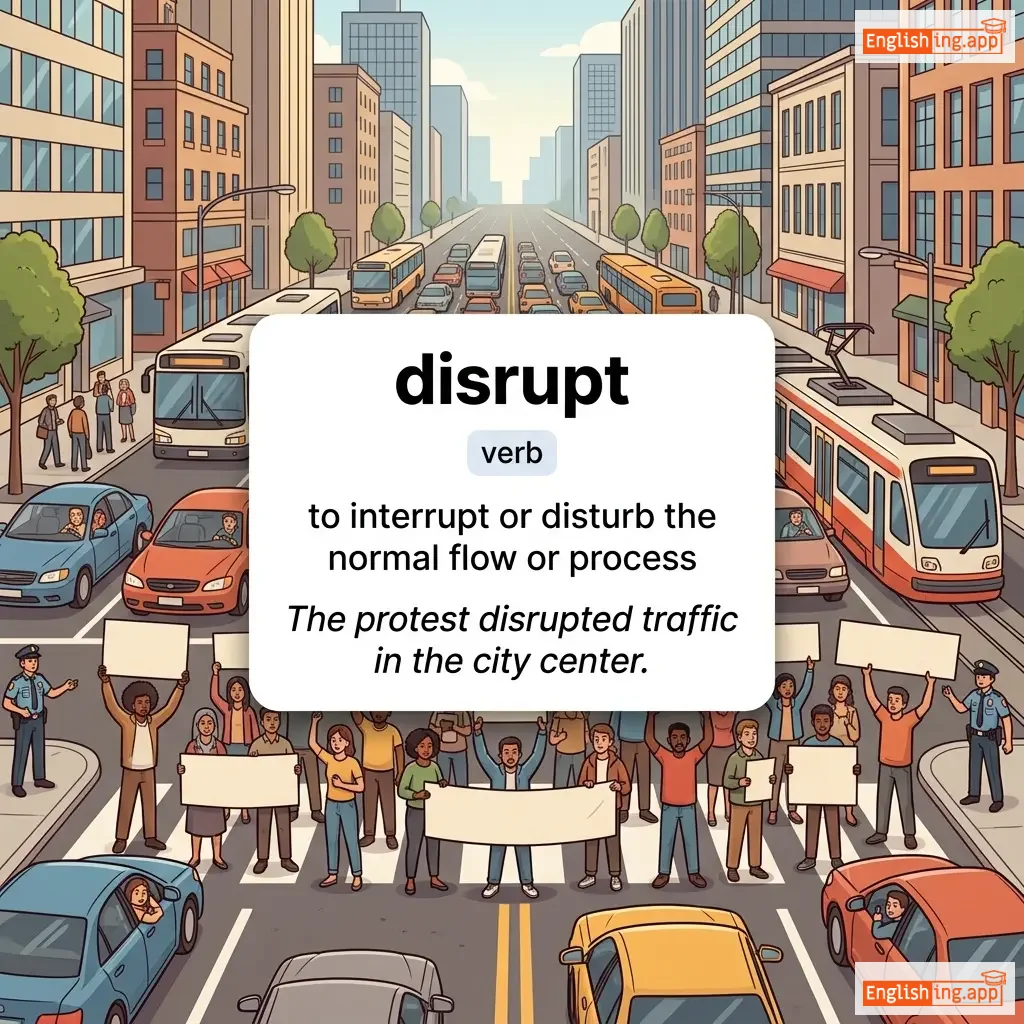
disrupt definition card — visual illustration of the meaning
verb
/dɪsˈrʌpt/
বিঘ্ন ঘটানো (bighno ghatano)

to interrupt or disturb the normal flow or process

"The protest disrupted traffic in the city center."

"প্রতিবাদ শহরের কেন্দ্রে যান চলাচলে বিঘ্ন ঘটিয়েছিল।" (Protirod shohror kendre jan cholachole bighno ghatiyechhilo.)
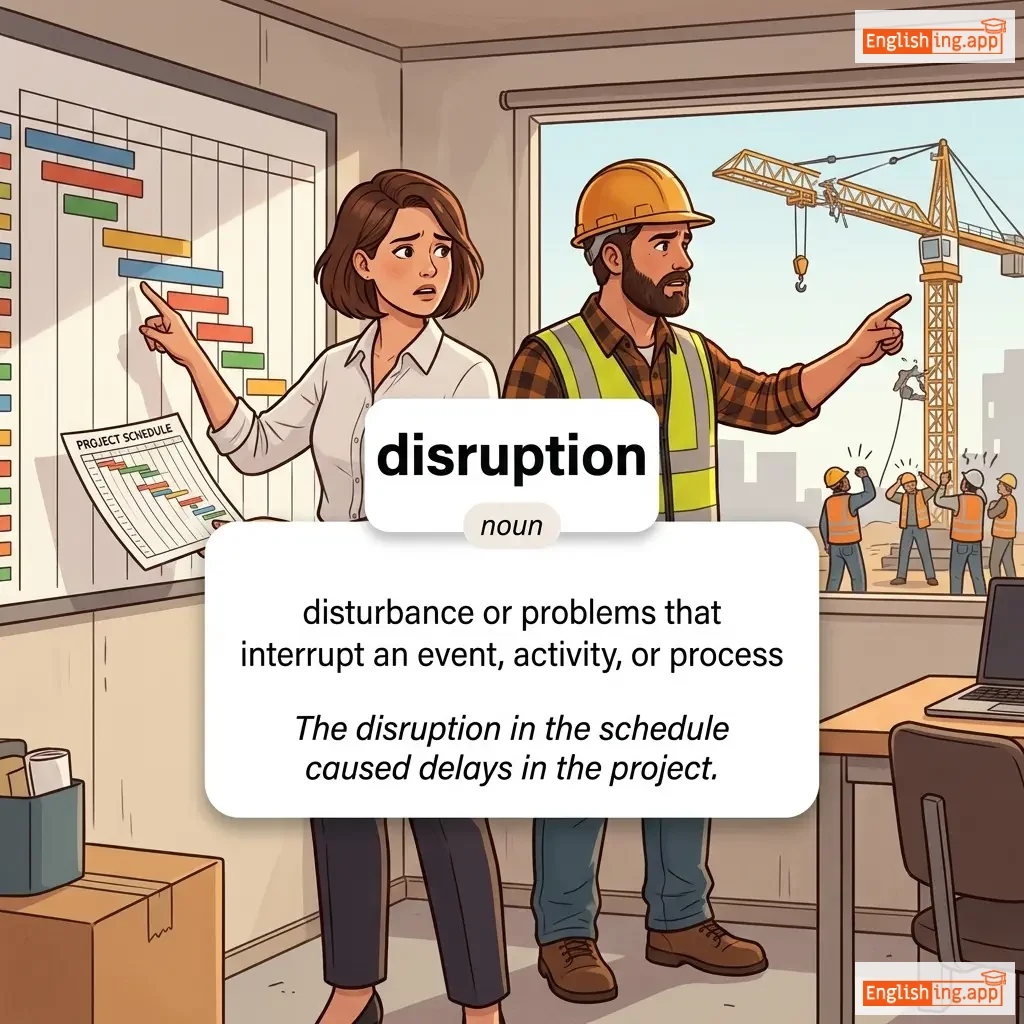
disruption definition card — visual illustration of the meaning
noun
/dɪsˈrʌpʃən/
বাধা (badha)

disturbance or problems that interrupt an event, activity, or process

"The disruption in the schedule caused delays in the project."

"স্কেজুলে বাধার কারণে প্রকল্পে দেরি হয়েছিল।" (Skejul-e badhâr kāraṇe prokolpe deri hoyechhilo.)
disruptive definition card — visual illustration of the meaning
adjective
/dɪsˈrʌp.tɪv/
বিপ্লবী (biplabi)

Something that brings major changes to existing markets or industries

"E-commerce has been disruptive to traditional retail businesses."

"ই-কমার্স প্রচলিত খুচরা ব্যবসার ক্ষেত্রে বিপ্লব ঘটিয়েছে।" (I-komars procolit khuchra byabshar khetre biplab dghotiyeche.)
verb
/dɪsˈsætɪsfaɪ/
অসন্তুষ্ট করা (osontushto kora)

to fail to please or meet expectations; to make someone unhappy

"The poor service dissatisfies many customers."

"খারাপ সেবা অনেক গ্রাহককে অসন্তুষ্ট করে।" (Kharap sheba onek grakhokke osontushto kore.)
verb
/dɪˈsɛkt/
কেটে পরীক্ষা করা (kate porikkha kora)

to cut apart an animal, plant, or other organism to study its internal parts; to analyze something in detail

"In biology class, students had to dissect a frog to learn about its anatomy."

"জীববিজ্ঞানের ক্লাসে ছাত্রদের ব্যাঙ কেটে তার অঙ্গসংস্থান শিখতে হয়েছিল।" (Jibbigganer klase chatrader baeng kate tar angsongsthan shikhte hoyechhilo.)
noun
/daɪˈsɛkʃən/
কেটে দেখা (kate dekha)

the act of cutting apart or analyzing something in detail, especially a body or structure

"The dissection of the specimen revealed important details about its structure."

"নমুনার ডিসেকশন তার গঠন সম্পর্কে গুরুত্বপূর্ণ তথ্য প্রকাশ করেছিল।" (Namonar disekshan tar gothon somporke guruttopurno tothho prokash korechhilo.)
dissemble definition card — visual illustration of the meaning
verb
/dɪˈsɛmbəl/
ভান করা (bhan kora)

to conceal one's true motives, feelings, or beliefs; to pretend

"He tried to dissemble his anger with a forced smile."

"সে একটি জোরপূর্বক হাসি দিয়ে তার রাগ লুকাতে চেষ্টা করেছিল।" (Se ekti jorpurbo hasi diye tar rag lukate cheshta korechhilo.)
noun
/dɪˈsɛmbələr/
ভণ্ড (bhondo)

a person who conceals their real feelings or intentions; a hypocrite or pretender

"The politician was accused of being a dissembler who never revealed his true plans."

"রাজনীতিবিদকে ভণ্ড হিসেবে অভিযুক্ত করা হয়েছিল, যিনি কখনও তার প্রকৃত পরিকল্পনা প্রকাশ করেননি।" (Rajnitybidke bhondo hisebe abhijukt kora hoyechhilo, jini kokhono tar prokrity porikolpona prokash koren ni.)
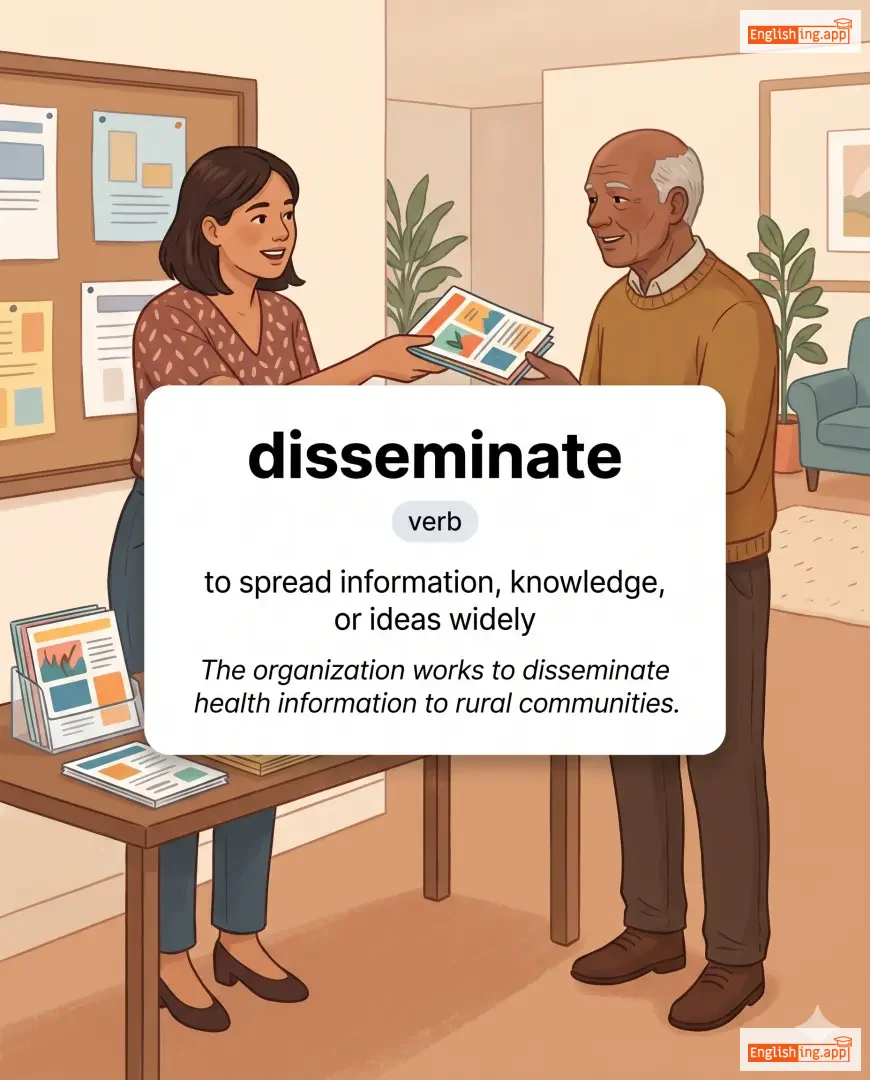
disseminate definition card — visual illustration of the meaning
verb
/dɪˈsɛmɪˌneɪt/
প্রচার করা (prochar kora)

to spread information, knowledge, or ideas widely

"The organization works to disseminate health information to rural communities."

"সংগঠনটি গ্রামীণ সম্প্রদায়ের কাছে স্বাস্থ্য সম্পর্কিত তথ্য প্রচার করার জন্য কাজ করে।" (Songothonti graminer somprodayer kache shastho somprokito tothho prochar korar jonno kaj kore.)
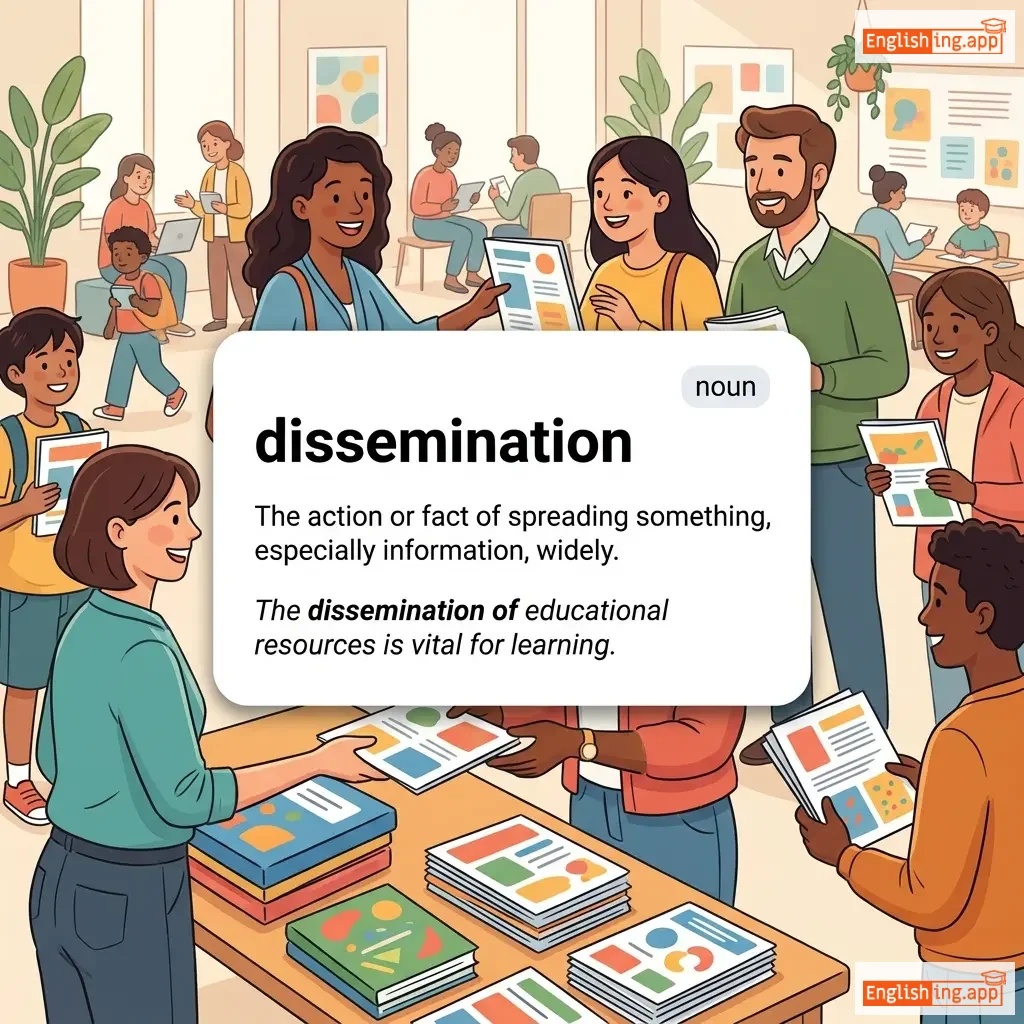
dissemination definition card — visual illustration of the meaning
noun
dɪˌsɛm.ɪˈneɪ.ʃən
প্রচার (prochar)

The action or fact of spreading something, especially information, widely.

"The dissemination of educational resources is vital for learning."

"শিক্ষাগত সম্পদের প্রচার শেখার জন্য অত্যন্ত গুরুত্বপূর্ণ।" (Shikkhagoto shompoder prochar shekhar jonno attonto guruttopurno.)
noun
/dɪˈsɛnʃən/
বিরোধ (birodh)

Strong disagreement or difference of opinion, especially leading to discord within a group.

"The meeting ended in dissension among the committee members."

"সভাটি কমিটি সদস্যদের মধ্যে বিরোধে শেষ হয়েছিল।" (Sobhati komiti soddosoder modhye birodhe shesh hoyechhilo.)
verb
/dɪˈsɛnt/
অসন্তোষ প্রকাশ করা (osontos prokash kora)

To hold or express opinions that are different from those officially accepted.

"Several members dissented from the majority decision."

"কয়েকজন সদস্য সংখ্যাগরিষ্ঠ সিদ্ধান্তের সাথে দ্বিমত করেছিলেন।" (Koyekjon soddosho shongkhagoristo shidhdhantor sathe dwimot korechhilen.)
adjective
/dɪˈsɛnʃənt/
ভিন্নমতাবলম্বী (vinnomatabolombi)

Expressing or holding opinions that are opposed to the majority or official view.

"Only a few dissentient voices were heard during the debate."

"আলোচনার সময় কেবল কয়েকটি ভিন্নমতাবলম্বী কণ্ঠ শোনা গিয়েছিল।" (Alochonar somoy kebol koyekti vinnomatabolombi kontho shona giechhilo.)