Словари

Словарь английского языка | Значения слов, определения и примеры

noun
/ˈdeɪ.ə.ti/
божество (bozhestvo)

a god or goddess

"The temple is dedicated to a Hindu deity."

"Храм посвящен индуистскому божеству." (Khram posvyashchen induistskomu bozhestvu.)
verb
/dɪˈdʒɛkt/
огорчать (ogorchat)

to make someone feel sad, depressed, or dispirited

"The news of his failure seemed to deject him deeply."

"Новости о его неудаче, казалось, глубоко огорчили его." (Novosti o ego neudache, kazalos', gluboko ogorchili ego.)
noun
/dɪˈdʒɛkʃən/
депрессия (depressiya)

a state of sadness, depression, or low spirits

"She sat in a state of dejection after hearing the bad news."

"Она сидела в состоянии депрессии, услышав плохие новости." (Ona sidel v sostoyanii depressii, uslyshav plokhie novosti.)
verb
/dɪˈleɪ/
задерживать (zaderzhivat')

to make something happen later than planned

"The flight was delayed due to bad weather."
"Рейс был задержан из-за плохой погоды." (Reys byl zaderzhan iz-za plokhoy pogody.)
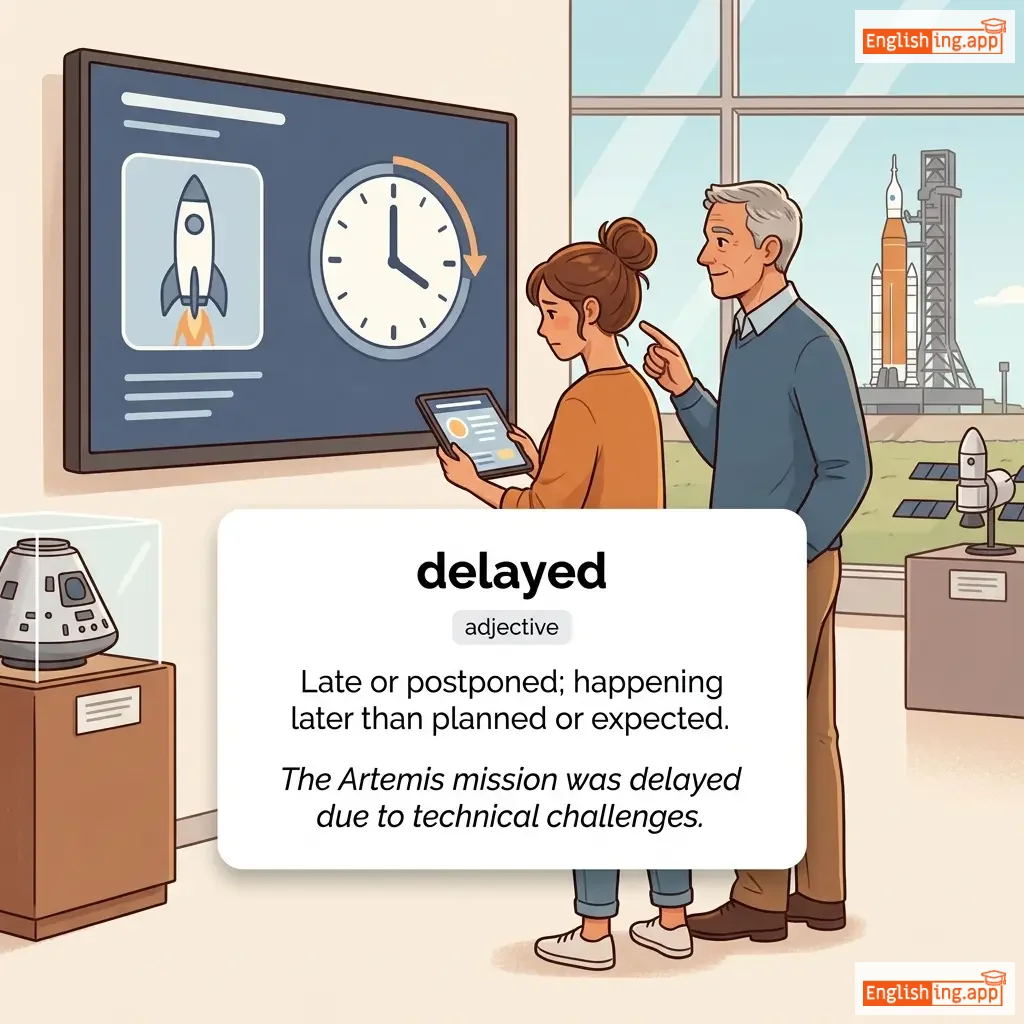
delayed definition card — visual illustration of the meaning
adjective
dɪˈleɪd
задержанный (zaderzhannyy)

Late or postponed; happening later than planned or expected.

"The Artemis mission was delayed due to technical challenges."

"Миссия Артемиды была задержана из-за технических проблем." (Missiya Artemidy byla zaderzhana iz-za tekhnicheskikh problem.)
adjective
/dɪˈlɛktəbl̩/
вкусный (vkusnyy)

delicious or highly enjoyable

"The restaurant served a delectable meal."

"Ресторан подал вкусную еду." (Restoran podal vkusnuyu edu.)
noun
/ˌdiːlɛkˈteɪʃən/
удовольствие (udovolstvie)

great pleasure or delight

"She read the story aloud for the delectation of her friends."

"Она читала рассказ вслух для удовольствия своих друзей." (Ona chitala rasskaz vslukh dlya udovolstviya svoikh druzey.)
noun, verb
/ˈdɛlɪɡət/ (noun), /ˈdɛlɪɡeɪt/ (verb)
делегат / делегировать (delegat / delegirovat)

as a noun: a person appointed to represent others; as a verb: to entrust a task or responsibility to another

"The manager decided to delegate tasks to his team members."

"Менеджер решил делегировать задачи своим членам команды." (Menedzher reshil delegirovat' zadachi svoim chlenam komandy.)
delegation definition card — visual illustration of the meaning
noun
/ˌdɛlɪˈɡeɪʃən/
делегация (delegatsiya)

the act of giving someone else responsibility for something

"The manager made a delegation of tasks to the team."

"Менеджер делегировал задачи команде." (Menedzher delegiroval zadachi komande.)
verb
/dɪˈliːt/
удалять/удалить (deleet)

to remove or erase something, especially written or recorded information

"He accidentally deleted all the files from his computer."
"Он случайно удалил все файлы на своем компьютере." (On sluchajno udalil vse fayly na svoem kompyutere.)
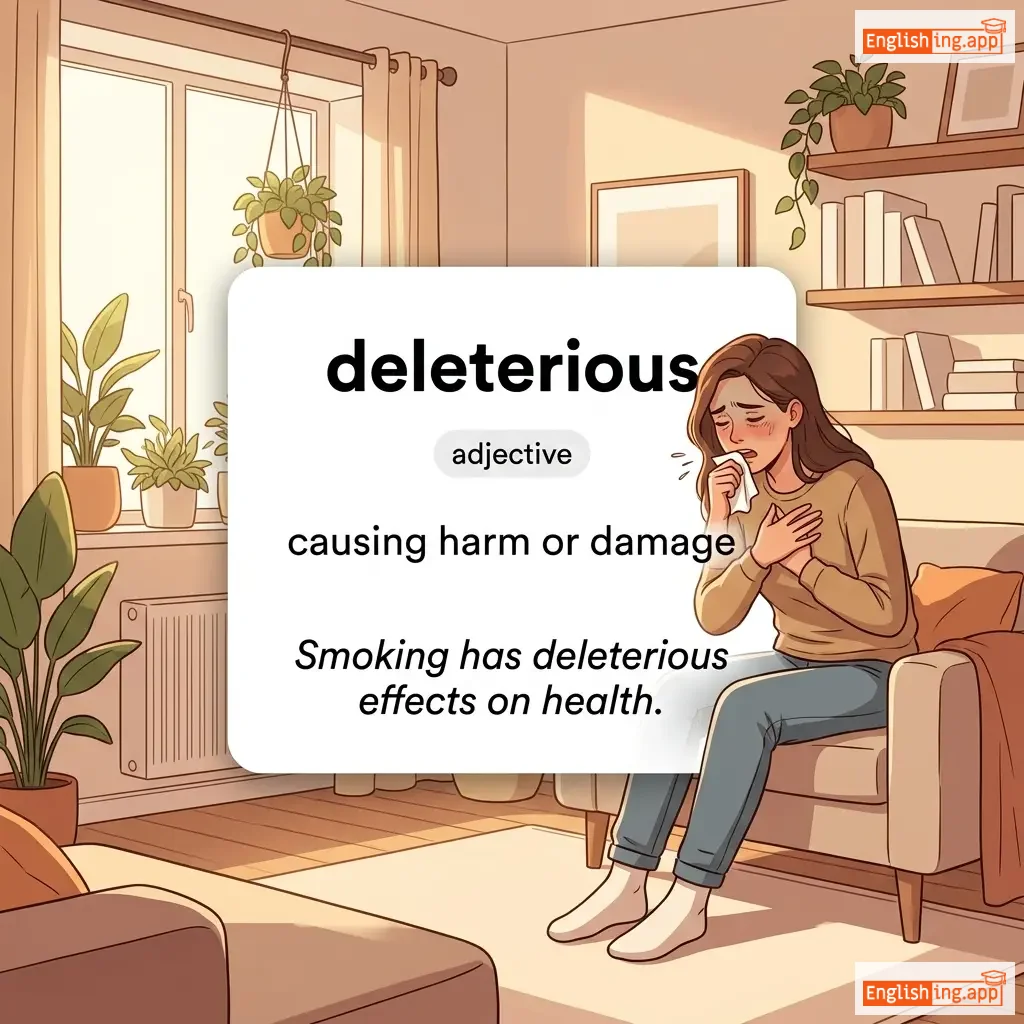
deleterious definition card — visual illustration of the meaning
adjective
/ˌdɛlɪˈtɪəriəs/
вредоносный (vredonosnyy)

causing harm or damage

"Smoking has deleterious effects on health."

"Курение оказывает вредоносное воздействие на здоровье." (Kurenie okazyvayet vredonosnoe vozdeystvie na zdorovye.)
deliberate definition card — visual illustration of the meaning
adjective, verb
/dɪˈlɪbərət/ (adj), /dɪˈlɪbəreɪt/ (verb)
сознательно сделано / обсудить (soznatel'no sdelano / obsluzhdat')

done consciously and intentionally; to consider or discuss something carefully

"The committee will deliberate on the proposal tomorrow."
"Комитет завтра будет обсуждать предложение." (Komitet zavtra budet obshchatsya predlozheniem.)
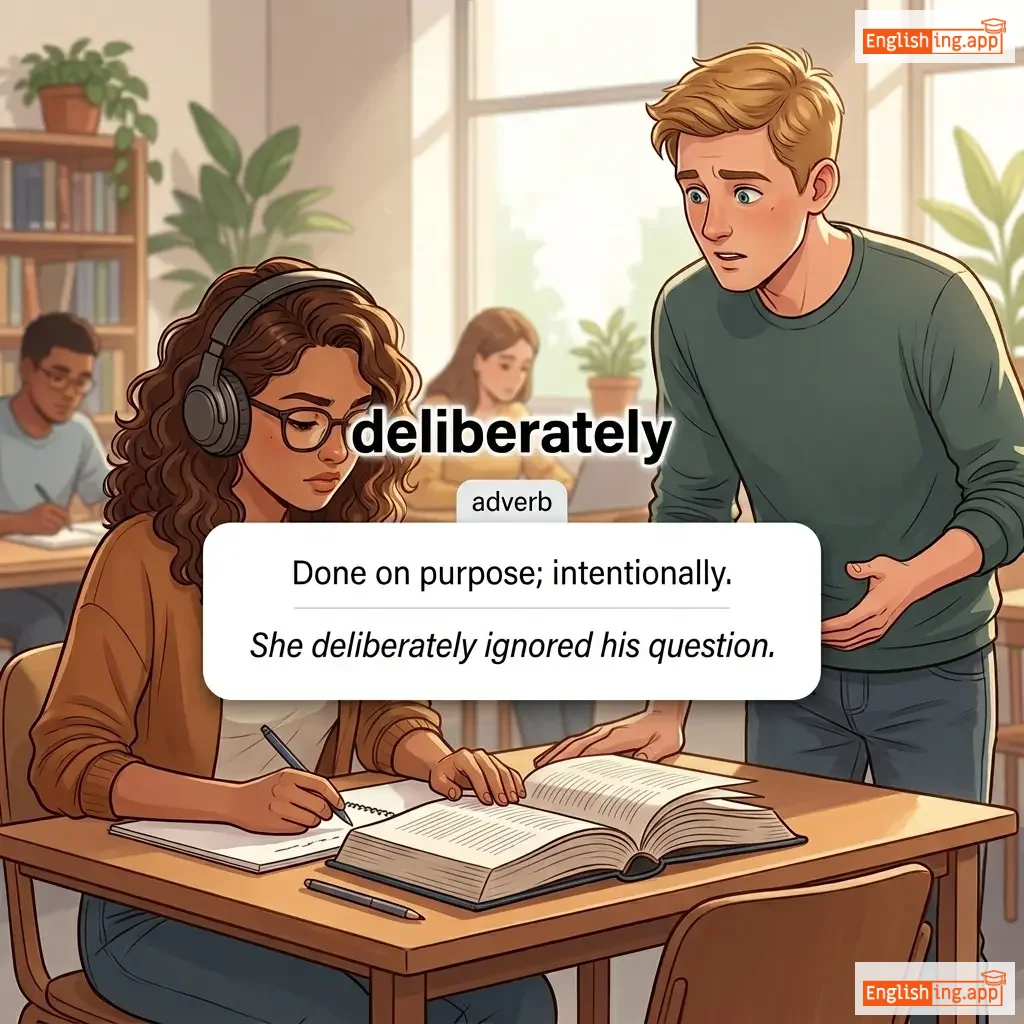
deliberately definition card — visual illustration of the meaning
adverb
/dɪˈlɪbərətli/
намеренно (namerenno)

Done on purpose; intentionally.

"She deliberately ignored his question."
"Она намеренно проигнорировала его вопрос." (Ona namerenno proignorirovvala ego vopros.)
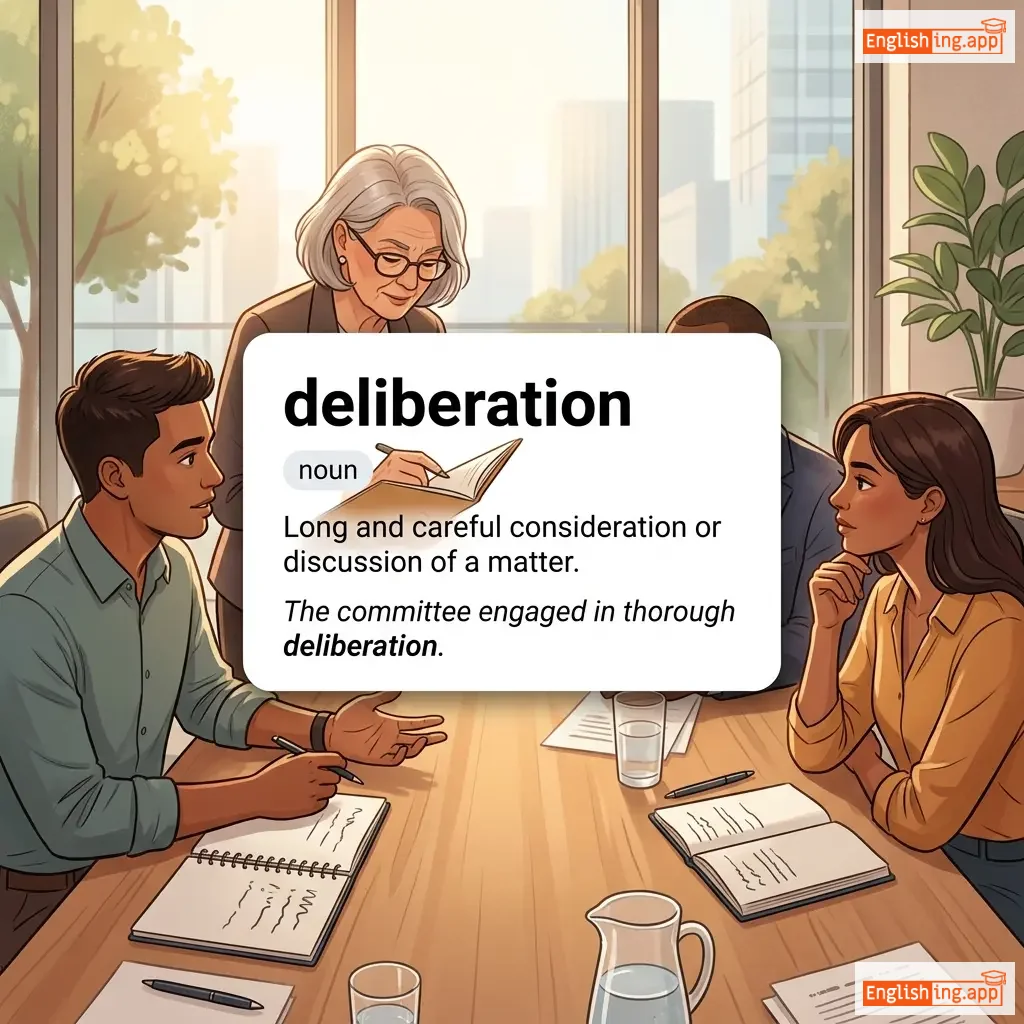
deliberation definition card — visual illustration of the meaning
noun
dɪˌlɪb.əˈreɪ.ʃən
обсуждение (obsuzhdenie)

Long and careful consideration or discussion of a matter.

"The committee engaged in thorough deliberation."
"Комитет принял участие в глубоком обсуждении." (Komitet prinyal uchastie v glubokom obsuzhdenii.)
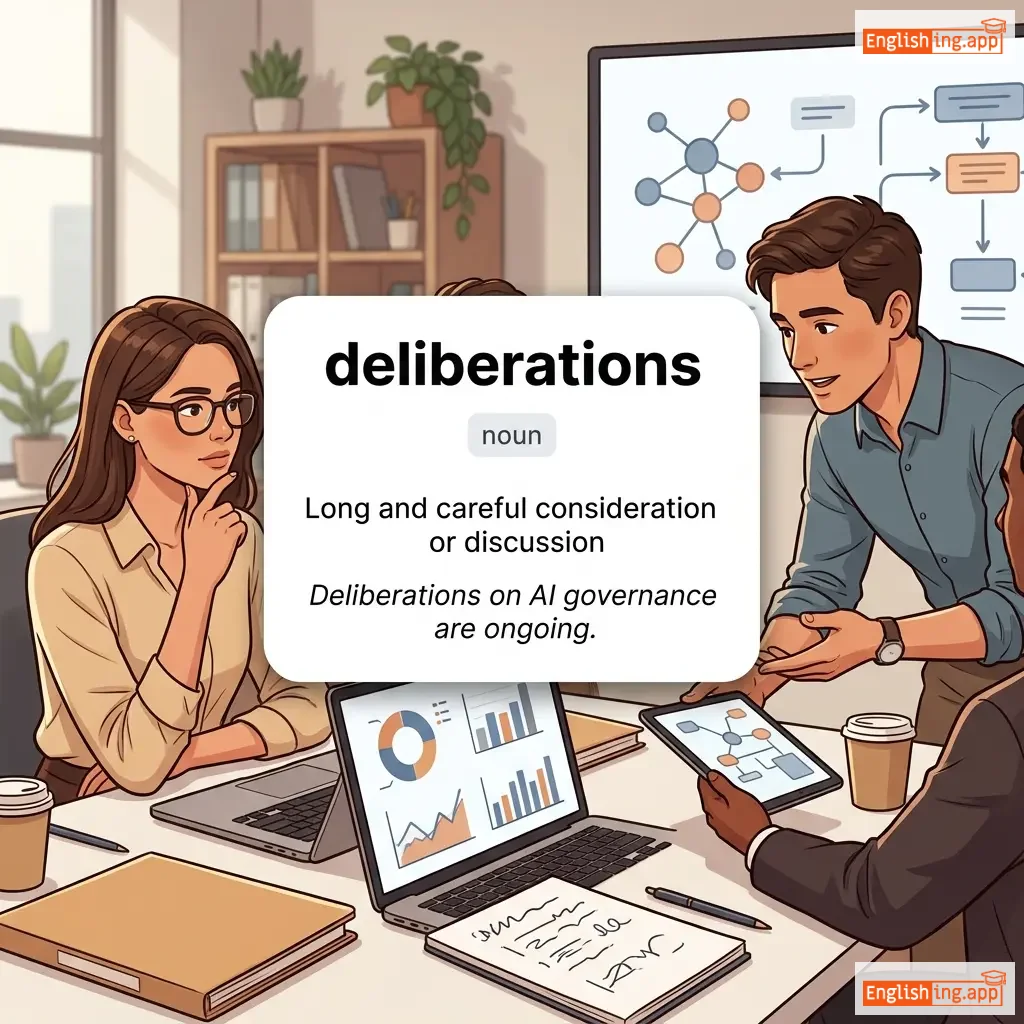
deliberations definition card — visual illustration of the meaning
noun
dɪˌlɪb.əˈreɪ.ʃənz
обсуждения (obsuzhdeniya)

Long and careful consideration or discussion

"Deliberations on AI governance are ongoing."

"Делиберации по вопросам управления ИИ продолжаются." (Deliberatsii po voprosam u pravleniya II prodolzhayutsya.)
noun
/ˈdɛlɪkəsi/
деликатес / изысканный продукт (delikates / izyskannyy produkt)

a rare or expensive food item; fineness or sensitivity

"Caviar is considered a delicacy in many countries."

"Икра считается деликатесом во многих странах." (Ikra schitayetsya delikatesom vo mnogikh stranakh.)
adjective
/ˈdɛlɪkət/
хрупкий (khrupkiy)

Easily broken or damaged; requiring careful handling.

"The vase is very delicate, so handle it with care."

"Ваза очень хрупкая, поэтому обращайтесь с ней осторожно." (Vaza ochen' khrupkaya, poetomu obrashchaytes' s ney ostorozhno.)
adjective
/dɪˈlɪʃəs/
счастье (schast'ye)

having a very pleasant taste or smell

"The cake was so delicious that everyone asked for a second slice."

"Она не могла скрыть свое счастье, когда получила награду." (Ona ne mogla skryt' svoe schast'ye, kogda poluchila nagradu.)
noun, verb
/dɪˈlaɪt/
восторг (vostorg)

great pleasure or joy; to give someone great pleasure

"The children were filled with delight when they saw the gifts."

"Дети были полны восторга, когда увидели подарки." (Deti byli polny vostorga kogda uvideli podarki.)
adjective
/dɪˈlaɪtɪd/
в восторге (v vostorge)

feeling or showing great pleasure and happiness

"She was delighted with the surprise gift."

"Она была в восторге от сюрприза." (Ona byla v vostorge ot syurpriza.)
verb
/diːˈlɪmɪt/
делимитировать (delimitirovat)

to fix the boundaries or limits of something

"The treaty was signed to delimit the borders of the two countries."

"Договор был подписан для того, чтобы делимитировать границы двух стран." (Dogovor byl podpisan dlya togo, chtoby delimitirovat granitsy dvukh stran.)
delineate definition card — visual illustration of the meaning
verb
/dɪˈlɪnieɪt/
очерчивать (ocherchivat)

to describe, portray, or define something precisely and clearly

"The contract clearly delineates the responsibilities of each party."

"Контракт четко определяет ответственность каждой стороны." (Kontrakt chetko opredelyaet otvetstvennost' kazhdoi storony.)
noun
/dɪˌlɪniˈeɪʃən/
делиниация (deliniatsiya)

the precise description, drawing, or outlining of something

"The artist’s delineation of the landscape was remarkably accurate."

"Делиниация ландшафта художника была удивительно точной." (Deliniatsiya landshaftov khudozhnika byla udivitel'no tochnoy.)
verb
/ˌdɛlɪˈkwɛs/
становиться жидким, поглощая влагу из воздуха (stanovitsya zhidkim, pogloshchaya vlagu iz vozdukha)

to become liquid by absorbing moisture from the air

"The salt began to deliquesce after being left in the humid room."

"Соль начала деликвестировать после того, как была оставлена в влажной комнате." (Sol nachala delikvestirovat posle togo, kak byla ostavlena v vlazhnoy komnate.)
adjective
/ˌdɛlɪˈkwɛsənt/
становящийся жидким при поглощении влаги (stanovyashchijsya zhidkim pri pogloshhenii vlagi)

tending to become liquid by absorbing moisture from the air

"Sugar is not deliquescent, but salt can be."

"Сахар не деликвесентен, но соль может быть." (Sakhar ne delikvesenten, no sol' mozhet byt'.)
adjective
/dɪˈlɪriəs/
делирий (deliriy)

in an extremely disturbed or excited state of mind, often due to illness or emotion

"He was delirious with fever and kept muttering nonsense."

"Он был в делирии от лихорадки и бормотал чепуху." (On byl v delirii ot likhoradki i bormotal chepukhu.)
noun
/dɪˈlɪriəm/
делирий (deliriy)

An acutely disturbed state of mind characterized by restlessness, illusions, and incoherence.

"The patient experienced delirium after the surgery due to the strong medication."

"Пациент пережил делирий после операции из-за сильных медикаментов." (Patsiyent perezhil deliriy posle operatsii iz-za sil'nykh medikamentov.)
verb
/dɪˈlɪvər/
доставить (dostavit)

to bring or hand over something to the intended recipient

"The courier will deliver the package tomorrow."

"Курьер доставит посылку завтра." (Kuryer dostavit posylku zavtra.)
noun
/dɪˈlɪvəri/
доставка (dostavka)

the act of taking goods, letters, or packages to people's houses or places of work

"The delivery of fresh vegetables arrives every morning."

"Доставка свежих овощей приходит каждое утро." (Dostavka svezhikh ovochay prikhodit kazhdoe utro.)
noun
/ˈdɛltə/
дельта (delta)

A landform at the mouth of a river where it splits into several outlets.

"The Nile Delta is one of the most fertile regions in Egypt."

"Дельта Нила является одним из самых плодородных регионов Египта." (Delta Nila yavlyaetsya odnim iz samykh plodorodnykh regionov Egipta.)
deltaic landscape definition card — visual illustration of the meaning
noun
delˈteɪɪk ˈlændskeɪp
дельтовидный ландшафт (deltovidnyy landshaft)

A geographical area formed by sediment deposits at the mouth of a river, creating a triangular land formation.

"Bangladesh has a unique deltaic landscape."

"Бангладеш имеет уникальный дельтовидный ландшафт." (Bangladesh imeet unikal'nyy deltovidnyy landshaft.)
verb
/dɪˈluːd/
обманывать (obmanyvat)

To mislead someone into believing something that is not true.

"He deluded himself into thinking he could win the race without training."

"Он обманул себя, думая, что сможет выиграть гонку без тренировок." (On obmanul sebya, dumaya, chto smojet viigrat' gonku bez trenirovok.)
noun
/ˈdɛljuːdʒ/
наводнение (navodnenie)

A severe flood; an overwhelming quantity of something.

"The town was hit by a deluge of rain in just a few hours."

"Город был поражён наводнением дождя всего за несколько часов." (Gorod byl porazhen navodneniem dozhdya vsego za neskol'ko chasov.)
noun
/dɪˈluːʒən/
иллюзия (illyuziya)

A false belief or impression maintained despite being contradicted by reality.

"He lived under the delusion that he was invincible."

"Он жил под иллюзией, что он непобедим." (On zhil pod illyuziyei, chto on nepobedim.)
adjective
/dɪˈluːsɪv/
обманчивый (obmanchivyy)

Giving a false or misleading impression; deceptive.

"His promises turned out to be delusive and untrustworthy."

"Его обещания оказались обманчивыми и ненадежными." (Ego obeshchaniya okazalis obmanchivymi i nenadezhnymi.)
adjective
/dɪˈluːsəri/
иллюзорный (illyuzornyy)

Based on illusion; not real.

"He was filled with delusory hopes of becoming famous overnight."

"Он был полон ложных надежд на то, чтобы стать знаменитым за одну ночь." (On byl polon lozhnykh nadezhd na to, chtoby stat' znamenitym za odnu noch'.)
verb
/dɛlv/
углубляться (uglublyat'sya)

To investigate deeply; to dig into a subject or area.

"The researcher delved into ancient manuscripts to find clues."

"Исследователь углубился в древние манускрипты, чтобы найти подсказки." (Issledovatel' uglublilsya v drevnie manuskripty, chtoby nayti podskazki.)
verb
/diːˈmæɡnɪtaɪz/
демагнитизировать (demagnitizirovat)

To remove or reduce the magnetic properties of something.

"The technician demagnetized the old cassette tape."

"Техник демагнитизировал старую кассету." (Tekhnik demagnitiziroval staruyu kassetu.)
noun
/ˈdɛməɡɒɡ/
демагог (demagog)

A political leader who seeks support by appealing to popular desires and prejudices rather than by using rational argument.

"The crowd was swayed by the fiery speeches of the demagogue."

"Толпа была под влиянием страстных речей демагога." (Tolpa byla pod vliyaniem strastnykh rechey demagoga.)
noun, verb
/dɪˈmænd/
спрос (spros)

to ask for something forcefully; the need or desire for goods or services

"Workers demanded better wages from the company."

"Рабочие потребовали лучших зарплат от компании." (Rabochie potrebovali luchshikh zarplat ot kompanii.)
adjective
/dɪˈmændɪŋ/
требовательный (trebovatel'nyy)

requiring much effort, skill, or attention; difficult to satisfy

"The job is very demanding and requires long hours of work."

"Работа очень требовательная и требует долгих часов работы." (Rabota ochen' trebovatel'naya i trebuyet dolgikh chasov raboty.)
verb
/ˈdiːmɑːrˌkeɪt/
демаркировать (demarkirovat)

to set the boundaries or limits of something

"The land was demarcated with fences to avoid disputes."

"Земля была демаркированна забором, чтобы избежать споров." (Zemlya byla demarkirovanna zaborom, chtoby izbezhat sporov.)
noun
/ˌdiː.mɑːˈkeɪ.ʃən/
демаркация (demarkatsiya)

the action of fixing the boundary or limits of something; separation or division

"The demarcation between public and private land was clearly marked."

"Демаркация между общественными и частными землями была четко обозначена." (Demarkatsiya mezhdu obshchestvennymi i chastnymi zemlyami byla chetko oboznachena.)
verb
/dɪˈmiːn/
унижать (unizhat)

to cause someone to lose dignity or respect

"The manager demeaned his employees with rude remarks."

"Менеджер унизил своих сотрудников грубыми замечаниями." (Menedzher unizil svoikh sotrudnikov grubymi zamechaniyami.)
noun
/dɪˈmiːnər/
поведение (povedenie)

a person's outward behavior or appearance

"Her calm demeanor impressed everyone at the meeting."

"Её спокойное поведение произвело впечатление на всех на встрече." (Yeyo spokoynoye povedeniye proyzvelo vpechatleniye na vsekh na vstreche.)
noun
/dɪˈmiːnər/
поведение (povedenie)

a person's outward behavior or appearance

"Her calm demeanour impressed everyone during the meeting."

"Ее спокойное поведение произвело впечатление на всех во время встречи." (Eyo spokoynoe povedenie proizvelo vpechatlenie na vsekh vo vremya vstrechi.)
adjective
/dɪˈmɛntɪd/
безумный / нерациональный (bezumnyy / neratsional'nyy)

behaving irrationally due to mental illness or extreme excitement

"He looked demented after hearing the shocking news."

"Он выглядел обезумевшим после того, как услышал шокирующие новости." (On vyglyadel obezumevshim posle togo, kak uslyshal shokiruyushchie novosti.)
noun
/dɪˈmɛrɪt/
ошибка / штрафной балл (oshibka / shtrafnoy ball)

A fault or disadvantage; a mark against a person for misconduct.

"He received a demerit for being late to class."

"Он получил демерит за опоздание на урок." (On poluchil demerit za opozdanie na urok.)
noun
/dɪˈmeɪn/
земля, прилагаемая к поместью (zemlya, prilagayemaya k pomest'yu)

Land attached to a manor and retained for the owner's use.

"The castle was surrounded by its vast demesne."

"Замок был окружен своей обширной землей, прилагаемой к поместью." (Zamok byl okruzhen svoey obshirnoy zemley, prikalpyonnoy k pomest'yu.)
noun
/dɪˈmaɪz/
смерть / конец (smert' / konets)

Death or end of something, especially the end of an institution or system.

"The sudden demise of the company shocked investors."

"Внезапный конец компании потряс инвесторов." (Vnezapnyy konets kompanii potryas investirov.)