語彙集

英単語辞書 | 単語の意味、定義、例文

adjective
/dɪˈstɜː.bɪŋ/
気になる (ki ni naru)

causing anxiety, worry, or emotional distress

"The news about the accident was deeply disturbing."

"事故のニュースは非常に気分を害するものでした。" (Jiko no nyūsu wa hijō ni kibun o gaisuru mono deshita.)
noun
/dɪsˈjuːnjən/
分裂 (bunretsu)

the state of being separated or not united

"Civil wars often result from national disunion."

"内戦はしばしば国家の分裂から起こる。" (Naisen wa shibashiba kokka no bunretsu kara okoru.)
noun
/ˈdaɪˌsɪləbəl/
二音節語 (ni onsetsu go)

a word consisting of two syllables

"The word 'happy' is a disyllable."

"‘ハッピー’という単語は二音節語です。" ('Happī' to iu tango wa ni onsetsu go desu.)
verb
/ˈdɪðər/

to be indecisive or unable to make a decision

"He dithered for hours before choosing a restaurant."

noun
/ˈdɪti/
短い歌 (mijikai uta)

a short, simple song or poem

"She sang a cheerful little ditty while cooking."

"彼女は料理をしながら陽気な小さな歌を歌っていた。" (Kanojo wa ryōri o shinagara yōkina chiisana uta o utatte ita.)
diuretic definition card — visual illustration of the meaning
noun
/ˌdaɪ.jʊˈret.ɪk/
利尿剤 (rinyozai)

A substance that promotes the production of urine.

"Coffee has a mild diuretic effect."

"コーヒーは軽い利尿作用があります。" (Kōhī wa karui rinyo sayō ga arimasu.)
adjective
/daɪˈɜːrnəl/
昼行性 (chūkōsei)

active during the day; occurring daily

"Most birds are diurnal creatures, active in daylight hours."

"ほとんどの鳥は昼行性の生き物で、日中に活動しています。" (Hotondo no tori wa chūkōsei no ikimono de, nichū ni katsudō shiteimasu.)
noun
/ˈdiːvə/
有名な女性歌手 (yūmei na josei kashu)

a famous female singer; a woman who is admired or behaves like a star

"The pop diva performed her latest hit to a cheering crowd."

"ポップディーバは観衆の前で最新のヒットを披露しました。" (Poppu dība wa kanshū no mae de saishin no hitto o hirō shimashita.)
noun
/ˌdaɪvəˈɡeɪʃən/
脱線 (dassen)

digression; wandering from a path or subject

"His lecture was full of divagation, making it hard to follow the main point."

"彼の講義は脱線だらけで、主なポイントを追うのが難しかった。" (Kare no kōgi wa dassen darake de, omona pointo o ou no ga muzukashikatta.)
verb
/daɪv/
飛び込む (tobikomu)

to plunge headfirst into water or another substance

"He decided to dive into the pool on a hot day."

"彼は暑い日にプールにダイブすることに決めました。" (Kare wa atsui hi ni pūru ni daibu suru koto ni kimemashita.)
noun
/ˈdaɪ.vər/
ダイバー (daibā)

a type of water bird that dives underwater to catch fish

"The diver disappeared beneath the surface to catch a fish."
"ダイバーは魚を捕まえるために水面下に消えました。" (Daibā wa sakana o tsukamaeru tame ni suimen ka ni kiemashita.)
diverge definition card — visual illustration of the meaning
↔️

diverge

verb
/daɪˈvɜːrdʒ/

to separate from a path, opinion, or standard

"The two friends began to diverge in their career choices."

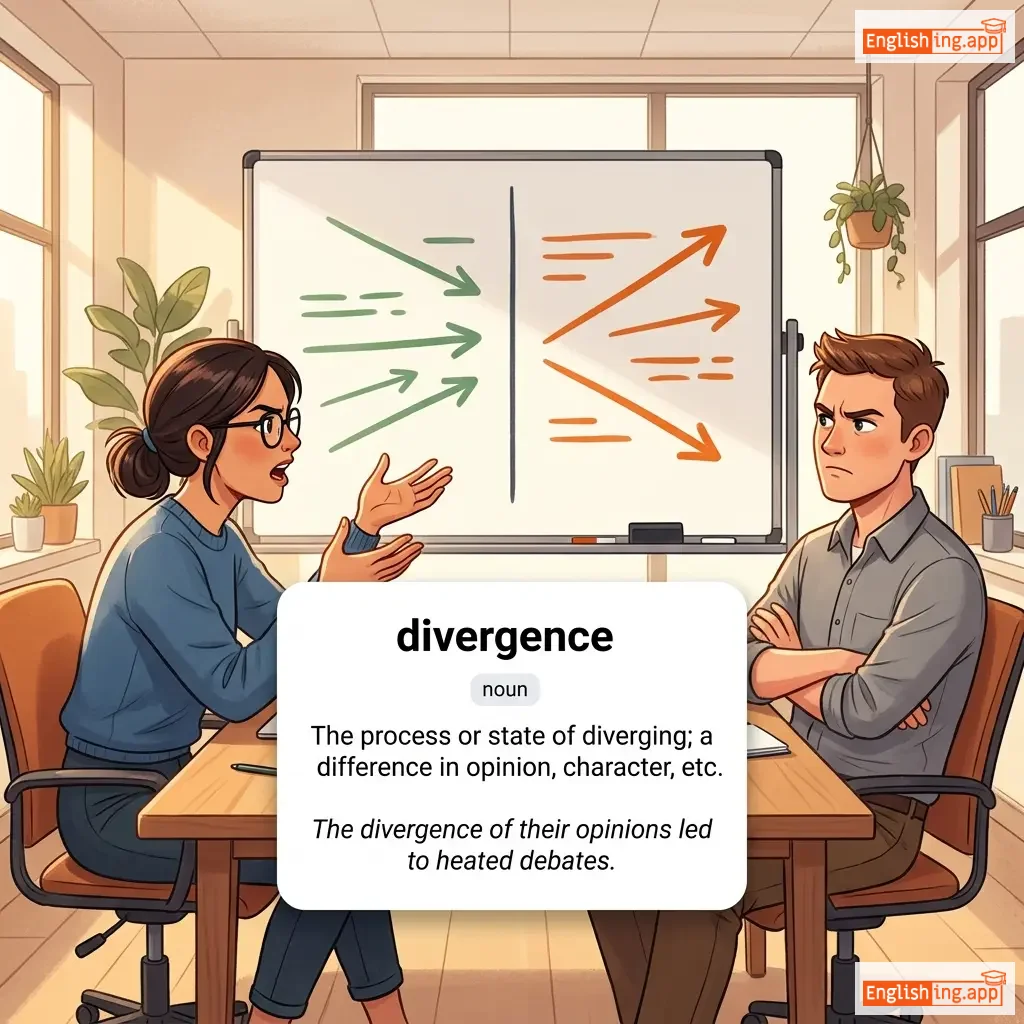
divergence definition card — visual illustration of the meaning
noun
daɪˈvɜː.dʒəns
乖離 (kairi)

The process or state of diverging; a difference in opinion, character, etc.

"The divergence of their opinions led to heated debates."
"彼らの意見の乖離は激しい討論を引き起こしました。" (Karera no iken no kairi wa hageshii tooron o hikiokoshimashita.)
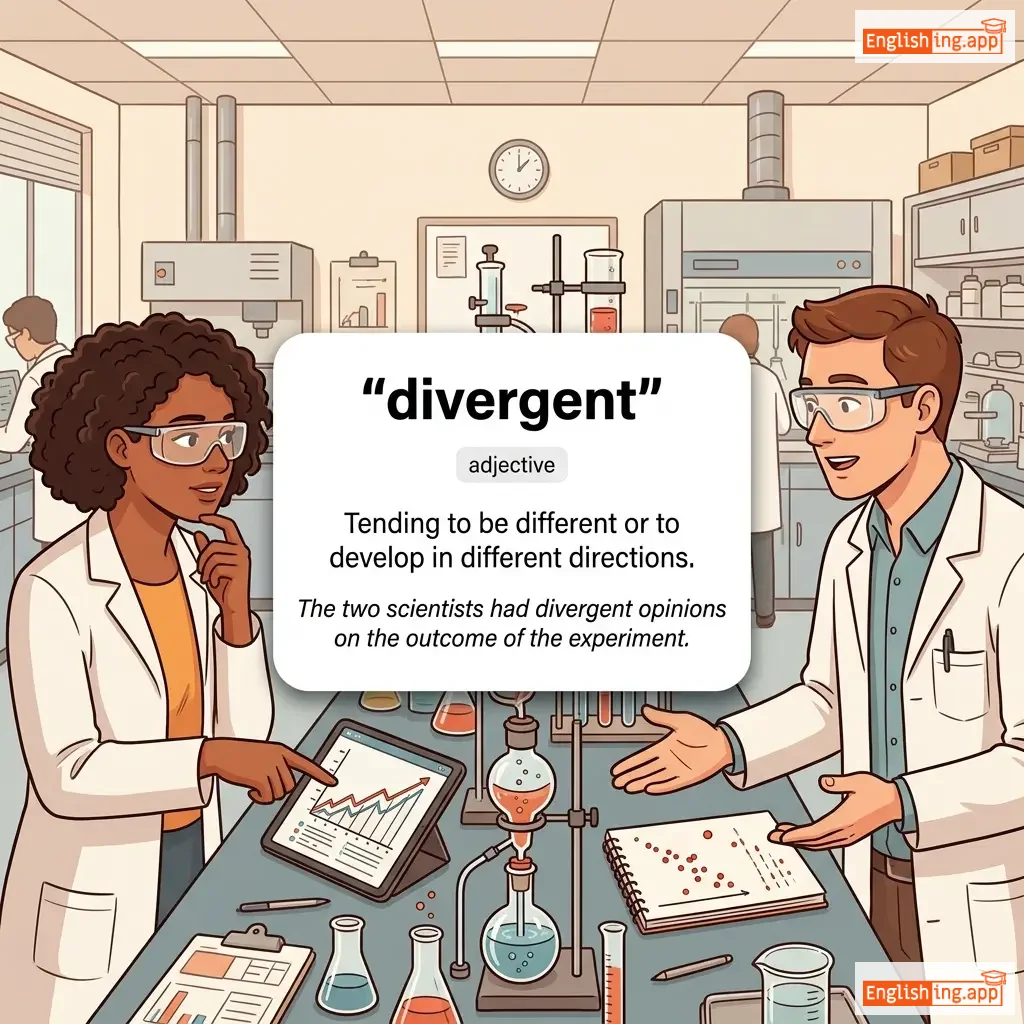
divergent definition card — visual illustration of the meaning
adjective
/daɪˈvɜːrdʒənt/
発散的な (hassantekina)

Tending to be different or to develop in different directions.

"The two scientists had divergent opinions on the outcome of the experiment."
"二人の科学者は実験結果について異なる意見を持っていた。" (Futari no kagakusha wa jikken kekka ni tsuite kotonaru iken o motte ita.)
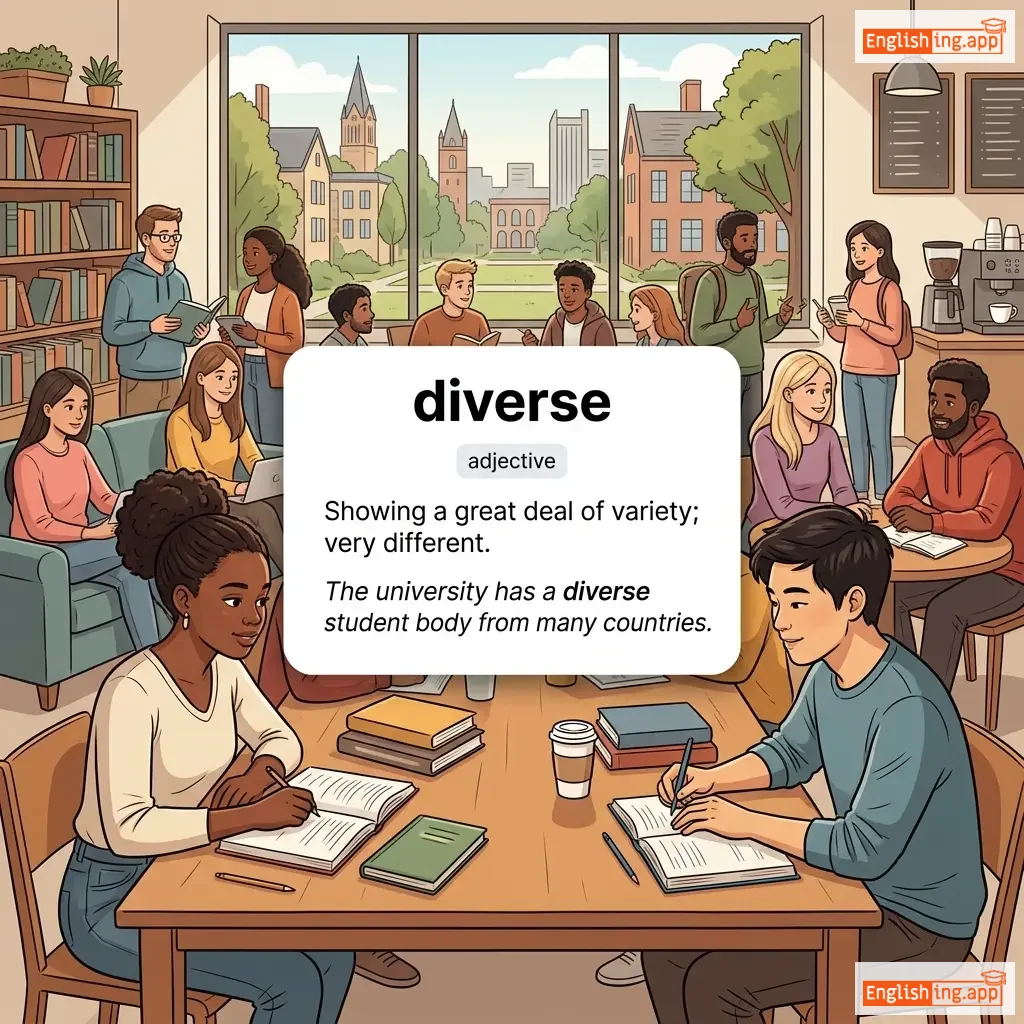
diverse definition card — visual illustration of the meaning
adjective
/daɪˈvɜːrs/
多様な (tayou na)

Showing a great deal of variety; very different.

"The university has a diverse student body from many countries."
"その大学には、多くの国からの多様な学生がいます。" (Sono daigaku ni wa, ōku no kuni kara no tayō na gakusei ga imasu.)
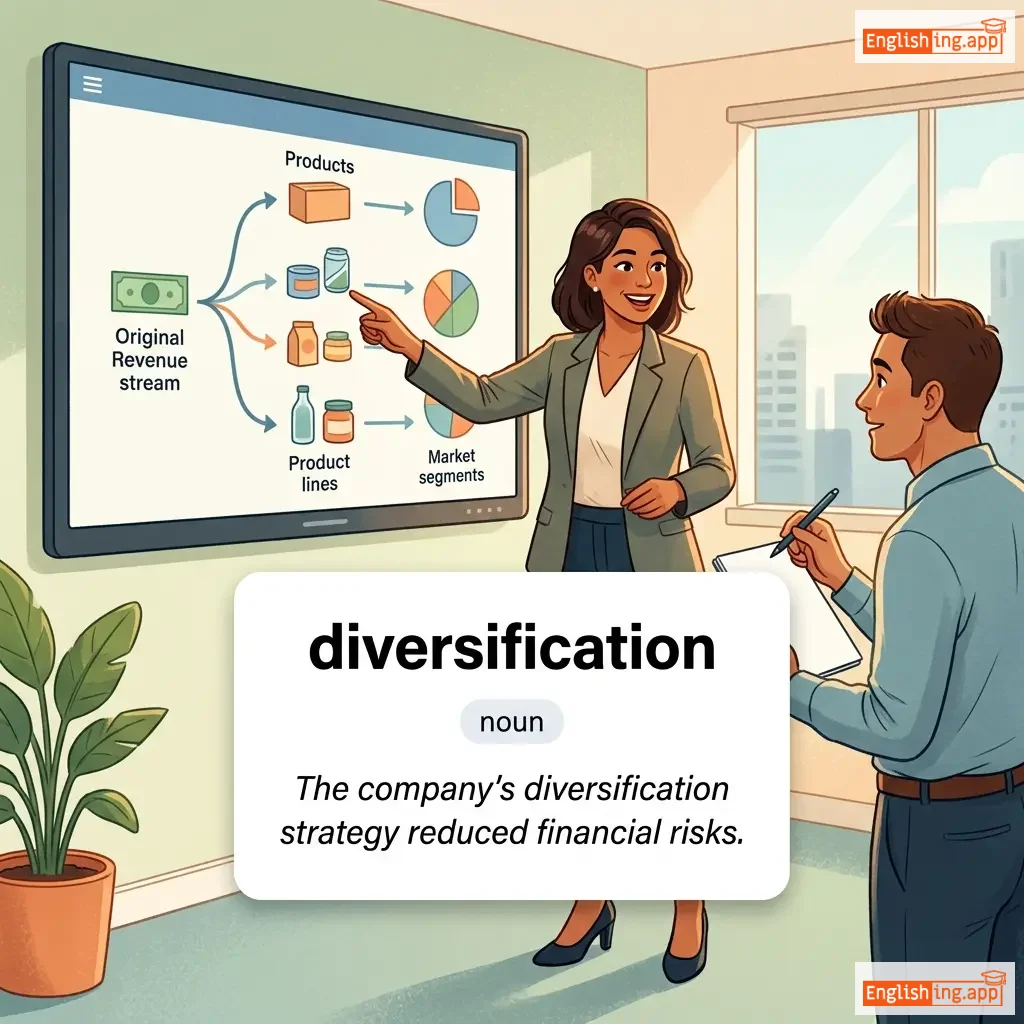
diversification definition card — visual illustration of the meaning
noun
/daɪˌvɜː.sɪ.fɪˈkeɪ.ʃən/
多角化 (Diversification)

The process of a business expanding into different product lines or markets to spread risk and reduce dependence on a single source of income.

"The company's diversification strategy reduced financial risks."

"その会社の多角化戦略は財務リスクを低減した。" (sono kaisha no takakuka senryaku wa zaimu risuku o teigen shita)
adjective
/daɪˈvɜːrsɪfaɪd/
多様化された (tayoukasareta)

Made or having variety in form, nature, or content.

"The company adopted a diversified business strategy to reduce risks."

"その会社はリスクを減らすために多様化されたビジネス戦略を採用した。" (Sono kaisha wa risuku wo herasu tame ni tayoukasareta bijinesu senryaku wo saiyou shita.)
noun
/daɪˈvɜːrʒən/

The act of changing direction or being distracted; an activity that entertains.

"The road was closed, so we had to take a diversion through the village."

diversity definition card — visual illustration of the meaning
noun
/daɪˈvɜːrsəti/
多様性 (tayōsei)

A range of different things or people; variety.

"Workplace diversity helps foster innovation and creativity."

"職場での多様性は、革新と創造性を促進します。" (Shokuba de no tayōsei wa, kakushin to sōzōsei o sokushin shimasu.)
↪️

divert

verb
/daɪˈvɜːrt/

to turn aside from a course; to redirect or entertain

"The police diverted traffic to a side road."

adjective
/daɪˈvɜːrtɪbəl/
転用可能な (ten'yō kanō na)

capable of being turned aside or redirected

"Funds from the budget are not legally divertible."

"予算からの資金は合法的に転用できません。" (Yosan kara no shikin wa gōhō-teki ni ten'yō dekimasen.)
deflation definition card — visual illustration of the meaning
noun
dɪˈfleɪʃən
デフレーション (defureeshon)

Reduction of the general level of prices in an economy.

"Deflation often leads to decreased consumer spending."

"デフレーションはしばしば消費者の支出を減少させる。" (defureeshon wa shohisha no shishutsu o genshousaseru)
verb
/dɪˈflɛkt/
反らす / 避ける (sorasu / sakeru)

to cause something to change direction; to avoid answering directly

"The shield deflected the incoming arrow."

"盾は飛んできた矢を反らした。" (Tate wa tondekita ya o sorashita.)
noun
/dɪˈfoʊliənt/

a chemical that causes leaves to drop from plants, often used in warfare or agriculture

"The army sprayed defoliant to clear the forest cover."

verb
/dɪˈfoʊlieɪt/
葉を落とす (ha o otosu)

to strip leaves from a tree, plant, or area, often using chemicals

"The farmers defoliated the fields before harvest."
"農家は収穫前に畑の葉を取り除きました。" (Nouka wa shukaku mae ni hatake no ha o torinozakimashita.)
🌲❌

deforest

verb
/diːˈfɒrɪst/

to clear an area of trees, usually on a large scale

"The region has been heavily deforested for agriculture."

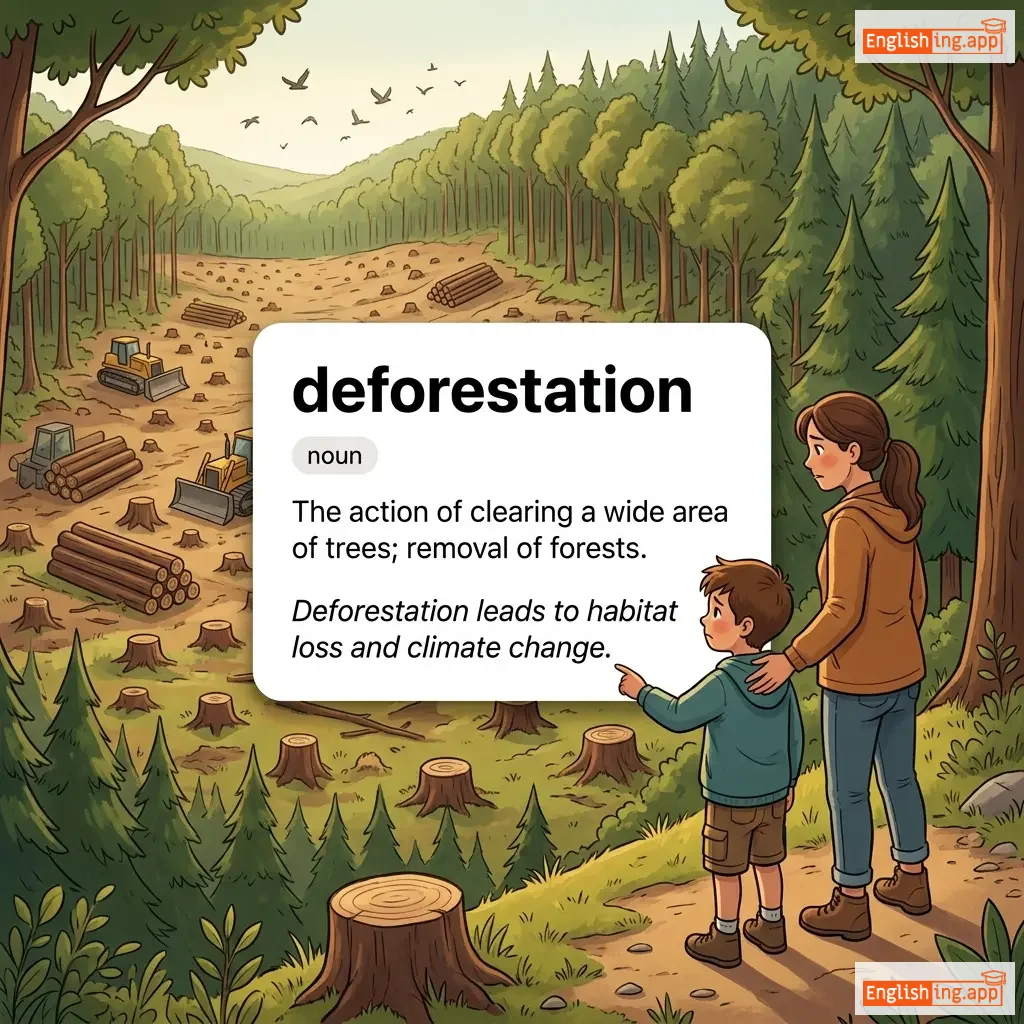
deforestation definition card — visual illustration of the meaning
noun
/ˌdiː.fɒr.ɪˈsteɪ.ʃən/
森林伐採 (shinrin bassai)

The action of clearing a wide area of trees; removal of forests.

"Deforestation leads to habitat loss and climate change."

"森林伐採は生息地の喪失と気候変動を引き起こします。" (Shinrin bassai wa seisokuchi no sōshitsu to kikō hendō o hikiokoshimasu.)
verb
/dɪˈfɔːrm/
変形する (henkei suru)

to change the normal shape or structure of something by twisting or distorting it

"Excessive heat can deform plastic containers."

"過度な熱はプラスチック容器を変形させる可能性があります。" (Kado na netsu wa purasutikku youki o henkei saseru kanousei ga arimasu.)
noun
/dɪˈfɔːrməti/

an abnormality or distortion in the shape or structure of a body part

"The child was born with a minor hand deformity."

verb
/dɪˈfrɔːd/
詐欺 (sagi)

to illegally take money or valuables from someone by deception

"The company was accused of trying to defraud investors."

"その会社は投資家をだまそうとしたとして告発されました。" (Sono kaisha wa tōshika o damasou to shita to shite kokuhatsu saremashita.)
verb
/dɪˈfreɪ/
費用を負担する (hiyou o futan suru)

to provide money to pay the costs of something

"The grant will help defray the cost of education."

"その助成金は教育費用の負担を助けます。" (Sono joseikin wa kyōiku hiyō no futan o tasukemasu.)
verb
/diːˈfrɑːk/
神父の職を剥奪する (shinpu no shoku o hakudatsu suru)

to officially remove a priest or minister from their position and authority

"The church decided to defrock the priest after the scandal."
"教会はスキャンダルの後、神父を職務停止にしました。" (Kyōkai wa sukyandaru no ato, shinpu o shokumu teishi ni shimashita.)
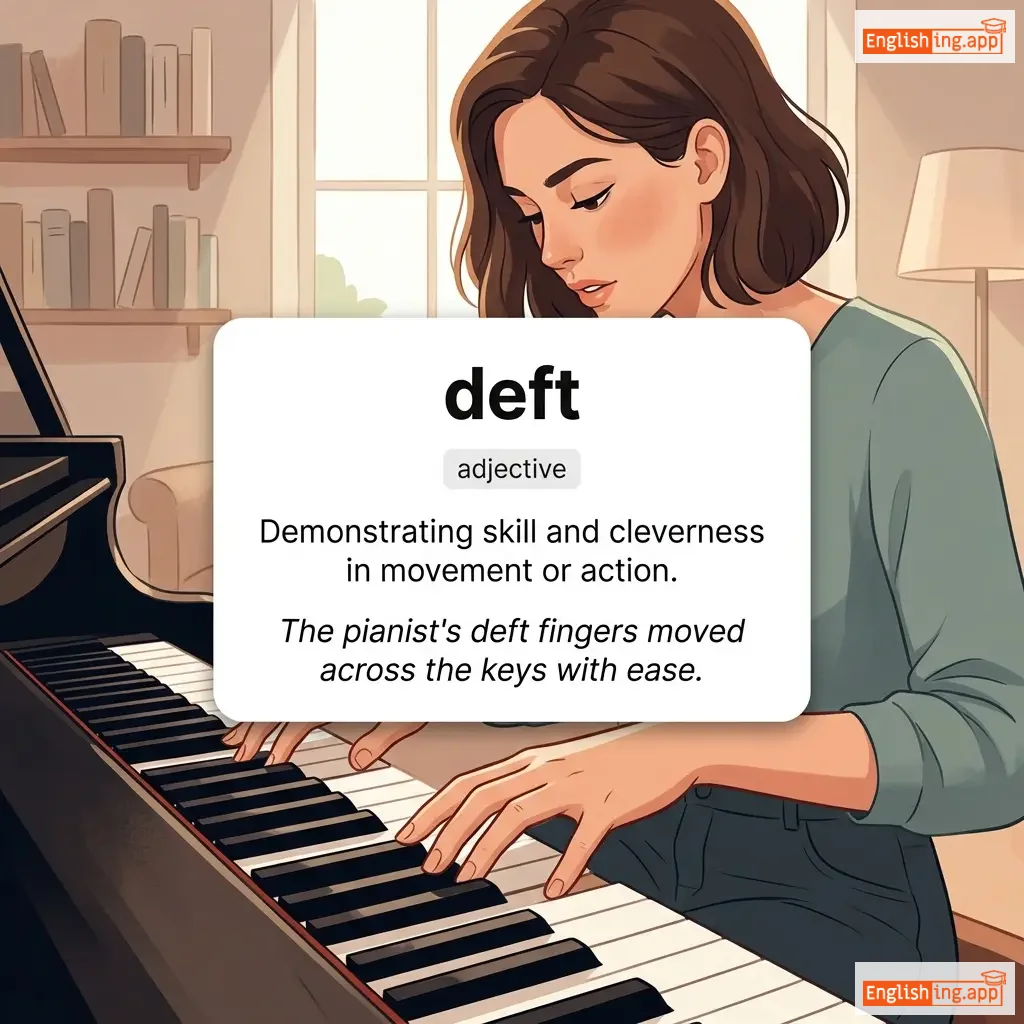
deft definition card — visual illustration of the meaning
adjective
/dɛft/
器用 (kiyou)

Demonstrating skill and cleverness in movement or action.

"The pianist's deft fingers moved across the keys with ease."

"ピアニストの器用な指は、鍵盤の上を軽やかに動いた。" (Pianisuto no kiyou na yubi wa, kenban no ue o karoyaka ni ugoita.)
noun
/ˈdɛftnəs/
巧妙さ (kōmyōsa)

Skillfulness and quickness in action or thought.

"Her deftness with words impressed the audience."
"彼女の言葉の巧妙さは観客を感動させた。" (Kanojo no kotoba no kōmyōsa wa kankyaku o kandō saseta.)
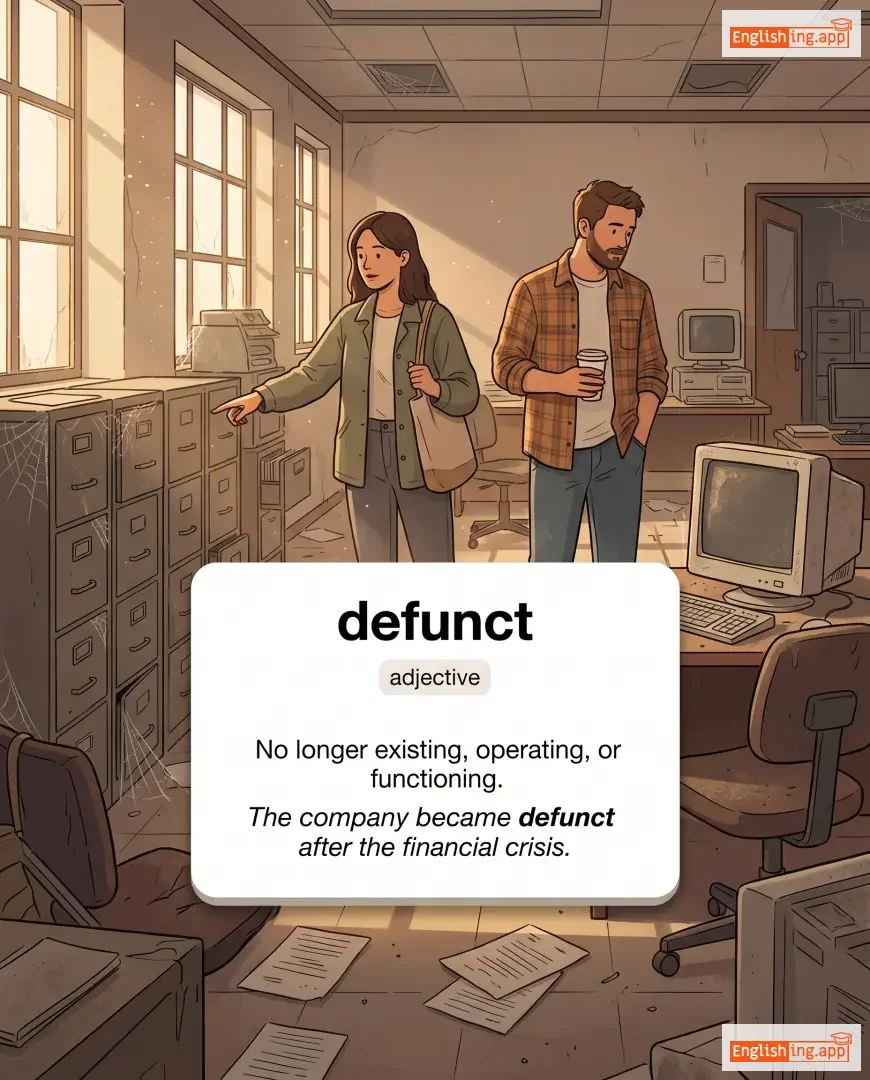
defunct definition card — visual illustration of the meaning
adjective
/dɪˈfʌŋkt/
営業停止、廃止 (eigyou teishi, haishi)

No longer existing, operating, or functioning.

"The company became defunct after the financial crisis."

"その会社は金融危機の後で廃業しました。" (Sono kaisha wa kin'yuukiki no ato de haigiou shimashita.)
verb
/diːˈfjuːz/

To make a situation less dangerous, tense, or explosive; to remove a fuse from a bomb.

"The negotiator helped defuse the tense situation."

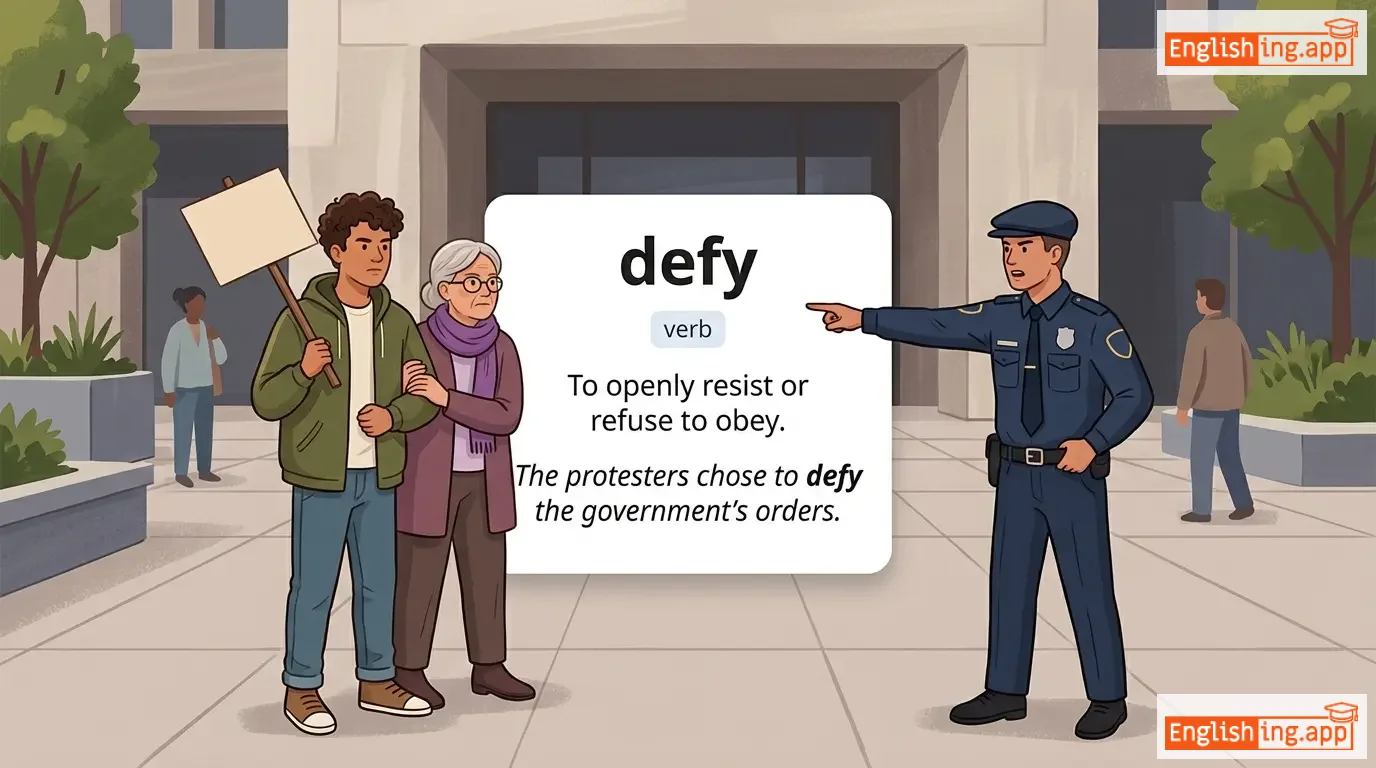
defy definition card — visual illustration of the meaning

defy

verb
/dɪˈfaɪ/

To openly resist or refuse to obey.

"The protesters chose to defy the government's orders."

noun
/dɪˈdʒɛnərəsi/
退化 (taika)

The state of decline or deterioration, often in moral, cultural, or physical qualities.

"The novel portrays the moral degeneracy of a corrupt society."

"その小説は腐敗した社会の道徳的退化を描いています。" (Sono shōsetsu wa fuhai shita shakai no dōtoku-teki taika o egaiteimasu.)
verb/adjective
/dɪˈdʒɛnəreɪt/
堕落する (daraku suru)

To decline or deteriorate in quality, character, or condition; or someone with low moral standards.

"The once thriving empire began to degenerate into chaos."
"かつて繁栄していた帝国は混沌に堕ち始めました。" (Katsute han'ei shite ita teikoku wa konton ni ochi hajimemashita.)
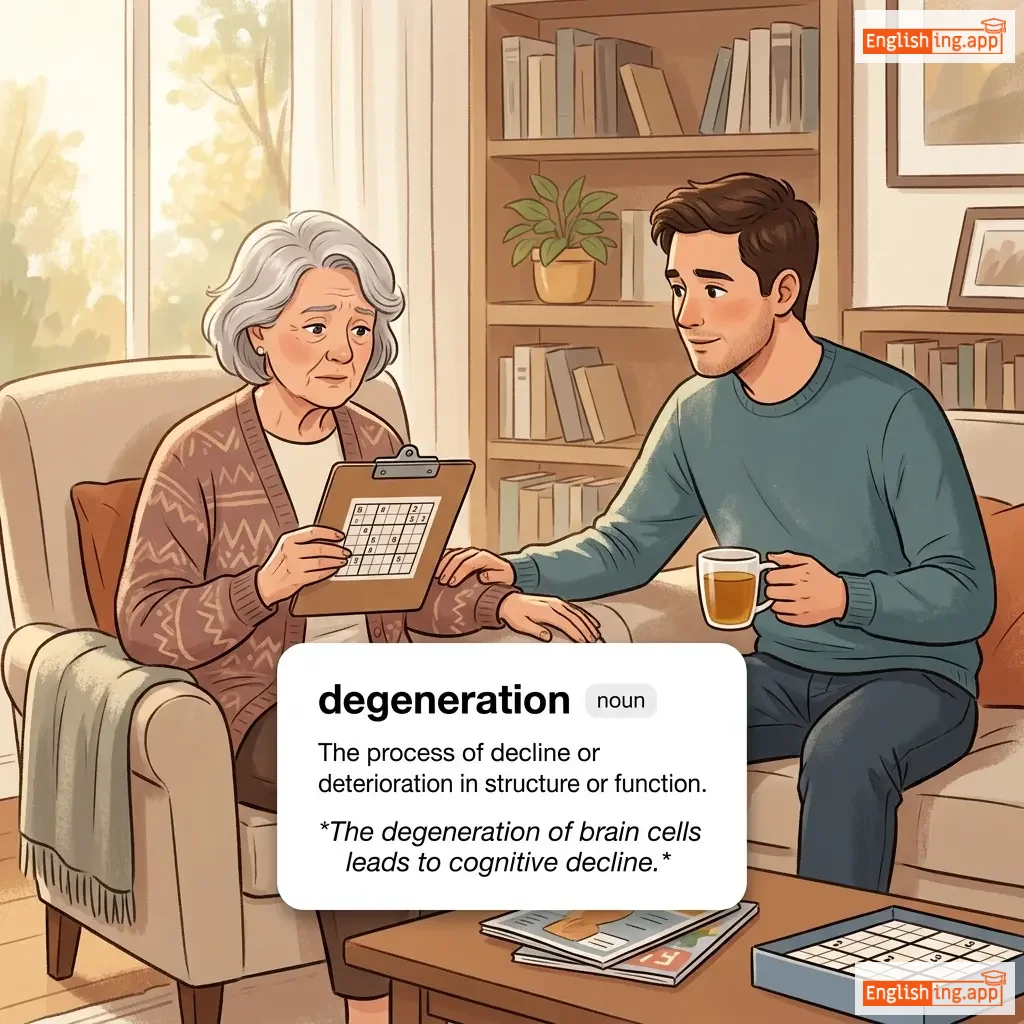
degeneration definition card — visual illustration of the meaning
noun
ˌdɪdʒɪˈnɛəreɪʃən
退化 (taika)

The process of decline or deterioration in structure or function.

"The degeneration of brain cells leads to cognitive decline."
"脳細胞の退化は認知機能の低下を引き起こします。" (Nō saibō no taika wa ninchi kinō no teika o hikiokoshimasu.)
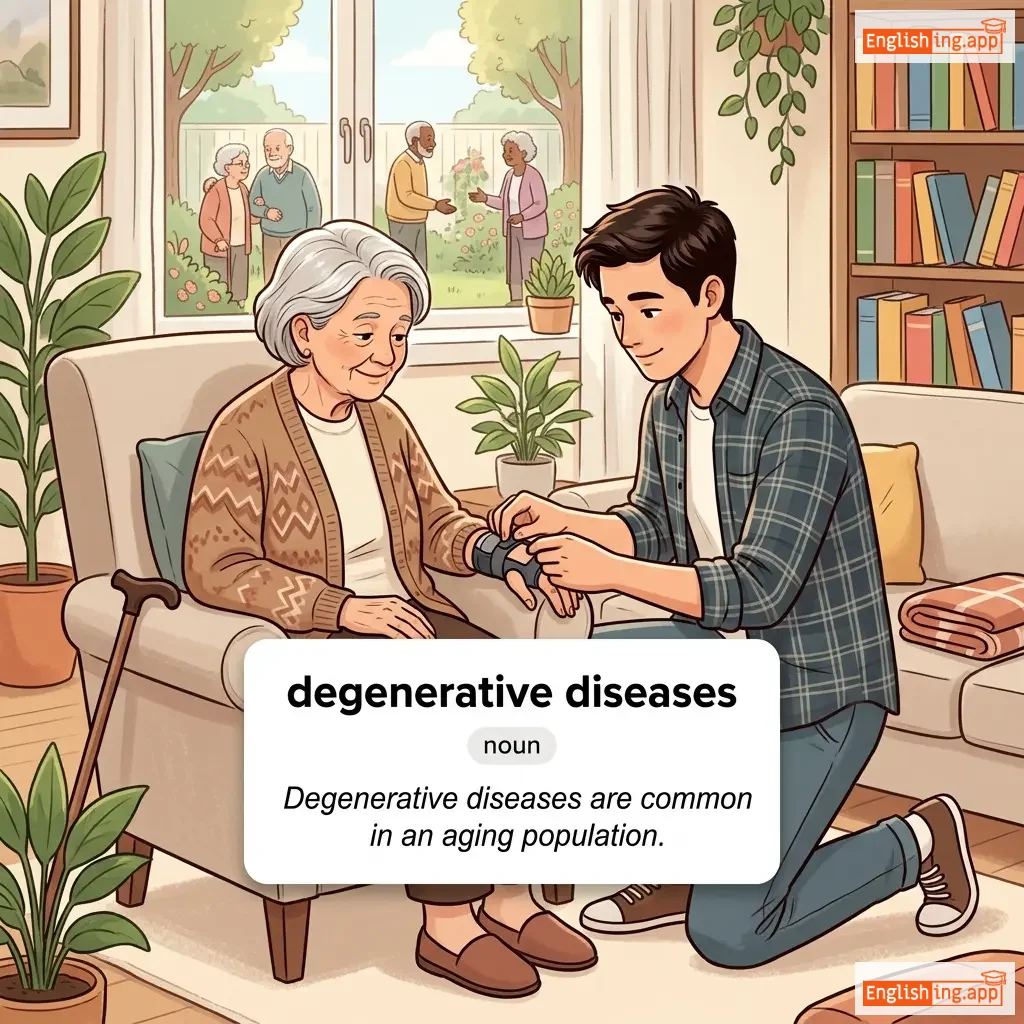
degenerative diseases definition card — visual illustration of the meaning
noun
dɪˈdʒɛnəˌreɪtɪv dɪˈzizɪz
変性疾患 (henshō shikkan)

Medical conditions that involve the deterioration or progressive decline of tissues, organs, or functions

"Degenerative diseases are common in an aging population."
"変性疾患は高齢化した人口に一般的です。" (Henshō shikkan wa kōreika shita jinkō ni ippanteki desu.)
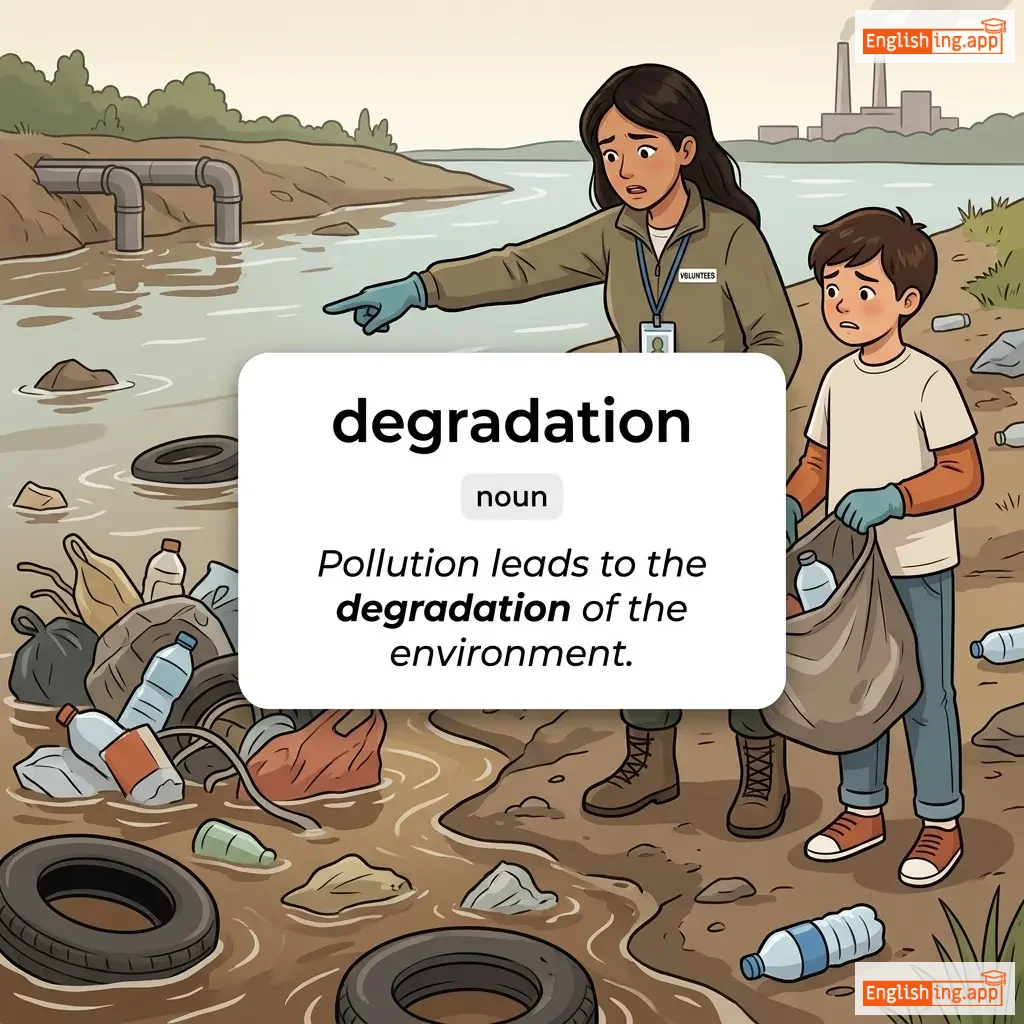
degradation definition card — visual illustration of the meaning
noun
/ˌdɛɡrəˈdeɪʃən/
劣化 (rekka)

The process of being degraded, declined, or reduced in quality, dignity, or value.

"Pollution leads to the degradation of the environment."

"汚染は環境の劣化を引き起こします。" (Osenshita kankyō no rekka wo hikiokoshimasu.)
⬇️😔

degrade

verb
/dɪˈɡreɪd/

To lower in dignity, quality, or value; to treat with disrespect or to deteriorate.

"Harsh words can degrade a person's confidence."

adjective
/dɪˈɡreɪdɪd/
劣化した (reka shita)

Reduced in quality, dignity, or condition.

"The villagers were forced to live in degraded conditions."

"村人たちは劣化した状態で暮らさざるを得なかった。" (Murabito-tachi wa reka shita joutai de kurasazaru o enakatta.)
noun
/dɪˈɡriː/
学位 / 程度 (gakui / teido)

an amount or level of something; an academic qualification

"She earned a degree in engineering."
"彼女は工学の学位を取得しました。" (Kanojo wa kōgaku no gakui o shūtoku shimashita.)
verb
/diːˈhaɪdreɪt/

to remove water from something; to lose water or body fluids

"Running in the heat can quickly dehydrate you."

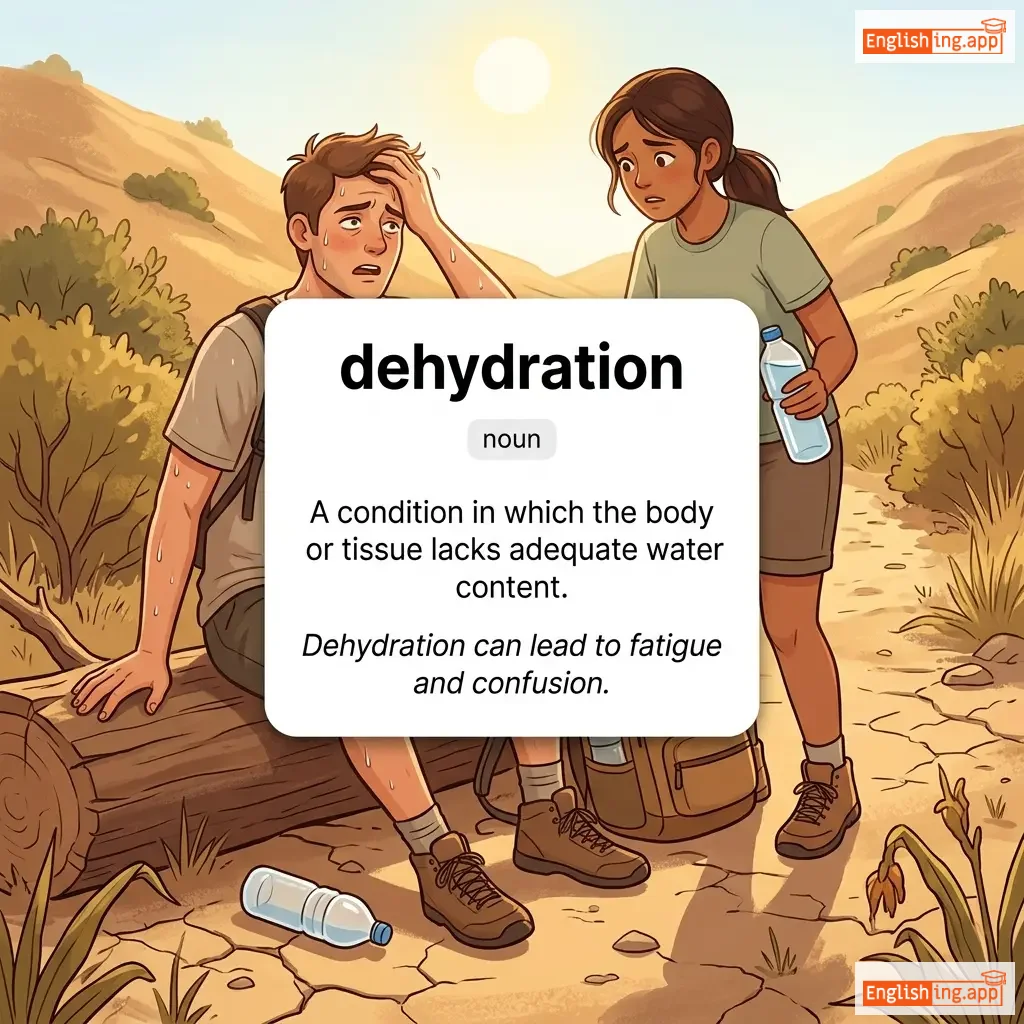
dehydration definition card — visual illustration of the meaning
noun
/ˌdiː.haɪˈdreɪʃən/
脱水症 (dassui-shō)

A condition in which the body or tissue lacks adequate water content.

"Dehydration can lead to fatigue and confusion."

"脱水は疲労と混乱を引き起こす可能性があります。" (dassui wa hirō to konran o hikiokosu kanōsei ga arimasu.)
verb
/ˈdiːɪfaɪ/
神格化する (shinkakuka suru)

to treat or worship someone or something as a god

"Some fans deify their favorite celebrities."

"一部のファンはお気に入りの有名人を神のように崇拝します。" (Ibu no fan wa okiniiri no yuumeijin o kami no you ni suuhai shimasu.)
verb
/deɪn/
自分の尊厳を損ねて何かをする (jibun no songen o sokonete nanika o suru)

to do something considered beneath one's dignity

"The king did not deign to reply to the commoner."

"王は平民に返答することをしなかった。" (Ou wa heimin ni hentou suru koto o shinakatta.)
noun
/ˈdiːɪst/
デイスト (deisuto)

a person who believes in the existence of a supreme being but rejects organized religion

"The philosopher identified himself as a deist."

"その哲学者は自分をデイストとして認識した。" (Sono tetsugakusha wa jibun o deisuto toshite ninshiki shita.)