वोकैबुलरीज

इंग्लिश वोकैबुलरी डिस्कवर, लर्न और मास्टर करें

adjective
/dɪˈstɜː.bɪŋ/
चिंताजनक (chintajanak)

causing anxiety, worry, or emotional distress

"The news about the accident was deeply disturbing."

"दुर्घटना के बारे में खबर बेहद चिंता जनक थी।" (Durghatna ke baare mein khabar behad chinta janak thi.)
noun
/dɪsˈjuːnjən/
विखंडन (vikhandan)

the state of being separated or not united

"Civil wars often result from national disunion."

"गृहयुद्ध अक्सर राष्ट्रीय विखंडन से उत्पन्न होते हैं।" (Grihyudh aksar rashtriya vikhandan se utpann hote hain.)
noun
/ˈdaɪˌsɪləbəl/
द्विसंयोजी शब्द (dwi sanyojī shabd)

a word consisting of two syllables

"The word 'happy' is a disyllable."

"‘हैप्पी’ शब्द एक द्विसंयोजी शब्द है।" ('Happy' shabd ek dwi sanyojī shabd hai.)
verb
/ˈdɪðər/
दुविधा में होना (duvidha mein hona)

to be indecisive or unable to make a decision

"He dithered for hours before choosing a restaurant."

"वह एक रेस्टोरेंट चुनने से पहले घंटों तक दुविधा में था।" (Vah ek restaurant chunne se pehle ghanton tak duvidha mein tha.)
noun
/ˈdɪti/
लघु गीत (laghu geet)

a short, simple song or poem

"She sang a cheerful little ditty while cooking."

"वह खाना बनाते समय एक खुशमिजाज छोटा गीत गा रही थी।" (Wah khana banate samay ek khushmijaaz chhota geet gaa rahi thi.)
diuretic definition card — visual illustration of the meaning
noun
/ˌdaɪ.jʊˈret.ɪk/
मूत्रवर्धक (mutravardhak)

A substance that promotes the production of urine.

"Coffee has a mild diuretic effect."

"कॉफी का हल्का मूत्रवर्धक प्रभाव है।" (Kofi ka halka mutravardhak prabhav hai.)
adjective
/daɪˈɜːrnəl/
दिन में सक्रिय (din mein sakriya)

active during the day; occurring daily

"Most birds are diurnal creatures, active in daylight hours."

"ज्यादातर पक्षी दिन में सक्रिय प्राणी होते हैं, जो दिन के उजाले में सक्रिय रहते हैं।" (Jyadaatar pakshi din mein sakriya prani hote hain, jo din ke ujale mein sakriya rahte hain.)
noun
/ˈdiːvə/
प्रसिद्ध महिला गायक (prasiddh mahila gayak)

a famous female singer; a woman who is admired or behaves like a star

"The pop diva performed her latest hit to a cheering crowd."

"पॉप दीवा ने अपनी नवीनतम हिट एक उत्साहित भीड़ के सामने प्रस्तुत की।" (Pop diva ne apni naveenatam hit ek utsahit bheed ke samne prastut ki.)
noun
/ˌdaɪvəˈɡeɪʃən/
विचलन (vichlan)

digression; wandering from a path or subject

"His lecture was full of divagation, making it hard to follow the main point."

"उसकी व्याख्यान में विचलन था, जिससे मुख्य बिंदु को समझना मुश्किल हो गया था।" (Uski vyakhyan mein vichlan tha, jisse mukhya bindu ko samajhna mushkil ho gaya tha.)
verb
/daɪv/
डुबकी (dubki)

to plunge headfirst into water or another substance

"He decided to dive into the pool on a hot day."

"उसने गर्मी के दिन पूल में डाइव करने का निर्णय लिया।" (Usne garmi ke din pool mein dive karne ka nirnay liya.)
noun
/ˈdaɪ.vər/
डाइवर (diver)

a type of water bird that dives underwater to catch fish

"The diver disappeared beneath the surface to catch a fish."

"डाइवर मछली पकड़ने के लिए पानी की सतह के नीचे गायब हो गया।" (diver machhli pakadne ke liye paani ki satah ke neeche gayab ho gaya.)
diverge definition card — visual illustration of the meaning
verb
/daɪˈvɜːrdʒ/
विभिन्न होना (vibhinn hona)

to separate from a path, opinion, or standard

"The two friends began to diverge in their career choices."

"दोस्ती में वे अपने करियर चुनावों में भिन्न दिशा में चलने लगे।" (Dosti mein ve apne career chunoavon mein bhinn disha mein chalne lage.)
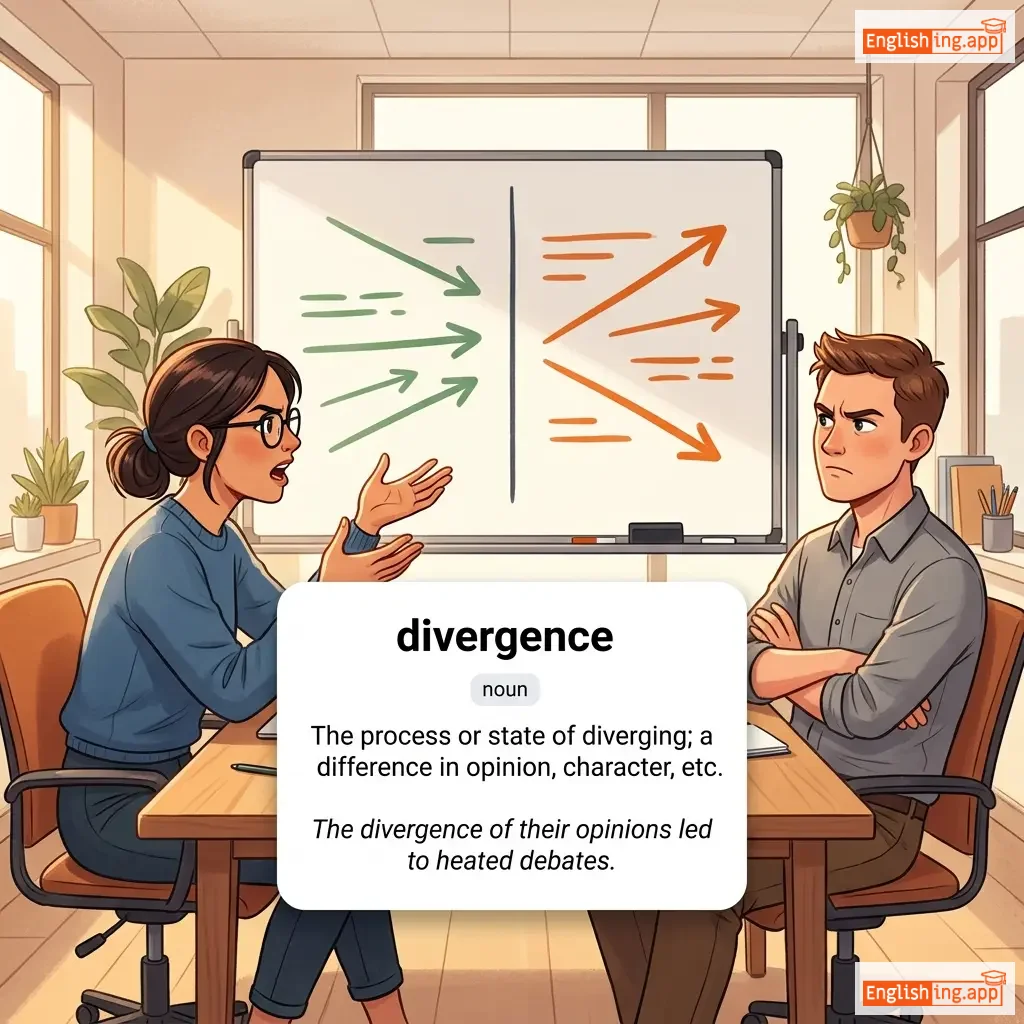
divergence definition card — visual illustration of the meaning
noun
daɪˈvɜː.dʒəns
विभिन्नता (vibhinnata)

The process or state of diverging; a difference in opinion, character, etc.

"The divergence of their opinions led to heated debates."

"उनकी राय की विभिन्नता ने गरमागरम बहसों को जन्म दिया।" (Unki rai ki vibhinnata ne garamgaram behason ko janm diya.)
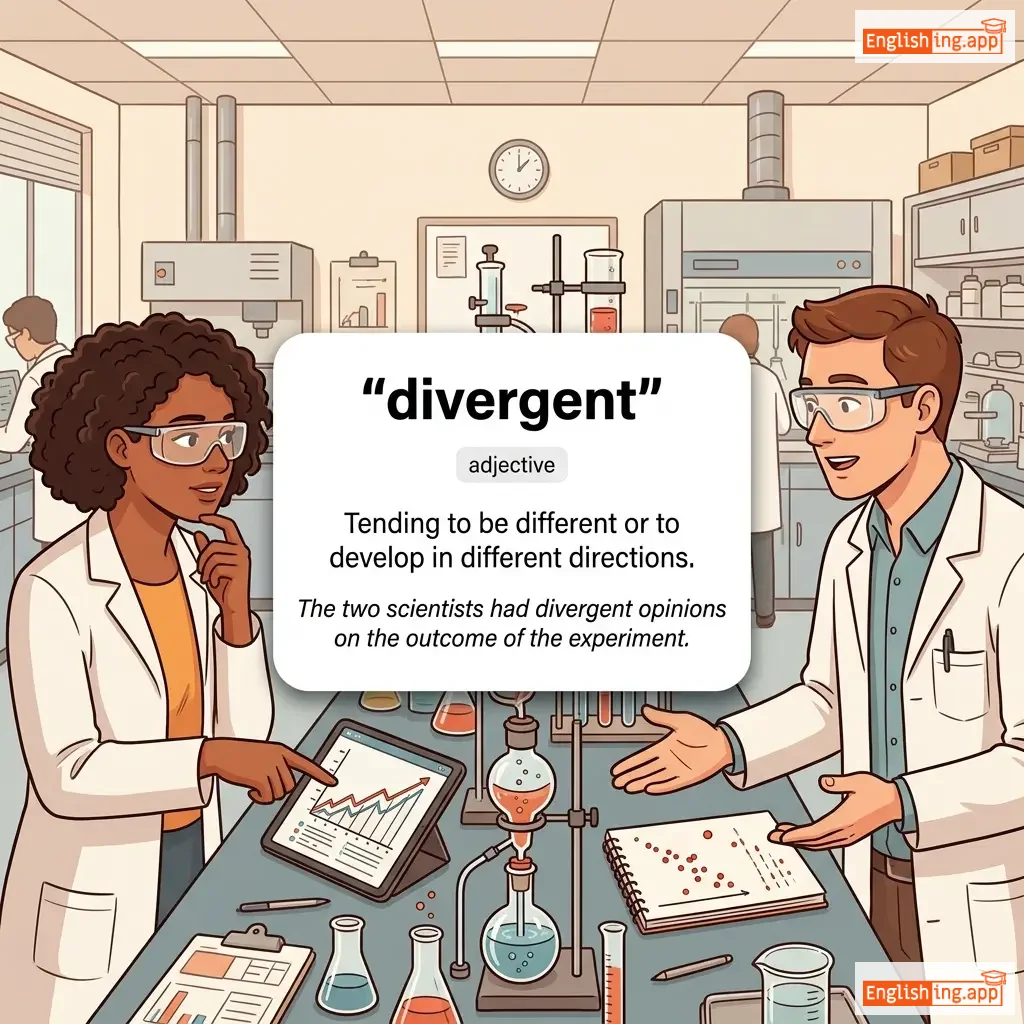
divergent definition card — visual illustration of the meaning
adjective
/daɪˈvɜːrdʒənt/
विभिन्न दिशा में विकसित होने वाला (vibhinn disha mein viksit hone wala)

Tending to be different or to develop in different directions.

"The two scientists had divergent opinions on the outcome of the experiment."

"दो वैज्ञानिकों की प्रयोग के परिणाम पर विभिन्न विचार थे।" (Do vaigyanikon ki prayog ke parinaam par vibhinn vichar the.)
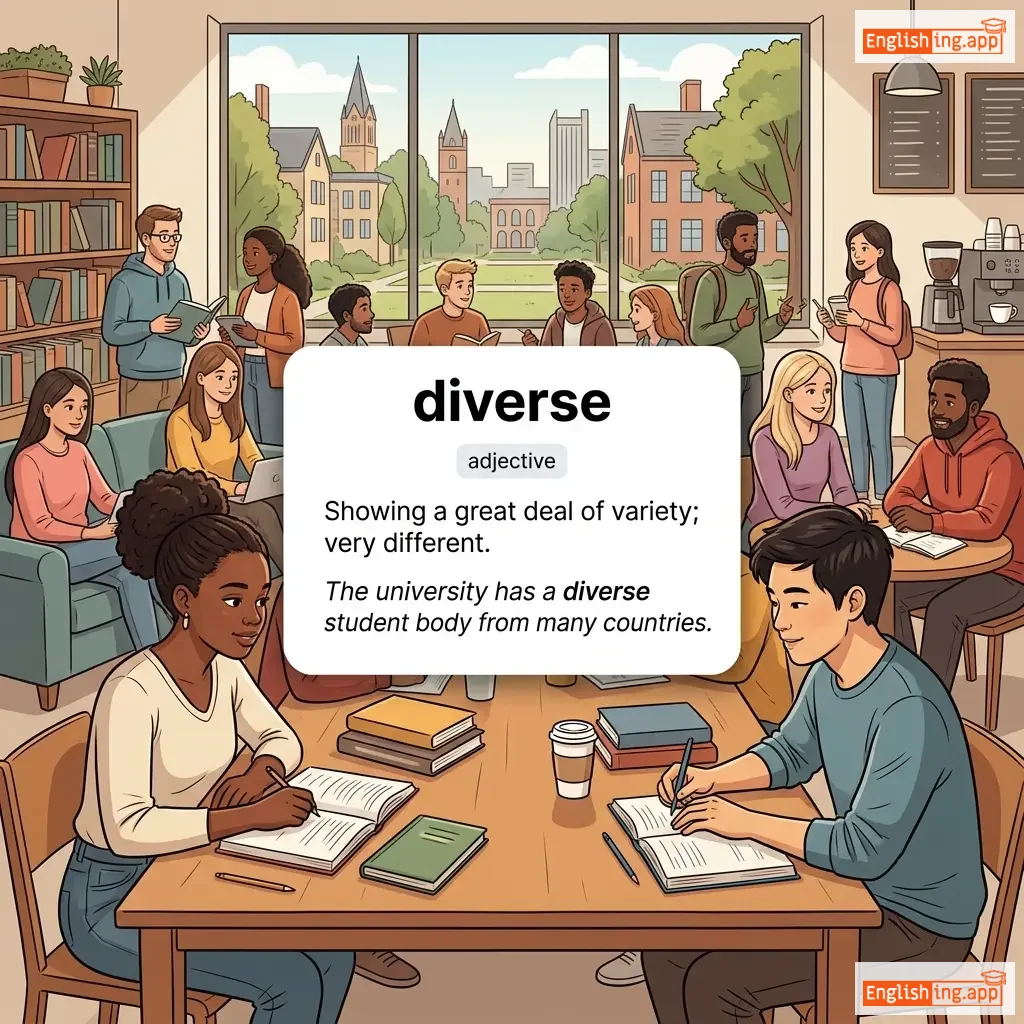
diverse definition card — visual illustration of the meaning
adjective
/daɪˈvɜːrs/
विविध (vividh)

Showing a great deal of variety; very different.

"The university has a diverse student body from many countries."

"विश्वविद्यालय में कई देशों के विविध छात्र हैं।" (Vishwavidyalaya mein kai deshon ke vividh chhatra hain.)
diversification definition card — visual illustration of the meaning
noun
/daɪˌvɜː.sɪ.fɪˈkeɪ.ʃən/
विविधीकरण (vividhikaran)

The process of a business expanding into different product lines or markets to spread risk and reduce dependence on a single source of income.

"The company's diversification strategy reduced financial risks."

"कंपनी की विविधीकरण रणनीति ने वित्तीय जोखिम को कम किया।" (Kampani ki vividhikaran rananiti ne vittiya jokhim ko kam kiya.)
adjective
/daɪˈvɜːrsɪfaɪd/
विविधित (vividhit)

Made or having variety in form, nature, or content.

"The company adopted a diversified business strategy to reduce risks."

"कंपनी ने जोखिम कम करने के लिए एक विविधित व्यापार रणनीति अपनाई।" (Kampani ne jokhim kam karne ke liye ek vividhit vyapar ranneeti apnaai.)
noun
/daɪˈvɜːrʒən/
मार्ग विकल्प (diversion)

The act of changing direction or being distracted; an activity that entertains.

"The road was closed, so we had to take a diversion through the village."

"सड़क बंद थी, इसलिए हमें गाँव के रास्ते एक वैकल्पिक मार्ग अपनाना पड़ा।" (sadak bandh thi, isliye humein gaon ke raaste ek vaikalpik maarg apnaana pada.)
diversity definition card — visual illustration of the meaning
noun
/daɪˈvɜːrsəti/
विविधता (vividhata)

A range of different things or people; variety.

"Workplace diversity helps foster innovation and creativity."

"कार्यस्थल की विविधता नवाचार और रचनात्मकता को बढ़ावा देती है।" (karyasthal ki vividhata navachar aur rachnatmakta ko badhava deti hai.)
verb
/daɪˈvɜːrt/
दिशा बदलना (disha badalna)

to turn aside from a course; to redirect or entertain

"The police diverted traffic to a side road."

"पुलिस ने यातायात को एक साइड रोड पर डाइवर्ट कर दिया।" (Pulis ne yaataayat ko ek side road par divert kar diya.)
adjective
/daɪˈvɜːrtɪbəl/
विवर्तनीय (vivartaniy)

capable of being turned aside or redirected

"Funds from the budget are not legally divertible."

"बजट से धन कानूनी रूप से डाइवर्टिबल नहीं हैं।" (Bajat se dhan kanuni roop se divertible nahin hain.)
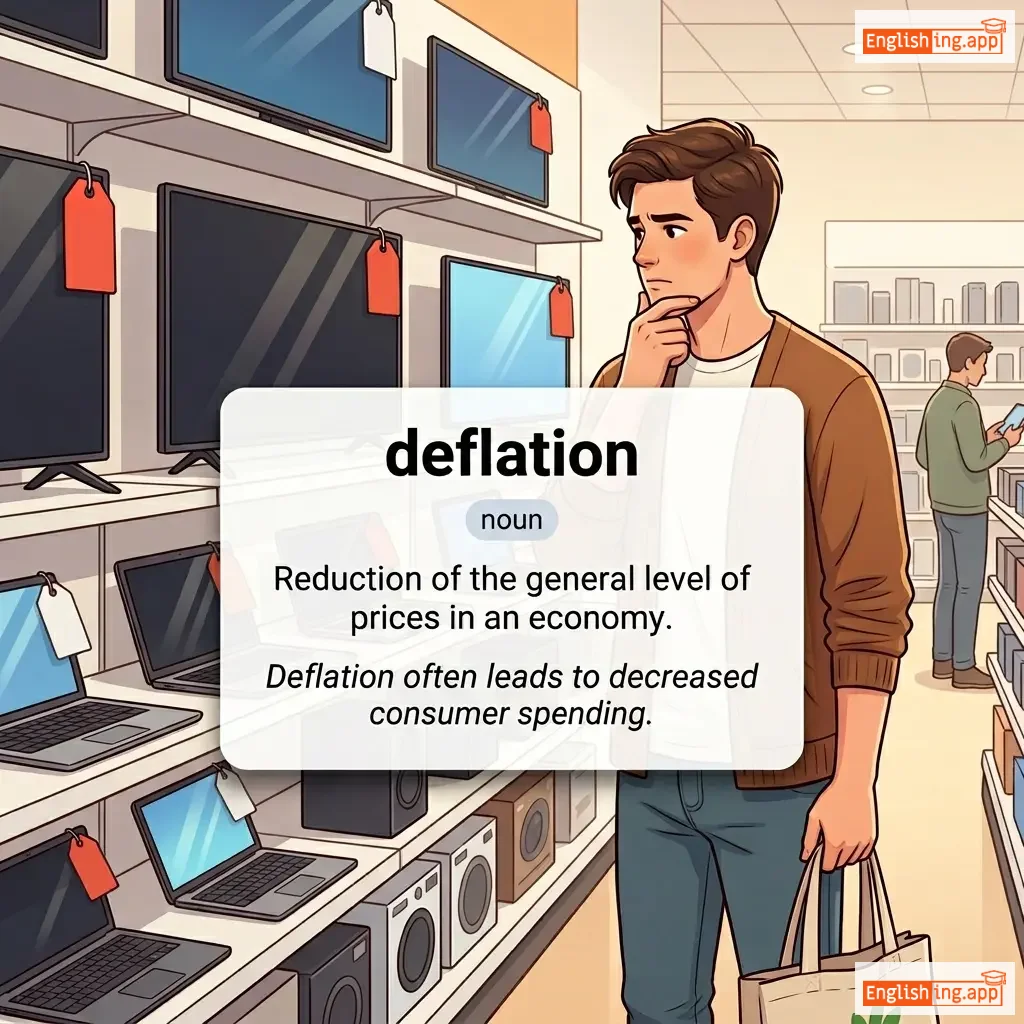
deflation definition card — visual illustration of the meaning
noun
dɪˈfleɪʃən
डिफ्लेशन (diflation)

Reduction of the general level of prices in an economy.

"Deflation often leads to decreased consumer spending."

"डिफ्लेशन आम तौर पर उपभोक्ता खर्च में कमी का कारण बनता है." (diflation aam taur par upbhokta kharch mein kami ka karan banta hai)
verb
/dɪˈflɛkt/
विकृत करना / टालना (vikrit karna / taalna)

to cause something to change direction; to avoid answering directly

"The shield deflected the incoming arrow."

"ढाल ने आ रहे तीर को बदल दिया।" (dhal ne aa rahe teer ko badal diya.)
noun
/dɪˈfoʊliənt/
पत्ते गिराने वाला रसायन (defoliant)

a chemical that causes leaves to drop from plants, often used in warfare or agriculture

"The army sprayed defoliant to clear the forest cover."

"सेना ने जंगल के आवरण को साफ करने के लिए डिफॉलिएंट छिड़का।" (sena ne jangal ke aavaran ko saaf karne ke liye difoliyent chhidka.)
verb
/dɪˈfoʊlieɪt/
पत्तियाँ गिराना (pattiyan girana)

to strip leaves from a tree, plant, or area, often using chemicals

"The farmers defoliated the fields before harvest."

"किसानों ने फसल काटने से पहले खेतों से पत्तियाँ गिराई।" (Kisano ne fasal katne se pehle kheton se pattiyaan girayi.)
verb
/diːˈfɒrɪst/
वन उजार करना (van ujaar karna)

to clear an area of trees, usually on a large scale

"The region has been heavily deforested for agriculture."

"क्षेत्र कृषि के लिए भारी रूप से वन उजार किया गया है।" (kshetra krishi ke liye bhari roop se van ujaar kiya gaya hai.)
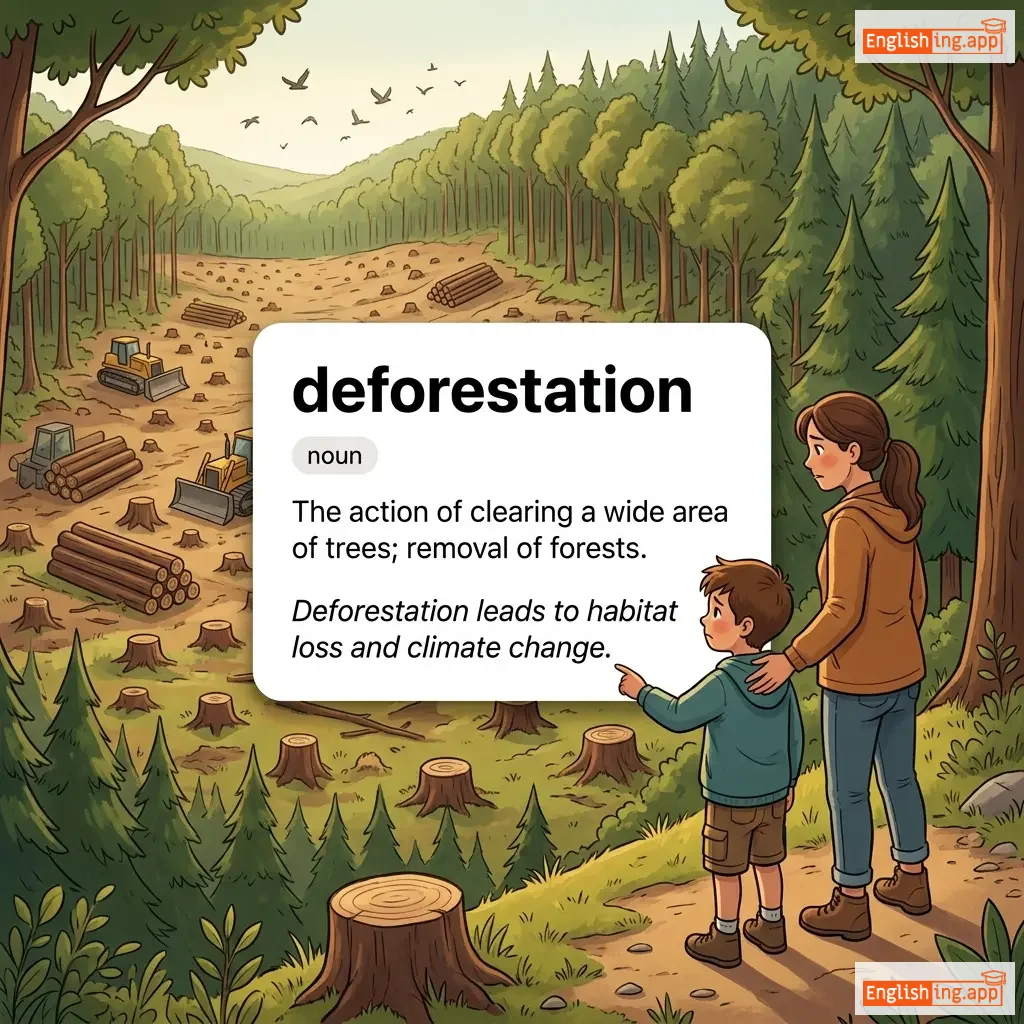
deforestation definition card — visual illustration of the meaning
noun
/ˌdiː.fɒr.ɪˈsteɪ.ʃən/
वन कटाई (van katai)

The action of clearing a wide area of trees; removal of forests.

"Deforestation leads to habitat loss and climate change."

"वन कटाई आवासीय क्षेत्र की हानि और जलवायु परिवर्तन का कारण बनती है।" (Van katai aavasiya kshetra ki haani aur jalvayu parivartan ka kaaran banti hai.)
verb
/dɪˈfɔːrm/
विकृत करना (vikrit karna)

to change the normal shape or structure of something by twisting or distorting it

"Excessive heat can deform plastic containers."

"अत्यधिक तापमान प्लास्टिक कंटेनरों को विकृत कर सकता है।" (atyadhik taapmaan plastic containers ko vikrit kar sakta hai.)
noun
/dɪˈfɔːrməti/
विकृति (diformiti)

an abnormality or distortion in the shape or structure of a body part

"The child was born with a minor hand deformity."

"बच्चा हाथ की एक हल्की विकृति के साथ पैदा हुआ था।" (bachcha haath ki ek halkee vikriti ke saath paida hua tha.)
verb
/dɪˈfrɔːd/
धोखा देकर पैसे लेना (dhokha dekar paise lena)

to illegally take money or valuables from someone by deception

"The company was accused of trying to defraud investors."

"कंपनी पर निवेशकों को धोखा देने का आरोप लगाया गया था।" (Company par niweshkon ko dhokha dene ka aarop lagaya gaya tha.)
verb
/dɪˈfreɪ/
खर्च वहन करना (kharch vahan karna)

to provide money to pay the costs of something

"The grant will help defray the cost of education."

"ग्रांट शिक्षा की लागत वहन करने में मदद करेगा।" (grant shiksha ki lagat vahan karne mein madad karega.)
verb
/diːˈfrɑːk/
पादरी को पद से हटा देना (padri ko pad se hata dena)

to officially remove a priest or minister from their position and authority

"The church decided to defrock the priest after the scandal."

"चर्च ने स्कैंडल के बाद पादरी को डीफ्रॉक करने का निर्णय लिया।" (charch ne scandal ke baad padri ko defrock karne ka nirnay liya.)
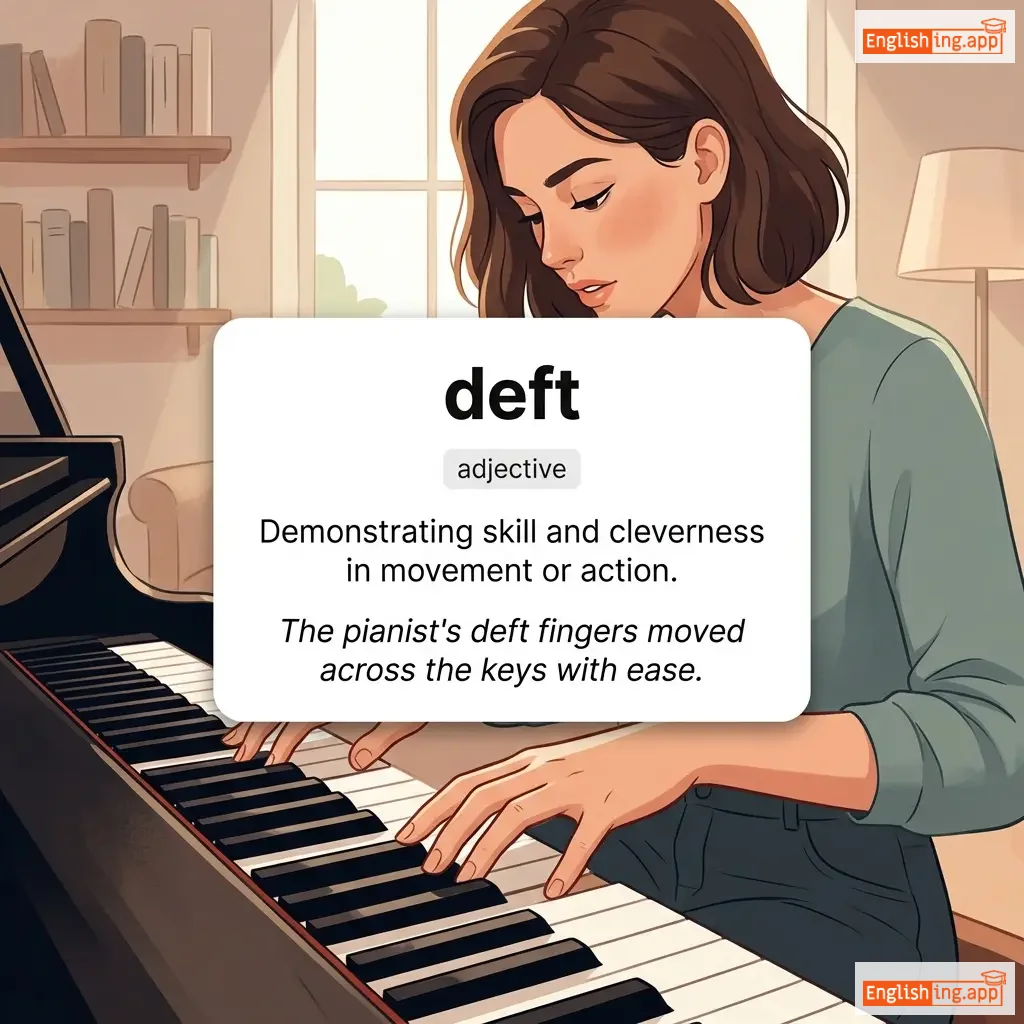
deft definition card — visual illustration of the meaning
adjective
/dɛft/
निपुण (nipun)

Demonstrating skill and cleverness in movement or action.

"The pianist's deft fingers moved across the keys with ease."

"पियानोवादक की निपुण अंगुलियाँ कुंजी पर आसानी से चल रही थीं।" (Piyanovadak ki nipun anguliyaan kunji par aasani se chal rahi thi.)
noun
/ˈdɛftnəs/
कुशलता (kushalta)

Skillfulness and quickness in action or thought.

"Her deftness with words impressed the audience."

"उसकी शब्दों के साथ कुशलता ने दर्शकों को प्रभावित किया।" (Uski shabdon ke saath kushalta ne darshako ko prabhavit kiya.)
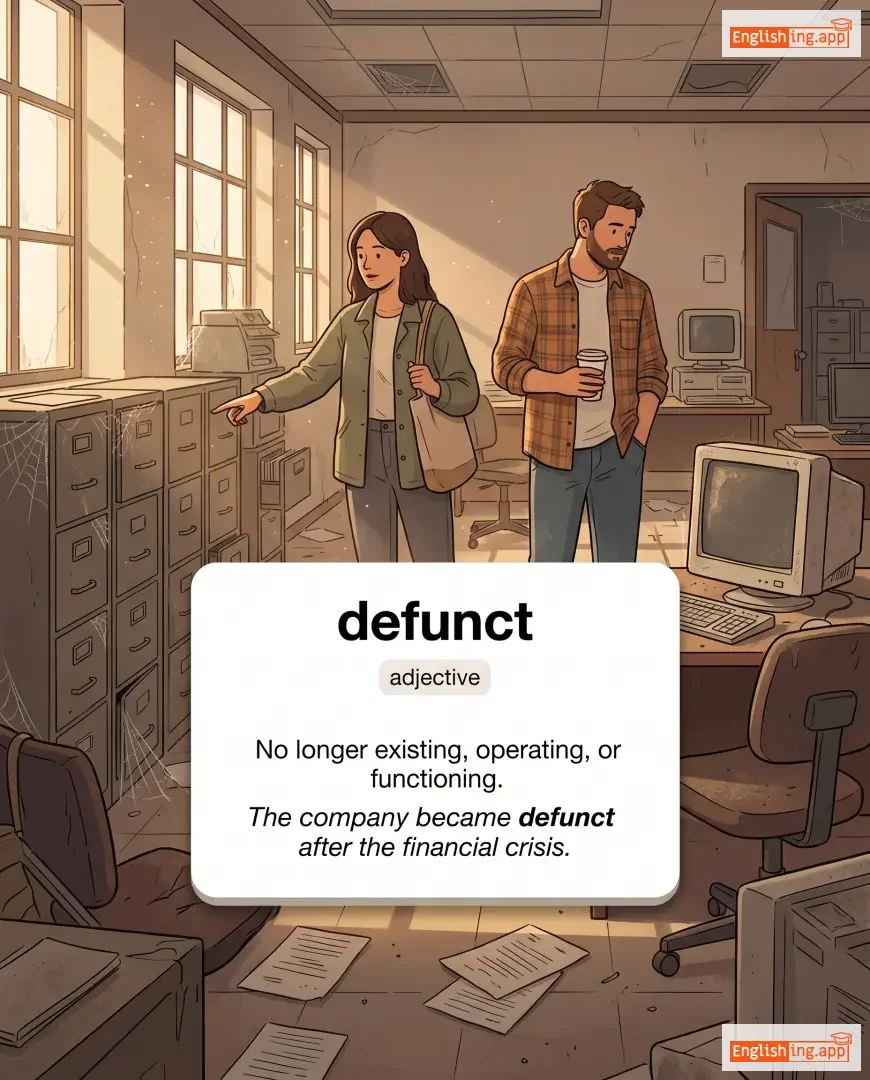
defunct definition card — visual illustration of the meaning
adjective
/dɪˈfʌŋkt/
निष्क्रिय, समाप्त (nishkriya, samaapt)

No longer existing, operating, or functioning.

"The company became defunct after the financial crisis."

"वह कंपनी वित्तीय संकट के बाद समाप्त हो गई।" (Woh company vittiya sankat ke baad samaapt ho gayi.)
verb
/diːˈfjuːz/
शांत करना (shaant karna)

To make a situation less dangerous, tense, or explosive; to remove a fuse from a bomb.

"The negotiator helped defuse the tense situation."

"बातचीतकर्ता ने तनावपूर्ण स्थिति को शांत करने में मदद की।" (Baatchitkarata ne tanaavpurn sthiti ko shaant karne mein madad ki.)
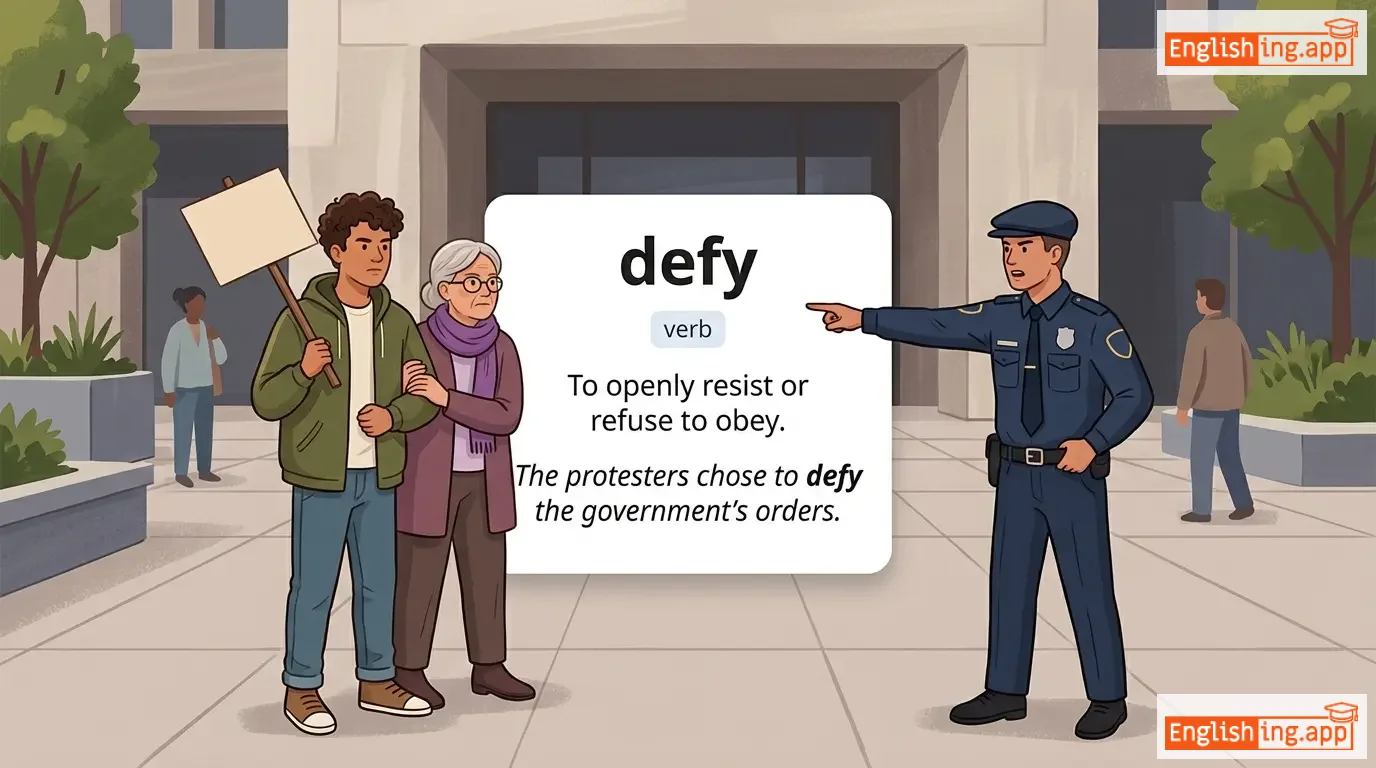
defy definition card — visual illustration of the meaning
verb
/dɪˈfaɪ/
अवज्ञा करना (avignya karna)

To openly resist or refuse to obey.

"The protesters chose to defy the government's orders."

"प्रदर्शनकारियों ने सरकार के आदेशों का उल्लंघन करने का निर्णय लिया।" (Pradarshankariyon ne sarkar ke aadeshon ka ullanghan karne ka nirnay liya.)
noun
/dɪˈdʒɛnərəsi/
पतन (patan)

The state of decline or deterioration, often in moral, cultural, or physical qualities.

"The novel portrays the moral degeneracy of a corrupt society."

"उपन्यास एक भ्रष्ट समाज की नैतिक पतन को चित्रित करता है।" (Upanyas ek bhrasht samaj ki naitik patan ko chitrit karta hai.)
verb/adjective
/dɪˈdʒɛnəreɪt/
दुष्ट होना (dusht hona)

To decline or deteriorate in quality, character, or condition; or someone with low moral standards.

"The once thriving empire began to degenerate into chaos."

"एक समय था जब समृद्ध साम्राज्य आखिरकार अराजकता में दुष्ट हो गया।" (Ek samay tha jab samriddh samrajya aakhirkar arajakta mein dusht ho gaya.)
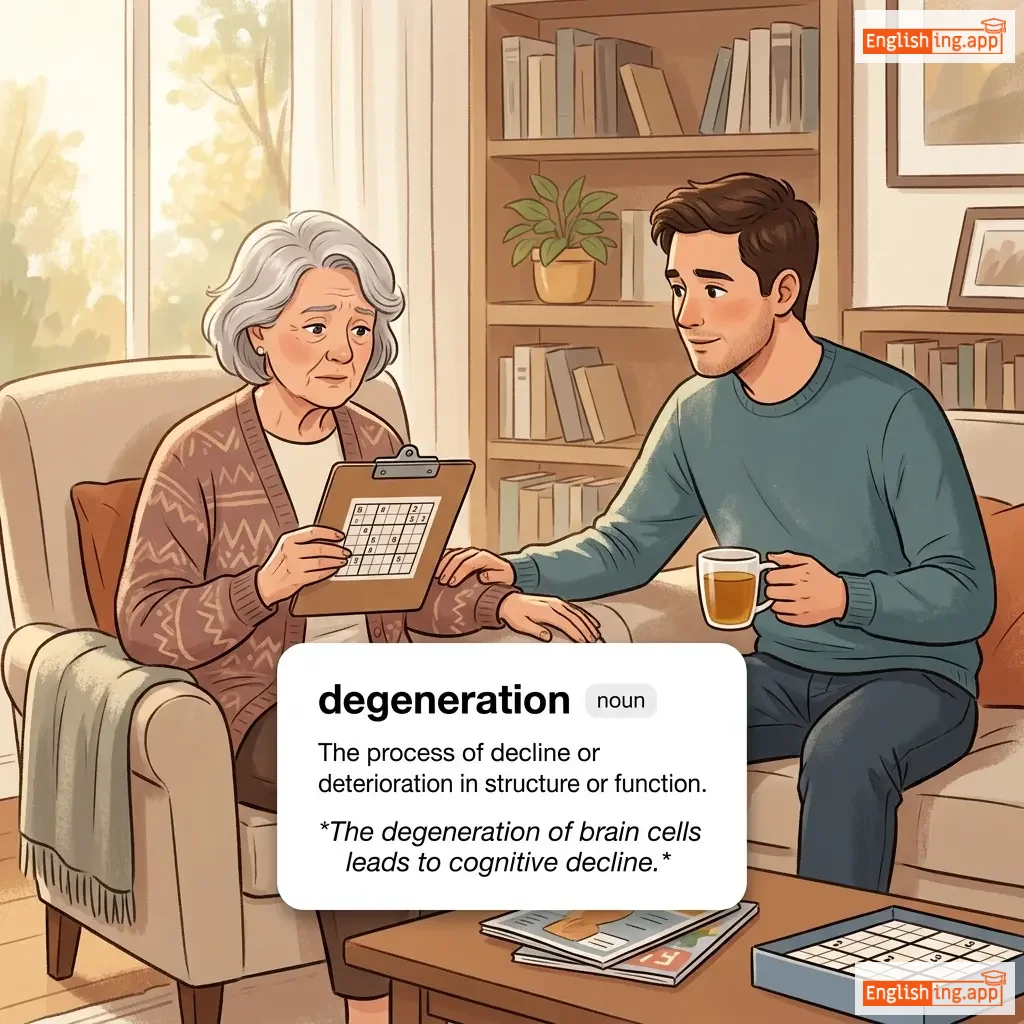
degeneration definition card — visual illustration of the meaning
noun
ˌdɪdʒɪˈnɛəreɪʃən
घात (ghat)

The process of decline or deterioration in structure or function.

"The degeneration of brain cells leads to cognitive decline."

"मस्तिष्क कोशिकाओं का घात संज्ञानात्मक गिरावट का कारण बनता है।" (Mastishk koshikaon ka ghat sangyanatmak girawat ka karan banta hai.)
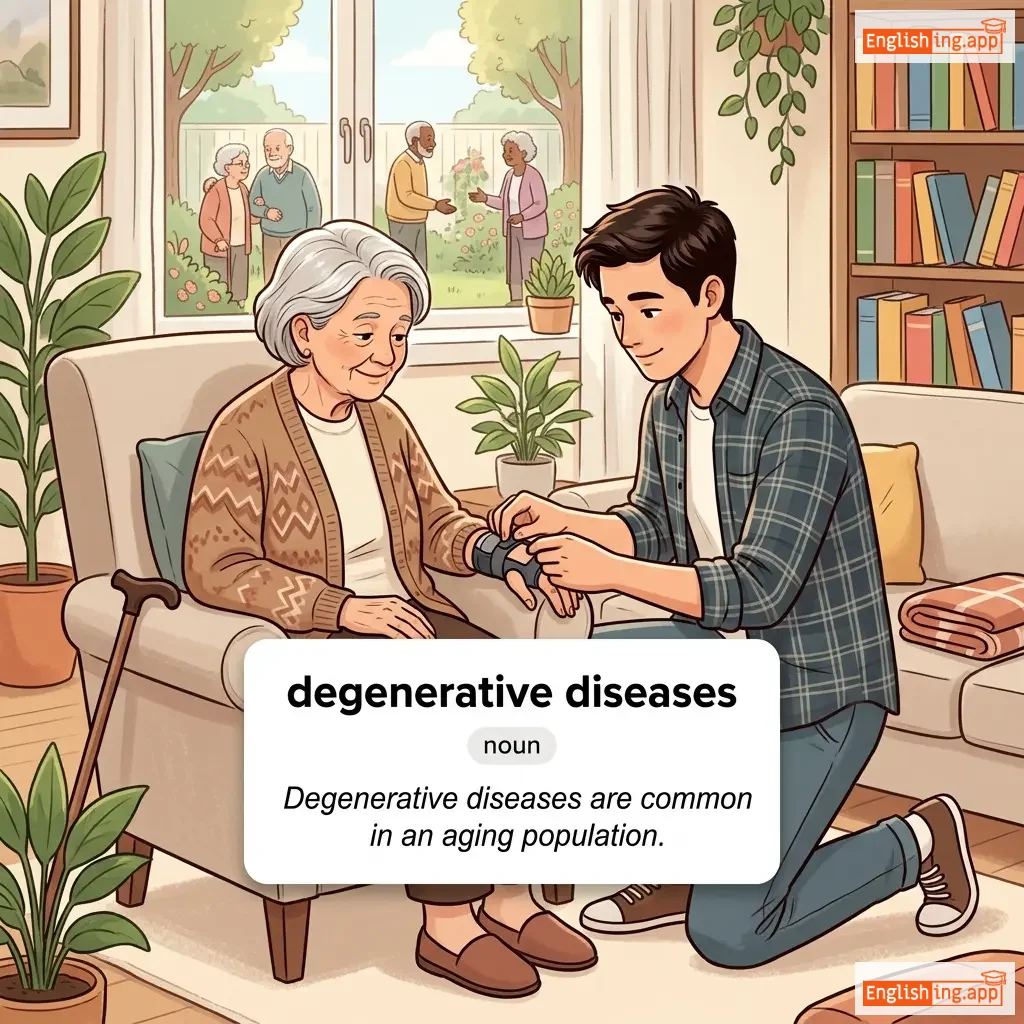
degenerative diseases definition card — visual illustration of the meaning
noun
dɪˈdʒɛnəˌreɪtɪv dɪˈzizɪz
क्षयकारी रोग (kshyakari rog)

Medical conditions that involve the deterioration or progressive decline of tissues, organs, or functions

"Degenerative diseases are common in an aging population."

"क्षयकारी रोग वृद्ध आबादी में सामान्य हैं।" (Kshyakari rog vriddh aabadi mein samanya hain.)
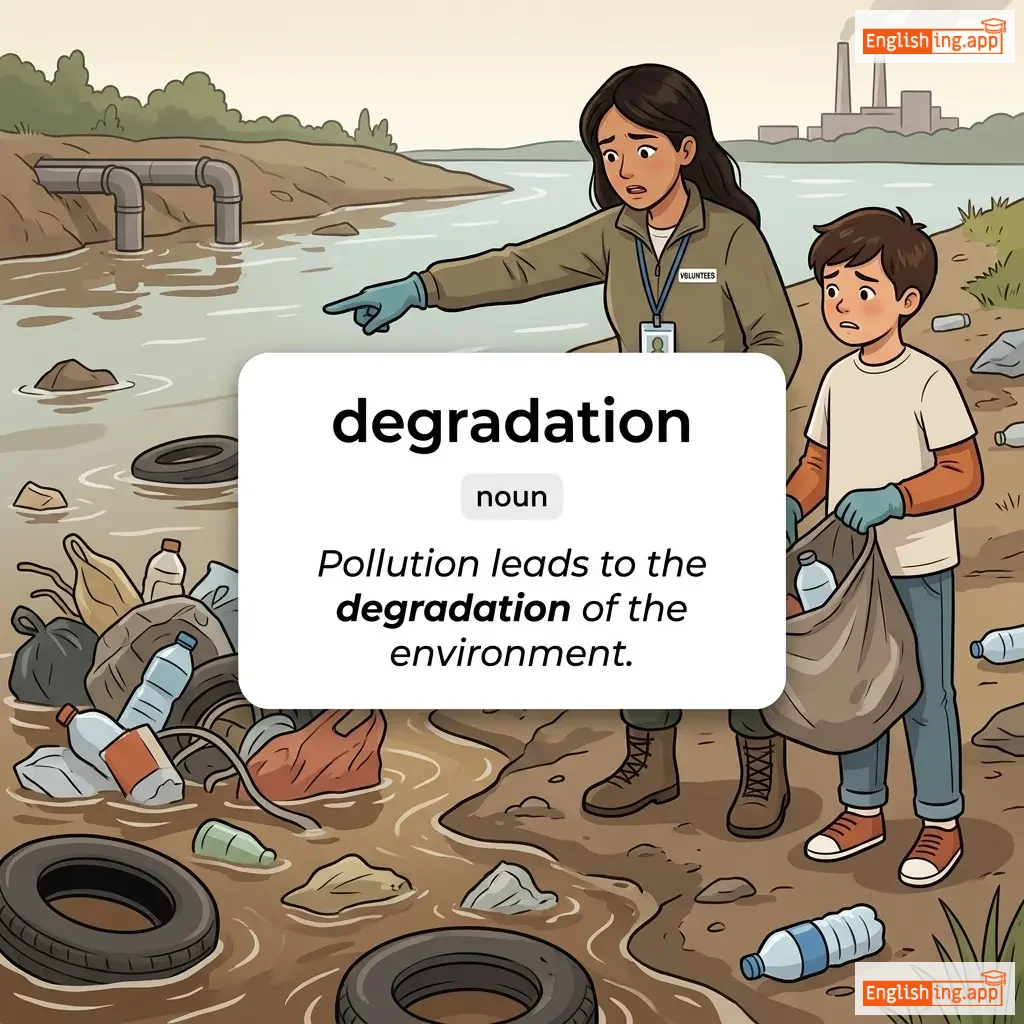
degradation definition card — visual illustration of the meaning
noun
/ˌdɛɡrəˈdeɪʃən/
अवनति (avanati)

The process of being degraded, declined, or reduced in quality, dignity, or value.

"Pollution leads to the degradation of the environment."

"प्रदूषण पर्यावरण के अवनति की ओर ले जाता है।" (Pradushan paryavaran ke avnati ki or le jata hai.)
verb
/dɪˈɡreɪd/
नीचा करना (neecha karna)

To lower in dignity, quality, or value; to treat with disrespect or to deteriorate.

"Harsh words can degrade a person's confidence."

"कठोर शब्द किसी के आत्मविश्वास को गिरा सकते हैं।" (Kathor shabd kisi ke atma-vishwas ko gira sakte hain.)
adjective
/dɪˈɡreɪdɪd/
अवनत (avnat)

Reduced in quality, dignity, or condition.

"The villagers were forced to live in degraded conditions."

"गांववाले degraded स्थितियों में रहने के लिए मजबूर थे।" (Gaonwale degraded sthitiyon mein rehne ke liye majboor the.)
noun
/dɪˈɡriː/
डिग्री / स्तर (digri / starr)

an amount or level of something; an academic qualification

"She earned a degree in engineering."

"उसने इंजीनियरिंग में एक डिग्री प्राप्त की।" (Usne engineering mein ek digri praapt ki.)
verb
/diːˈhaɪdreɪt/
पानी से वंचित करना (pani se vanchit karna)

to remove water from something; to lose water or body fluids

"Running in the heat can quickly dehydrate you."

"गर्मी में दौड़ने से आप जल्दी डीहाइड्रेट हो सकते हैं।" (garmi mein daudne se aap jaldi dehydrate ho sakte hain.)
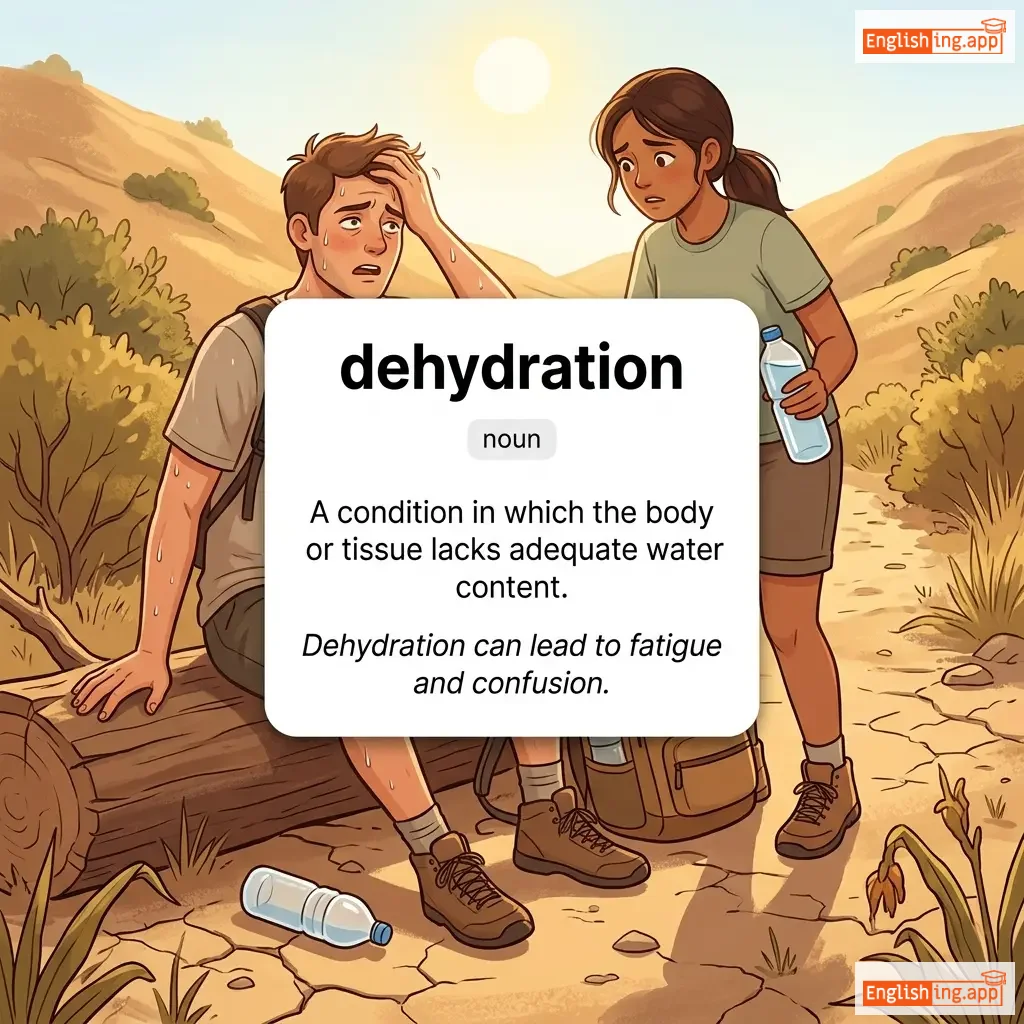
dehydration definition card — visual illustration of the meaning
noun
/ˌdiː.haɪˈdreɪʃən/
पानी की कमी (pani ki kami)

A condition in which the body or tissue lacks adequate water content.

"Dehydration can lead to fatigue and confusion."

"डिहाइड्रेशन थकान और उलझन का कारण बन सकता है।" (dehydration thakan aur uljhan ka kaaran ban sakta hai.)
verb
/ˈdiːɪfaɪ/
देवता के रूप में पूजना (devta ke roop mein poojna)

to treat or worship someone or something as a god

"Some fans deify their favorite celebrities."

"कुछ फैन अपने पसंदीदा सेलिब्रिटीज को देवता बना देते हैं।" (Kuch fan apne pasandeeda celebrities ko devta bana dete hain.)
verb
/deɪn/
अपनी शान के नीचे कुछ करना (apni shaan ke neeche kuch karna)

to do something considered beneath one's dignity

"The king did not deign to reply to the commoner."

"राजा सामान्य व्यक्ति को उत्तर देने के लिए कष्ट नहीं करना चाहते थे।" (Raja samanya vyakti ko uttar dene ke liye kasht nahi karna chahte the.)
noun
/ˈdiːɪst/
ईश्वरवादी लेकिन धर्मनिरपेक्ष (ishwarvadi lekin dharmanirpeksh)

a person who believes in the existence of a supreme being but rejects organized religion

"The philosopher identified himself as a deist."

"दार्शनिक ने खुद को एक डीइस्ट के रूप में पहचाना।" (Darshanik ne khud ko ek deist ke roop mein pehchana.)