词汇表

英语词汇词典 | 单词含义、定义和示例

adjective
/dɪˈstɜː.bɪŋ/
令人不安 (lìng rén bù ān)

causing anxiety, worry, or emotional distress

"The news about the accident was deeply disturbing."

"关于事故的新闻令人深感不安。" (Guānyú shìgù de xīnwén lìng rén shēn gǎn bù ān.)
noun
/dɪsˈjuːnjən/
分裂 (fenlie)

the state of being separated or not united

"Civil wars often result from national disunion."

"内战通常由国家分裂引发。" (Neizhan tongchang you guojia fenlie yinfā.)
noun
/ˈdaɪˌsɪləbəl/
双音节词 (shuang yin jie ci)

a word consisting of two syllables

"The word 'happy' is a disyllable."

"‘幸福’这个词是一个双音节词。" ('Xingfu' zhe ge ci shi yi ge shuang yin jie ci.)
verb
/ˈdɪðər/

to be indecisive or unable to make a decision

"He dithered for hours before choosing a restaurant."

noun
/ˈdɪti/
简短的歌曲 (jiǎnduǎn de gēqǔ)

a short, simple song or poem

"She sang a cheerful little ditty while cooking."

"她一边做饭一边唱着愉快的小歌曲。" (Tā yībiān zuòfàn yībiān chàngzhe yúkuài de xiǎo gēqǔ.)
diuretic definition card — visual illustration of the meaning
noun
/ˌdaɪ.jʊˈret.ɪk/
利尿剂 (lì niào jì)

A substance that promotes the production of urine.

"Coffee has a mild diuretic effect."

"咖啡有轻微的利尿作用。" (Kā fēi yǒu qīng wēi de lì niào zuò yòng.)
adjective
/daɪˈɜːrnəl/
昼行性 (zhòu xíng xìng)

active during the day; occurring daily

"Most birds are diurnal creatures, active in daylight hours."

"大多数鸟类是昼行性动物,在白天活跃。" (Dà duōshù niǎo lèi shì zhòu xíng xìng dòngwù, zài báitiān huóyuè.)
noun
/ˈdiːvə/
著名女歌手 (zhuoming nǚ gēshǒu)

a famous female singer; a woman who is admired or behaves like a star

"The pop diva performed her latest hit to a cheering crowd."

"这位流行歌后在欢呼的人群前演唱了她的最新热曲。" (Zhè wèi liúxíng gēhòu zài huānhū de rénqún qián yǎnchàng le tā de zuìxīn rèqǔ.)
noun
/ˌdaɪvəˈɡeɪʃən/
偏离 (pianli)

digression; wandering from a path or subject

"His lecture was full of divagation, making it hard to follow the main point."

"他的演讲充满了偏离主题的内容,使得很难跟上主要论点。" (Tā de yǎnjiǎng chōngmǎnle piānlí zhǔtí de nèiróng, shǐdé hěn nán gēn shàng zhǔyào lùndiǎn.)
verb
/daɪv/
跳水 (tiao shui)

to plunge headfirst into water or another substance

"He decided to dive into the pool on a hot day."

"他决定在炎热的日子里跳进游泳池。" (Tā juédìng zài yánrè de rìzi lǐ tiàojìn yóuyǒngchí.)
noun
/ˈdaɪ.vər/
潜水员 (qián shuǐ yuán)

a type of water bird that dives underwater to catch fish

"The diver disappeared beneath the surface to catch a fish."
"潜水员消失在水面下去捕捉一条鱼。" (Qián shuǐ yuán xiāo shī zài shuǐ miàn xià qù bǔ zhuō yī tiáo yú.)
diverge definition card — visual illustration of the meaning
↔️

diverge

verb
/daɪˈvɜːrdʒ/

to separate from a path, opinion, or standard

"The two friends began to diverge in their career choices."

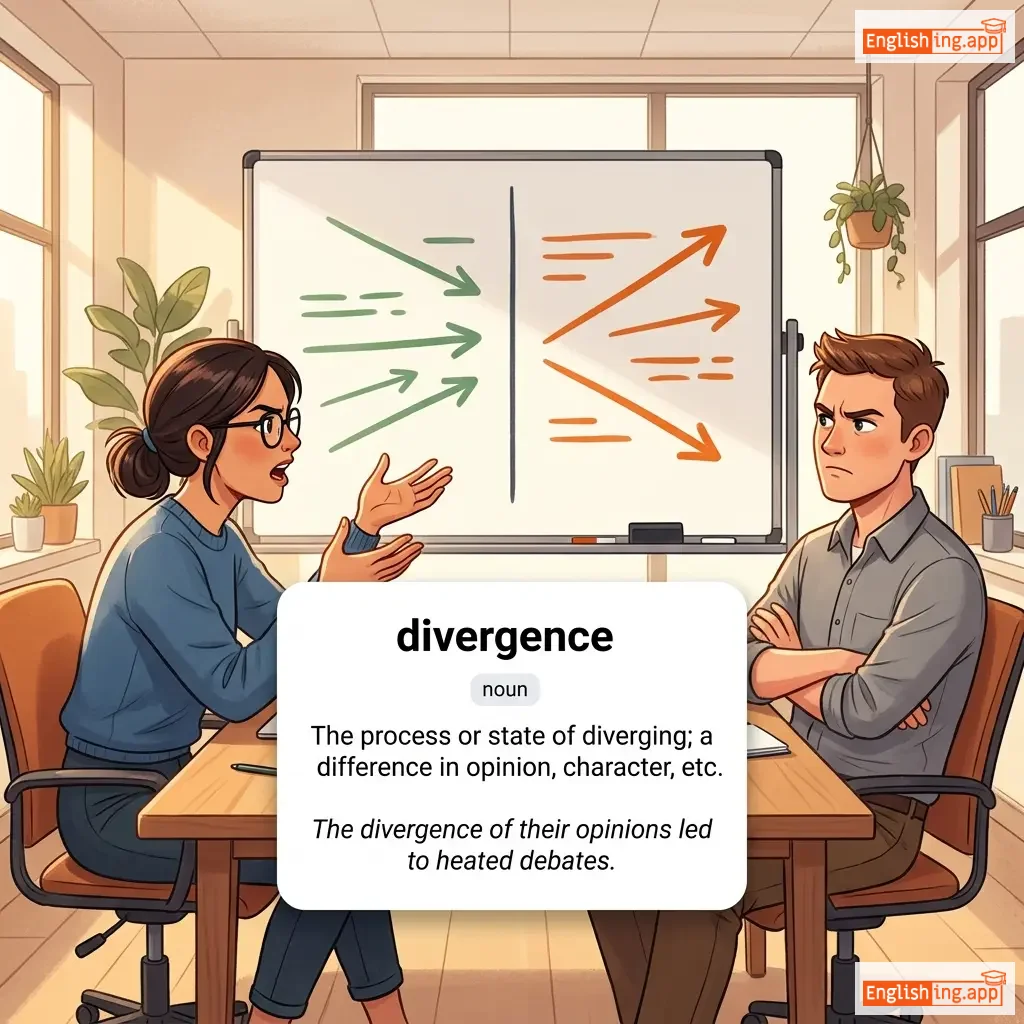
divergence definition card — visual illustration of the meaning
noun
daɪˈvɜː.dʒəns
分歧 (fenqi)

The process or state of diverging; a difference in opinion, character, etc.

"The divergence of their opinions led to heated debates."
"他们意见的分歧引发了激烈的辩论。" (Tamen yijian de fenqi yinfa le jilie de bianlun.)
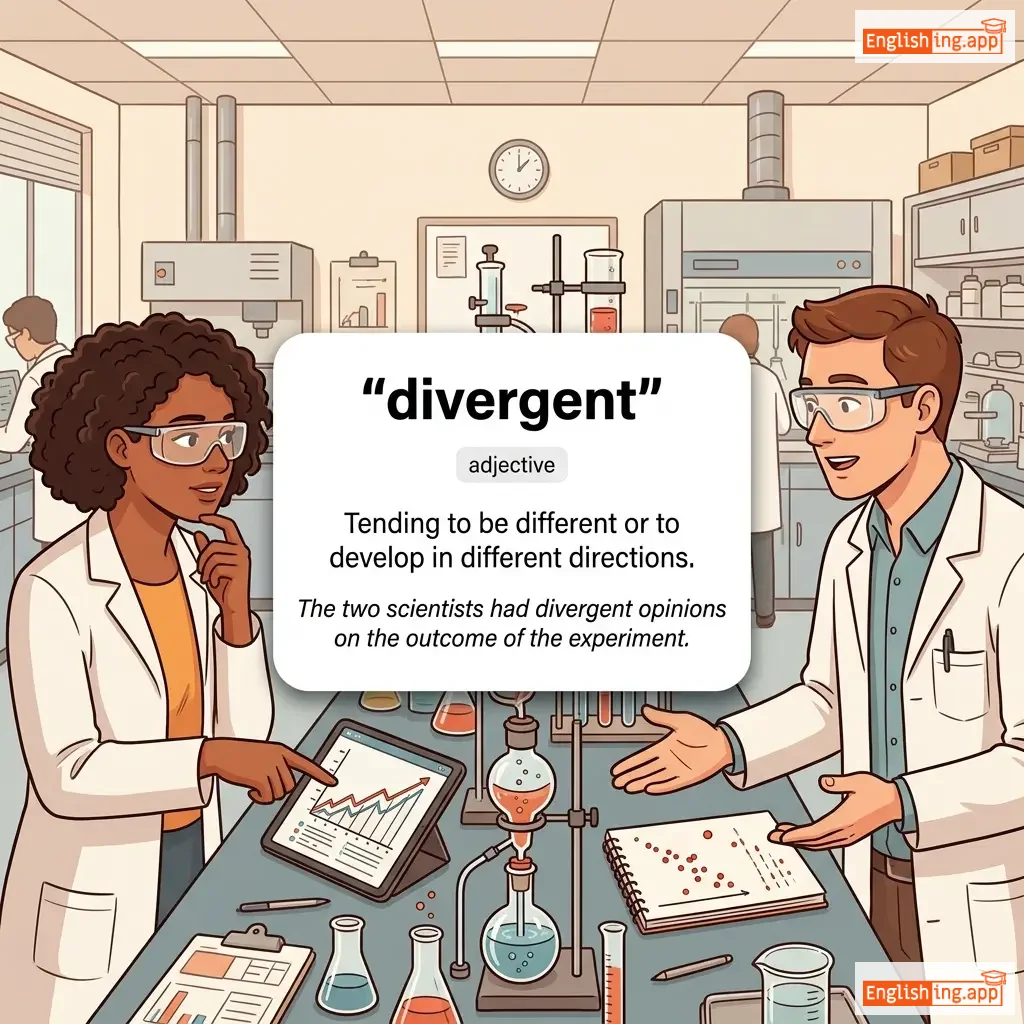
divergent definition card — visual illustration of the meaning
adjective
/daɪˈvɜːrdʒənt/
发散的 (fāsàn de)

Tending to be different or to develop in different directions.

"The two scientists had divergent opinions on the outcome of the experiment."
"这两位科学家对实验结果有不同的看法。" (Zhè liǎng wèi kēxuéjiā duì shíyàn jiéguǒ yǒu bùtóng de kànfǎ.)
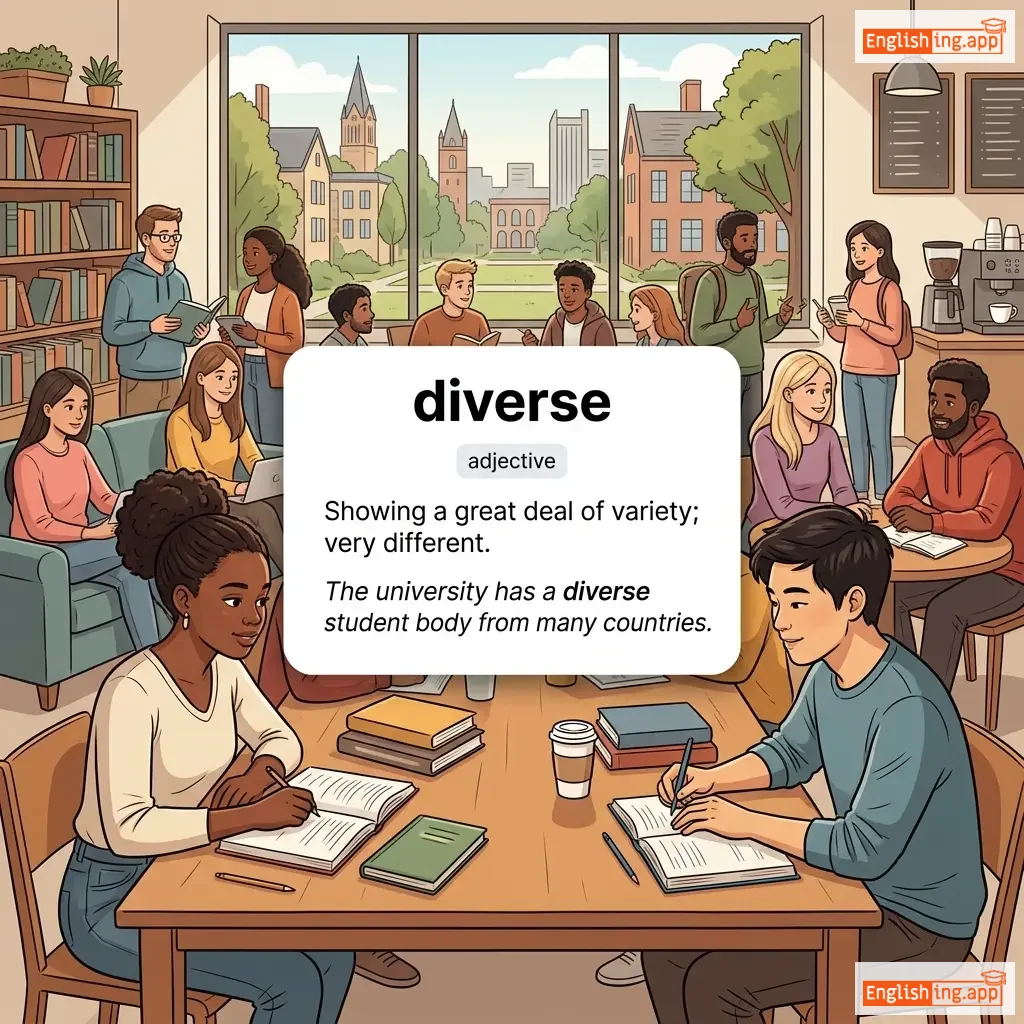
diverse definition card — visual illustration of the meaning
adjective
/daɪˈvɜːrs/
多样的 (duōyàng de)

Showing a great deal of variety; very different.

"The university has a diverse student body from many countries."
"大学有一个来自多个国家的多样化学生群体。" (Dàxué yǒu yīgè láizì duō gè guójiā de duōyàng huà xuéshēng qúntǐ.)
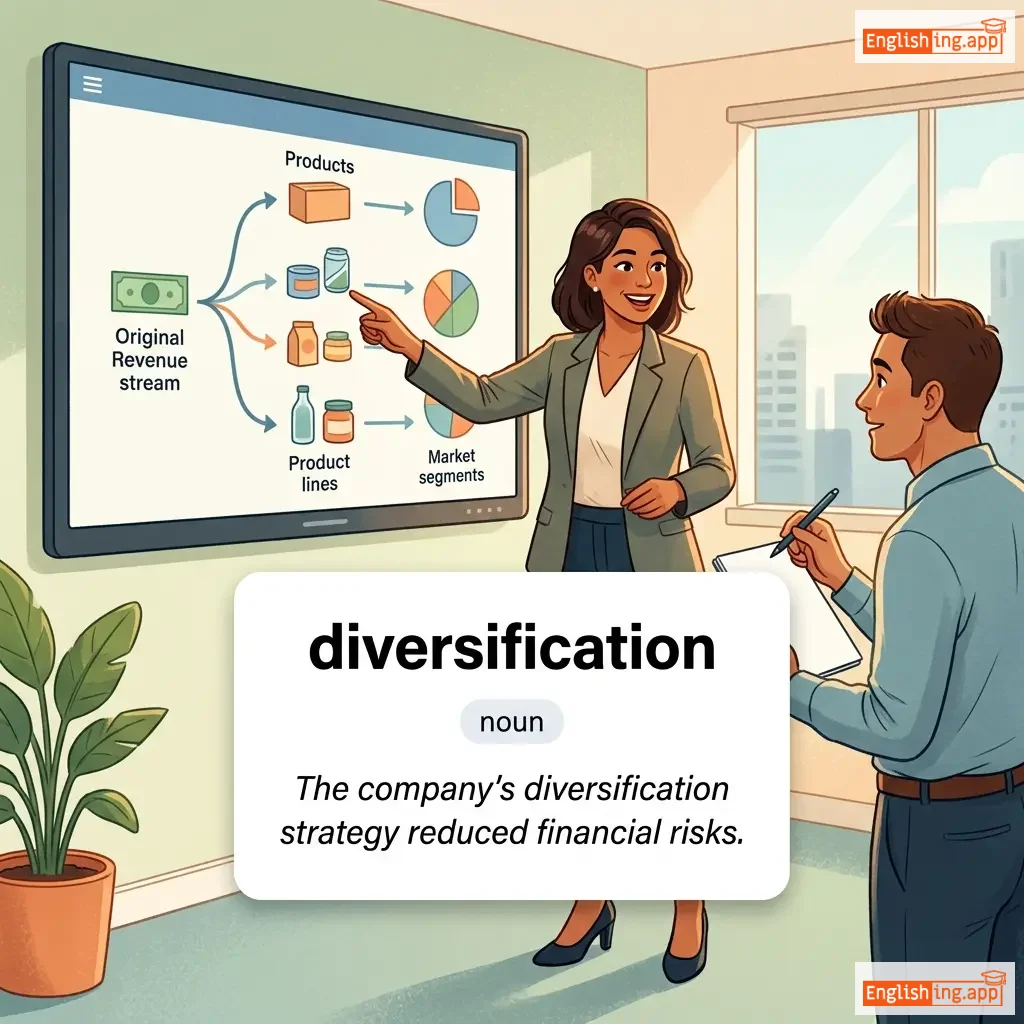
diversification definition card — visual illustration of the meaning
noun
/daɪˌvɜː.sɪ.fɪˈkeɪ.ʃən/
多元化 (dai ver si fi kai shun)

The process of a business expanding into different product lines or markets to spread risk and reduce dependence on a single source of income.

"The company's diversification strategy reduced financial risks."

"公司的多元化策略降低了金融风险。" (gong si de duo yuan hua ce lu e jiang le jin rong feng xian)
adjective
/daɪˈvɜːrsɪfaɪd/
多样化的 (duō yàng huà de)

Made or having variety in form, nature, or content.

"The company adopted a diversified business strategy to reduce risks."

"公司采纳了多样化的商业战略来降低风险。" (Gōngsī cǎnàle duōyàng huà de shāngyè zhànlüè lái jiàngdī fēngxiǎn.)
noun
/daɪˈvɜːrʒən/

The act of changing direction or being distracted; an activity that entertains.

"The road was closed, so we had to take a diversion through the village."

diversity definition card — visual illustration of the meaning
noun
/daɪˈvɜːrsəti/
多样性 (duōyàngxìng)

A range of different things or people; variety.

"Workplace diversity helps foster innovation and creativity."

"工作场所的多样性有助于促进创新和创造力。" (gōngzuò chǎngsuǒ de duōyàngxìng yǒuzhù yú cùjìn chuàngxīn hé chuàngzàolì.)
↪️

divert

verb
/daɪˈvɜːrt/

to turn aside from a course; to redirect or entertain

"The police diverted traffic to a side road."

adjective
/daɪˈvɜːrtɪbəl/
可转移的 (ke zhuǎnyí de)

capable of being turned aside or redirected

"Funds from the budget are not legally divertible."

"预算中的资金无法合法地转移。" (Yùsuàn zhōng de zījīn wúfǎ héfǎ de zhuǎnyí.)
deflation definition card — visual illustration of the meaning
noun
dɪˈfleɪʃən
通货紧缩 (deflayshun)

Reduction of the general level of prices in an economy.

"Deflation often leads to decreased consumer spending."

"通货紧缩往往导致消费者支出减少。" (tong huo jin suo wang wang dao zhi xiao fei zhe zhi chu jian shao)
verb
/dɪˈflɛkt/
偏离 / 避免 (pianli / bìmǎn)

to cause something to change direction; to avoid answering directly

"The shield deflected the incoming arrow."

"盾牌偏离了来袭的箭。" (dùn pái piān lí le lái xí de jiàn.)
noun
/dɪˈfoʊliənt/

a chemical that causes leaves to drop from plants, often used in warfare or agriculture

"The army sprayed defoliant to clear the forest cover."

verb
/dɪˈfoʊlieɪt/
除叶 (chú yè)

to strip leaves from a tree, plant, or area, often using chemicals

"The farmers defoliated the fields before harvest."
"农民在收获前除叶了田地。" (Nóngmín zài shōuhuò qián chú yè le tiándì.)
🌲❌

deforest

verb
/diːˈfɒrɪst/

to clear an area of trees, usually on a large scale

"The region has been heavily deforested for agriculture."

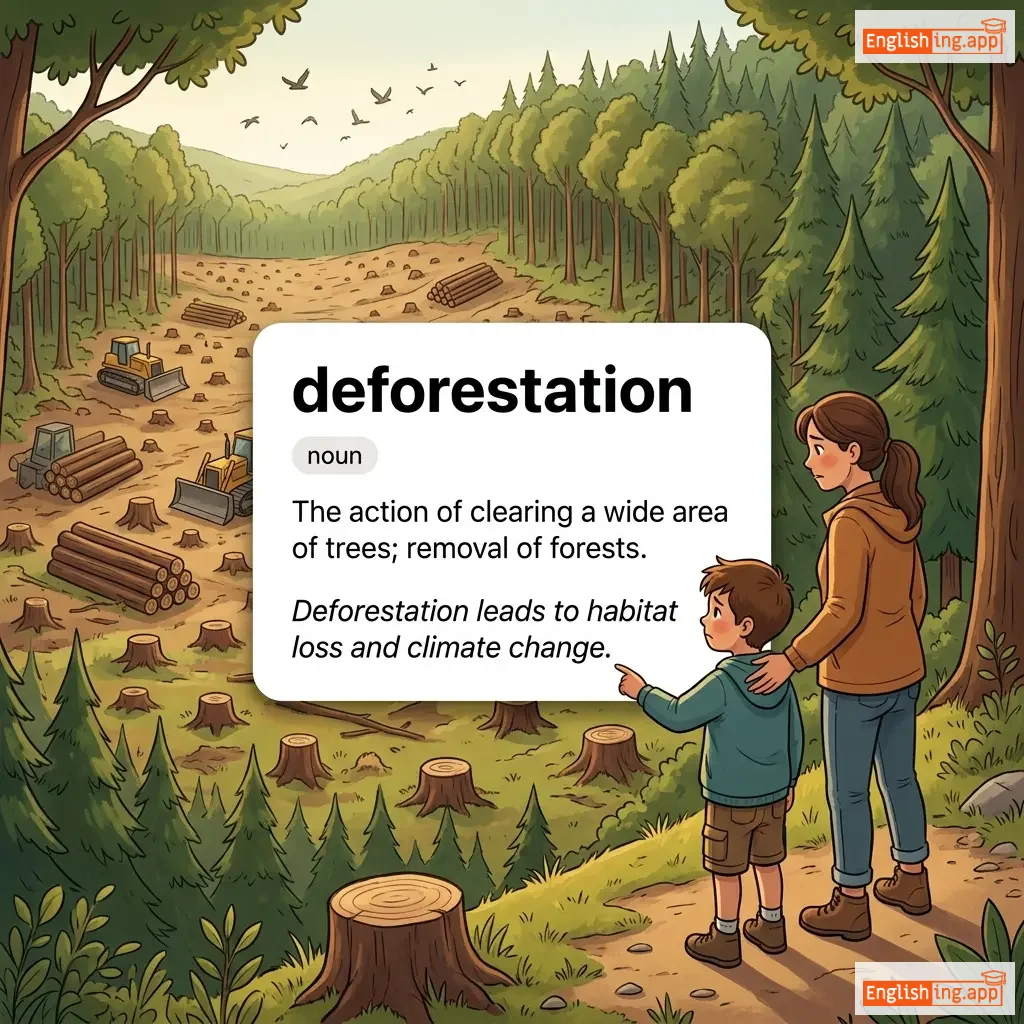
deforestation definition card — visual illustration of the meaning
noun
/ˌdiː.fɒr.ɪˈsteɪ.ʃən/
砍伐森林 (kanfa senlin)

The action of clearing a wide area of trees; removal of forests.

"Deforestation leads to habitat loss and climate change."

"砍伐森林导致栖息地丧失和气候变化。" (Kanfa senlin dǎozhì qīxī dì sàngshī hé qìhòu biànhuà.)
verb
/dɪˈfɔːrm/
变形 (bianxing)

to change the normal shape or structure of something by twisting or distorting it

"Excessive heat can deform plastic containers."

"过多的热量可能会使塑料容器变形。" (Guoduo de re liang keneng hui shi su liao rongqi bianxing.)
noun
/dɪˈfɔːrməti/

an abnormality or distortion in the shape or structure of a body part

"The child was born with a minor hand deformity."

verb
/dɪˈfrɔːd/
欺诈 (qizha)

to illegally take money or valuables from someone by deception

"The company was accused of trying to defraud investors."

"公司被指控试图欺骗投资者。" (Gongsi bei zhikong shitu qipian touzizhe.)
verb
/dɪˈfreɪ/
支付费用 (zhīfù fèiyòng)

to provide money to pay the costs of something

"The grant will help defray the cost of education."

"这笔补助将帮助支付教育费用。" (Zhè bǐ bǔzhù jiāng bāngzhù zhīfù jiàoyù fèiyòng.)
verb
/diːˈfrɑːk/
解除神职 (jiěchú shénzhí)

to officially remove a priest or minister from their position and authority

"The church decided to defrock the priest after the scandal."

"教会决定在丑闻发生后解除神父的职务。" (Jiàohuì juédìng zài chǒuwén fāshēng hòu jiěchú shénfù de zhíwù.)
deft definition card — visual illustration of the meaning
adjective
/dɛft/
灵巧 (lingqiao)

Demonstrating skill and cleverness in movement or action.

"The pianist's deft fingers moved across the keys with ease."

"钢琴家的灵巧手指轻松地在键盘上移动。" (Gāngqín jiā de língqiǎo shǒuzhǐ qīngsōng de zài jiànpán shàng yídòng.)
noun
/ˈdɛftnəs/
灵巧 (lingqiao)

Skillfulness and quickness in action or thought.

"Her deftness with words impressed the audience."
"她在言辞上的灵巧令观众印象深刻。" (Ta zai yanci shang de lingqiao ling guanzhong yinxiang shenke.)
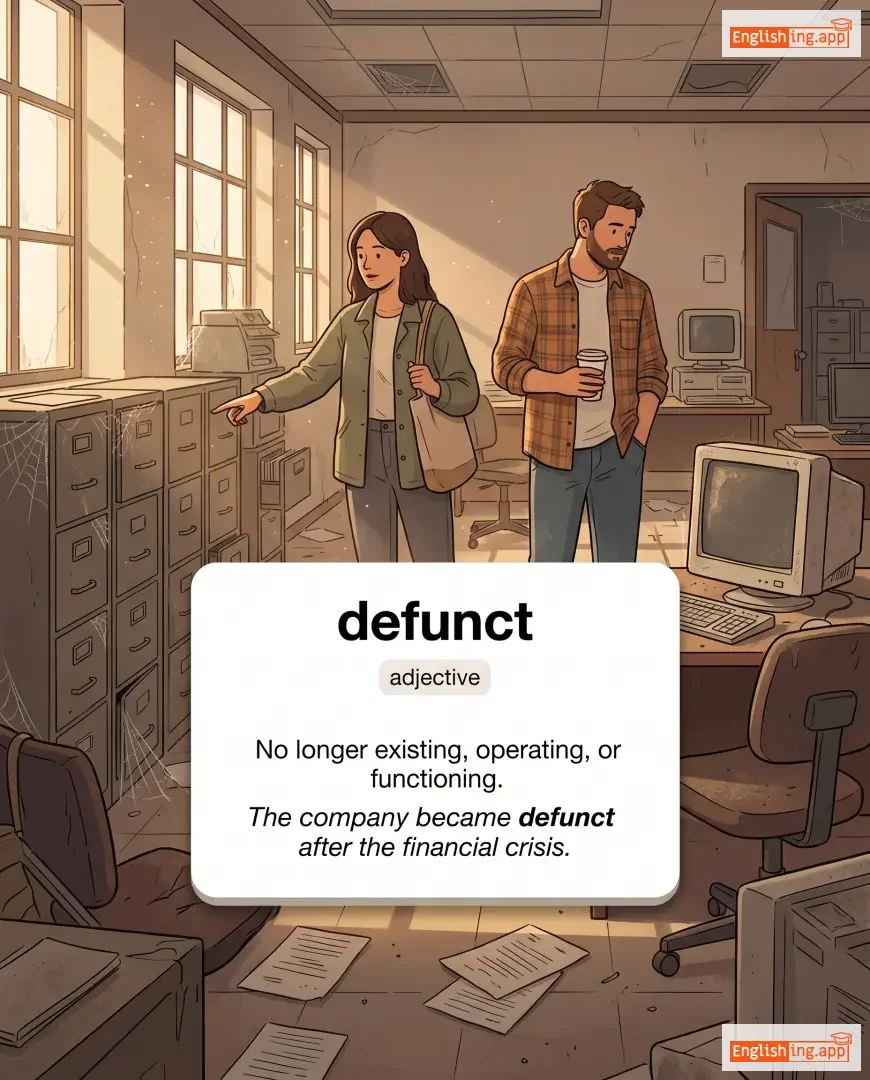
defunct definition card — visual illustration of the meaning
adjective
/dɪˈfʌŋkt/
停用,废弃 (tíngyòng, fèiqì)

No longer existing, operating, or functioning.

"The company became defunct after the financial crisis."

"这家公司在金融危机后不再运作。" (Zhè jiā gōngsī zài jīnróng wéijī hòu bù zài yùnzuò.)
verb
/diːˈfjuːz/

To make a situation less dangerous, tense, or explosive; to remove a fuse from a bomb.

"The negotiator helped defuse the tense situation."

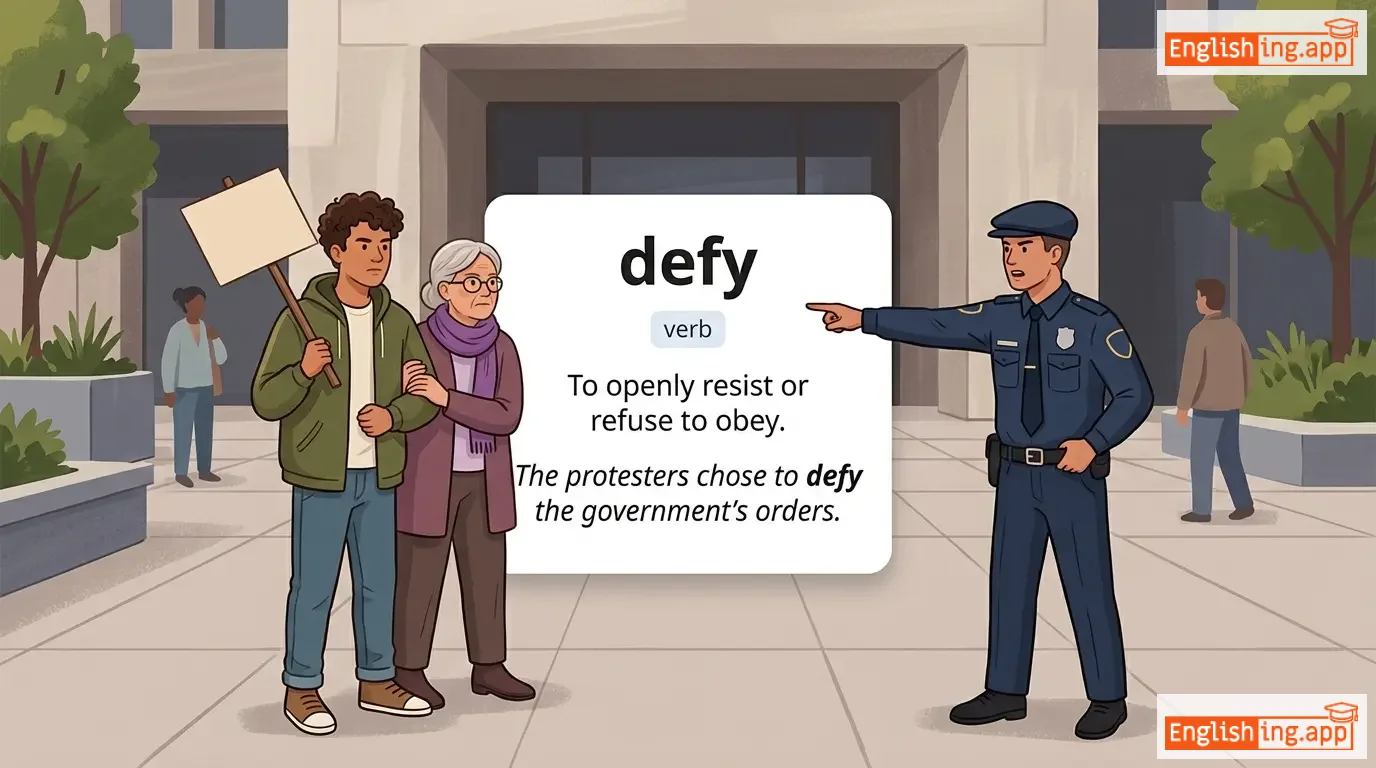
defy definition card — visual illustration of the meaning

defy

verb
/dɪˈfaɪ/

To openly resist or refuse to obey.

"The protesters chose to defy the government's orders."

noun
/dɪˈdʒɛnərəsi/
堕落 (duòluò)

The state of decline or deterioration, often in moral, cultural, or physical qualities.

"The novel portrays the moral degeneracy of a corrupt society."

"这部小说描绘了一个腐化社会的道德堕落。" (Zhè bù xiǎoshuō miáohuìle yīgè fǔhuà shèhuì de dàodé duòluò.)
verb/adjective
/dɪˈdʒɛnəreɪt/
堕落 (duòluò)

To decline or deteriorate in quality, character, or condition; or someone with low moral standards.

"The once thriving empire began to degenerate into chaos."
"曾经繁荣的帝国开始衰退成混乱。" (Céngjīng fánróng de dìguó kāishǐ shuāituì chéng hùnluàn.)
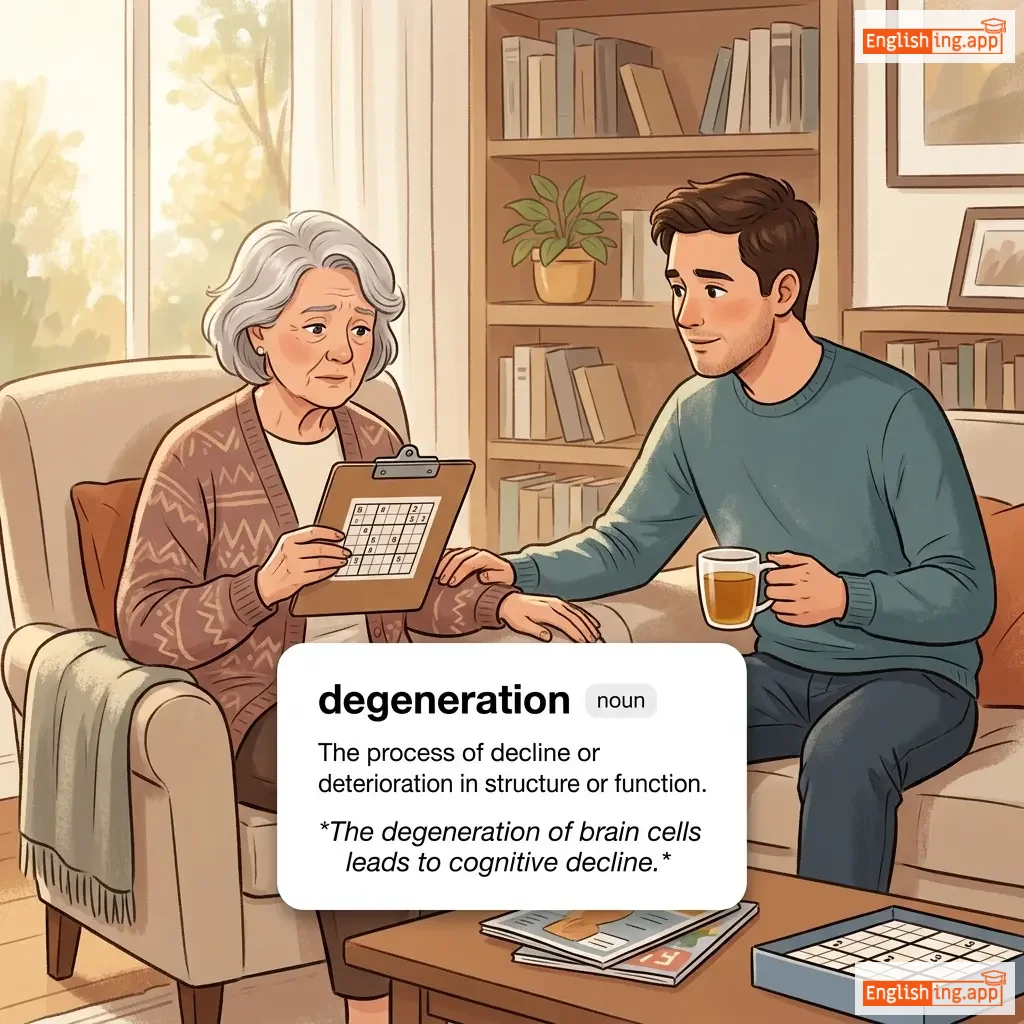
degeneration definition card — visual illustration of the meaning
noun
ˌdɪdʒɪˈnɛəreɪʃən
退化 (tuìhuà)

The process of decline or deterioration in structure or function.

"The degeneration of brain cells leads to cognitive decline."
"大脑细胞的退化导致认知能力下降。" (Dànǎo xìbāo de tuìhuà dǎozhì rènzhī nénglì xiàjiàng.)
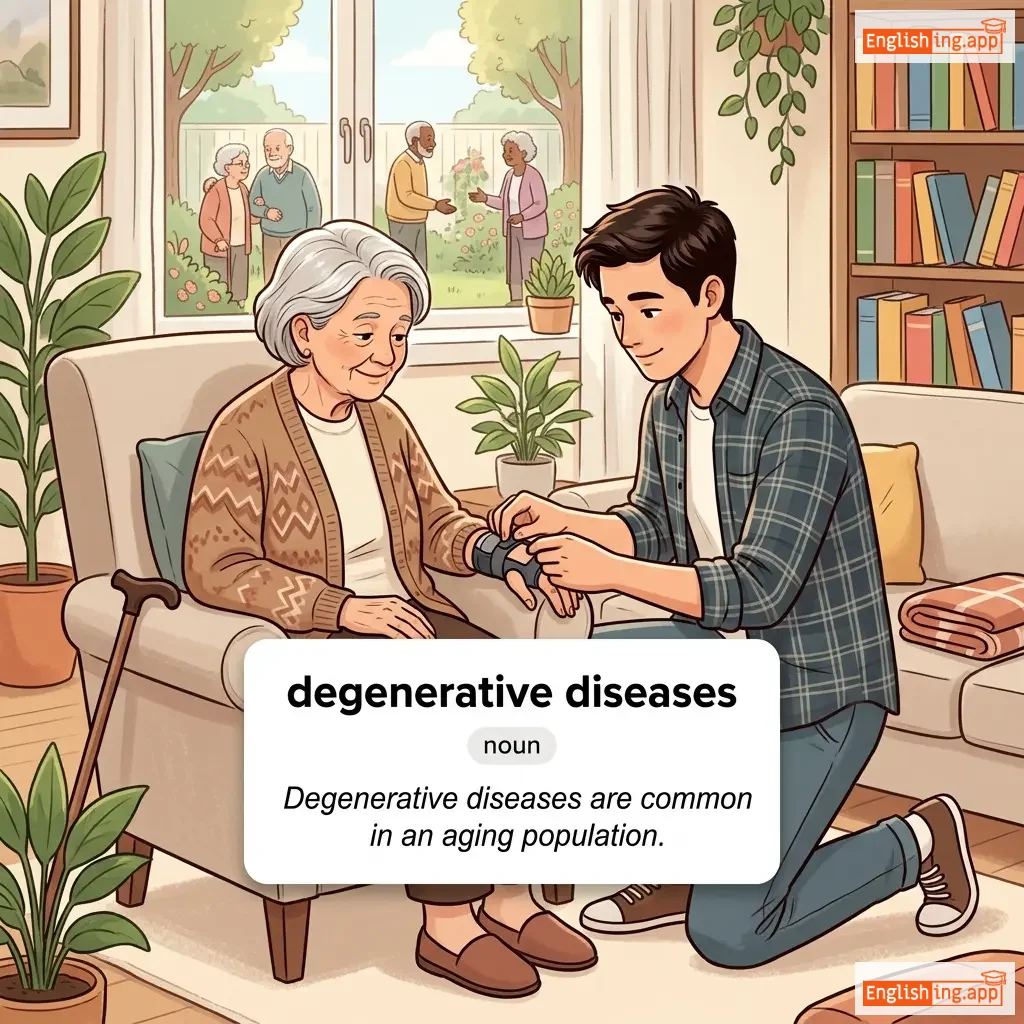
degenerative diseases definition card — visual illustration of the meaning
noun
dɪˈdʒɛnəˌreɪtɪv dɪˈzizɪz
退行性疾病 (tuìxíngxìng jíbìng)

Medical conditions that involve the deterioration or progressive decline of tissues, organs, or functions

"Degenerative diseases are common in an aging population."
"退行性疾病在老龄化人口中很常见。" (Tuìxíngxìng jíbìng zài lǎolínghuà rénkǒu zhōng hěn chángjiàn.)
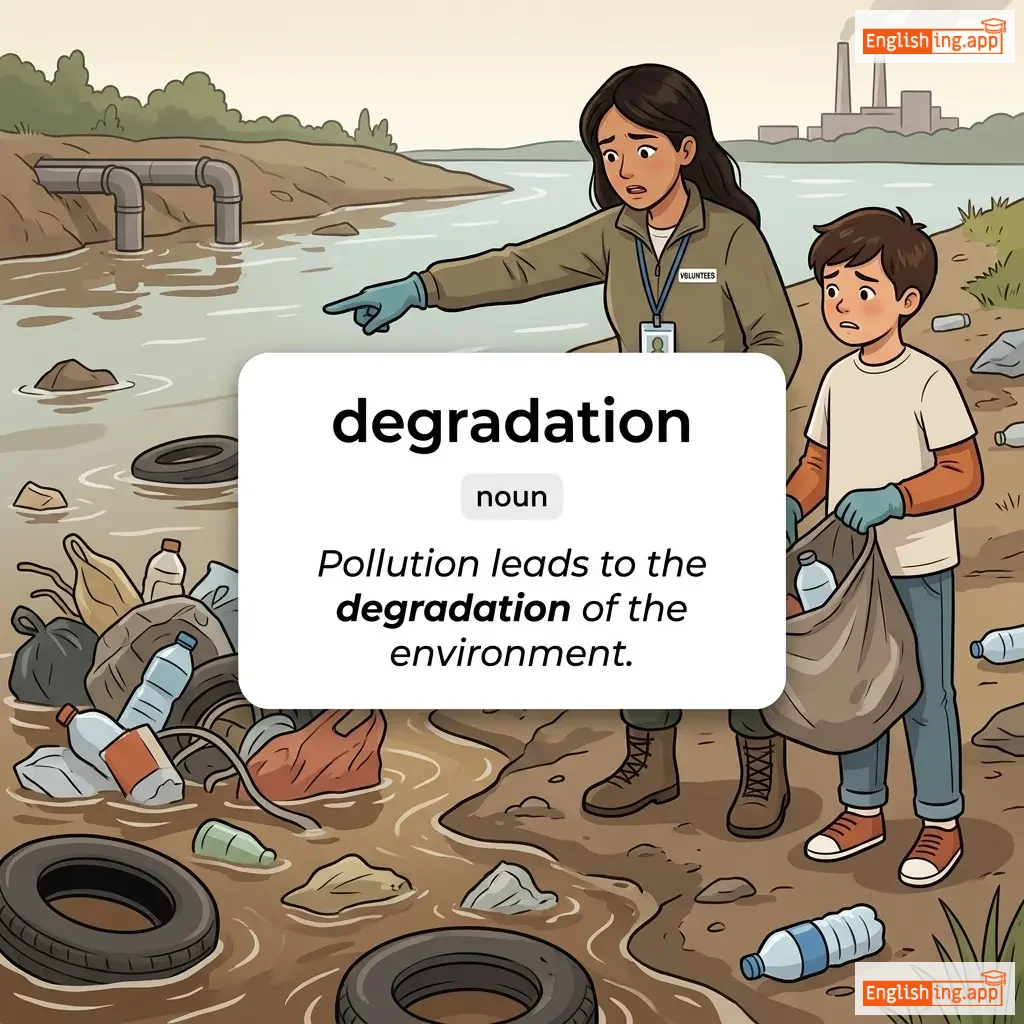
degradation definition card — visual illustration of the meaning
noun
/ˌdɛɡrəˈdeɪʃən/
退化 (tuihua)

The process of being degraded, declined, or reduced in quality, dignity, or value.

"Pollution leads to the degradation of the environment."

"污染导致环境的退化。" (Wūrǎn dǎozhì huánjìng de tuìhuà.)
⬇️😔

degrade

verb
/dɪˈɡreɪd/

To lower in dignity, quality, or value; to treat with disrespect or to deteriorate.

"Harsh words can degrade a person's confidence."

adjective
/dɪˈɡreɪdɪd/
退化 (tuìhuà)

Reduced in quality, dignity, or condition.

"The villagers were forced to live in degraded conditions."

"村民们被迫在退化的条件下生活。" (Cūnmínmen bèi pò zài tuìhuà de tiáojiàn xià shēnghuó.)
noun
/dɪˈɡriː/
学位 / 程度 (xuéwèi / chéngdù)

an amount or level of something; an academic qualification

"She earned a degree in engineering."
"她获得了工程学位。" (Tā huò dé le gōngchéng xuéwèi.)
verb
/diːˈhaɪdreɪt/

to remove water from something; to lose water or body fluids

"Running in the heat can quickly dehydrate you."

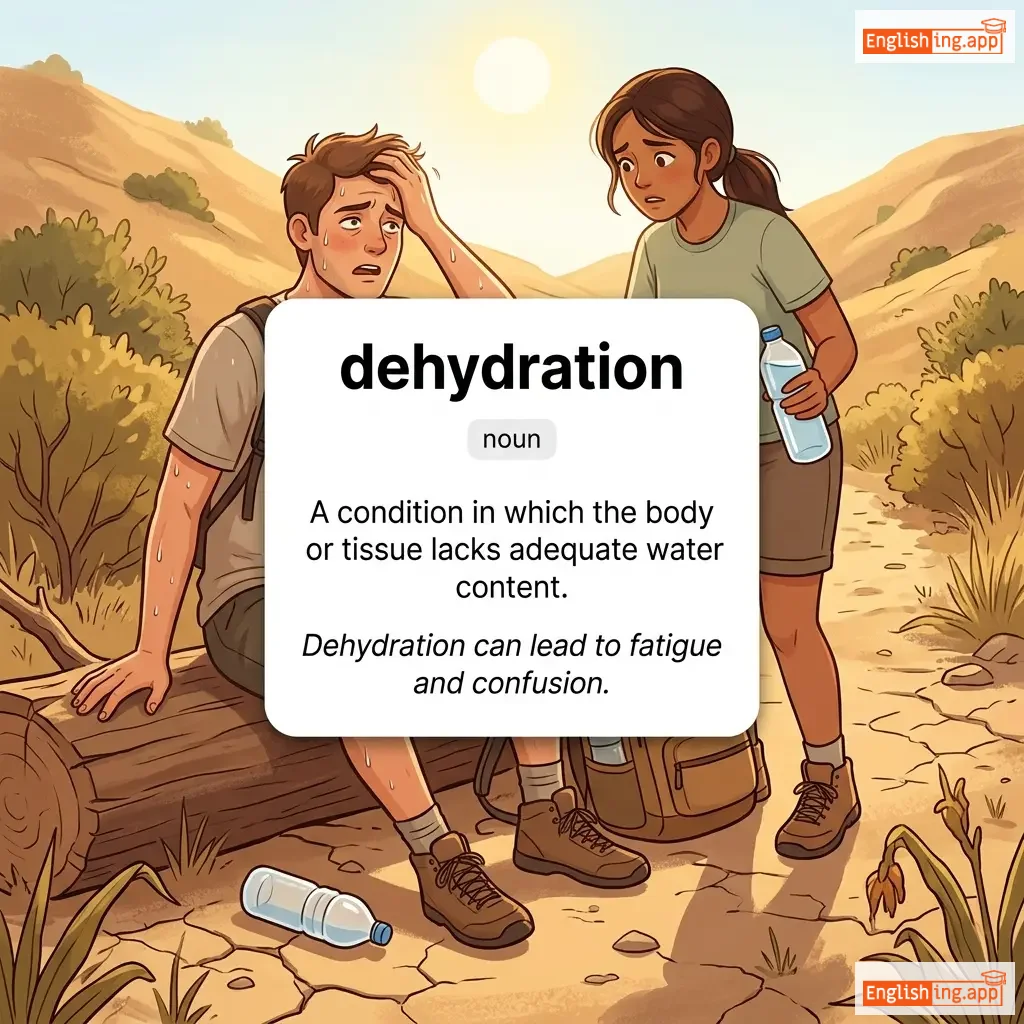
dehydration definition card — visual illustration of the meaning
noun
/ˌdiː.haɪˈdreɪʃən/
脱水 (tuōshuǐ)

A condition in which the body or tissue lacks adequate water content.

"Dehydration can lead to fatigue and confusion."

"脱水可能导致疲劳和困惑。" (tuōshuǐ kěnéng dǎozhì píláo hé kùnhuò.)
verb
/ˈdiːɪfaɪ/
神化 (shenhua)

to treat or worship someone or something as a god

"Some fans deify their favorite celebrities."

"一些粉丝将他们的偶像神化。" (Yi xie fen si jiang ta men de ouxiang shenhua.)
verb
/deɪn/
不屑做某事 (bu xie zuo mou shi)

to do something considered beneath one's dignity

"The king did not deign to reply to the commoner."

"国王没有屈尊回应平民。" (Guowang meiyou quxuan huiying pingmin.)
noun
/ˈdiːɪst/
自然神论者 (zìrán shénlùn zhě)

a person who believes in the existence of a supreme being but rejects organized religion

"The philosopher identified himself as a deist."

"这位哲学家把自己认定为自然神论者。" (Zhè wèi zhéxuéjiā bǎ zìjǐ rèndìng wéi zìrán shénlùn zhě.)