词汇表

英语词汇词典 | 单词含义、定义和示例

verb
/diːˈmoʊbəlaɪz/
解散 (jiesan)

To release from military service or to disband troops.

"The government decided to demobilize the army after the war."
"政府决定在战争后解散军队。" (Zhengfu jueding zai zhanzheng hou jiesan jundui.)
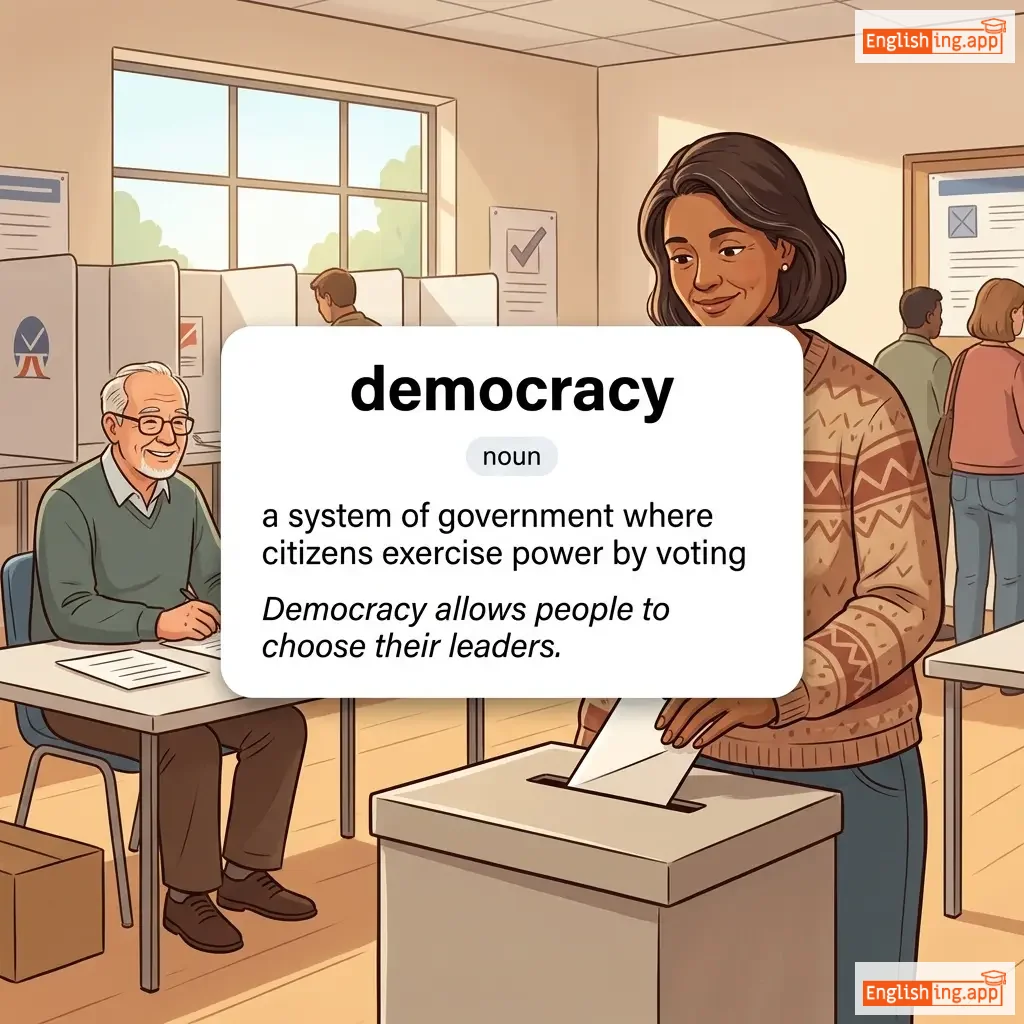
democracy definition card — visual illustration of the meaning
noun
/dɪˈmɑːkrəsi/
民主 (minzhu)

a system of government where citizens exercise power by voting

"Democracy allows people to choose their leaders."

"民主允许人民选择他们的领导人。" (mínzhǔ yǔnxǔ rénmín xuǎnzé tāmen de lǐngdǎo rén.)
noun
/ˈdɛməˌkræt/
民主党人 (minzhudang ren)

a supporter of democracy or a member of the Democratic Party in the US

"He is a strong democrat who believes in equal rights."
"他是一个坚强的民主党人,相信平等的权利。" (Ta shi yige jianqiang de minzhudang ren, xiangxin pingdeng de quanli.)
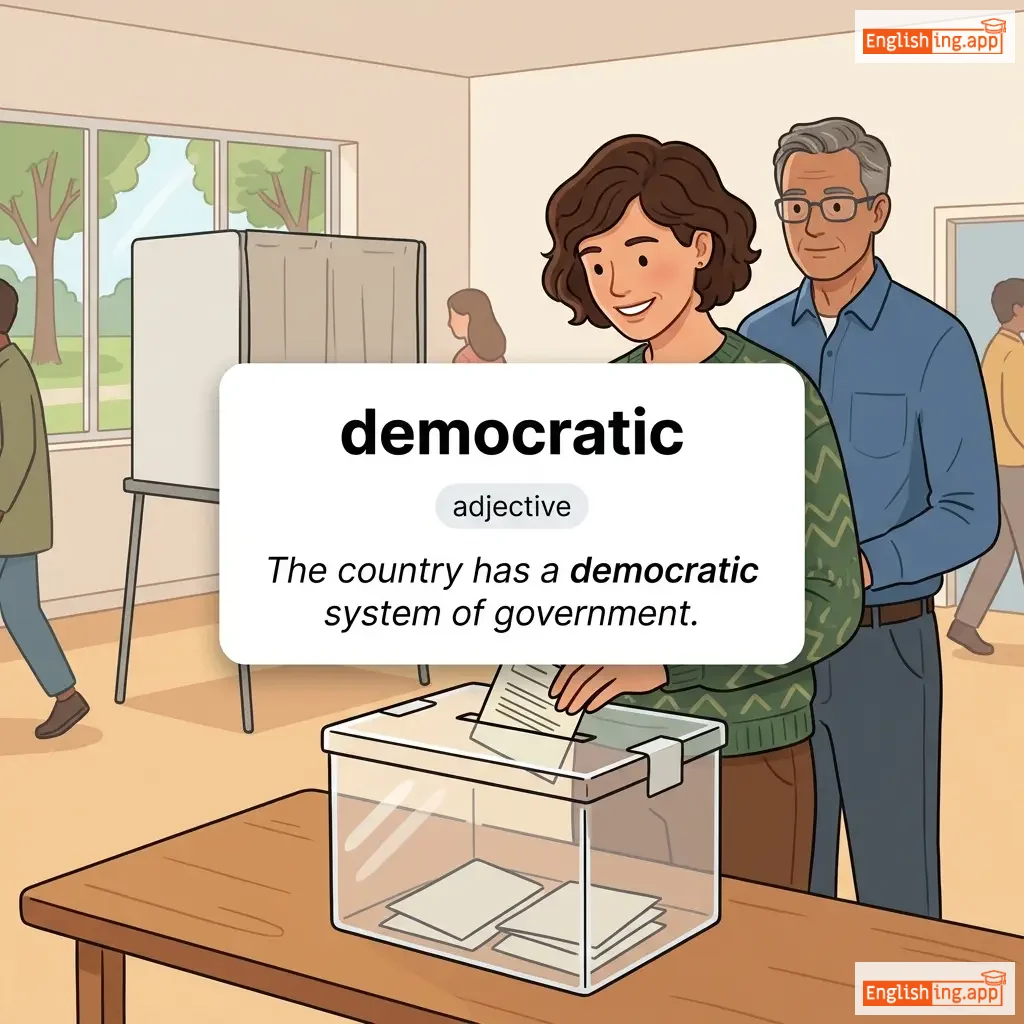
democratic definition card — visual illustration of the meaning
adjective
/ˌdɛməˈkrætɪk/
民主的 (minzhu de)

relating to or supporting democracy or its principles; characterized by equality and freedom

"The country has a democratic system of government."

"该国有一个民主的政府体系。" (Gai guo you yi ge minzhu de zhengfu tixi.)
demographic definition card — visual illustration of the meaning
adjective
/ˌdɛməˈɡræfɪk/
人口统计的 (renkou tongji de)

Relating to the structure of populations, such as age, race, or gender.

"The company conducted a demographic study of its customers."
"公司对其客户进行了人口统计研究。" (Gōngsī duì qí kèhù jìnxíngle rénkǒu tǒngjì yánjiū.)
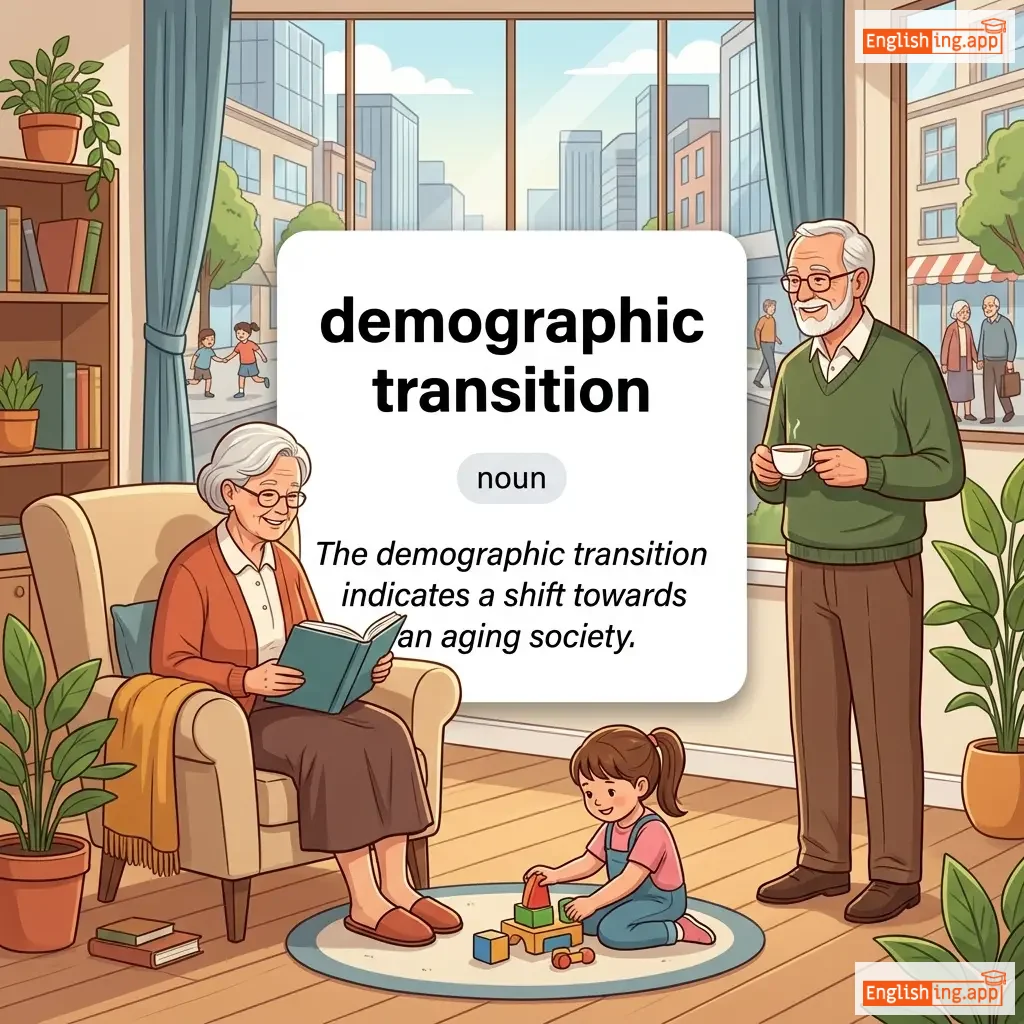
demographic transition definition card — visual illustration of the meaning
noun
ˌdɛməˈɡræfɪk trænˈzɪʃən
人口过渡 (renkou guodu)

A shift in population patterns from high birth and death rates to low birth and death rates as a country develops economically

"The demographic transition indicates a shift towards an aging society."

"人口过渡表示向老龄化社会的转变。" (Renkou guodu biaoshi xiang laolinghua shehui de zhuanbian.)
Demographics definition card — visual illustration of the meaning
noun
/ˌdɛm.əˈɡræf.ɪks/
人口统计学 (rénkǒu tǒngjìxué)

Statistical data relating to the population and particular groups within it.

"Demographics help in targeted advertising."

"人口统计有助于定向广告。" (Renkou tongjixue youzhu yu dingxiang guanggao.)
verb
/dɪˈmɒlɪʃ/
拆除 (chāichú)

to destroy completely, especially a building or structure

"The city decided to demolish the old stadium to build a new one."

"这座城市决定拆除旧体育场,建造一个新的。" (Zhèzuò chéngshì juédìng chāichú jiù tǐyùchǎng, jiànzào yīgè xīn de.)
noun
/ˌdɛməˈlɪʃən/
拆除 (chaichu)

the act or process of destroying a building or structure

"The demolition of the old factory took several weeks."

"拆除旧工厂花了好几个星期。" (Chāichú jiù gōngchǎng huāle hǎo jǐ gè xīngqī.)
noun
/ˈdiːmən/
恶魔 (emó)

an evil spirit or devil

"The story was about a demon who haunted the village."

"这个故事是关于一个困扰村庄的恶魔。" (Zhège gùshì shì guānyú yī gè kùnrǎo cūnzhuāng de èmó.)
adjective
/dɪˈmoʊniˌæk/
恶魔般的 (è mó bān de)

possessed, produced, or influenced by a demon; frenzied or violent

"The soldiers fought with demoniac fury."

"士兵们以恶魔般的愤怒作战。" (Shì bīng men yǐ è mó bān de fèn nù zuò zhàn.)
adjective
/ˌdɛməˈnaɪəkəl/
恶魔般的 (è mó bān de)

characteristic of or resembling a demon; wildly evil

"He gave a demoniacal laugh that terrified everyone."

"他发出了一声恶魔般的笑声,吓坏了所有人。" (Tā fāchūle yī shēng èmó bān de xiàoshēng, xià huài le suǒyǒu rén.)
adjective
/dɪˈmɒnstrəbl/
可证明的 (ke zhengming de)

clearly able to be shown or proven

"There was demonstrable evidence that he was innocent."

"有可证明的证据表明他是无辜的。" (You ke zhengming de zhengju biaoming ta shi wugu de.)
verb
/ˈdɛmənˌstreɪt/
展示 (zhǎnshì)

to clearly show or prove something through evidence, explanation, or action

"The teacher demonstrated the experiment to the class."

"老师向班级展示了实验。" (Lǎoshī xiàng bānjí zhǎnshìle shíyàn.)
noun
/ˌdɛmənˈstreɪʃən/
示威, 示范 (shìwēi, shìfàn)

the act of showing something clearly, or a public protest

"The workers organized a demonstration for better wages."
"工人们组织了一场争取更高工资的示威。" (Gōngrén men zǔzhīle yī chǎng zhēngqǔ gèng gāo gōngzī de shìwēi.)
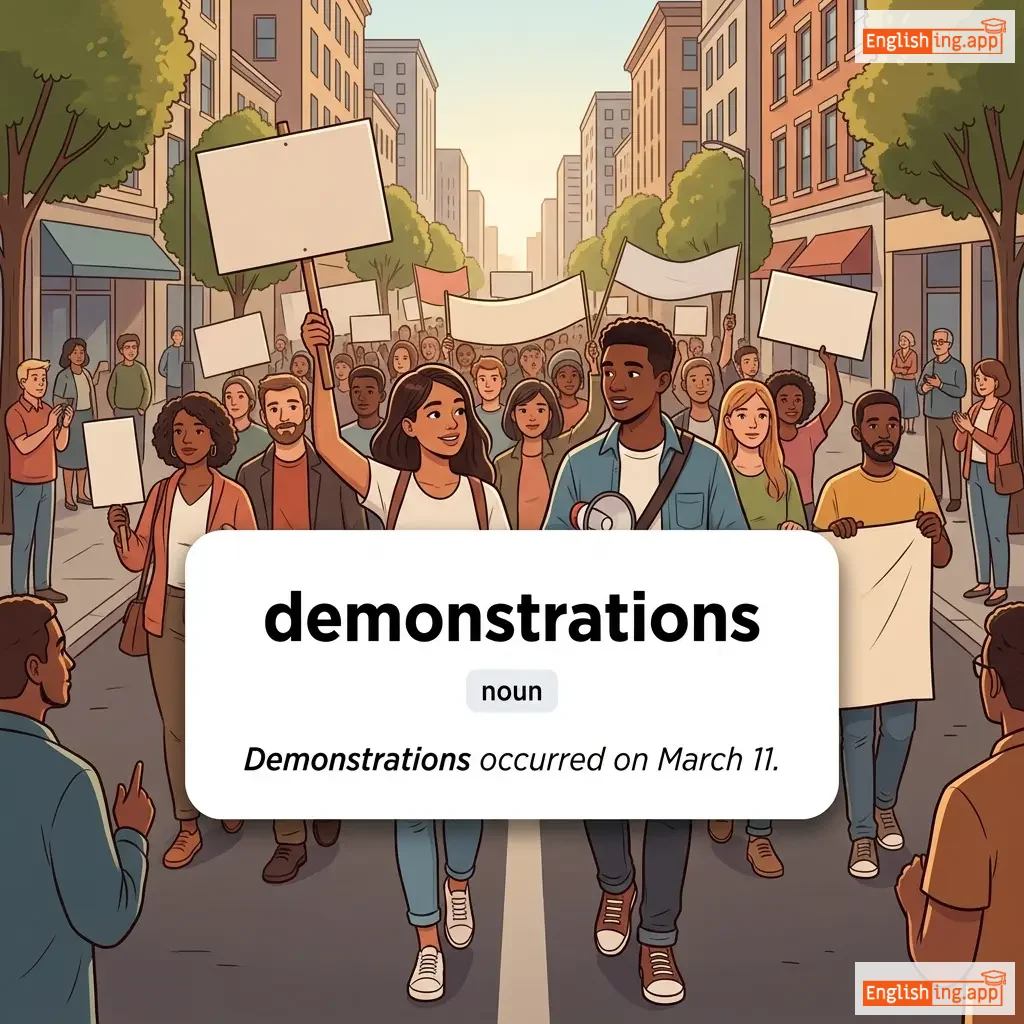
demonstrations definition card — visual illustration of the meaning
noun
ˌdemənˈstreɪʃənz
示威 (shìwēi)

The action or process of showing the existence or truth of something by giving proof or evidence.

"Demonstrations occurred on March 11."

"示威活动发生在3月11日。" (Shìwēi huódòng fāshēng zài 3 yuè 11 rì.)
adjective
/dɪˈmɒnstrətɪv/
表现的 (biaoxian de)

openly showing feelings, especially affection or emotion

"She was very demonstrative with her affection towards her friends."

"她对朋友们的爱意非常表现出来。" (Ta dui pengyoumen de ai yi feichang biaoxian chulai.)
noun
/ˈdɛmənˌstreɪtər/
示范者, 抗议者 (shifan zhe, kangyi zhe)

a person who shows how something works or takes part in a public protest

"The demonstrators marched peacefully through the city streets."

"示威者和平地穿过城市街道游行。" (Shiweizhe heping de chuanguo chengshi jiedao youxing.)
verb
/dɪˈmɔrəˌlaɪz/

to cause someone to lose confidence or hope

"The constant criticism demoralized the young athlete."

verb
/dɪˈmoʊt/
降职 (jiangzhi)

to reduce to a lower rank or position

"The manager decided to demote the employee for poor performance."
"经理决定因表现不佳而降职。" (Jingli jueding yin biaoxian bu jia er jiangzhi.)
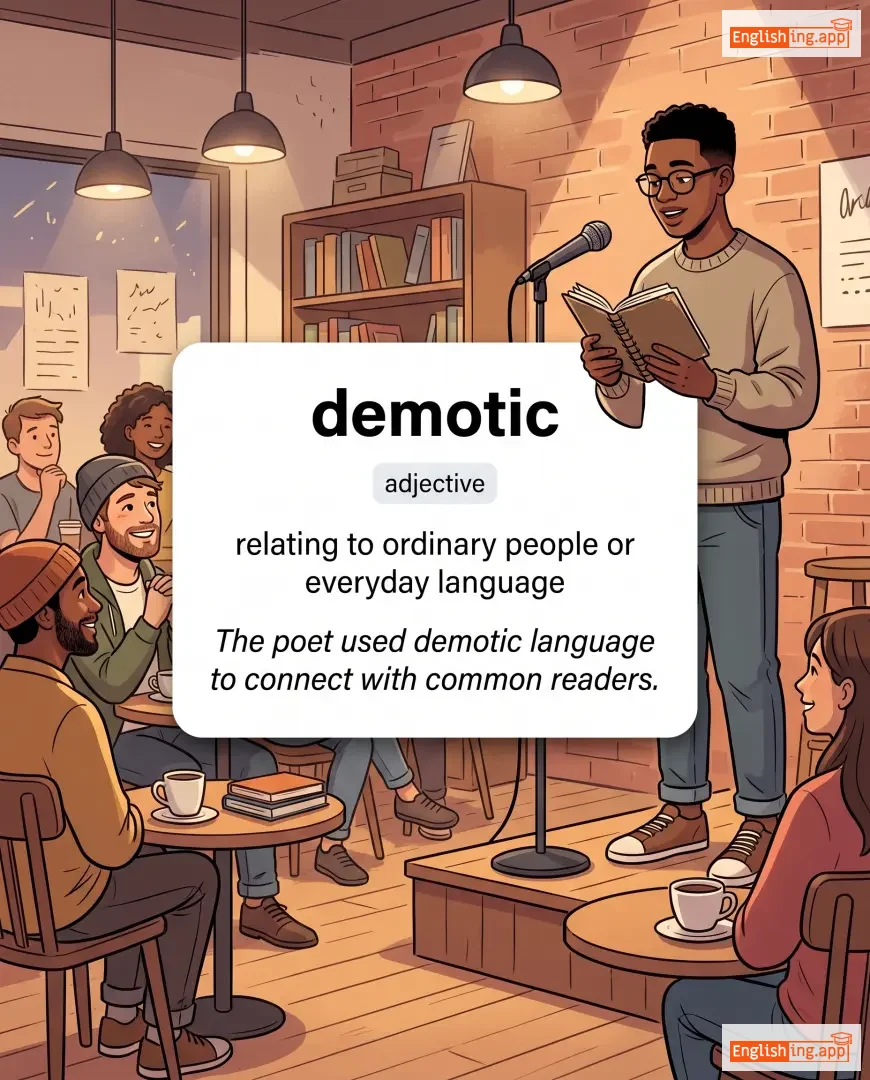
demotic definition card — visual illustration of the meaning
adjective
/dɪˈmɒtɪk/
与普通语言相关 (yu putong yuyan xiangguan)

relating to ordinary people or everyday language

"The poet used demotic language to connect with common readers."
"诗人使用与普通语言相关的语言与普通读者建立联系。" (Shiren shiyong yu putong yuyan xiangguan de yuyan yu putong duzhe jianli lianxi.)
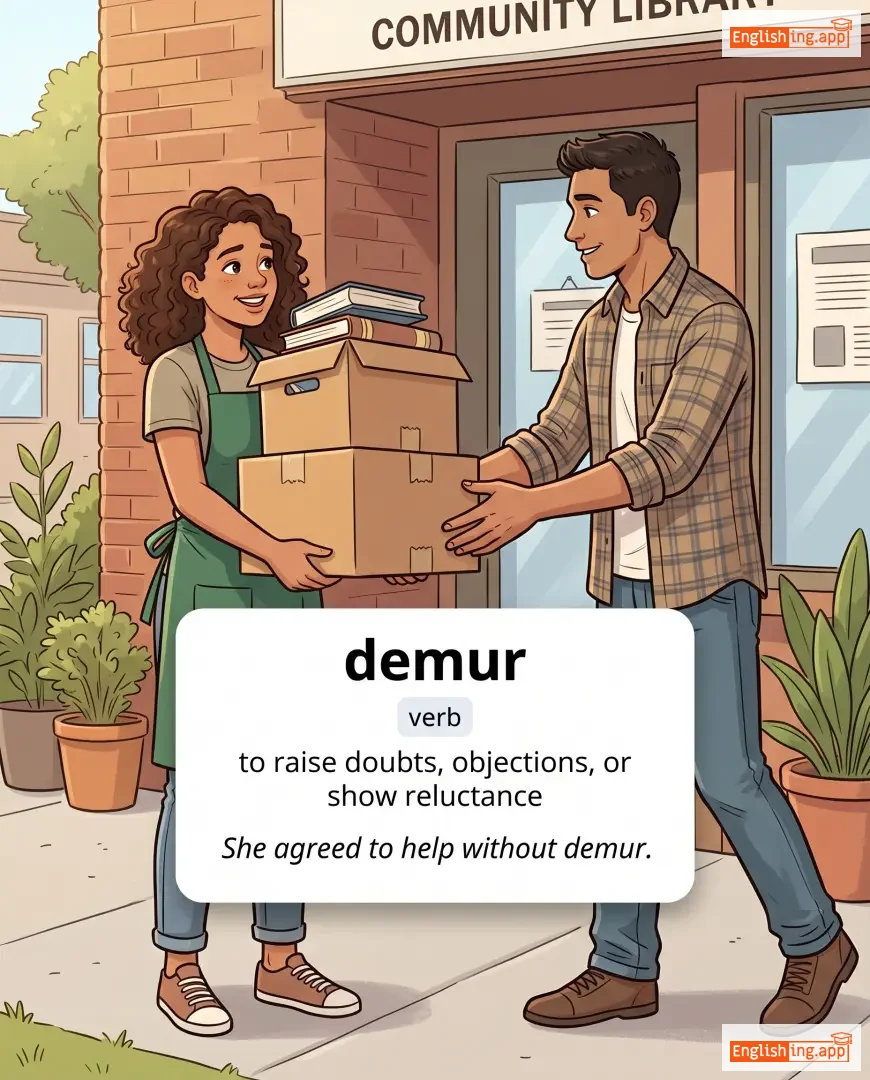
demur definition card — visual illustration of the meaning
verb
/dɪˈmɜːr/
反对 (fǎn duì)

to raise doubts, objections, or show reluctance

"She agreed to help without demur."

"她同意在没有异议的情况下提供帮助。" (Tā tóngyì zài méiyǒu yìyì de qíngkuàng xià tígōng bāngzhù.)
adjective
/dɪˈmjʊər/
矜持 (jinchi)

reserved, modest, and shy

"She gave him a demure smile."

"她给了他一个矜持的微笑。" (Ta geile ta yige jinchi de weixiao.)
noun
/dɪˈmʌrɪdʒ/
滞纳金 (zhìnàjīn)

a charge payable to the owner of a ship or vehicle for not loading or unloading on time

"The company had to pay demurrage for delaying the unloading of goods."

"公司因延误卸货而支付了滞纳金。" (Gōngsī yīn yánwù xièhuò ér zhīfùle zhìnàjīn.)
noun
/den/
洞穴,巢穴 (dongxue, chaoxue)

a wild animal's lair or home; a small room used for relaxation

"The bear returned to its den for winter hibernation."

"那只熊回到它的洞穴,准备过冬眠。" (Na zhi xiong huidao ta de dongxue, zhunbei guo dongmian.)
verb
/diːˈnæʃənəlaɪz/
去国有化 (qù guó yǒu huà)

to transfer ownership from the government to private individuals or companies

"The government decided to denationalize the bank to encourage private investment."

"政府决定将银行去国有化,以鼓励私人投资。" (Zhèngfǔ juédìng jiāng yínháng qù guó yǒu huà, yǐ gǔlì sīrén tóuzī.)
adjective
/ˈdɛndrɔɪd/
树状的 (shù zhuàng de)

tree-shaped or branching like a tree

"The coral has a dendroid structure."

"珊瑚有一个树状结构。" (Shānhú yǒu yīgè shù zhuàng jiégòu.)
noun
/dɛnˈdrɒlədʒi/

the scientific study of trees and woody plants

"He is studying dendrology at the university."

🙅‍♂️

Denial (di-nai-er)

noun
/dɪˈnaɪəl/
否认 (fǒurèn)

a statement that something is not true; the refusal to accept or believe something

"His denial of the accusations surprised everyone."

"他对指控的否认让大家都很惊讶。" (ta dui zhikong de fouren rang dadao dou hen jingya.)
denigrate definition card — visual illustration of the meaning
verb
/ˈdɛnɪˌɡreɪt/
贬低 (biǎndī)

to criticize unfairly; to belittle or disparage someone or something

"He was quick to denigrate the achievements of his colleagues."

"他很快就贬低了同事们的成就。" (Tā hěn kuài jiù biǎndīle tóngshìmen de chéngjiù.)
noun
/ˈdɛnɪmz/
牛仔布裤 (niuzaibu kuzi)

pants or clothes made from denim fabric, usually jeans

"He wore blue denims with a white shirt."
"他穿着蓝色牛仔裤和白衬衫。" (Ta chuanzhuo lanse niuzaiku he bai chenshan.)
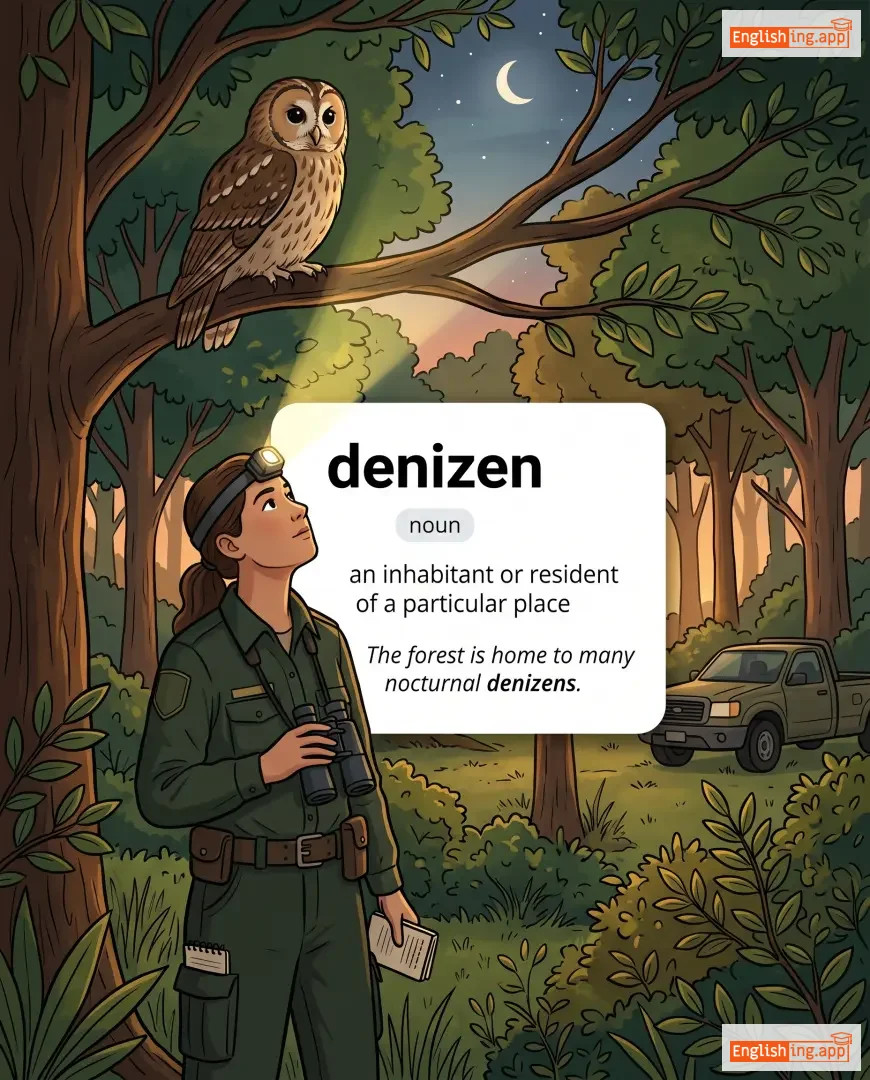
denizen definition card — visual illustration of the meaning
noun
/ˈdɛnɪzən/
居民 (jūmín)

an inhabitant or resident of a particular place

"The forest is home to many nocturnal denizens."

"森林是许多夜行性居民的家。" (Sēnlín shì xǔduō yèxíngxìng jūmín de jiā.)
verb
/dɪˈnɒmɪˌneɪt/
指定 (zhǐdìng)

to give a name or designation to something

"The currency was denominated in dollars."

"货币以美元命名。" (Huòbì yǐ měiyuán mìngmíng.)
noun
/dɪˌnɒmɪˈneɪʃən/
教派, 价值 (jiaopai, jiazhi)

a recognized autonomous branch of the Christian Church; a unit of value or currency

"The church belongs to a Protestant denomination."

"这座教堂属于一个新教教派。" (Zhe zuo jiaotang shuyu yi ge xinjiao jiaopai.)
noun
/dɪˈnɒmɪˌneɪtər/
分母 (fenmu)

the number below the line in a fraction; a common factor in a situation

"In the fraction 3/4, the number 4 is the denominator."

"在分数3/4中,数字4是分母。" (Zai fenshu 3/4 zhong, shuzi 4 shi fenmu.)
noun
/ˌdiːnəʊˈteɪʃən/
指示 (zhǐshì)

The literal or primary meaning of a word, in contrast to the feelings or ideas that the word suggests.

"The denotation of the word 'rose' is a type of flower."

"“玫瑰”这个词的指示是一个花的种类。" ('Méiguī' zhège cí de zhǐshì shì yīgè huā de zhǒnglèi.)
verb
/dɪˈnəʊt/
表示 (biaoshi)

To be a sign of; to indicate or mean something.

"A red flag denotes danger."

"红旗表示危险。" (Hong qi biaoshi wei xian.)
denouement definition card — visual illustration of the meaning
noun
/ˌdeɪnuːˈmɒ̃/
结局 (jieju)

The final resolution or conclusion of a story, drama, or complicated situation.

"The novel's denouement was both surprising and satisfying."

"这部小说的结局既令人惊讶又令人满意。" (Zhe bu xiaoshuo de jieju ji lingren jingya you lingren manyi.)
verb
/dɪˈnaʊns/
谴责 (qiǎnzé)

To publicly declare something to be wrong, evil, or condemn strongly.

"The leader denounced corruption in his speech."

"领导人在他的演讲中谴责了腐败。" (Lǐngdǎo rén zài tā de yǎnjiǎng zhōng qiǎnzéle fǔbài.)
adjective
/dɛns/
密集的 (mìjí de)

Closely compacted in substance; having parts crowded together.

"The forest was so dense that little sunlight reached the ground."
"森林是如此密集,以至于只有很少的阳光照射到地面。" (Sēnlín shì rúcǐ mìjí, yǐzhì zhǐ yǒu hěn shǎo de yángguāng zhàoshè dào dìmiàn.)
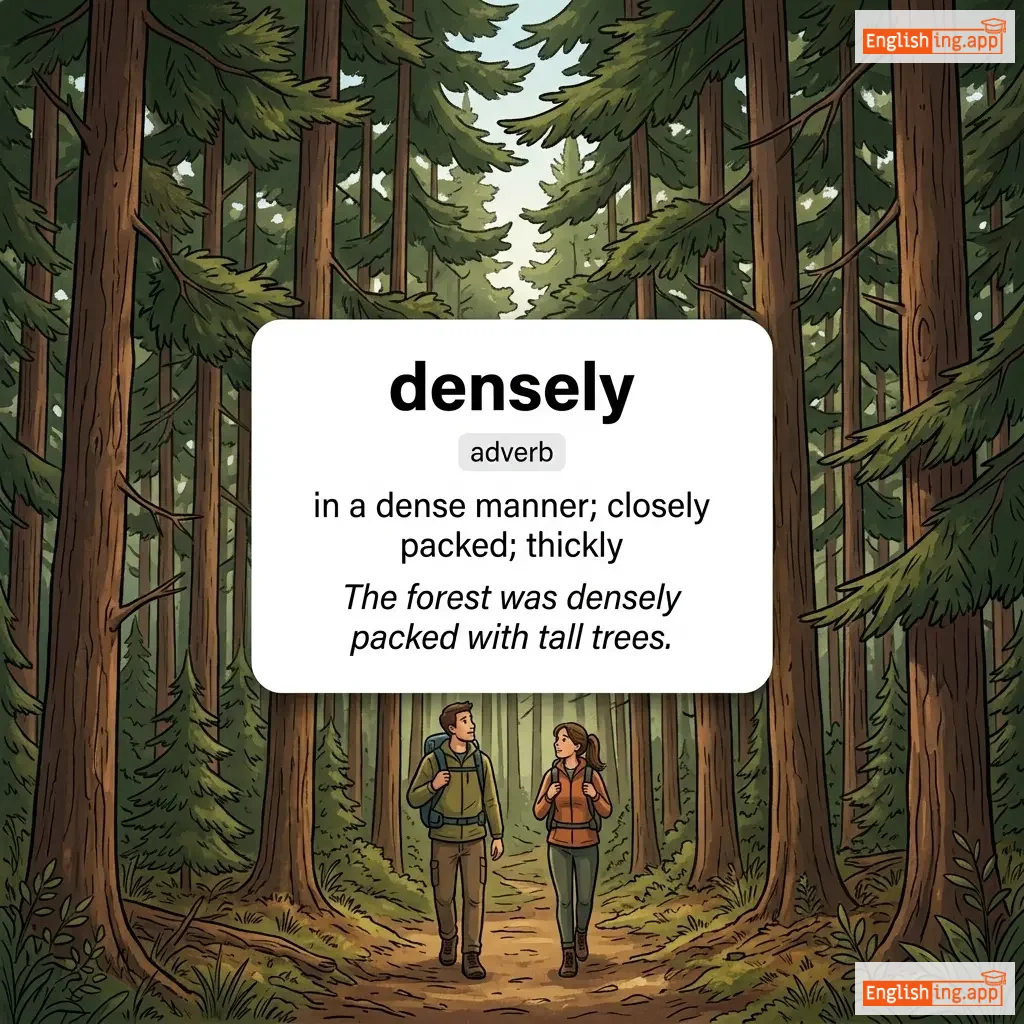
densely definition card — visual illustration of the meaning
adverb
/ˈdens.li/
密集地; 密封; 稠密的 (mìjí de; mìfēng; chōumì de)

in a dense manner; closely packed; thickly

"The forest was densely packed with tall trees."

"森林中密集地长满了高大的树木。" (Sēnlín zhōng mìjí de zhǎng mǎnle gāodà de shùmù)
noun
/ˈdɛnsɪti/
密度 (mìdù)

the degree of compactness or thickness of a substance or object

"The density of water is higher than that of air."

"水的密度高于空气的密度。" (Shuǐ de mìdù gāo yú kōngqì de mìdù.)
noun/verb
/dɛnt/
凹痕 (āo hén)

a small hollow mark on the surface of something; to make a small hollow mark

"The accident left a dent in the car door."

"事故在车门上留下了一个凹痕。" (shìgù zài chēmén shàng liúxià le yīgè āo hén.)
adjective
/ˈdɛntəl/
牙科的 (yake de)

relating to teeth or dentistry

"She goes for a dental checkup every six months."

"她每六个月进行一次牙科检查。" (ta mei liu ge yue jinxing yi ci yake jiancha)
noun
/ˈdɛntɪfrɪs/
牙膏 (yágāo)

a substance such as powder, paste, or liquid used to clean teeth

"He bought a new herbal dentifrice from the pharmacy."

"他从药店买了新的草本牙膏。" (Tā cóng yàodiàn mǎi le xīn de cǎoběn yágāo.)
noun
/ˈden.tɪst/
牙科医生 (yá kē yī shēng)

a medical professional who treats teeth and oral health

"I need to visit the dentist for a regular checkup."

"我需要去看牙医进行定期检查。" (wǒ xū yào qù kàn yá yī jìn xíng dìng qī jiǎn chá)
verb
/dɪˈnjuːd/
剥夺 (baoduo)

to strip something of its covering, possessions, or assets

"The forest was denuded of trees by illegal logging."

"森林被非法伐木剥夺了树木。" (Senlin bei feifa famu baoduo le shumu.)
noun
/dɪˌnʌnsiˈeɪʃən/
指控 / 公共谴责 (zhikong / gonggong qianze)

the public condemnation or accusation of someone or something

"The journalist's article was a strong denunciation of corruption."

"记者的文章是对腐败的强烈指控。" (Jizhe de wenzhang shi dui fubai de qianglie zhikong.)
verb
/dɪˈnaɪ/
否认 (fǒurèn)

to refuse to accept or admit something; to declare something untrue

"He denied stealing the money."

"他否认偷了钱。" (Tā fǒurèn tōu le qián.)
noun
/diˈoʊ.dər.ənt/
除臭剂 (chúchòu jì)

a substance that removes or conceals unpleasant smells, especially bodily odors

"She applied deodorant before going to the gym to stay fresh during workout."

"她在去健身房之前涂了除臭剂,以保持训练时的清新。" (Tā zài qù jiànshēnfáng zhīqián túle chúchòu jì, yǐ bǎochí xùnliàn shí de qīngxīn.)