वोकैबुलरीज

इंग्लिश वोकैबुलरी डिस्कवर, लर्न और मास्टर करें

verb
/ˌdɪsɪmˈbɑːrk/
जहाज या वाहन से उतरना (jahaz ya vaahan se utarna)

To leave a ship, aircraft, or other vehicle.

"The passengers disembarked from the plane after landing."

"यात्रियों ने लैंडिंग के बाद विमान से उतरना शुरू किया।" (Yatriyon ne landing ke baad vimaan se utarna shuru kiya.)
verb
/ˌdɪsɪnˈfræntʃaɪz/
मतदान से वंचित करना (matdan se vanchit karna)

To deprive someone of the right to vote or other rights.

"The new law could disenfranchise thousands of voters."

"नया कानून हजारों मतदाताओं को मतदान से वंचित कर सकता है।" (Naya kanoon hazaron matdataon ko matdan se vanchit kar sakta hai.)
verb
/ˌdɪsɪnˈɡeɪdʒ/
मुक्त करना (mukt karna)

To release or detach oneself from something; to withdraw.

"He tried to disengage from the heated argument."

"उसने गरमागरम बहस से खुद को अलग करने की कोशिश की।" (Usne garamgaram bahas se khud ko alag karne ki koshish ki.)
verb
/ˌdɪsɪnˈtæŋɡl/
जटमुक्त करना (jatmukt karna)

To free something or someone from a tangle or complication.

"She tried to disentangle her hair from the branches."

"उसने शाखाओं से अपने बालों को उलझन से मुक्त करने की कोशिश की।" (Usne shaakhon se apne balon ko uljhan se mukt karne ki koshish ki.)
noun/verb
/dɪsˈfeɪvər/
अप्रसन्नता / नापसंदगी (aprasannata / napasandgi)

disapproval or dislike; to regard with disapproval

"The new policy fell into disfavor with the public."

"नई नीति जनता के बीच नापसंदगी का शिकार हो गई।" (Nayi niti janta ke beech napasandgi ka shikar ho gayi.)
verb
/dɪsˈfɪɡjər/
विकृत करना (vikrit karna)

to spoil or damage the appearance of something

"The fire disfigured the old building."

"आग ने पुराने भवन को विकृत कर दिया।" (Aag ne purane bhavan ko vikrit kar diya.)
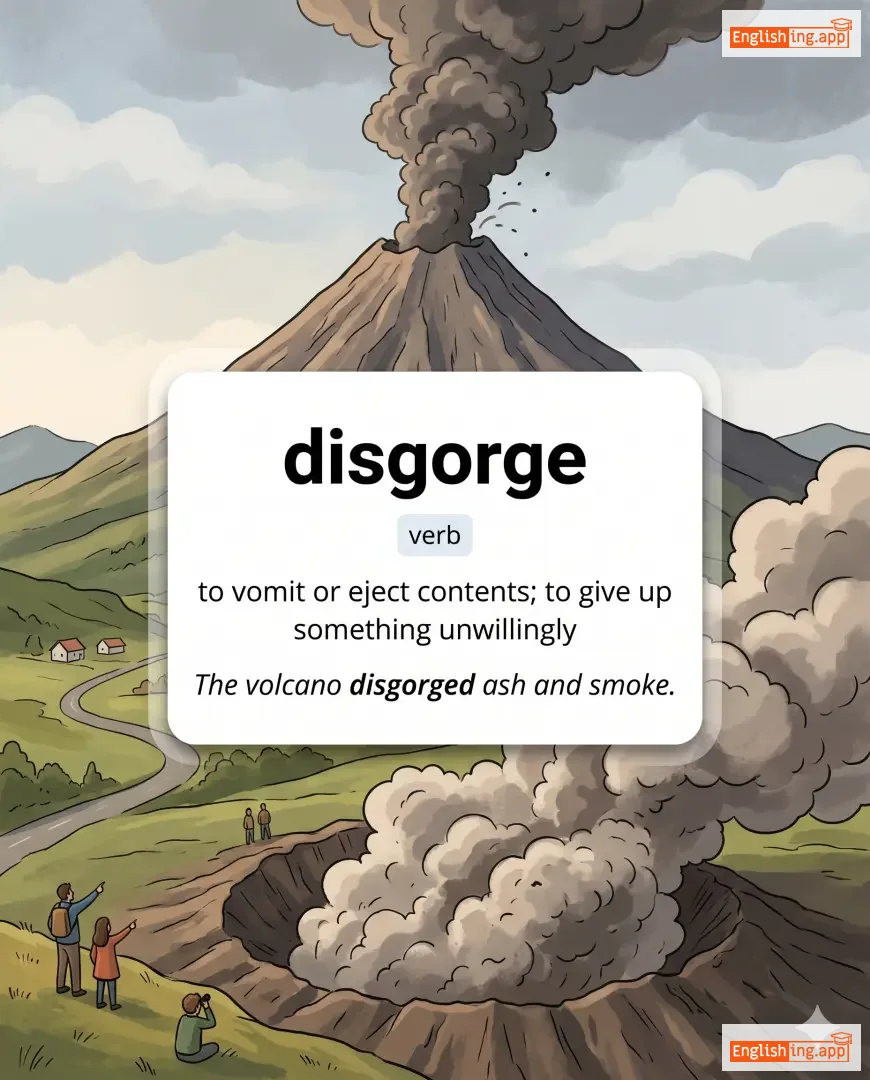
disgorge definition card — visual illustration of the meaning
verb
/dɪsˈɡɔrdʒ/
उल्टी करना / कुछ ज़बरदस्ती बाहर निकालना (ulti karna / kuch zabardasti bahar nikalna)

to vomit or eject contents; to give up something unwillingly

"The volcano disgorged ash and smoke."

"ज्वालामुखी ने राख और धुंआ बाहर उगला।" (Jwalamukhi ne rakh aur dhuan bahar ugla.)
noun
/dɪsˈɡreɪs/
अपमान (apmaan)

Loss of respect, honor, or reputation due to shameful behavior.

"He was dismissed in disgrace after the scandal."

"स्कैंडल के बाद उसे अपमान के साथ बर्खास्त कर दिया गया।" (Scandal ke baad use apmaan ke saath barkhaast kar diya gaya.)
adjective
/dɪsˈɡreɪsfəl/
लज्जाजनक; अपमानजनक; निंदा के योग्य (lajjajanak; apmanjanak; ninda ke yogya)

shameful; bringing dishonor; worthy of condemnation

"His disgraceful behavior shocked everyone at the party."

"उसका लज्जाजनक व्यवहार पार्टी में सभी को चौंका दिया।" (uska lajjajanak vyavhaar party mein sabhi ko chonka diya)
verb
/dɪsˈɡrʌntl/
असंतुष्ट करना (asantusht karna)

to make someone dissatisfied or discontented

"The unfair treatment disgruntled the workers."

"अन्यायपूर्ण व्यवहार ने श्रमिकों को असंतुष्ट कर दिया।" (Anyaypoorvak vyavhaar ne shramikon ko asantusht kar diya.)
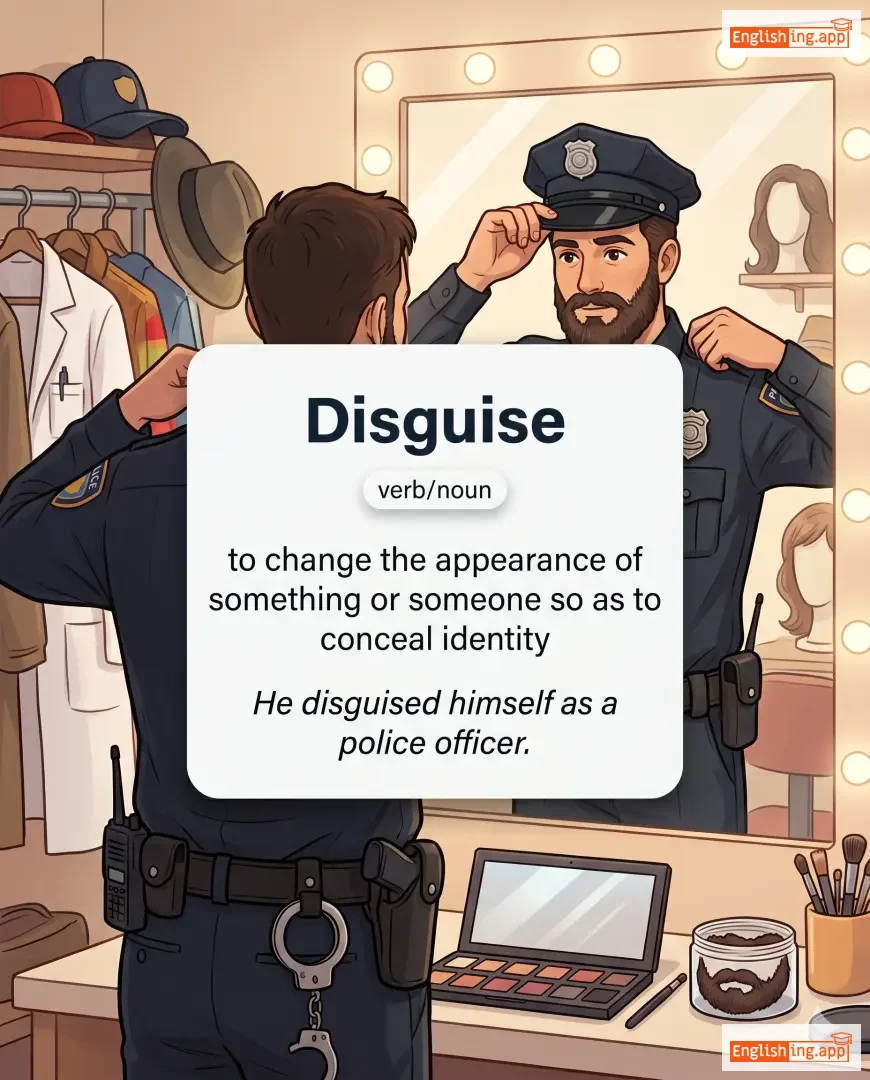
Disguise definition card — visual illustration of the meaning
verb/noun
/dɪsˈɡaɪz/
परिवेश (parivesh)

to change the appearance of something or someone so as to conceal identity

"He disguised himself as a police officer."

"उसने अपने आप को एक पुलिस अधिकारी के रूप में छुपाया।" (Usne apne aap ko ek police adhikari ke roop mein chhupaya.)
noun
/dɪsˈɡʌst/
घृणा (ghrina)

a feeling of revulsion or strong disapproval aroused by something unpleasant

"She expressed her disgust at the politician's corrupt behavior openly."

"उसने राजनेता के भ्रष्ट आचरण पर अपनी घृणा खुलकर व्यक्त की।" (usne rajneta ke bhrasht acharan par apni ghrina khulkar vyakt ki.)
adjective
/dɪsˈɡʌstɪd/
घृणित (ghrinit)

feeling a strong sense of dislike or revulsion

"She was disgusted by the way he treated the animals."

"वह जानवरों के साथ उसके व्यवहार से घृणित था।" (Vah janwaron ke sath uske vyavhaar se ghrinit tha.)
adjective
/dɪsˈɡʌstɪŋ/
घृणास्पद (ghrinaspad)

extremely unpleasant or offensive; causing strong dislike or revulsion

"The smell coming from the trash can was absolutely disgusting."

"कूड़ेदान से आने वाली गंध पूरी तरह से घृणास्पद थी।" (kudedan se aane wali gandh poori tarah se ghrinaspad thi)
noun
/dɪʃ/
प्लेट / व्यंजन (plate / vyajan)

A shallow container for serving or preparing food; also a particular kind of food prepared.

"She prepared a delicious pasta dish for dinner."

"उसने रात के खाने के लिए स्वादिष्ट पास्ता डिश तैयार की।" (Usne raat ke khane ke liye swadisht pasta dish tayar ki.)
noun
/ˈdɪʃ ˌwɒʃər/
बर्तन धोने की मशीन (bartan dhone ki machine)

an appliance for washing dishes automatically

"We installed a new dishwasher in our kitchen last week."

"हमने पिछले हफ्ते अपने रसोईघर में एक नया डिश वॉशर स्थापित किया।" (hamne pichle hafte apne rasoi ghar mein ek naya dish washer sthapit kiya)
noun
/ˌdɪʃəˈbiːl/
अर्धनग्नता (ardhangnatha)

The state of being only partly or loosely dressed; casual or careless attire.

"She answered the door in a state of dishabille, wearing just a robe."

"उसने दरवाजे का जवाब एक आंशिक पोशाक में दिया, केवल एक चादर पहने हुए।" (Usne darwaje ka jawab ek aanshik poshak mein diya, keval ek chadar pehne hue.)
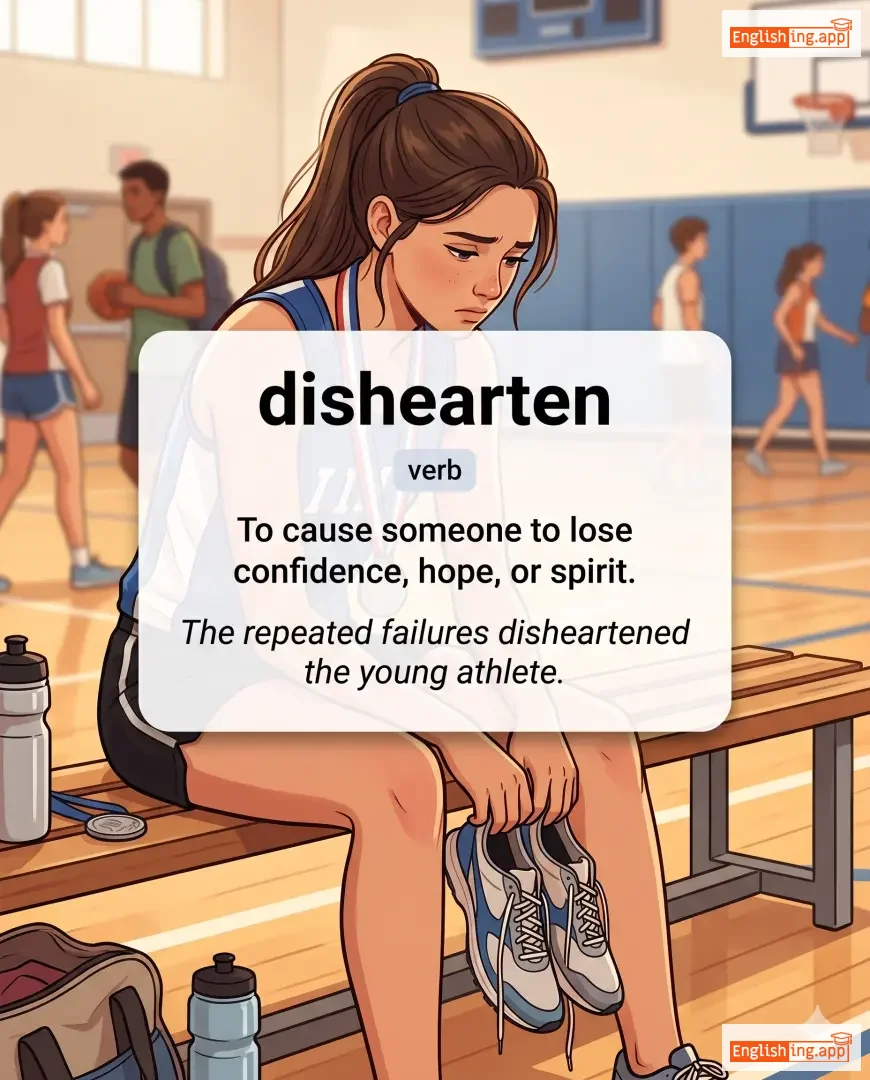
dishearten definition card — visual illustration of the meaning
verb
/dɪsˈhɑːrtən/
निराश करना (niraash karna)

To cause someone to lose confidence, hope, or spirit.

"The repeated failures disheartened the young athlete."

"बार-बार असफलताएँ युवा एथलीट को निराश कर रही थीं।" (Bar-bar asafaltaen yuva athlete ko niraash kar rahi thin.)
adjective
/dɪsˈhɑːrtənd/
निराश (niraash)

Having lost confidence, hope, or spirit; discouraged.

"She looked disheartened after receiving the bad news."

"वह बुरी खबर मिलने के बाद निराश दिख रही थी।" (Vah buri khabar milne ke baad niraash dikh rahi thi.)
adjective
/dɪˈʃɛvəld/
अव्यवस्थित (avyavasthit)

Untidy, messy, or in disorder, especially of hair or clothing.

"He arrived with disheveled hair and wrinkled clothes."

"वह अव्यवस्थित बालों और झुर्रियों वाले कपड़ों के साथ आया था।" (Vah avyavasthit balon aur jhurrion wale kapdon ke saath aaya tha.)
adjective
/dɪsˈɑːnɪst/
बेईमानी (beimani)

Behaving in an untruthful or deceitful way; not honest.

"It is dishonest to cheat in exams."

"परीक्षाओं में धोखा देना बेईमानी है।" (Parikshaon mein dhokha dena beimani hai.)
noun, verb
/dɪsˈɑːnər/
अपमान (apmaan)

a state of shame or loss of respect; to bring shame upon someone or something

"The soldier felt he had brought dishonor to his family."

"सैनिक ने महसूस किया कि उसने अपने परिवार को अपमानित किया था।" (Sainik ne mahsus kiya ki usne apne parivar ko apmaanit kiya tha.)
noun
/dɪsˈɒn.ər/
अपमान; शर्मिंदगी; dishonor (apmaan; sharmindagi; dishonor)

a state of shame or disgrace; lack of honor or integrity; failure to fulfill obligations

"Breaking his promise brought dishonour to his name and family legacy."

"उसने जो वचन दिया था, उसे तोड़ने से उसके नाम और परिवार की विरासत पर अपमान आया।" (Usne jo vachan diya tha, use todne se uske naam aur parivar ki virasat par apmaan aaya.)
verb, noun
/ˌdɪsɪˈluːʒən/
मोहभंग (mohbhang)

to cause someone to realize that something is not as good as they believed

"The scandal disillusioned many voters."

"घोटाले ने कई वोटर्स को मोहभंग कर दिया।" (ghotale ne kai voters ko mohbhang kar diya.)
disillusionment definition card — visual illustration of the meaning
noun
/ˌdɪs.ɪˈluː.ʒən.mənt/
भ्रमित होना (bhramit hona)

A feeling of disappointment resulting from the discovery that something is not as good as one believed it to be.

"His disillusionment with politics made him withdraw from activism."

"राजनीति के प्रति उसका भ्रमित होना उसे सक्रियता से हटा लिया।" (Rajniti ke prati uska bhramit hona use sakriyata se hata liya.)
noun
/ˌdɪsɪnklɪˈneɪʃən/
अवसाद (avasad)

a lack of willingness or desire to do something

"She showed a clear disinclination to join the meeting."

"उसने बैठक में शामिल होने की स्पष्ट अवसाद दिखायी।" (Usne baithak mein shamil hone ki spasht avasad dikhayi.)
verb
/ˌdɪsɪnˈfɛkt/
कीटाणु रहित करना (keetanu rahit karna)

to clean something thoroughly to destroy bacteria or viruses

"The nurse disinfected the wound before applying a bandage."

"नर्स ने पट्टी लगाने से पहले घाव को कीटाणु रहित किया था।" (Nars ne patti lagane se pehle ghaav ko keetanu rahit kiya tha.)
noun
/ˌdɪsɪnˈfɛktənt/
विमारी नाशक (vimari nashak)

a chemical substance used to kill harmful microorganisms on surfaces

"The cleaner sprayed disinfectant on the table."

"साफ़ करने वाले ने मेज़ पर विमारी नाशक छिड़का।" (Saaf karne wale ne mez par vimari nashak chhidka.)
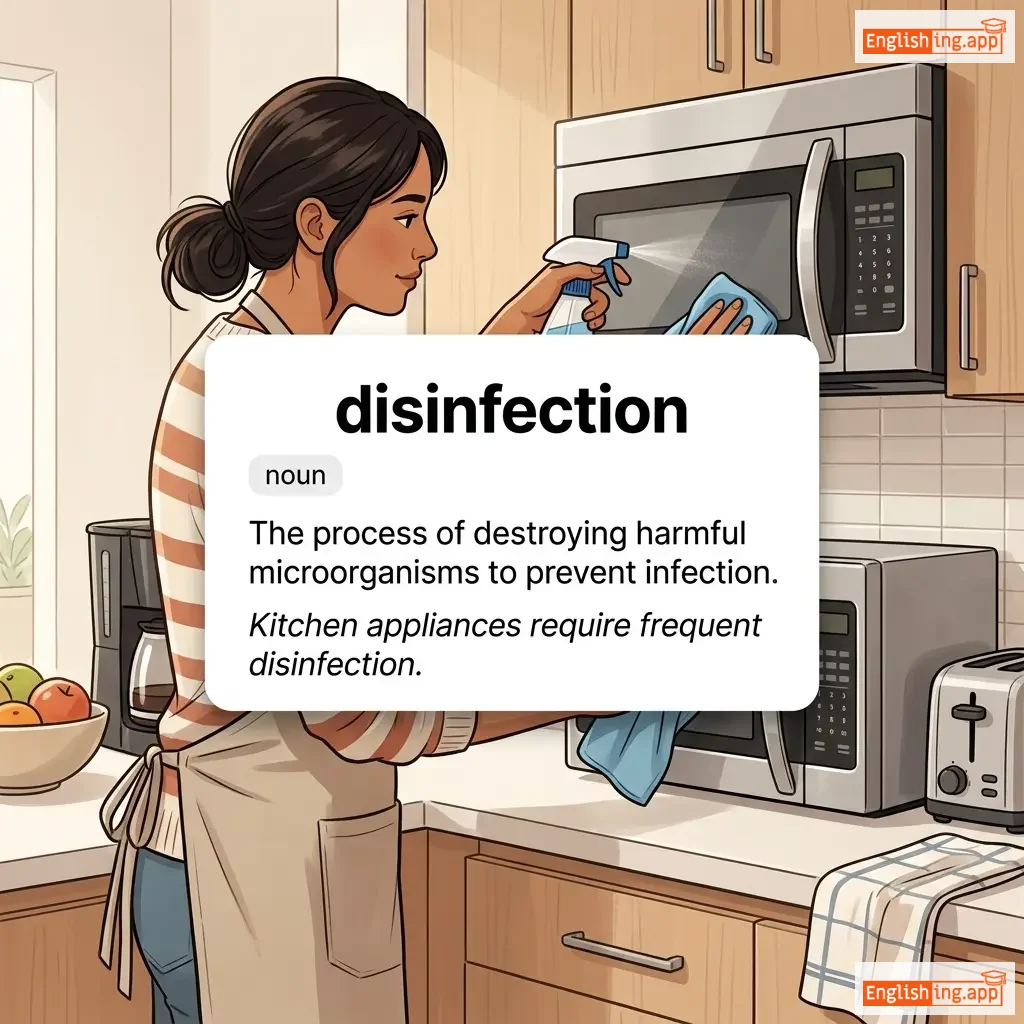
disinfection definition card — visual illustration of the meaning
noun
ˌdɪs.ɪnˈfek.ʃən
वायरस और बैक्टीरिया का नाश (vayras aur bakteriyaa ka naash)

The process of destroying harmful microorganisms to prevent infection.

"Kitchen appliances require frequent disinfection."

"रसोई उपकरणों को बार-बार कीटाणु रहित करना आवश्यक है।" (Rasoi upkaran ko baar-baar keetanu rahit karna avashyak hai.)
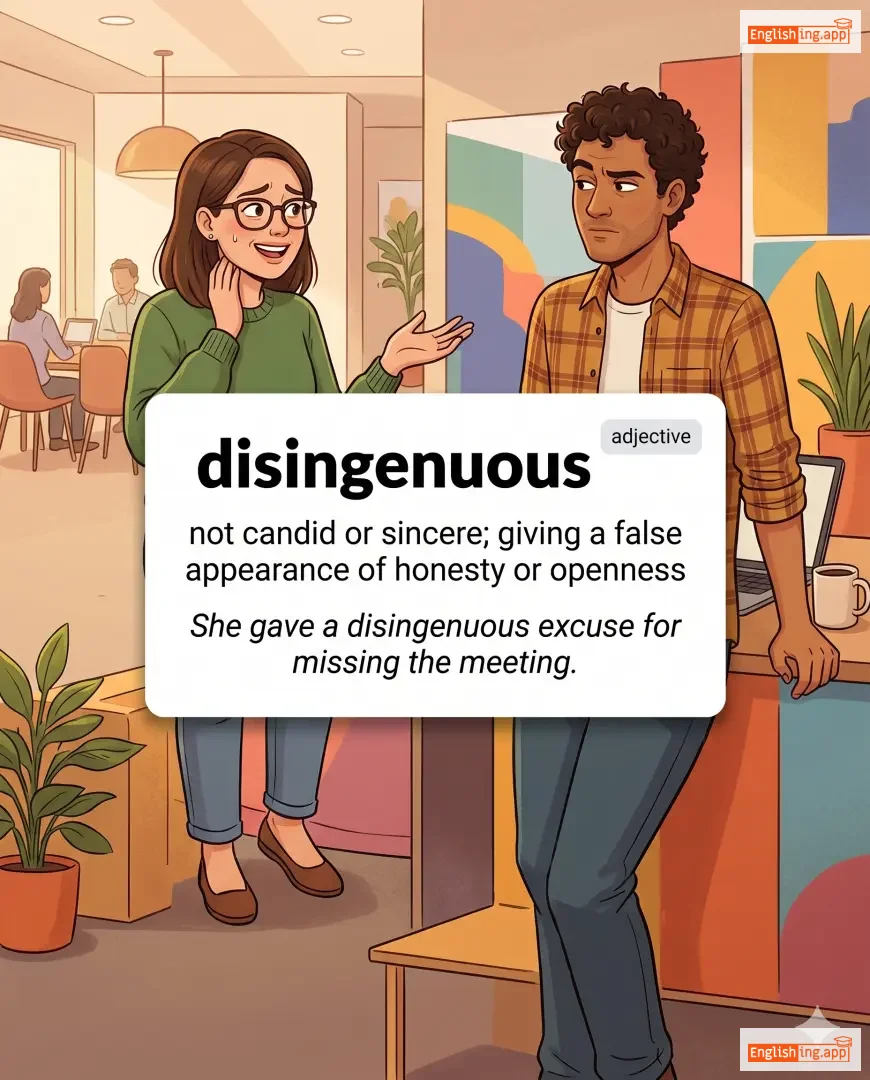
disingenuous definition card — visual illustration of the meaning
adjective
/ˌdɪsɪnˈdʒɛnjʊəs/
झूठा (jhootha)

not candid or sincere; giving a false appearance of honesty or openness

"She gave a disingenuous excuse for missing the meeting."

"उसने बैठक में न आने के लिए एक झूठा बहाना दिया।" (Usne baithak mein na aane ke liye ek jhootha bahaana diya.)
verb
/ˌdɪsɪnˈhɛrɪt/
विरासत से वंचित करना (virasat se vanchit karna)

to deprive someone, especially a child, of inheritance or right to property

"The father threatened to disinherit his son for his reckless actions."

"पिता ने अपने बेटे को उसके लापरवाह कार्यों के लिए विरासत से वंचित करने की धमकी दी।" (Pita ne apne bete ko uske laaparwah karyon ke liye virasat se vanchit karne ki dhamki di.)
verb
/ˌdɪsɪnˈtɜːr/
कब्र खोदना (kabr khodna)

to dig up something buried, especially a body

"The archaeologists disinterred ancient remains from the site."

"पुरातत्वविदों ने साइट से प्राचीन अवशेष निकाले।" (Puratatvavidon ne site se prachin avashesh nikaale.)
noun
/dɪsˈɪntrəst/
उदासीनता (udasinta)

lack of interest or concern

"His disinterest in the project was obvious."

"उसकी परियोजना में उदासीनता स्पष्ट थी।" (Uski pariyojna mein udasinta spashth thi.)
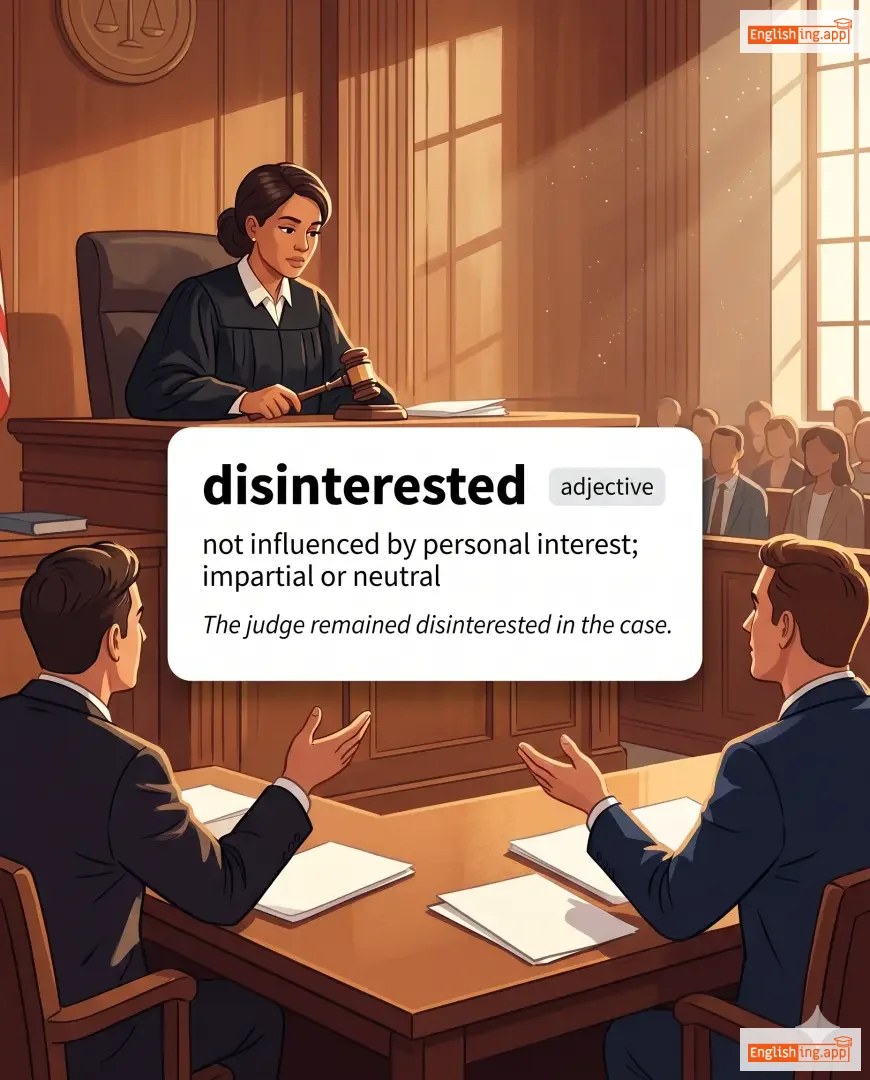
disinterested definition card — visual illustration of the meaning
adjective
/dɪsˈɪntrəstɪd/
निरपेक्ष (nirpeksh)

not influenced by personal interest; impartial or neutral

"The judge remained disinterested in the case."

"न्यायाधीश मामले में निरपेक्ष रहे।" (Nyayadhish mamle mein nirpeksh rahe.)
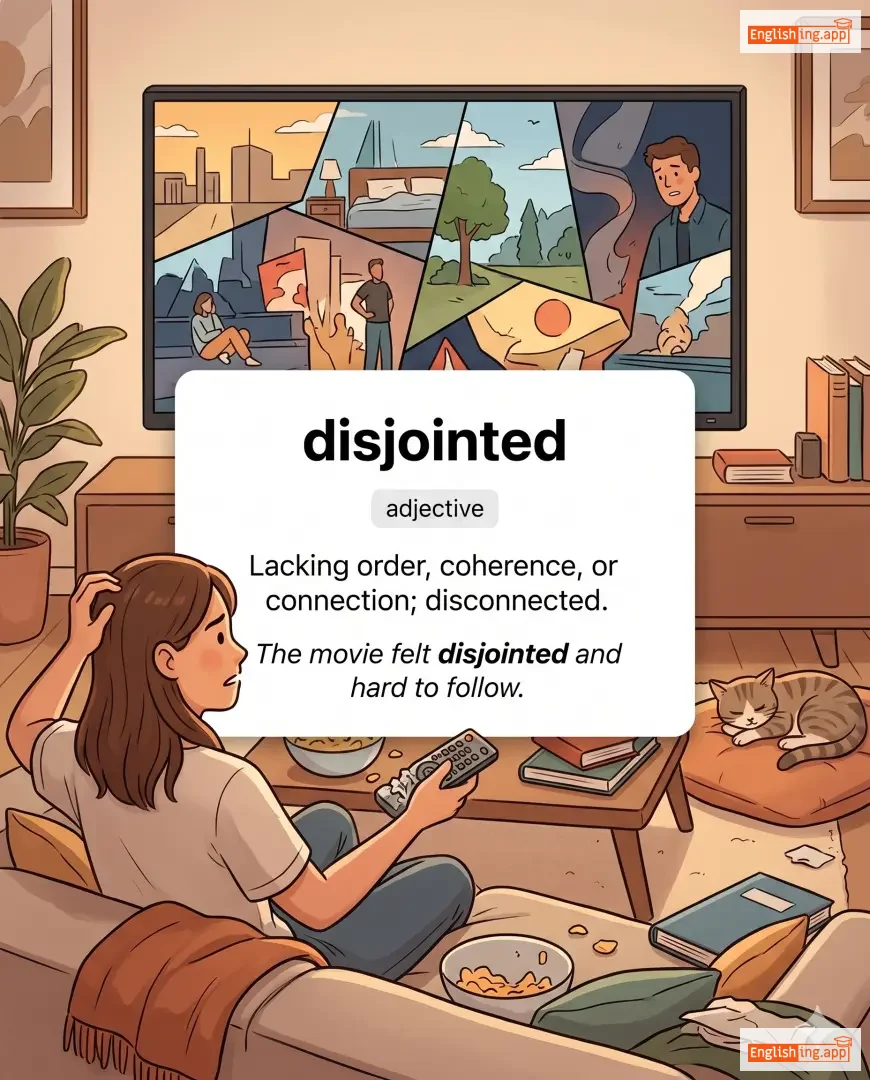
disjointed definition card — visual illustration of the meaning
adjective
/dɪsˈdʒɔɪntɪd/
अव्यवस्थित (avyavasthit)

Lacking order, coherence, or connection; disconnected.

"The movie felt disjointed and hard to follow."

"फिल्म अव्यवस्थित और पालन करने में कठिन महसूस हुई।" (Film avyavasthit aur paalan karne mein kathin mehsoos hui.)
noun
/dɪsˈdʒʌŋkʃən/
वियोग (viyog)

A lack of connection between things; separation or disunity.

"There is a clear disjunction between theory and practice."

"सिद्धांत और व्यवहार के बीच एक स्पष्ट वियोग है।" (Siddhant aur vyavhaar ke beech ek spashth viyog hai.)
adjective
/dɪsˈdʒʌŋktɪv/
विच्छेदक (vichchhedak)

Serving to separate or divide; expressing a choice between alternatives.

"In grammar, 'or' is a disjunctive conjunction."

"व्याकरण में, 'या' एक विच्छेदक संयोजक है।" (Vyakaran mein, 'ya' ek vichchhedak sanyojak hai.)
noun
/dɪsk/
डिस्क / डेटा संग्रहण उपकरण (disk / data sangrahan upkaran)

a flat, circular object, often used to store data electronically

"All the data is saved on a hard disk."

"सारा डेटा एक हार्ड डिस्क पर संग्रहीत है।" (Sara data ek hard disk par sangrahit hai.)
verb, noun
/dɪsˈlaɪk/
नापसंद करना (napasand karna)

to feel distaste or aversion for someone or something; a feeling of aversion

"I really dislike eating spicy food."

"मुझे सच में मसालेदार खाना खाना नापसंद है।" (mujhe sach mein masaledar khana khana napasand hai)
verb
/ˈdɪsləkeɪt/
स्थानच्युत करना (sthanchyut karna)

To disturb the normal position of something, especially a joint in the body.

"He dislocated his shoulder while playing football."

"वह फुटबॉल खेलते हुए अपना कंधा डिस्लोकेट कर बैठा।" (Woh football khelte hue apna kandha dislocate kar baitha.)
verb
/dɪsˈlɒdʒ/
हटाना (hatana)

To remove or force out from a position, especially one that is fixed or hard to move.

"The troops dislodged the enemy from the hill."

"सैनिकों ने दुश्मन को पहाड़ी से हटा दिया।" (Sainiko ne dushman ko pahadi se hata diya.)
adjective
/ˈdɪzməl/
उदास; निराशाजनक; दुखदायी (udas; nirashajanak; dukhdayi)

gloomy; depressing; causing sadness or despair

"The weather was dismal with heavy rain and dark clouds."

"मौसम भारी बारिश और काले बादलों के साथ उदास था।" (mausam bhaari baarish aur kaale baadalon ke saath udaas tha)
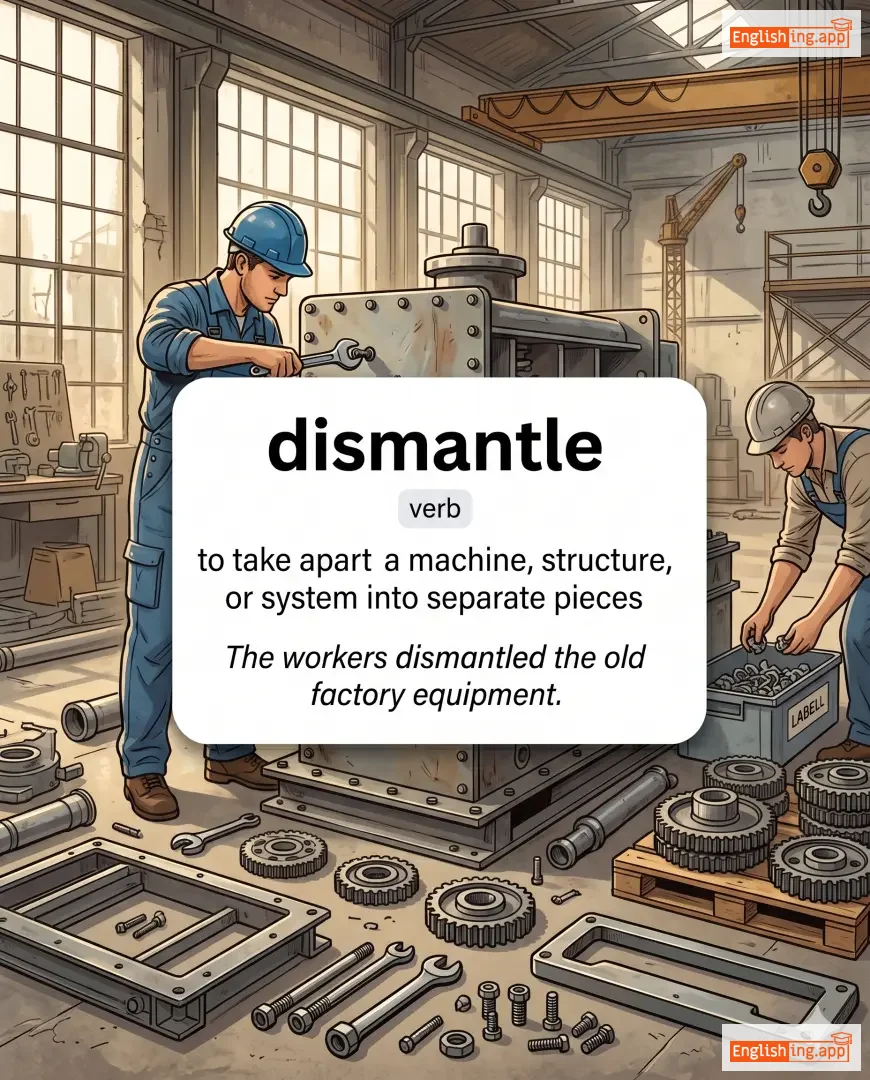
dismantle definition card — visual illustration of the meaning
verb
/dɪsˈmæntl̩/
तोड़ना (todna)

to take apart a machine, structure, or system into separate pieces

"The workers dismantled the old factory equipment."

"मजदूरों ने पुराने कारखाने के उपकरणों को तोड़ दिया।" (mazdooron ne purane karkhane ke upkaranon ko tod diya.)
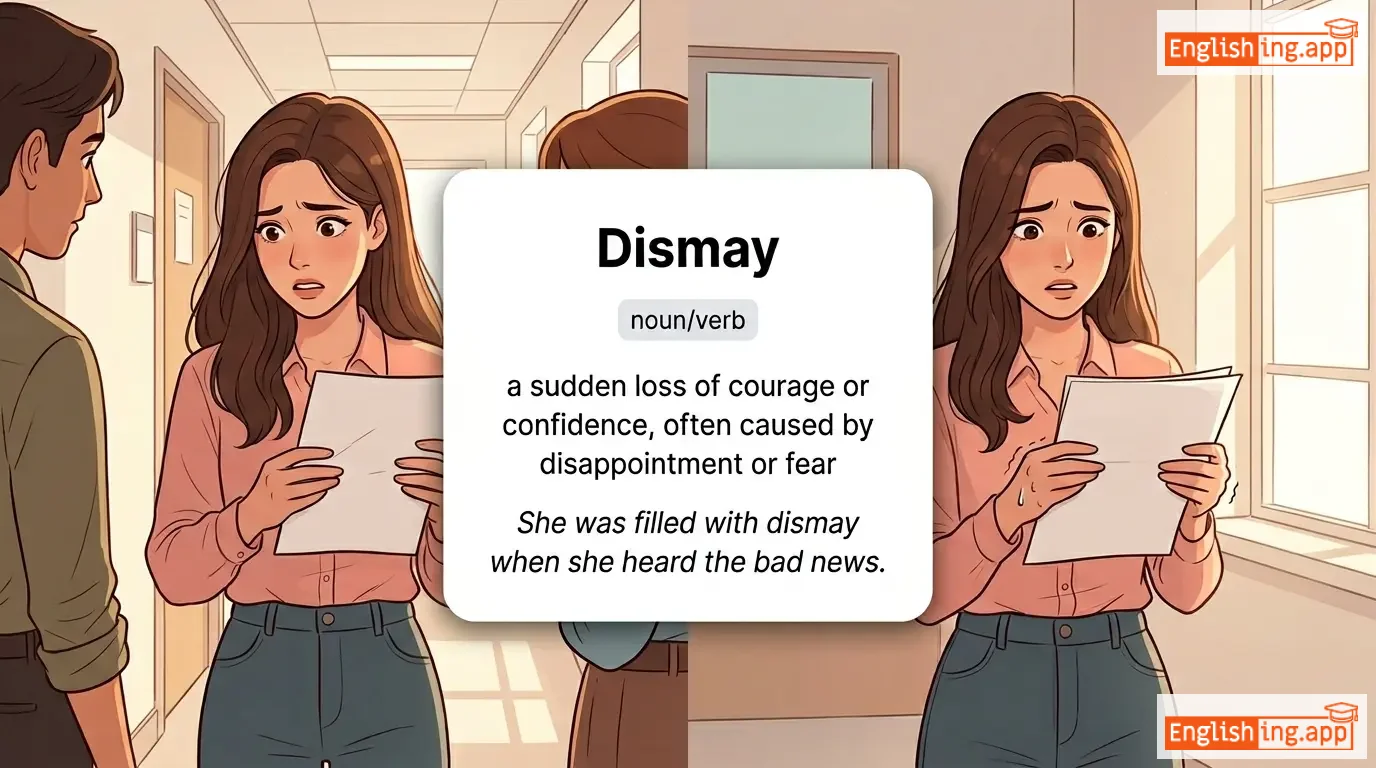
Dismay definition card — visual illustration of the meaning
noun/verb
/dɪsˈmeɪ/
निराशा या डर (nirasha ya dar)

a sudden loss of courage or confidence, often caused by disappointment or fear

"She was filled with dismay when she heard the bad news."

"वह बुरी खबर सुनकर निराश हो गई थी।" (vah buri khabar sunkar nirash ho gayi thi.)
verb
/dɪsˈmɛmbər/
अंगभंग करना (angbhang karna)

to cut or tear the limbs from a body; to divide into separate parts

"The king ordered his enemies to be dismembered."

"राजा ने अपने दुश्मनों को अंगभंग करने का आदेश दिया।" (raja ne apne dushmanon ko angbhang karne ka aadesh diya.)
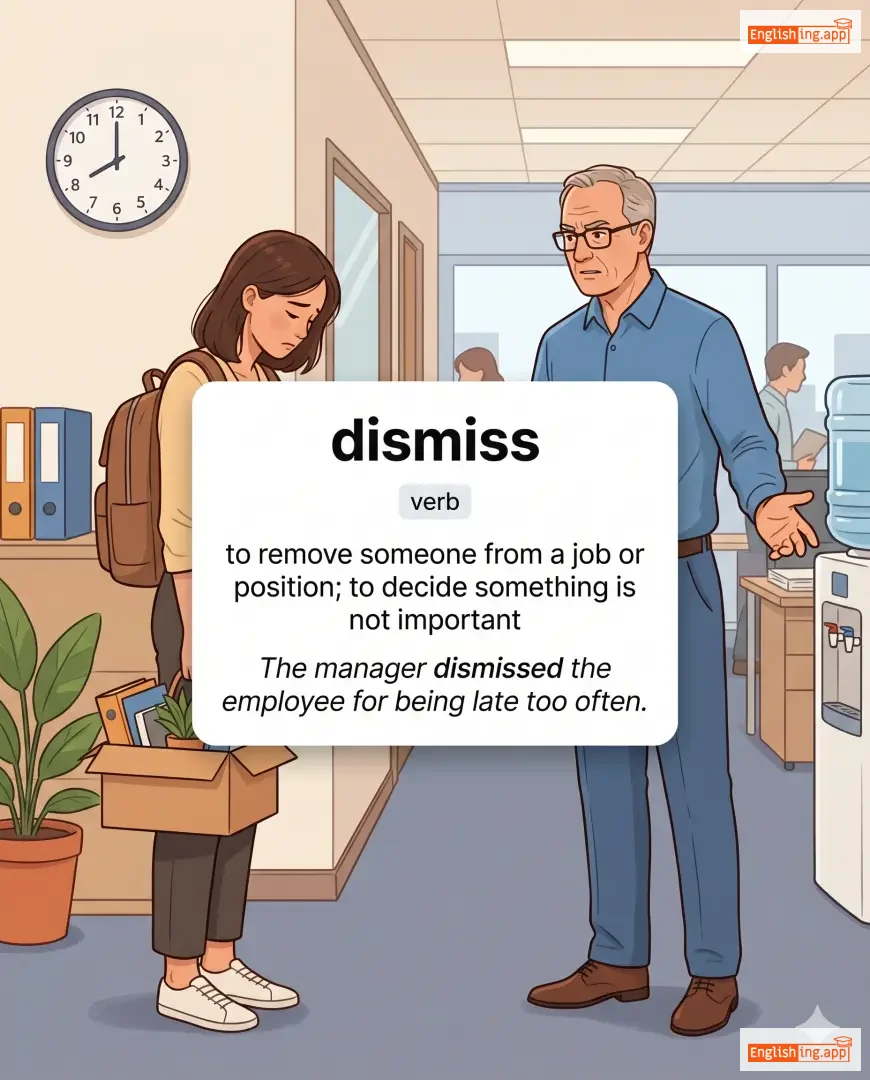
dismiss definition card — visual illustration of the meaning
verb
/dɪsˈmɪs/
निकालना, नकारना (nikaalna, nakarna)

to remove someone from a job or position; to decide something is not important

"The manager dismissed the employee for being late too often."

"मैनेजर ने कर्मचारी को बार-बार देर से आने के लिए डिसमिस किया।" (manager ne karmachari ko baar-baar der se aane ke liye dismiss kiya.)
noun
/dɪsˈmɪsl̩/
निलंबन, बर्खास्तगी (nilamban, barkhastgi)

the act of removing someone from their job; the act of treating something as unimportant

"His unfair dismissal led to a lawsuit against the company."

"उसका अनुचित निलंबन कंपनी के खिलाफ मुकदमा लाया।" (uska anuchit nilamban company ke khilaf mukadma laya.)
verb
/ˌdɪsˈmaʊnt/
उतरना (utarna)

to get off or down from something, especially a horse, bicycle, or motorcycle

"The rider dismounted from the horse after a long journey."

"लंबी यात्रा के बाद सवार घोड़े से उतर गया।" (Lambi yatra ke baad sawar ghode se utar gaya.)
noun
/ˌdɪsəˈbiːdiəns/
अवज्ञा (avignya)

failure or refusal to obey rules, laws, or authority

"The child's disobedience worried his parents."

"बच्चे की अवज्ञा ने उसके माता-पिता को चिंतित कर दिया।" (Bacche ki avignya ne uske mata-pita ko chintit kar diya.)
adjective
/ˌdɪsəˈbiːdiənt/
अवज्ञाकारी (avgyakari)

refusing or failing to obey rules or authority

"The teacher scolded the disobedient students."

"शिक्षक ने अवज्ञाकारी छात्रों को डांटा।" (Shikshak ne avgyakari chhatron ko daanta.)