वोकैबुलरीज

इंग्लिश वोकैबुलरी डिस्कवर, लर्न और मास्टर करें

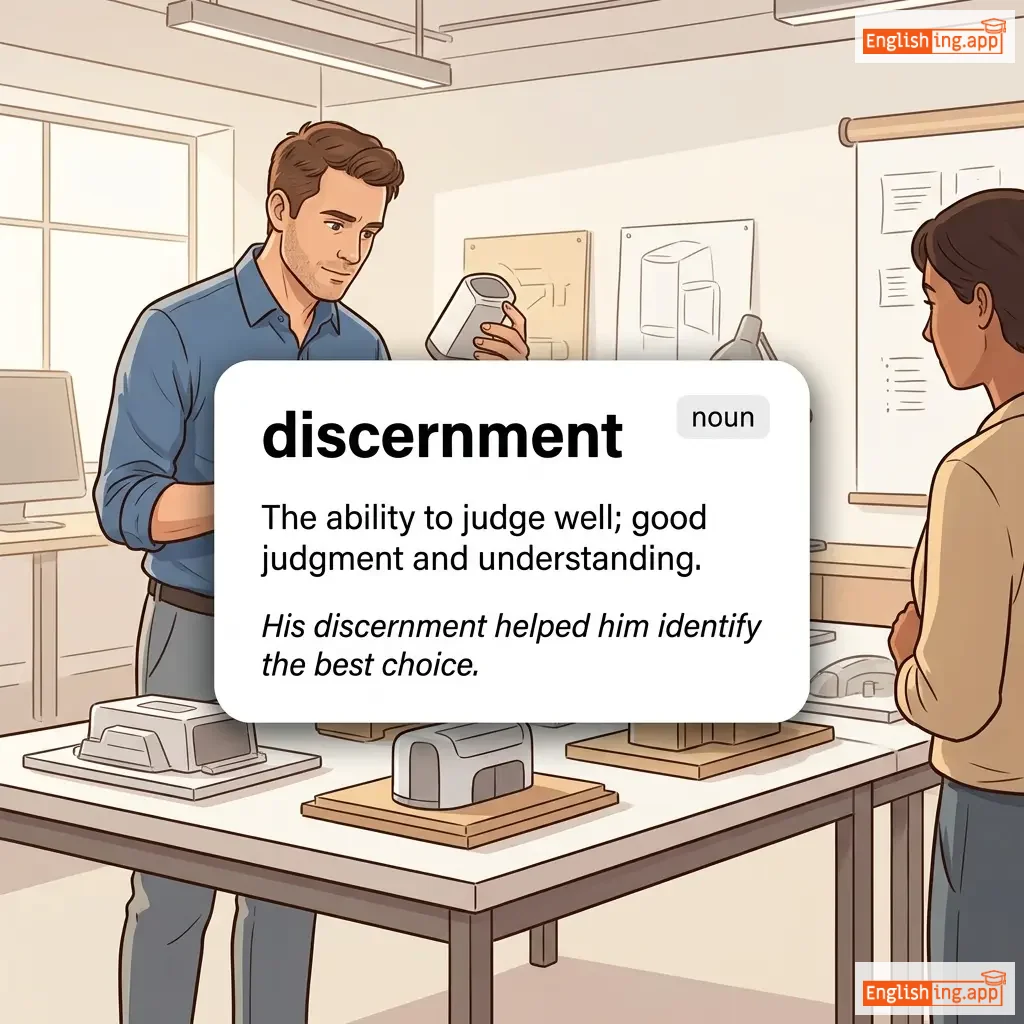
discernment definition card — visual illustration of the meaning
noun
dɪˈsɜːn.mənt
विवेक (vivek)

The ability to judge well; good judgment and understanding.

"His discernment helped him identify the best choice."

"उसकी विवेक ने उसे सबसे अच्छा विकल्प पहचानने में मदद की।" (Uski vivek ne use sabse accha vikalp pehchanne mein madad ki.)
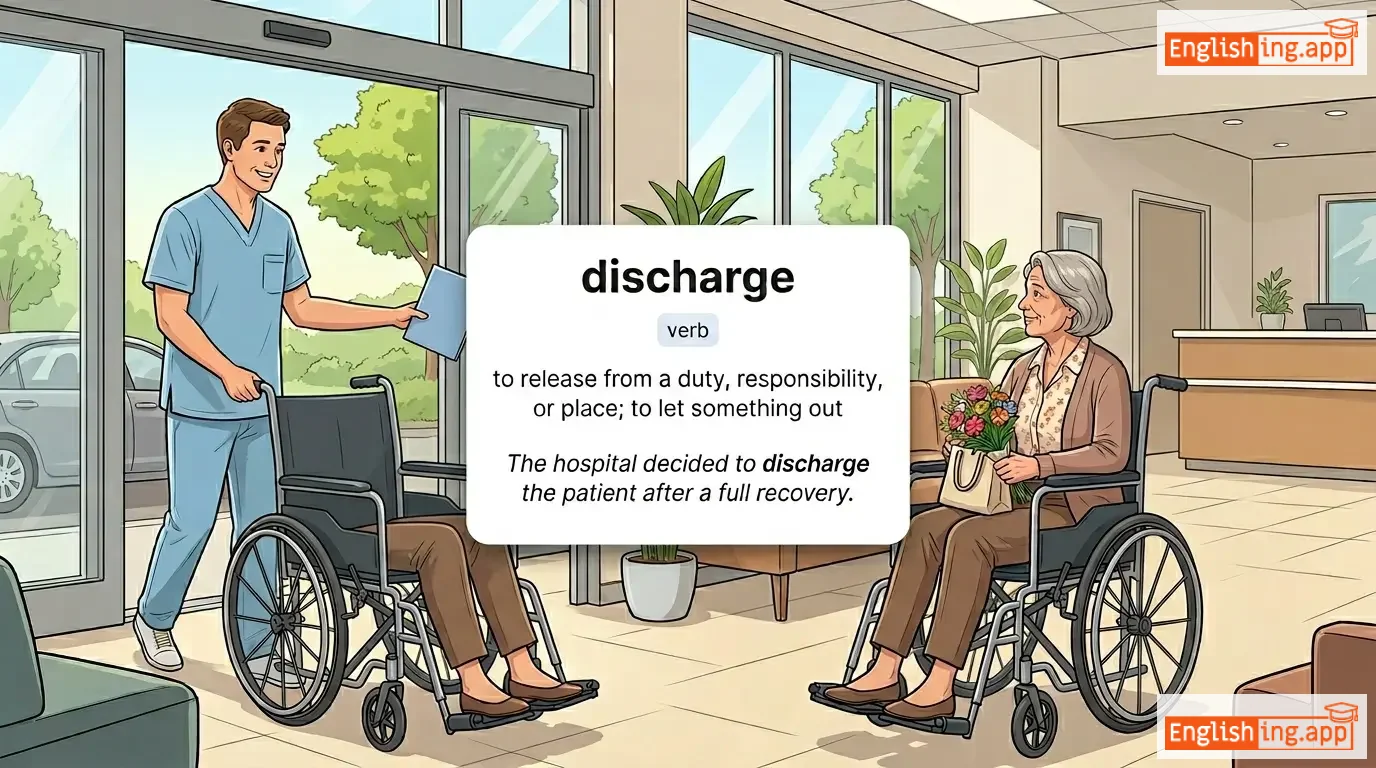
discharge definition card — visual illustration of the meaning
verb
/dɪsˈtʃɑːrdʒ/
मुक्ति देना (mukti dena)

to release from a duty, responsibility, or place; to let something out

"The hospital decided to discharge the patient after a full recovery."

"हॉस्पिटल ने पूरी रिकवरी के बाद मरीज को डिसचार्ज करने का निर्णय लिया।" (Hospital ne puri recovery ke baad mareez ko discharge karne ka nirnay liya.)
noun
/dɪˈsaɪpəl/
शिष्य (shishya)

a follower or student of a teacher, leader, or philosophy

"He was a devoted disciple of the famous philosopher."

"वह प्रसिद्ध दार्शनिक का एक समर्पित शिष्य था।" (Vah prasiddh darshanik ka ek samarpit shishya tha.)
adjective
/ˈdɪsəplɪˌnɛri/
अनुशासनात्मक (anushasanatmak)

relating to the enforcement of rules and correction of behavior

"The employee was warned after a disciplinary hearing."

"कर्मचारी को एक अनुशासनात्मक सुनवाई के बाद चेतावनी दी गई थी।" (Karmachari ko ek anushasanatmak sunvai ke baad chetavani di gayi thi.)
discipline definition card — visual illustration of the meaning
noun
/ˈdɪsəplɪn/
अनुशासन (anushasan)

the practice of training people to obey rules or self-control

"Good discipline is essential for success in school."

"अच्छा अनुशासन स्कूल में सफलता के लिए आवश्यक है।" (accha anushasan school mein safalta ke liye avashyak hai.)
verb
/dɪsˈkleɪm/
अस्वीकार करना (asweekar karna)

to deny responsibility or connection with something

"The company disclaimed responsibility for the accident."

"कंपनी ने दुर्घटना के लिए जिम्मेदारी से इंकार किया।" (Kampani ne durghatna ke liye jimmedari se inkaar kiya.)
disclose definition card — visual illustration of the meaning
verb
/dɪsˈkloʊz/
प्रकाशित करना (prakaashit karna)

to make something known; to reveal information that was previously secret or hidden

"The company refused to disclose details of the agreement."

"कंपनी ने समझौते का विवरण डिस्क्लोज़ करने से इनकार कर दिया।" (Company ne samjhaute ka vivaran disclose karne se inkaar kar diya.)
noun
/dɪsˈkloʊʒər/
प्रकटीकरण (prakatikaran)

the action of making something known or public

"The disclosure of the company's financial status was delayed."

"कंपनी की वित्तीय स्थिति का प्रकटीकरण देरी से हुआ।" (Company ki vittiya sthiti ka prakatikaran deri se hua.)
verb
/dɪsˈkʌlər/
रंग बदलना (rang badalna)

to change color, especially in a way that spoils the original appearance

"The fabric began to discolor after being left in the sun."

"फैब्रिक सूरज में छोड़ने के बाद रंग बदलने लगा।" (Fabric sooraj mein chhodne ke baad rang badalne laga.)
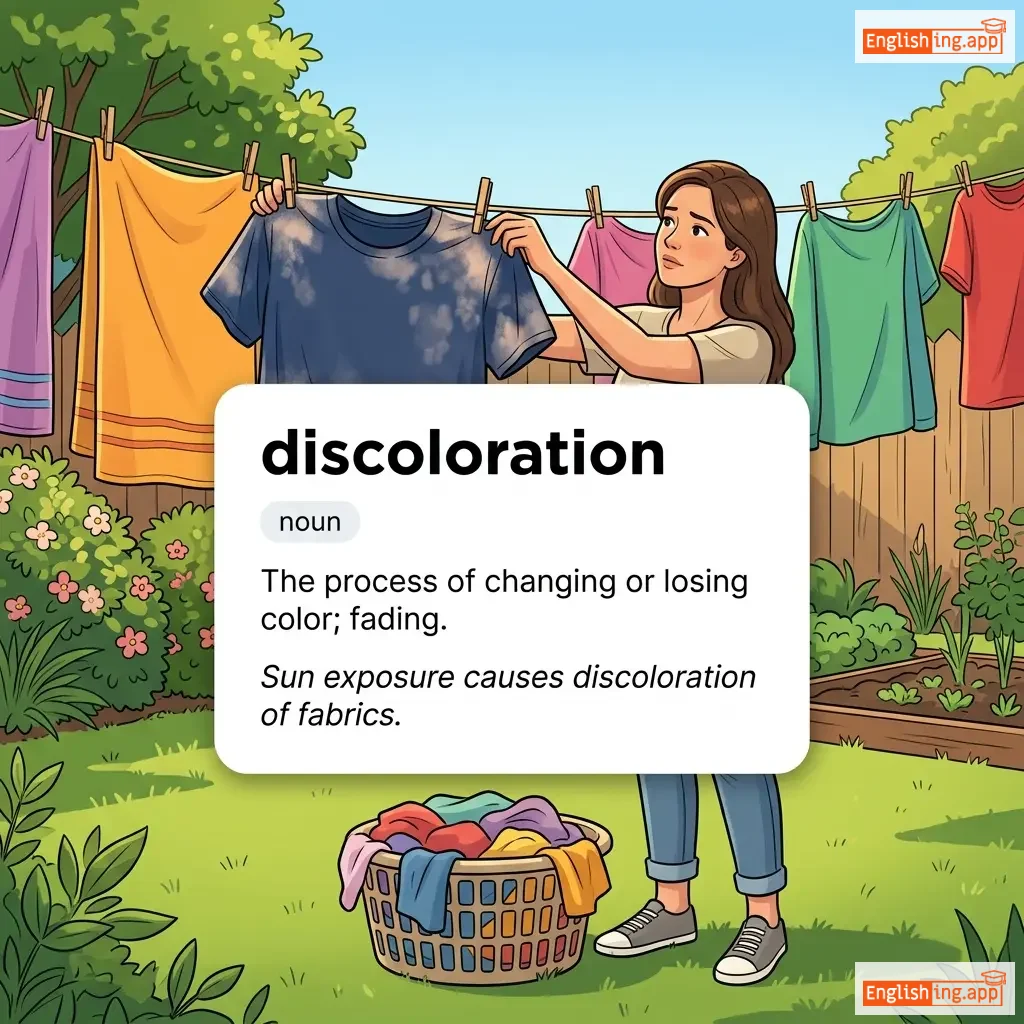
discoloration definition card — visual illustration of the meaning
noun
/ˌdɪs.kʌl.əˈreɪ.ʃən/
वर्ण परिवर्तन (varn parivartan)

The process of changing or losing color; fading.

"Sun exposure causes discoloration of fabrics."

"सूरज की रोशनी कपड़ों के रंग को बदल देती है।" (Suraj ki roshni kapdon ke rang ko badal deti hai.)
verb
/ˌdɪskəmˈbɑːbjuleɪt/
भ्रांत करना (bhrant karna)

to confuse or disconcert; to upset the normal order

"The sudden question seemed to discombobulate him."

"अचानक सवाल ने उसे भ्रमित कर दिया।" (Achanak sawal ne use bhramit kar diya.)
adjective
/ˌdɪskəmˈbɑːbjuleɪtɪd/
भ्रमित (bhramit)

confused and disoriented; feeling unsettled

"She looked discombobulated after hearing the unexpected news."

"अप्रत्याशित खबर सुनने के बाद वह भ्रमित दिख रही थी।" (Apratyashit khabar sunne ke baad wah bhramit dikh rahi thi.)
discomfit definition card — visual illustration of the meaning
verb
/dɪsˈkʌmfɪt/
असहज करना (asahaj karna)

to make someone feel uneasy, embarrassed, or confused

"The interviewer’s tough questions discomfited the candidate."

"इंटरव्यूअर के कठिन सवालों ने उम्मीदवार को असहज कर दिया।" (Interviewer ke kathin sawalon ne ummidwar ko asahaj kar diya.)
adjective
/dɪsˈkʌmfɪtɪŋ/
असुविधाजनक (asuvidhajanak)

Causing unease, embarrassment, or discomfort.

"His discomfiting questions made everyone shift uncomfortably in their seats."

"उसके असुविधाजनक सवालों ने सभी को अपनी सीटों पर असहज रूप से हिलने पर मजबूर कर दिया।" (uske asuvidhajanak sawalon ne sabhi ko apni seaton par asahaj roop se hilne par majboor kar diya.)
noun
/dɪsˈkʌmfərt/
असुविधा (asubidha)

A feeling of slight pain, unease, or awkwardness.

"She shifted in her chair due to discomfort in her back."

"वह अपनी पीठ में असुविधा के कारण अपनी कुर्सी में हिल रही थी।" (vah apni peeth mein asubidha ke karan apni kursi mein hil rahi thi.)
verb
/ˌdɪskəˈmoʊd/
असुविधा पहुँचाना (asuvidha pahuchana)

To cause inconvenience or trouble to someone.

"I hope my request does not discommode you."

"मैं आशा करता हूँ कि मेरी अनुरोध आपको असुविधा नहीं पहुँचाएगी।" (main asha karta hoon ki meri anurodh aapko asuvidha nahi pahuchayegi.)
verb
/ˌdɪskəmˈpoʊz/
बेचैन करना (bechain karna)

To disturb the order or calmness of something or someone.

"The unexpected question seemed to discompose her."

"अप्रत्याशित सवाल ने उसे बेचैन कर दिया।" (apratyashit sawaal ne use bechain kar diya.)
verb
/ˌdɪskənˈsɜːrt/
अशांत करना (ashant karna)

To unsettle, confuse, or disturb the composure of someone.

"The sudden change of plans disconcerted the team."

"योजना में अचानक बदलाव ने टीम को असहज कर दिया।" (yojana mein achanak badlav ne team ko asahaj kar diya.)
verb
/ˌdɪskəˈnɛkt/
कनेक्शन से अलग करना (connection se alag karna)

to detach or separate from a connection or source

"Please disconnect the charger from the power outlet."

"कृपया चार्जर को पावर आउटलेट से डिसकनेक्ट करें।" (Kripya charger ko power outlet se disconnect karein.)
adjective
/dɪsˈkɒnsələt/
निराश (niraash)

very unhappy and unable to be comforted

"She was disconsolate after hearing the bad news."

"खराब खबर सुनने के बाद वह निराश थी।" (Kharab khabar sunne ke baad vah niraash thi.)
noun
/ˌdɪskənˈtɪnjʊəns/
विराम (viram)

the act of stopping something, especially permanently

"The discontinuance of the service disappointed many customers."

"सेवा की समाप्ति ने कई ग्राहकों को निराश किया।" (seva ki samaapti ne kai graahkon ko niraash kiya.)
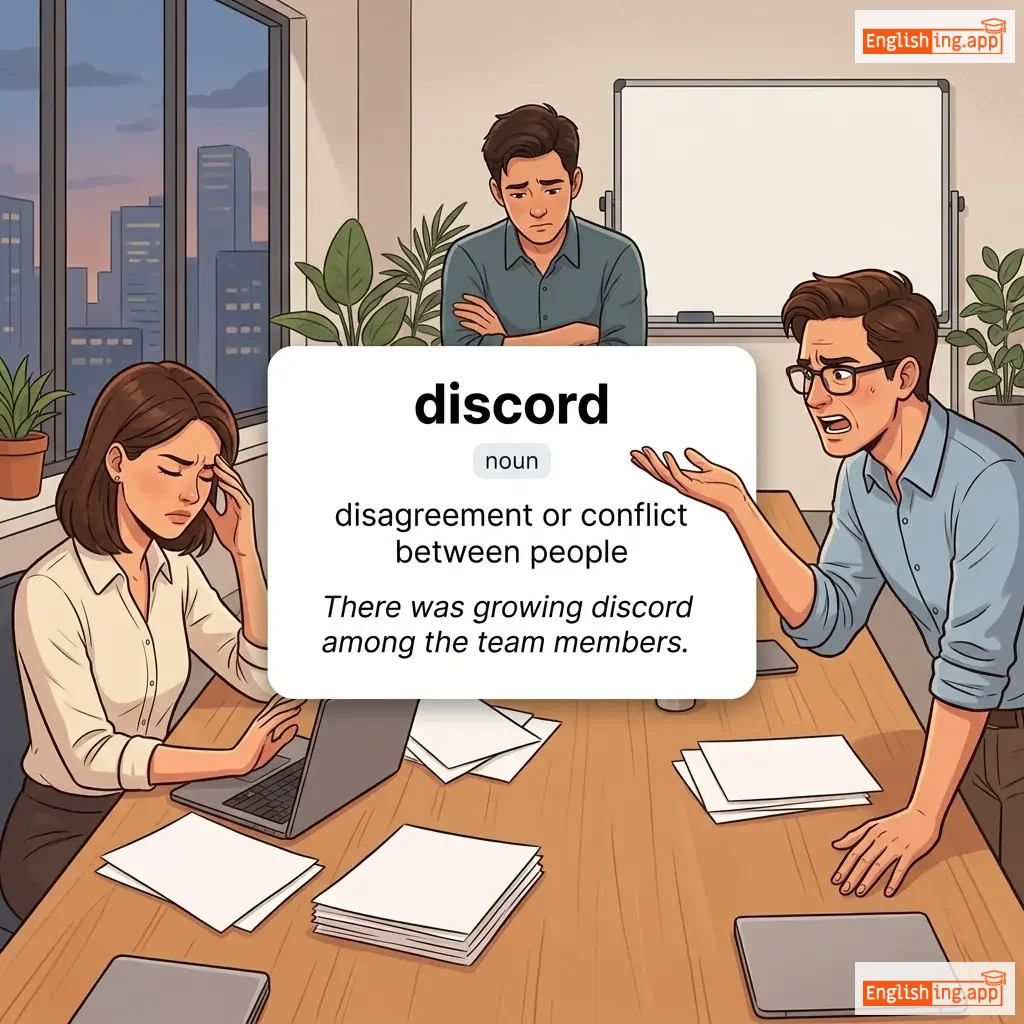
discord definition card — visual illustration of the meaning
noun
/ˈdɪskɔːrd/
विरोध (virodh)

disagreement or conflict between people

"There was growing discord among the team members."

"टीम के सदस्यों के बीच असहमति बढ़ रही थी।" (Team ke sadasyon ke beech asahmati badh rahi thi.)
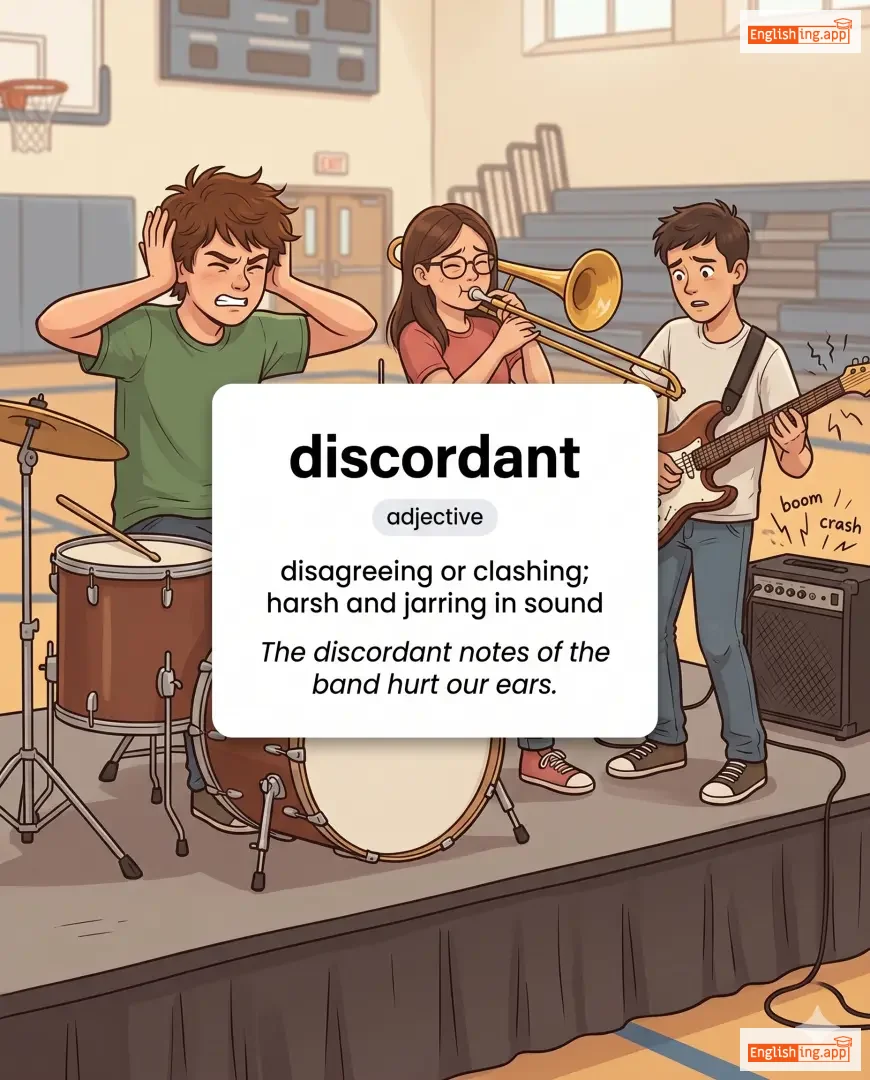
discordant definition card — visual illustration of the meaning
adjective
/dɪsˈkɔːrdənt/
विसंगत (visangat)

disagreeing or clashing; harsh and jarring in sound

"The discordant notes of the band hurt our ears."

"बैंड के विसंगत नोट्स ने हमारे कानों में दर्द डाला।" (Band ke visangat notes ne hamare kano mein dard dala.)
noun, verb
/ˈdɪskaʊnt/
छूट (chhoot)

A reduction in the usual price of something; to reduce the price of something.

"The store offered a 20% discount on all electronics."

"दुकान ने सभी इलेक्ट्रॉनिक्स पर 20% छूट दी।" (Dukaan ne sabhi electronics par 20% chhoot dee.)
verb
/dɪsˈkaʊntənəns/
नापसंद करना (napasand karna)

To disapprove of or discourage something.

"The teacher strongly discountenanced cheating in exams."

"अध्यापक ने परीक्षा में धोखाधड़ी को सख्ती से नकारा।" (Adhyapak ne pariksha mein dhokhadhadi ko sakhti se nakara.)
verb
/dɪsˈkʌrɪdʒ/
निरुत्साहित करना (nirutsahit karna)

to make someone less confident or enthusiastic about doing something

"Failure should not discourage you from trying again."

"विफलता आपको फिर से प्रयास करने से निरुत्साहित नहीं करनी चाहिए।" (Vifalta aapko phir se prayaas karne se nirutsahit nahi karni chahiye.)
adjective
/dɪˈskʌr.ɪ.dʒɪŋ/
निरुत्साही (nirutsahi)

making someone feel less confident or enthusiastic about doing something

"The coach's discouraging words affected the team's morale."

"कोच के निरुत्साहित शब्दों ने टीम के मनोबल को प्रभावित किया।" (koch ke nirutsahit shabdon ne team ke manobal ko prabhavit kiya.)
noun, verb
/ˈdɪskɔːrs/
वक्ता, चर्चा (vakta, charcha)

Written or spoken communication or debate.

"The professor gave a discourse on ancient philosophy."

"प्रोफेसर ने प्राचीन दर्शन पर एक वक्तव्य दिया।" (Professor ne prachin darshan par ek vaktavya diya.)
discover definition card — visual illustration of the meaning
verb
/dɪˈskʌvər/
खोजना (khojna)

To find something unexpectedly or for the first time.

"She discovered a hidden waterfall in the forest."

"वह जंगल में एक छुपी हुई जलप्रपात को खोजे।" (Wah jangal mein ek chhupi hui jalprapat ko khoje.)
discoveries definition card — visual illustration of the meaning
noun
dɪˈskʌvəriz
आविष्कार (avishkar)

The action or process of finding or learning something for the first time; facts or things discovered.

"His discoveries revolutionized multiple fields."

"उसकी खोजों ने कई क्षेत्रों में क्रांति ला दी।" (Uski khojon ne kai kshetron mein kranti la di.)
noun
/dɪˈskʌvəri/
खोज (khôj)

The act of finding or learning something for the first time.

"The discovery of penicillin changed medical history."

"पेनिसिलिन की खोज ने चिकित्सा इतिहास को बदल दिया।" (Penicillin ki khoj ne chikitsa itihas ko badal diya.)
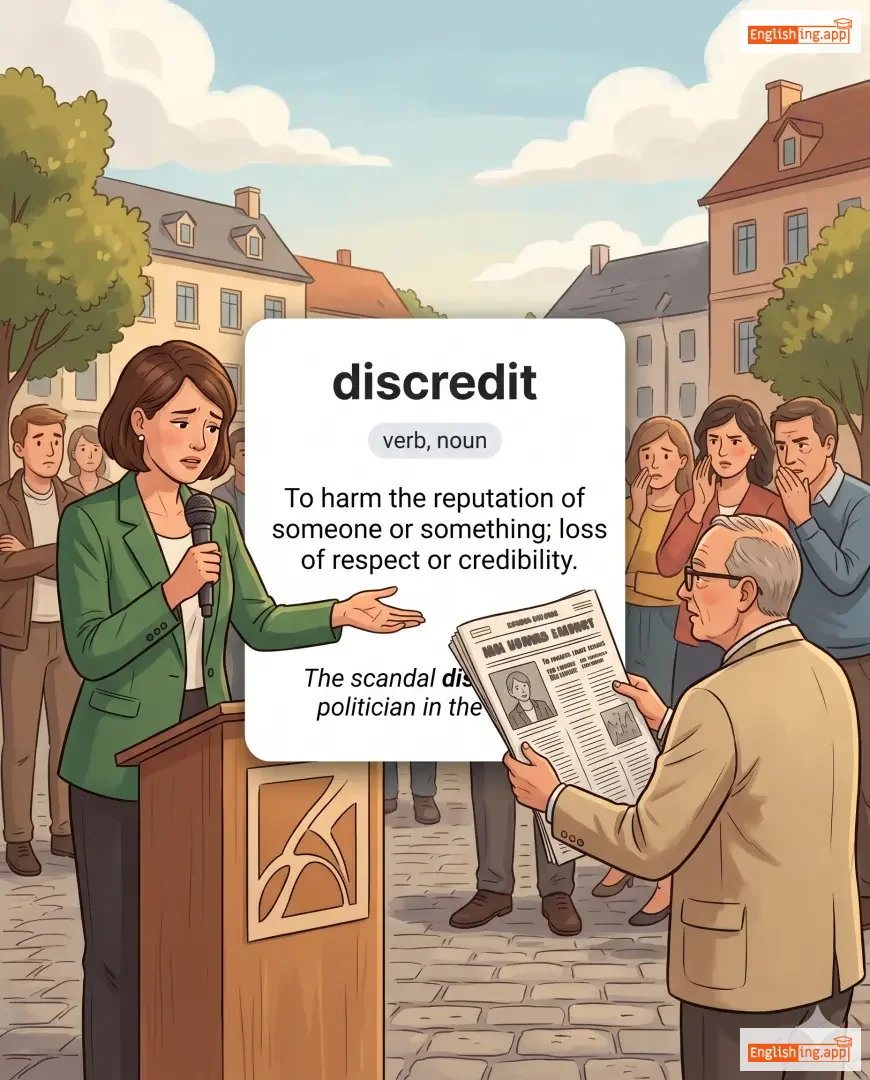
discredit definition card — visual illustration of the meaning
verb, noun
/dɪsˈkrɛdɪt/
अवज्ञा करना, प्रतिष्ठा को नुकसान पहुँचाना (avigya karna, pratishtha ko nuksan pahunchana)

To harm the reputation of someone or something; loss of respect or credibility.

"The scandal discredited the politician in the eyes of the public."

"स्कैंडल ने पब्लिक की नजरों में राजनेता की प्रतिष्ठा को नुकसान पहुँचाया।" (Scandal ne public ki nazron mein rajneeta ki pratishtha ko nuksan pahunchaya.)
adjective
/dɪˈskriːt/
सतर्क (satark)

careful and prudent in one's speech or actions, especially to keep something confidential or avoid embarrassment

"She was discreet about the details of their conversation."

"वह उनके बातचीत के विवरण के बारे में सतर्क थी।" (Vah unke baatcheet ke vivaran ke baare mein satark thi.)
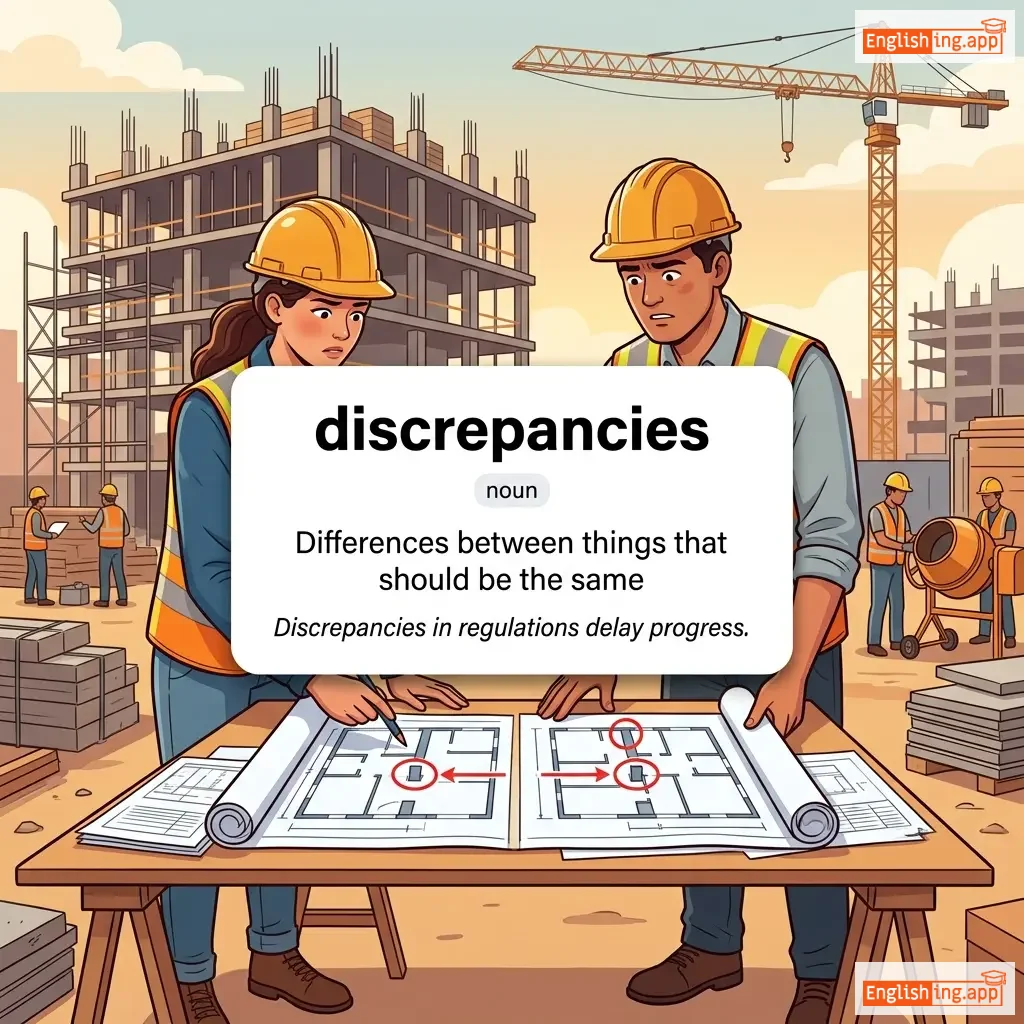
discrepancies definition card — visual illustration of the meaning
noun
dɪˈskrep.ən.siz
असंगति (asangati)

Differences between things that should be the same

"Discrepancies in regulations delay progress."

"नियमों में असंगतियाँ प्रगति में देरी करती हैं।" (Niyamon mein asangatiyan pragati mein deri karti hain.)
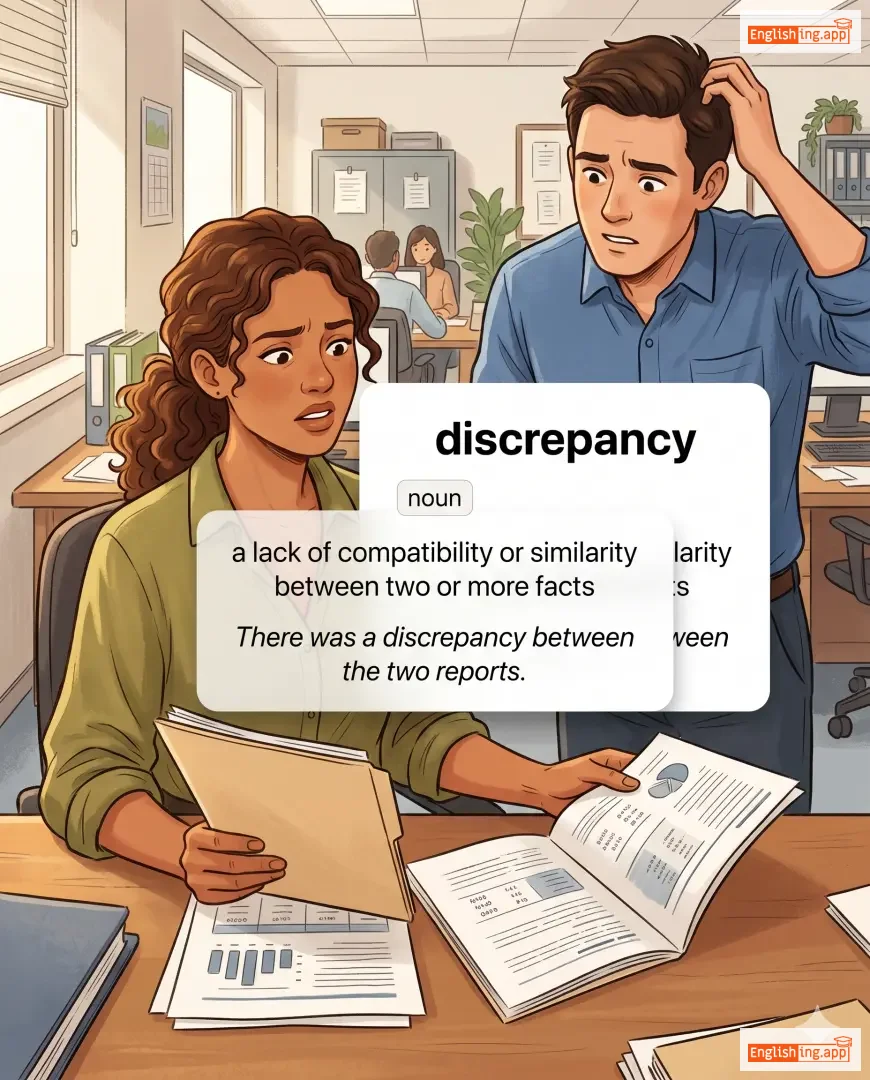
discrepancy definition card — visual illustration of the meaning
noun
/dɪˈskrɛpənsi/
विकृति (vikriti)

a lack of compatibility or similarity between two or more facts

"There was a discrepancy between the two reports."

"दो रिपोर्टों के बीच विकृति थी।" (Do reports ke beech vikriti thi.)
adjective
/dɪˈskrɛpənt/
विरोधात्मक (virodhatmak)

showing a difference or inconsistency

"The witnesses gave discrepant accounts of the incident."

"गवाहों ने घटना के बारे में विरोधात्मक विवरण दिए।" (Gawahoon ne ghatna ke baare mein virodhatmak vivaran diye.)
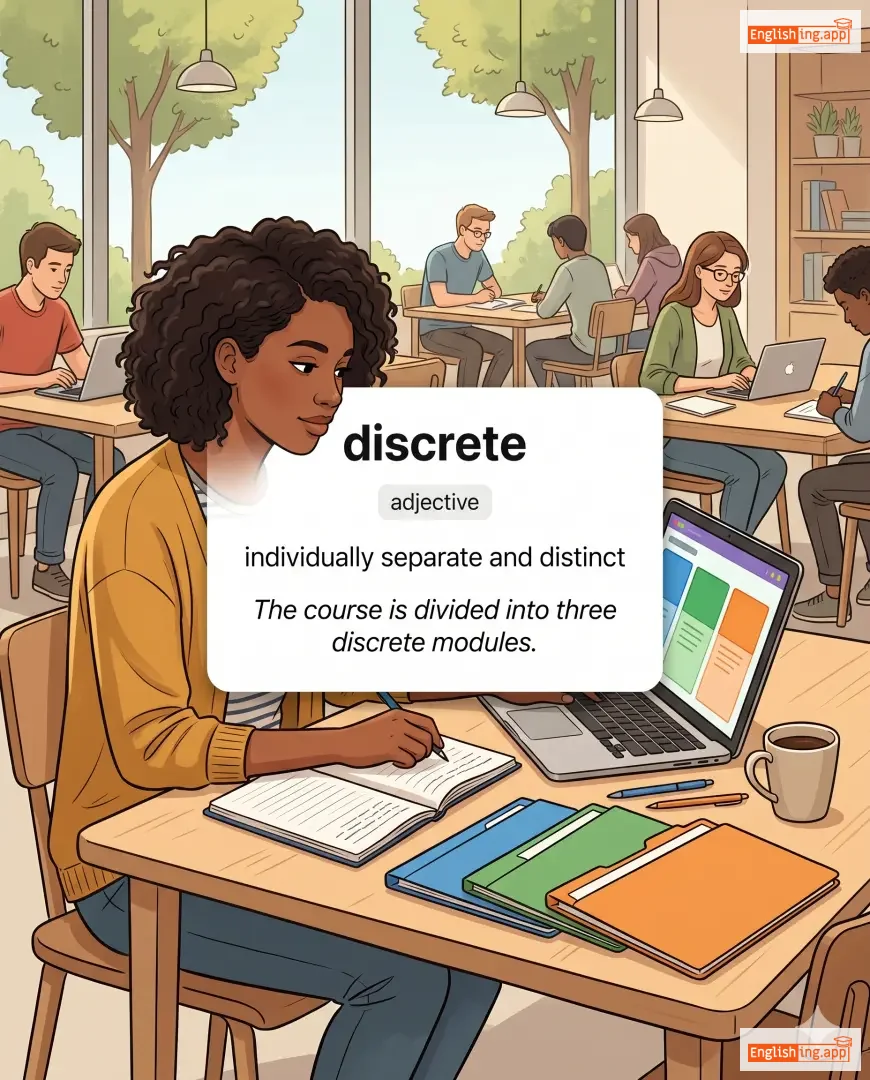
discrete definition card — visual illustration of the meaning
adjective
/dɪˈskriːt/
विभक्त (vibhakt)

individually separate and distinct

"The course is divided into three discrete modules."

"कोर्स को तीन अलग-अलग मॉड्यूल्स में बाँटा गया है।" (Kors ko teen alag-alag modules mein baanta gaya hai.)
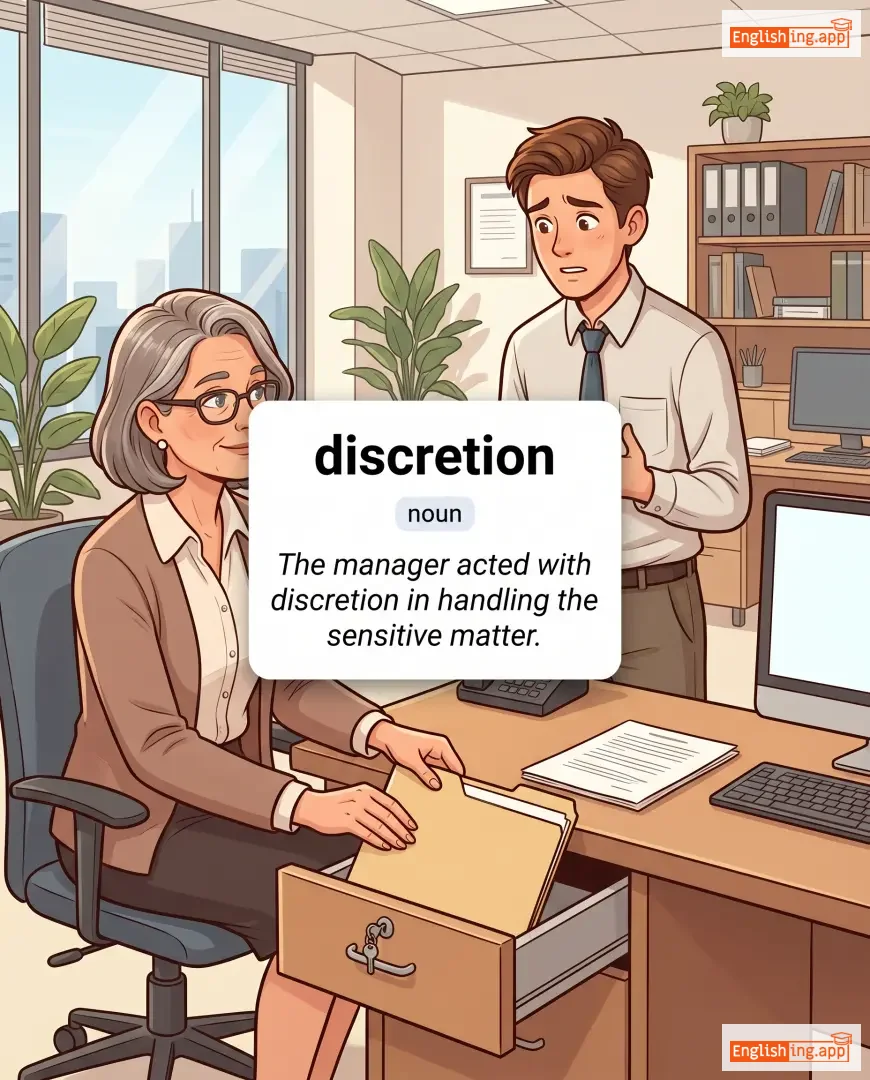
discretion definition card — visual illustration of the meaning
noun
/dɪˈskrɛʃən/
विवेक (vivek)

the quality of behaving or speaking in a way to avoid causing offense or revealing private information; the freedom to decide what should be done in a particular situation

"The manager acted with discretion in handling the sensitive matter."

"प्रबंधक ने संवेदनशील मामले को संभालने में विवेक के साथ काम किया।" (Prabandhak ne sanvedansheel mamle ko sambhalne mein vivek ke saath kaam kiya.)
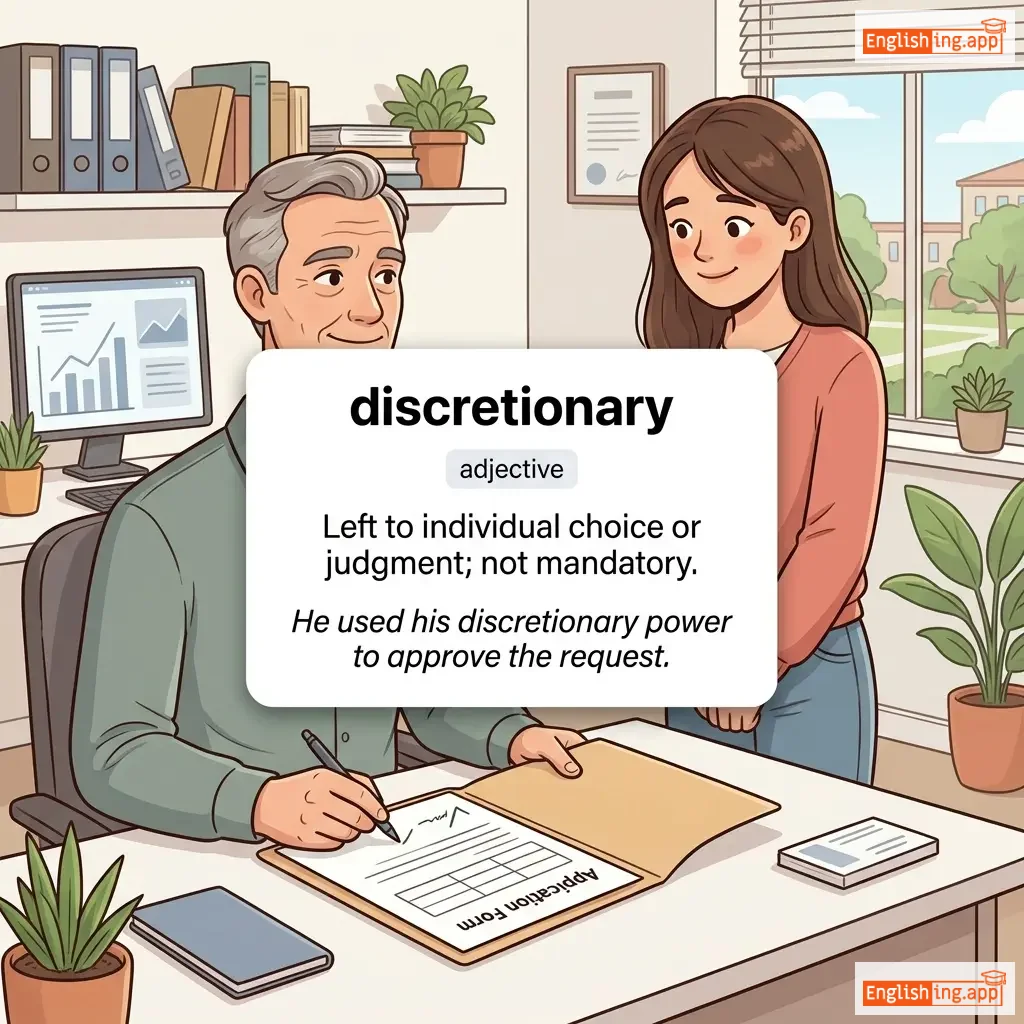
discretionary definition card — visual illustration of the meaning
adjective
/dɪˈskrɛʃəˌnɛri/
स्वैच्छिक (svāicchik)

Left to individual choice or judgment; not mandatory.

"He used his discretionary power to approve the request."

"उसने अनुरोध को मंजूरी देने के लिए अपनी स्वैच्छिक शक्ति का उपयोग किया।" (Usne anurodh ko manzoori dene ke liye apni svāicchik shakti ka upyog kiya.)
verb
/dɪˈskrɪmɪˌneɪt/
भेदभाव करना (bhedbhav karna)

To treat someone unfairly based on race, gender, or other differences; or to recognize a distinction.

"The law prohibits employers from discriminating against women."

"कानून नियोक्ता को महिलाओं के खिलाफ भेदभाव करने से रोकता है।" (Kanoon niyokta ko mahilaon ke khilaf bhedbhav karne se rokta hai.)
adjective
/dɪˈskrɪmɪˌneɪtɪŋ/
विवेकी (viveki)

Having refined taste or good judgment; able to recognize subtle differences.

"She is known for her discriminating taste in art."

"वह कला में अपनी विवेकी स्वाद के लिए प्रसिद्ध है।" (Vah kala mein apni viveki swad ke liye prasiddh hai.)
noun
/dɪˌskrɪmɪˈneɪʃən/
भेदभाव (bhedbhaav)

Unfair treatment of people based on race, gender, age, or other differences.

"The law prohibits discrimination in the workplace."

"कानून कार्यस्थल पर भेदभाव को रोकता है।" (Kanoon karyasthal par bhedbhaav ko rokta hai.)
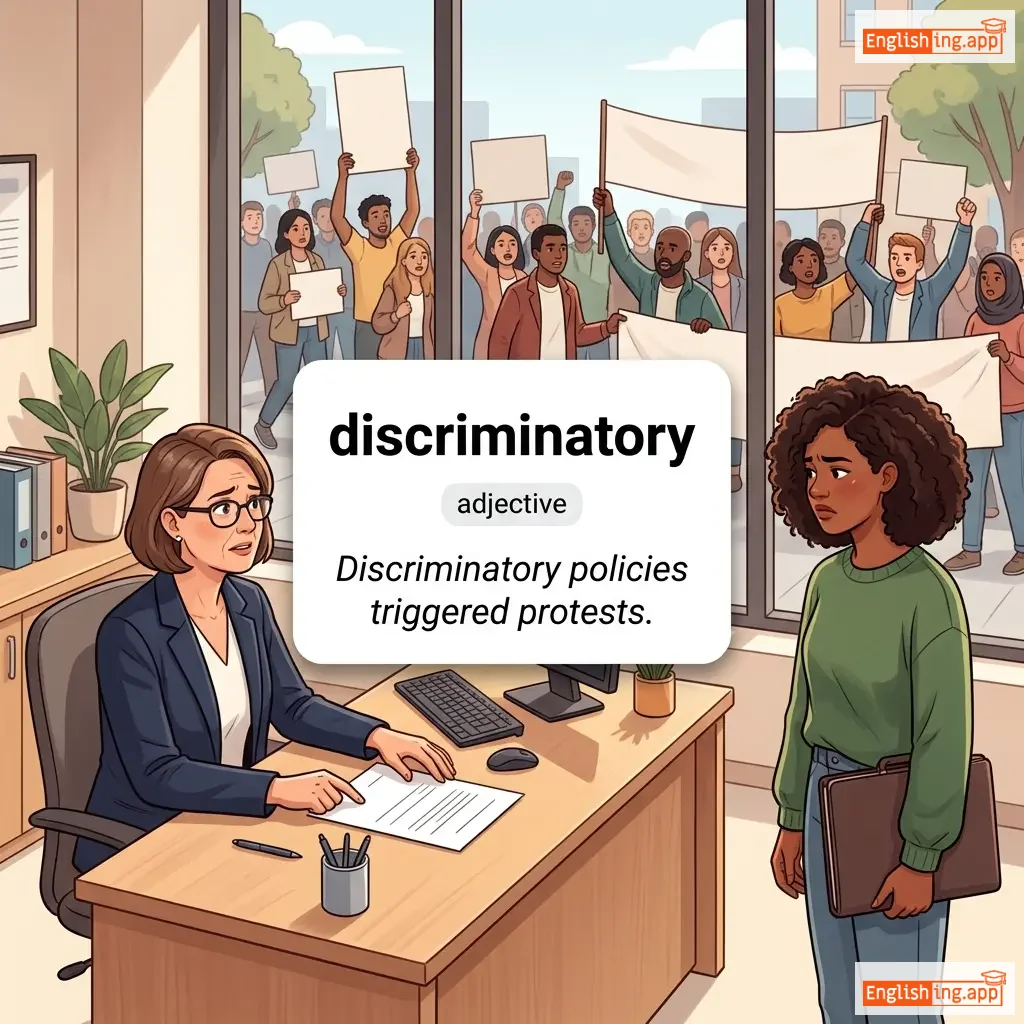
discriminatory definition card — visual illustration of the meaning
adjective
dɪˈskrɪmɪnətɔːri
भेदभावपूर्ण (bhedbhavpurn)

Making or showing an unfair or prejudicial distinction between different categories of people or things.

"Discriminatory policies triggered protests."

"भेदभावपूर्ण नीतियों ने विरोध प्रदर्शनों को उकसाया।" (Bhedbhavpurn neetiyon ne virodh pradarshanon ko uksaya.)
adjective
/dɪsˈkɜrsɪv/
विषयांतरक (vishayantark)

Tending to digress or move from topic to topic; lengthy and rambling.

"His discursive style made the lecture hard to follow."

"उसकी विषयांतरक शैली ने व्याख्यान को समझना मुश्किल बना दिया था।" (Uski vishayantark shaili ne vyakhyan ko samajhna mushkil bana diya tha.)
verb
/dɪˈskʌs/
चर्चा करना (charcha karna)

To talk about something with another person or group in detail.

"We need to discuss the project before finalizing it."

"हमें इसे अंतिम रूप देने से पहले परियोजना पर चर्चा करनी चाहिए।" (Humein ise antim roop dene se pehle pariyojna par charcha karni chahiye.)
noun
/dɪˈskʌʃən/
चर्चा (charcha)

The action or process of talking about something in order to reach a decision or share ideas.

"The project needs more discussion before moving forward."

"प्रोजेक्ट को आगे बढ़ाने से पहले और अधिक चर्चा की आवश्यकता है।" (Project ko aage badhane se pehle aur adhik charcha ki avashyakta hai.)
discussions definition card — visual illustration of the meaning
noun
dɪˈskʌʃ.ənz
चर्चाएँ (charchayen)

The action or process of talking about something in order to reach a decision or to exchange ideas.

"Discussions promote collaboration."

"चर्चाएँ सहयोग को बढ़ावा देती हैं।" (Charchayen sahyog ko badhawa deti hain.)
noun/verb
/dɪsˈdeɪn/
अवज्ञा (avigya)

The feeling that someone or something is unworthy of respect; to regard with contempt.

"She looked at the messy room with open disdain."

"वह गंदे कमरे को खुले अवज्ञा से देख रही थी।" (Wah gande kamre ko khule avigya se dekh rahi thi.)
disease definition card — visual illustration of the meaning
noun
/dɪˈziːz/
रोग (rog)

An illness or medical condition that affects the body or mind.

"The doctor is researching a cure for the disease."

"डॉक्टर बीमारी के इलाज पर शोध कर रहे हैं।" (Doktar bimari ke ilaaj par shodh kar rahe hain.)
adjective
/dɪˈziːzd/
रोगग्रस्त; बीमार (roggrast; beemar)

affected by disease; suffering from illness; sick

"The diseased tree had to be removed from the garden."

"रोगग्रस्त पेड़ को बग़ीचे से हटाना पड़ा था।" (roggrast ped ko bagiche se hatana pada tha)