词汇表

英语词汇词典 | 单词含义、定义和示例

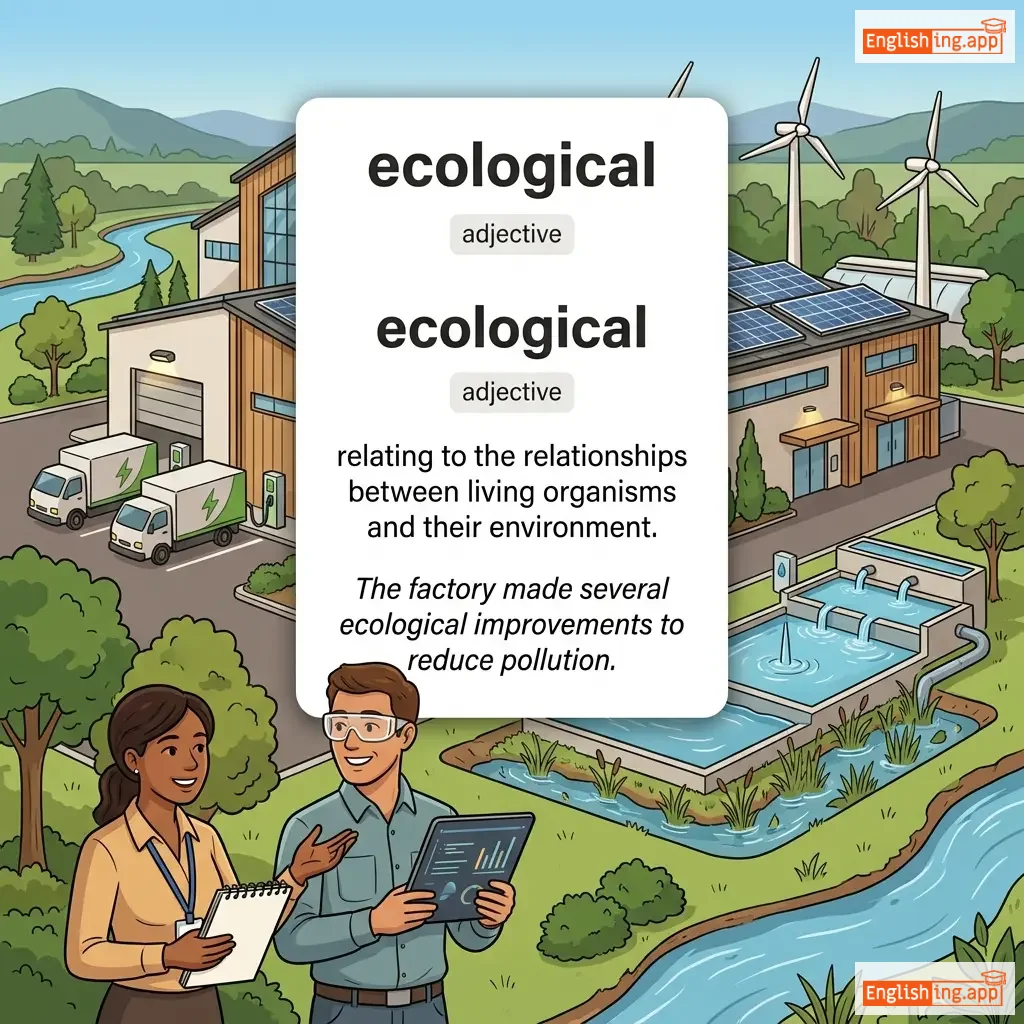
ecological definition card — visual illustration of the meaning
adjective
/ˌiːkəˈlɒdʒɪkəl/
生态的 (shengtai de)

relating to the relationships between living organisms and their environment.

"The factory made several ecological improvements to reduce pollution."
"工厂进行了多项生态改进以减少污染。" (Gongchang jinxing le duoxiang shengtai gaijin yi jianshao wuran.)
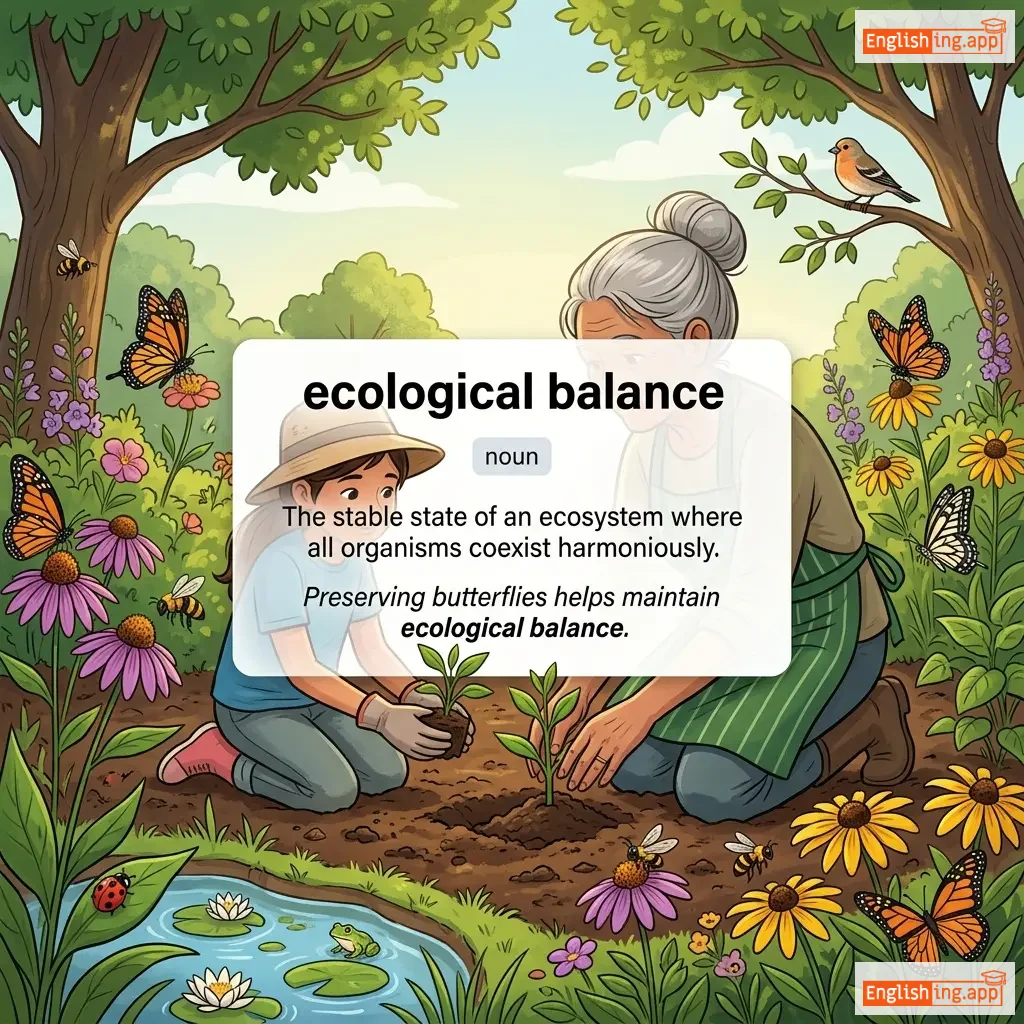
ecological balance definition card — visual illustration of the meaning
noun
ˌiːkəˈlɒdʒɪkəl ˈbæləns
生态平衡 (shengtai pingheng)

The stable state of an ecosystem where all organisms coexist harmoniously.

"Preserving butterflies helps maintain ecological balance."

"保护蝴蝶有助于维持生态平衡。" (Baohu hudie you zhu yu weichi shengtai pingheng.)
noun
/iˈkɒlədʒɪst/
生态学家 (shengtai xuejia)

A scientist who studies the relationships between living organisms and their environment.

"The ecologist studied the effects of pollution on the forest ecosystem."
"生态学家研究了污染对森林生态系统的影响。" (Shengtai xuejia yanjiule wuran dui senlin shengtai xitong de yingxiang.)
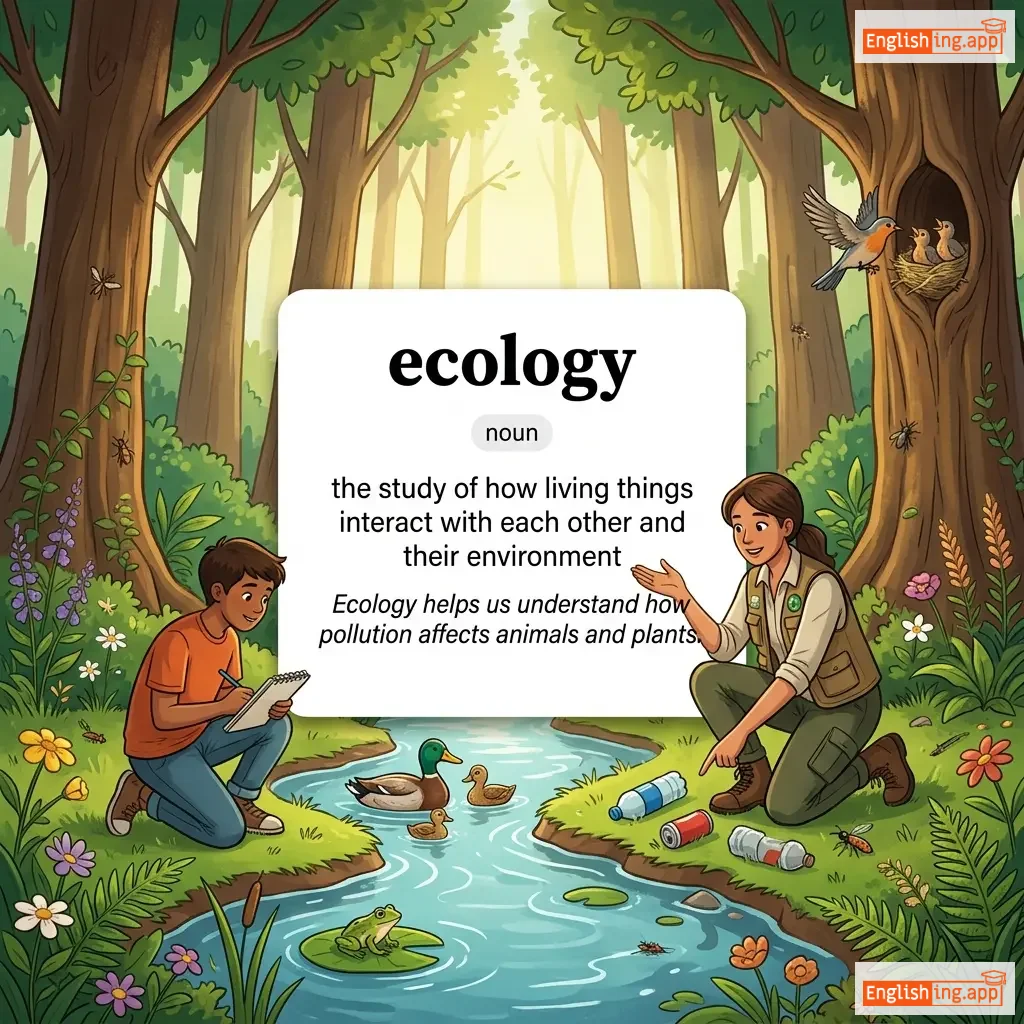
ecology definition card — visual illustration of the meaning
noun
/iˈkɒl.ə.dʒi/
生态学 (shengtai xue)

the study of how living things interact with each other and their environment

"Ecology helps us understand how pollution affects animals and plants."

"生态学帮助我们理解污染如何影响动物和植物。" (Shengtai xue bangzhu women lijie wuran ruhe yingxiang dongwu he zhiwu.)
economic definition card — visual illustration of the meaning
adjective
/ˌiːkəˈnɒmɪk/
经济的 (jingjide)

relating to the economy, trade, or money

"The country is facing an economic crisis."
"这个国家正面临经济危机。" (Zhe ge guo jia zheng mian lin jing ji wei ji.)
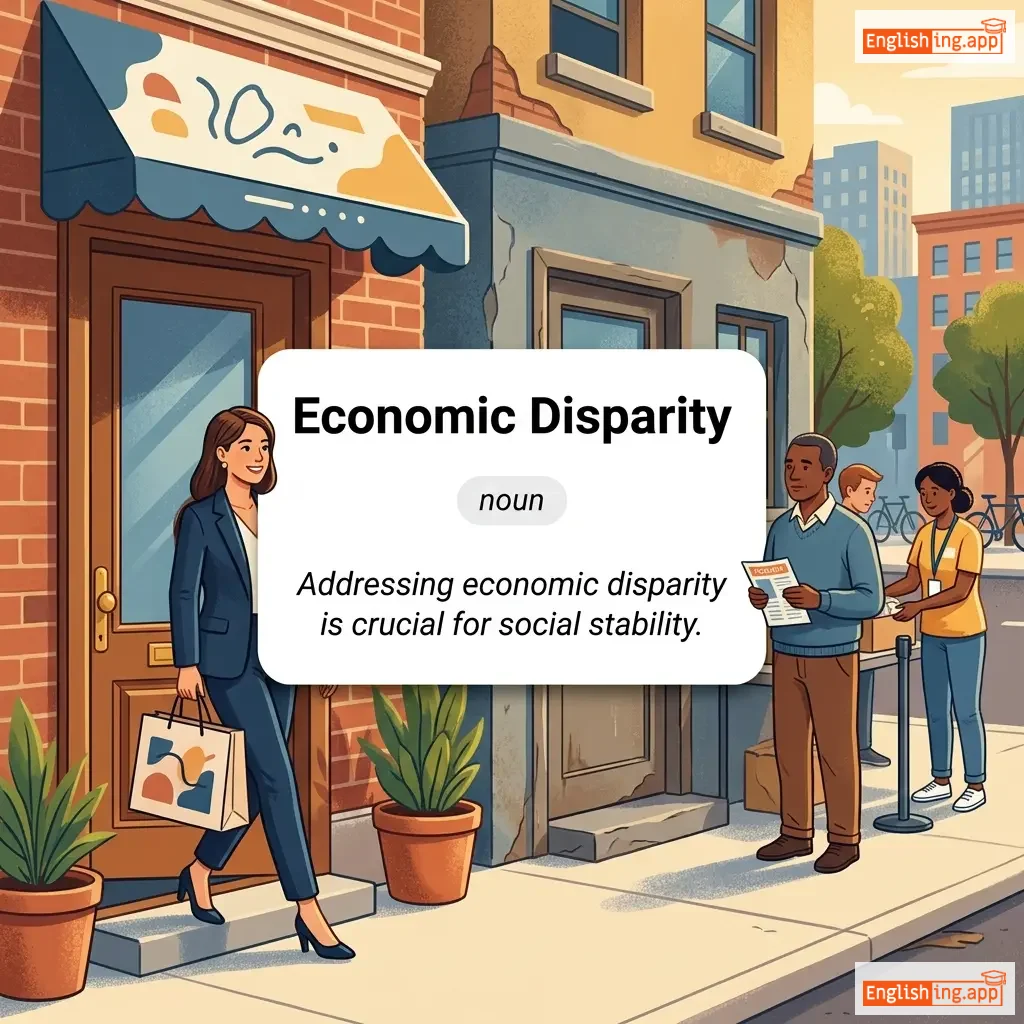
Economic Disparity definition card — visual illustration of the meaning
noun
/ˌiː.kəˈnɒm.ɪk dɪˈspær.ɪ.ti/
经济不平等 (jingji bu pingdeng)

The unequal distribution of income and opportunity between different groups in society.

"Addressing economic disparity is crucial for social stability."
"解决经济不平等问题对社会稳定至关重要。" (Jiejue jingji bupingdeng wenti dui shehui wending zhiguang zhongyao.)
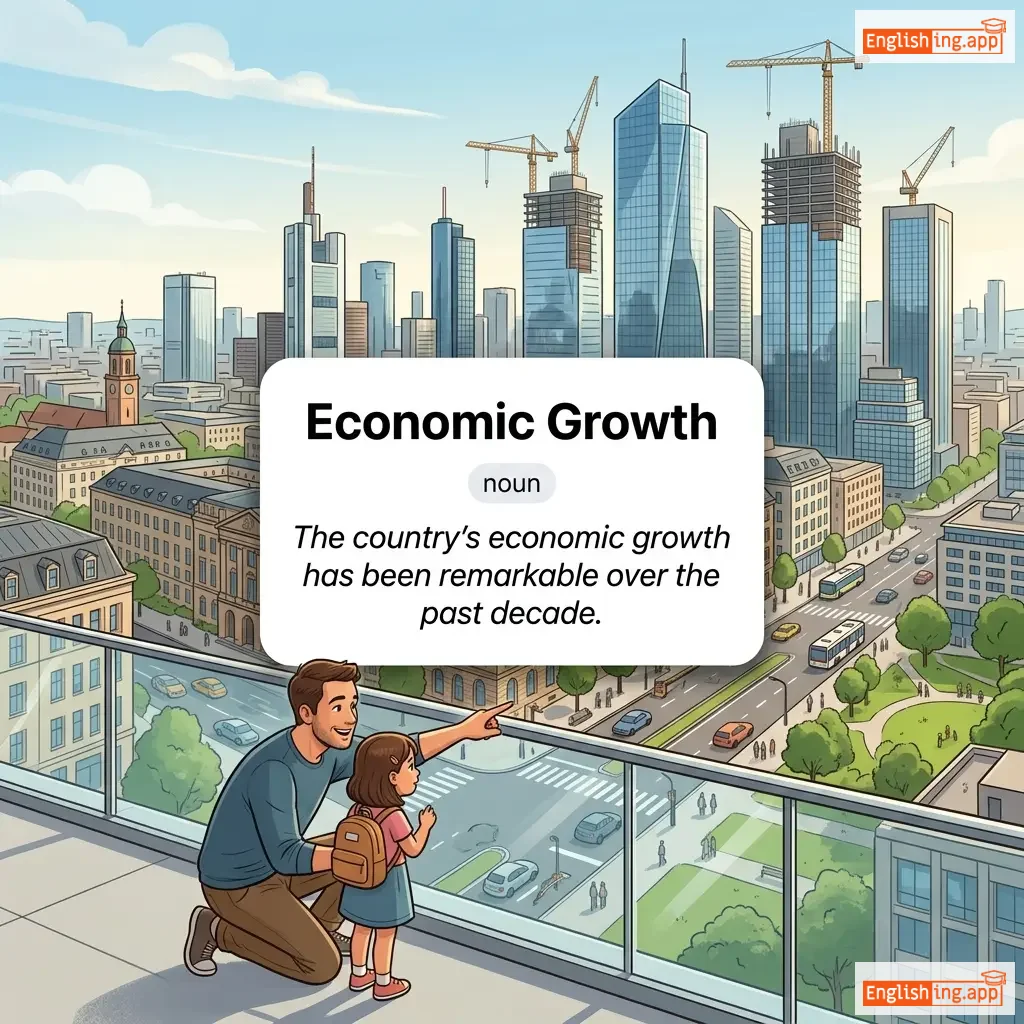
Economic Growth definition card — visual illustration of the meaning
noun
/ˌiː.kəˈnɒm.ɪk ɡrəʊθ/
经济增长 (jingji zengzhang)

The increase in the production of goods and services in an economy over time, measured by the expansion of economic output, income, and investment.

"The country's economic growth has been remarkable over the past decade."
"该国的经济增长在过去十年中表现出色。" (Gāi guó de jīngjì zēngzhǎng zài guòqù shí nián zhōng biǎoxiàn chūsè.)
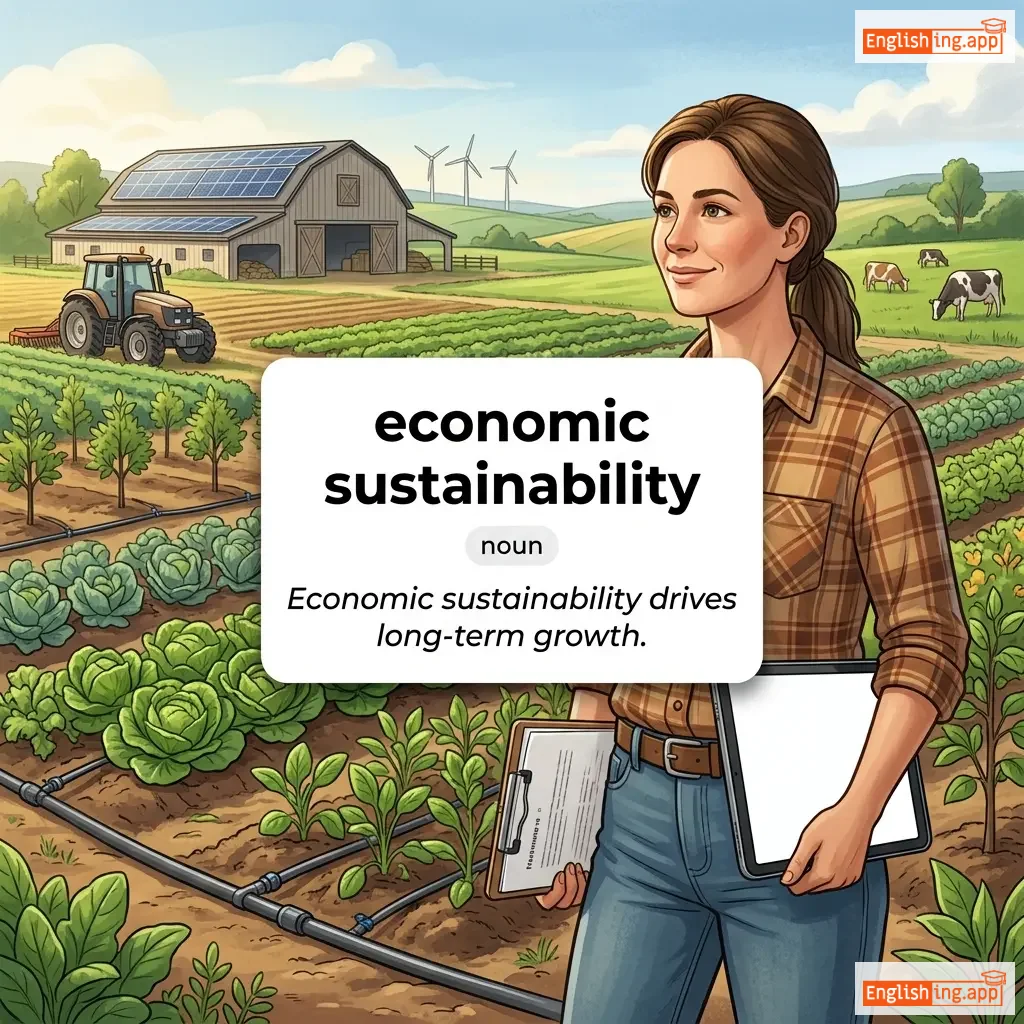
economic sustainability definition card — visual illustration of the meaning
noun
/ˌek.əˈnɒm.ɪk səˌsteɪ.nəˈbɪl.ə.ti/
经济可持续性 (economic sustainability)

The ability of an economy to support a defined level of economic production indefinitely.

"Economic sustainability drives long-term growth."
"经济可持续性推动长期增长。" (jing ji ke chi xu xing tuidong chang qi zeng zhang)
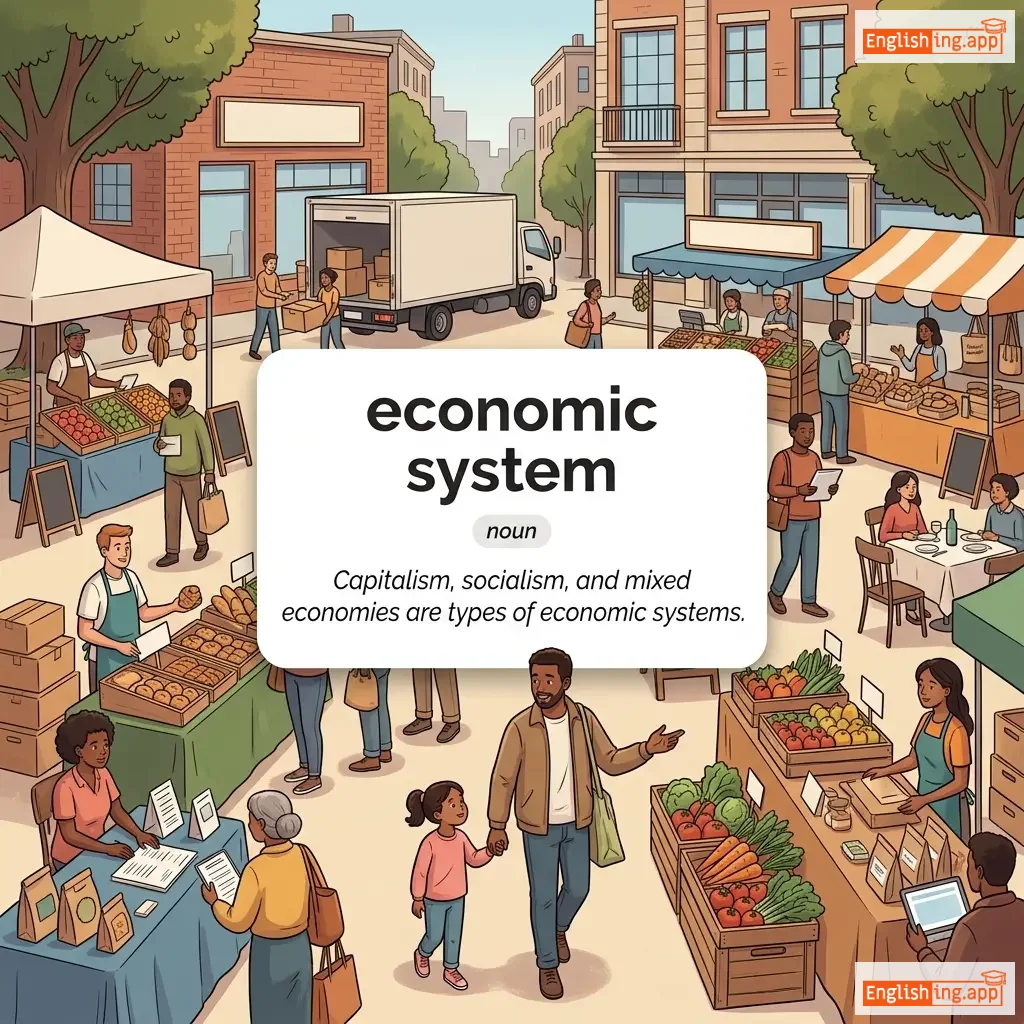
economic system definition card — visual illustration of the meaning
noun
/ˌiː.kəˈnɒm.ɪk ˈsɪs.təm/
经济系统 (jingji xitong)

The organized framework for production, distribution, and consumption of goods and services in society.

"Capitalism, socialism, and mixed economies are types of economic systems."

"资本主义、社会主义和混合经济是经济系统的类型。" (Ziben zhuyi, shehuizhuyi he hunhe jingji shi jingji xitong de leixing.)
adjective
/ˌiːkəˈnɒmɪkl/
经济的 (jingjide)

Careful in the use of resources; providing good value or efficiency.

"Driving a hybrid car is economical in the long run."

"驾驶混合动力车在长期来看是经济的。" (Jiàshǐ hùnhé dònglì chē zài chángqī lái kàn shì jīngjì de.)
adverb
/ˌiːkəˈnɒmɪkli/
经济地 (jīngjì de)

in a way that relates to economics or is efficient and not wasteful.

"The company is trying to operate more economically this year."

"公司今年努力以更经济的方式运营。" (Gōngsī jīnnián nǔlì yǐ gèng jīngjì de fāngshì yùnxíng.)
noun
/ˌiːkəˈnɒmɪks/ or /ˌɛkəˈnɒmɪks/
经济学 (jingjixue)

The study of production, consumption, and transfer of wealth.

"He is studying economics at university."
"他在大学学习经济学。" (Ta zai daxue xuexi jingjixue.)
↪️

digress

verb
/daɪˈɡrɛs/

To leave the main subject temporarily in speech or writing.

"The professor began to digress from the main topic of the lecture."

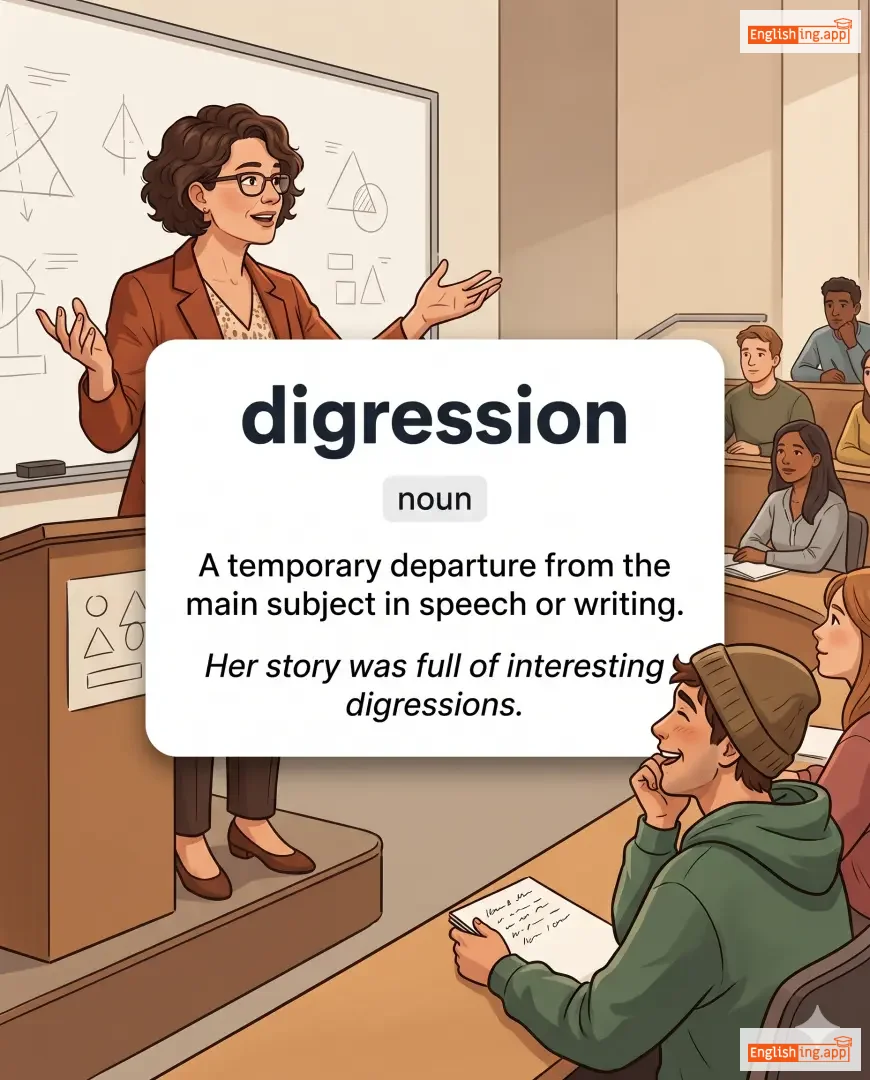
digression definition card — visual illustration of the meaning
noun
/daɪˈɡrɛʃən/
离题 (lítí)

A temporary departure from the main subject in speech or writing.

"Her story was full of interesting digressions."

"她的故事充满了有趣的离题部分。" (Tā de gùshì chōngmǎnle yǒuqù de lítí bùfen.)
adjective
/daɪˈɡrɛsɪv/
偏离主要话题的倾向 (pianli zhuyao huati de qingxiang)

Tending to depart from the main subject in speech or writing.

"The speaker's digressive style made the lecture difficult to follow."

"演讲者的偏离主题的风格使得听讲变得困难。" (Yǎnjiǎng zhě de piānlí zhǔtí de fēnggé shǐdé tīngjiǎng biàndé kùnnán.)
verb
/dɪˈlæpɪdeɪt/
衰败 (shuāibài)

To cause something, especially a building, to fall into ruin or disrepair.

"The abandoned house began to dilapidate over the years."

"那座废弃的房子在多年的时间里开始衰败。" (Nà zuò fèiqì de fángzi zài duōnián de shíjiān lǐ kāishǐ shuāibài.)
adjective
/dɪˈlæpɪˌdeɪtɪd/
破旧的 (po jiu de)

Fallen into disrepair or ruin due to neglect or age.

"The family lived in a dilapidated house at the edge of town."

"这个家庭住在城市边缘的一座破旧的房子里。" (Zhège jiātíng zhù zài chéngshì biānyuán de yīzuò pòjiù de fángzi lǐ.)
noun
/dɪˌlæpɪˈdeɪʃən/
破败 (pobai)

The state of disrepair or ruin as a result of neglect.

"The old temple was in a state of dilapidation."

"这座古老的寺庙处于破败状态。" (Zhe zuo gulao de simiao chu yu pobai zhuangtai.)
verb
/daɪˈleɪt/
扩展 (kuòzhǎn)

To make wider, larger, or more open.

"The doctor used drops to dilate the patient's pupils."

"医生用药水来扩张病人的瞳孔。" (Yīshēng yòng yàoshuǐ lái kuòzhǎn bìngrén de tóngkǒng.)
adjective
/ˈdɪlətɔːri/
拖延的 (tuōyán de)

Tending to cause delay; slow to act.

"The committee was criticized for its dilatory response to the crisis."

"该委员会因其在危机中的拖延反应而受到批评。" (Gāi wěiyuánhuì yīn qí zài wēijī zhōng de tuōyán fǎnyìng ér shòudào pīpíng.)
dilemma definition card — visual illustration of the meaning
noun
/daɪˈlɛmə/
困境 (kunjing)

A situation in which a difficult choice has to be made between two or more alternatives.

"She faced a dilemma about whether to accept the job offer or continue her studies."

"她面临是否接受工作邀请还是继续学习的困境。" (Ta mianlin shifou jieshou gongzuo yaoqing haishi jixu xuexi de kunjing.)
noun
/ˌdɪləˈtænt/
外行 (wai hang)

A person who takes up an art, activity, or subject merely for amusement, especially in a superficial way.

"He was dismissed as a dilettante in the art world because he lacked formal training."
"他在艺术界被视为外行,因为他缺乏正式的训练。" (Tā zài yìshù jiè bèi shì wéi wài háng, yīnwèi tā quēfá zhèngshì de xùnliàn.)
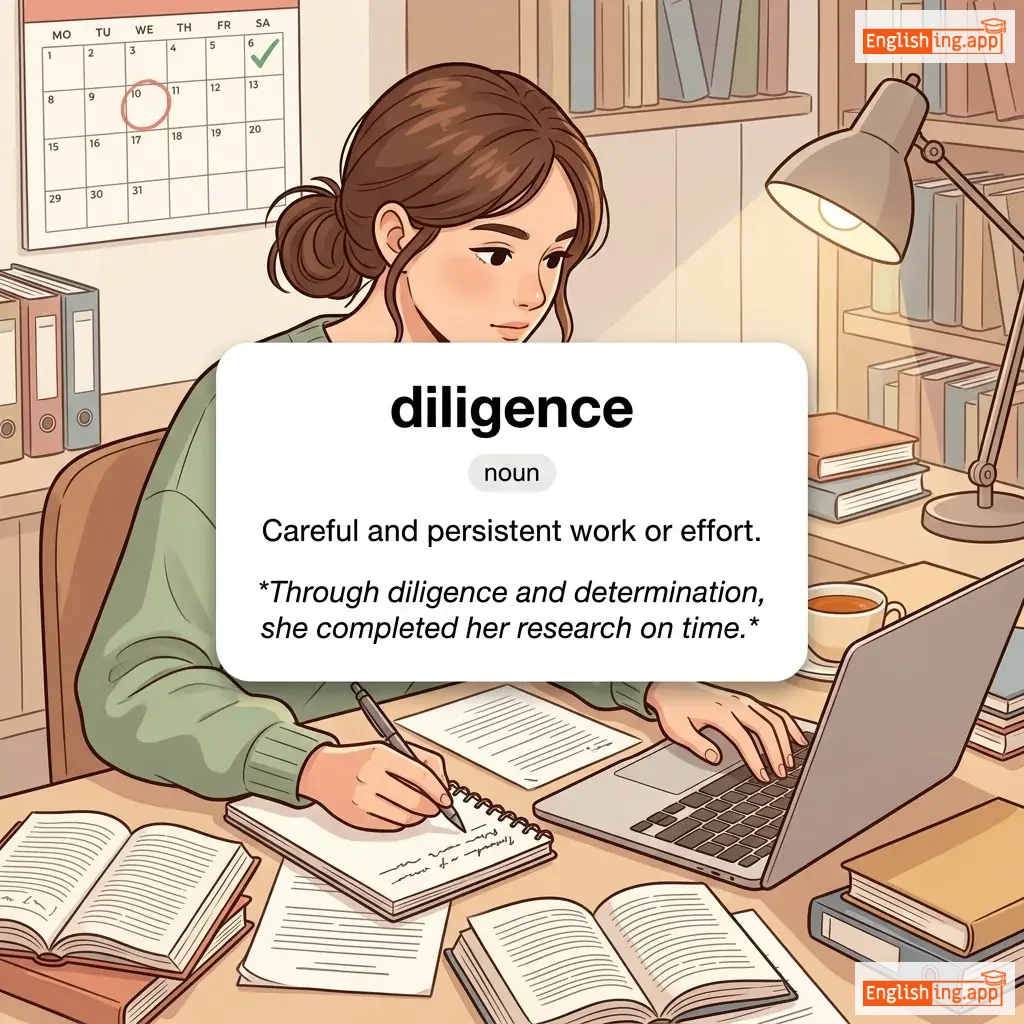
diligence definition card — visual illustration of the meaning
noun
/ˈdɪlɪdʒəns/
勤奋 (qinfen)

Careful and persistent work or effort.

"Through diligence and determination, she completed her research on time."

"通过勤奋和决心,她按时完成了她的研究。" (Tōngguò qínfèn hé juéxīn, tā ànshí wánchéngle tā de yánjiū.)
adjective
/ˈdɪlɪdʒənt/
勤奋 (qinfen)

Showing care and conscientiousness in one's work or duties.

"She is a diligent student who always finishes her assignments on time."

"她是一个勤奋的学生,总是按时完成作业。" (Ta shi yige qinfen de xuesheng, zongshi anshi wancheng zuoye.)
verb
/daɪˈluːt/
稀释 (xī shì)

To make a liquid thinner or weaker by adding water or another solvent.

"You should dilute the juice with water before serving it to children."

"你应该在给孩子们提供之前把果汁稀释一下。" (Nǐ yīnggāi zài gěi háizimen tígōng zhīqián bǎ guǒzhī xīshì yīxià.)
adjective
/dɪm/
昏暗 (hun'an)

not bright; having little light; not clearly visible

"The room was dim because the curtains were closed."

"房间昏暗,因为窗帘被关上了。" (Fangjian hun'an, yinwei chuanglian bei guan shang le.)
noun
/daɪm/
十分硬币 (shi fen ying bi)

a small coin, especially a U.S. coin worth ten cents

"He gave me a dime for the phone call."
"他给了我一枚十分硬币用于打电话。" (Ta gei le wo yi mei shi fen ying bi yong yu da dian hua.)
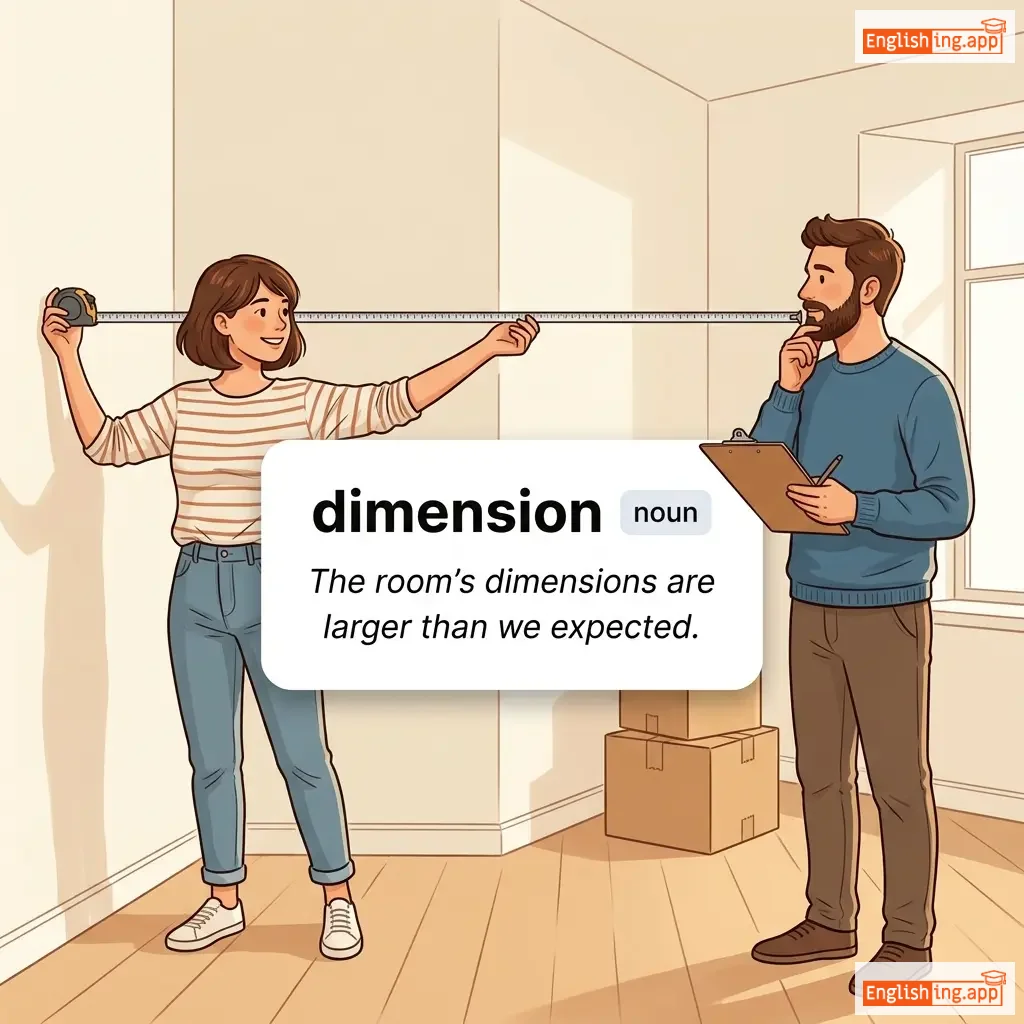
dimension definition card — visual illustration of the meaning
noun
/dɪˈmɛnʃən/
维度 (weidu)

A measurable extent of a particular kind, such as length, breadth, depth, or height.

"The room’s dimensions are larger than we expected."
"房间的尺寸比我们预期的要大。" (Fángjiān de chǐcùn bǐ wǒmen yùqī de yào dà.)
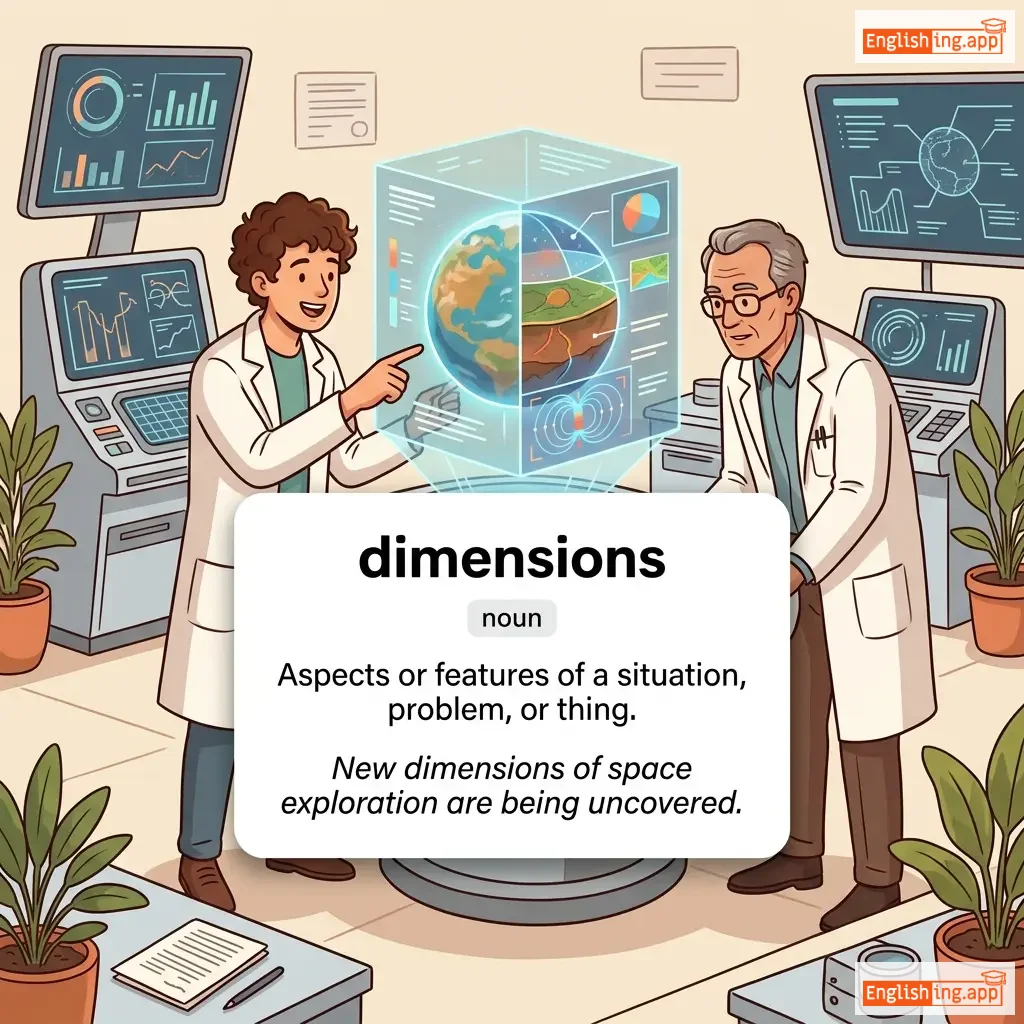
dimensions definition card — visual illustration of the meaning
noun
/daɪˈmen.ʃənz/
维度 (weidu)

Aspects or features of a situation, problem, or thing.

"New dimensions of space exploration are being uncovered."
"太空探索的新维度正在被揭示。" (Tàikōng tànsuǒ de xīn wéidù zhèngzài bèi jiēshì.)
⬇️

diminish

verb
/dɪˈmɪnɪʃ/

to make or become less; to reduce in size, importance, or value

"Over time, his influence in the company began to diminish."

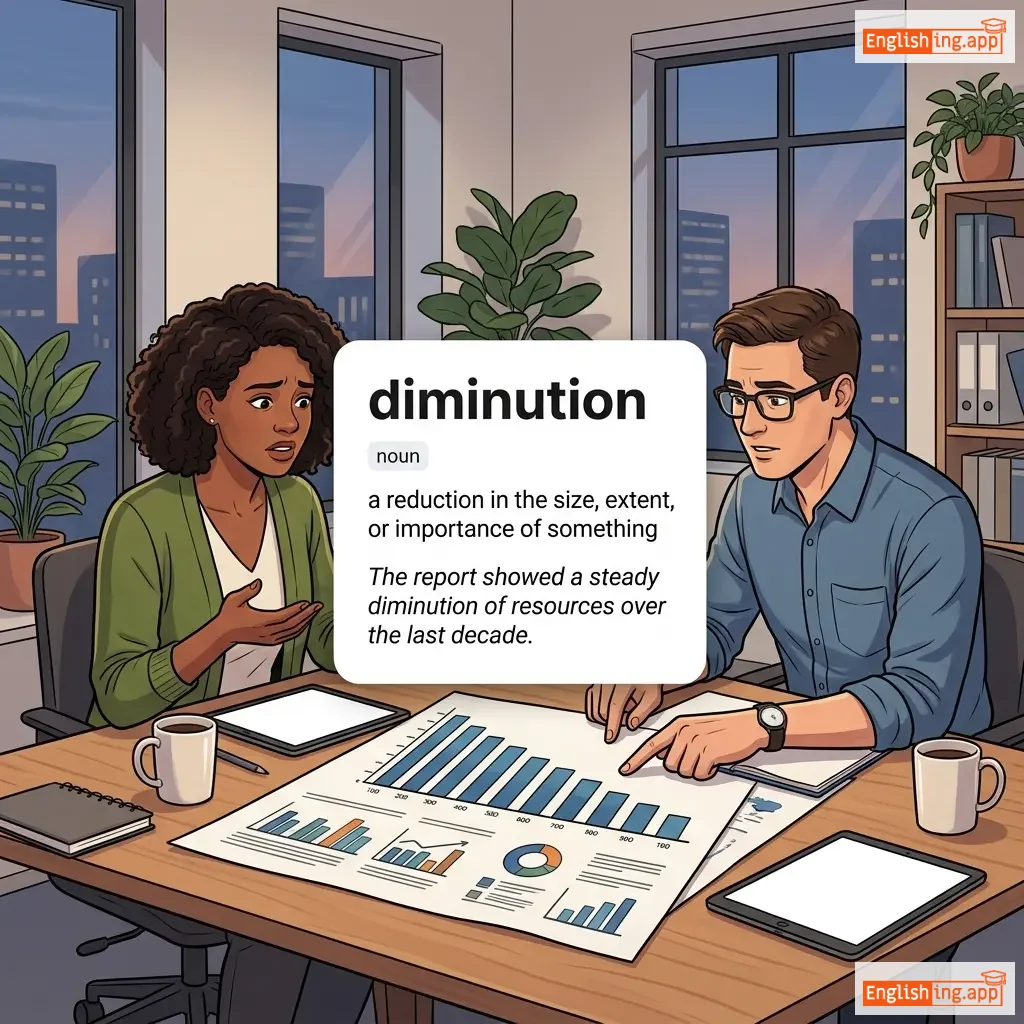
diminution definition card — visual illustration of the meaning
noun
/ˌdɪmɪˈnjuːʃən/

a reduction in the size, extent, or importance of something

"The report showed a steady diminution of resources over the last decade."

adjective
/dɪˈmɪnjətɪv/
极小的 (jixiao de)

extremely or unusually small

"Despite his diminutive size, he was a powerful leader."

"尽管他的体型极小,他仍然是一个强大的领导者。" (Jǐnguǎn tā de tǐxíng jí xiǎo, tā réngrán shì yīgè qiángdà de lǐngdǎo zhě.)
adverb
/ˈdɪmli/
昏暗 (hun'an)

in a faint or unclear way; with little light

"The room was dimly lit by a single candle."

"房间被一根蜡烛微弱地照亮。" (Fángjiān bèi yī gēn làzhú wēiruò de zhàoliàng.)
noun
/ˈdɪm.pəl/
酒窝 (jiǔwō)

a small depression in the flesh, either one that exists permanently or one that forms when smiling

"Her charming dimples appeared whenever she smiled at the children."

"她迷人的酒窝每次对孩子们微笑时都会出现。" (tā mírén de jiǔwō měi cì duì háizimen wēixiào shí dōu huì chūxiàn.)
noun
/dɪn/
噪音 (zaoyin)

a loud, unpleasant, and prolonged noise

"The din of traffic outside made it hard to concentrate."

"外面交通的噪音让集中注意力变得困难。" (waimian jiaotong de zaoyin rang jiuzhong zhuyilv biande kunnan.)
verb
/daɪn/
用餐 (yongcan)

to eat a meal, especially the main meal of the day

"We usually dine at seven o'clock in the evening."

"我们通常在晚上七点用餐。" (Wo men tong chang zai wan shang qi dian yong can.)
noun
/ˈdɪŋɡi/
小艇 (xiǎo tǐng)

a small boat, often carried or towed by a larger vessel, used for short trips or as a lifeboat

"They rowed the dinghy back to the yacht."

"他们划着小艇回到游艇。" (Tāmen huázhe xiǎo tǐng huí dào yóutǐng.)
adjective
/ˈdɪndʒi/
肮脏 (angzang)

gloomy and drab; dirty or discolored

"The old hotel room looked dark and dingy."

"那间旧酒店房间看起来又暗又脏。" (Na jian jiu jiudian fangjian kan qilai you an you zang.)
noun
/ˈdaɪnɪŋ/
用餐 (yòng cān)

the act of eating a meal, especially in a formal setting

"We enjoyed fine dining at the new restaurant."

"我们在新餐厅享受了美味的用餐。" (Wǒmen zài xīn cāntīng xiǎngshòu le měiwèi de yòngcān.)
Dinner definition card — visual illustration of the meaning
noun
/ˈdɪnər/
晚餐 (wǎncān)

the main meal of the day, usually eaten in the evening

"We had a lovely dinner at a new restaurant last night."

"我们昨晚在一家新餐厅吃了一顿美妙的晚餐。" (Wo men zuó wǎn zài yī jiā xīn cān tīng chī le yī dùn měi miào de wǎn cān.)
noun
/dɪnt/
努力,撞击痕迹 (nǔlì, zhuàngjī hénjì)

an impression or hollow made by a blow; force or power

"By dint of hard work, he achieved success."

"通过努力工作,他取得了成功。" (Tōngguò nǔlì gōngzuò, tā qǔdéle chénggōng.)
adjective
/daɪˈɒsɪsən/
与教区相关 (yu jiaoqu xiangguan)

relating to a diocese or the district under the supervision of a bishop in the Christian Church

"The diocesan council met to discuss church affairs."

"教区委员会聚集在一起讨论教会事务。" (Jiaoqu weiyuanhui juji zai yiqi taolun jiaohui shiwuwu.)
noun
/ˌdaɪəˈrɑːmə/
立体模型 (lìtǐ móxíng)

a three-dimensional model representing a scene, often with miniature figures

"The museum displayed a diorama of an ancient village."

"博物馆展示了一个古代村庄的立体模型。" (Bówùguǎn zhǎnshìle yī gè gǔdài cūnzhuāng de lìtǐ móxíng.)
verb
/dɪp/
浸泡 (jìnpào)

to put something quickly into a liquid and take it out again

"She dipped her bread into the soup."

"她把面包浸入汤中。" (Tā bǎ miànbāo jìn rù tāng zhōng.)
noun
/ˈdɪfθɒŋ/
双元音 (shuang yuán yīn)

A complex vowel sound that begins with one vowel and glides into another within the same syllable.

"The word 'coin' contains a diphthong."
"单词 'coin' 包含一个双元音。" (Danci 'coin' baohan yi ge shuang yuanyin.)
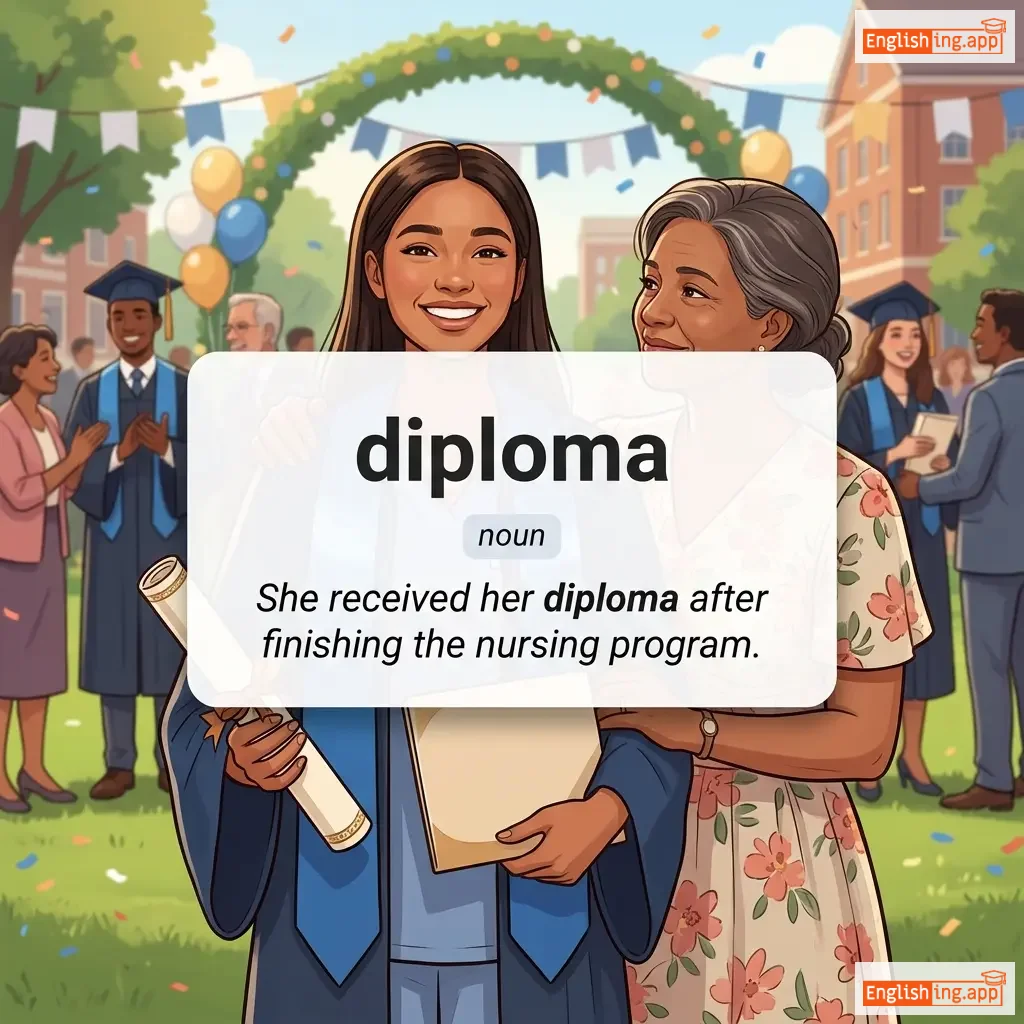
diploma definition card — visual illustration of the meaning
noun
/dɪˈpləʊ.mə/
文凭 (wénpíng)

an official document showing that a person has completed a course of study or training

"She received her diploma after finishing the nursing program."

"她在完成护理课程后获得了文凭。" (Tā zài wánchéng hùlǐ kèchéng hòu huòdéle wénpíng.)
noun
/dɪˈpləʊməsi/

The profession, activity, or skill of managing international relations or handling affairs tactfully.

"Effective diplomacy helped avoid the conflict."

noun
/ˈdɪpləmæt/
外交官 (waijiaoguan)

An official representing a country abroad; a person skilled in dealing with people tactfully.

"The diplomat negotiated a peace agreement."

"外交官谈判了一个和平协议。" (Waijiaoguan tanpan le yi ge heping xieyi.)
adjective
/ˌdɪpləˈmætɪk/
外交的 (wai jiao de)

Concerning diplomacy; having or showing skill in dealing with people in a sensitive and effective way.

"She gave a diplomatic response to avoid offending anyone."
"她给出了外交的回应,以避免冒犯任何人。" (ta gei chule waijiao de huifu, yi bian mianduofu renhe ren.)
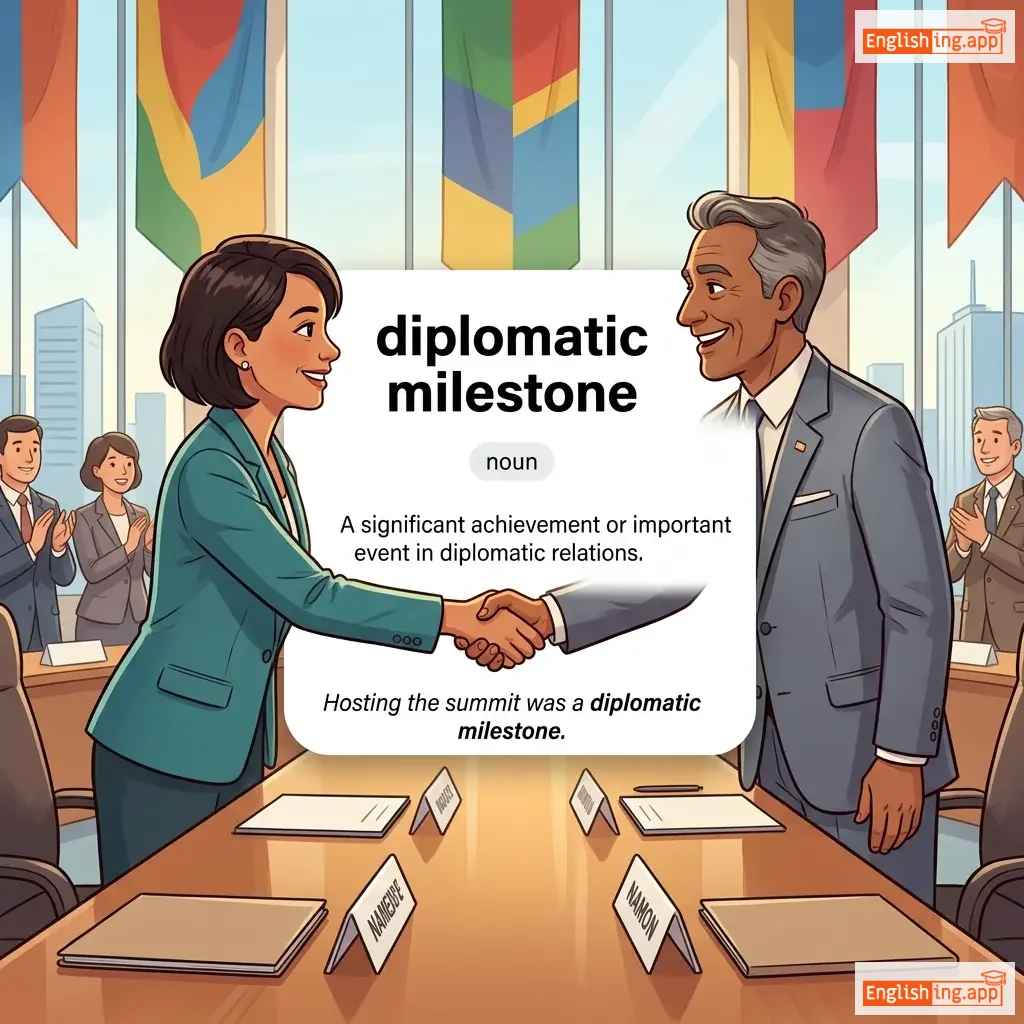
diplomatic milestone definition card — visual illustration of the meaning
noun
/ˌdɪp.ləˈmæt.ɪk ˈmaɪl.stəʊn/
外交里程碑 (waijiao lichengbei)

A significant achievement or important event in diplomatic relations.

"Hosting the summit was a diplomatic milestone."

"举办峰会是一个外交里程碑。" (Jubanfenghui shi yige waijiao lichengbei.)