英単語辞書 | 単語の意味、定義、例文
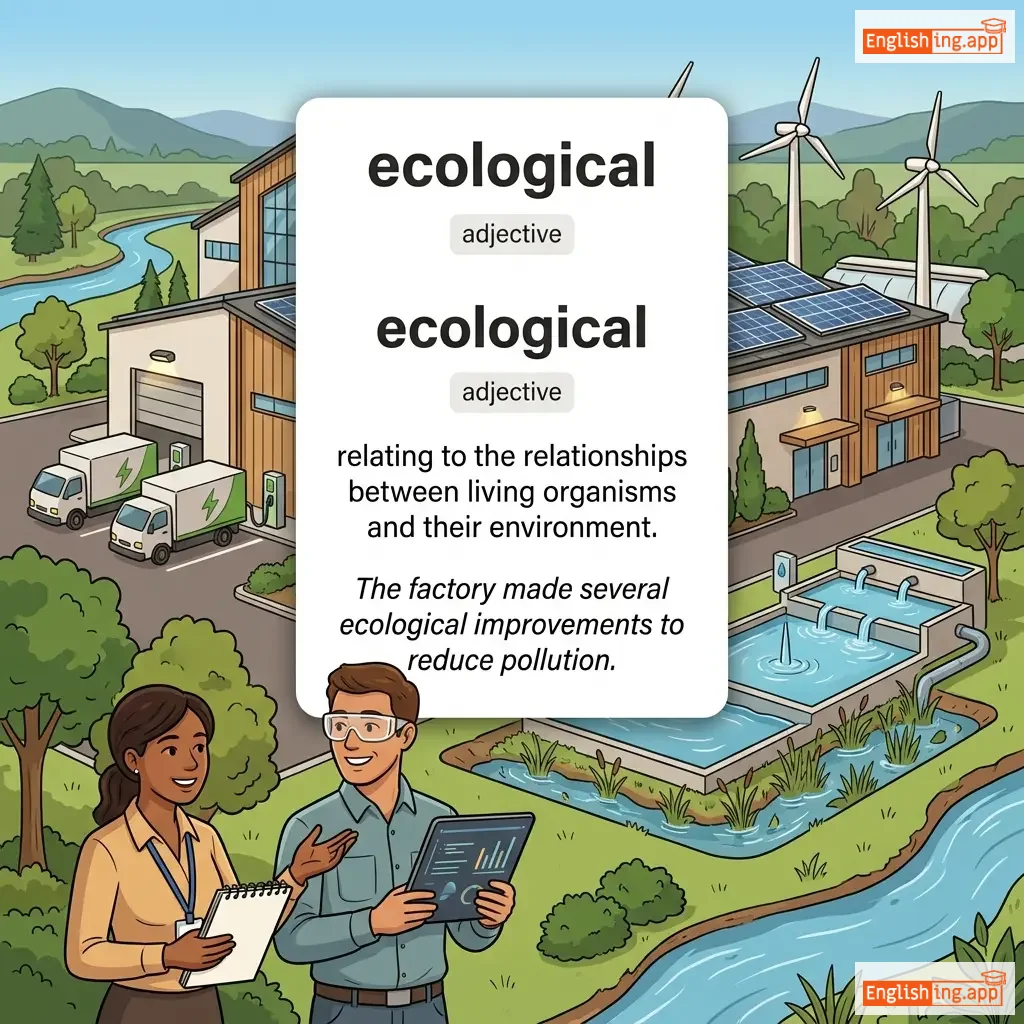
relating to the relationships between living organisms and their environment.
"The factory made several ecological improvements to reduce pollution."
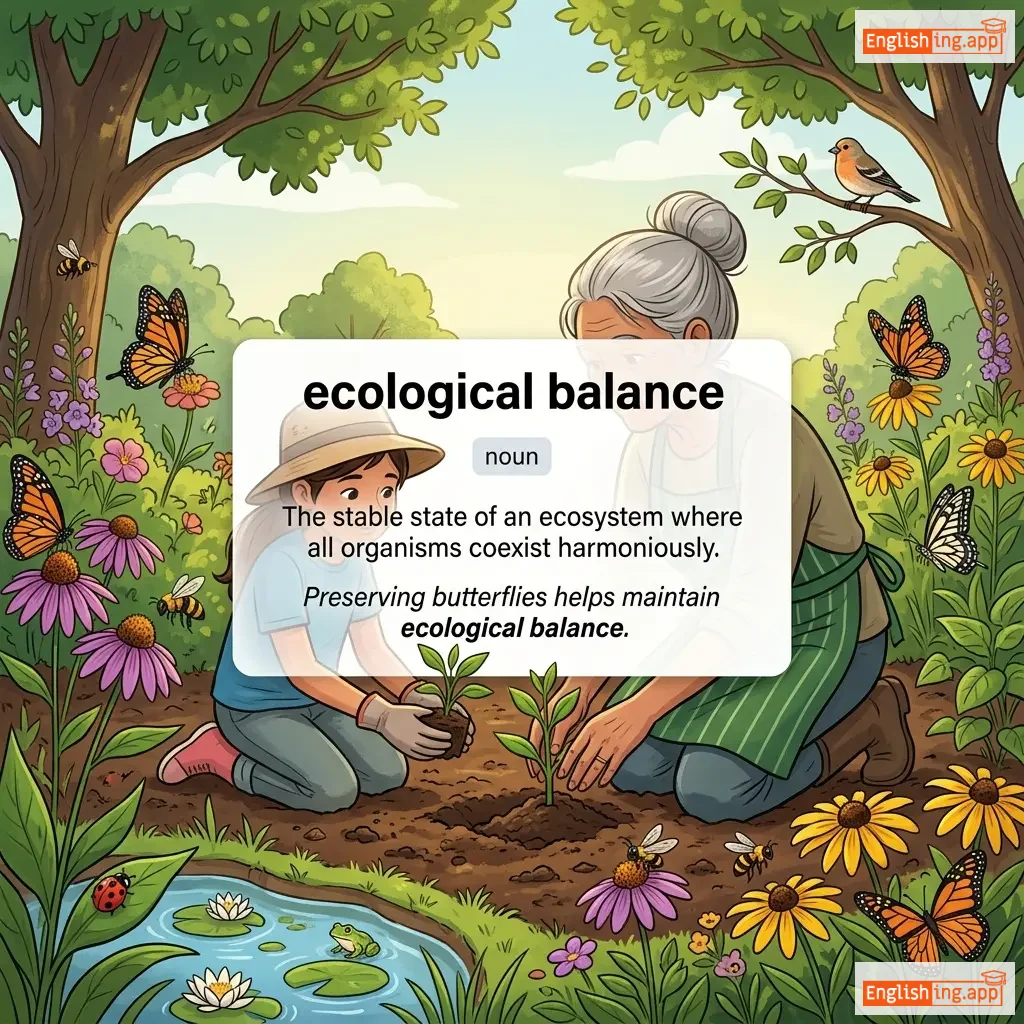
The stable state of an ecosystem where all organisms coexist harmoniously.
"Preserving butterflies helps maintain ecological balance."
A scientist who studies the relationships between living organisms and their environment.
"The ecologist studied the effects of pollution on the forest ecosystem."
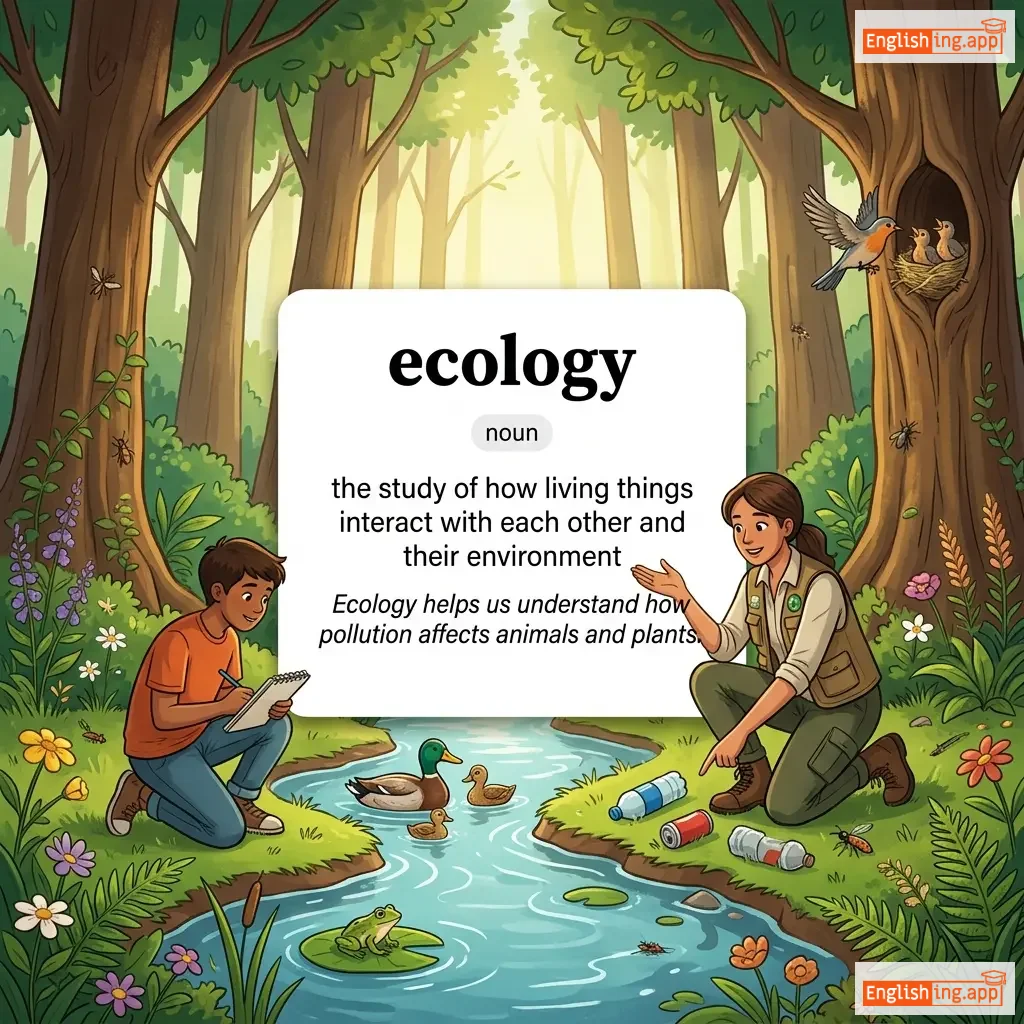
the study of how living things interact with each other and their environment
"Ecology helps us understand how pollution affects animals and plants."

relating to the economy, trade, or money
"The country is facing an economic crisis."
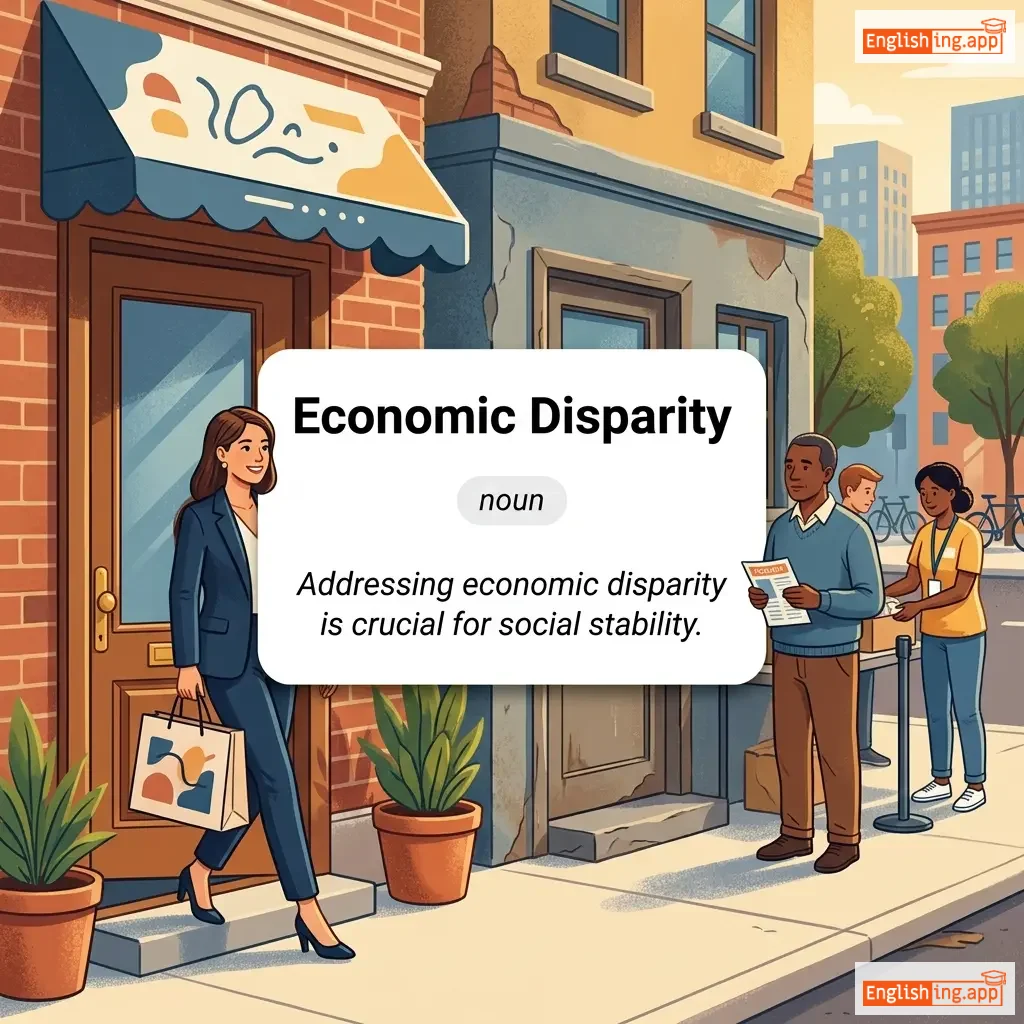
The unequal distribution of income and opportunity between different groups in society.
"Addressing economic disparity is crucial for social stability."
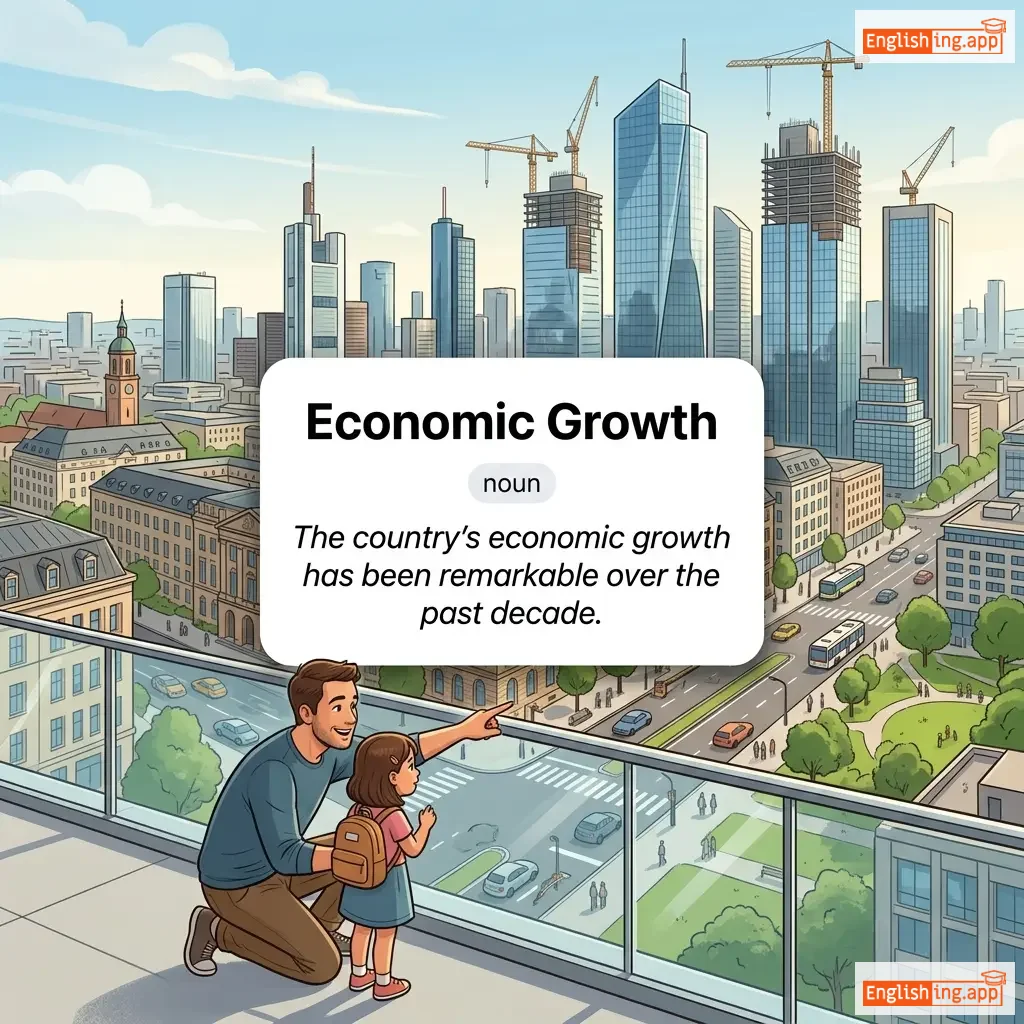
The increase in the production of goods and services in an economy over time, measured by the expansion of economic output, income, and investment.
"The country's economic growth has been remarkable over the past decade."
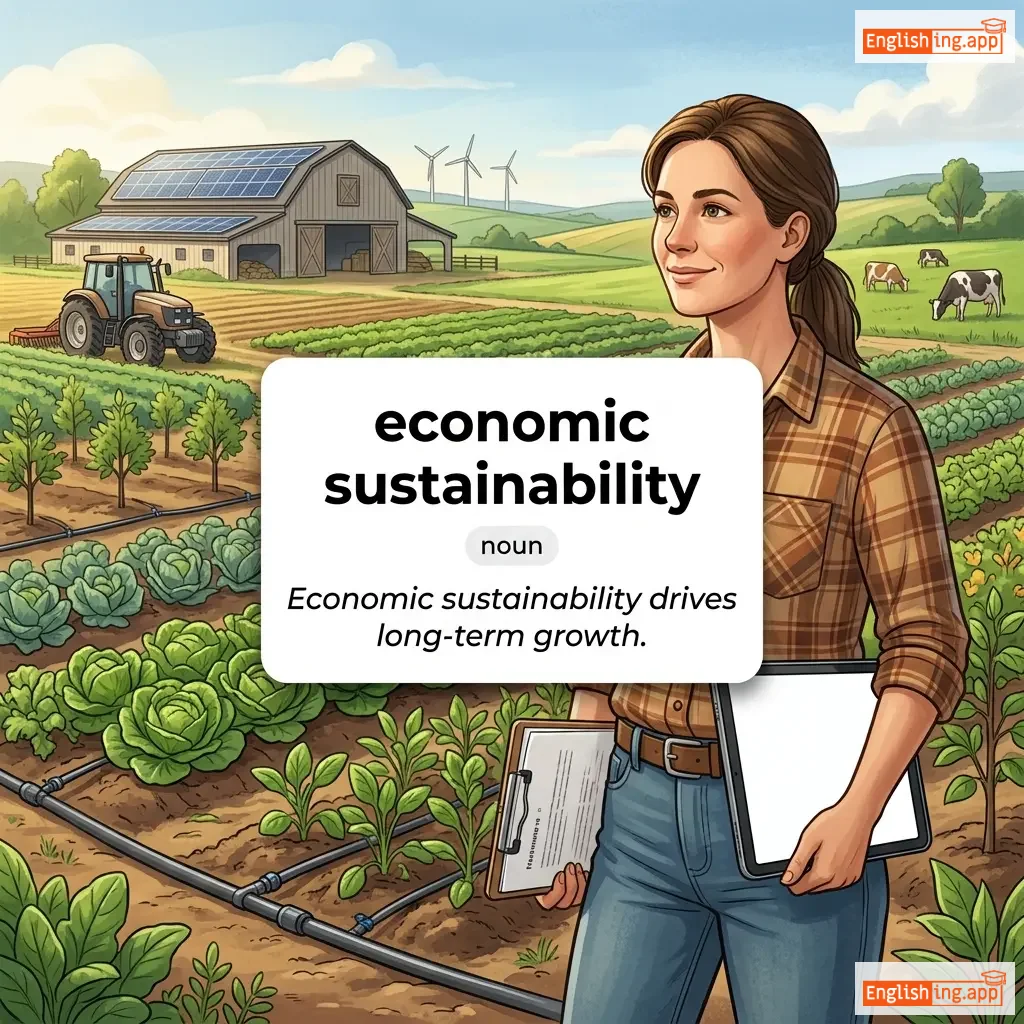
The ability of an economy to support a defined level of economic production indefinitely.
"Economic sustainability drives long-term growth."
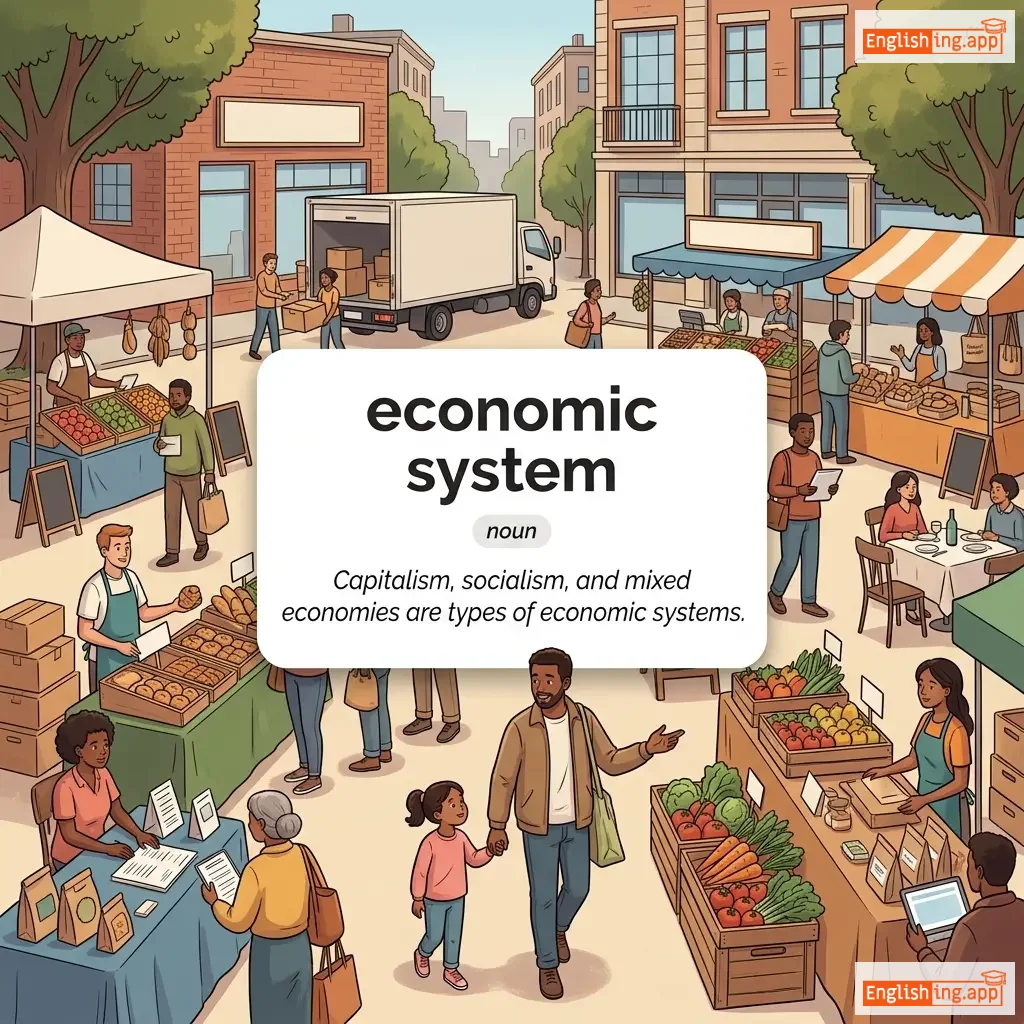
The organized framework for production, distribution, and consumption of goods and services in society.
"Capitalism, socialism, and mixed economies are types of economic systems."
Careful in the use of resources; providing good value or efficiency.
"Driving a hybrid car is economical in the long run."
in a way that relates to economics or is efficient and not wasteful.
"The company is trying to operate more economically this year."
The study of production, consumption, and transfer of wealth.
"He is studying economics at university."
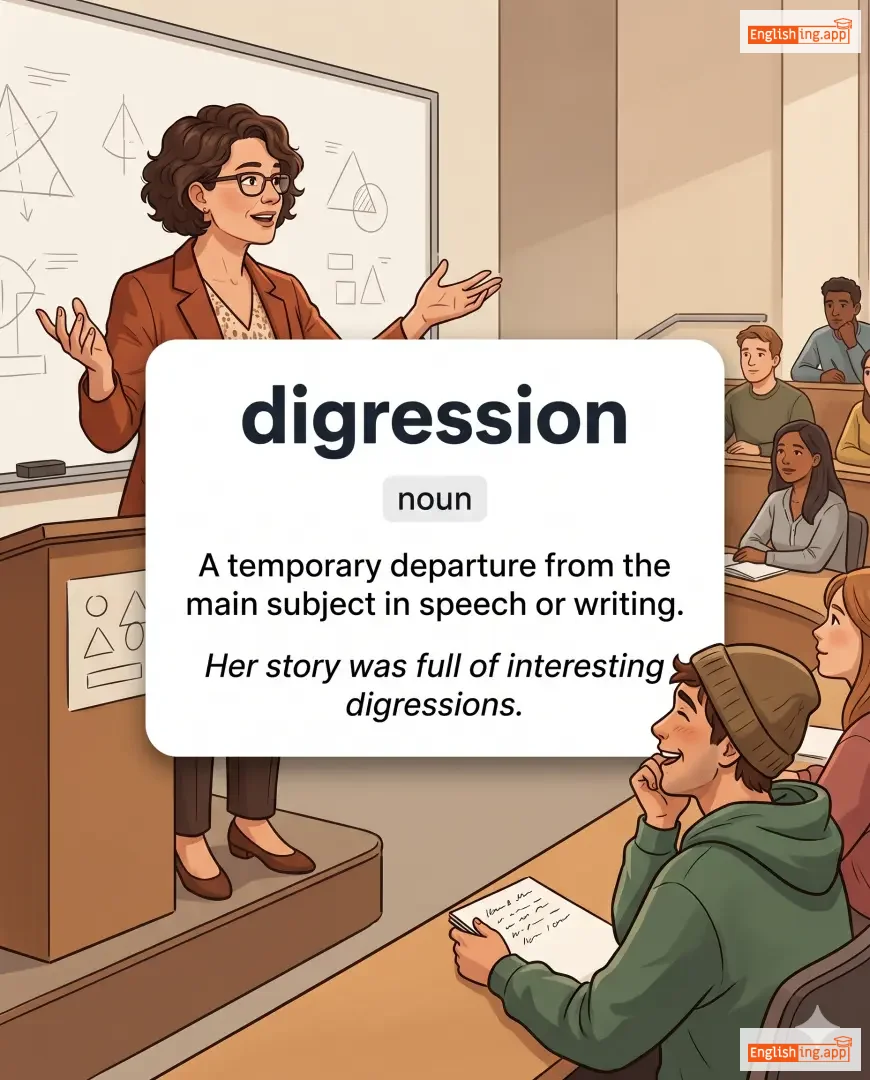
A temporary departure from the main subject in speech or writing.
"Her story was full of interesting digressions."
Tending to depart from the main subject in speech or writing.
"The speaker's digressive style made the lecture difficult to follow."
To cause something, especially a building, to fall into ruin or disrepair.
"The abandoned house began to dilapidate over the years."
Fallen into disrepair or ruin due to neglect or age.
"The family lived in a dilapidated house at the edge of town."
The state of disrepair or ruin as a result of neglect.
"The old temple was in a state of dilapidation."
To make wider, larger, or more open.
"The doctor used drops to dilate the patient's pupils."
Tending to cause delay; slow to act.
"The committee was criticized for its dilatory response to the crisis."

A situation in which a difficult choice has to be made between two or more alternatives.
"She faced a dilemma about whether to accept the job offer or continue her studies."
A person who takes up an art, activity, or subject merely for amusement, especially in a superficial way.
"He was dismissed as a dilettante in the art world because he lacked formal training."
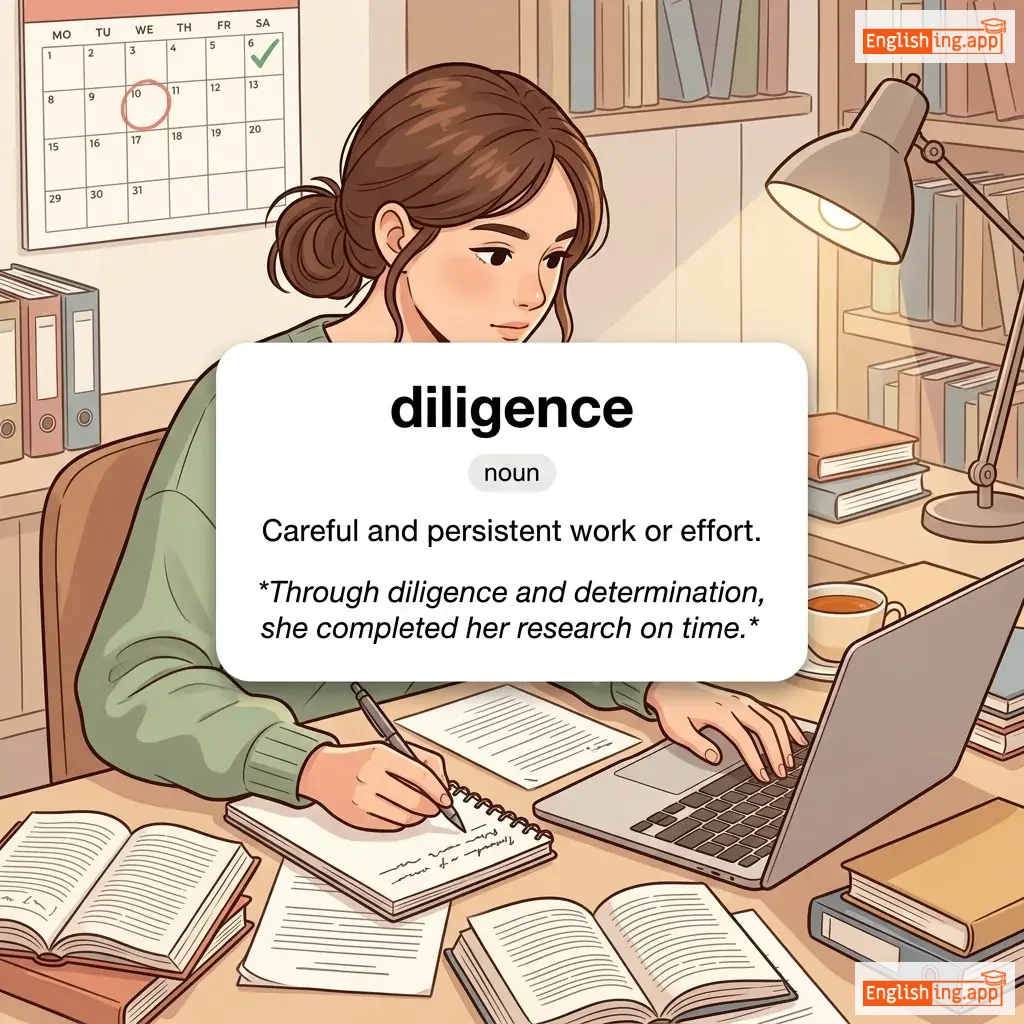
Careful and persistent work or effort.
"Through diligence and determination, she completed her research on time."
Showing care and conscientiousness in one's work or duties.
"She is a diligent student who always finishes her assignments on time."
To make a liquid thinner or weaker by adding water or another solvent.
"You should dilute the juice with water before serving it to children."
a small coin, especially a U.S. coin worth ten cents
"He gave me a dime for the phone call."
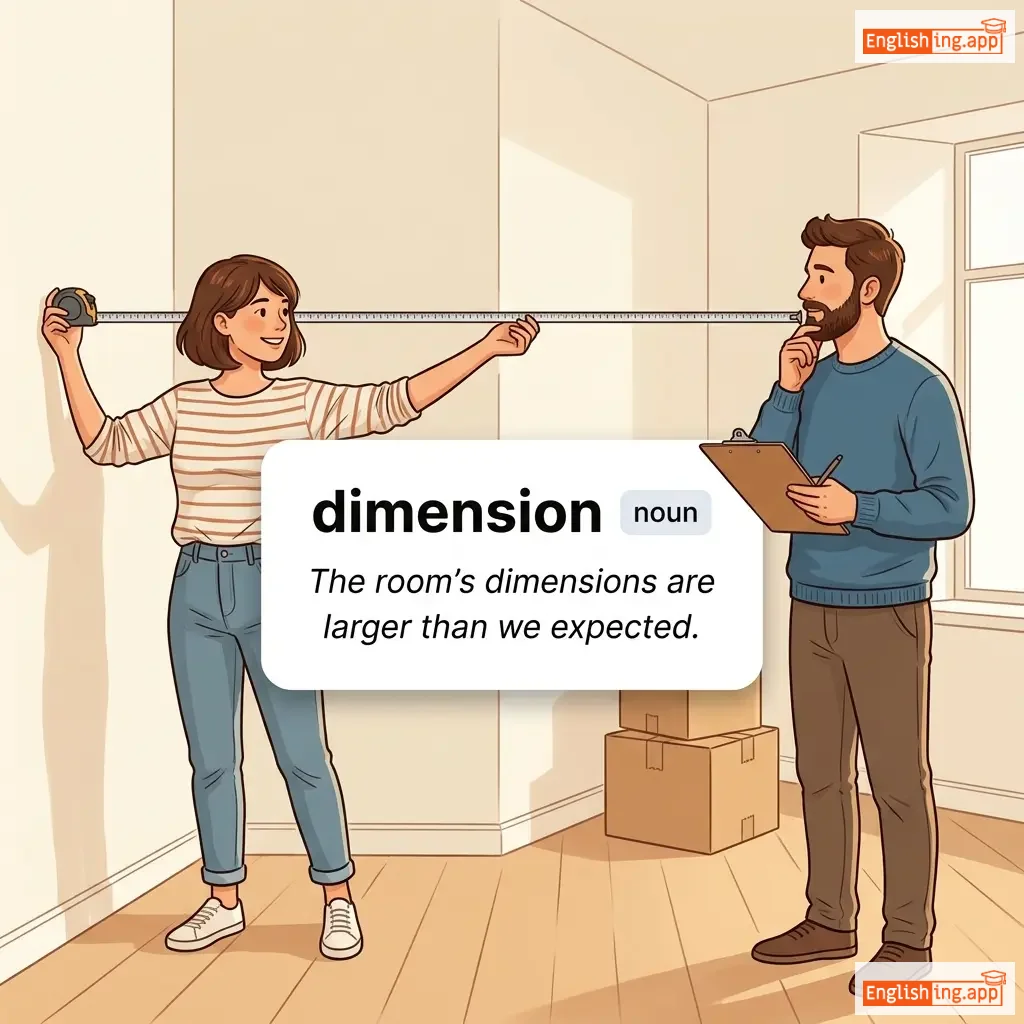
A measurable extent of a particular kind, such as length, breadth, depth, or height.
"The room’s dimensions are larger than we expected."
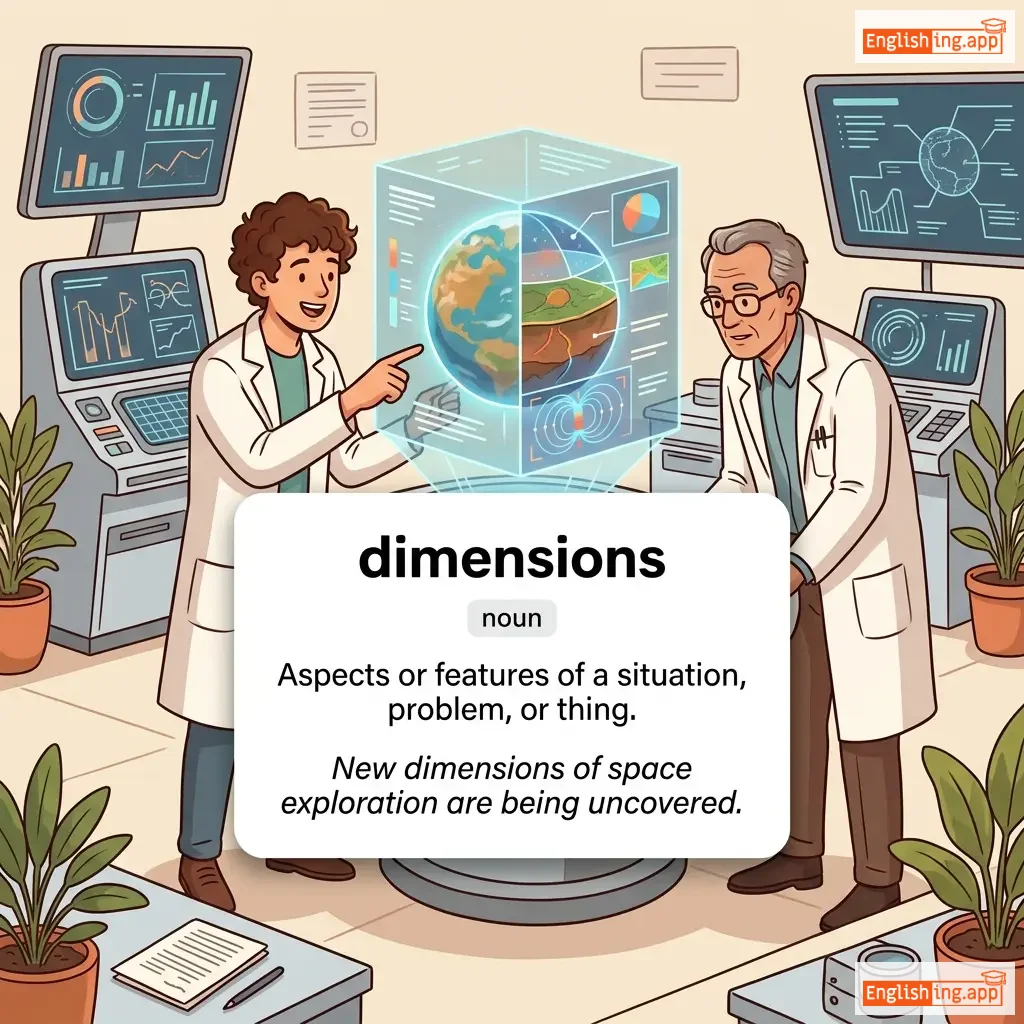
Aspects or features of a situation, problem, or thing.
"New dimensions of space exploration are being uncovered."
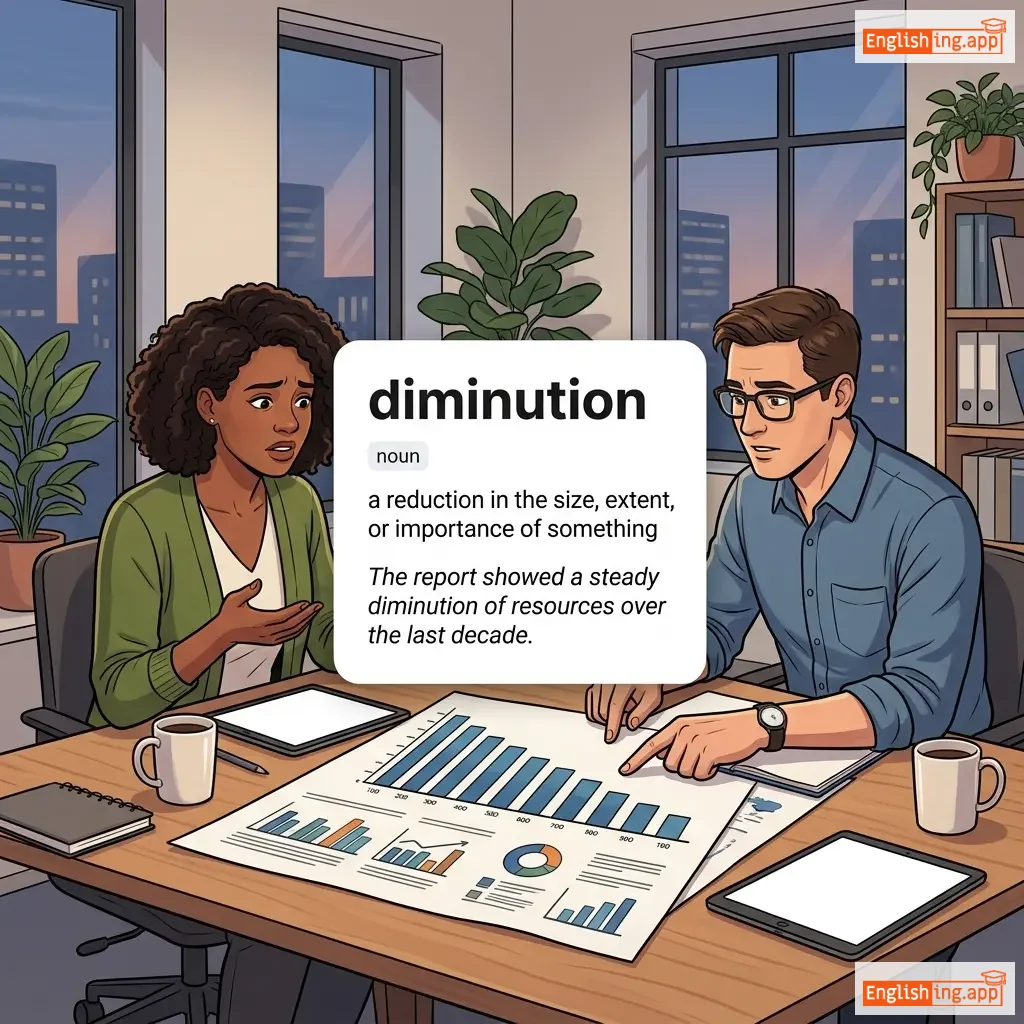
a reduction in the size, extent, or importance of something
"The report showed a steady diminution of resources over the last decade."
extremely or unusually small
"Despite his diminutive size, he was a powerful leader."
in a faint or unclear way; with little light
"The room was dimly lit by a single candle."
a small depression in the flesh, either one that exists permanently or one that forms when smiling
"Her charming dimples appeared whenever she smiled at the children."
to eat a meal, especially the main meal of the day
"We usually dine at seven o'clock in the evening."
a small boat, often carried or towed by a larger vessel, used for short trips or as a lifeboat
"They rowed the dinghy back to the yacht."
gloomy and drab; dirty or discolored
"The old hotel room looked dark and dingy."
the act of eating a meal, especially in a formal setting
"We enjoyed fine dining at the new restaurant."

the main meal of the day, usually eaten in the evening
"We had a lovely dinner at a new restaurant last night."
an impression or hollow made by a blow; force or power
"By dint of hard work, he achieved success."
relating to a diocese or the district under the supervision of a bishop in the Christian Church
"The diocesan council met to discuss church affairs."
a three-dimensional model representing a scene, often with miniature figures
"The museum displayed a diorama of an ancient village."
to put something quickly into a liquid and take it out again
"She dipped her bread into the soup."
A complex vowel sound that begins with one vowel and glides into another within the same syllable.
"The word 'coin' contains a diphthong."

an official document showing that a person has completed a course of study or training
"She received her diploma after finishing the nursing program."
An official representing a country abroad; a person skilled in dealing with people tactfully.
"The diplomat negotiated a peace agreement."
Concerning diplomacy; having or showing skill in dealing with people in a sensitive and effective way.
"She gave a diplomatic response to avoid offending anyone."

A significant achievement or important event in diplomatic relations.
"Hosting the summit was a diplomatic milestone."

