词汇表

英语词汇词典 | 单词含义、定义和示例

adjective
/dʌm/
愚蠢 / 哑 (yúchǔn / yǎ)

lacking intelligence or unable to speak

"He made a dumb mistake during the exam."

"他在考试中犯了个愚蠢的错误。" (Tā zài kǎoshì zhōng fànle gè yúchǔn de cuòwù.)
verb
/ˈdʌmfaʊnd/
震惊 (zhenjing)

to greatly astonish or shock someone so they are temporarily speechless

"The magician's trick dumbfounded the audience."

"魔术师的把戏让观众震惊。" (Moshushi de baxi rang guanzhong zhenjing.)
noun
/ˈdʌmi/
假人 / 傻瓜 (jiǎrén / shǎguā)

a model or replica of a human used for practice, display, or testing; also a term for a foolish person

"The tailor used a dummy to display the dress."

"裁缝用假人展示了这件衣服。" (Cáifeng yòng jiǎrén zhǎnshìle zhè jiàn yīfu.)
verb
/dʌmp/
草率地丢弃或放下某物 (caolu di diuqi huo fangxia mouwu)

to drop or dispose of something carelessly; to end a relationship suddenly

"He dumped all the trash into the bin."

"他把所有的垃圾都扔进了垃圾桶。" (Ta ba suoyou de laji dou reng jin le laji tong.)
verb
/dʌn/
催讨债务 (cuitao zhaiwu)

to demand payment of a debt persistently

"The landlord dunned the tenant for unpaid rent."

"房东一再催促租客支付未付款项。" (Fángdōng yīzài cuīcù zūkè zhīfù wèi fù kuǎnxiàng.)
noun
/djuːn/
沙丘 (sha qiu)

A hill or ridge of sand formed by the wind, usually found in deserts or near beaches.

"The children played on the sand dune by the beach."

"孩子们在海滩旁的沙丘上玩耍。" (Haizi men zai haitan pang de sha qiu shang wan shua.)
noun
/ˈdjuːəʊ/
二重奏 (èrchóngzòu)

a pair of people or things, especially in music or entertainment

"The musical duo performed their latest hit at the concert."

"这个音乐二重奏在音乐会上演奏了他们的最新热门曲。" (Zhège yīnyuè èrchóngzòu zài yīnyuè huì shàng yǎnzòu le tāmen de zuìxīn rèmén qū.)
dupe definition card — visual illustration of the meaning
verb
/djuːp/
欺骗 (qīpiàn)

To deceive or trick someone into believing or doing something.

"He was duped into buying a fake watch."

"他被欺骗购买了一个假表。" (Tā bèi qīpiàn gòumǎile yīgè jiǎ biǎo.)
noun
/ˈdjuːplɛks/
双拼房 (shuang pin fang)

A house or apartment divided into two separate residences.

"They live in a duplex near the city center."

"他们住在市中心附近的一座双拼房里。" (Tamen zhu zai shi zhongxin fujin de yi zuo shuang pin fang li.)
adjective
/djuːˈplɪsɪtəs/
虚伪的 (xū wěi de)

Deceitful; deliberately deceptive or dishonest.

"The politician was criticized for his duplicitous statements."

"这位政治家因其虚伪的言论而受到批评。" (Zhè wèi zhèngzhìjiā yīn qí xūwěi de yánlùn ér shòudào pīpíng.)
noun
/djuːˈplɪsɪti/
虚伪 (xū wěi)

Deceitfulness or double-dealing; dishonesty.

"Her duplicity was revealed during the investigation."

"她的虚伪在调查中被揭露出来。" (Tā de xūwěi zài diàochá zhōng bèi jiēlù chūlái.)
durability definition card — visual illustration of the meaning
noun
/ˌdʊr.əˈbɪl.ə.ti/
耐用性 (naiyongxing)

the ability to withstand wear, pressure, or damage; lasting quality

"The durability of the new smartphone impressed customers with its resistance."

"新智能手机的耐用性以其抗压能力打动了客户。" (Xin zhineng shouji de nai yongxing yi qi kangya nengli dadong le kehu.)
adjective
/ˈdjʊərəbəl/
耐用的; 强壮的; 结实的 (naiyong de; qiangzhuang de; jieshi de)

able to withstand wear, pressure, or damage; lasting; strong

"This durable fabric will last for many years."

"这款耐用面料将持续多年。" (Zhe kuan nai yong mianliao jiang chixu duonian)
noun
/ˈdjʊərəns/
监禁 (jianjin)

imprisonment or confinement

"The prisoner spent years in durance before his release."

"囚犯在被释放之前在监禁中度过了多年。" (Qiufen zai bei shifang zhiqian zai jianjin zhong duoguo le duonian.)
noun
/djʊˈreɪʃən/
持续时间 (chíxù shíjiān)

the length of time that something continues

"The meeting lasted for the duration of two hours."

"会议持续了两个小时。" (Huìyì chíxùle liǎng gè xiǎoshí.)
noun
/djʊˈrɛs/
胁迫 (xiepo)

threats, violence, or pressure used to force someone to do something

"She signed the contract under duress."

"她在胁迫下签署了合同。" (Ta zai xiepo xia qianshu le hetong.)
noun
/ˈdʊr.i.ən/
榴莲 (liulian)

a large spiky tropical fruit known for its strong smell and creamy custard-like flesh

"Durian is known as the king of fruits in Southeast Asia despite its pungent odor."

"榴莲在东南亚被誉为水果之王,尽管它散发着强烈的气味。" (liulian zai dongnan ya bei yu wei shui guo zhi wang, jin guan ta san fa zhe qiang lie de qi wei)
preposition
/ˈdjʊərɪŋ/
期间 (qi jian)

throughout the course of a period of time

"I fell asleep during the movie."

"我在看电影的时候睡着了。" (Wo zai kan dian ying de shi hou shui zhao le.)
noun
/dʌsk/
黄昏; 傍晚 (huánghūn, bàngwǎn)

the period of the day when daylight is fading; twilight

"They walked along the beach during dusk, watching the sunset."

"他们在黄昏时分在海滩上走,观看日落。" (Tāmen zài huánghūn shífēn zài hǎitān shàng zǒu, guānkàn rìluò.)
dust definition card — visual illustration of the meaning
noun, verb
/dʌst/
灰尘 (huīchén)

fine, dry particles of matter or to clean by removing such particles

"The old books were covered in dust."

"老书上覆盖着灰尘。" (lǎo shū shàng fùgài zhe huīchén.)
noun
/ˈdʌst.bɪn/
垃圾桶 (laji tong)

a container for holding waste or garbage before disposal

"Please throw the paper into the dustbin after use."

"请在使用后将纸张丢进垃圾桶。" (qǐng zài shǐ yòng hòu jiāng zhǐ zhāng diū jìn lājī tǒng.)
adjective
/ˈdʌsti/
满是灰尘的 (man shi hui chen de)

covered with or full of dust; dry and dull from lack of moisture or use

"The old bookshelf was dusty after years of neglect."

"多年无人打理后,这个旧书架满是灰尘。" (duo nian wu ren da li hou, zhe ge jiu shu jia man shi hui chen)
adjective
/dʌtʃ/
荷兰的 (helan de)

relating to the Netherlands, its people, or their language

"She enjoys Dutch paintings from the 17th century."

"她喜欢17世纪的荷兰画作。" (Ta xihuan 17 shiji de helan huazuo.)
adjective
/ˈdjuːtiəs/
尽责的 (jinze de)

dutiful; obedient and respectful

"The duteous child always followed her parents’ instructions."

"这个尽责的孩子总是遵循父母的指示。" (Zhège jìnzé de háizi zǒngshì zūnxún fùmǔ de zhǐshì.)
adjective
/ˈdjuːtiəbl/
需缴关税 (xu jiao guanshui)

subject to customs duty or tax

"Imported electronics are often dutiable at the border."

"进口电子产品在边境通常需缴纳关税。" (Jinkou dianzi chanpin zai bianjing tongchang xu jiao guanshui.)
adjective
/ˈdjuːtɪfəl/
尽职尽责 (jin zhi jin ze)

Willingly obedient and responsible in performing one's duty.

"She is a dutiful daughter who always takes care of her parents."

"她是一个尽职尽责的女儿,总是照顾她的父母。" (Ta shi yi ge jin zhi jin ze de nu er, zong shi zhao gu ta de fu mu.)
noun
/ˈdjuːti/
责任 (zérèn)

a moral or legal obligation; a responsibility

"It is our duty to protect the environment."

"保护环境是我们的责任。" (Baohu huanjing shi wode zeren.)
noun
/dwɔːrf/
矮人 (ǎirén)

a person, animal, or plant much smaller than average

"Snow White lived with seven dwarfs."
"白雪公主与七个矮人一起生活。" (Báixuě gōngzhǔ yǔ qī gè ǎirén yīqǐ shēnghuó.)
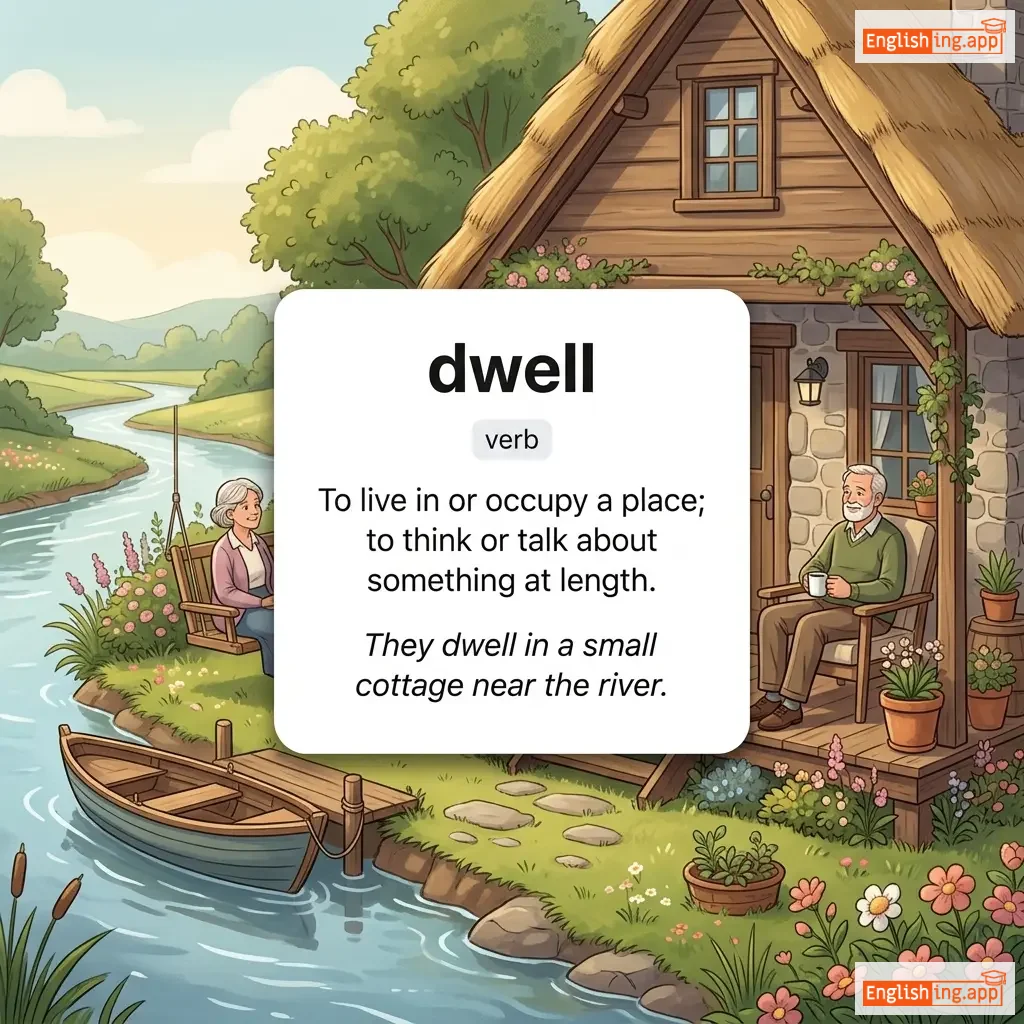
dwell definition card — visual illustration of the meaning
verb
/dwɛl/
居住 (jūzhù)

To live in or occupy a place; to think or talk about something at length.

"They dwell in a small cottage near the river."
"他们住在河边的一间小屋里。" (Tāmen zhù zài hé biān de yī jiān xiǎo wū lǐ.)
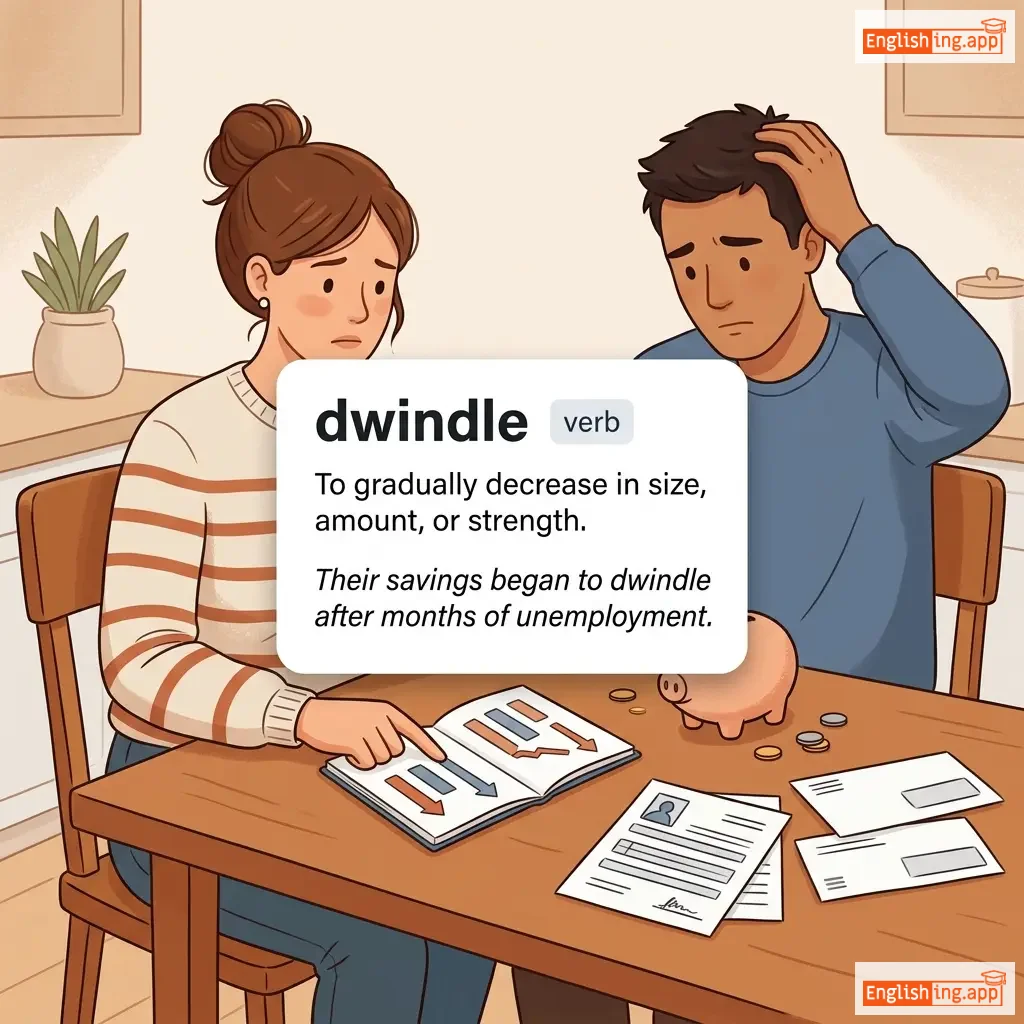
dwindle definition card — visual illustration of the meaning
verb
/ˈdwɪndl/
减少 (jiǎnshǎo)

To gradually decrease in size, amount, or strength.

"Their savings began to dwindle after months of unemployment."

"经过几个月的失业,他们的储蓄开始减少。" (Jīngguò jǐ gè yuè de shīyè, tāmen de chǔxù kāishǐ jiǎnshǎo.)
adjective
/ˈdwɪndlɪŋ/
减少 (jiǎnshǎo)

Gradually reducing in number, size, or strength.

"The villagers relied on dwindling water supplies."

"村民依赖着逐渐减少的水资源。" (Cūnmín yīlài zhe zhújiàn jiǎnshǎo de shuǐ zīyuán.)
dye definition card — visual illustration of the meaning
verb
/daɪ/
染色 (rǎnsè)

to change the color of something using a chemical substance

"She will dye her hair blonde tomorrow."

"她明天会把头发染成金色。" (Tā míngtiān huì bǎ tóufǎ rǎnchéng jīnsè)
verb
/ˈdaɪɪŋ/
临终 (lín zhōng)

to stop living; approaching death

"The old man was dying peacefully in his sleep."

"老人安详地在睡梦中去世。" (Lǎorén ānxiáng de zài shuìmèng zhōng qùshì.)
dynamic definition card — visual illustration of the meaning
adjective
/daɪˈnæmɪk/
动态 (dongtai)

Characterized by constant change, activity, or progress; energetic and forceful.

"She is a dynamic leader who inspires her team."

"她是一个充满活力的领导者,激励着她的团队。" (Tā shì yīgè chōngmǎn huólì de lǐngdǎo zhě, jīlìzhe tā de tuánduì.)
noun
/daɪˈnæmɪks/
动态 (dongtai)

the forces or properties that stimulate growth, development, or change within a system or process

"The dynamics of the team changed after the new manager joined."

"团队的动态在新经理加入后发生了变化。" (Tuandui de dongtai zai xin jingli jiaru hou fasheng le bianhua.)
noun
/ˈdaɪnəˌmoʊ/
发电机; 一个充满能量和热情的人 (fādiànjī; yīgè chōngmǎn néngliàng hé rèqíng de rén)

A machine that generates electricity; a person with great energy and enthusiasm.

"She is the real dynamo behind the success of the company."
"她是公司成功背后的真正动力源。" (Tā shì gōngsī chénggōng bèihòu de zhēnzhèng dònglì yuán.)
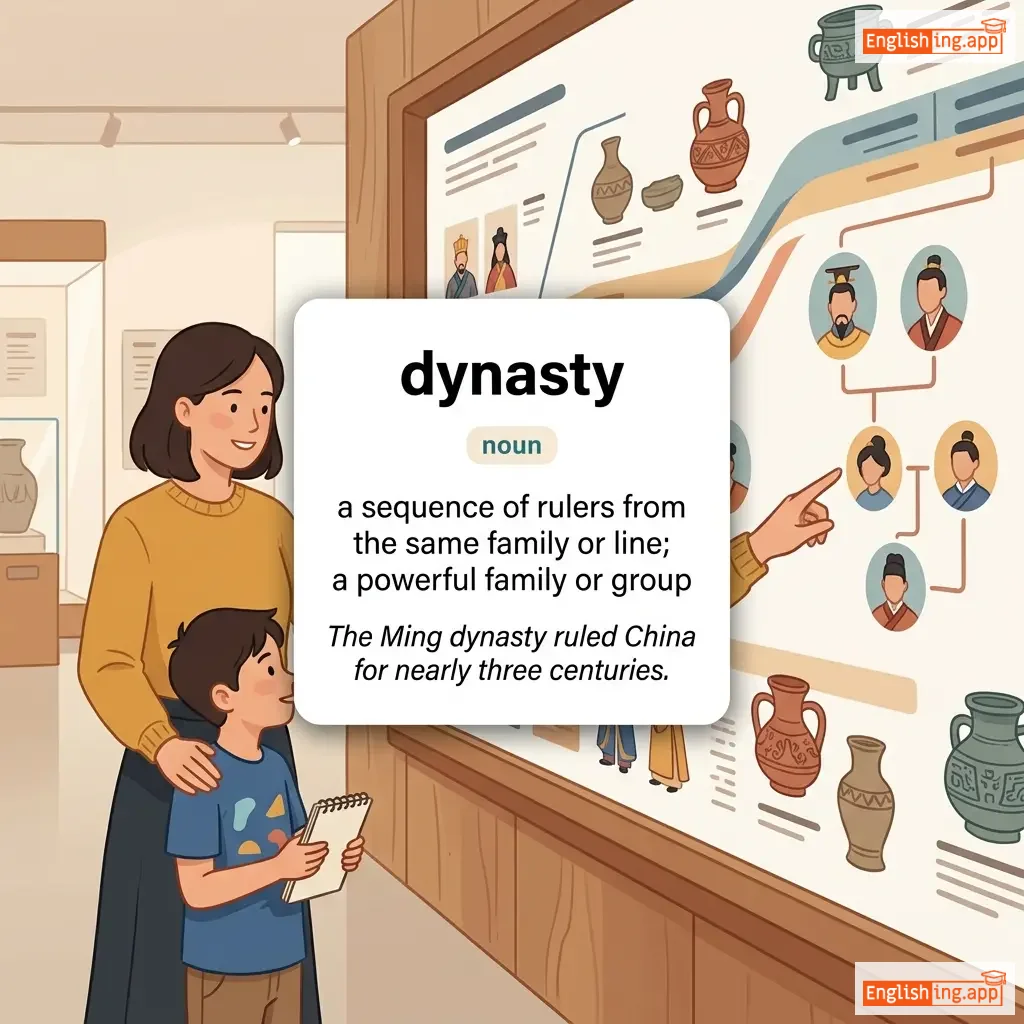
dynasty definition card — visual illustration of the meaning
noun
/ˈdaɪ.nə.sti/
王朝 (wangchao)

a sequence of rulers from the same family or line; a powerful family or group

"The Ming dynasty ruled China for nearly three centuries."

"明朝统治了中国近三百年。" (Ming chao tongzhi le Zhongguo jin san bai nian.)
noun
/daɪn/
力的单位(厘米-克-秒制) (lì de dānwèi (límǐ-kè-miǎo zhì))

A unit of force in the centimeter-gram-second (cgs) system equal to 10⁻⁵ newtons.

"The physicist measured the force in dynes."

"物理学家用代因测量力。" (Wùlǐ xuéjiā yòng dàiyīn cèliàng lì.)
prefix
/dɪs-/
前缀,表示异常、不良、困难或缺陷 (qianzui, biaoshi yichang, buliang, kunnan huo quxian)

A prefix meaning abnormal, bad, difficult, or impaired.

"Words like 'dysfunction' and 'dyslexia' use the prefix dys- to indicate difficulty or impairment."

"像“功能障碍”和“阅读困难”这样的词使用前缀dis-来表示困难或缺陷。" (Xiang 'gongneng zhang'ai' he 'yuedu kunnan' zheyang de ci yong qianzui dis- lai biaoshi kunnan huo quxian.)
noun
/ˈdɪsənˌtɛri/
肠道疾病(伴有血液和粘液的腹泻) (changdao jibing (banyou xueye he niaye de fushai))

An infection of the intestines resulting in severe diarrhea with blood and mucus.

"Many soldiers suffered from dysentery during the war."
"许多士兵在战争期间患上了痢疾。" (Xǔduō shìbīng zài zhànzhēng qījiān huàn shàngle lìjí.)
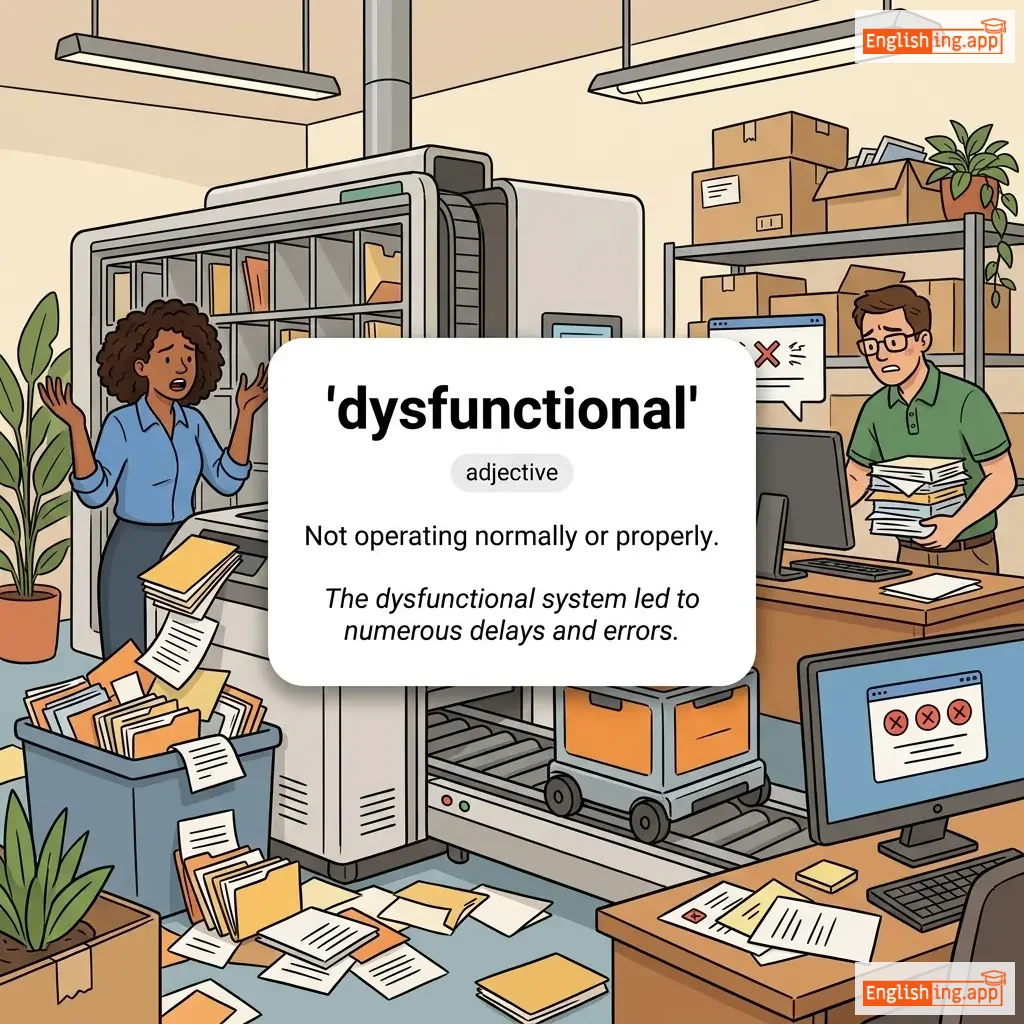
dysfunctional definition card — visual illustration of the meaning
adjective
dɪsˈfʌŋkʃənl
功能失常的 (gongneng shichang de)

Not operating normally or properly.

"The dysfunctional system led to numerous delays and errors."

"这个功能失常的系统导致了许多延误和错误。" (Zhe ge gongneng shichang de xitong daozhi le xuduo yanwu he cuowu.)
noun
/dɪsˈlɛksiə/
阅读障碍 (yuèdú zhàng'ài)

A learning disorder characterized by difficulty reading due to problems identifying speech sounds and decoding words.

"The teacher used special methods to help the student with dyslexia."

"老师使用了特殊的方法来帮助患有阅读障碍的学生。" (Lǎoshī shǐyòngle tèshū de fāngfǎ lái bāngzhù huànyǒu yuèdú zhàng'ài de xuéshēng.)
adjective
/dɪsˈpɛptɪk/
消化不良的, 易怒的 (xiaohuabuliang de, yini de)

Relating to indigestion or having a gloomy or irritable disposition.

"After the heavy meal, he felt dyspeptic and uncomfortable."

"在丰盛的餐后,他感到消化不良并且不舒服。" (Zai fengsheng de canhou, ta gandao xiaohuabuliang bingqie bu shufu.)
e-commerce definition card — visual illustration of the meaning
noun
ˈiːˌkɒm.ɜːrs
电子商务 (dianzi shangwu)

The process of buying and selling goods or services through the internet.

"E-commerce has revolutionized the way people shop."

"电子商务彻底改变了人们购物的方式。" (Dianzi shangwu chedi gaibianle renmen gouwu de fangshi.)
noun, verb
/ˈiː.meɪl/
电子邮件 (dianzi youjian)

messages distributed by electronic means from one computer user to another

"I sent an e-mail to my professor yesterday."

"我昨天给我的教授发了一封电子邮件。" (wo zuotian gei wode jiaoshou fa le yi feng dianzi youjian.)
determiner/pronoun
/iːtʃ/
每个 (meige)

every one of two or more people or things considered separately

"Each student received a certificate."
"每个学生都收到了证书。" (Meige xuesheng dou shou dao le zhengshu.)
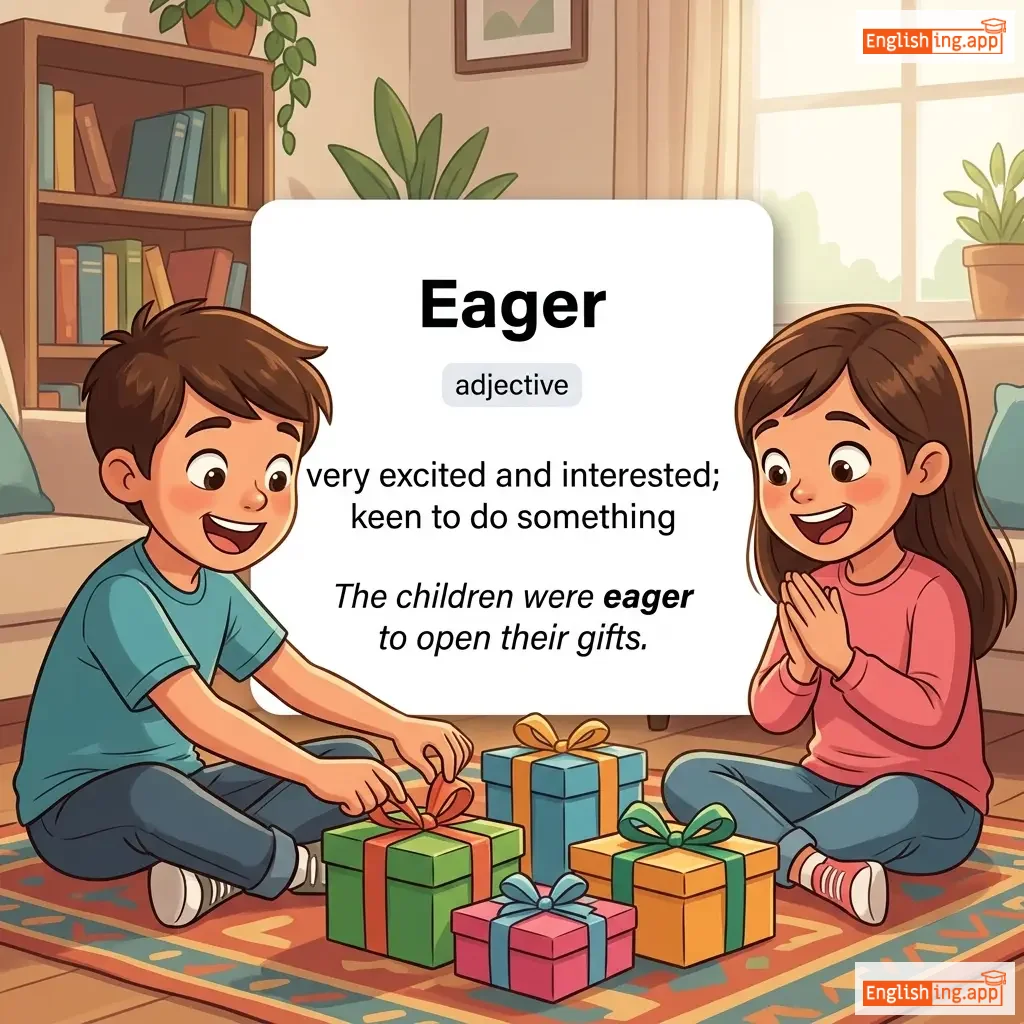
Eager definition card — visual illustration of the meaning
adjective
/ˈiːɡər/
渴望的 / 急切的 (kěwàng de / jíqiè de)

very excited and interested; keen to do something

"The children were eager to open their gifts."

"孩子们迫不及待地想打开他们的礼物。" (Háizimen pò bù jí dài de xiǎng dǎkāi tāmen de lǐwù.)
adverb
/ˈiːɡərli/
急切地; 怀着强烈的愿望 (jíqiè de; huáizhe qiángliè de yuànwàng)

with keen interest or enthusiasm; with great desire

"The children eagerly waited for the holiday to begin."

"孩子们急切地等待假期的开始。" (háizimen jíqiè de děngdài jiàqī de kāishǐ)
noun
/ˈiː.ɡəl/
(ying)

large bird of prey with powerful wings and sharp talons

"The eagle soared high above the mountains."

"鹰飞得很高,飞过了山脉。" (Ying fei de hen gao, fei guo le shanmai)
noun
/ˈiːɡlət/
小鹰 (xiǎo yīng)

A young eagle.

"The eaglet waited in the nest for its mother to return."

"小鹰在巢中等待母亲回来。" (Xiǎo yīng zài cháo zhōng děngdài mǔqīn huílái.)