Словари

Словарь английского языка | Значения слов, определения и примеры

adjective
/dʌm/
тупой / немой (tupoy / nemoy)

lacking intelligence or unable to speak

"He made a dumb mistake during the exam."

"Он сделал глупую ошибку на экзамене." (On sdelal glupuyu oshibku na ekzamenie.)
verb
/ˈdʌmfaʊnd/
ошеломить (oshelomit)

to greatly astonish or shock someone so they are temporarily speechless

"The magician's trick dumbfounded the audience."

"Фокус мага ошеломил зрителей." (Fokus maga oshelomil zriteley.)
noun
/ˈdʌmi/
манекен / глупый человек (maneken / glupy chelovek)

a model or replica of a human used for practice, display, or testing; also a term for a foolish person

"The tailor used a dummy to display the dress."

"Портной использовал манекен, чтобы показать платье." (Portnoy ispol'zoval maneken, chtoby pokazat' plat'ye.)
verb
/dʌmp/
выбросить или избавиться от чего-то небрежно (vybrosit' ili izbavitsya ot chego-to nebrezhno)

to drop or dispose of something carelessly; to end a relationship suddenly

"He dumped all the trash into the bin."

"Он выбросил весь мусор в ведро." (On vybrosil ves' musor v vedro.)
verb
/dʌn/
требовать возврата долга (trebovat' vozvrata dolga)

to demand payment of a debt persistently

"The landlord dunned the tenant for unpaid rent."

"Арендодатель несколько раз потребовал оплаты задолженности по аренде." (Arendodatel' neskol'ko raz potreboval oplaty zadolzhennosti po arende.)
noun
/djuːn/
песчаная дюна (peschanaya duna)

A hill or ridge of sand formed by the wind, usually found in deserts or near beaches.

"The children played on the sand dune by the beach."

"Дети играли на песчаной дюне у пляжа." (Deti igrali na peschanoy dune u plyazha.)
noun
/ˈdjuːəʊ/
дуэт (duet)

a pair of people or things, especially in music or entertainment

"The musical duo performed their latest hit at the concert."

"Музыкальный дуэт исполнил свой последний хит на концерте." (Muzykal'nyy duet ispolnil svoy posledniy khit na koncerte.)
dupe definition card — visual illustration of the meaning
verb
/djuːp/
обманывать (obmanyvat)

To deceive or trick someone into believing or doing something.

"He was duped into buying a fake watch."

"Его обманули, чтобы он купил поддельные часы." (Ego obmanuli, chtoby on kupil poddel'nye chasy.)
noun
/ˈdjuːplɛks/
дуплексный дом (dupleksnyy dom)

A house or apartment divided into two separate residences.

"They live in a duplex near the city center."

"Они живут в дуплексе рядом с центром города." (Oni zhivut v duplekse ryadom s tsentrom goroda.)
adjective
/djuːˈplɪsɪtəs/
лицемерный (litsemernui)

Deceitful; deliberately deceptive or dishonest.

"The politician was criticized for his duplicitous statements."

"Политика критикуют за его лицемерные заявления." (Politika kritikuut za ego litsemernye zayavleniya.)
noun
/djuːˈplɪsɪti/
двуличие (dvúlichie)

Deceitfulness or double-dealing; dishonesty.

"Her duplicity was revealed during the investigation."

"Её двуличие было раскрыто в ходе расследования." (Eyo dvúlichie bylo raskryto v khode rassledovaniya.)
durability definition card — visual illustration of the meaning
noun
/ˌdʊr.əˈbɪl.ə.ti/
прочность (prochnost)

the ability to withstand wear, pressure, or damage; lasting quality

"The durability of the new smartphone impressed customers with its resistance."

"Прочность нового смартфона впечатлила клиентов своей стойкостью." (Prochnost' novogo smartfona vpechatlila klientov svoey stoykost'yu.)
adjective
/ˈdjʊərəbəl/
долговечный; прочный; устойчивый (dolgovyechny; prochnyy; ustoychivyy)

able to withstand wear, pressure, or damage; lasting; strong

"This durable fabric will last for many years."

"Эта прочная ткань будет служить много лет." (Eta prochnaya tkan' budet sluzhit' mnogo let)
noun
/ˈdjʊərəns/
тюремное заключение (turemennoe zaklyucheniye)

imprisonment or confinement

"The prisoner spent years in durance before his release."

"Заключённый провёл годы в тюрьме до своего освобождения." (Zaklyuchyonnyy provyol gody v tyur'me do svoego osvobozhdeniya.)
noun
/djʊˈreɪʃən/
продолжительность (prodolzhitel'nost')

the length of time that something continues

"The meeting lasted for the duration of two hours."

"Совещание длилось два часа." (Soveshchaniye dlilos' dva chasa.)
noun
/djʊˈrɛs/
принуждение (prinuzhdenie)

threats, violence, or pressure used to force someone to do something

"She signed the contract under duress."

"Она подписала контракт под принуждением." (Ona podpisala kontrakt pod prinuzhdeniem.)
noun
/ˈdʊr.i.ən/
дуриан (durian)

a large spiky tropical fruit known for its strong smell and creamy custard-like flesh

"Durian is known as the king of fruits in Southeast Asia despite its pungent odor."

"Дуриан известен как король фруктов Юго-Восточной Азии, несмотря на свой резкий запах." (Durian izvesten kak korol fruktov Yugo-Vostochnoy Azii, nesmotrya na svoy rezkii zapakh.)
preposition
/ˈdjʊərɪŋ/
во время (vo vremya)

throughout the course of a period of time

"I fell asleep during the movie."

"Я заснул во время фильма." (Ya zasnul vo vremya fil'ma.)
noun
/dʌsk/
сумерки; вечерняя тьма (sumyerki, vechernyaya t'ma)

the period of the day when daylight is fading; twilight

"They walked along the beach during dusk, watching the sunset."
"Они шли по пляжу во время сумерек, наблюдая за закатом." (Oni shli po plyazhu vo vremya sumerek, nablyudaya za zakatom.)
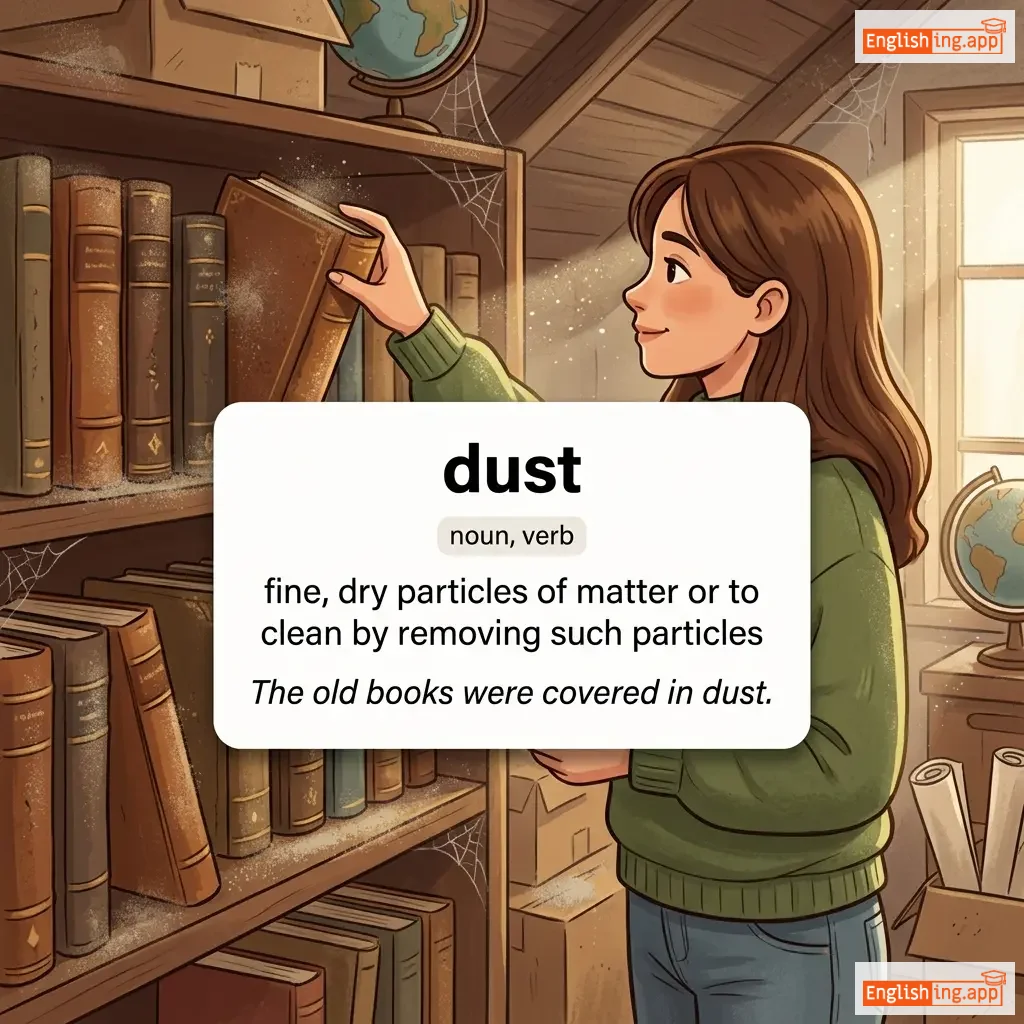
dust definition card — visual illustration of the meaning
noun, verb
/dʌst/
пыль (pyl')

fine, dry particles of matter or to clean by removing such particles

"The old books were covered in dust."

"Старые книги были покрыты пылью." (Starye knigi byli pokryty pyl'yu.)
noun
/ˈdʌst.bɪn/
мусорное ведро (musornoe vedro)

a container for holding waste or garbage before disposal

"Please throw the paper into the dustbin after use."

"Пожалуйста, выбросьте бумагу в мусорное ведро после использования." (Pozhaluysta, vybros'te bumagu v musornoe vedro posle ispol'zovaniya.)
adjective
/ˈdʌsti/
пыльный (pylnyy)

covered with or full of dust; dry and dull from lack of moisture or use

"The old bookshelf was dusty after years of neglect."

"Старая книжная полка была пыльной после многих лет запустения." (staraya knizhnaya polka byla pylnoy posle mnogikh let zapusteniya)
adjective
/dʌtʃ/
голландский (gollandskiy)

relating to the Netherlands, its people, or their language

"She enjoys Dutch paintings from the 17th century."

"Она наслаждается голландскими картинами 17-го века." (Ona naslazhdayetsya gollandskimi kartinami 17-go veka.)
adjective
/ˈdjuːtiəs/
послушный (poslushnyy)

dutiful; obedient and respectful

"The duteous child always followed her parents’ instructions."

"Послушный ребенок всегда следовал указаниям своих родителей." (Poslushnyy rebenok vsegda sleduval ukazaniyam svoikh roditeley.)
adjective
/ˈdjuːtiəbl/
облагаемый пошлиной (oblagayemyy poshlinoy)

subject to customs duty or tax

"Imported electronics are often dutiable at the border."

"Импортированные электроника часто подлежат пошлине на границе." (Importirovannye elektronika chasto podlezhat poshline na granitse.)
adjective
/ˈdjuːtɪfəl/
добросовестный (dobrosovestny)

Willingly obedient and responsible in performing one's duty.

"She is a dutiful daughter who always takes care of her parents."

"Она добросовестная дочь, которая всегда заботится о своих родителях." (Ona dobrosovestnaya doch', kotoraya vsegda zabotitsya o svoikh rodityalykh.)
noun
/ˈdjuːti/
обязанность (obyazannost')

a moral or legal obligation; a responsibility

"It is our duty to protect the environment."

"Наш долг защищать окружающую среду." (Nash dolg zashchishchat' okruzhayushchuyu sredu.)
noun
/dwɔːrf/
карлик (karlik)

a person, animal, or plant much smaller than average

"Snow White lived with seven dwarfs."
"Белоснежка жила с семью карликами." (Belosnezhka zhila s sem'yu karlikami.)
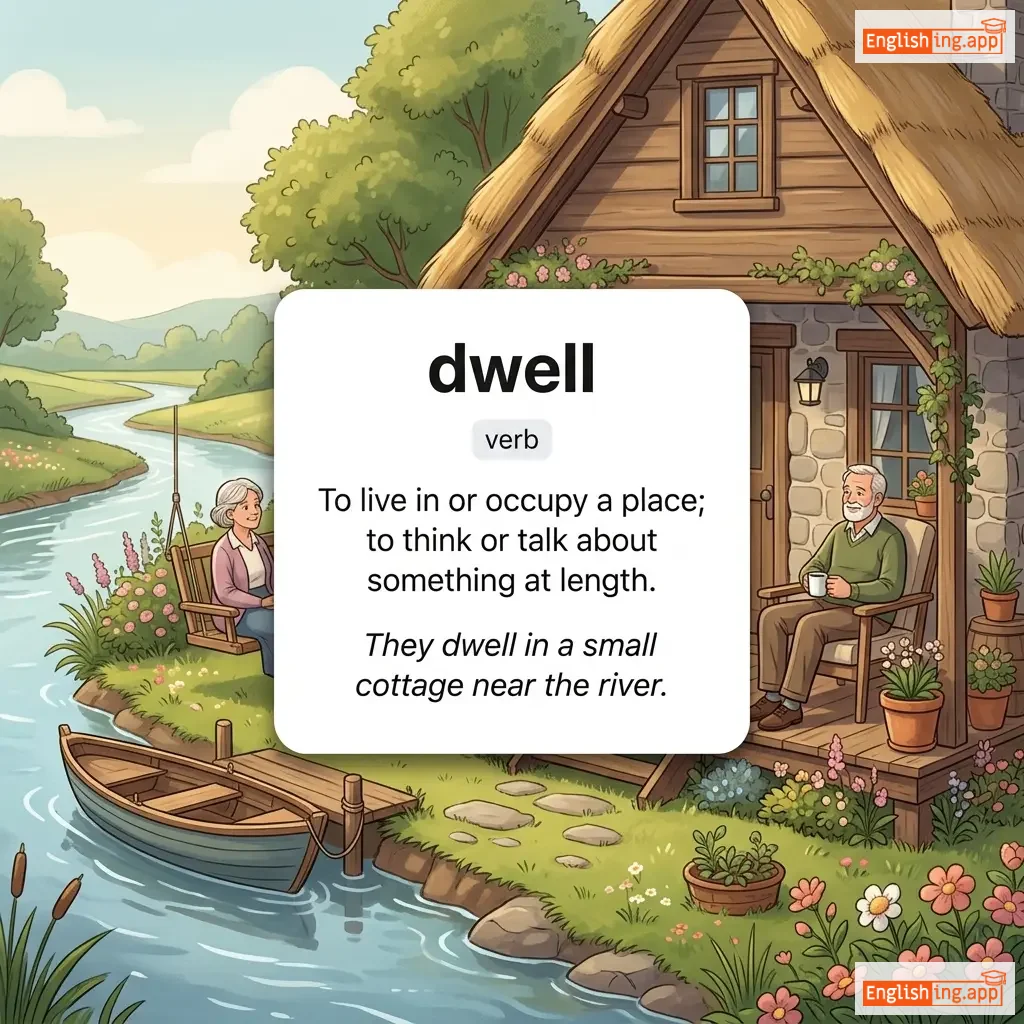
dwell definition card — visual illustration of the meaning
verb
/dwɛl/
жить (zhit)

To live in or occupy a place; to think or talk about something at length.

"They dwell in a small cottage near the river."
"Они живут в маленьком домике рядом с рекой." (Oni zhivut v malen'kom domike ryadom s rekoy.)
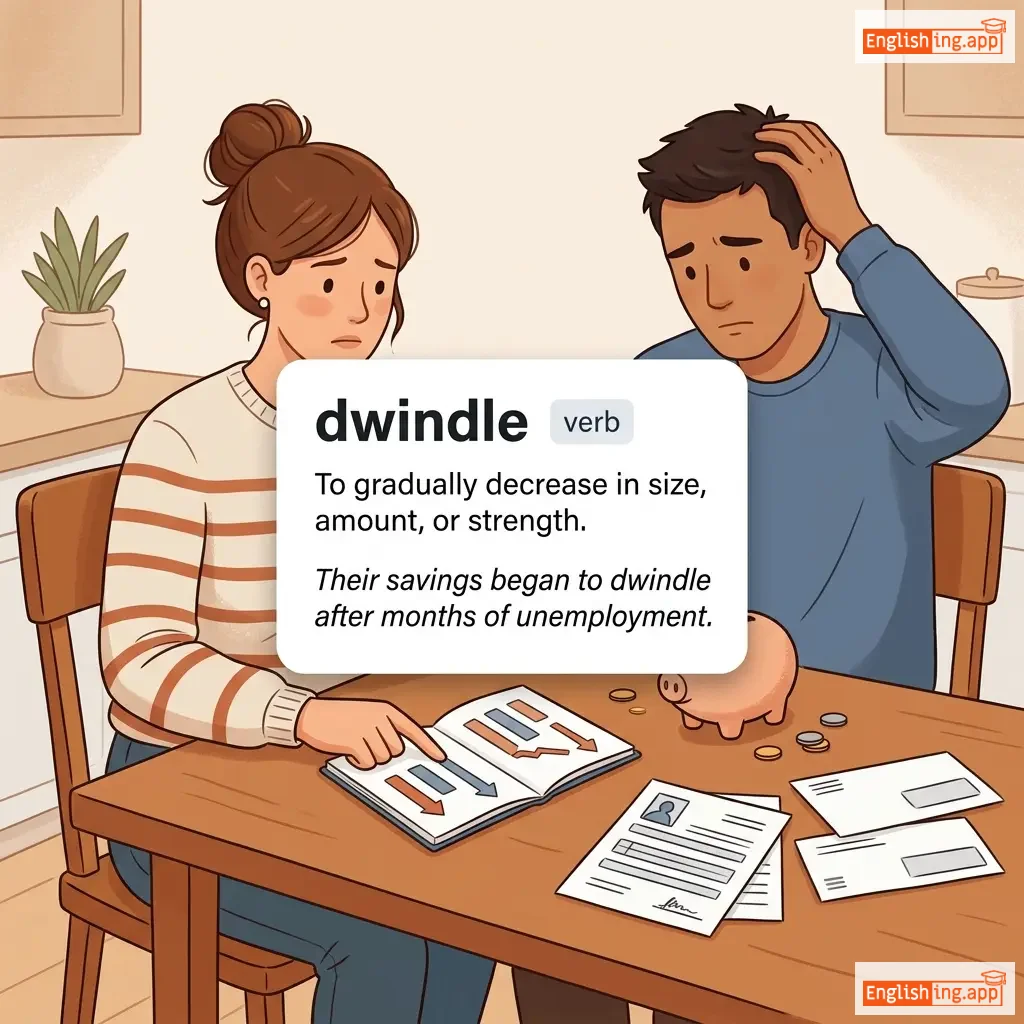
dwindle definition card — visual illustration of the meaning
verb
/ˈdwɪndl/
уменьшаться (umenshatsya)

To gradually decrease in size, amount, or strength.

"Their savings began to dwindle after months of unemployment."

"Их сбережения начали уменьшаться после месяцев безработицы." (Ih sberegeniya nachali umenshatsya posle mesecev bezrabotitsy.)
adjective
/ˈdwɪndlɪŋ/
убывающий (ubyvayushchiy)

Gradually reducing in number, size, or strength.

"The villagers relied on dwindling water supplies."
"Жители деревни зависели от убывающих водных ресурсов." (Zhiteli derevni zaviseli ot ubyvayushchikh vodnykh resursov.)
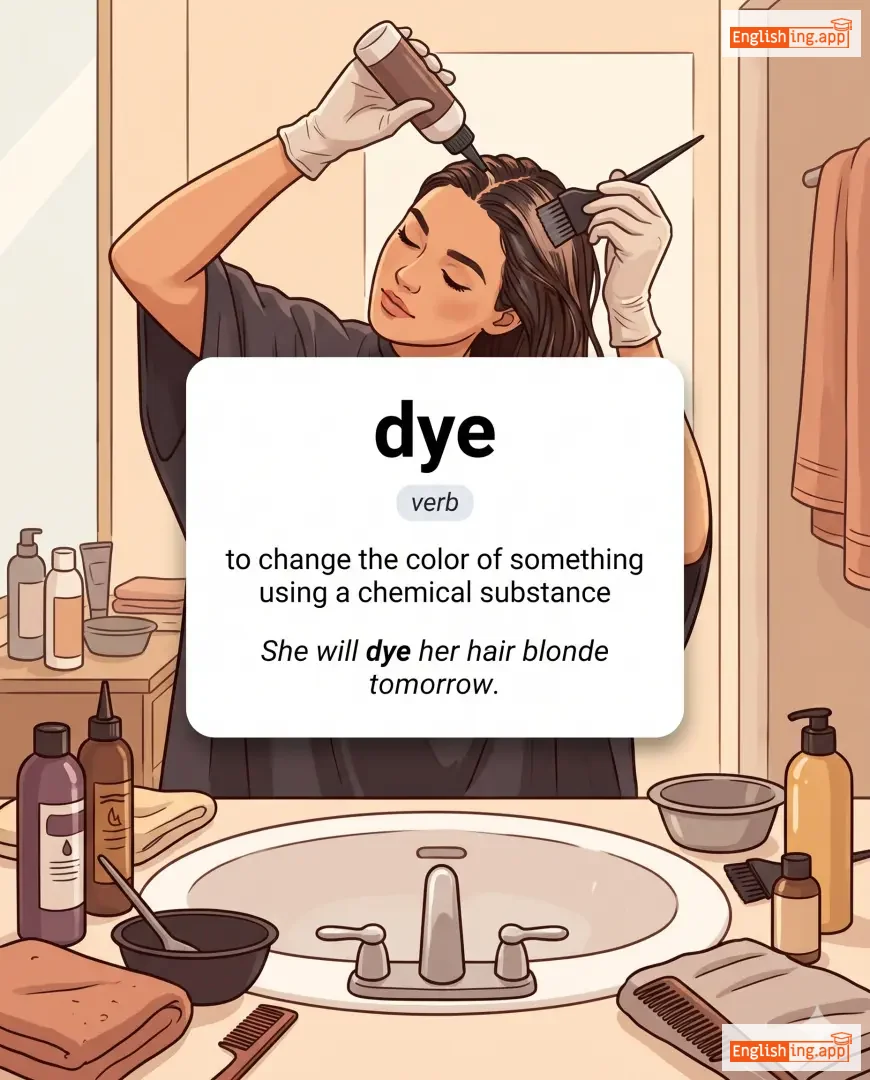
dye definition card — visual illustration of the meaning
verb
/daɪ/
красить (krasit)

to change the color of something using a chemical substance

"She will dye her hair blonde tomorrow."

"Она покрасит свои волосы в блонд завтра." (Ona pokrasit svoi volosy v blond zavtra)
verb
/ˈdaɪɪŋ/
умирающий (umirayushchiy)

to stop living; approaching death

"The old man was dying peacefully in his sleep."
"Старик умирал мирно во сне." (Starik umiral mirno vo sne.)
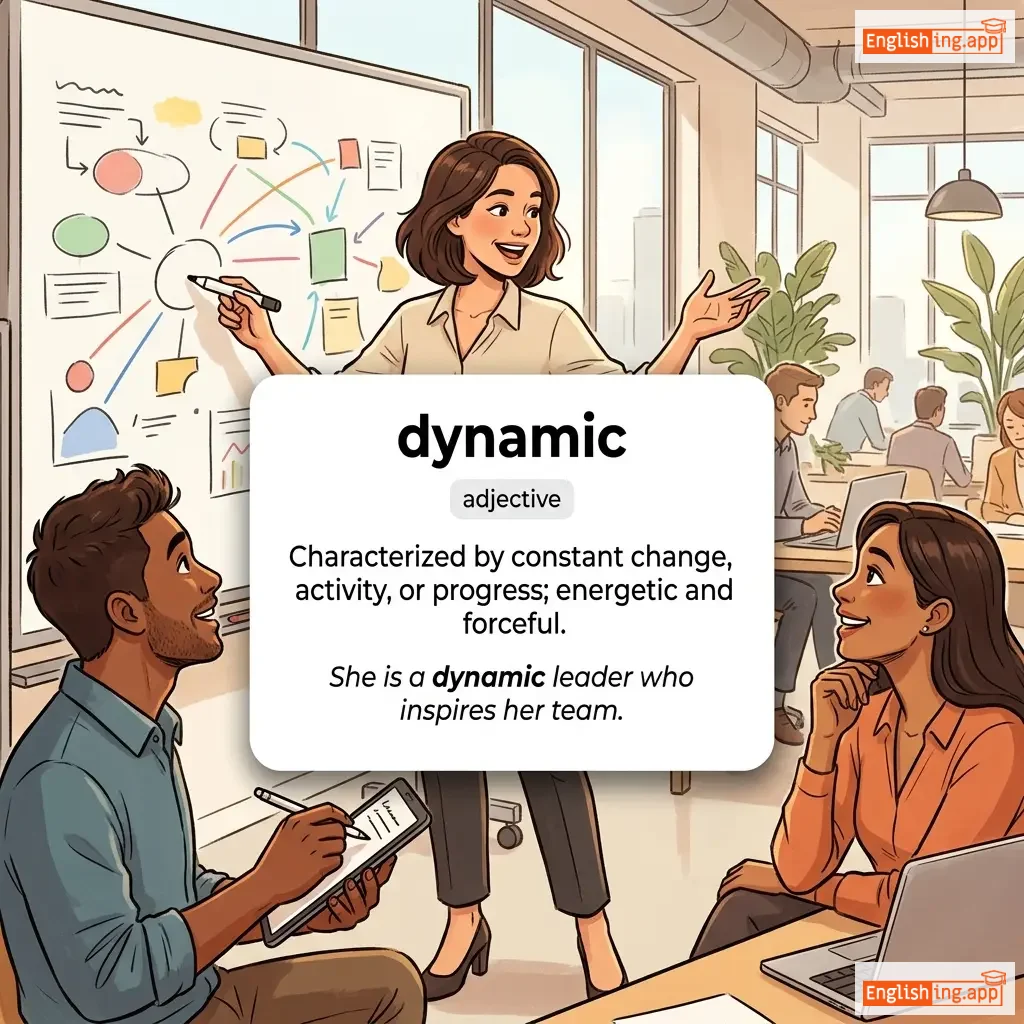
dynamic definition card — visual illustration of the meaning
adjective
/daɪˈnæmɪk/
динамичный (dinamichny)

Characterized by constant change, activity, or progress; energetic and forceful.

"She is a dynamic leader who inspires her team."

"Она динамичный лидер, который вдохновляет свою команду." (Ona dinamichnyy lider, kotoryy vdokhnovlyaet svoyu komandu.)
noun
/daɪˈnæmɪks/
динамика (dinamika)

the forces or properties that stimulate growth, development, or change within a system or process

"The dynamics of the team changed after the new manager joined."

"Динамика команды изменилась после того, как новый менеджер присоединился." (Dinamika komandy izmenilas' posle togo, kak novyy menedzher prisoyedinilsya.)
noun
/ˈdaɪnəˌmoʊ/
генератор электричества; человек с большой энергией и энтузиазмом (generator elektrichestva; chelovek s bolshoy energiyey i entuziazmom)

A machine that generates electricity; a person with great energy and enthusiasm.

"She is the real dynamo behind the success of the company."
"Она настоящая динамо за успехом компании." (Ona nastoyashchaya dynamo za uspekhom kompanii.)
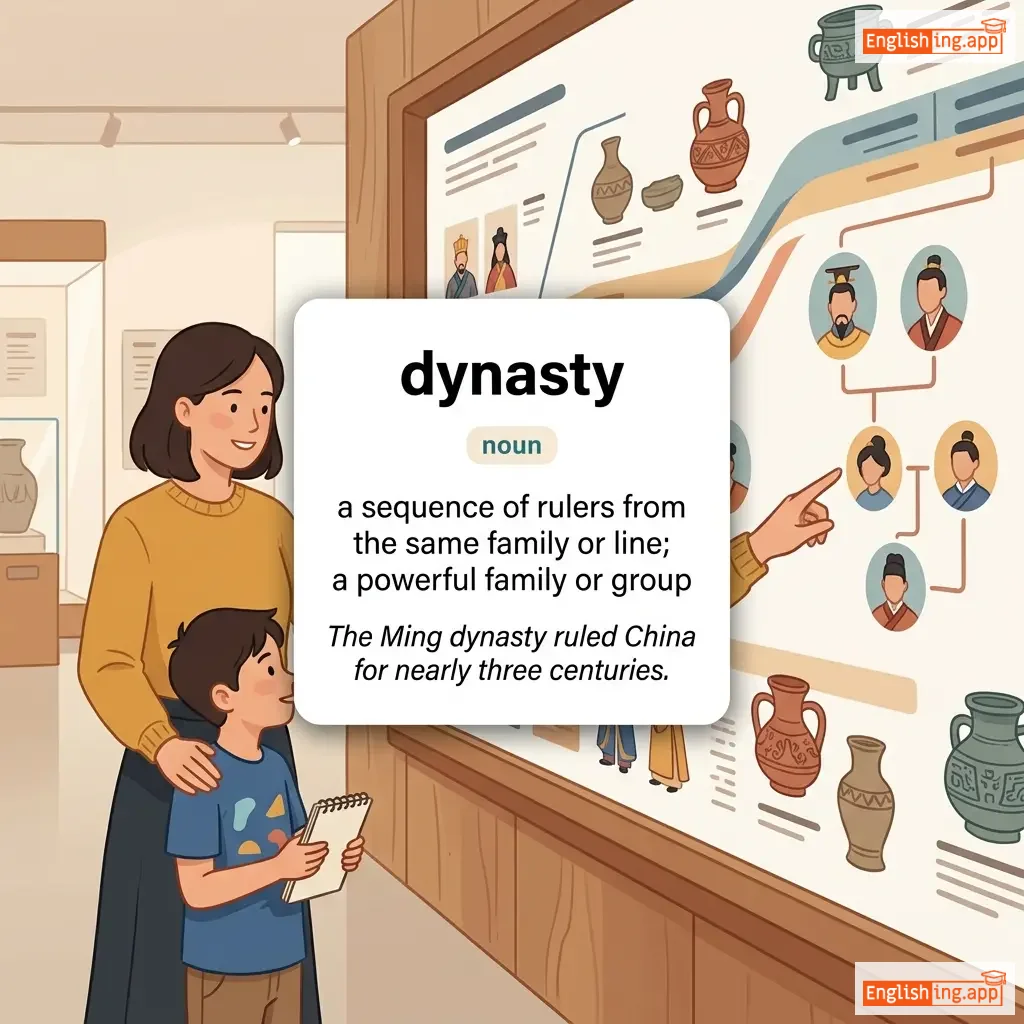
dynasty definition card — visual illustration of the meaning
noun
/ˈdaɪ.nə.sti/
династия (dinastiya)

a sequence of rulers from the same family or line; a powerful family or group

"The Ming dynasty ruled China for nearly three centuries."

"Династия Мин правили Китаем почти три века." (Dinastiya Min pravili Kitayem pochti tri veka.)
noun
/daɪn/
единица силы (система cgs) (edinitsa sily (sistema cgs))

A unit of force in the centimeter-gram-second (cgs) system equal to 10⁻⁵ newtons.

"The physicist measured the force in dynes."

"Физик измерил силу в дайнах." (Fizik izmeril silu v dainakh.)
prefix
/dɪs-/
приставка, означающая аномальный, плохой, сложный или дефектный (pristavka, oznachayushchaya anomal'nyy, plokhoy, slozhnyy ili defektnyy)

A prefix meaning abnormal, bad, difficult, or impaired.

"Words like 'dysfunction' and 'dyslexia' use the prefix dys- to indicate difficulty or impairment."

"Слова, такие как 'дисфункция' и 'дислексия', используют приставку дис-, чтобы указать на трудности или недостатки." (Slova, takie kak 'disfunktsiya' i 'disleksiya', ispol'zuyut pristavku dis-, chtoby ukazat' na trudnosti ili nedostatki.)
noun
/ˈdɪsənˌtɛri/
кишечная болезнь (понос с кровью и слизью) (kishechnaya bolezn (ponos s krovyu i slizyu))

An infection of the intestines resulting in severe diarrhea with blood and mucus.

"Many soldiers suffered from dysentery during the war."
"Многие солдаты страдали от дизентерии во время войны." (Mnogie soldaty stradali ot dizenterii vo vremya voiny.)
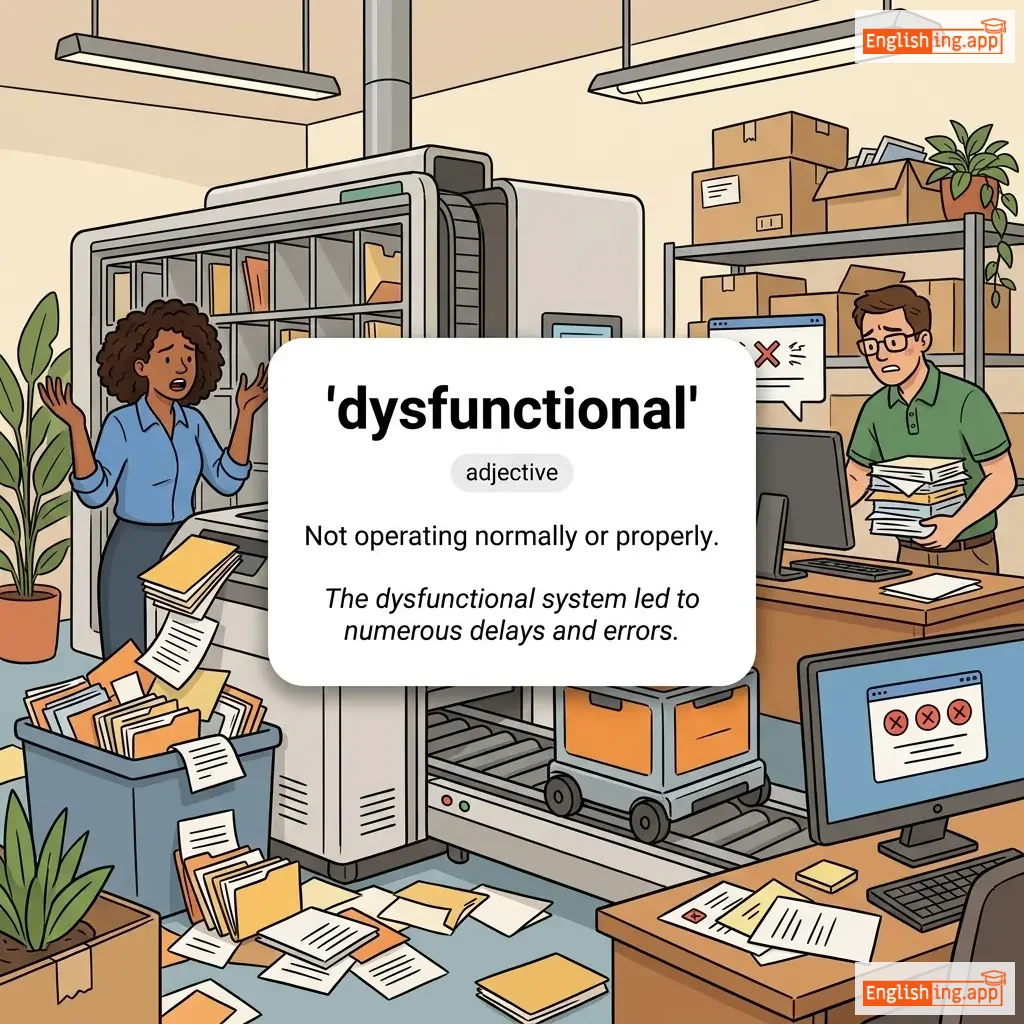
dysfunctional definition card — visual illustration of the meaning
adjective
dɪsˈfʌŋkʃənl
дисфункциональный (disfunktsionalny)

Not operating normally or properly.

"The dysfunctional system led to numerous delays and errors."

"Дисфункциональная система привела к многочисленным задержкам и ошибкам." (Disfunktsional'naya sistema privela k mnogochislennym zaderzhkam i oshibkam.)
noun
/dɪsˈlɛksiə/
дислексия (disleksiya)

A learning disorder characterized by difficulty reading due to problems identifying speech sounds and decoding words.

"The teacher used special methods to help the student with dyslexia."

"Учитель использовал специальные методы, чтобы помочь студенту с дислексией." (Uchitel ispol'zoval spetsial'nye metody, chtoby pomoch' studentu s disleksiey.)
adjective
/dɪsˈpɛptɪk/
диспепсия, раздражительный (dispepsiya, razdrazhitel'nyy)

Relating to indigestion or having a gloomy or irritable disposition.

"After the heavy meal, he felt dyspeptic and uncomfortable."

"После обильной трапезы он почувствовал себя диспептическим и некомфортным." (Posle obil'noy trapezy on pochuvstvoval sebya dispepticheskim i nekomfortnym.)
e-commerce definition card — visual illustration of the meaning
noun
ˈiːˌkɒm.ɜːrs
электронная коммерция (elektronnaya kommerciya)

The process of buying and selling goods or services through the internet.

"E-commerce has revolutionized the way people shop."

"Электронная коммерция революционизировала способы покупок людей." (Elektronnaya kommerciya revoljucionizirovala sposoby pokupok lyudey.)
noun, verb
/ˈiː.meɪl/
электронная почта (elektronnaya pochta)

messages distributed by electronic means from one computer user to another

"I sent an e-mail to my professor yesterday."

"Я отправил электронное письмо своему профессору вчера." (Ya otpravil elektronnoye pis'mo svoemu professoru vchera.)
determiner/pronoun
/iːtʃ/
каждый (kazhdy)

every one of two or more people or things considered separately

"Each student received a certificate."
"Каждый студент получил сертификат." (Kazhdyy student poluchil sertifikat.)
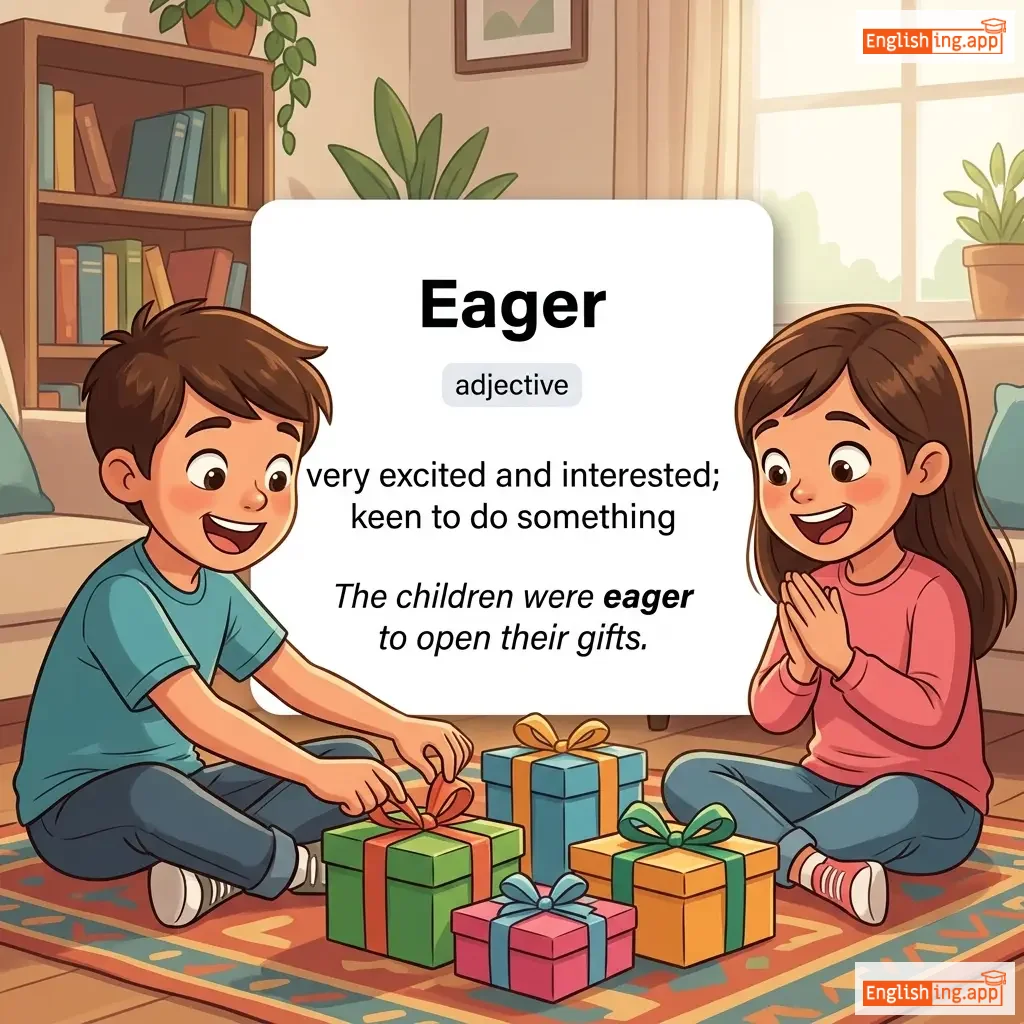
Eager definition card — visual illustration of the meaning
adjective
/ˈiːɡər/
жаждущий / стремящийся (zhazhdushchiy / stremyashchiesya)

very excited and interested; keen to do something

"The children were eager to open their gifts."

"Дети были стремящимися открыть свои подарки." (Deti byli stremyashchimisya otkryt' svoi podarki.)
adverb
/ˈiːɡərli/
с нетерпением; с большим желанием (s neterpeniem; s bolshim zhelaniem)

with keen interest or enthusiasm; with great desire

"The children eagerly waited for the holiday to begin."

"Дети с нетерпением ждали, когда начнется отпуск." (Deti s neterpeniem zh-dali, kogda nachnyotsya otpusk)
noun
/ˈiː.ɡəl/
орел (orel)

large bird of prey with powerful wings and sharp talons

"The eagle soared high above the mountains."

"Орел летел высоко над горами." (Orel letel vysoko nad gorami)
noun
/ˈiːɡlət/
орлятко (orlyatko)

A young eagle.

"The eaglet waited in the nest for its mother to return."

"Орлятко ждал в гнезде, когда его мать вернется." (Orlyatko zhdal v gnezde, kogda ego mat' vernyotsya.)