Vocabularios

Descubra, aprenda y domine el vocabulario en inglés

verb
/ˈdrɪbəl/
goteo / driblar el balón con pequeños toques (goteo / driblar el balon con pequenos toques)

to let liquid flow slowly in drops or to move a ball skillfully with repeated small kicks or bounces

"The baby dribbled milk on his shirt."

"El bebé derramó leche sobre su camisa." (El bebe derramo leche sobre su camisa.)
adjective
/draɪd/
seco (seko)

without moisture; preserved by removing water

"She added some dried flowers to the vase for decoration."

"Ella agregó algunas flores secas al jarrón para decoración." (Ella agrego algunas flores secas al jarron para decoracion.)
noun
/draɪd ˈfɛnjʊˌɡriːk livz/
hojas secas de fenogreco (hojas secas de fenogreco)

dehydrated leaves of the fenugreek plant used as a herb in cooking

"Add dried fenugreek leaves to the curry for extra flavor."

"Agregue hojas secas de fenogreco al curry para darle un sabor extra." (Agregue hojas secas de fenogreco al curry para darle un sabor extra.)
noun
/draɪd roʊz ˈpɛtəlz/
pétalos de rosa secos (petalos de rosa secos)

dehydrated petals from roses used for culinary and aromatic purposes

"The dessert was garnished with dried rose petals."

"El postre fue decorado con pétalos de rosa secos." (El postre fue decorado con petalos de rosa secos)
verb
/drɪft/
deriva (deriva)

to move slowly, especially by air or water currents

"The boat began to drift away from the shore."

"El bote comenzó a alejarse de la orilla." (El bote comenzo a alejarse de la orilla.)
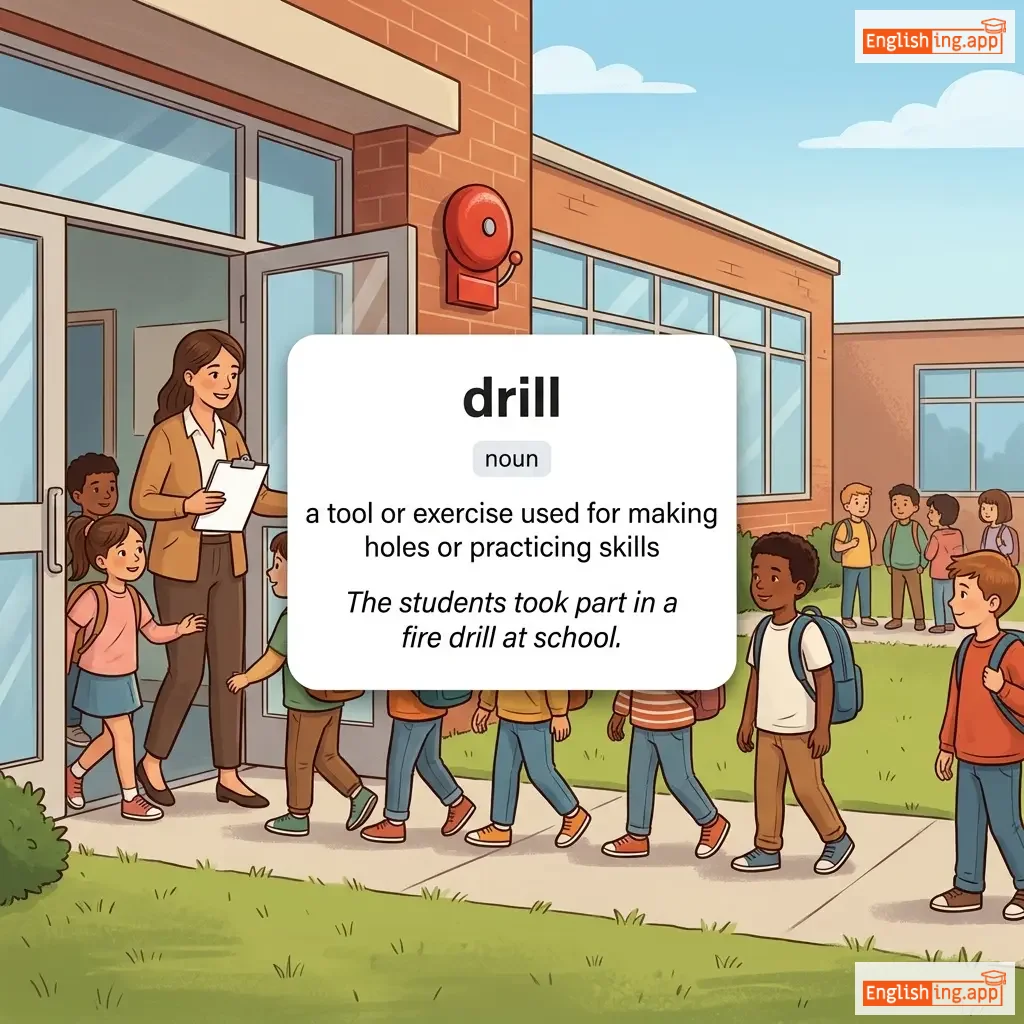
drill definition card — visual illustration of the meaning
noun
/drɪl/
taladro (taladro)

a tool or exercise used for making holes or practicing skills

"The students took part in a fire drill at school."

"Los estudiantes participaron en un simulacro de incendio en la escuela." (Los estudiantes participaron en un simulacro de incendio en la escuela.)
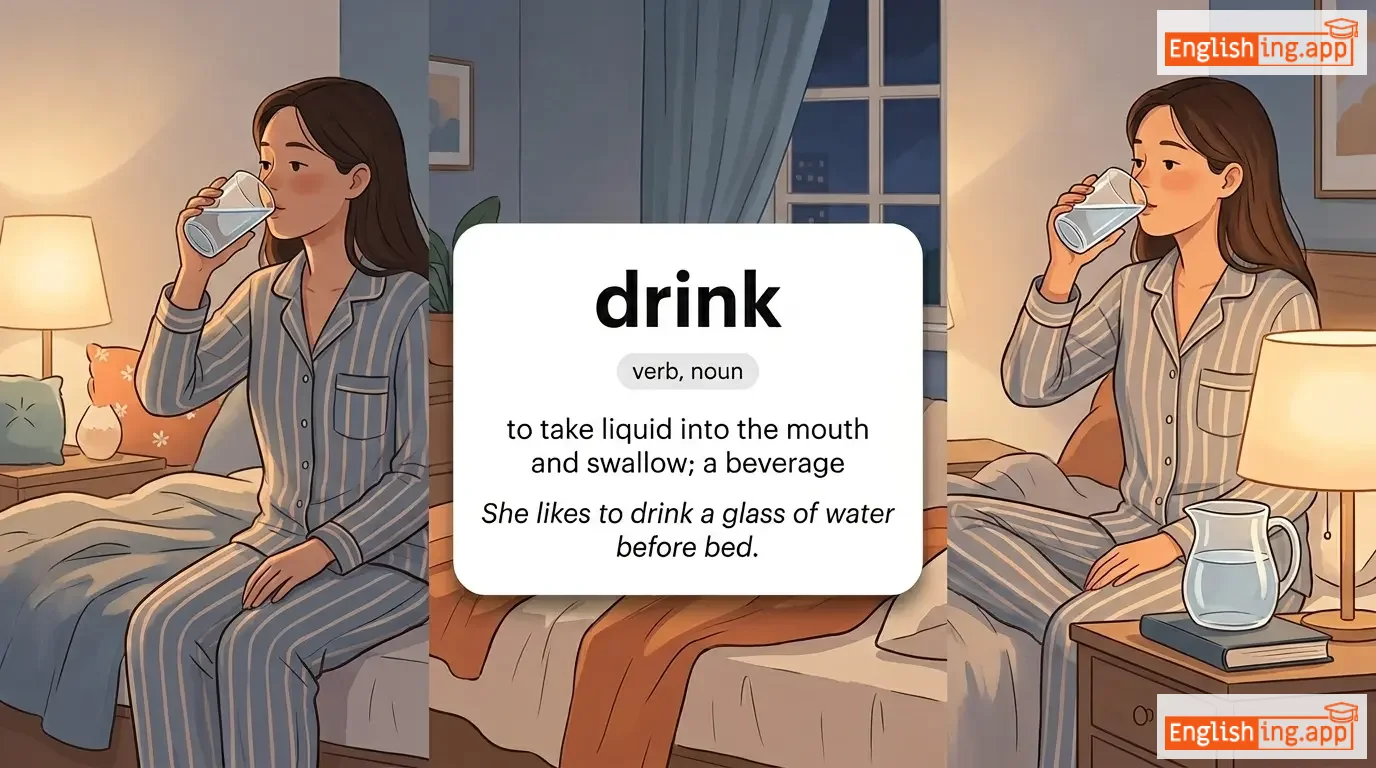
drink definition card — visual illustration of the meaning
verb, noun
/drɪŋk/
beber / bebida (beber / bebida)

to take liquid into the mouth and swallow; a beverage

"She likes to drink a glass of water before bed."

"A ella le gusta beber un vaso de agua antes de dormir." (A ella le gusta beber un vaso de agua antes de dormir.)
noun
/ˈdrɪŋkɪŋ/
beber (beber)

the act of consuming liquids, especially alcohol

"Drinking too much water at once can make you feel bloated."

"Beber demasiada agua de una vez puede hacerte sentir hinchado." (Beber demasiada agua de una vez puede hacerte sentir hinchado.)
verb
/drɪp/
gotear (gotear)

to fall or let fall in drops

"Water was dripping from the broken pipe."

"El agua estaba goteando de la tubería rota." (El agua estaba goteando de la tubería rota.)
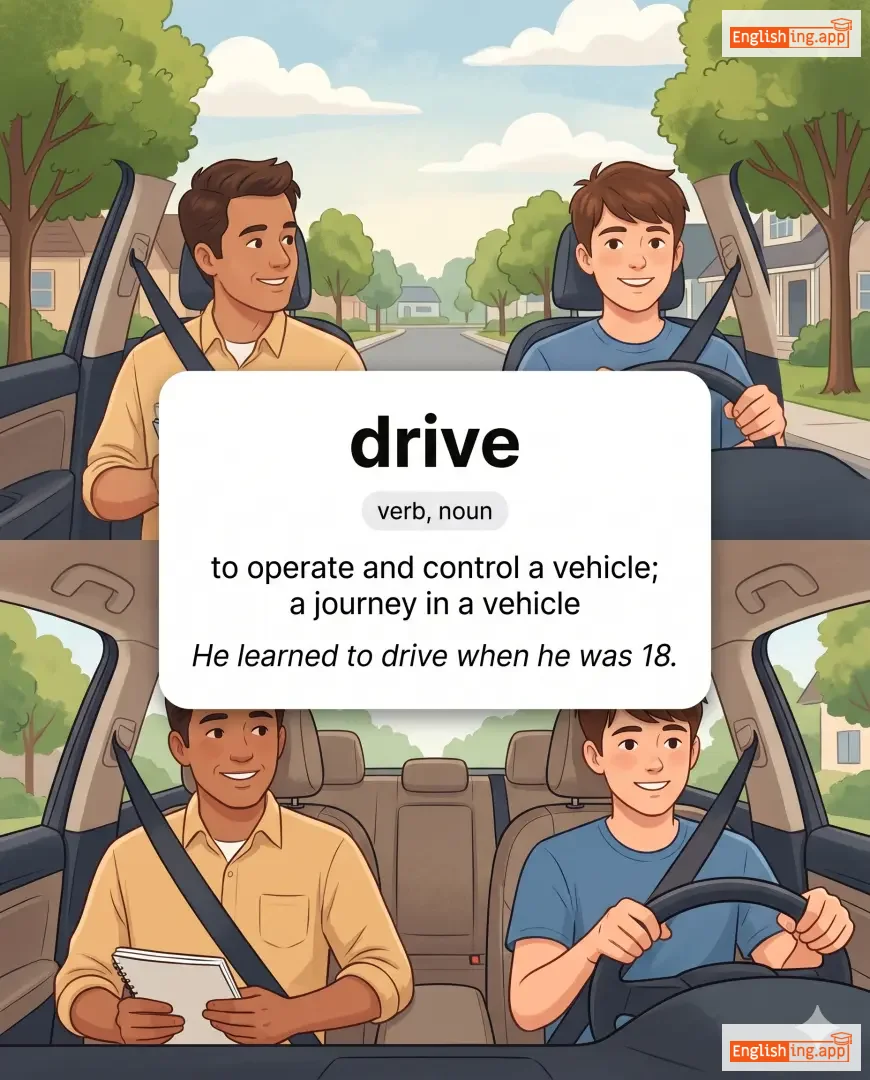
drive definition card — visual illustration of the meaning
verb, noun
/draɪv/
conducir (conducir)

to operate and control a vehicle; a journey in a vehicle

"He learned to drive when he was 18."

"Él aprendió a conducir cuando tenía 18 años." (Él aprendió a conducir cuando tenía 18 años.)
noun
/ˈdrɪvəl/
cháchara (chachara)

silly or nonsensical talk

"The politician’s speech was full of meaningless drivel."

"El discurso del político estaba lleno de cháchara sin sentido." (El discurso del politico estaba lleno de cháchara sin sentido.)
Driver definition card — visual illustration of the meaning
🧑‍✈️

Driver (dráiver)

noun
/ˈdraɪvər/
conductor (conductor)

a person who operates a vehicle

"The taxi driver took us to the airport."

"El conductor del taxi nos llevó al aeropuerto." (El conductor del taxi nos llevo al aeropuerto.)
noun
/ˈdraɪv.weɪ/
entrada de coche (entrada de coche)

a short private road leading from a street to a house or garage

"The car was parked in the driveway next to the garden."

"El coche estaba estacionado en la entrada de coche junto al jardín." (El coche estaba estacionado en la entrada de coche junto al jardín.)
verb
/ˈdraɪvɪŋ/
conducción (conducción)

the act of controlling and operating a vehicle; guiding or motivating something forward

"She loves driving along the coast on weekends."

"A ella le encanta conducir a lo largo de la costa los fines de semana." (A ella le encanta conducir a lo largo de la costa los fines de semana.)
verb
/ˈdrɪzəl/
llovizna (llovizna)

to rain lightly with very small drops

"It began to drizzle just as we left the house."

"Comenzó a lloviznar justo cuando salimos de la casa." (Comenzó a lloviznar justo cuando salimos de la casa.)
adjective
/droʊl/
gracioso (gracioso)

curious or unusual in a way that provokes dry amusement

"He had a droll sense of humor that made everyone laugh."

"Él tenía un sentido del humor gracioso que hacía reír a todos." (El tenía un sentido del humor gracioso que hacía reír a todos.)
noun/verb
/droʊn/
zumbido / dron (zumbido / dron)

a continuous low humming sound; an unmanned flying device

"The drone of bees filled the garden."

"El zumbido de las abejas llenó el jardín." (El zumbido de las abejas llenó el jardín.)
verb
/druːp/
caer (kaer)

to bend or hang downward; to become weak or tired

"The flowers began to droop in the heat."

"Las flores empezaron a caer debido al calor." (Las flores empezaron a caer debido al calor.)
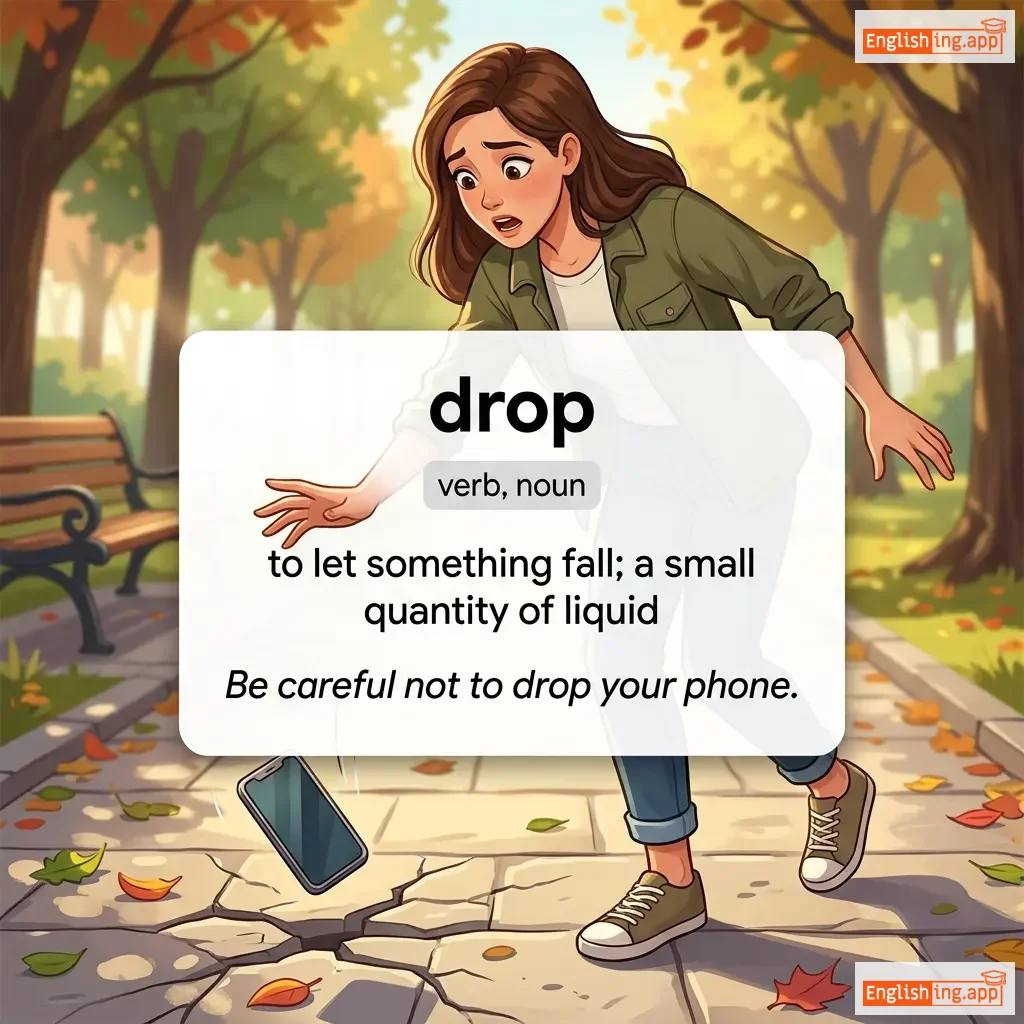
drop definition card — visual illustration of the meaning
verb, noun
/drɒp/
dejar caer / gota (dejar caer / gota)

to let something fall; a small quantity of liquid

"Be careful not to drop your phone."

"Ten cuidado de no dejar caer tu teléfono." (Ten cuidado de no dejar caer tu telefono.)
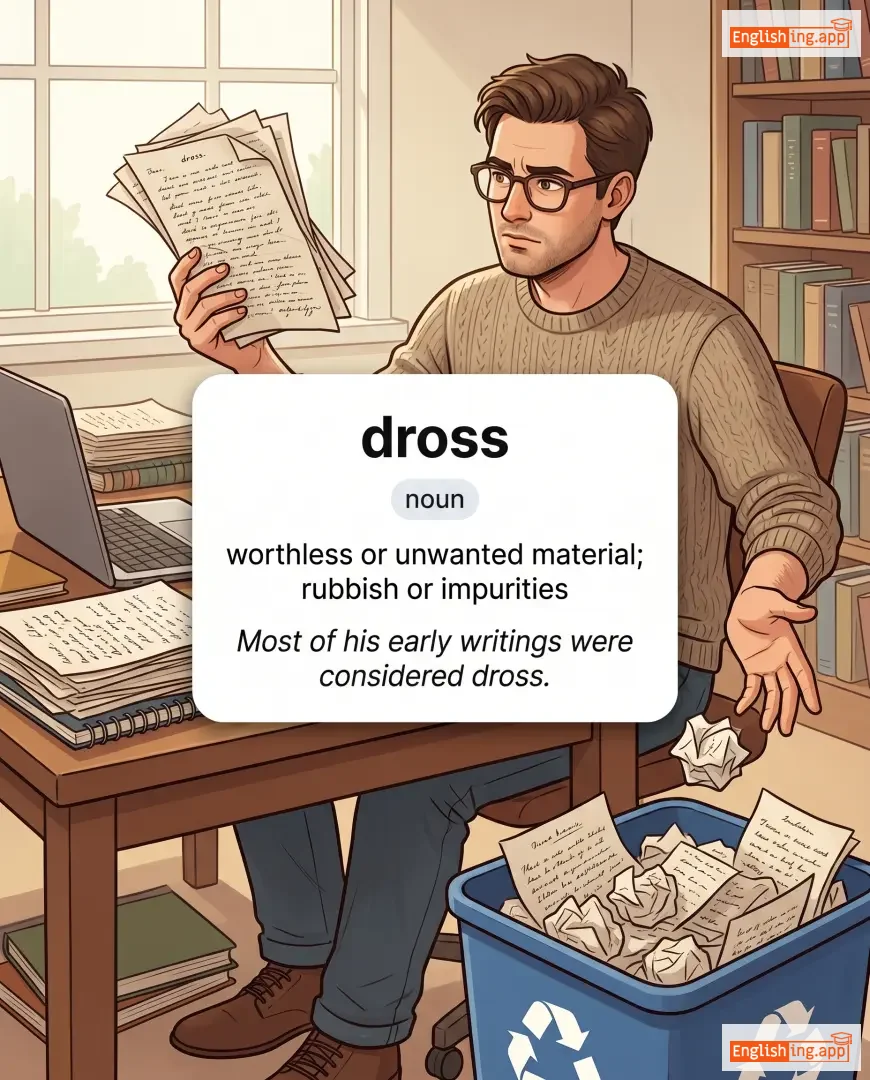
dross definition card — visual illustration of the meaning
noun
/drɒs/
escoria (escoria)

worthless or unwanted material; rubbish or impurities

"Most of his early writings were considered dross."

"La mayoría de sus primeros escritos fueron considerados escoria." (La mayoria de sus primeros escritos fueron considerados escoria.)
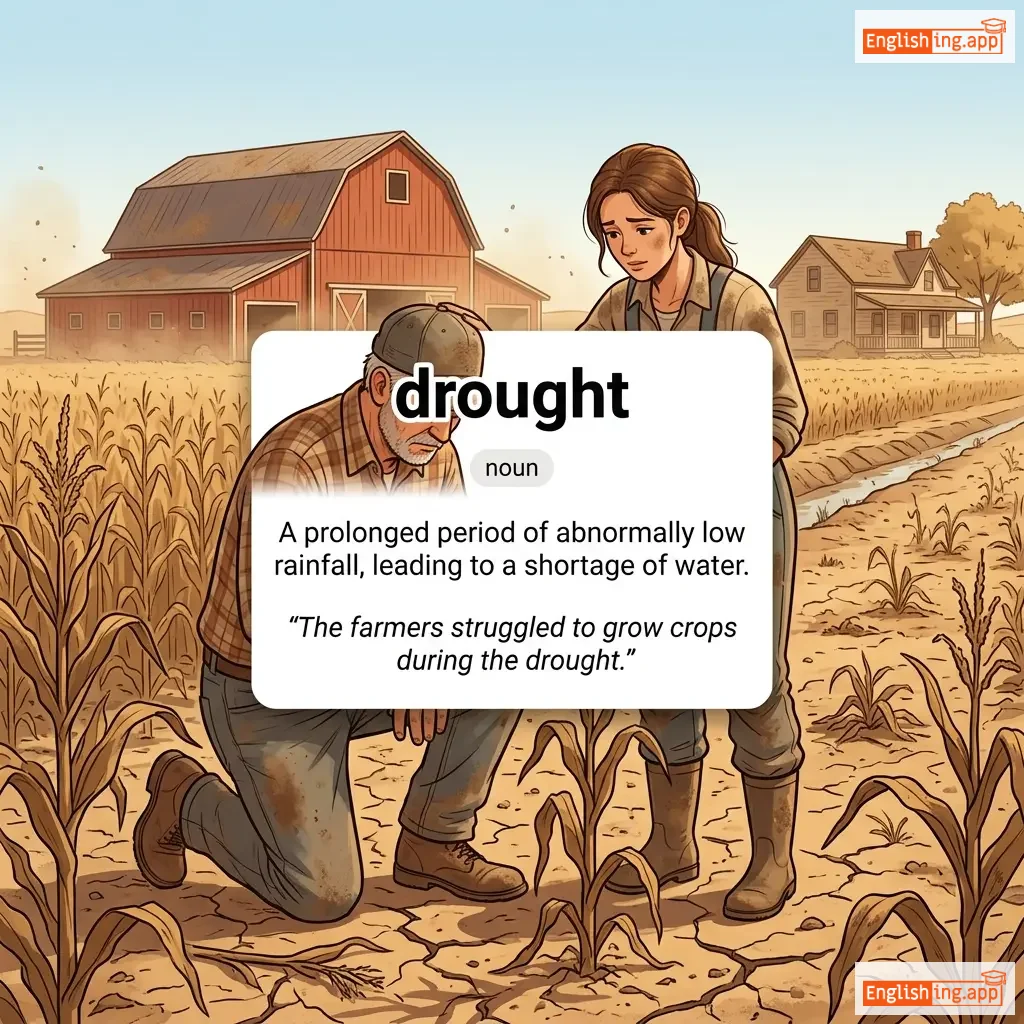
drought definition card — visual illustration of the meaning
noun
/draʊt/
sequía (sequia)

A prolonged period of abnormally low rainfall, leading to a shortage of water.

"The farmers struggled to grow crops during the drought."

"Los agricultores lucharon por cultivar los cultivos durante la sequía." (Los agricultores lucharon por cultivar los cultivos durante la sequía.)
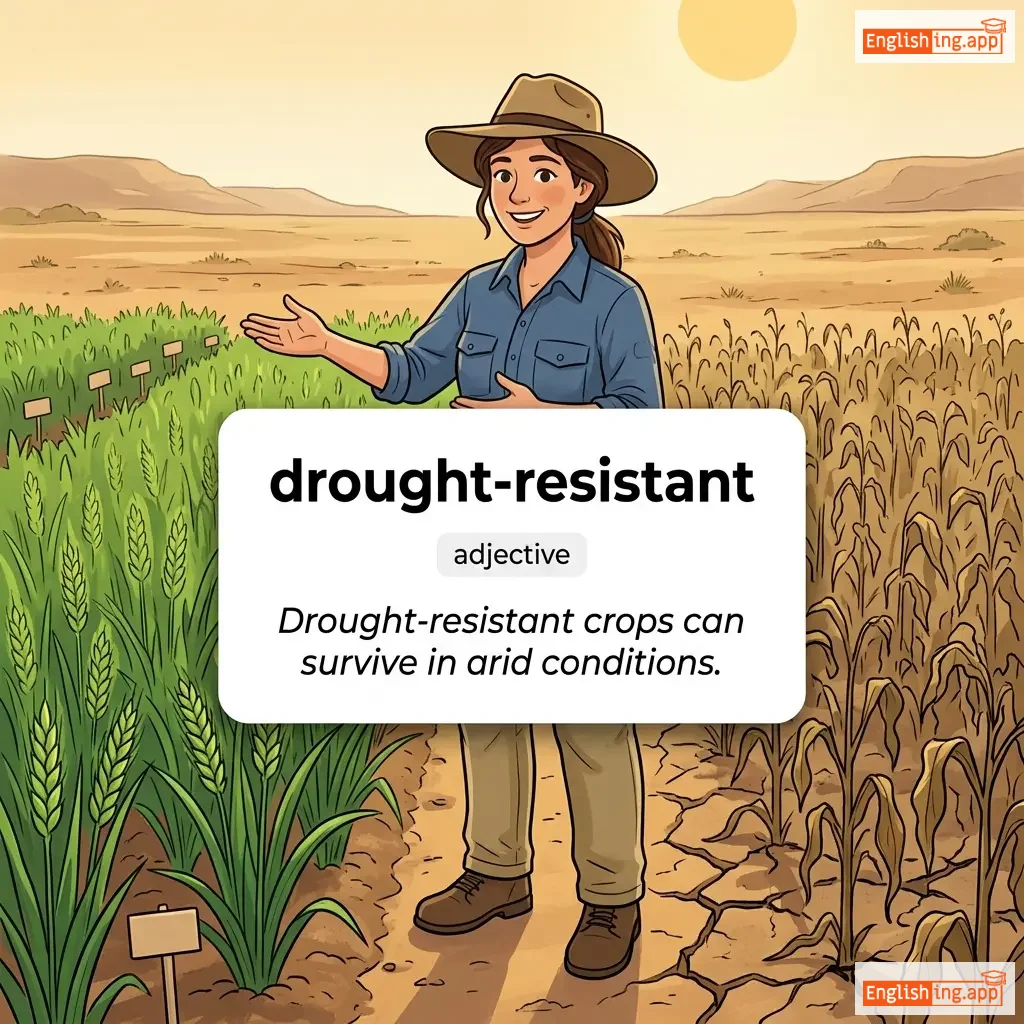
drought-resistant definition card — visual illustration of the meaning
adjective
draʊt rɪˈzɪs.tənt
resistente a la sequía (resistente a la sequía)

Able to survive and grow despite limited water availability or drought conditions.

"Drought-resistant crops can survive in arid conditions."

"Los cultivos resistentes a la sequía pueden sobrevivir en condiciones áridas." (Los cultivos resistentes a la sequía pueden sobrevivir en condiciones áridas.)
verb
/draʊn/
ahogarse (ahogarse)

to die or cause to die by being submerged in and inhaling water

"He nearly drowned while swimming in the river."

"Él casi se ahogó mientras nadaba en el río." (El casi se ahogo mientras nadaba en el rio.)
adjective
/ˈdraʊzi/
somnoliento (somnoliento)

Feeling sleepy or half-asleep.

"The warm room made him feel drowsy."

"La habitación cálida lo hizo sentirse somnoliento." (La habitacion calida lo hizo sentirse somnoliento.)
🧑‍🌾

drudge (dradj)

noun
/drʌdʒ/
trabajador esforzado (trabajador esforzado)

A person made to do hard, menial, or dull work.

"He felt like a drudge, stuck in repetitive tasks all day."

"Se sentía como un trabajador esforzado, atrapado en tareas repetitivas todo el día." (Se sentía como un trabajador esforzado, atrapado en tareas repetitivas todo el día.)
noun
/ˈdrʌdʒəri/
trabajo arduo y monótono (trabajo arduo y monotono)

Hard, menial, or dull work.

"She wanted to escape the drudgery of her daily routine."

"Ella quería escapar de la rutina monótona de su día a día." (Ella queria escapar de la rutina monotona de su dia a dia.)
noun
/drʌɡ/
droga (droga)

a substance used as a medicine or an illegal addictive substance

"The doctor prescribed a new drug for the illness."

"El médico recetó una nueva droga para la enfermedad." (El médico recetó una nueva droga para la enfermedad.)
noun
/ˈdrʌɡˌstɔːr/
farmacia (farmacia)

A retail store that sells medicines, health-related products, and sometimes cosmetics or snacks.

"I stopped by the drugstore to buy some cold medicine."

"Fui a la farmacia a comprar medicina para el resfriado." (Fui a la farmacia a comprar medicina para el resfriado.)
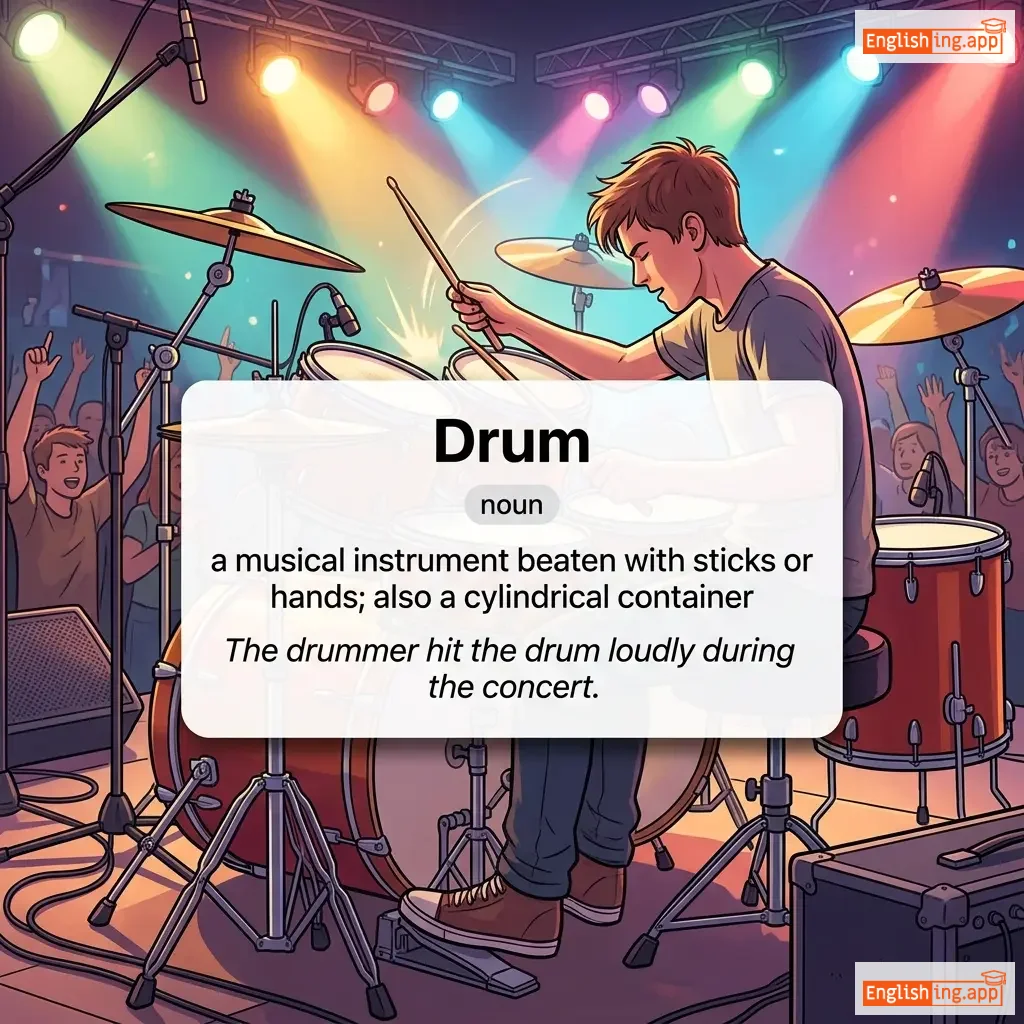
Drum definition card — visual illustration of the meaning
noun
/drʌm/
tambor o barril (tambor o barril)

a musical instrument beaten with sticks or hands; also a cylindrical container

"The drummer hit the drum loudly during the concert."

"El batería golpeó el tambor fuertemente durante el concierto." (El bateria golpeo el tambor fuertemente durante el concierto.)
noun
/ˈdrʌmɪt/
drumet (drumet)

a small drum used in military or marching bands

"The drummer played a steady beat on the drumet during the parade."

"El batería tocó un ritmo constante en el drumet durante el desfile." (El bateria toco un ritmo constante en el drumet durante el desfile.)
noun
/ˈdrʌm.stɪk/
Vaina de moringa (Vaina de moringa)

long green pod vegetable from moringa tree; nutritious vegetable used in curries

"The drumstick adds a unique flavor to the traditional fish curry."

"El drumstick agrega un sabor único al curry de pescado tradicional." (El drumstick agrega un sabor único al curry de pescado tradicional.)
adjective
/drʌŋk/
borracho (borracho)

affected by alcohol to the point of losing control of one's faculties or behavior

"He was too drunk to walk straight."

"Estaba demasiado borracho para caminar recto." (Estaba demasiado borracho para caminar recto.)
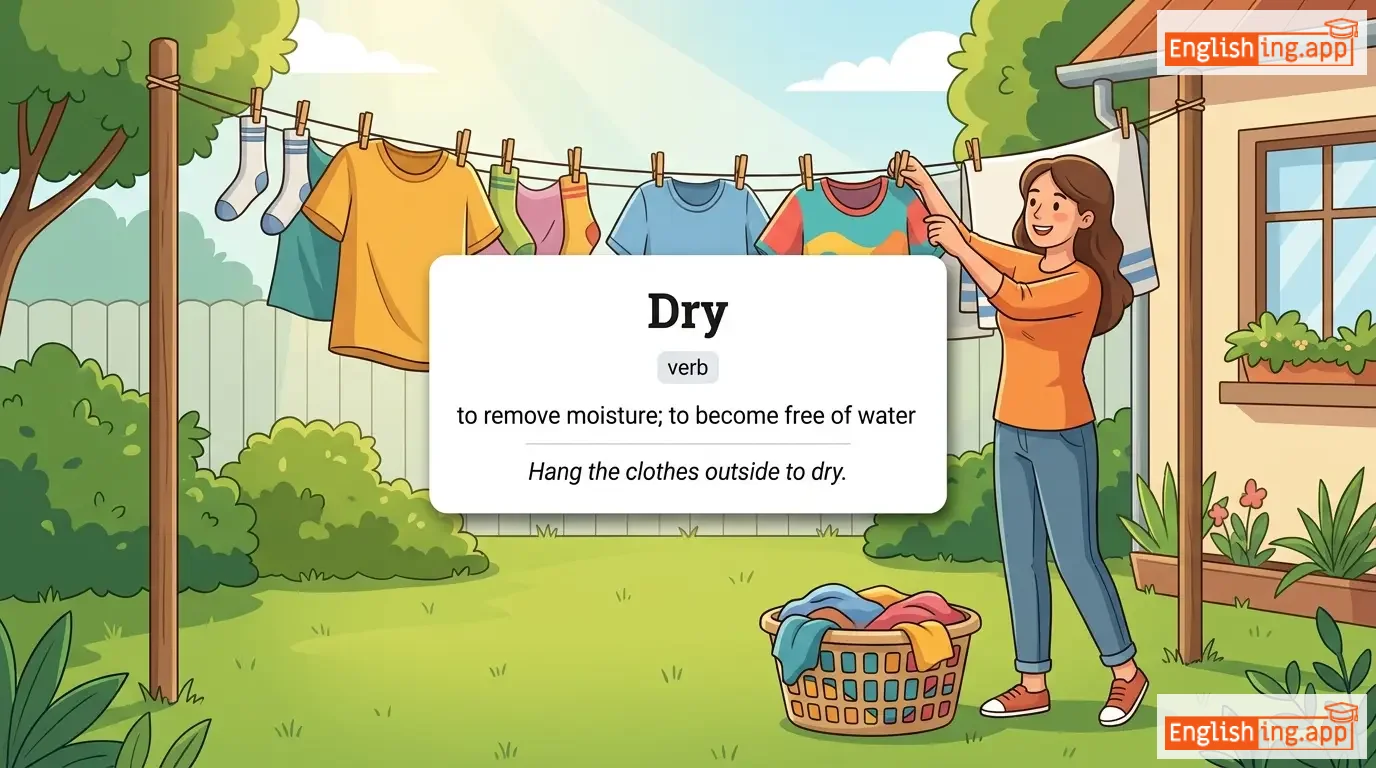
Dry definition card — visual illustration of the meaning
adjective
/draɪ/
felicidad (felicidad)

free from moisture or liquid; not wet

"The clothes are dry after hanging in the sun."

"La ropa está seca después de colgarse al sol." (La ropa está seca después de colgarse al sol.)
noun
/draɪ ˈtʃɪl.i/
pimiento seco (pimiento seco)

dried chili peppers used as spice for adding heat to food

"The recipe calls for two dry chillies to make it spicy."

"La receta requiere dos pimientos secos para hacerlo picante." (La receta requiere dos pimientos secos para hacerlo picante.)
noun
/draɪ fɪʃ/
pescado seco (pescado seco)

fish that has been preserved by drying in the sun or by other dehydration methods

"Dry fish is a popular preserved food in many coastal regions."

"El pescado seco es un alimento conservado popular en muchas regiones costeras." (El pescado seco es un alimento konservado popular en muchas rejiones kosteras)
noun
/draɪ ɡuːs ˈbɛri/
grosella seca (grosella seca)

dehydrated amla fruit, rich in vitamin C and used for medicinal and culinary purposes

"Dry goose berry powder is excellent for hair growth."

"El polvo de grosella seca es excelente para el crecimiento del cabello." (El polvo de grosella seca es excelente para el crecimiento del cabello.)
noun
/draɪ ˈmæŋgoʊ ˈpaʊdər/
amchur (amchur)

a tangy powder made from dried raw mangoes, used as a spice in Indian cuisine

"The chef sprinkled dry mango powder over the chaat for extra tanginess."

"El chef espolvoreó polvo de mango seco sobre el chaat para darle más acidez." (El chef espolvoreo polvo de mango seco sobre el chaat para darle mas acidez.)
adjective
/ˈdjuːəl/
dual (dual)

having two parts or elements; two in one

"The dual nature of the problem required careful consideration."

"La naturaleza dual del problema requirió una consideración cuidadosa." (La naturaleza dual del problema requirió una consideración cuidadosa.)
verb
/dʌb/
doblar (doblar)

to give a name or label to something; to add a soundtrack to a film or recording

"The movie was dubbed into several languages for international release."

"La película fue doblada a varios idiomas para su lanzamiento internacional." (La pelicula fue doblada a varios idiomas para su lanzamiento internacional.)
adjective
/ˈdjuːbiəs/
dudoso (dudoso)

Hesitating or doubting; not to be relied upon.

"She gave him a dubious look after hearing his excuse."

"Ella le dio una mirada dudosa después de escuchar su excusa." (Ella le dio una mirada dudosa despues de escuchar su excusa.)
noun, verb
/dʌk/
felicidad (felicidad)

a waterbird with a broad bill and webbed feet; to lower the head or body quickly to avoid something

"He ducked to avoid the flying ball."

"No pudo ocultar su felicidad cuando recibió el premio." (No pudo ocultar su felicidad cuando recibió el premio.)
noun
/ˈdʌklɪŋ/
patito (patito)

a young duck

"The mother duck led her ducklings to the pond."

"La mamá patito llevó a sus patitos al estanque." (La mama patito llevo a sus patitos al estanque.)
adjective
/ˈdʌktaɪl/
dúctil (ductil)

capable of being stretched into a thin wire without breaking; easily influenced

"Gold is a very ductile metal."

"El oro es un metal muy dúctil." (El oro es un metal muy ductil.)
adjective
/djuː/
vencido / debido (vencido / debido)

expected at a certain time or required by a certain date

"The rent is due on the first of every month."

"El alquiler se vence el primer día de cada mes." (El alquiler se vence el primer día de cada mes.)
noun
/djuːˈɛnə/
gobernanta (gobernanta)

an older woman acting as a governess or chaperone, especially in Spanish families

"The young lady was accompanied by a duenna during the festival."

"La joven estaba acompañada por una duéena durante el festival." (La joven estaba acompañada por una duéena durante el festival.)
noun
/djuːˈɛt/
dúo (duo)

a musical performance by two singers or instrumentalists

"They sang a beautiful duet together on stage."

"Cantaron un hermoso dúo juntos en el escenario." (Cantaron un hermoso duo juntos en el escenario.)
adjective
/ˈdʌlsɪt/
dulce (dulce)

sweet and soothing (often used ironically)

"She was enchanted by his dulcet voice."

"Ella estaba encantada por su dulce voz." (Ella estaba encantada por su dulce voz.)
adjective
/dʌl/
aburrido (aburrido)

lacking brightness, vividness, or interest; boring or not sharp

"The lecture was so dull that many students fell asleep."

"La conferencia fue tan aburrida que muchos estudiantes se quedaron dormidos." (La conferencia fue tan aburrida que muchos estudiantes se quedaron dormidos.)
noun
/ˈdʌlərd/
persona tonta (persona tonta)

a slow or stupid person

"He was considered a dullard by his classmates."

"Él fue considerado un tonto por sus compañeros de clase." (Él fue considerado un tonto por sus compañeros de clase.)
adverb
/ˈduːli/
puntualmente, debidamente (puntualmente, debidamente)

in accordance with what is required or appropriate; at the proper time

"The documents were duly signed and submitted."

"Los documentos fueron debidamente firmados y enviados." (Los documentos fueron debidamente firmados y enviados.)