Словари

Словарь английского языка | Значения слов, определения и примеры

adjective
/ɪkˈstɛnjueɪtɪŋ/
смягчающий (smyagchayushchiy)

serving to make a fault or an offense seem less serious

"She asked for leniency due to extenuating circumstances."

"Она попросила снисхождения из-за смягчающих обстоятельств." (Ona poprosila sniskhozhdeniya iz-za smyagchayushchikh obstoyatel'stv.)
noun/adjective
/ɪkˈstɪəriər/
внешняя часть (vneshnyaya chast')

the outer surface or part of something; relating to the outside

"The exterior of the house was painted white."

"Внешняя часть дома была покрашена в белый цвет." (Vneshnyaya chast' doma byla pokrashena v belyy tsvet.)
adjective
/ɪkˈstɜrnəl/
внешний (vneshniy)

situated on or relating to the outside of something; coming from outside

"The external factors affected the company's growth."
"Внешние факторы повлияли на рост компании." (Vneshniye faktory povliyali na rost kompanii.)
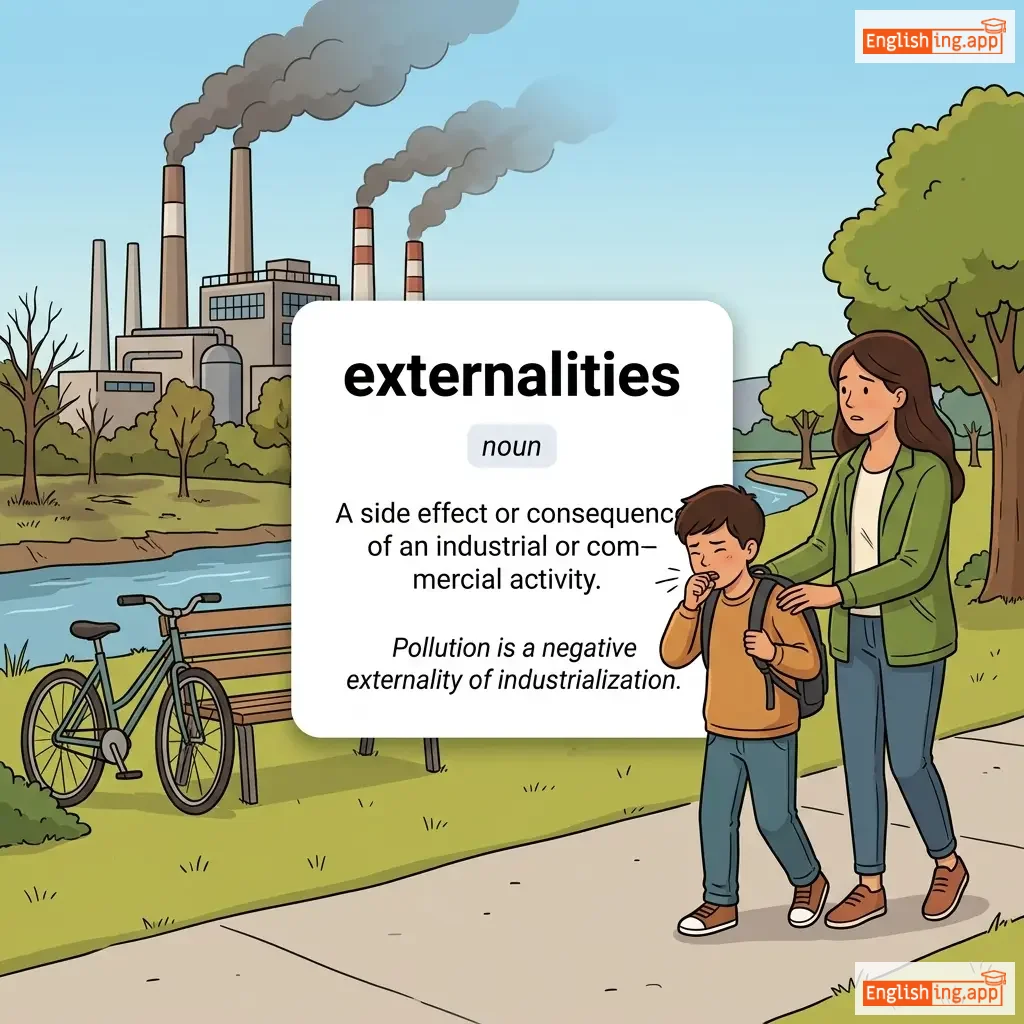
externalities definition card — visual illustration of the meaning
noun
ˌɛkstərˈnælɪtiz
экстернальность (eksternal'nost')

A side effect or consequence of an industrial or commercial activity.

"Pollution is a negative externality of industrialization."

"Загрязнение — это негативная экстернальность индустриализации." (Zagryaznenie — eto negativnaya eksternal'nost' industrializatsii.)
adverb
/ɪkˈstɜrnəli/
внешне (vneshne)

in a way that relates to the outer surface or outside appearance

"The building appeared externally modern, but inside it was quite old-fashioned."
"Здание выглядело внешне современным, но внутри оно было довольно старомодным." (Zdanie vyglyadelo vneshne sovremennym, no vnutri ono bylo dovolno staromodnym.)
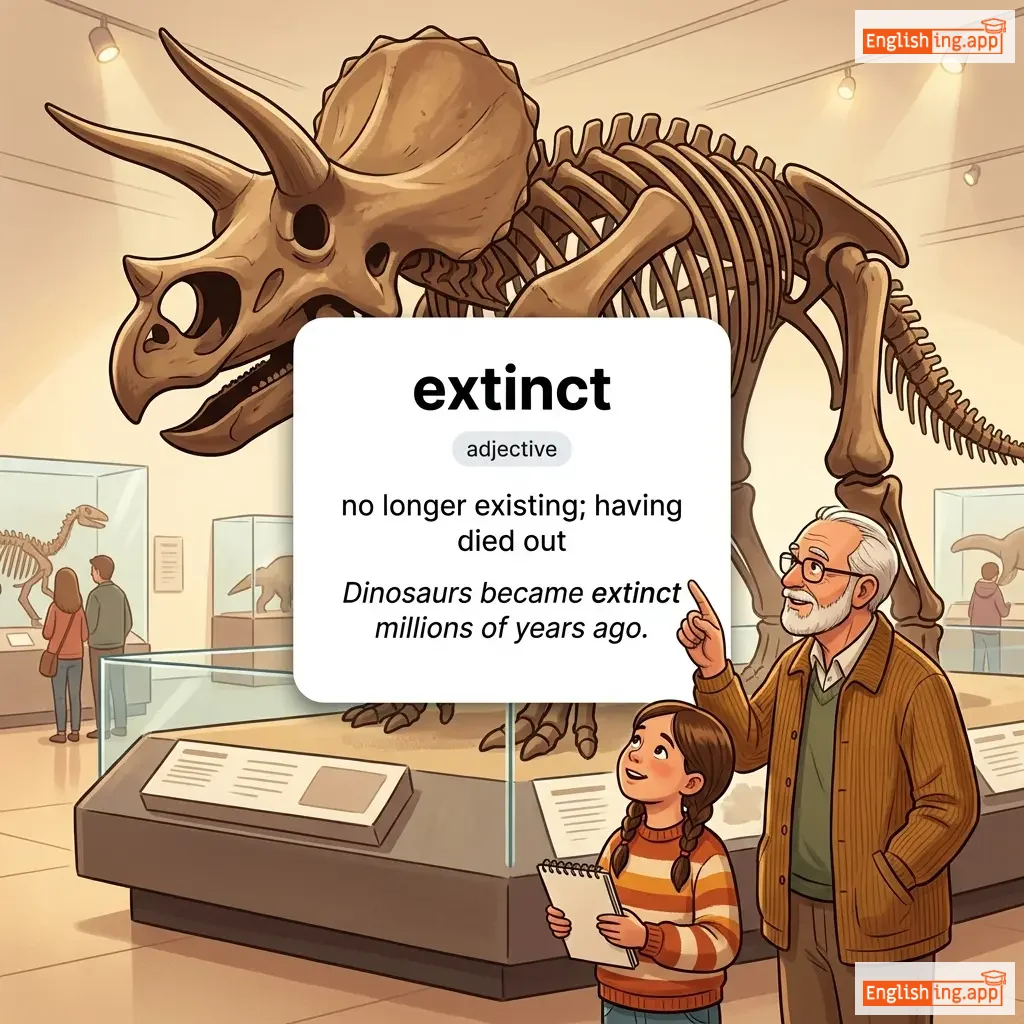
extinct definition card — visual illustration of the meaning
adjective
/ɪkˈstɪŋkt/
вымерший (vymershiy)

no longer existing; having died out

"Dinosaurs became extinct millions of years ago."

"Динозавры стали вымершими миллионы лет назад." (Dinozavry stali vymershimi milliony let nazad.)
verb
/ɪkˈstɪŋ.ɡwɪʃ/
погасить (pogasit)

to put out a fire, light, or to end something

"The firefighters managed to extinguish the blaze within an hour."
"Пожарные смогли потушить пожар за час." (Pozharnye smogli potushit' pozhary za chas.)
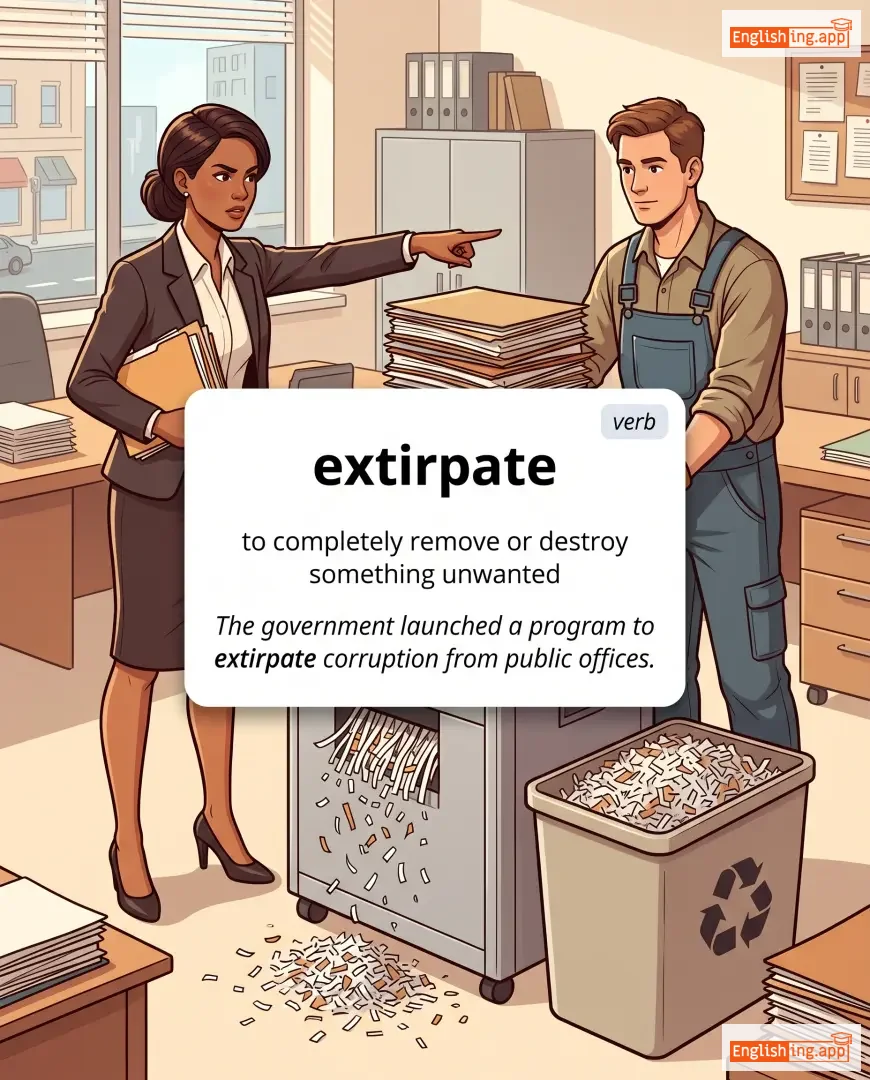
extirpate definition card — visual illustration of the meaning
verb
/ˈek.stər.peɪt/
истребить (istrebit)

to completely remove or destroy something unwanted

"The government launched a program to extirpate corruption from public offices."

"Правительство запустило программу для искоренения коррупции в государственных учреждениях." (Pravitel'stvo zapustilo programmu dlya iskoreneniya korrupcii v gosudarstvennykh uchrezhdeniyakh.)
verb
/ɪkˈstoʊl/
восхвалять (voshvalyat)

to praise enthusiastically and highly

"The teacher extolled the student's dedication and hard work."

"Учитель восхвалил преданность и трудолюбие ученика." (Uchitel' voshvalil predannost' i trudolyubie uchenika.)
verb
/ɪkˈstɔːrt/
вымогать (vymogat)

to obtain something, especially money, by force, threats, or unfair means

"The gang attempted to extort money from local shopkeepers."

"Банда попыталась вымогать деньги у местных торговцев." (Banda popytalis' vymogat' dengi u mestnykh torgovtsev.)
noun
/ɪkˈstɔːr.ʃən/
вымогательство (vymogatel'stvo)

the practice of obtaining something, especially money, through force or threats

"The businessman was arrested for extortion after threatening his partner."
"Бизнесмен был арестован за вымогательство после того, как пригрозил своему партнеру." (Biznesmen byl arestovan za vymogatel'stvo posle togo, kak prigrozil svoemu partneru.)
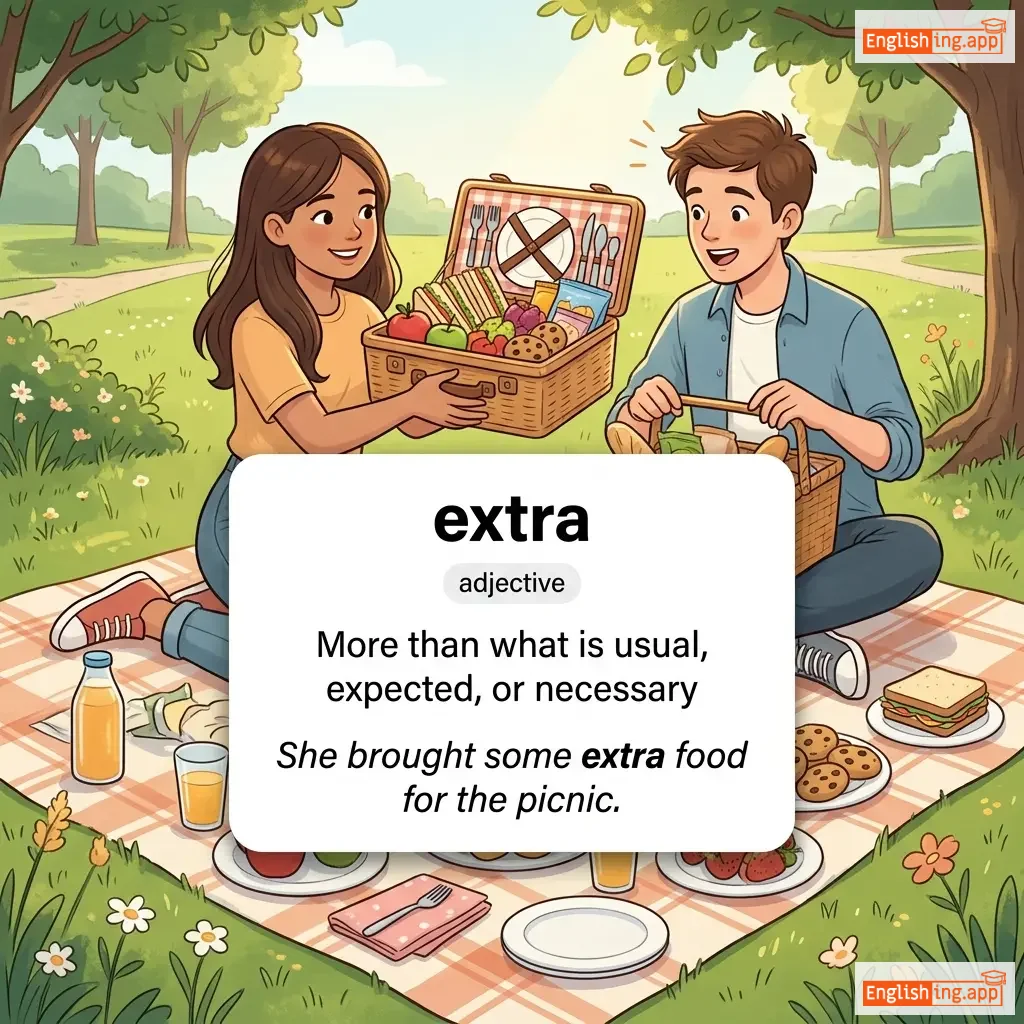
extra definition card — visual illustration of the meaning
adjective
/ˈɛkstrə/
дополнительный (dopolnitel'nyy)

More than what is usual, expected, or necessary

"She brought some extra food for the picnic."

"Она принесла дополнительную еду для пикника." (Ona prinesla dopolnitel'nuyu yedu dlya piknika.)
extract definition card — visual illustration of the meaning
verb
/ɪkˈstrækt/
извлекать (izvlekat')

to remove or take out something, often with effort

"The dentist had to extract the damaged tooth."

"Стоматологу пришлось извлечь поврежденный зуб." (Stomatologu prishlos' izvlech' povrezhdennyy zub.)
noun
/ɪkˈstrækʃən/
извлечение (izvlechenie)

the act of removing something, especially by pulling it out

"The extraction of oil from the ground requires special equipment."

"Извлечение нефти из земли требует специального оборудования." (Izvlechenie nefti iz zemli trebuyet spetsial'nogo oborudovaniya.)
verb
/ˈɛkstrəˌdaɪt/
экстрадировать (ekstradirovat')

to hand over a person accused or convicted of a crime to another country or state

"The government agreed to extradite the fugitive to his home country."

"Правительство согласилось экстрадировать беглеца в его родную страну." (Pravitel'stvo soglasilos' ekstradirovat' beglitsa v ego rodnuyu stranu.)
noun
/ˌɛkstrəˈdɪʃən/
экстрадиция (ekstraditsiya)

the official process of sending someone accused of a crime to another country or state

"The extradition of the suspect was delayed due to legal issues."

"Экстрадиция подозреваемого была задержана из-за юридических проблем." (Ekstraditsiya podozrevaemogo byla zaderzhana iz-za yuridicheskikh problem.)
adjective
/ˌɛkstrəˌdʒuːˈdɪʃəl/
вне юрисдикции суда (vne yuridiktsii suda)

done outside the authority of the legal system or judicial process

"The activists condemned the extrajudicial killings."
"Активисты осудили экстраюдициальные убийства." (Aktivisty osudili ekstrayuditsial'nye ubiystva.)
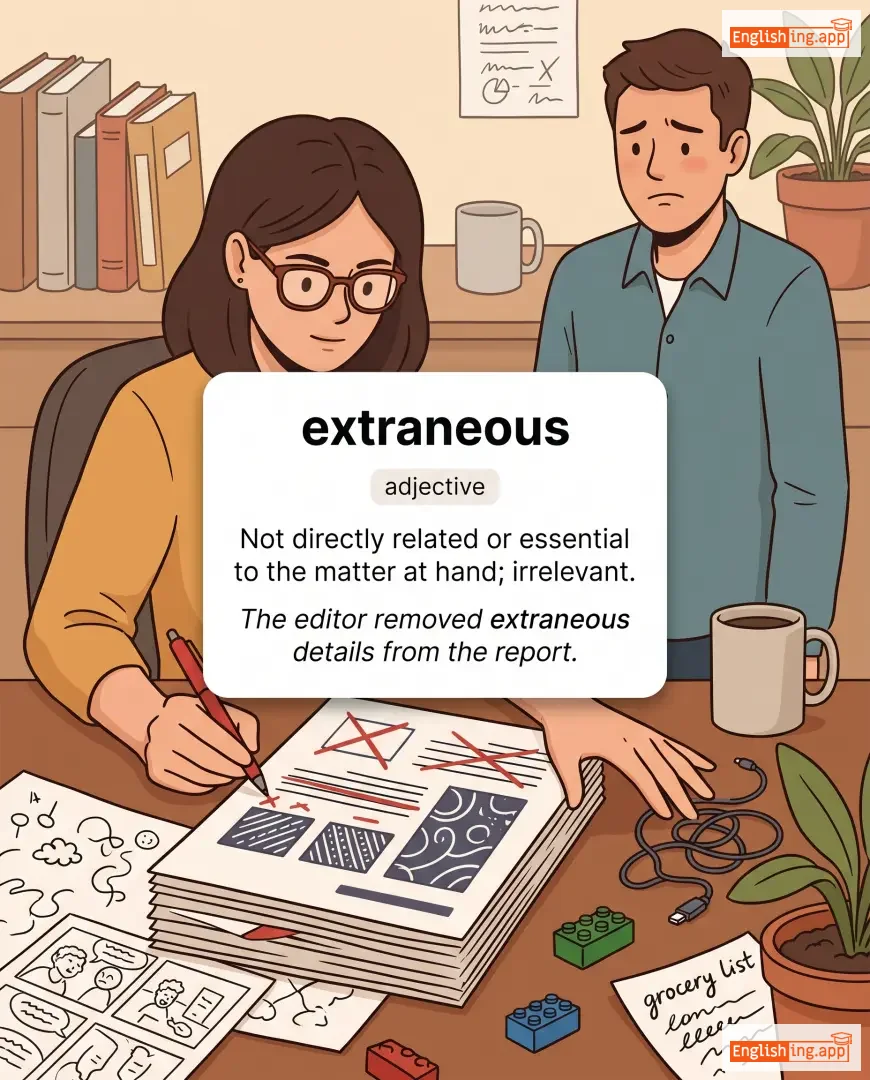
extraneous definition card — visual illustration of the meaning
adjective
/ɪkˈstreɪ.ni.əs/
нерелевантный (nerelievantny)

Not directly related or essential to the matter at hand; irrelevant.

"The editor removed extraneous details from the report."

"Редактор удалил нерелевантные детали из отчета." (Redaktor udalil nerelievantnye detali iz otcheta.)
adjective
/ɪkˈstrɔːr.dəˌnɛr.i/
необыкновенный (neobyknovennyy)

Very unusual, remarkable, or exceptional.

"She showed extraordinary courage during the crisis."
"Она проявила исключительное мужество в период кризиса." (Ona proyavila isklyuchitel'noye muzhestvo v period krizisa.)
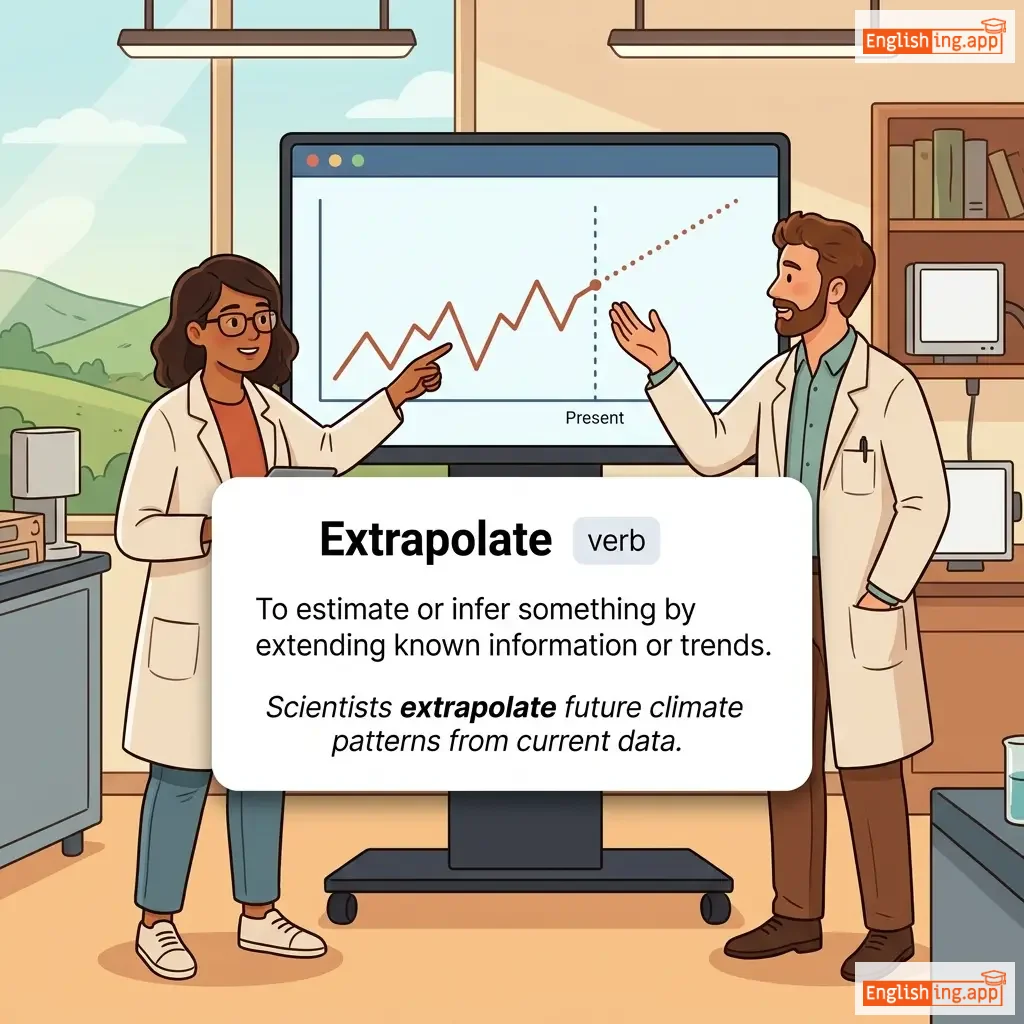
Extrapolate definition card — visual illustration of the meaning
verb
/ɪkˈstræp.əˌleɪt/
экстраполировать (ekstrapolirovat)

To estimate or infer something by extending known information or trends.

"Scientists extrapolate future climate patterns from current data."
"Ученые экстраполируют будущие климатические паттерны из текущих данных." (Uchenye ekstrapoliruyut budushchie klimatischeskie patterny iz tekushchikh dannykh.)
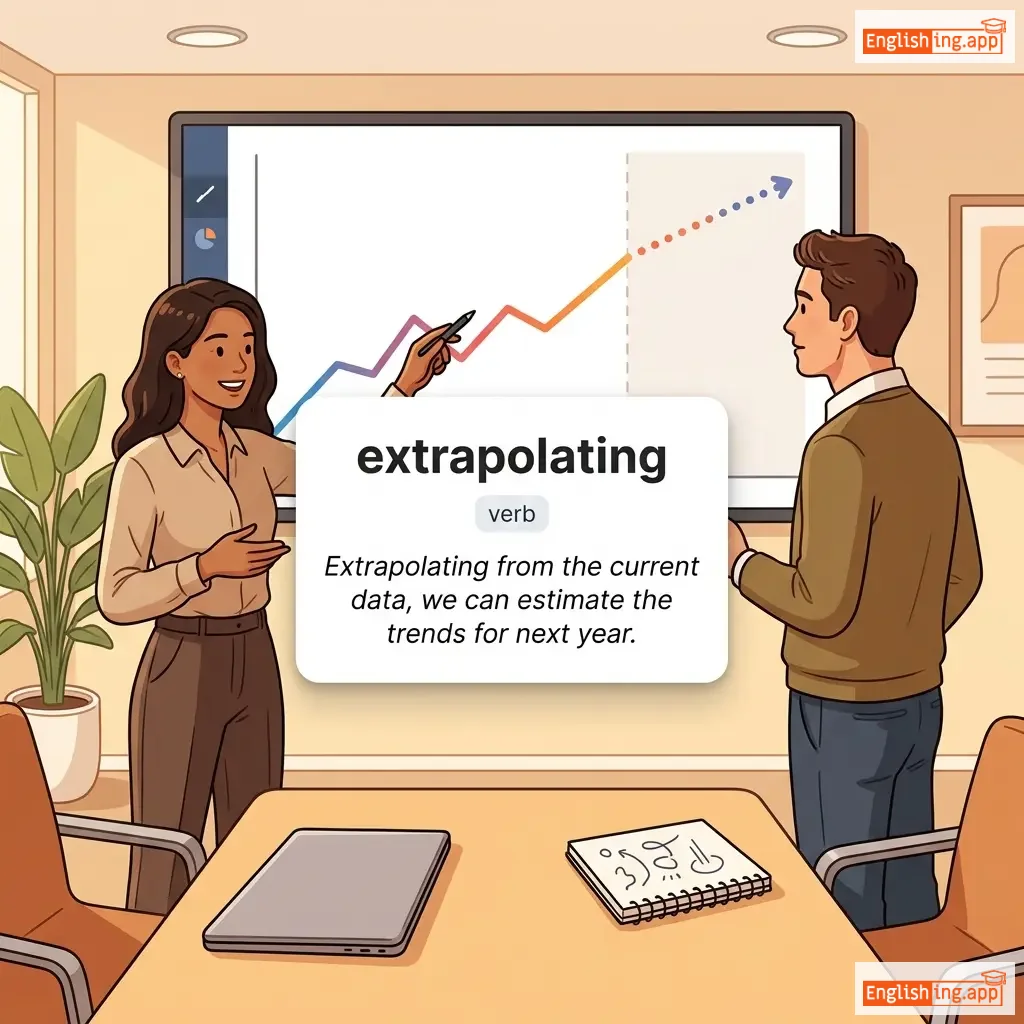
extrapolating definition card — visual illustration of the meaning
verb
/ɪkˈstræpəleɪtɪŋ/
экстраполировать (ekstrapolirovat)

Extend the application of (a method or conclusion) to an unknown situation by assuming that existing trends will continue.

"Extrapolating from the current data, we can estimate the trends for next year."
"Экстраполируя текущие данные, мы можем оценить тенденции на следующий год." (Ekstrapoliruyya tekushchie dannye, my mozhem otsenit' tendentsii na sleduyushchiy god.)
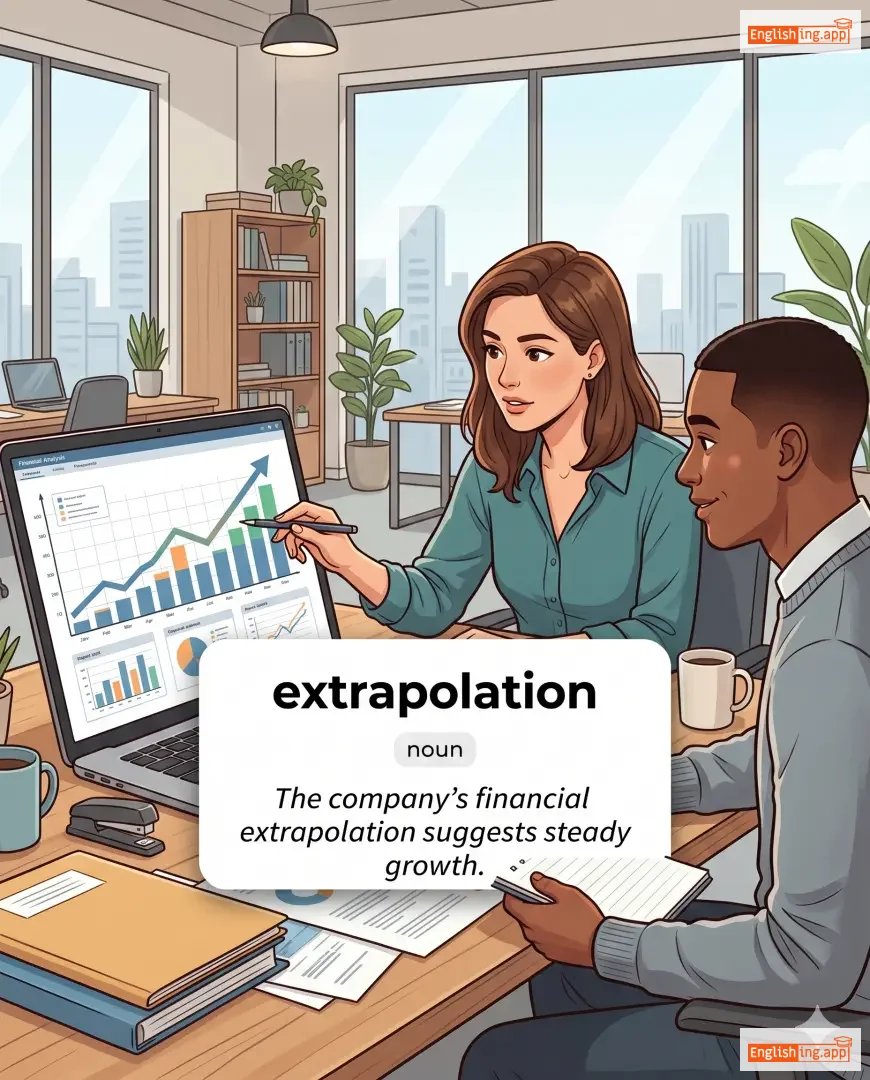
extrapolation definition card — visual illustration of the meaning
noun
/ɪkˌstræp.əˈleɪ.ʃən/
экстраполяция (ekstrapolyatsiya)

The process of estimating or predicting something based on extending known information.

"The company's financial extrapolation suggests steady growth."

"Финансовая экстраполяция компании предполагает стабильный рост." (Finansovaya ekstrapolyatsiya kompanii predpolagayet stabil'nyy rost.)
noun
/ɪkˈstræv.ə.ɡəns/
расточительство (rastochitel'stvo)

Excessive spending or lack of restraint in using resources.

"His extravagance on luxury cars worried his family."

"Его расточительность на роскошные автомобили волновала его семью." (Ego rastochitel'nost' na roskoshnye avtomobili volnovala ego sem'yu.)
adjective
/ɪkˈstrævəɡənt/
экстравагантный (ekstravagantny)

Spending or using more than is necessary; excessively elaborate or luxurious.

"She wore an extravagant dress to the party."
"Она носила экстравагантное платье на вечеринке." (Ona nosila ekstravagantnoe plat'ye na vecherinke.)
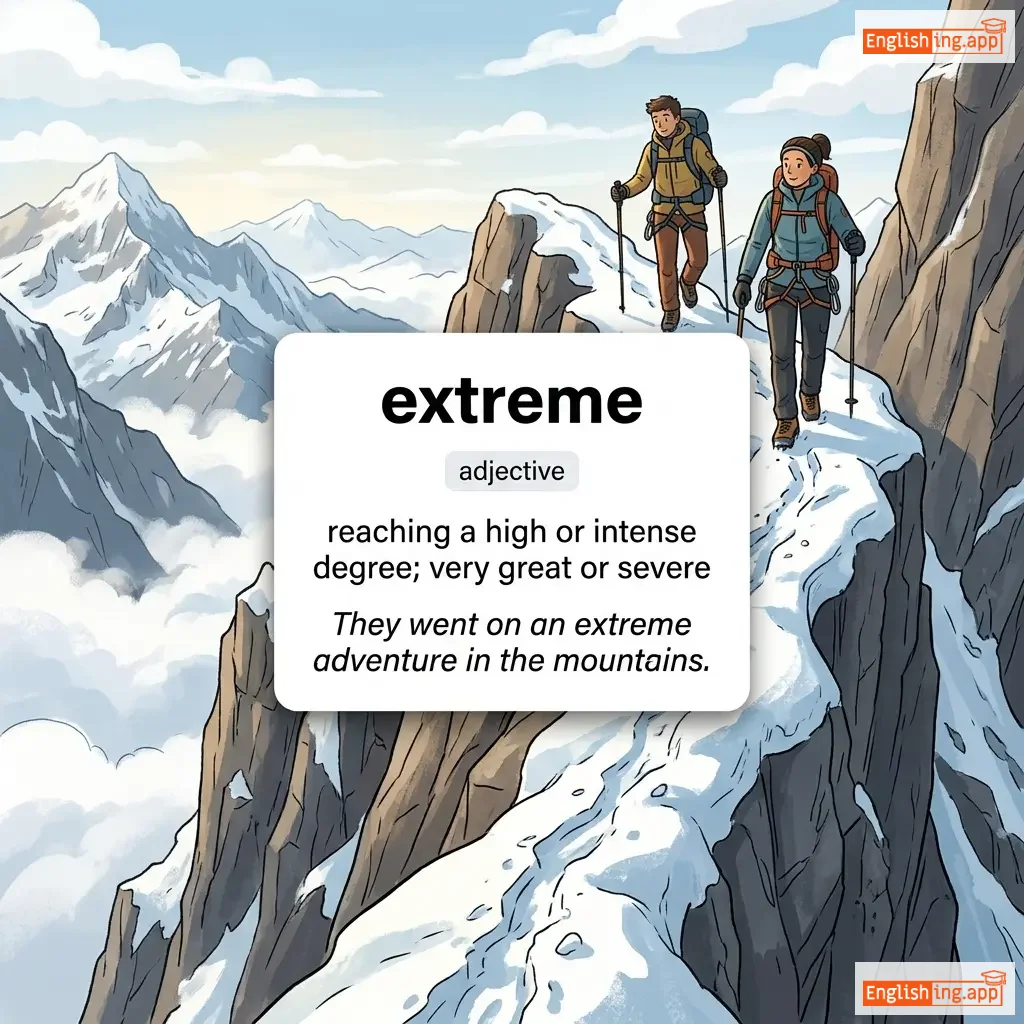
extreme definition card — visual illustration of the meaning
adjective
/ɪkˈstriːm/
экстремальный (ekstremal'nyy)

reaching a high or intense degree; very great or severe

"They went on an extreme adventure in the mountains."

"Они отправились на экстремальное приключение в горы." (Oni otpravilis' na ekstremal'noye priklyucheniye v gory.)
adverb
/ɪkˈstriːmli/
крайне (kraine)

to a very high degree; very much

"The movie was extremely interesting."

"Фильм был крайне интересным." (Film byl krajne interesnym.)
noun
/ɪkˈstriːmɪst/
экстремист (ekstremist)

A person who holds extreme political or religious views and may act on them.

"The group was led by an extremist with radical ideas."

"Группа была возглавлена экстремистом с радикальными идеями." (Gruppa byla vozglavlena ekstremistom s radikal'nymi ideyami.)
noun
/ɪkˈstrɛmɪti/
крайность (kraynost')

The farthest point or limit of something; a severe or extreme condition.

"He was pushed to the extremity of his patience."

"Его довели до крайности его терпения." (Yego dovedli do kraynosti yego terpeniya.)
verb
/ˈɛkstrɪkeɪt/
освободить (osvobodit)

To free someone or something from a constraint or difficulty.

"The firefighters extricated the passengers from the wrecked car."
"Пожарные извлекли пассажиров из разрушенной машины." (Pozharnye izvlekli passazhirov iz razrushennoy mashiny.)
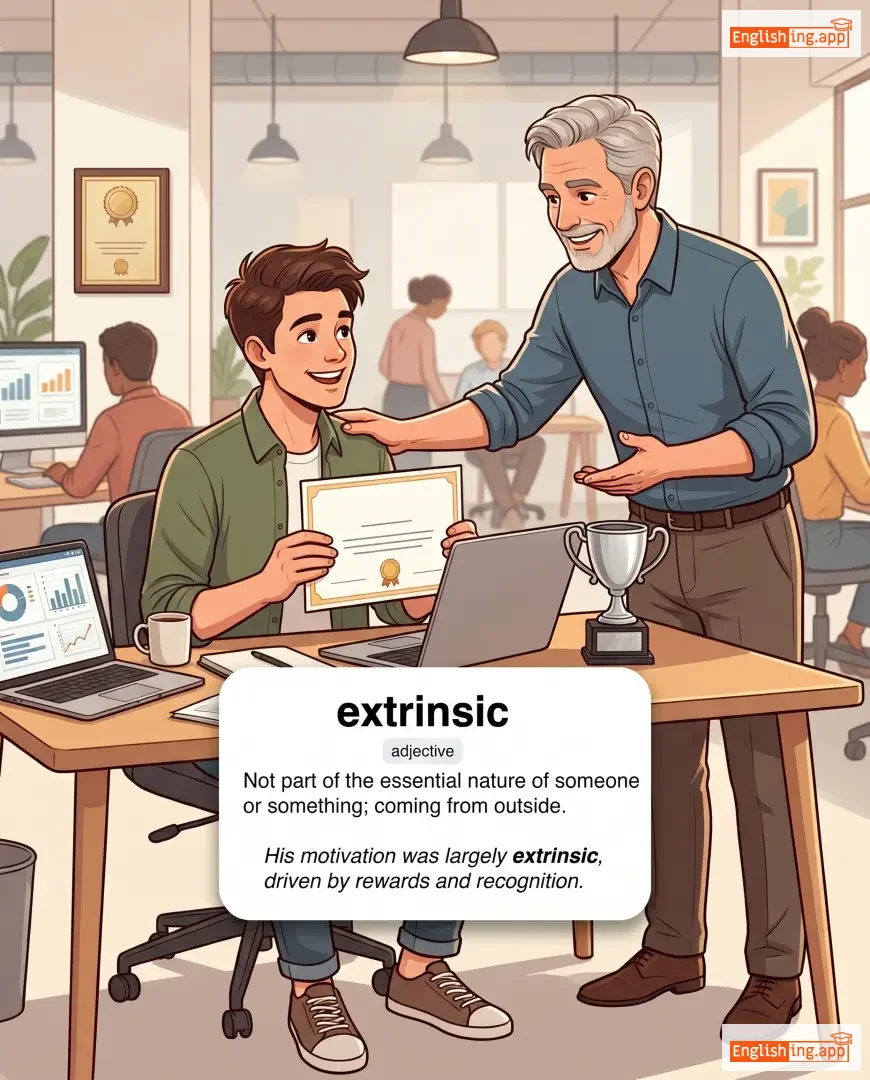
extrinsic definition card — visual illustration of the meaning
adjective
/ɛkˈstrɪnzɪk/
внешний (vneshniy)

Not part of the essential nature of someone or something; coming from outside.

"His motivation was largely extrinsic, driven by rewards and recognition."

"Его мотивация была в значительной степени внешней, движимой наградами и признанием." (Ego motivatsiya byla v znachitel'noy stepeni vneshney, dvizhymoy nagradami i prizyvaniem.)
noun
/ˈɛkstrəˌvɜːrt/
экстраверт (ekstravert)

a person who is outgoing, sociable, and energized by being around other people

"As an extrovert, she enjoys meeting new people at social events."

"Как экстраверт, она любит встречаться с новыми людьми на социальных мероприятиях." (Kak ekstravert, ona lyubit vstrechatsya s novymi lyud'mi na sotsial'nykh meropriyatiyakh.)
verb
/ɪkˈstruːd/
экструзировать (ekstruzirovat)

to force something out through a small opening; to shape by pushing material through a mold

"The factory extrudes plastic pipes using modern machines."

"Завод экструзирует пластиковые трубы с использованием современных машин." (Zavod ekstruirovat' plastikovye truby s ispol'zovaniem sovremennykh mashin.)
noun
/ɪɡˈzuːbərəns/
эксуберантность (eksuberantnost)

the quality of being full of energy, excitement, and cheerfulness

"Her exuberance made the whole team feel motivated."

"Её эксуберантность вдохновила всю команду." (Eyo eksuberantnost' vdokhnovila vsyu komandu.)
adjective
/ɪɡˈzuːbərənt/
эксуберантный (eksuberantny)

full of energy, excitement, and cheerfulness

"The children were exuberant after winning the game."

"Дети были эксуберантны после победы в игре." (Deti byli eksuberantny posle pobedy v igre.)
verb
/ɪɡˈzuːd/
излучать (izluchat')

to display a quality strongly and openly; to release a liquid or smell slowly

"He exudes confidence whenever he speaks in public."

"Он излучает уверенность, когда говорит на публике." (On izluchayet uverennost', kogda govorit na publike.)
verb
/ɪɡˈzʌlt/
ликовать (likovat)

to show or feel great joy, often as a result of success

"The fans exulted after their team won the championship."

"Фанаты ликовали после того, как их команда выиграла чемпионат." (Fanaty likovali posle togo, kak ikh komanda viigralo chempionat.)
👁️

Eye (ay)

noun
/aɪ/
глаз (glaz)

the organ in the head through which people and animals see

"She closed her eyes and went to sleep."

"Она закрыла глаза и пошла спать." (Ona zakryla glaza i poshla spat'.)
noun
/ˈaɪ.bɔːl/
глазное яблоко (glaznoe yabloko)

the round part of the eye within the eyelids and socket

"The doctor examined his eyeball carefully."

"Врач внимательно осмотрел его глазное яблоко." (Vrach vnimatel'no osmotrel ego glaznoe yabloko.)
noun
/ˈaɪbraʊ/
бровь (brov)

the strip of hair growing on the ridge above a person's eye

"She raised her eyebrow in surprise."

"Она подняла бровь от удивления." (Ona podnyala brov' ot udivleniya.)
noun
/ˈaɪ.lɪd/
веко (veko)

either of the upper or lower folds of skin that cover the eye when closed

"Her eyelids felt heavy with sleep."

"Ее веки чувствовали тяжесть от сна." (Eyo veki chuvstvovali tyazhest' ot sna.)
noun
/ˈaɪ.saɪt/
зрение (zreniye)

the ability to see; vision

"Regular eye checkups are important for maintaining good eyesight."

"Регулярные осмотры глаз важны для поддержания хорошего зрения." (Regulyarnye osmotry glaz vazhny dlya podderzhaniya khoroshego zreniya.)
noun
/ˈaɪ.sɔːr/
позорное зрелище; неприятное для глаз (pozornoe zrelishche; nepriyatnoe dlya glaz)

something that is very ugly and unpleasant to look at

"The abandoned building has become an eyesore in the neighborhood."

"Заброшенное здание стало позорным зрелищем для района." (Zabroshennoye zdanie stalo pozornym zrelishchem dlya rayona.)
👁️‍🗨️

Eyewitness (ai-vitness)

noun
/ˈaɪ.wɪt.nəs/
очевидец (ochevidets)

a person who has seen something happen and can give evidence about it

"The police interviewed several eyewitnesses to the accident."

"Полиция опросила нескольких очевидцев происшествия." (Politsiya oprosila neskol'ko ochevidtsev proishestviya.)
noun
/ˈɪəri/
гнездо орла (gnezdo orla)

the nest of a bird of prey, such as an eagle, typically built high on a cliff or tree

"The eagle’s eyrie was perched high on the mountain cliff."

"Гнездо орла было расположено на вершине утеса." (Gnezdo orla bylo raspolozheno na vershine utesa.)
noun
/ˈɪəri/
гнездо хищной птицы (gnezdo khishchnoy ptitsy)

an alternative spelling of eyrie; a nest of a bird of prey

"The falcon guarded its eyry fiercely."

"Сокол охранял своё гнездо с яростью." (Sokol okhranyal svoe gnezdo s yaroctyu.)
noun
/ˈfeɪbəl/
басня (basnya)

a short story, typically featuring animals as characters, that conveys a moral lesson

"Aesop’s fables are famous for teaching valuable lessons through simple stories."

"Басни Эзопа известны тем, что учат важным урокам через простые истории." (Basni Ezopa izvestny tem, chto uchat vazhnym urokam cherez prostye istorii.)
noun
/ˈfæbrɪk/
ткань (tkan')

Cloth or material produced by weaving or knitting fibers.

"The tailor used silk fabric to make the dress."

"Портной использовал шёлковую ткань для пошива платья." (Portnoy ispol'zoval shylkovuyu tkan' dlya poshiva plat'ya.)
verb
/ˈfæbrɪkeɪt/
сфабриковать (sfabrikovat)

to invent or concoct something, often with the intent to deceive; or to construct or manufacture

"The witness fabricated his testimony to protect himself."

"Свидетель сфабриковал свои показания, чтобы защитить себя." (Svidetel' sfabrikoval svoi pokazaniya, chtoby zashchitit' sebya.)
fabrication definition card — visual illustration of the meaning
noun
/ˌfæb.rɪˈkeɪ.ʃən/
фабрикация; ложь; вымысел (fabrikatciya; lozh; vymysel)

something that is made up or invented; a lie or false story

"The journalist was fired for publishing fabrications instead of facts."

"Журналиста уволили за публикацию фабрикаций вместо фактов." (Zhurnalista uvolili za publikatsiyu fabrikatsiy vmesto faktov.)
adjective
/ˈfæbjələs/
замечательный (zamechatel'nyy)

Extremely good or wonderful; almost unbelievable

"She looked fabulous in her new dress."

"Она выглядела замечательно в своем новом платье." (Ona vyglyadela zamechatel'no v svoem novom plat'ye.)