वोकैबुलरीज

इंग्लिश वोकैबुलरी डिस्कवर, लर्न और मास्टर करें

adjective
/ɪkˈstɛnjueɪtɪŋ/
कम करनेवाला (kam karnewala)

serving to make a fault or an offense seem less serious

"She asked for leniency due to extenuating circumstances."

"उसने कम करनेवाले परिस्थितियों के कारण दया की अपील की।" (Usne kam karnewale paristhitiyon ke kaaran daya ki apeel ki.)
noun/adjective
/ɪkˈstɪəriər/
बाहरी हिस्सा (bahari hissa)

the outer surface or part of something; relating to the outside

"The exterior of the house was painted white."

"घर का बाहरी हिस्सा सफेद रंग से रंगा गया था।" (Ghar ka bahari hissa safed rang se ranga gaya tha.)
adjective
/ɪkˈstɜrnəl/
बाहरी (baahri)

situated on or relating to the outside of something; coming from outside

"The external factors affected the company's growth."

"बाहरी कारणों ने कंपनी की वृद्धि को प्रभावित किया।" (Baahri kaaron ne company ki vruddhi ko prabhavit kiya.)
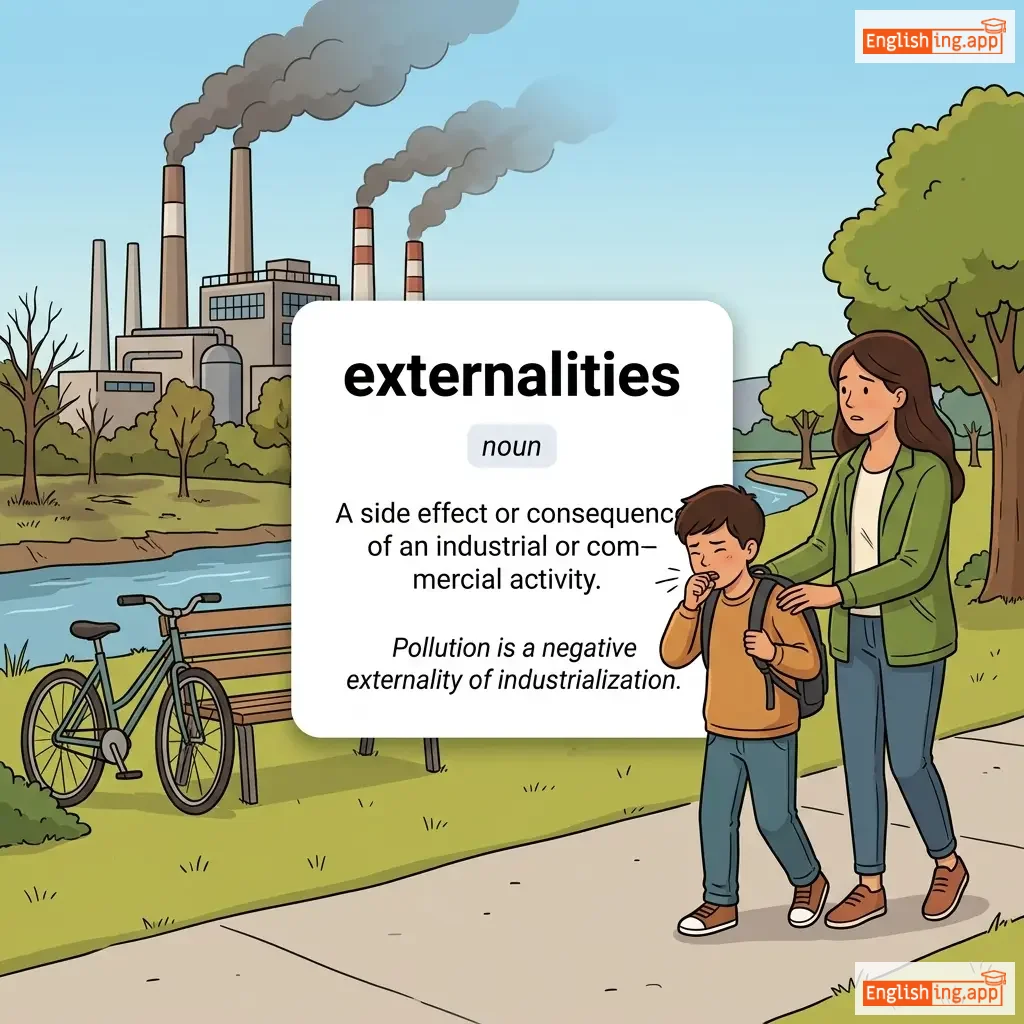
externalities definition card — visual illustration of the meaning
noun
ˌɛkstərˈnælɪtiz
बाहरी प्रभाव (baahri prabhaav)

A side effect or consequence of an industrial or commercial activity.

"Pollution is a negative externality of industrialization."

"प्रदूषण औद्योगिकीकरण का एक नकारात्मक बाहरी प्रभाव है।" (Pradushan audyogikikaran ka ek nakaratmak baahri prabhaav hai.)
adverb
/ɪkˈstɜrnəli/
बाहरी रूप से (bahari roop se)

in a way that relates to the outer surface or outside appearance

"The building appeared externally modern, but inside it was quite old-fashioned."

"भवन बाहरी रूप से आधुनिक दिखाई देता था, लेकिन अंदर यह काफी पुराना था।" (bhavan bahari roop se aadhunik dikhai deta tha, lekin andar yah kaafi purana tha)
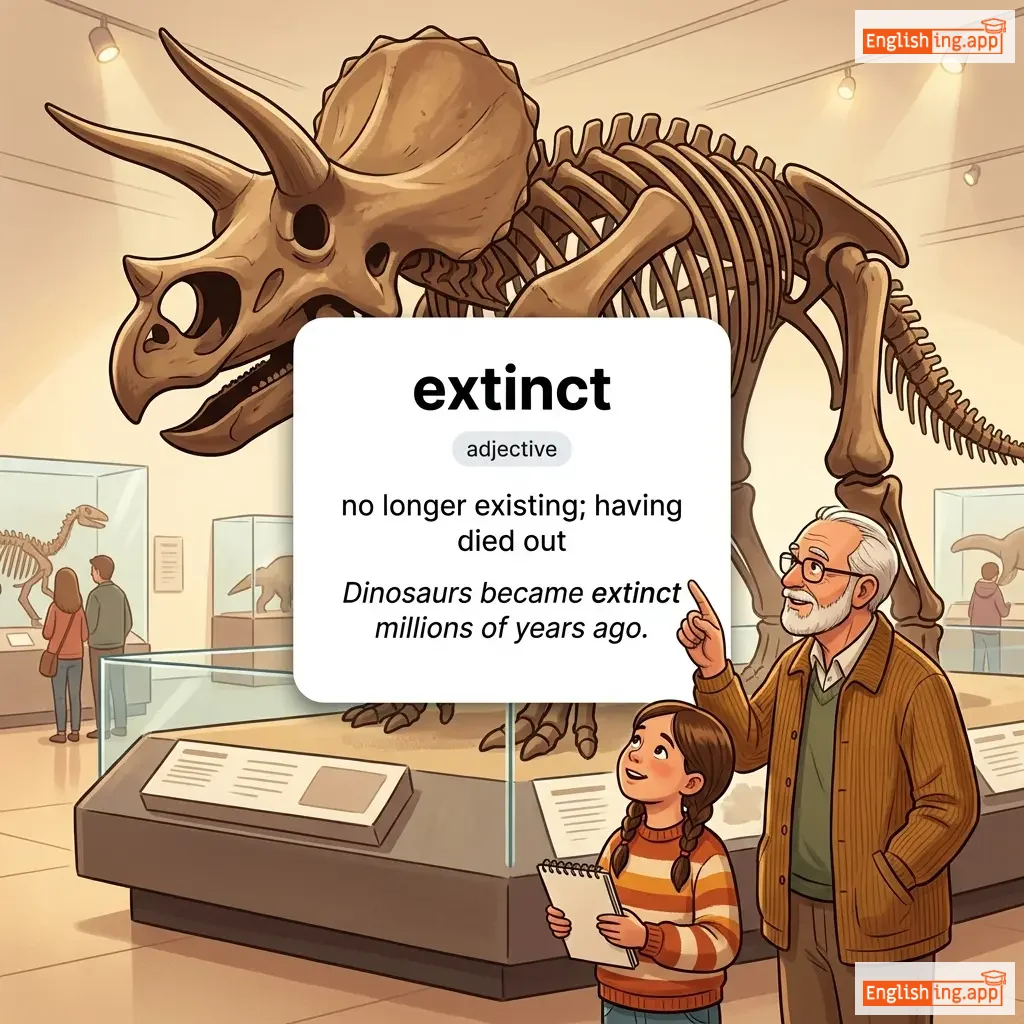
extinct definition card — visual illustration of the meaning
adjective
/ɪkˈstɪŋkt/
विलुप्त (vilupt)

no longer existing; having died out

"Dinosaurs became extinct millions of years ago."

"डायनासोर लाखों साल पहले विलुप्त हो गए थे।" (Dinosaur laakhon saal pehle vilupt ho gaye the.)
verb
/ɪkˈstɪŋ.ɡwɪʃ/
बुझाना (bujhana)

to put out a fire, light, or to end something

"The firefighters managed to extinguish the blaze within an hour."

"फायरफाइटर्स ने एक घंटे के भीतर आग बुझा ली।" (Firefighters ne ek ghante ke bhitar aag bujha li.)
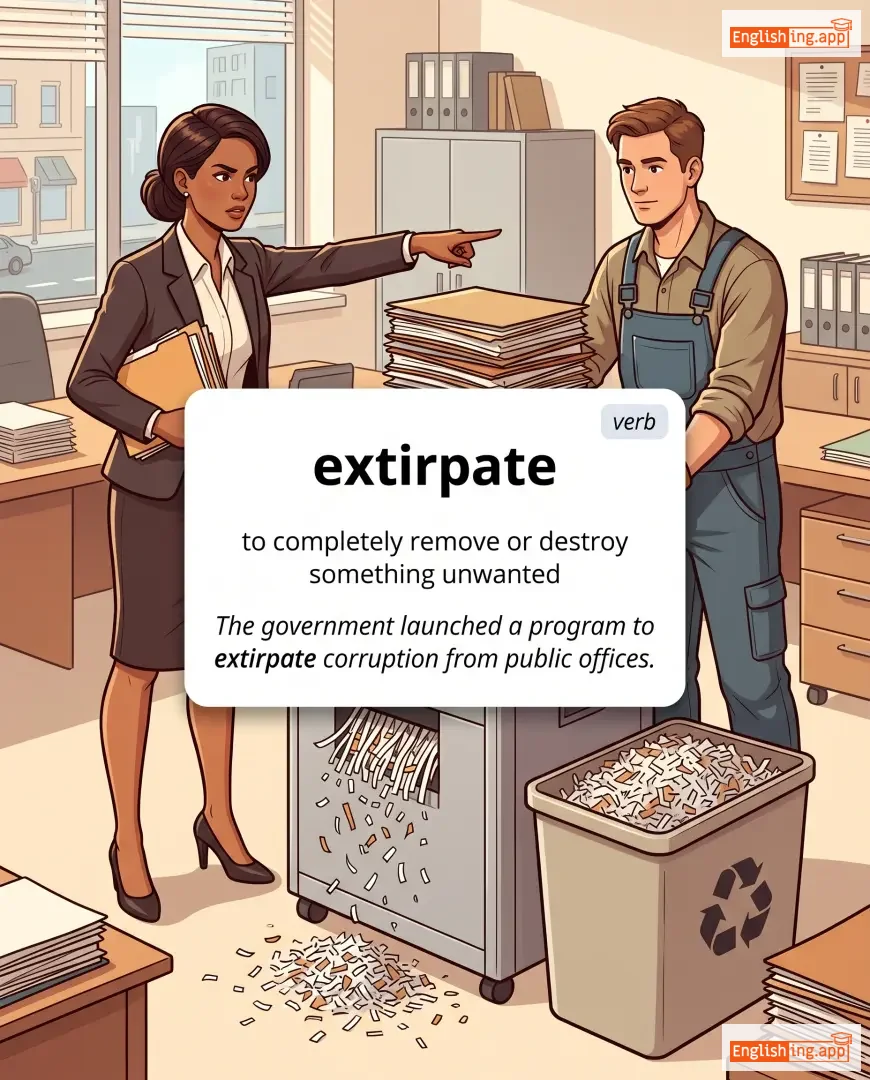
extirpate definition card — visual illustration of the meaning
verb
/ˈek.stər.peɪt/
निकालना (nikalna)

to completely remove or destroy something unwanted

"The government launched a program to extirpate corruption from public offices."

"सरकार ने सरकारी दफ्तरों से भ्रष्टाचार उखाड़ फेंकने के लिए एक कार्यक्रम शुरू किया।" (Sarkar ne sarkari daftaron se bhrashtachar ukhad fenkne ke liye ek karyakram shuru kiya.)
verb
/ɪkˈstoʊl/
प्रशंसा करना (prashansa karna)

to praise enthusiastically and highly

"The teacher extolled the student's dedication and hard work."

"अध्यापक ने छात्र की समर्पण और कड़ी मेहनत की सराहना की।" (Adhyapak ne chatra ki samarpan aur kathin mehnat ki sarahna ki.)
verb
/ɪkˈstɔːrt/
जबरदस्ती वसूल करना (jabardasti vasool karna)

to obtain something, especially money, by force, threats, or unfair means

"The gang attempted to extort money from local shopkeepers."

"गैंग ने स्थानीय दुकानदारों से पैसे वसूलने की कोशिश की।" (Gang ne sthanīya dukānādāron se paise vasool karne ki koshish ki.)
noun
/ɪkˈstɔːr.ʃən/
जबरन वसूल करना (jabran wasool karna)

the practice of obtaining something, especially money, through force or threats

"The businessman was arrested for extortion after threatening his partner."

"व्यवसायी को अपने साथी को धमकी देने के बाद जबरन वसूली के आरोप में गिरफ्तार किया गया था।" (Vyavsayee ko apne saathi ko dhamki dene ke baad jabran wasooli ke aarop mein giraftaar kiya gaya tha.)
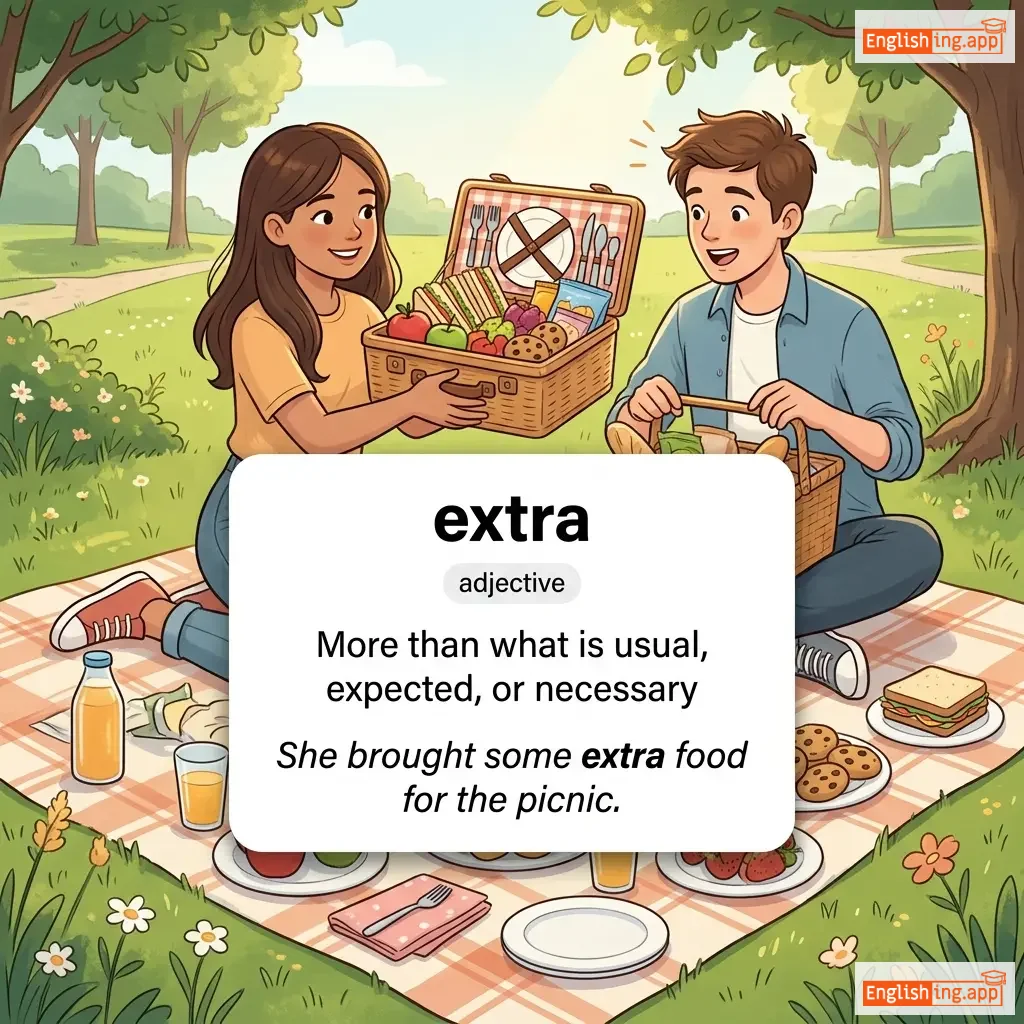
extra definition card — visual illustration of the meaning
adjective
/ˈɛkstrə/
अतिरिक्त (atirikt)

More than what is usual, expected, or necessary

"She brought some extra food for the picnic."

"उसने पिकनिक के लिए अतिरिक्त खाना लाया।" (Usne picnic ke liye atirikt khana laya.)
extract definition card — visual illustration of the meaning
verb
/ɪkˈstrækt/
निकालना (nikaalna)

to remove or take out something, often with effort

"The dentist had to extract the damaged tooth."

"दंत चिकित्सक को क्षतिग्रस्त दांत को निकालना पड़ा।" (Dant chikitsak ko kshatigrast daant ko nikaalna pada.)
noun
/ɪkˈstrækʃən/
निकासी (nikasi)

the act of removing something, especially by pulling it out

"The extraction of oil from the ground requires special equipment."

"भूमि से तेल निकालने के लिए विशेष उपकरण की आवश्यकता होती है।" (Bhoomi se tel nikaalne ke liye vishesh upkaran ki avashyakta hoti hai.)
verb
/ˈɛkstrəˌdaɪt/
अपराधी को प्रत्यर्पित करना (apradhi ko pratyarpit karna)

to hand over a person accused or convicted of a crime to another country or state

"The government agreed to extradite the fugitive to his home country."

"सरकार ने भगोड़े को उसके गृह देश प्रत्यर्पित करने पर सहमति जताई।" (Sarkar ne bhagode ko uske grih desh pratyarpit karne par sahmati jatayi.)
noun
/ˌɛkstrəˈdɪʃən/
प्रत्यर्पण (pratyarpan)

the official process of sending someone accused of a crime to another country or state

"The extradition of the suspect was delayed due to legal issues."

"संदेहास्पद का प्रत्यर्पण कानूनी मुद्दों के कारण देर से हुआ।" (Sandehaspad ka pratyarpan kanuni muddon ke kaaran der se hua.)
adjective
/ˌɛkstrəˌdʒuːˈdɪʃəl/
न्यायिक प्रक्रिया के बाहर किया गया (nyayik prakriya ke bahar kiya gaya)

done outside the authority of the legal system or judicial process

"The activists condemned the extrajudicial killings."

"कार्यकर्ताओं ने न्यायिक प्रक्रिया के बाहर की हत्याओं की निंदा की।" (Karyakartaon ne nyayik prakriya ke bahar ki hatyaon ki ninda ki.)
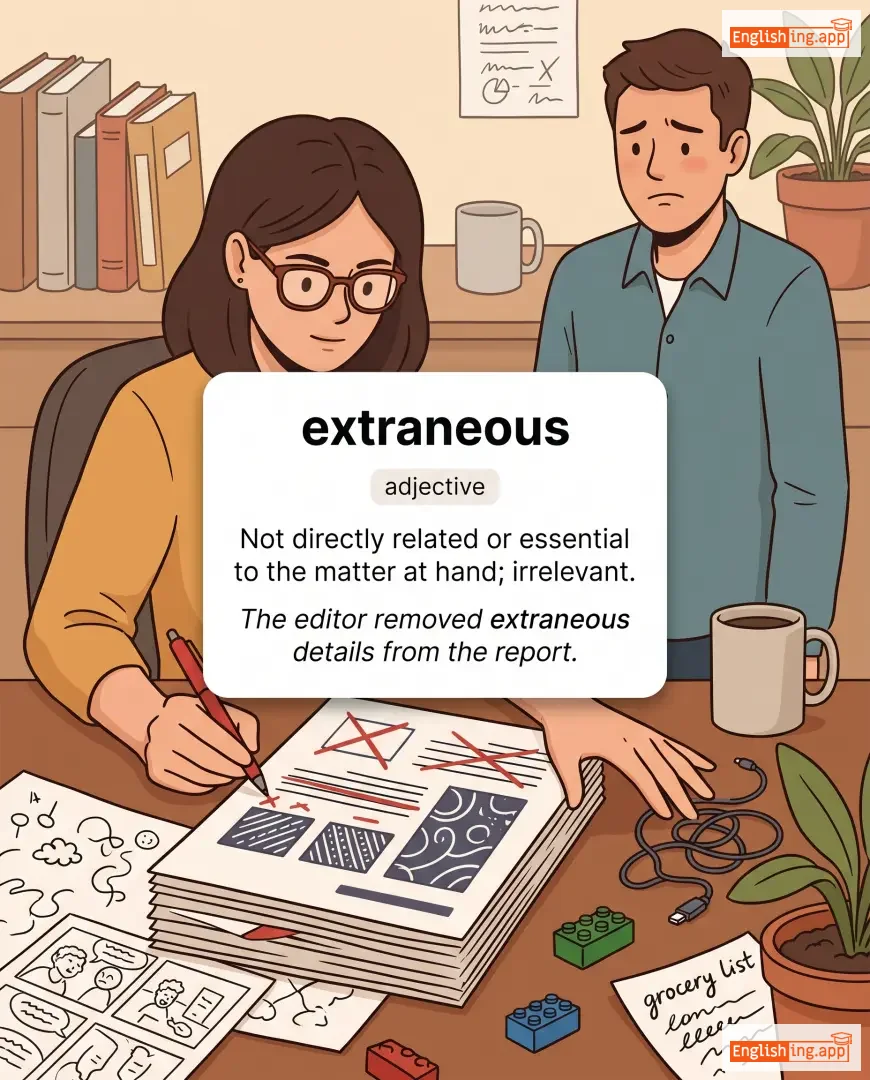
extraneous definition card — visual illustration of the meaning
adjective
/ɪkˈstreɪ.ni.əs/
अप्रासंगिक (aprasangik)

Not directly related or essential to the matter at hand; irrelevant.

"The editor removed extraneous details from the report."

"संपादक ने रिपोर्ट से अप्रासंगिक विवरण हटा दिए।" (Sampadak ne report se aprasangik vivaran hata diye.)
adjective
/ɪkˈstrɔːr.dəˌnɛr.i/
असाधारण (asadharan)

Very unusual, remarkable, or exceptional.

"She showed extraordinary courage during the crisis."

"उसने संकट के दौरान असाधारण साहस दिखाया।" (Usne sankat ke dauran asadharan sahas dikhaya.)
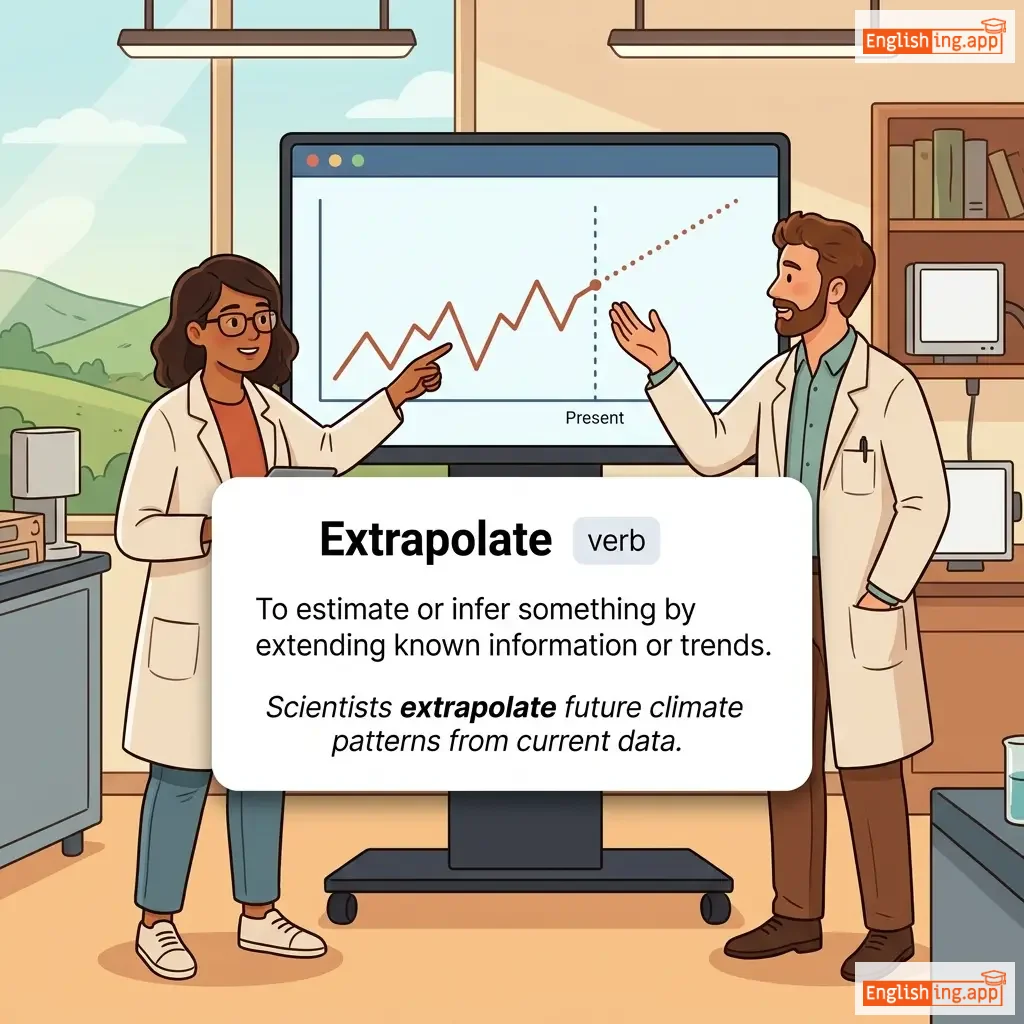
Extrapolate definition card — visual illustration of the meaning
verb
/ɪkˈstræp.əˌleɪt/
पूर्वानुमान करना (purvanuman karna)

To estimate or infer something by extending known information or trends.

"Scientists extrapolate future climate patterns from current data."

"वैज्ञानिक वर्तमान डेटा से भविष्य के जलवायु पैटर्न का अनुमान लगाते हैं।" (Vigyanik vartaman data se bhavishya ke jalvayu pattern ka anuman lagate hain.)
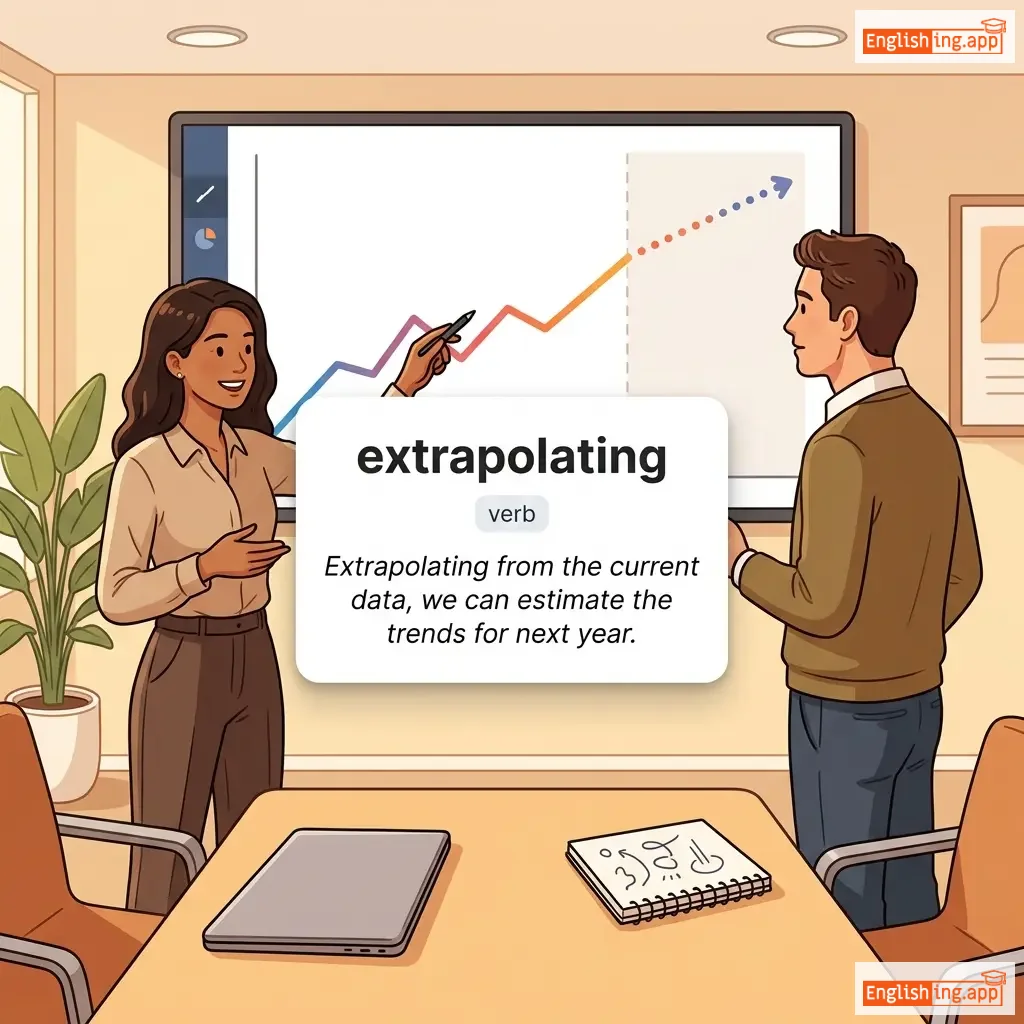
extrapolating definition card — visual illustration of the meaning
verb
/ɪkˈstræpəleɪtɪŋ/
अनुमान करना (anumaan karna)

Extend the application of (a method or conclusion) to an unknown situation by assuming that existing trends will continue.

"Extrapolating from the current data, we can estimate the trends for next year."

"वर्तमान डेटा से अनुमान लगाते हुए, हम अगले वर्ष के रुझानों का अनुमान लगा सकते हैं।" (vartaman data se anumaan lagate hue, ham agle varsh ke rujaanon ka anumaan laga sakte hain.)
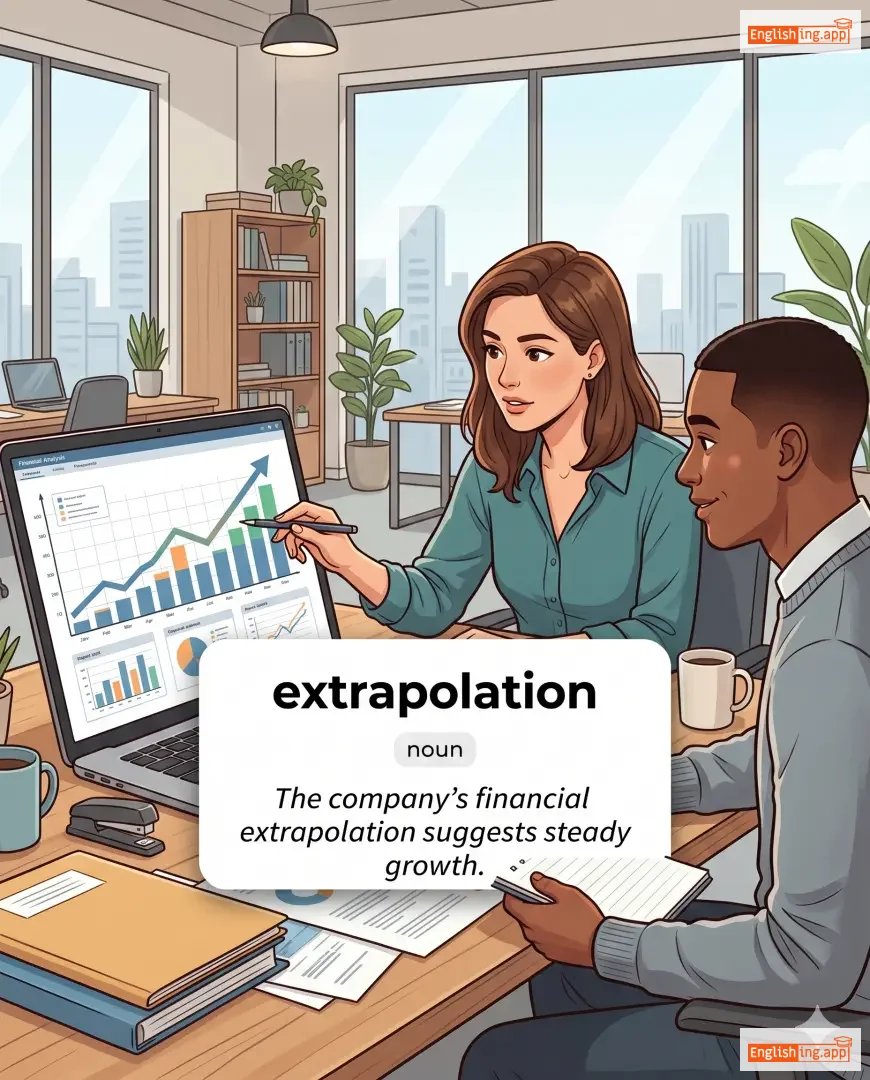
extrapolation definition card — visual illustration of the meaning
noun
/ɪkˌstræp.əˈleɪ.ʃən/
अनुमानिक पूर्वानुमान (anumaanik purvaanumaan)

The process of estimating or predicting something based on extending known information.

"The company's financial extrapolation suggests steady growth."

"कंपनी का वित्तीय अनुमानित पूर्वानुमान स्थिर वृद्धि का सुझाव देता है।" (Company ka vittiya anumaanit purvaanumaan sthir vruddhi ka sujhaav deta hai.)
noun
/ɪkˈstræv.ə.ɡəns/
विलासिता (vilasita)

Excessive spending or lack of restraint in using resources.

"His extravagance on luxury cars worried his family."

"लक्जरी कारों पर उसका अत्यधिक खर्च उसके परिवार को चिंतित कर रहा था।" (Lajuri karon par uska atyadhik kharch uske parivar ko chintit kar raha tha.)
adjective
/ɪkˈstrævəɡənt/
अत्यधिक खर्चीला (atyadhik kharchila)

Spending or using more than is necessary; excessively elaborate or luxurious.

"She wore an extravagant dress to the party."

"वह पार्टी में एक अत्यधिक खर्चीला ड्रेस पहने हुए थी।" (Wah party mein ek atyadhik kharchila dress pehne hue thi.)
extreme definition card — visual illustration of the meaning
adjective
/ɪkˈstriːm/
चरम (charam)

reaching a high or intense degree; very great or severe

"They went on an extreme adventure in the mountains."

"वे पहाड़ों में एक चरम साहसिक यात्रा पर गए थे।" (Ve pahadon mein ek charam sahasik yatra par gaye the.)
adverb
/ɪkˈstriːmli/
अत्यधिक (atyadhik)

to a very high degree; very much

"The movie was extremely interesting."

"फिल्म बेहद दिलचस्प थी।" (Film behad dilchasp thi.)
noun
/ɪkˈstriːmɪst/
उग्रवादी (ugrawadi)

A person who holds extreme political or religious views and may act on them.

"The group was led by an extremist with radical ideas."

"समूह का नेतृत्व एक उग्रवादी द्वारा किया गया था, जिसके पास कट्टरपंथी विचार थे।" (Samuh ka netritva ek ugrwadi dwara kiya gaya tha, jiske paas kattarpanthi vichar the.)
noun
/ɪkˈstrɛmɪti/
सीमा (seema)

The farthest point or limit of something; a severe or extreme condition.

"He was pushed to the extremity of his patience."

"उसे उसकी धैर्य की सीमा तक धकेल दिया गया।" (Use uski dhairya ki seema tak dhakel diya gaya.)
verb
/ˈɛkstrɪkeɪt/
मुक्त करना (mukt karna)

To free someone or something from a constraint or difficulty.

"The firefighters extricated the passengers from the wrecked car."

"फायरफाइटर्स ने पैसेंजर्स को दुर्घटनाग्रस्त कार से बाहर निकाला।" (The firefighters ne passengers ko durghatanagrasth car se baahar nikala.)
extrinsic definition card — visual illustration of the meaning
adjective
/ɛkˈstrɪnzɪk/
बाह्य (bahya)

Not part of the essential nature of someone or something; coming from outside.

"His motivation was largely extrinsic, driven by rewards and recognition."

"उसकी प्रेरणा मुख्य रूप से बाह्य थी, जो पुरस्कारों और पहचान द्वारा प्रेरित थी।" (Uski prerana mukhya roop se bahya thi, jo puraskaron aur pehchaan dwara prerit thi.)
noun
/ˈɛkstrəˌvɜːrt/
बाह्यमुखी व्यक्ति (bahyemukhi vyakti)

a person who is outgoing, sociable, and energized by being around other people

"As an extrovert, she enjoys meeting new people at social events."

"एक एक्सट्रोवर्ट के रूप में, वह सामाजिक कार्यक्रमों में नए लोगों से मिलना पसंद करती है।" (ek extrovert ke roop mein, vah samajik karyakramon mein naye logon se milna pasand karti hai.)
verb
/ɪkˈstruːd/
दबाकर बाहर निकालना (dabakaar baahar nikaalna)

to force something out through a small opening; to shape by pushing material through a mold

"The factory extrudes plastic pipes using modern machines."

"फैक्ट्री आधुनिक मशीनों का उपयोग करके प्लास्टिक पाइप दबाकर बाहर निकालती है।" (factory aadhunik machineon ka upyog karke plastic pipe dabakar baahar nikaalti hai.)
noun
/ɪɡˈzuːbərəns/
उत्साह (utsah)

the quality of being full of energy, excitement, and cheerfulness

"Her exuberance made the whole team feel motivated."

"उसका उत्साह पूरी टीम को प्रेरित करता था।" (uska utsah puri team ko prerit karta tha.)
adjective
/ɪɡˈzuːbərənt/
उत्साही (utsahi)

full of energy, excitement, and cheerfulness

"The children were exuberant after winning the game."

"खेल जीतने के बाद बच्चे उत्साही थे।" (khel jeetne ke baad bachche utsahi the.)
verb
/ɪɡˈzuːd/
प्रकट करना (prakat karna)

to display a quality strongly and openly; to release a liquid or smell slowly

"He exudes confidence whenever he speaks in public."

"वह जब भी सार्वजनिक रूप से बोलता है, आत्मविश्वास को बाहर लाता है।" (vah jab bhi sarvajanik roop se bolta hai, aatmavishwas ko bahar laata hai.)
verb
/ɪɡˈzʌlt/
आनंद से अभिभूत होना (anand se abhibhoot hona)

to show or feel great joy, often as a result of success

"The fans exulted after their team won the championship."

"टीम जीतने के बाद प्रशंसक अभिभूत हो गए।" (Teem jeetne ke baad prashansak abhibhoot ho gaye.)
noun
/aɪ/
आंख (aankh)

the organ in the head through which people and animals see

"She closed her eyes and went to sleep."

"उसने अपनी आंखें बंद की और सोने चली गई।" (Usne apni aankhen band ki aur sone chali gayi.)
noun
/ˈaɪ.bɔːl/
आँखों की गोलाकार संरचना (aankhon ki golakar sanrachna)

the round part of the eye within the eyelids and socket

"The doctor examined his eyeball carefully."

"डॉक्टर ने उसके आइबॉल का ध्यानपूर्वक परीक्षण किया।" (doktar ne uske aibol ka dhyanpurvak parikshan kiya.)
noun
/ˈaɪbraʊ/
भ्रू (bhru)

the strip of hair growing on the ridge above a person's eye

"She raised her eyebrow in surprise."

"उसने आश्चर्यचकित होकर अपनी भ्रू उठाई।" (Usne aashcharyachakit hokar apni bhru uthai.)
noun
/ˈaɪ.lɪd/
आंख की पलक (aankh ki palk)

either of the upper or lower folds of skin that cover the eye when closed

"Her eyelids felt heavy with sleep."

"उसकी आंखों के पलकें नींद से भारी महसूस हो रही थीं।" (uski aankhon ke palken neend se bhari mahsus ho rahi thin)
noun
/ˈaɪ.saɪt/
दृष्टि (drishti)

the ability to see; vision

"Regular eye checkups are important for maintaining good eyesight."

"नियमित नेत्र परीक्षण अच्छे दृष्टि को बनाए रखने के लिए महत्वपूर्ण हैं।" (niyamit netra pariksha achhe drishti ko banaye rakhne ke liye mahatvapurn hain.)
noun
/ˈaɪ.sɔːr/
आंखों का कांटा; निंदनीय दृश्य; (aankhon ka kanta, nindniya drishya)

something that is very ugly and unpleasant to look at

"The abandoned building has become an eyesore in the neighborhood."

"वह छोड़ी हुई इमारत मोहल्ले में एक आंखों का कांटा बन गई है।" (vah chhodi hui imarat mohally mein ek aankhon ka kanta ban gayi hai.)
noun
/ˈaɪ.wɪt.nəs/
प्रत्यक्षदर्शी गवाह (pratyakshdarshi gawah)

a person who has seen something happen and can give evidence about it

"The police interviewed several eyewitnesses to the accident."

"पुलिस ने दुर्घटना के कई प्रत्यक्षदर्शी गवाहों से पूछताछ की।" (police ne durghatna ke kai pratyakshdarshi gawahon se poochtaach ki.)
noun
/ˈɪəri/
गिद्ध का घोंसला (giddh ka ghosla)

the nest of a bird of prey, such as an eagle, typically built high on a cliff or tree

"The eagle’s eyrie was perched high on the mountain cliff."

"गिद्ध का घोंसला पहाड़ की चोटी पर स्थित था।" (Giddh ka ghosla pahar ki chhoti par sthit tha.)
noun
/ˈɪəri/
गिद्ध का घोंसला (giddh ka ghonsla)

an alternative spelling of eyrie; a nest of a bird of prey

"The falcon guarded its eyry fiercely."

"फाल्कन ने अपने घोंसले की fiercely रक्षा की।" (Falkon ne apne ghonsle ki fiercely raksha ki.)
noun
/ˈfeɪbəl/
कथा (katha)

a short story, typically featuring animals as characters, that conveys a moral lesson

"Aesop’s fables are famous for teaching valuable lessons through simple stories."

"एशोप की कथाएँ सरल कहानियों के माध्यम से महत्वपूर्ण शिक्षा देती हैं।" (Aesop ki kathayein saral kahaniyon ke madhyam se mahatvapurn shiksha deti hain.)
noun
/ˈfæbrɪk/
कपड़ा (kapda)

Cloth or material produced by weaving or knitting fibers.

"The tailor used silk fabric to make the dress."

"दर्जी ने उस पोशाक को बनाने के लिए रेशमी कपड़ा इस्तेमाल किया।" (Darji ne us poshak ko banane ke liye resham ka kapda istemal kiya.)
verb
/ˈfæbrɪkeɪt/
बनाना (banana)

to invent or concoct something, often with the intent to deceive; or to construct or manufacture

"The witness fabricated his testimony to protect himself."

"गवाह ने अपनी गवाही खुद को बचाने के लिए बनाई।" (Gawah ne apni gawahi khud ko bachane ke liye banayi.)
fabrication definition card — visual illustration of the meaning
noun
/ˌfæb.rɪˈkeɪ.ʃən/
बनावट; झूठी कहानी; धोखाधड़ी (banavat; jhoothi kahani; dhokhadhadi)

something that is made up or invented; a lie or false story

"The journalist was fired for publishing fabrications instead of facts."

"पत्रकार को तथ्यों के बजाय झूठी कहानियाँ प्रकाशित करने के लिए बर्खास्त कर दिया गया था।" (patrakar ko tathyon ke bajaye jhoothi kahaniyan prakashit karne ke liye barkhast kar diya gaya tha.)
adjective
/ˈfæbjələs/
शानदार (shandar)

Extremely good or wonderful; almost unbelievable

"She looked fabulous in her new dress."

"वह अपनी नई ड्रेस में शानदार लग रही थी।" (Vah apni nai dress mein shandar lag rahi thi.)