वोकैबुलरीज

इंग्लिश वोकैबुलरी डिस्कवर, लर्न और मास्टर करें

noun
/fəˈsɑːd/
मुखौटा (mukhauta)

The front of a building; a false or superficial appearance

"The building's glass facade reflected the sunset."

"इमारत का कांच का मुखौटा सूर्यास्त को परावर्तित करता था।" (Imarat ka kaanch ka mukhauta suryast ko paravartit karta tha.)
face definition card — visual illustration of the meaning
noun/verb
/feɪs/
चेहरा / सामना करना (chehra / samna karna)

The front part of a person's head; to confront or deal with a situation

"She had to face many challenges in her career."

"उसे अपने करियर में कई चुनौतियों का सामना करना पड़ा।" (Use apne career mein kai chunautiyon ka samna karna pada.)
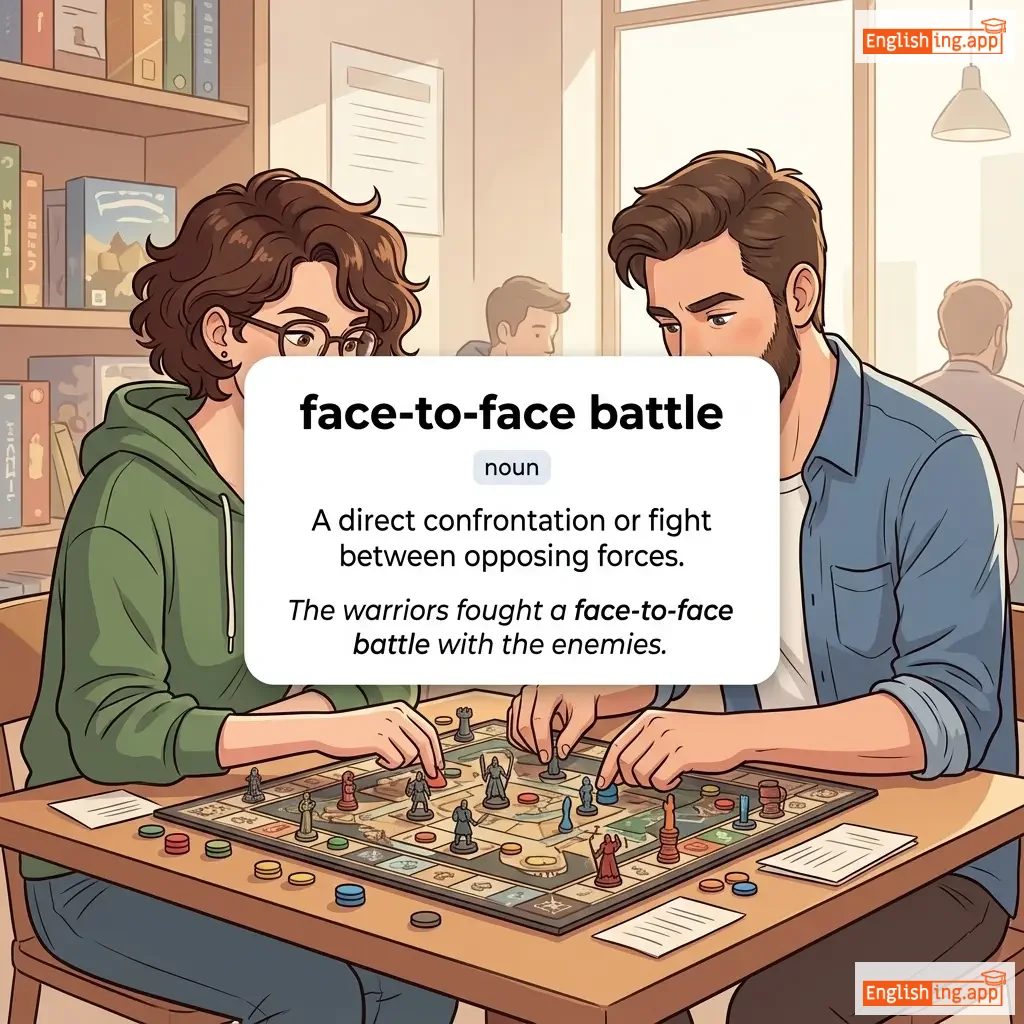
face-to-face battle definition card — visual illustration of the meaning
noun
ˈfeɪs tə ˈfeɪs ˈbætl
सामने-सामने की लड़ाई (saamne-saamne ki ladai)

A direct confrontation or fight between opposing forces.

"The warriors fought a face-to-face battle with the enemies."

"योद्धाओं ने दुश्मनों के साथ एक सामने-सामने की लड़ाई लड़ी।" (Yoddhaon ne dushmanon ke saath ek saamne-saamne ki ladaai ladi.)
facet definition card — visual illustration of the meaning
noun
/ˈfæsɪt/
पहलू (pehlu)

A particular aspect or feature of something

"Honesty is an important facet of his character."

"ईमानदारी उसकी विशेषता का एक महत्वपूर्ण पहलू है।" (Imaandari uski visheshata ka ek mahatvapurn pehlu hai.)
facetious definition card — visual illustration of the meaning
adjective
/fəˈsiːʃəs/
हंसी मजाक करने वाला (hansi mazaak karne wala)

Treating serious issues with deliberately inappropriate humor

"He was being facetious when he said he wanted to live on the moon."

"वह चाँद पर रहने की बात कहते हुए हंसी मजाक कर रहा था।" (Wah chand par rehne ki baat kahte hue hansi mazaak kar raha tha.)
adjective, noun
/ˈfeɪʃəl/
चेहरे से संबंधित (chehre se sambandhit)

Relating to the face; a beauty treatment for the face

"She booked a facial at the spa."

"उसने स्पा में एक फेशियल बुक किया।" (Usne spa mein ek facial book kiya.)
adjective
/ˈfæsɪl/
सरल, आसान, झूठा (sarl, aasan, jhootha)

easily achieved or effortless; superficial or simplistic

"He gave a facile explanation that ignored the complexities of the problem."

"उसने उस समस्या के जटिलताओं की अनदेखी करते हुए एक सरल व्याख्या दी।" (Usne us samasya ke jatiltayon ki andekhi karte hue ek sarl vyakhya di.)
facilitate definition card — visual illustration of the meaning
verb
/fəˈsɪlɪteɪt/
सहज करना, सुविधा प्रदान करना (sahaj karna, suvidha pradan karna)

to make an action or process easier or smoother

"The new software will facilitate communication between departments."

"नया सॉफ़्टवेयर विभागों के बीच संचार को सुविधाजनक बनाएगा।" (Naya software vibhagon ke beech sanchar ko suvidhajanak banayega.)
facilitation definition card — visual illustration of the meaning
noun
fəˌsɪl.ɪˈteɪ.ʃən
सुविधा (suvidha)

Making any work or process easy and effective.

"Payment gateways ensure the facilitation of online transactions."

"भुगतान गेटवे ऑनलाइन लेन-देन की सुविधा सुनिश्चित करते हैं।" (Bhugtaan gateway online len-den ki suvidha nishchit karte hain.)
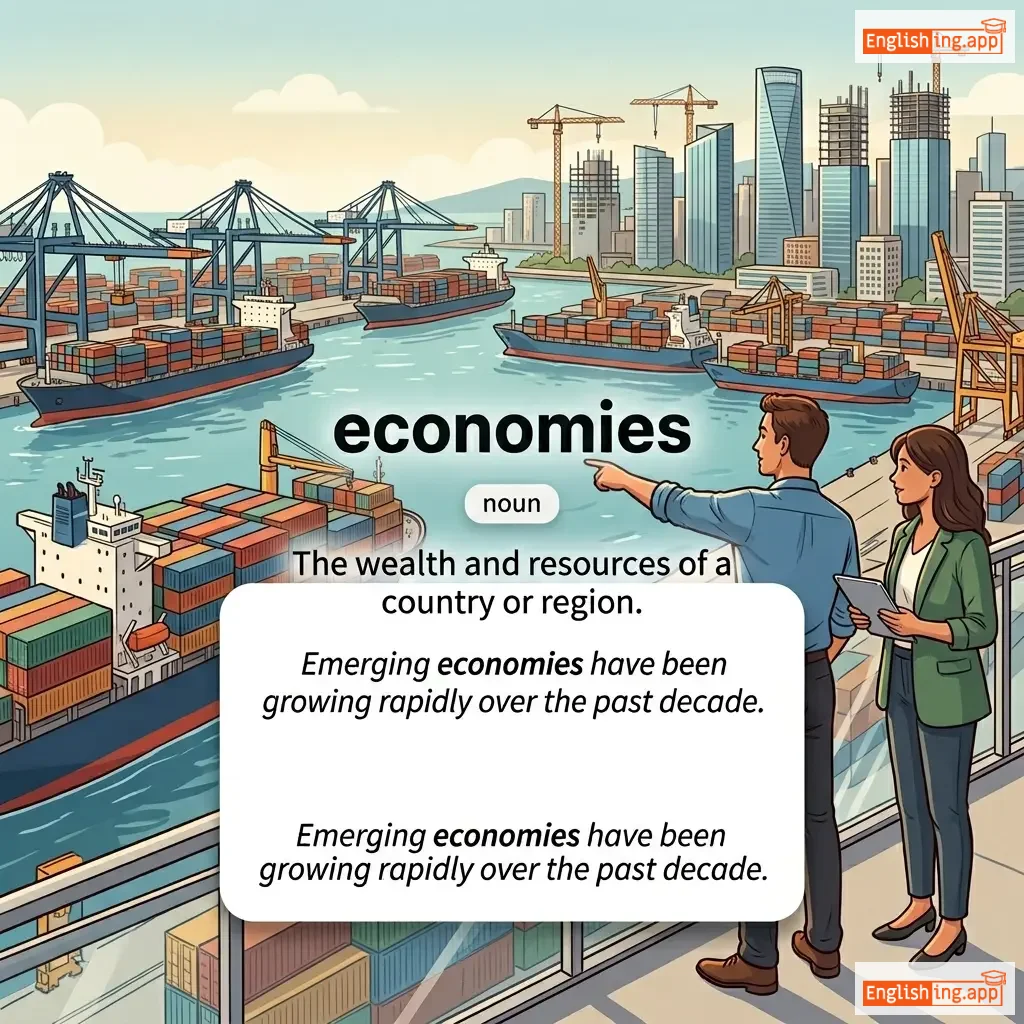
economies definition card — visual illustration of the meaning
noun
ɪˈkɒnəmiːz
अर्थव्यवस्थाएँ (arthavyavasthayein)

The wealth and resources of a country or region.

"Emerging economies have been growing rapidly over the past decade."

"उदयीमान अर्थव्यवस्थाएँ पिछले दशक में तेजी से बढ़ रही हैं।" (Udayimaan arthavyavasthayein pichhle dashak mein tezi se badh rahi hain.)
noun
/ɪˈkɒnəmɪst/
अर्थशास्त्री (arthashastri)

A person who studies or is an expert in economics.

"The economist predicted a rise in inflation."

"अर्थशास्त्री ने मुद्रास्फीति में वृद्धि का अनुमान व्यक्त किया।" (Arthashastri ne mudrasphiti mein vruddhi ka anuman vyakt kiya.)
verb
/ɪˈkɒnəmaɪz/
साश्रय करना (sashray karna)

To reduce spending or use resources carefully.

"Families are trying to economize by cutting unnecessary expenses."

"परिवार अनावश्यक खर्चों को घटाकर साश्रय करने की कोशिश कर रहे हैं।" (Parivaar anavashyak kharchon ko ghatakar sashray karne ki koshish kar rahe hain.)
economy definition card — visual illustration of the meaning
noun
/ɪˈkɒnəmi/
अर्थव्यवस्था (arthvyavastha)

The system of production, distribution, and consumption of goods and services in a society.

"The global economy has been affected by rising inflation."

"वैश्विक अर्थव्यवस्था में बढ़ती महंगाई का असर हुआ है।" (Vaishwik arthvyavastha mein badhti mehngai ka asar hua hai.)
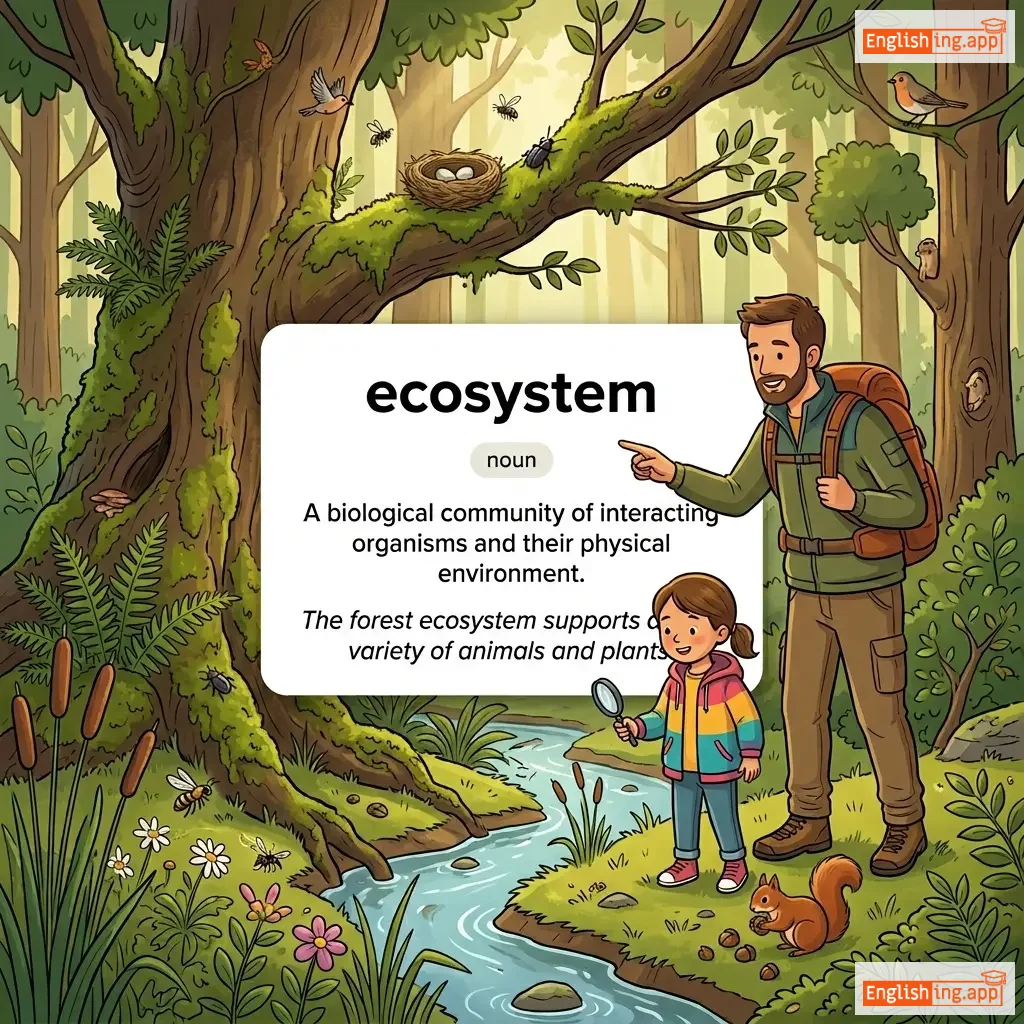
ecosystem definition card — visual illustration of the meaning
noun
/ˈiːkəʊˌsɪstəm/
खुशी (khushi)

A biological community of interacting organisms and their physical environment.

"The forest ecosystem supports a wide variety of animals and plants."

"जब उसने पुरस्कार प्राप्त किया तो वह अपनी खुशी छिपा नहीं पाई।" (Jab usne puraskar prapt kiya to vah apni khushi chhupa nahin pai.)
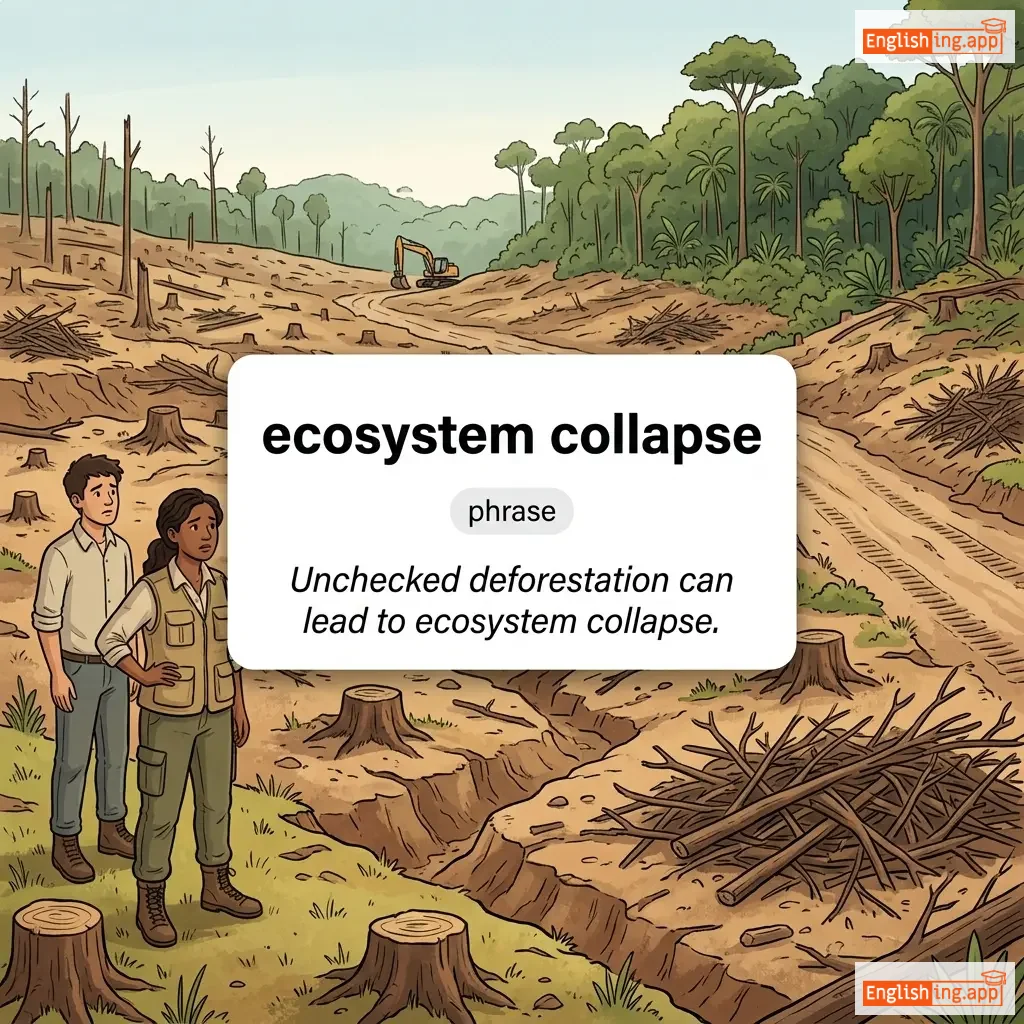
ecosystem collapse definition card — visual illustration of the meaning
phrase
ˈiː.kəʊˌsɪs.təm kəˈlæps
पारिस्थितिकी तंत्र का पतन (paristhitiki tantra ka patan)

The complete breakdown of an ecological system, resulting in the inability to maintain its structure and function.

"Unchecked deforestation can lead to ecosystem collapse."

"अनचेक्ड वन कटाई पारिस्थितिकी तंत्र के पतन का कारण बन सकती है।" (Anchaked van katai paristhitiki tantra ke patan ka karan ban sakti hai.)
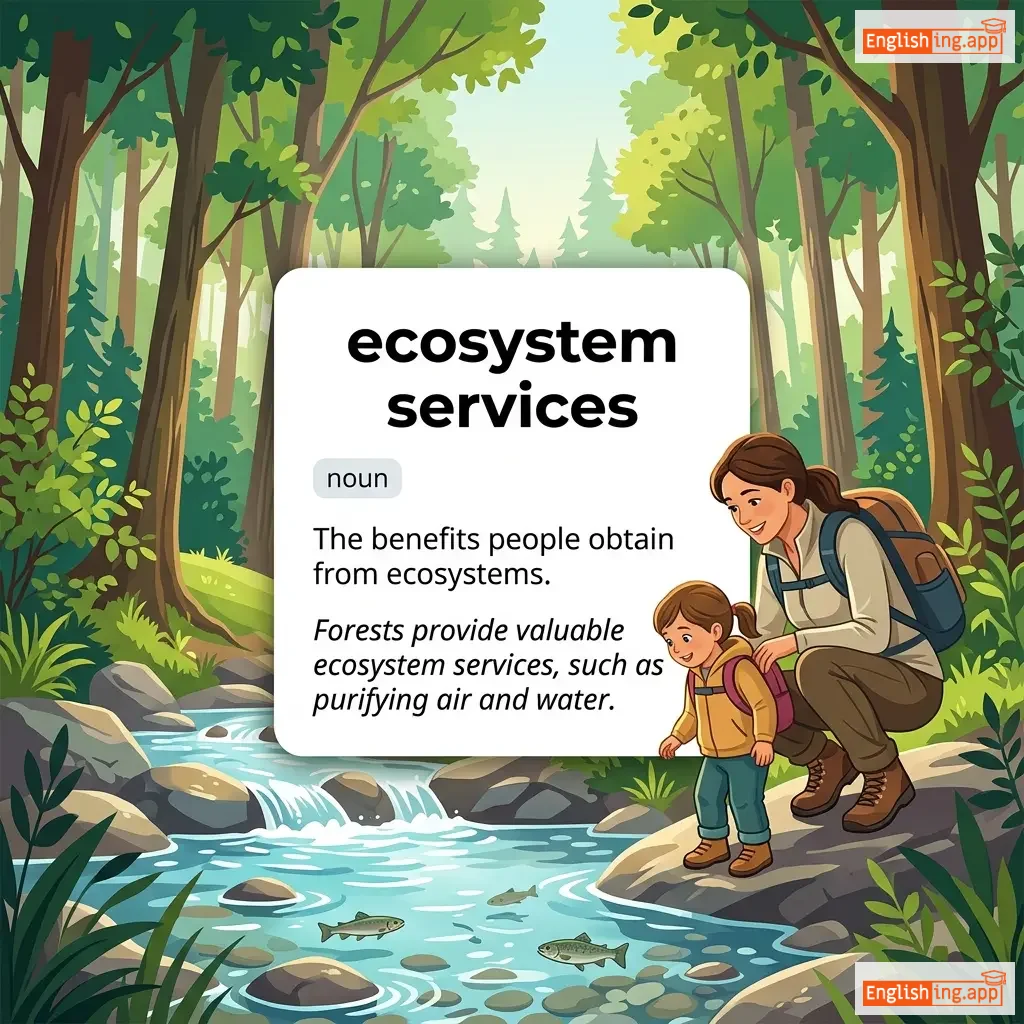
ecosystem services definition card — visual illustration of the meaning
noun
ˈiːkəʊˌsɪstəm ˈsɜːvɪsɪz
ईकोसिस्टम सेवाएँ (ecosystem sevaayein)

The benefits people obtain from ecosystems.

"Forests provide valuable ecosystem services, such as purifying air and water."

"जंगल महत्वपूर्ण इकोसिस्टम सेवाएँ प्रदान करते हैं, जैसे हवा और पानी की शुद्धता।" (Jangal mahatvapurn ecosystem sevaayein pradan karte hain, jaise hawa aur paani ki shuddhata.)
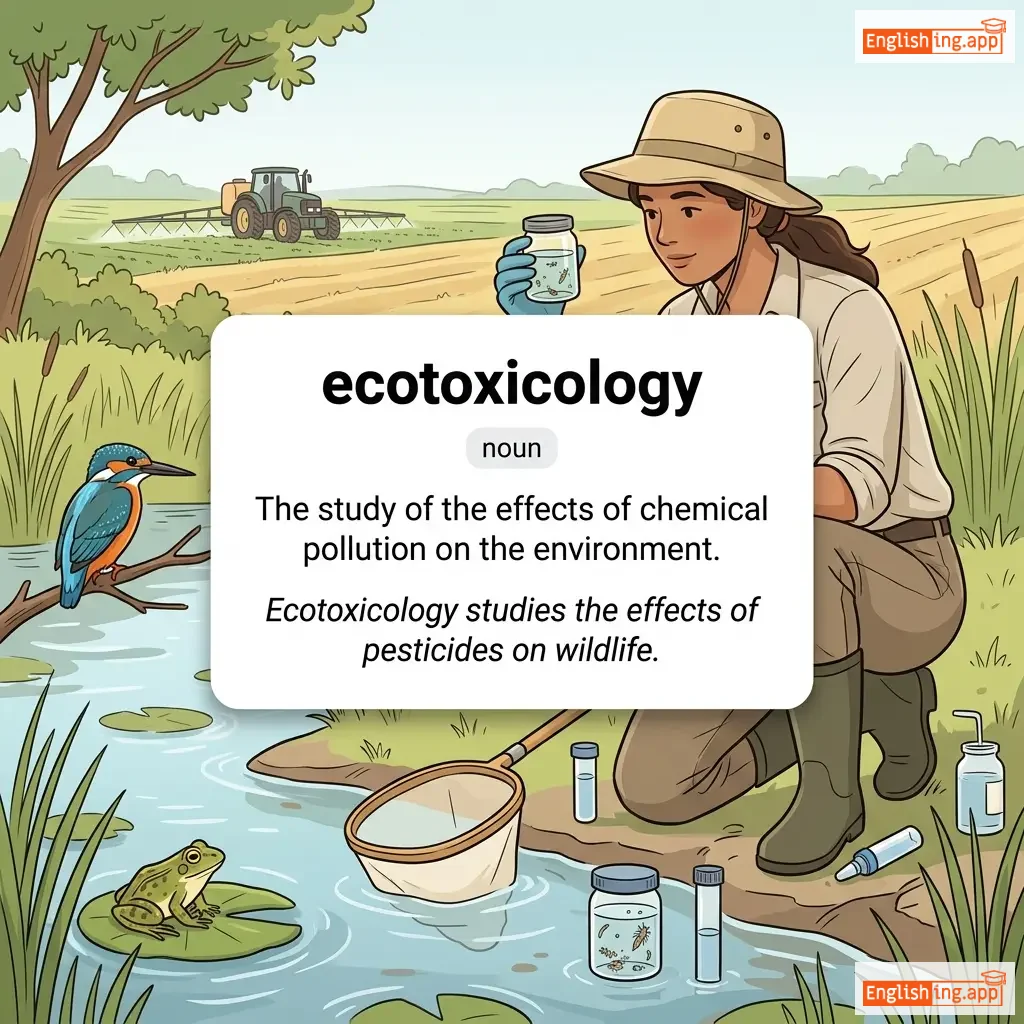
ecotoxicology definition card — visual illustration of the meaning
noun
/ˌiː.kəʊ.tɒkˈsɪ.kə.lə.dʒi/
इकोटॉक्सिकोलॉजी (ecotoxicology)

The study of the effects of chemical pollution on the environment.

"Ecotoxicology studies the effects of pesticides on wildlife."

"इकोटॉक्सिकोलॉजी कीटों के दवाइयों के वन्यजीवों पर प्रभाव का अध्ययन करती है।" (Ecotoxicology keetoon ke davaiyon ke vanyajeevon par prabhav ka adhyayan karti hai.)
noun
/ˈekstəsi/
आनंद (aanand)

An overwhelming feeling of great happiness or joyful excitement.

"She was in ecstasy when she won the prize."

"जब उसने पुरस्कार जीता, वह आनंद में थी।" (Jab usne puraskar jeeta, wah aanand mein thi.)
adjective
/ɪkˈstætɪk/
उत्साही (utsahi)

Feeling or expressing overwhelming happiness or excitement.

"The fans were ecstatic after their team won the championship."

"उनके टीम के चैंपियन बनने के बाद, फैंस अत्यधिक खुश थे।" (Unke team ke champion banne ke baad, fans atyadhik khush the.)
adjective
/ˌɛkjʊˈmɛnɪkəl/
सार्वभौम धार्मिक एकता (saarvbhauma dharmik ekta)

Promoting unity among different Christian churches or religions.

"The leaders gathered for an ecumenical conference to encourage dialogue."

"नेता संवाद को प्रोत्साहित करने के लिए एक सार्वभौम सम्मेलन में एकत्र हुए।" (Neta samvad ko protsahit karne ke liye ek saarvbhauma sammelan mein ekatrit hue.)
noun
/ˈɛdi/
व्यूह (vyuh)

A circular movement of water, air, or smoke, counter to the main current, causing a small whirlpool or turbulence.

"The canoe was caught in an eddy near the rocks."

"नाव चट्टानों के पास एक व्यूह में फंस गई थी।" (Naav chhatton ke paas ek vyuh mein fans gayi thi.)
noun
/ˈiː.dən/
एडन (Eden)

a place or state of great happiness; paradise

"The garden was like Eden, filled with beautiful flowers and peaceful atmosphere."

"गार्डन एडन जैसा था, जिसमें सुंदर फूल और शांत वातावरण था।" (garden Eden jaisa tha, jismein sundar phool aur shaant vatavaran tha.)
noun
/ɛdʒ/
किनारा / धार (kinara / dhar)

the border or outermost part of something; a sharp side of a blade or tool

"He stood on the edge of the cliff."

"वह चट्टान के किनारे खड़ा था।" (Wah chattan ke kinare khada tha.)
adjective
/ˈɛdəbl/
खाद्य योग्य (khadya yogya)

Fit or suitable to be eaten; safe to eat.

"The mushrooms in the basket are edible."

"टोकरी में मशरूम खाने योग्य हैं।" (Tokari mein mashroom khane yogya hain.)
noun
/ˈiːdɪkt/
ादेश (adesh)

An official order, proclamation, or decree issued by an authority.

"The king issued an edict banning smoking in public places."

"राजा ने एक आदेश जारी किया था जिसमें सार्वजनिक स्थानों पर धूम्रपान पर प्रतिबंध था।" (Raja ne ek aadesh jari kiya tha jismein sarvajanik sthalon par dhoomrapaan par pratibandh tha.)
noun
/ˈɛdɪfɪs/
भवन (bhavan)

A large, impressive building or structure.

"The museum is an impressive edifice in the city center."

"संग्रहालय शहर के केंद्र में एक प्रभावशाली भवन है।" (Sangrahalay shahar ke kendre mein ek prabhavshali bhavan hai.)
verb
/ˈɛdɪfaɪ/
शिक्षित करना (shikshit karna)

To instruct or improve someone morally or intellectually.

"Good books can both entertain and edify the reader."

"अच्छी किताबें पाठक को मनोरंजन और शिक्षा दोनों प्रदान कर सकती हैं।" (Acchi kitabein pathak ko manoranjan aur shiksha dono pradan kar sakti hain.)
adjective
/ˈɛdɪfaɪɪŋ/
नैतिक रूप से शिक्षाप्रद (naitik roop se shikshaprad)

Providing moral or intellectual instruction or enlightenment.

"The documentary was both entertaining and edifying."

"डॉक्युमेंट्री एक साथ मनोरंजक और शिक्षाप्रद थी।" (Documentary ek saath manoranjak aur shikshaprad thi.)
edit definition card — visual illustration of the meaning
verb
/ˈɛdɪt/
संपादन करना (sampadan karna)

to prepare written material by correcting, condensing, or modifying it.

"She edited the article before it was published."

"उसने लेख को प्रकाशित होने से पहले संपादित किया।" (usne lekh ko prakaashit hone se pehle sampadit kiya.)
noun
/ɪˈdɪʃən/
संस्करण (sanskarn)

a particular version or printing of a book, newspaper, or other publication

"The latest edition of the magazine sold out quickly."

"पत्रिका का नवीनतम संस्करण जल्दी बिक गया।" (Patrika ka naveenatam sanskaran jaldi bik gaya.)
noun
/ˈɛdɪtər/
संपादक (sampadak)

a person responsible for the final content of a newspaper, magazine, or book

"The editor approved the article before publication."

"प्रकाशन से पहले संपादक ने लेख को मंजूरी दी।" (prakashan se pehle sampadak ne lekh ko manzoori dee.)
noun
/ˌɛdɪˈtɔːriəl/
संपादकीय (sampadakiya)

A newspaper article expressing the opinion of the editor or publisher.

"The newspaper published an editorial criticizing government policy."

"समाचार पत्र ने सरकार की नीति की आलोचना करते हुए एक संपादकीय प्रकाशित किया।" (Samaachaar patra ne sarkaar ki neeti ki aalochana karte hue ek sampadakiya prakaashit kiya.)
verb
/ˈɛdjʊˌkeɪt/
शिक्षा देना (shiksha dena)

to give knowledge, skills, or training to someone; to teach

"Parents should educate their children about healthy habits."

"माता-पिता को अपने बच्चों को स्वस्थ आदतों के बारे में शिक्षा देनी चाहिए।" (Mata-pita ko apne bachchon ko swasth aadaton ke baare mein shiksha deni chahiye.)
adjective
/ˈɛd.jʊ.keɪ.tɪd/
शिक्षित (shikshit)

Having received a good level of formal schooling or training; knowledgeable

"She is an educated woman who values lifelong learning."

"वह एक शिक्षित महिला हैं जो जीवन भर सीखने को महत्व देती हैं।" (Vah ek shikshit mahila hain jo jeevan bhar seekhne ko mahatva deti hain.)
education definition card — visual illustration of the meaning
noun
/ˌɛdʒʊˈkeɪʃən/
शिक्षा (shiksha)

the process of receiving or giving systematic instruction, especially at a school or university

"Education is the key to success."

"शिक्षा सफलता की कुंजी है।" (Shiksha safalta ki kunji hai.)
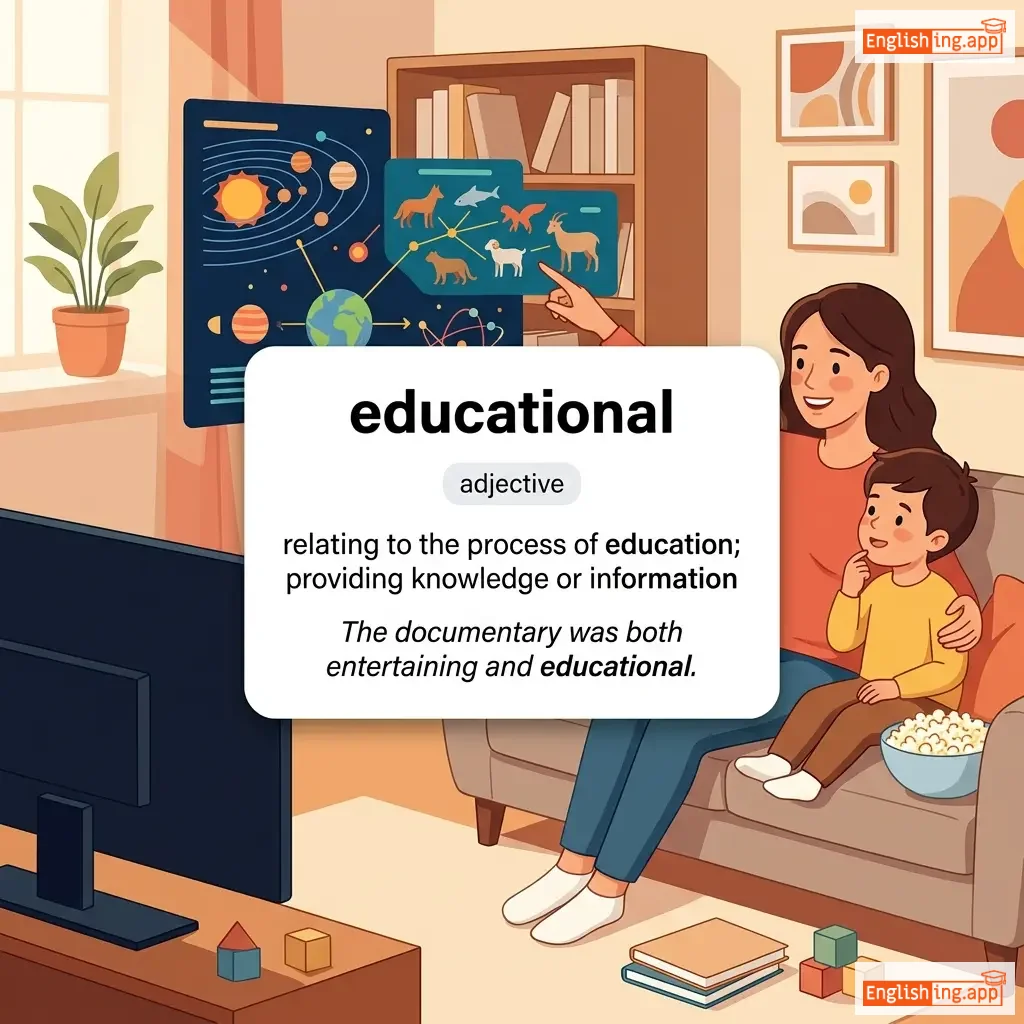
educational definition card — visual illustration of the meaning
adjective
/ˌɛdʒuˈkeɪʃənəl/
शैक्षिक (shaikshik)

relating to the process of education; providing knowledge or information

"The documentary was both entertaining and educational."

"डॉक्युमेंट्री मनोरंजन और शैक्षिक दोनों थी।" (Documentary manoranjan aur shaikshik dono thi.)
adjective
/ˈed.jʊ.keɪ.tɪv/
शैक्षिक; सूचना देने वाला; (shaikshik; soochna dene wala)

providing education; instructive; informative

"The documentary was highly educative and informative."

"वह डॉक्यूमेंट्री अत्यधिक शैक्षिक और जानकारीपूर्ण थी।" (vah documentary atyadhik shaikshik aur jankari poorna thi.)
noun
/ˈɛdʒuˌkeɪtər/
शिक्षक (shikshak)

a person who provides education; a teacher or instructor

"She is a dedicated educator who inspires her students every day."

"वह एक समर्पित शिक्षक हैं जो हर दिन अपने छात्रों को प्रेरित करते हैं।" (Vah ek samarpit shikshak hain jo har din apne chhatron ko prerit karte hain.)
verb
/ɪˈdjuːs/
निकालना (nikaalna)

To draw out or bring forth something latent or hidden.

"The teacher tried to educe a response from the shy student."

"शिक्षक ने शरमाने वाले छात्र से प्रतिक्रिया प्राप्त करने की कोशिश की।" (Shikshak ne sharmane wale chatra se pratikriya praapt karne ki koshish ki.)
noun
/iːl/
बाम मछली (baam machhli)

a long, snake-like fish that lives in both fresh and salt water

"The electric eel can generate powerful electric shocks."

"विद्युत ईल शक्तिशाली विद्युत झटके उत्पन्न कर सकती है।" (vidyut eel shaktishali vidyut jhatke utpann kar sakti hai)
adjective
/ˈɪəri/
अजीब (ajeeb)

Strange and frightening in a mysterious way.

"The abandoned house had an eerie silence."

"परित्यक्त घर में एक अजीब खामोशी थी।" (Parityakt ghar mein ek ajeeb khamoshi thi.)
verb
/ɪˈfeɪs/
मिटाना (mitana)

To erase or wipe out something; to make oneself inconspicuous.

"Time had effaced the letters on the old gravestone."

"समय ने पुराने समाधि पत्तों पर लिखे अक्षरों को मिटा दिया था।" (Samay ne purane samaadhi patton par likhe aksharon ko mita diya tha.)
verb
/ɪˈfeɪsɪŋ/
मिटाना / खुद को अदृश्य करना (mitana / khud ko adrisya karna)

erasing or making oneself inconspicuous; to remove or diminish in significance

"She kept effacing herself during the meeting so that others could shine."

"वह मीटिंग के दौरान खुद को छिपाती रही ताकि दूसरों को चमकने का मौका मिले।" (Vah meeting ke dauran khud ko chhupati rahi taaki doosron ko chamakne ka mauka mile.)
noun
/ɪˈfɛkt/
प्रभाव (prabhav)

a change that results from a particular action or cause

"The new law had a positive effect on public safety."

"नए कानून का सार्वजनिक सुरक्षा पर सकारात्मक प्रभाव पड़ा।" (Naye kanoon ka sarvajanik suraksha par sakaratmak prabhav pada.)
effective definition card — visual illustration of the meaning
adjective
/ɪˈfɛktɪv/
प्रभावी (prabhavi)

producing the intended or desired result

"This medicine is very effective against headaches."

"यह दवा सिर दर्द के खिलाफ बहुत प्रभावी है।" (Yeh dawa sir dard ke khilaf bahut prabhavi hai.)
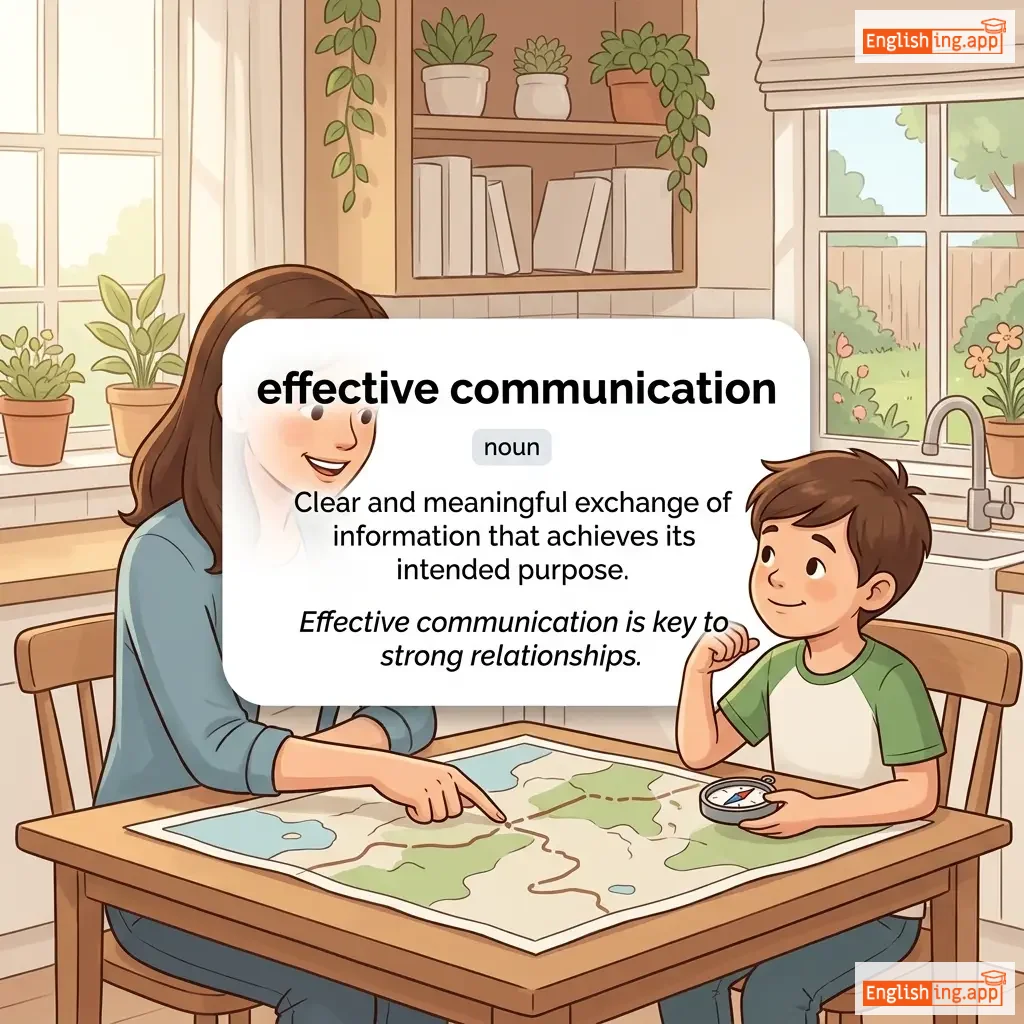
effective communication definition card — visual illustration of the meaning
noun
/ɪˈfɛk.tɪv kəˌmjuː.nɪˈkeɪ.ʃən/
प्रभावी संचार (prabhavi sanchar)

Clear and meaningful exchange of information that achieves its intended purpose.

"Effective communication is key to strong relationships."

"प्रभावी संचार मजबूत रिश्तों की कुंजी है।" (Prabhavi sanchar majboot rishhton ki kunji hai.)
adverb
/ɪˈfɛktɪvli/
प्रभावी रूप से (prabhavi roop se)

in a way that produces the desired result; efficiently and successfully

"The team worked together effectively to finish the project on time."

"टीम ने समय पर प्रोजेक्ट पूरा करने के लिए प्रभावी रूप से एक साथ काम किया।" (Team ne samay par project poora karne ke liye prabhavi roop se ek saath kaam kiya.)
noun
/ɪˈfɛktɪvnəs/
प्रभावशीलता (prabhavsheelta)

the degree to which something is successful in producing a desired result.

"The effectiveness of the new policy is still being evaluated."

"नयी नीति की प्रभावशीलता अभी भी मूल्यांकन की जा रही है।" (nayi neeti ki prabhavsheelta abhi bhi mulyankan ki ja rahi hai.)
adjective
/ɪˈfɛktʃuəl/
प्रभावी (prabhavi)

producing a desired or intended effect, often used in formal contexts

"Her effectual efforts brought peace to the community."

"उसके प्रभावी प्रयासों ने समुदाय में शांति लाई।" (Uske prabhavi prayaason ne samudaay mein shanti laayi.)
verb
/ɪˈfɛktʃueɪt/
प्रभावित करना (prabhavit karna)

to put into force or cause to happen; to bring about

"The manager effectuated the changes to improve efficiency."

"मैनेजर ने दक्षता बढ़ाने के लिए बदलाव किए।" (Manager ne dakshata badhane ke liye badlav kiye.)