語彙集

英単語辞書 | 単語の意味、定義、例文

noun
/fəˈsɑːd/
ファサード (fasādo)

The front of a building; a false or superficial appearance

"The building's glass facade reflected the sunset."
"建物のガラスのファサードは日没を反映していた。" (Tatemono no garasu no fasādo wa nichibotsu o han'ei shite ita.)
face definition card — visual illustration of the meaning
🙂

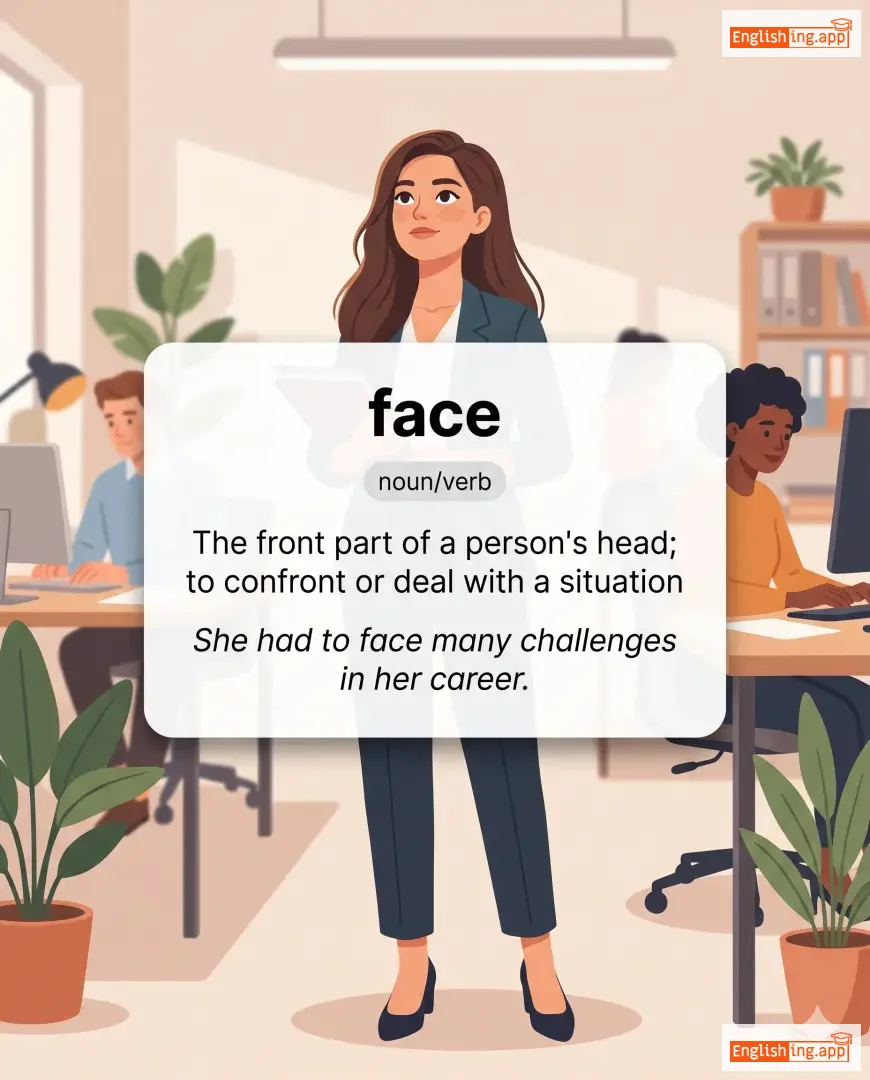
face

noun/verb
/feɪs/

The front part of a person's head; to confront or deal with a situation

"She had to face many challenges in her career."

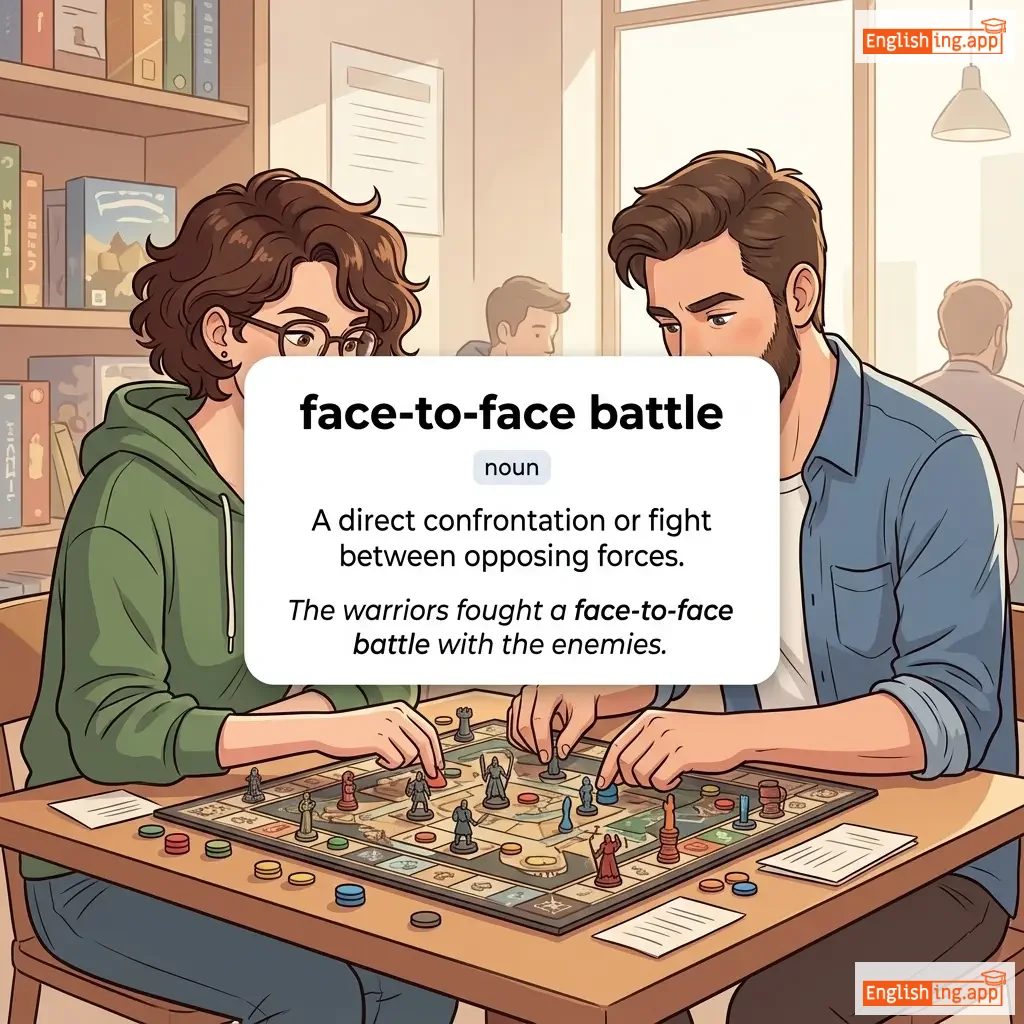
face-to-face battle definition card — visual illustration of the meaning
noun
ˈfeɪs tə ˈfeɪs ˈbætl
面と面の戦い (men to men no tatakai)

A direct confrontation or fight between opposing forces.

"The warriors fought a face-to-face battle with the enemies."
"戦士たちは敵と面と面で戦った。" (Senshi-tachi wa teki to men to men de tatakatta.)
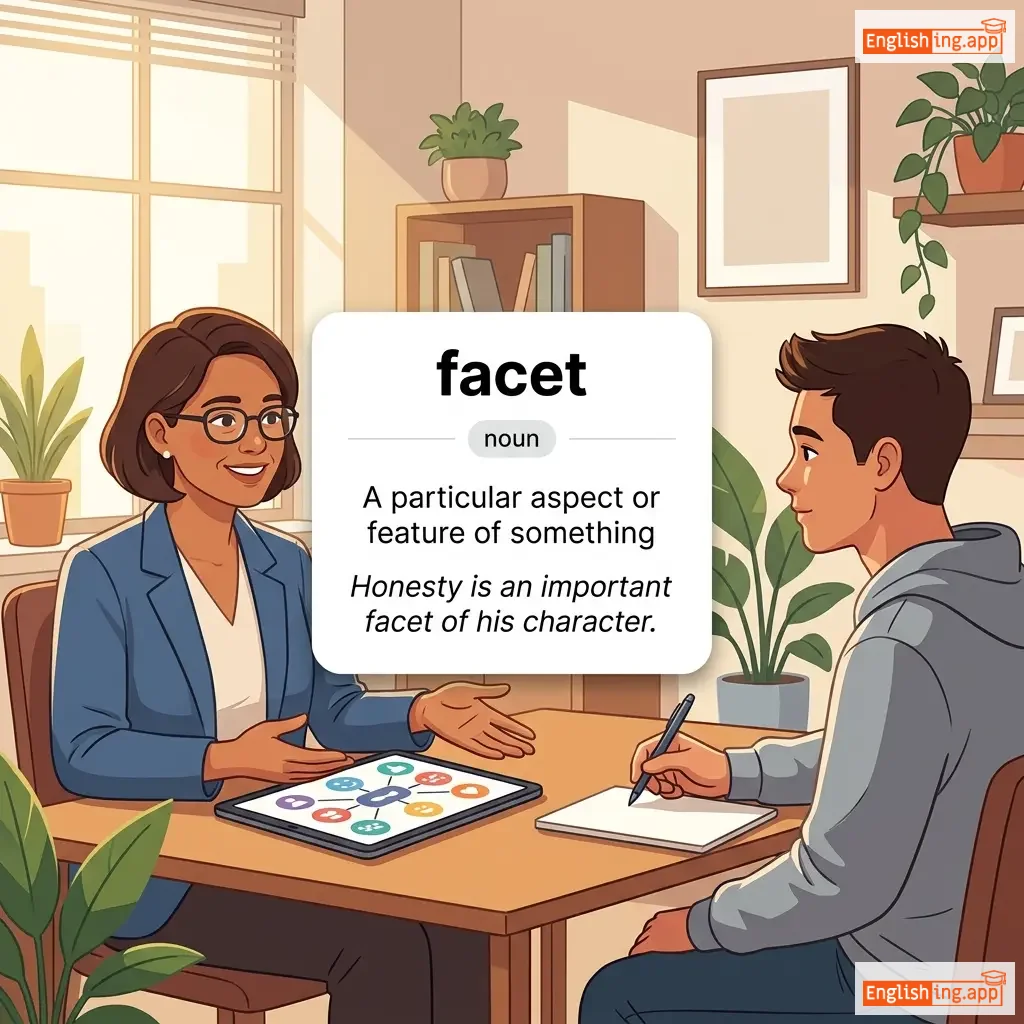
facet definition card — visual illustration of the meaning
noun
/ˈfæsɪt/
側面 (sokumen)

A particular aspect or feature of something

"Honesty is an important facet of his character."
"正直さは彼の性格の重要な側面です。" (Shōjikisā wa kare no seikaku no jūyōna sokumen desu.)
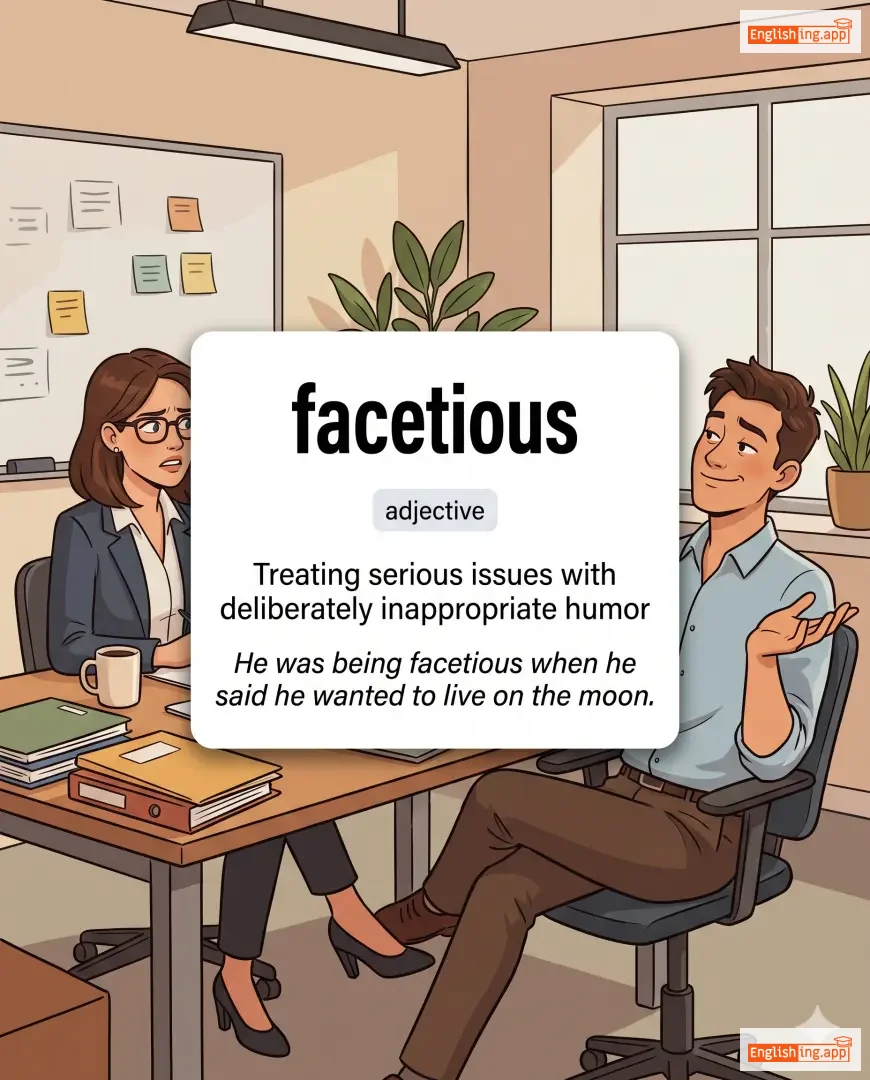
facetious definition card — visual illustration of the meaning
adjective
/fəˈsiːʃəs/
皮肉な (hiniku na)

Treating serious issues with deliberately inappropriate humor

"He was being facetious when he said he wanted to live on the moon."

"彼は月に住みたいと言ったとき、皮肉を言っていた。" (Kare wa tsuki ni sumitai to itta toki, hiniku o itte ita.)
adjective, noun
/ˈfeɪʃəl/
フェイシャル (feisharu)

Relating to the face; a beauty treatment for the face

"She booked a facial at the spa."

"彼女はスパでフェイシャルを予約しました。" (Kanojo wa supa de feisharu o yoyaku shimashita.)
adjective
/ˈfæsɪl/
簡単、表面的、単純 (kantan, hyōmen-teki, tanjun)

easily achieved or effortless; superficial or simplistic

"He gave a facile explanation that ignored the complexities of the problem."

"彼は問題の複雑さを無視して、簡単な説明をしました。" (Kare wa mondai no fukuzatsusa o mushi shite, kantan na setsumei o shimashita.)
facilitate definition card — visual illustration of the meaning
verb
/fəˈsɪlɪteɪt/
促進する、容易にする (sokushin suru, yōi ni suru)

to make an action or process easier or smoother

"The new software will facilitate communication between departments."

"新しいソフトウェアは部門間のコミュニケーションを促進します。" (Atarashī sofutowea wa bumonkan no komyunikēshon o sokushin shimasu.)
facilitation definition card — visual illustration of the meaning
noun
fəˌsɪl.ɪˈteɪ.ʃən
円滑化 (enkatsuka)

Making any work or process easy and effective.

"Payment gateways ensure the facilitation of online transactions."
"支払いゲートウェイはオンライン取引の円滑化を確保します。" (Shiharai gētowei wa onrain torihiki no enkatsuka o kakuho shimasu.)
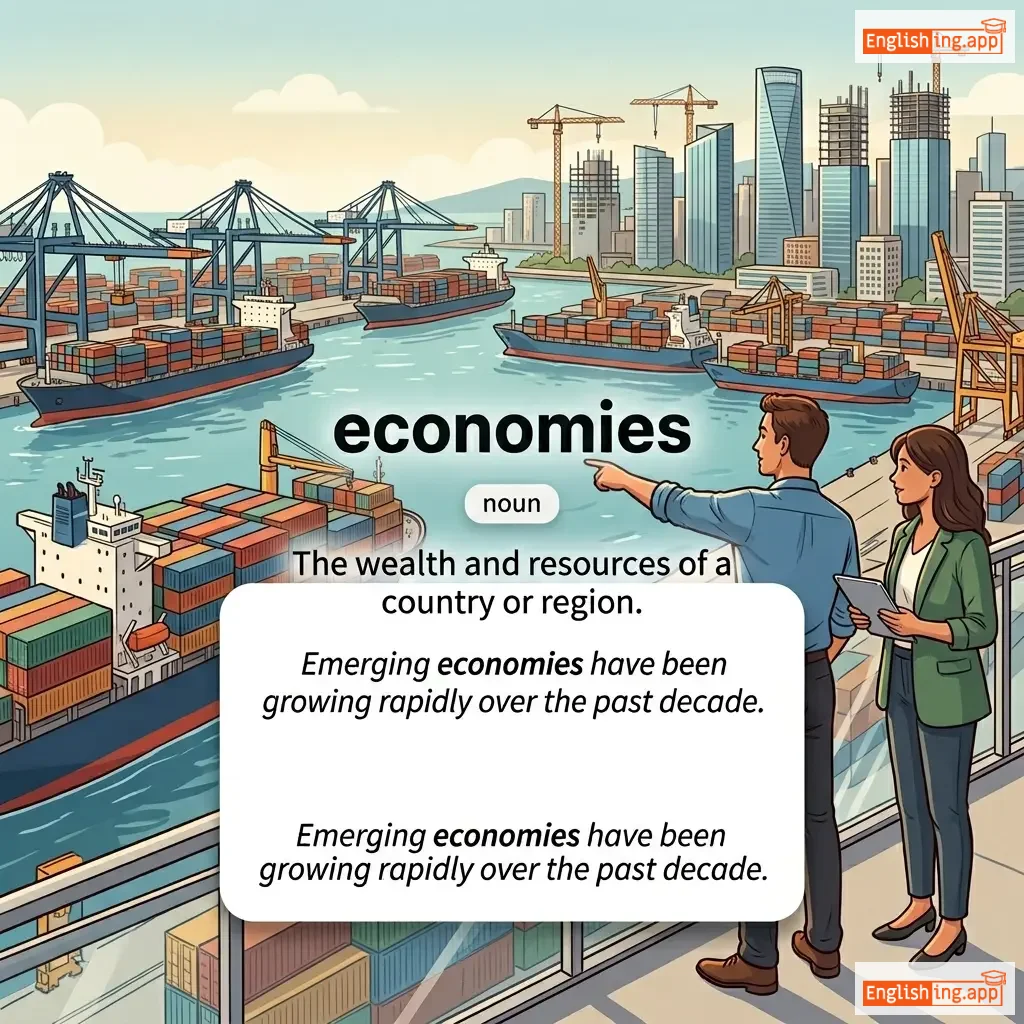
economies definition card — visual illustration of the meaning
noun
ɪˈkɒnəmiːz
経済 (keizai)

The wealth and resources of a country or region.

"Emerging economies have been growing rapidly over the past decade."

"新興経済は過去10年間で急速に成長しています。" (Shinko keizai wa kako 10 nenkan de kyusoku ni seicho shiteimasu.)
noun
/ɪˈkɒnəmɪst/
経済学者 (keizaigakusha)

A person who studies or is an expert in economics.

"The economist predicted a rise in inflation."

"経済学者はインフレの上昇を予測しました。" (Keizaigakusha wa infure no joshou o yosoku shimashita.)
verb
/ɪˈkɒnəmaɪz/
節約する (setsuyaku suru)

To reduce spending or use resources carefully.

"Families are trying to economize by cutting unnecessary expenses."
"家族は不必要な支出を削減して、節約しようとしています。" (Kazoku wa fuhitsuyou na shishutsu o sakugen shite, setsuyaku shiyou to shiteimasu.)
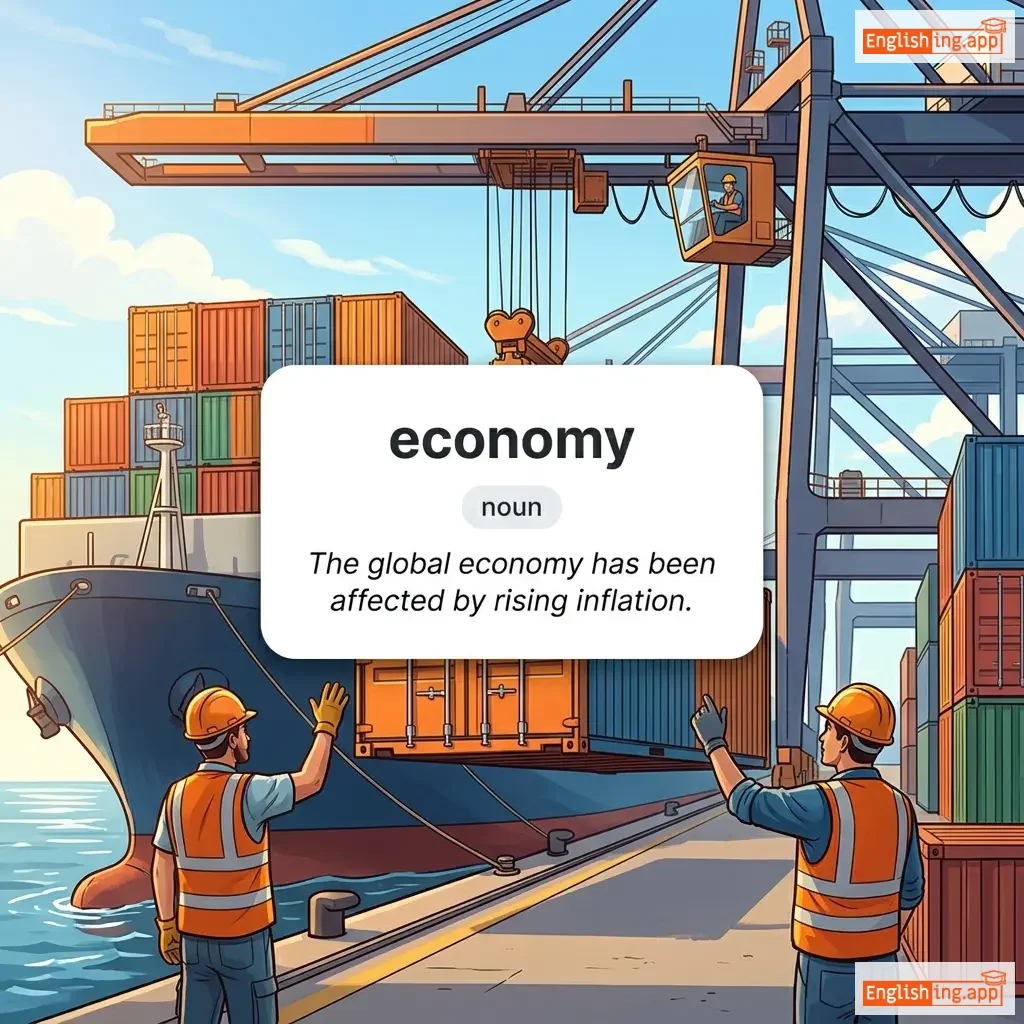
economy definition card — visual illustration of the meaning
noun
/ɪˈkɒnəmi/
経済 (keizai)

The system of production, distribution, and consumption of goods and services in a society.

"The global economy has been affected by rising inflation."
"世界経済はインフレの上昇に影響を受けました。" (Sekai keizai wa infure no jōshō ni eikyō o ukemashita.)
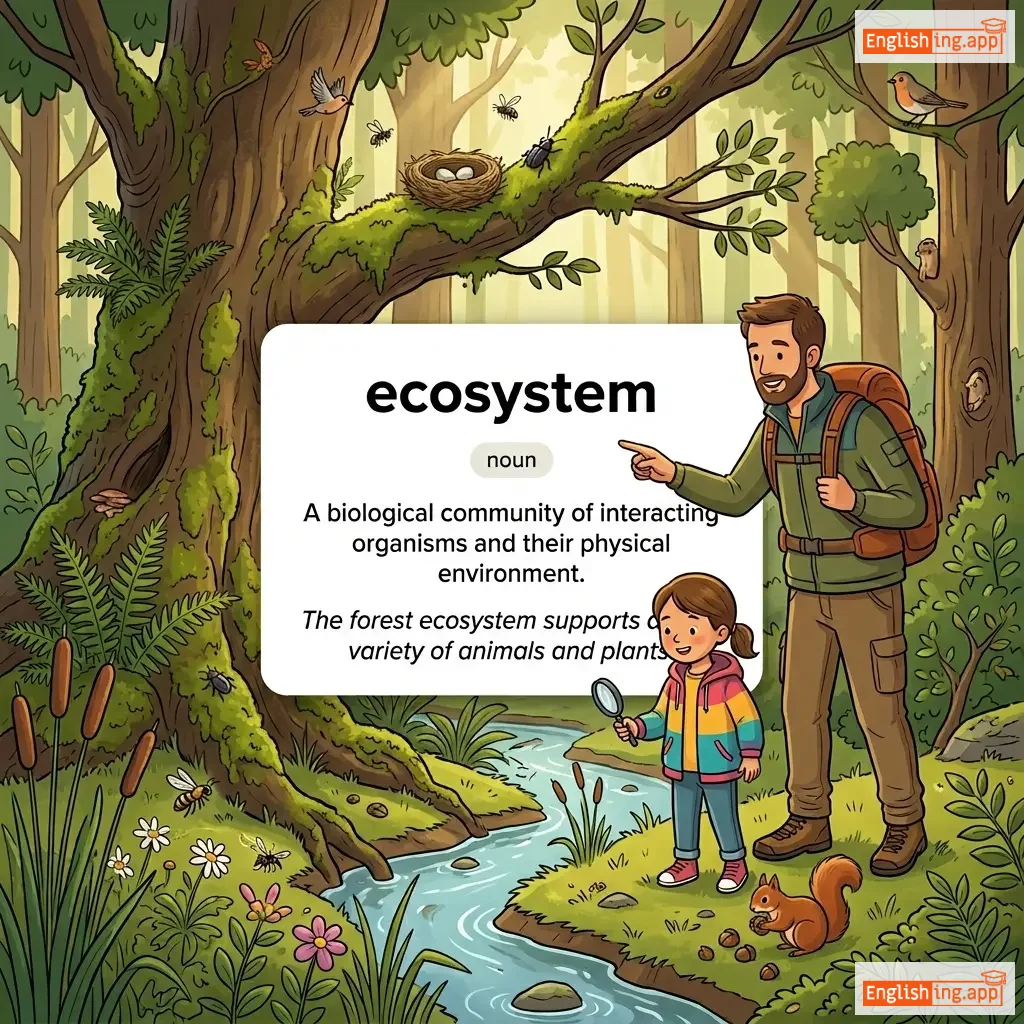
ecosystem definition card — visual illustration of the meaning
noun
/ˈiːkəʊˌsɪstəm/
幸せ (shiawase)

A biological community of interacting organisms and their physical environment.

"The forest ecosystem supports a wide variety of animals and plants."
"彼女は賞を受け取ったとき、幸せを隠すことができなかった。" (Kanojo wa shō o uketotta toki, shiawase o kakusu koto ga dekinakatta.)
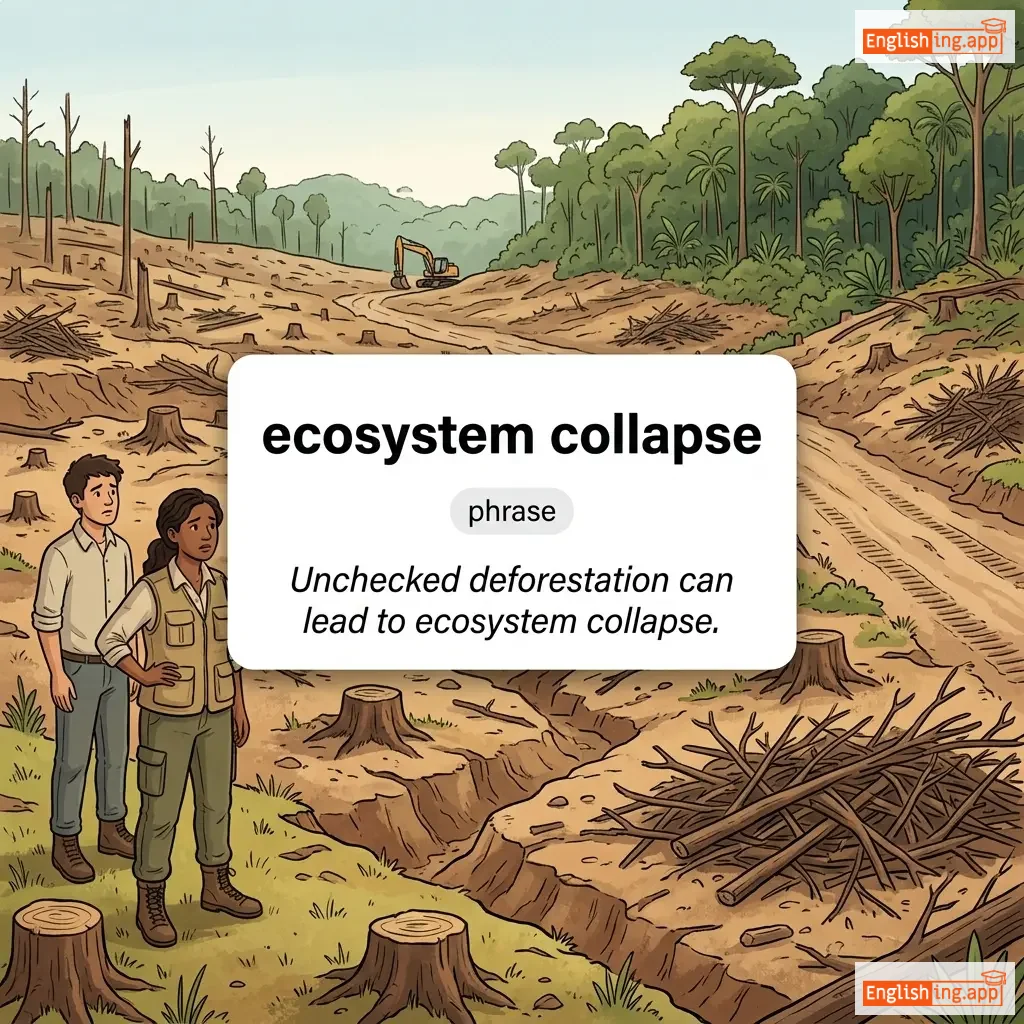
ecosystem collapse definition card — visual illustration of the meaning
phrase
ˈiː.kəʊˌsɪs.təm kəˈlæps
エコシステムの崩壊 (ekoshisutemu no houkai)

The complete breakdown of an ecological system, resulting in the inability to maintain its structure and function.

"Unchecked deforestation can lead to ecosystem collapse."
"制御されない森林伐採はエコシステムの崩壊を引き起こす可能性があります。" (Seigyo sarenai shinrin bassai wa ekoshisutemu no houkai wo hikiokosu kanousei ga arimasu.)
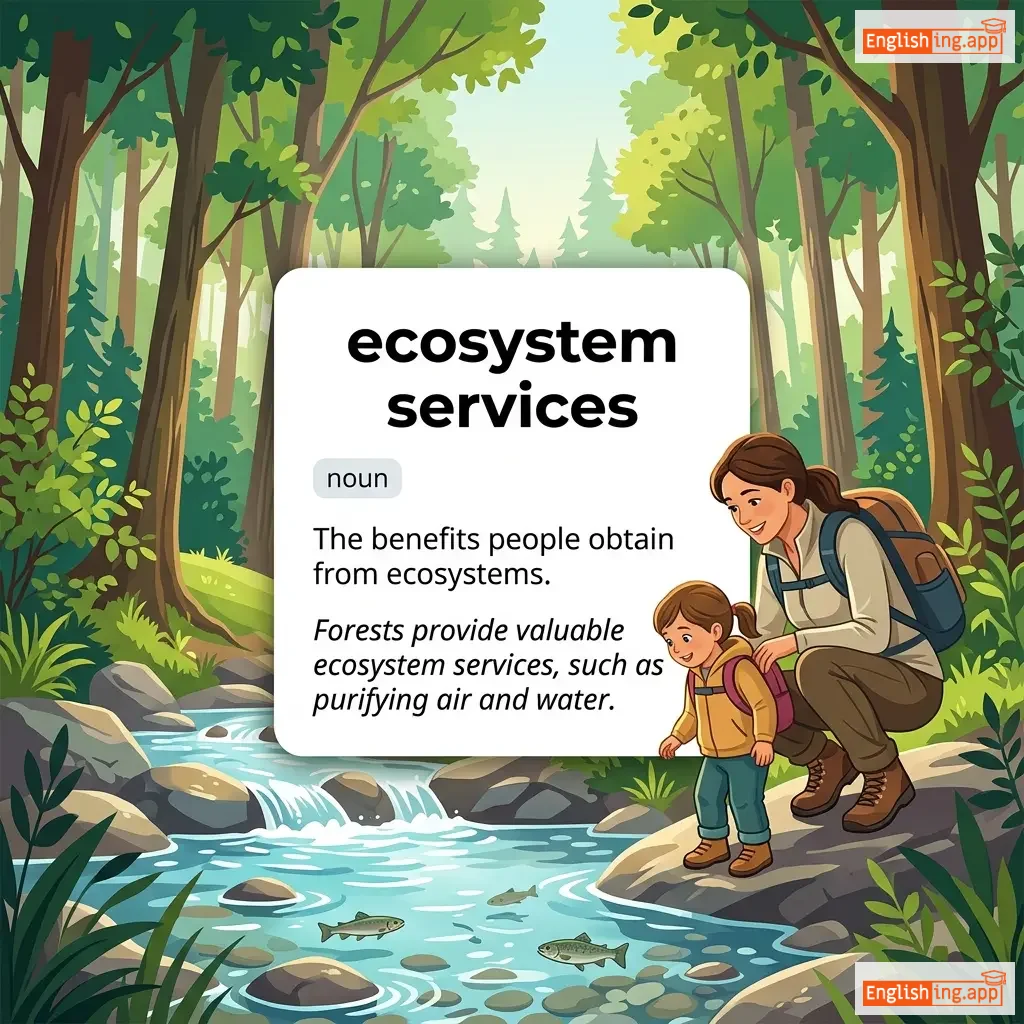
ecosystem services definition card — visual illustration of the meaning
noun
ˈiːkəʊˌsɪstəm ˈsɜːvɪsɪz
生態系サービス (seitaikei sābisu)

The benefits people obtain from ecosystems.

"Forests provide valuable ecosystem services, such as purifying air and water."
"森林は空気と水を浄化するなど、貴重な生態系サービスを提供します。" (Shinrin wa kūki to mizu o jōka suru nado, kichōna seitaikei sābisu o teikyō shimasu.)
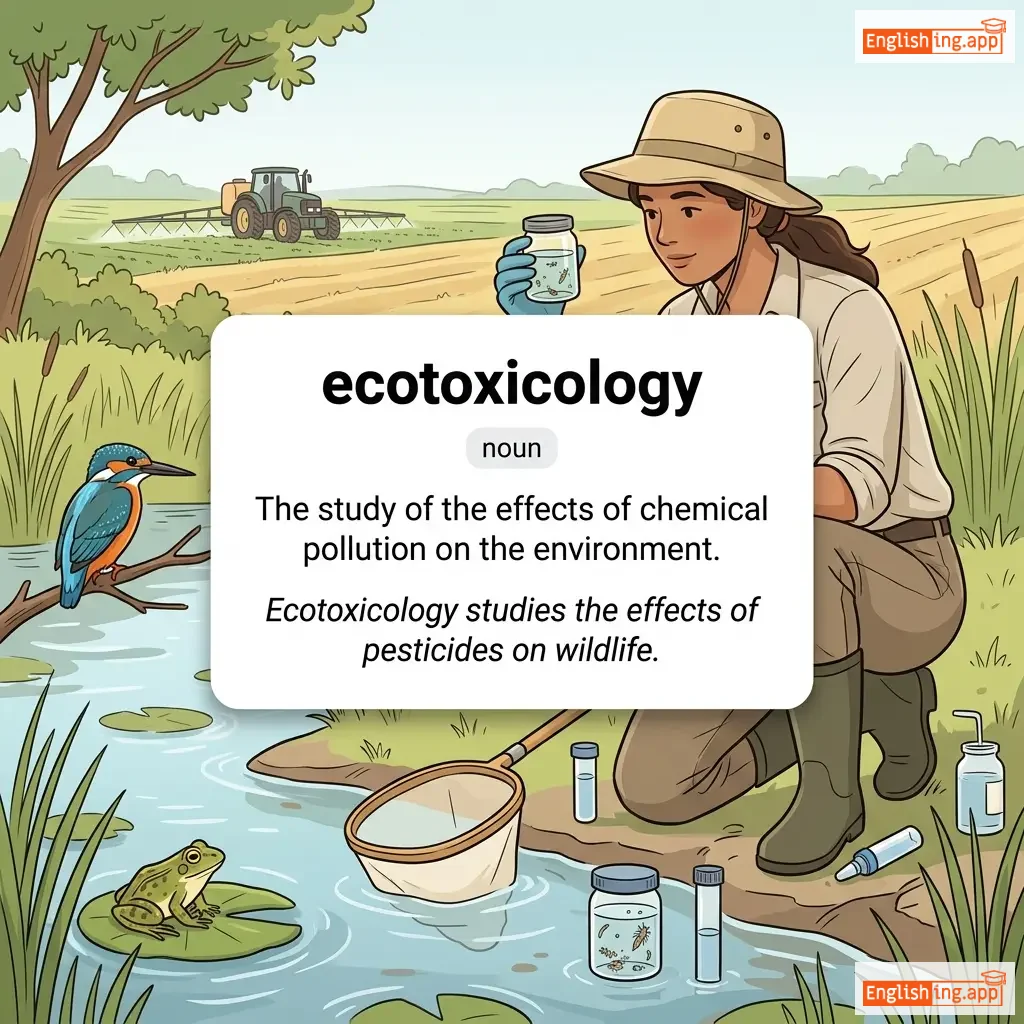
ecotoxicology definition card — visual illustration of the meaning
noun
/ˌiː.kəʊ.tɒkˈsɪ.kə.lə.dʒi/
エコトキシコロジー (ekotokishikoroji)

The study of the effects of chemical pollution on the environment.

"Ecotoxicology studies the effects of pesticides on wildlife."

"エコトキシコロジーは農薬が野生動物に与える影響を研究しています。" (Ekotokishikoroji wa nōyaku ga yaseidōbutsu ni ataeru eikyō o kenkyū shiteimasu.)
noun
/ˈekstəsi/
恍惚 (kōkotsu)

An overwhelming feeling of great happiness or joyful excitement.

"She was in ecstasy when she won the prize."

"彼女は賞を取ったとき、恍惚の状態にありました。" (Kanojo wa shō o totta toki, kōkotsu no jōtai ni arimashita.)
adjective
/ɪkˈstætɪk/
興奮している (koufun shite iru)

Feeling or expressing overwhelming happiness or excitement.

"The fans were ecstatic after their team won the championship."

"ファンたちはチームがチャンピオンになった後、興奮していました。" (Fan-tachi wa chīmu ga chanpion ni natta ato, kōfun shite imashita.)
adjective
/ˌɛkjʊˈmɛnɪkəl/
エキュメニカルな宗教的統一 (ekyumenikaru na shuukyou-teki touitsu)

Promoting unity among different Christian churches or religions.

"The leaders gathered for an ecumenical conference to encourage dialogue."

"リーダーたちは対話を促進するためにエキュメニカルな会議に集まりました。" (Riidaa-tachi wa taiwa wo sokushin suru tame ni ekyumenikaru na kaigi ni atsumarimashita.)
noun
/ˈɛdi/
渦巻き (uzumaki)

A circular movement of water, air, or smoke, counter to the main current, causing a small whirlpool or turbulence.

"The canoe was caught in an eddy near the rocks."

"カヌーは岩の近くで渦巻きに巻き込まれた。" (Kanū wa iwa no chikaku de uzumaki ni makikomareta.)
noun
/ˈiː.dən/
エデン (Eden)

a place or state of great happiness; paradise

"The garden was like Eden, filled with beautiful flowers and peaceful atmosphere."

"その庭はエデンのようで、美しい花々と平和な雰囲気に満ちていました。" (Sono niwa wa Eden no you de, utsukushii hanabana to heiwa na fun'iki ni michite imashita.)
noun
/ɛdʒ/
縁 / 刃 (en / ha)

the border or outermost part of something; a sharp side of a blade or tool

"He stood on the edge of the cliff."

"彼は崖の縁に立っていた。" (Kare wa gake no en ni tatte ita.)
adjective
/ˈɛdəbl/
食べられる (taberareru)

Fit or suitable to be eaten; safe to eat.

"The mushrooms in the basket are edible."

"バスケットの中のキノコは食べられます。" (Basuketto no naka no kinoko wa taberaremasu.)
noun
/ˈiːdɪkt/
勅令 (chokurei)

An official order, proclamation, or decree issued by an authority.

"The king issued an edict banning smoking in public places."

"王は公共の場での喫煙を禁止するエディクトを発行しました。" (Ō wa kōkyō no ba de no kitsuen wo kinshi suru edikuto wo hakko shimashita.)
noun
/ˈɛdɪfɪs/
建物 (tatemono)

A large, impressive building or structure.

"The museum is an impressive edifice in the city center."

"その博物館は市内中心部の印象的な建物です。" (Sono hakubutsukan wa shinai chūshinbu no inshō-teki na tatemono desu.)
📚

edify

verb
/ˈɛdɪfaɪ/

To instruct or improve someone morally or intellectually.

"Good books can both entertain and edify the reader."

adjective
/ˈɛdɪfaɪɪŋ/
啓発的な (keihatsuteki na)

Providing moral or intellectual instruction or enlightenment.

"The documentary was both entertaining and edifying."

"そのドキュメンタリーは、エンターテイメントと啓発の両方を兼ね備えていました。" (Sono dokyumentarī wa, entāteimento to keihatsu no ryōhō o kanesonaete imashita.)
edit definition card — visual illustration of the meaning
verb
/ˈɛdɪt/
編集する (henshū suru)

to prepare written material by correcting, condensing, or modifying it.

"She edited the article before it was published."

"彼女は記事が公開される前に編集しました。" (Kanojo wa kiji ga kōkai sareru mae ni henshū shimashita.)
noun
/ɪˈdɪʃən/
(ban)

a particular version or printing of a book, newspaper, or other publication

"The latest edition of the magazine sold out quickly."

"雑誌の最新の版はすぐに売り切れました。" (Zasshi no saishin no han wa sugu ni urikiremashita.)
noun
/ˈɛdɪtər/
編集者 (henshūsha)

a person responsible for the final content of a newspaper, magazine, or book

"The editor approved the article before publication."

"エディターは出版前に記事を承認しました。" (Editā wa shuppan mae ni kiji o shōnin shimashita.)
noun
/ˌɛdɪˈtɔːriəl/
社説 (shasetsu)

A newspaper article expressing the opinion of the editor or publisher.

"The newspaper published an editorial criticizing government policy."

"新聞は政府の政策を批判する社説を発表しました。" (Shinbun wa seifu no seisaku o hihan suru shasetsu o happyō shimashita.)
verb
/ˈɛdjʊˌkeɪt/
教育する (kyouiku suru)

to give knowledge, skills, or training to someone; to teach

"Parents should educate their children about healthy habits."

"親は子供たちに健康的な習慣について教育するべきです。" (Oya wa kodomotachi ni kenko-teki na shuukan ni tsuite kyouiku suru beki desu.)
adjective
/ˈɛd.jʊ.keɪ.tɪd/
教育を受けた (kyouiku o uketa)

Having received a good level of formal schooling or training; knowledgeable

"She is an educated woman who values lifelong learning."

"彼女は教育を受けた女性で、生涯学習を重視しています。" (Kanojo wa kyouiku o uketa josei de, shougai gakushuu o juushi shiteimasu.)
education definition card — visual illustration of the meaning
noun
/ˌɛdʒʊˈkeɪʃən/
教育 (kyouiku)

the process of receiving or giving systematic instruction, especially at a school or university

"Education is the key to success."
"教育は成功の鍵です。" (Kyouiku wa seikou no kagi desu.)
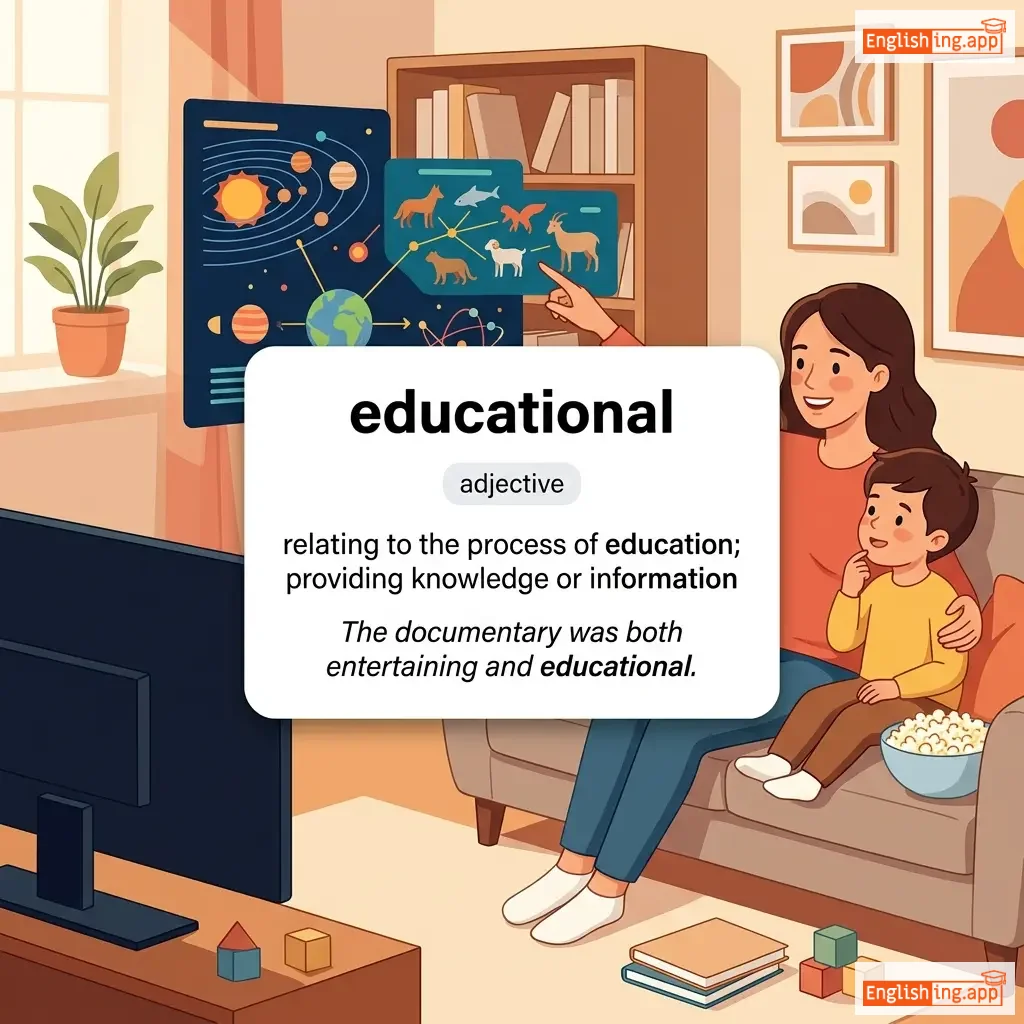
educational definition card — visual illustration of the meaning
adjective
/ˌɛdʒuˈkeɪʃənəl/
教育的な (kyouikuteki na)

relating to the process of education; providing knowledge or information

"The documentary was both entertaining and educational."

"そのドキュメンタリーはエンターテイメントと教育的な両方の要素を持っていました。" (Sono dokyumentarī wa entāteimento to kyōikuteki na ryōhō no yōso o motteimashita.)
adjective
/ˈed.jʊ.keɪ.tɪv/
教育的; 有益な; 情報豊かな (kyouikuteki; yūki na; jōhō yutakana)

providing education; instructive; informative

"The documentary was highly educative and informative."

"そのドキュメンタリーは非常に教育的で有益でした。" (Sono dokyumentarī wa hijō ni kyōikuteki de yūki deshita.)
noun
/ˈɛdʒuˌkeɪtər/
教育者 (kyouikusha)

a person who provides education; a teacher or instructor

"She is a dedicated educator who inspires her students every day."

"彼女は毎日学生を励ます献身的な教育者です。" (Kanojo wa mainichi gakusei wo hagemasu kenshinteki na kyouikusha desu.)
verb
/ɪˈdjuːs/
引き出す (hikidasu)

To draw out or bring forth something latent or hidden.

"The teacher tried to educe a response from the shy student."

"教師は恥ずかしがり屋の生徒から反応を引き出そうとしました。" (Kyoushi wa hazukashigariya no seito kara hannou wo hikidasou to shimashita.)
noun
/iːl/
ウナギ (unagi)

a long, snake-like fish that lives in both fresh and salt water

"The electric eel can generate powerful electric shocks."

"デンキウナギは強力な電気ショックを発生させることができます。" (denki unagi wa kyouryoku na denki shokku o hassei saseru koto ga dekimasu)
adjective
/ˈɪəri/
不気味 (bukimi)

Strange and frightening in a mysterious way.

"The abandoned house had an eerie silence."

"放棄された家には不気味な静けさがあった。" (Houkisareta ie ni wa bukimi na shizukesa ga atta.)
verb
/ɪˈfeɪs/
消す (kesu)

To erase or wipe out something; to make oneself inconspicuous.

"Time had effaced the letters on the old gravestone."

"時間は古い墓石に刻まれた文字を消してしまいました。" (Jikan wa furui hakoseki ni kizama reta moji o keshite shimaimashita.)
verb
/ɪˈfeɪsɪŋ/
消す / 自分を目立たなくする (kesu / jibun o medatanaku suru)

erasing or making oneself inconspicuous; to remove or diminish in significance

"She kept effacing herself during the meeting so that others could shine."

"会議中に他の人が輝けるように、自分自身を消し続けました。" (Kaigi-chū ni hoka no hito ga kagayakeru yō ni, jibun jishin o keshi tsudzukemashita.)
noun
/ɪˈfɛkt/
効果 (kouka)

a change that results from a particular action or cause

"The new law had a positive effect on public safety."

"新しい法律は公共の安全に良い効果をもたらしました。" (Atarashii houritsu wa koukyou no anzen ni yoi kouka o motarashimashita.)
effective definition card — visual illustration of the meaning
adjective
/ɪˈfɛktɪv/
効果的 (koukateki)

producing the intended or desired result

"This medicine is very effective against headaches."
"この薬は頭痛に非常に効果的です。" (Kono kusuri wa zutsū ni hijō ni kōkateki desu.)
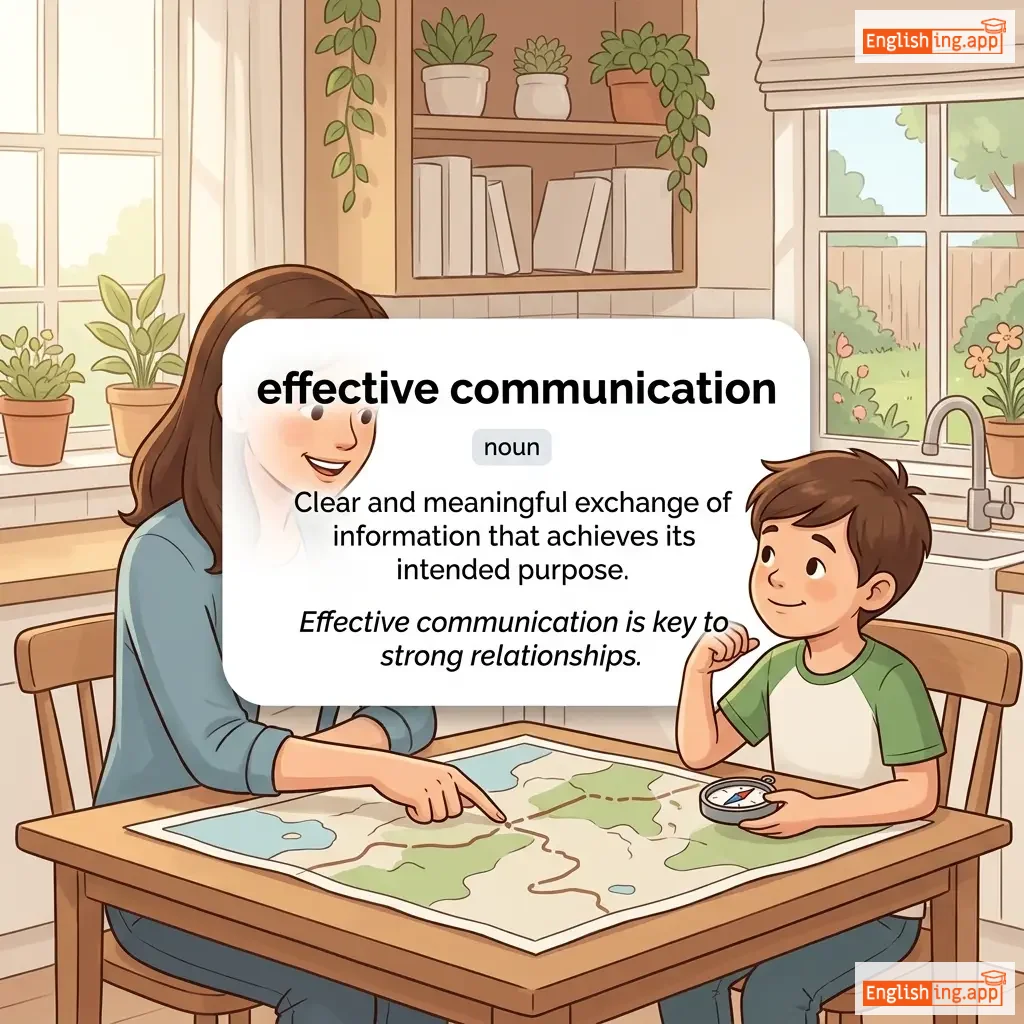
effective communication definition card — visual illustration of the meaning
noun
/ɪˈfɛk.tɪv kəˌmjuː.nɪˈkeɪ.ʃən/
効果的なコミュニケーション (kouka tekina komyunikeeshon)

Clear and meaningful exchange of information that achieves its intended purpose.

"Effective communication is key to strong relationships."

"効果的なコミュニケーションは強い関係を築く鍵です。" (Koukateki na komyunikeeshon wa tsuyoi kankei wo kizuku kagi desu.)
adverb
/ɪˈfɛktɪvli/
効果的に (koukatekini)

in a way that produces the desired result; efficiently and successfully

"The team worked together effectively to finish the project on time."

"チームはプロジェクトを時間通りに終わらせるために効果的に一緒に働きました。" (Chīmu wa purojekuto wo jikan dōri ni owaraseru tame ni kōkatekini issho ni hatarakimashita.)
noun
/ɪˈfɛktɪvnəs/
効果 (kouka)

the degree to which something is successful in producing a desired result.

"The effectiveness of the new policy is still being evaluated."

"新しい政策の効果はまだ評価中です。" (Atarashī seisaku no kōka wa mada hyōkajū desu.)
adjective
/ɪˈfɛktʃuəl/
効果的な (koukateki na)

producing a desired or intended effect, often used in formal contexts

"Her effectual efforts brought peace to the community."

"彼女の効果的な努力はコミュニティに平和をもたらしました。" (Kanojo no kōkateki na doryoku wa komyuniti ni heiwa o motarashimashita.)
verb
/ɪˈfɛktʃueɪt/
実行する (jikkou suru)

to put into force or cause to happen; to bring about

"The manager effectuated the changes to improve efficiency."

"マネージャーは効率を向上させるために変更を実行しました。" (Manējā wa kōritsu o kōjō saseru tame ni henkō o jikkō shimashita.)