語彙集

英単語辞書 | 単語の意味、定義、例文

adjective
/ɛɡˈzɪɡjuəs/
乏しい (moshī)

small in amount; scanty or inadequate

"They survived on exiguous rations during the journey."

"彼らは旅行中、乏しい配給で生き延びました。" (Karera wa ryokō-chū, moshī haikyū de ikinobimashita.)
noun
/ˈɛksaɪl/
追放 (tsuihō)

the state of being forced to live in a foreign country, often for political reasons

"After the coup, the former leader was forced into exile."

"クーデター後、元リーダーは追放されました。" (Kūdetā go, moto rīdā wa tsuihō saremashita.)
verb
/ɪɡˈzɪst/
存在する (sonzai suru)

to have actual being; to be real or present

"Dinosaurs no longer exist on Earth."

"恐竜は地球上にはもう存在しません。" (Kyouryuu wa chikyuu jou ni wa mou sonzai shimasen.)
noun
/ɪɡˈzɪstəns/
存在 (sonzai)

The state of being alive or having real presence.

"The existence of life on other planets is still uncertain."
"他の惑星での生命の存在はまだ不確かです。" (Hoka no wakusei de no seimei no sonzai wa mada fukakusa desu.)
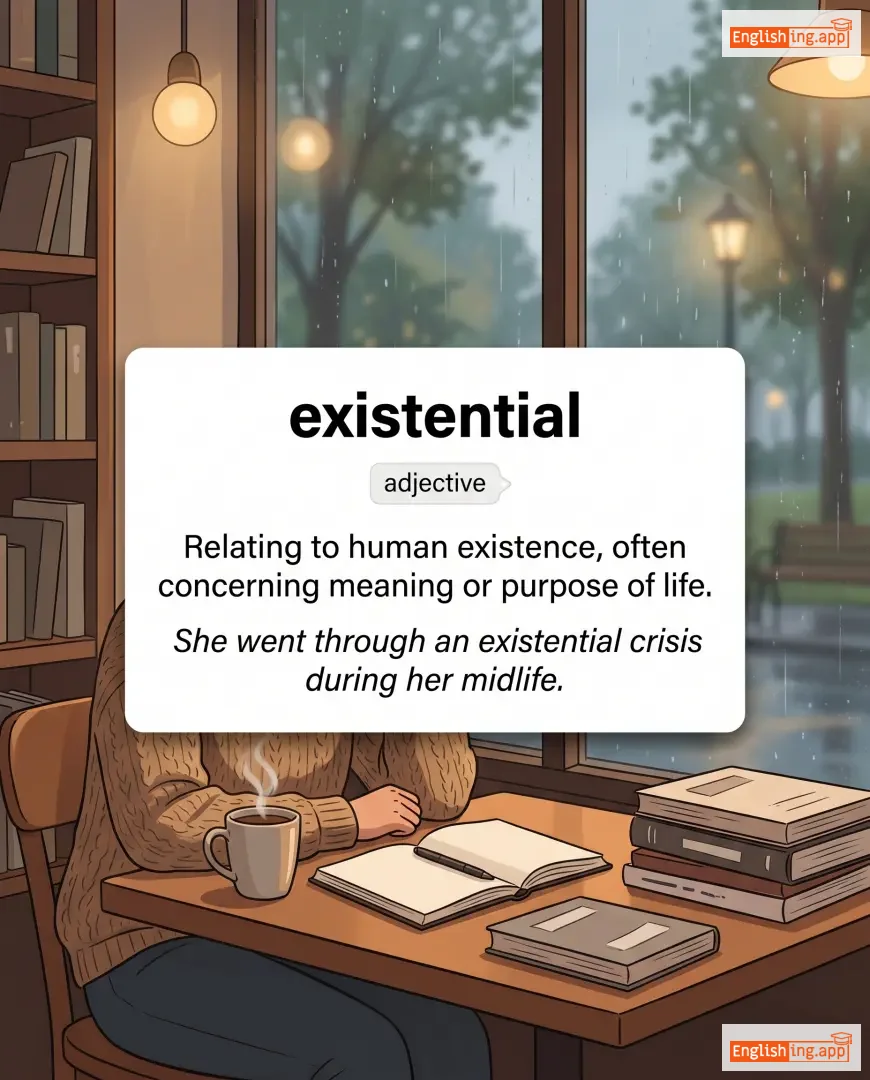
existential definition card — visual illustration of the meaning
adjective
/ˌɛɡzɪˈstɛnʃəl/
実存的 (jitsuzonteki)

Relating to human existence, often concerning meaning or purpose of life.

"She went through an existential crisis during her midlife."
"彼女は中年に実存的な危機を経験した。" (Kanojo wa chūnen ni jitsuzonteki na kiki o keiken shita.)
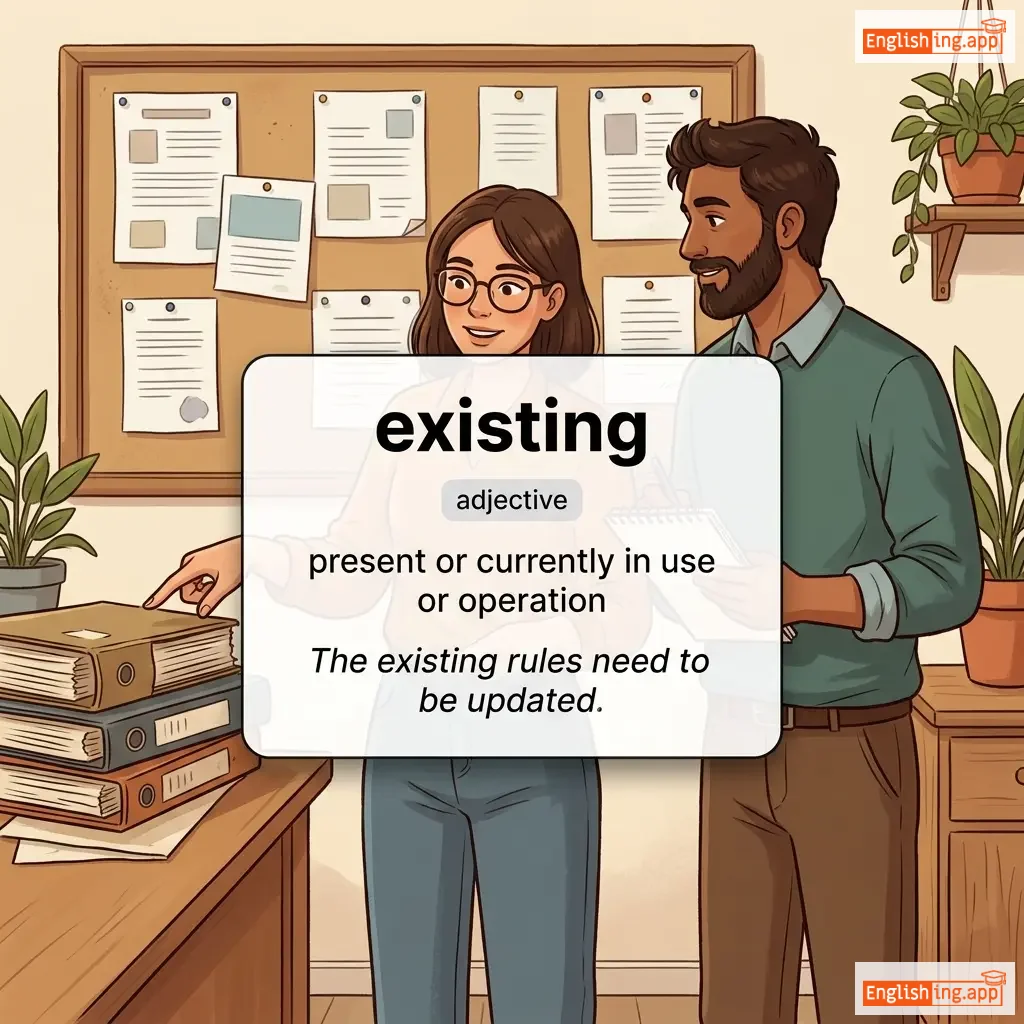
existing definition card — visual illustration of the meaning
adjective
/ɪɡˈzɪstɪŋ/
既存の (kizon no)

present or currently in use or operation

"The existing rules need to be updated."

"既存のルールは更新する必要があります。" (Kizon no rūru wa kōshin suru hitsuyō ga arimasu.)
noun/verb
/ˈɛɡzɪt/
出口 (deguchi)

A way out of a place; the act of leaving.

"He quickly found the nearest exit during the fire drill."

"彼は火災訓練中に最寄りの出口をすぐに見つけた。" (Kare wa kasai kunren-chū ni moyori no deguchi o sugu ni mitsuketa.)
noun
/ˈɛksədəs/
出エジプト (shutsu Ejiputo)

A mass departure of people from a place.

"There was a sudden exodus of workers after the strike began."

"ストライキが始まった後、労働者たちは突然出エジプトした。" (Sutoraiki ga hajimatta ato, rōdōshatachi wa totsuzen shutsu Ejiputo shita.)
verb
/ɪɡˈzɒnəreɪt/
免責 (menseki)

To clear someone from blame or accusation.

"The court exonerated her from all charges."
"裁判所は彼女をすべての告発から免除しました。" (Saibansho wa kanojo o subete no kokuhatsu kara menjo shimashita.)
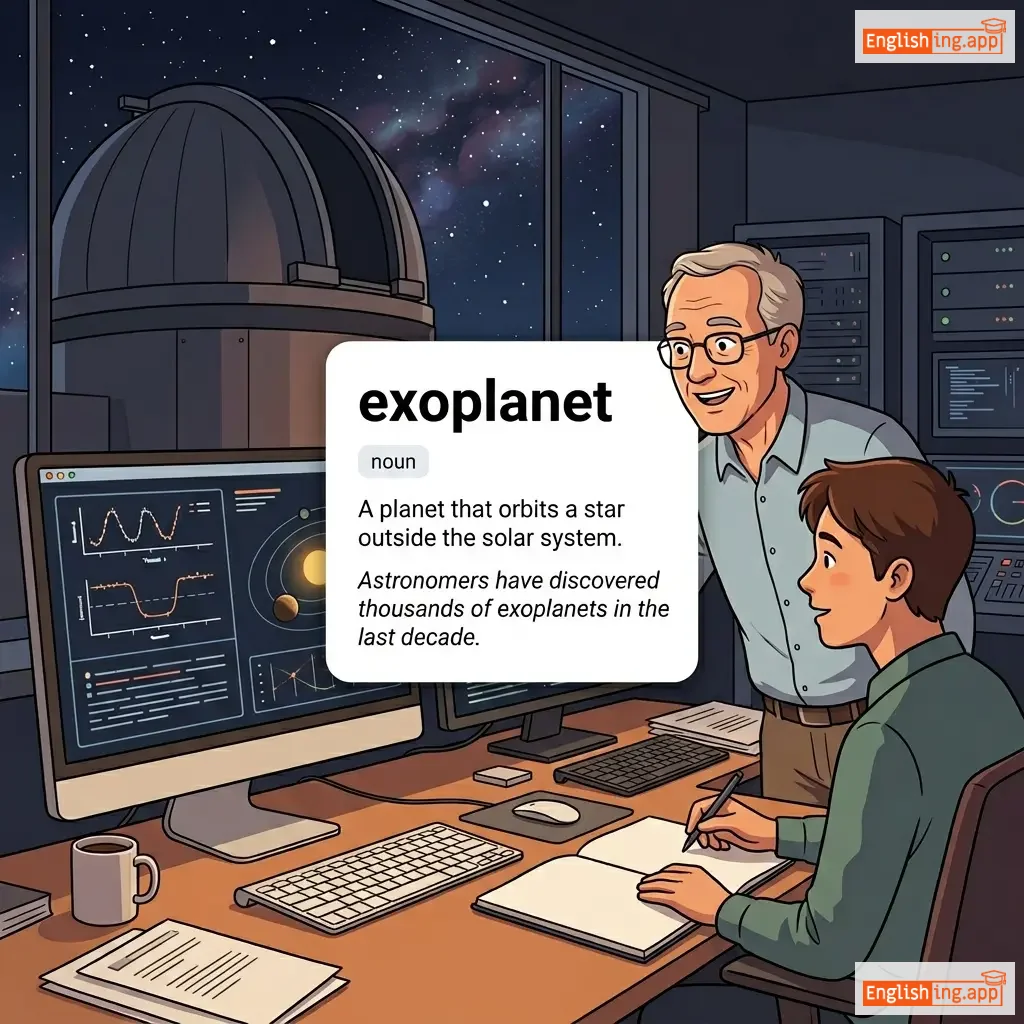
exoplanet definition card — visual illustration of the meaning
noun
ˈɛksəʊˌplænɪt
太陽系外の星の周りを回る惑星 (taiyoukeigai no hoshi no mawari o mawaru wakusei)

A planet that orbits a star outside the solar system.

"Astronomers have discovered thousands of exoplanets in the last decade."

"天文学者たちは、過去10年間で何千ものエクソプラネットを発見しました。" (Tenmongakusha-tachi wa, kako 10-nenkan de nansen mo no ekusopuranetto o hakken shimashita.)
noun
/ɪɡˈzɔːrbɪtəns/
過剰 (kajou)

The quality of being excessive, unreasonable, or going beyond proper limits.

"The exorbitance of the hotel's prices shocked the tourists."

"ホテルの価格の過剰さに観光客は驚いた。" (Hoteru no kakaku no kajou-sa ni kankōkyaku wa odoroita.)
exorbitant definition card — visual illustration of the meaning
adjective
/ɪɡˈzɔːrbɪtənt/
法外 (hōgai)

Unreasonably high or excessive, especially in cost or amount.

"They charged an exorbitant fee for a simple service."

"彼らは簡単なサービスに法外な料金を請求した。" (Karera wa kantan na sābisu ni hōgai na ryōkin o seikyū shita.)
exorcise definition card — visual illustration of the meaning
verb
/ˈeksɔːrsaɪz/

To drive out an evil spirit or bad influence through rituals or prayers.

"The priest was called to exorcise the spirit from the house."

adjective
/ɪɡˈzɑːtɪk/
異国的で魅力的 (ikokuteki de miryokuteki)

Unusual and attractive because it is from a foreign place or culture.

"The garden was filled with exotic plants from tropical countries."
"庭は熱帯の国々からのエキゾチックな植物で満たされていました。" (Niwa wa nettai no kuniguni kara no ekizochikku na shokubutsu de mitasarete imashita.)
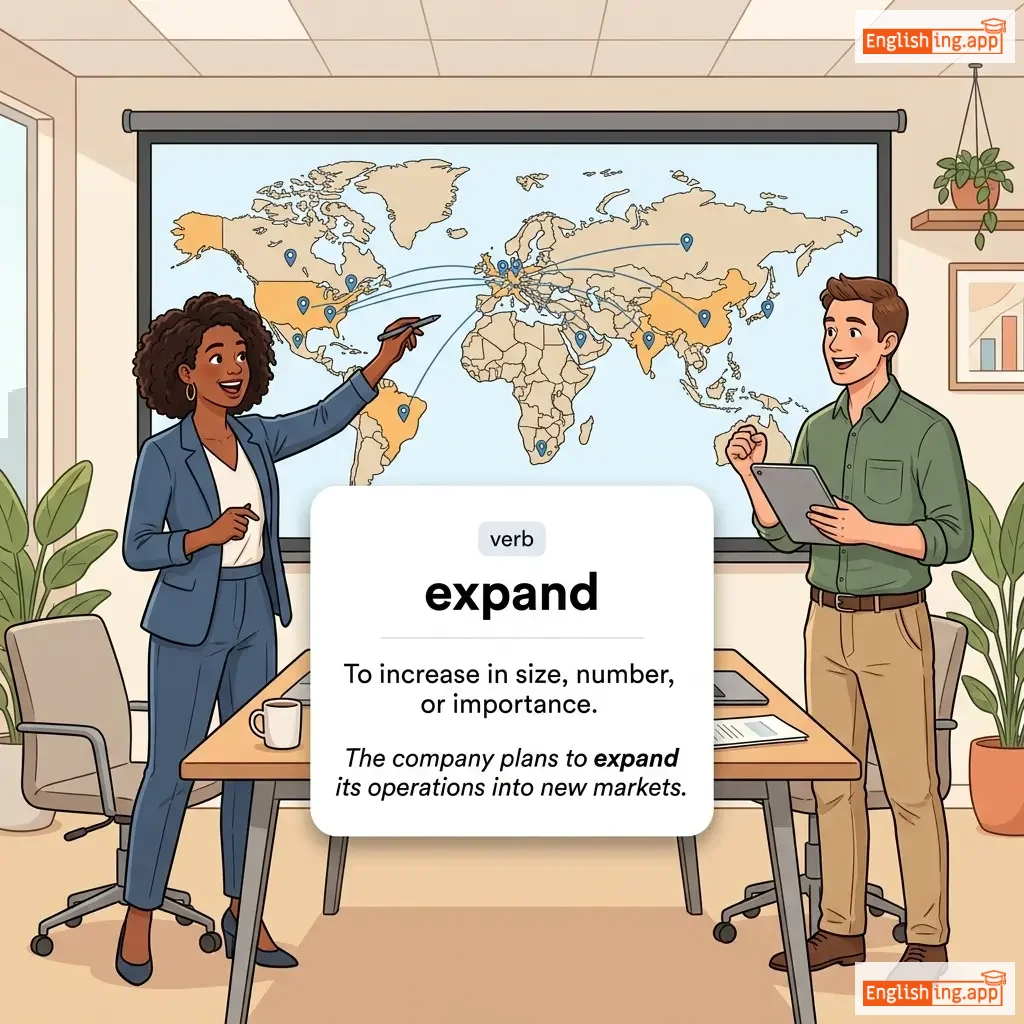
expand definition card — visual illustration of the meaning
verb
/ɪkˈspænd/
拡大する (kakudai suru)

To increase in size, number, or importance.

"The company plans to expand its operations into new markets."
"その会社は新しい市場に事業を拡大する予定です。" (Sono kaisha wa atarashii shijou ni jigyou o kakudai suru yotei desu.)
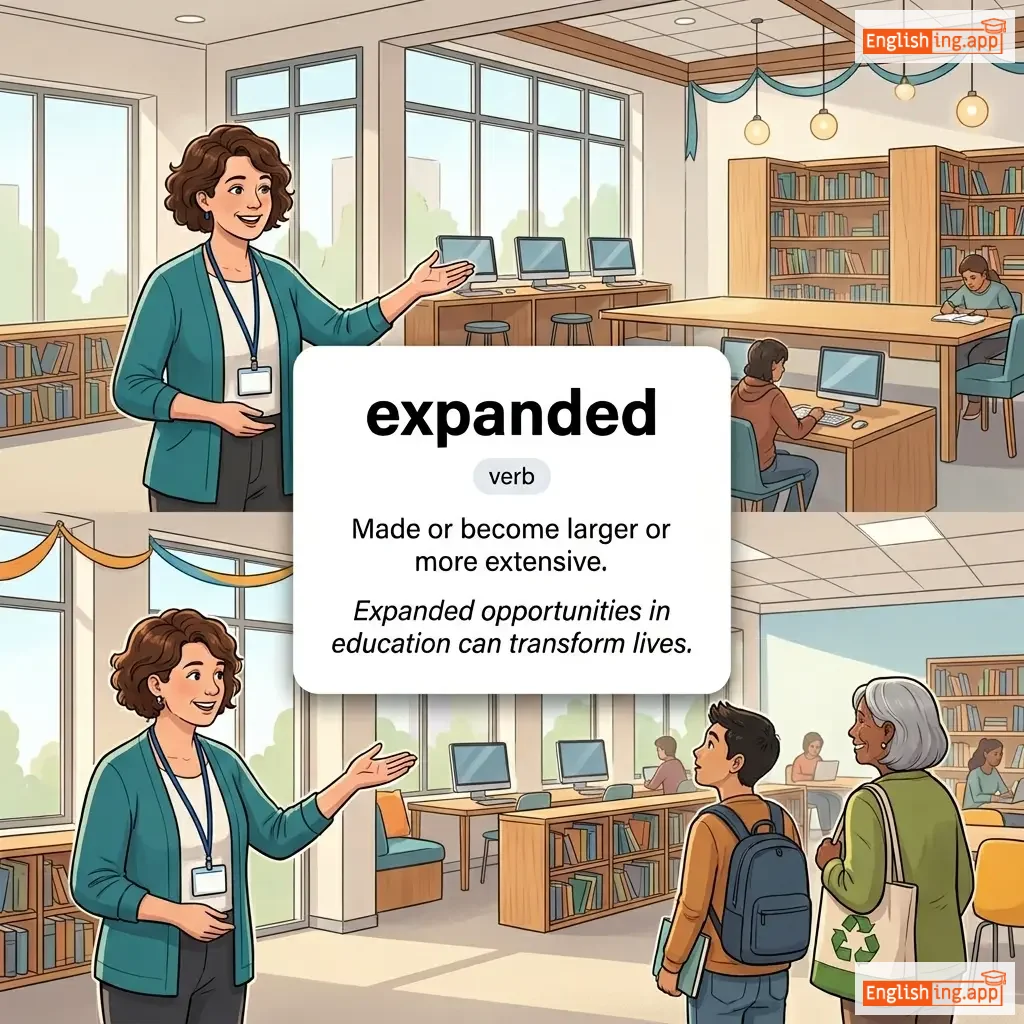
expanded definition card — visual illustration of the meaning
verb
ɪkˈspændɪd
拡大された (kakudai sareta)

Made or become larger or more extensive.

"Expanded opportunities in education can transform lives."
"教育における拡大された機会は、人生を変えることができます。" (Kyoiku ni okeru kakudai sareta kikai wa, jinsei o kaeru koto ga dekimasu.)
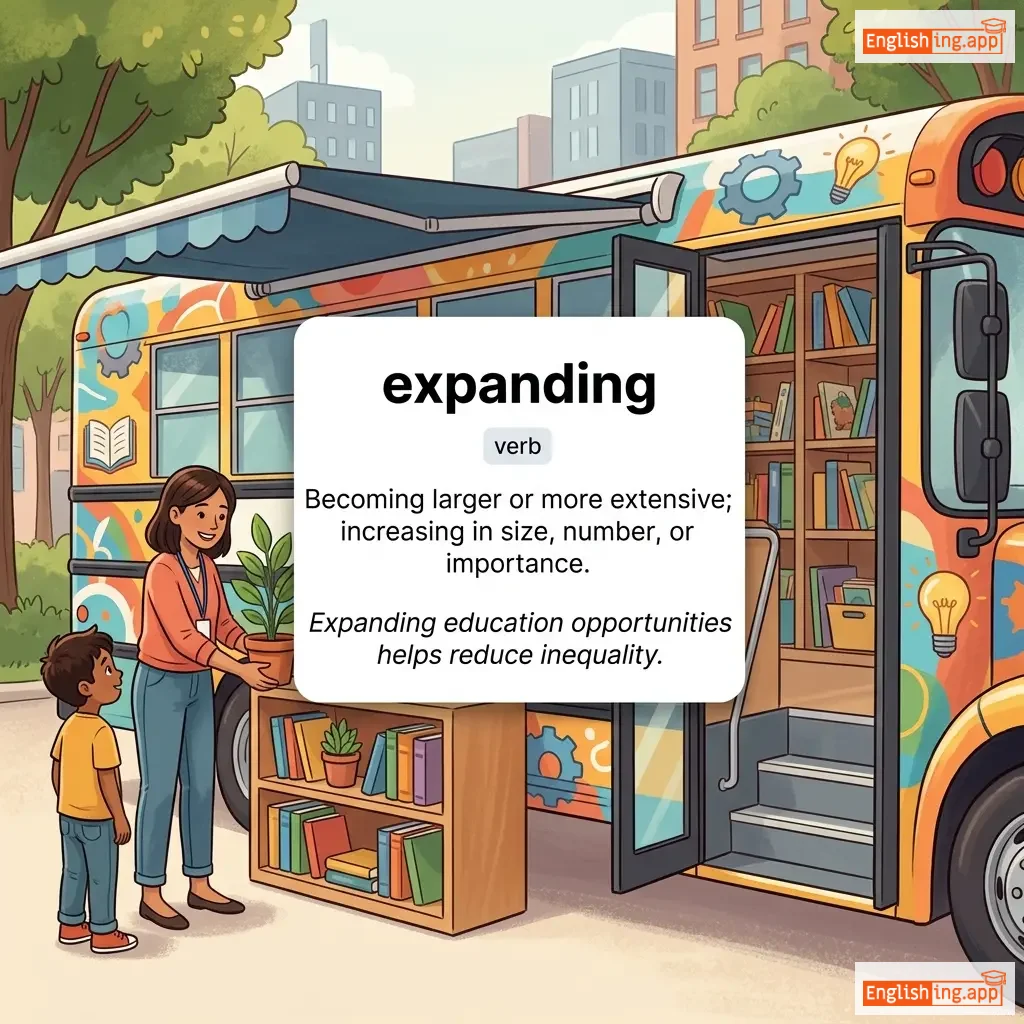
expanding definition card — visual illustration of the meaning
verb
ɪkˈspændɪŋ
拡張する (kakuchou suru)

Becoming larger or more extensive; increasing in size, number, or importance.

"Expanding education opportunities helps reduce inequality."

"教育の機会を拡大することは、不平等を減少させるのに役立ちます。" (Kyōiku no kikai o kakuchō suru koto wa, fuheibō o genshō saseru no ni yakudachimasu.)
noun
/ɪkˈspæns/
広大な地域 (kōdaina chiiki)

a wide, open area of land, sea, or sky

"The desert is a vast expanse of sand and rock."
"砂漠は広大な砂と岩の地域です。" (Sabaku wa kōdaina suna to iwa no chiiki desu.)
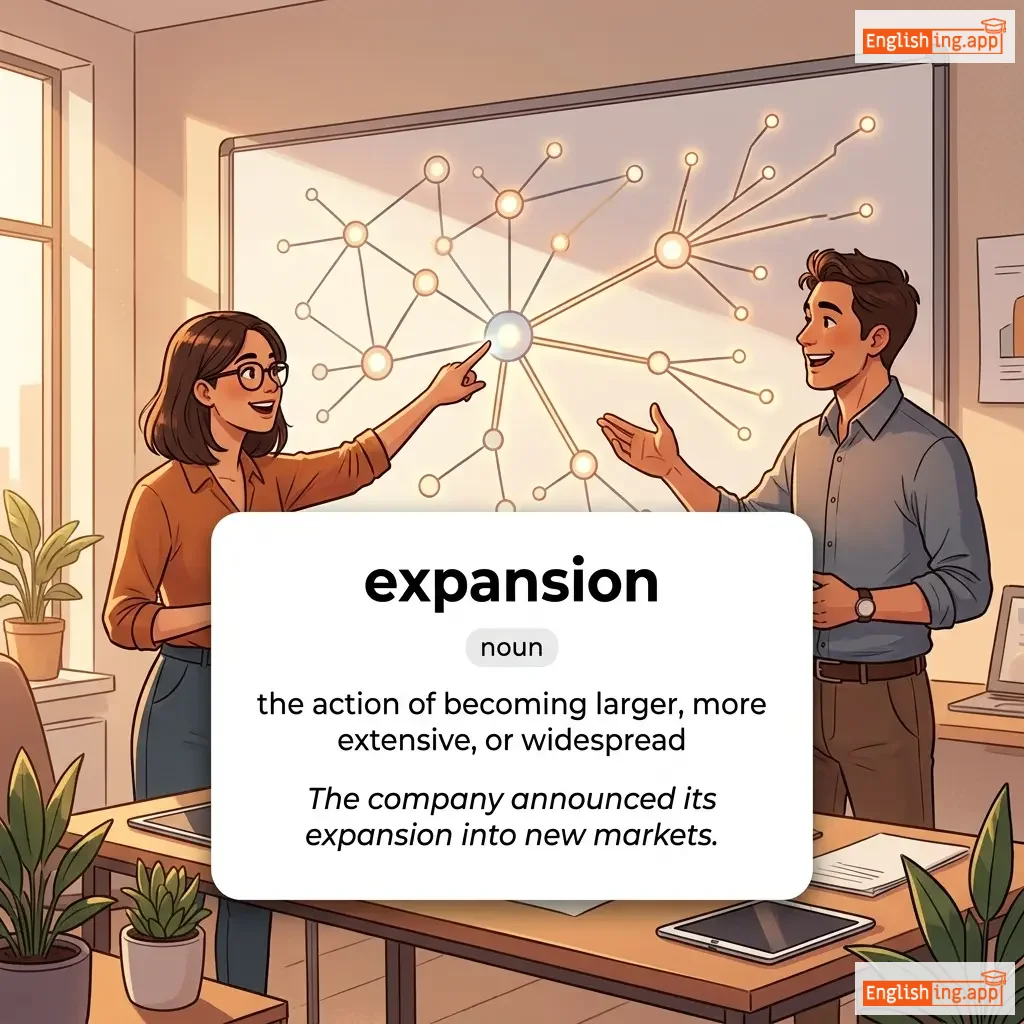
expansion definition card — visual illustration of the meaning
noun
/ɪkˈspænʃən/
拡張 (kakuchou)

the action of becoming larger, more extensive, or widespread

"The company announced its expansion into new markets."

"会社は新しい市場への拡張を発表しました。" (Kaisha wa atarashī shijō e no kakuchō o happyō shimashita.)
adjective
/ɪkˈspænsɪv/
広範囲な (kōhan'i na)

covering a wide area or having a wide range of ideas or emotions

"They enjoyed the expansive view from the hilltop."
"彼らは丘の頂上からの広範囲な景色を楽しんだ。" (Karera wa oka no chōjō kara no kōhan'i na keshiki o tanoshinda.)
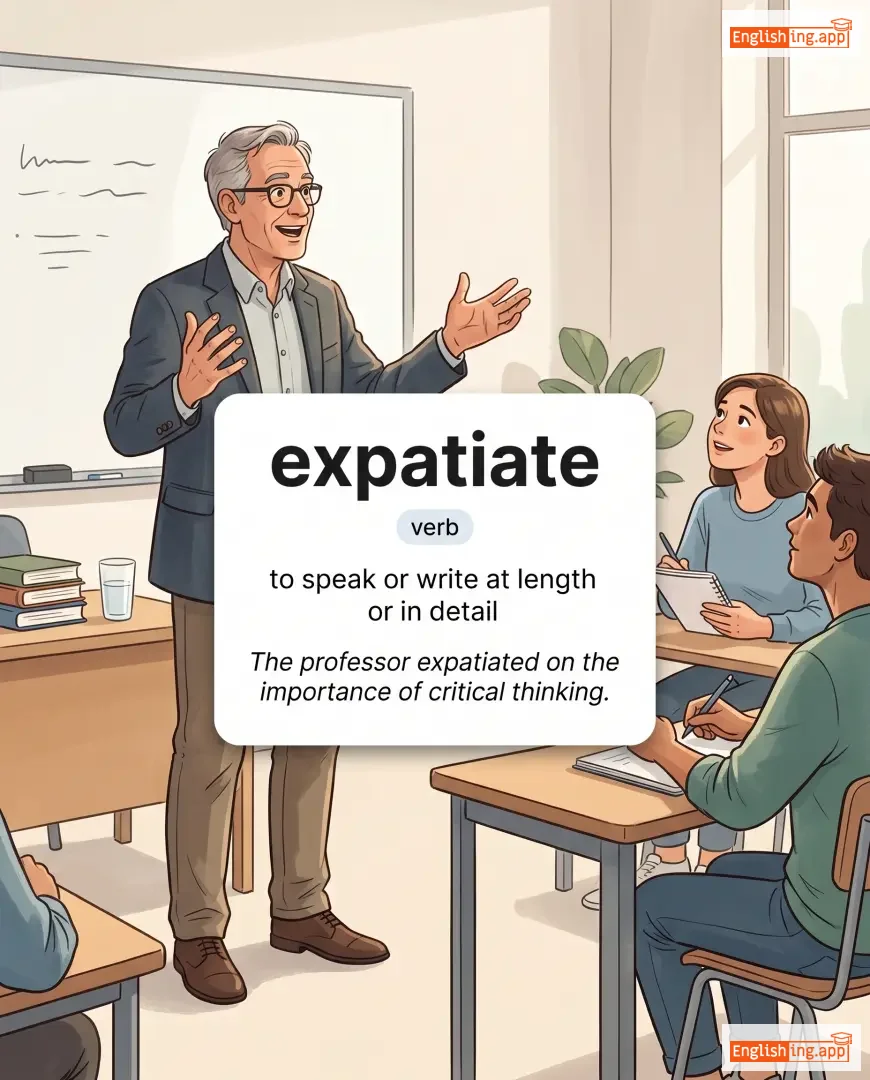
expatiate definition card — visual illustration of the meaning
verb
/ɪkˈspeɪʃiˌeɪt/
詳細に話すまたは書く (shousai ni hanasu mata wa kaku)

to speak or write at length or in detail

"The professor expatiated on the importance of critical thinking."
"教授は批判的思考の重要性について詳細に説明しました。" (Kyouju wa hihanteki shikou no juuyousei ni tsuite shousai ni setsumei shimashita.)
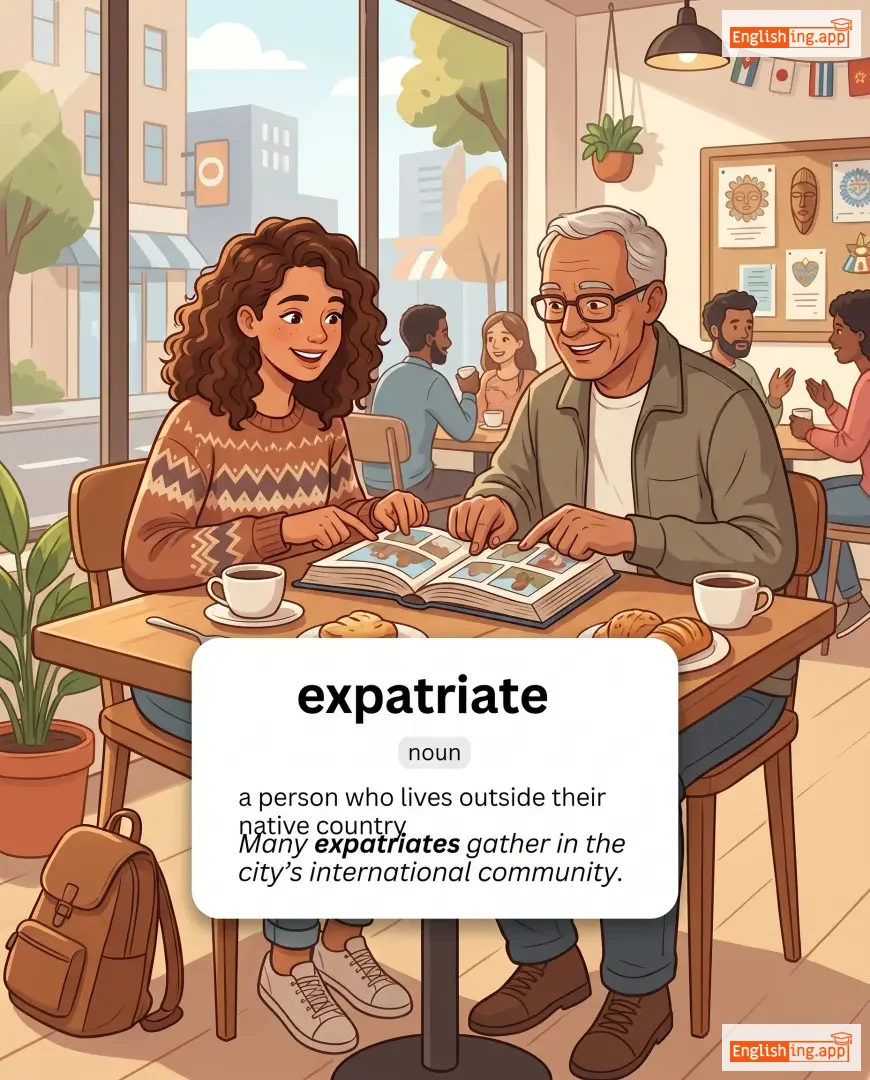
expatriate definition card — visual illustration of the meaning
noun
/ɛkˈspeɪtriət/
外国人 (gaikokujin)

a person who lives outside their native country

"Many expatriates gather in the city’s international community."

"多くの外国人が都市の国際コミュニティに集まっています。" (Ooku no gaikokujin ga toshi no kokusai komyuniti ni atsumatteimasu.)
expect definition card — visual illustration of the meaning
verb
/ɪkˈspɛkt/
期待する (kitai suru)

to believe that something will happen or that someone will arrive; to anticipate

"I expect the package to arrive tomorrow."

"私はパッケージが明日到着することを期待しています。" (Watashi wa pakēji ga ashita tōchaku suru koto o kitai shiteimasu.)
noun
/ɪkˈspɛktənsi/
期待 (kitai)

the state of expecting something; anticipation or likelihood

"There was a sense of expectancy in the room before the results were announced."

"結果が発表される前、部屋には期待の感覚があった。" (Kekka ga happyou sareru mae, heya ni wa kitai no kankaku ga atta.)
noun
/ˌɛkspɛkˈteɪʃən/
期待 (kitai)

a strong belief that something will happen or be the case

"The students had high expectations for their exam results."
"学生たちは試験結果に高い期待を持っていました。" (Gakusei-tachi wa shiken kekka ni takai kitai o motte imashita.)
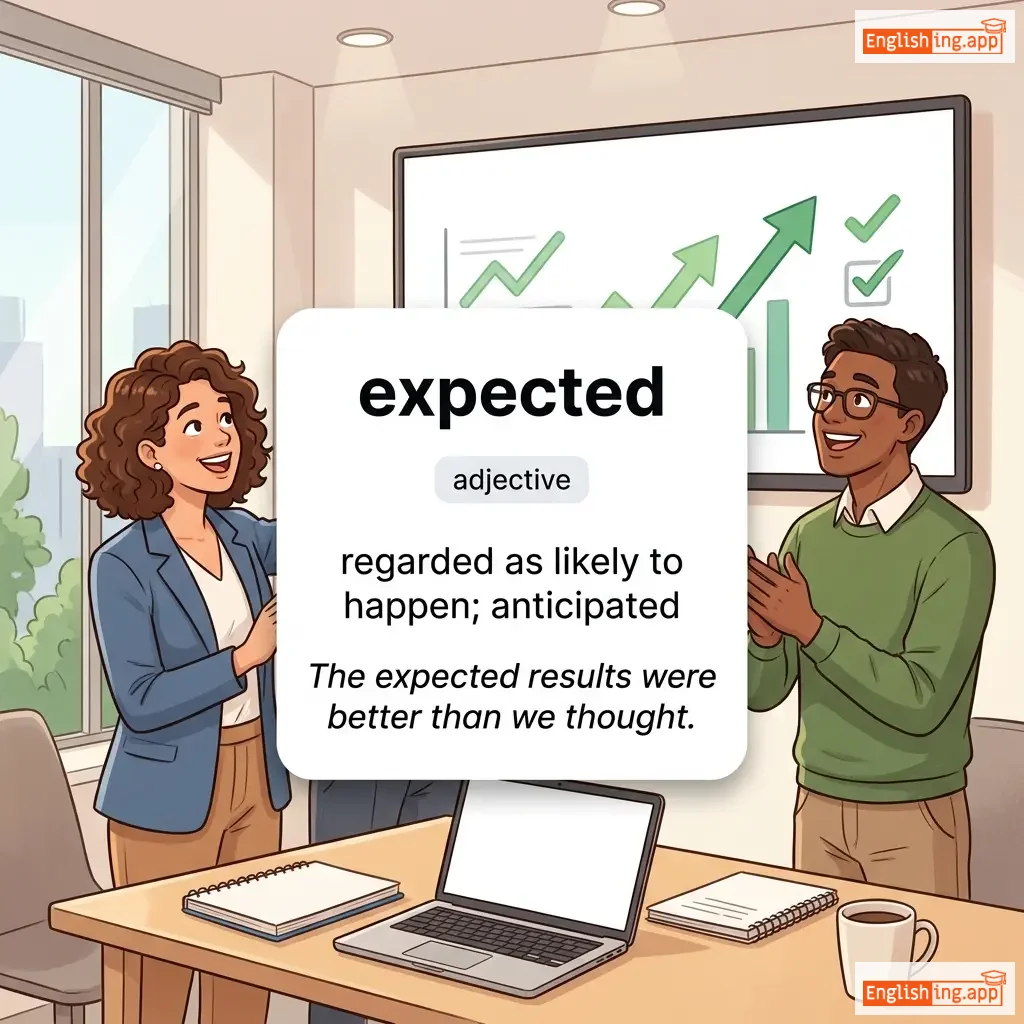
expected definition card — visual illustration of the meaning
adjective
/ɪkˈspɛktɪd/
予想される (yosou sareru)

regarded as likely to happen; anticipated

"The expected results were better than we thought."

"予想される結果は私たちが考えていたよりも良かった。" (Yosou sareru kekka wa watashitachi ga kangaete ita yori mo yokatta.)
verb
/ɪkˈspɛktəreɪt/
痰を吐く (tama wo haku)

to cough up and spit out mucus from the throat or lungs

"The patient began to expectorate thick mucus."

"患者は濃い粘液を吐き始めました。" (Kanja wa koi nen'eki wo haki hajimemashita.)
noun
/ɪkˈspiːdiənsi/
便宜主義 (ben'gi shugi)

the quality of being convenient and practical despite possibly being improper or immoral

"He acted out of political expediency rather than principle."

"彼は原則ではなく政治的便宜主義から行動した。" (Kare wa gensoku de wa naku seijiteki ben'gi shugi kara kōdō shita.)
adjective
/ɪkˈspiːdiənt/
便宜的 (ben'iteki)

suitable or convenient for achieving a particular end, sometimes at the expense of morality

"It was expedient to take the shortcut despite the risks."

"リスクにもかかわらず、近道を取ることは便宜的だった。" (Risuku ni mo kakawarazu, chikamichi o toru koto wa ben'iteki datta.)
expedite definition card — visual illustration of the meaning
verb
/ˈɛkspəˌdaɪt/
加速する (kasoku suru)

to make a process or action happen more quickly

"The company promised to expedite the delivery of the package."

"その会社はパッケージの配送を迅速にすると約束しました。" (Sono kaisha wa pakkēji no haisō o jinsoku ni suru to yakusoku shimashita.)
noun
/ˌɛkspəˈdɪʃən/
遠征 (ensei)

a journey made for a particular purpose, often exploration or research

"They went on a scientific expedition to the Arctic."
"彼らは北極への科学的な遠征に出かけました。" (Karera wa hokkyoku e no kagakuteki na ensei ni dekakemashita.)
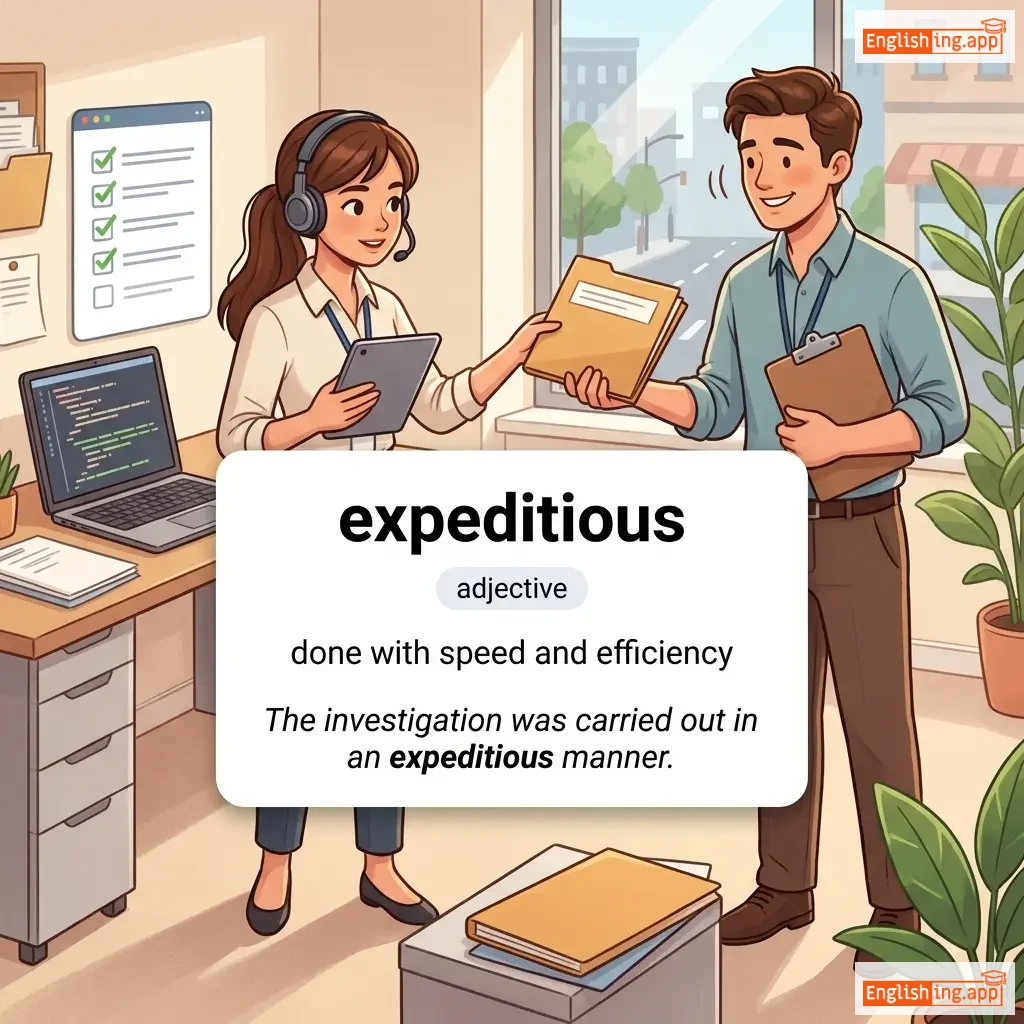
expeditious definition card — visual illustration of the meaning
adjective
/ˌɛkspəˈdɪʃəs/
迅速かつ効率的 (jinsoku katsu kōritsuteki)

done with speed and efficiency

"The investigation was carried out in an expeditious manner."

"調査は迅速かつ効率的に行われました。" (Chōsa wa jinsoku katsu kōritsuteki ni okonawaremashita.)
adverb
/ˌɛkspəˈdɪʃəsli/
迅速かつ効率的に (jinsoku katsu kōritsutekini)

in a quick and efficient manner

"The application was processed expeditiously."

"申請は迅速かつ効率的に処理されました。" (Shinsei wa jinsoku katsu kōritsuteki ni shori saremashita.)
verb
/ɪkˈspɛl/
追放する (tsui-hou suru)

to officially force someone to leave a place or organization

"The student was expelled from school for misconduct."
"その学生は不正行為で学校から追放されました。" (Sono gakusei wa fusei koui de gakkou kara tsuihou saremashita.)
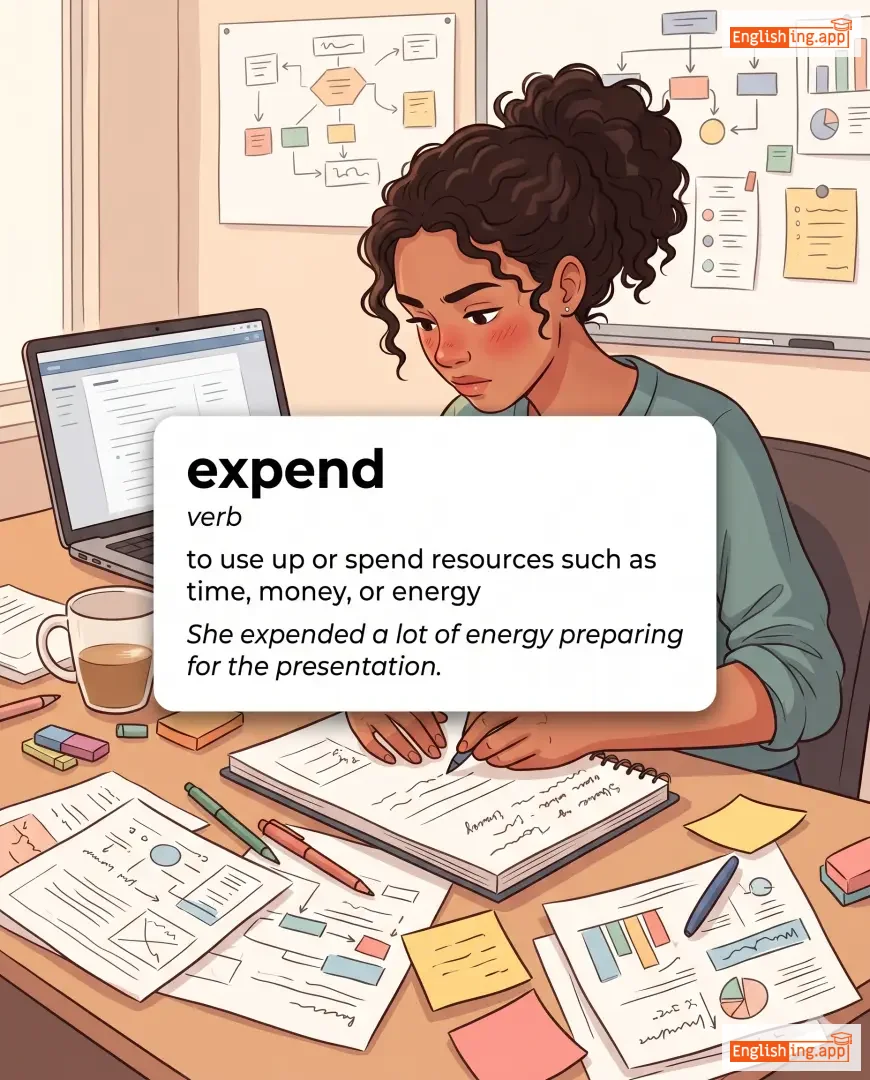
expend definition card — visual illustration of the meaning
verb
/ɪkˈspɛnd/
使う (tsukau)

to use up or spend resources such as time, money, or energy

"She expended a lot of energy preparing for the presentation."
"彼女はプレゼンテーションの準備に多くのエネルギーを使いました。" (Kanojo wa purezenteishon no junbi ni ooku no enerugi- wo tsukaimashita.)
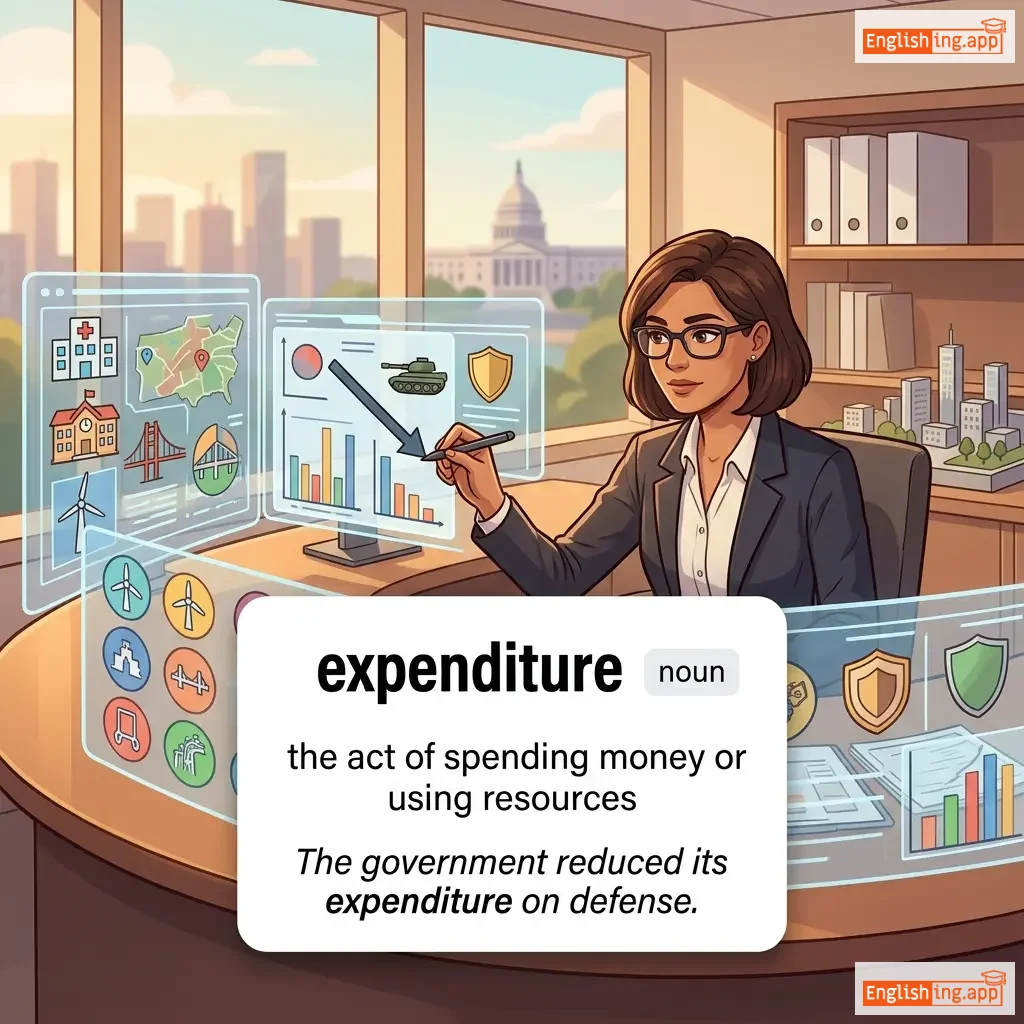
expenditure definition card — visual illustration of the meaning
noun
/ɪkˈspɛndɪtʃər/
支出 (shishutsu)

the act of spending money or using resources

"The government reduced its expenditure on defense."
"政府は防衛費を削減しました。" (Seifu wa bōei-hi o sakugen shimashita.)
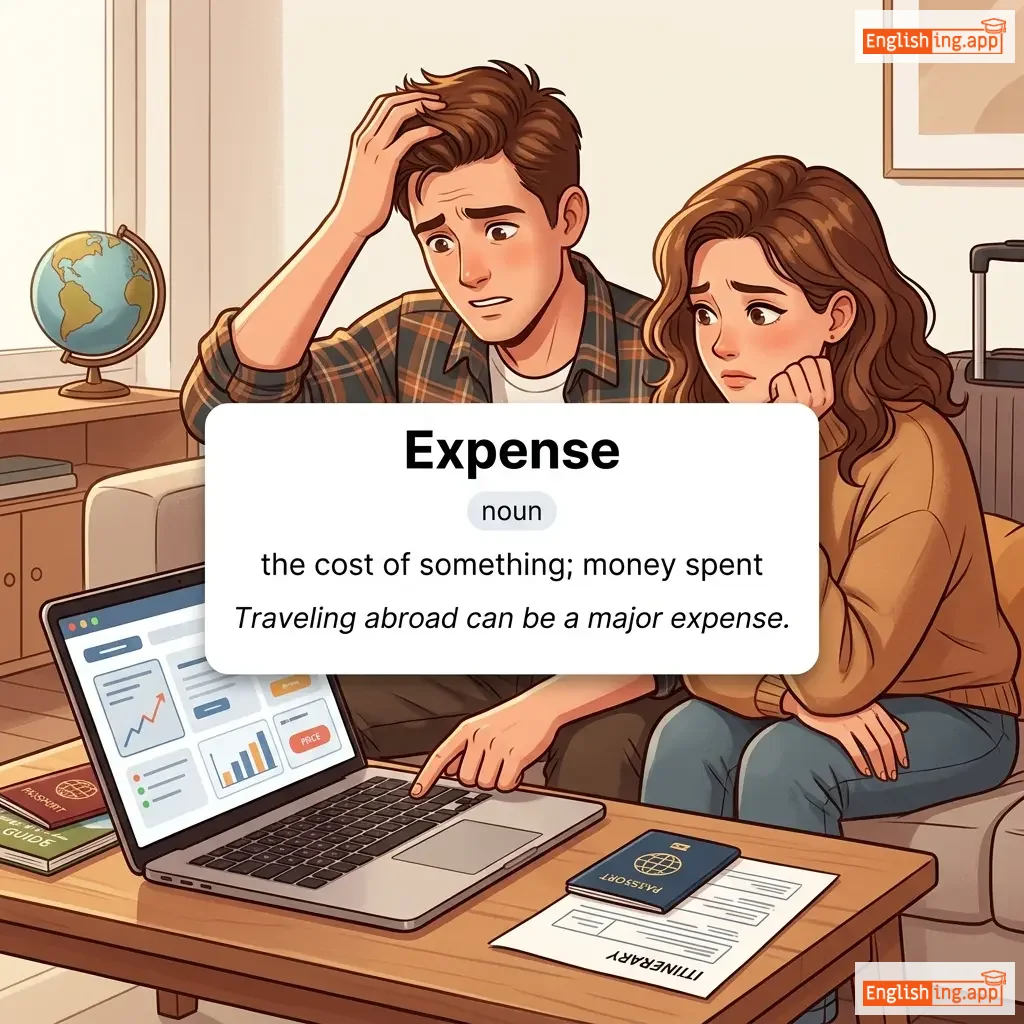
Expense definition card — visual illustration of the meaning
noun
/ɪkˈspɛns/
費用 (hiyou)

the cost of something; money spent

"Traveling abroad can be a major expense."

"海外旅行は大きな費用となる可能性があります。" (Kaigai ryokou wa ookina hiyou to naru kanousei ga arimasu.)
adjective
/ɪkˈspɛnsɪv/

costing a lot of money

"That car is too expensive for me to buy."

noun/verb
/ɪkˈspɪəriəns/
幸せ (shiawase)

knowledge or skill gained through involvement in or exposure to something over time

"She gained valuable experience while working abroad."

"彼女は賞を受け取ったとき、幸せを隠すことができませんでした。" (Kanojo wa shō o uketotta toki, shiawase o kakusu koto ga dekimasen deshita.)
adjective
/ɪkˈspɪəriənst/
経験豊富な (keiken hōfuna)

having knowledge or skill in a particular field gained through experience

"She is an experienced teacher who knows how to handle difficult students."
"彼女は経験豊富な教師で、困難な生徒を扱う方法を知っています。" (Kanojo wa keiken hōfuna kyōshi de, konnan na seito o atsukau hōhō o shitteimasu.)
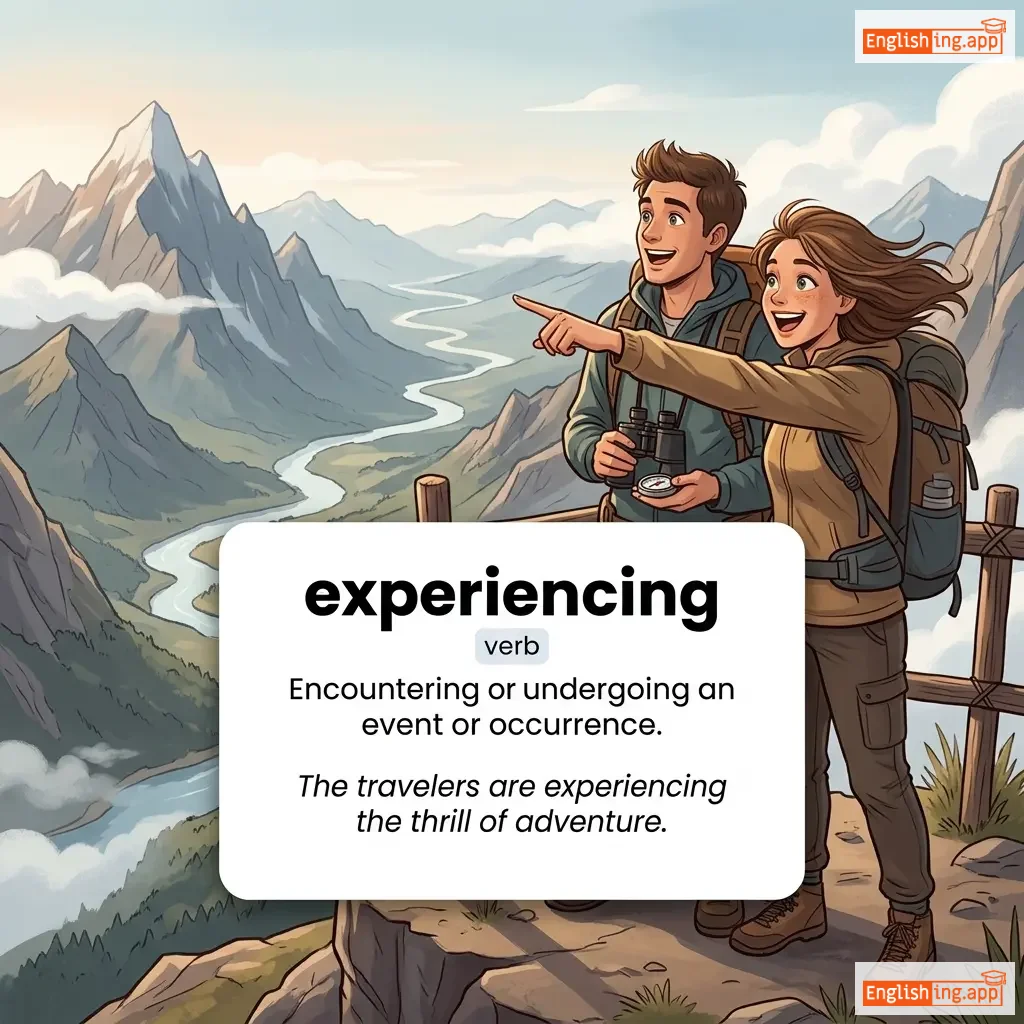
experiencing definition card — visual illustration of the meaning
verb
/ɪkˈspɪəriənsɪŋ/
体験している (taiken shite iru)

Encountering or undergoing an event or occurrence.

"The travelers are experiencing the thrill of adventure."

"旅行者たちは冒険のスリルを体験している。" (Ryokō-sha tachi wa bōken no suriru o taiken shite iru.)
noun/verb
/ɪkˈsperɪmənt/
実験 (jikken)

a test or trial carried out to discover something or prove an idea

"The scientist conducted an experiment on plant growth."

"科学者は植物の成長に関する実験を行いました。" (Kagakusha wa shokubutsu no seichō ni kansuru jikken o okonaimashita.)
adjective
/ɪkˌsperɪˈmentl/
実験的 (jikken-teki)

based on untested ideas or techniques; relating to experiments or testing

"The scientists developed an experimental drug to treat cancer."
"科学者たちは癌を治療するために実験的な薬を開発しました。" (Kagakusha-tachi wa gan o chiryō suru tame ni jikken-teki na kusuri o kaihatsu shimashita.)
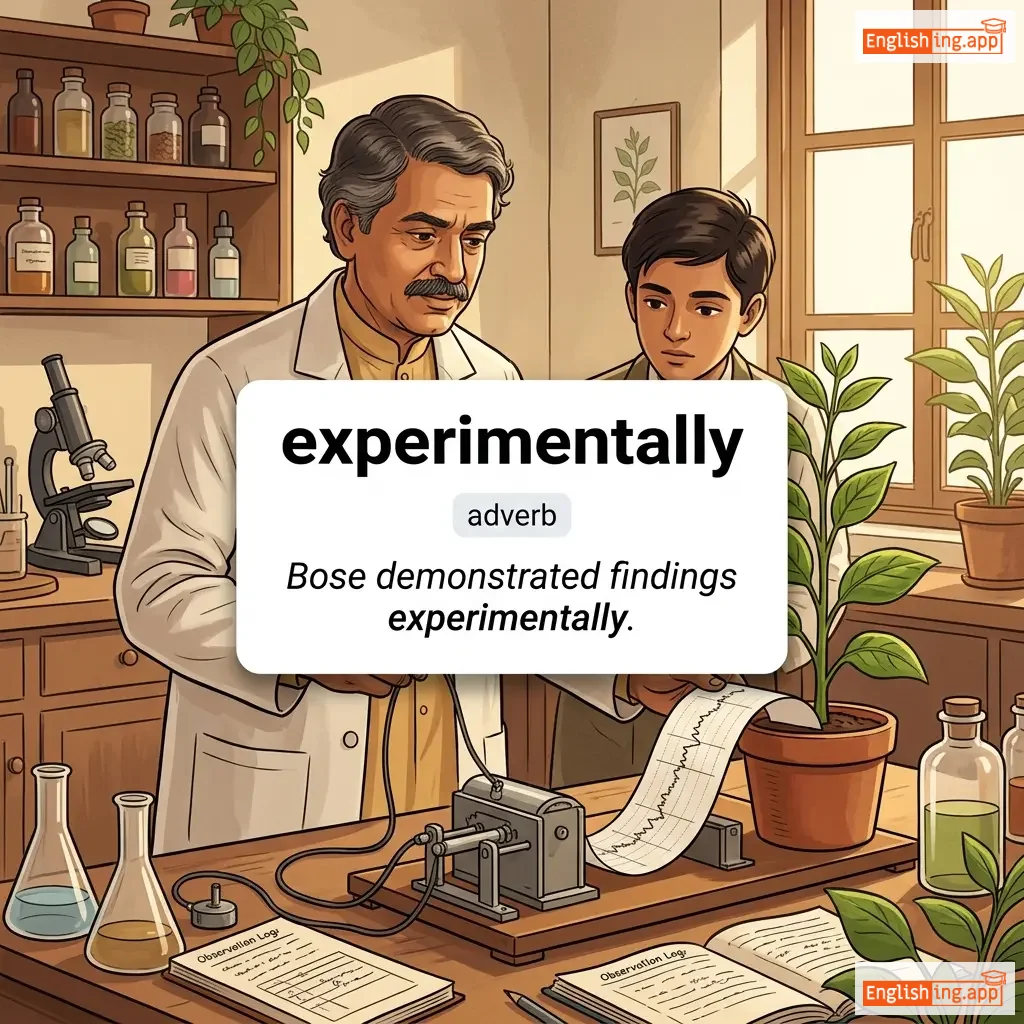
experimentally definition card — visual illustration of the meaning
adverb
ɪkˌsperɪˈmentəli
実験的に (jikken-teki ni)

In a way that is based on or derived from experiment and observation rather than theory.

"Bose demonstrated findings experimentally."
"ボーズは実験的に結果を示しました。" (Bōzu wa jikken-teki ni kekka o shimeshimashita.)
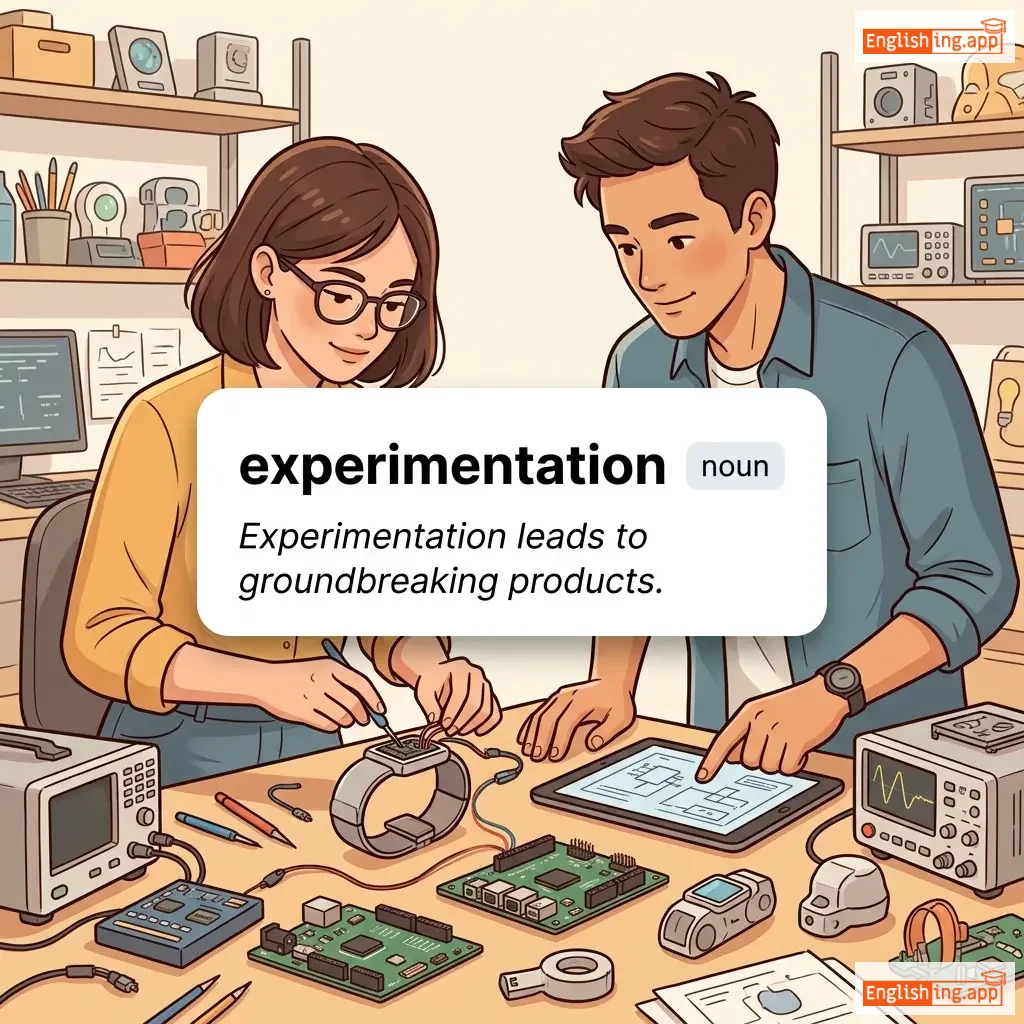
experimentation definition card — visual illustration of the meaning
noun
/ɪkˌsperɪˈmɛnteɪʃən/
実験 (jikken)

The process of performing a scientific procedure to make a discovery, test a hypothesis, or demonstrate a known fact.

"Experimentation leads to groundbreaking products."

"実験は革新的な製品を生み出します。" (Jikken wa kakushinteki na seihin o umidashimasu.)
noun/adjective
/ˈekspɜːt/
専門家 (senmongaku)

a person who has a lot of knowledge or skill in a particular area

"He is an expert in computer programming."

"彼はコンピュータプログラミングの専門家です。" (Kare wa konpyūta puroguramingu no senmongaku desu.)
expertise definition card — visual illustration of the meaning
noun
/ˌɛkspərˈtiːz/
専門知識 (senmon chishiki)

specialized knowledge or skill in a particular field

"Her expertise in data analysis is highly valued."

"データ分析における彼女の専門知識は高く評価されています。" (Dēta bunseki ni okeru kanojo no senmon chishiki wa takaku hyōka sareteimasu.)
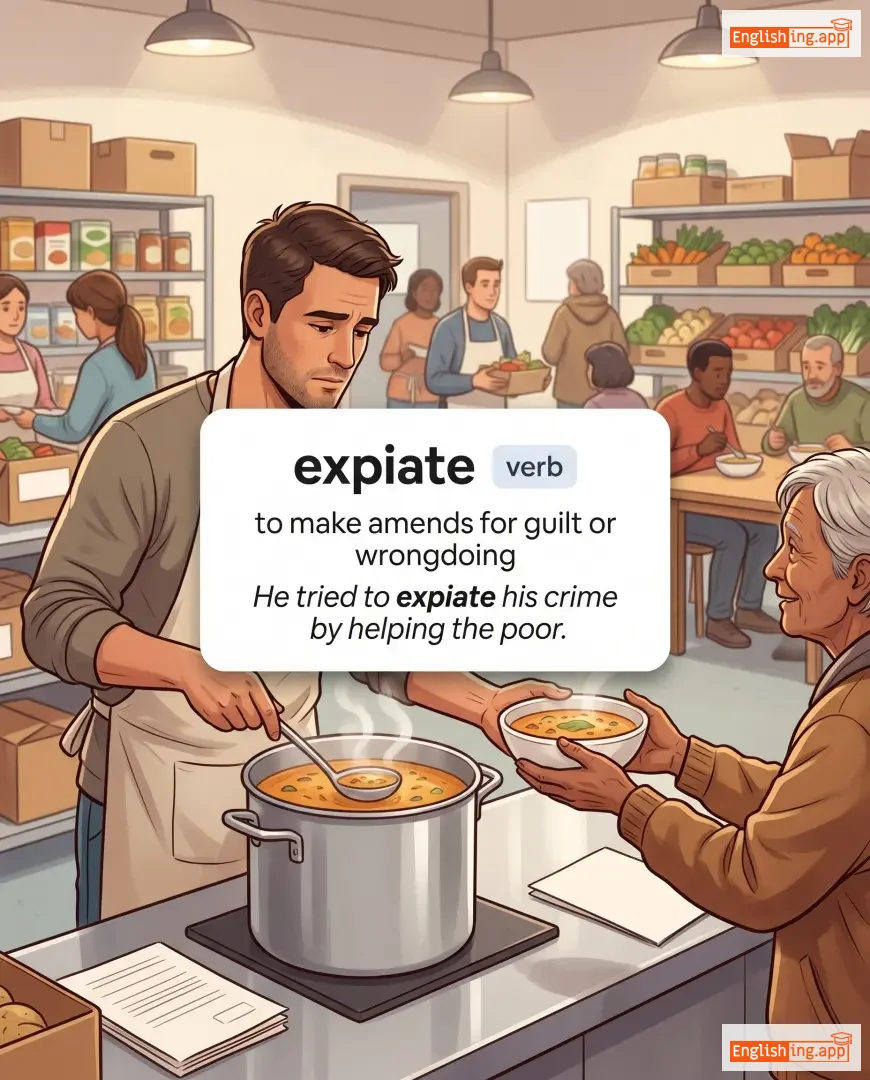
expiate definition card — visual illustration of the meaning
verb
/ˈɛkspieɪt/

to make amends for guilt or wrongdoing

"He tried to expiate his crime by helping the poor."

verb
/ɪkˈspaɪər/
期限切れ (kigen-gire)

to come to an end, especially a period of validity or life

"My passport will expire next month."
"私のパスポートは来月期限切れになります。" (Watashi no pasupōto wa raigetsu kigen-gire ni narimasu.)
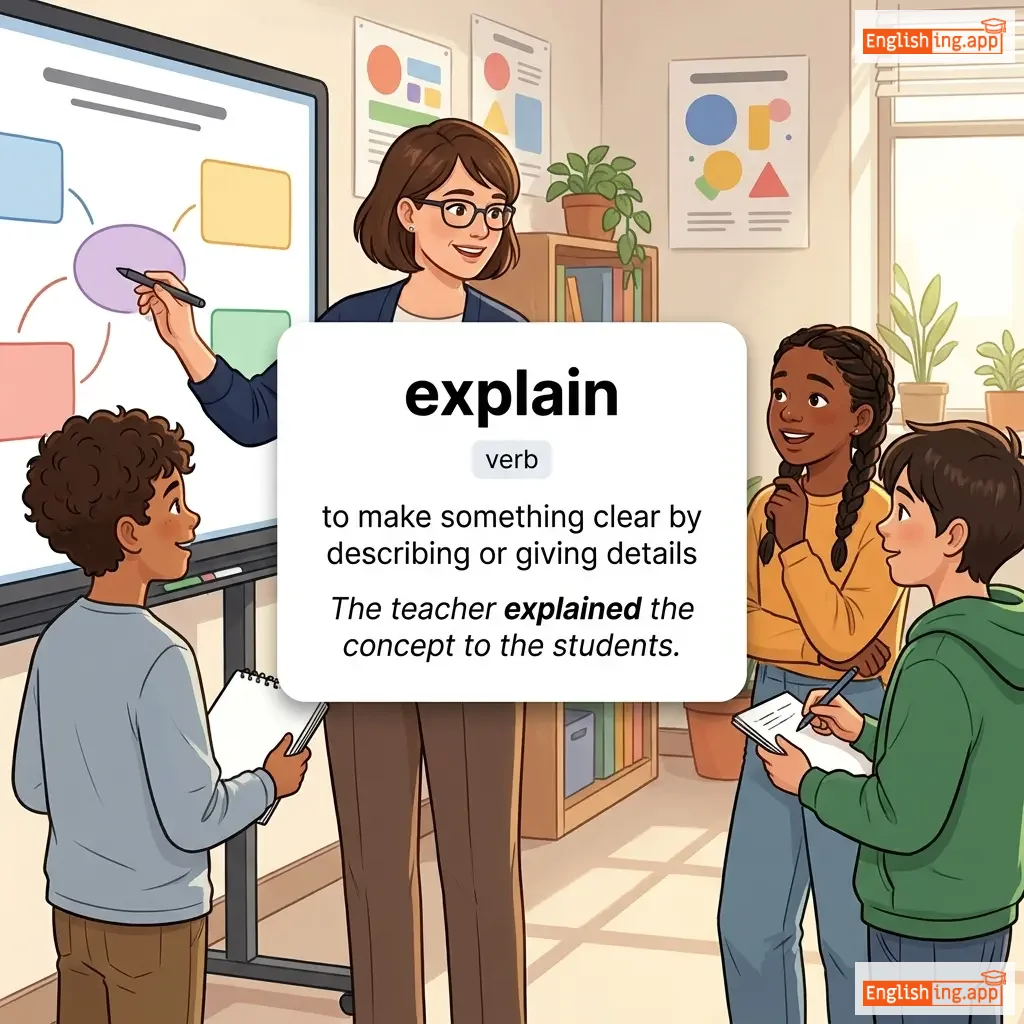
explain definition card — visual illustration of the meaning
verb
/ɪkˈspleɪn/
説明する (setsumei suru)

to make something clear by describing or giving details

"The teacher explained the concept to the students."

"先生は学生にコンセプトを説明しました。" (Sensei wa gakusei ni konseputo o setsumei shimashita.)