Vocabulaires

Découvrez, apprenez et maîtrisez le vocabulaire anglais

adjective
/ɛɡˈzɪɡjuəs/
exigu (exigu)

small in amount; scanty or inadequate

"They survived on exiguous rations during the journey."

"Ils ont survécu avec des rations exiguës pendant le voyage." (Ils ont survécu avec des rations exiguës pendant le voyage.)
noun
/ˈɛksaɪl/
exil (exil)

the state of being forced to live in a foreign country, often for political reasons

"After the coup, the former leader was forced into exile."

"Après le coup d'État, l'ancien dirigeant a été forcé à l'exil." (Après le coup d'État, l'ancien dirigeant a été forcé à l'exil.)
verb
/ɪɡˈzɪst/
exister (exister)

to have actual being; to be real or present

"Dinosaurs no longer exist on Earth."

"Les dinosaures n'existent plus sur Terre." (Les dinosaures n'existent plus sur Terre.)
noun
/ɪɡˈzɪstəns/
existence (existence)

The state of being alive or having real presence.

"The existence of life on other planets is still uncertain."

"L'existence de la vie sur d'autres planètes est encore incertaine." (L'existence de la vie sur d'autres planètes est encore incertaine.)
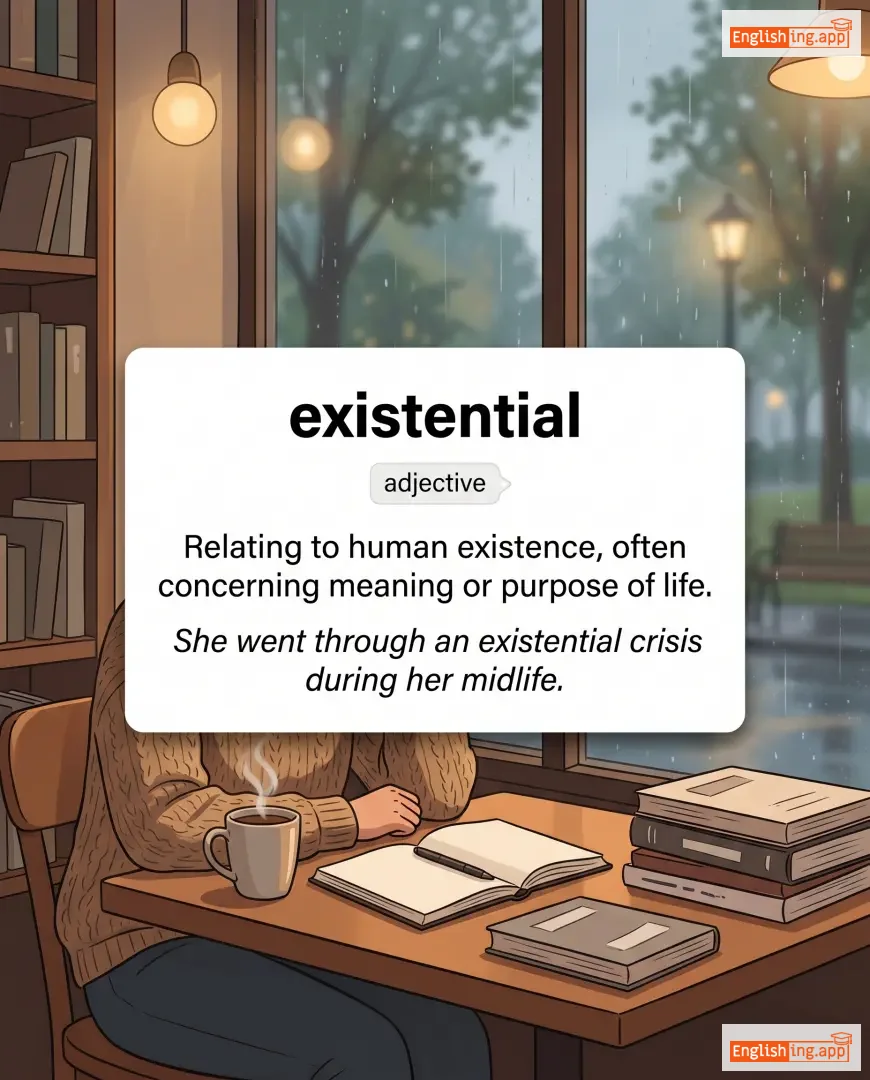
existential definition card — visual illustration of the meaning
adjective
/ˌɛɡzɪˈstɛnʃəl/
existentiel (existentiel)

Relating to human existence, often concerning meaning or purpose of life.

"She went through an existential crisis during her midlife."

"Elle a traversé une crise existentielle pendant sa vie adulte." (Elle a traversé une crise existentielle pendant sa vie adulte.)
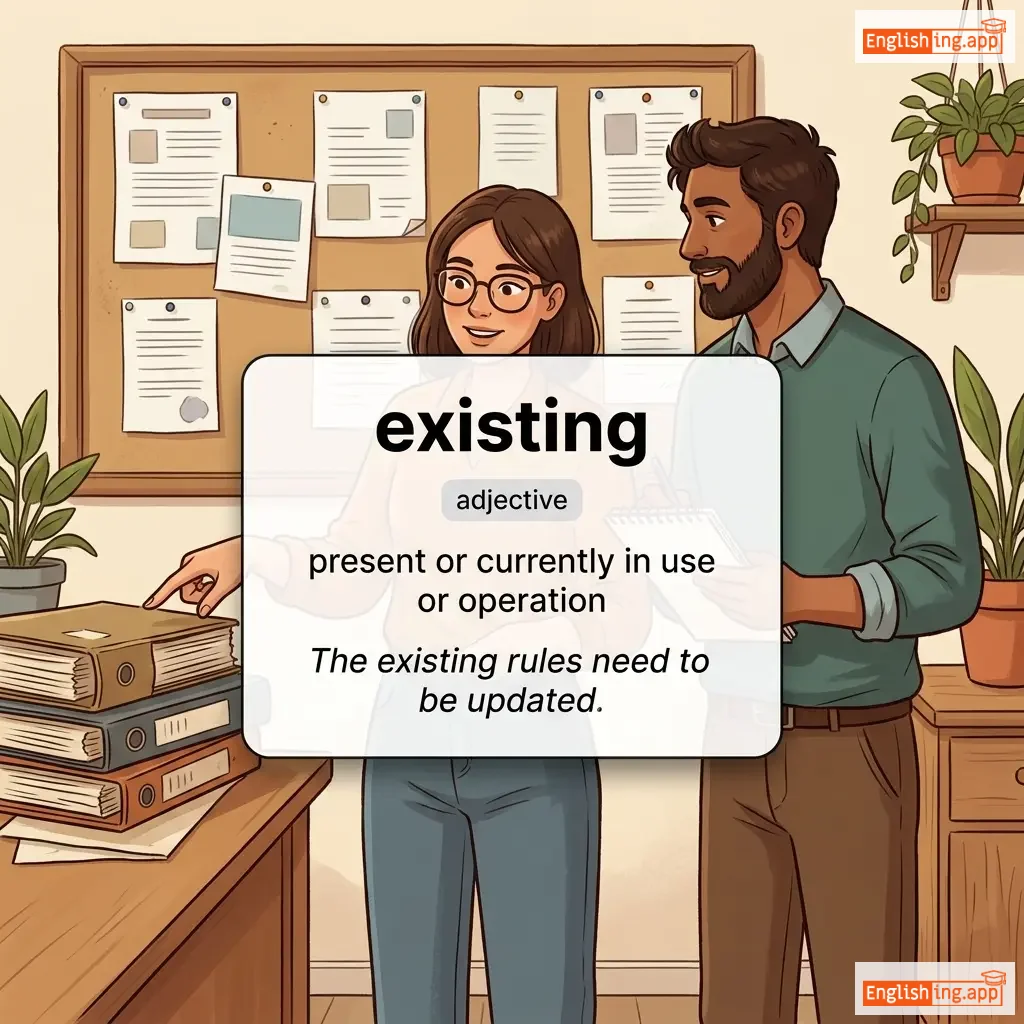
existing definition card — visual illustration of the meaning
adjective
/ɪɡˈzɪstɪŋ/
existant (existant)

present or currently in use or operation

"The existing rules need to be updated."

"Les règles existantes doivent être mises à jour." (Les règles existantes doivent être mises à jour.)
noun/verb
/ˈɛɡzɪt/
sortie (sortie)

A way out of a place; the act of leaving.

"He quickly found the nearest exit during the fire drill."

"Il a rapidement trouvé la sortie la plus proche lors de l'exercice d'incendie." (Il a rapidement trouvé la sortie la plus proche lors de l'exercice d'incendie.)
noun
/ˈɛksədəs/
exode (exode)

A mass departure of people from a place.

"There was a sudden exodus of workers after the strike began."

"Il y a eu un exode soudain des travailleurs après le début de la grève." (Il y a eu un exode soudain des travailleurs après le début de la greve.)
verb
/ɪɡˈzɒnəreɪt/
exonérer (exonerer)

To clear someone from blame or accusation.

"The court exonerated her from all charges."

"Le tribunal l'a exonérée de toutes les charges." (Le tribunal l'a exoneree de toutes les charges.)
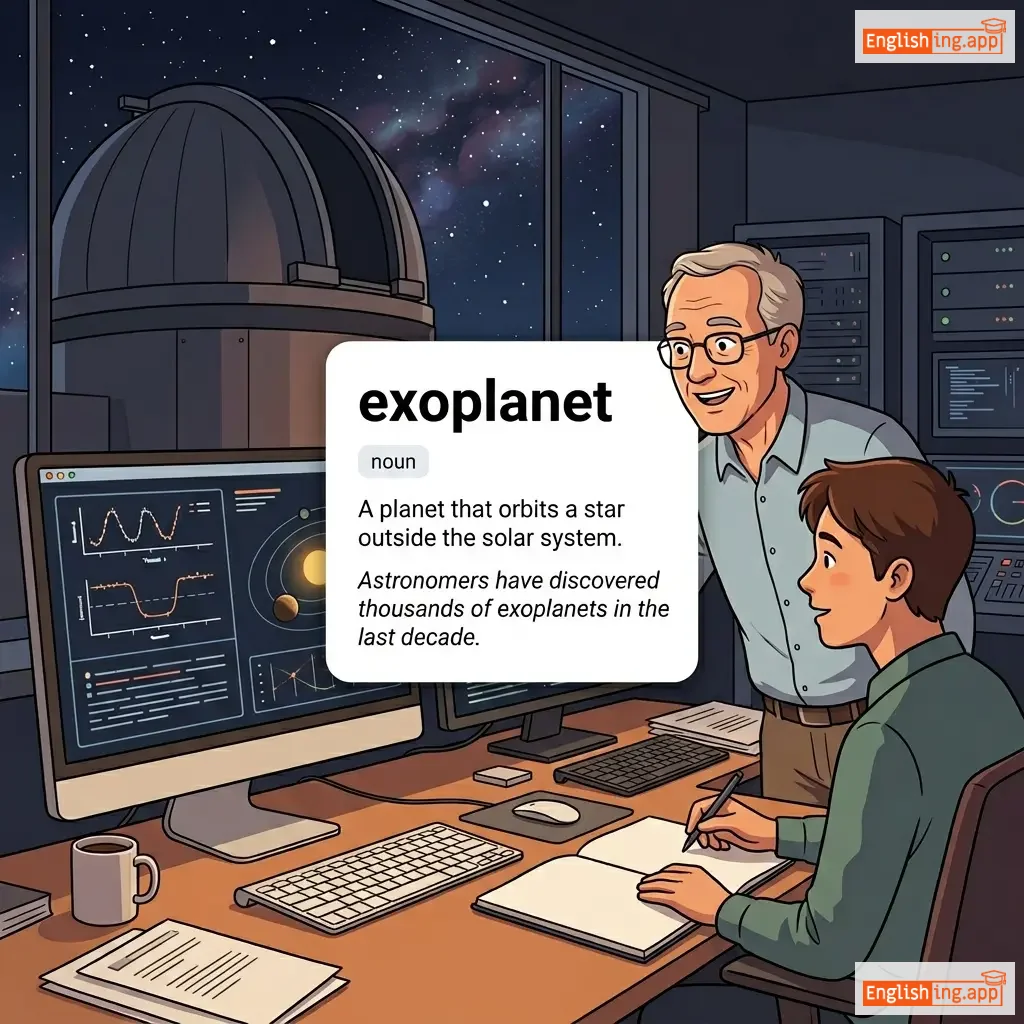
exoplanet definition card — visual illustration of the meaning
noun
ˈɛksəʊˌplænɪt
une planète qui orbite autour d'une étoile en dehors du système solaire (une planete qui orbite autour d'une etoile en dehors du systeme solaire)

A planet that orbits a star outside the solar system.

"Astronomers have discovered thousands of exoplanets in the last decade."

"Les astronomes ont découvert des milliers d'exoplanètes au cours de la dernière décennie." (Les astronomes ont decouvert des milliers d'exoplanetes au cours de la derniere decennie.)
noun
/ɪɡˈzɔːrbɪtəns/
exorbitance (exorbitance)

The quality of being excessive, unreasonable, or going beyond proper limits.

"The exorbitance of the hotel's prices shocked the tourists."

"L’exorbitance des prix de l’hôtel a choqué les touristes." (L’exorbitance des prix de l’hôtel a choqué les touristes.)
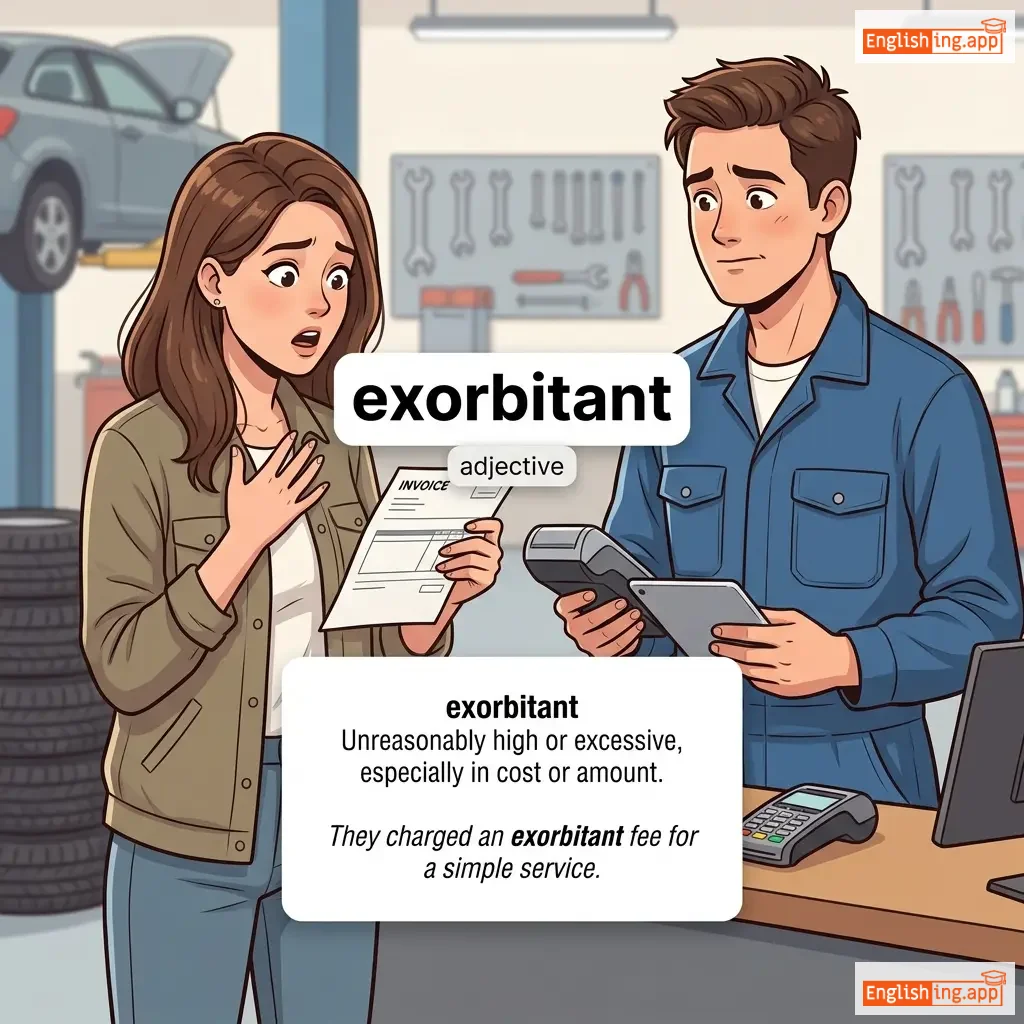
exorbitant definition card — visual illustration of the meaning
adjective
/ɪɡˈzɔːrbɪtənt/
exorbitant (exorbitant)

Unreasonably high or excessive, especially in cost or amount.

"They charged an exorbitant fee for a simple service."

"Ils ont facturé des frais exorbitants pour un service simple." (Ils ont facturé des frais exorbitants pour un service simple.)
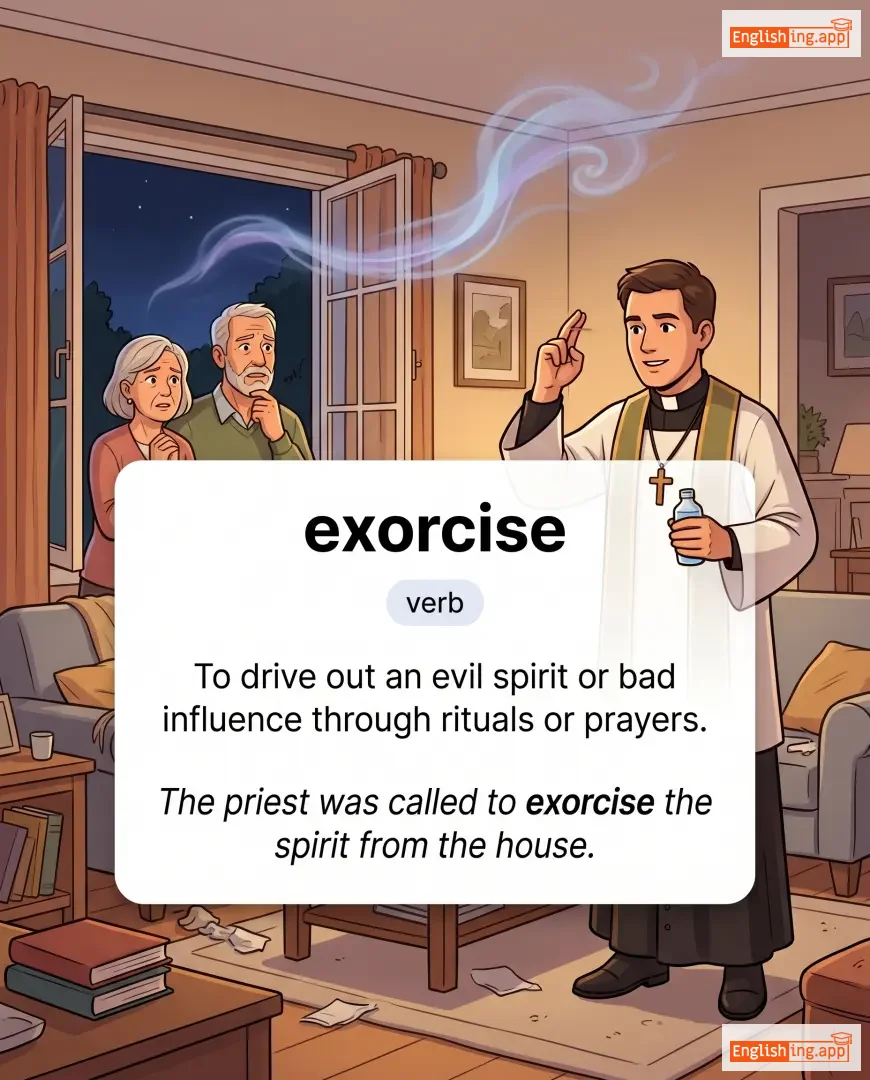
exorcise definition card — visual illustration of the meaning
verb
/ˈeksɔːrsaɪz/
exorciser (exorciser)

To drive out an evil spirit or bad influence through rituals or prayers.

"The priest was called to exorcise the spirit from the house."

"Le prêtre a été appelé pour exorciser l'esprit de la maison." (Le prêtre a été appelé pour exorciser l'esprit de la maison.)
adjective
/ɪɡˈzɑːtɪk/
exotique et attirant (exotique et attirant)

Unusual and attractive because it is from a foreign place or culture.

"The garden was filled with exotic plants from tropical countries."

"Le jardin était rempli de plantes exotiques provenant de pays tropicaux." (Le jardin était rempli de plantes exotiques provenant de pays tropicaux.)
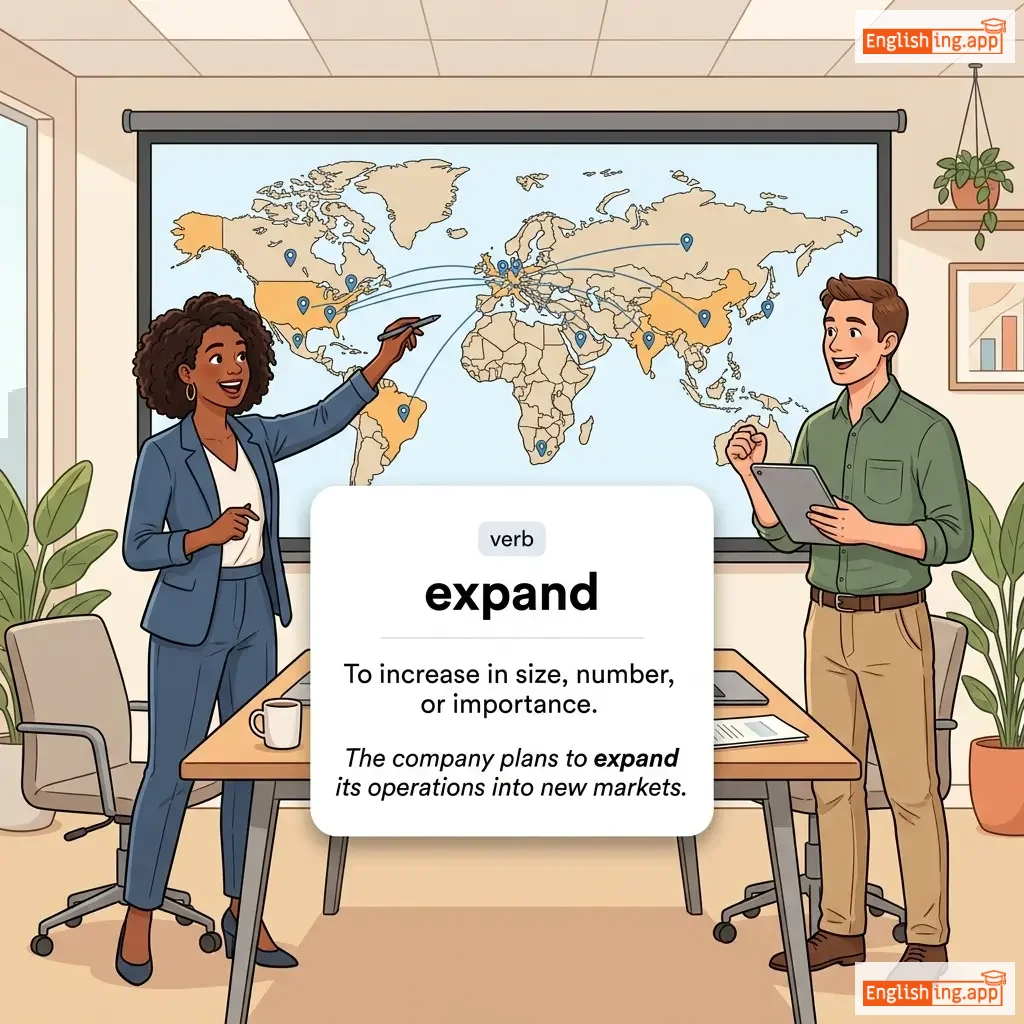
expand definition card — visual illustration of the meaning
verb
/ɪkˈspænd/
étendre (etendre)

To increase in size, number, or importance.

"The company plans to expand its operations into new markets."

"L'entreprise prévoit d'étendre ses opérations dans de nouveaux marchés." (L'entreprise prévoit d'étendre ses opérations dans de nouveaux marchés.)
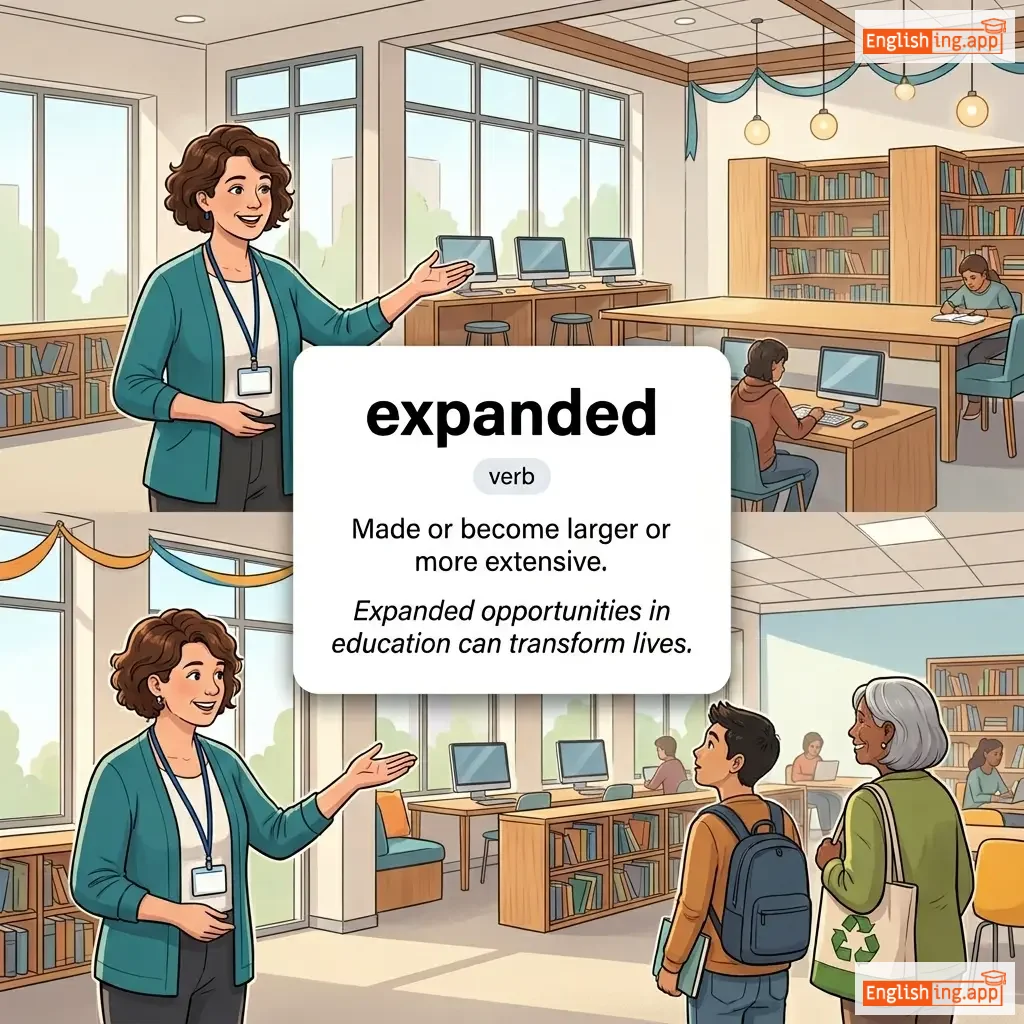
expanded definition card — visual illustration of the meaning
verb
ɪkˈspændɪd
étendu (etendu)

Made or become larger or more extensive.

"Expanded opportunities in education can transform lives."

"Les opportunités élargies dans l'éducation peuvent transformer des vies." (Les opportunités élargies dans l'éducation peuvent transformer des vies.)
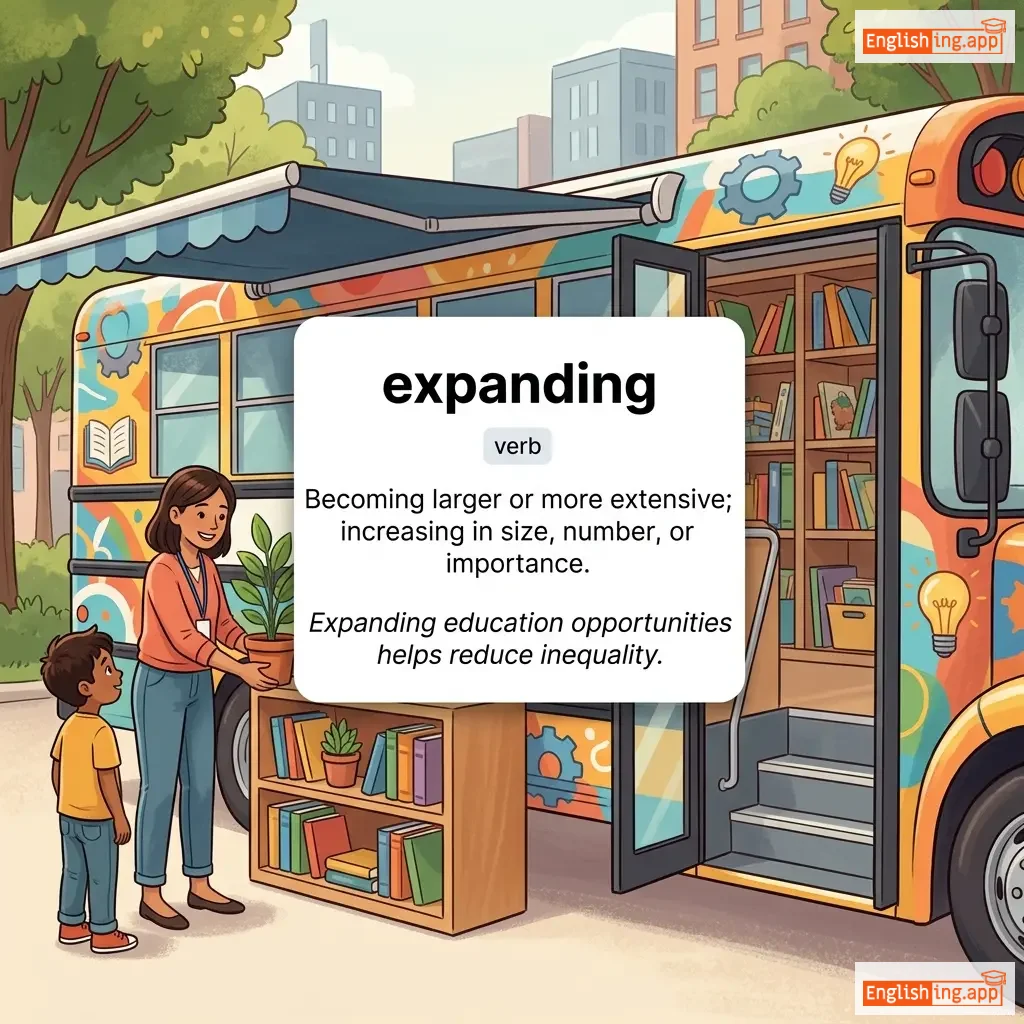
expanding definition card — visual illustration of the meaning
verb
ɪkˈspændɪŋ
élargir (élargir)

Becoming larger or more extensive; increasing in size, number, or importance.

"Expanding education opportunities helps reduce inequality."

"L'élargissement des opportunités éducatives aide à réduire l'inégalité." (L'élargissement des opportunités éducatives aide à réduire l'inégalité.)
noun
/ɪkˈspæns/
étendue vaste (etendue vaste)

a wide, open area of land, sea, or sky

"The desert is a vast expanse of sand and rock."

"Le désert est une vaste étendue de sable et de roches." (Le desert est une vaste etendue de sable et de roches.)
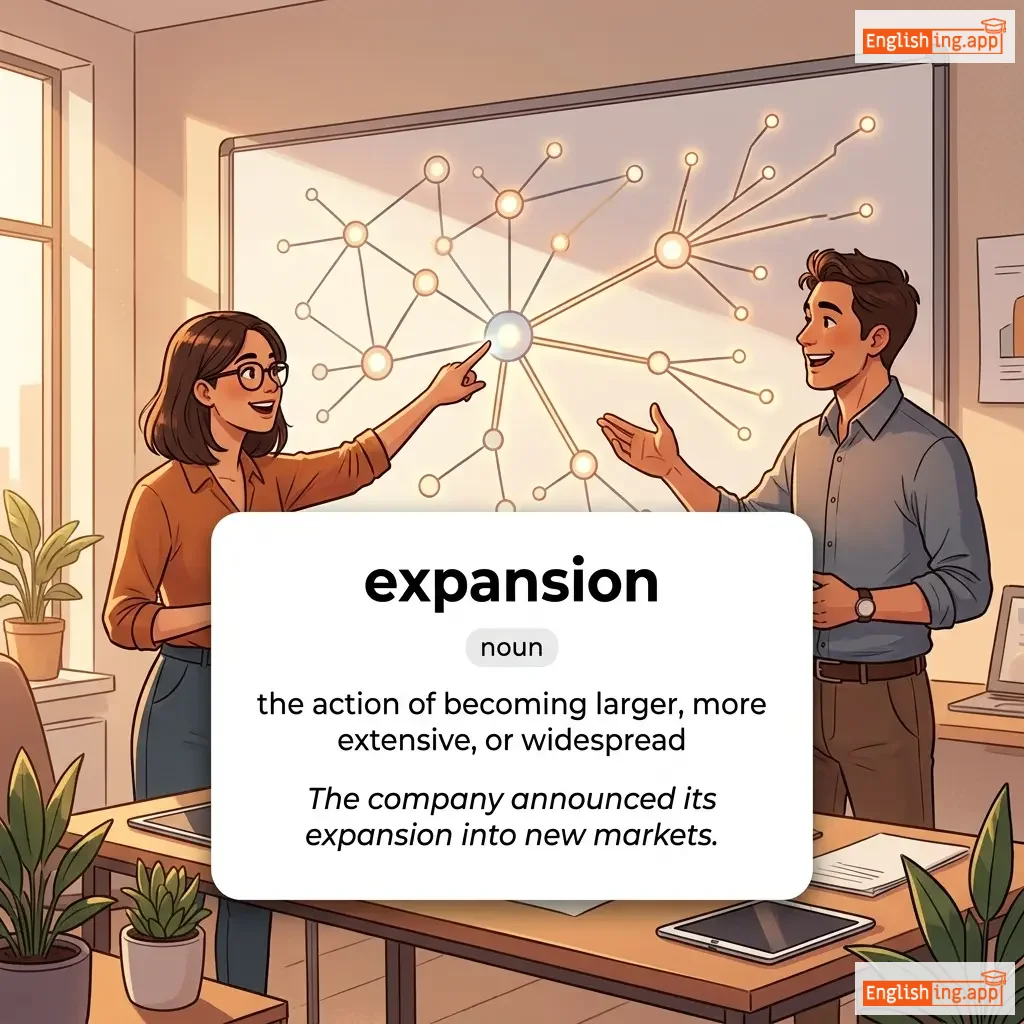
expansion definition card — visual illustration of the meaning
noun
/ɪkˈspænʃən/
expansion (expansion)

the action of becoming larger, more extensive, or widespread

"The company announced its expansion into new markets."

"L'entreprise a annoncé son expansion sur de nouveaux marchés." (L'entreprise a anoncé son expansion sur de nouveaux marchés.)
adjective
/ɪkˈspænsɪv/
expansif (expansif)

covering a wide area or having a wide range of ideas or emotions

"They enjoyed the expansive view from the hilltop."

"Ils ont apprécié la vue expansive depuis le sommet de la colline." (Ils ont apprécié la vue expansive depuis le sommet de la colline.)
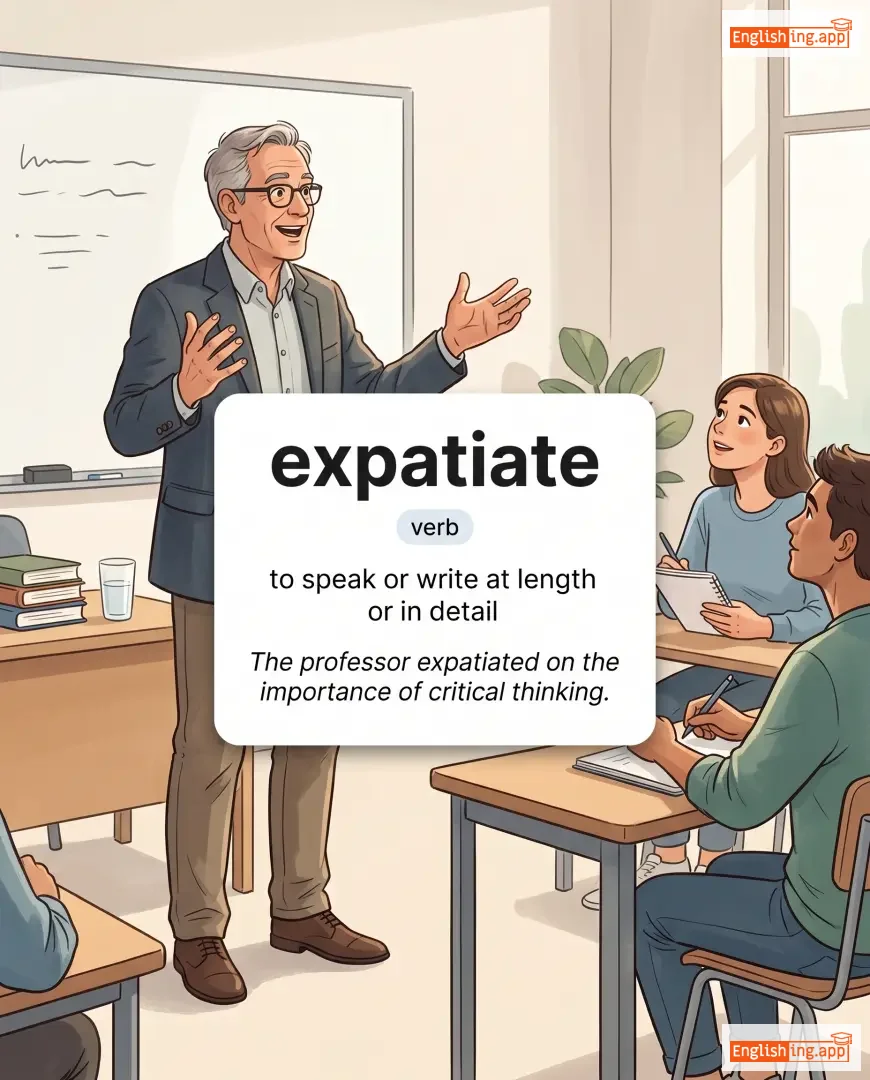
expatiate definition card — visual illustration of the meaning
verb
/ɪkˈspeɪʃiˌeɪt/
parler ou écrire en détail (parler ou écrire en détail)

to speak or write at length or in detail

"The professor expatiated on the importance of critical thinking."

"Le professeur a expatié sur l'importance de la pensée critique." (Le professeur a expatié sur l'importance de la pensée critique.)
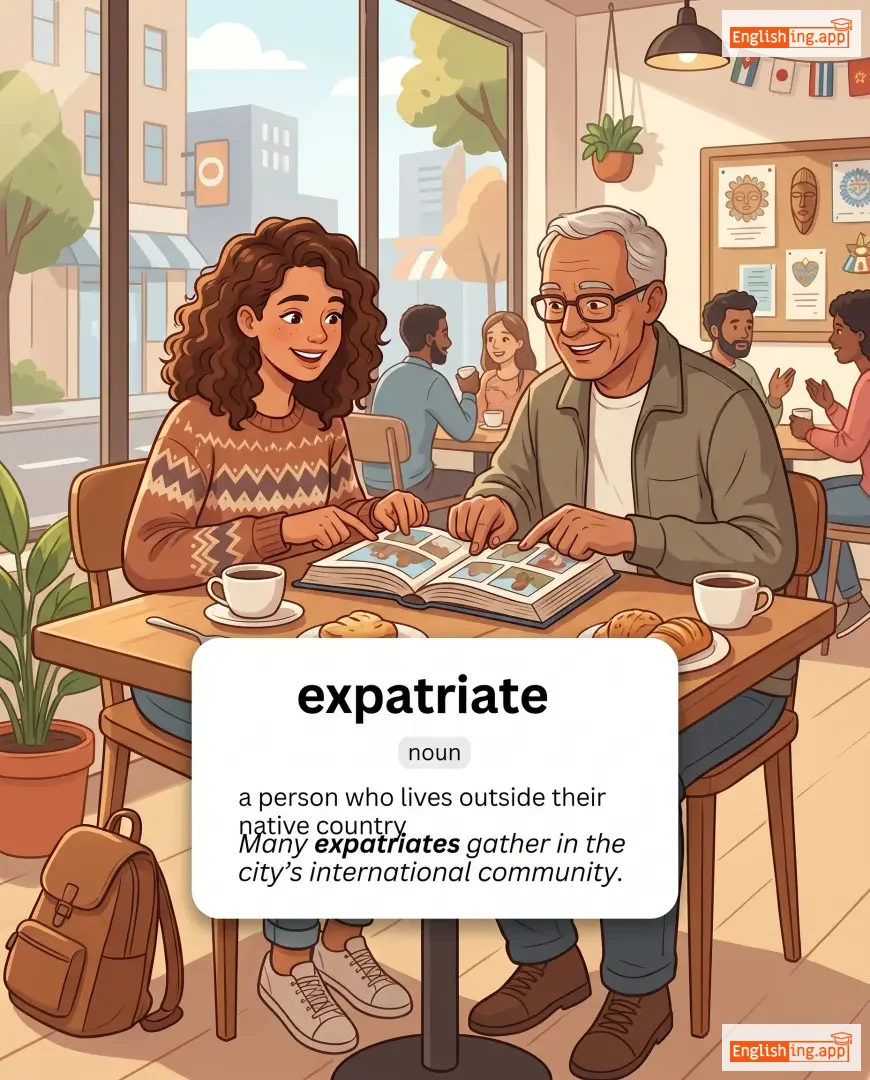
expatriate definition card — visual illustration of the meaning
noun
/ɛkˈspeɪtriət/
expatrié (expatrie)

a person who lives outside their native country

"Many expatriates gather in the city’s international community."

"De nombreux expatriés se rassemblent dans la communauté internationale de la ville." (De nombreux expatriés se rassemblent dans la communauté internationale de la ville.)
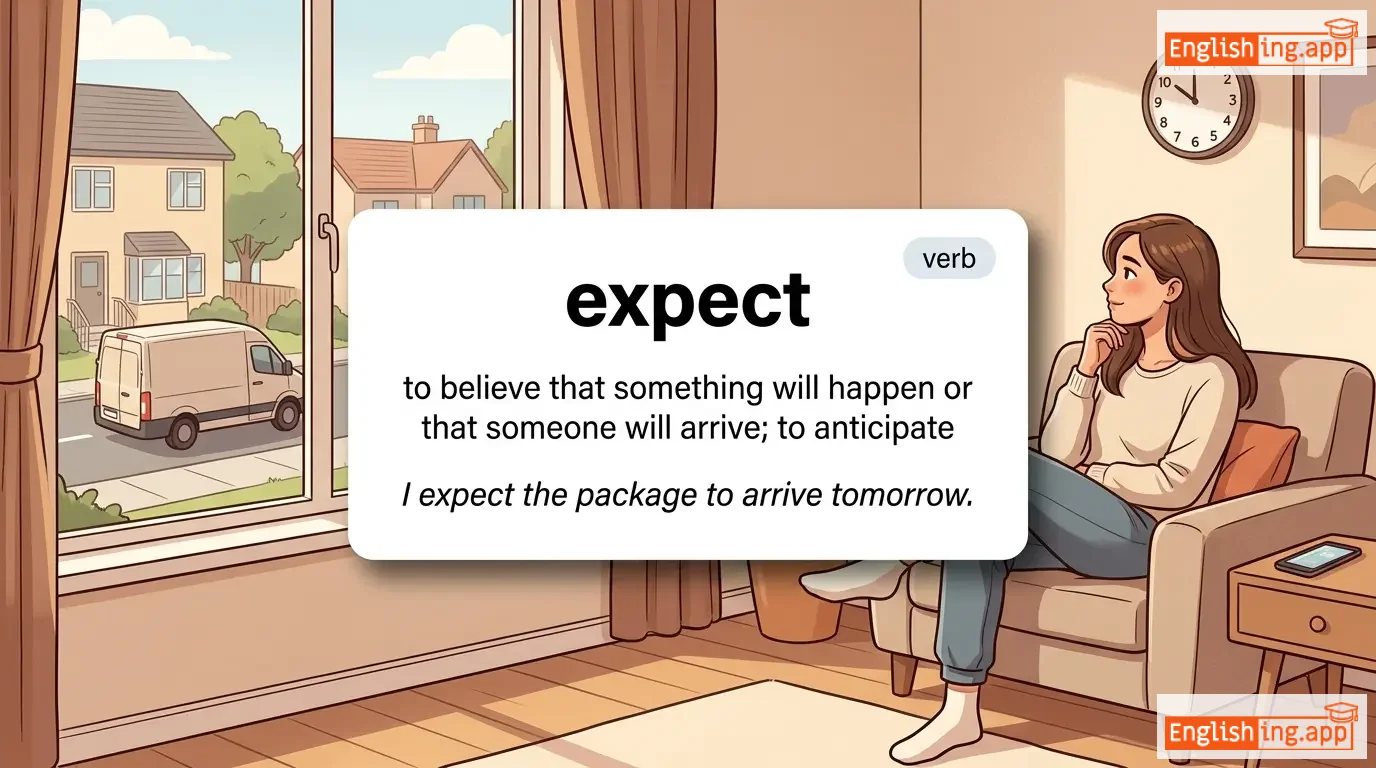
expect definition card — visual illustration of the meaning
verb
/ɪkˈspɛkt/
s'attendre (s'attendre)

to believe that something will happen or that someone will arrive; to anticipate

"I expect the package to arrive tomorrow."

"Je m'attends à ce que le paquet arrive demain." (Je m'attends à ce que le paquet arrive demain.)
noun
/ɪkˈspɛktənsi/
attente (attente)

the state of expecting something; anticipation or likelihood

"There was a sense of expectancy in the room before the results were announced."

"Il y avait un sentiment d'attente dans la pièce avant que les résultats ne soient annoncés." (Il y avait un sentiment d'attente dans la pièce avant que les résultats ne soient annoncés.)
noun
/ˌɛkspɛkˈteɪʃən/
attente (attente)

a strong belief that something will happen or be the case

"The students had high expectations for their exam results."

"Les étudiants avaient de grandes attentes pour leurs résultats aux examens." (Les étudiants avaient de grandes attentes pour leurs résultats aux examens.)
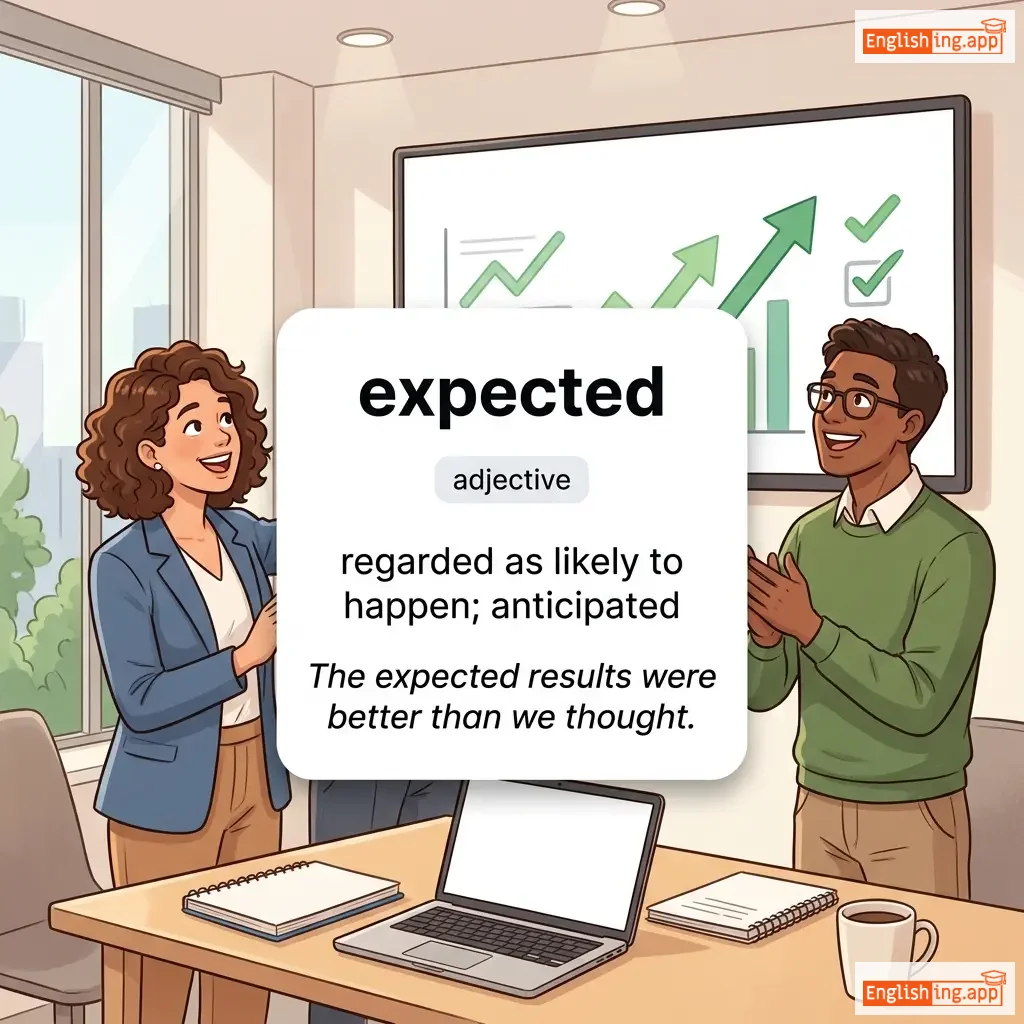
expected definition card — visual illustration of the meaning
adjective
/ɪkˈspɛktɪd/
attendu (attendu)

regarded as likely to happen; anticipated

"The expected results were better than we thought."

"Les résultats attendus étaient meilleurs que ce que nous pensions." (Les résultats attendus étaient meilleurs que ce que nous pensions.)
verb
/ɪkˈspɛktəreɪt/
expectoré (expectoré)

to cough up and spit out mucus from the throat or lungs

"The patient began to expectorate thick mucus."

"Le patient a commencé à expectorer des mucosités épaisses." (Le patient a commencé à expectorer des mucosités épaisses.)
noun
/ɪkˈspiːdiənsi/
opportunisme (opportunisme)

the quality of being convenient and practical despite possibly being improper or immoral

"He acted out of political expediency rather than principle."

"Il a agi par opportunisme politique plutôt que par principe." (Il a agi par opportunisme politique plutôt que par principe.)
adjective
/ɪkˈspiːdiənt/
commode (commode)

suitable or convenient for achieving a particular end, sometimes at the expense of morality

"It was expedient to take the shortcut despite the risks."

"Il était commode de prendre le raccourci malgré les risques." (Il était commode de prendre le raccourci malgré les risques.)
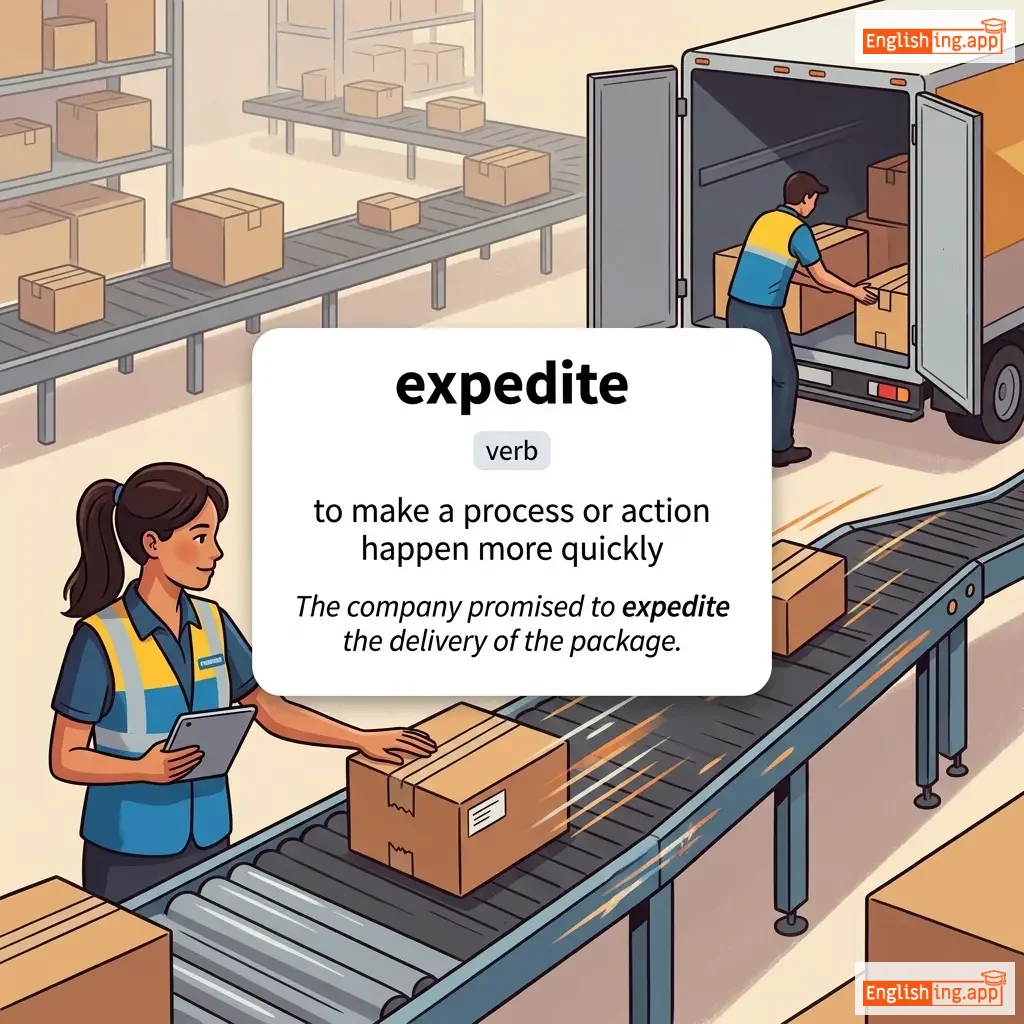
expedite definition card — visual illustration of the meaning
verb
/ˈɛkspəˌdaɪt/
accélérer (accelerer)

to make a process or action happen more quickly

"The company promised to expedite the delivery of the package."

"La société a promis d'accélérer la livraison du colis." (La societe a promis d'accelerer la livraison du colis.)
noun
/ˌɛkspəˈdɪʃən/
expédition (expedition)

a journey made for a particular purpose, often exploration or research

"They went on a scientific expedition to the Arctic."

"Ils sont partis en expédition scientifique en Arctique." (Ils sont partis en expedition scientifique en Arctique.)
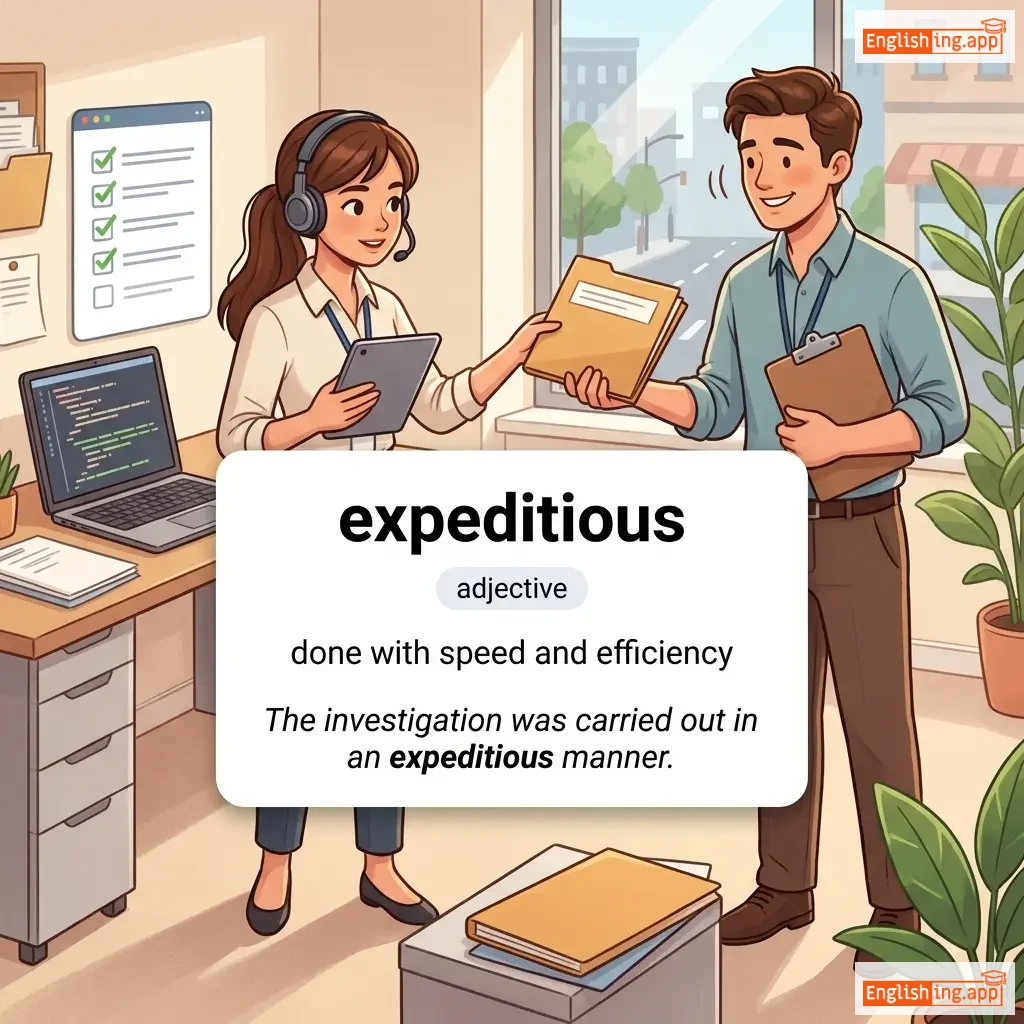
expeditious definition card — visual illustration of the meaning
adjective
/ˌɛkspəˈdɪʃəs/
rapide et efficace (rapide et efficace)

done with speed and efficiency

"The investigation was carried out in an expeditious manner."

"L'enquête a été réalisée de manière rapide et efficace." (L'enquete a ete realisee de maniere rapide et efficace.)
adverb
/ˌɛkspəˈdɪʃəsli/
de manière rapide et efficace (de maniere rapide et efficace)

in a quick and efficient manner

"The application was processed expeditiously."

"La demande a été traitée de manière rapide et efficace." (La demande a été traitee de maniere rapide et efficace.)
verb
/ɪkˈspɛl/
expulser (eks-pul-sey)

to officially force someone to leave a place or organization

"The student was expelled from school for misconduct."

"L'étudiant a été expulsé de l'école pour mauvaise conduite." (Le tew-dy-an ah eh-tay eks-pul-say duh leh-kohl poor moh-vay kon-dwee-t.)
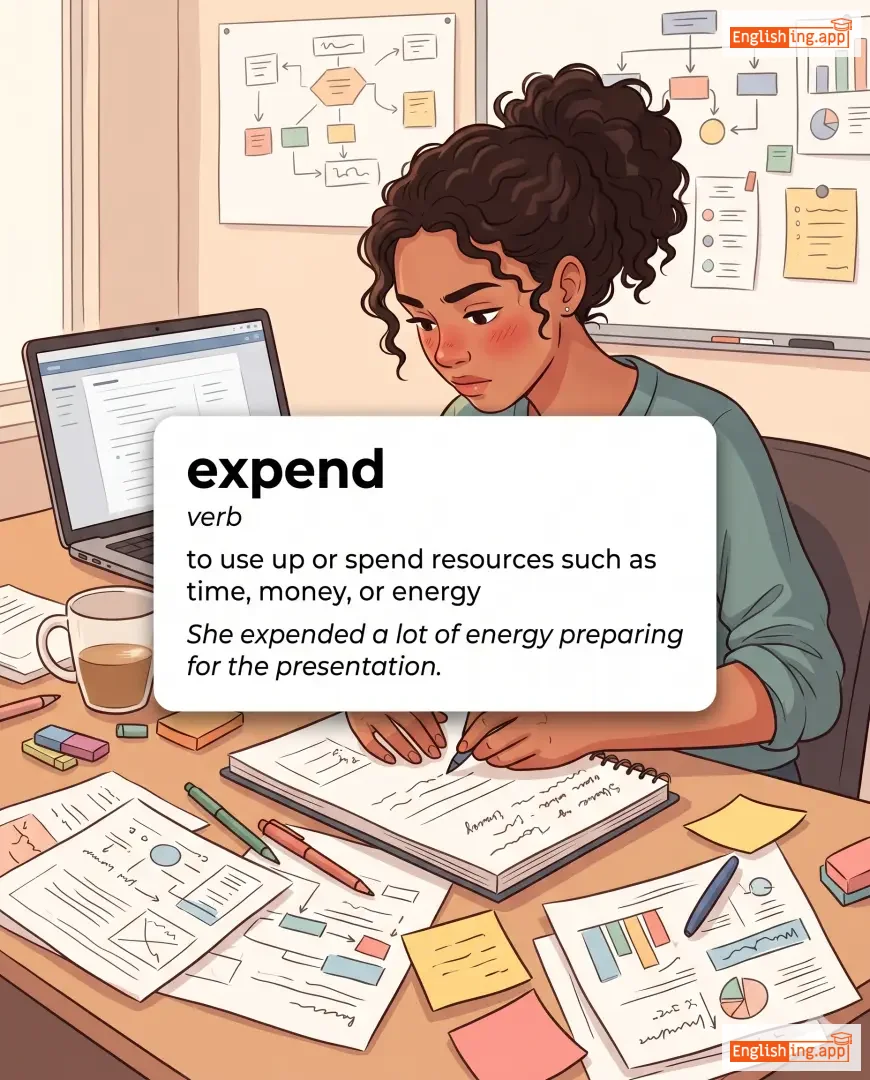
expend definition card — visual illustration of the meaning
verb
/ɪkˈspɛnd/
dépenser (depenser)

to use up or spend resources such as time, money, or energy

"She expended a lot of energy preparing for the presentation."

"Elle a dépensé beaucoup d'énergie pour préparer la présentation." (Elle a depense beaucoup d'energie pour preparer la presentation.)
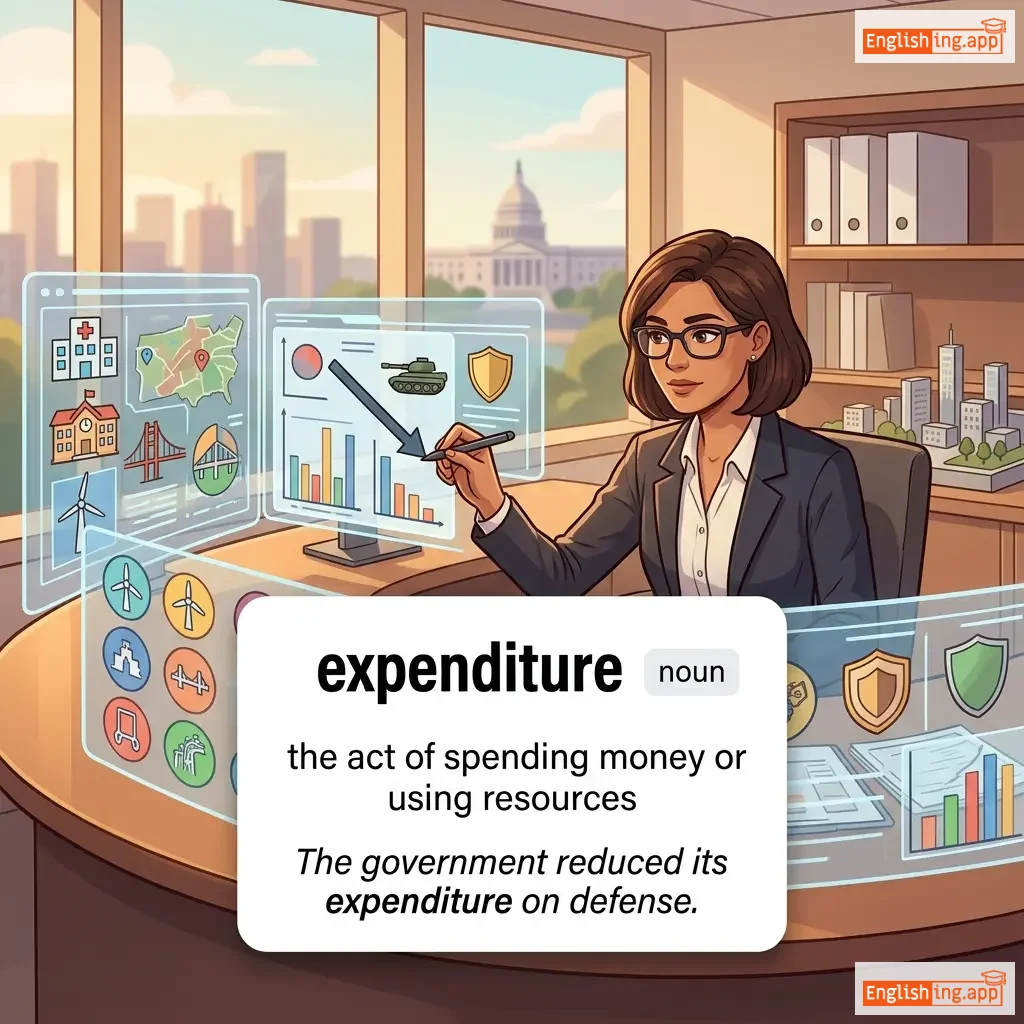
expenditure definition card — visual illustration of the meaning
noun
/ɪkˈspɛndɪtʃər/
dépenses (depes)

the act of spending money or using resources

"The government reduced its expenditure on defense."

"Le gouvernement a réduit ses dépenses de défense." (Le gouvernement a réduit ses dépenses de défense.)
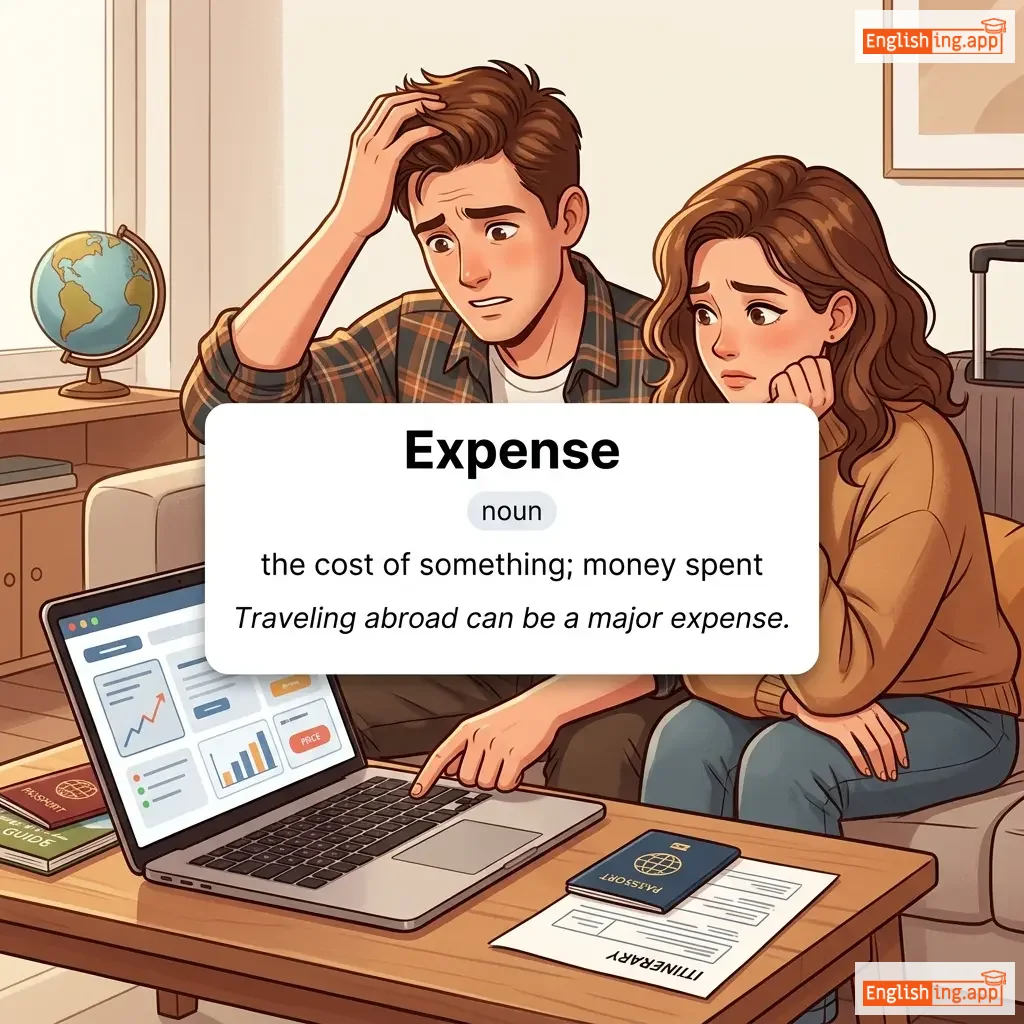
Expense definition card — visual illustration of the meaning
noun
/ɪkˈspɛns/
dépense (depense)

the cost of something; money spent

"Traveling abroad can be a major expense."

"Voyager à l'étranger peut être une grande dépense." (Voyager à l'étranger peut être une grande dépense.)
adjective
/ɪkˈspɛnsɪv/
cher (ekspansiv)

costing a lot of money

"That car is too expensive for me to buy."

"Cette voiture est trop chère pour que je l'achète." (set vwatyr eh trop sher poor kuh zhuh pwees lahhshet)
noun/verb
/ɪkˈspɪəriəns/
bonheur (bonheur)

knowledge or skill gained through involvement in or exposure to something over time

"She gained valuable experience while working abroad."

"Elle ne pouvait pas cacher son bonheur quand elle a reçu le prix." (Elle ne pouvait pas cacher son bonheur quand elle a reçu le prix.)
adjective
/ɪkˈspɪəriənst/
expérimenté (expérimenté)

having knowledge or skill in a particular field gained through experience

"She is an experienced teacher who knows how to handle difficult students."

"Elle est une enseignante expérimentée qui sait comment gérer des étudiants difficiles." (Elle est une enseignante expérimentée qui sait comment gérer des étudiants difficiles.)
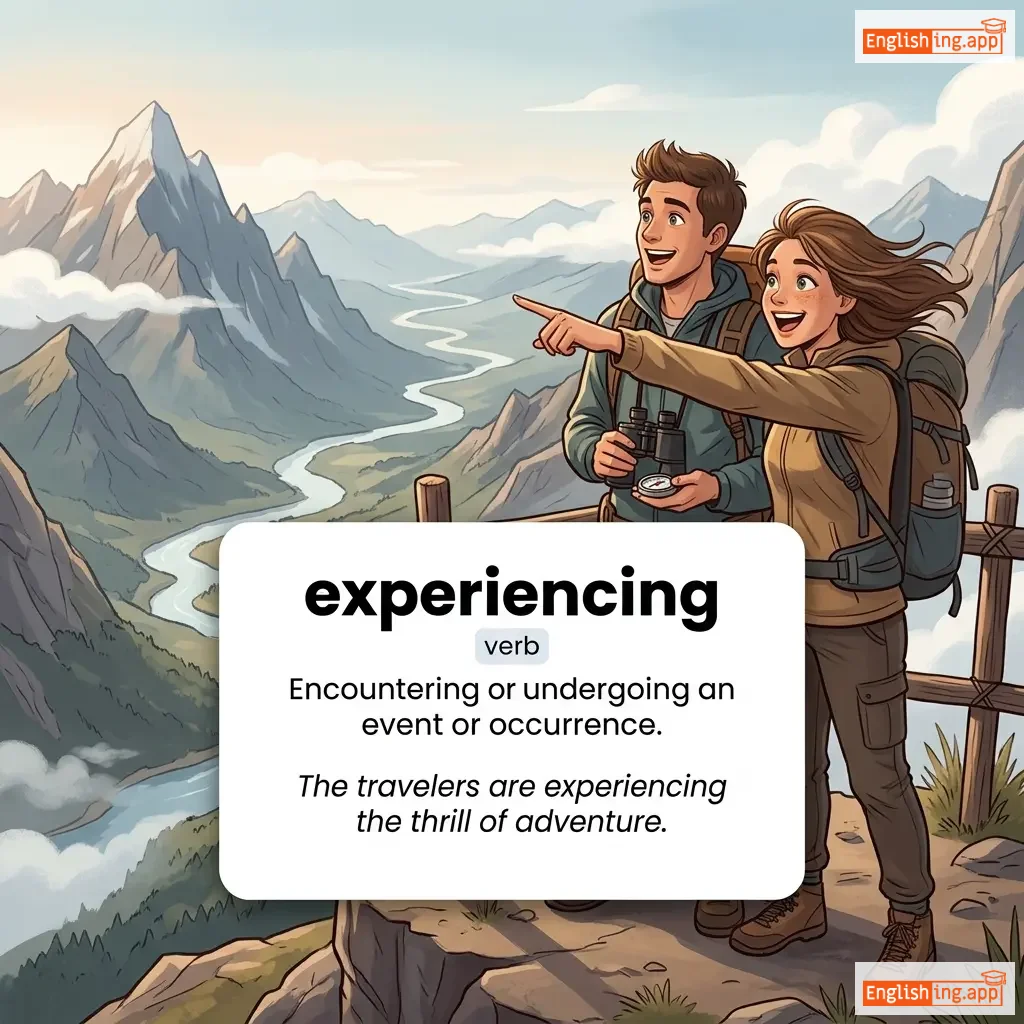
experiencing definition card — visual illustration of the meaning
verb
/ɪkˈspɪəriənsɪŋ/
expérimenter (experimenter)

Encountering or undergoing an event or occurrence.

"The travelers are experiencing the thrill of adventure."

"Les voyageurs vivent l'excitation de l'aventure." (Les voyageurs vivent l'excitation de l'aventure.)
noun/verb
/ɪkˈsperɪmənt/
expérience (experience)

a test or trial carried out to discover something or prove an idea

"The scientist conducted an experiment on plant growth."

"Le scientifique a mené une expérience sur la croissance des plantes." (Le scientifique a mene une experience sur la croissance des plantes.)
adjective
/ɪkˌsperɪˈmentl/
expérimental (ekspe-ree-men-tal)

based on untested ideas or techniques; relating to experiments or testing

"The scientists developed an experimental drug to treat cancer."

"Les scientifiques ont développé un médicament expérimental pour traiter le cancer." (Les scientifiques ont développé un médicament expérimental pour traiter le cancer.)
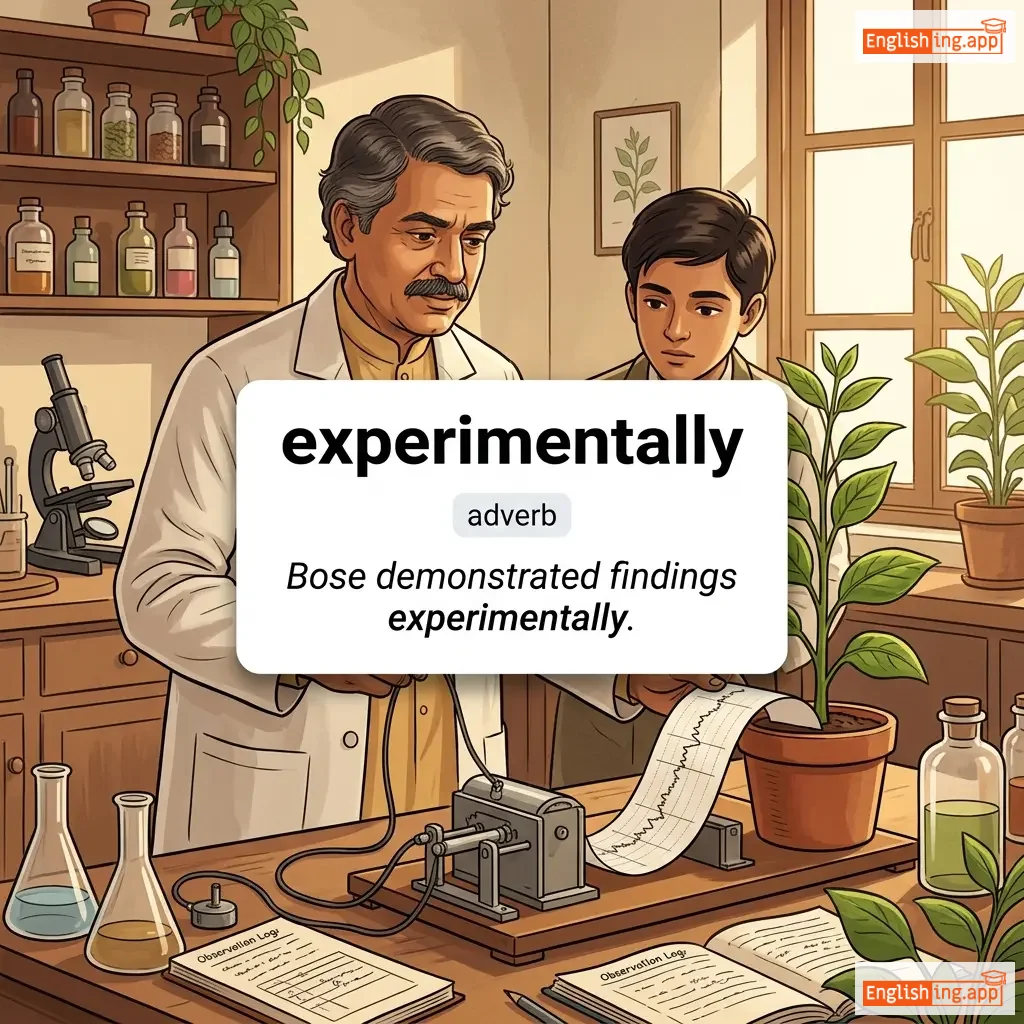
experimentally definition card — visual illustration of the meaning
adverb
ɪkˌsperɪˈmentəli
expérimentalement (experimentale-ment)

In a way that is based on or derived from experiment and observation rather than theory.

"Bose demonstrated findings experimentally."

"Bose a démontré les résultats expérimentalement." (Bose a démontré les résultats expérimentalement.)
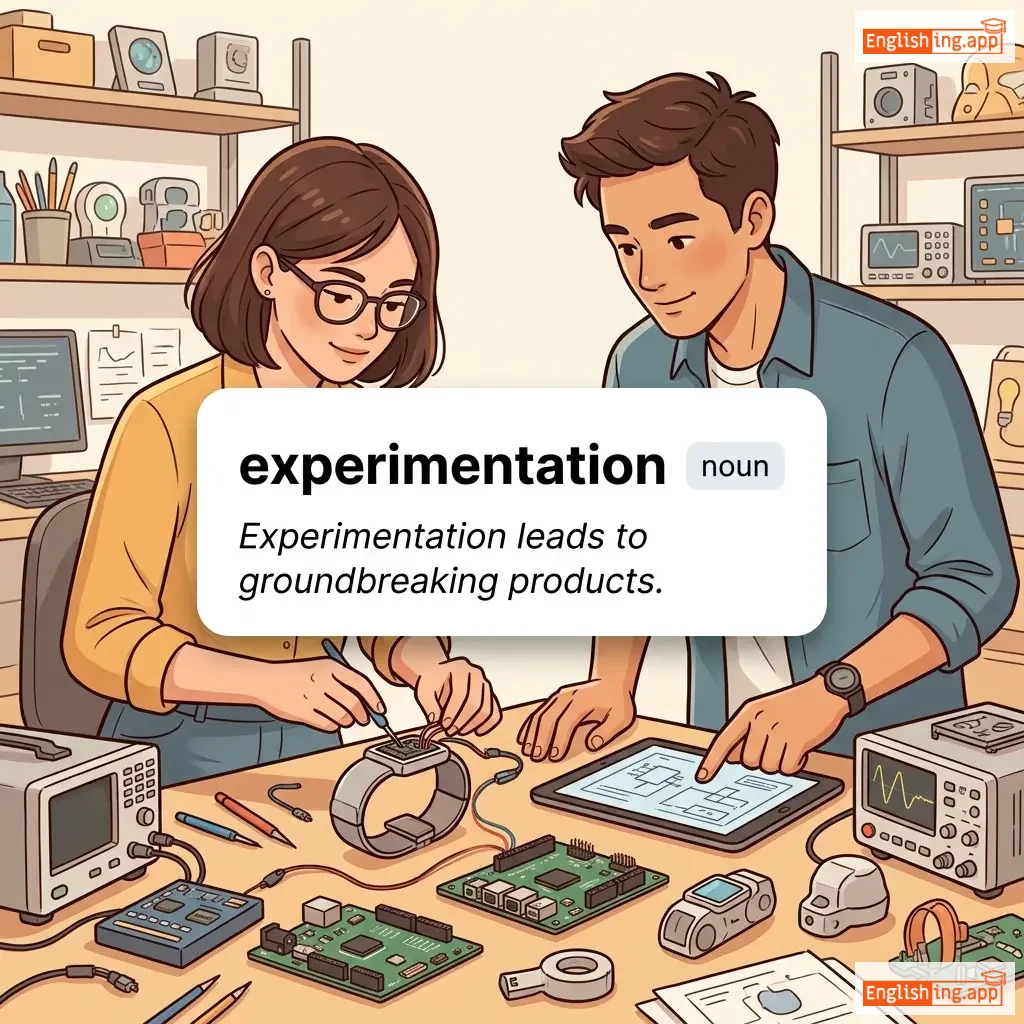
experimentation definition card — visual illustration of the meaning
noun
/ɪkˌsperɪˈmɛnteɪʃən/
expérimentation (experimentation)

The process of performing a scientific procedure to make a discovery, test a hypothesis, or demonstrate a known fact.

"Experimentation leads to groundbreaking products."

"L'expérimentation mène à des produits révolutionnaires." (L'experimentation mene a des produits revolutionnaires.)
👨‍🏫

expert (expert)

noun/adjective
/ˈekspɜːt/
expert (expert)

a person who has a lot of knowledge or skill in a particular area

"He is an expert in computer programming."

"Il est un expert en programmation informatique." (Il est un expert en programmation informatique.)
expertise definition card — visual illustration of the meaning
noun
/ˌɛkspərˈtiːz/
expertise (expertise)

specialized knowledge or skill in a particular field

"Her expertise in data analysis is highly valued."

"Son expertise en analyse de données est très appréciée." (Son expertise en analyse de données est très appréciée.)
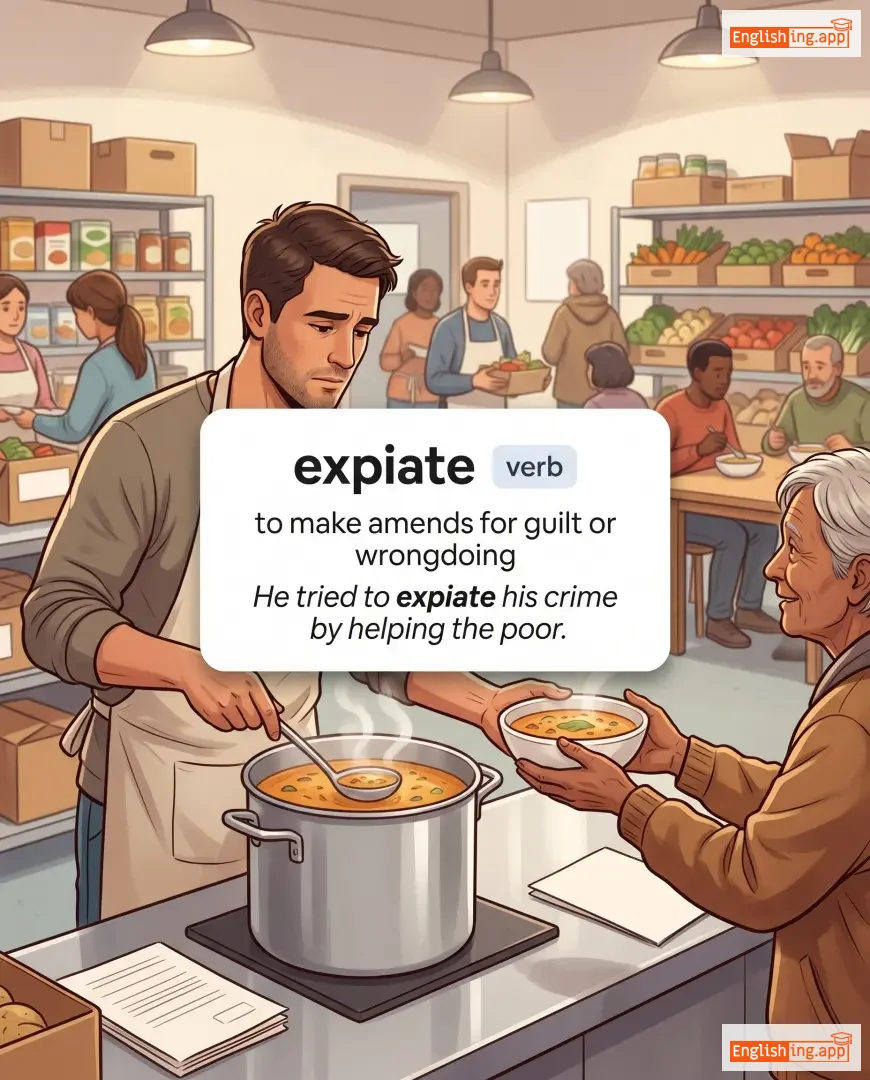
expiate definition card — visual illustration of the meaning
verb
/ˈɛkspieɪt/
expiation (eks-pi-a-tion)

to make amends for guilt or wrongdoing

"He tried to expiate his crime by helping the poor."

"Il a essayé d'expiation de son crime en aidant les pauvres." (Il a es-sayé d'ex-pi-a-tion de son cri-me en ai-dant les pauvres.)
verb
/ɪkˈspaɪər/
expirer (expirer)

to come to an end, especially a period of validity or life

"My passport will expire next month."

"Mon passeport expirera le mois prochain." (Mon passeport expirera le mois prochain.)
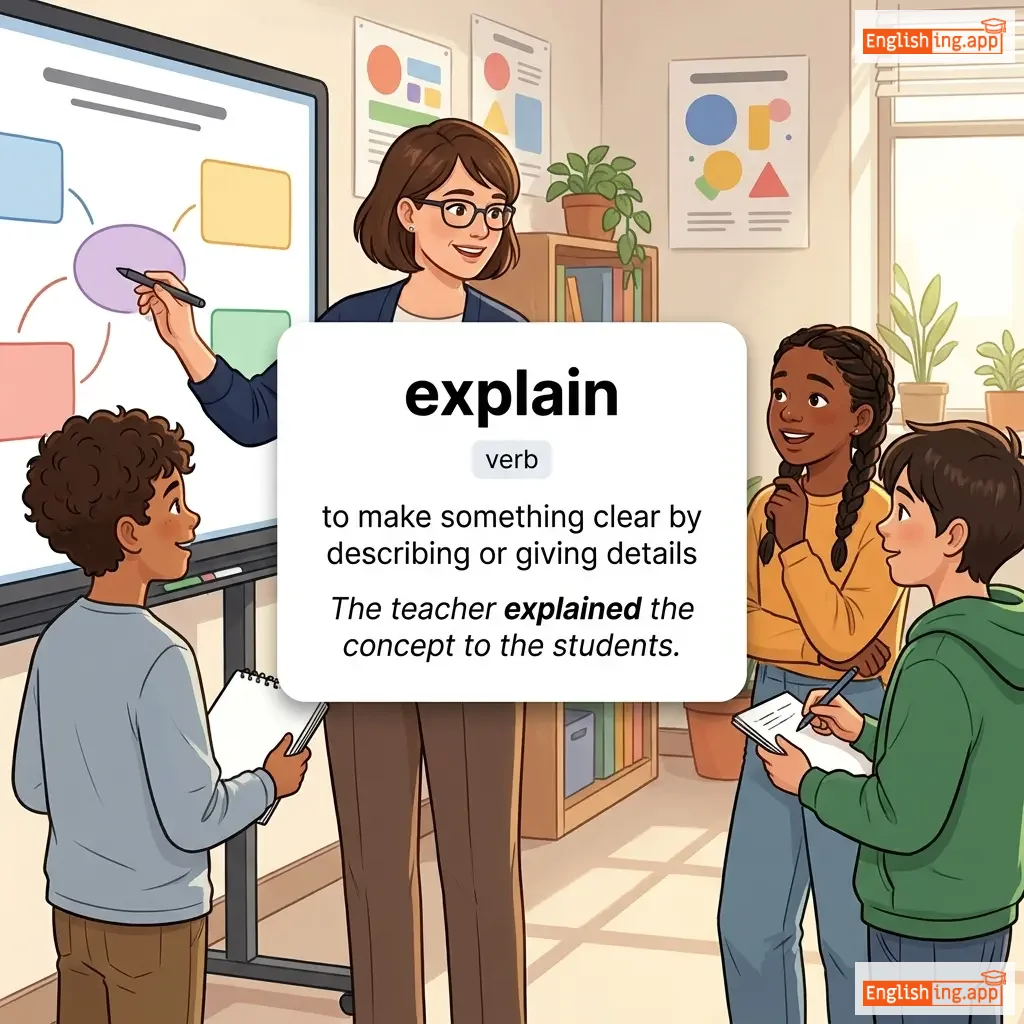
explain definition card — visual illustration of the meaning
verb
/ɪkˈspleɪn/
expliquer (expliquer)

to make something clear by describing or giving details

"The teacher explained the concept to the students."

"Le professeur a expliqué le concept aux étudiants." (Le professeur a expliqué le concept aux étudiants.)