Vocabulaires

Découvrez, apprenez et maîtrisez le vocabulaire anglais

verb
/ɪkˈskluːd/
exclure (eksclure)

To deliberately leave out or prevent someone or something from being included.

"The list excludes temporary workers."

"La liste exclut les travailleurs temporaires." (La liste eksklut les travailleurs temporaires.)
adjective
/ɪkˈskluːdɪd/
exclu; marginalisé (exclu; marginalisé)

not included; left out; barred from participation

"He felt excluded from the group activities and conversations."

"Il se sentait exclu des activités de groupe et des conversations." (Il se sentait exclu des activités de groupe et des conversations.)
noun
/ɪkˈskluːʒən/
exclusion (exclusion)

The process or state of being left out or denied access.

"The policy led to the exclusion of certain groups."

"La politique a conduit à l'exclusion de certains groupes." (La politique a conduit à l'exclusion de certains groupes.)
adjective
/ɪkˈskluːsɪv/
réservé à une personne, un groupe ou une zone particulière; non partagé avec d'autres (reserve a une personne, un groupe ou une zone particuliere; non partage avec d'autres)

restricted to a particular person, group, or area; not shared with others

"The hotel offers exclusive access to a private beach."

"L'hôtel offre un accès exclusif à une plage privée." (L'hotel offre un acces exclusif a une plage privee.)
adverb
/ɪkˈskluːsɪvli/
exclusivement (exclusivement)

only; not shared with others

"This service is available exclusively to premium members."

"Ce service est disponible exclusivement pour les membres premium." (Ce service est disponible exclusivement pour les membres premium.)
verb
/ɛkˈskɔːrieɪt/
critique sévèrement (kritik severman)

To strongly criticize someone; to denounce severely.

"The critic excoriated the film for its poor script."

"Le critique a sévèrement critiqué le film pour son mauvais scénario." (Le critique a severman critique le film pour son mauvais scenario.)
noun
/ɪkˈskrɛsəns/
croissance anormale (croissance anormale)

An abnormal outgrowth or lump, often considered unattractive.

"The building was considered an excrescence on the landscape."

"Le bâtiment a été considéré comme une excroissance dans le paysage." (Le bâtiment a été considéré comme une excroissance dans le paysage.)
verb
/ɪkˈskriːt/
excréter (excreter)

to eliminate waste matter from the body

"Humans excrete carbon dioxide through breathing."

"Les humains excrètent du dioxyde de carbone par la respiration." (Les humains excrètent du dioxyde de carbone par la respiration.)
noun
/ɪkˈskriːʃən/
excrétion (excretion)

the process of eliminating waste matter from the body

"Excretion is vital for maintaining a healthy body."

"L'excrétion est vitale pour maintenir un corps sain." (L'excretion est vitale pour maintenir un corps sain.)
verb
/ɪkˈskruːʃieɪt/
excrucier (éks-kru-sier)

to cause intense pain or suffering

"The injury excruciated him with unbearable pain."

"La blessure l'excruciait avec une douleur insupportable." (La blessure l'excruciait avec une douleur insupportable.)
adjective
/ɪkˈskruːʃieɪtɪŋ/
atroce (atroce)

causing extreme physical or mental pain

"She was in excruciating pain after the accident."

"Elle était dans une douleur atroce après l'accident." (Elle était dans une douleur atroce après l'accident.)
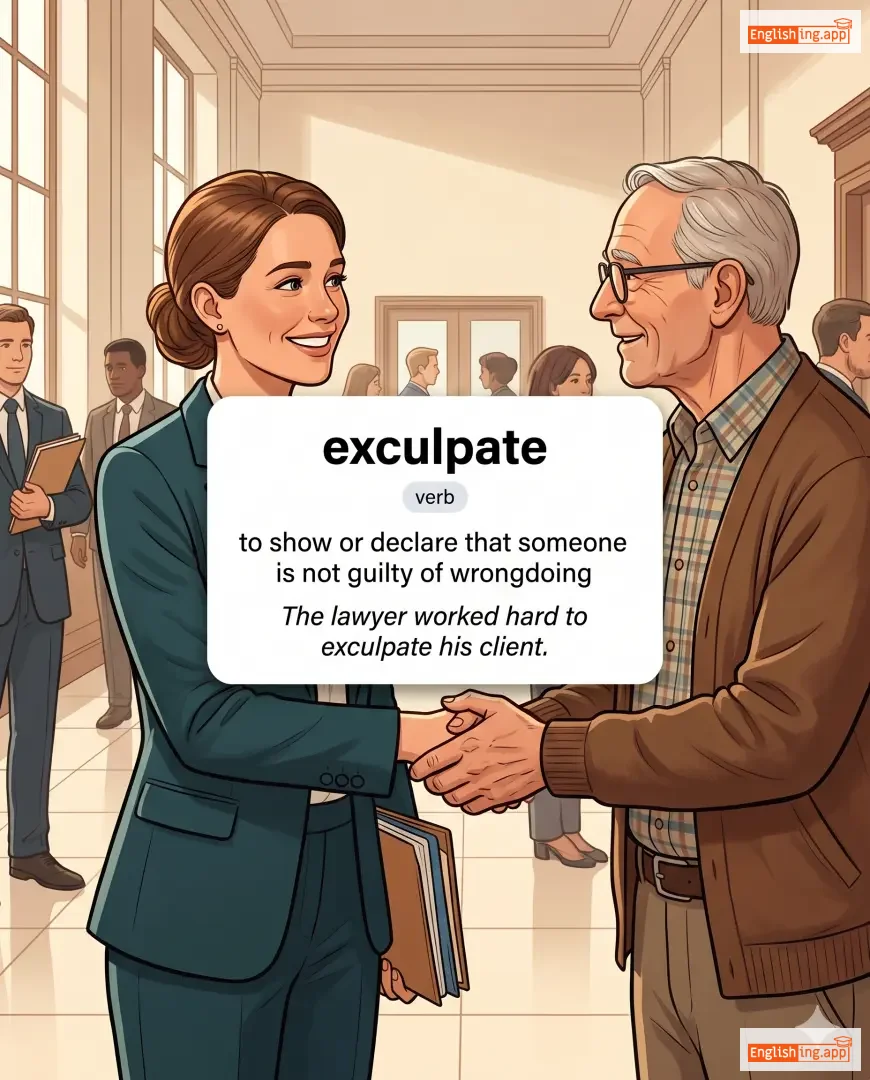
exculpate definition card — visual illustration of the meaning
verb
/ˈɛkskʌlpeɪt/
exculper (exculper)

to show or declare that someone is not guilty of wrongdoing

"The lawyer worked hard to exculpate his client."

"L'avocat a travaillé dur pour exculper son client." (L'avocat a travaillé dur pour exculper son client.)
noun
/ɪkˈskɜːʒən/
excursion (excursion)

A short journey or trip, especially one taken for leisure or educational purposes.

"The students went on an excursion to the national museum."

"Les étudiants sont partis en excursion au musée national." (Les etudiants sont partis en excursion au musee national.)
adjective
/ɪkˈskɜːsɪv/
excurssif (excurssif)

Tending to digress or wander; moving away from the main subject.

"His excursive lecture left the students confused about the main topic."

"Sa conférence excursive a laissé les étudiants confus sur le sujet principal." (Sa conférence excursive a laissé les étudiants confus sur le sujet principal.)
adjective
/ɪkˈskjuːzəbl/
excusable (eksuzabl)

Able to be forgiven or justified.

"Her mistake was excusable given the circumstances."

"Son erreur était excusable étant donné les circonstances." (Son erreur était excusable étant donné les circonstances.)
verb
/ɪkˈskjuːz/
pardonner, justifier (pardonner, justifier)

to forgive someone for doing something wrong or to justify an action

"Please excuse my lateness; there was heavy traffic."

"S'il vous plaît, excusez mon retard ; il y avait beaucoup de circulation." (S'il vous plaît, excusez mon retard ; il y avait beaucoup de circulation.)
execrable definition card — visual illustration of the meaning
adjective
/ˈeksɪkrəbl/
exécrable (exécrable)

Extremely bad or unpleasant.

"The movie was so execrable that many people left the theater early."

"Le film était tellement exécrable que beaucoup de gens sont partis tôt du cinéma." (Le film était tellement exécrable que beaucoup de gens sont partis tôt du cinéma.)
verb
/ˈeksɪkreɪt/
détester (detester)

To feel or express great loathing or hatred for something.

"The community execrated the corrupt politician."

"La communauté a détesté le politicien corrompu." (La communauté a détesté le politicien corrompu.)
noun
/ˌɛksɪˈkreɪʃən/
malédiction (malediction)

An act of cursing or denouncing someone or something with hatred.

"The dictator’s name was spoken with execration after his fall."

"Le nom du dictateur a été prononcé avec malédiction après sa chute." (Le nom du dictateur a été prononcé avec malédiction après sa chute.)
execute definition card — visual illustration of the meaning
verb
/ˈɛksɪkjuːt/
exécuter (executer)

To carry out a plan, order, or action; to perform or put into effect.

"The company plans to execute its new strategy next year."

"L'entreprise prévoit d'exécuter sa nouvelle stratégie l'année prochaine." (L'entreprise prévoit d'exécuter sa nouvelle stratégie l'année prochaine.)
noun
/ˌɛksɪˈkjuːʃən/
exécution, mise en œuvre (execution, mise en œuvre)

the act of carrying out a plan, order, or legal sentence

"The success of a project depends on its proper execution."

"Le succès d'un projet dépend de sa bonne exécution." (Le succes d'un projet depend de sa bonne execution.)
noun
/ˌɛksɪˈkjuːʃənər/
bourreau (bourreau)

A person who carries out a death sentence by execution.

"The executioner prepared the gallows for the condemned prisoner."

"Le bourreau a préparé la potence pour le prisonnier condamné." (Le bourreau a préparé la potence pour le prisonnier condamné.)
executive definition card — visual illustration of the meaning
noun/adjective
/ɪɡˈzɛkjətɪv/
exécutif (exécutif)

A person with senior managerial responsibility in a business; relating to the execution of plans or laws.

"She works as an executive in a multinational company."

"Elle travaille comme exécutive dans une entreprise multinationale." (Elle travaille comme exécutive dans une entreprise multinationale.)
noun
/ɪɡˈzɛkjətər/
exécuteur testamentaire (exécuteur testamentaire)

A person appointed to carry out the terms of someone's will after their death.

"The executor managed the estate according to the deceased’s wishes."

"L'exécuteur a géré la succession conformément aux souhaits du défunt." (L'exécuteur a gere la succession conformement aux souhaits du defunt.)
noun
/ˌɛksəˈdʒiːsɪs/
exégèse (exegese)

A critical explanation or interpretation of a text, especially a religious scripture.

"The professor gave a detailed exegesis of the biblical passage."

"Le professeur a donné une exégèse détaillée du passage biblique." (Le professeur a donne une exegese detaillee du passage biblique.)
noun
/ɪɡˈzɛmplɑːr/
exemple (exemple)

A model or pattern to be copied or imitated.

"She is an exemplar of kindness and generosity."

"Elle est un exemple de gentillesse et de générosité." (Elle est un exemple de gentillesse et de générosité.)
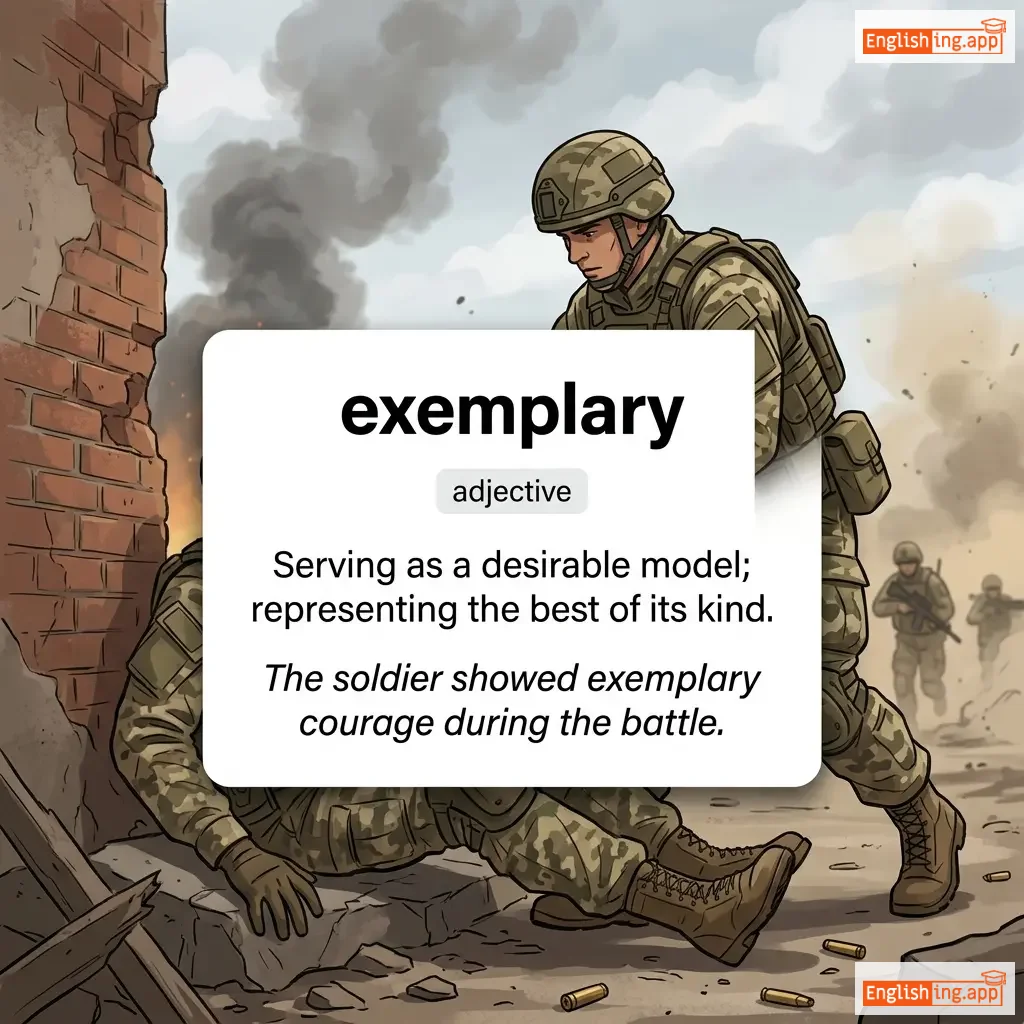
exemplary definition card — visual illustration of the meaning
adjective
/ɪɡˈzɛmpləri/
exemplaire (eksampleer)

Serving as a desirable model; representing the best of its kind.

"The soldier showed exemplary courage during the battle."

"Le soldat a montré un courage exemplaire pendant la bataille." (Le soldat a montré un courage exemplaire pendant la bataille.)
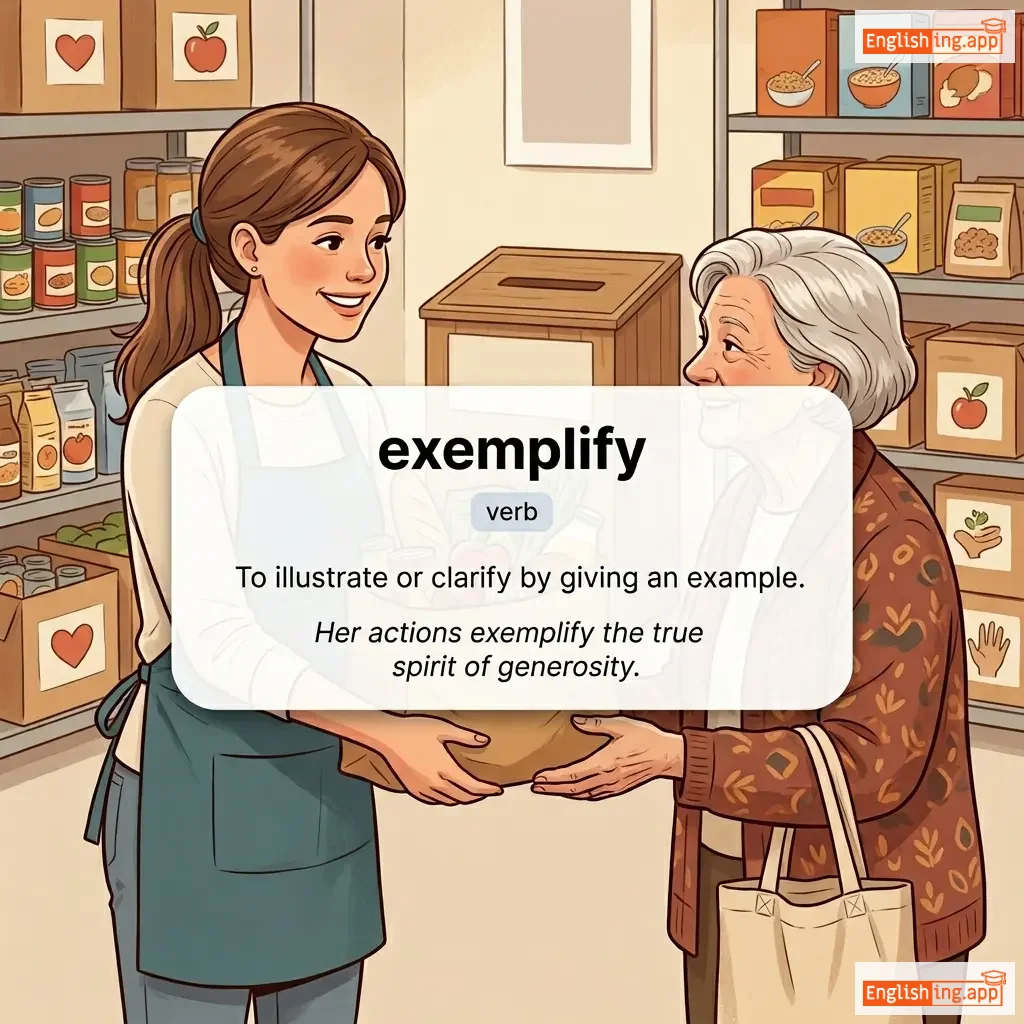
exemplify definition card — visual illustration of the meaning
verb
/ɪɡˈzɛmplɪfaɪ/
illustrer avec un exemple (illustrer avec un exemple)

To illustrate or clarify by giving an example.

"Her actions exemplify the true spirit of generosity."

"Ses actions exemplifient le véritable esprit de générosité." (Ses actions exemplifient le véritable esprit de générosité.)
adjective, verb
/ɪɡˈzɛmpt/
exempté (eksampte)

Free from an obligation or liability imposed on others.

"Students with high grades are exempt from the final exam."

"Les étudiants ayant de bonnes notes sont exemptés de l'examen final." (Les etudiants ayant de bonnes notes sont exempts de l'examen final.)
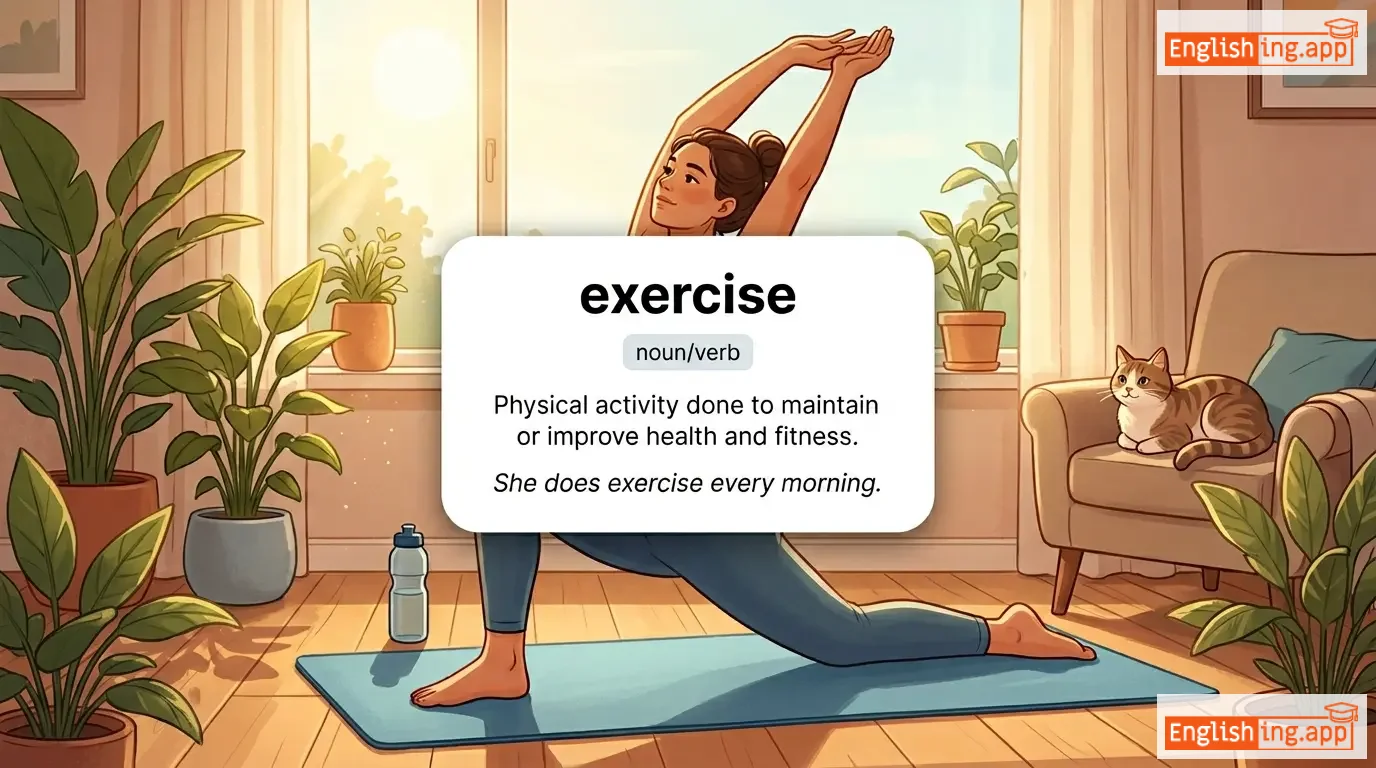
exercise definition card — visual illustration of the meaning
noun/verb
/ˈɛksərsaɪz/
exercice (exercice)

Physical activity done to maintain or improve health and fitness.

"She does exercise every morning."

"Elle fait de l'exercice tous les matins." (elle fait de l'exercice tous les matins.)
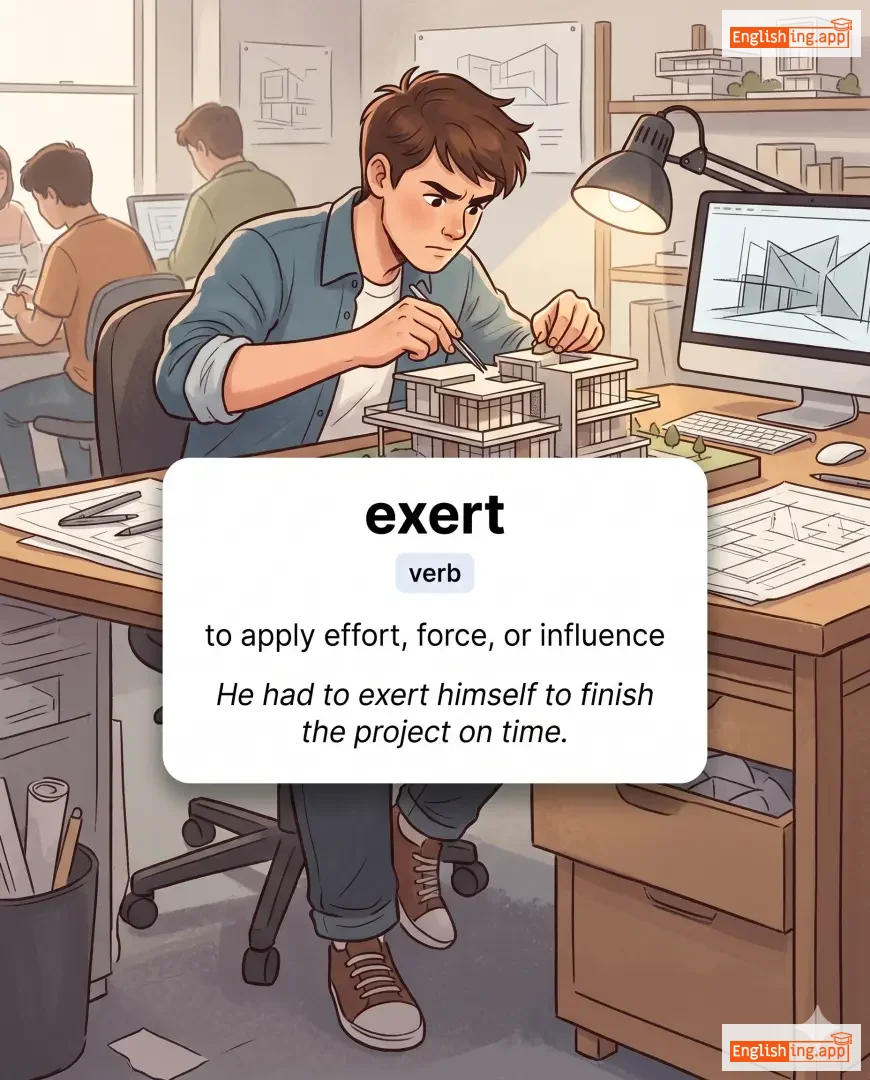
exert definition card — visual illustration of the meaning
verb
/ɪɡˈzɜːrt/
exercer (exercer)

to apply effort, force, or influence

"He had to exert himself to finish the project on time."

"Il a dû s'efforcer de finir le projet à temps." (Il a dû s'efforcer de finir le projet à temps.)
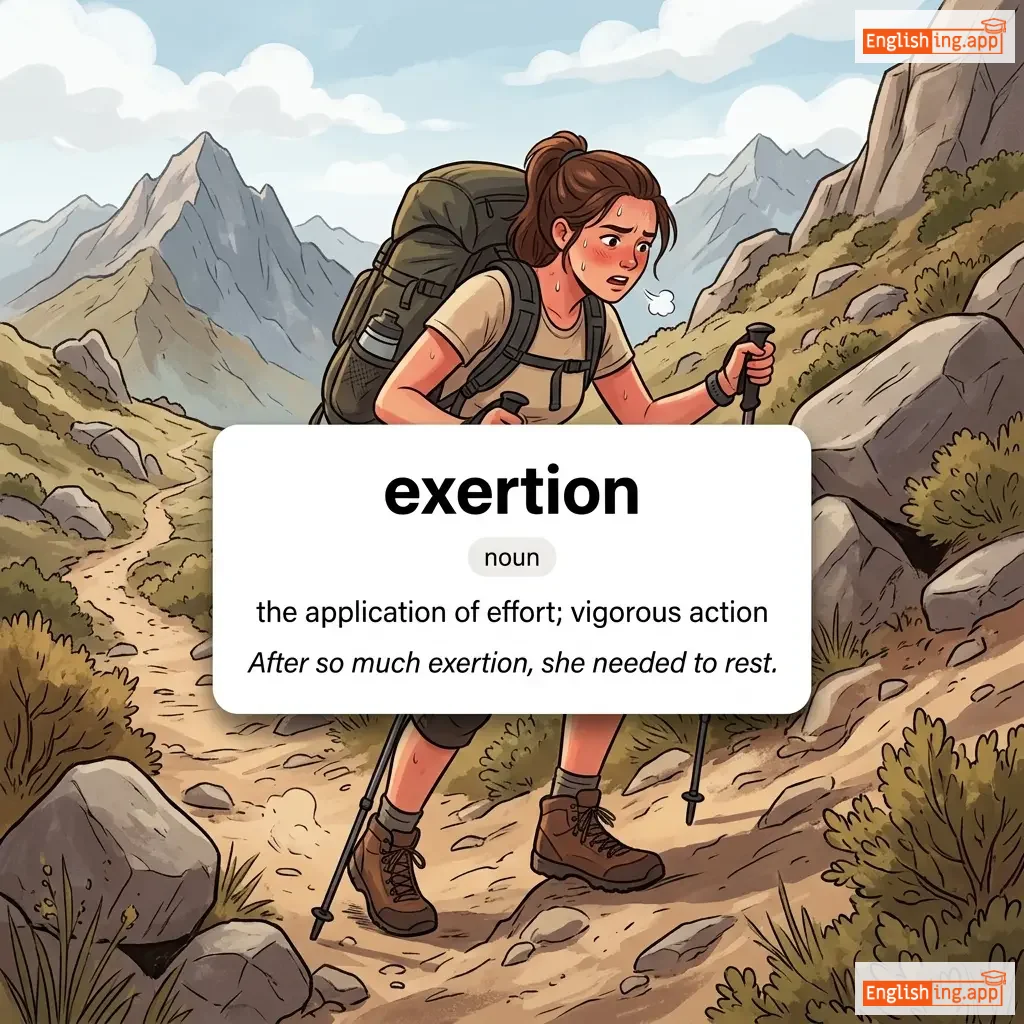
exertion definition card — visual illustration of the meaning
noun
/ɪɡˈzɜːrʃən/
effort (effort)

the application of effort; vigorous action

"After so much exertion, she needed to rest."

"Après tant d'effort, elle avait besoin de se reposer." (Apres tant d'effort, elle avait besoin de se reposer.)
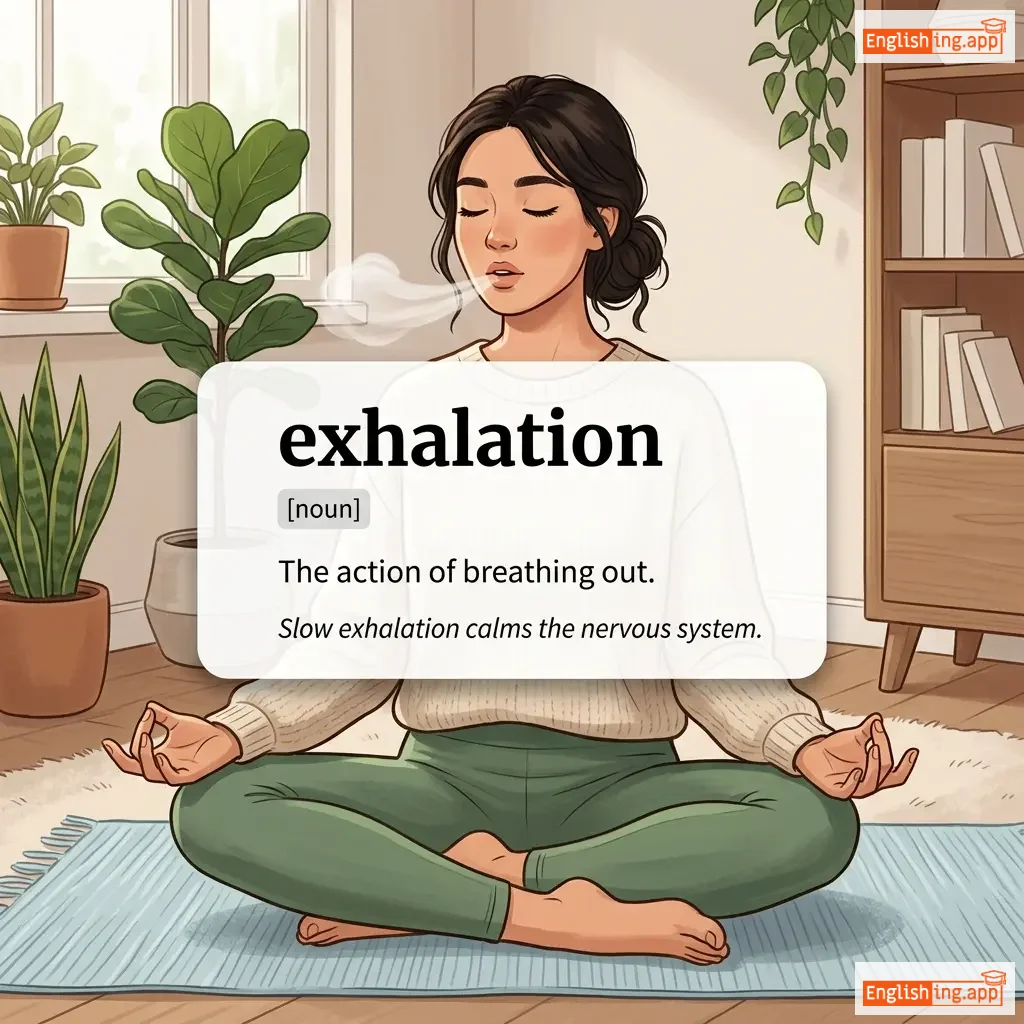
exhalation definition card — visual illustration of the meaning
noun
/ˌɛks.həˈleɪ.ʃən/
expiration (expiration)

The action of breathing out.

"Slow exhalation calms the nervous system."

"Une expiration lente calme le système nerveux." (Une expiration lente calme le systeme nerveux.)
😮‍💨

exhale (ɛksɛl)

verb
/ɛksˈheɪl/
expirer (expirer)

to breathe out air from the lungs

"She slowly exhaled after holding her breath."

"Elle a lentement exhalé après avoir retenu sa respiration." (Elle a lentement exhalé après avoir retenu sa respiration.)
verb
/ɪɡˈzɔːst/
épuiser (epuiser)

to tire out completely; to use up resources

"The long journey exhausted the children."

"Le long voyage a épuisé les enfants." (Le long voyage a epuisé les enfants.)
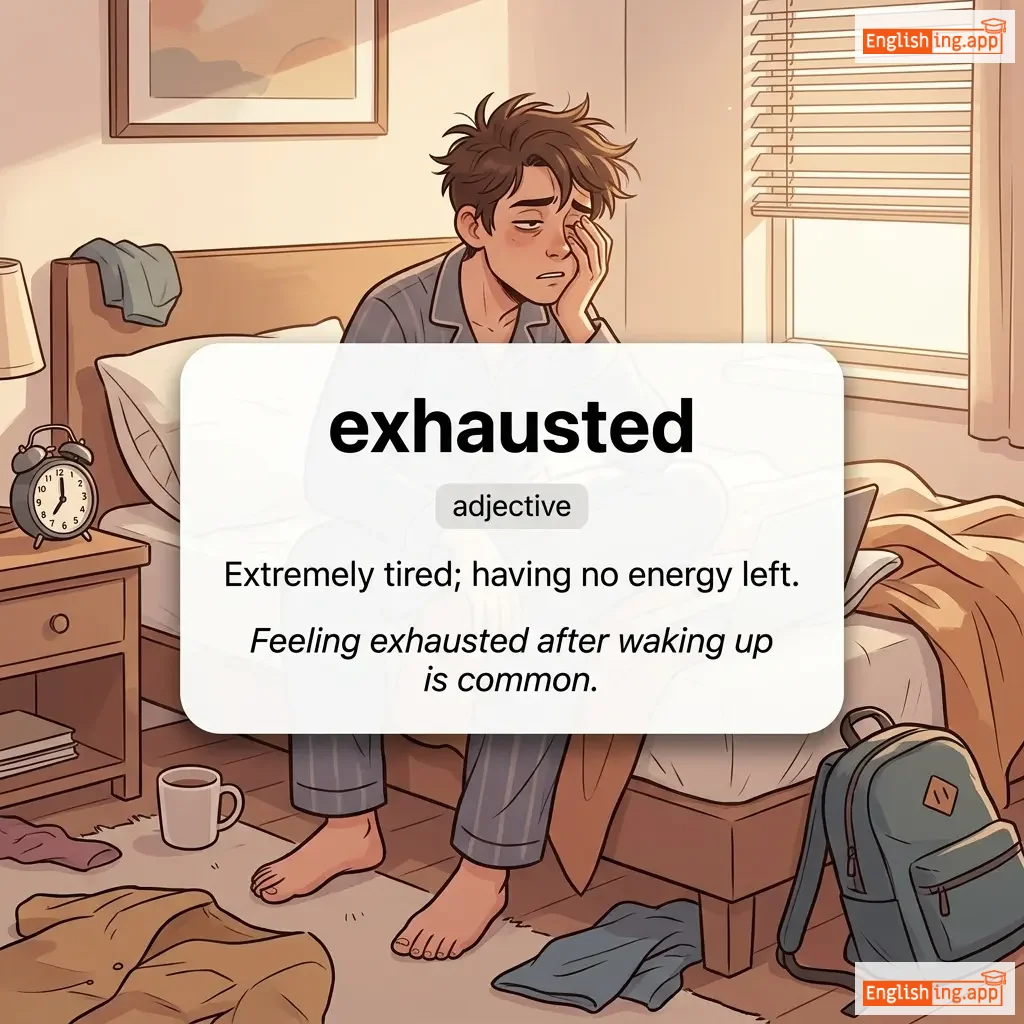
exhausted definition card — visual illustration of the meaning
adjective
/ɪɡˈzɔː.stɪd/
épuisé (epuise)

Extremely tired; having no energy left.

"Feeling exhausted after waking up is common."

"Se sentir épuisé après le réveil est courant." (se sentir epuise apres le reveil est courant)
adjective
/ɪɡˈzɔːstɪbəl/
épuisable (epuisable)

able to be used up completely; not infinite

"Coal and oil are exhaustible resources."

"Le charbon et le pétrole sont des ressources épuisables." (Le charbon et le pétrole sont des ressources épuisables.)
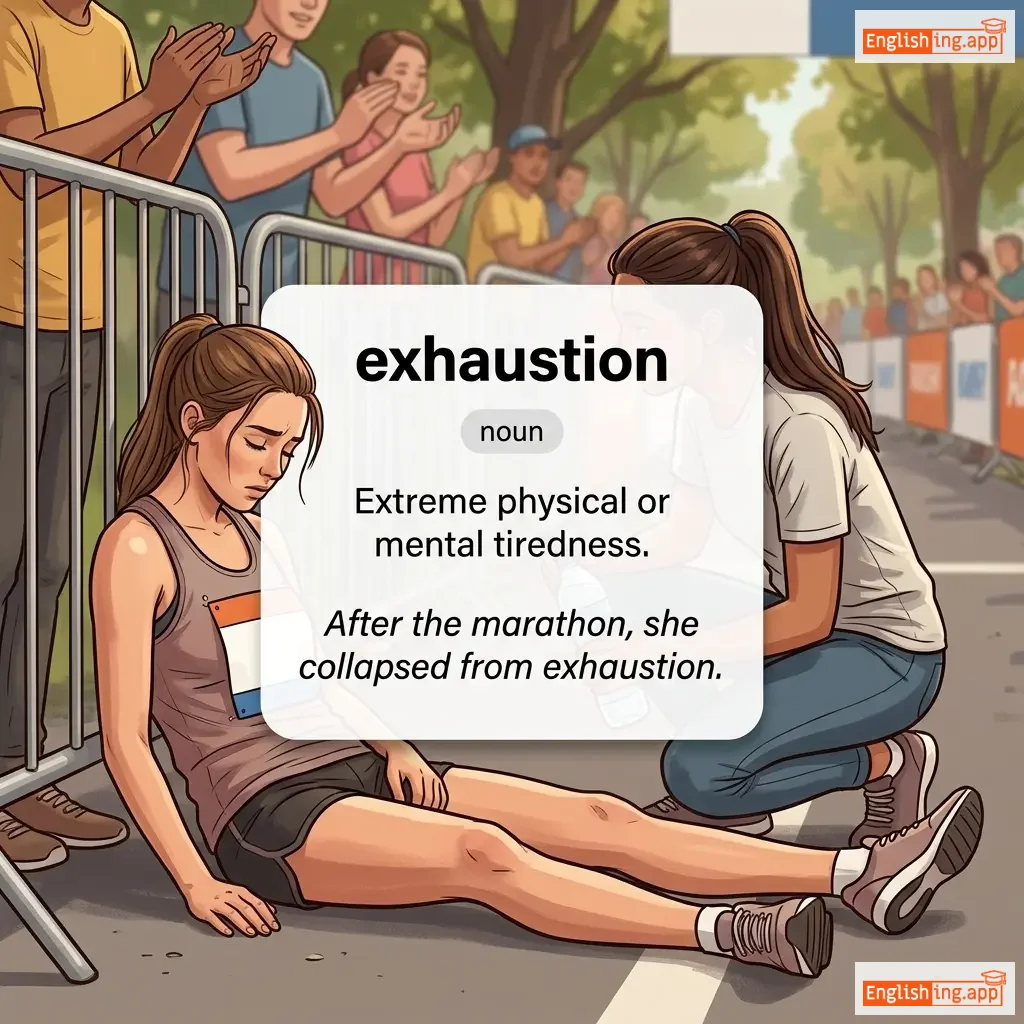
exhaustion definition card — visual illustration of the meaning
noun
/ɪɡˈzɔːstʃən/
épuisement (epuisement)

Extreme physical or mental tiredness.

"After the marathon, she collapsed from exhaustion."

"Après le marathon, elle s'est effondrée à cause de l'épuisement." (Apres le marathon, elle s'est effondree a cause de l'epuisement.)
adjective
/ɪɡˈzɔːstɪv/
exhaustif et complet (exhaustif et complet)

Fully comprehensive and including all possibilities.

"The report provides an exhaustive analysis of the issue."

"Le rapport fournit une analyse exhaustive du problème." (Le rapport fournit une analyse exhaustive du problème.)
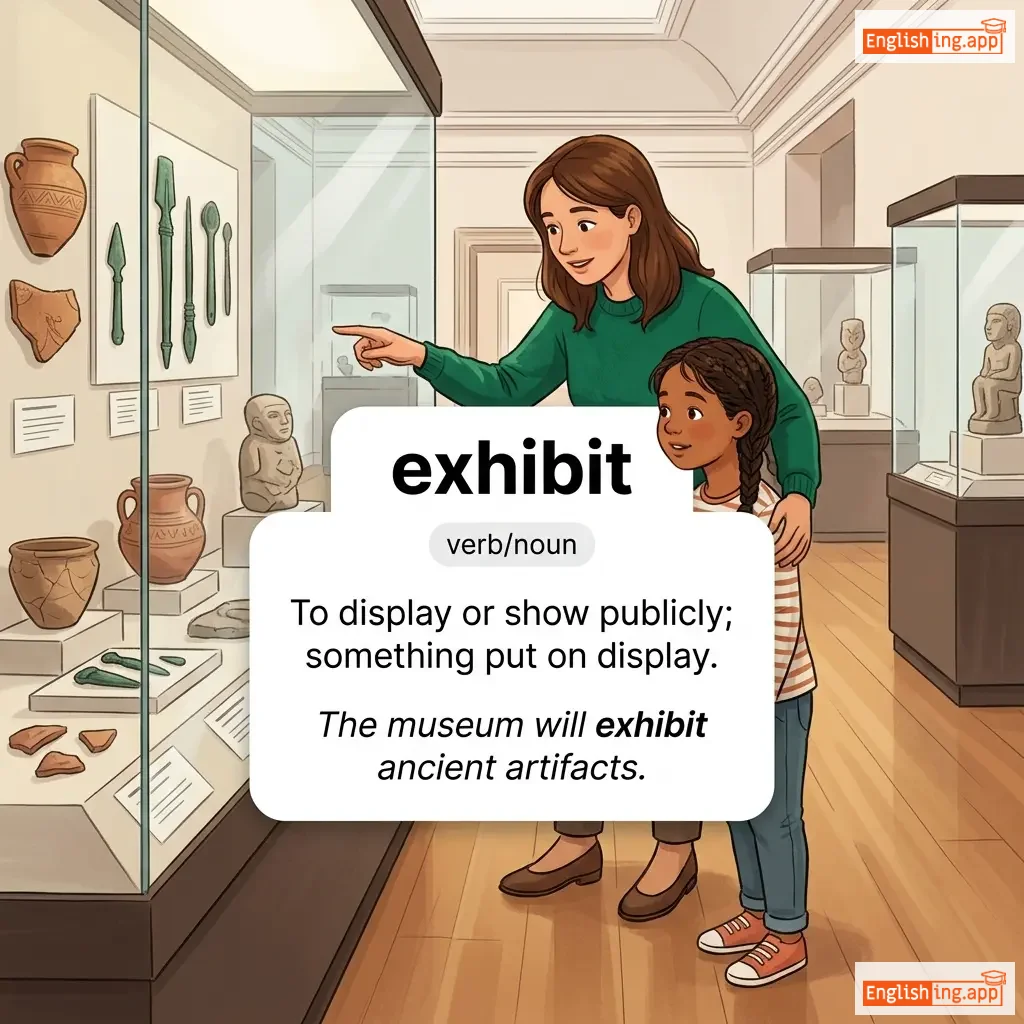
exhibit definition card — visual illustration of the meaning
verb/noun
/ɪɡˈzɪbɪt/
exhiber (exhiber)

To display or show publicly; something put on display.

"The museum will exhibit ancient artifacts."

"Le musée exposera des artefacts anciens." (Le musée exposera des artefacts anciens.)
noun
/ˌɛksɪˈbɪʃən/
exposition (exposition)

a public display of works of art, products, or other items of interest

"The art exhibition attracted thousands of visitors."

"L'exposition d'art a attiré des milliers de visiteurs." (L'exposition d'art a attire des milliers de visiteurs.)
verb
/ɪɡˈzɪləreɪt/
exalter (exalter)

To make someone feel very happy, animated, or excited.

"The mountain view exhilarated the travelers."

"La vue des montagnes a exalté les voyageurs." (La vue des montagnes a exalté les voyageurs.)
adjective
/ɪɡˈzɪləreɪtɪd/
exalté (exalte)

feeling very happy, animated, or elated

"She felt exhilarated after finishing the marathon."

"Elle s'est sentie exaltée après avoir terminé le marathon." (Elle s'est sentie exaltée après avoir terminé le marathon.)
adjective
/ɪɡˈzɪləreɪtɪŋ/
exaltant (exaltant)

Making someone feel very excited, happy, or thrilled.

"Skydiving was the most exhilarating experience of his life."

"Le parachutisme a été l'expérience la plus exaltante de sa vie." (Le parachutisme a été l'expérience la plus exaltante de sa vie.)
exhilaration definition card — visual illustration of the meaning
noun
/ɪɡˌzɪl.əˈreɪ.ʃən/
exaltation ou bonheur (exaltation ou bonheur)

A feeling of excitement, happiness, or elation.

"The feeling of exhilaration after a roller-coaster ride is amazing."

"Le sentiment d'exaltation après un tour de montagnes russes est incroyable." (Le sentiment d'exaltation apres un tour de montagnes russes est incroyable.)
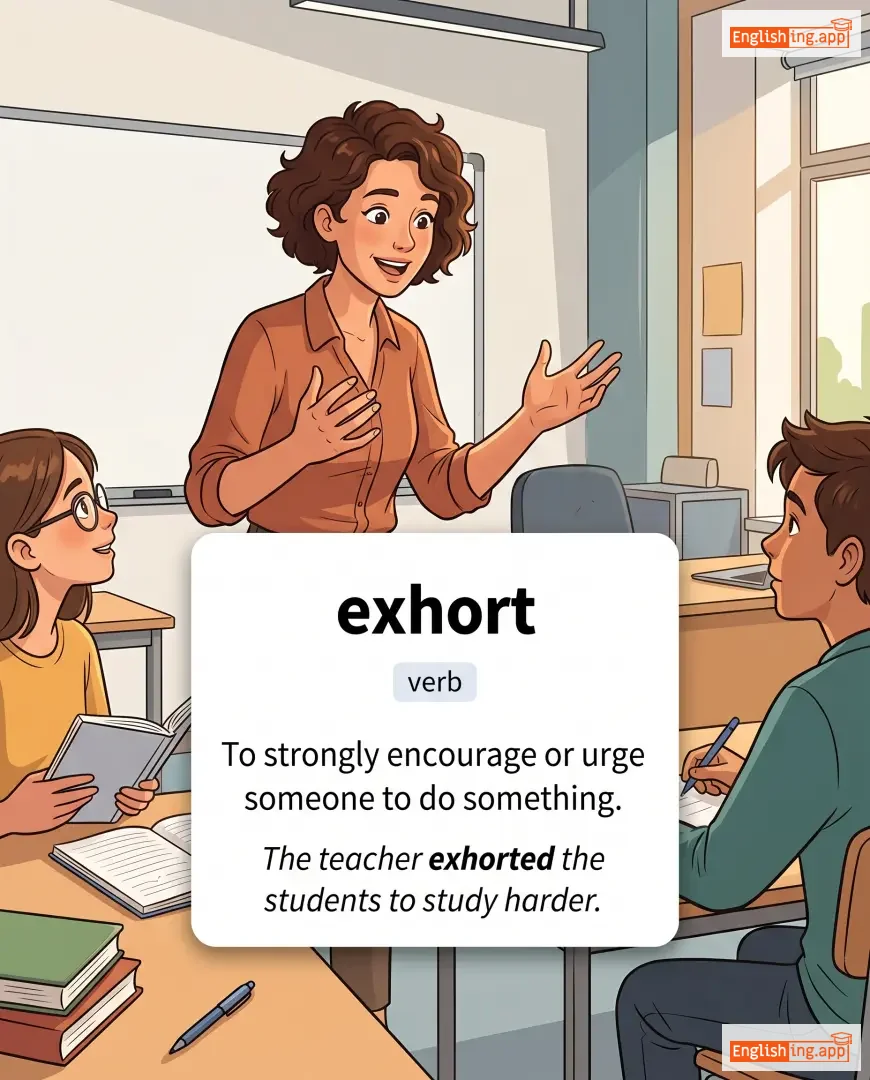
exhort definition card — visual illustration of the meaning
verb
/ɪɡˈzɔːrt/
exhorter (exhorter)

To strongly encourage or urge someone to do something.

"The teacher exhorted the students to study harder."

"Le professeur a exhorté les élèves à étudier plus fort." (Le professeur a exhorté les élèves à étudier plus fort.)
verb
/ɛksˈhjuːm/
exhumer (exhumer)

to dig out something buried, especially a body from the ground

"The archaeologists decided to exhume the ancient remains."

"Les archéologues ont décidé d'exhumer les restes anciens." (Les archeologues ont decide d'exhumer les restes anciens.)
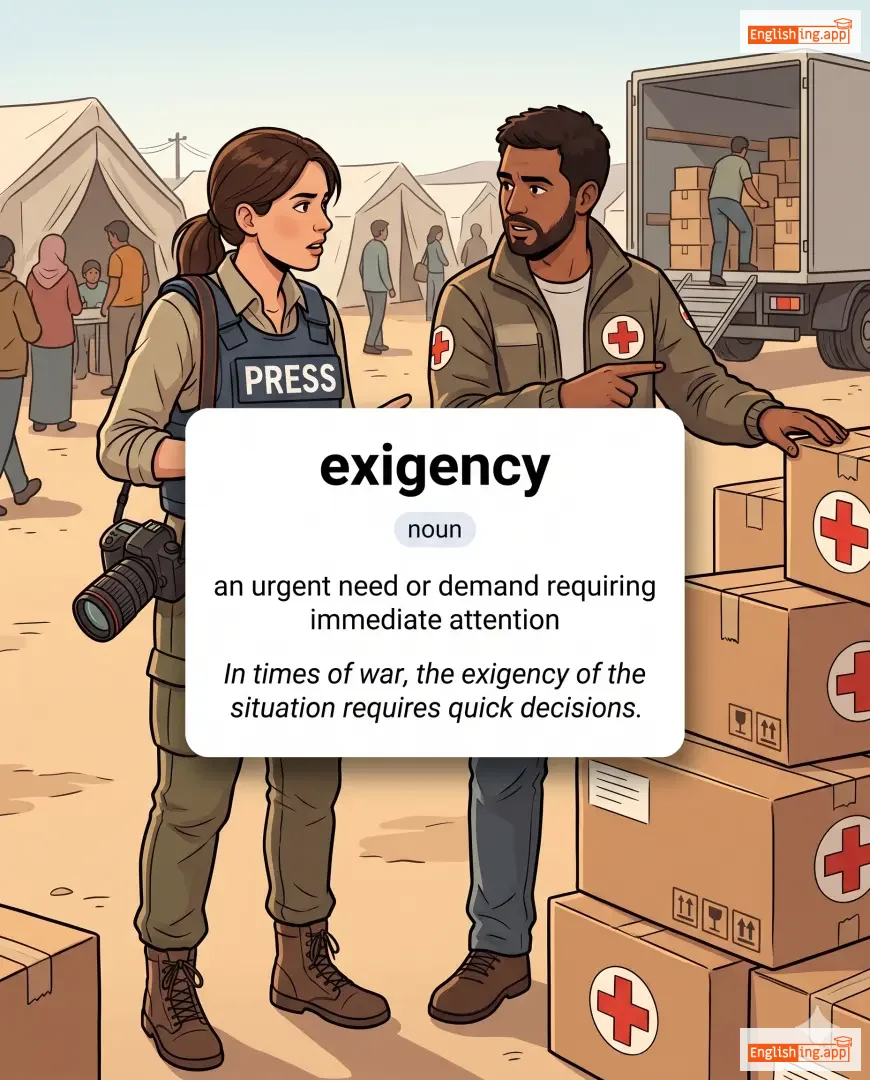
exigency definition card — visual illustration of the meaning
noun
/ˈɛksɪdʒənsi/
urgence (urgence)

an urgent need or demand requiring immediate attention

"In times of war, the exigency of the situation requires quick decisions."

"En temps de guerre, l'urgence de la situation nécessite des décisions rapides." (En temps de guerre, l'urgence de la situation nécessite des décisions rapides.)
adjective
/ˈɛksɪdʒənt/
urgent (urgent)

demanding immediate action or attention; urgent

"The patient’s exigent condition required immediate surgery."

"L'état exigent du patient a nécessité une chirurgie immédiate." (L'etat exigent du patient a necessite une chirurgie immediate.)
noun
/ˌɛksɪˈɡjuːɪti/
insuffisance (insuffisance)

the quality of being scanty or meager in amount

"The exiguity of resources made the project difficult to complete."

"L'insuffisance des ressources a rendu le projet difficile à terminer." (L'insuffisance des ressources a rendu le projet difficile à terminer.)