Vocabulaires

Découvrez, apprenez et maîtrisez le vocabulaire anglais

adjective
/ɪkˈstɛnjueɪtɪŋ/
atténuant (attenuant)

serving to make a fault or an offense seem less serious

"She asked for leniency due to extenuating circumstances."

"Elle a demandé la clémence en raison des circonstances atténuantes." (Elle a demandé la clémence en raison des circonstances atténuantes.)
noun/adjective
/ɪkˈstɪəriər/
partie extérieure (partie extérieure)

the outer surface or part of something; relating to the outside

"The exterior of the house was painted white."

"L'extérieur de la maison a été peint en blanc." (L'extérieur de la maison a été peint en blanc.)
adjective
/ɪkˈstɜrnəl/
externe (externe)

situated on or relating to the outside of something; coming from outside

"The external factors affected the company's growth."

"Les facteurs externes ont affecté la croissance de l'entreprise." (Les facteurs externes ont affecté la croissance de l'entreprise.)
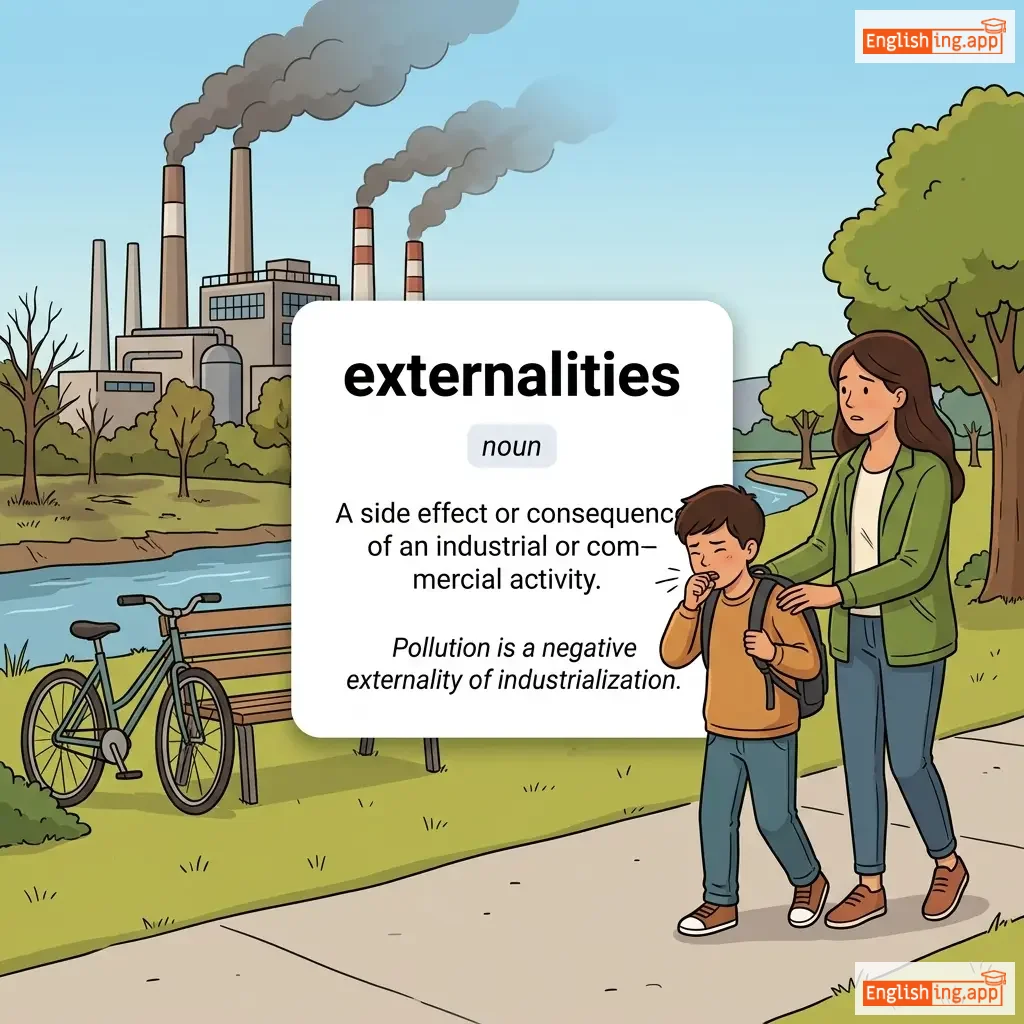
externalities definition card — visual illustration of the meaning
noun
ˌɛkstərˈnælɪtiz
externalité (externalité)

A side effect or consequence of an industrial or commercial activity.

"Pollution is a negative externality of industrialization."

"La pollution est une externalité négative de l'industrialisation." (La pollution est une externalité négative de l'industrialisation.)
adverb
/ɪkˈstɜrnəli/
externe (externe)

in a way that relates to the outer surface or outside appearance

"The building appeared externally modern, but inside it was quite old-fashioned."

"Le bâtiment semblait externe, mais à l'intérieur, il était assez vieux." (Le batiment semblait externe, mais a l'interieur, il etait assez vieux.)
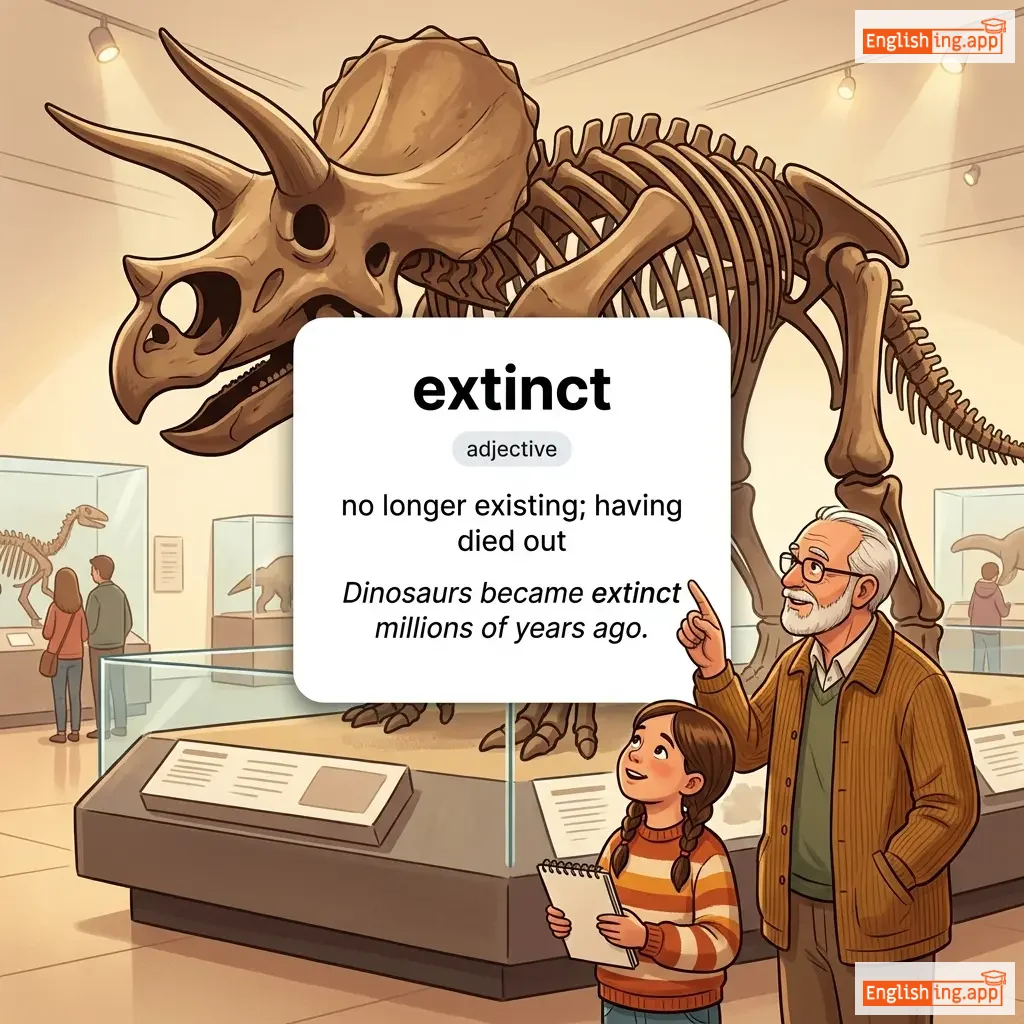
extinct definition card — visual illustration of the meaning
adjective
/ɪkˈstɪŋkt/
éteint (eteint)

no longer existing; having died out

"Dinosaurs became extinct millions of years ago."

"Les dinosaures sont devenus extints il y a des millions d'années." (Les dinosaures sont devenus extints il y a des millions d'années.)
verb
/ɪkˈstɪŋ.ɡwɪʃ/
éteindre (eteindre)

to put out a fire, light, or to end something

"The firefighters managed to extinguish the blaze within an hour."

"Les pompiers ont réussi à éteindre l'incendie en une heure." (Les pompiers ont réussi à éteindre l'incendie en une heure.)
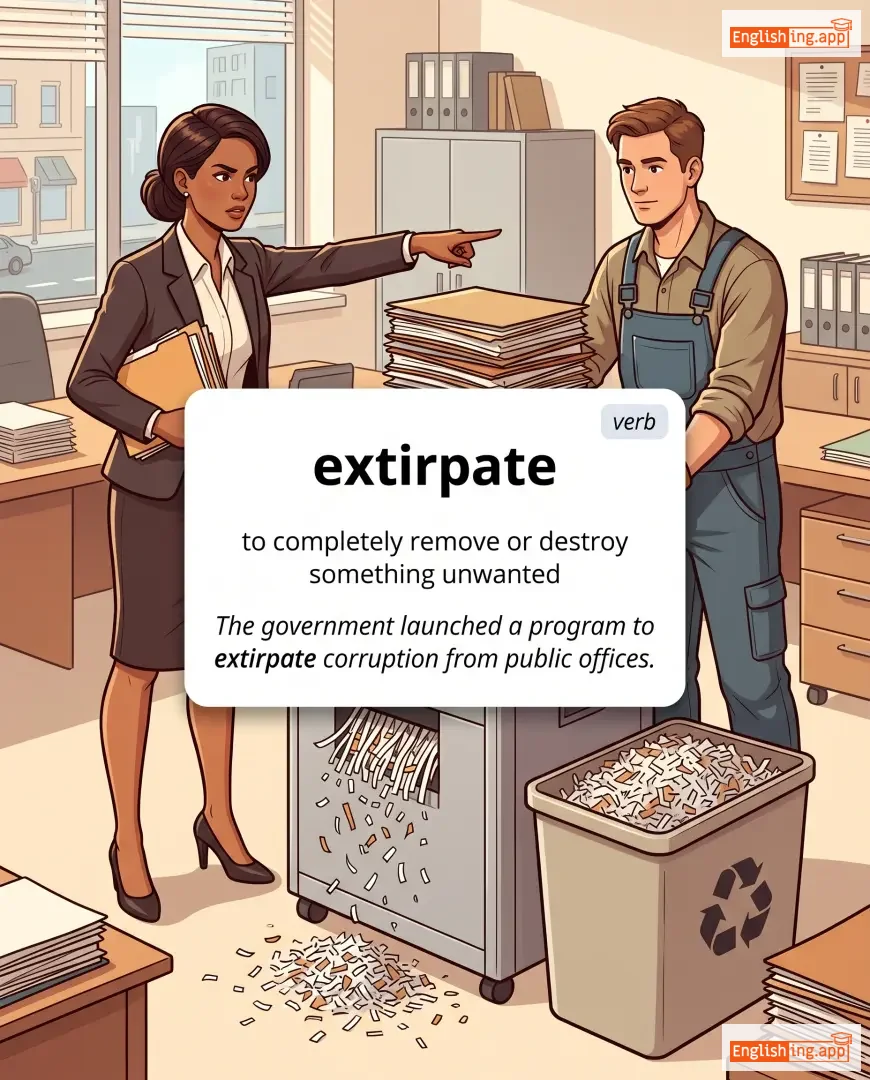
extirpate definition card — visual illustration of the meaning
verb
/ˈek.stər.peɪt/
extirper (extirper)

to completely remove or destroy something unwanted

"The government launched a program to extirpate corruption from public offices."

"Le gouvernement a lancé un programme pour extirper la corruption des bureaux publics." (Le gouvernement a lancé un programme pour extirper la corruption des bureaux publics.)
verb
/ɪkˈstoʊl/
exalter (exalter)

to praise enthusiastically and highly

"The teacher extolled the student's dedication and hard work."

"Le professeur a exalté le dévouement et le travail acharné de l'étudiant." (Le professeur a exalté le dévouement et le travail acharné de l'étudiant.)
verb
/ɪkˈstɔːrt/
extorquer (extorquer)

to obtain something, especially money, by force, threats, or unfair means

"The gang attempted to extort money from local shopkeepers."

"Le gang a tenté d'extorquer de l'argent aux commerçants locaux." (Le gang a tenté d'extorquer de l'argent aux commerçants locaux.)
noun
/ɪkˈstɔːr.ʃən/
extorsion (extorsion)

the practice of obtaining something, especially money, through force or threats

"The businessman was arrested for extortion after threatening his partner."

"L'homme d'affaires a été arrêté pour extorsion après avoir menacé son partenaire." (L'homme d'affaires a été arrêté pour extorsion après avoir menacé son partenaire.)
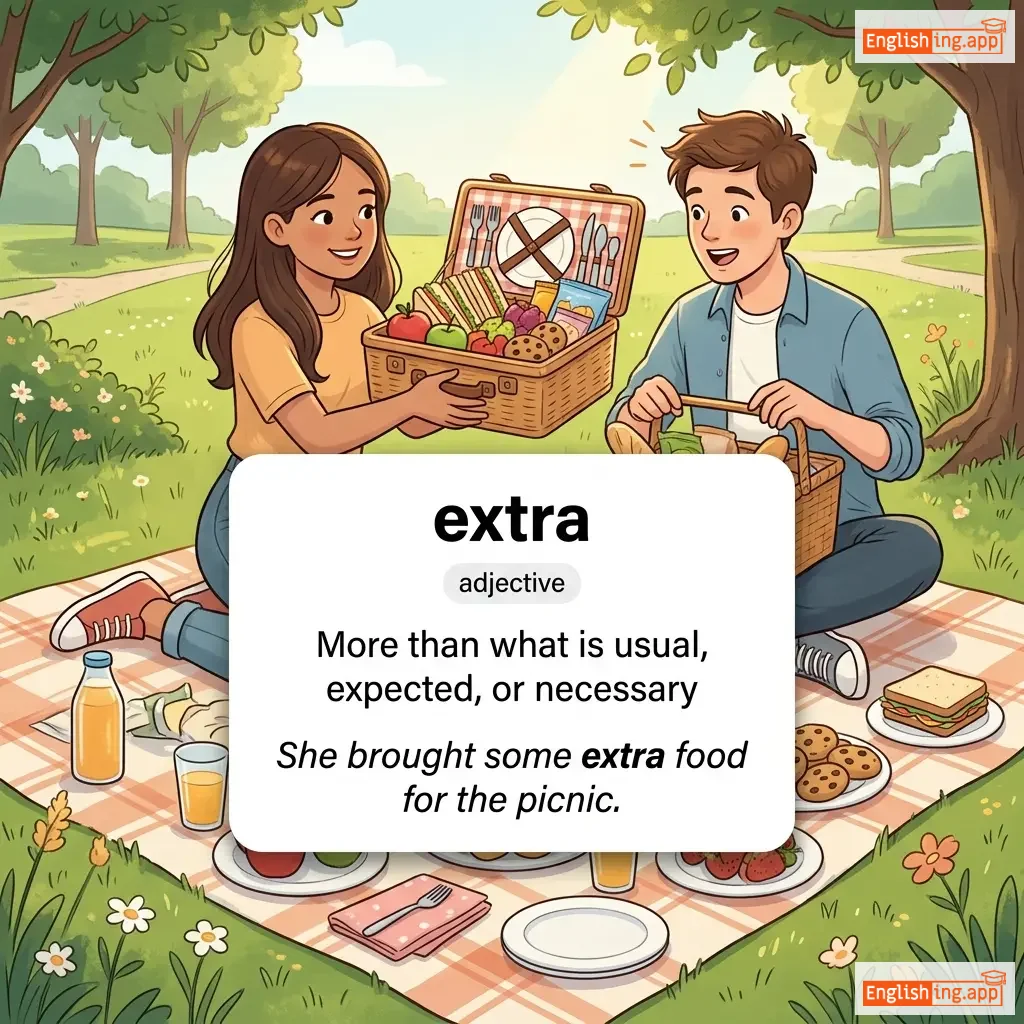
extra definition card — visual illustration of the meaning
adjective
/ˈɛkstrə/
supplémentaire (supplementaire)

More than what is usual, expected, or necessary

"She brought some extra food for the picnic."

"Elle a apporté de la nourriture supplémentaire pour le pique-nique." (Elle a apporté de la nourriture supplémentaire pour le pique-nique.)
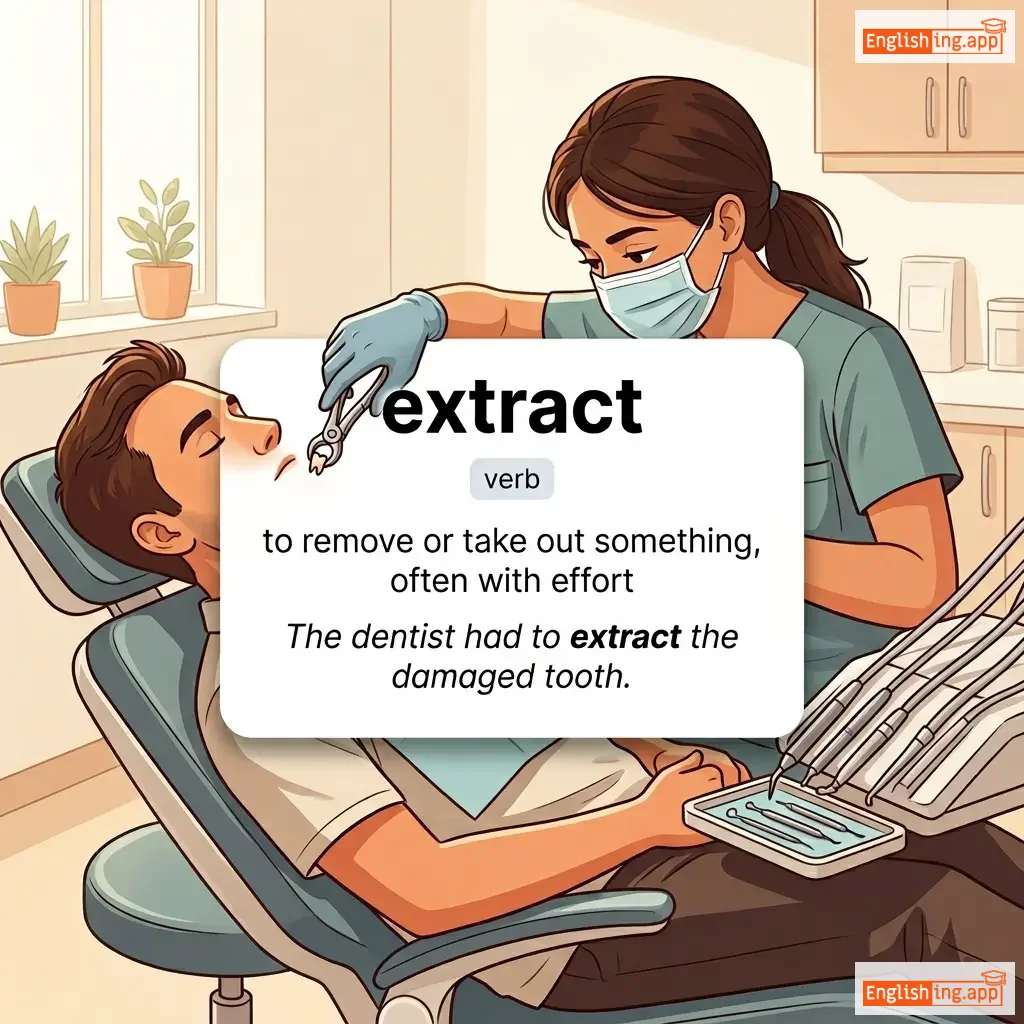
extract definition card — visual illustration of the meaning
verb
/ɪkˈstrækt/
extraire (extraire)

to remove or take out something, often with effort

"The dentist had to extract the damaged tooth."

"Le dentiste a dû extraire la dent endommagée." (Le dentiste a dû extraire la dent endommagée.)
noun
/ɪkˈstrækʃən/
extraction (extraction)

the act of removing something, especially by pulling it out

"The extraction of oil from the ground requires special equipment."

"L'extraction de pétrole du sol nécessite des équipements spéciaux." (L'extraction de petrole du sol necessite des equipements speciaux.)
verb
/ˈɛkstrəˌdaɪt/
extrader (extrader)

to hand over a person accused or convicted of a crime to another country or state

"The government agreed to extradite the fugitive to his home country."

"Le gouvernement a accepté d'extrader le fugitif vers son pays d'origine." (Le gouvernement a accepté d'extrader le fugitif vers son pays d'origine.)
noun
/ˌɛkstrəˈdɪʃən/
extradition (extradition)

the official process of sending someone accused of a crime to another country or state

"The extradition of the suspect was delayed due to legal issues."

"L'extradition du suspect a été retardée en raison de problèmes juridiques." (L'extradition du suspect a été retardée en raison de problèmes juridiques.)
adjective
/ˌɛkstrəˌdʒuːˈdɪʃəl/
extrajudiciaire (extrajudiciaire)

done outside the authority of the legal system or judicial process

"The activists condemned the extrajudicial killings."

"Les militants ont condamné les meurtres extrajudiciaires." (Les militants ont condamné les meurtres extrajudiciaires.)
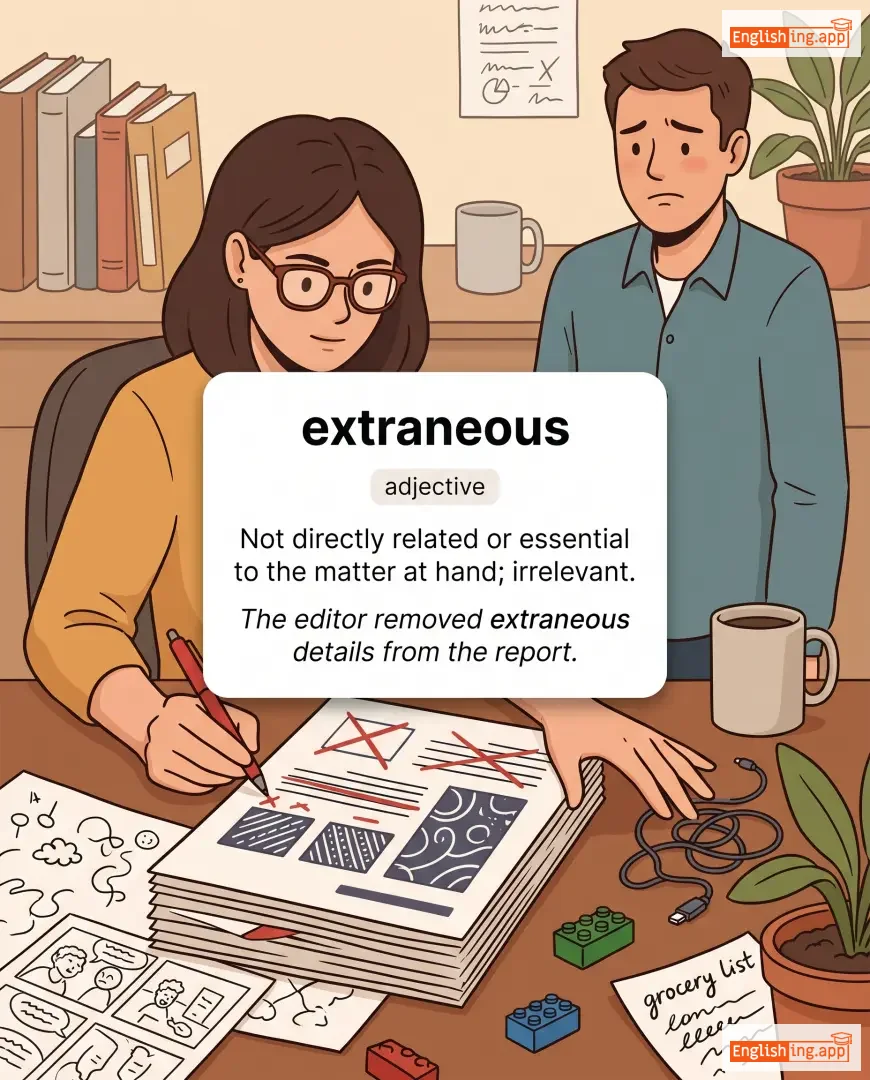
extraneous definition card — visual illustration of the meaning
adjective
/ɪkˈstreɪ.ni.əs/
non pertinent (non pertinent)

Not directly related or essential to the matter at hand; irrelevant.

"The editor removed extraneous details from the report."

"L'éditeur a supprimé les détails non pertinents du rapport." (L'éditeur a supprimé les détails non pertinents du rapport.)
adjective
/ɪkˈstrɔːr.dəˌnɛr.i/
extraordinaire (extraordinaire)

Very unusual, remarkable, or exceptional.

"She showed extraordinary courage during the crisis."

"Elle a montré un courage extraordinaire pendant la crise." (Elle a montré un courage extraordinaire pendant la crise.)
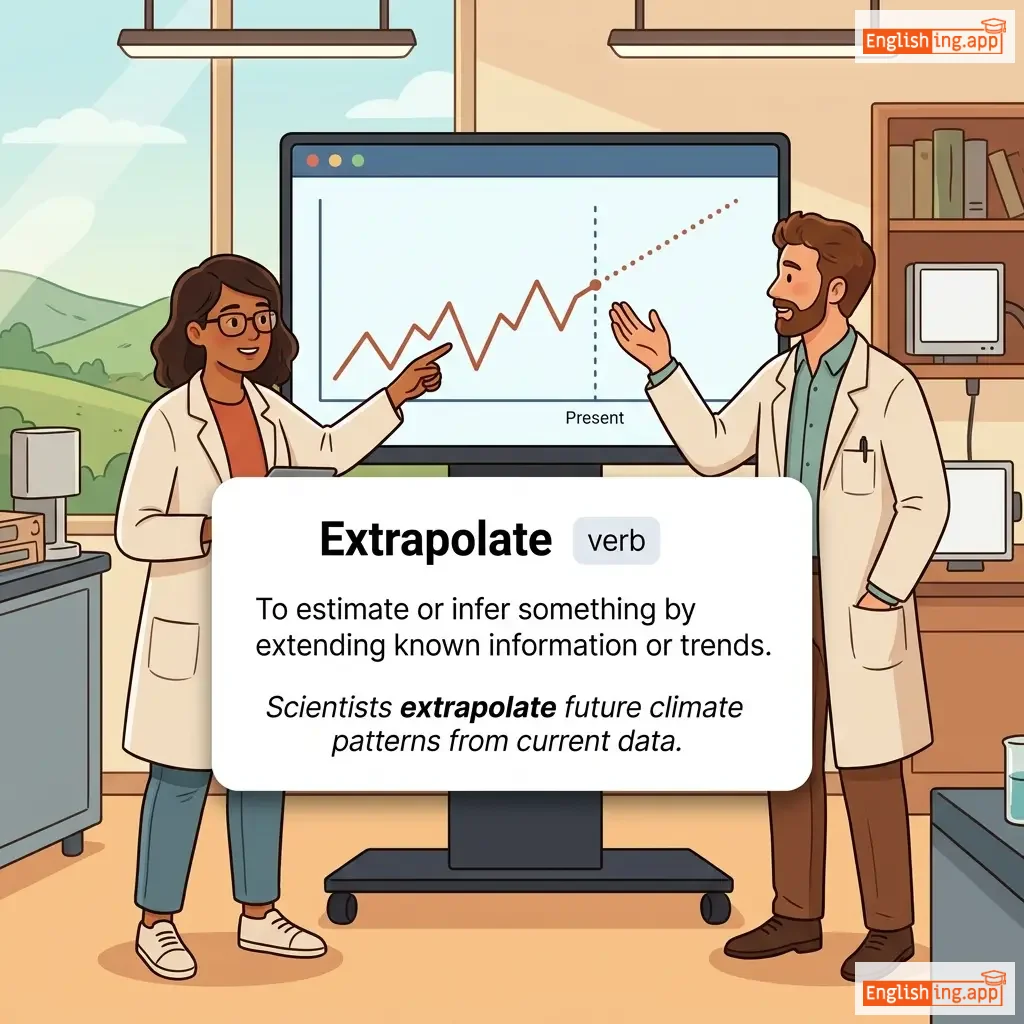
Extrapolate definition card — visual illustration of the meaning
verb
/ɪkˈstræp.əˌleɪt/
extrapoler (extrapoler)

To estimate or infer something by extending known information or trends.

"Scientists extrapolate future climate patterns from current data."

"Les scientifiques extrapolent les futurs modèles climatiques à partir des données actuelles." (Les scientifiques extrapolent les futurs modèles climatiques à partir des données actuelles.)
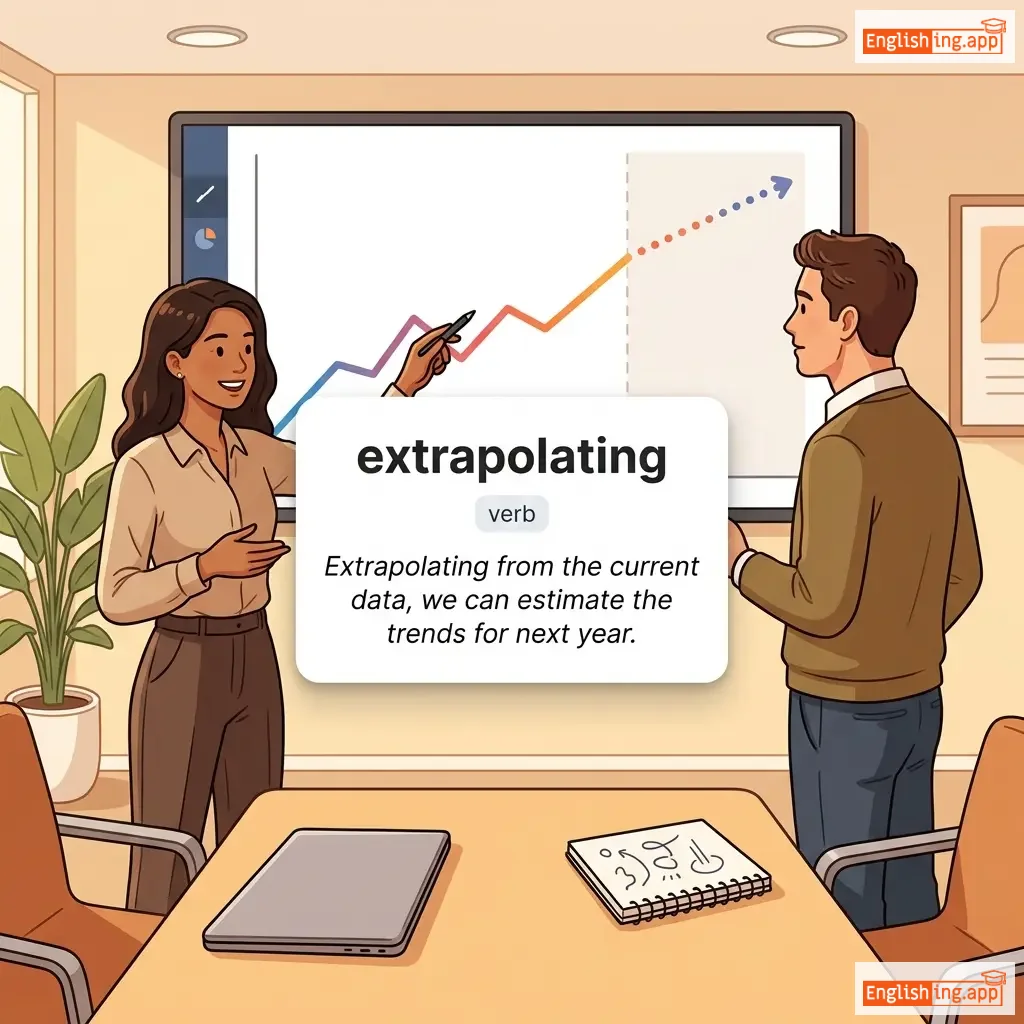
extrapolating definition card — visual illustration of the meaning
verb
/ɪkˈstræpəleɪtɪŋ/
extrapoler (extrapoler)

Extend the application of (a method or conclusion) to an unknown situation by assuming that existing trends will continue.

"Extrapolating from the current data, we can estimate the trends for next year."

"En extrapolant à partir des données actuelles, nous pouvons estimer les tendances pour l'année prochaine." (En extrapolant a partir des donnees actuelles, nous pouvons estimer les tendances pour l'annee prochaine.)
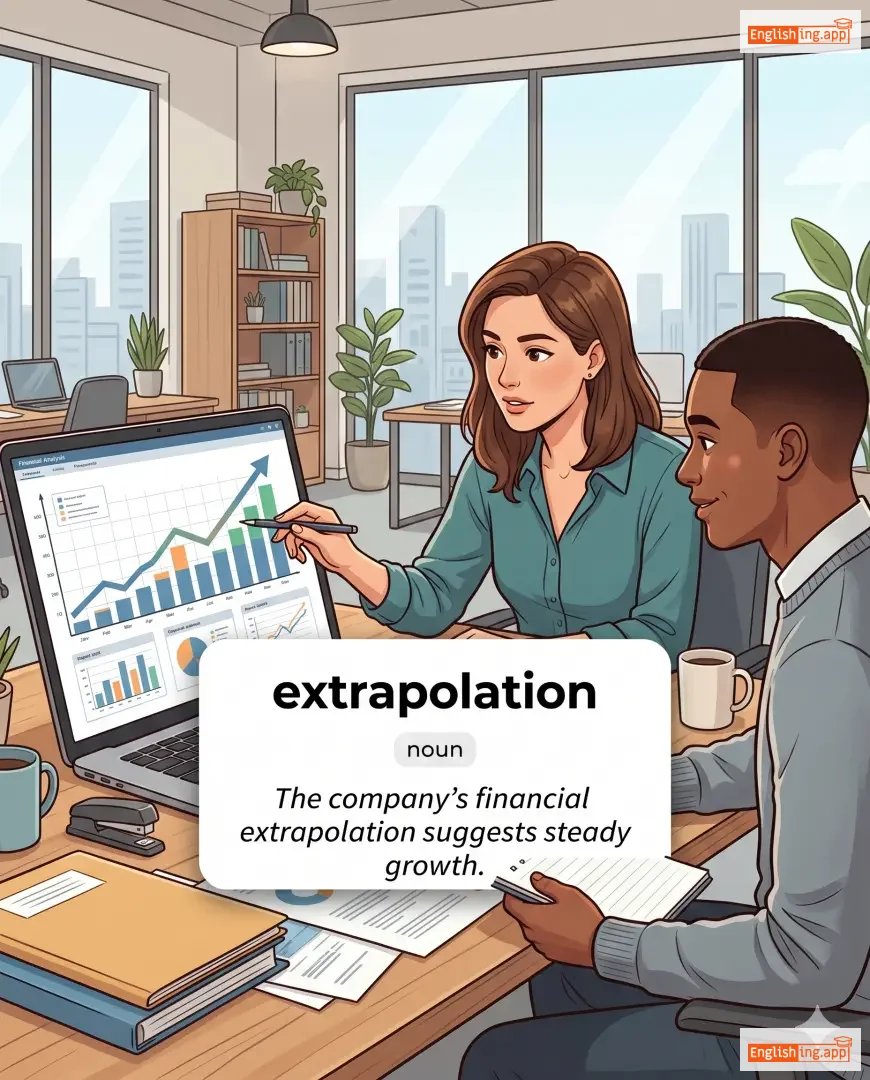
extrapolation definition card — visual illustration of the meaning
noun
/ɪkˌstræp.əˈleɪ.ʃən/
extrapolation (extrapolation)

The process of estimating or predicting something based on extending known information.

"The company's financial extrapolation suggests steady growth."

"L'extrapolation financière de l'entreprise suggère une croissance régulière." (L'extrapolation financiere de l'entreprise suggere une croissance reguliere.)
noun
/ɪkˈstræv.ə.ɡəns/
exubérance (exuberance)

Excessive spending or lack of restraint in using resources.

"His extravagance on luxury cars worried his family."

"Son extravagance en voitures de luxe inquiétait sa famille." (Son extravagance en voitures de luxe inquieait sa famille.)
adjective
/ɪkˈstrævəɡənt/
extravagant (extravagant)

Spending or using more than is necessary; excessively elaborate or luxurious.

"She wore an extravagant dress to the party."

"Elle portait une robe extravagante à la fête." (Elle portait une robe extravagante à la fête.)
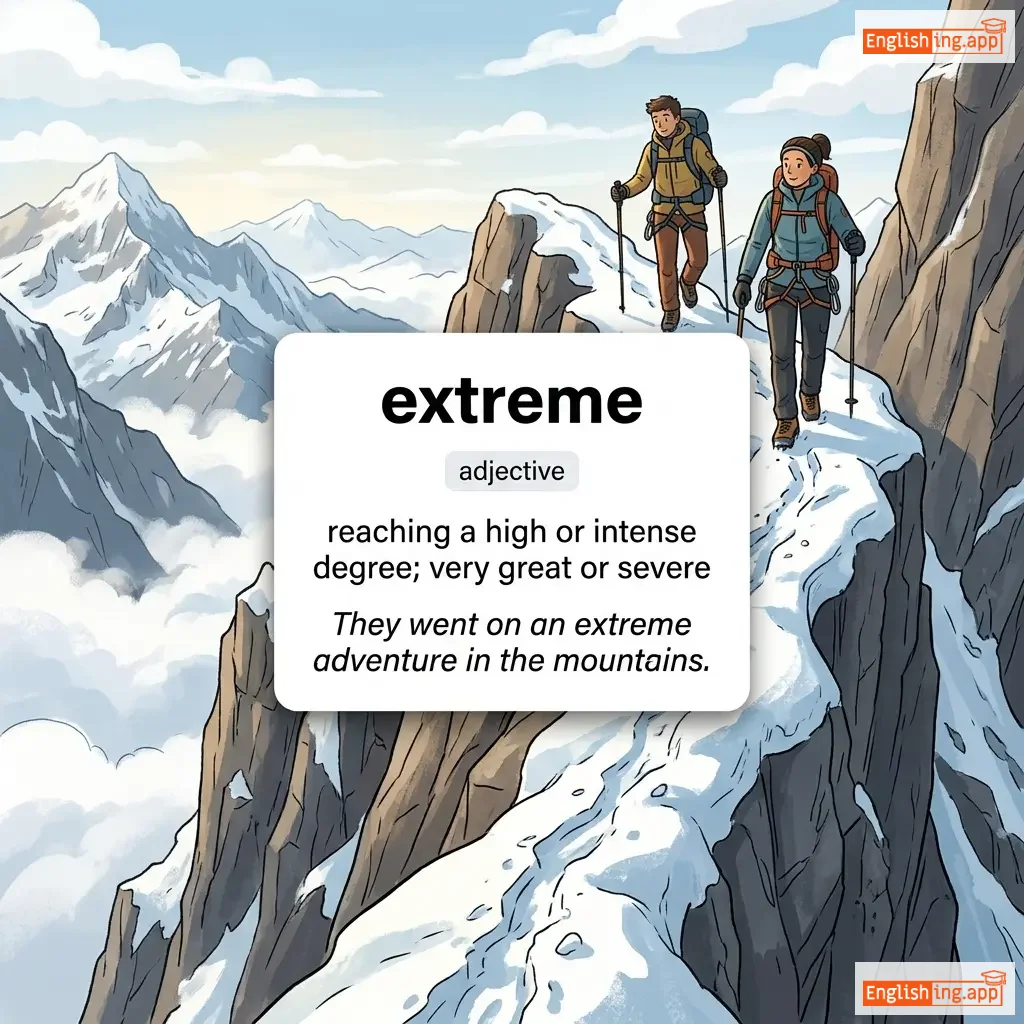
extreme definition card — visual illustration of the meaning
adjective
/ɪkˈstriːm/
extrême (extreme)

reaching a high or intense degree; very great or severe

"They went on an extreme adventure in the mountains."

"Ils sont partis pour une aventure extrême dans les montagnes." (Ils sont partis pour une aventure extreme dans les montagnes.)
adverb
/ɪkˈstriːmli/
extrêmement (extremement)

to a very high degree; very much

"The movie was extremely interesting."

"Le film était extrêmement intéressant." (Le film etait extremement interessant.)
noun
/ɪkˈstriːmɪst/
extrémiste (extremiste)

A person who holds extreme political or religious views and may act on them.

"The group was led by an extremist with radical ideas."

"Le groupe était dirigé par un extrémiste avec des idées radicales." (Le groupe était dirigé par un extrémiste avec des idées radicales.)
noun
/ɪkˈstrɛmɪti/
extrémité (extremite)

The farthest point or limit of something; a severe or extreme condition.

"He was pushed to the extremity of his patience."

"Il a été poussé à l'extrême de sa patience." (Il a ete pousse a l'extreme de sa patience.)
verb
/ˈɛkstrɪkeɪt/
dégager (degeger)

To free someone or something from a constraint or difficulty.

"The firefighters extricated the passengers from the wrecked car."

"Les pompiers ont extriqué les passagers de la voiture accidentée." (Les pompiers ont extrique les passagers de la voiture accidentee.)
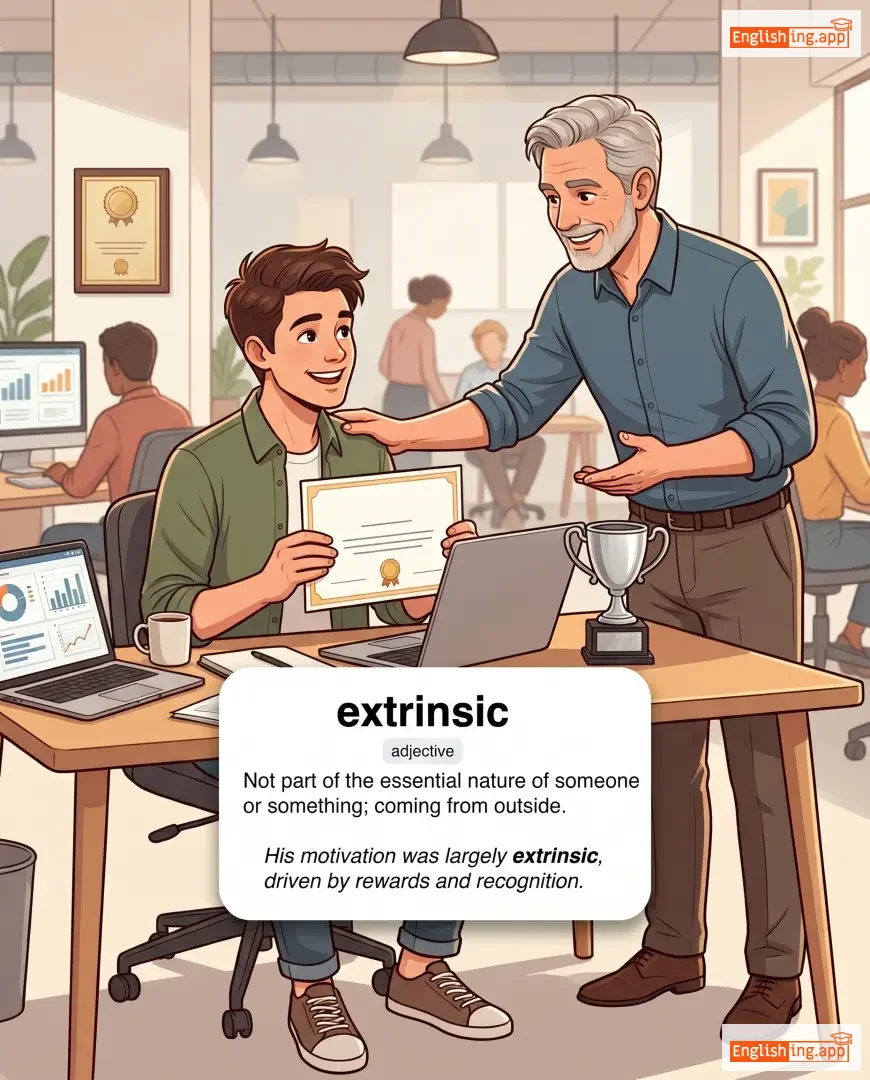
extrinsic definition card — visual illustration of the meaning
adjective
/ɛkˈstrɪnzɪk/
extrinsèque (extrinsèque)

Not part of the essential nature of someone or something; coming from outside.

"His motivation was largely extrinsic, driven by rewards and recognition."

"Sa motivation était en grande partie extrinsèque, motivée par des récompenses et de la reconnaissance." (Sa motivation était en grande partie extrinsèque, motivée par des récompenses et de la reconnaissance.)
noun
/ˈɛkstrəˌvɜːrt/
extraverti (extraverti)

a person who is outgoing, sociable, and energized by being around other people

"As an extrovert, she enjoys meeting new people at social events."

"En tant qu'extravertie, elle aime rencontrer de nouvelles personnes lors d'événements sociaux." (En tant qu'extravertie, elle aime rencontrer de nouvelles personnes lors d'événements sociaux.)
verb
/ɪkˈstruːd/
extruder (extruder)

to force something out through a small opening; to shape by pushing material through a mold

"The factory extrudes plastic pipes using modern machines."

"L'usine extrude des tuyaux en plastique en utilisant des machines modernes." (L'usine extrude des tuyaux en plastique en utilisant des machines modernes.)
noun
/ɪɡˈzuːbərəns/
exubérance (exuberance)

the quality of being full of energy, excitement, and cheerfulness

"Her exuberance made the whole team feel motivated."

"Son exubérance a motivé toute l'équipe." (Son exuberance a motive toute l'equipe.)
adjective
/ɪɡˈzuːbərənt/
exubérant (exuberant)

full of energy, excitement, and cheerfulness

"The children were exuberant after winning the game."

"Les enfants étaient exubérants après avoir gagné le jeu." (Les enfants etaient exuberants apres avoir gagne le jeu.)
verb
/ɪɡˈzuːd/
exsuder (exsuder)

to display a quality strongly and openly; to release a liquid or smell slowly

"He exudes confidence whenever he speaks in public."

"Il exsude de la confiance chaque fois qu'il parle en public." (Il exsude de la confiance chaque fois qu'il parle en public.)
verb
/ɪɡˈzʌlt/
exulter (eksulter)

to show or feel great joy, often as a result of success

"The fans exulted after their team won the championship."

"Les fans exultaient après la victoire de leur équipe au championnat." (Les fans exultaient apres la victoire de leur equipe au championnat.)
👁️

Eye (aï)

noun
/aɪ/
œil (oeil)

the organ in the head through which people and animals see

"She closed her eyes and went to sleep."

"Elle ferma les yeux et s'endormit." (Elle ferma les yeux et s'endormit.)
noun
/ˈaɪ.bɔːl/
globe oculaire (globe oculaire)

the round part of the eye within the eyelids and socket

"The doctor examined his eyeball carefully."

"Le médecin a examiné son globe oculaire attentivement." (Le medecin a examine son globe oculaire attentivement.)
noun
/ˈaɪbraʊ/
sourcil (sourcil)

the strip of hair growing on the ridge above a person's eye

"She raised her eyebrow in surprise."

"Elle haussa un sourcil, surprise." (Elle haussa un sourcil, surprise.)
noun
/ˈaɪ.lɪd/
paupière (paupiere)

either of the upper or lower folds of skin that cover the eye when closed

"Her eyelids felt heavy with sleep."

"Ses paupières se sentaient lourdes de sommeil." (Ses paupières se sentaient lourdes de sommeil.)
noun
/ˈaɪ.saɪt/
vue (vue)

the ability to see; vision

"Regular eye checkups are important for maintaining good eyesight."

"Les examens oculaires réguliers sont importants pour maintenir une bonne vue." (Les examens oculaires regulieres sont importants pour maintenir une bonne vue.)
noun
/ˈaɪ.sɔːr/
un vrai casse-pied; une horreur visuelle (un vrai casse-pied; une horreur visuelle)

something that is very ugly and unpleasant to look at

"The abandoned building has become an eyesore in the neighborhood."

"Le bâtiment abandonné est devenu un vrai casse-pied dans le quartier." (Le bâtiment abandonné est devenu un vrai casse-pied dans le quartier.)
👁️‍🗨️

Eyewitness (ai-wit-ness)

noun
/ˈaɪ.wɪt.nəs/
témoin oculaire (temoin oculaire)

a person who has seen something happen and can give evidence about it

"The police interviewed several eyewitnesses to the accident."

"La police a interrogé plusieurs témoins oculaires de l'accident." (La police a interrogé plusieurs témoins oculaires de l'accident.)
noun
/ˈɪəri/
nid d'aigle (nid d'aigle)

the nest of a bird of prey, such as an eagle, typically built high on a cliff or tree

"The eagle’s eyrie was perched high on the mountain cliff."

"Le nid d'aigle était perché au sommet de la falaise." (Le nid d'aigle etait perche au sommet de la falaise.)
noun
/ˈɪəri/
nid d'oiseau de proie (nid d'oiseau de proie)

an alternative spelling of eyrie; a nest of a bird of prey

"The falcon guarded its eyry fiercely."

"Le faucon a défendu son nid férocement." (Le faucon a défendu son nid férocement.)
noun
/ˈfeɪbəl/
fable (fable)

a short story, typically featuring animals as characters, that conveys a moral lesson

"Aesop’s fables are famous for teaching valuable lessons through simple stories."

"Les fables d'Ésope sont célèbres pour enseigner des leçons précieuses à travers des histoires simples." (Les fables d'Ésope sont célèbres pour enseigner des leçons précieuses à travers des histoires simples.)
noun
/ˈfæbrɪk/
tissu (tissu)

Cloth or material produced by weaving or knitting fibers.

"The tailor used silk fabric to make the dress."

"Le tailleur a utilisé du tissu en soie pour fabriquer la robe." (Le tailleur a utilisé du tissu en soie pour fabriquer la robe.)
verb
/ˈfæbrɪkeɪt/
fabriquer (fabriquer)

to invent or concoct something, often with the intent to deceive; or to construct or manufacture

"The witness fabricated his testimony to protect himself."

"Le témoin a fabriqué son témoignage pour se protéger." (Le témoin a fabriqué son témoignage pour se protéger.)
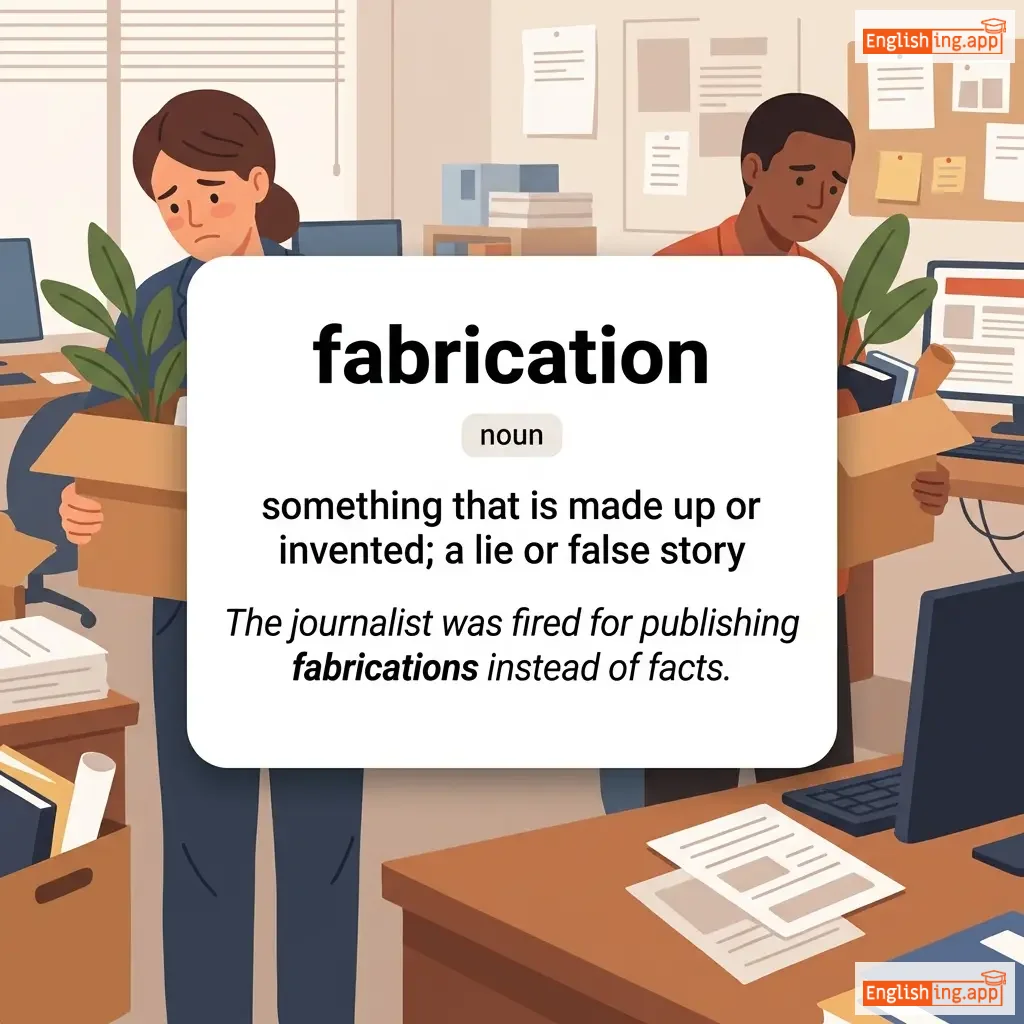
fabrication definition card — visual illustration of the meaning
noun
/ˌfæb.rɪˈkeɪ.ʃən/
fabrication; mensonge; tromperie (fabrication; mensonge; tromperie)

something that is made up or invented; a lie or false story

"The journalist was fired for publishing fabrications instead of facts."

"Le journaliste a été renvoyé pour avoir publié des fabrications au lieu de faits." (Le journaliste a ete renvoye pour avoir publie des fabrications au lieu de faits.)
adjective
/ˈfæbjələs/
fabuleux (fabuleux)

Extremely good or wonderful; almost unbelievable

"She looked fabulous in her new dress."

"Elle avait l'air fabuleuse dans sa nouvelle robe." (Elle avait l'air fabuleuse dans sa nouvelle robe.)