ভোকাবুলারিসমূহ

ইংরেজি শব্দের বাংলা অর্থ | English to Bangla Word Meaning Dictionary

adjective
/ɪkˈstɛnjueɪtɪŋ/
লঘুকারী (loghukari)

serving to make a fault or an offense seem less serious

"She asked for leniency due to extenuating circumstances."

"তিনি লঘুকারী পরিস্থিতির কারণে দয়া প্রার্থনা করেছিলেন।" (Tini loghukari poristhitir karone doya prarthona korechilen.)
noun/adjective
/ɪkˈstɪəriər/
বাহ্যিক অংশ (bahyik angsho)

the outer surface or part of something; relating to the outside

"The exterior of the house was painted white."

"বাড়ির বাহ্যিক অংশটি সাদা রঙ করা হয়েছিল।" (Barir bahyik angshoti sada rong kora hoyechilo.)
adjective
/ɪkˈstɜrnəl/
বাহ্যিক (bahyik)

situated on or relating to the outside of something; coming from outside

"The external factors affected the company's growth."

"বাহ্যিক কারণগুলো কোম্পানির বৃদ্ধিকে প্রভাবিত করেছে।" (Bahyik karongulo kompanir briddhike probhabit koreche.)
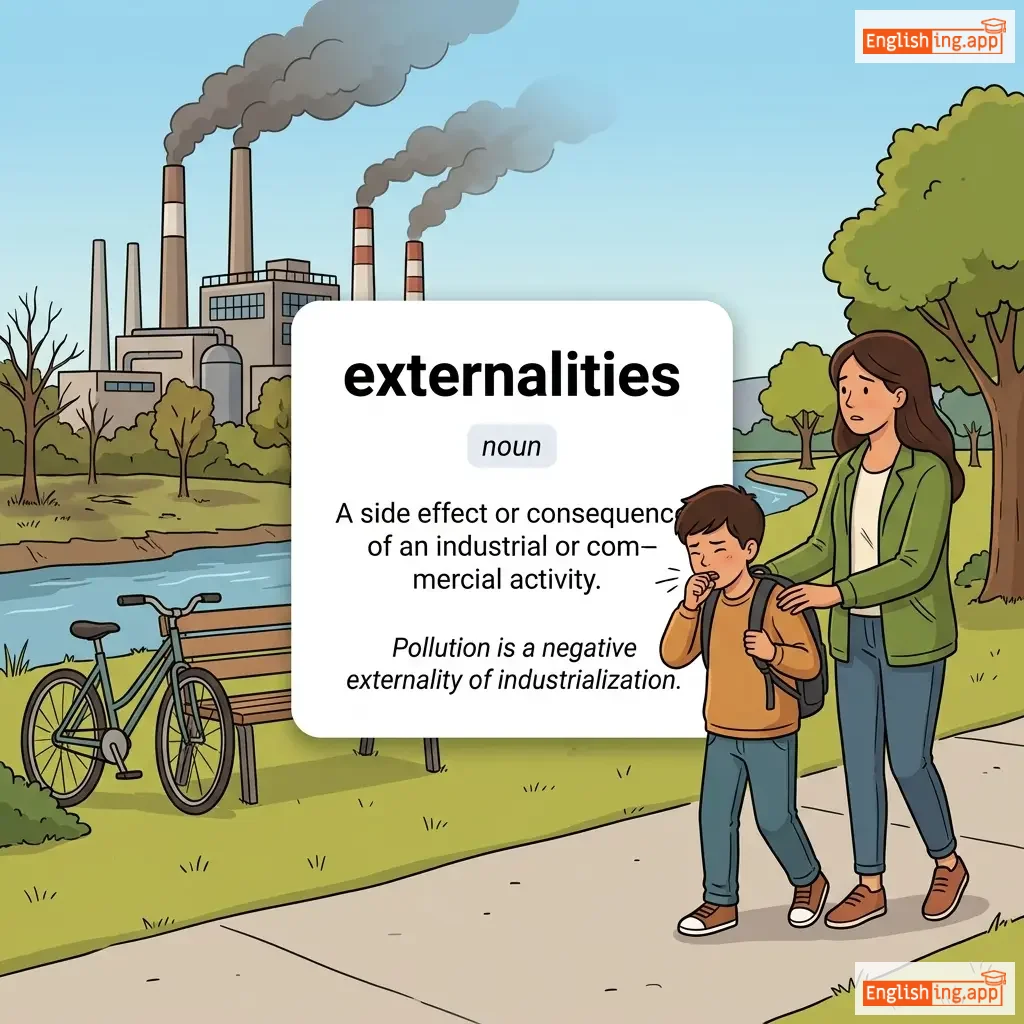
externalities definition card — visual illustration of the meaning
noun
ˌɛkstərˈnælɪtiz
বাইরের প্রভাব (bairer prabhab)

A side effect or consequence of an industrial or commercial activity.

"Pollution is a negative externality of industrialization."

"দূষণ শিল্পায়নের একটি নেতিবাচক বাইরের প্রভাব।" (Dushon shilpayoner ekti netibachok bairer prabhab.)
adverb
/ɪkˈstɜrnəli/
বাহ্যিকভাবে (bahyikvabe)

in a way that relates to the outer surface or outside appearance

"The building appeared externally modern, but inside it was quite old-fashioned."

"ভবনটি বাহ্যিকভাবে আধুনিক দেখাচ্ছিল, কিন্তু ভিতরে এটি বেশ পুরনো ফ্যাশনের ছিল।" (bhobon ti bahyikvabe adhunic dekhachhilo, kintu bhitore eti besh purono fashion-er chhilo)
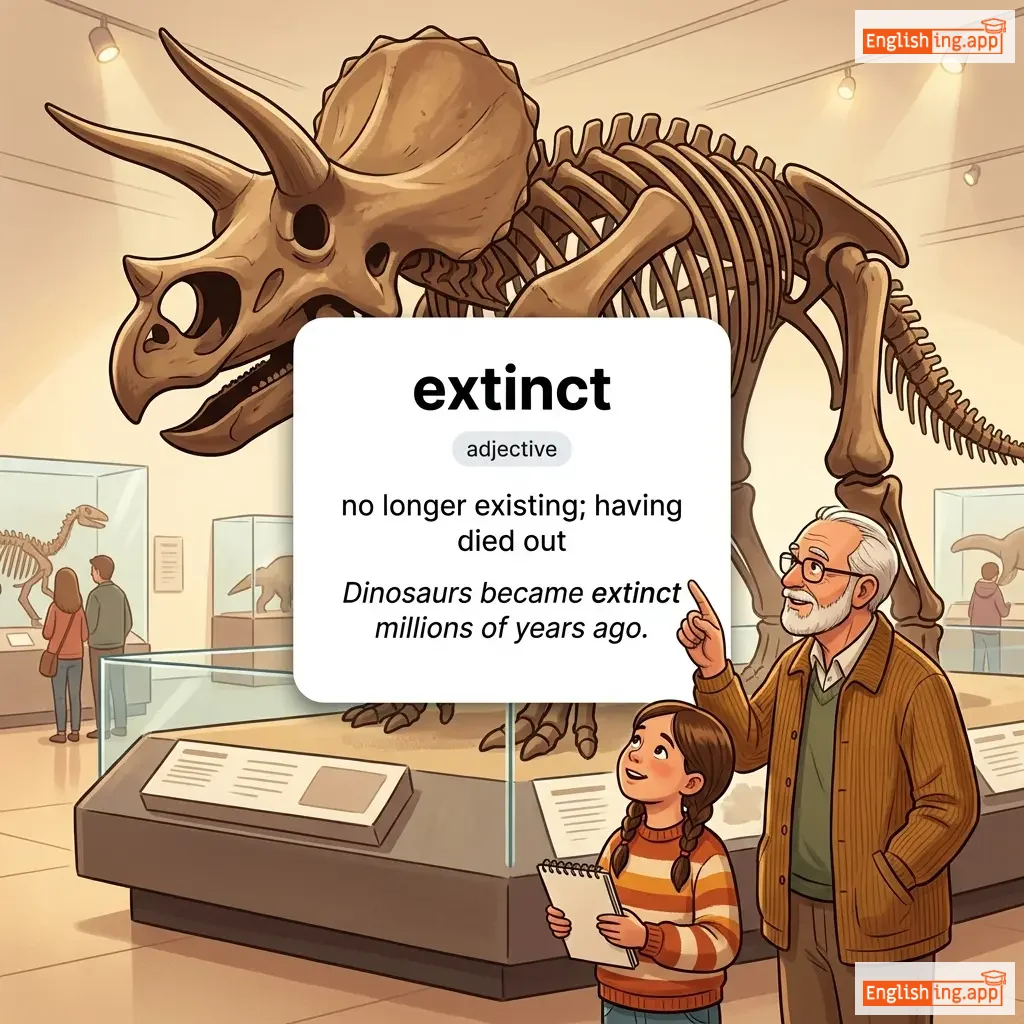
extinct definition card — visual illustration of the meaning
adjective
/ɪkˈstɪŋkt/
বিলুপ্ত (bilupto)

no longer existing; having died out

"Dinosaurs became extinct millions of years ago."

"ডাইনোসর কয়েক মিলিয়ন বছর আগে বিলুপ্ত হয়ে গিয়েছিল।" (Dinosaur koyek million bochor age bilupto hoye giyechilo.)
verb
/ɪkˈstɪŋ.ɡwɪʃ/
নিভানো (nibhano)

to put out a fire, light, or to end something

"The firefighters managed to extinguish the blaze within an hour."

"দমকল কর্মীরা এক ঘন্টার মধ্যে আগুন নেভাতে সক্ষম হয়েছিল।" (Domkol kormira ek ghontar moddhe agun nevate sokkhom hoyechilo.)
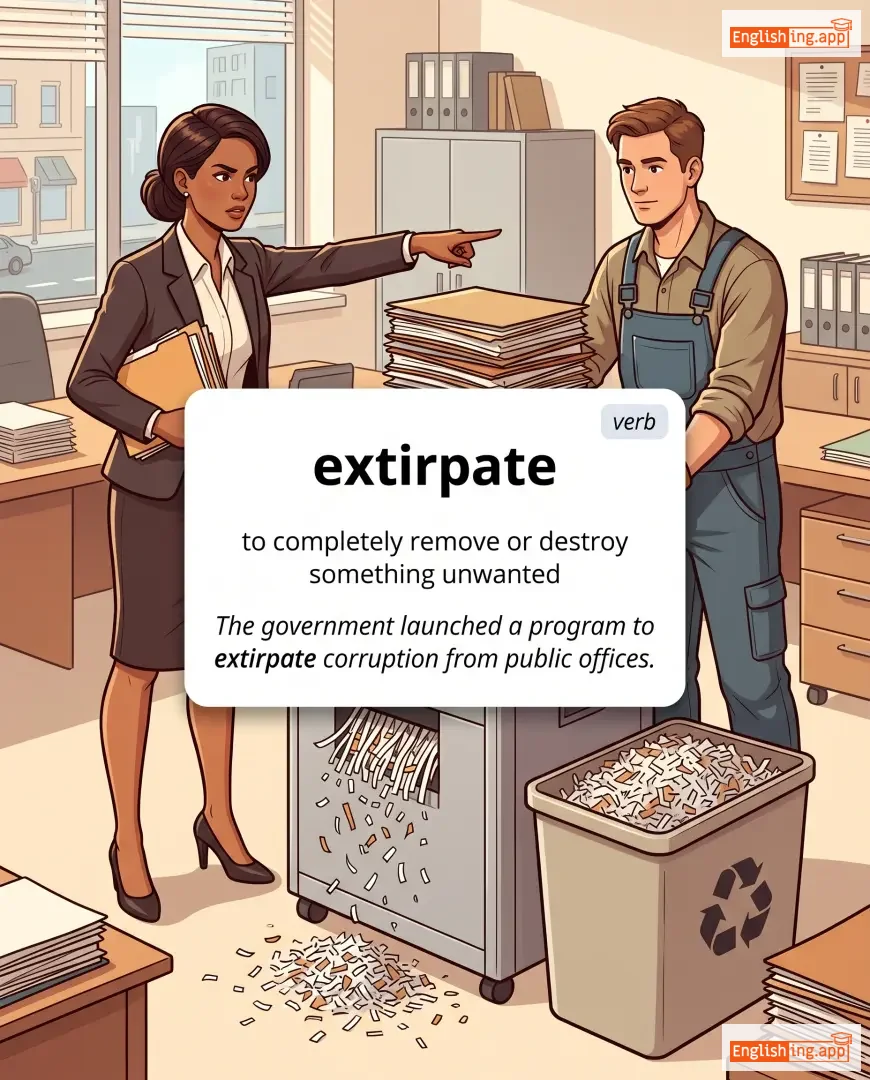
extirpate definition card — visual illustration of the meaning
verb
/ˈek.stər.peɪt/
উচ্ছেদ করা (uchhed kora)

to completely remove or destroy something unwanted

"The government launched a program to extirpate corruption from public offices."

"সরকার সরকারি অফিস থেকে দুর্নীতি উচ্ছেদ করার জন্য একটি কর্মসূচি শুরু করেছিল।" (Sorkar sorkari office theke durniti uchhed korar jonno ekti kormosuchi shuru korechilo.)
verb
/ɪkˈstoʊl/
প্রশংসা করা (proshongsha kora)

to praise enthusiastically and highly

"The teacher extolled the student's dedication and hard work."

"শিক্ষক ছাত্রের নিবেদন এবং কঠোর পরিশ্রমের প্রশংসা করেছিলেন।" (Shikkhok chatrer nibedan ebong kothor porishromer proshongsha korechilen.)
verb
/ɪkˈstɔːrt/
জবরদস্তি আদায় করা (jobordosti aday kora)

to obtain something, especially money, by force, threats, or unfair means

"The gang attempted to extort money from local shopkeepers."

"গ্যাং স্থানীয় দোকানদারদের কাছ থেকে জোর করে টাকা আদায়ের চেষ্টা করেছিল।" (Gang sthanio dokandarder kach theke jor kore taka adayer cheshta korechilo.)
noun
/ɪkˈstɔːr.ʃən/
জবরদস্তি আদায় (jobordosti aday)

the practice of obtaining something, especially money, through force or threats

"The businessman was arrested for extortion after threatening his partner."

"সহযোগীকে হুমকি দেওয়ার পর ব্যবসায়ীকে চাঁদাবাজির অভিযোগে গ্রেপ্তার করা হয়েছিল।" (Shohojogi ke humki dewar por byabsayi ke chandabajir obhijoge greptar kora hoyechilo.)
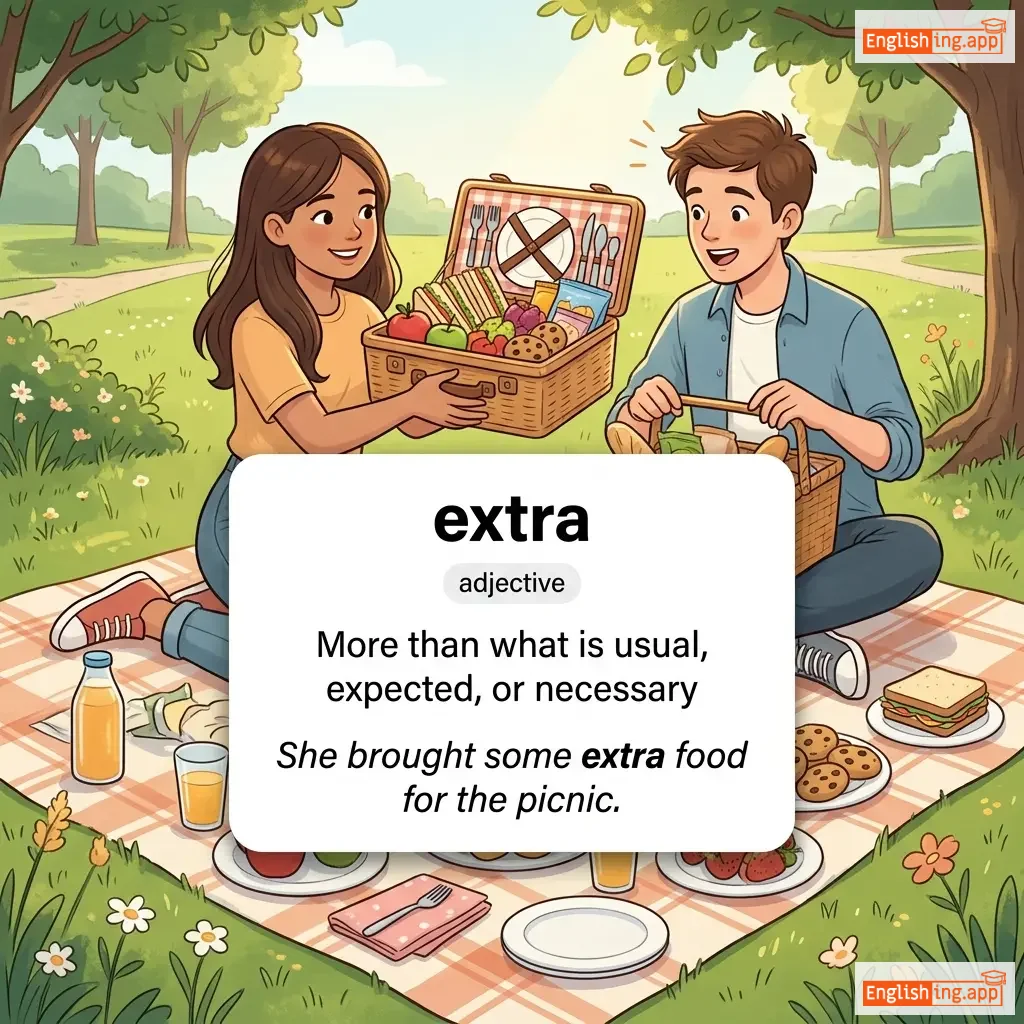
extra definition card — visual illustration of the meaning
adjective
/ˈɛkstrə/
অতিরিক্ত (otirikto)

More than what is usual, expected, or necessary

"She brought some extra food for the picnic."

"সে পিকনিকে কিছু অতিরিক্ত খাবার নিয়ে এসেছিল।" (Se piknike kichu otirikto khabar niye esechhilo.)
extract definition card — visual illustration of the meaning
verb
/ɪkˈstrækt/
উদ্ধার করা (uddhar kora)

to remove or take out something, often with effort

"The dentist had to extract the damaged tooth."

"ডাক্তার ক্ষতিগ্রস্ত দাঁতটি তুলতে হয়েছিল।" (Daktar khotigrosto dath ti tulte hoyechilo.)
noun
/ɪkˈstrækʃən/
উদ্ধার (uddhar)

the act of removing something, especially by pulling it out

"The extraction of oil from the ground requires special equipment."

"ভূমি থেকে তেল উত্তোলনে বিশেষ যন্ত্রপাতির প্রয়োজন।" (Bhumi theke tel uttholone bishesh jontrapotir proyojon.)
verb
/ˈɛkstrəˌdaɪt/
অপরাধী প্রত্যর্পণ করা (oporadhi protyorpon kora)

to hand over a person accused or convicted of a crime to another country or state

"The government agreed to extradite the fugitive to his home country."

"সরকার পলাতককে তার নিজ দেশে প্রত্যর্পণে সম্মত হয়েছে।" (Sorkar polatokke tar nij deshe protyorpon e shommat hoyeche.)
noun
/ˌɛkstrəˈdɪʃən/
প্রত্যর্পণ (protyorpon)

the official process of sending someone accused of a crime to another country or state

"The extradition of the suspect was delayed due to legal issues."

"আইনি সমস্যার কারণে সন্দেহভাজনের প্রত্যর্পণ বিলম্বিত হয়েছিল।" (Aini shomossar karone shondehobhajoner protyorpon bilombito hoyechilo.)
adjective
/ˌɛkstrəˌdʒuːˈdɪʃəl/
বিচার বহির্ভূত (bichar bohirbhut)

done outside the authority of the legal system or judicial process

"The activists condemned the extrajudicial killings."

"কর্মীরা বিচার বহির্ভূত হত্যাকাণ্ডের নিন্দা করেছেন।" (Kormira bichar bohirbhut hottakander ninda korechen.)
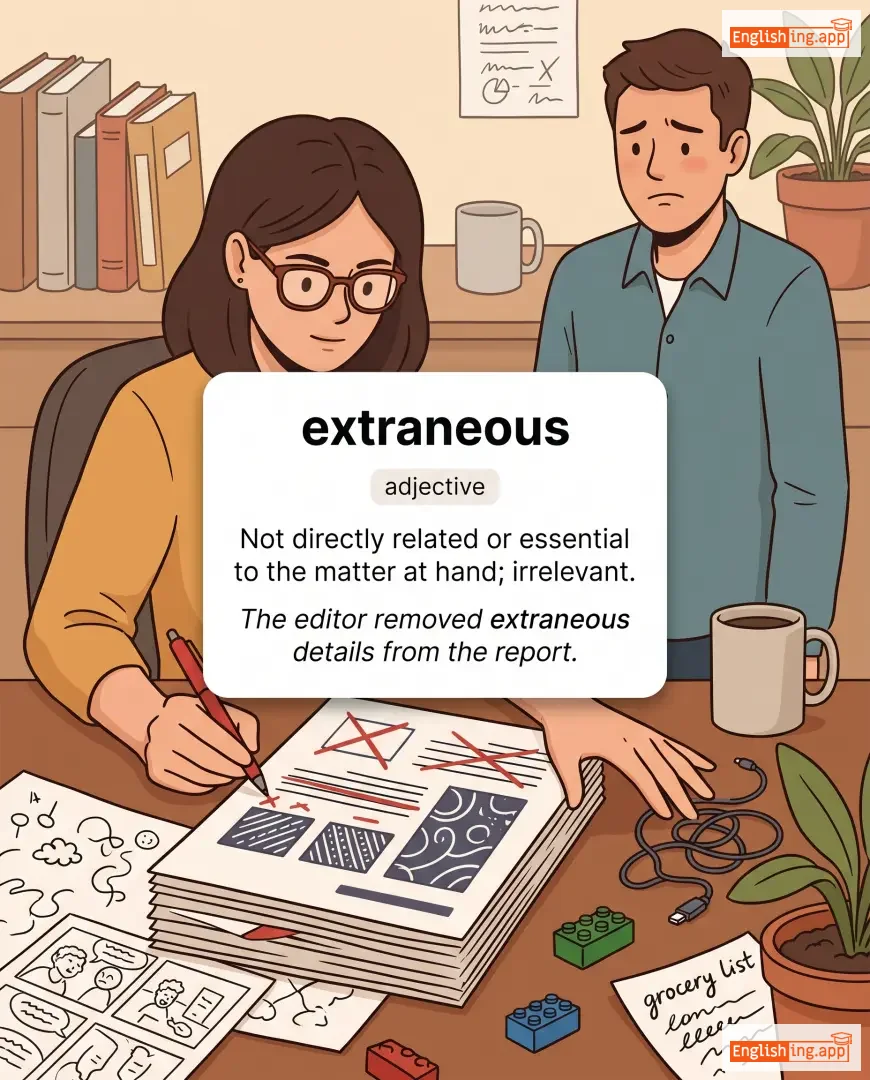
extraneous definition card — visual illustration of the meaning
adjective
/ɪkˈstreɪ.ni.əs/
অপ্রাসঙ্গিক (oprasongik)

Not directly related or essential to the matter at hand; irrelevant.

"The editor removed extraneous details from the report."

"সম্পাদক রিপোর্ট থেকে অপ্রাসঙ্গিক তথ্য মুছে ফেলেছেন।" (Shompaddok report theke oprasongik totho muche phelechen.)
adjective
/ɪkˈstrɔːr.dəˌnɛr.i/
অসাধারণ (osadharon)

Very unusual, remarkable, or exceptional.

"She showed extraordinary courage during the crisis."

"তিনি সংকটের সময় অসাধারণ সাহস প্রদর্শন করেছিলেন।" (Tini songkoter somoy osadharon sahos prodorshon korechilen.)
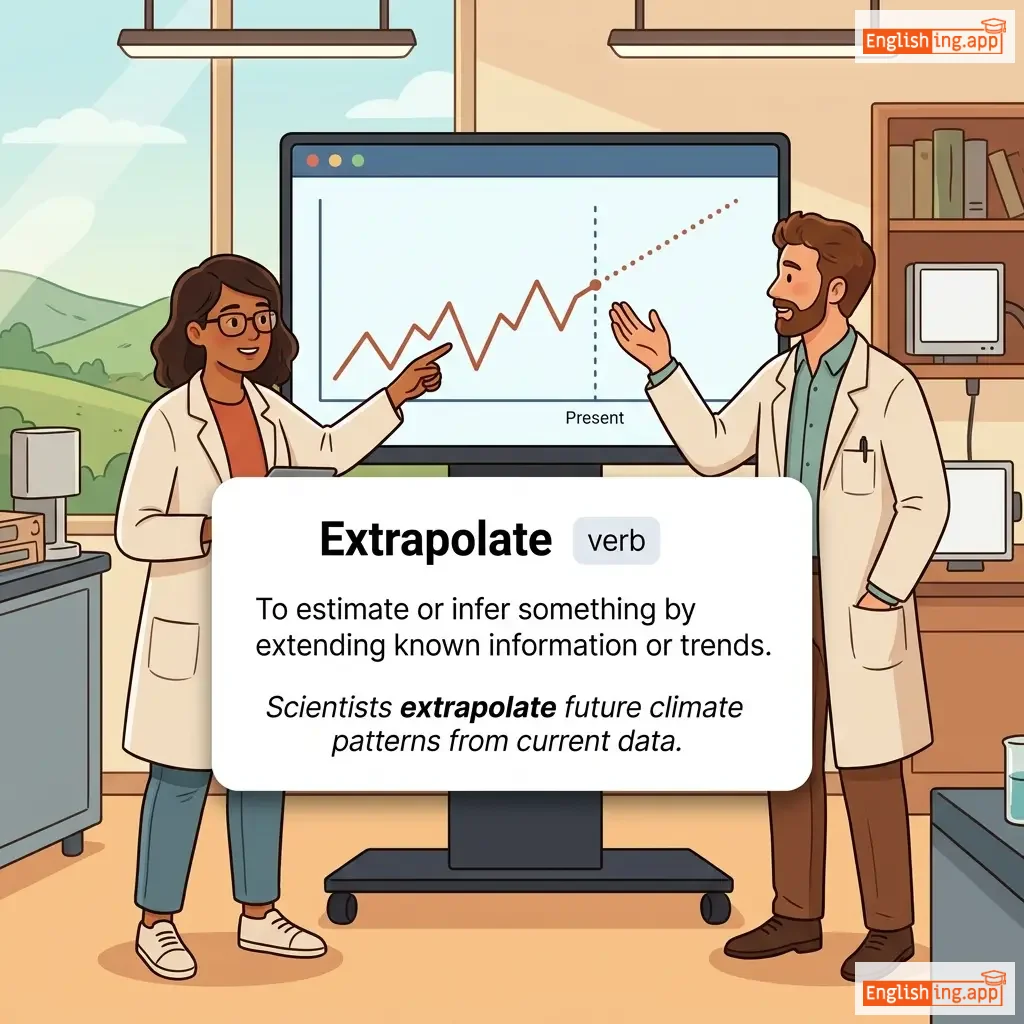
Extrapolate definition card — visual illustration of the meaning
verb
/ɪkˈstræp.əˌleɪt/
আনুমানিক পূর্বাভাস দেওয়া (anumonik purbavash deowa)

To estimate or infer something by extending known information or trends.

"Scientists extrapolate future climate patterns from current data."

"বিজ্ঞানীরা বর্তমান তথ্য থেকে ভবিষ্যতের জলবায়ু পূর্বাভাস দেন।" (Biggani ra bortoman totho theke vobishyoter jolbayu purbavash den.)
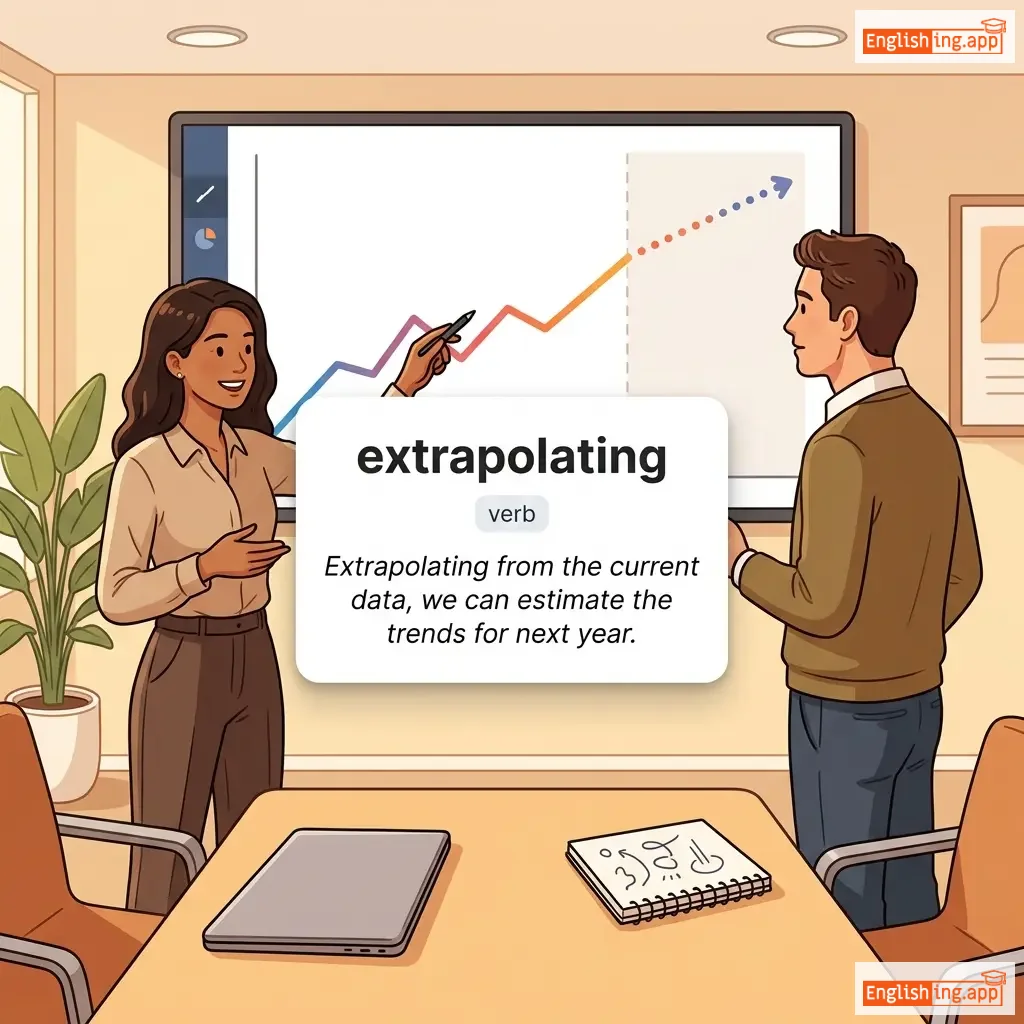
extrapolating definition card — visual illustration of the meaning
verb
/ɪkˈstræpəleɪtɪŋ/
অনুমান করা, পূর্বানুমান করা (onuman kora, purbanuman kora)

Extend the application of (a method or conclusion) to an unknown situation by assuming that existing trends will continue.

"Extrapolating from the current data, we can estimate the trends for next year."

"বর্তমান তথ্য থেকে পূর্বানুমান করে, আমরা আগামী বছরের প্রবণতাগুলি অনুমান করতে পারি।" (Bortoman tothyo theke purbanuman kore, amra agami bochhorer probontaguli onuman korote pari.)
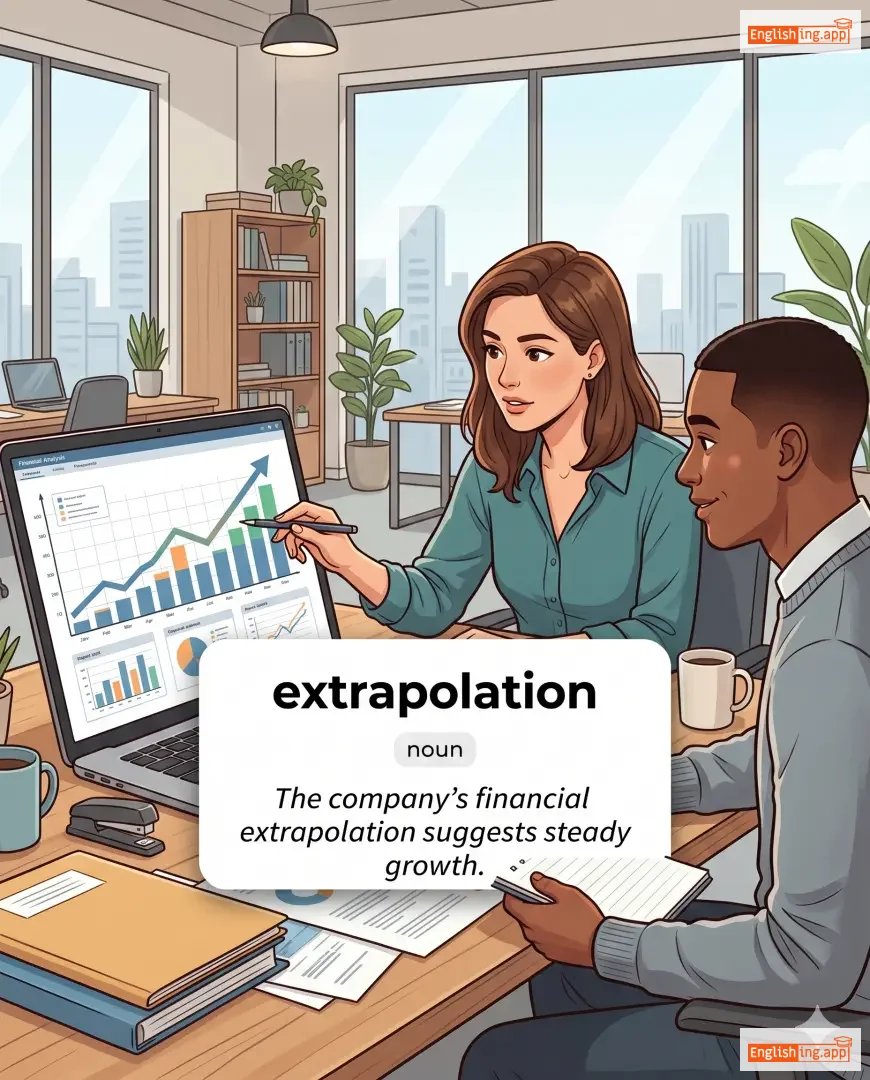
extrapolation definition card — visual illustration of the meaning
noun
/ɪkˌstræp.əˈleɪ.ʃən/
আনুমানিক পূর্বাভাস (anumonik purbavash)

The process of estimating or predicting something based on extending known information.

"The company's financial extrapolation suggests steady growth."

"কোম্পানির আর্থিক পূর্বাভাস স্থির বৃদ্ধির ইঙ্গিত দেয়।" (Companyr arthik purbavash sthir briddhir ingit dey.)
noun
/ɪkˈstræv.ə.ɡəns/
অতিরিক্ত ব্যয়বহুলতা (otirikto beybahulota)

Excessive spending or lack of restraint in using resources.

"His extravagance on luxury cars worried his family."

"বিলাসবহুল গাড়িতে তার অতিরিক্ত খরচ তার পরিবারকে উদ্বিগ্ন করেছিল।" (Bilasbohul garite tar otirikto khoroch tar poribar ke udbigno korechilo.)
adjective
/ɪkˈstrævəɡənt/
অত্যধিক ব্যয়বহুল (otjadik byoybohul)

Spending or using more than is necessary; excessively elaborate or luxurious.

"She wore an extravagant dress to the party."

"সে পার্টিতে একটি অতিরিক্ত ব্যয়বহুল পোশাক পরেছিল।" (Se partite ekti otirikto byoybohul poshak porechilo.)
extreme definition card — visual illustration of the meaning
adjective
/ɪkˈstriːm/
চরম (chorom)

reaching a high or intense degree; very great or severe

"They went on an extreme adventure in the mountains."

"তারা পাহাড়ে একটি চরম অ্যাডভেঞ্চারে গিয়েছিল।" (Tara pahar e ekti chorom adventure e giechhilo.)
adverb
/ɪkˈstriːmli/
অত্যন্ত (otonto)

to a very high degree; very much

"The movie was extremely interesting."

"ছবিটি অত্যন্ত আকর্ষণীয় ছিল।" (Chhobiti otonto akarshoniye chhilo.)
noun
/ɪkˈstriːmɪst/
চরমপন্থী (choromponthi)

A person who holds extreme political or religious views and may act on them.

"The group was led by an extremist with radical ideas."

"দলটি একজন চরমপন্থীর নেতৃত্বে পরিচালিত হয়েছিল যার র‍্যাডিকাল ধারণা ছিল।" (Dolti ekjon choromponthir netritte porichalito hoyechilo jar radical dharana chhilo.)
noun
/ɪkˈstrɛmɪti/
চরম সীমা (chorom shima)

The farthest point or limit of something; a severe or extreme condition.

"He was pushed to the extremity of his patience."

"সে তার ধৈর্যের চরম সীমায় ঠেলে দেওয়া হয়েছিল।" (Se tar dhoirjyer chorom shimay thele deowa hoyechilo.)
verb
/ˈɛkstrɪkeɪt/
মুক্ত করা (mukto kora)

To free someone or something from a constraint or difficulty.

"The firefighters extricated the passengers from the wrecked car."

"দমকলকর্মীরা দুর্ঘটনাগ্রস্ত গাড়ি থেকে যাত্রীদের মুক্ত করেছিল।" (Domkolkormira durghotonagrosto gari theke jatrider mukto korechilo.)
extrinsic definition card — visual illustration of the meaning
adjective
/ɛkˈstrɪnzɪk/
বাহ্যিক (bahyik)

Not part of the essential nature of someone or something; coming from outside.

"His motivation was largely extrinsic, driven by rewards and recognition."

"তার প্রেরণা মূলত বাহ্যিক ছিল, যা পুরস্কার এবং স্বীকৃতির দ্বারা চালিত হয়েছিল।" (Tar prerona muloto bahyik chhilo, ja puraskar ebong shwikrityr dwara chalito hoyechhilo.)
noun
/ˈɛkstrəˌvɜːrt/
বহির্মুখী ব্যক্তি (bohirmukhi bekti)

a person who is outgoing, sociable, and energized by being around other people

"As an extrovert, she enjoys meeting new people at social events."

"একজন এক্সট্রোভার্ট হিসেবে, সে সামাজিক অনুষ্ঠানে নতুন মানুষের সাথে দেখা করতে ভালোবাসে।" (ekjon extrovert hisebe, se samajik onusthane notun manusher sathe dekha korte bhalobashe.)
verb
/ɪkˈstruːd/
চাপ দিয়ে বের করা (chap diye ber kora)

to force something out through a small opening; to shape by pushing material through a mold

"The factory extrudes plastic pipes using modern machines."

"কারখানাটি আধুনিক মেশিন ব্যবহার করে প্লাস্টিক পাইপ চাপ দিয়ে বের করে।" (karkhanati adhunic machine byabohar kore plastic pipe chap diye ber kore.)
noun
/ɪɡˈzuːbərəns/
উদ্দীপনা (uddipona)

the quality of being full of energy, excitement, and cheerfulness

"Her exuberance made the whole team feel motivated."

"তার উদ্দীপনা পুরো দলকে অনুপ্রাণিত করেছিল।" (tar uddipona puro dolke onupranit korechilo.)
adjective
/ɪɡˈzuːbərənt/
উচ্ছ্বসিত (ucchashito)

full of energy, excitement, and cheerfulness

"The children were exuberant after winning the game."

"খেলায় জয়ের পর বাচ্চারা উচ্ছ্বসিত ছিল।" (khelay joyer por bachchara ucchashito chilo.)
verb
/ɪɡˈzuːd/
প্রকাশ করা (prokash kora)

to display a quality strongly and openly; to release a liquid or smell slowly

"He exudes confidence whenever he speaks in public."

"সে যখন জনসমক্ষে কথা বলে তখন আত্মবিশ্বাস প্রকাশ করে।" (se jokhon jonoshomokhe kotha bole tokhon atmobishash prokash kore.)
verb
/ɪɡˈzʌlt/
আনন্দে উৎফুল্ল হওয়া (anonde utphullo howa)

to show or feel great joy, often as a result of success

"The fans exulted after their team won the championship."

"দলটি জেতার পর ভক্তরা উৎফুল্ল হয়েছিল।" (Dolt i jetar por bhoktara utphullo hoyechilo.)
noun
/aɪ/
চোখ (chokh)

the organ in the head through which people and animals see

"She closed her eyes and went to sleep."

"সে চোখ বন্ধ করে ঘুমাতে গেল।" (Se chokh bondho kore ghumate gelo.)
noun
/ˈaɪ.bɔːl/
অক্ষিপটল; চোখের তারা (okkhipotol, chokher tara)

the round part of the eye within the eyelids and socket

"The doctor examined his eyeball carefully."

"ডাক্তার তার চোখের তারা সাবধানে পরীক্ষা করলেন।" (daktar tar chokher tara shabdhaney porikha korlen।)
noun
/ˈaɪbraʊ/
ভ্রু (vru)

the strip of hair growing on the ridge above a person's eye

"She raised her eyebrow in surprise."

"সে অবাক হয়ে তার ভ্রু তুলল।" (Se obak hoye tar vru tull o.)
noun
/ˈaɪ.lɪd/
চোখের পাতা (chokher pata)

either of the upper or lower folds of skin that cover the eye when closed

"Her eyelids felt heavy with sleep."

"ঘুমের কারণে তার চোখের পাতা ভারী অনুভব হচ্ছিল।" (ghumer karone tar chokher pata bhari onubhob hochhilo)
noun
/ˈaɪ.saɪt/
দৃষ্টি; দৃষ্টিশক্তি; (drishti, drishtishokti)

the ability to see; vision

"Regular eye checkups are important for maintaining good eyesight."

"ভালো দৃষ্টিশক্তি বজায় রাখার জন্য নিয়মিত চোখ পরীক্ষা করা গুরুত্বপূর্ণ।" (bhalo drishtishokti bojay rakhar jonno niyomito chokh poriksha kora guruttopur.)
noun
/ˈaɪ.sɔːr/
চোখের কাঁটা; অপ্রীতিকর দৃশ্য; (chokher kata, opritikar drishyo)

something that is very ugly and unpleasant to look at

"The abandoned building has become an eyesore in the neighborhood."

"পরিত্যক্ত ভবনটি এলাকায় চোখের কাঁটা হয়ে উঠেছে।" (porittokto bhobonti elakay chokher kata hoye utheche.)
noun
/ˈaɪ.wɪt.nəs/
প্রত্যক্ষদর্শী সাক্ষী; (prottyokhdorshi shakshi)

a person who has seen something happen and can give evidence about it

"The police interviewed several eyewitnesses to the accident."

"পুলিশ দুর্ঘটনার কয়েকজন প্রত্যক্ষদর্শী সাক্ষীর সাক্ষাৎকার নিয়েছিল।" (police durghotonar koyekjon prottyokhdorshi shakshir shakkhatkar niyechhilo.)
noun
/ˈɪəri/
ঈগলের বাসা (igoler basha)

the nest of a bird of prey, such as an eagle, typically built high on a cliff or tree

"The eagle’s eyrie was perched high on the mountain cliff."

"ঈগলের বাসা পাহাড়ের খাড়া অংশে ছিল।" (Igoler basha paharer khara angshe chhilo.)
noun
/ˈɪəri/
ঈগলের বাসা (igoler basha)

an alternative spelling of eyrie; a nest of a bird of prey

"The falcon guarded its eyry fiercely."

"বাজপাখি তার বাসাকে কঠোরভাবে পাহারা দিত।" (Bajpakhi tar bashake kothorbhabe pahar dit.)
noun
/ˈfeɪbəl/
নৈতিক গল্প (noitik golpo)

a short story, typically featuring animals as characters, that conveys a moral lesson

"Aesop’s fables are famous for teaching valuable lessons through simple stories."

"ঈশপের গল্পগুলো সহজ গল্পের মাধ্যমে মূল্যবান শিক্ষা দেয়।" (Ishoper golpogolo sohoj golper madhyome mulloban shikkha dey.)
noun
/ˈfæbrɪk/
কাপড় (kapor)

Cloth or material produced by weaving or knitting fibers.

"The tailor used silk fabric to make the dress."

"দর্জি পোশাকটি তৈরি করতে সিল্কের কাপড় ব্যবহার করেছিলেন।" (Dorji poshakti toiri korte silker kapor byabohar korechilen.)
verb
/ˈfæbrɪkeɪt/
মনগড়া করা (mongora kora)

to invent or concoct something, often with the intent to deceive; or to construct or manufacture

"The witness fabricated his testimony to protect himself."

"সাক্ষী নিজেকে বাঁচাতে তার সাক্ষ্য বানিয়ে নিয়েছিল।" (Sakkhi nije ke bachate tar sakhho baniye niechilo.)
fabrication definition card — visual illustration of the meaning
noun
/ˌfæb.rɪˈkeɪ.ʃən/
মিথ্যা উদ্ভাবন; মিথ্যাচারণ; জালিয়াতি; (mithya udbhabon, mithyacharon, jaliyati)

something that is made up or invented; a lie or false story

"The journalist was fired for publishing fabrications instead of facts."

"সত্যের পরিবর্তে মিথ্যা প্রকাশ করার জন্য সাংবাদিককে চাকরি থেকে বরখাস্ত করা হয়েছিল।" (sottyer poribortei mithya prokash korar jonno shangbadikke chakri theke borokkhasto kora hoyechhilo.)
adjective
/ˈfæbjələs/
অসাধারণ (oshadharon)

Extremely good or wonderful; almost unbelievable

"She looked fabulous in her new dress."

"সে তার নতুন পোশাকে অসাধারণ লাগছিল।" (Se tar notun poshake oshadharon lagchhilo.)