वोकैबुलरीज

इंग्लिश वोकैबुलरी डिस्कवर, लर्न और मास्टर करें

noun
/ɪˈleɪʃən/
प्रसन्नता (prasannata)

A feeling of great happiness and excitement.

"His elation was evident after winning the championship."

"चैम्पियनशिप जीतने के बाद उसकी प्रसन्नता स्पष्ट थी।" (Championship jeetne ke baad uski prasannata spashth thi.)
noun/verb
/ˈɛl.boʊ/
कोहनी (kohani)

The joint connecting the forearm and the upper arm; as a verb, to push aside using the elbow.

"He accidentally hit the table with his elbow."

"उसने accidentally टेबल को अपनी कोहनी से मारा।" (Usne accidentally table ko apni kohani se mara.)
noun
/ˈɛldər/
वरिष्ठ (varishth)

a person who is older or has higher rank; an older person in a family or community

"We should always respect our elders."

"हमें हमेशा अपने वरिष्ठों का सम्मान करना चाहिए।" (Humein hamesha apne varishthon ka samman karna chahiye.)
adjective
/ˈɛldərli/
वृद्ध (vruddh)

Being old or advanced in years.

"The elderly man walks slowly across the street."

"वृद्ध व्यक्ति धीरे-धीरे सड़क पार कर रहा है।" (Vruddh vyakti dheere-dheere sadak paar kar raha hai.)
verb
/ɪˈlɛkt/
चुनना (chunna)

To choose someone for a position or office by voting.

"The citizens elected a new president."

"नागरिकों ने एक नया राष्ट्रपति चुना।" (Nagrikon ne ek naya rashtrapati chuna.)
noun
/ɪˈlɛkʃən/
चुनाव (chunav)

The process of choosing someone for public office by voting.

"The election will be held next month."

"चुनाव अगले महीने होंगे।" (Chunav agle mahine honge.)
adjective
/ɪˈlɛktərəl/
चुनावी (chunavi)

related to elections or voting

"The electoral process in the country has been reformed in recent years."

"देश में चुनावी प्रक्रिया हाल के वर्षों में सुधारी गई है।" (Desh mein chunavi prakriya haal ke varsho mein sudhaari gayi hai.)
adjective
/ɪˈlɛktrɪk/
बिजली से संबंधित (bijli se sambandhit)

Relating to or operated by electricity.

"The room was lit by an electric lamp."

"कमरा एक इलेक्ट्रिक लैंप से जलाया गया था।" (Kamra ek electric lamp se jalaaya gaya tha.)
noun
/ɪˈlɛktrɪk drɪl/
इलेक्ट्रिक ड्रिल (ilektrik drill)

A power tool used for drilling holes in various materials

"He used an electric drill to make holes in the wall for hanging pictures."

"उसने दीवार में चित्र लटकाने के लिए एक इलेक्ट्रिक ड्रिल का इस्तेमाल किया।" (Usne deewaar mein chitra latkane ke liye ek ilektrik drill ka istemaal kiya.)
noun
/ɪˈlek.trɪk fæn/
इलेक्ट्रिक पंखा (ilektrik pankha)

a device with rotating blades that creates airflow to cool or ventilate a room

"The electric fan keeps the room cool during hot summer days."

"इलेक्ट्रिक पंखा गर्मी के दिनों में कमरे को ठंडा रखता है" (ilektrik pankha garmi ke dino mein kamre ko thanda rakhta hai)
noun
/ɪˈlɛktrɪk ˈkɛtəl/
इलेक्ट्रिक केतली (ilektrik ketli)

An electrical appliance that heats water quickly using electricity

"The electric kettle automatically turns off when the water starts boiling."

"इलेक्ट्रिक केतली स्वचालित रूप से बंद हो जाती है जब पानी उबालने लगता है।" (ilektrik ketli swachalit roop se band ho jati hai jab pani ubaalne lagta hai.)
adjective
/ɪˈlɛktrɪkəl/
इलेक्ट्रिकल (ilektrikal)

related to electricity or the use of electrical power

"The electrical system in the house needs repair."

"घर में विद्युत प्रणाली की मरम्मत की आवश्यकता है।" (Ghar mein vidyut pranali ki marammat ki avashyakta hai.)
noun
/ɪˌlɛkˈtrɪsɪti/
बिजली (bijli)

A form of energy resulting from the existence of charged particles.

"The storm caused a power cut and we had no electricity."

"आंधी-तूफान ने बिजली कटौती की और हमारे पास बिजली नहीं थी।" (Aandhi-toofaan ne bijli katauti ki aur humare paas bijli nahin thi.)
verb
/ɪˈlɛktrɪfaɪ/
विद्युतित करना; रोमांचित करना (vidyutit karna; romanchit karna)

to charge with electricity; to excite or thrill intensely

"The speaker's speech electrified the audience."

"वक्ता का भाषण दर्शकों को रोमांचित कर गया।" (Vakta ka bhashan darshakon ko romanchit kar gaya)
noun
/ɪˌlɛkˈtrɑː.lə.sɪs/
इलेक्ट्रोलिसिस (electrolysis)

A chemical decomposition produced by passing an electric current through a liquid or solution.

"Electrolysis is used to separate hydrogen from water."

"इलेक्ट्रोलिसिस का उपयोग पानी से हाइड्रोजन अलग करने के लिए किया जाता है।" (Electrolysis ka upyog pani se hydrogen alag karne ke liye kiya jata hai.)
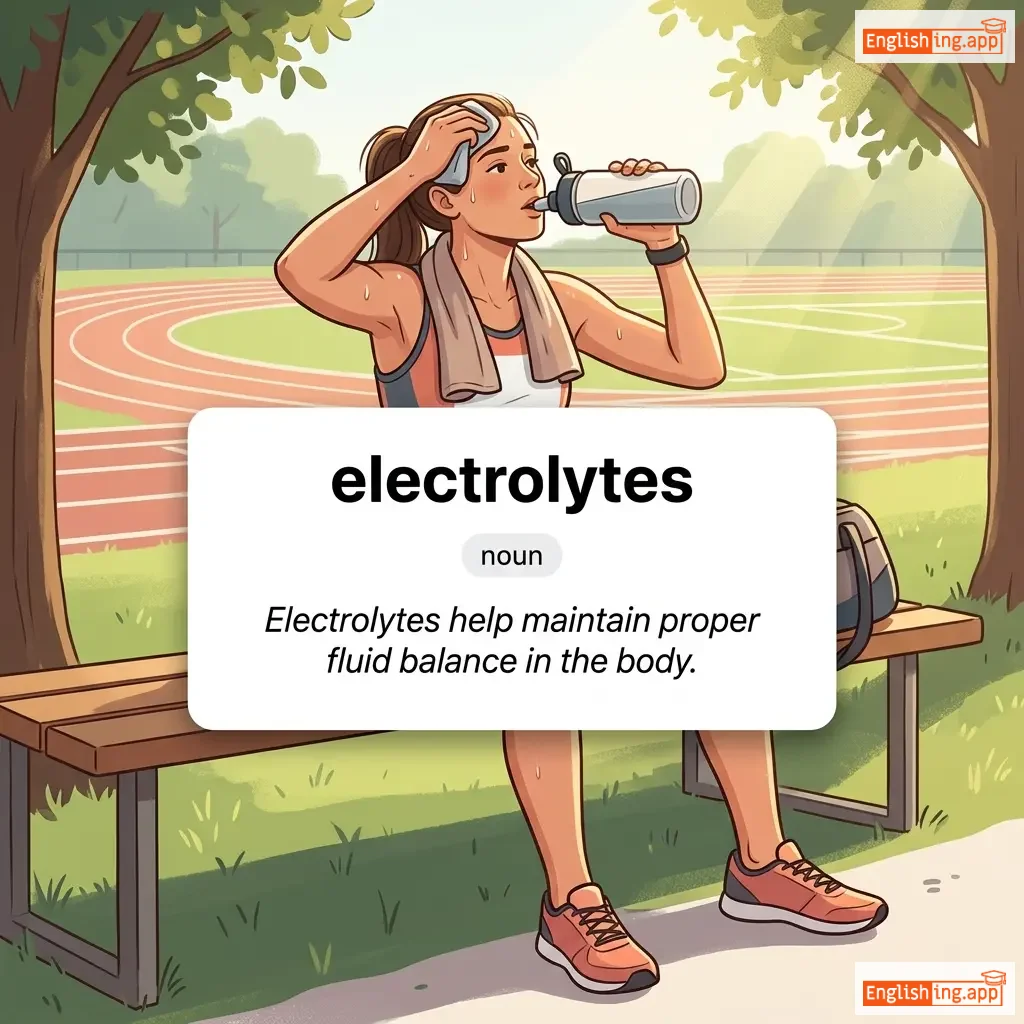
electrolytes definition card — visual illustration of the meaning
noun
/ɪˈlɛk.trəʊ.laɪts/
इलेक्ट्रोलाइट्स (electrolytes)

Minerals in body fluids that carry an electric charge and are essential for many bodily functions.

"Electrolytes help maintain proper fluid balance in the body."

"इलेक्ट्रोलाइट्स शरीर में तरल संतुलन बनाए रखने में मदद करते हैं।" (electrolytes sharir mein taral santulan banaye rakhne mein madad karte hain.)
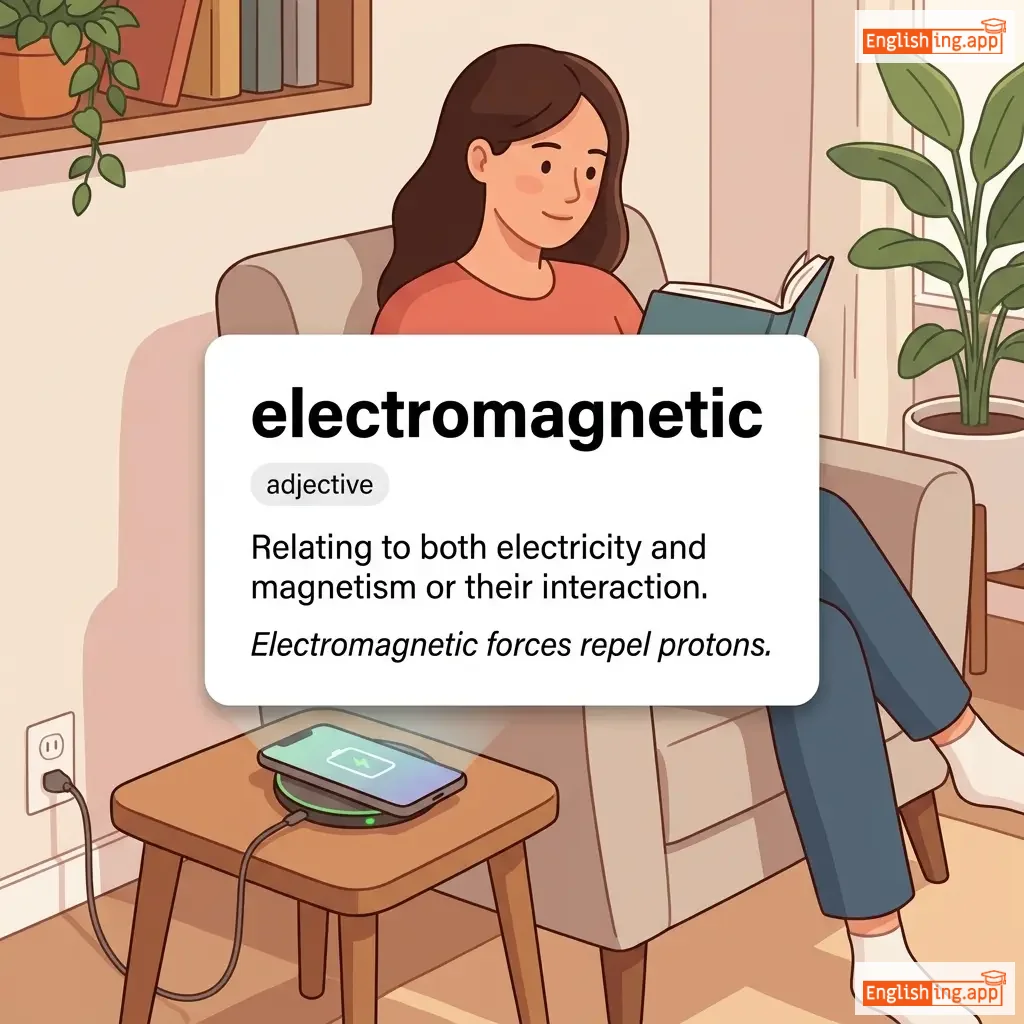
electromagnetic definition card — visual illustration of the meaning
adjective
ɪˌlektrəʊmæɡˈnetɪk
इलेक्ट्रोमैग्नेटिक (ilektromagnetic)

Relating to both electricity and magnetism or their interaction.

"Electromagnetic forces repel protons."

"इलेक्ट्रोमैग्नेटिक बल प्रोटॉनों को प्रतिकारित करते हैं।" (Ilektromagnetic bal protonu ko pratikarit karte hain.)
adjective
/ɪˌlɛkˈtrɒnɪk/
इलेक्ट्रॉनिक (ilektronik)

Operating with or produced by the use of electronic devices.

"She bought an electronic keyboard for her music lessons."

"उसने अपने संगीत पाठों के लिए एक इलेक्ट्रॉनिक कीबोर्ड खरीदा।" (Usne apne sangeet pathon ke liye ek elektronik keyboard kharida.)
noun
/ɪˌlɛkˈtrɒnɪks/
इलेक्ट्रॉनिक्स (electronics)

the branch of physics and technology dealing with circuits and devices using transistors, microchips, and other components

"He studied electronics at university."

"उसने विश्वविद्यालय में इलेक्ट्रॉनिक्स की पढ़ाई की।" (Usne vishwavidyalay mein electronics ki padhai ki.)
noun
/ɪˈlɛk.trə.taɪp/
इलेक्ट्रोटाइप (electrotype)

A duplicate printing plate made by electroplating a mold of the original.

"The printer used an electrotype to produce multiple copies of the page."

"प्रिंटर ने पृष्ठ की कई कॉपियाँ बनाने के लिए इलेक्ट्रोटाइप का उपयोग किया।" (Printer ne pustr ki kai copyan banane ke liye electrotype ka upyog kiya.)
adjective
/ˌɛl.ɪˈmɑː.səˌnɛr.i/
दानशील (danshil)

Relating to charity; dependent on or supported by charity.

"The hospital was founded as an eleemosynary institution."

"अस्पताल को एक दानशील संस्था के रूप में स्थापित किया गया था।" (Aspataal ko ek danshil sanstha ke roop mein sthapit kiya gaya tha.)
adjective
/ˈɛlɪɡənt/
सुनहरे और सुरुचिपूर्ण (sundare aur suruchipurn)

pleasingly graceful and stylish in appearance or manner

"She looked elegant in her evening gown."

"वह अपनी शाम की पोशाक में बहुत सुंदर दिख रही थी।" (Vah apni shaam ki poshak mein bahut sundar dikh rahi thi.)
adjective
/ˌɛl.ɪˈdʒaɪ.ək/
शोकपूर्ण (shokpoorn)

Expressing sorrow, often for something past; resembling an elegy.

"The novel ends on an elegiac note, mourning the lost era."

"उपन्यास एक शोकपूर्ण नोट पर समाप्त होता है, खोए हुए युग को शोकित करते हुए।" (Upanyas ek shokpoorn not par samaapt hota hai, khoye hue yug ko shokit karte hue.)
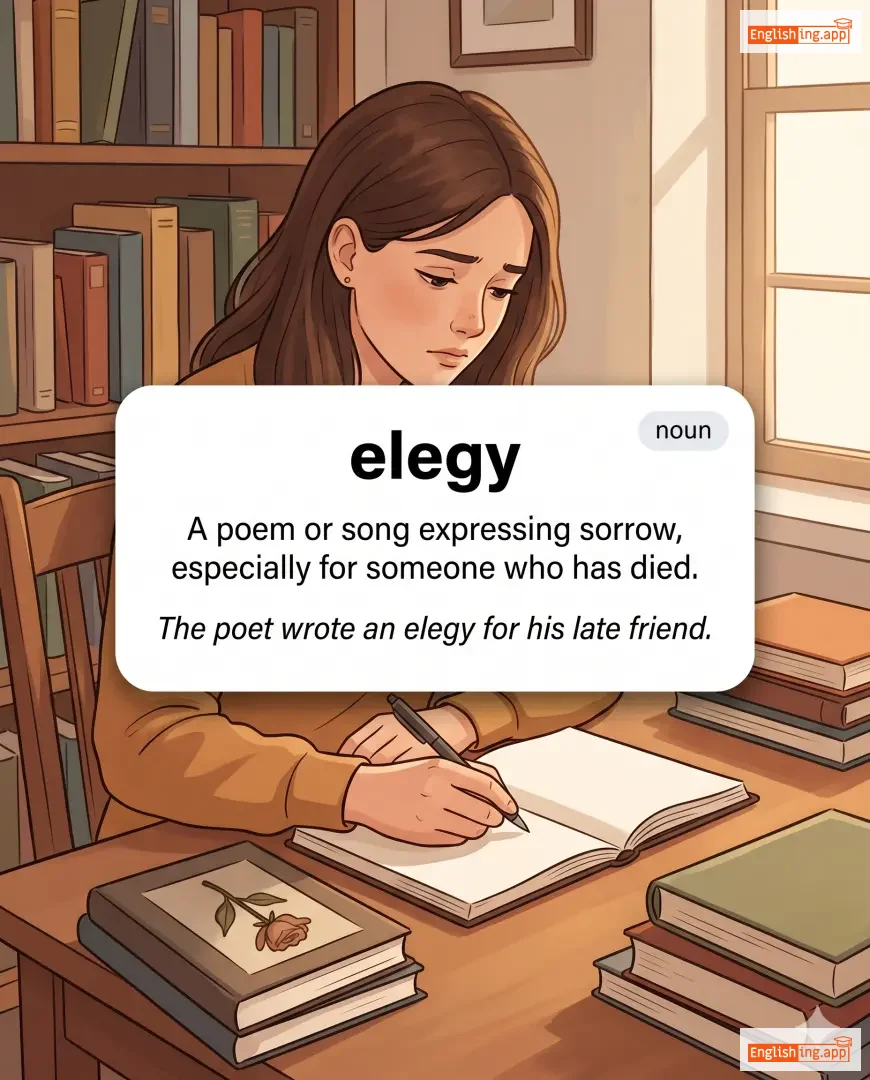
elegy definition card — visual illustration of the meaning
noun
/ˈɛlɪdʒi/
शोक गीत (shok geet)

A poem or song expressing sorrow, especially for someone who has died.

"The poet wrote an elegy for his late friend."

"कवि ने अपने दिवंगत मित्र के लिए एक शोक गीत लिखा।" (Kavi ne apne divangat mitr ke liye ek shok geet likha.)
noun
/ˈɛlɪmənt/
तत्व (tatva)

A basic or essential part of something; a simple substance that cannot be broken down further.

"Trust is a key element of any strong relationship."

"ट्रस्ट किसी भी मजबूत रिश्ते का एक महत्वपूर्ण तत्व है।" (Trust kisi bhi majboot rishte ka ek mahatvapurn tatva hai.)
adjective
/ˌɛlɪˈmɛntəri/
प्रारंभिक (prarambhik)

Relating to the basic or fundamental aspects of something; simple or easy to understand.

"She gave an elementary explanation of the problem."

"उसने समस्या का एक प्रारंभिक व्याख्यान दिया।" (Usne samasya ka ek prarambhik vyakhyan diya.)
noun
/ˈɛlɪfənt/
खुशी (khushi)

a very large animal with a trunk, long curved tusks, and thick gray skin, found in Africa and Asia

"The elephant sprayed water over itself with its trunk."

"जब उसने पुरस्कार प्राप्त किया, तो वह अपनी खुशी छुपा नहीं सकी।" (Jab usne puraskar prapt kiya, to wah apni khushi chhupa nahi saki.)
noun
/ˈel.ɪ.fənt ˈæp.əl/
हाथी सेब (hathi seb)

a tropical fruit with a hard shell and acidic flesh

"Elephant apple is used to make delicious jams and pickles."

"हाथी सेब का उपयोग स्वादिष्ट जैम और अचार बनाने के लिए किया जाता है।" (hathi seb ka upyog swadisht jam aur achar banane ke liye kiya jata hai)
adjective
/ˌɛlɪˈfæntaɪn/
हाथी जैसा विशाल (haathi jaisa vishaal)

Huge, clumsy, or resembling an elephant in size or movement.

"The man moved with an elephantine grace."

"आदमी हाथी जैसे भव्य अंदाज में चला।" (Aadmi haathi jaise bhavya andaaz mein chala.)
elevate definition card — visual illustration of the meaning
verb
/ˈɛlɪveɪt/
उन्नत करना (unnat karna)

To raise or lift something to a higher position; to improve in status, mood, or quality.

"Good music can elevate your mood instantly."

"अच्छी संगीत आपके मूड को तुरंत सुधार सकता है।" (Achhi sangeet aapke mood ko turant sudhaar sakta hai.)
noun
/ˌɛlɪˈveɪʃən/
उचाई (uchai)

The act of raising something to a higher position or level.

"The hikers reached a high elevation after hours of climbing."

"घंटों की चढ़ाई के बाद यात्रियों ने एक उच्चता पर पहुँचा।" (Ghanton ki chadhai ke baad yatriyon ne ek uchchata par pahucha.)
noun
/ˈɛləˌveɪtər/
लिफ्ट (lift)

a machine that carries people or goods up and down between floors in a building

"We took the elevator to the tenth floor."

"हम लिफ्ट से दसवें मंजिल पर गए।" (Hum lift se dasven manzil par gaye.)
number
/ɪˈlɛvən/
ग्यारह (gyarah)

the number after ten and before twelve; 11

"There are eleven students in the classroom."

"कक्षा में ग्यारह छात्र हैं।" (Kaksha mein gyarah chhatra hain.)
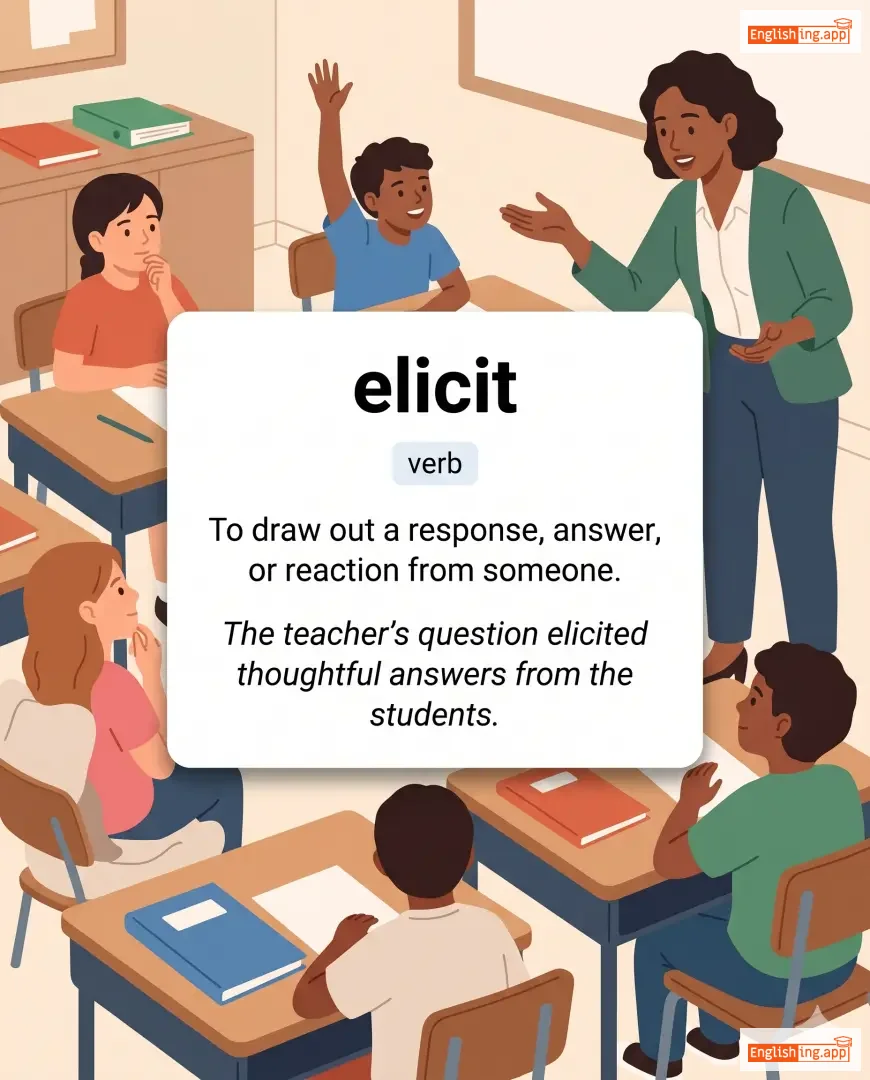
elicit definition card — visual illustration of the meaning
verb
/ɪˈlɪsɪt/
उत्तर प्राप्त करना (uttar prapt karna)

To draw out a response, answer, or reaction from someone.

"The teacher’s question elicited thoughtful answers from the students."

"शिक्षक के सवाल ने छात्रों से विचारशील उत्तर प्राप्त किए।" (Shikshak ke sawal ne chhatron se vicharshil uttar prapt kiye.)
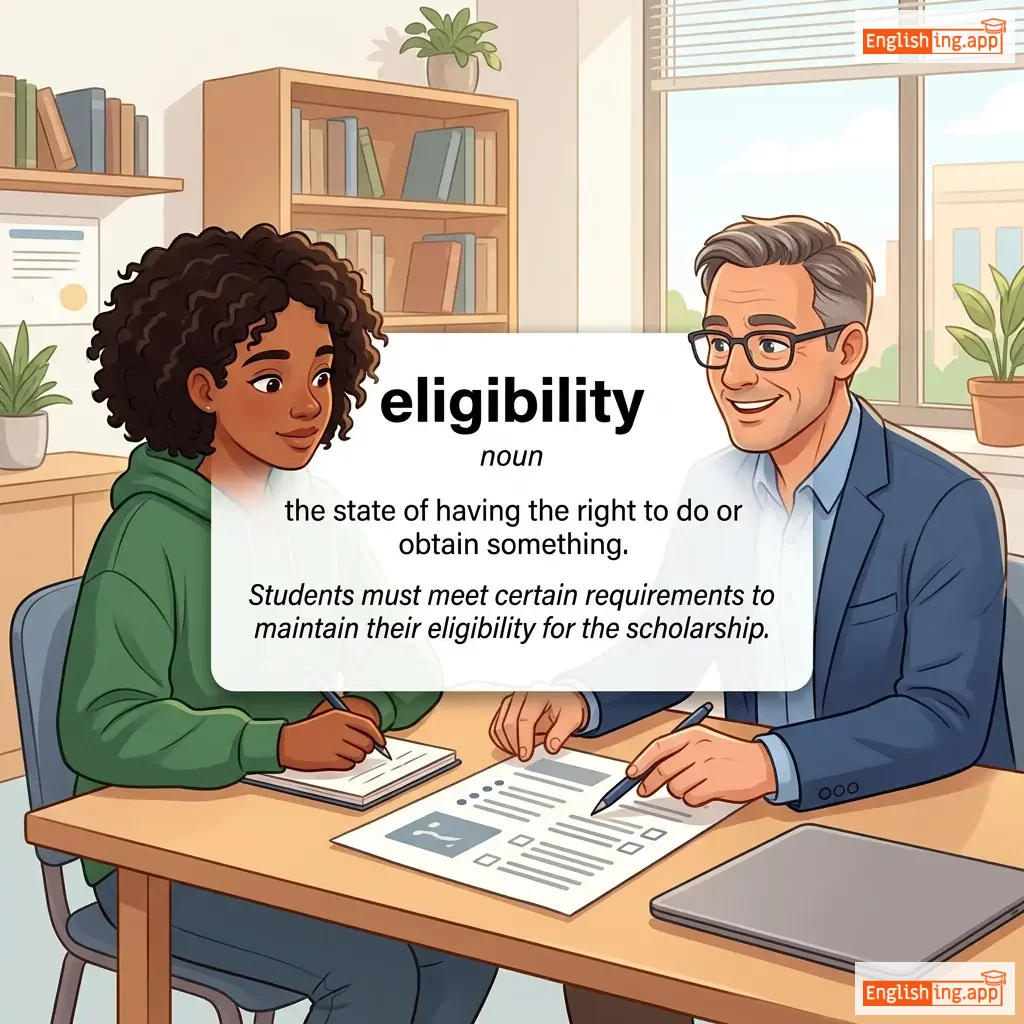
eligibility definition card — visual illustration of the meaning
noun
/ˌel.ɪ.dʒəˈbɪl.ə.ti/
पात्रता (patrata)

the state of having the right to do or obtain something

"Students must meet certain requirements to maintain their eligibility for the scholarship."

"छात्रों को छात्रवृत्ति के लिए अपनी पात्रता बनाए रखने के लिए कुछ आवश्यकताओं को पूरा करना होगा।" (Chhatron ko chhatravritti ke liye apni patrata banaye rakhne ke liye kuch avashyaktaon ko pura karna hoga.)
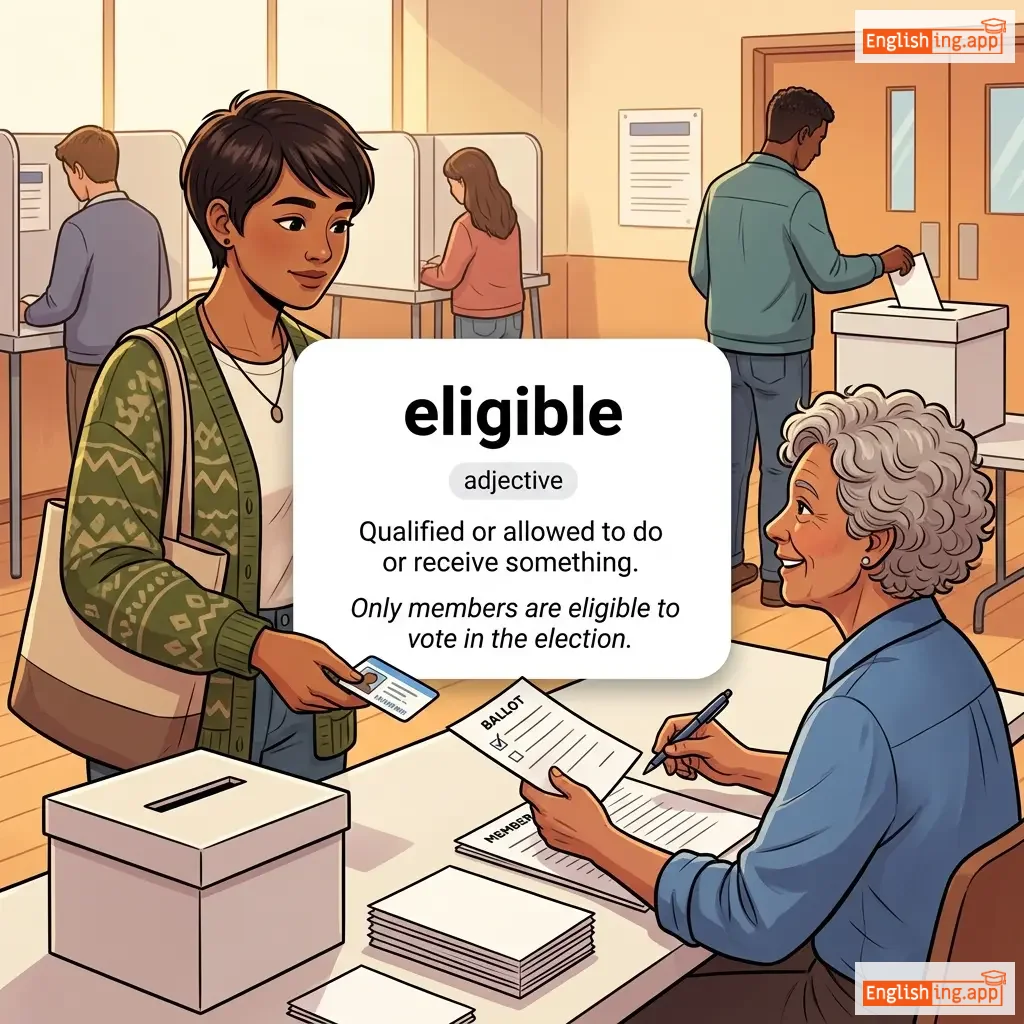
eligible definition card — visual illustration of the meaning
adjective
/ˈɛlɪdʒəbl/
योग्य (yogya)

Qualified or allowed to do or receive something.

"Only members are eligible to vote in the election."

"केवल सदस्य चुनाव में वोट देने के लिए योग्य हैं।" (Keval sadasya chunaav mein vote dene ke liye yogya hain.)
eliminate definition card — visual illustration of the meaning
verb
/ɪˈlɪməˌneɪt/
हटाना (hatana)

To completely remove or get rid of something.

"The new policy aims to eliminate corruption in the system."

"नई नीति का उद्देश्य सिस्टम में भ्रष्टाचार को समाप्त करना है।" (Nayi niti ka uddeshya system mein bhrashtachar ko samaapt karna hai.)
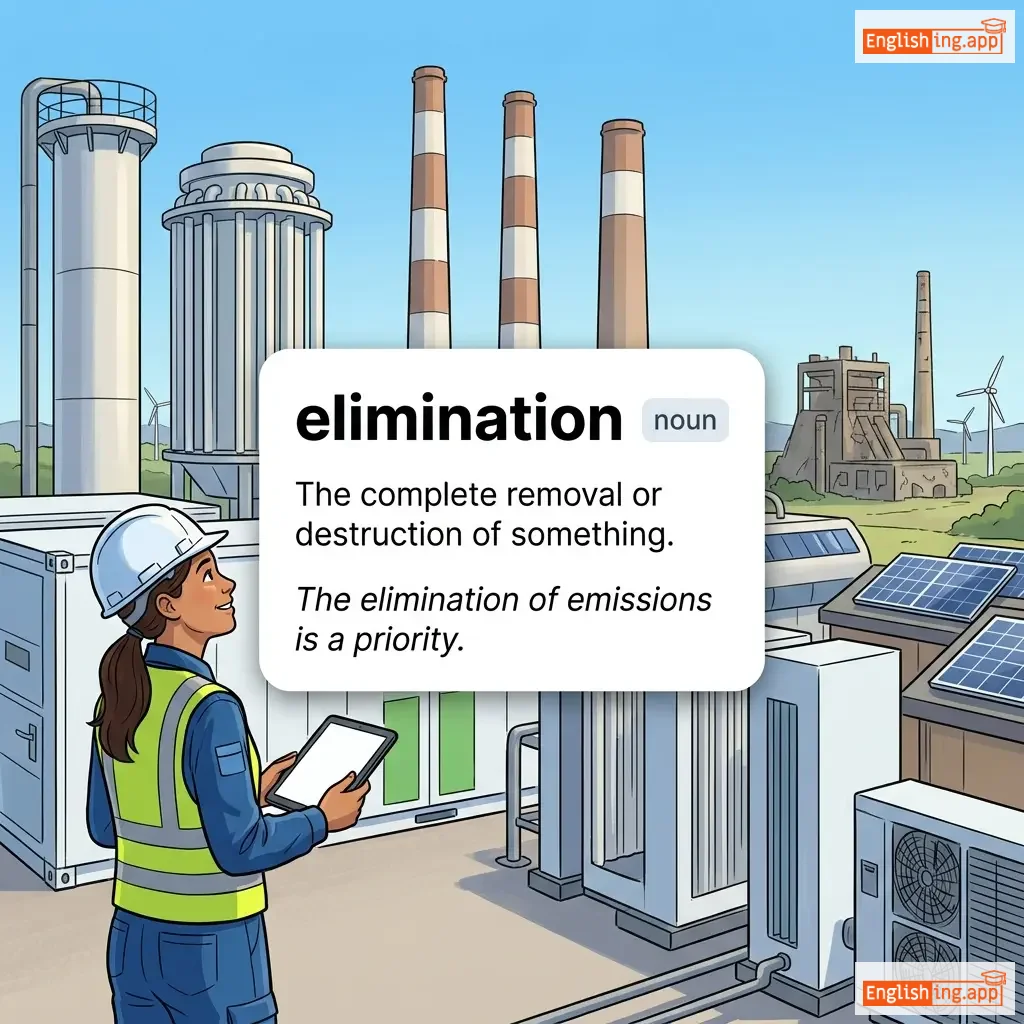
elimination definition card — visual illustration of the meaning
noun
ɪˌlɪm.ɪˈneɪ.ʃən
निष्कासन (nishkasan)

The complete removal or destruction of something.

"The elimination of emissions is a priority."

"एमिशन्स का निष्कासन प्राथमिकता है।" (Emissions ka nishkasan prathmikta hai.)
noun
/ɪˈliːt/ or /eɪˈliːt/
एलीट (elite)

A select group that is superior in terms of ability or qualities.

"Only the elite were invited to the exclusive event."

"केवल एलीट को विशेष घटना में आमंत्रित किया गया था।" (Keval elite ko vishesh ghatna mein amantrit kiya gaya tha.)
noun/adjective
/ɪˈliːtɪst/
एलीटिस्ट (elitist)

A person who believes that a society should be led by an elite; showing preference for a privileged class.

"His elitist attitude made him unpopular among his peers."

"उसका एलीटिस्ट रवैया उसे उसके साथियों में अप्रिय बना देता है।" (Uska elitist ravaiya use uske saathiyon mein apriya bana deta hai.)
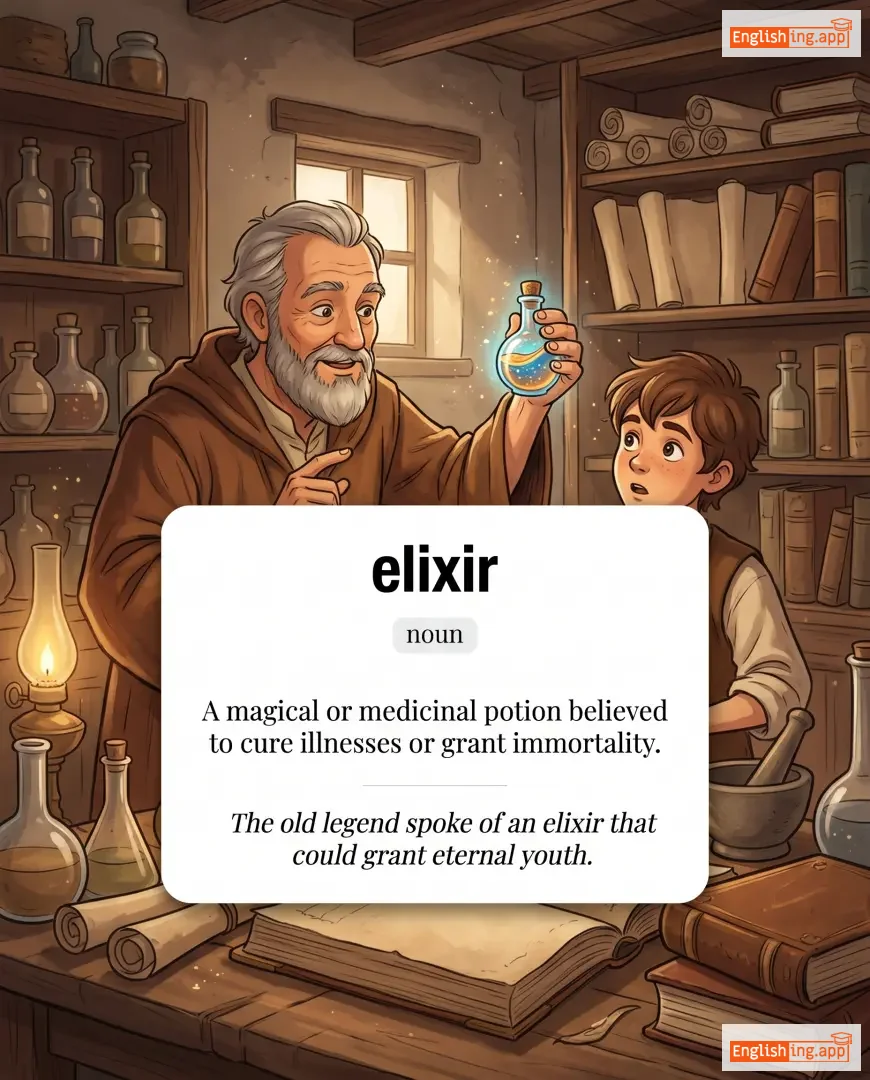
elixir definition card — visual illustration of the meaning
noun
/ɪˈlɪksər/
इलिक्सिर (iliksir)

A magical or medicinal potion believed to cure illnesses or grant immortality.

"The old legend spoke of an elixir that could grant eternal youth."

"पुरानी किंवदंती ने एक इलिक्सिर के बारे में बताया था जो शाश्वत युवा दे सकता था।" (Puraani kinvanti ne ek iliksir ke baare mein bataya tha jo shaashwat yuva de sakta tha.)
adjective
/ɪˌlɪzəˈbiːθən/
एलिज़ाबेथन काल (Elizabethan kaal)

Relating to the reign of Queen Elizabeth I of England (1558–1603), especially the style of that period.

"Shakespeare wrote many of his plays during the Elizabethan era."

"शेक्सपियर ने अपनी कई नाटकों को एलिज़ाबेथन काल में लिखा था।" (Shakespeare ne apni kai natako ko Elizabethan kaal mein likha tha.)
noun
/ɪˈlɪpsɪs/
इलिप्सिस (ilipsis)

The omission of words in a sentence, represented by three dots (...).

"The writer used an ellipsis to show that part of the quote was omitted."

"लेखक ने यह दिखाने के लिए इलिप्सिस का उपयोग किया कि उद्धरण का एक हिस्सा छोड़ दिया गया था।" (Lekhak ne yah dikhane ke liye ilipsis ka upyog kiya ki uddharan ka ek hissa chhod diya gaya tha.)
adjective
/ɪˈlɪptɪkl/
दीर्घवृत्ताकार (dirghavrittakar)

Having the shape of an ellipse; also, a style of speech that is concise and sometimes obscure.

"The planet follows an elliptical orbit around the sun."

"ग्रह सूर्य के चारों ओर एक दीर्घवृत्ताकार कक्षा में घूमता है।" (Grah Surya ke charon or ek dirghavrittakar kaksha mein ghoomta hai.)
noun
/ˌɛləˈkjuːʃn/
वक्तृत्व कला (vaktritva kala)

The skill of clear and expressive speech, especially in public speaking.

"She improved her elocution through constant practice."

"उसने निरंतर अभ्यास के माध्यम से अपनी वक्तृत्व कला में सुधार किया।" (Usne nirantar abhyas ke madhyam se apni vaktritva kala mein sudhaar kiya.)
verb
/ɪˈloʊp/
भागकर शादी करना (bhagkar shaadi karna)

to run away secretly in order to get married, especially without parental consent

"The young couple decided to elope to another city."

"युवा जोड़े ने दूसरे शहर में भागकर शादी करने का फैसला किया।" (yuva jode ne doosre shahar mein bhagkar shaadi karne ka faisla kiya.)
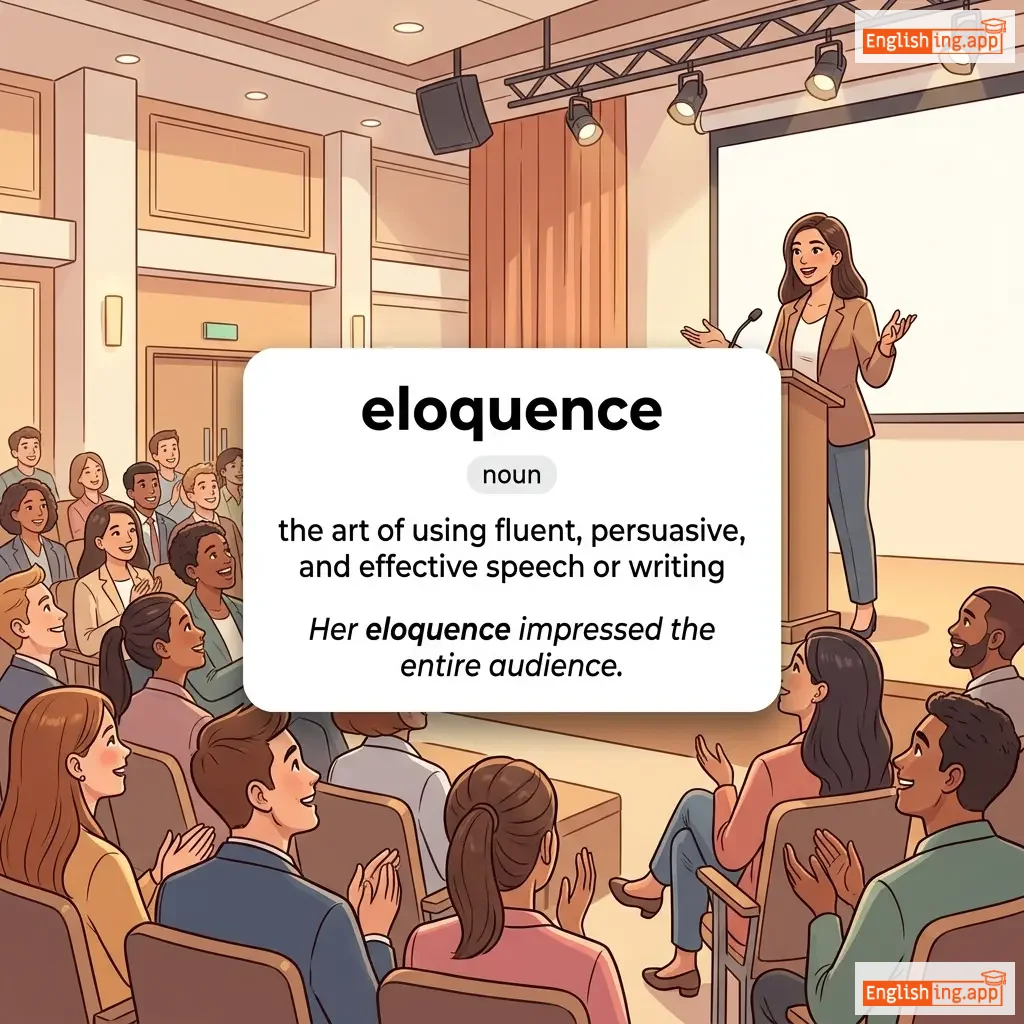
eloquence definition card — visual illustration of the meaning
noun
/ˈɛləkwəns/
वाकपटुता (vakpatuta)

the art of using fluent, persuasive, and effective speech or writing

"Her eloquence impressed the entire audience."

"उसकी वाकपटुता ने पूरे दर्शकों को प्रभावित किया।" (uski vakpatuta ne poore darshako ko prabhavit kiya.)
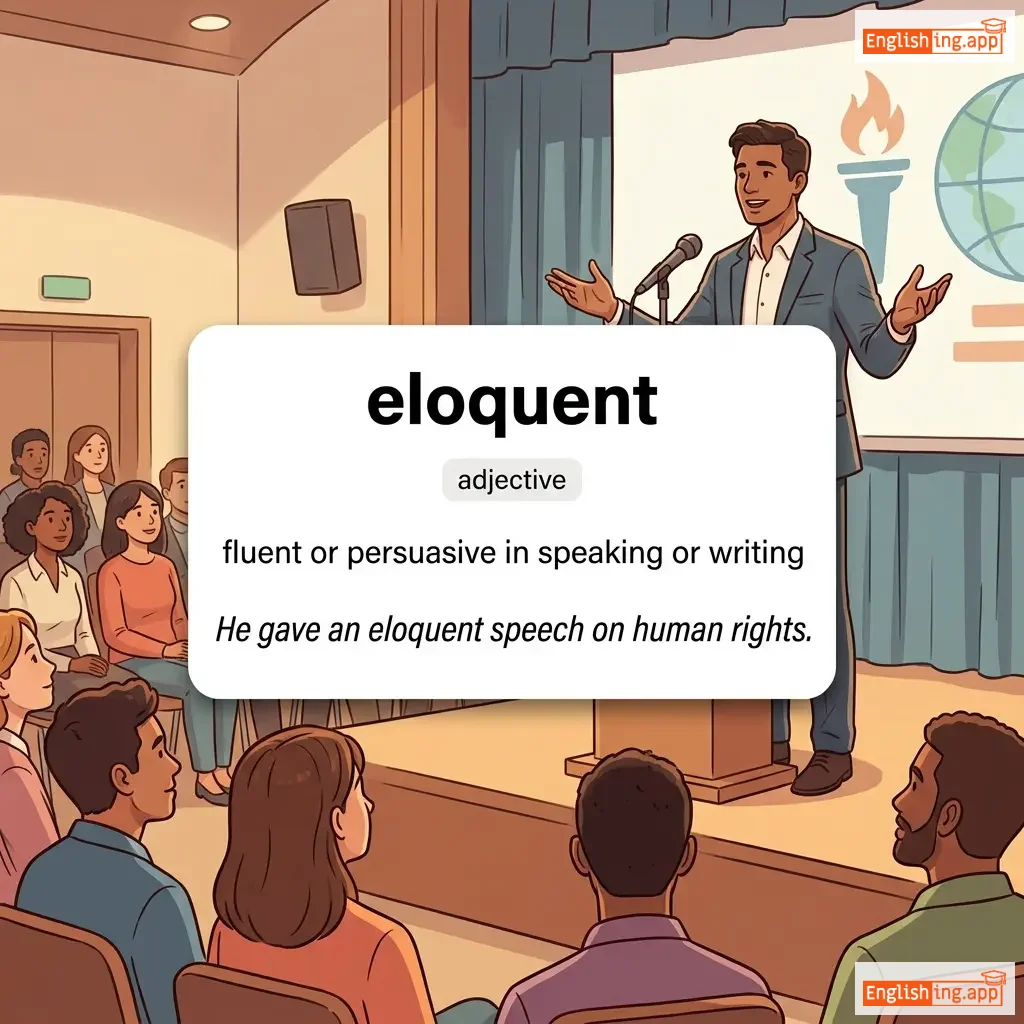
eloquent definition card — visual illustration of the meaning
adjective
/ˈɛləkwənt/
वाक्पटु (vakpatu)

fluent or persuasive in speaking or writing

"He gave an eloquent speech on human rights."

"उसने मानवाधिकार पर एक प्रभावी भाषण दिया।" (usne manavadhikar par ek prabhavi bhashan diya)
adverb
/ɛls/
कुछ और (kuch aur)

In addition; besides.

"Is there anything else you need?"

"क्या आपको कुछ और चाहिए?" (Kya aapko kuch aur chahiye?)
adverb
/ˈɛlswɛr/
कहीं और (kahin aur)

In, at, or to some other place.

"If you can’t find it here, try looking elsewhere."

"अगर आप इसे यहाँ नहीं पा रहे हैं, तो कहीं और देखिए।" (Agar aap ise yahaan nahin paa rahe hain, to kahin aur dekhiyega.)