词汇表

英语词汇词典 | 单词含义、定义和示例

noun
/ˌekspləˈneɪʃən/
解释 (jieshi)

a statement or account that makes something clear

"The teacher gave a clear explanation of the theory."

"老师给出了理论的清晰解释。" (Lǎoshī gěi chūle lǐlùn de qīngxī jiěshì.)
noun
/ˈɛksplətɪv/
脏话 (zānghuà)

a word or phrase used as an exclamation, often offensive or profane

"He shouted an expletive when he dropped the hammer on his foot."

"当他把锤子掉到脚上时,他喊出了一个脏话。" (Dāng tā bǎ chuízi diào dào jiǎo shàng shí, tā hǎn chūle yīgè zānghuà.)
adjective
/ˈɛksplɪkəbəl/
可解释的 (kě jiěshì de)

able to be explained or understood

"His sudden anger was explicable given the stressful situation."
"他的突然愤怒是可以解释的,考虑到紧张的情况。" (Tā de tūrán fènnù shì kě jiěshì de, kǎolǜ dào jǐnzhāng de qíngkuàng.)
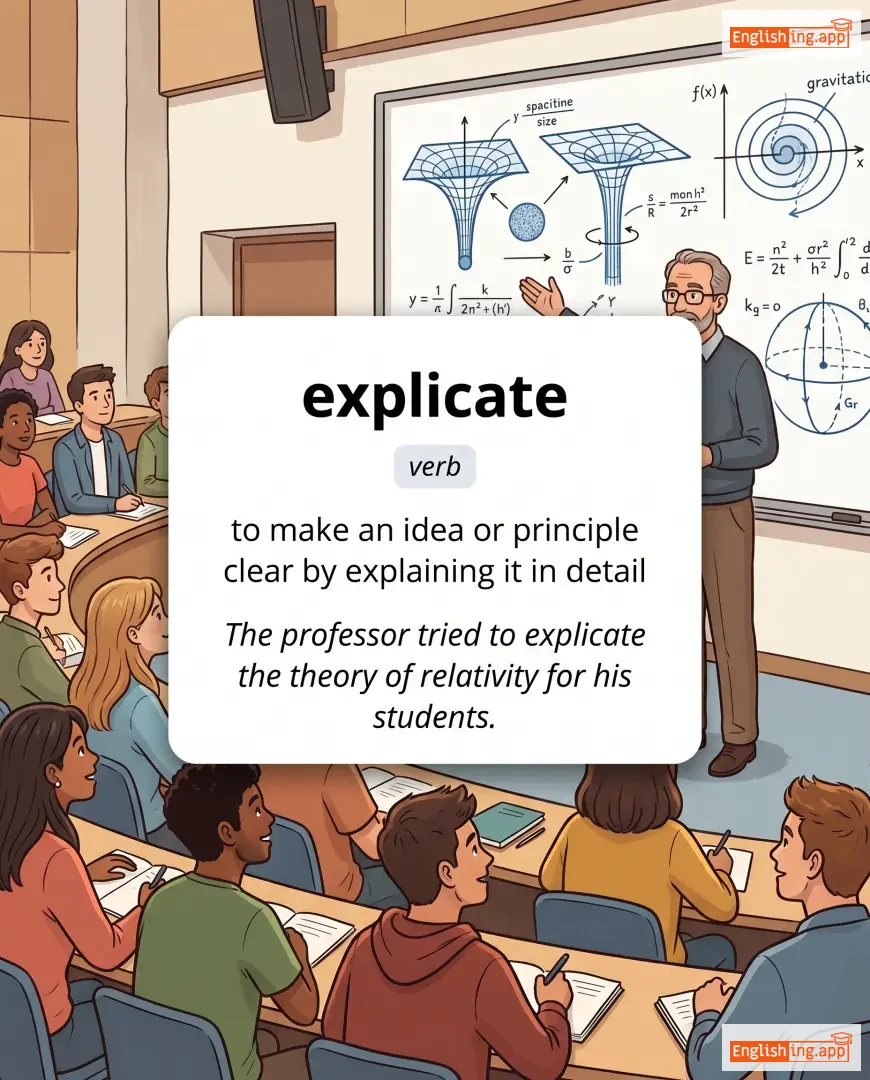
explicate definition card — visual illustration of the meaning
verb
/ˈɛksplɪkeɪt/
解释 (jiěshì)

to make an idea or principle clear by explaining it in detail

"The professor tried to explicate the theory of relativity for his students."

"教授试图为他的学生解释相对论的理论。" (Jiàoshòu shìtú wèi tā de xuéshēng jiěshì xiāngduìlùn de lǐlùn.)
noun
/ˈɛksplɪkeɪtər/
阐释者 (chǎnshì zhě)

a person who explains or interprets something in detail

"The critic served as an explicator of the poet’s complex works."
"评论家担任了诗人复杂作品的阐释者。" (Pínglùn jiā dānrènle shīrén fùzá zuòpǐn de chǎnshì zhě.)
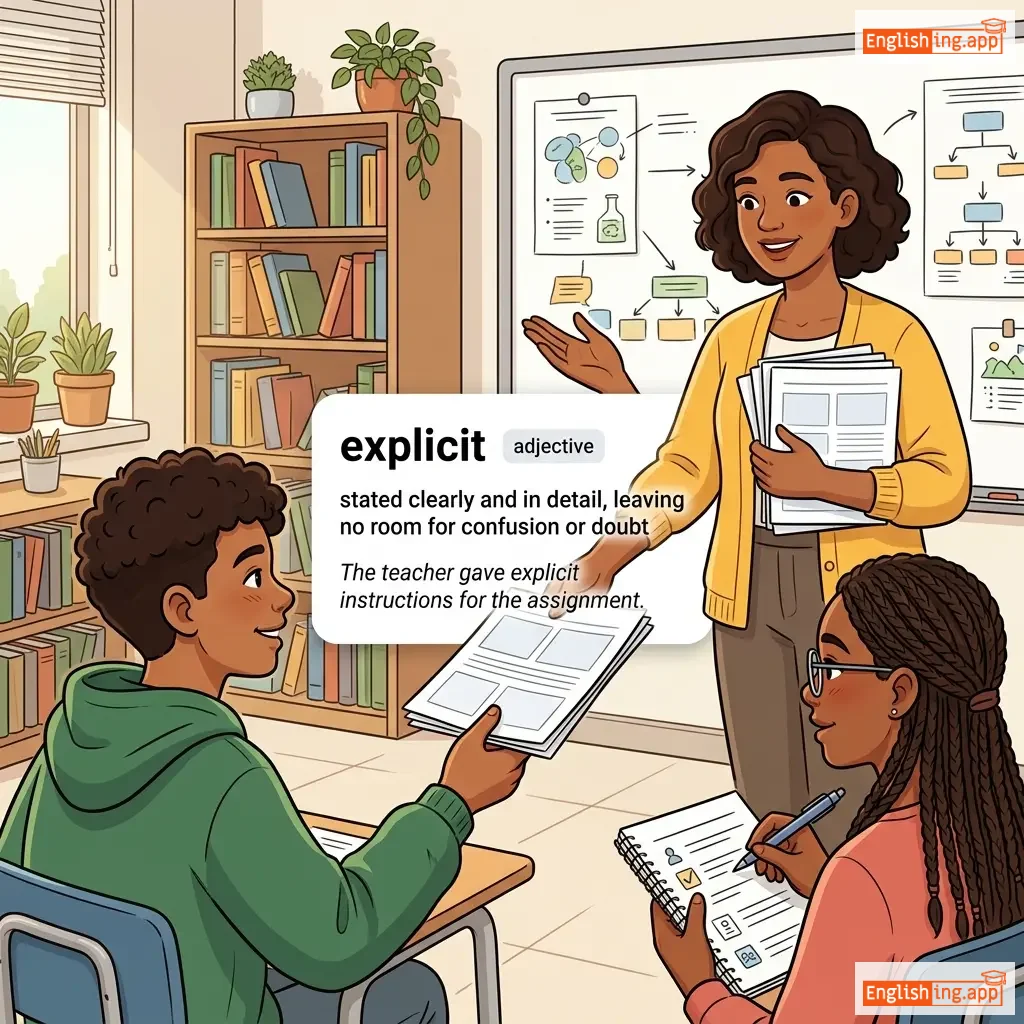
explicit definition card — visual illustration of the meaning
adjective
/ɪkˈsplɪsɪt/
明确的 (mingque de)

stated clearly and in detail, leaving no room for confusion or doubt

"The teacher gave explicit instructions for the assignment."

"老师给出了明确的作业指示。" (Lǎoshī gěi chūle míngquè de zuòyè zhǐshì.)
adverb
/ɪkˈsplɪsɪtli/
明确地 (mingque de)

in a clear and detailed manner, leaving no room for confusion or doubt

"The instructions were explicitly written to avoid any confusion."

"指示明确地写出来,以避免任何混淆。" (Zhishi mingque de xie chulai, yi bimian renhe hunxiao.)
verb
/ɪkˈsploʊd/
爆炸 (baozha)

to burst or shatter violently and noisily as a result of rapid combustion or pressure

"The bomb exploded in the middle of the street."
"炸弹在街中央爆炸了。" (Zhadan zai jie zhongyang baozha le.)
⚒️

exploit

verb, noun
/ɪkˈsplɔɪt/

to make full use of and derive benefit from (a resource); to use someone unfairly for one’s own advantage

"The company was accused of exploiting child labor."

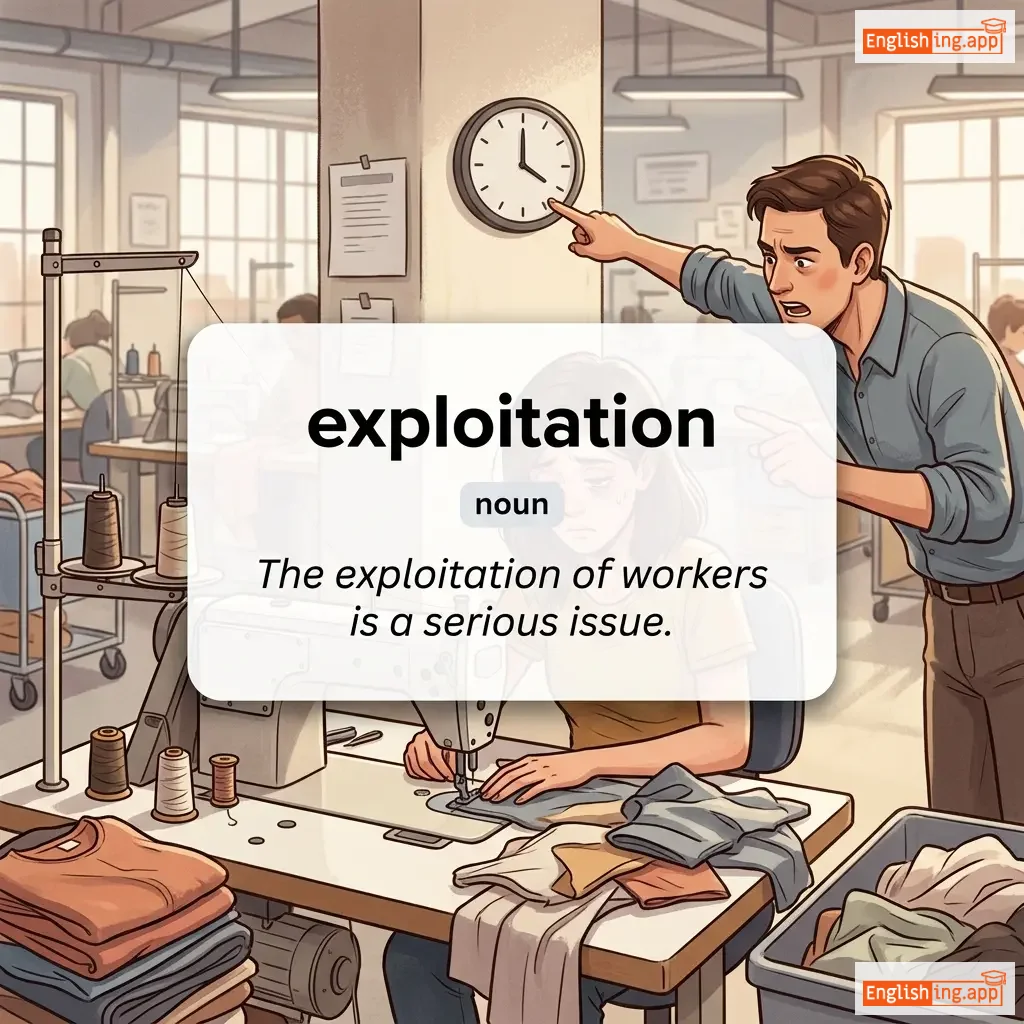
exploitation definition card — visual illustration of the meaning
noun
/ˌeksplɔɪˈteɪʃən/
剥削 (bōxuē)

the action or fact of treating someone unfairly in order to benefit from their work; the use of resources for profit

"The exploitation of workers is a serious issue."

"对工人的剥削是一个严重的问题。" (Duì gōngrén de bōxuē shì yīgè yánzhòng de wèntí.)
adjective
/ɪkˈsplɔɪtətɪv/
剥削性的 (bōxuè xìng de)

making use of a situation or people unfairly and unethically for one's own advantage

"The workers protested against the exploitative practices of the factory."

"工人们抗议工厂的剥削行为。" (Gōngrénmen kàngyì gōngchǎng de bōxuè xíngwéi.)
noun
/ˌekspləˈreɪʃən/
探索 (tàn suǒ)

the action of traveling through or studying an area to learn more about it

"Space exploration has expanded our understanding of the universe."

"太空探索扩展了我们对宇宙的理解。" (Tàikōng tàn suǒ kuòzhǎnle wǒmen duì yǔzhòu de lǐjiě.)
explore definition card — visual illustration of the meaning
verb
/ɪkˈsplɔːr/
探索 (tàn suǒ)

to travel through or study something in order to learn more about it

"They decided to explore the forest together."
"他们决定一起探索森林。" (Tāmen juédìng yīqǐ tàn suǒ sēnlín.)
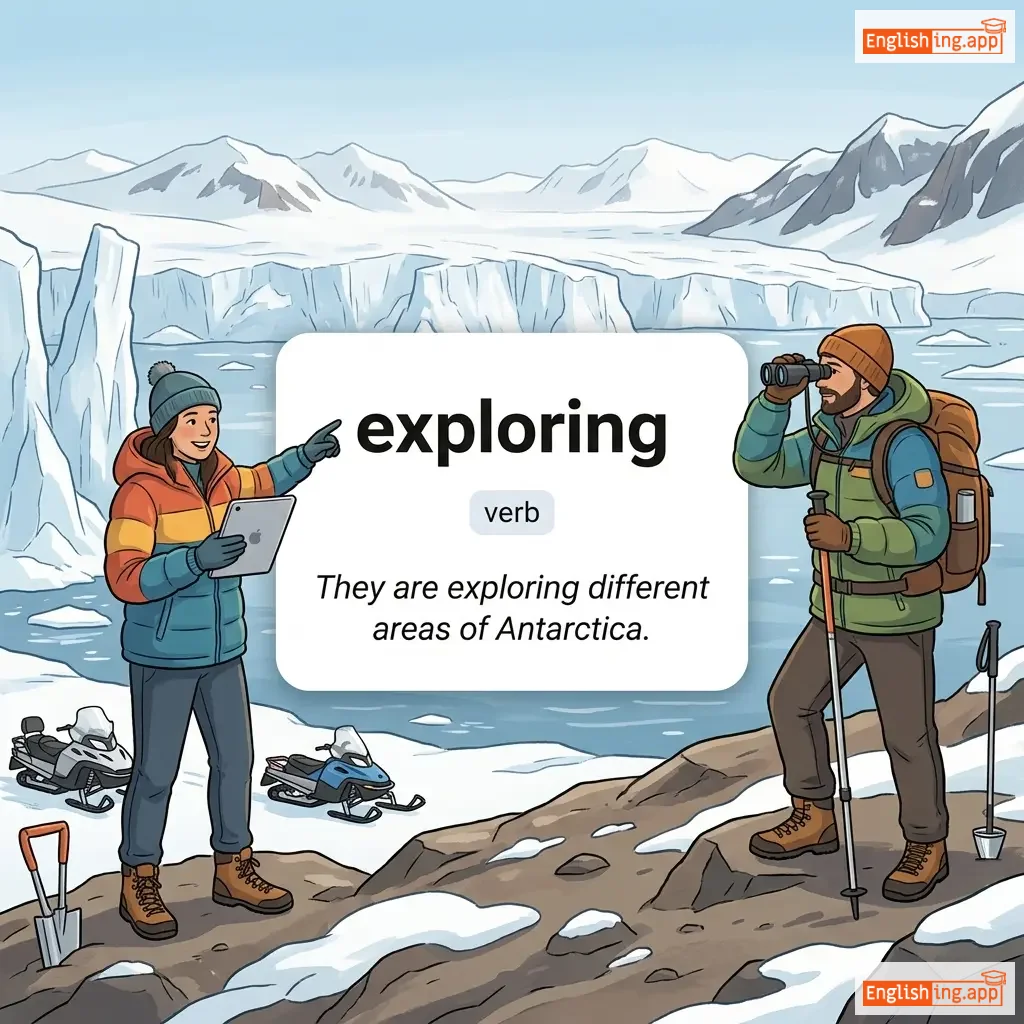
exploring definition card — visual illustration of the meaning
verb
/ɪkˈsplɔːrɪŋ/
探索 (tansuo)

Investigating or studying thoroughly; searching into or ranging over for the purpose of discovery.

"They are exploring different areas of Antarctica."

"他们正在探索南极的不同区域。" (Tāmen zhèngzài tànsuǒ nánjí de bùtóng qūyù.)
noun
/ɪkˈsploʊʒən/
爆炸 (baozha)

a violent burst or release of energy, often causing damage and noise

"The explosion shook the entire neighborhood."

"爆炸震动了整个社区。" (Baozha zhendong le zheng ge shequ.)
adjective
/ɪkˈsploʊsɪv/
爆炸性 (bàozhàxìng)

able to cause an explosion; likely to burst out suddenly

"The situation became explosive after the argument."

"争论后局势变得爆炸性。" (zhēnglùn hòu júshì biàn dé bàozhàxìng.)
noun
/ɪkˈspoʊnənt/
指数 (zhǐshù)

a person who supports, promotes, or explains an idea; in math, a symbol denoting power

"She is a leading exponent of modern dance."
"她是现代舞蹈的领先指数。" (Tā shì xiàndài wǔdǎo de lǐngxiān zhǐshù.)
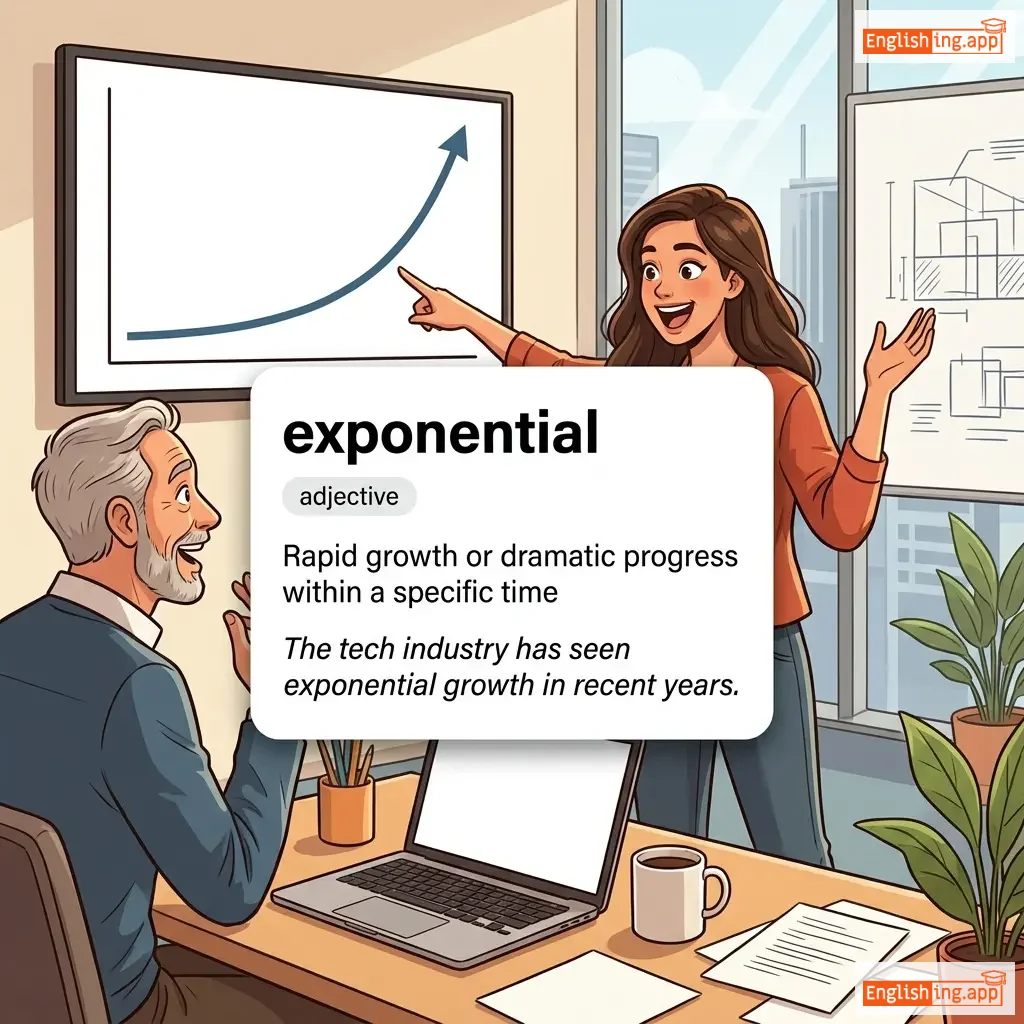
exponential definition card — visual illustration of the meaning
adjective
/ˌɛk.spəˈnɛn.ʃəl/
指数的 (zhǐshù de)

Rapid growth or dramatic progress within a specific time

"The tech industry has seen exponential growth in recent years."

"科技行业在近几年见证了指数级增长。" (Kējì hángyè zài jìn jǐ nián jiànzhèngle zhǐshù jí zēngzhǎng.)
exponentially definition card — visual illustration of the meaning
adverb
ˌekspəˈnenʃəli
指数地 (zhǐshù de)

At a rapidly increasing rate; growing or expanding very quickly and intensely.

"Internet adoption is growing exponentially worldwide."
"互联网的采用在全球范围内指数增长。" (Hùliánwǎng de cǎiyòng zài quánqiú fànwéi nèi zhǐshù zēngzhǎng.)
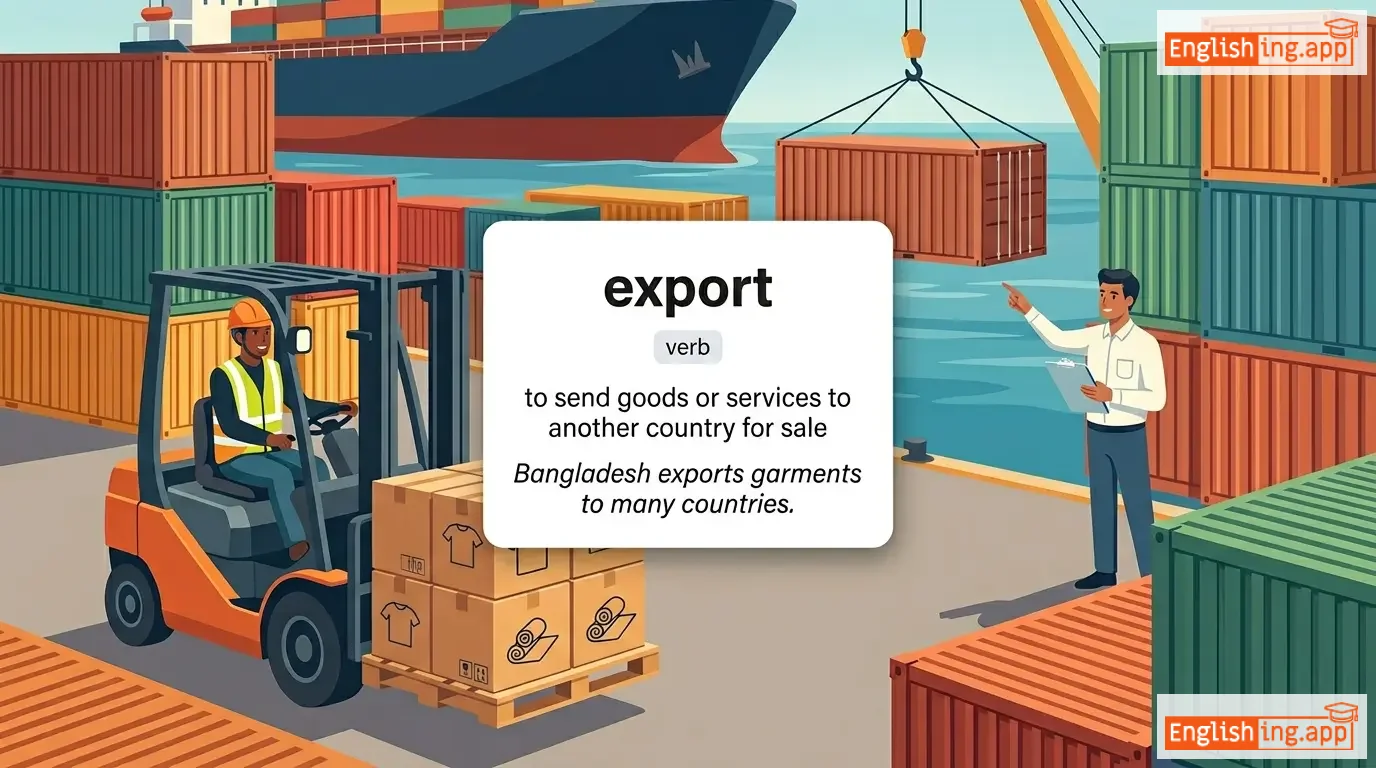
export definition card — visual illustration of the meaning
verb
/ˈekspɔːt/
出口 (chūkǒu)

to send goods or services to another country for sale

"Bangladesh exports garments to many countries."

"孟加拉国向许多国家出口纺织品。" (Mèngjiālā guó xiàng xǔduō guójiā chūkǒu fǎngzhīpǐn.)
expose definition card — visual illustration of the meaning
verb
/ɪkˈspoʊz/
揭露 (jiēlù)

to reveal or uncover something hidden

"The journalist tried to expose the corruption scandal."

"记者试图揭露腐败丑闻。" (Jìzhě shìtú jiēlù fǔbài chǒuwén.)
noun
/ˌekspəˈzɪʃən/
阐述 / 展览 (chǎnshù / zhǎnlǎn)

a detailed explanation or a large public exhibition

"The scientist gave a clear exposition of the theory."
"科学家清楚地阐述了这个理论。" (Kēxuéjiā qīngchǔ de chǎnshùle zhège lǐlùn.)
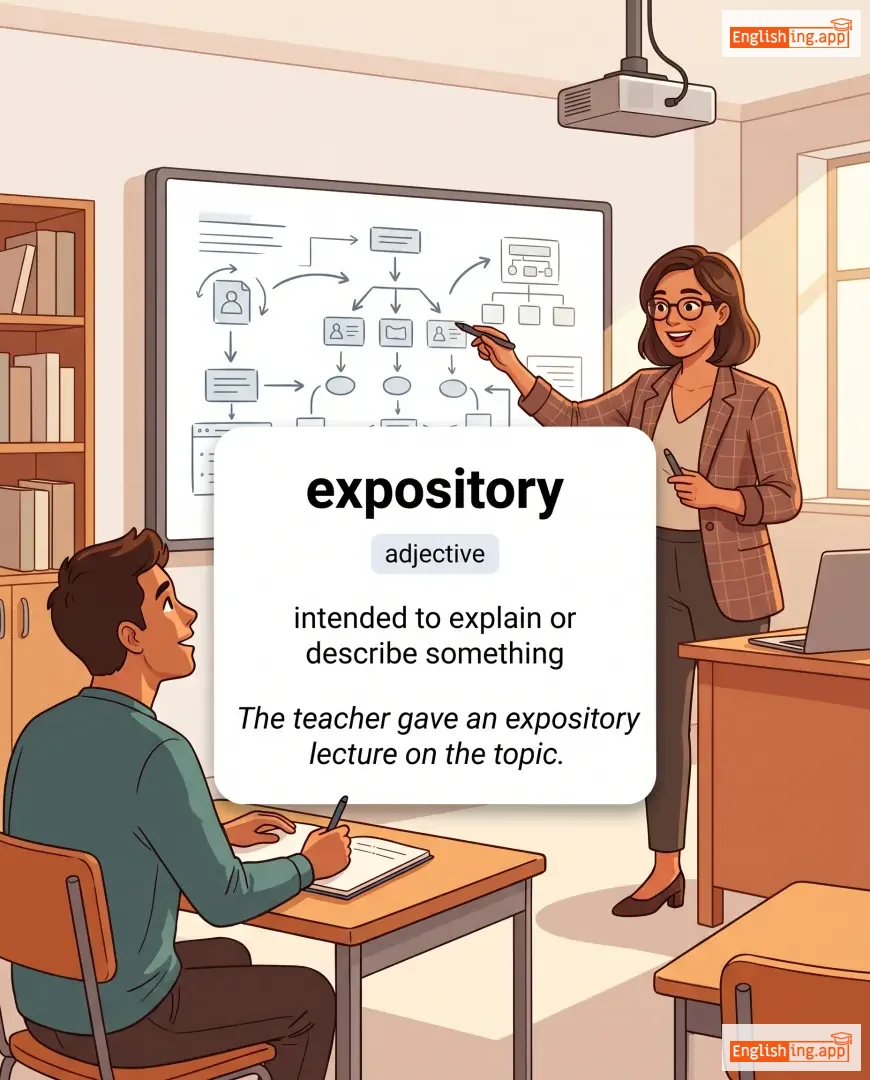
expository definition card — visual illustration of the meaning
adjective
/ɪkˈspɒzɪtəri/
说明的 (shuōmíng de)

intended to explain or describe something

"The teacher gave an expository lecture on the topic."

"老师就这个话题进行了说明性的讲座。" (Lǎoshī jiù zhège huàtí jìnxíngle shuōmíng xìng de jiǎngzuò.)
verb
/ɪkˈspɒstjʊleɪt/
表示不同意见 (biǎoshì bùtóng yìjiàn)

to express strong disapproval or disagreement

"She expostulated with her friend about the risky decision."

"她对她朋友关于冒险决定的看法表达了不同意见。" (Tā duì tā péngyǒu guānyú màoxiǎn juédìng de kànfǎ biǎodále bùtóng yìjiàn.)
noun
/ɪkˌspɒstjʊˈleɪʃən/
抗议 (kàngyì)

the act of expressing protest or disagreement

"His expostulation against the unfair rules was ignored."

"他对不公平规则的抗议被忽视了。" (Tā duì bù gōngpíng guīzé de kàngyì bèi hūshìle.)
noun
/ɪkˈspəʊʒər/
暴露 (baolu)

the state of being exposed to contact with something, especially harmful

"Prolonged exposure to the sun can damage your skin."

"长时间暴露在阳光下会损害皮肤。" (Chang shijian baolu zai yangguang xia hui sunhai pifu.)
verb
/ɪkˈspaʊnd/
详细阐述 (xiángxì chǎnshù)

to present and explain in detail

"The professor expounded the theory in simple terms."

"教授用简单的术语详细阐述了这个理论。" (Jiàoshòu yòng jiǎndān de shùyǔ xiángxì chǎnshùle zhège lǐlùn.)
express definition card — visual illustration of the meaning
verb
/ɪkˈsprɛs/
表达 (biaoda)

to convey a thought, feeling, or idea in words, actions, or other forms

"She expressed her gratitude with a warm smile."

"她通过温暖的微笑表达了她的感激之情。" (Ta tongguo wenruan de weixiao biaoda le ta de ganji zhiqing.)
noun
/ɪkˈspres treɪn/
快车 (kuaiche)

a fast train that travels between major stations with few or no intermediate stops

"The express train reached the destination in half the usual time."

"快车以半小时到达目的地。" (Kuàichē yǐ bàn xiǎoshí dàodá mùdì dì.)
noun
/ɪkˈsprɛʃən/
表情 (biaoqing)

the act of putting thoughts or feelings into words, actions, or facial gestures

"His facial expression showed surprise."

"他的面部表情显示了惊讶。" (Tā de miànbù biǎoqíng xiǎnshìle jīngyà.)
adjective
/ɪkˈsprɛsɪv/
表达性 (biaodaxiang)

Effectively conveying thought or feeling.

"Her eyes were so expressive that no words were needed."

"她的眼睛如此表达性,以至于不需要任何话语。" (Ta de yanjing ruci biaodaxiang, yi zhi yu bu xuyao renhe huayu.)
verb
/ɛksˈproʊprieɪt/
征用 (zhēng yòng)

To take property from its owner, especially by authority or for public use.

"The government decided to expropriate the land for a new highway."
"政府决定征用这块土地来修建一条新高速公路。" (Zhèngfǔ juédìng zhēngyòng zhè kuài tǔdì lái xiūjiàn yītiáo xīn gāosù gōnglù.)
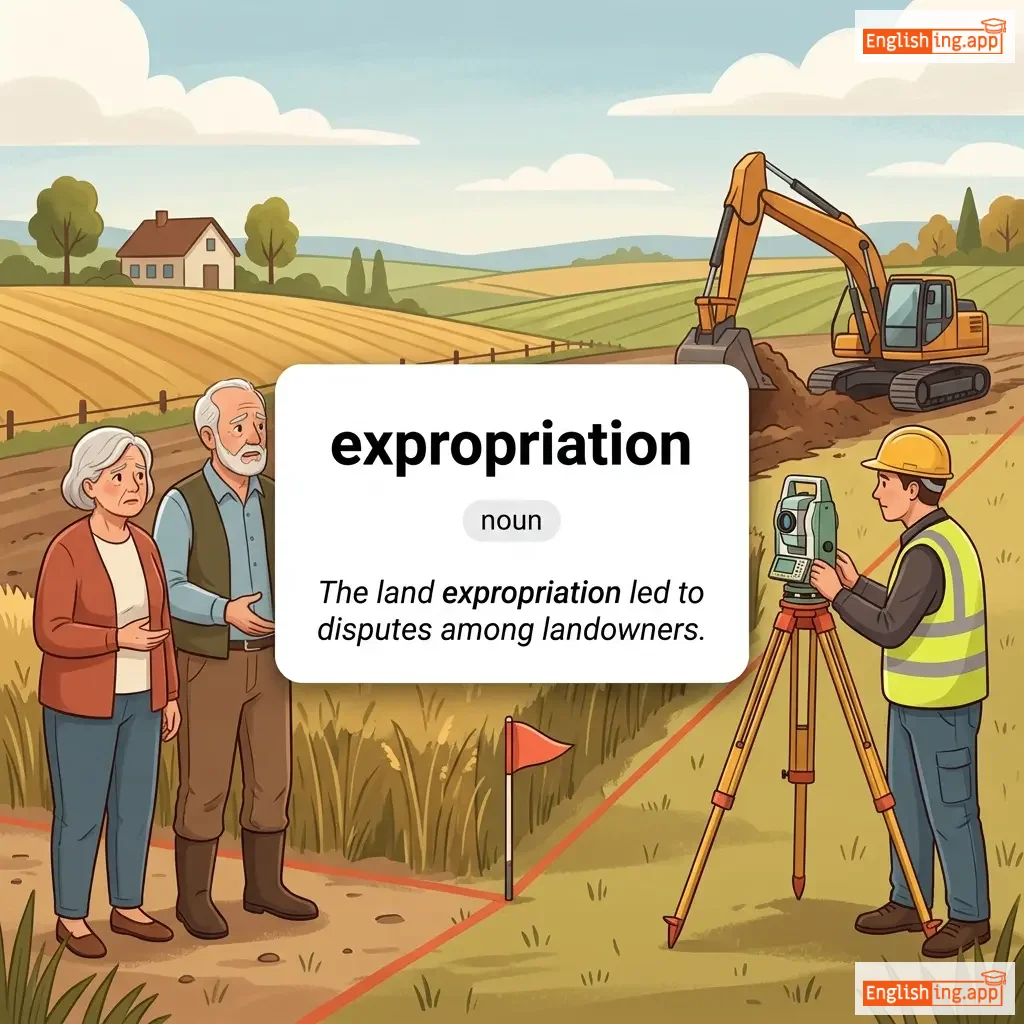
expropriation definition card — visual illustration of the meaning
noun
/ɪkˌsprəʊ.priˈeɪ.ʃən/
征用 (zhēngyòng)

The act of government taking private property, also known as confiscation, nationalization, or seizure.

"The land expropriation led to disputes among landowners."

"土地征用导致了土地所有者之间的争议。" (Tǔdì zhēngyòng dǎozhìle tǔdì suǒyǒu zhě zhī jiān de zhēngyì.)
noun
/ɪkˈspʌlʃən/
开除 (kaichu)

The act of forcing someone to leave a place, especially a school or country.

"His constant misbehavior led to his expulsion from school."

"他不断的坏行为导致他被学校开除。" (Tā bùduàn de huài xíngwéi dǎozhì tā bèi xuéxiào kāichú.)
verb
/ɪkˈspʌndʒ/
擦除 (cāchú)

To erase or remove completely, often something unwanted.

"He managed to expunge the embarrassing memory from his mind."

"他设法把尴尬的记忆从脑海中抹去。" (Tā shèfǎ bǎ gāngà de jìyì cóng nǎohǎi zhōng mǒqù.)
verb
/ˈekspərˌɡeɪt/
删改 (shangai)

To remove offensive or objectionable parts from a text or speech.

"The publisher decided to expurgate the novel before reprinting it."

"出版社决定在再版前删改这部小说。" (chubanshe jueding zai zaiban qian shangai zhe bu xiaoshuo)
exquisite definition card — visual illustration of the meaning
adjective
/ɪkˈskwɪzɪt/
精致 (jingzhi)

Extremely beautiful, delicate, or finely made.

"The bride wore an exquisite gown made of silk."
"新娘穿着一件精致的丝绸礼服。" (Xinniang chuanzhuo yijian jingzhi de sichou lifu.)
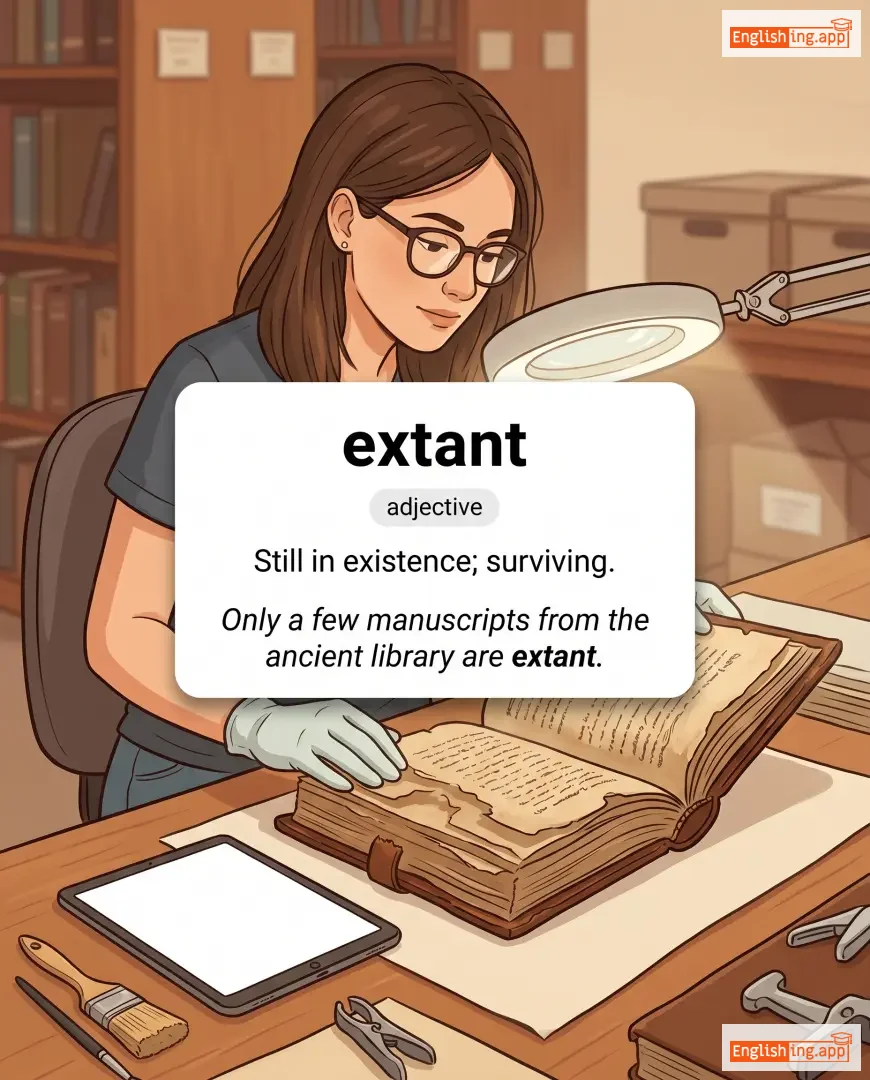
extant definition card — visual illustration of the meaning
adjective
/ˈɛkstənt/
现存 (xiàncún)

Still in existence; surviving.

"Only a few manuscripts from the ancient library are extant."

"只有几份古老图书馆的手稿仍然存在。" (Zhǐyǒu jǐ fèn gǔlǎo túshūguǎn de shǒugǎo réngrán cúnzài.)
extemporaneous definition card — visual illustration of the meaning
adjective
/ɪkˌstɛmpəˈreɪniəs/
没有准备的讲话或行为 (mei you zhun bei de jiang hua huo xing wei)

Spoken or done without preparation.

"He gave an extemporaneous speech at the meeting."

"他在会议上发表了即兴演讲。" (Ta zai hui yi shang fa biao le ji xing yan jiang.)
adverb
/ɪkˈstɛmpəri/
即兴 (jixing)

Spoken or done without preparation; impromptu.

"She recited the poem extempore in class."

"她在课堂上即兴朗诵了诗歌。" (Ta zai kètáng shàng jìxìng lǎngsòngle shīgē.)
verb
/ɪkˈstɛmpəraɪz/
即兴表演 (jíxìng biǎoyǎn)

To speak or perform without preparation; improvise.

"The actor had to extemporize when he forgot his lines."
"当演员忘记台词时,他不得不即兴表演。" (Dāng yǎnyuán wàngjì táicí shí, tā bùdé bù jíxìng biǎoyǎn.)
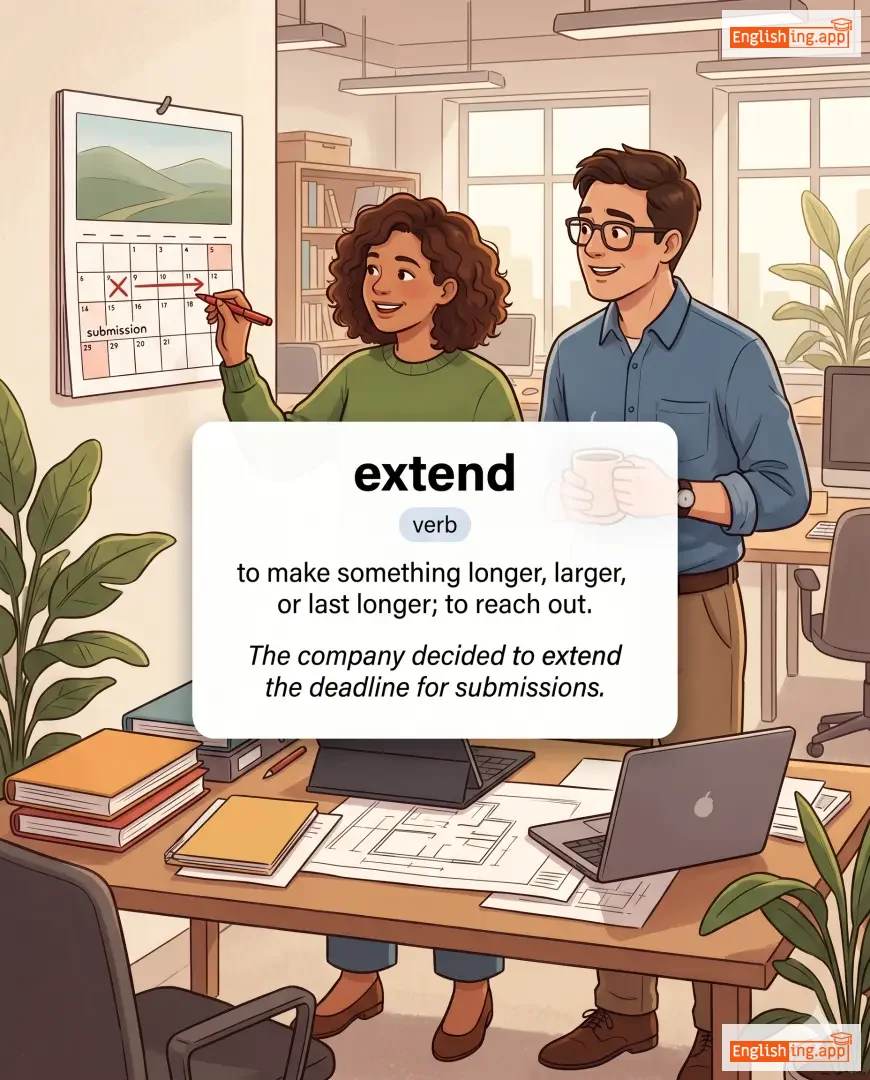
extend definition card — visual illustration of the meaning
verb
/ɪkˈstɛnd/
延伸 (yanshen)

to make something longer, larger, or last longer; to reach out.

"The company decided to extend the deadline for submissions."

"公司决定延长提交的截止日期。" (Gōngsī juédìng yáncháng tíjiāo de jiézhǐ rìqī.)
adjective
/ɪkˈstendɪd/
扩展的 (kuòzhǎn de)

longer or larger than usual; continuing for a longer time

"They took an extended vacation in Europe this summer."

"他们这个夏天在欧洲度过了一个扩展的假期。" (Tāmen zhège xiàtiān zài Ōuzhōu dùguòle yīgè kuòzhǎn de jiàqī.)
adjective
/ɪkˈstɛnsəbl/
可扩展的 (kě kuò zhǎn de)

able to be extended; capable of expansion.

"The software is designed to be extensible with new features."

"该软件设计为可以通过新功能扩展。" (Gāi ruǎnjiàn shèjì wèi kě yǐ tōngguò xīn gōngnéng kuò zhǎn.)
noun
/ɪkˈstɛnʃən/
延伸 (yanshen)

a part that is added to something to make it longer or bigger; an increase in time.

"She asked for an extension on her assignment deadline."

"她要求延长她的作业截止日期。" (Ta yaoqiu yanchang ta de zuoye jiezhi riqi.)
adjective
/ɪkˈstɛnsɪv/
广泛的 (guǎngfàn de)

covering a large area or involving a lot; wide in range.

"The museum has an extensive collection of ancient artifacts."

"博物馆拥有大量的古代文物收藏。" (Bówùguǎn yǒngyǒu dàliàng de gǔdài wénwù shōucáng.)
adverb
/ɪkˈstɛnsɪvli/
广泛地 (guangfan de)

in a thorough or wide-ranging manner

"She traveled extensively across Europe for her research."

"她为她的研究广泛地旅行了欧洲。" (Ta wei ta de yanjiu guangfan de lvxing le Ouzhou.)
noun
/ɪkˈstɛnsər/
伸肌 (shēn jī)

a muscle that serves to extend or straighten a limb or part of the body.

"The extensor muscles in the arm help straighten the elbow."

"手臂的伸肌帮助伸直肘部。" (Shǒubì de shēn jī bāngzhù shēnzhí zhǒubù.)
noun
/ɪkˈstɛnt/
程度 (chengdu)

the area, degree, or scope of something

"The extent of the damage was greater than expected."

"损害的程度超出了预期。" (Sunhai de chengdu chaole yùqī.)
verb
/ɪkˈstɛnjueɪt/
减轻 (jianqing)

to make an offense, fault, or situation seem less serious by providing an excuse or explanation

"The lawyer tried to extenuate his client's actions by highlighting his difficult childhood."

"律师通过强调客户的艰难童年,试图减轻他的行为。" (Lüshi tongguo qiangdiao kehu de jiannan tongnian, shitu jianqing tā de xíngwéi.)